Introduction
Early Christian monasticism promoted a collective identity, in which personal identity was blurred by clothing, gesture and modified appearance—the monastic ‘social skin’ (Turner Reference Turner2012). Individuality was correspondingly denied in death through secondary communal burial, where the skeletal remains of individuals were commingled to preserve a corporate identity. As a result, individually lived experiences shaped by gender, ethnicity and place of origin were masked, and bioarchaeological investigations rendered problematic but not impossible. While secondary interments of skeletal remains among Early Christian monastics are well known in the southern Levant, bioarchaeological research has been constrained by the commingled nature of these collections, as well as by repatriation efforts (Judd Reference Judd and Bientrowski2009a; Perry Reference Perry, Buikstra and Roberts2012; Sheridan Reference Sheridan2017). There are some notable exceptions from Israel (e.g. Hershkovitz et al. Reference Hershkovitz, Yakar, Taitz, Wish-Baratz, Pinhasov and Ring1993; Gregoricka & Sheridan Reference Gregoricka and Sheridan2013; Sheridan & Gregoricka Reference Sheridan and Gregoricka2015), while monastic life in Jordan is inferred only from architectural and artefactual information (e.g. MacDonald Reference MacDonald2010) and from a recent assessment of individuals from the Sanctuary of Agios Lot at Deir ‘Ain ‘Abata (Gruspier Reference Gruspier and Politis2012).
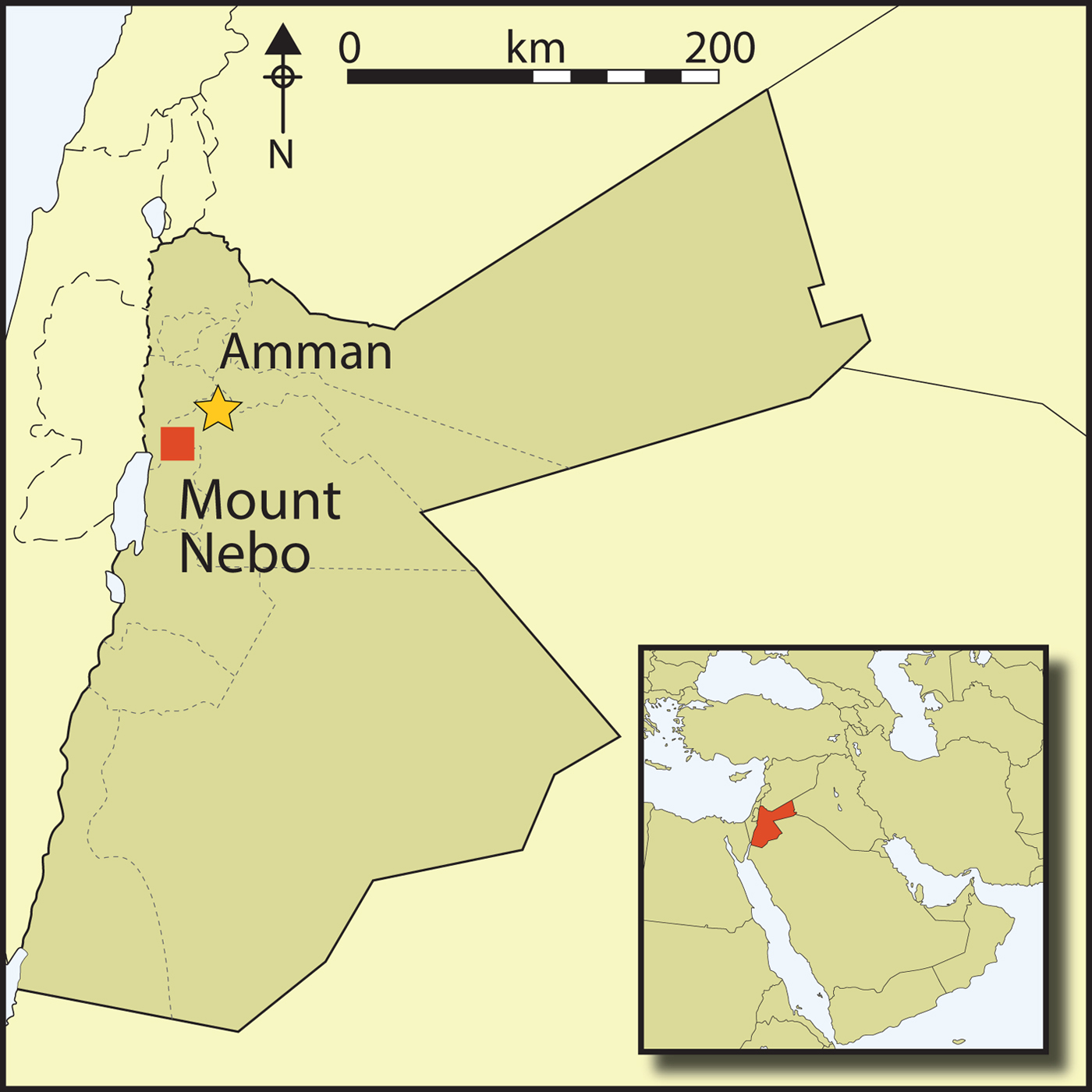
The location of the church and monastic complex at Mount Nebo, on the outskirts of Madaba in Jordan, is particularly suited for bioarchaeological investigation of Early Christian identity (Figure 1). Following the legitimisation of Christianity in the fourth century AD, the southern Levant became a destination for lay pilgrims—particularly wealthy Christians who frequently chronicled their travels (Wilkinson Reference Wilkinson2002; Dietz Reference Dietz2005). Madaba served as a crossroads for those who passed between Egypt and Syria (Hirschfeld Reference Hirschfeld, Limor and Stroumsa2006), and the town is renowned for its detailed mosaic map of Holy Land pilgrimage sites (c. AD 560) that escaped the waves of iconoclasm beginning in the eighth century AD (Avi-Yonah Reference Avi-Yonah1954).
Map of Jordan showing the location of Mount Nebo.
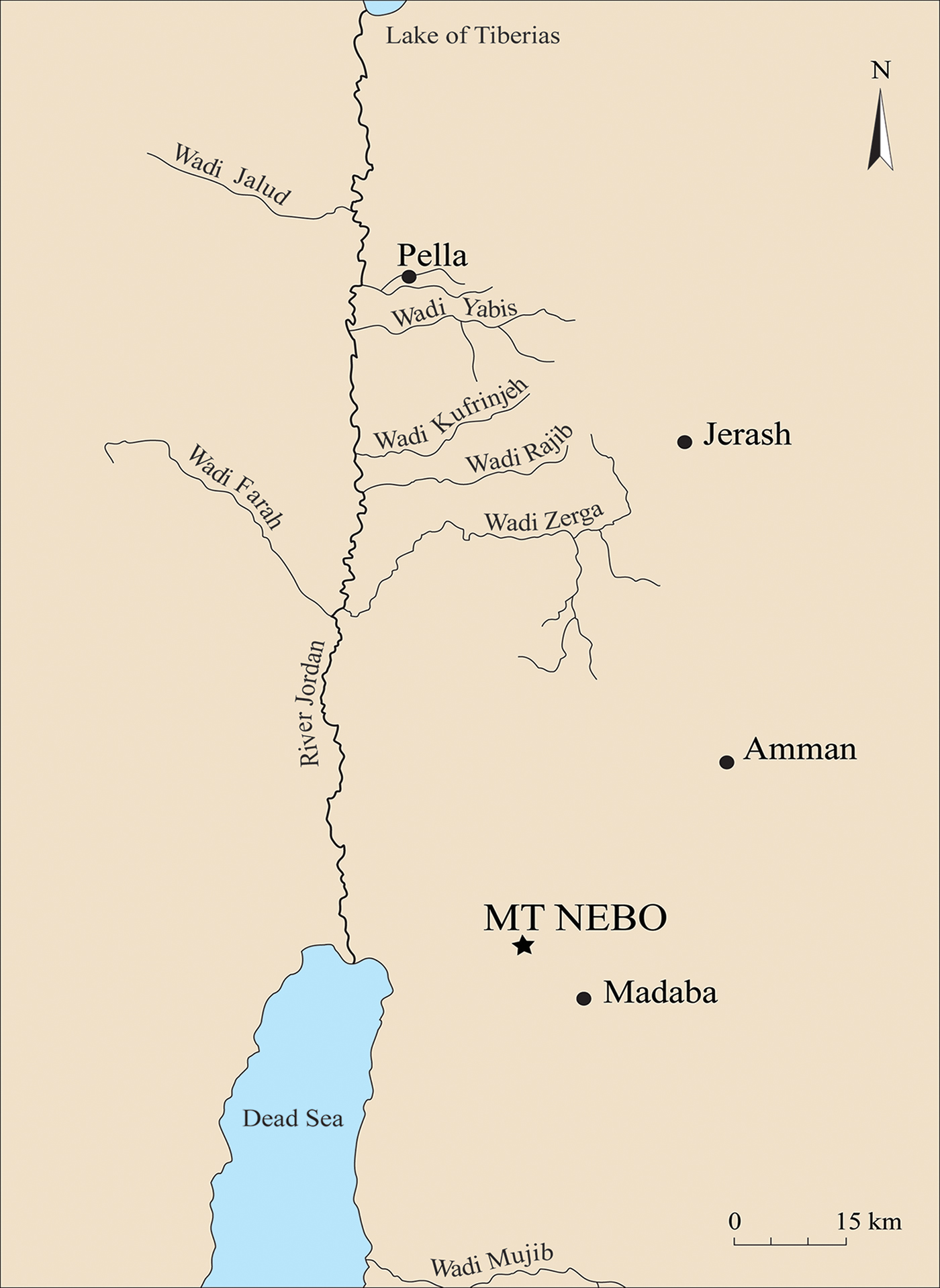
Monastics were also attracted to this pilgrimage site and region, but the communal funerary interments at Mount Nebo have obscured the ethnic diversity of those buried there. Here we remove the communal ‘social skin’ through the integration of multiple lines of evidence (skeletal demographics, biogeochemical analyses, onomastics and local landscape) to test the hypothesis that Mount Nebo was cosmopolitan in nature, attracting non-local pilgrims and monastics alike, due, in part, to the site's association with the Prophet Moses.
Byzantine monastery of Mount Nebo
The Christian monastery on Mount Nebo (AD 491–640) commemorates the place from where the Prophet Moses viewed the Promised Land, as well as the site of his burial (Deut. 34.1–6; King James Bible Online 2017). This important pilgrimage site was at the centre of a network of monasteries that flourished in central Transjordan during the Byzantine period (Foran Reference Foran2005a). The monastic community was described in the historical accounts of many pilgrims and travellers to the Holy Land, who spoke of Mount Nebo's spiritual influence and renown (Wilkinson Reference Wilkinson2002). The first description is attributed to the Spanish pilgrim Egeria (c. late fourth century AD) (Gingras Reference Gingras and Gingras1970), who, with her clerical entourage from Jerusalem, visited the cave cells of the holy men in the valley; those of the group who were physically able, climbed the steep trail to the small church atop Mount Nebo's summit. Shortly after, an organised monastic community walled off from secular society was established (Piccirillo & Alliata Reference Piccirillo and Alliata1998). A mosaic inscription at the site refers to an abbot, Alexis, leading the monastery by the late fourth century, indicating that the transition to communal living swiftly followed Egeria's visit (Piccirillo & Alliata Reference Piccirillo and Alliata1998).
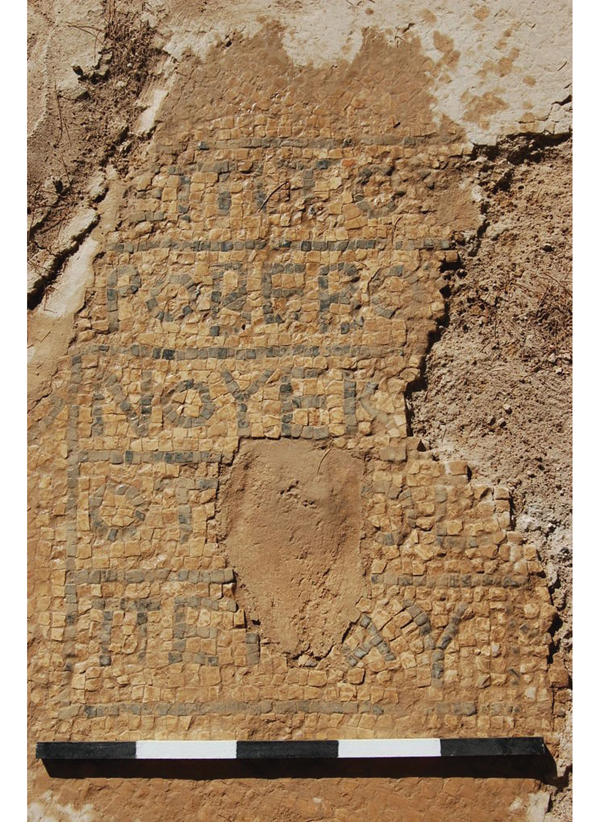
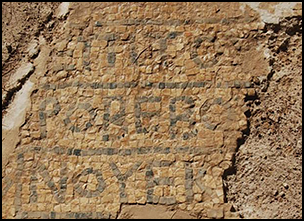
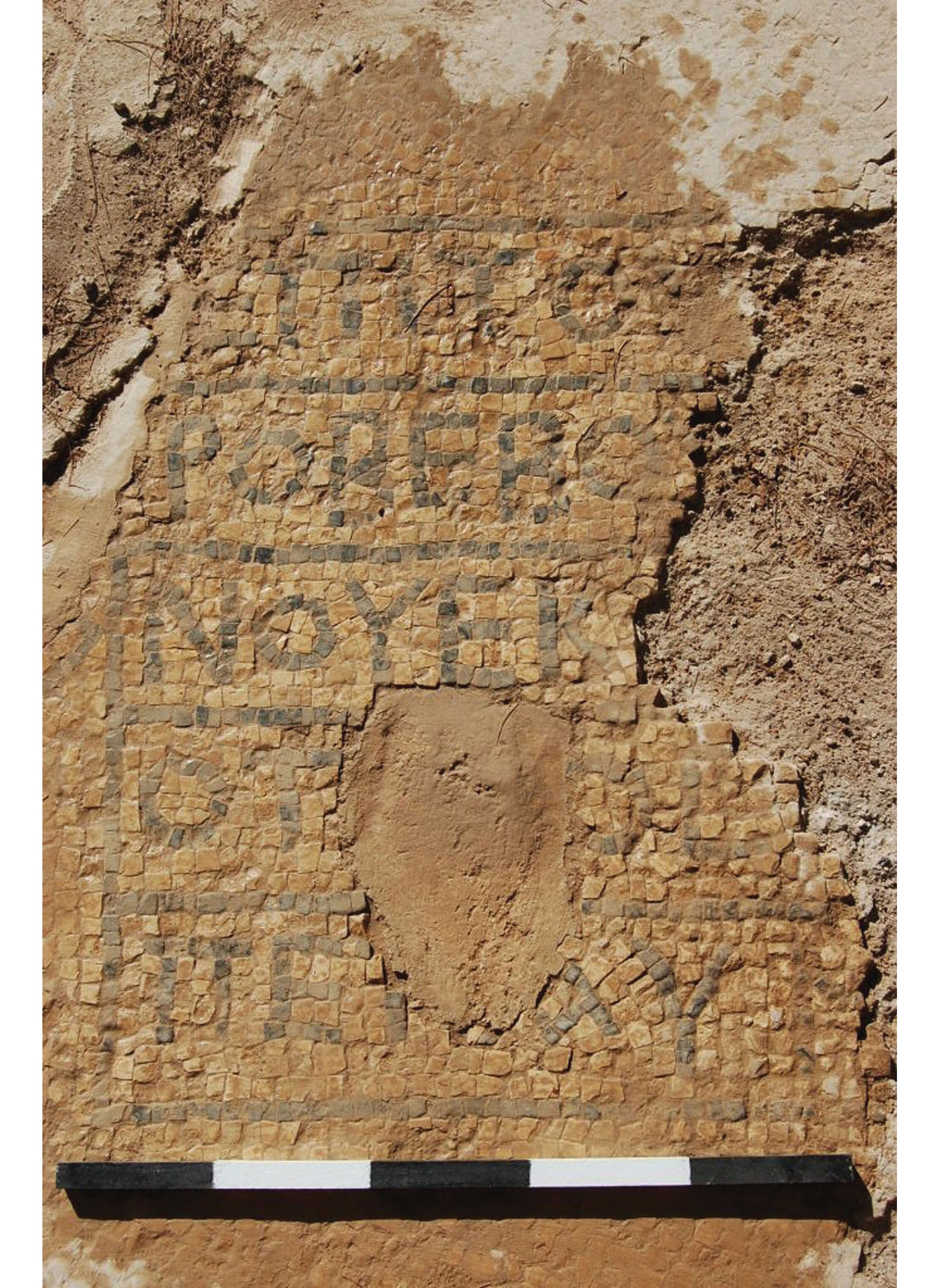
Numerous pilgrims followed in Egeria's footsteps, including Peter the Iberian and his companion John Rufus (c. AD 430 and 477), and later, the Piacenza Pilgrim (c. AD 570) (Wilkinson Reference Wilkinson2002). The writings of these visitors described a thriving ‘lofty’ church surrounded by monasteries (Horn & Phenix Jr Reference Horn and Phenix2008). Around this time, a one-room chapel was dedicated by a mosaic inscription to the community leader, Robebus (c. AD 530), to serve as a tomb for the priests (Piccirillo & Alliata Reference Piccirillo and Alliata1998) (Figure 2). There is no further textual information on the monastery until AD 1217, with only a brief mention by the German pilgrim Thietmar, who was en route from Acre in Israel to the Monastery of St Catherine in Sinai (Piccirillo & Alliata Reference Piccirillo and Alliata1998). Excavation and survey at Mount Nebo began in the 1930s by the Studium Biblicum Franciscanum (Saller Reference Saller1941) and recommenced in 1976 under the directorship of Father Michele Piccirillo with the Institute of Franciscan Archaeology (Piccirillo & Alliata Reference Piccirillo and Alliata1998).
Mosaic inscription dedicating the Robebus Chapel to the hegumen Robebus. The text reads: In the days of the most God-fearing priest and hegumen Robebus, the [tomb of the priests] who are resting [among the saints] was built [from the foundations?] (Piccirillo & Alliata Reference Piccirillo and Alliata1998) (photograph by M. Judd).
Materials and methods
Dating and demographic analysis
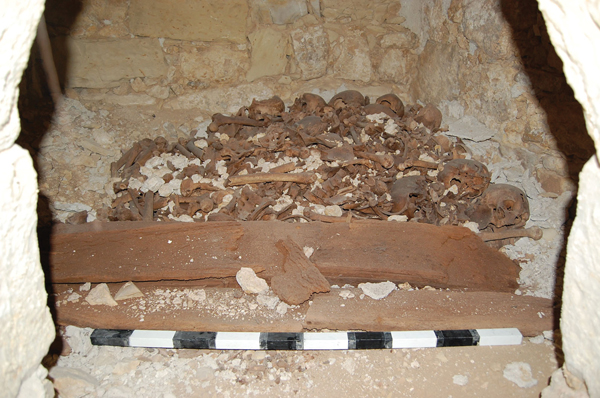
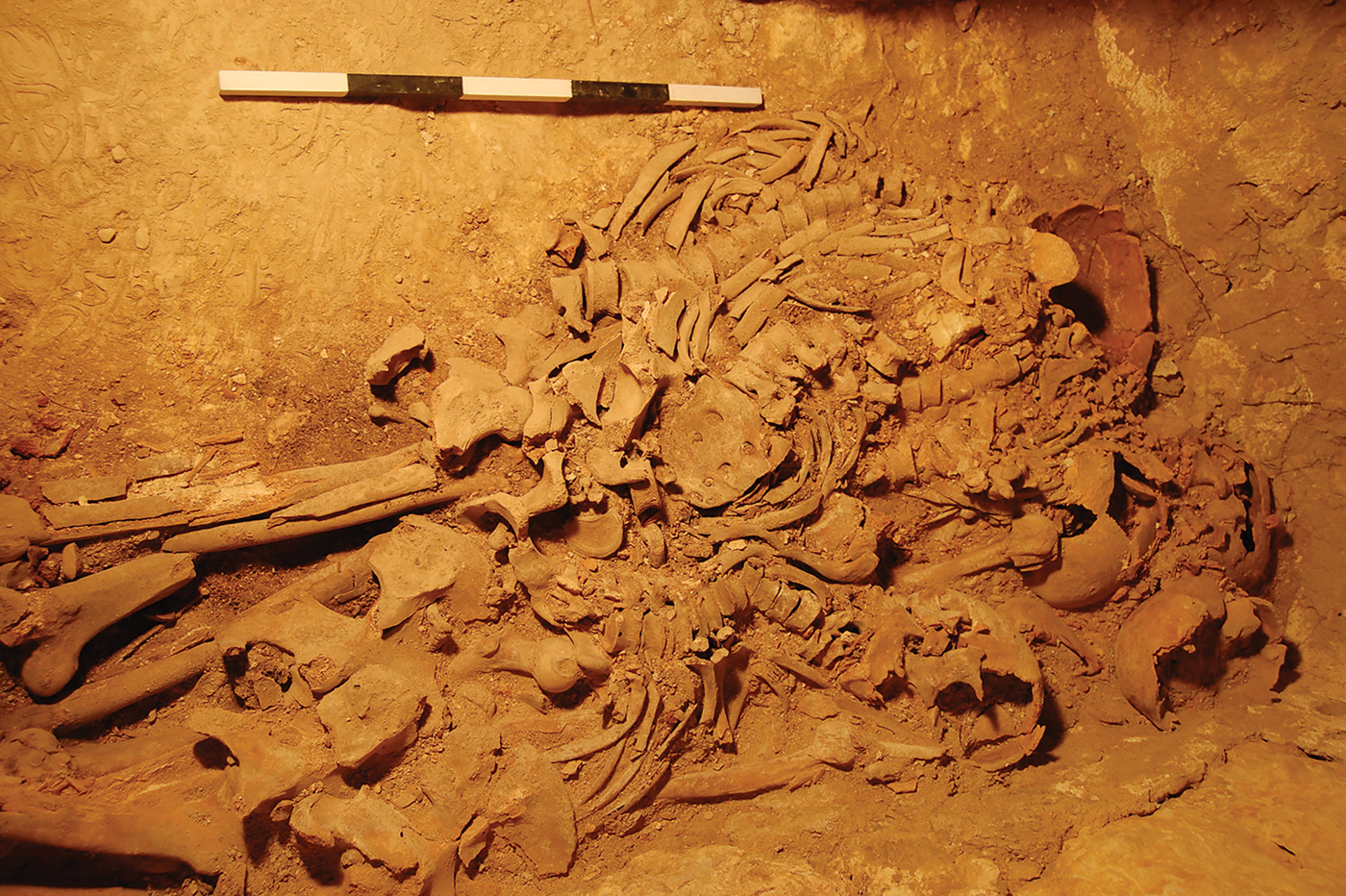
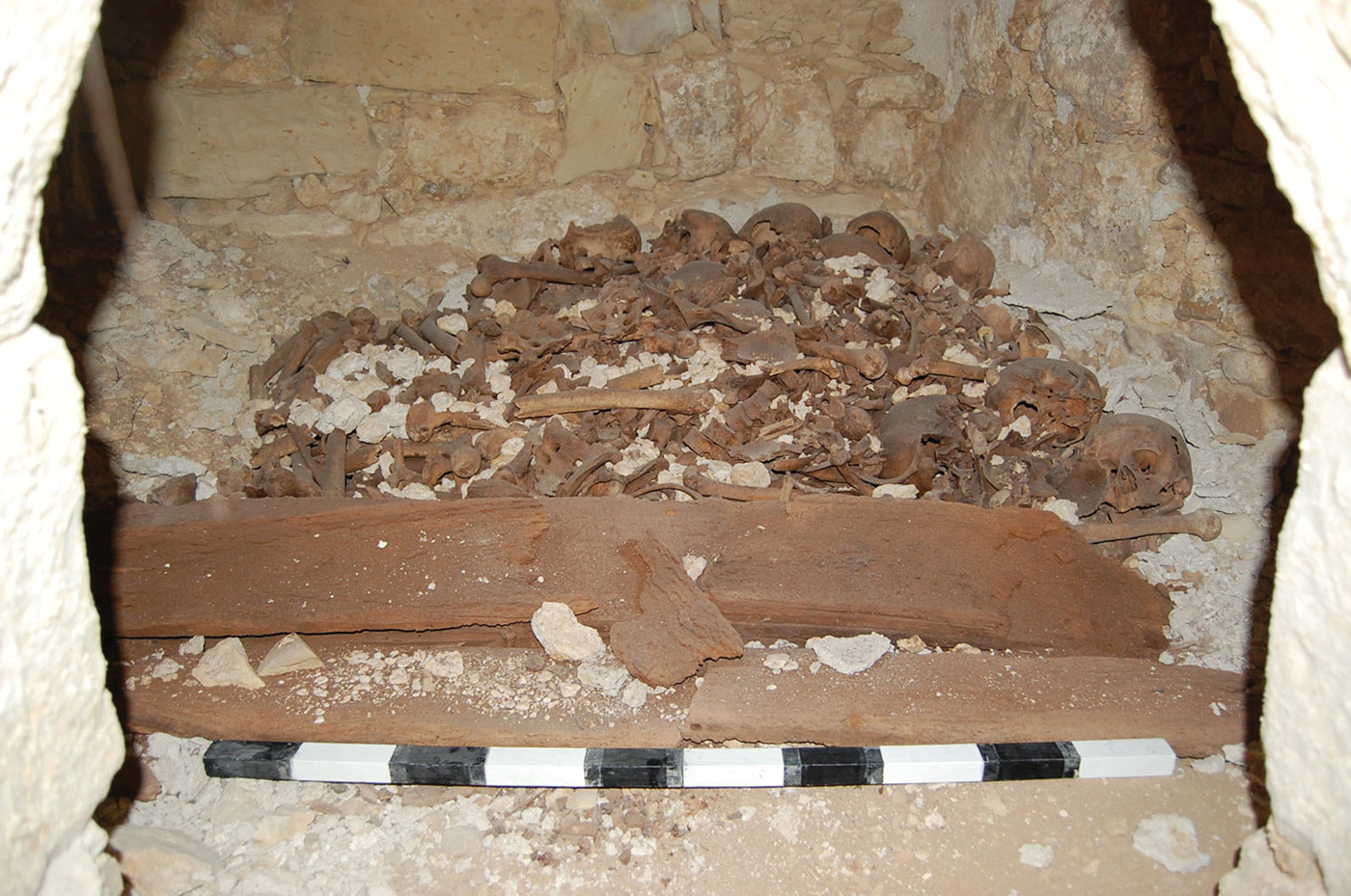
From 2007–2010, commingled skeletal remains were excavated from the north (EN) and south (ES) chambers of Mount Nebo's east crypt (Judd Reference Judd2008, Reference Judd2009b, Reference Judd2010) (Figures 3–4). Radiocarbon dating of bone and enamel was attempted by two laboratories (Beta Analytic and University of Arizona), but was unsuccessful due to poor collagen preservation. Other means of dating, however, were available. These placed the tomb's contents between the time of Egeria's visit and the Robebus chapel dedicatory inscription (i.e. c. AD 400–530). Radiocarbon dating using IntCal13 calibration curve (Bronk Ramsey Reference Bronk Ramsey2009; Reimer et al. Reference Reimer2013) of leather sandals from the crypt provides dates of 1380±30 BP (Beta-386282: cal AD 620–670, 2σ) for the ES crypt and 1700±30 BP (Beta-386283: cal AD 255–300 and cal AD 315–405, 2σ) for the EN crypt. In addition, Roman coins recovered from the crypt include one minted c. AD 383–402, which circulated until the sixth century (E. Alliata, pers. comm.).
Early interments in the EN chamber (photograph by M. Judd).
The ES chamber, pre-excavation (photograph by M. Judd).
The minimum number of individuals (MNI) was determined from the most frequently occurring bone element. Biological sex was estimated from dimorphic pelvic (ventral arc, subpubic concavity, ischiopubic ramus, sciatic notch and preauricular sulcus) and skull (nuchal crest, mastoid process, supra-orbital margin and ridge, mental eminence and zygomatic extension) features (Buikstra & Ubelaker Reference Buikstra and Ubelaker1994; Rogers Reference Rogers2005). Adult age was estimated from modification to the pubic symphyseal face (Brooks & Suchey Reference Brooks and Suchey1990) and auricular surface (Lovejoy et al. Reference Lovejoy, Meindl, Pryzbeck and Mensforth1985); aged individuals were assigned to broad age groups, modified slightly from the Buikstra and Ubelaker (Reference Buikstra and Ubelaker1994) protocol.
Isotopic analysis
Strontium (87Sr/86Sr) isotope ratios are largely dependent on the ages and types of minerals present in bedrock across a given area, which differ regionally in rubidium (Rb) abundance (radioactive 87Rb isotopes decay into 87Sr) due to their unique geological histories (Ericson Reference Ericson1985; Bentley Reference Bentley2006). Correspondingly, different regions possess distinctive 87Sr/86Sr ratios that are incorporated into human skeletal tissues during the consumption of local foods, enabling bioarchaeologists to evaluate residential mobility among past people. Further information on Levantine geological zones and associated local strontium isotope ratios can be found in Shewan (Reference Shewan and Delage2004), Perry et al. (Reference Perry, Coleman and Delhopital2008, Reference Perry, Coleman, Dettman, Grattan and Halim al-Shiyab2011) and Gregoricka and Sheridan (Reference Gregoricka and Sheridan2017).
Stable oxygen (δ18O) isotope values can also be regionally distinct and are thus also utilised to identify the presence of migrants (White et al. Reference White, Spence, Stuart-Williams and Schwarcz1998). Human δ18O values are primarily derived from local sources of drinking water, representing an amalgamation of geographically specific environmental factors, including temperature, altitude and distance from the sea (Luz et al. Reference Luz, Kolodny and Horowitz1984). Stable carbon (δ13C) isotope values distinguish between the consumption of different plant types (temperate C3 plants depleted in 13C isotopes produce lower δ13C values vs the elevated values of tropical C4 plants) and/or terrestrial vs marine resources (Schoeninger & Moore Reference Schoeninger and Moore1992). As people in different regions probably consumed different foods, migrants to a region may display δ13C values distinct from those consuming a local diet (Gregoricka & Sheridan Reference Gregoricka and Sheridan2017).
Human dental enamel from ES (n = 11) and EN (n = 4) was sampled for isotopic analysis. Crown enamel of mandibular second premolars (P2) (n = 12) forms between 2.5 and 7.5 years of age, while the maxillary canine (C) crown (n = 3) begins to form as early as 7.5 months to around 6.5 years of age (Al-Qahtani et al. Reference Al-Qahtani, Hector and Liversidge2010). Isotope values from the three canines sampled here will therefore partially reflect signatures obtained from the mother for the duration of breastfeeding and weaning. Given that more 18O than 16O isotopes enter into body water as breast milk is consumed, the δ18O values of children will be elevated by around 0.5–0.7‰ for that period (Wright & Schwarcz Reference Wright and Schwarcz1998); these elevated values will be averaged against the direct consumption of local sources of drinking water for all post-breastfeeding years, up to 6.5 years old. As intra-site local oxygen isotope values may vary by up to 3‰ (Lightfoot & O'Connell Reference Lightfoot and O'Connell2016), measures of residential mobility and geographic origins should not, however, be radically altered by breast milk. Nevertheless, oxygen isotope values from canine teeth (n = 3) were corrected by 0.7‰ to examine the potential effects of fractionation associated with breastfeeding.
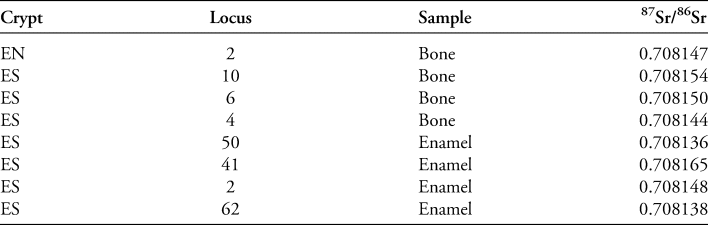
Due to limited numbers of fauna with dental enamel, bone and enamel strontium isotope ratios from archaeological rodents (n=8) were used to estimate local isotope bioavailability in the area surrounding Mount Nebo. Isotope local ranges were determined by statistical methods using human isotope values (Wright Reference Wright2005; Knudson & Tung Reference Knudson and Tung2011; Lightfoot & O'Connell Reference Lightfoot and O'Connell2016), as well as Byzantine faunal values from elsewhere in the Levant. Statistical analyses comparing isotope values between two chambers were not possible given the small sample size of less than five individuals for chamber EN (n = 4).
Samples were analysed for strontium isotope ratios at the UNC-Chapel Hill Isotope Geochemistry Laboratory, following protocol from Perry et al. (Reference Perry, Coleman and Delhopital2008). Enamel (3–5mg) was extracted from each tooth using a carbide drill bit attached to a Dremel tool, then dissolved in 3.5M HNO3 before strontium isolation via column chromatography using EiChrom Sr-Spec resin. 0.1M H3PO4 was added to resultant solutions before samples were evaporated, re-dissolved in TaCl5 and dried down prior to analysis on a VG Micromass Sector 54 thermal ionisation mass spectrometer in quintuple-collector dynamic mode. To correct for mass fractionation, an internal ratio of 0.1194 was utilised, while data are relative to 0.710250±0.000012 (2σ) for NBS 987. Internal precision for each analysis is generally ±0.000012–0.000018 (2σ) standard error based on 100 dynamic cycles of data collection.
For stable oxygen and carbon isotopic analysis—completed at the University of Notre Dame's Center for Environmental Science and Technology—preparation of enamel carbonate followed Garvie-Lok et al. (Reference Garvie-Lok, Varney and Katzenberg2004). Samples were soaked for 13 hours in 2 per cent NaOCl and then rinsed to neutrality before a four-hour treatment with 0.1M acetic acid and subsequent rinse. Samples were then lyophilised using a Thermo Finnigan DeltaPlus V IRMS coupled with a Gasbench II. Under vacuum, samples were acidified with 100 per cent ortho-phosphoric acid, cryogenically purified and normalised using NBS-19. Standard deviations of repeated measures of an internal standard included ±0.05‰ for δ18O and ±0.04‰ for δ13C.
Epigraphic, onomastic and architectural analysis
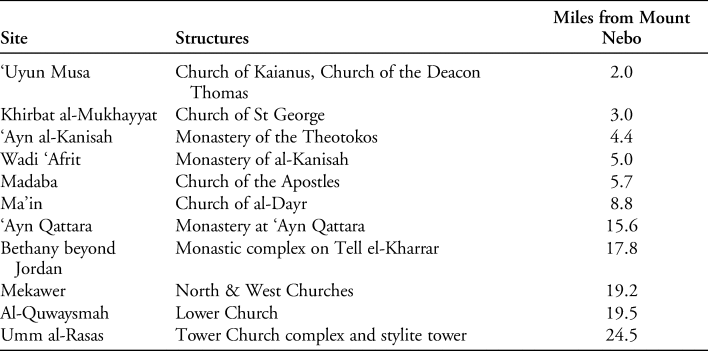
Mosaic inscriptions (n = 44) recorded by the original excavators of the Mount Nebo region (Saller Reference Saller1941; Piccirillo & Alliata Reference Piccirillo and Alliata1998) were assessed for onomastic and epigraphic evidence of non-local influence. These inscriptions were considered within the context of historical documents and diaries. Pilgrim records of times and distances travelled between staging posts and towns indicate that the average distance travelled in a day was 19 miles, although staging posts ranged from 15–29 miles apart (Wilkinson Reference Wilkinson2002). Eleven monastic structures within an approximately 50-mile radius (an overnight journey) from Mount Nebo, and bounded to the west by the Jordan River, were evaluated for non-local architectural influences (Table 1).
Sites with monastic structures in the Mount Nebo vicinity.
Results and discussion
Demography
The adult MNI for the EN group was 26 (based on left hamate and femur presence), while the ES MNI produced 47 adults (based on the presence of the right capitate, talus and patella). Although dimorphic cranial features were ambiguous in some cases, no skull was assessed as definitely female. Male dimorphic features predominated the pelvic bones, with one exception (skeleton 30B), which had an unusually deep preauricular sulcus. This alone, however, is a weak predictor of biological sex. Modification of the left auricular surface was the most frequently preserved age-related feature. Even so, age could be estimated for only 46 of 73 individuals (Table 2). Adult membership in the two crypts was restricted to males, with the possible exception of skeleton 30B.
Demography of aged youths and adults.
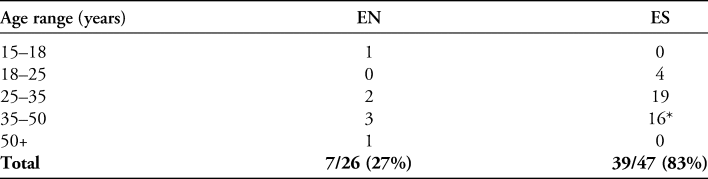
* One possible female.
Although pilgrims spoke only of males at Mount Nebo, female monastics resided elsewhere; some females were known to disguise themselves as males in order to gain membership into religious communities, and were only exposed at death (Davis Reference Davis2002; Dietz Reference Dietz2005; Horn & Phenix Jr Reference Horn and Phenix2008). Among comparative Judean monasteries, human skeletal remains were assessed as entirely male at Khan el-Ahmar (Hershkovitz et al. Reference Hershkovitz, Yakar, Taitz, Wish-Baratz, Pinhasov and Ring1993) and predominately male at St Stephen's Monastery in Jerusalem (Sheridan & Gregoricka Reference Sheridan and Gregoricka2015). One adult female was recovered at Deir ‘Ain ‘Abata (Gruspier Reference Gruspier and Politis2012). While one female monastic may have been present at Mount Nebo (skeleton 30B), bioarchaeological evidence elsewhere in the region has revealed very few possible female skeletons associated with monasteries.
Stable isotopes
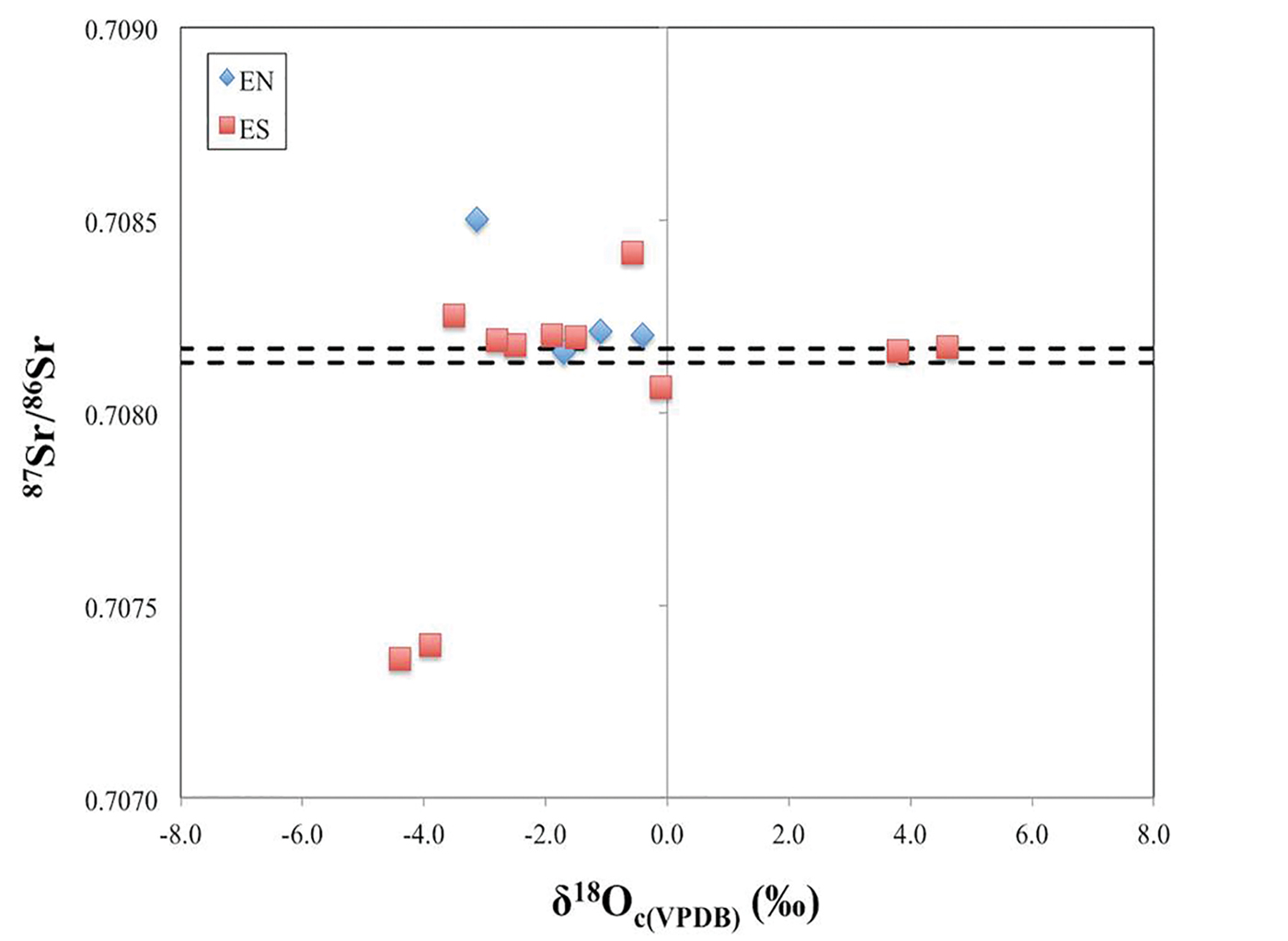
Both strontium (mean = 0.70811±0.00032, 1σ) and oxygen (mean = −1.3±2.6‰, 1σ) isotope values exhibit considerable variability, with numerous outliers suggestive of the presence of multiple individuals who grew up in areas geologically and/or hydrologically distinct from that surrounding Mount Nebo (Table 3 & Figure 5). For both crypts, only three individuals fell within the narrow confines of locally bioavailable 87Sr/86Sr ratios, as defined by contemporaneous rodents from shared archaeological contexts (0.70815±0.00002, 2σ; Table 4). Archaeological faunal 87Sr/86Sr ratios measured elsewhere in the Jordanian Highlands, however, range from 0.70815–0.70834 (Perry et al. Reference Perry, Coleman and Delhopital2008). This, coupled with two human individuals (L64 and L93) whose δ18Oc(VPDB) and δ13Cap(VPDB) values fell well outside of apparent local value clusters, indicates that at least seven of those interred in the EN (n = 1) and ES (n = 6) chambers may have spent their childhoods outside the region. The high δ18Oc(VPDB) values for L64 and L93 were similar to those observed in South-eastern Arabia (e.g. Gregoricka Reference Gregoricka2011; Schrenk et al. Reference Schrenk, Gregoricka, Martin and Potts2016), hinting at possible Arabian origins.
Radiogenic strontium and stable oxygen isotope values from human dental enamel for individuals interred in the EN and ES chambers at Mount Nebo. The space between the dotted lines represents strontium values local to the area, based on archaeological fauna.
Strontium, oxygen and carbon isotope values at Mount Nebo, Jordan. Bolded text represents values designated as non-local based on associated fauna and/or statistical analyses.
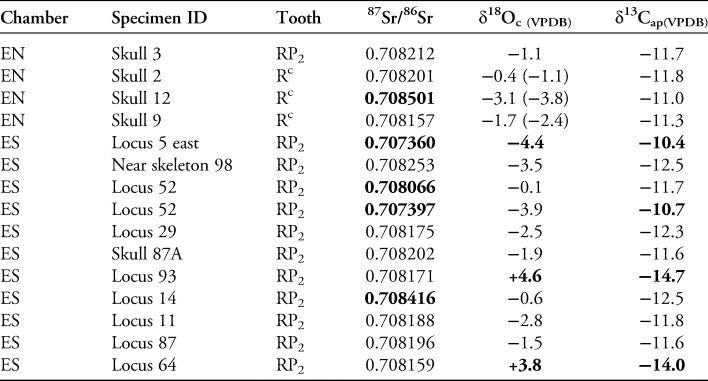
Rc = right upper canine; RP2 = right lower premolar; oxygen isotope values in parentheses reflect values corrected by −0.7‰ for breastfeeding in canine teeth sampled.
Rodent strontium isotope ratios at Mount Nebo, Jordan.
As fauna cannot be used to determine local oxygen isotope bioavailability, values from meteoric water may provide evidence for regional isotopic differences in water sources (White et al. Reference White, Longstaffe and Law2004). Modern annual δ18Ow(VSMOW) values from Mount Nebo itself averaged −5.8±0.1‰, similar to nearby Madaba (−5.8±0.1‰), Amman (−6.2±0.1‰) and Jerusalem (−6.0±0.1‰) (Bowen & Revenaugh Reference Bowen and Revenaugh2003; IAEA/WMO 2015; Bowen Reference Bowen2018). When converted to δ18Oc(VPDB) values, these range in mean between −4.1 to −3.9‰ (Coplen et al. Reference Coplen, Kendall and Hopple1983; Chenery et al. Reference Chenery, Pashley, Lamb, Sloane and Evans2012), considerably different from average δ18Oc(VPDB) values (−1.3±2.6‰, 1σ) produced at Mount Nebo. This may in part suggest that modern precipitation values in this region have been altered too dramatically by temporal changes in climate to apply to studies of Byzantine regional mobility. Average human oxygen isotope values at Mount Nebo may not, however, be wholly representative of local regional values, due to the large number of apparent migrants to the region, whose non-local values skew actual local averages, making a comparison between human and precipitation values tenuous. Researchers working elsewhere advocate the use of trimmed datasets comprised of intra-site human values (Wright Reference Wright2005; Knudson & Tung Reference Knudson and Tung2011); once outliers are removed, these result in expected local ranges (mean±2 SD) of 0.70814–0.70826 for strontium, −3.9 to +0.1‰ for oxygen, and −12.6 to −11.0‰ for carbon isotopes. Taken together, these ranges classify the same seven Mount Nebo individuals, who previously were designated as non-local by faunal values, as outliers, in addition to a visual assessment of outliers on the scatterplot. These values nearly encompass the oxygen isotope data (−2.8 to +0.2‰) reported for 30 individuals from Byzantine Khirbet Faynan in south-western Jordan (Perry et al. Reference Perry, Coleman, Dettman, Grattan and Halim al-Shiyab2011), and are similar to mean enamel values produced by 43 individuals at Late Bronze Age/Early Iron Age (1550–900 BC) Tell Dothan in Israel (−2.3±0.7‰, 1σ; Gregoricka & Sheridan Reference Gregoricka and Sheridan2017).
Enamel from human canine teeth (which form in part during breastfeeding) all demonstrated local oxygen isotope values, even after the application of a 0.7‰ correction (Table 3). This reaffirms initial interpretations, resulting in only a slight change in mean (−1.4±2.6‰, 1σ) and no change in standard deviation. Interestingly, the adjusted value (−3.8‰) from individual EN skull 12 now more closely approaches the lower limit (−3.9 to +0.1‰) of the locality, which fits with that same individual's non-local strontium ratio (0.708501).
Mean stable carbon isotope values (−12.0±1.1‰, 1σ) are more tightly clustered but similarly reveal two outliers (Table 3), who in childhood consumed more 13C-depleted resources, while also exhibiting elevated, non-local oxygen isotope values. As with strontium, both outliers are from the ES crypt, suggesting that a person's status as a migrant to the monastery may have influenced tomb membership; the majority of non-locals (88 per cent) originated from the ES chamber. After excluding these two outliers (producing a revised average of −11.6±0.6‰, 1σ), all other individuals appear to have also consumed a diet primarily comprised of C3 resources—albeit with some C4 contributions. These values are similar to those exhibited by the Bronze Age inhabitants of Ya'amoun in northern Jordan (mean = −11.9‰) (Al-Shorman Reference Al-Shorman2004). While domesticated fauna from Mount Nebo were not available for evaluating local trophic levels directly, δ13Cco values from three different sites in Byzantine Jerusalem confirm a heavy reliance on C3 resources (Gregoricka & Sheridan Reference Gregoricka and Sheridan2013).
Epigraphy, onomastics and architecture
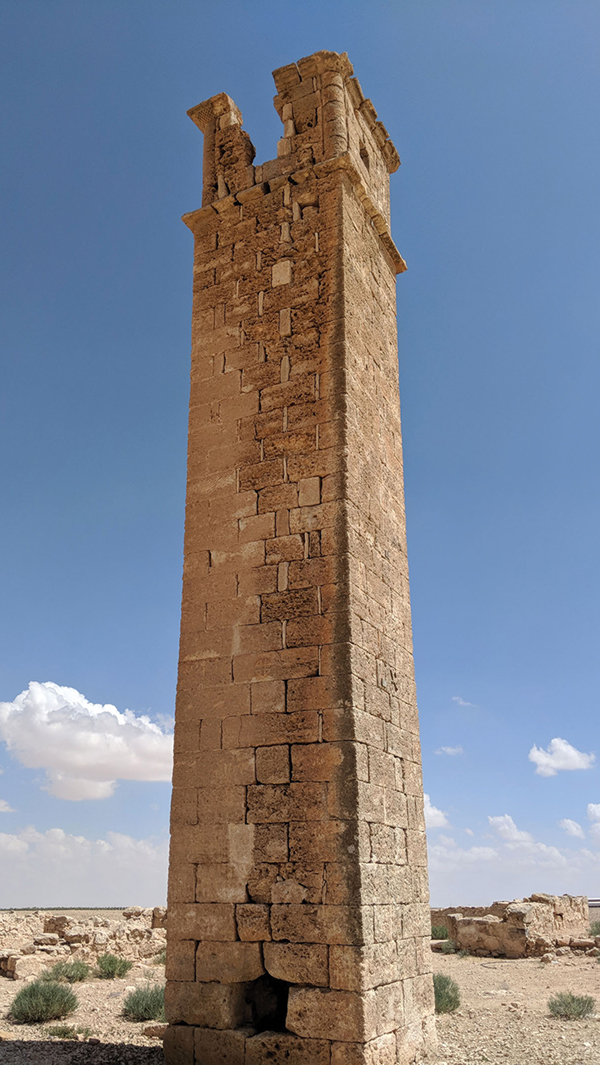
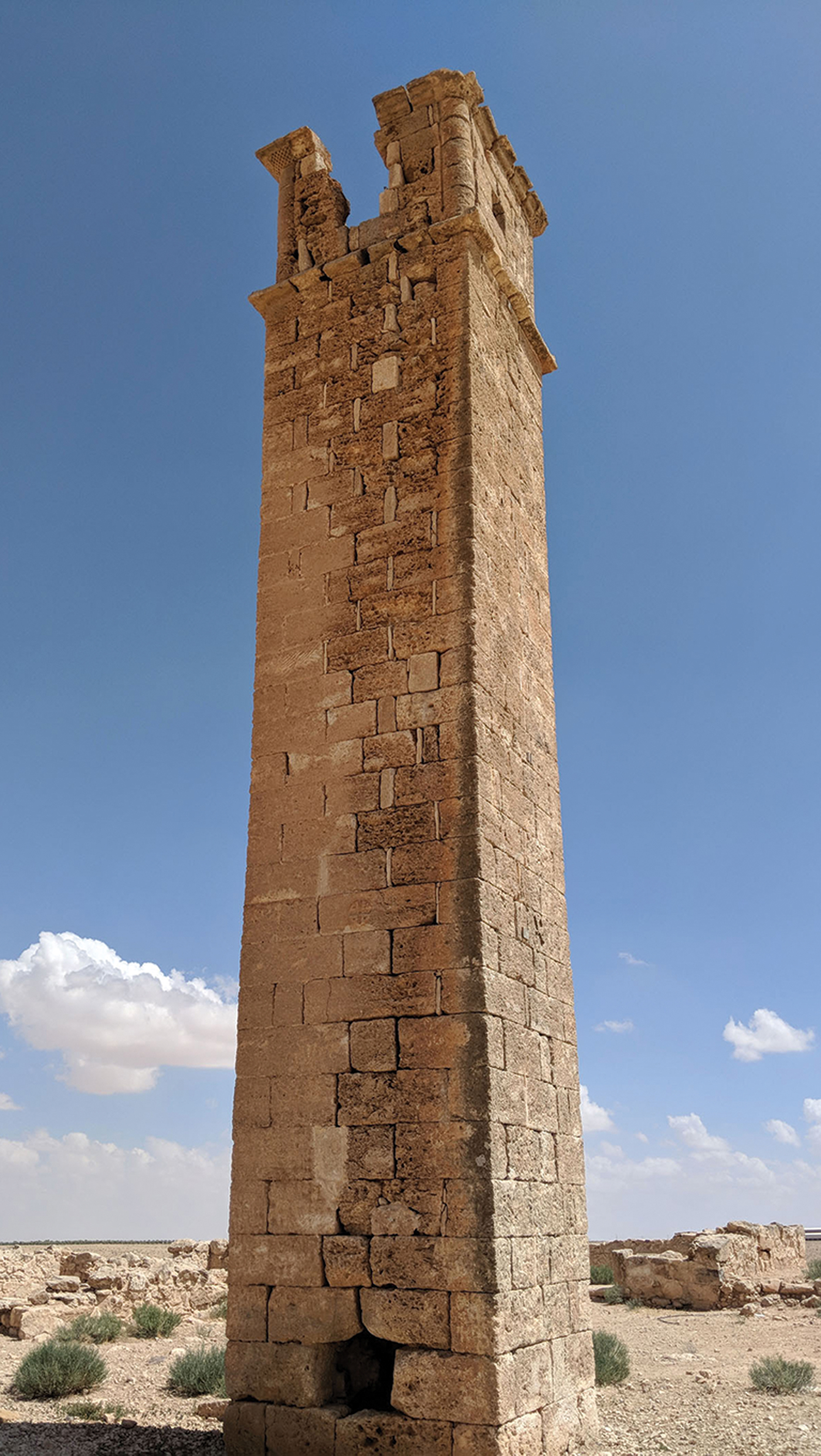
St Anthony founded the first anchorite monastic community in the Egyptian desert in the late third century AD. This was followed by cenobitic organisations in the Desert of Sketis, south of Alexandria, in the mid fourth century (Meinardus Reference Meinardus1992). Egyptian monks were forced to flee from Egypt in the early fifth century, and, according to Peter the Iberian, some settled at Mount Nebo, establishing an Egyptian monastic presence in this area (Medebielle Reference Medebielle1987; Wilkinson Reference Wilkinson2002). In addition to Peter's account, evidence for Egyptian monastics appears in an Aramaic inscription at al-Quwaysmah (c. 717/18 AD). The name ‘bd-Raytou probably refers to a monk who served at the monastery of Raytou on the Sinai coast (Piccirillo Reference Piccirillo1984). The monastic movement in northern Syria also influenced the communities at Mount Nebo. The practice of stylitism, for example, which emerged in northern Syria in the early fifth century and was largely confined to this region, can be found amongst the Mount Nebo monasteries (Foran Reference Foran2005b). Architectural evidence for stylite towers at ‘Ayn al-Kanisah and Umm al-Rasas (Figure 6), as well as a mosaic inscription from ‘Ayn al-Kanisah, indicates a northern Syrian connection (Foran Reference Foran2005b).
Stylite tower at Umm al-Rasas (photograph by D. Foran).
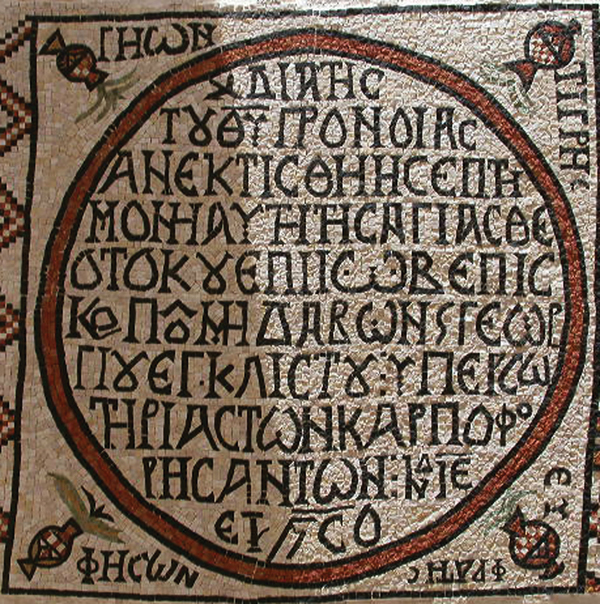
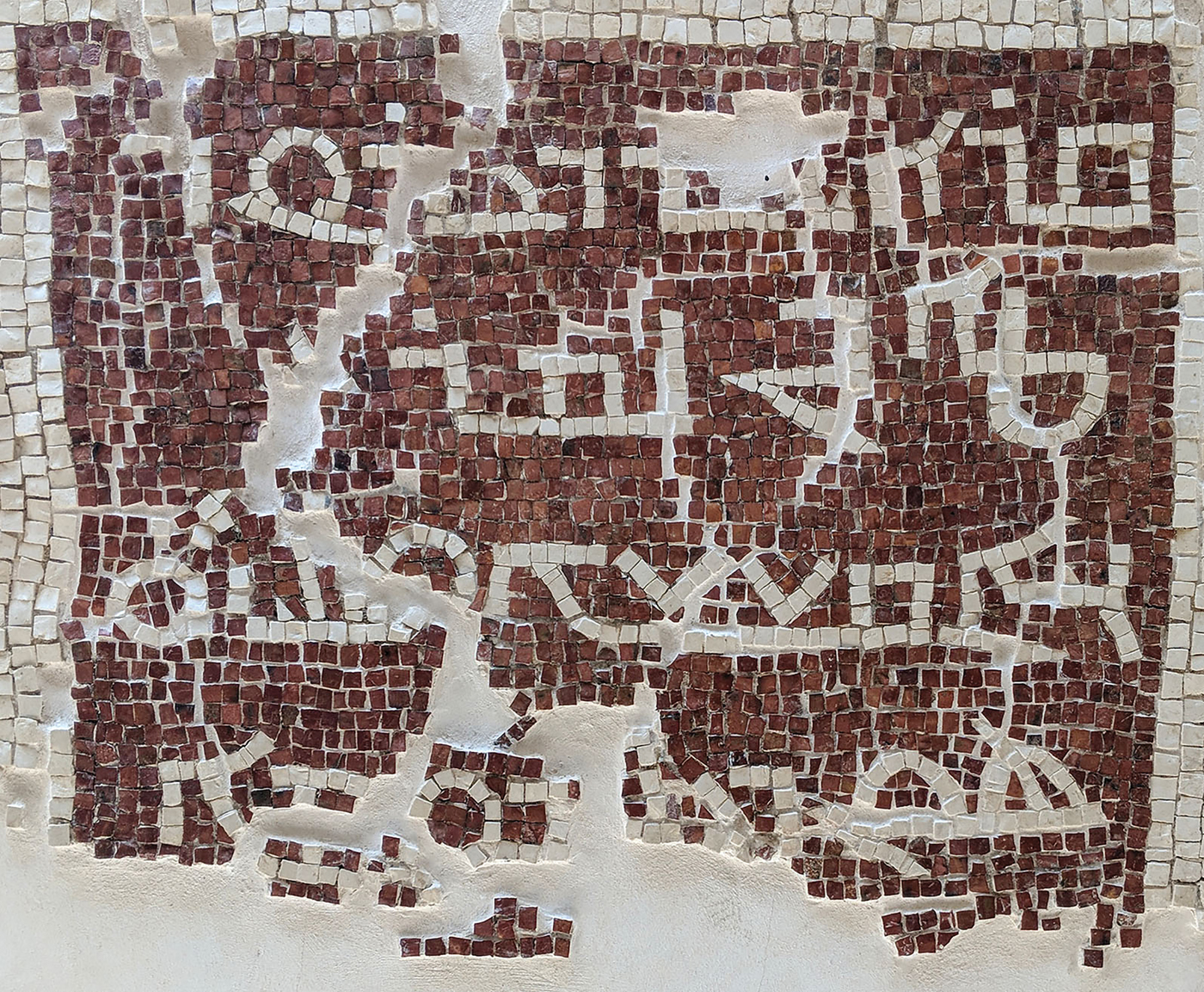
Mosaic inscriptions provide similar direct evidence for cultural diversity among the first monks and clerics of the region. An Aramaic floor inscription at the Church of Kaianus at Uyun Musa (late fifth to early sixth centuries AD) is the earliest example of this script in Transjordan (Figure 7) (DiSegni Reference DiSegni, Piccirillo and Alliata1998). The priest Gayyân mentioned in this text, may be the mid fifth-century AD Bishop of Madaba, referred to by Cyril of Scythopolis in the Life of St Euthymius (Price & Binns Reference Price, Binns and Price1991). The Bishop of Madaba mentioned in the records of the Council of Chalcedon—recorded approximately six years before these events—was named Gaianus (Medebielle Reference Medebielle1987); similarly, according to the Life of St Euthymius, there was a Gaianus from the same city as Euthymius—namely Melitene (modern Malatya), in central Anatolia. If the priest Gayyân mentioned in the Church of Kaianus mosaic is indeed Gaianus, the first-known Bishop of Madaba, it not only indicates a connection between the Christian communities of central Anatolia and Transjordan, but also an important link between the monastic communities of the Judean Desert and those of the Nebo region.
Mosaic inscription from the Lower Church of Kaianus. The text reads: The lector will remember the good works of our lord, Gayyân the priest (or son of) Kasiseus, and the heirs who made (or restored) the furnishings (or parts) of … (Piccirillo & Alliata Reference Piccirillo and Alliata1998) (photograph by D. Foran).
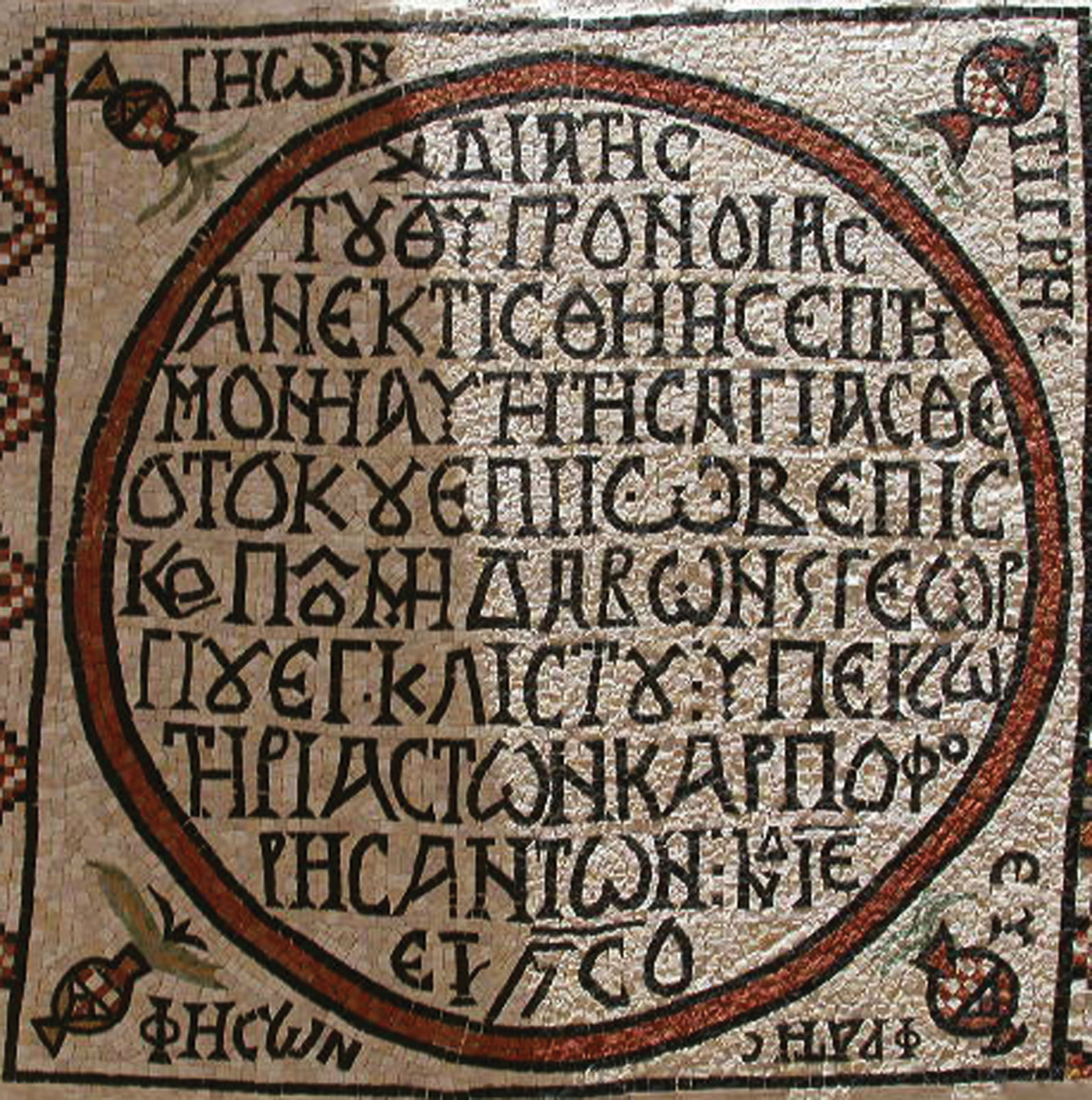
Moreover, the names of the monks at Mount Nebo may indicate regional origins and can thus be indicative of diverse geographic and cultural backgrounds. Of the 44 inscriptions found on dedicatory mosaics naming monastics at Mount Nebo, most have either a Semitic (39 per cent) or a Greek (48 per cent) root (Figure 8); only a few (7 per cent) have Latin names, such as Longinus (Foran Reference Foran2005a). The names of Semitic origin range from well known to unique. Kasiseus, for example, is an Arabic name that appears frequently in the Nebo region, but is rare elsewhere. The name Robebus/Rabebus is also particular to this area, the most notable reference being the dedicatory mosaic of the Robebus Chapel (Figure 2). Many Greek names, such as John, are common, while Alexis—one of the first abbots at Mount Nebo—is rare and does not appear in any other inscription in Palestine. The name Procapis is unusual in that it is an abbreviated version of Procopius, a Caesarean martyr saint.
The dedicatory inscription from the Chapel of the Theotokos at Ayn al-Kanisah lists two names, Job (Semitic) and George (Greek). The text reads: By the providence of God this venerable monastery of the holy Mother of God (Theotokos) was rebuilt, in the days of Job, bishop of Madaba, and of George the recluse, for the preservation of all the benefactors, indiction 15, year 6270 [762 AD] (Piccirillo & Alliata Reference Piccirillo and Alliata1998) (photograph by D. Foran).
Onomastic evidence for geographic origins is, nevertheless, problematic, as foreigners often adopted popular local names in honour of their new community; conversely, local monastics might have assumed non-local names in honour of a famous person or saint (Foran Reference Foran2005a). Furthermore, due to iconoclastic damage, not all names are preserved. The complete absence of feminine names in the Mount Nebo vicinity (Piccirillo & Alliata Reference Piccirillo and Alliata1998) may be due to issues of preservation, females adopting male names, or simply the absence of female monastics.
Conclusion
Mount Nebo remains a popular pilgrimage destination today due to its historical and spiritual association with the Prophet Moses (Orekat Reference Orekat2016). In the Byzantine period, it also functioned as a crossroads for travellers, traders and pilgrims, connecting surrounding polities of the Old World. Biological and archaeological evidence supports a monastic ethnic ‘mosaic’ at Mount Nebo. Overall isotopic variability suggests that approximately half of those sampled from Mount Nebo consumed water and foodstuffs from other geographic regions during childhood, indicating that these people arrived at Mount Nebo sometime later in life, after enamel formation was complete. Furthermore, the monasteries within the Mount Nebo network demonstrate—at varying levels in their architecture and the range of names from mosaic inscriptions—that there was a foreign presence in this region during the Byzantine period. Although the funerary practices of the monastic community obscured the identity of individuals in death—as it did in life—multiple lines of evidence indicate the diverse ethnic and geographic origins of those who lived and died at Mount Nebo.
Acknowledgements
We would like to thank the Department of Antiquities of Jordan (Madaba and Amman); the Franciscan Institute of Archaeology, including Fathers Piccirillo, Pappalardo, Alliata, Fergus and Rami; Franco Sciorilli; Akmed el-Wukhyan and family; American Center of Oriental Research; University of Pittsburgh CRDF and A&S Small Grants (PI: M.A. Judd); and The Wenner-Gren Foundation (#38029, PI M.A. Judd).