



Globally, stunting in childhood remains a substantial public health concern, with an estimated 156 million children under 5 years of age stunted in 2015( 1 ). In South Africa, the prevalence is particularly high for a country of middle-income status( Reference May and Timæus 2 ), with the latest estimates from 2012 suggesting that 27 % of children younger than 3 years of age are stunted( Reference Shisana, Labadarios and Rehle 3 ). South Africa was recently identified as one of thirty-four countries responsible for 90 % of the global burden of child malnutrition( Reference Bhutta, Das and Rizvi 4 ). The persistently high prevalence in South Africa is surprising given the country’s level of economic development and the introduction over the last two decades of a child support grant and free health care for mothers and babies.
The consequences of stunting in early childhood have been widely studied across various disciplines, and include impaired cognitive function, poor schooling outcomes, reduced earnings in adulthood and poor maternal reproductive health outcomes( Reference Walker, Chang and Powell 5 – Reference Dewey and Begum 7 ). Research in South Africa has similarly found that poor nutrition in early childhood is associated with lower levels of cognitive function and worse schooling outcomes( Reference Victora, Adair and Fall 6 , Reference Yamauchi 8 – Reference Casale 11 ).
Given the high and persistent prevalence of stunting in South Africa( Reference Said-Mohamed, Micklesfield and Pettifor 12 ) and a growing body of research documenting the negative consequences, there is surprisingly a rather limited South African literature investigating the causes of stunting in young children. One of the main reasons for this is a lack of suitable data to empirically model the various determinants of stunting. Much of the research that has been conducted thus far has focused on one particular factor or a limited set of factors( Reference May and Timæus 2 , Reference Jones, Griffiths and Adair 13 – Reference Ardington and Gasealahwe 16 ). However, the high degree of correlation between many of the determinants of stunting suggests that the results from studies that do not estimate comprehensive empirical models may suffer from omitted variable bias( Reference Fenske, Burns and Hothorn 17 ). This is a concern that applies not just to the South African literature on the determinants of stunting, but more generally to research in this field in other low- and middle-income countries( Reference Paxson and Schady 18 , Reference Chen and Li 19 ). Much of the work on stunting does recognise the importance of various factors, both proximate and distal, that are identified in the conceptual literature and represented in the well-known UNICEF 1990 framework on child malnutrition (updated in the second Lancet Maternal and Child Health series( Reference Black, Allen and Bhutta 20 )). However, empirically operationalising this model is often limited by data availability.
Another limitation of the empirical work in this area is that often the regression strategy adopted is not suitable to reveal mediating relationships between the different determinants of stunting( Reference Paxson and Schady 18 ). Including all groups of determinants, both proximate and distal, in the same regression may attenuate the omitted variable bias concern, but it can result in underestimating the influence of the more distal determinants( Reference Weitkunat and Wildner 21 ), and these underlying causal factors may be of particular interest in social science research and policy. Although many studies have used a multistage or sequential regression approach, this has generally involved two or three stages of adding progressively more determinants, which does not allow specific mediating effects to be identified( Reference Frost, Forste and Haas 22 ).
The objective of the present paper was twofold. First, a model of stunting was estimated in which all the main determinant groups were accounted for in the regression analysis, thus attenuating the omitted variable bias concern. Second, multiple mediator analysis was used to identify the various pathways through which maternal education, a key distal factor, affects stunting. The study focused on mother’s education for several reasons. First, a majority of children in South Africa, over 70 %, live with their mother resident in the household (while only 30 % of children live with their father resident in the household)( Reference Posel and Rudwick 23 , Reference Ward, Makusha and Bray 24 ), making the mother the most obvious channel through which child health can be accessed and improved in the early years. Second, mother’s education is amenable to policy manipulation and is receiving widespread attention in the development and public health literatures( Reference Chen and Li 19 , Reference Frost, Forste and Haas 22 , Reference Abuya, Onsomu and Kimani 25 , Reference Semba, de Pee and Sun 26 ). Third, as will be discussed further below, almost all the determinant groups included in the fully specified model of stunting can be hypothesised to operate through maternal education( Reference Frost, Forste and Haas 22 , Reference Abuya, Onsomu and Kimani 25 ).
To understand the determinants of stunting at 2 years of age, data were drawn from the Birth to Twenty Plus (Bt20) cohort study from Johannesburg, South Africa. The data set was particularly well suited to the empirical strategy in the present paper not only because it has longitudinal information on the child and his/her environment from birth, but also because of the wealth of information collected that has not yet been fully explored in the existing research. This includes data on child growth, the home environment, caregiver characteristics, socio-economic circumstances, access to services and, importantly for the present study’s purposes, illness, breast-feeding and dietary diversity. This allowed a fairly comprehensive model of stunting to be estimated, as variables capturing both the proximate and distal causes of stunting are available in the data.
Methods
Data and sample
The Bt20 cohort study is a longitudinal study of children who were born in Johannesburg (South Africa’s largest metropole) over a 7-week period between April and June 1990. Information was collected from mothers at antenatal clinics, from birth records and through face-to-face interviews with the caregiver and child at least once per year, and more often during infancy. The sample of eligible singleton births was 3273, with data collected from approximately 1600 to 2200 participants at each interview point. These response rates are within the range documented for other birth cohort studies in developing countries( Reference Richter, Norris and Pettifor 27 ). Details of the ongoing data collection process in Bt20 have been well documented elsewhere( Reference Norris, Richter and Fleetwood 28 ).
For the empirical work, data were drawn predominantly from the first two years of the study. The outcome variable of interest was stunting at 2 years, with stunting defined as a height-for-age <−2 standard deviations below the median of the healthy reference population (i.e. height-for-age Z-score (HAZ) <−2), using the WHO Child Growth Standards( 29 ). Of the initial sample of 3273 children, contact was made with 1873 in year 2, of which 1805 children had data on HAZ. A comparison of these 1805 children with the remaining 1468 children from the initial sample showed no statistically significant difference between the two groups on some key variables such as the child’s sex, birth weight, and whether the child was born in a public or private hospital. A substantial part of the sample attrition appears to have been due to a large number of the mothers initially enrolled in the sample returning to rural areas within the first year of the child’s birth (suggesting that they had come to the city to give birth in better health facilities)( Reference Norris, Richter and Fleetwood 28 ). It is therefore important to note that the sample of children analysed is most closely representative of those who were born in the city and who remained urban-dwellers in the first two years of their life.
Model
The empirical approach had two main features in line with the objectives described above. First, a fully specified model of stunting was estimated which attempted to incorporate all the key determinant groups, both proximal and distal. Recent research, influenced by the systems approach in epidemiology, has emphasised examining all the determinants of a particular outcome simultaneously to avoid oversimplified regressions that are susceptible to omitted variable bias( Reference Fenske, Burns and Hothorn 17 ). The choice of factors to include in the empirical model was guided by the determinant groups described in the UNICEF conceptual framework on child malnutrition, where the proximate causes are dietary intake and disease, while the more distal causes are the underlying household and environmental factors, such as access to resources, the care environment, maternal factors and access to services( Reference Black, Allen and Bhutta 20 ). Within each of the groups attempts were made to attenuate collinearity concerns by, for example, using principal components analysis (PCA) to combine information from multiple variables into indices, as has been done elsewhere( Reference Jones, Griffiths and Adair 13 ).
Second, an analysis was conducted to ascertain which of these determinant groups acted as pathways, or mediators (M), through which the key independent variable of interest (X), i.e. maternal education, affected the outcome variable (Y), i.e. stunting. The multiple mediator model suggested by Preacher and Hayes( Reference Preacher and Hayes 30 , 31 ) and others( Reference VanderWeele and Vansteelandt 32 ) was used. This approach considers all the mediators (M1, M2, …, M j ) jointly in estimating the indirect effects of X on Y, and is more appropriate than the more common single mediator analysis if there are multiple mediators in the model, some of which are thought to affect each other or may be collinear( Reference Preacher and Hayes 30 , Reference VanderWeele and Vansteelandt 32 ). In other words, in this model, the specific indirect effect of a particular pathway M1 is the unique ability of M1 to mediate the X→Y relationship, controlling for all other mediators M2, …, M j in the model. The total mediated or total indirect effect of X on Y is the sum of these specific indirect effects of M1, M2 through to M j .
Ordinary least-squares regression analysis was used to accommodate the multiple mediator model analysis( 31 ); however, when comparing the average marginal effects derived from probit models with the ordinary least-squares regression coefficients, no notable differences in size effects or P values were found for any of the variables. As in Preacher and Hayes( Reference Preacher and Hayes 30 ), the product-of-coefficients approach for producing the indirect coefficients in the multiple mediator analysis was used, and bootstrap standard errors and confidence intervals were calculated. Tests for collinearity in the regression when all the variable groups were included simultaneously were conducted, and it was found that the variance inflation factors for the variables ranged between 1·03 and 2·13 (a common rule-of-thumb is that values of 10 or higher are cause for concern).
The pathways specified from maternal education to stunting in the empirical modelling were guided by the UNICEF conceptual framework as well previous research on this topic by Frost et al. for Bolivia( Reference Frost, Forste and Haas 22 ) and later applied by Abuya et al.( Reference Abuya, Onsomu and Kimani 25 ) in the Kenyan context. The mediator groups and the choice of variables for each group are described in more detail below.
Description of pathways and variables
The first pathway was captured by the birth weight Z-score (based on the WHO 2006 Child Growth Standards( 29 )), which could be interpreted as separating the effect of maternal education into a prenatal and postnatal component. In other words, it attempted to control for factors in the antenatal period that may have limited or promoted intra-uterine growth.
The second pathway was the child’s feeding practices, one of the most important immediate determinants of stunting and an obvious potential pathway from maternal education to stunting. Infants receive the nutrients they need through both breast-feeding and supplementary foods in the first two years. Information on the duration of breast-feeding and dietary diversity when the child was aged 1 year were therefore included. Dietary diversity was captured by a food variety score (FVS), calculated from detailed information gathered in an FFQ at 1 year. The questionnaire in Bt20 was based on an FFQ validated in older ages( Reference Margetts, Cade and Osmond 33 ) and modified to ensure the most commonly consumed local food items by infants/children were included, drawing on formative research in a multi-ethnic local population group( Reference MacKeown, Cleaton-Jones and Edwards 34 ). The FFQ collected information on 149 food items, with respondents reporting whether the child usually consumed each item monthly or more frequently. The FVS, a commonly used measure of dietary diversity, is a simple count index of how many food items the child consumed( Reference Steyn, Nel and Nantel 35 – Reference Saibul, Shariff and Lin 37 ). The FVS has been found to be correlated with nutrient adequacy as well as height-for-age and weight-for-age Z-scores among South African children( Reference Steyn, Nel and Nantel 35 ). Alternative measures of dietary diversity were also calculated using the data from the Bt20 FFQ, including the FAO’s twelve-food group score (the Household Dietary Diversity Score)( Reference Kennedy, Ballard and Dop 38 ), the WHO’s infant ‘minimum dietary diversity’ indicator( 39 ), and the more complex measure described in Drescher et al.( Reference Drescher, Thiele and Mensink 40 ) which takes into account the distribution and healthiness of the foods consumed. None of these measures predicted stunting in the results, so we reverted to the FVS for the final analysis.
The third mediator variable group included information on illness/disease, another proximate causal factor in stunting and a likely pathway through which mother’s education might affect stunting. The incidence of disease in the first two years was proxied by symptoms of illness the child exhibited. The symptoms data were collected at 6 months, 1 year and 2 years, and the questions asked whether the child had experienced each of nine symptoms in the previous two weeks. PCA was used to group symptoms into three indices: respiratory (four symptoms), eyes and ears (two symptoms), and gastrointestinal (three symptoms).
The fourth pathway group included information about the care environment in two variables: whether the mother was the principal caregiver and an index capturing the relationship between the mother and child and their well-being. The index was created with PCA based on whether the interviewer responded positively to a series of six questions in the year 2 survey: does the child look clean and well looked after; does the child appear happy and secure in the mother’s presence; does the mother seem unhappy and worn down; does the mother demonstrate negative feelings towards the child; does the mother appear confident and assured in her care for the child; and does the mother show affection towards the child? Cronbach’s α for this index was 0·9018, suggesting a very high degree of internal consistency.
The fifth pathway group included proxies for the mother’s reproductive autonomy and behaviour, namely maternal age, the birth order of the index child and a measure of birth spacing (equal to 1 if a younger sibling was born within 24 months of the index child’s birth). More educated mothers are hypothesised to have greater reproductive autonomy, giving birth to their children later in life and having fewer children( Reference Frost, Forste and Haas 22 ). It is expected that the risk of stunting decreases the fewer children the mother has, possibly reflecting less intrahousehold competition over resources (not only financial, but also the mother’s time and energy).
The sixth pathway was the mother’s attitude towards modern health care, proxied by the utilisation of available health care, as has been done elsewhere( Reference Frost, Forste and Haas 22 ). A score reflecting the number of vaccination visits, out of a possible five, the child was taken to by his/her first birthday was included, as strong correlations between attitudes and immunisations have been found previously( Reference Abuya, Onsomu and Kimani 25 ). The health utilisation variable was coded 0 if two or fewer visits were completed, 1 if three or four visits were completed, and 2 if all five vaccinations were administered.
The seventh pathway was access to services, captured by an index based on the PCA of three items: whether the household had electricity, an indoor flush toilet, and hot and cold indoor running water.
The final pathway group represented socio-economic status (SES), measured by an asset index and a parental occupation score. The asset index was created through PCA of the following variables: ownership of a television, fridge, washing machine, telephone, the dwelling the household lives in and the ratio of people to sleeping rooms (crowding). The occupation index allocated each parent’s labour market status into one of six categories: 0=unemployed, housewife, student; 1=informal sector; 2=unskilled manual or routine non-manual labour; 3=semi-skilled manual, unskilled supervisor, white collar and inspectional; 4=semi-professional, lower executive, skilled manual, semi-skilled supervisor; and 5=independent, high profession, manager and executive. The parents’ scores were averaged to create a final score ranging from 0 to 5.
Results
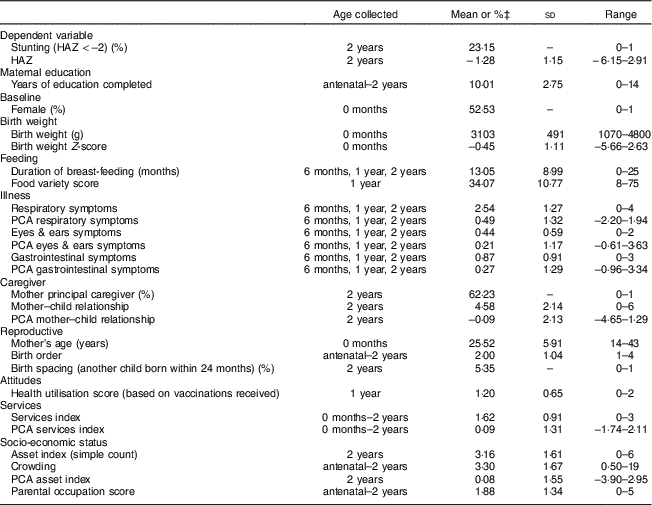
Summary statistics are presented in Table 1 for the analytical sample of children who had non-missing data on HAZ at age 2 years and the covariates (n 691). Mean HAZ at 2 years for this sample was −1·28 (sd 1·15) and the prevalence of stunting was 23 % (160/691).
Summary statistics for the analytical sampleFootnote † from the Birth to Twenty Plus (Bt20) cohort study of children born in April–June 1990 in Soweto-Johannesburg, South Africa
HAZ, height-for-age Z-score; PCA, principal components analysis.
† The analytical sample consists of children with non-missing data on HAZ at 2 years and the covariates (n 691).
‡ The mean/percentage column shows the mean for continuous variables and the percentage for binary variables.
The mean birth weight for the sample of children was 3103 (sd 491) g. Children were breast-fed on average for 13 months and the mean FVS suggests that a typical child in the sample consumed about thirty-four different food items on a monthly basis. Despite including data from three time points (6 months, 1 year and 2 years), the rates of reporting on symptoms of illness were quite low, with the exception of the respiratory group: on average 2·54 (sd 1·27) of the four respiratory symptoms were exhibited at least once in the three time periods.
Mothers had 10 years of completed education on average, and the mean maternal age at birth was 26 (sd 5·91) years. Birth order ranged from 1 to 4, with the index child being on average the second child born to their mother; and for about 5 % of children in the sample, a sibling was born within 24 months.
The children’s households had a mean of 1·6 (sd 0·91) of three essential services (water, electricity, toilet) and 3·2 (sd 1·61) of the six assets for which data were available.
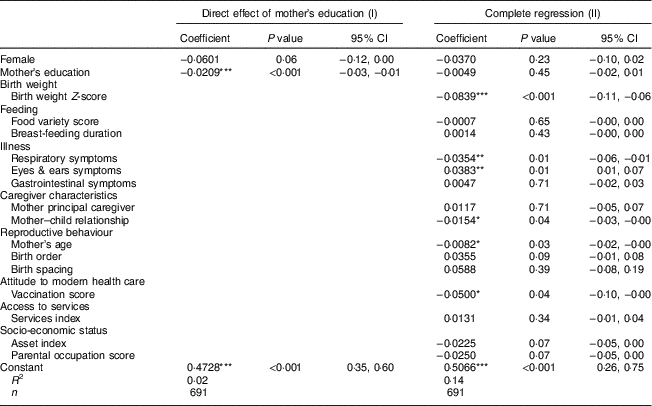
Table 2 contains the results of the multivariate regression analysis. Column I shows the regression of stunting v. mother’s education only, controlling for the sex of the child; and Column II shows the fully specified regression model, where all the variable groups hypothesised to predict stunting were included simultaneously. The former shows the total effect of mother’s education on stunting while the latter shows the direct effect of mother’s education on stunting, once the other variable groups were included in the regression. The results in Column I suggest a protective effect of mother’s education against stunting, with a total effect of −0·021 (P<0·001; 95 % CI −0·03, −0·01). When all the variables were included simultaneously in Column II, the effect of mother’s education fell to −0·0049 (P=0·45; 95 % CI −0·02, 0·01), suggesting the other variable groups included absorbed, or mediated, most of the maternal education effect.
Multivariate regression results for stunting at 2 yearsFootnote † from the Birth to Twenty Plus (Bt20) cohort study of children born in April–June 1990 in Soweto-Johannesburg, South Africa
*P≤0·05, **P≤0·01, ***P≤0·001.
† The sample size in each regression model is restricted to Bt20 participants who had data on height-for-age Z-score and all variables in the Complete model. Coefficients presented are ordinary-least squares regression coefficients.
Variables in the fully specified regression that were negatively associated with the likelihood of stunting were the birth weight Z-score (−0·084; P<0·001; 95 % CI −0·11, −0·06); the index capturing the relationship between mother and child (−0·015; P=0·04; 95 % CI −0·03, −0·00); mother’s age (−0·008; P=0·03, CI −0·02, −0·00); and the vaccination score (−0·05; P=0·04; 95 % CI −0·10, −0·00). The variable measuring symptoms of illness related to eyes and ears was positively associated with the likelihood of stunting (0·038; P=0·01; 95 % CI 0·01, 0·07). Counterintuitively, symptoms of respiratory illness were negatively related to stunting (−0·035; P=0·01; 95 % CI −0·06, −0·01), which could be due to a greater likelihood of caregivers reporting these symptoms among better-off children.
Table 3 presents the results of the multiple mediator analysis, which estimated the indirect effects of maternal education on stunting, showing the relative strength of the various mediator pathways. The proportion of the total maternal education effect that was mediated by the various pathways is also displayed. The P values and bootstrap CI indicate that only the birth weight and SES pathway groups were mediators in the relationship between maternal education and stunting. The most important pathway in the relationship between maternal education and stunting was SES, with this mediator group accounting for 41 % (−0·0085/−0·0209; P=0·01; 95 % CI −0·016, −0·003) of the total maternal education effect on stunting. The birth weight pathway was found to account for 18 % (−0·0037/−0·0209; P=0·02; 95 % CI −0·0074, −0·0008) of the total maternal education effect on stunting. The final row in Table 3 shows that all the mediator groups combined accounted for 77 % (−0·0161/−0·0209; P<0·001; 95 % CI −0·025, −0·008) of the total maternal education effect on stunting.
Multiple mediation analysis of the effect of mother’s education on stunting at 2 years from the Birth to Twenty Plus (Bt20) cohort study of children born in April–June 1990 in Soweto-Johannesburg, South Africa
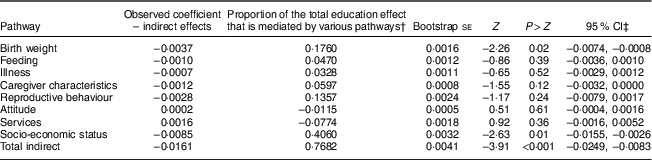
† The proportion of the total effect that is mediated is calculated as the indirect effect/total effect. The total effect (−0·0209) is equal to the total indirect effect (−0·0161) plus the direct effect (−0·0049), the latter being the coefficient on mother’s education in the fully specified regression model with all mediators and controls (shown in Table 2, Column II).
‡ Bias-corrected and accelerated bootstrap CI displayed (1000 bootstrap samples). These are non-symmetric and reflect the skewness of the sampling distribution of the product coefficients. Percentile and bias-corrected CI produced similar results.
Finally, given the relatively small sample size for the regression analysis, the group of children in the analytical sample (n 691) were compared with the remaining group who were contacted in year 2 but were dropped from the regression sample because of missing data on the covariates (n 1114 (i.e. 1805−691)). Based on t tests of differences in means, children in the analytical sample were found to be more likely to be stunted (23·2 v. 18·9 %; P=0·03), their mothers were marginally more educated (10·01 v. 9·65 years of schooling; P=0·01), they were breast-fed for longer (13 v. 11 months; P<0·001), and they reported a higher number of respiratory (2·54 v. 2·18; P<0·001), eyes and ears (0·44 v. 0·33; P<0·001) and gastrointestinal symptoms (0·87 v. 0·67, P<0·001). As an informal test to try to ascertain the effect of these differences on the regression results, bivariate regressions of stunting v. each individual covariate were performed, first restricting the sample to the 691 children who had data on all covariates and then using the full sample available. The only noteworthy differences were that mother’s age had a smaller effect on stunting for the unrestricted sample (−0·0021; P=0·17; 95 % CI −0·0051; 0·0009; n 1804) compared with the smaller analytical sample (−0·0068; P=0·01; 95 % CI −0·0122; −0·00153; n 691), and there was a much smaller association between respiratory symptoms and stunting for the unrestricted sample (−0·0059; P=0·38; 95 % CI −0·0194; 0·0075; n 1711) compared with the smaller analytical sample (−0·0288; P=0·02; 95 % CI −0·0525; −0·005; n 691).
Discussion
In the present paper, attempts were made to estimate a comprehensive empirical model of the predictors of stunting at 2 years, focusing on the mechanisms through which maternal education affected the probability of child stunting in South Africa. The results suggested that, as has been found in other work( Reference Timæus 15 , Reference Chen and Li 19 , Reference Semba, de Pee and Sun 26 , Reference Chopra 41 ), maternal education was indeed an important determinant of stunting. However, much of the effect of maternal education on stunting (41 %) was explained by its association with SES (measured by an asset index and a parental occupation index). This suggests that a large part of the maternal education effect on stunting was due to the health and growth benefits that accompany increased resources and occupational standing.
Another 18 % of the maternal education effect on stunting was mediated by the birth weight pathway. To the extent that birth weight and HAZ at 2 years capture the same information about the child’s growth, this effect could perhaps be interpreted to mean that the effect of maternal education on stunting could be divided into a prenatal effect (of approximately 20 %) and a postnatal effect up to 2 years (of approximately 80 %). This implies that education improves the ability of the mother to foster a healthy environment for the child’s intra-uterine growth. While it is assumed that birth weight Z-score was a fairly good proxy for the cumulative prenatal effect, it may not capture the full effect. Unfortunately, the analysis was limited by a lack of relevant prenatal variables in the data set.
The percentages of the total maternal education effect mediated by the other hypothesised mediator groups – namely feeding, illness, the care environment, the mother’s reproductive behaviour, attitudes towards health care and access to services – were much smaller (between 1 and 13 %) and these indirect effects were not found to be significantly different from zero in the multiple mediation analysis. This suggests that either these were not clear pathways through which maternal education affected stunting in the sample of children, or that other factors were playing a role, for example household or partner social support.
There are at least three key strengths to the present study’s findings. First, a relatively comprehensive model of stunting was estimated and therefore most (77 %) of the maternal education effect on stunting was ‘explained’ by the various pathway groups. Similarly, while higher SES was found to be one of the main pathways through which maternal education affected stunting, it is interesting to note that the SES variables had a very small effect in the final fully populated model. This indicates that, to a large extent, pathways through which SES operates were also accounted for in the model.
Second, the results were consistent with other work on this topic. Frost et al.( Reference Frost, Forste and Haas 22 ) analysed similar pathway groups using data from Bolivia, and although their complete model contained fewer pathway groups than the model in the present paper and they did not formally test the mediation effects in a multiple mediator model, the maternal education coefficient was reduced by 59 % following the joint introduction of the various pathways. The pathway that explained most of the effect of maternal education on stunting in their study was also SES (40 %), with attitudes towards medicine, general health knowledge (not included in the present study’s model) and reproductive behaviour producing smaller mediated effects (22, 15 and 11 %, respectively). The differences in the relative effects of the pathways identified could reflect real differences between the South African and Bolivian contexts. Having said this, the similarity across the two country study results is notable. Abuya et al.( Reference Abuya, Onsomu and Kimani 25 ) studied the role of maternal education in determining health outcomes in Kenya, using similar groups and indicators to Frost et al.( Reference Frost, Forste and Haas 22 ); however, as they did not perform regression models separately for each determinant grouping as in Frost et al. ( Reference Frost, Forste and Haas 22 ), they were unable to isolate the extent to which each acts as a pathway. Nevertheless, in line with the results of the present paper, they found that education was an important factor in predicting stunting, but that this effect dropped away once other covariates, such as SES, attitudes, autonomy and parity, were included in the model.
Third, even though some of the determinant groups in the present study’s empirical analysis did not appear to be significant pathways through which mother’s education operated, a number of these variables predicted stunting in the regression model with all the variables included jointly (giving us some confidence in the measures used). This implies that they were important determinants of stunting, but independent of mother’s education. For example, the vaccination score, used as a proxy for the mother’s attitude to modern health care, was negatively related to stunting, potentially capturing that more engaged and proactive mothers (regardless of education) helped reduce the risk of stunting in their children. Mothers might also have gained knowledge and support related to child development when visiting a clinic for the vaccination to be administered. Similarly, a more positive evaluation of the mother and child’s relationship and well-being was negatively related to stunting, even though it did not mediate the maternal education effect on stunting. In other words, the quality of the care environment independently impacted the child’s growth, without necessarily acting as a pathway through which mother’s education operated.
Overall, many of the factors that were protective against stunting in the final analysis, whether they operated through maternal education or not, were related to the mother’s involvement in the child’s life. This reinforces the idea that to optimise child growth, mothers need to be supported and empowered in providing care, possibly through enhanced ante- and postnatal services.
Despite producing some important findings, there were limitations to the work. The Bt20 data are now over 20 years old and there have been a number of changes since the early 1990s in maternal and child policies. Being able to repeat this analysis using more contemporary data would be useful in identifying whether the relative importance of the various factors outlined above has changed with the economic and nutritional transitions that have accompanied South Africa’s democratisation. The problem of sample attrition and missing data on the covariates, which could bias and affect the precision of the results, was also noted. The resulting analytical sample was predominantly representative of children who were born in Johannesburg during the study period and remained there for at least the first two years of their life. Therefore, the mechanisms identified in the present paper may not be applicable to rural areas, where the prevalence of stunting is generally higher in South Africa, and the causal factors may be different. Nevertheless, until new data of this nature are collected, the Bt20 study remains unique in providing detailed longitudinal data on child health and the environment in an urban context in South Africa. Given that the problem of child stunting in South Africa has not been solved, as is clear from the persistently high prevalence recorded even in the most recent national data sets, fully exploring the available information in this data set remains a useful exercise.
There are also important lessons to be learnt from the Bt20 analysis for future data collection efforts. Bt20 collected detailed information on the quality of the child’s care environment and the mother’s involvement in the child’s life, information which is generally not collected in larger household surveys. As shown in the results, the quality of the care received was an important determinant of child outcomes, but in many studies it is simply omitted and treated as an ‘unobservable’. Further, the data collected on breast-feeding, dietary diversity and illness presented the opportunity to explore proximal, in addition to distal, causes of stunting. However, the lack of predictive power of many of these variables suggests that one should consider whether there are more accurate and sensitive ways of collecting data on these aspects of the child’s life. Information on these variables is difficult to collect through questionnaires conducted at discrete points in time and is potentially more prone to recall bias than, for example, questions related to the number of assets in the household or the number of vaccinations received (where there is a physical record). In future data collection, alternative methods of questioning could be explored, such as introducing a 24 h food recall questionnaire( Reference Kennedy, Ballard and Dop 38 , Reference Kennedy, Pedro and Seghieri 42 ), and collecting feeding and illness data more often during infancy.
Conclusion
In conclusion, while distal factors may be key to understanding the broader environmental factors determining poor child outcomes, understanding the more proximal pathways through which they operate is also important in trying to think through the necessary interventions. These interventions may be to strengthen policy and/or services to better support women prior to, during and after pregnancy.
Acknowledgements
Acknowledgements: The authors would like to thank Rihlat Said-Mohamed for sharing her data from Bt20 on infections/illness and for advice on grouping symptoms, and Julian May, Stephen Devereux and Ian Timaeus for their comments on the working paper version of this study. Financial support: The University of the Witwatersrand, Johannesburg, the South African Medical Research Council, the Human Sciences Research Council of South Africa, and Wellcome Trust (UK) have supported collection of the data (Bt20). S.N. is supported by the DST-NRF Centre of Excellence in Human Development at the University of the Witwatersrand. This study was funded by the DST-NRF Centre of Excellence in Food Security at the University of the Western Cape through the Project on Food Security and the Persistence of Child Malnutrition in South Africa (project number 160501). The funders had no role in the design, analysis or writing of this article. Conflict of interest: None. Authorship: Formulating the research question: D.C., G.E. and S.A.N. Analysing the data: G.E. and D.C. Writing and/or revising the manuscript: D.C., G.E. and S.A.N. Ethics of human subject participation: The Birth to Twenty Study was granted approval by the Human Ethics Committee of the University of the Witwatersrand, Johannesburg.



