


Introduction
Multiple-currency economies are characterised by the co-existence of two or more distinct modes of exchange. They are a recurring feature across past and present cultures, from ancient Greece, where silver bullion temporarily overlapped with coin, to contemporary Papua New Guinea, where traditional shell currency is still maintained alongside state-issued coins and banknotes (Akin & Robbins Reference Akin and Robbins1999; Kroll Reference Kroll and Harris2008). Such systems reflect important aspects of their host societies, illustrating stages of monetary evolution and pointing to the existence of different regimes of wealth and value. Yet their archaeology has scarcely been explored. To what extent, and for how long, might different currencies overlap? Were different monetary media used interchangeably or for different payments? How and why were multiple overlapping currencies maintained?
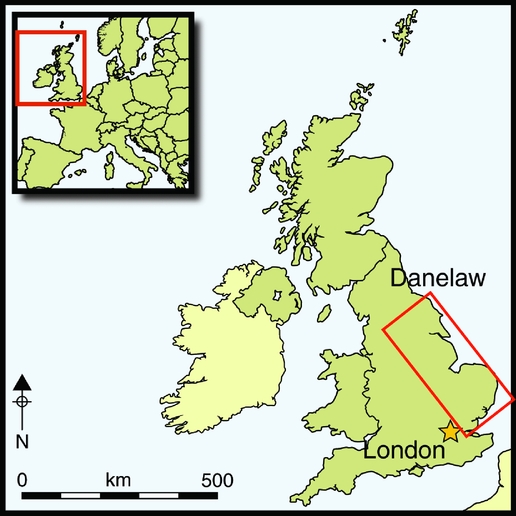
Archaeological study of one, entirely new, ‘dual-currency’ economy has the potential to serve as an exemplar for these core questions, while revealing fresh insights into the dynamics of a pivotal episode of cultural expansion in Eurasia: the Scandinavian diaspora of the Viking Age. The economy is that of the Danelaw: a coin-using area of eastern England conquered and settled by the Vikings in the late ninth century (the term Vikings is used here to mean peoples from Scandinavia active in overseas raiding and settlement from the late eighth century to c. 1100). Here, a quiet revolution in the availability of single-find data is revealing that Scandinavian settlers continued to operate a North European metal-weight economy, despite also issuing official coins. This new data is used to demonstrate that, contrary to the established view that Scandinavian settlers were quick to abandon bullion in favour of coin, both forms of tender circulated concurrently for several decades in the rural Danelaw, providing genuine choice in payment media. Five reasons are then proposed to explain why a bullion currency might be maintained alongside coin, suggesting that it not only provided economic versatility, but also served as an important vehicle for the expression of Scandinavian cultural values in a context of different ‘cultures in contact’ (Hadley & Richards Reference Hadley and Richards2000).
Coin and silver bullion economies in North-Western Europe
The Viking Age economy of Northern Europe was divided into two currency zones stretching either side of the River Elbe: a zone to the north and east, including Scandinavia, in which weighed silver was used as payment; and a western zone, in which locally issued coin served as the primary form of silver currency (Steuer et al. Reference Steuer, Stern, Goldenberg, Brandt, Müller-Wille and Radkte2002; Hårdh Reference Hårdh and Skre2007: 97). In the northern and eastern zone, the use of precious metal as payment from the ninth century is indicated by the presence of hack-silver hoards containing silver ingots, ornaments and foreign coin, deliberately cut into small pieces. Critical to the interpretation of such silver as currency is the observation that the same hoard seldom contains more than one fragment of the same object, implying that the remaining pieces have been dispersed (Hårdh Reference Hårdh and Skre2007: 98). Recent excavations and surveys of Viking settlements, most notably at Kaupang (Norway) and Uppåkra (Sweden), have revealed that hack-silver is also a feature of specialised trade sites, where it correlates with substantial quantities of regulated copper-alloy weights (Hårdh Reference Hårdh and Skre2007; Pedersen Reference Pedersen and Skre2007).
The primary source of silver in the metal-weight economy was Islamic coin: dirhams, imported into Northern Europe in massive quantities from the early to mid ninth century. Significantly, the Northern European distribution of both regulated weights and dirhams corresponds sharply with the geographic extent of this metal-weight economy zone (Steuer et al. Reference Steuer, Stern, Goldenberg, Brandt, Müller-Wille and Radkte2002: 134, figs 1 & 4). Despite the availability of silver within Scandinavia, domestic Scandinavian coinages were only struck on a very limited scale until the introduction of the first regal coinages in around AD 1000. Prior to this, in the ninth century, coin production was confined to south-western Scandinavia, and circulation was limited to the two Danish trade centres of Ribe and Hedeby, along with their environs (Williams Reference Williams, Graham-Campbell and Williams2007).
By contrast, in Western Europe, locally issued coins served as the primary form of silver payment. In southern and eastern England, silver coins had served as a relatively high-value currency since the late seventh century. While the economy was by no means fully monetised, the sheer number of extant coins from pre-Viking England suggests that coinage was in common use: over 2500 coins issued between c. AD 740 and 880 have been recorded as single finds, and these account for just a tiny fraction of the number originally produced (Naismith Reference Naismith2013: 202, fig. 1). Ninth-century coinage was well regulated, with foreign coin and uncoined silver effectively excluded from circulation. Notwithstanding regional and chronological fluctuations in the silver content and circulation (Metcalf & Northover Reference Metcalf and Northover1985; Naismith Reference Naismith2013: 203), it is clear that Anglo-Saxon society was home to a vibrant and controlled coin economy. Within such a system it is unlikely that weighed metal bullion was a commonly accepted form of payment (Kruse Reference Blackburn and Skre2007).
Currency responses
Westward Viking expansion and subsequent settlement in England in the late ninth century brought Scandinavians into direct contact with a society with different means of exchange. What happened when these two different currency systems—one based on weighed metal and the other on coin—met? Generally, it has been accepted that Viking leaders embraced the pre-existing coin economy of the Anglo-Saxons. Viking rulers in East Anglia produced their own official coins soon after settlement in around AD 875. From c. AD 895, regal Anglo-Scandinavian coinages were struck in both East Anglia and Scandinavian York (Blackburn Reference Blackburn, Graham-Campbell, Hall, Jesch and Parsons2001a, Reference Blackburn and Hall2004). In their standardised weight and, in many cases, Christian iconography, these coins emulated the traditions of pre-Viking Anglo-Saxon coinages, thereby stressing continuity with local minting traditions. Critically, they were well produced, regulated and their output was substantial in scale. From c. AD 895 to c. 918, the so-called ‘St Edmund Memorial coinage’ was struck by at least 70 moneyers across East Anglia and eastern Mercia (Williams Reference Williams, Naismith, Allen and Screen2014: 27–28). In summary, the Scandinavians operated a vibrant coin economy in which reliable, good-quality silver coin was widely available.
Historically, the fate of the Scandinavian bullion economy has been less clear. The practice of weighed-metal exchange is attested during the initial stages of the Viking military takeover of England by bullion-related finds from one hoard and two winter camps, all dating to around AD 870 (Brooks & Graham-Campbell Reference Brooks, Graham-Campbell and Brooks2000; Blackburn Reference Blackburn and Blackburn2011; Hall & Williams forthcoming). This evidence has encouraged speculation that bullion played a role in a developing ‘dual currency’ (Blackburn Reference Blackburn, Graham-Campbell, Hall, Jesch and Parsons2001a: 134–35; Graham-Campbell Reference Graham-Campbell2001a), although without significant further data extending beyond the initial settlement period, such a theory is impossible to substantiate. In the northern and central Danelaw (modern-day Yorkshire and the eastern/central Midlands), a small number of silver hoards containing various combinations of local and foreign coin, ingots and hack-silver signal the continued presence of bullion into the early tenth century AD (Blackburn Reference Blackburn2001b; Graham-Campbell Reference Graham-Campbell, Higham and Hill2001b; Williams Reference Williams, Graham-Campbell and Philpott2009). While these provide important information about the diverse sources of bullion, the material selected and deposited in hoards may not be typical of silver used in local exchange. Indeed, several hoards display strong links to the Irish-Scandinavian metal-weight economy, centred on Dublin and north-western England, and may have been deposited by travellers from that region (Graham-Campbell Reference Graham-Campbell2001a: 58, Reference Graham-Campbell, Higham and Hill2001b: 217–18; Williams Reference Williams, Graham-Campbell and Williams2007: 197). Moreover, no confirmed hoards of Scandinavian character are known from the southern Danelaw, an area of core Scandinavian settlement broadly corresponding to modern-day East Anglia and Lincolnshire. Indeed, in this area, the paucity of hoards has encouraged the view that Scandinavian settlers were quick to abandon bullion in favour of a sophisticated coin-based monetary system. Under this system, and unlike bullion, coins were exchanged according to recognised marks of value, their aggregate value being determined by their number, rather than by their weight. The supposed supremacy of this coin-based currency has, however, been brought into question by the discovery of new data reported here.
New evidence for bullion exchange in the Danelaw
The emerging dataset in support of a widespread bullion economy is extensive and extraordinary. It comprises over 180 individual finds of Viking Age silver bullion and weights found in England (Table 1). It is presented here for the first time, following three years of systematic data-collection using the records of the Portable Antiquities Scheme (PAS), museum archives, private collections and county Historic Environment Records.
Typological breakdown of Viking Age silver bullion and weights found singly in England.

The unique feature of this dataset is that it consists almost entirely of single (‘isolated’ or ‘stray’) finds, recovered during metal detecting. The dominance of detector finds undoubtedly introduces biases to the dataset, not least regarding the distribution of material. This will, to an extent, reflect locations of metal detecting and finds reporting, incorporating diverse factors such as modern land-use, the presence of soil types favourable to metal preservation and the distance of land from motorways and other access routes. Such biases are well known and are discussed at length elsewhere (Chester-Kadwell Reference Chester-Kadwell2009; Bevan Reference Bevan2012; Kershaw Reference Kershaw2013: 13–17, 187–206). It is important to stress that while apparent absences in material must be investigated and interpreted with care, the presence of finds offers a clear positive indicator of bullion use. Moreover, as the Portable Antiquities Scheme has recorded a total of over one million individual objects, 88 per cent of which can be located to within 100m2 or better, broad distribution patterns, as identified here for a sub-category of the dataset, are probably reliable. The use of metal-detector material also enables the recording of relevant finds across the whole of England and Wales. As single finds, the material probably represents accidental losses from areas in which bullion and weights were in frequent use (Blackburn Reference Blackburn and Skre2007). As such, it ought to provide a strong indicator of the nature, scale, chronology and location of bullion exchange.
Bullion assemblages from Viking-period contexts within Scandinavia comprise four main elements: ingots, ornaments, foreign coins (notably dirhams) and standardised weights. All of these are prominent as single finds from the Danelaw. In the case of single finds, without archaeological context, there is always room for ambiguity concerning their function. Silver ingots could, for instance, be used as raw material for jewellery, while complete ornaments could constitute mediums for social display in acts of gift-giving and hospitality. Yet the case for the monetary use of these items is strong. They have close parallels in Scandinavian bullion hoards and bullion material retrieved from specialised trade sites across Scandinavia and the Baltic, including Kaupang (Norway), Birka (Sweden), Hedeby (Germany) and Truso (Poland). In addition, all items show positive indications of active use as bullion, either in being deliberately cut and thus in a form consistent with hack-silver, or in bearing marks (crescent-shaped knife cuts known as ‘nicks’) characteristic of the way in which Viking Age populations (or Scandinavian bullion users) tested metal content. In what follows, each artefact group is discussed in turn, highlighting its role in the Scandinavian bullion economy and citing evidence for its extensive use in the Danelaw.
Ingots
Silver ingots are considered to be “worked metal stored for whatever eventual purpose in a form without function as an ornament” (Kruse Reference Kruse1988: 288). Within the Scandinavian bullion economy ingots were a convenient means of storing and trading wealth. Viking Age examples are typically cigar-shaped, with parallel sides, rounded ends and consistent oval, circular or sub-rectangular cross-sections. They are common finds in both Scandinavian bullion hoards and at specialist trade and market sites (Wiechmann Reference Wiechmann1996: 65–67, Karte 76; Hårdh Reference Hårdh and Skre2007).
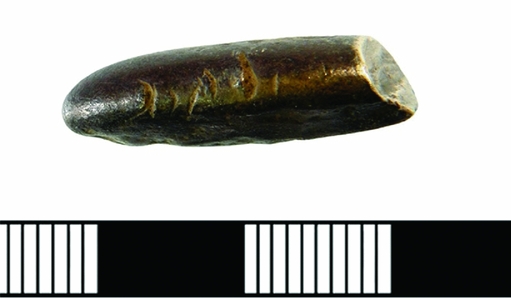
In England, 44 ingots have been identified as having a monetary use, due either to deliberate fragmentation (being chisel-cut at one or both ends) or the presenceof small ‘nicks’ designed to expose plated forgeries and assess silver fineness by means of resistance testing—too hard and the silver might contain high levels of copper; too soft and the silver might contain too much lead (Figure 1, Table S1 in the online supplementary material). As a craftsperson is unlikely to test an ingot that they had recently cast, test marks are a reliable indicator of exchange. They were seemingly successful: of 13 ingots that have been subject to surface XRF analysis, 11 (85 per cent) have a silver content exceeding 90 per cent. Silver content in excess of 90 per cent is also characteristic of ingots and hack-silver contained in Viking Age hoards from Britain, Ireland and Scandinavia, although lower silver contents, in the range of around 60–80 per cent, occur occasionally (Arrhenius et al. Reference Arrhenius, Linder Welin and Tapper1972–Reference Arrhenius, Linder Welin and Tapper1973; Kruse & Tate Reference Kruse and Tate1992; Ilisch et al. Reference Ilisch, Lorenze, Stern and Steuer2003: 138–49). That debased silver is sometimes encountered, but is rare overall, suggests that it was routinely removed from circulation.
A cut and ‘nicked’ silver ingot from Roxby-cum-Risby, Lincolnshire. PAS ‘Find-ID’ NLM-683755.
Ornament-derived hack-silver
A smaller, but visually distinctive, element among the single finds of silver bullion is ornamental metalwork, derived from Scandinavian types of ring and brooch. When complete, such items served as prestige jewellery, and could be worn to enhance personal status. They were also a convenient means of storing and carrying bullion, and could be cut up as and when necessary to generate payment (Williams Reference Williams, Graham-Campbell and Philpott2009). Such silver, in various states of fragmentation, forms a recognisable element within Viking Age bullion hoards and site assemblages (for example, Hårdh Reference Hårdh and Skre2007; Graham-Campbell Reference Graham-Campbell2011).
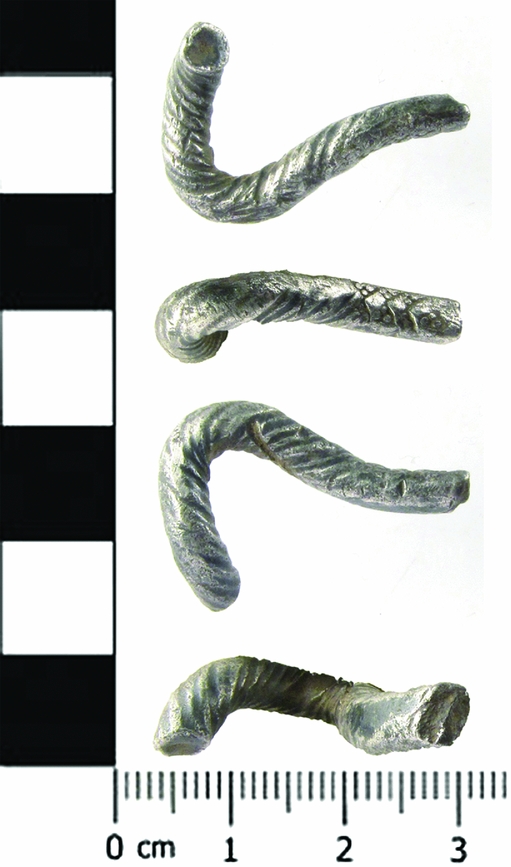
The deliberate fragmentation of ornaments for monetary use is also now evidenced in the Danelaw. Fourteen items represent hack-silver derived from diagnostically Scandinavian ornaments (Table S2). The parallels with the contemporary Scandinavian bullion economy are, again, very clear. The finds include artefact types commonly represented in Viking-period silver hoards from Scandinavia, including a cut piece from a plaited-rod neck-ring, and fragments from two ‘Permian’ arm-rings (Figure 2). Other finds, including a fragment of a plain-rod ring, known as ‘ring-money’, and cut pieces from two ‘Hiberno-Scandinavian broad-band arm-rings’ reflect connections to the Scandinavian bullion economy of the Irish Sea region (Sheehan Reference Sheehan, Graham-Campbell and Philpott2009; Graham-Campbell Reference Graham-Campbell2011).
Cut and ‘nicked’ fragment of a ‘Permian ring’ from Spofforth, Yorkshire. PAS ‘Find-ID’ SWYOR-55BBB2.
Foreign coin
The primary source of silver fuelling the Scandinavian bullion economy was Arabic silver dirhams, acquired by Scandinavians in Russia through the sale of slaves and furs. Dirhams were brought back to Northern Europe in tremendous quantities beginning in the early to mid ninth century. Numbers recorded from the Scandinavian countries, predominantlybelonging to a 100-year period of c. AD 840–940, total in excess of 170 000 (Gullbekk Reference Gullbekk, Naismith, Allen and Screen2014: 334–35). Metal analysis indicates that far more were melted down on arrival into ingots and ornaments (Arrhenius et al. Reference Arrhenius, Linder Welin and Tapper1972–Reference Arrhenius, Linder Welin and Tapper1973). From Scandinavia, a smaller number of dirhams travelled farther west to Britain and Ireland, where around 350 have been recorded from Viking-period silver hoards (Naismith Reference Naismith2005).
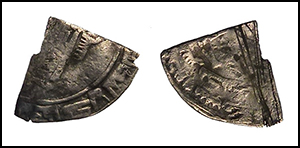
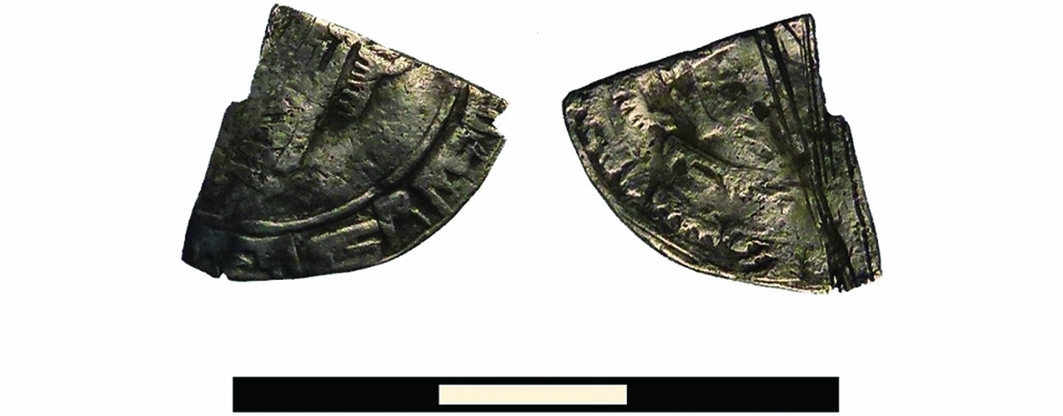
Sixty-five new single finds from England can now be added to these (Table S3). Those with legible inscriptions, allowing broad dating, fall into two main groups: just under half are issues minted in the eighth and ninth centuries, predominantly by Abbasid rulers, while the remainder belong to a chronologically later group dominated by late ninth- and tenth-century Samanid mints. The dirhams from England provide important chronological information for the circulation of bullion in the Danelaw, the details and implications of which are discussed below. Deliberately cut dirhams are common. Of the 64 dirhams whose state of preservation has been recorded, 29 are cut (Figure 3). They have an average weight of just 0.57g: less than a quarter of a complete coin (weighing around 3g), and below half the weight of a contemporary Danelaw coin (weighing around 1.35g).
Cut dirham quarter with multiple cut marks from Hooton Levitt, Yorkshire. PAS ‘Find-ID’ FAKL-984168.
Imported weights and weight systems
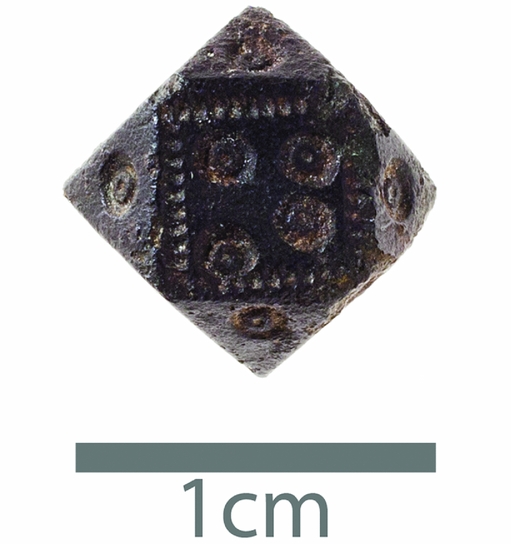
One of the hallmarks of a metal-weight system is the presence of standardised weights made to specific units. Within Scandinavia and the Baltic region, two weight types are attested from AD 860/870 and AD 870/880 respectively: small, copper-alloy cubo-octahedral weights, with one, two, three, four or six punched dots on each of their six square sides, marking their weight unit, and larger, heavier, oblate-spheroid weights, with an iron core and brass casing (Steuer et al. Reference Steuer, Stern, Goldenberg, Brandt, Müller-Wille and Radkte2002). Both their form and shared weight standard (around 4g), reflect Islamic origins, although there is also evidence for their production within Scandinavia (Pedersen Reference Pedersen and Skre2007: 121). That they were used for weighing silver is indicated by their association with dirhams and hack-silver at central and marketplace sites, as well as their occurrence in a small number of late Viking Age hack-silver hoards (for example, Gustin Reference Gustin2004: 89–96; Bogucki Reference Bogucki, Suchodolski and Bogucki2007: 100, fig. 13; Pedersen Reference Pedersen and Skre2007: 123–26, tab. 6.4; Kilger Reference Kilger, Graham-Campbell, Sindbæk and Williams2011: 264–65).
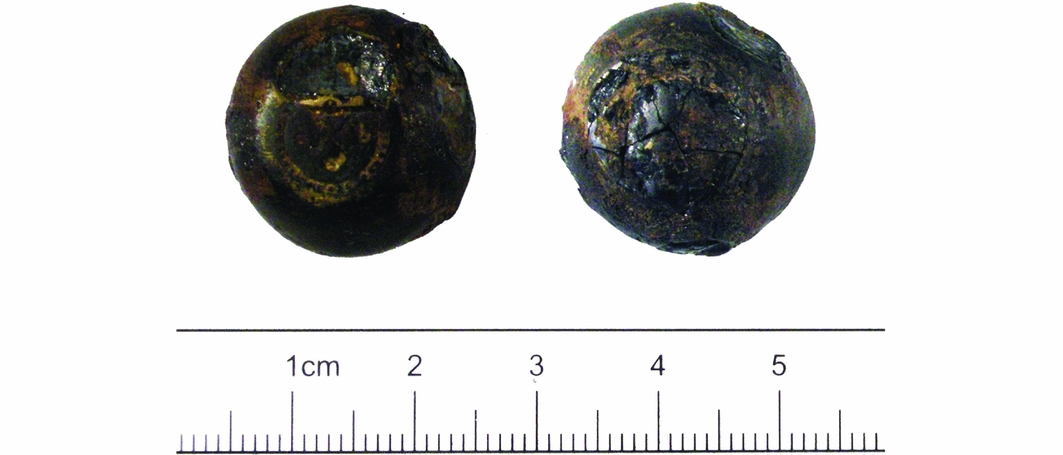
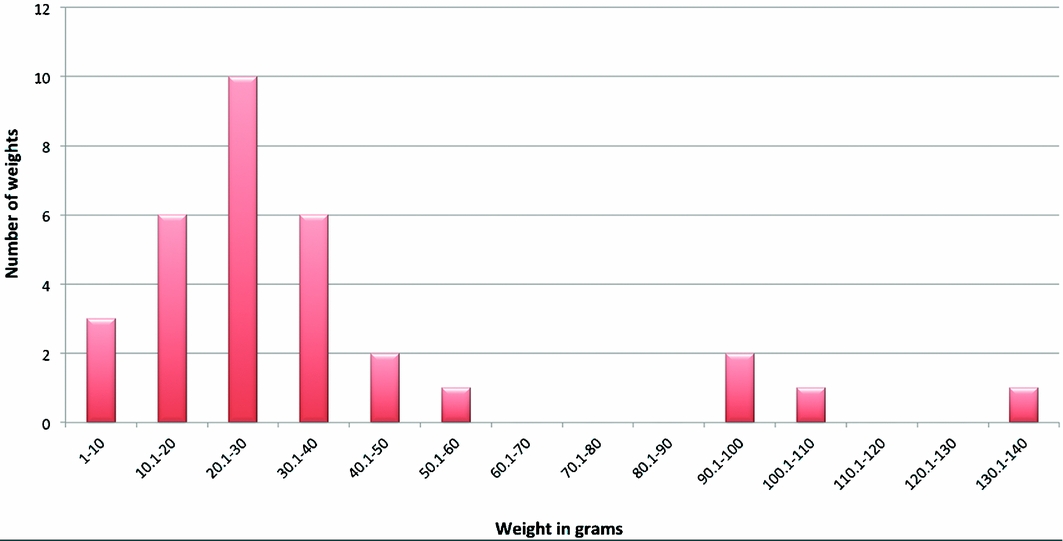
In England, 34 oblate-spheroid and 26 cubo-octahedral weights have now been recorded as single finds, a number that suggests that small bullion weights were in common use (Figures 4 & 5 and Table S4). Whereas cubo-octahedral weights, weighing between approximately 0.75 and 4.5g, were well suited for weighing very light sums of silver (e.g. a dirham fragment), oblate-spheroids indicate the use of bullion to make medium to large payments: the 32 examples from England whose mass has been documented are clustered within the 10–40g range (Figure 6). As an individual weight represents the minimum sum of silver that could possibly be weighed, this evidence suggests that transactions involving at least this weight of silver were being carried out. If multiple weights were used together in a single transaction, their weighing capacity would increase.
A cubo-octahedral weight from South Newbald, Yorkshire.
An oblate-spheroid weight, found near Stamford Bridge, Yorkshire. PAS ‘Find-ID’ YORYM-01C134.
The weight distribution of oblate-spheroid weights (total: 32 weights). Most oblate-spheroids fall within a 10–40g range, suggesting their use in medium- to high-value transactions.
Bullion and coin: co-use across space
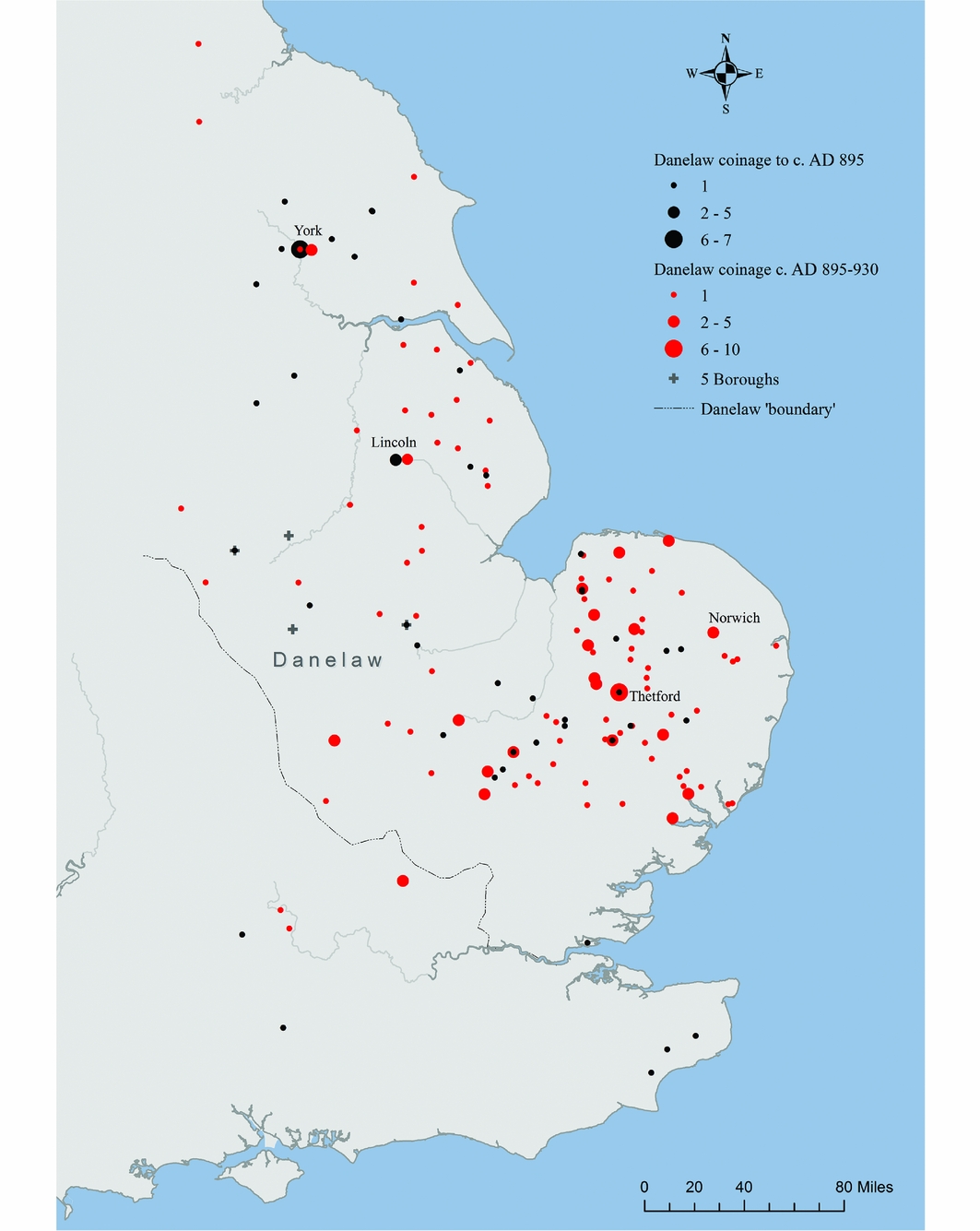
Beyond presenting evidence that bullion was being used in the Danelaw in a clearly Scandinavian fashion, two more challenges remain for establishing the rudiments of a dual economy: co-use in space and time. For bullion and coin to have constituted part of a true dual-currency economy, it has to be demonstrated that they were both in widespread use at the same time, and that they overlapped geographically and were not confined to a small number of locations. This is indeed the case. The distribution of single finds of both coin and bullion reveals geographically extensive use across the area of documented Scandinavian settlement (Figures 7 & 8).
Single finds of coins minted in the Danelaw, recorded by the Portable Antiquities Scheme and the Early Medieval Corpus.
Single finds of silver bullion and weights. Finds provenanced at county-level only are not shown.
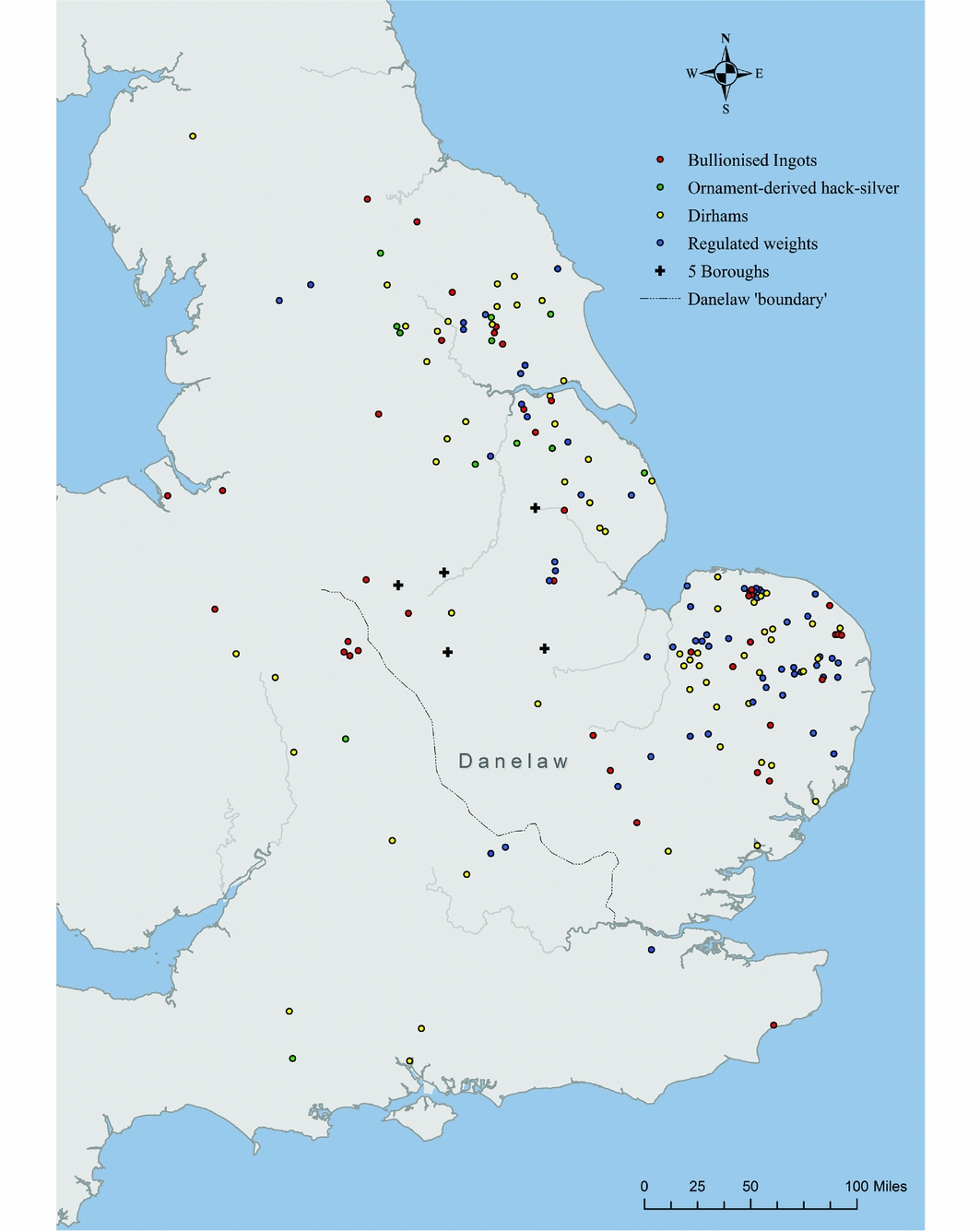
Single finds of silver bullion and weights span the entire Danelaw region, and their distribution correlates well with the geographic extent of the area. Concentrations of bullion and weights are densest in the Yorkshire Wolds, and in northern Lincolnshire and northern East Anglia (Figure 8). While all of these areas are foci for metal detecting, the comparatively low number of finds reported from adjacent regions with similarly high levels of detector activity (e.g. southern Suffolk and Essex) suggests that this pattern is genuine. The concentration of finds in northern East Anglia is striking, as this region is often considered external to the core area of Scandinavian settlement (although see Kershaw Reference Kershaw2009: 302). Significantly, bullion finds are scarce in the central Midlands. This region, centred on a group of Scandinavian-occupied urban strongholds known as the ‘Five Boroughs’ (Leicester, Lincoln, Stamford, Derby and Nottingham), is traditionally considered a prime area of Scandinavian settlement. It is rich in Scandinavian place-names and is regularly metal-detected. The lack of bullion from this area represents a real, and puzzling, absence. A similar paucity has been observed for finds of Scandinavian female jewellery (Kershaw Reference Kershaw2013: 196–99). Coins are also rare here, despite the fact that they were minted locally (Figure 7; Blackburn Reference Blackburn, Graham-Campbell, Hall, Jesch and Parsons2001a). It is possible that the early introduction of stable nucleated settlements in the region (by c. AD 850) means that Viking Age sites are concealed by modern urban development (Kershaw Reference Kershaw2013: 198–99).
There is one further setting in which bullion finds are notably absent: towns. Although the Danelaw towns of Norwich, Thetford, York and Lincoln have seen extensive excavation, they have produced very little in the way of silver bullion or standardised weights. No silver bullion finds or weights have been recorded from Thetford, Norwich or Lincoln, for instance, while excavations in York have yielded just a handful of potentially relevant finds, including two regulated oblate-spheroid weights and a counterfeit dirham, along with several ingot moulds and fragments of hand-held balances, which may relate to metalworking rather than bullion exchange (Mainman & Rogers Reference Mainman and Rogers2000: 2478 figs 1199–1200, 2559–64 figs 1257–60; Pirie Reference Pirie1986: 17, 29 no. 47). This pattern is at odds with that observed within Scandinavia, where commercial bullion exchange appears to have been predominantly focused on urban sites (Skre Reference Skre2007).
Conversely, Figure 7 reveals that coins were in frequent use in urban centres. Notably, and unlike in Scandinavia, towns in the Danelaw were often the location of mints. The scarcity of bullion finds from these settings may reflect the enforcement of coin use within towns. In contrast to the lack of bullion finds in York, single coins and coin-hoards are widely documented, with the nature of these suggesting that they were drawn from a managed currency, within which foreign coin was excluded (Blackburn Reference Blackburn and Hall2004). It is possible that within such a controlled system, bullion use was actively suppressed, with any items of non-minted silver being channelled into coin production.
Bullion and coin: co-use in time
Rather than representing a temporary pulse of bullion use before coinage was (re-)established, the single finds of silver and weights span an extended time period. They overlapped chronologically with coinage, providing Danelaw inhabitants with a genuine choice of monetary media. In the absence of finds from datable archaeological contexts, and given the lack of precision in typological dating, the chronological structure for the single finds rests on datable dirhams. In England, the date of production can be given for 44 of the 65 single finds of dirhams, and, in 35 cases, can be given to within 10 years (Table S3). The histogram in Figure 9 shows the distribution of these 44 dirhams by decade, according to their mint date. It was built by taking the date bracket to which the coin was assigned (e.g. AD 893–902) and allocating a proportion of the find to each year within that bracket (e.g. 1/10th to AD 893, 1/10th to AD 894 and so on). Adding those totals together gives the number of finds per decade (see Blackburn Reference Blackburn and Skre2007: 47 for a discussion of this method).
The distribution of single dirham finds from England (per cent) by date of production (total: 44 coins); dirhams minted in the period AD 900–903 are well represented among the Danelaw finds.
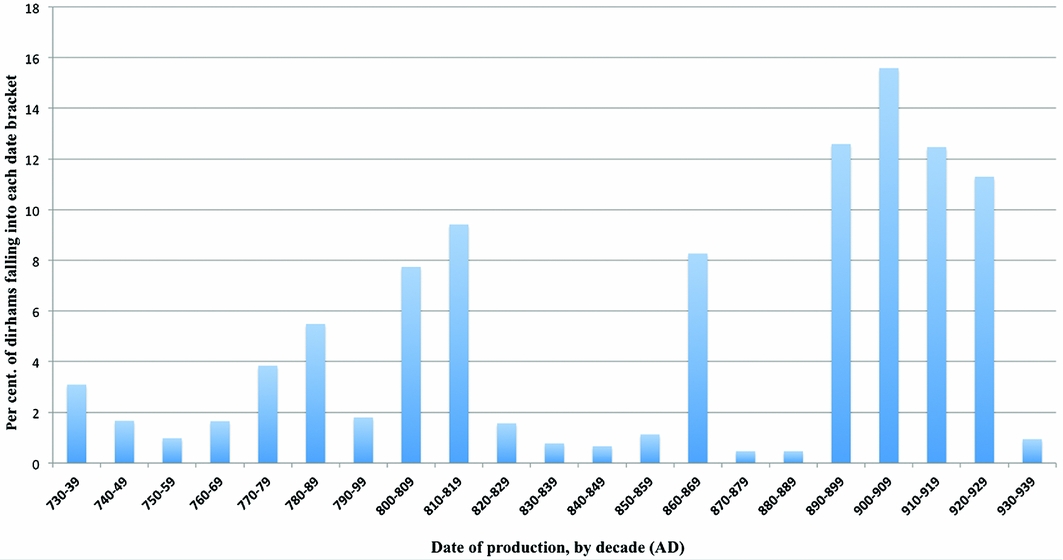
The results, shown in Figure 9, indicate a wide mint-date range, including coins minted in the eighth century AD. This reflects the fact that within the Caliphate, and thus in subsequent exports, old coins circulated alongside new ones. Dirhams minted in the first three decades of the tenth century are well represented among single finds from England. Indeed, the mint date of 14 dirhams can be confidently located in the period AD 900–930 (Table S3). Allowing for a travelling and circulation time for such dirhams from their source, via Scandinavia, to England of between approximately 10 and 15 years (Williams Reference Williams and Graham-Campbell2011: 66), we may conclude that fresh supplies of newly minted dirhams continued to reach England as late as c. AD 940 and perhaps even later.
This long date range fits with the available typological dating of the oblate-spheroid weights (introduced to Scandinavia c. AD 870/80), as well as the ornament-derived hack-silver (Table S2), and is consonant with evidence yielded by the only two single-find items from the Danelaw to derive from a stratified archaeological context: two oblate-spheroid weights from York, excavated from levels dated from the mid to late ninth to the early tenth centuries (Mainman & Rogers Reference Mainman and Rogers2000: 2456, tab. 223, 2564). In sum, bullion and coin appear to have co-existed as forms of currency for some 70 or 80 years, from the onset of a sustained Viking presence in England in c. AD 865 to at least c. AD 930/40.
Discussion
There are two possible explanations as to how a true dual currency was maintained in Scandinavian-occupied England across both space and time. The first is that the Scandinavian settlers made exclusive use of bullion as currency, altogether rejecting coin (and perhaps its frequent Christian iconography) as a means of exchange. This would imply segregated Scandinavian and Anglo-Saxon trading communities, and limits to Anglo-Scandinavian integration. The second is that Scandinavian settlers used locally minted coins in exchange (‘as coin’ rather than as lumps of silver bullion), in addition to maintaining a bullion economy, perhaps using different media for different monetary purposes. Given that local coins are only occasionally tested in the Danelaw, and are never deliberately cut, this scenario seems more probable. Indeed, the apparently successful exclusion of bullion from seemingly regulated urban markets suggests that coinage was mandatory in some exchange environments (Bornholdt-Collins Reference Bornholdt-Collins, Sheehan and O'Corráin2010). It is thus reasonable to suggest that the purse of a Scandinavian trader contained bullion as well as local coin, the duality of payment media ensuring that they were prepared for various modes of exchange.
Apart from in towns, there was probably a choice in silver currency. Why was bullion maintained alongside a sound silver coinage? From a neo-classical economic perspective, bullion exchange entailed high ‘transaction costs’, and might thus be viewed as ‘inconvenient’ (Frier & Kehoe Reference Frier, Kehoe, Morris, Scheidel and Saller2007: 117–19). Convenience is a relative concept, however, and the advantages of bullion were many. The relatively well-contextualised historical framework of the Danelaw makes it possible to suggest five reasons for maintaining bullion; they are sufficiently broad in scope that they may apply to future archaeological study of comparable systems.
1) Large-value transactions
Bullion was sufficiently versatile to accommodate both large- and small-scale payments, using both complete ingots and fragmented dirhams respectively. It was, however, particularly well suited to high-value exchange. The weight range of both the ingots and oblate-spheroid weights suggests that medium- to high-value transactions were a regular feature of bullion exchange (Figure 6, Tables S1 & S4). A recurring trait of recent historical multi-currency economies is that the choice of payment media is determined by the value of the commodity being purchased (Kuroda Reference Kuroda2008). The persistent use of bullion might, then, indicate that exchange requiring high-value currency was fundamental to the Scandinavian economy of the Danelaw. The objects of such exchange are not easily recognisable in the archaeological record, but might include bulk supplies of foodstuffs, livestock and land, in addition to social payments such as bridewealth.
2) An international medium of exchange
A second advantage of bullion over coin was its ability to cross trade frontiers. Whereas coins were intended for circulation primarily within their area of jurisdiction, silver was an international medium of exchange. Bullion was probably preferred for trading with parallel bullion-using Scandinavian communities in Ireland, Scotland and the Scandinavian homelands. The spread of bullion into the Danelaw countryside nonetheless suggests that its use in international trade was additional to its role in local exchange. A variety of payment options therefore provided economic flexibility, giving traders access to both local and international markets. The multiple currencies were complementary. Together, they provided a function that a single currency could not (Kuroda Reference Kuroda2008).
3) Easy to test, retains its value
For those with the requisite knowledge, silver bullion was also easy to test, and was thus a reliable way of guarding against fraud. Moreover, silver bullion retained its value over time, whereas coins could go through periods of severe debasement during which their acceptability may have been challenged. Viking armies would have witnessed such a phenomenon during their raids in southern England in the third quarter of the ninth century, when a period of severe debasement saw the silver content of local coins drop to a low of 18 per cent (Metcalf & Northover Reference Metcalf and Northover1985).
4) Tax evasion
Critically, silver bullion could not be taxed. Whereas coins were effectively taxed through recoinages, often following periods of debasement, silver in bullion form could bypass the moneyer. As an ‘illicit’ currency, it remained outside the law. It is highly probable that one of the reasons Viking leaders in the Danelaw continued the tradition of minting coins was that they were able to extract revenue from them: seen from their perspective, the existence of an alternative bullion currency was probably undesirable. Their apparent inability to enforce coin-use to the exclusion of other forms of silver currency outside of towns thus implies genuine limitations to the geographic extent of their authority.
5) Cultural marker
It is also possible that bullion proved resilient not because of market need, but because it signified an important aspect of collective identity. The multiple stages involved in bullion transactions—cutting silver to accurate amounts; calibrating it to known units of weight; and applying and interpreting test marks—all required specialist knowledge as well as privileged access to sources of silver and weights gained via Scandinavian-controlled trade networks. Bullion exchange was therefore a cultural, as well as economic, practice. The extent to which it permeated Anglo-Saxon trading circles is open to question, not least because bullion is rare outside of Scandinavian-settled regions. Indeed, the protracted nature of bullion exchange may have served as a mechanism through which traders of a Scandinavian background confirmed their common affiliation, and distinguished themselves from exclusively coin-using groups. The mutual acceptance of weighed silver might have thus served to build relationships between traders: a valuable function in the context of the newly settled Scandinavian communities of the Danelaw. The ability of bullion owners to wear their stored wealth in the form of elaborate silver rings and brooches might have further enhanced the prominence of bullion as a symbol of Scandinavian cultural values.
Conclusions
Viking leaders in the Danelaw may have aligned themselves with Anglo-Saxon minting practices, but robust support for a bullion economy continued for some two generations. Many people must have understood the principles of bullion exchange: they would have been able to weigh, divide and test silver, as well as calibrate measurements to known units of weight. Bullion appears to have served an important role as a high-value currency, but in non-urban settings it probably also rivalled coinage as a trusted means of exchange for smaller purchases. Its maintenance as a currency may have served as a conscious act of cultural preservation, reinforcing distinction in a multi-ethnic society. Evidence for bullion exchange in the Danelaw not only provides tangible evidence for the continued existence of Scandinavian traditions in a period of integration with other, pre-existing cultures, but it also serves as a historically contextualised exemplar of the reasons behind the emergence of dual-currency economies.
Acknowledgements
This research was conducted during a British Academy post-doctoral research fellowship. Thanks go to Nicholas Jones, James Graham-Campbell and the two reviewers for their many constructive comments.
Supplementary material
To view supplementary material for this article, please visit https://doi.org/10.15184/aqy.2016.249



