


Impact statements
This research provides vital insights into public understanding, perception and acceptance of bioplastics, specifically those made from sustainable starch-protein blends. Combining a comprehensive public survey with a focus group discussion identifies key factors influencing consumer behaviour towards bioplastics, including clarity, colour, sustainability and cost. The findings have particular regional relevance as this study was based in Ireland, and highlights a growing public willingness to adopt sustainable alternatives to conventional plastics, especially in food packaging, if these alternatives are clearly labelled, affordable and visually appealing. Importantly, the results reveal a need for improved public education around terms like “biobased” and “biodegradable,” and clearer labelling to support informed consumer choices. By incorporating the public’s voice into materials science, this study identifies the gap between bioplastic innovation and the adoption of bioplastics. This work will inform a range of stakeholders, including researchers, manufacturers and policymakers, about the acceptability of the bioplastics developed here and other starch-protein-based alternatives. The insights will help shape future policy and communication strategies to improve public understanding and acceptance of sustainable materials. Ultimately, this research supports the development of bioplastics that are environmentally sound, socially accepted and aligned with consumer values.
Introduction
Numerous plastic varieties are used today, including PET, HDPE, PVC, LDPE, PP and Polystyrene (Azeem Unnisa and Hassanpour, Reference Azeem Unnisa and Hassanpour2017). Plastic’s success stems from its low costs and high usability levels for various applications, although its non-biodegradability and reliance on fossil fuels pose significant environmental drawbacks. The proliferation of plastic manufacturing has resulted in an estimated 5 trillion plastic particles in the world’s surface waters, with about 12.7 million metric tons of plastic waste entering the ocean annually (Filho et al., Reference Filho, Barbir, Abubakar, Paço, Stasiskiene, Hornbogen, Christin Fendt, Voronova and Klõga2022).
The environmental concerns surrounding plastic exceed its disposal phase; the entire life cycle of plastic, from extraction to production, use and end-of-life management, contributes to ecological impacts, such as greenhouse gas emission, resource depletion and environmental pollution (Zwicker et al., Reference Zwicker, Brick, Gruter and van Harreveld2021). With most plastics derived from fossil fuels, shifting towards more sustainable alternatives is pressing. Achieving this transition requires technological advancements and changes in consumer behaviour and perception, as social acceptance plays a key role in sustainability. Consumers must be educated about the production process, carbon footprint and specific qualities of plastic products to make informed decisions about more sustainable alternatives (Zwicker et al., Reference Zwicker, Brick, Gruter and van Harreveld2021); however, responsibility for reducing plastic-related impacts also lies with product designers, manufacturers, brands and retailers, who play key roles in developing and promoting sustainable options.
Bioplastics have gained traction due to their potential to break down under specific conditions (Bastioli, Reference Bastioli2001). Despite these advantages, their production remains limited due to high costs, technological barriers and confusion surrounding the term bioplastic. Additionally, educating consumers about these differences presents another hurdle hindering the widespread adoption of bioplastics needed to make a significant impact (Zwicker et al., Reference Zwicker, Brick, Gruter and van Harreveld2021; Filho et al., Reference Filho, Barbir, Abubakar, Paço, Stasiskiene, Hornbogen, Christin Fendt, Voronova and Klõga2022; Notaro et al., Reference Notaro, Paletto and Lovera2022).
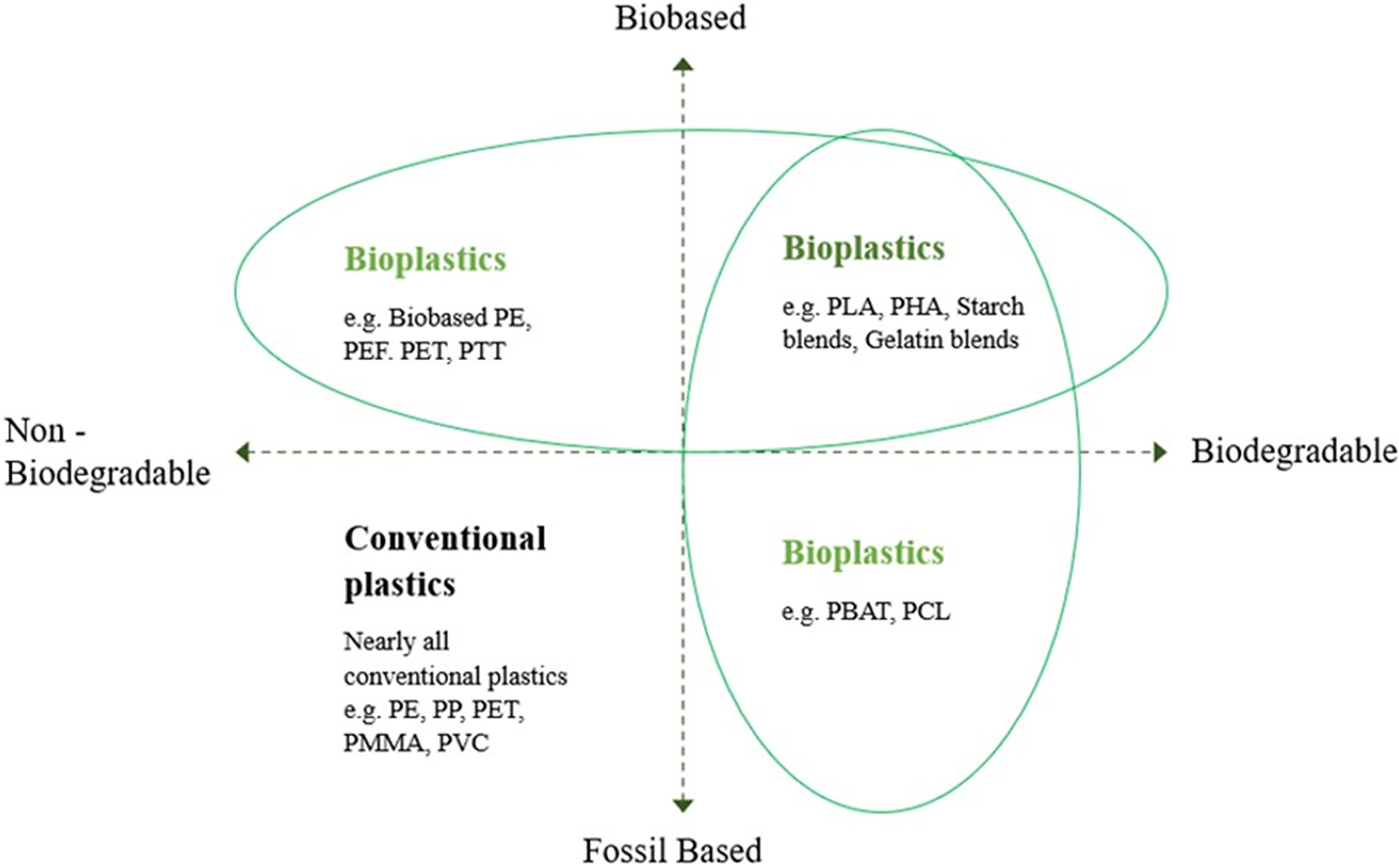
To date, there has yet to be a universally accepted definition of bioplastics, although the most common definition describes them as materials that are biobased and/or biodegradable (European Bioplastics, 2019; Filho et al., Reference Filho, Salvia, Bonoli, Saari, Voronova, Klõga, Kumbhar, Olszewski, De Quevedo and Barbir2020). Bio-based means products wholly or partially derived from biomass, such as plants, trees or animals. The biomass may have been treated physically, chemically, or biologically (Ruf et al., Reference Ruf, Emberger-Klein and Menrad2022). There are three main types of bioplastics: those sourced from renewable resources and biodegradable, those biodegradable but produced with fossil fuels and those partially or entirely derived from renewable sources but non-biodegradable (Figure 1; European Bioplastics, 2019; Filho et al., Reference Filho, Salvia, Bonoli, Saari, Voronova, Klõga, Kumbhar, Olszewski, De Quevedo and Barbir2020).
Diagram of the variety of plastics produced, categorised by their biodegradability and source.

Despite their niche status in the marketplace as a “green” product (Ketelsen et al., Reference Ketelsen, Janssen and Hamm2020), bioplastics play a significant role in the EU’s economy, which generates millions of jobs and billions of euros in turnover annually (Filho et al., Reference Filho, Salvia, Bonoli, Saari, Voronova, Klõga, Kumbhar, Olszewski, De Quevedo and Barbir2020; Ruf et al., Reference Ruf, Emberger-Klein and Menrad2022). Although bioplastics find applications across various industries, including packaging, toys, electronics, agriculture and healthcare, their global production still accounts for <1% of all plastics produced (Notaro et al., Reference Notaro, Paletto and Lovera2022). While demand grows, particularly in packaging, challenges persist in addressing consumer perceptions and scaling up production sustainably (Filho et al., Reference Filho, Barbir, Abubakar, Paço, Stasiskiene, Hornbogen, Christin Fendt, Voronova and Klõga2022; Notaro et al., Reference Notaro, Paletto and Lovera2022).
Moreover, many consumers are uncertain about what it means for a product to be “bio-based” or “biodegradable.” Although customers favour more environmentally friendly plastics over traditional ones, there appears to be a widespread lack of understanding regarding the properties of bio-based goods (Boesen et al., Reference Boesen, Bey and Niero2019; Zwicker et al., Reference Zwicker, Brick, Gruter and van Harreveld2021). Furthermore, it might be challenging to tell them apart because conventional and bioplastic products have similar qualities and looks. Many customers believe that plant products are inherently biodegradable, even if this isn’t always the case. Due to misleading or inconsistent information from marketing, media and product labelling, customers may develop attitudes towards bio-based plastics based on false assumptions and associations (Zwicker et al., Reference Zwicker, Brick, Gruter and van Harreveld2021). Such misinformation, often linked to “greenwashing,” can deter consumers from even considering biopolymers, as found by (Allison et al., Reference Allison, Lorencatto, Michie and Miodownik2021).
Despite increasing attention toward bioplastics, few studies have combined quantitative and qualitative public perceptions to assess both understanding and acceptance of bioplastics derived from sustainable starch protein blends. Previous research has primarily focused on consumer willingness to pay or general attitudes towards bio-based materials (Ketelsen et al., Reference Ketelsen, Janssen and Hamm2020; Filho et al., Reference Filho, Barbir, Abubakar, Paço, Stasiskiene, Hornbogen, Christin Fendt, Voronova and Klõga2022), but limited attention has been given to how consumers perceive new locally developed materials, such as those produced in this study. Therefore, this research addresses a gap in knowledge regarding how public perception, education and sustainability awareness influenced acceptance of these novel materials within an Irish context.
This study adopts an exploratory mixed-method approach; given the limited prior literature on public perception of starch protein blend bioplastics, an exploratory design was selected to capture emerging insights and themes without predefined hypotheses. The approach draws conceptually on consumer behaviour frameworks (Klein et al., Reference Klein, Emberger-Klein, Menrad, Möhring and Blesin2019; Ketelsen et al., Reference Ketelsen, Janssen and Hamm2020). This emphasised the role of awareness, perception and attitude formation in environmentally responsible purchasing. This theoretical context guides the interpretation of the results while allowing for exploration of how sustainability, cost and material appeal shape consumer responses. Building on this foundation, the study investigates the public preference and acceptance of bioplastics in everyday life while evaluating potential consumer feedback and the applicability of the bioplastics produced by Stanley et al. (Reference Stanley, Culliton, Jovani-Sancho and Neves2022), made using different starch sources (Potato, Tapioca, Sago and Swamp Taro) to create bioplastics that are home compostable.
Materials and methods
Materials
This study examined both laboratory-prepared and commercial plastic films to allow comparison between starch-protein blend bioplastics and conventional plastics. The starch-protein blend bioplastics (SPBB’s) were formulated using Potato, Tapioca, Sago and Swamp Taro starches, following the methodology from Stanley et al. (Reference Stanley, Culliton, Jovani-Sancho and Neves2022). For comparison, commercial samples, both conventional (polypocket – polypropylene) and bioplastic (BECO Compostable Bags), were purchased from local retailers.
Questionnaire
A questionnaire was used to assess the general public’s understanding of the acceptance of bioplastics, using data collected via a survey circulated using SETU Carlow’s emailing systems, various social media and the snowball method. This survey was run for four weeks, from October to November 2023. The survey was comprised of closed and open-ended questions under the headings (i) demographic (age, gender, education and country of origin), (ii)questions of their understanding of biopolymers (meaning of bioplastic, biobased, biodegradable, importance of sustainability and biodegradability), (iii) acceptance of bioplastics in everyday life (contributors to plastic pollution, how much more would they spend on bioplastic and what do you do to avoid plastics). Various formats, such as multiple-choice and open-ended questions, were used to ask these questions. The questionnaire was designed to evaluate three main aspects: demographics, understanding of bioplastic terminology and attitudes, towards sustainable materials, in alignment with the exploratory nature of this study. The question topics and wording were influenced by previous consumer behaviour research on bioplastics (Klein et al., Reference Klein, Emberger-Klein, Menrad, Möhring and Blesin2019; Ketelsen et al., Reference Ketelsen, Janssen and Hamm2020; Filho et al., Reference Filho, Barbir, Abubakar, Paço, Stasiskiene, Hornbogen, Christin Fendt, Voronova and Klõga2022) and guided by mixed method perception studies, such as Mehta et al. (Reference Mehta, Cunningham, Roy, Cathcart, Dempster, Berry and Smyth2021), to ensure both theoretical consistency and comparability with similar public attitude research. Each question was developed to explore constructs of awareness, perception and willingness to adopt, which are recognised as central elements within consumer decision frameworks.
To validate the survey, a pilot survey was conducted with 10% of the expected respondents, with feedback given to simplify some of the answers and add more opinions to the multiple-choice questions to reduce participants mainly using the other option in the questionnaire. The survey comprised 125 participants, with the majority being females (62%), aged 18–24 years (51.2%), with their highest education level being the senior cycle (36%).
The final sample size of 125 participants was considered sufficient for exploratory nonparametric analysis, allowing for meaningful demographic segmentation while remaining feasible for distribution through institutional and social media channels. Although modest, this sample size aligns with similar exploratory perception studies (Mehta et al., Reference Mehta, Cunningham, Roy, Cathcart, Dempster, Berry and Smyth2021) and provided representative insights into the primary demographic group targeted. The Shapiro–Wilk tests confirmed a non-normal distribution (p < 0.05); therefore, non-parametric methods were applied. Chi-square tests and cross-tabulations using IBM SPSS Statistics 27.0.1 (2020) were selected as appropriate descriptive tools for categorical data to examine relationships between demographic variables and key perception indicators.
All data were determined to be non-parametric using the Shapiro–Wilk test. Therefore, analysis was conducted using descriptive tests such as chi-square and cross-tabulation in SPSS Statistics (IBM SPSS Statistics 27.0.1 version, 2020) and graphs constructed with Excel (Excel 2021,v.16.0).
The complete questionnaire used in this study is represented in Supplementary Appendix A to enhance transparency and allow future replication.
Focus group
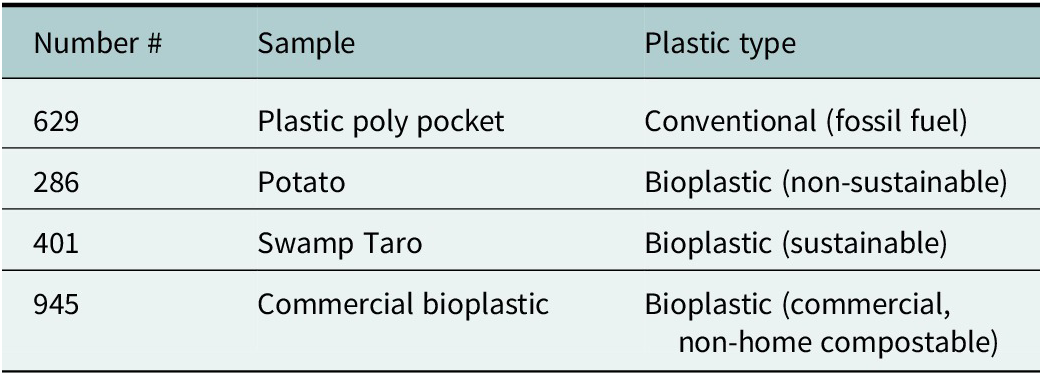
The participants for this section were selected from the survey. They were asked if they wished to be contacted later to participate in a focus group, with 29 respondents stating they wanted to participate. This number was reduced to 14 people by eliminating participants who would have seen/interacted with the biopolymers during events and showcasing in and outside the college. This reduction was done to eliminate any bias potentially brought to the group. The number of participants was further reduced by participants voluntarily withdrawing from the focus group on the day of the discussion, which resulted in seven participants for the focus group, comprising education levels 6–8, with three males and four females, with the ages ranging from 22 to 44 years. The group was given four plastics with randomised digit codes, as shown in the Table 1, the samples represent conventional, non-sustainable, sustainable and commercial bioplastics. They were then asked to rank the plastics from their favourite to least, after which a small presentation was given explaining the different categories of bioplastics using Figure 1 (European Bioplastics, 2019).
The samples used during the focus group, their plastic typing, and the randomised number they were given during the discussion

The participants were given two more bioplastics made at South East Technological University (SETU); the covenantal plastic was taken away, but they kept the commercial bioplastic and proceeded to rank the plastics on a rating scale of 1–5 (1 = strongly dislike; 2 = dislike; 3 = neutral; 4 = like and 5 = strongly like) for the plastics colour, touch/ feel, clarity and overall preference. They were also asked to use three words to describe their favourite and one characteristic they would like to improve.
Results and discussion
Questionnaire
The questionnaire, Supplementary Appendix A, consisted of four demographic questions and nine questions based on the participants’ perceived understanding of bioplastic definitions and their acceptance of biopolymers. There was also a question indicating people’s interest in participating in a focus group at a later date. All data were statistically tested for distribution, and all were found to have a Shapiro–Wilk p-value of <0.001; therefore, all the results were treated with non-parametric analysis, such as chi-square.
Statistical analysis found that gender did not influence the general public’s choices for the questionnaire. Of those who filled in the survey, 62% of the (n = 77) population were female, 36% were male (n = 45) and 2% (n = 3) were non-binary. This was in contrast to studies suggesting that women are more likely to choose green products, indicating gender differences in consumer behaviour (Klein et al., Reference Klein, Emberger-Klein, Menrad, Möhring and Blesin2019). The shift in all genders from this current study not having an influence could be a potential indicator of a growing understanding and possible use of green products across all genders.
The survey responses provided an overview of the general public’s awareness, understanding and acceptance of bioplastics, which results highlight varying levels of familiarity between terms such as bioplastic, biodegradable and biobased. Their responses also reflect differing attitudes towards sustainability. Willingness to pay a higher price for environmentally friendly materials.
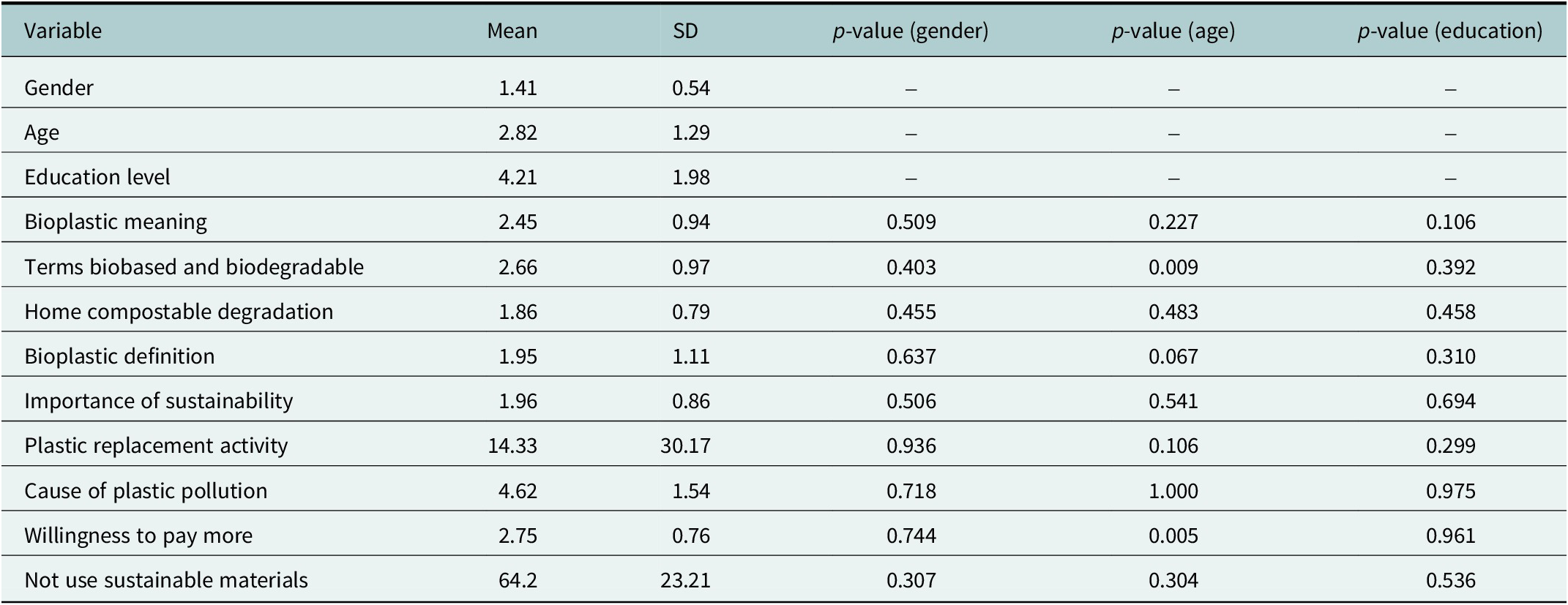
As shown in Table 2, sustainability ranked the highest among the measured variables, with participants strongly agreeing on its importance. Understanding the term Bioplastics showed more variability, indicating that while awareness exists, misconceptions remain. Familiarity with. They’re grateful materials were relatively high, suggesting that respondents were more confident in this concept than in bio-based terminology. Willingness to pay more for bioplastics displayed moderate support. These findings collectively demonstrate that sustainability awareness is strong, yet public determination of terminology remains inconsistent.
A summary of the description and inferential statistics for the main survey variables

Note: – indicates no p-value was calculated for that variable, as it represents an independent demographic factor rather than a test comparison. Where p > 0.05, no significant difference can be determined from this chi-square test, indicating that both variables are not associated with each other. Where p < 0.05, a significant difference can be determined from this chi-square test, indicating that both variables are associated with each other.
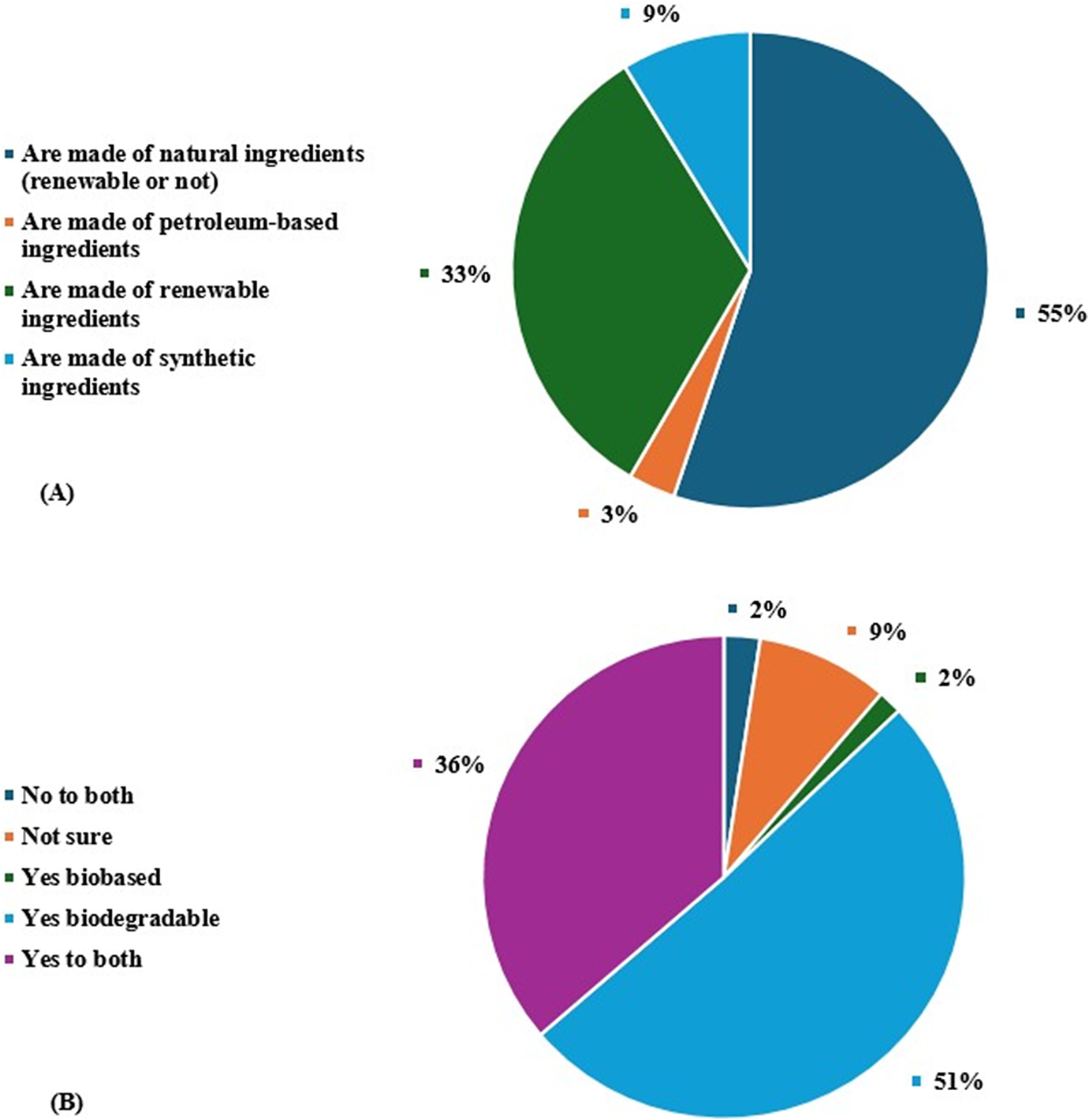
In Figure 2A, it is clear that most participants believed that bioplastic was made of natural ingredients, whether renewable or not, which is the case for most bioplastics, and it was good to see that people were aware of this information. Statistical analysis via chi-square revealed that a person’s education level influenced the results, with a majority holding a senior cycle education level. This was an exciting finding, as highlighted by European Bioplastic (2019); there are different variations of what bioplastics are comprised of. It was noted in Figure 2A that 3% thought bioplastic was made from petroleum-based ingredients, which is not entirely inaccurate. Bioplastics, such as PCL and PBAT, are derived from fossil fuel-based derivatives that biodegrade and are classed as bioplastics. This lack of material clarity could lead to confusion among consumers and potential “greenwashing” on the manufacturer’s part, as indicated by Dilkes-Hoffman et al. (Reference Dilkes-Hoffman, Ashworth, Laycock, Pratt and Lant2019), whose survey participants were unsure primarily if bioplastic could have negative environmental impacts.
Figure 2B gave insight into public understanding of bioplastic terminology, with half of the participants believing they understood what biodegradable means, with a lot also stating they understood the meanings of both biobased and biodegradable terms. The understanding of these terms was determined to be influenced by the participant’s age, with most in the age group of 18–22 years, stating they understood what biodegradable was, and the majority in this age range saying they believed they understood both meanings. A paper by Lynch et al. (Reference Lynch, Klaassen and Broerse2017) and Sijtsema et al. (Reference Sijtsema, Onwezen, Reinders, Dagevos, Partanen and Meeusen2016) states that most people don’t know what bio-based products are; as seen in Figure 2B, only 2% could confidently say they knew what biobased meant, while 36% of the participants from this study believed they understood both terms. So, the understanding of the term ‘biobased’ may be better known to consumers in more recent years.
(A) shows the percentage of people who believe they understand what bioplastic is made of (B) displays the results of people’s belief in what biobased and biodegradable mean.

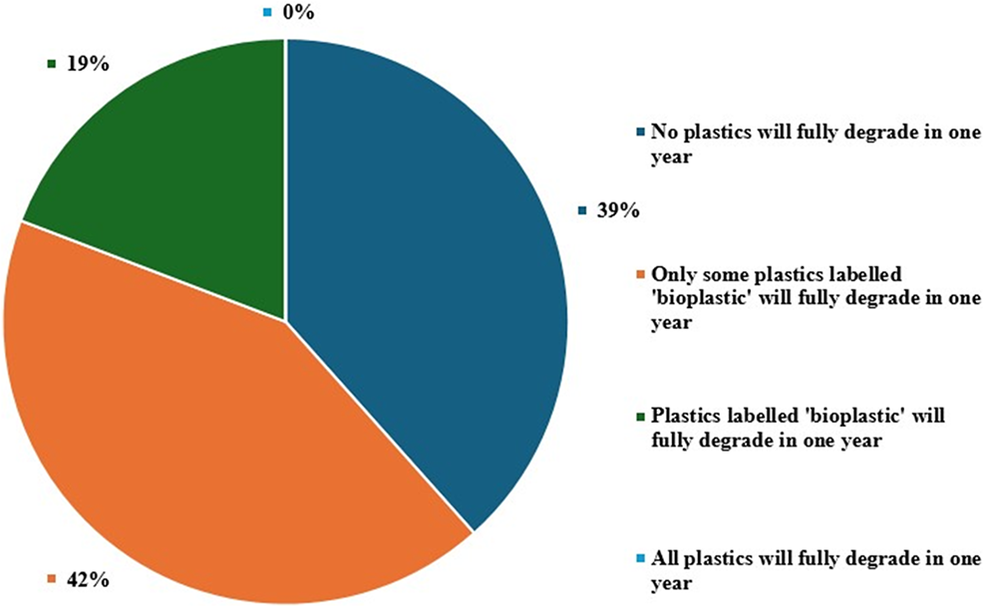
The question from the Figure 3 showed a clearer picture of the public’s understanding of plastics and bioplastics regarding degradation. There was a relatively even divide between no plastic fully degrading in a year and only some plastics labelled as bioplastic fully degrading in 1 year. A study by Neves et al. (Reference Neves, Moyne, Eyre and Casey2020) found that most people believed bioplastics are entirely degradable in home composting conditions. This shows the importance of adequately labelling home-compostable bioplastics, as many people will try to home-compost polymers labelled as such (Allison et al., Reference Allison, Lorencatto, Michie and Miodownik2021) and discover most are only industrially compostable or believe these bioplastics never degrade and discourage future purchasing.
showed the percentage of people who answered the question ‘What type of plastic will degrade (breakdown to CO2, water, and minerals) in a home compost bin’ and what they thought that meant.

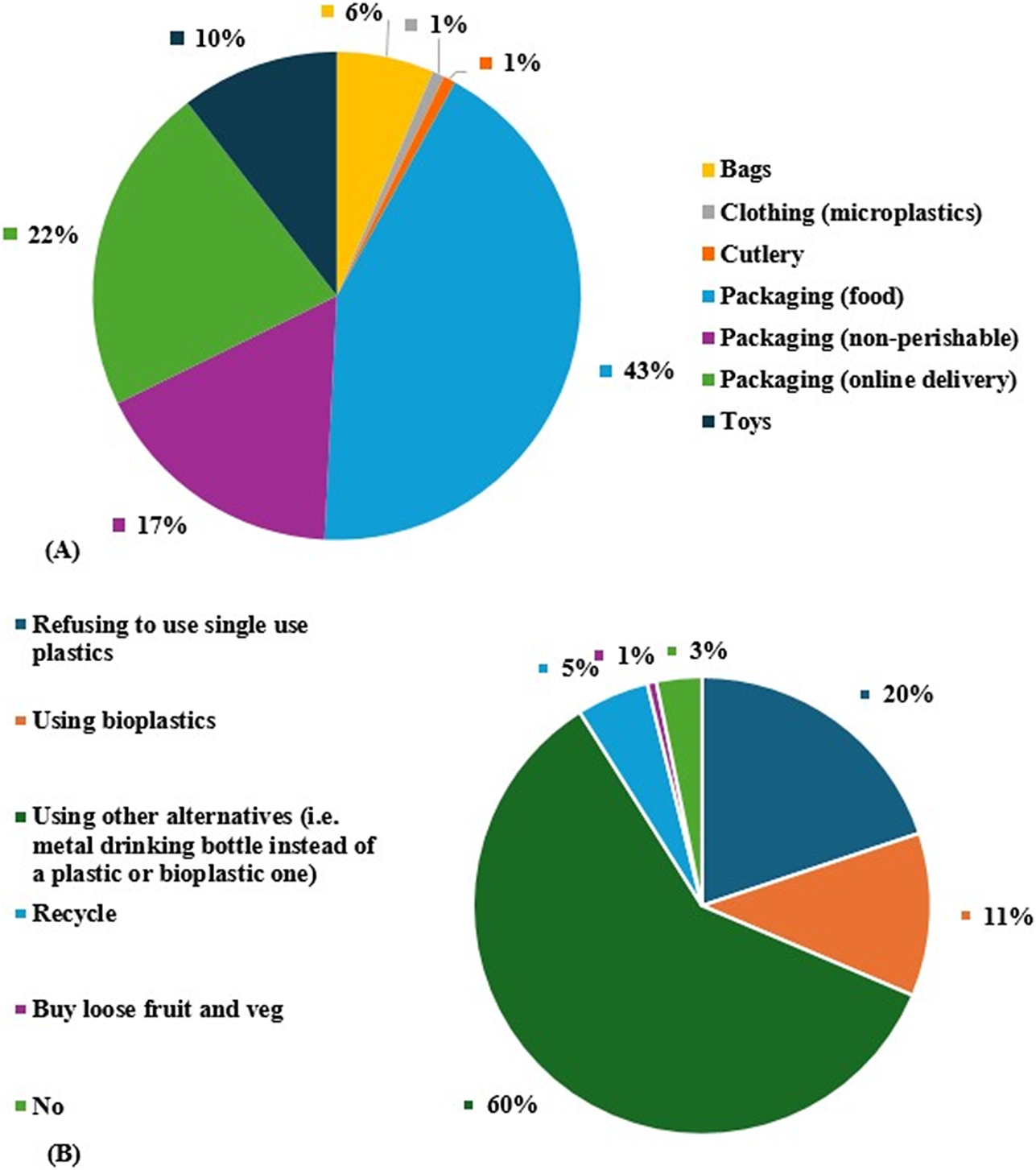
Roughly 80% of participants felt packaging was the most significant contributor to plastic pollution, but specifically, food packaging at 43% was the most considerable contributor (Figure 4A). Neither gender, age, nor education was found to influence these results, according to statistical analysis. The fact that the majority felt packaging was the largest contributor validated public awareness, as a study by Plastics Europe (2021) and Allison et al. (Reference Allison, Lorencatto, Michie and Miodownik2021) found that packaging, including commercial and industrial, made up 40.5% and was the largest end-use market. Packaging from online delivery was quite substantial and aligned with findings specifically by Allison et al. (Reference Allison, Lorencatto, Michie and Miodownik2021), where respondents stated how they shop online for most of their household items. Additionally, Gaffey et al. (Reference Gaffey, McMahon, Marsh, Vehmas, Kymäläinen and Vos2021) found from their study of 1,000 participants that 51% would use bioplastic packaging for products. As online shopping continues to grow, driven by the fast-paced nature of modern life, bioplastics may be necessary as consumers have limited control over the plastic waste generated.
(A) displays the data from participants who were asked what they thought was the biggest contributor to plastic pollution, and (B) displays the data from participants who were asked if they actively do any of the following daily.

A strong preference for reusable and sustainable options over single-use or bioplastic alternatives was observed in the Figure 4B. For example, participants reported swapping plastic-wrapped vegetables and fruit for loose produce in reusable bags. Personal environmental norms and perceptions of a product’s environmental friendliness influence consumers’ intentions to purchase bio-based brands (Filho et al., Reference Filho, Barbir, Abubakar, Paço, Stasiskiene, Hornbogen, Christin Fendt, Voronova and Klõga2022). Consequently, bioplastics provide an alternative to reduce conventional plastic waste, especially for those unable to completely avoid single-use plastic. Participants prioritised preventative measures like refusing single-use plastic over active strategies like recycling, which were engaged in infrequently. Notably, 60% of participants opted for plastic alternatives and refused single-use plastics, aligning with findings from Plastics Europe (2021), which reported a downward trend in plastic production across Europe. This reflects the data presented in Figure 4B and is consistent with findings by Allison et al. (Reference Allison, Lorencatto, Michie and Miodownik2021), where their respondents reported a tendency to use biodegradable composites when possible and actively avoid single-use plastics.
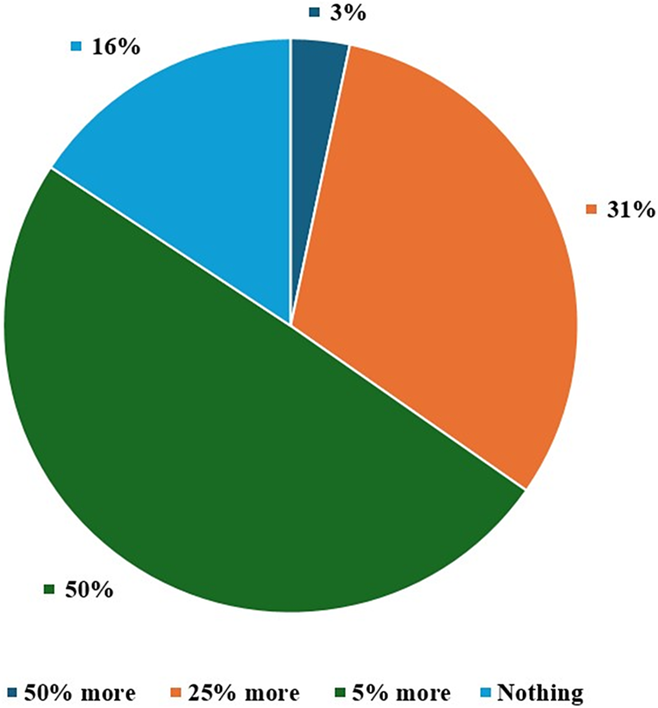
A study by Gaffey et al. (Reference Gaffey, McMahon, Marsh, Vehmas, Kymäläinen and Vos2021) found that respondents firmly stated their desire to purchase bioplastics in the future. However, from the data seen in the Figure 5, it is evident that while people will state they are eco-friendly and potentially willing to change their lifestyles or habits to be greener, when it comes to putting a cost on that, people are willing to spend a maximum of 5% more on sustainable plastic. For instance, if a product initially costs €10, consumers are only willing to spend an extra €0.50 for the sustainable alternative. Other papers, such as Filho et al. (Reference Filho, Barbir, Abubakar, Paço, Stasiskiene, Hornbogen, Christin Fendt, Voronova and Klõga2022), also noted that feelings of guilt can significantly impact consumers’ willingness to pay extra for bioplastic products. Now, this graph was found to be influenced by the age of the participants, with most being between 18 and 24 years of age and was only slightly higher than the next age bracket, 25- to 34-year-olds, which also stated they would only pay 5% more, similar to Russo et al. (Reference Russo, Confente, Scarpi and Hazen2019) who found age also affect respondents willingness to pay more. A study by De Marchi et al. (Reference De Marchi, Pigliafreddo, Banterle, Parolini and Cavaliere2020) also found that respondents are willing to pay more for bioplastics such as PLA and bio-PET. The results shown in Figure 5 could be influenced by participants’ income and current economic factors, such as inflation of everyday goods; at the end of the day, the general population is only willing to pay a minimum increase in sustainable plastic.
showed how much more money maximum people were willing to spend on more sustainable plastic.

Focus group
The focus group was a discussion centred around preferences for different types of plastics, with participants sharing their views on various aspects, such as sustainability, colour, transparency and potential applications for plastics in other industries. The size was slightly smaller than initially anticipated, but focus groups typically have sample sizes of 6–10 members per homogeneous group, according to Mehta et al. (Reference Mehta, Cunningham, Roy, Cathcart, Dempster, Berry and Smyth2021).
From the survey questionnaire, the following results were obtained:
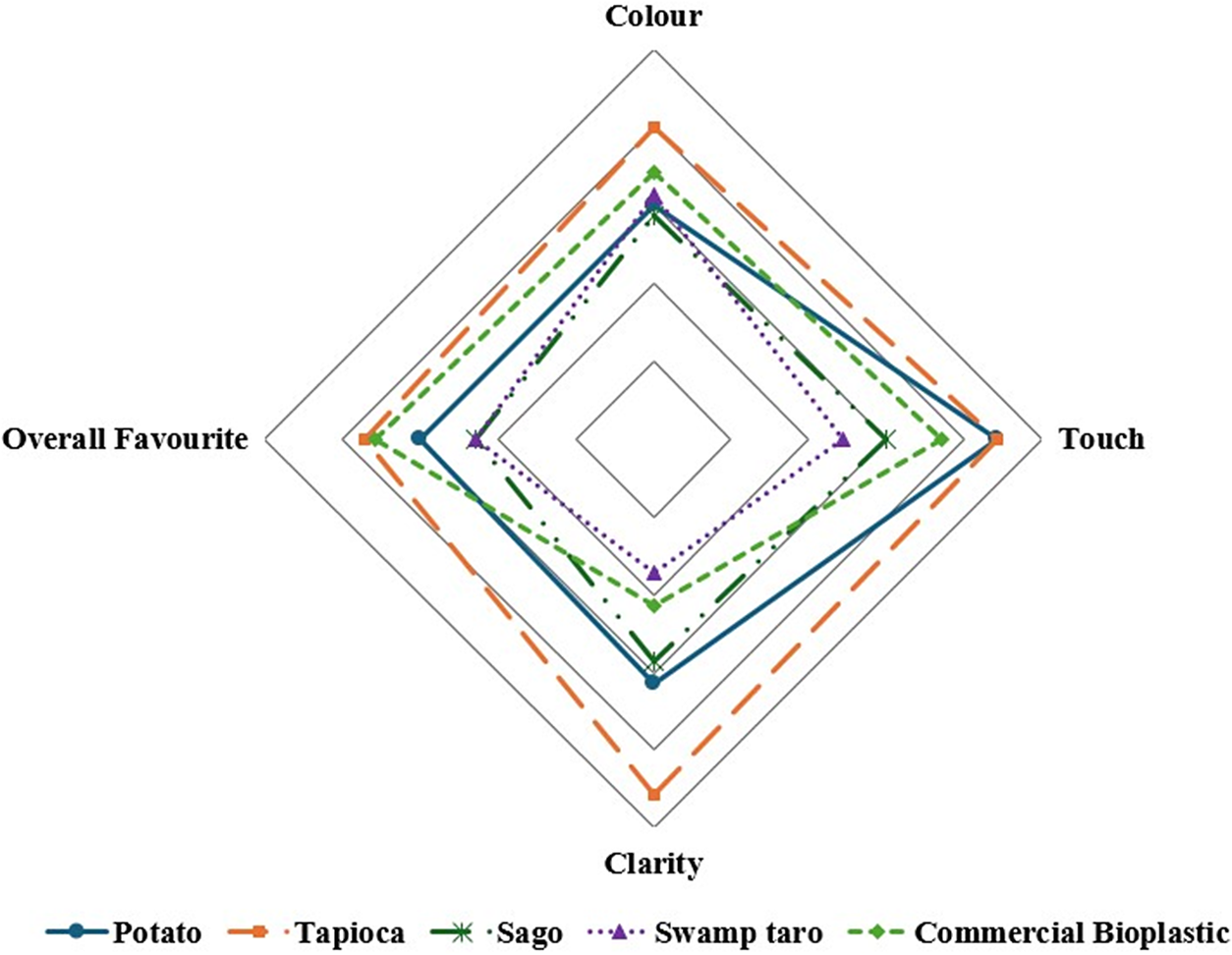
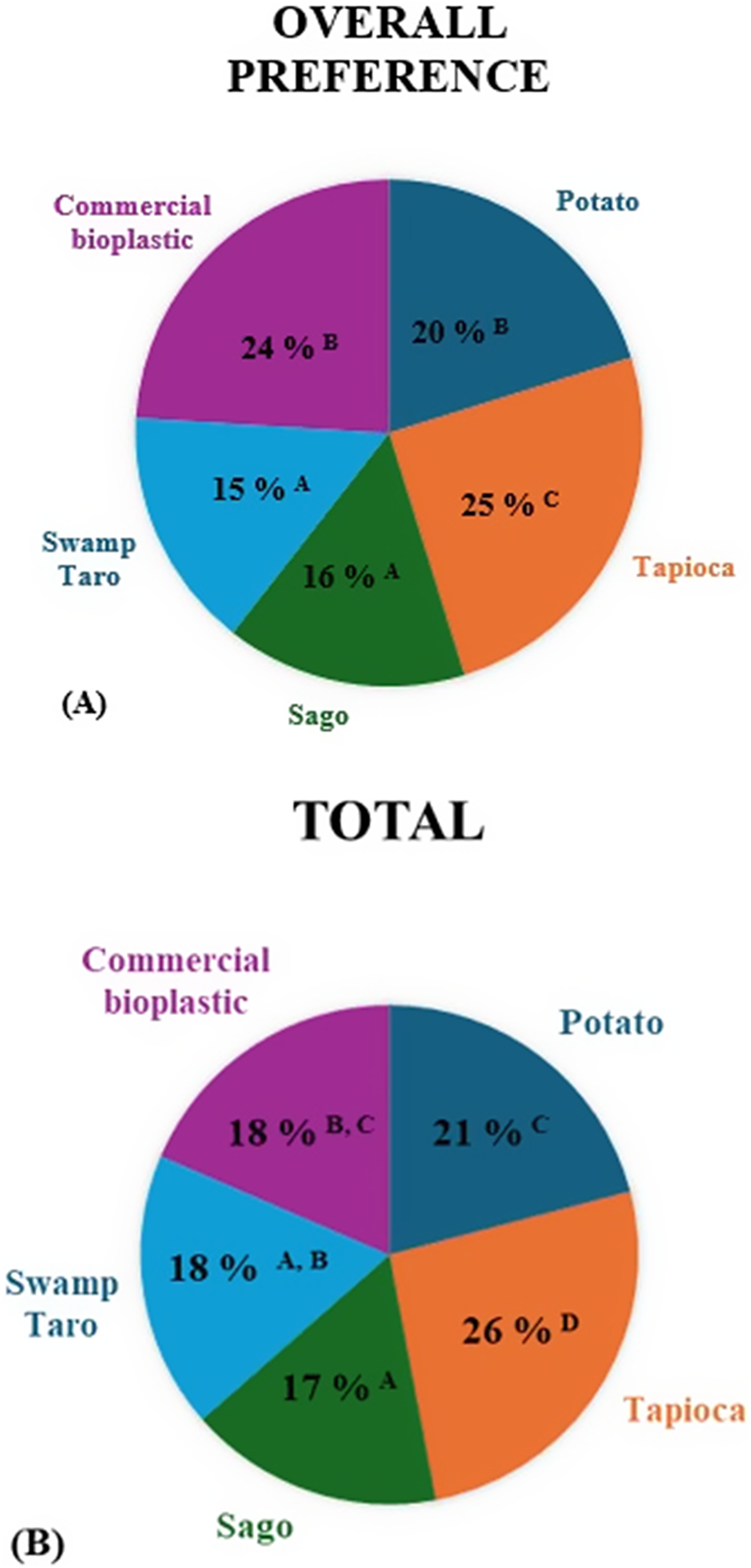
From the data gathered, Tapioca ranked the highest in all four categories, making it the overall favourite. In contrast, Swamp Taro was less favourably ranked mainly due to its clarity and colour, as seen in Figure 6. Cool and warm tones for packaging have influenced consumers’ appeal, with Steiner and Florack (Reference Steiner and Florack2023) stating that cooler tones are associated with sustainability. Therefore, as Swamp Taro was a warm-tone colour, it makes sense that the focus group could have better perceived its colouring, as shown in Figure 7A and B; when the participants were asked to give their overall preference, most selected Tapioca SPBB, as confirmed by Figure 7B, where Tapioca was significantly more favoured in both parts. Tapioca’s favourability was due to its clarity and colour, which gives it an appealing appearance; according to Aday and Yener (Reference Aday and Yener2014), 53% of their respondents stated appearance was the most important factor for packaging. However, the commercial bioplastic (commercial bioplastic) was not as highly favoured in part B as the participants reported in part A, with a 6% drop in actual favourability.
Displays the ranking of the different SPBBs under the categories of colour, touch, clarity and overall favourability. Values represent the meaning of N=5 with varying levels of significance found within the samples (P<0.05).

The overall preference of the bioplastics presented to the participants can be seen in part A, and the total combined values can be seen in part B. Values represent the meaning of N=5 as percentages. Different significance levels were found within the samples (P<0.05).

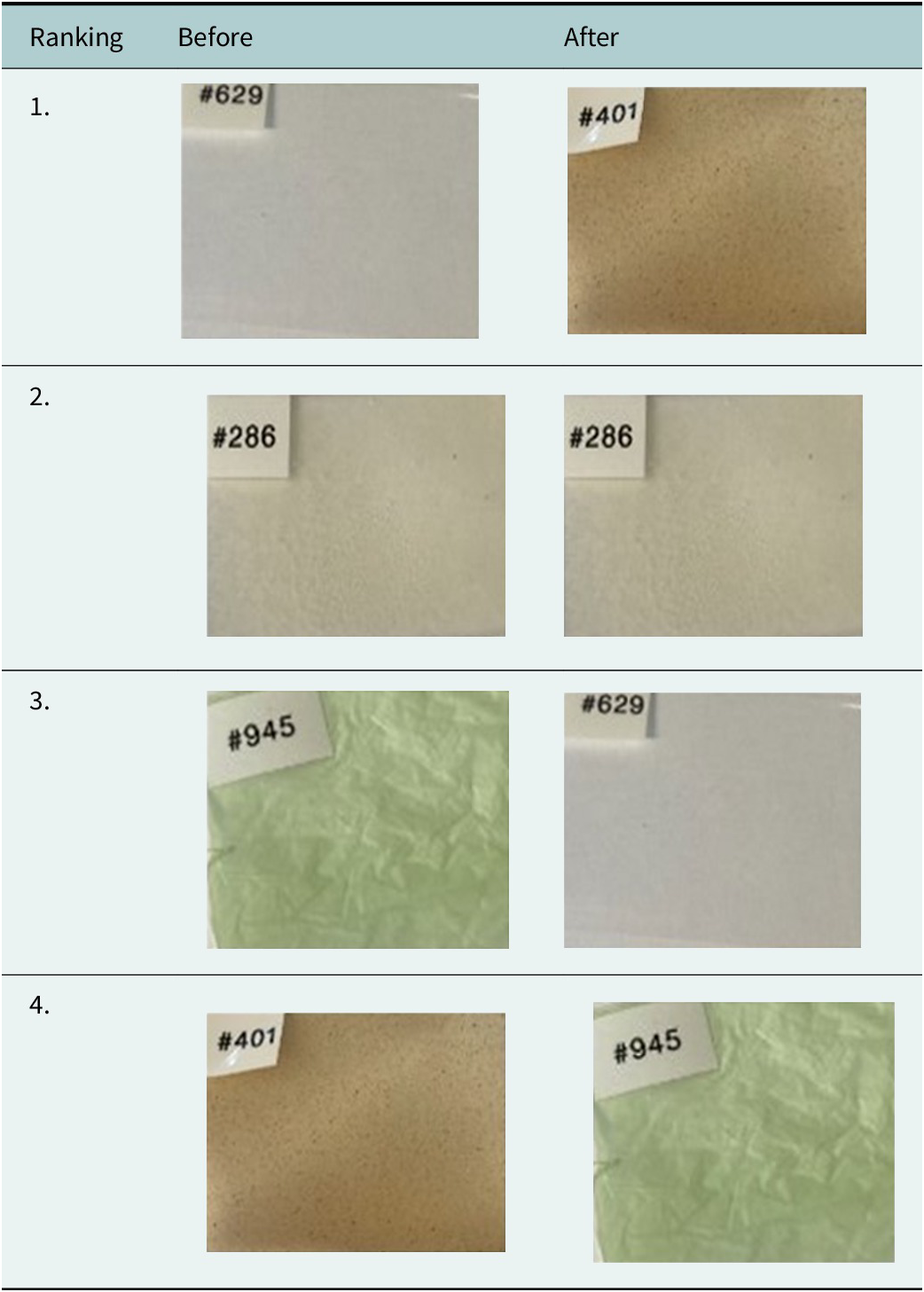
The question of the importance of sustainability regarding a ranking system was presented to the focus group. As seen in Table 3, sustainability and biodegradability are highly important to the general public. This is evident as the petroleum-based polymer (#629) was the favourite, but once its source was revealed, it quickly dropped to last place. In contrast, the Swamp Taro SPBB (#401) was least liked but became the favourite once it was revealed to be a sustainable, home-compostable type of bioplastic.
Data on the Influence of sustainability on plastic choices

Note: The following three-digit numbers relate to corresponding polymers: #629 (Plastic polypocket (petroleum)), #286 (Potato SPBB (non-sustainable bioplastic)), #945 (Commercial bioplastic (Bio-based)) and #401(Swamp Taro SPBB(Sustainable bioplastic)).
When asked what characteristics their favourite biopolymer had, the majority stated that Tapioca SPBB was their favourite, using keywords used, such as clarity, plastic tactility and durability. The focus group members were allowed to pull, crumple or try to rip the samples for this section when trying to provide critical characteristics. They were also asked to give an improvement they would like to see with the SPBB: increased temperature stability. As pointed out, if these were used as packaging, they would ideally maintain structural integrity during transportation with fluctuating temperatures and humidity.
Key points of the focus group discussion section
During this section, the participants were asked various questions, which the discussion recorded and analysed. Speaker 1 initially favoured clear and resistant plastic but later reconsidered it due to sustainability concerns, highlighting the growing importance of eco-friendly materials in consumer choices. Speaker 6 preferred plastic based on colour and texture, while they disliked darker plastics. The group delved into the significance of transparency in plastic packaging, particularly for food products, emphasising its role in consumer trust and product visibility. Additionally, the conversation touched on the importance of colour and clarity in plastic packaging for different applications, with considerations for aesthetics and functionality.
The discussion expanded to explore the potential uses of biodegradable plastics, including innovative applications like coffins and toys, reflecting a shift towards more sustainable materials in various industries. Participants also discussed plastic thickness, viscosity and extrusion techniques for industrial applications, highlighting the technical aspects influencing material properties and performance. The group considered using plastics for items like straws and bubble wrap, focusing on how colour impacts consumer preferences and perceptions of product quality.
Mehta et al. (Reference Mehta, Cunningham, Roy, Cathcart, Dempster, Berry and Smyth2021) discussed how the public is excellent for examining various viewpoints and the underlying factors that influence people’s decisions in a larger sociocultural environment. That statement was very true for this study, as the thematic analysis of the focus group discussion on plastic materials revealed several key themes that reflect participants’ preferences and considerations. The top themes identified include sustainability and environmental impact, clarity and transparency, colour preferences, applicability in packaging, material properties, consumer preferences and behaviour, education and awareness, influencers and media campaigns and cost and consumer decision-making.
Sustainability and environmental impact
One of the central themes that emerged from the discussion was participants’ strong preference for bioplastic materials due to their eco-friendly nature and reduced environmental impact compared to conventional plastics. Participants emphasised the importance of using materials that are better for the environment, reflecting a growing awareness of sustainability issues in material selection. Klein et al. (Reference Klein, Emberger-Klein, Menrad, Möhring and Blesin2019) stated similar findings on factors influencing consumers’ decisions to purchase bioplastic products, with particular interest in the public’s perspectives on sustainability in their study. The conclusions of this theme correspond to Filho et al. (Reference Filho, Barbir, Abubakar, Paço, Stasiskiene, Hornbogen, Christin Fendt, Voronova and Klõga2022), on consumer attitudes towards bioplastics are influenced by various factors, including environmental concerns, beliefs, emotions, product attributes and trust in product safety. Allison et al. (Reference Allison, Lorencatto, Michie and Miodownik2021) also found that environmental impact was a great concern to the survey participants when asked about biological composite plastics.
Clarity and transparency
The clarity and transparency of plastic materials, particularly in packaging for food products, were highlighted as significant themes. Participants stressed the importance of seeing the packaging contents, especially for fruits and vegetables, to ensure quality and freshness. This theme underscores the role of visual appeal and functionality in packaging design. A study by Aday and Yener (Reference Aday and Yener2014) found that 10% of their survey respondents felt transparency was an important attribute for packaging.
Colour preferences
Colour preferences emerged as a factor influencing participants’ perceptions of plastic materials. Colour can be an essential factor for packaging, as found by Aday and Yener (Reference Aday and Yener2014), where colour was a factor that consumers stated affected their attraction to specific packaging. Some expressed preferences for clear or white plastics for better visibility and aesthetics. The discussion also touched on how colours can impact perceptions of cleanliness and quality, influencing preferences for packaging materials. This theme highlights the role of aesthetics in consumer preferences.
Applicability in packaging
The focus group explored potential applications for plastic materials, including packaging for food products, liners for bins and innovative uses like straws and bubble wrap. Participants discussed the suitability of different plastic types for specific packaging needs, emphasising the importance of material properties for various applications. This theme reflects considerations of functionality and practicality in material selection. A paper by Ogunsona et al. (Reference Ogunsona, Ojogbo and Mekonnen2018) discussed how starch-based polymers are attractive for packaging due to their environmentally friendly nature and non-toxic properties. The potential uses of bioplastic films on food items are hotly debated. Developing an appropriate material mixture is the main focus of efforts since the polymers and other materials added to biopolymeric films to improve their functional qualities determine how influential the films are (Ahmad Qamar et al., Reference Ahmad Qamar, Asgher, Bilal and Iqbal2020).
Material characteristics
Discussions around material characteristics focused on factors such as thickness, viscosity and polymerisation points, indicating a consideration for the physical characteristics of plastic materials. The liking of specific material characteristics found here corresponds to the conceptual framework by Ketelsen et al. (Reference Ketelsen, Janssen and Hamm2020), as this was one of the cognitive processes they noted consumers make before the decision to buy a product. Participants also discussed the potential for extrusion and the impact of temperature on material behaviour, highlighting the technical aspects of material development. This theme underscores the importance of understanding the technical aspects of materials in design and application.
Consumer preferences and behaviour
The conversation highlighted consumer preferences regarding the appearance and functionality of plastic products. Participants discussed the importance of colour, ease of use and the impact of packaging on consumer choices, especially in the context of frozen foods and single-use items. This theme reflects the influence of consumer behaviour on material selection and design; this theme was part of Ketelsen et al. (Reference Ketelsen, Janssen and Hamm2020) conceptual framework design on what factors go into a consumer purchase under the preferences and attitudes of consumers.
Education and awareness
There was a strong emphasis on the need for education and awareness campaigns to inform consumers about the environmental impact of plastic materials. Participants discussed the challenges of greenwashing, confusion around terms like biodegradable and bioplastics and the importance of clear labelling on plastic products. Allison et al. (Reference Allison, Lorencatto, Michie and Miodownik2021) and Boesen et al. (Reference Boesen, Bey and Niero2019) had similar findings. Their survey participants did not know certain symbols, such as the seedling compostable label and the resin identification codes found on most plastics. This theme highlights the role of information and communication in shaping consumer perceptions. If consumers don’t understand the symbol on the material, they have no way of knowing the correct disposal or makeup of the product.
Influencers and media campaigns
The role of influencers and media campaigns in promoting sustainable practices and raising awareness about plastic pollution was also highlighted. Participants suggested leveraging celebrity endorsements and influencer programs to reach a wider audience, especially among younger generations. This theme underscores the potential of influencers and media in driving behaviour change. Celebrity endorsements would aid in marketing and, more importantly, understanding bioplastics to the general public and improve customers’ perception of promoting bioplastics as a viable alternative to fossil fuel-derived counterparts (Skouloudis et al., Reference Skouloudis, Malesios and Lekkas2023).
Cost and consumer decision-making
Cost emerged as a significant factor influencing consumer decision-making when choosing different packaging options. Participants noted that while sustainability is essential, affordability plays a crucial role in consumer choices. This theme reflects the practical considerations that influence consumer behaviour in material selection. The findings also correspond to those by Gaffey et al. (Reference Gaffey, McMahon, Marsh, Vehmas, Kymäläinen and Vos2021), who found that cost was the most significant deciding factor for consumers when choosing products. In contrast, sustainability was third as a deciding factor.
Overall, the thematic analysis of the focus group discussion on plastic materials revealed a complex interplay of sustainability-related themes, consumer preferences, education, influencers and cost. Comparing the findings from this study to those of the likes of Ketelsen et al. (Reference Ketelsen, Janssen and Hamm2020), who developed a conceptual framework on what cognitive processes go into the consumers’ choice, it is evident that many factors, such as exposure, awareness, perception, liking, attitudes/preferences and conviction, go into the consumers’ decision to purchase an item. These themes reflect the multifaceted nature of considerations in material selection and design, highlighting the importance of addressing the environmental impact, consumer behaviour and practical constraints in promoting more sustainable practices and reducing plastic waste.
Limitations and further research
While this study offers valuable insights into public understanding and acceptance of starch protein blend bioplastics, several limitations must be recognised. The sample was primarily recruited through the university and social media channels. This sampling approach could introduce potential bias and limit the representativeness of the findings. Additionally, the modest sample size might have reduced the statistical power of subgroup comparisons; as such, all results should be interpreted as exploratory rather than definitive.
Future work should aim to broaden participation and include a more diverse demographic and geographic-based, ideally through random sampling, approaches. Expanding the survey to large populations would enable more robust statistical testing and enhance external validity. Complementary qualitative research, such as a larger-scale focus group or community-based interviews, could also help deepen understanding of the sociocultural drivers behind bioplastic acceptance. Follow-up studies could aid in exploring how awareness and attitudes evolve over time with increased exposure to bioplastic products.
Conclusion
In conclusion, while gender did not significantly affect perceptions of bioplastics, age and education played a notable role in shaping knowledge and willingness to invest in sustainable materials. The age of those in the survey influenced their knowledge of biobased and biodegradable products and how much they were willing to pay for bioplastic. Regarding biodegradability, most initially said they understood what biodegradable means, but not biobased. For their willingness to pay more for bioplastic, most were willing to pay 5% more for bioplastic. These findings suggest that clear communication of key terms is needed so that the public can distinguish between biobased, biodegradable and conventional plastics with greater accuracy.
While the results highlight the value of education in improving public understanding, they should not be interpreted as indicating that education alone is sufficient. Public awareness efforts should be integrated with broader measures, such as improved product labelling and transparent certification of biodegradability. And consistent communication from manufacturers and policymakers. Together, these approaches constrain public understanding and trust without assuming that a lack of education is the sole factor shaping perception.
As for spending more, the result aligns with the fact that younger people are most likely on tighter budgets as they have only just entered the workforce in that age range. Education was also found to affect the general population’s understanding of what a bioplastic is, with most holding a senior cycle (level 4–5) education level, indicating that awareness initiatives should be inclusive and accessible to all educational levels, rather than restricted to formal teaching environments.
It was also encouraging to see that people feel sustainability is important, that they are cautious that not everything labelled a bioplastic will fully degrade in 1 year, and that they actively use alternatives to plastics. It was intriguing that roughly 80% of participants felt packaging was the largest contributor to plastic pollution, and specifically, food packaging, at 42.4%, was the biggest contributor.
This investigation’s focus group discussion aspect provided valuable insights into the multifaceted world of plastic preferences, touching on sustainability, colour, transparency and potential applications across different sectors. The conversation underscored the importance of clear communication and consumer engagement about eco-friendly options, suggesting media campaigns and influencer endorsements as tools to promote sustainability in plastic use. Participants also mentioned the significance of recycling symbols on plastic for categorisation and consumer awareness, emphasising the need for clear labelling to facilitate proper disposal practices. Moreover, the discussion highlighted cost as a significant factor influencing consumer decisions regarding plastic products, indicating that affordability and other factors like material properties and environmental impact remain key. Overall, these findings suggest that while consumer education plays a valuable role, an integrated approach involving clear communication, transparent labelling and cost-effective design will be essential in supporting the transition towards sustainable plastic use.
Open peer review
To view the open peer review materials for this article, please visit http://doi.org/10.1017/plc.2026.10045.
Supplementary material
The supplementary material for this article can be found at http://doi.org/10.1017/plc.2026.10045.
Data availability statement
The data supporting the findings of this study are available from the corresponding author upon reasonable request.
Author contribution
Conceptualisation: J.S., D.C., A.-J.J.-S., A.C.N.; Data Curation: J.S.; Investigation: J.S., A.C.N.; Project Administration: A.C.N.; Resources: J.S.; Supervision: D.C., A.-J.J.-S., A.C.N.; Validation: D.C., A.C.N.; Visualisation: J.S.; Writing – Original Draft Preparation: J.S.; Writing – Review and Editing: D.C., A.C.N, J.S.. All authors have read and agreed to the published version of the manuscript.
Financial support
This research was supported by grants from the South East Technological University President Award Fellowship grant, funding number PES 1393.
Competing interests
The authors declare none.
Ethical standard
The research meets all ethical guidelines, including adherence to the legal requirements of the study country.
AI declaration
The following AI tools were used in this document: Grammarly AI was employed for spelling and grammar support due to the author’s dyslexia, and AILYZE AI qualitative data analysis software was used to assist with thematic analysis, helping to mitigate any unintentional bias during the focus group data interpretation.


 Open access

