

I. Introduction
The current debate about the development of new international legal standards on business and human rights (BHR) is often driven by a series of empirical assumptions. For instance, proponents of the proposed United Nations (UN) treaty on BHRFootnote 1 build their arguments on two key premises. The first is that the current global regime is weak and insufficient (with its plethora of voluntary and soft law standards); the second is that a treaty can garner sufficient political support in international forums.Footnote 2 As to the first, Deva argues that existing regulation is inadequate because of ‘contestable rationales for compliance’, ‘lack of precise, measurable human rights’ and ‘deficient or undeveloped implementation and enforcement mechanisms’.Footnote 3 As to the second, Bilchitz contends that the fact that no consensus exists now on a binding BHR instrument is no reason to suggest it will never exist in future – despite the lukewarm reception of states to the proposed BHR treaty, there are reasonable grounds for hope.Footnote 4
The common logic behind such arguments and initiatives for stronger global regulation might be labelled as expressive.Footnote 5 The presumption that the current system is anaemic reflects a belief that corporations and states view human rights or social responsibility commitments as materially costless. States can sign up to a code or corporations can join a certification mechanism without facing any real material accountability. Instead, they are handed an opportunity to accept or articulate some ‘lofty principles’ and even gain ‘rewards’.Footnote 6 States and corporations enjoy a pat on the back, enhance their national or corporate brands, and avoid the attention of national or global regulators.
The idea that the development of hard law standards are politically feasible reveals a similar logic. Once the theatre of law production moves to a more neutral and even human rights-friendly environment, such as the UN, the chances of developing stronger regulation is enhanced. Even if states are reluctant, the role of corporations will be diminished as other actors can enter the space and exert influence.Footnote 7 As Melish argues in her call for a BHR treaty, ‘genuine social transformation occurs only when affected communities themselves have the power and voice to engage decision-making processes that affect their lives, as active subjects of the law, not objects’.Footnote 8
Critics of such efforts contest these assumptions but in different ways. One approach is to point out that expressivism is a long-run game. Here we find, amongst others, John Ruggie, author of the UN Guiding Principles on Business and Human Rights (UNGPs) but critic of the BHR treaty proposal.Footnote 9 Ruggie has long argued that social change in international relations requires shifts in social norms but reminds us that it is a gradual process of acculturation.Footnote 10 He advocates the authoritative adoption of standards that attract many adherents and can be easily proliferated and integrated in existing legal and social structures. New, comprehensive and ambitious hard law proposals in the BHR field are therefore premature as their expressive basis is far from being secured.
A second and under-discussed critique is the argument that states and corporations are rational actors, concerned with the cost of compliance and spill-over effects in future regulation. This is a logic of consequence rather than appropriateness. It is ‘rational’ for corporations and states to resist both soft and hard regulation because of their perception that it imposes costs.Footnote 11 Thus, we should expect that these actors will be cautious in their commitments, seeking to maximize the benefits (reputational, material) while minimizing the costs (e.g., number of standards, strength and scope of a standard).
This does not mean that one causal explanation of regulatory reluctance excludes the other. It is not a gladiatorial battle between theories.Footnote 12 For instance, Beth Simmons has argued for a rationally expressive theory of understanding why states ratify human rights treaties: ‘Governments are more likely to ratify human rights treaties which they believe in and with which they can comply at a reasonable cost’.Footnote 13 Social norms and regulatory costs go together. Moreover, an openness to both explanations can help establish the conditions for more effective and nuanced advocacy for enhanced international regulation. A better understanding of the consequentialist logic of the audience in particular may lead to different strategies in the choice and design of regulation and tactics in mobilizing state and corporate support.
The first step, however, is to determine what is the current state of commitment embedded in global standards. In reviewing the literature, we were struck by a contrast. On the one hand, human rights law scholars regularly confine themselves to analysing, and often dismissing, a small bundle of existing global standards on BHR.Footnote 14 The usual suspects are the Organisation for Economic Co-operation and Development (OECD) Guidelines, the Global Compact, the UNGPs, the occasional soft mining or clothes standard and the (indirect application of) UN human rights treaties. On the other hand, political scientists and business management scholars have tracked the ever-growing cascade of standards seeking to regulate global corporate social and environmental behaviour.Footnote 15 Vogel estimated in 2008 that there were over 300 voluntary corporate social responsibility (CSR) codes, covering all major global economic sectors.Footnote 16 Yet, to our surprise, we could not locate a systematic overview or even simple counting of these standards, or their human rights content. Therefore, we decided to map and code the ‘actually existing’ global regime on BHR. Our global corporate social responsibility standards (G-CSR) database,Footnote 17 which maps this regime, seeks to bridge this information gap, and provides a basis for investigating various empirical claims. We use CSR as the field of commitments and the idea of BHR as one means articulating these commitments.
The second step is to understand the behaviour of states and corporations in negotiating new standards. Is it driven by a logic of appropriateness, consequence or both? Moreover, do the commitments reflect a short-run or long-run strategy? In our G-CSR database, we initially observed what we have called a ‘commitment curve’. Trade-offs between different regulatory commitments seem to be present within and across standards. This pattern possibly pointed to a rationalist ‘logic of consequence’ in the making of human rights-relevant standards for business. In other words, corporations and states consistently resist standards that are both strong and broad (e.g., establishment of a strong independent complaint mechanism for a broad range of rights). These preferences result in an observable regulation frontier in which costs are traded off but which may shift over time. This article is thus a first step in seeking to test that observation, and we use medium-N and large-N methods to that end.
The article proceeds as follows. Section II sets out the current regime through our G-CSR database, and especially their human rights and accountability content. Section III then fleshes the competing hypotheses and describes the research design. Section IV examines the nature of commitments and specifically presents and tests the idea of a commitment curve. Section V concludes with some reflections of the findings on the current UN treaty-making processes and beyond.
II. Existing Commitments
A. The Global CSR Standards Database
In order to assess empirically the state of the current regulatory system for corporations, we have coded systematically a wide variety of existing standards, from the OECD Guidelines for Multinational Enterprises adopted in June 1976 to instruments adopted until 31 December 2015. Consequently, the data exclude recent revisions to international standards, such as the 2017 International Labour Organization (ILO) Tripartite Declaration concerning Multinational Enterprises and Social Policy.Footnote 18
In our database, the standards are the unit of analysis with the formal text of the standard as the primary data source. Additionally, the database contains information about drafting and adopting partners to the standard. The coding was done manually by the authors in accordance with a developed coding manual.
Given the high number of both technical and single enterprise standards, we have narrowed our selection in order not to overstate the relevant sample. The potential candidates for inclusion were first identified through keyword searches on international search engines, primarily Google, as well as a review of online lists targeted at corporations and states, e.g., by the Business & Human Rights Resource Centre.Footnote 19 To be included in our database, the following requirements had to be met. First, a standard must be global and transnational. This means that it must extend beyond one jurisdiction and one corporation, which results in the exclusion of national regulations and corporate codes of conduct for a single enterprise.Footnote 20 Second, a standard must have direct and explicit implications for corporations. This requirement results in the exclusion of international treaties that only indirectly implicate corporate behaviour, such as via the duties of states to regulate, e.g., the International Covenant on Economic, Social and Cultural Rights (ICESCR).Footnote 21 Third, in order to exclude merely technical concerns (e.g., auditing, finance), we have only included standards that include a focus on the social responsibility of corporations and the physical impact that corporations have on workers, consumers or other stakeholders through their operations. Although many technical standards may have social implications, they are not included in the database at this stage.
Our definition is conservative. It clearly excludes a range of standards that have daily relevance for global BHR regulation. Nonetheless, applying these criteria, we have identified 98 G-CSR standards.Footnote 22 Out of these, nearly half (46) are revisions. However, we have included revisions in order to trace the development of the regulatory system, and test the pace of change. If we were to exclude either the revised versions or the initial standards, we would not be able to capture how the protection of rights has developed from the mid-1970s until today. Moreover, in some or many cases, it is not clear if a standard is a revision, or it replaces or complements the original standard.
B. Attributes of Standards
Figure 1 shows the growth in these selected G-CSR standards, which started with the adoption of the OECD Guidelines in 1976 and rose rapidly from the early 1990s. The diamond line shows the overall increase in international standards, including revisions. This kaleidoscope of standards suggests that the current state of global BHR regulation is larger than that commonly described by many human rights advocates, but smaller than that articulated by some in business studies and political science.
Global regulatory standards addressing social externalities
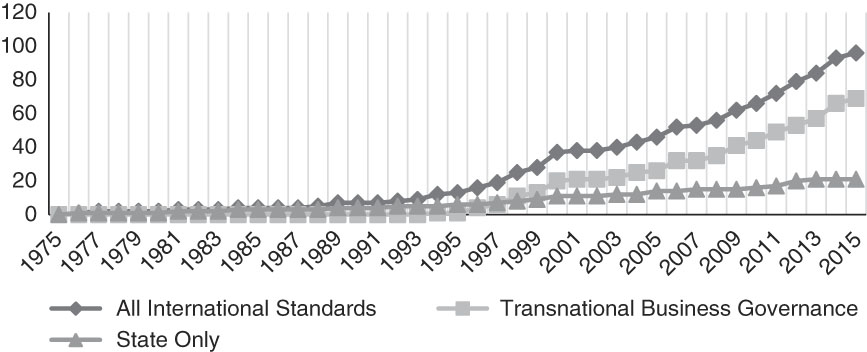
The top black line shows the overall development of international standards. When these are disaggregated by adopting parties, it becomes clear that most of the regulatory standards fall within the category of transnational business governance (TBG; square grey line). These standards were adopted by at least one non-state actor, such as corporations and civil society organizations (CSOs). TBG can be understood as the increasing partial or full privatization of global regulation, where a ‘significant degree of non-state authority’ is exercised ‘in the performance of regulatory functions across national borders’.Footnote 23 In this case, businesses, CSOs and professional bodies figure prominently in the generation, adoption and monitoring of new standards.Footnote 24 In our database, only a minority of standards were adopted solely by a state or an inter-governmental organization (IGO; see the triangle line).
However, there is a clear sectorial bias in the distribution of standards. Our data show that approximately 53 per cent of standards are sector specific and, out of these, 74 per cent fall within the primary and secondary sectors of agriculture, mining and manufacturing.Footnote 25 The reason for this is not immediately clear although it is most likely a reflection of global trade patterns. Goods from the primary and secondary sectors have dominated global trade (at an average value of 40–50 per cent of global gross domestic product [GDP]), with global trade in services hovering, until recently, at around 10 per cent of global GDP.Footnote 26 With the gradual rise in trade in services, such asymmetry might constitute now evidence of the absence of comprehensive regulation. Yet, the asymmetry could also be seen in a positive light. The concentration (and cascades) of standards in certain primary and secondary economic sectors could reveal a useful path forward, as it may be easier to generate swifter and tailored regulation at the sectorial level. We return to this issue below and introduce some caveats.
As anticipated, and based on the multi-stakeholder characteristic of the system, only five standards are legally binding, four have both binding and voluntary elements, while the remainder are voluntary. From a legal perspective, this dampens the overall strength of these protections.Footnote 27 However, the importance of legality should not be over-estimated. International agreements rely on a cohesive system of enforcement. In its absence, other mechanisms may be as strong in protecting rights,Footnote 28 which we investigate further below.
C. Human Rights Commitments
Each standard was coded for various human rights characteristics. In our coding, we mapped references to specific human rights, a human rights treaty, and other G-CSR standards. These commitments were also indexed according to the scope covered: fully, partly, or non-inclusive of human rights. To fall within the category of full inclusion, the standards had to refer to the International Bill of RightsFootnote 29 and specifically mention protections enumerated therein. Partial inclusion refers to standards that do not refer to treaties or a high number of specific protections, while non-inclusive standards have limited or no mention of human rights protections in the form of treaties or specific protections. The classification serves as an analytical tool, not an absolute distinction.
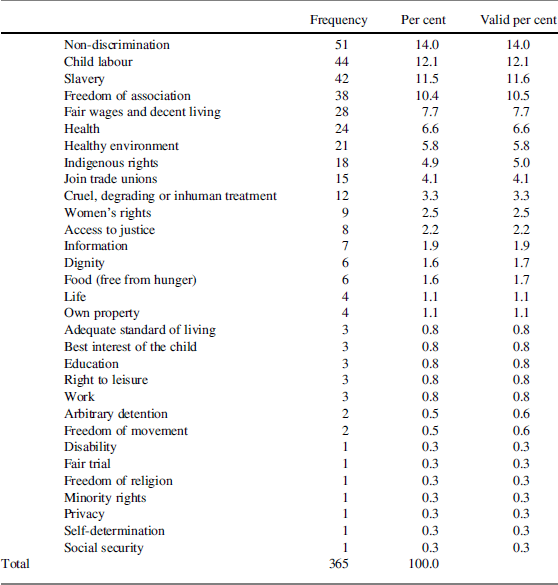
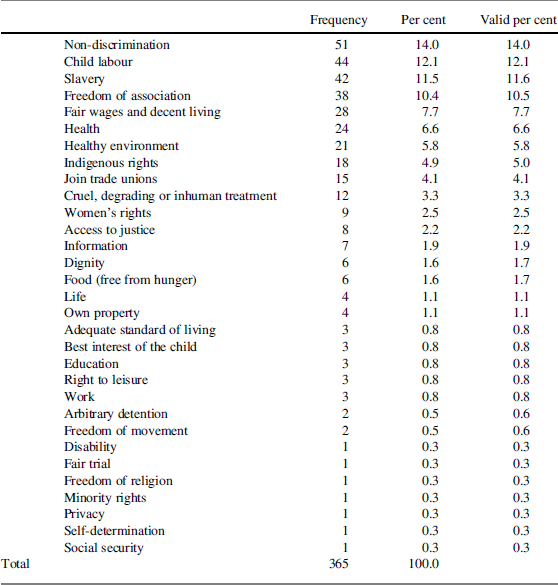
As Figure 2 reveals, a majority of standards include and reference at least one human right.Footnote 30 The leading inclusions were the four core labour rights (non-discrimination, slavery, child labor, and collective bargaining) followed by fair wages, right to health, healthy environment and indigenous rights.Footnote 31 Given the reputation of G-CSR standards, this direct inclusion of many explicit rights, rather than a vague reference to human rights or responsibilities, was higher than the authors of this article had expected. Nonetheless, only a minority of standards include human rights beyond the core set of labour rights.
Growth in human rights recognition
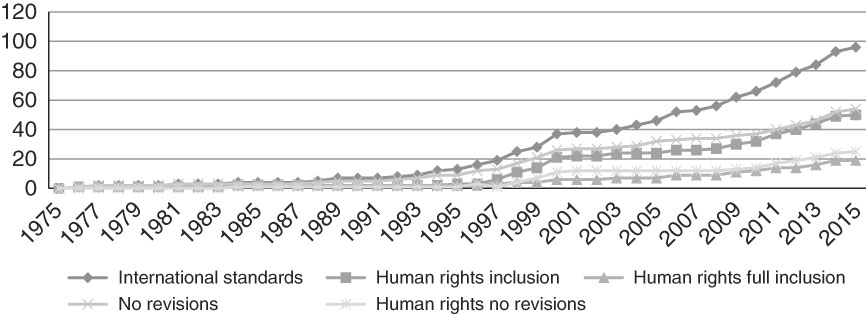
The data suggests that there are two primary waves of rights inclusion. The first wave corresponds with the adoption and launch of the ILO Declaration on Fundamental Principles and Rights at Work, 1998 (‘ILO Core Labour Standards’). The focus on core labor rights was designed to attract broad support and this endeavor appears to have been successful. It may have also proved the critics of the ILO Declaration right, who had feared that the ‘core’ approach would encourage a minimalist conception of human and labour rights.Footnote 32 We find that the most frequently included rights in G-CSR standards in this wave are precisely the ‘core’ labour rights.
However, the revised standards in this first wave period were more expansive. Out of the 12 revisions that entered into force (1998–2009), half of them had references to human rights with three of them incorporating a holistic and comprehensive approach to recognition, including reference to the International Bill of Rights as well as specific rights protections. There are several possible explanations for this to which we will return later in the analysis.
The second wave began in 2009. It is partly shaped by the ILO Core Standards, but also coincides with the work of the Special Representative to the Secretary General on human rights and transnational corporations and other business enterprises (SRSG).Footnote 33 Here we witness a more holistic turn to the inclusion of rights that goes beyond the core rights.Footnote 34 An example is SA8000:2014.Footnote 35 The latest revision includes explicit reference to key human rights treaties as well as the UNGPs. Compared with the earlier version, the 2014 standard was the subject of increased multi-stakeholder engagement, includes a wider range of human rights,Footnote 36 and potentially goes beyond the UNGPs in expanding responsibility beyond the workplace to those within corporate spheres of influence. Another example, not included in our current sample of standards, is the ILO Tripartite Declaration of Principles concerning Multinational Enterprises and Social Policy.Footnote 37 The standard was revised for the fifth time in 2017. It now has a holistic human rights approach with reference to the UNGPs and the 2011 OECD Guidelines.Footnote 38
III. Rational Expressivism and the Commitment Curve
As we explain in this section, the reactions of corporations and states to proposals for greater regulation of business in the field of human rights can be crudely reduced to two dominant logics: appropriateness and consequence.
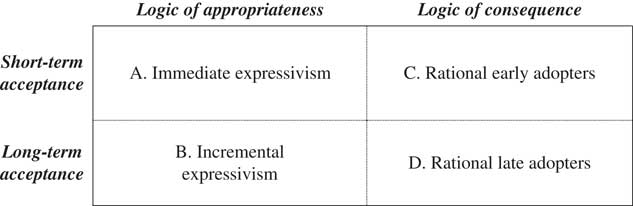
If we divide these logics according to timeframe, we can identify four types of responses or ‘ideal types’, as set out in Figure 3. In the first column, we see the two competing forms of expressivism: immediate and incremental. These differ in terms of time it takes to shift common values and acceptance of human rights by business. The second column disaggregates the logic of consequence. The early adopters are those that see competitive advantage in potential regulation – a corporation may be better able to adjust to a new form of regulation than its competitors, or a state may see the advantages of securing a level playing field in trade and investment. Such corporations and states are unlikely to present challenges to efforts to advance harder laws (although it is notable in the case of a BHR treaty there are currently few in this category). What is of particular interest in this article are the late adopters, which may resist regulation as it is viewed as costly in the short- and long-term. The remainder of this section discusses the theories behind each of the key potential responses and sets relevant hypotheses for development of global regulation.
A map of potential responses
A. Expressivism
The logic of appropriatenessFootnote 39 presumes that social rules and expectations guide individuals and their entities.Footnote 40 Such social norms may be cultural conventions, political documents, or even legal principles. Within the sociological institutional family of expressive theories, the manner in which entities respond to new norms is diverse.Footnote 41 Four mechanisms may be of relevance: mimicry, coercion, acculturation and persuasion. States and corporations may be:
∙ mimicking prevailing social expectations in the face of uncertainty of norms, values or goals;Footnote 42
∙ coerced through ‘formal and informal pressures’ by ‘organizations upon which they are dependent and expectations in the society within which organizations function’, especially in order to maintain legitimacy;Footnote 43
∙ influenced by prevailing views and social rewards such that they are acculturated into a new social norm;Footnote 44 or
∙ persuaded by argument and deliberation.Footnote 45
These mechanisms may be materially significant and behavioural change may ensue. Indeed, some argue that the dominant and narrow profit norm in corporate culture is itself based on social expectations rather than binding law.Footnote 46 However, the new commitments may be also ceremonial, such that prevailing practice remains ‘decoupled’ from the new norm.
The concern for many BHR advocates is, in essence, that expressive behaviour by corporations and states falls into the latter category. Commitments are tepid and decoupling is the norm rather than the exception. This concern is articulated in two ways. First, corporations and states are engaging in mimicry in signing up to various voluntary codes of conduct or weak standards, which may provide an answer to uncertainty about appropriate global norms but ends with hollowed-out commitments. We can thus hypothesize that such G-CSR commitments are likely to be more characterized as cheap talk than substance as follows:
Hypothesis 1A. G-CSR standards will be marked by broad and similar commitments without any significant BHR commitments to implementation or accountability.
Second, many of these standards are developed in forums and spaces that provide little space for strong human rights messages of coercion, acculturation or persuasion. A significant number of standards are developed by corporations themselves. Moreover, low degrees of participation by CSOs, social movements and affected communities has even marked some processes in intergovernmental organizations like the UN Human Rights Council (e.g., development of the UNGPs) and the OECD.Footnote 47 Thus, we can develop a complementary immediate expressive hypothesis:
Hypothesis 1B. G-CSR standards developed in forums with low participation and influence by human rights-focused actors will result in weak discursive and institutional BHR commitments.
B. Incremental Expressivism
Others are sceptical, however, to the notion that expressive behaviour is malleable or that states or corporations engage only in cheap talk. Uncertainty over optimal regulation may be genuinely experiencedFootnote 48 and values may be deeply embedded and sticky in the face of attempts at persuasion and influence. According to Ruggie, corporations are embedded in social structures and many directors/employees/shareholders have a personal commitment to these norms. Acceptance of new norms only comes with a medium to long-term process of consensus building and norm embedding.Footnote 49 Thus, we should expect an adjusted version of the above two hypotheses:
Hypothesis 2. G-CSR standards will progressively develop in BHR strength over time, especially in forums with strong participation and influence by actors with a strong human rights focus.
C. Rational Late Adopters
Moving from social norms towards instrumentalist motivations, we begin with the presumption that material concerns primarily guide corporations and states. Financial and reputational costs (and benefits) of any regulation are the paramount concern.Footnote 50 We thus presume that corporations and friendly states will work to restrain regulatory initiatives that constrain, on balance, economic interests. A useful illustration of these trade-offs is Gillies’ analysis of the Extractive Industries Transparency Initiative (EITI).Footnote 51 Enthusiastic support for the EITI by Western corporations (which possessed the hallmarks of expressive behaviour but also an understanding of positive reputational benefits) evaporated quickly once it was decided that transparency duties would fall on corporations rather than host states. The enhanced corporate burden, together with the fear that non-Western corporations would not comply, led to the negotiation of a watered-down standard.
This causal assumption of rational behaviour makes corporate support for adoption for standards a prisoner of shifting contexts. Where global regulation is perceived as imposing net costs, it will be resisted; yet embraced when it provides net benefits. Thus, we can reason that corporations will only be more pliable to regulation in three circumstances. First, market discipline may trigger commitment. If markets, investors and creditors are informed directly or indirectly about the dangers of absent regulation, regulatory acceptance may signal to these actors an awareness of the problem. For example, the Responsible Care standard on chemicals was adopted following the Bhopal disaster in 1984, pre-empting other kinds of reactions. Second, strong BHR commitments can forestall threatened regulatory action or permit access to new markets or public procurement. Thirdly, easily operationalizable regulation will be more amenable as there are few technical costs.Footnote 52 Indeed, Mattli and Woods encourage greater corporate engagement in standard-setting processes as it may encourage regulatory design that is feasible and effective, and thus more acceptable.Footnote 53
If these circumstances are present, we might expect corporations and states to be early adopters. Such behaviour is particularly likely in markets characterized by low levels of market competition where early adopters are able to maintain a sufficient share of the market in the short term.Footnote 54 However, we might expect that a majority of corporations and states fall into the alternate category of late adopters – making strong commitments only when pushed, and pushed hard.
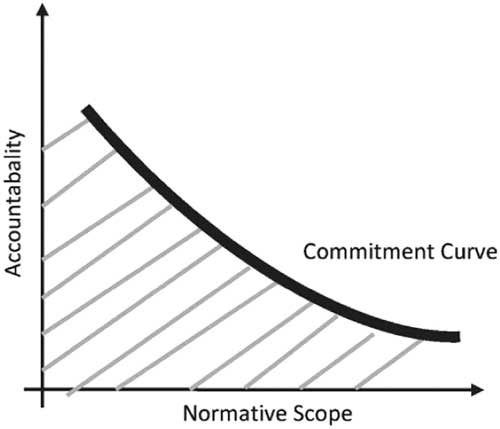
This idea of ‘rational’ short-term corporate behaviour was partly observable in our initial examination of the data. We noticed a possible pattern of trade-offs in which corporations and states resisted standards that were simultaneously strong and broad. The data suggested that actors were willing to make either discrete stronger commitments or broad weaker commitments – but rarely both. It implied an instrumental calculus that bound any ‘socially conditioned’ or ‘altruistic’ behaviour.
We illustrate this idea of a regulation frontier through what we call a commitment curve. In Figure 4, different elements of the BHR agenda are balanced against one another. Acting strategically, corporations are cautious about exposing themselves unnecessarily to excessive costs.Footnote 55 While they can be pushed easily towards the frontier, a logic of consequence will limit their commitment to its boundaries. In other words, excessive commitment costs may place a brake on self-regulatory efforts or, where states are the key standard-setting actors, corporations will lobby for the limitation of regulatory ambitions.Footnote 56 The commitment curve can apply equally for states who may worry about the financial costs of regulation.
The commitment curve
Thus, we can formulate the following hypothesis for rational late adopters:
Hypothesis 3: G-CSR standards will, on average, balance the costs of regulatory commitments, particularly in the short term and in the absence of significant benefits.
IV. Research Design and Analysis
In this section, we analyse our data to examine to what extent the different theories might best explain the current global regime of CSR standards. We consider five possible vectors for which we possess information in our sources (the standards): (i) human rights scope versus accountability, (ii) corporate structure commitments, (iii) influence of adopting actors, (iv) influence of drafting actors, and (v) dynamism over time. The data involve medium-N observations of trends and large-N methods such as testing for the statistical significance of various relations.
A. Human Rights Scope versus Depth of Accountability
We first ask if there is a trade-off between the scope of human rights inclusion and strength of accountability commitments.
1. Descriptive Data
Beginning with human rights, we see significant variance in the scope. It ranges from no inclusion through to a referencing of the full range of human rights. By the full range, we mean G-CSR standards that possess a high and representative number of human rights or refer to comprehensive standards like the ICESCR and International Covenant on Civil and Political Rights (ICCPR). Out of our sample of 98 standards, only 19 included the full range of human rights, while 39 included a modest range of rights, and 33 included little to none.
In our database, we also code for various measures of accountability and commitment. We consider willingness to include accountability mechanisms an important sign of commitment, as it may enhance the likelihood of enforcement. We distinguish between three types of accountability mechanisms: complaints, certification, and periodic reporting. Figure 5 shows the percentage of standards with accountability mechanisms, distinguishing between those that are independent (dark grey) and those that have limited independence (light grey). Independence is understood as having external actors evaluate the parties’ contribution to the mechanism, i.e., review of reports or compliance with other certification demands. The rate of inclusion of complaints mechanisms is modest although not negligible (included in 16 per cent of the standards).Footnote 57 The most common mechanism is periodic reporting (included in 44 per cent of the standards), followed closely by certification mechanisms (included in 39 per cent of the standards). As these proportions demonstrate, some standards included more than one mechanism.
Percentage of standards that have accountability mechanisms
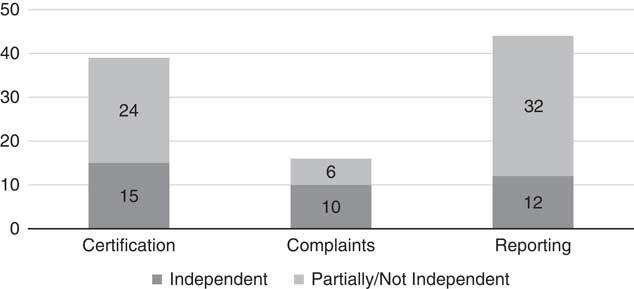
However, the processes of reporting vary in terms of independence and transparency. Almost 75 per cent of the standards that include periodic reporting have less stringent demands concerning transparency and independence of the reports. Moreover, there is a difference in sanctions for failing to submit reports. Some mechanisms include expulsion powers, permitting the barring of those that fail to comply.Footnote 58 This is notably stronger than that for states who fail to report to international human rights treaty bodies – a common problem.Footnote 59 However, other standards are considerably less stringent, and accountability for non-compliance with reporting is severely limited. Likewise, in relation to external complaint mechanisms, a third are limited in their independence, possibly influencing the use and outcomes of complaints processes.
Thirty-nine per cent of the standards possess a certification mechanism. This is mostly externally administered, but with varying independence. Only 15 per cent of standards have certification mechanisms that are fully independent from the parties to the standard. With regard to certification, an important aspect to consider is the differentiation between sectorial and universal standards. As certification mechanisms are specific in character, it is implausible to expect full coverage of all human rights in all sectors. Instead, they focus on creating a deeper institutional framework for specific products or issues, and non-compliance can lead to the elimination of uncertified products from the market. Thus, from the perspective of a corporation, the consequences of failure to gain certification may be greater than non-compliance with a mere formally binding legal standard.Footnote 60 However, given the large number of certified standards within the three most regulated sectors, one could also be witnessing a ‘race to the bottom’ in corporate regulationFootnote 61 or an averaging-out of standards.Footnote 62 In other words, not all certification mechanisms are equal. Moreover, a number of external or third party-monitored certification mechanisms have been criticized for their inability to determine with accuracy the level of corporate implementation.Footnote 63
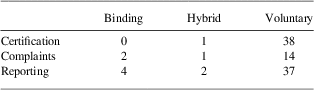
When it comes to accountability, an aspect worthy of consideration is the overall legally binding character of standards. Table 1 shows the legal character of the standards and contrasts this with the presence of different accountability mechanisms. Note that some standards include several accountability mechanisms and will thus be represented more than once.Footnote 64 Table 1 shows that a majority of the standards with accountability mechanisms are voluntary, which is in line with the fact that 88 of the 98 standards in our sample are voluntary. However, it is worth noting that out of the five binding standards, only one lacks reporting but three lack complaints mechanisms. In other words, binding standards are not always accompanied by other features of accountability.
Legal character of accountability mechanisms
Of course, this does not mean that stronger standards will ipso facto be more effective. Low corporate participation in drafting or adoption may weaken their legitimacy or relevance. Abbott and Snidal reject as implausible the idea that ‘go it alone’ strong regulation by states or non-governmental organizations will generate greater change.Footnote 65 Conversely, weaker standards may achieve higher levels of effectiveness in certain circumstances. For example, consumer mobilization or embedment in national lawFootnote 66 (e.g., through public procurement or incorporation in regulations), may leverage the material power of soft standards. Nonetheless, for the moment, we are interested in commitment at the standard-setting stage.Footnote 67
2. Potential Commitment Curve
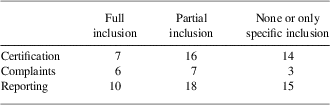
Greater accountability presumably increases the cost of non-compliance.Footnote 68 Given that non-compliance is more likely to be challenged, a commitment to a large number of rights would be riskier, as all duties would carry the accountability costs. To see if a trade-off exists here, we examined how different accountability mechanisms relate to the scope of human rights. Supporting the hypothesis of trade-offs, we find that the majority of standards that have an accountability mechanism have partial or no inclusion of rights, i.e., low human rights inclusion. Table 2 shows a categorized distribution of human rights inclusion in accountability mechanisms with certification, complaints and reporting. Almost half of the certification mechanisms have a partial inclusion of human rights.
Human rights inclusion of accountability mechanisms
This trade-off is mapped in Figure 6, with a juxtaposition of the number of human rights commitments against an accountability index. The scope of human rights commitment is measured here on a scale of 1 to 12, where 12 is a full inclusion of human rights provisions. Accountability is measured on the vertical axis by an index that scores for whether (1) a standard is binding; (2) a complaint mechanism exists and is independent; (3) a certification mechanism exists and is independent; and (4) there is periodic reporting.
The commitment curve – original standards
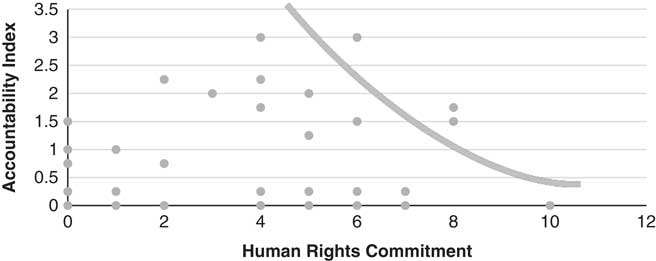
Looking at the graph, we see that the standards are largely concentrated along or below the drawn commitment curve. As the number of rights increases, the strength of accountability tends to decline. More importantly, there is an absence of standards in the top right quadrant. We certainly find nothing approximating the proposed BHR treaty, in which a strong form of regulation covers many rights. These findings do not necessarily disprove the role of expressive behaviour. Indeed, note the many standards in the bottom-left corner. However, the strong variance of standards and the apparent trade-off suggests the presence of some sort of consequentialist behaviour.
B. Corporate Structure
Another important vector to consider when discussing the strength of the standards is their approach to corporate structure. In the G-CSR database, we distinguish between those standards that place an obligation on a given corporate entity and those that cover the larger enterprise (which captures the entire group of corporate entities). The differentiation addresses the question of legal liability.Footnote 69 An enterprise approach indicates that the standard applies beyond one specific entity, to subsidiaries and other entities within the corporate structure.Footnote 70 An entity approach is more limited in that it only refers to a specific entity and not the enterprise as a whole.
As seen in Table 3, 31 standards apply to enterprises and 12 to entities. In about half of the standards (45 of 98), there is no explicit reference to corporate structure. This category of ‘no mention’ has been normatively ranked between the enterprise approach and the entity approach. Our rationale for this ordering is that no mention is a flexible approach that might give stakeholders more room for interpretation, allowing for either an entity or an enterprise approach.
Human rights inclusion and corporate approach
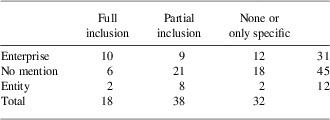
For the enterprise approach, the inclusion of human rights is evenly distributed among the three categories, while for the other two approaches the distribution is more skewed towards partial or no inclusion. This was unexpected. Standards with the enterprise approach are comparatively stronger on human rights protection, possibly contradicting the idea of a commitment curve. However, this finding is dependent on how the ‘no mention’ category is understood. If interpreted to cover the enterprise, the result would be the reverse. Nonetheless, it is interesting on this vector that 10 of 18 instances for full human rights inclusions occur for standards applying to the entire corporate enterprise.Footnote 71
C. Adopting Actors
An alternative way of testing the commitment curve is to examine the effect of different constellations in drafting and adopting standards or examining its change over time. As foreshadowed, expressive theories suggest that corporations, as ‘law-making’ actors adopting standards alone, will be inclined towards minimalism. Following this logic, we would expect the strength of the overall standard to be inversely related to the degree of corporate influence.Footnote 72 Alternatively, and in the reverse direction, adoption by other actors (e.g., by CSOs) can push regulation closer to the common interest and diminish the influence of corporate self-interest.Footnote 73 An illustration of this dual dynamic is the competing standards on forestry and labour in supply chains. As Abbott and Snidal find, multi-stakeholder alliances produced moderate standards; more activist CSOs generated stronger standards; and breakaway corporations developed weaker standards.Footnote 74
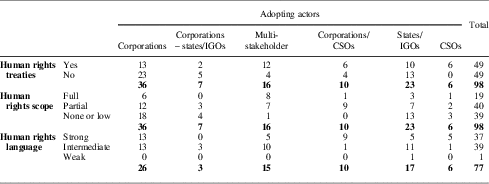
Does deeper corporate and civil society engagement in the adoption of standards matter for human rights recognition? Table 4 contrasts different adopting actors by three measures of the strength of human rights commitments discussed above: (1) specific reference to human rights treaties; (2) the degree of inclusion of human rights (scope); and (3) the strength of the language of human rights. Given that not all standards have a reference to human rights, the sample for human rights language is somewhat smaller than for the other two aspects.
Human rights commitments by adopting actor
1. Human Rights Treaties and Scope
The recognition of human rights treaties in standards adopted by corporations was comparatively low (with explicit reference in only 13 of 36 standards). When the presence of other actors rises, the proportion of standards with treaty references increases. For instance, multi-stakeholder standards perform comparatively well on treaties (12 out of 16 explicitly reference human rights treaties) as do corporate-CSO standards (6 out of 10). The same applies to scope. Recognition of all human rights occurs largely in multi-stakeholder standards. It is low in solo corporate adoption but also in joint corporate-CSO standards, which tend to only include partial coverage. However, one should recall that even if there is broad reference to human rights, there might be limited reference to existing human rights treaties that may anchor these protections more clearly.Footnote 75
2. Strength of Language
The language of rights used in the standards can function as an indication of the strength of the protections (but it may be also traded-off against other commitments). We presume in accordance with standard legal theory that commitments with ‘shall’ are stronger than those with ‘should’. With regard to the language of rights, our data show that 43 per cent of the standards refer to a clear commitment in legalistic terms, using the language of ‘must’ or ‘shall’. Moreover, another 9 per cent use the almost synonymous verb ‘requires’. The result is that over 50 per cent of the standards have what we can call strong human rights language. The remaining standards use the intermediate term ‘should’ (35 per cent) or the weaker and discretionary ‘may’ (14 per cent). However, we also examined whether the standards referred to international human rights treaties. Such a reference would suggest that the content of human rights should be understood and interpreted in the context of well-developed international law, strengthening the legal character of the standard. We found that half of the standards referred explicitly to human rights treaties: 48 of 98.
In the case of the strength of language, the pattern observed on scope and treaties reverses. Corporations have adopted proportionally more standards with strong human rights language than other constellations of adopting actors. Does this mean that corporations are willing to hold themselves to a higher level of commitment? Possibly, but most likely not. The overall pattern of commitment suggests the reverse. As corporations alone commit on average to less rights and accountability, the effects of stronger language are dissipated. In other words, there is little risk in making stronger discursive commitments. This suggests the presence of both consequentialist and appropriateness logic. Acting alone, corporations appear more consequentialist but the involvement of other actors may press them to increase the strength of standards.
A logistic analysis supports some of the assumptions one can draw from the descriptive table. When coding the human rights content in the text of the standard, human rights scope was categorized as no inclusion (0), partial inclusion (1), or full inclusion (2) of rights. We include control variables for when the standard was adopted (‘entry into force’), the strength of human rights language and whether there is a treaty reference. Taking ‘scope’ as a trichotomous dependent variable (0, 1, 2), we obtain the following results for a stepwise logistic regression, seen in Table 5.
Logistic analysis – human rights scope
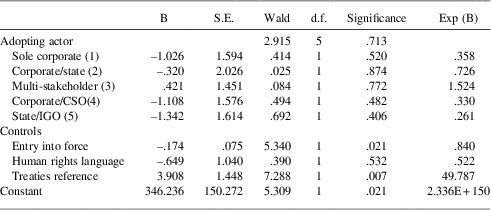
While the results are not statistically significant, the signs of the coefficient generally correspond with the above analysis. A larger sample size may yield more significant results. However, there are two findings of significance: one obvious, one surprising. First, the treaty references are unsurprisingly positively related to human rights scope given the growth in standards shown in Figure 1: commitment to a broad scope would suggest an openness to treaty recognition. Second, there is a slight negative relationship between scope and time. Considering that Figure 1 indicated an incremental growth in human rights inclusion, the negative relationship between the two was unexpected, suggesting that time may be less important than expected across all standards (as compared to within-standard development through revision). It also suggests that the major change in the last decade has been accountability mechanisms rather than inclusion of more human rights.
Turning to accountability mechanisms, Table 6 shows their distribution across the different constellations of adopting actors. Certification is certainly the most preferred accountability mechanism when corporations are sole adopters. Considering that certification is specifically targeted within economic sectors, it is less surprising that corporations prefer this model. On the other hand, corporations are the least likely to establish complaints mechanisms in global standards.Footnote 76 The dispute mechanisms are concentrated in multi-stakeholder and IGOs/states instruments. Unlike certification mechanisms (which can enhance market access and brand reputation), corporations may consider complaint mechanisms to bring only costs. On periodic reporting, the distribution is more equal. However, it is difficult to rank periodic reporting at the same strength as mechanisms of certification and complaints: the former tends to permit less external and specific scrutiny of corporate practice.Footnote
Adopting actors on accountability mechanisms (80 standardsFootnote 77 )
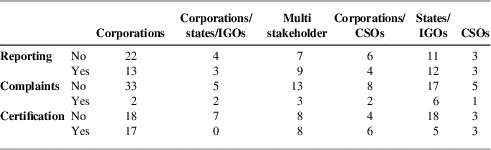
For both certification and complaints mechanisms, we have conducted a binary logistic analysis on the effects of different adopting parties. Table 7A shows the analysis with certification as the dependent variable (0=no certification, 1=certification). We compare the effect of sole corporations and multi-stakeholder variables against all other constellations as a default. We include control variables for when the standard was adopted (‘entry into force’) and if the standard was a revision. The binary logistic analysis predicts the likelihood of adopting parties if a certification mechanism exists. If the adopting actors are less likely to adopt a certification mechanism, the sign of the coefficient (B) will be negative, and vice versa. Here the signs of the coefficients follow the observable descriptive pattern from Table 4 above, although they are not statistically significant. With only 80 standards in the analysis, this might also be a function of sample size. There is, however, a significant relationship with entry into force: newer standards are more likely to include certification mechanisms than the older ones.
Binary logistic analysis – certification
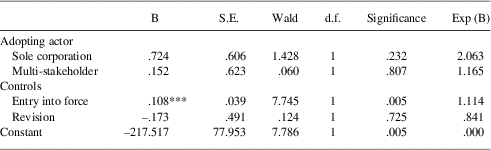
***Significant at the 0.05 level.
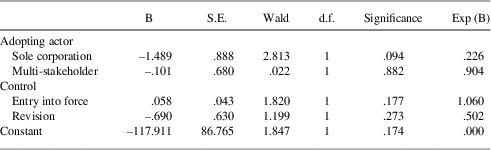
Similar to certification, there are limited significant findings on the role of adopting parties in affecting the presence of complaint mechanisms, as shown in Table 7B. However, at a 10 per cent level there is a negative relationship between sole corporate adoption and complaint mechanisms. This supports the assumption that corporations are less prone to adopt standards that include complaints mechanisms, at least without the involvement of other actors. Similar to the analysis of certification, there is a positive relationship between when the standard entered into force and the inclusion of a complaints mechanism indicating a move towards increased accountability. However, this is not significant.
Binary logistic analysis – complaints
D. Drafting Actors
So far, we have only considered different actors as the formal adopters of standards. However, presence by, say, a greater number of CSOs in drafting may press corporations to agree to stronger standards. Although CSOs adopt international standards to a lesser degree than corporations, states and IGOs, they play an important part in drafting. While the rate of adoption for CSOs is 29.6 per cent, they participated directly in the drafting of 65.4 per cent of the standards (quite similar to corporations, in fact). The likelihood of CSO participation in drafting is shown in Figure 7. They were heavily involved in the drafting of most standards, but this drops for standards adopted by states and corporations, and by corporations themselves.
NGO participation in drafting
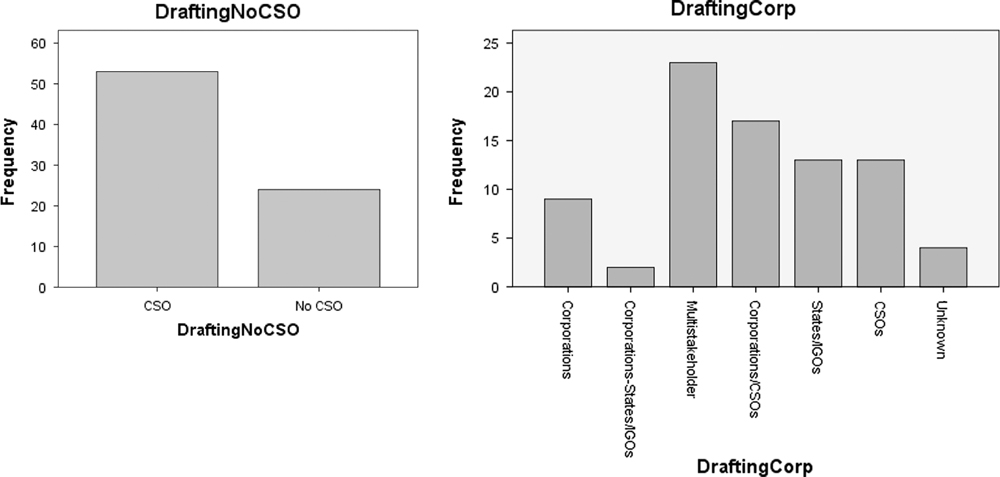
SimmonsFootnote 78 and SauvantFootnote 79 have shown the importance and power of CSOs in mobilizing for change and strengthening protections in the international human rights systems. Considering this, one may assume that their presence in drafting would strengthen human rights protections and accountability mechanisms. To see if the presence of CSOs in drafting influenced the inclusion of human rights, a test was run on the relationship between human rights scope and drafting actor, but there were no significant findings. This was surprising given the results on adopting actors, suggesting that mere civil society presence may not be particularly significant in influencing states and corporations. This raises some questions regarding the expressive expectations about simply bringing non-governmental voices into the debate.
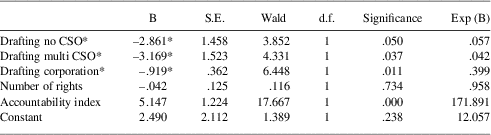
However, a second analysis compared the relationship between civil society participation in drafting and certification mechanisms. Given that certification appears to be the accountability mechanism of choice for corporations, if CSOs have a positive impact on the inclusion of certification, it could be considered a strengthening of protection, as it includes buy-in from a third party – given the common alternative of no accountability mechanism. As seen in Table 8, the analysis established a negative relationship between drafting without CSOs and the inclusion of certification mechanisms, indicating that if there is a certification mechanism the likelihood of it being drafted without civil society involvement goes down. Nonetheless, this is not statistically significant.
Binary logistic analysis – certification
* Variable(s) entered on step 1: index strength.
E. Static or Dynamic?
As we have discussed above, the incremental expressive theory predicted change over time through changes in values. Actors are willing to accept more demanding standards through an incremental process that gives weight to self-learning.Footnote 80 However, the cost-benefit logic of the commitment curve may also not be static. There is space for public and private norm entrepreneurs to raise the costs of non-commitment or correspondingly the benefits of commitment over time. Change may be demand-driven with pressure from consumers, CSOs, investors, regulators or others. Thus, we should expect an outward movement in the curve when either or both of these factors are present. This makes, however, measurement challenging: distinguishing between expressive and rational elements in the evolution of standards stretches the empirical possibilities of our dataset. We thus drill down on regressive moments and particular standards, and suggest that this dynamic should be studied further.
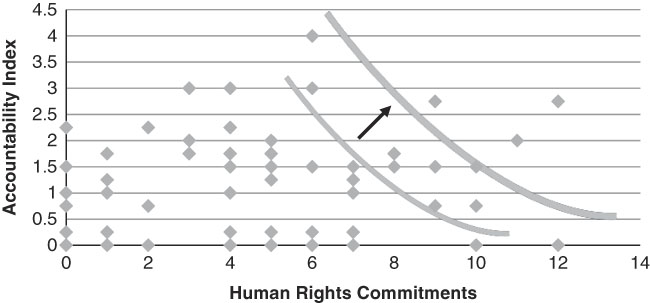
For a start, we do find a modest expansion of commitments over time. As we calculated in Tables 7A and 7B, this expansion is primarily about a strengthening of accountability mechanisms rather than an increase in the number of human rights commitments (compare with Table 6). This is perhaps encouraging news given that civil society and scholars have been more concerned with the accountability gap rather than gaps in the scope of responsibilities. In Figure 8, we have also contrasted the commitment curve for original and revised standards on the scope-accountability axes. While we still observe the same pattern with no standards emerging in the top right-hand quadrant, the curve has moved outwards. A larger number of revised standards contain stronger accountability mechanisms and more human rights. A few standards even contain the full range of rights and a moderate accountability score (and vice versa).
The commitment curve – original and revised standards
An initial review of strategically sampled standards reveals different trends in development driven by different actors. There are some clear examples of G-CSR standards that have grown in strength and scope through revision. One of most well-known – the OECD Guidelines for Multinational Enterprises – is a good illustration. Developed by states and aimed at multinational enterprise operating in or from the adhering countries, when the Guidelines were first adopted in 1976, the document was 20 pages long and included only a reference to the right to join trade unions.Footnote 81 In 2011, they were revised for the fifth time. This 95-page iteration contains a holistic human rights approach, with inclusion of four human rights treaties.Footnote 82 This revision was created with the participation of multiple stakeholders: business, labour, CSOs, non-adhering countries and international organizations.Footnote 83 This broad-based process may be a pertinent illustration of incremental expressivism – the revisions to the OECD Guidelines occurred only after significant shifts in the prevailing consensus amongst key actors. The adoption of the UNGPs in particular was arguably central to this expressive shift.
Similar trends can be found in the revision of other standards. The International Federation of Organic Agriculture Movements (IFOAM) Standard for Organic Production and Processing has gone from being ‘a “standard for standards” into a “certification standard”.’Footnote 84 At the same time, the number of human rights has risen from five to seven (although the reference to the ILO Core Principles and the Convention on the Rights of Child were removed in the latest addition). Overall, this could indicate that the commitment curve moves to the right by increasing not only accountability, but also more human rights. As with the OECD Guidelines, the development of the IFOAM Standard comes from an open process with the opportunity of consultation and input from different actors.Footnote 85 However, one needs to investigate whether such a shift may also result from market and regulatory pressures.
However, the movement of standards is not unidirectional. There may be backsliding in new commitments or defection as breakaway actors develop weaker standards. Such a phenomenon provides an opportunity to identify a possible cost-benefit logic. Costs are generally not as sticky as social norms. Thus, we might presume that negative shifts are more likely to be driven by net increases in the cost of regulation. A notable illustration is the reaction to the Forest Stewardship council certification mechanism.Footnote 86 Fransen and Conzelmann find that the existence of this strong standard triggered the establishment by breakaway corporations of other forestry standards with lower demands.Footnote 87
This defection and regressive movement might also provide a warning on efforts to achieve the ‘best’ form of regulation too quickly. The rapid expansion to the upper right corner of the commitment curve may generate competing and alternative regulation in the lower right – thereby pulling the development in the commitment curve back. However, such a response might be avoided if one can increase the costs of such regression and defection – rewarding those actors that remain in progressive processes and punishing those that do not (whether reputationally or materially).
To conclude, this section has investigated five aspects of G-CSSR standards and found preliminary evidence for the three different causal theories. There is some evidence of immediate expressivism (such as the inclusion of diverse adopting parties) and incremental expressivism (many progressive developments over time). However, there is also evidence of a rationalist dynamic, a consequentialist commitment curve in which both corporations and states seem anxious to minimize the regulatory burden. This suggests that ambitious attempts to advance the depth and breadth of global regulation can meet significant resistance, and one needs to think hard about how to meet this challenge.
V. Conclusion: Implications for Regulatory Debates
This article began with the question of which empirical presumptions are more valid in debates over global regulation on BHR. Do we need better and stronger regulation because the current international regime is weak and insufficient? And can a treaty garner sufficient political support? Or is such a path utopic or even counter-productive as it overlooks the role and potency of existing standards and is overly optimistic as to political feasibility?
We assembled a large selection of global standards seeking to regulate corporate externalities and examined the nature of this regime. We found a mixed picture. The majority of standards include human rights commitments, although the scope of human rights and the strength of the linguistic commitment varies considerably. Almost a majority of the standards include periodic reporting and certification mechanisms but only a small minority (16 per cent) enable the filing of complaints.
We then turned to competing explanations of BHR elements in the standards. Was the strength of the standards determined by greater participation of CSOs who were able to exert influence (immediate expressivism), shifts in consensus over time (incremental expressivism) or a ‘rational’ calculation of the costs and benefits of compliance?
Our preliminary results suggest that all three explanations may be important. First, the presence of other adopting actors seems particularly relevant. Excessive participation of corporations (corporate control) is likely to lead to the recognition of less human rights and a lower likelihood of complaint mechanisms. However, this does not mean that corporations should be necessarily excluded from drafting processes. It seems unlikely that the agenda can be moved forward in a strong and sustained manner unless there is a strong groundswell of market and regulatory support for greater regulation. Only states are well positioned to develop standards of this nature, and they may be just as inclined to support oppositional corporate perspectives. Thus, strategies that seek to impose greater costs on corporations that do not move forward on regulatory initiatives may be particularly effective rather than just focusing on who is in the room.Footnote 88
Second, over time, the commitment curve partially expanded outwards pointing to the potential positive effects of expanding consensus with all stakeholders. Moreover, this suggests that there is space for stronger forms of global corporate regulation and that it should be a multi-stakeholder process to ensure stronger regulation.
Finally, and particularly, the article calls attention to the consequentialist explanation. The analysis found few examples of standards that go significantly beyond what we call a commitment curve: few standards included strong commitments across many vectors of BHR. Thus, for example, there is an apparent trade-off between normative and accountability commitments – no standard achieved high scores on both dimensions. Moreover, in some cases the commitment curve shifted backwards and one case study illustrated the possibility of corporations defecting to weaker regimes if the costs of compliance were perceived as being too high.
Turning specifically to the debate about the proposed BHR treaty, this commitment curve suggests that the critics are partly correct. There is significant unexploited space behind this commitment curve. Although this could indicate a gap in human rights protections, it also indicates that getting there might be hard. Some standards can be strengthened while moderate standards could be developed in sectors that have largely escaped any form of regulation, without necessarily imposing large regulatory costs. Moreover, attempts to move quickly beyond this curve appear to require the use of considerable political resources by many different actors. Yet, it is not clear that the gains from binding forms of regulation will reward that level of mobilization. Advocates could though consider exploiting further the insights of expressive theory and sociological institutionalism, which highlight the key roles of peers. Ensuring champions for a BHR treaty in terms of major states and corporations might be the best investment of time.
Nevertheless, we also find that the critics are partly wrong. Over time, the commitment curve does move to the right.Footnote 89 Political and economic constraints can be overcome and sometimes in surprising ways. It might be for expressive reasons – broad-based participation or a shift in consensus. Given the effect of the ILO Core Principles and the UNGPs on other regulatory instruments, a treaty may also be the instrument that pushes the frontier of the commitment curve. However, this change might also be accounted for by instrumental reason: renewed pressure by social actors or enlightened corporate insiders, strategic corporate behaviour, the emergence of workable standards, and the timeliness of large-scale events that capture public imagination. Curve-shifting is arguably equally contingent on a background of political economy.
Thus, if a BHR treaty is to be adopted by the UN and successfully implemented, attention will need to be given to both the politics and process rather than just the substance. Our message is that political economy must not be forgotten. It is not simply a question of who is in the room but why they are in the room. The challenge for BHR treaty advocates is to consider how they consider increasing state and corporate demand for a treaty, rather than only focusing on the technicalities of supplying it.



 Open access

