


A key concern among developmental psychopathologists is to identify origins of risk for psychopathology. Decades of fetal programming research has revealed that many forms of problem behavior have roots before the child is born in the form of biobehavioral susceptibility to mental illness (Glover, Reference Glover2011; O'Connor, Monk, & Fitelson, Reference O'Connor, Monk and Fitelson2014). To date, the empirical literature is quite clear: prenatal exposures to certain forms of stress or maternal psychopathology plant seeds that place children at risk for problem behavior, above and beyond the quality of the child's postnatal environment (O'Connor, Heron, Golding, Glover, & ALSPAC Study Team, Reference O'Connor, Heron, Golding and Glover2003). For example, prenatal exposure to maternal mood disorders may account for 10%–15% of the variance in children's behavior problems, above and beyond concurrent levels of maternal mood symptoms (Glover, Reference Glover and Antonelli2015). However, this field of research lacks theory-driven, mechanistic explanations for the processes involved in the fetal programming of both adaptive and maladaptive behavior. In other words, the empirical evidence largely describes prenatal exposure–behavior associations but does not explain them.
There are two dominant theoretical frameworks describing fetal programming processes, which, following Nederhof and Schmidt (Reference Nederhof and Schmidt2012), we term the cumulative stress model and the match–mismatch model. These relatively new theoretical frameworks seek to articulate developmental processes by which prenatal psychosocial conditions may shape postnatal outcomes. However, they fall short in two ways. First, they are largely devoid of hypothesized biological mechanisms by which prenatal programing of risk for psychopathology may occur. Second, they both stem from the metabolically (nutrition) focused fetal programming literature (e.g., Barker, Reference Barker2002; Bateson, Gluckman, & Hanson, Reference Bateson, Gluckman and Hanson2014; Gluckman, Buklijas, & Hanson, Reference Gluckman, Buklijas, Hanson and Rosenfeld2016). Although this literature is relatively advanced in terms of both theory and data, the links between this literature and fetal programming on the basis of psychosocial stress are unclear. A third model, biological sensitivity to context (BSC; Boyce & Ellis, Reference Boyce and Ellis2005), offers a novel perspective on the function of biobehavioral reactivity to stress that, in conjunction with the cumulative stress and match–mismatch models, proposes a new set of hypotheses that we outline below.
A rather glaring gap in the fetal programming literature is the lack of integration between metabolically and psychosocially focused models, and especially the failure of psychosocially focused models to incorporate theoretical and empirical advances from the metabolic literature. A central goal of the current manuscript is to bridge this gap by building on extant frameworks to generate specific, testable hypotheses that take into account potential epigenetic mechanisms through which prenatal psychosocial stress may lead to increased susceptibility for psychopathology. We argue that a key biological mechanism mediating these effects is epigenetic regulation, and we describe research studies from the behavioral epigenetic and prenatal stress literatures that offer preliminary support for these hypotheses. We focus predominantly on the perinatal period given our emphasis on how prenatal processes may influence postnatal susceptibility for psychopathology.
Epigenetics
Epigenetics is the study of molecular processes occurring on and around the genome that regulate gene activity without changing the underlying DNA sequence (Bird, Reference Bird2007). Thus, epigenetic changes modify the expression of specific genes without changing the sequence of an individual's genome. Epigenetics describes the microstructure of DNA and its associated proteins, which may be modified to induce upregulation or downregulation of specific genes. Epigenetic mechanisms include three primary, closely related processes: DNA methylation, chromatin remodeling, and histone modification. Through these processes, current and past stress exposures, including a parent's preconception exposures and childhood environmental effects, are “communicated” to the developing fetus. Although epigenetic changes can occur in response to one's own developmental experiences (as reviewed below), transmission of environmental signals across generations can occur via the passage of epigenetic marks through the germline (potentially allowing a parent's childhood experiences, such as hunger or trauma, to impact the developing fetus). Other transgenerational processes may include stress-induced programming of mitochondria and mitochondrial DNA in the cytoplasm of oocytes, and suboptimal reproductive tract environments that alter the structure of fetal organs (Aiken & Ozanne, Reference Aiken and Ozanne2014; Aiken, Tarry-Adkins, & Ozanne, Reference Aiken, Tarry-Adkins and Ozanne2016; Sharma, Reference Sharma2017).
We will draw from the behavioral epigenetic literature to describe exemplar studies that illustrate key hypotheses stemming from the cumulative stress and match–mismatch models that are described below. We focus specifically on DNA methylation of genes associated with the child's neuroendocrine system as a mechanism that may be especially relevant for psychosocial stressors. This is one possible route through which DNA methylation could exert an effect on children's postnatal outcomes and is consistent with cumulative stress models that have been used to describe the development of psychopathology.
Cumulative Stress Model
The cumulative stress model instantiates a disease-focused approach. Its central assumption is that developmental exposures to stress cumulatively add up to cause disruptions of brain structure and function, resulting in dysregulation of physiological mediators “that are the precursors of later impairments in learning and behavior as well as the roots of chronic, stress-related physical and mental illness” (Shonkoff et al., Reference Shonkoff, Garner, Siegel, Dobbins, Earls and Wood2012, p. e236).
The developing phenotype emerges via complex gene–environment interactions across the life span. The environment provides essential building blocks for development, such as oxygen, water, and amino acids in foods. Environmental factors also afford cues reflecting fluctuating conditions, such as changes in photoperiod or population density, which influence development and behavior. Operating through both genomic and nongenomic mechanisms, environmental factors “activate, inhibit, modulate, and coordinate developmental events and physiological processes” (West-Eberhard, Reference West-Eberhard2003, p. 110). Stress exposures (i.e., environmental events signaling threats to survival or well-being) produce a set of complex, highly orchestrated responses within the neural circuitry of the brain and peripheral neuroendocrine pathways regulating metabolic, immunologic, and other physiological functions (reviewed in Boyce & Ellis, Reference Boyce and Ellis2005).
Developmental pathways typically evolve canalization properties (e.g., biochemical buffering mechanisms) that confer robustness against accidents and other abrupt environmental insults. However, the accumulation of such events over time can negatively affect development, resulting in deviations from the target phenotype. A key assumption of cumulative stress models is that accidents and other environmental insults constrain, rather than adaptively calibrate, the developing phenotype. Cumulative stress models (e.g., Evans, Li, & Whipple, Reference Evans, Li and Whipple2013; Seifer et al., Reference Seifer, Sameroff, Dickstein, Gitner, Miller, Rasmussen and Hayden1996) assume that there is an optimal pattern of development, and that the more stressors (prenatally and postnatally) that children are exposed to, the more their developmental competencies will be compromised (i.e., deviate from the optimum; Belsky, Schlomer, & Ellis, Reference Belsky, Schlomer and Ellis2012). Cumulative stress models have commonly been framed in terms of diathesis stress, where exposures to childhood adversities (prenatally and postnatally) interact with personal vulnerabilities to potentiate psychopathology. In the diathesis stress framework, certain children are vulnerable or resilient because of personal characteristics (e.g., heightened biobehavioral reactivity to stress, low-activity monoamine oxidase A [MAOA] allele) that moderate cumulative stress exposures (Belsky & Pluess, Reference Belsky and Pluess2009).
From this cumulative stress perspective, high levels of prenatal stress exposure in utero contribute to excess fetal cortisol exposure, which, in turn, increases risk for poor gestational health outcomes such as preterm birth, low birth weight, and increased neonatal stress reactivity (Lester, Conradt, & Marsit, Reference Lester, Conradt and Marsit2013; Monk, Spicer, & Champagne, Reference Monk, Spicer and Champagne2012; Sandman, Glynn, & Davis, Reference Sandman, Glynn, Davis, Reissland and Kisilevsky2016). This process is conceptualized as fetal programming for adult disease and risk for psychopathology. We define fetal programming as the process by which exposures in the intrauterine environment can cause changes in structure and function of the fetal brain, organs, stress response systems, and behavior that occur in part via epigenetic mechanisms (Glover, Reference Glover2011). Of note, important programming effects such as alterations of fetal stress response systems occur prenatally (Jensen Peña, Monk, & Champagne, Reference Jensen Peña, Monk and Champagne2012; Sandman, Davis, Buss, & Glynn, Reference Sandman, Davis, Buss and Glynn2012); less attention has been paid to the epigenetic basis of postnatal programming.
Most published behavioral epigenetic studies have been guided by and support the cumulative stress model (for reviews, see Cao-Lei et al., Reference Cao-Lei, de Rooij, King, Matthews, Metz, Roseboom and Szyf2017; Turecki & Meaney, Reference Turecki and Meaney2016). However, no study that we know of has reported prospective associations between prenatal stress, epigenetic processes, and problem behavior, though many have found relations between prenatal stress and epigenetic mechanisms, or epigenetic mechanisms and problem behavior. For example, Monk et al. (Reference Monk, Feng, Lee, Krupska, Champagne and Tycko2016) reported that higher levels of perceived stress during pregnancy were associated with greater DNA methylation of HDS11β2 and FKBP5, which are both involved in hypothalamic–pituitary–adrenal (HPA) axis functioning, and DNA methylation of these genes was associated with reduced fetal coupling, an index of fetal neurodevelopment.
Another exemplar study concerns the epigenetic regulation of the glucocorticoid receptor gene (NR3c1), history of maltreatment, and psychopathology (Parade et al., Reference Parade, Ridout, Seifer, Armstrong, Marsit, McWilliams and Tyrka2016). These authors found that in a sample of maltreated preschoolers ages 3–5, higher levels of early adversity were associated with greater methylation of exons 1D and 1F of NR3c1. Greater methylation of these regions of NR3c1 was in turn related to higher levels of internalizing problems (but not externalizing problems). Furthermore, mediational analyses indicated there was a significant indirect effect from maltreatment to NR3c1 methylation to children's internalizing problems. While no indicators of prenatal stress were available, it is likely that maltreated preschoolers were also exposed to high levels of prenatal stress. The results of both studies support the hypothesis that greater stress exposure leads to increased risk for problem behavior in part via DNA methylation of genes involved in neuroendocrine functioning, which aligns with the cumulative stress model. It is unclear whether there may be adaptive effects of stress in regulating development. Careful analysis, supported in part by the match–mismatch model, suggests that early stress exposures may result in developmental trade-offs with both negative and positive phenotypic effects (reviewed in Ellis, Bianchi, Griskevicius, & Frankenhuis, Reference Ellis, Bianchi, Griskevicius and Frankenhuis2017; Ellis & Del Giudice, Reference Ellis and Del Giudice2014).
Match–Mismatch Model
The match–mismatch model extends the cumulative stress model by applying evolutionary models to explain how a developing fetus adapts in anticipation of the postnatal environment as a result of cues experienced prenatally (e.g., Gluckman, Hanson, & Spencer, Reference Gluckman, Hanson and Spencer2005; Kuzawa & Quinn, Reference Kuzawa and Quinn2009; Nederhof & Schmidt, Reference Nederhof and Schmidt2012). During fetal development and infancy, important features of the environment are communicated to the child via the placenta and lactation in the form of nutrients, metabolites, hormones, growth factors, and immune factors that reflect the mother's current and past experiences (Bateson et al., Reference Bateson, Gluckman and Hanson2014; Kuzawa & Quinn, Reference Kuzawa and Quinn2009). For example, high levels of stress hormone exposure provide probabilistic information about the postnatal environment, specifically that it will likely also be harsh or unpredictable (e.g., Del Giudice, Ellis, & Shirtcliff, Reference Del Giudice, Ellis and Shirtcliff2011). Beyond these molecular signals from the mother, relevant features of the extrauterine environment are detected and encoded directly through the child's ongoing experiences. These multilayered environmental signals reflect the continuity of development: the organized phenotype is initially provided by the parents in the form of a zygote, which at conception already encapsulates a rich array of genomic, epigenomic, and environmental information, and which then changes over ontogeny in response to ongoing genomic and environmental influences (West-Eberhard, Reference West-Eberhard2003).
In most species, single “best” strategies for survival and reproduction (i.e., optimal developmental pathways) are unlikely to evolve. This is because the “best” strategy varies as a function of the physical, economic, and social parameters of one's environment (Crawford & Anderson, Reference Crawford and Anderson1989), and thus a strategy that promotes success in some environmental contexts may lead to failure in others. This context specificity provides the evolutionary basis for adaptive developmental plasticity (i.e., development of different phenotypes that promote fitness under different conditions), which is critically important for enabling organisms to adapt to stress. Dangerous and stressful childhoods have always been part of the human experience. Almost half of children in hunter-gatherer societies (the best model for human demographics before the agricultural revolution) die before reaching adulthood (Volk & Atkinson, Reference Volk and Atkinson2013). Thus, from an evolutionary–developmental perspective, stressful rearing conditions, even if those conditions engender sustained stress responses that must be maintained over time, should not so much impair physiological systems as direct or regulate them toward set points and reactivity patterns that promote survival and reproductive fitness under stressful conditions (Ellis, Boyce, Belsky, Bakermans-Kranenburg, & van IJzendoorn, Reference Ellis, Boyce, Belsky, Bakermans-Kranenburg and van IJzendoorn2011; Ellis et al., Reference Ellis, Del Giudice, Dishion, Figueredo, Gray, Griskevicius and Wilson2012). A central assumption of the match–mismatch model is that such calibration of physiological systems can result in a mismatched phenotype (one that is poorly prepared for its environment) when early rearing conditions fail to adequately predict the future.
Developmental plasticity involves developmental change from one form to another. Consistent with our more specific definition of fetal programming, when such plasticity results in “durable biological change in the structure or function of a tissue, organ, or biological system” (Kuzawa & Quinn, Reference Kuzawa and Quinn2009, p. 132), it is commonly described as developmental programming. The occurrence of developmental programming, which is ubiquitous in the animal world (see DeWitt & Scheiner, Reference DeWitt and Scheiner2004; Pigliucci, Reference Pigliucci2001; West-Eberhard, Reference West-Eberhard2003, for extensive reviews), is uncontroversial. For example, it is widely recognized that harsh developmental conditions, such as exposure to a suboptimal intrauterine environment, can induce durable biological changes in the phenotype (Sandman et al., Reference Sandman, Glynn, Davis, Reissland and Kisilevsky2016). Rather, contention exists when trying to determine whether exposures to physical and psychosocial stressors simply constrain development, as assumed in the cumulative stress model, or guide it in an adaptive manner.
Developmental mismatch is a potential cost of developmental programming. It is a risk incurred by an organism when it employs early information (e.g., early life stress) to shape later developmental trajectories. Mismatch occurs when environmental cues encountered early in development have limited validity, and thus adaptive responses fail to correctly predict future environmental conditions. Selection can favor developmental programming, even if the potential costs are high, as long as the average benefits outweigh the average costs over evolutionary history (for extended discussion, see Ellis & Del Giudice, Reference Ellis and Del Giudice2014; Frankenhuis & Del Giudice, Reference Frankenhuis and Del Giudice2012).
Metabolically Focused Fetal Programming Models
The costs and benefits of developmental plasticity means that the fetus potentially, but not always, benefits from having the ability to change structure and function in response to cues from the intrauterine environment (Sandman et al., Reference Sandman, Glynn, Davis, Reissland and Kisilevsky2016; Wadhwa et al., Reference Wadhwa, Glynn, Hobel, Garite, Porto, Chicz-DeMet and Sandman2002). A variety of metabolically focused fetal programming models have been developed to explain early developmental adaptations to nutritional conditions. In some of these models (e.g., the predictive adaptive response hypothesis, Gluckman & Hanson, Reference Gluckman and Hanson2005; Gluckman et al., Reference Gluckman, Hanson and Spencer2005; the thrifty phenotype hypothesis, Hales & Barker, Reference Hales and Barker1992; Hales & Barker, Reference Hales and Barker2001), the external environment, as experienced through fetal and infant nutrition, provides the key ecological cues to which the developing child adapts. In other metabolically focused models (e.g., the maternal capital hypothesis, Wells, Reference Wells2003; Wells & Johnstone, Reference Wells, Johnstone, Jasienska, Sherry and Holmes2017; the intergenerational inertia hypothesis, Kuzawa, Reference Kuzawa2005, Reference Kuzawa, Trevathan, Smith and McKenna2008), “the information processed by offspring during placental nutrition and lactation derives from the maternal phenotype, rather than directly from the external environment” (Wells & Johnstone, Reference Wells, Johnstone, Jasienska, Sherry and Holmes2017, p. 24). In these latter models, the maternal phenotype (e.g., maternal birth weight, body size, and nutritional status at conception) provides a smoothed, cumulative signal of nutritional conditions experienced by the mother, and even the mother's mother, during development. This “smoothed signal” presumably affords a more reliable basis for predicting future conditions (and thus for selecting an appropriate developmental trajectory).
In turn, according to some metabolically focused fetal programming models (e.g., the thrifty phenotype hypothesis and the maternal capital hypothesis), the fetus receives cues prenatally regarding the expected quality of the early postnatal environment (especially conditions during infancy), and the fetus potentially employs these cues to calibrate physiological systems and organs to match this temporally proximal context. For example, according to the thrifty phenotype hypothesis, fetal malnutrition sets in motion mechanisms of fetal nutritional thrift (e.g., insulin resistance), which results in greater resources being allocated to critical structures necessary for early survival (especially the brain) at the expense of less critical organs (such as the kidneys). In contrast, other metabolic fetal programming models (e.g., the predictive adaptive response hypothesis and the intergenerational inertia hypothesis) adopt a more long-term view. These models conceptualize cues about the state of the environment received during fetal developmental as forecasting the likely adult environment in which reproduction will occur. For example, according to the predictive adaptive response hypothesis, exposures to famine conditions during fetal or infant development adapts the individual's physiology (e.g., insulin resistance), morphology (e.g., small size and central adiposity), and behavior (e.g., low activity level and higher set points for satiety) for persisting famine conditions in adulthood.
Each of these different metabolically focused fetal programming models can be conceptualized in a match–mismatch framework (as opposed to cumulative stress). Each model presumes that the developing organism detects and encodes cues to current/past environmental conditions and uses these cues as a basis for calibrating developmental trajectories (in either the short or the long term) to match those conditions. Although such matching depends on the stability of the environment over developmental time (e.g., Nettle, Frankenhuis, & Rickard, Reference Nettle, Frankenhuis and Rickard2013; Rickard, Frankenhuis, & Nettle, Reference Rickard, Frankenhuis and Nettle2014; Sheriff & Love, Reference Sheriff and Love2013), the degree of similarity between early/past conditions and later conditions that is necessary for matching to occur (e.g., for a nutritionally thrifty phenotype to remain adaptive) is an empirical question. When the past fails to adequately predict the future, the resulting mismatch can result in a phenotype that is poorly prepared for its environment (and is thus at risk for poor cardiometabolic outcomes; e.g., Gluckman & Hanson, Reference Gluckman and Hanson2005; Gluckman et al., Reference Gluckman, Hanson and Spencer2005; Hales & Barker, Reference Hales and Barker2001).
Psychosocially Focused Fetal Programming Models
The metabolically focused fetal programming models afford a framework for considering the programming effects of prenatal psychosocial stress. Psychosocially focused fetal programming models are currently at an early stage of development. To date, these models most closely parallel the thrifty phenotype hypothesis, insofar as they focus on maternal cues to psychosocial stress experienced during pregnancy and their effects on behavioral development in the postnatal period (infancy to early childhood).
Support for psychosocially focused fetal programming models has accrued in studies of human infants exposed to varying forms of prenatal stress. Infants exposed to high levels of stress prenatally who are then born prematurely may be more likely to experience high levels of stress postnatally, reflecting a “match” between their prenatal and postnatal environments. It may even benefit the fetus to be born prematurely rather than risk fetal demise by remaining in an intrauterine environment characterized by high levels of stress hormone exposure (Glynn, Davis, & Sandman, Reference Glynn, Davis and Sandman2013; Wadhwa et al., Reference Wadhwa, Glynn, Hobel, Garite, Porto, Chicz-DeMet and Sandman2002). For instance, Sandman and colleagues (Sandman et al., Reference Sandman, Wadhwa, Glynn, Chicz-Demet, Porto and Garite1999; Sandman & Davis, Reference Sandman and Davis2012) found that high levels of prenatal maternal stress is related to increased risk for a shortened gestational length and, in extreme cases, preterm birth, via high levels of corticotropin-releasing hormone exposure. Corticotropin-releasing hormone is produced by the hypothalamus and is part of the HPA axis, the end product being cortisol. Children exposed to stress prenatally and who are born earlier may exhibit a more reactive phenotype (DiPietro, Novak, Costigan, Atella, & Reusing, Reference DiPietro, Novak, Costigan, Atella and Reusing2006). We review anthropological research below that describes how prenatal stress may produce a certain phenotype that supports survival in high-stress postnatal conditions (Scheper-Hughes, Reference Scheper-Hughes1985).
A mismatch between a prenatal environment characterized by high stress and a low-stress postnatal environment may confer risk for cognitive and motor delays (Sandman, Davis, Buss, et al., Reference Sandman, Davis, Buss and Glynn2012). The only study that we know of to explicitly test the match–mismatch model and underlying mechanisms in the human developmental literature was performed by Sandman, Davis, and Glynn (Reference Sandman, Davis and Glynn2012). They examined whether infants raised in prenatal and postnatal environments concordant for maternal depression (either exposed to maternal depression prenatally and postnatally or not exposed to maternal depression prenatally and postnatally) had better cognitive and motor outcomes compared to infants raised in environments discordant for maternal depression (either exposed to maternal depression prenatally but not postnatally or exposed to maternal depression postnatally but not prenatally). In support of the match–mismatch model, the results indicated that infants raised in environments concordant for maternal depression, even those exposed to maternal depression prenatally and postnatally, had higher cognitive and motor outcomes at 12 months compared to infants with discordant maternal depression exposure. These findings are inconsistent with the cumulative stress model because infants who experienced maternal depression during prenatal and postnatal periods did not differ from those infants whose mothers did not experience maternal depression. Maternal prenatal and postnatal basal plasma cortisol was tested as a possible mechanism for these findings, but maternal cortisol was not associated with maternal depression. It is therefore unclear what the probable mechanisms are, though one key mechanism is likely related to programming processes occurring in utero.
BSC Model
Fetal programming models focusing on cumulative stress and match–mismatch can potentially be extended by explicitly taking into account BSC theory (Boyce & Ellis, Reference Boyce and Ellis2005; Bush & Boyce, Reference Bush, Boyce, Lewis and Rudolph2014; Ellis, Essex, & Boyce, Reference Ellis, Essex and Boyce2005). The BSC model rests on three important assumptions that we have used to generate our hypotheses below. First, individual differences in the magnitude of biological stress responses function to regulate openness or susceptibility to environmental influences, ranging from harmful to protective. Second, early life experiences adaptively calibrate stress response systems to match developmental contexts. Third, patterns of stress responsivity may be altered during sensitive periods of development depending on environmental inputs; more biologically susceptible children may be the best candidates for reprogramming during sensitive periods. Here we elaborate on these assumptions.
First, the BSC model proposes that heightened psychobiologic reactivity to stress moderates the effects of early environmental exposures on physical and mental health outcomes in a bivalent manner, with more reactive children displaying increased sensitivity to both positive and negative environmental influences. Boyce and Ellis (Reference Boyce and Ellis2005) argued that these bivalent effects necessitated reconceptualizing stress reactivity more broadly as biological sensitivity to context, which they defined as neurobiological susceptibility to both cost-inflicting and benefit-conferring features of the environment. For example, Obradović, Bush, Stamperdahl, Adler, and Boyce (Reference Obradović, Bush, Stamperdahl, Adler and Boyce2010) found that kindergartners with high respiratory sinus arrhythmia reactivity exhibited the lowest levels of externalizing problems and more prosocial behaviors if raised in low adversity environments but high externalizing symptoms and low prosocial behaviors in high adversity contexts. An implication of BSC theory is that calibration of stress response systems, which we argue below has an epigenetic basis, regulates differential susceptibility to environmental influences.
Second, the BSC model proposes that, early in life, and likely even in utero, the fetus receives cues about the quality of the postnatal environment, akin to a weather forecast (Boyce & Ellis, Reference Boyce and Ellis2005; see also Del Giudice et al., Reference Del Giudice, Ellis and Shirtcliff2011). These cues, according to the theory, lead to the upregulation of stress response systems in both highly positive and highly adverse environments, resulting in a U-shaped curvilinear relation between such environmental exposures and heightened stress responsivity. A “sensitive” responsivity pattern is predicted to develop in safe, low-stress environments. High stress responsivity in this context is hypothesized to enhance social learning and engagement with the external world. By contrast, a “vigilant” responsivity pattern is predicted to develop in harsh, stressful environments. High responsivity in that context is hypothesized to enable people to cope more effectively with dangers and unpredictable threats. Finally, “buffered” patterns (low to moderate stress reactivity) are predicted to develop preferentially in conditions of moderate environmental stress, where they strike a balance between costs and benefits of responsivity. A reasonable empirical literature has supported the emergence of these two high-stress responsivity profiles in comparison to the buffered profile (reviewed in Ellis, Del Giudice, & Shirtcliff, Reference Ellis, Del Giudice, Shirtcliff, Beauchaine and Hinshaw2017).
These patterns of stress reactivity are not fixed, however, and may be altered during sensitive periods of development. It is possible that exposure to harsh early environments could lead to the upregulation of stress response systems (as per the vigilant pattern), but subsequent positive caregiving experiences could lead to the dampening of these stress response systems (Weaver et al., Reference Weaver, Cervoni, Champagne, D'Alessio, Sharma, Seckl and Meaney2004). This reprogramming of the stress response system may be more likely in children who show high BSC (including sensitive and vigilant patterns). These changes in stress response system functioning could have epigenetic underpinnings, a point which we elaborate on below when outlining our hypotheses.
Using Epigenetic Methods to Uncover Mechanisms Underlying Prenatal and Postnatal Programming
Prenatal and postnatal programming models have been evaluated in rodent studies, with efforts to uncover mechanisms explaining how stress dysregulates developmental (as per the cumulative stress model) and how matched (compared to mismatched) environments may support adaptive phenotypic development (as per the match–mismatch model). A large rodent literature focusing on rats and mice has extensively examined the effects of both prenatal and postnatal stress exposures on development (reviewed in Howell, Neigh, & Sanchez, Reference Howell, Neigh, Sanchez and Cicchetti2016). Much of this work focuses on observing or manipulating the powerful dam–pup relationship (e.g., maternal separation). As with humans, there is large natural variation in the quality of maternal investment in rats and mice. This variation has been most extensively studied in terms of the frequency of licking and grooming (LG; including both body and anogenital licking) and the amount of arched back nursing (ABN; where the mother assumes a crouching posture that enhances suckling). Because levels of LG and ABN are correlated across dams, researchers have been able to operationalize individual differences in maternal investment in terms of frequency of LG-ABN.
Although these individual differences are partially heritable, cross-fostering studies demonstrated that a component of variance in quality of maternal care is transmitted across generations through epigenetic mechanisms. The medial preoptic area (MPOA) of the hypothalamus is rich in estrogen receptors (ER), which substantially influence maternal behavior (via estrogen-induced oxytocin receptor binding). ERα expression in the MPOA and associated oxytocin receptor levels are increased in adult females who experienced high versus low levels of LG-ABN from their mothers. As a result of these changes in gene expression, the daughters of high LG-ABN mothers show increased LG-ABN during lactation when they are adults.
However, experiencing substantial stress during pregnancy completely reverses the intergenerational transmission of high LG-ABN: lactating mothers who have a developmental history of high LG-ABN only display a pattern of high LG-ABN themselves when their pregnancies occur under relatively safe, stable conditions. When exposed to substantial gestational stress (e.g., 1 hr of restraint stress per day for 10 days), these formerly high LG-ABN mothers shift to become low LG-ABN mothers; moreover, this new pattern of low LG-ABN persists across (at least) two subsequent litters (after cessation of the original gestational stressor) without any further gestational stress exposures (Champagne & Meaney, 2006; Smith, Seckl, Evans, Costall, & Smythe, Reference Smith, Seckl, Evans, Costall and Smythe2004). Finally, at a mechanistic level, gestational stress exposures resulted in reduced levels of oxytocin receptor binding in the MPOA. In total, gestational stress effectively remodeled the methylation patterns involved in maternal behavior. This contextual sensitivity of the epigenome may help explain the well-documented sensitivity of quality of parenting in rodents to variations in ecological context (e.g., predation, food availability, and social competition; Beery & Francis, Reference Beery and Francis2011; Champagne, Reference Champagne2008). In total, high levels of LG-ABN were stable only under conditions of low stress exposure for females when they were pups and low stress exposure when the females were pregnant themselves (i.e., when early life and subsequent environments while pregnant were matched with respect to low stress exposure). The possibility of reprogramming prevented mismatch.
This ecologically sensitive developmental programming of LG-ABN is central to developmental plasticity because, through epigenetic mechanisms, LG-ABN calibrates variation in physiological and behavioral reactivity to stress and reproductive strategies to match developmental conditions (reviewed in Cameron et al., Reference Cameron, Champagne, Parent, Fish, Ozaki-Kuroda and Meaney2005; Ellis, Jackson, & Boyce, Reference Ellis, Jackson and Boyce2006). Heightened biobehavioral reactivity to stress and sexual precocity may promote vigilance for environmental dangers and early opportunities for mating and reproduction. Operating mechanistically through its effects on methylation of glucocorticoid receptors in hippocampal neurons, low LG-ABN upregulates autonomic and adrenocortical stress reactivity in pups, resulting in higher rates of fear-induced behavior, increased burying behavior in response to threats, stronger startle reflexes, and decreased open-field exploration (reviewed in Cameron et al., Reference Cameron, Champagne, Parent, Fish, Ozaki-Kuroda and Meaney2005; Meaney, Reference Meaney2010). Maternal LG-ABN also affects variation in the sexual development and reproductive behavior of offspring through epigenetic regulation of ERα expression in the anteroventral periventricular nucleus of the hypothalamus. Operating through increases in ERα expression in this cell cluster, low LG-ABN biases development of female pups toward earlier onset of puberty, higher sexual proceptivity toward novel males, increased lordosis in response to male mounts, and sharply higher rates of pregnancy following mating sessions (Cameron, Del Corpo, et al., Reference Cameron, Del Corpo, Diorio, McAllister, Sharma and Meaney2008; Cameron, Shahrokh, et al., Reference Cameron, Shahrokh, Del Corpo, Dhir, Szyf, Champagne and Meaney2008; Sakhai, Kriegsfeld, & Francis, Reference Sakhai, Kriegsfeld and Francis2011). In total, at multiple functionally related levels, low maternal LG-ABN biases offspring development toward “faster” life history strategies that, theoretically, are matched to harsh ecological contexts.
Life history theory and research specifies relations between childhood exposures to stress and individual differences in the development of life history strategies (Belsky, Steinberg, & Draper, Reference Belsky, Steinberg and Draper1991; Chisholm, Reference Chisholm1999; Ellis, Figueredo, Brumbach, & Schlomer, Reference Ellis, Figueredo, Brumbach and Schlomer2009; Nettle, Coall, & Dickins, Reference Nettle, Coall and Dickins2011), which encompass integrated suites of traits that vary along a dimension of slow versus fast (Ellis et al., Reference Ellis, Figueredo, Brumbach and Schlomer2009; Kaplan, & Gangestad, Reference Kaplan, Gangestad and Buss2005). In terms of behavioral processes, individuals pursuing a slower life history strategy tend to have longer time horizons, tolerate more delay of gratification, show more aversion to risk, display better self-regulation and behavioral control, start sex and reproduction at relatively late ages, and devote more effort to parenting. By contrast, individuals pursuing a faster life history strategy tend to have shorter time horizons, discount future rewards and losses, engage in more risky and aggressive behavior, begin sex and reproduction at relatively early ages, and allocate less effort to parenting (Belsky et al., Reference Belsky, Steinberg and Draper1991; Ellis et al., Reference Ellis, Del Giudice, Dishion, Figueredo, Gray, Griskevicius and Wilson2012; Figueredo et al., Reference Figueredo, Vasquez, Brumbach, Schneider, Sefcek, Tal and Jacobs2006, Reference Figueredo, Wolf, Olderbak, Gladden, Fernandes, Wenner and Rushton2014). Conceptualizing these individual differences as life history strategies provides a framework for explaining the coherent, functional phenotypic outcomes of developmental programming.
The development of faster life history strategies under conditions of early life adversity reflects resource allocation trade-offs that “make the best of a bad job” (by specializing skills and behavioral strategies to match high-adversity contexts), even though “the best” may constitute a high-risk strategy with substantial costs (Ellis et al., Reference Ellis, Boyce, Belsky, Bakermans-Kranenburg and van IJzendoorn2011, Reference Ellis, Bianchi, Griskevicius and Frankenhuis2017), including stress-related physical and mental health problems (as per the cumulative stress model). Such costs may be minimized, however, in matching environmental contexts. For example, low maternal LG-ABN alters pups’ stress physiology and brain morphology in ways that seem harmful (i.e., higher corticosterone levels, shorter dendritic branch lengths, and lower spine density in hippocampal neurons) and even impair performance on tests of spatial learning and memory (e.g., object recognition tests and the Morris water maze) under low-stress conditions (reviewed in Bagot et al., Reference Bagot, van Hasselt, Champagne, Meaney, Krugers and Joëls2009). However, when such rats are tested under high-stress conditions, they showed increased hippocampal long-term potentiation (a cellular process underlying learning and memory) and increased memory performance on a hippocampal-dependent contextual fear-conditioning task. By contrast, rats that experienced high LG-ABN, while advantaged in learning and memory tasks performed under low-stress conditions, performed relatively poorly when tested in stressful contexts (Bagot et al., Reference Bagot, van Hasselt, Champagne, Meaney, Krugers and Joëls2009; Champagne et al., Reference Champagne, Bagot, van Hasselt, Ramakers, Meaney, De Kloet and Krugers2008). Thus, rats that experienced low levels of LG-ABN performed poorly in cognitive tasks under low-stress (mismatched environment), but not under high-stress (matched environment) conditions. In total, the rat data provide intriguing support for the match–mismatch model and, potentially, a rich source for hypothesis generation regarding human development, to which we now turn.
Fetal Programming Models: A Need for Testable Hypotheses That Incorporate Epigenetic Mechanisms
The match–mismatch model could be considered a first-generation fetal programming theory given the empirical support from the nutrition literature. This hypothesis was born from a series of studies known collectively as the Dutch Hunger Winter. During the autumn of 1944–May 1945, the Dutch government ordered a transportation strike against the Nazis because the government believed the Netherlands would soon be liberated, and in retaliation the Nazis blockaded the western region of the Netherlands (Smith, Reference Smith1947). Tragically these towns were not liberated until May 1945 and so during the Winter of 1944–1945 no food was transported to the cities of Rotterdam and the Hague. As a result of this strike the inhabitants, including pregnant women, were restricted to as little as 1,145 calories per day (Smith, Reference Smith1947). The recommended caloric intake for a healthy pregnant woman ranges from 1,800 calories per day in the first trimester to 2,400 calories per day in the third trimester (West, Hark, & Catalano, Reference West, Hark, Catalano and Gabbe2017), so these women experienced severe caloric restriction during pregnancy. Detailed records of this event as well as the birth weights of the babies born were taken and so it was possible to link birth weight with metabolic outcomes approximately 60 years later (Lumey, Stein, Kahn, & Romijn, Reference Lumey, Stein, Kahn and Romijn2009). Lumey et al. (Reference Lumey, Stein, Kahn and Romijn2009) found that adult females exposed prenatally to the Dutch Hunger Winter had elevated LDL cholesterol and triglycerides compared to unexposed peers. Individuals exposed early in gestation (but not in middle or late gestation) were significantly more likely to have coronary heart disease (Roseboom et al., Reference Roseboom, van der Meulen, Osmond, Barker, Ravelli, Schroeder-Tanka and Bleker2000), and individuals exposed during the third trimester were more likely to have a lower head circumference and birth weight (Stein, Zybert, van de Bor, & Lumey, Reference Stein, Zybert, van de Bor and Lumey2004).
The mechanisms driving these effects are likely due in part to epigenetics; specifically DNA methylation of IGF2, a maternally imprinted gene related to human growth and development (Heijmans et al., Reference Heijmans, Tobi, Stein, Putter, Blauw, Susser and Lumey2008). In other words, severe undernutrition may have resulted in less DNA methylation of IGF2, a “cue” to the fetus that food would likely be scarce postnatally and to compensate with a reduction in glucose metabolism and insulin secretion in order to conserve as many calories as possible (Gluckman et al., Reference Gluckman, Buklijas, Hanson and Rosenfeld2016). Once the famine was lifted, however, these children were raised in a “mismatched” environment consisting of plentiful food. However, their glucose metabolism did not change, and so reductions in metabolism combined with abundant food resulted in poor metabolic outcomes in adulthood (Gluckman et al., Reference Gluckman, Buklijas, Hanson and Rosenfeld2016; Lumey et al., Reference Lumey, Stein, Kahn and Romijn2009; Roseboom et al., Reference Roseboom, van der Meulen, Osmond, Barker, Ravelli, Schroeder-Tanka and Bleker2000). As per the thrifty phenotype hypothesis (Hales & Barker, Reference Hales and Barker1992, Reference Hales and Barker2001), a mismatched prenatal and postnatal environment consisting of exposure to poor prenatal but adequate postnatal conditions resulted in increased likelihood of metabolic disease. In addition, consistent with the predictive adaptive response hypothesis (Gluckman & Hanson, Reference Gluckman and Hanson2005; Gluckman et al., Reference Gluckman, Hanson and Spencer2005), women who were exposed in utero to the Dutch Hunger Winter started reproducing at a younger age, had more offspring, more twins, and were less likely to remain childless than their peers who were not exposed in utero (Painter et al., Reference Painter, Westendorp, de Rooij, Osmond, Barker and Roseboom2008). In total, prenatal exposure to the Dutch Hunger Winter resulted in fetal programming for a faster life history strategy.
The psychological literature provides sparse empirical evidence outlining specific mechanisms underlying the match–mismatch phenomenon as it applies to psychosocial stress and the development of behavior problems in children. Here we attempt to advance the psychosocially focused fetal programming field by generating four testable hypotheses that incorporate epigenetic mechanisms of action. These hypotheses are guided by the cumulative stress, match–mismatch, and BSC models and, in some cases, offer competing predictions designed to discriminate between these three perspectives.
For each of these hypotheses, it is important that peripheral tissues be sampled for epigenetic analysis prenatally and postnatally. To date, there are no published studies examining DNA methylation prenatally (e.g., in placenta samples) and DNA methylation postnatally (e.g., in blood or buccal cells). We therefore identify a behavioral epigenetic study that has tested at least one part of each hypothesis and describe how future research could be conducted to more fully test the complete hypothesis. There is a large literature theorizing how programming processes may occur postpartum that we do not intend to summarize here (Del Giudice et al., Reference Del Giudice, Ellis and Shirtcliff2011). We provide a short description of each hypothesis along with a corresponding behavioral epigenetic study in Table 1. We focus on DNA methylation because it is the most widely used epigenetic mechanism in the behavioral epigenetic literature.
Hypothesis 1. Consistent stress exposures that are low both prenatally and postnatally promote DNA methylation patterns related to low to moderate stress reactivity (as per the cumulative stress model and the buffered pattern in the BSC model). Postnatal development in a highly supportive and protected environment may shift development toward greater stress reactivity (as per the BSC conceptualization of a sensitive pattern). Consistently low stress exposures prenatally and postnatally should promote the development of slow life history strategies that are matched to safe, stable contexts (as per the match–mismatch model) and low risk for psychopathology (as per both the cumulative stress and match–mismatch models).
Behavioral epigenetic studies advancing the match–mismatch model
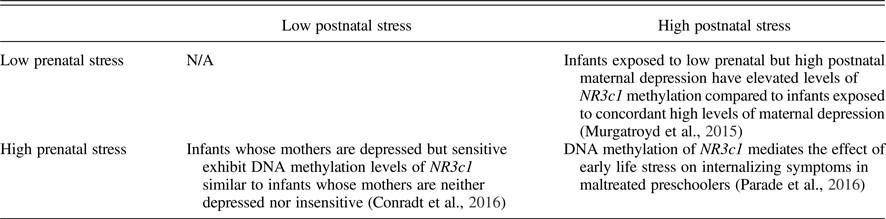
The cumulative stress and match–mismatch models both predict that young children in this matched environment are at the lowest risk for developing psychopathology given that their prenatal and postnatal environments are consistent and characterized by low stress conditions (Nederhof & Schmidt, Reference Nederhof and Schmidt2012). Children in this group are typically “control” children in the stress literature as they are more likely to be raised in stable, nurturing homes. There is some divergence between the two models with respect to the DNA methylation profiles of these children. On the one hand, consistent with cumulative stress models, low stress both prenatally and postnatally may result in DNA methylation profiles that are associated with low stress reactivity (Filiberto et al., Reference Filiberto, Maccani, Koestler, Wilhelm-Benartzi, Avissar-Whiting, Banister and Marsit2011; Lester, Conradt, & Marsit, Reference Lester, Conradt and Marsit2014). On the other hand, a particularly supportive prenatal environment characterized by low stress exposure and adequate nutrition may lead to the upregulation of stress response systems via DNA methylation of genes regulating these systems, predisposing infants to a more physiologically reactive phenotype (as per the BSC sensitive profile; Boyce & Ellis, Reference Boyce and Ellis2005; Del Giudice et al., Reference Del Giudice, Ellis and Shirtcliff2011). According to the BSC model, this heightened stress responsivity increases susceptibility to the development-enhancing features of what would presumably be a stable, supportive postnatal environment. In this context, heightened stress reactivity has been linked to socially desirable outcomes in young children such as good health (Boyce et al., Reference Boyce, Chesney, Alkon, Tschann, Adams and Chesterman1995), higher levels of academic achievement, school competence, and prosocial behaviors (Obradovic, Bush et al., Reference Obradović, Bush, Stamperdahl, Adler and Boyce2010), and lower levels of problem behavior (Conradt, Measelle, & Ablow, Reference Conradt, Measelle and Ablow2013).
While the behavioral epigenetic literature is small, there is some indication that young children exposed to low-stress prenatal and postnatal environments tend to have DNA methylation levels that suggest lowered stress reactivity. For example, Murgatroyd, Quinn, Sharp, Pickles, and Hill (Reference Murgatroyd, Quinn, Sharp, Pickles and Hill2015) found that infants exposed to low levels of maternal depressive symptoms prenatally and postnatally had the lowest levels of DNA methylation of NR3c1 relative to infants exposed to higher levels of maternal depressive systems prenatally and postnatally. This study provides some initial support for the hypothesis that consistent low stress exposure is actually related to DNA methylation associated with low stress reactivity. Nonetheless, over the first 7–24 months of life, children with typically sensitive mothers who experience increasing levels of maternal sensitivity tend to experience increases in basal cortisol (Berry et al., Reference Berry, Blair, Willoughby, Granger and Mills-Koonce2017). Thus, calibration toward higher activation of stress systems may occur postnatally.
Hypothesis 2. Consistent stress exposures that are high both prenatally and postnatally promote DNA methylation of genes associated with upregulation of the stress response systems early in life (the BSC vigilant profile). This stress-adapted responsivity profile should promote the development of faster life history strategies that are matched to higher adversity contexts (as per the match–mismatch model) and elevated risk for psychopathology (as per the cumulative stress model).
Hypothesis 2 concerns a matching of environmental conditions (high stress exposure) prenatally and postnatally, which according to the match–mismatch model, should support the development of phenotypes (e.g., faster life history strategies) that are adaptive in high-adversity contexts. We argue here that consistent high prenatal and postnatal stress exposure may be related to physiological changes via epigenetic mechanisms that promote fitness in these high-stress conditions.
Adaptations to harsh environments involve trade-offs that can have detrimental effects and undermine fitness, relative to outcomes achieved in well-resourced, safe environments. Despite evidence that children adapt to harsh environments (reviewed in Ellis, Bianchi, et al., Reference Ellis, Bianchi, Griskevicius and Frankenhuis2017; Ellis et al., Reference Ellis, Figueredo, Brumbach and Schlomer2009), such adaptations have costs that can jeopardize child health and survival (see Mulvihill, Reference Mulvihill2005; Shonkoff, Boyce, & McEwen, Reference Shonkoff, Boyce and McEwen2009). Although developmental adaptations to stress many enable children to “make the best of a bad job,” this does not imply that stress is good for children or should be accepted as an inevitable fact of life.
High maternal prenatal stress should be associated with elevated fetal exposure to corticotropin-releasing hormone and cortisol, which provides the child with cues that the postnatal environment is also likely to be stressful. A large literature across multiple laboratories suggests that infants exposed to high levels of prenatal stress may be born with a more reactive phenotype (Davis et al., Reference Davis, Glynn, Schetter, Hobel, Chicz-Demet and Sandman2007; Gutteling et al., Reference Gutteling, de Weerth, Willemsen-Swinkels, Huizink, Mulder, Visser and Buitelaar2005; Huizink, Robles De Medina, Mulder, Visser, & Buitelaar, Reference Huizink, Robles De Medina, Mulder, Visser and Buitelaar2002; Montirosso et al., Reference Montirosso, Provenzi, Fumagalli, Sirgiovanni, Giorda, Pozzoli and Borgatti2016). This type of biobehavioral reactivity in infancy may be adaptive in a stressful early postnatal environment. For instance, infants exposed to at least moderate levels of prenatal stress in some cases exhibit enhanced cognitive and motor outcomes (DiPietro et al., Reference DiPietro, Novak, Costigan, Atella and Reusing2006; Sandman, Davis, & Glynn, Reference Sandman, Davis and Glynn2012). Children reared in stressful prenatal and early postnatal environments may be more likely to survive if they exhibit greater stress reactivity and are more active. For example, in a Brazilian shantytown in which families live in abject poverty and where mothers on average lose 3.5 out of 9.5 children, infants who are described as temperamentally “wild” and who are “fighters” are more likely to survive compared to calm infants (Scheper-Hughes, Reference Scheper-Hughes1985). In this research, mothers with passive infants were more likely to withdraw from child rearing, which is undoubtedly due in part to the impact of infant illness on infant behavior (i.e., in theory, illness → passive infant behavior → maternal withdrawal). While the specific direction of effects is unclear, this study challenges the dominant notion of what features of temperament may lead to more competent developmental outcomes in our Western society. Given that infant mortality is greatest from birth to 6 months of life, it may be that in particularly harsh environments it is adaptive to be more reactive. High infant emotional reactivity (difficult temperament and negative emotionality) is also a reliable indicator of differential susceptibility to parental influences, for better and for worse (Slagt, Dubas, Deković, & van Aken, Reference Slagt, Dubas, Deković and van Aken2016).
In the behavioral epigenetic literature, the study by Parade et al. (Reference Parade, Ridout, Seifer, Armstrong, Marsit, McWilliams and Tyrka2016) reviewed above partially supports Hypothesis 2, given that high postnatal stress exposure was related to DNA methylation of NR3c1 exons 1D and 1F and greater internalizing behavior. The study by Murgatroyd et al. (Reference Murgatroyd, Quinn, Sharp, Pickles and Hill2015) also supports this hypothesis, as these researchers found that the highest levels of DNA methylation of NR3c1 were associated with exposure to high levels of prenatal and postnatal maternal depressive symptoms. High levels of DNA methylation of NR3c1 may be related to greater neuroendocrine reactivity (Conradt et al., Reference Conradt, Fei, LaGasse, Tronick, Guerin, Gorman and Lester2015; Oberlander et al., Reference Oberlander, Weinberg, Papsdorf, Grunau, Misri and Devlin2008) and a more reactive phenotype in infancy (Conradt et al., Reference Conradt, Fei, LaGasse, Tronick, Guerin, Gorman and Lester2015). This reactive phenotype may elicit more attention from caregivers (DiPietro, Ghera, & Costigan, Reference DiPietro, Ghera and Costigan2008; Scheper-Hughes, Reference Scheper-Hughes1985) and a greater likelihood that the infants’ needs for food and comfort are being met. This phenotype is generally not considered desirable in Western society. For example, a reactive, vigilant phenotype may not be valued in our traditional school settings where children are required to sit still and pay attention. Thus, in Western societies, this hypothesis linking concordant stressful prenatal and postnatal environments to adaptive outcomes may only be supported when considering outcomes in high-adversity contexts.
According to cumulative stress models, under prolonged high-stress conditions, increased activation of stress response systems may ultimately lead to increased risk for psychopathology via “wear and tear” of these systems (Juster, Russell, Almeida, & Picard, Reference Juster, Russell, Almeida and Picard2016; McEwen, Reference McEwen1998). Therefore, while the prenatal and postnatal environment may be matched in the form of high stress exposure, over time children exposed to chronically high levels of stress are likely to experience physiological deterioration (i.e., allostatic load), particularly in the form of a blunted neuroendocrine response to stress and increased risk for psychopathology (Fisher, Gunnar, Dozier, Bruce, & Pears, Reference Fisher, Gunnar, Dozier, Bruce and Pears2006).
Hypothesis 3. Consistent with both the cumulative stress and match–mismatch models, high prenatal stress exposures promote DNA methylation of placental genes related to the upregulation of stress response systems and high infant stress reactivity (as per the vigilant profile). Because heightened stress reactivity increases susceptibility to environmental influence, children displaying the vigilant pattern who grow up in safe, stable postnatal caregiving environments should recalibrate, resulting in postnatal epigenetic modifications that support lower stress reactivity and a slower life history strategy (and thus lower risk for psychopathology).
Hypothesis 3 is an example of a “mismatch” in the prenatal and postnatal environment. High prenatal stress exposure may calibrate susceptibilities to the postnatal environment and prepare the fetus for a high-stress postnatal environment (Glover, Reference Glover and Antonelli2015; Pluess & Belsky, Reference Pluess and Belsky2009). The resulting vigilant responsivity pattern should support development of a faster life history strategy (Del Giudice et al., Reference Del Giudice, Ellis and Shirtcliff2011) and elevated risk for psychopathology. However, if the postnatal environment is favorable, and if the caregiver can provide sensitive, responsive care for a presumably high reactive infant, then this child may be at lowered risk for psychopathology later in life. This hypothesis is supported by the differential susceptibility literature indicating that the combination of high infant reactivity with sensitive care is related to lower levels of problem behavior (for reviews, see Belsky & Pluess, Reference Belsky and Pluess2009; Rabinowitz & Drabick, Reference Rabinowitz and Drabick2017; Slagt et al., Reference Slagt, Dubas, Deković and van Aken2016). For example, in a sample of toddlers all reared in poverty, Conradt et al. (Reference Conradt, Measelle and Ablow2013) found evidence for a physiological susceptibility factor, high baseline respiratory sinus arrhythmia, that was associated with the lowest levels of problem behavior in toddlers, but only if the toddlers were raised by supportive, positive caregivers. High prenatal stress exposure, such as exposure to poverty, may therefore lead to physiological changes in stress response systems that predispose children to take advantage of a particularly desirable postnatal environment characterized by low stress exposure.
This hypothesis is also supported by the stress buffering literature. Sensitive caregivers may buffer the child to the effects of stress, resulting in more adaptive developmental outcomes (Hostinar, Sullivan, & Gunnar, Reference Hostinar, Sullivan and Gunnar2014). For example, children who are securely attached but who must separate from the mother while in daycare exhibit lower levels of the stress hormone cortisol compared to insecurely attached children attending daycare (Ahnert, Gunnar, Lamb, & Barthel, Reference Ahnert, Gunnar, Lamb and Barthel2004; Bergman, Sarkar, Glover, & O'Connor, Reference Bergman, Sarkar, Glover and O’Connor2010).
In the behavioral epigenetic literature incorporating stress research, there is no complete test of this hypothesis given the dearth of research on studies of DNA methylation both prenatally and postnatally. However, the buffering hypothesis was partially supported by evidence indicating that the association between postnatal maternal depression on DNA methylation of NR3c1 exon 1F depended on maternal sensitivity during a face-to-face interaction with 5-month-old infants (Conradt et al., Reference Conradt, Hawes, Guerin, Armstrong, Marsit, Tronick and Lester2016). Five-month-old infants exposed to maternal depressive symptoms and maternal insensitivity had the expected high levels of DNA methylation of NR3c1 exon 1F. However, infants who were exposed to maternal depression, but whose mothers were sensitive, had DNA methylation levels similar to infants with no exposure to maternal depression or insensitivity (Conradt et al., Reference Conradt, Hawes, Guerin, Armstrong, Marsit, Tronick and Lester2016). These findings partially support Hypothesis 3 given that a postnatal environment characterized by high levels of maternal depression and greater sensitivity was related to lower levels of DNA methylation of NR3c1 exon 1F and thus may have partially buffered the child to the effects of maternal depression. Still, a more complete test of this hypothesis is needed that includes prenatal placental methylation.
In the first series of studies that we know of to assess DNA methylation at more than one time point, Parent et al. (Reference Parent, Parade, Laumann, Ridout, Yang, Marsit and Tyrka2017) found that maltreated preschoolers exhibited significantly lower levels of DNA methylation of NR3c1 6 months after state agency involvement. In this same sample, Parade et al. found that maltreated children who received more services exhibited increases in FKBP5 methylation in one particular region, which may be related to better regulation of the neuroendocrine stress response system. Thus, high stress exposure in the form of child maltreatment may be associated with epigenetic mechanisms that upregulate genes regulating the stress response system (NR3c1 and FKBP5), while “intervention” in the form of agency involvement and service utilization could then lead to the dampening of these stress response systems again via epigenetic mechanisms. These epigenetic studies support Hypothesis 3 and provide important evidence that DNA methylation is malleable to early intervention.
Hypothesis 4. Consistent with both the cumulative stress and the match–mismatch models, low prenatal stress exposures promote DNA methylation of placental genes associated with downregulation of stress response systems and low to moderate infant stress reactivity (as per the buffered responsivity pattern). Subsequent exposure to a harsh, unpredictable postnatal caregiving environment should recalibrate the buffered pattern, resulting in postnatal epigenetic modifications that upregulate infant stress reactivity (promoting a vigilant pattern) and support development of a faster life history strategy (and thus higher risk for psychopathology)
Hypothesis 4 also concerns a mismatch between the prenatal and postnatal environments. According to the match–mismatch hypothesis, children who develop under these conditions are at increased risk for psychopathology because their prenatal environment programmed them for a low-stress postnatal caregiving environment. These children may have difficulty with biobehavioral regulation if their stress response system is not programmed to adaptively respond to a high-stress postnatal environment. In other words, these children's physiological systems may be poorly prepared to deal with environmental threats and uncertainty, which could undermine social, cognitive, and health outcomes in high-adversity contexts. It is possible that a recalibration of the stress response system may occur in early childhood that could support alternative forms of biobehavioral self-regulation (Del Giudice et al., Reference Del Giudice, Ellis and Shirtcliff2011).
A close test of this hypothesis comes from the work of Murgatroyd et al. (Reference Murgatroyd, Quinn, Sharp, Pickles and Hill2015), who examined the effects of prenatal and postnatal depression exposure on DNA methylation of NR3c1 exon 1F in infants. Infants who were exposed to low levels of prenatal maternal depression but high levels of postnatal maternal depression exhibited greater methylation of NR3c1 exon 1F compared to infants exposed to concordant prenatal and postnatal depression. Remarkably, this effect was reversed by maternal stroking of the infant during the first few weeks of life, lending support to Hypothesis 4. These results suggest that postnatal programming processes could prepare the infant for a stressful postnatal environment given that infants in the low prenatal, high postnatal stress group exhibited greater methylation of NR3c1. However, postnatal signals “communicated” to the child by maternal touch reversed the effects, potentially communicating to the child that the postnatal environment will not be a stressful one.
Key Issues for the Field
In an attempt to advance theory and research on fetal programming, we have discussed the cumulative stress model (which instantiate a disease-focused approach) and the match–mismatch model (which instantiates an evolutionary–developmental approach based in life history theory) and tried to integrate and extend these models in a BSC framework. Some may argue that a common vocabulary is warranted, because the conceptual redundancies may limit future work rather than advance the fetal programming field. We agree, and we argue here for the importance of these theories in generating testable hypotheses that can be put at risk through empirical research. If a theory is all encompassing, then it is not generative. We therefore had as a goal to articulate four testable hypotheses that could be put at risk via epigenetic data collected at multiple time points. Here we review priority questions and future directions for the field that are relevant to these hypotheses.
Moving beyond cumulative stress models to study coherent, functional adaptations to stress
There are two key limitations of the disease-focused, cumulative stress approach. First, by emphasizing the pathways leading directly from adversity to dysfunction, the cumulative stress perspective misses the coherent, functional biobehavioral changes that occur in response to stress over time (Ellis & Del Giudice, Reference Ellis and Del Giudice2014). We need to characterize these functional developmental changes to understand dysfunctional outcomes including the developmental of psychopathology. These changes not only promote adaptation to temporally proximal contexts (such as using prenatal stress as the basis for calibrating postnatal stress physiology) but also shape longer term developmental trajectories to match expected future conditions (as per the match–mismatch model). Shifting to this kind of a match–mismatch perspective would move psychosocially focused fetal programming research toward investigating integrated suites of traits (the coherent, functional responses to stress that form the basis of life history strategies) that develop over childhood, adolescence, and early adulthood. The developmental programming of life history strategies is critical to explaining and predicting the development of psychopathology (see Ellis & Del Giudice, Reference Ellis and Del Giudice2014). This shift toward a life history framework would bring the psychosocially focused literature into better alignment with the metabolically focused fetal programming literature and the rich epigenetic literature on rodents.
Second, evolutionary–developmental perspectives, such as the match–mismatch model, emphasize the importance of studying positive phenotypic outcomes, such as stress-adapted social and cognitive abilities, as well as the usual psychopathology outcomes, because prenatal and postnatal stress exposures can have positive, adaptive effects (Ellis et al., Reference Ellis, Bianchi, Griskevicius and Frankenhuis2017). Stress exposure can result in improved cognition (e.g., attention, perception, detection, learning, and memory) and emotion detection in children who are asked to perform tasks that are ecologically relevant to them, over and above their peers who grew up under relatively safe, stable conditions (Ellis et al., Reference Ellis, Bianchi, Griskevicius and Frankenhuis2017; Frankenhuis & de Weerth, Reference Frankenhuis and de Weerth2013). For example, Raver, Blair, Garrett-Peters, and Family Life Project Key Investigators (Reference Raver, Blair and Garrett-Peters2015) found that exposure to interparental verbal aggression in early childhood was related to enhanced accuracy at detection of emotions at age 6, though impaired emotion detection was detected among young children exposed to more physical aggression. Although stress-adapted abilities have been well documented, especially in the animal literature, they may be only observable if tested in ecologically valid contexts (Ellis et al., Reference Ellis, Bianchi, Griskevicius and Frankenhuis2017; Sandman, Davis, & Glynn, Reference Sandman, Davis, Buss and Glynn2012).
What information crosses the placenta and is sensed or incorporated by the fetus?
How and when stress exposures occur, for both baby and mother, is a key issue for future research. The term “prenatal stress” is amorphous and, within the behavioral epigenetic literature, is typically conceptualized broadly. For example, stress is defined by a wide range of exposures, including maternal psychopathology or distress, fetal exposure to high levels of maternal corticotropin releasing hormone (Glynn et al., Reference Glynn, Davis and Sandman2013; Wadhwa et al., Reference Wadhwa, Glynn, Hobel, Garite, Porto, Chicz-DeMet and Sandman2002), and prenatal smoking exposure (Knopik, Maccani, Francazio, & McGeary, Reference Knopik, Maccani, Francazio and McGeary2012). However, the metabolically focused fetal programming literature suggests that the emphasis of psychosocially focused fetal programming research on “prenatal stress” may be misguided. Consider the case of birth weight. As reviewed by Kuzawa (Reference Kuzawa, Trevathan, Smith and McKenna2008), maternal metabolism and physiology maintains a fairly constant flow of nutritional resources to the fetus, regardless of how much the mother eats while she is pregnant. Accordingly, maternal dietary intake during gestation has relatively little impact on birth weight. During the Dutch Hunger Winter, for example, babies born during the famine (and thus exposed during late gestations when caloric deprivation has the largest effect on birth weight) were <.5 lbs. (about 200 g) lighter than babies who were not exposed to the famine (Smith, Reference Smith1947). Rather than maternal nutrition during pregnancy, it is the mother's phenotypic condition prior to pregnancy that more strongly predicts child birth weight (Kuzawa, Reference Kuzawa, Trevathan, Smith and McKenna2008), as per the intergenerational inertia and maternal capital hypotheses. Key indicators of mother's phenotypic condition in relation to her child's birth weight include mother's childhood leg length (more than her adult leg length), the mother's birth weight (independent of gestational age and the mother's adult size), and the mother's nutritional status at the time of conception. These data suggest that the hormones and metabolites that cross the placenta and are sensed or incorporated by the fetus substantially reflect the mother's developmental history, even in the womb. This highlights the need for psychosocially focused studies of fetal programming to expand their focus beyond “prenatal stress” to more broadly assess the mother's condition and history.
To date, most of the behavioral epigenetic literature has focused on examining the impact of conditions during pregnancy on methylation of a few candidate genes that are involved in the regulation of the HPA axis (Conradt, Reference Conradt, Hawes, Guerin, Armstrong, Marsit, Tronick and Lester2016). This may be a problem because the literature examining links between prenatal stress and cortisol exposure is equivocal, with some studies finding associations between constructs such as pregnancy-specific anxiety and diurnal cortisol in pregnant women (Obel et al., Reference Obel, Hedegaard, Henriksen, Secher, Olsen and Levine2005) while others find null results between stress during pregnancy and cortisol in amniotic fluid (Glover, Bergman, Sarkar, & O'Connor, Reference Glover, Bergman, Sarkar and O’Connor2009). As noted by Beijers, Buitelaar, and de weerth (Reference Beijers, Buitelaar and de Weerth2014), there is a clear need to examine how prenatal stress may become biologically embedded via additional mechanisms such as immune system functioning and through the microbiome. This focus could inform future epigenetic research examining DNA methylation of genes involved in other stress response systems or the immune system.
Incorporating both prenatal and postnatal environmental exposures into developmental programming models
The application of fetal programming concepts to the study of prenatal psychosocial stress represents a relatively new area of research. To date, much of the work on this topic has focused on describing whether various forms of prenatal stress have unique consequences for children's postnatal outcomes. These efforts have been fruitful. For example, meta-analyses indicate that maternal depression or anxiety during the prenatal period are associated with children's birth outcomes (Ding et al., Reference Ding, Wu, Xu, Zhu, Jia, Zhang and Tao2014; Grote et al., Reference Grote, Bridge, Gavin, Melville, Iyengar and Katon2010), and growing evidence suggests that these prenatal risks also are uniquely associated with children's behavior problems (O'Connor et al., Reference O'Connor, Heron, Golding and Glover2003). That said, a limitation of this research approach is that postnatal experiences have often been conceptualized simply as a potential confound, and few studies examine differences in behavioral outcomes depending on the match (vs. mismatch) of the prenatal and postnatal environments. As we have emphasized throughout this paper, we believe that a critical next step for this field will be testing theoretical models that emphasize understanding children's adaptations to stressful environments (or the lack thereof) during both the prenatal and the postnatal periods. There is a clear need for prospective longitudinal studies that collect epigenetic information beginning prenatally. Studies that collect psychosocial stress data along with blood or buccal cells from newborns at both birth and a later date would be well situated to evaluate the degree to which children's epigenetic profiles are initially programmed by prenatal experiences and are capable of changing in response to children's postnatal environments.
It will also be important to consider the consistency, stability, and predictability of prenatal stress exposures, given recent work with animals that suggests that cues experienced prenatally (rather than postnatally) help the offspring to adapt to the postnatal environment (Berghänel, Heistermann, Schülke, & Ostner, Reference Berghanel, Heistermann, Schulke and Ostner2016). In research with the Assamese macaque (Macaca assamensis), high prenatal maternal stress exposure was related to less prenatal food availability and accelerated offspring growth, decelerated motor development, and poorer immune system functioning (Berghänel et al., 2016), independent of the postnatal environment, which was characterized as highly unstable. This work highlights the importance of studying the stability of the prenatal and postnatal environments at multiple times during prenatal and postnatal life, and to incorporate those data into assessments of how early life stress can impact social competence and mental and physical health.
Implementing causally informative designs
There also are a number of innovative research designs that can be leveraged to test the programming hypotheses advanced here, with many of these studies identifying links between prenatal stress exposure and epigenetic regulation of the immune system. A common feature of the designs is their ability to uncouple prenatal and postnatal experiences, which is important because many psychosocial stressors (including socioeconomic disadvantage, stressful life events, and maternal emotional dysregulation) are relatively stable across this period of time. Quasi-experiments, in which individuals’ exposure to a stressful life event is unplanned, seemingly independent of the usual confounding variables (such as socioeconomic status), and circumscribed to a finite period of time, are a powerful tool for evaluating the implications of prenatal stress for individuals’ development (Rutter, Reference Rutter2007). For example, the previously mentioned studies of individuals born around the time of the Dutch Hunger Famine represent a highly influential example of a quasi-experimental approach to examining the prenatal origins of physical health outcomes (Tobi et al., Reference Tobi, Lumey, Talens, Kremer, Putter, Stein and Heijmans2009). Similarly, Project Ice Storm was initiated soon after a series of ice storms that left millions of individuals in Canada without power for up to 6 weeks during January 1998 (King, Dancause, Turcotte-Tremblay, Veru, & Laplante, Reference King, Dancause, Turcotte-Tremblay, Veru and Laplante2012). Longitudinal follow-ups with the children who were born shortly after the storm have identified various behavioral outcomes that appear to have been impacted by children's in utero exposure to the storm's effects (King et al., Reference King, Dancause, Turcotte-Tremblay, Veru and Laplante2012). Moreover, pregnant mothers’ experiences of stress and subjective appraisals during the storms are associated with children's epigenetic profiles in genes associated with the immune system 13 years later (Cao-Lei et al., Reference Cao-Lei, Massart, Suderman, Machnes, Elgbeili, Laplante and King2014, Reference Cao-Lei, Elgbeili, Massart, Laplante, Szyf and King2015). These longitudinal studies, which integrate information on prenatal exposures with epigenetic mechanisms, could be used to test whether (mis)matches in prenatal and postnatal environments are related to differences in epigenetic profiles.
Studying children adopted at birth offers opportunities for evaluating unique and interactive influences of prenatal and postnatal experiences and include research designs that are ideal for testing mechanisms related to the match–mismatch model. On average, children placed for adoption at birth experience a shift from a high- to a low-stress environment. For example, within the Early Growth and Development Study, a study of over 550 adopted children in the United States, the birth mothers who placed their children for adoption were, on average, 24 years old, 70% were not married, and only 4% had received a 4-year college degree. In contrast, the adoptive mothers had an average age of 37 years, 91% were married, and 64% had received a 4-year college degree (Leve et al., Reference Leve, Neiderhiser, Ge, Scaramella, Conger, Reid and Reiss2007). In addition to mean-level changes in the degree of exposure to stress, children's prenatal and postnatal experiences are independent because children's birth parents provide the prenatal environment but adoptive parents provide the postnatal environment. Finally, there is sufficient variation in the prenatal and postnatal environments to test the ideas about the significance of (mis)matches in psychosocial stress across these periods for children's behavioral outcomes, stress physiology, and epigenetic profiles (Laurent et al., Reference Laurent, Leve, Neiderhiser, Natsuaki, Shaw, Harold and Reiss2013).
One of the most powerful strategies for evaluating causal processes is through the use of experimental designs. Although it is not ethical to assign pregnant mothers to high-stress conditions, interventions can be used to reduce stress for some high-risk pregnant mothers. For example, one way of testing hypotheses about the interplay of prenatal and postnatal experiences would be to randomly assign a third of a sample of distressed pregnant mothers to receive a control intervention, assign another third to receive intervention immediately after birth, and assign the final third of the sample to receive the intervention prenatally. In this way, the mothers who received the control intervention would correspond to the high prenatal stress and high postnatal stress group described in Table 1. The mothers who received the intervention during the postnatal period would correspond to the high prenatal stress but low postnatal stress group. The mothers who received the intervention during the prenatal period would likely correspond to the low prenatal stress and low postnatal stress group because the benefits of the intervention may persist into the postnatal period. Comparing the outcomes, including epigenetic changes, for the children of these three groups of mothers would allow for strong inferences about the potentially causal effects of fetal programming.
Identifying functional epigenetic pathways
Another challenge is to improve epigenetic research through the exploration of functional epigenetic pathways, as opposed to narrowly focused candidate epigenetic approaches. Such pathway approaches have only recently emerged in the epigenetics literature, but build upon decades of genetics research, including both critical advances and missteps in the field. Movement toward polygenic pathway methods has been motivated by evidence that individual epi/genetic locus effect sizes are generally small, making their individual detection problematic, particularly in highly dimensional (e.g., genome-wide) multiple testing scenarios (Gratten, Wray, Keller, & Visscher, Reference Gratten, Wray, Keller and Visscher2014; International Schizophrenia Consortium et al., Reference Purcell, Wray, Stone, Visscher, O'Donovan and Sklar2009). Thus, researchers are increasingly investigating networks of functionally related genes clustered into biological systems/ontologies (e.g., the serotonergic system; Adkins et al., Reference Adkins, Khachane, McClay, Åberg, Bukszár, Sullivan and van den Oord2012). Relatedly, for complex phenotypes, such as depression, statistical geneticists are increasingly applying polygenic risk score approaches (de Moor et al., Reference de Moor, van den Berg, Verweij, Krueger, Luciano, Arias Vasquez and Boomsma2015; International Schizophrenia Consortium et al., Reference Purcell, Wray, Stone, Visscher, O'Donovan and Sklar2009). These methods require a priori information regarding the strength of association between the assayed epi/genetic loci and phenotype, which is derived from previous large sample studies or meta-analyses (i.e., training data). These training data association estimates are then used as weights for the calculation of polygenic risk scores in a second, independent genomic data set (i.e., testing data; Wray et al., Reference Wray, Lee, Mehta, Vinkhuyzen, Dudbridge and Middeldorp2014). Independent replication of the polygenic scores in the testing data then serves to both validate and further refine the polygenic risk score for future studies. This approach holds great, largely unrealized, promise for epigenetic studies as well. Rather than looking at methylation patterns in one or two genes, a functional epigenetic pathways approach will hold more promise for testing the theories outlined here.
A related challenge is to expand current research by exploring epigenetic adaptations across multiple biological systems. For example, rather than looking only at networks within a single system (e.g., cortisol-related genes), it is important to examine the effects of stress exposure on genes involved in monoamine neurotransmitter functioning (i.e., serotonin, dopamine, and norepinephrine), immune systems, insulin and weight regulation networks, inflammatory processes, and so on (Beauchaine, Neuhaus, Zalewski, Crowell, & Potapova, Reference Beauchaine, Neuhaus, Zalewski, Crowell and Potapova2011; McDade et al., Reference McDade, Ryan, Jones, MacIsaac, Morin, Meyer and Kuzawa2017). These epigenetic changes must also be contextualized alongside other neurodevelopmental processes that are affected by adversity, such as neural migration, neurogenesis, myelination, and apoptosis among other stress-sensitive biological adaptations (Perry, Reference Perry, Beauchaine and Hinshaw2008). Because many of these changes are difficult to study in human tissues, it remains essential to link findings within the animal literature to human research on the development of psychopathology within high-risk samples.
Moderation
Finally, it is important to examine moderating influences on the association between early exposure to adversity and both adaptive and maladaptive outcomes. As reviewed above, the BSC model focusing on heightened stress responsivity as a marker of differential susceptibility to environmental influence has advanced work in this area. Whereas high stress reactivity was once considered a vulnerability factor that increased risk for psychopathology, it is now widely considered a susceptibility factor that increases sensitivity to both risk-promoting and development-enhancing environmental conditions (Boyce & Ellis, Reference Boyce and Ellis2005). Biological sex is another essential moderating variable that remains understudied due to sample sizes that are underpowered to detect sex differences. Nonetheless, there is some literature to suggest that boys may be more vulnerable to the effects of prenatal stress. In one influential paper, Mueller and Bale (Reference Mueller and Bale2008) found that male mice exposed to stress early in gestation showed maladaptive stress reactivity, anhedonia, and heightened sensitivity to selective serotonin reuptake inhibitor (i.e., antidepressant) treatment. The hypothesized mechanism for these differences was sex-specific placenta responsivity leading to epigenetic changes across multiple genes in males but not females. In another higher prenatal stress was associated with greater DNA methylation of NR3c1 and greater infant fearfulness, but only in girls (Ostlund et al., Reference Ostlund, Conradt, Crowell, Tyrka, Marsit and Lester2016).
Conclusion
Our goal was to advance the field of developmental programming by building on first-generation fetal programming theories (the cumulative stress and match–mismatch models) to outline a series of four testable hypotheses that highlight epigenetic mechanisms through which prenatal and postnatal experiences may program child stress reactivity and, in turn, risk for psychopathology. Our pursuit of this goal was facilitated by two well-developed literatures: the metabolically focused fetal programming literature in humans and the epigenetically focused developmental programming literature in rodents. These two literatures are relatively advanced in terms of theory and data, with strong foundations in life history theory. By contrast, the psychosocially focused fetal programming literature is relatively undeveloped and not strongly linked to these other literatures. Herein we tried to forge relevant connections by using the metabolically focused fetal programming literature and the epigenetically focused rodent literature (in conjunction with first-generation fetal programming theories) to articulate (a) new psychosocially based fetal programming hypotheses and (b) priority questions and future directions for the field.
Our hypotheses necessarily oversimplified stress as a construct in order to highlight epigenetic processes (for excellent reviews on developmental sequelae of adversity, see Doyle & Cicchetti, Reference Doyle and Cicchetti2017; McCrory, De Brito, & Viding, Reference McCrory, De Brito and Viding2010). These hypotheses can and should be revised depending on the empirical evidence available. For example, our hypotheses may only be supported in studies of individuals who are highly susceptible to their environments (Nederhof & Schmidt, Reference Nederhof and Schmidt2012). Fetal programming may also only be apparent when studying those who are highly susceptible and who are assessed during a stage characterized by a high degree of neural plasticity (e.g., prenatal and early postnatal development). To evaluate these hypotheses, additional research should be conducted that incorporates epigenetic assessments prenatally and postnatally, which will allow for tests of epigenetic changes across development and different tissue types. Only then can we come closer to building a more complete picture of how prenatal conditions do or do not calibrate stress response systems and, in turn, adaptive and maladaptive development.



