


The evidence for the short- and long-term health benefits of breast-feeding for the young infant(Reference Kramer and Kakuma1, Reference Fewtrell2) and mother(Reference Heinig and Dewey3, Reference Baker, Gamborg, Heitmann, Lissner, Sorensen and Rasmussen4), in both developing(Reference Villalpando and Lopez-Alarcon5, Reference Betran, de Onis and Lauer6) and developed countries(Reference Howie, Forsyth, Ogston, Clark and Florey7–Reference Oddy, Sly, de Klerk, Landau, Kendell, Holt and Stanley9), is robust, and recognised globally(10, 11). More recently, data suggest that the promotion of exclusive breast-feeding for prolonged duration(Reference von Kries, Koletzko, Sauerwald, von Mutius, Barnert, Grunert and von Voss12, Reference Harder, Bergmann, Kallischnigg and Plagemann13) may represent a potentially ideal window of opportunity for obesity prevention(Reference Gillman14–Reference Stettler16), which is especially pertinent as childhood and adulthood obesity rates are increasing both in Ireland(17, Reference O’Neill, McCarthy, Burke, Hannon, Kiely, Flynn, Flynn and Gibney18) and internationally(Reference Flegal, Carroll, Ogden and Johnson19, 20). The WHO globally recommends exclusive breast-feeding during the first 6 months of life with the introduction of solid foods thereafter, and continued breast-feeding until 2 years of age or above(21), a recommendation that was subsequently endorsed in Ireland in 2003(22). Although the rates of exclusive breast-feeding at 6 months postpartum are low internationally(23), it is well documented that the breast-feeding rates in Ireland throughout infancy are among the lowest worldwide(24–Reference Tarrant and Kearney27).
Recent figures from the 2005 National Perinatal Statistics (NPS) report an initiation rate (rate of exclusive breast-feeding upon hospital discharge or under domiciliary care) of 44 %(28), a rate well below Irish and international targets. This figure represents only a small increase in breast-feeding initiation from previous NPS(28), including 42·5 % in 2004, 41 % in both 2003 and 2002 and 39 % in 2001, in comparison to higher breast-feeding initiation rates reported internationally in 2005, including 78 % in the Netherlands (n 9133)(Reference Lanting, Van Wouwe and Reijneveld29), 71 % in the USA (n 3444)(Reference Li, Darling, Maurice, Barker and Grummer-Strawn30) and 71 % in the UK (n 18 125)(Reference Kelly and Watt31).
To improve breast-feeding rates, it is emphasised that ascertaining the factors important to a mother’s decision about how to feed her infant is crucial(Reference Losch, Dungy, Russell and Dusdieker32). Moreover, the acquisition of country-specific knowledge about the type and importance of the determinants for breast-feeding is essential for building effective promotion programmes(Reference Yngve and Sjostrom33). However, a paucity of data exists with regard to the feeding of infants in Ireland(34), and greater investigations are needed to explain the persistently low breast-feeding rates(35). Difficulties are compounded by the fact that no national breast-feeding monitoring system exists beyond the point of hospital discharge in Ireland, resulting in a total lack of national breast-feeding duration rates. Furthermore, no published data are currently available on the feeding of infants born to non-Irish-national mothers, a population which now accounts for 10 % of the current population in Ireland(36). Although several regional studies have been carried out to examine breast-feeding rates(37, Reference Ward, Sheridan, Howell, Hegarty and O’Farrell38), some of these studies(Reference Sayers, Thornton, Corcoran and Burke39–Reference Loh, Kelleher, Long and Loftus41) do not include well-defined breast-feeding definitions, making comparison with other national and international breast-feeding data difficult(Reference Cattaneo, Davanzo and Ronfani42). Further limitations in Irish-based infant-feeding studies relate to the reported recruitment bias towards mothers from higher socio-economic groups(Reference O’Herlihy43, Reference Hurley and Fogarty44) and the exclusion of asylum seekers, because of the difficulties in the follow-up of this population(Reference Ward, Sheridan, Howell, Hegarty and O’Farrell38).
In view of the above, we undertook the present study to assess breast-feeding initiation and prevalence from birth to 6 months in a sample of mothers in Dublin, and to determine the factors associated with breast-feeding initiation and ‘any’ breast-feeding at 6 weeks in a sample of Irish-national mothers.
Experimental methods
Study design and population
This cross-sectional, prospective study (1 June 2004–31 October 2006) involved the recruitment of 491 pregnant women from separate public, semi-private and private antenatal clinics in the Coombe Women and Infants University Hospital (CWIUH) in west Dublin. During the study interval, the CWIUH had membership to the Breast-feeding Friendly Hospital Initiative.
Specific and separate weekly timetabled public, semi-private and private antenatal clinics are held in the CWIUH. Across the seating arrangements in each clinic women were consecutively invited to participate in the present study. Women were deemed eligible to participate if they were ≥24 weeks gestational age, reported a singleton pregnancy and were planning to reside in Ireland for at least 6 months postpartum. Representing the sociodemographic profile of women who attend public and semi-private/private antenatal clinics (58 % and 42 %, respectively) in the hospital, 51 % and 49 % of the study cohort were recruited from these clinics, respectively.
From the initial sample of 539 women who met the study inclusion criteria, and who were invited to participate in the present study, 491 women (91 %) agreed to participate and gave signed consent.
All eligible mothers who subsequently delivered a healthy, singleton, term infant ≥37 weeks gestational age, weighing ≥2·5 kg at birth, were followed up postpartum. Follow-up of mothers consisted of either a telephone or a face-to-face interview by one investigator within a time frame of 7 d after the infants 6th week and at 6 months of age. Of the 491 mothers who were recruited, 98 % (n 483) were followed up at the 6-week follow-up and from this sample, 94 % of mothers (n 454) were followed up at 6 months. Owing to case exclusions due to missing values (n 4), infant prematurity (n 19), one postnatal infant death and five intra-uterine deaths, as well as cases lost to follow-up (n 12), 450 mothers met the criteria for the final data analysis. This final sample included 401 Irish-national, 49 non-Irish-national mothers.
Data collection
Data were collected using three semi-structured questionnaires. The first questionnaire was completed by mothers at recruitment in the hospital antenatal clinic, with a follow-up interviewer-administered questionnaire at 6 weeks and 6 months postpartum, either in the hospital clinic, in the mothers’ home or via telephone. Questions addressed breast-feeding initiation and duration(Reference Meyerink and Marquis45), maternal perceptions and attitudes(Reference Synnott and Bogue46), ethnic considerations(Reference Hamlyn, Brooker, Oleinikova and Wands47), factors related to the partner(10) and mother’s employment status(Reference Galtry48, Reference Bakoula, Veltsista, Prezerakou, Moustaki, Fretzavas and Nicolaidou49). All three questionnaires were pre-tested on three separate pilot groups.
The first self-administered questionnaire was designed to record information on variables suggested to be associated with infant-feeding decisions including mothers’: infant-feeding history, attitudes/exposure to breast-feeding and perception of partners’ infant-feeding preference. Maternal and paternal reported sociodemographic, anthropometric and employment factors were also identified. Data relating to mothers medical and obstetric status were obtained from the medical notes.
The 6-week and 6-month interviewer-administered questionnaires aimed to collect quantitative data on mothers’ infant-feeding methods and practices along with the reasons for such feeding choices. Data relating to in-hospital practices including rooming-in, occurrence of skin-to-skin contact and mothers’ satisfaction with the support received on the ward, post birth, were elicited from the 6-week questionnaire. Detailed barriers to breast-feeding initiation or reasons for early discontinuation were elicited in both follow-up questionnaires. Mothers were questioned on their infant’s milk-feeding status and/or the inclusion of solid foods in their infant’s diet. Infant-feeding status was collected at a moment in time via maternal 24 h recall of the infant’s usual diet at 6 weeks and again, at 6 months. Any feeding transitions that occurred between the contact points with mothers were retrospectively recorded, enabling the collection of infant-feeding status at the point of hospital discharge, at 4, 8, 12, 16 and 20 weeks postpartum. For mothers who initiated breast-feeding but who were no longer breast-feeding at 6 weeks or 6 months, data were collected on the number of days the mothers exclusively, predominantly or partially breast-fed, from which the duration of ‘any’ breast-feeding was recorded.
The definitions of exclusive and predominant breast-feeding in the present study were in accordance with the WHO(50, 51) breast-feeding definitions and were strictly used. Thus, exclusive breast-feeding referred to mothers who only offered breast milk to their infants (including expressed breast milk), while giving no other food or liquid, not even water, with the exception of drops or syrups (vitamins, minerals, medicines). ‘Partial breast-feeding’ included infants who received breast milk in combination with formula feeds or other non-human milk feeds and/or solid food(Reference Lande, Anderson, Baerug, Trygg, Lund-Larsen, Veierod and Bjorneboe52, Reference Brekke, Ludvigsson, van Odijk and Ludvigsson53) and ‘any’ breast-feeding referred to all infants who received ‘any’ breast milk or a combination of breast milk with other non-human milk feeds and/or solid food(Reference Li, Darling, Maurice, Barker and Grummer-Strawn30, Reference Xu, Binns, Wu, Yihan, Zhao and Lee54). Breast-feeding ‘initiation’ in the present study was defined as all mothers who ‘ever’ tried to breast-feed post birth.
Statistical analyses
The Statistical Package for the Social Sciences statistical software package version 13.0 (SPSS Inc.; Chicago, IL, USA) was used for all statistical analyses. Comparison between groups was performed by means of the Student’s t test for continuous variables and by the χ 2 test for categorical variables using the Yates’s continuity correction value when two dichotomous variables were analysed. Data are presented using numerical descriptive statistics, including means with standard deviations (sd) and medians with interquartile ranges (IQ). Descriptive statistics and cross-tabulations were generated for demographic factors, tables were used for breast-feeding rates and binary logistic regression was used to predict breast-feeding initiation and ‘any’ breast-feeding at 6 weeks.
To explore the independent factors associated with breast-feeding initiation and ‘any’ breast-feeding at 6 weeks, only those factors that were significant (P < 0·05) in univariate analysis were included in binary logistic regression models. Univariate and adjusted odds ratios (OR) and 95 % confidence intervals (CI) were calculated for each factor.
Ethical considerations
Ethical approval for the present study was obtained from the ethics committee of the CWIUH and the Dublin Institute of Technology. Informed consent was obtained from the parent(s).
Results
Sociodemographic, biomedical and infant characteristics of the sample
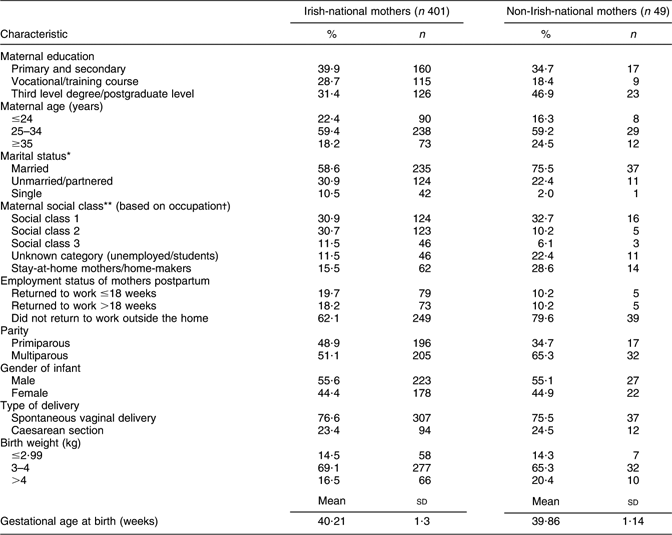
Table 1 shows the social and demographic characteristics of the Irish-national and non-Irish-national mothers for whom complete data are available from the 6-week (mean 6·56 weeks (sd 0·42)) and 6-month (mean 24·7 weeks (sd 0·43)) follow-up. The two populations differed in terms of marital status (P = 0·042) and maternal social class (P = 0·003), with a higher proportion of married and stay-at-home mothers observed in the non-Irish-national population. In addition, a shorter duration of hospital stay (P = 0·05) was observed in the non-Irish-national, compared to the Irish-national population (3·2 d (sd 1·63) v. 3·7 d (sd 1·75), respectively).
Social and demographic characteristics of the Irish-national and non-Irish-national mothers as well as the characteristics of their infants
The non-responders in the present study (n 48) were either unwilling to take part or were planning to emigrate from Ireland during the initial months postpartum. Compared to the responders, the non-responders were significantly (P = 0·001) more likely to be younger, smokers and reported an antenatal intention to formula-feed postpartum (data not shown).
Breast-feeding initiation and prevalence
In total, 47 % (n 189) of the Irish-national and 79·6 % (n 39) of the non-Irish-national mothers initiated breast-feeding postpartum (P = 0·000). Significantly higher ‘any’, exclusive and partial breast-feeding rates were observed in the non-Irish-national compared to the Irish-national population (P = 0·000) during the first 20 weeks (see Table 2). The highest drop in ‘any’ breast-feeding was observed between hospital discharge and 4 weeks in the Irish-national mothers (10·3 %) and between 4 and 6 weeks in the non-Irish-national mothers (8·2 %). Less than half (44 %) of the Irish-national mothers who initiated breast-feeding were exclusively breast-feeding at 4 weeks postpartum and from the two populations, only one Irish-national mother was still exclusively breast-feeding at 6 months. While the partial breast-feeding rate of the Irish-national mothers remained relatively unchanged during the first 6 months (6·5–9·4 %), there was a marked trend towards increased partial breast-feeding between 12 weeks and 6 months in the non-Irish-national population.
Prevalence of breast-feedingFootnote * in the Irish-national (n 401) and non-Irish-national (n 49) population from the point of discharge from the maternity hospital to 6 months postpartum

* For breast-feeding definitions, see Experimental Methods section.
† 0 refers to the feeding status at the point of discharge from the maternity hospital.
Breast-feeding duration rates
The duration of ‘any’ breast-feeding during the study time frame was significantly higher (P = 0·000) in the non-Irish-national (median 170 d, IQ 84–175) compared to the Irish-national (median 56 d, IQ 7–126) population. No significant difference (P = 0·510) was observed in the number of days mothers exclusively breast-fed between the two populations (median 56 d, IQ 0–112 v. median 21 d, IQ 2–84, respectively).
Determinants of breast-feeding initiation in the Irish-national population
The sociodemographic factors that influenced breast-feeding initiation after adjustment included: non-smoking (OR 3·1; 95 % CI 1·6, 5·9) primiparous (OR 3·1; 95 % CI 1·9, 5·2) mothers, ≥35 years (OR 5·4; 95 % CI 2·4, 12·4) and educated to third level education (OR 4·1; 95 % CI 2·3, 7·4) (see Table 3). Almost 94 % of the mothers who initiated breast-feeding reported a positive antenatal intention to breast-feed postpartum compared to 94 % of the non-initiators who had no positive antenatal intention to breast-feed. After adjustment, mothers’ positive antenatal feeding intention to breast-feed was indicated as one of the most important independent determinants (P = 0·000) of breast-feeding initiation (OR 224; 95 % CI 85, 587). Mothers who reported positive postnatal encouragement to breast-feed from the partner (OR 7·9; 95 % CI 4·6, 13·8) and the maternal grandmother (OR 6·2; 95 % CI 3·4, 11·3) were significantly more likely to initiate breast-feeding. Maternal antenatal attitudes towards breast-feeding were also found to influence a mothers’ feeding decision with those who reported that breast-feeding is ‘not embarrassing’ being significantly more likely to initiate the practice.
Factors influencing breast-feeding initiation in the Irish-national population, performed by binary logistic regression analysis
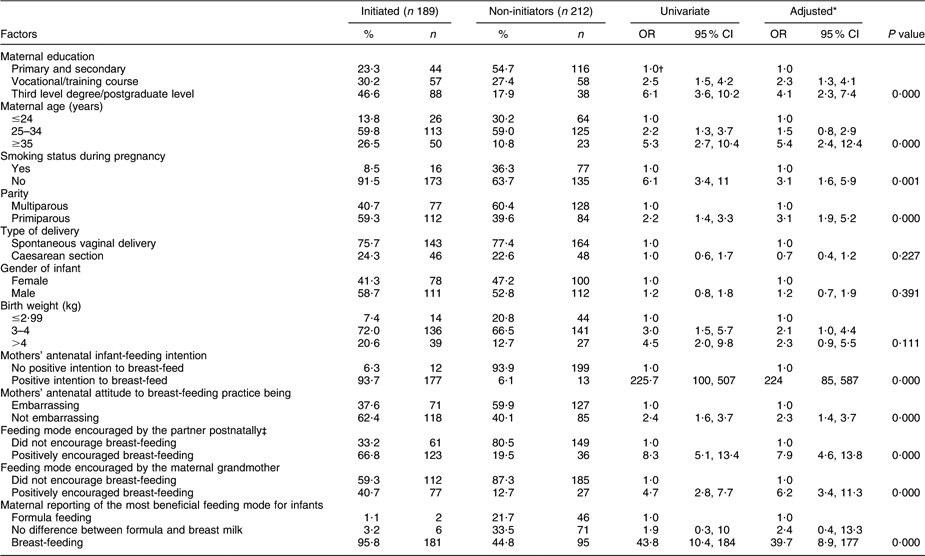
*Adjusted for maternal age and education, smoking status, parity and infant birth weight.
†1·0 denotes the reference category.
‡n 369 mothers reported that they had a partner who was actively involved in their lives.
Maternal perceptions about breast-feeding initiation
The principal perceived reasons reported by mothers for initiating breast-feeding related to the optimum health benefits of breast milk (54 %), intrinsic mother-led reasons such as a wish to promote bonding and maternal instinct (18 %) along with positive encouragement from others (health professionals, family, friends) to breast-feed (15 %) (data not shown). The following were the principal perceived reasons reported by mothers for not initiating breast-feeding: embarrassment of breast-feeding in front of others/in public (31 %), time and lifestyle restrictions associated with breast-feeding (24 %), a reported negative perception of breast-feeding (11 %), as well as mothers’ general preference not to breast-feed (8 %) (data not shown).
Determinants of ‘any’ breast-feeding at 6 weeks in the Irish-national population
As presented in Table 4, the factors that influenced ‘any’ breast-feeding at 6 weeks included primiparous (OR 1·9; 95 % CI 1, 3·4) mothers, ≥35 years (OR 4·9; 95 % CI 1·6, 14·4) and educated to third level (OR 5·7; 95 % CI 2·7, 12·2). Similar to the factors influencing initiation, mothers who had positive antenatal feeding intention to breastfeed (OR 31·7; 95 % CI 10·5, 95), reported positive encouragement to breast-feed from the partner (OR 4·0; 95 % CI 2·2, 7·3) and who had the perception that breast-feeding is ‘natural’ (OR 3·7; 95 % CI 2, 6·8) were more likely to have been offering ‘any’ breast milk to their infants at 6 weeks.
Factors influencing ‘any’ breast-feeding (AB) at 6 weeks in the Irish-national population, performed by binary logistic regression analysis
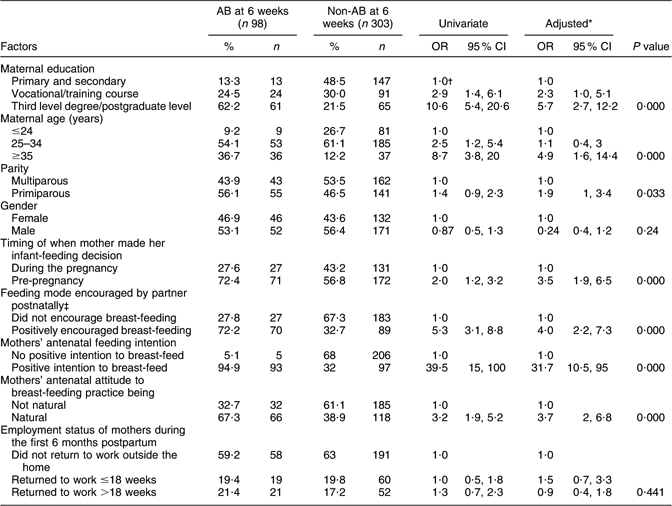
*Adjusted for maternal age, education, smoking status, parity, infant birth weight and parental social class.
†1·0 denotes the reference category.
‡n 369 mothers reported that they had a partner who was actively involved in their lives.
Reasons for discontinuing breast-feeding during the first 6 weeks
The principal reasons for discontinuing breast-feeding during the first 6 weeks postpartum related to maternal tiredness (26 %) as well as to the demands of breast-feeding due to frequent feeding frequency (23 %). Almost one-sixth of mothers (17 %) discontinued owing to their perception that they had an inadequate breast milk supply and the perception that the breast milk was not satisfying their infant’s hunger. Few mothers reported work return (1 %), lack of breast-feeding support and reassurance (1 %), and infant- (4 %) and mother-related illness (5 %) as the principal reasons for abandoning the practice (data not shown).
Discussion
Despite the recognised benefits of breast-feeding(Reference Kramer and Kakuma1–Reference Oddy, Sly, de Klerk, Landau, Kendell, Holt and Stanley9), the majority of infants born in Ireland never experience the benefits of breast milk(28), a pattern that has been observed over the last 30 years(Reference Gilmore, O’Driscoll and Murphy57–Reference Twomey, Kiberd, Matthews and O’Regan59). With a view to increasing breast-feeding rates, the present study sought to provide data on breast-feeding initiation and prevalence in a sample of Irish-national and non-Irish-national mothers, including the factors that influence initiation and ‘any’ breast-feeding at 6 weeks in the former population.
An important finding from the present study was the significant difference in the breast-feeding initiation and prevalence rates between the two study populations. While the high breast-feeding initiation rate of the non-Irish-national population (79·6 %) in the present study is comparable with initiation rates (71–84 %) reported internationally(Reference Li, Darling, Maurice, Barker and Grummer-Strawn30, Reference Bolling, Grant, Hamlyn and Thornton60, Reference Chandrashekhar, Joshi, Binu, Shankar, Rana and Ramachandran61), the initiation rate of 47 % found in the Irish-national population remains low and far from the achievement of national breast-feeding targets(24). In contrast, lower initiation rates of 39·5 %, 38 % and 36 % have been reported in earlier studies from Dublin(Reference Fitzpatrick, Fitzpatrick and Darling62), Co. Kildare(Reference Sayers, Thornton, Corcoran and Burke39) and Galway(Reference Lowry and Lillis63), respectively; however, more recent regional studies from Dublin(Reference Ward, Sheridan, Howell, Hegarty and O’Farrell38, Reference Twomey, Kiberd, Matthews and O’Regan59) report a higher initiation rate of 51 %.
Interestingly, the 2004 NPS(28), which coincided with the first year of data collection in the present study, reports that 42·5 % of mothers in Ireland were exclusively breast-feeding at hospital discharge, which is over 10 % higher than the figure found here among Irish-national mothers (31·7 %). It is thus possible that the low breast-feeding rates found in the present study were specific to the mothers who attended the CWIUH between 2004 and 2006. Nonetheless, based on the differing breast-feeding rates between the non-Irish-nationals and Irish-nationals in the present study, our results suggest that a separate analysis of breast-feeding rates by mothers’ nationality in future breast-feeding monitoring systems and NPS reports in Ireland may yield valuable information as regards national breast-feeding trends over time.
An extremely low level of compliance with the WHO (2001) recommendation was found in the present study, with only one Irish-national mother reported to be exclusively breast-feeding at 6 months. A similarly low exclusive breast-feeding rate of <1 % at 6 months was reported in an earlier national infant-feeding study (n 1195)(Reference McSweeney and Kevany64) indicating that there has been no prolongation of exclusive breast-feeding among Irish mothers over the last 20 years. The rate of exclusive breast-feeding at 6 months, however, appears low worldwide with rates of 6 % and 4·7 % reported in China(Reference Xu, Binns, Wu, Yihan, Zhao and Lee54) and Italy, respectively(Reference Giovannini, Riva, Banderali, Scanglioni, Veehof, Sala, Radaelli and Agostoni65). It is a further concern that mothers in the present study were reluctant to exclusively breast-feed to 16 weeks postpartum with rates in the Irish-national and non-Irish-national populations dropping to 7·2 % and 18·4 % respectively, at this time point.
A precipitous drop in the ‘any’ breast-feeding rate in the Irish-national mothers between each follow-up point in the present study was also highlighted. The highest drop in ‘any’ breast-feeding occurred during the hospital stay (8·3 %) and between hospital discharge and 4 weeks postpartum (10·3 %) in the Irish-national population. Other investigators in Ireland have reported similar findings(Reference Howell, Bedford, O’Keefe and Corcoran40, Reference Twomey, Kiberd, Matthews and O’Regan59). The fact that almost 40 % of Irish-national mothers who initiated breast-feeding in the hospital had abandoned the practice by 4 weeks suggests that the interval from birth to 4 weeks is particularly sensitive to a change in the feeding decision and breast-feeding cessation. Although the two study populations experienced similar support from the health professionals in the hospital (2004–2006), few non-Irish-national mothers abandoned breast-feeding during the hospital stay. Taken together, our data suggest that a breast-feeding-supportive culture in the latter population exists and was likely to have contributed towards continued breast-feeding during the first 6 months.
It is a further possibility that the higher breast-feeding rates observed in the non-Irish-national population may be explained by the significantly greater proportion of married and/or stay-at-home mothers in this population, factors that are known to be positively associated with breast-feeding(Reference Callen and Pinelli66, Reference Taylor, Risica, Geller, Kirtania and Cabral67); however, variability in breast-feeding rates by ethnic diversity has been reported by other investigators(Reference Kelly, Watt and Nazroo68, Reference Heck, Braveman, Cubbin, Chavez and Kiely69). Data from Kelly and collegues(Reference Kelly, Watt and Nazroo68) in the UK (n 17 474) found that the highest breast-feeding rates from initiation to 3 months postpartum, after adjustment, were among the Black African, Black Caribbean and Asian, compared to White mothers. Similarly, foreign-Latina mothers in the USA were more likely to initiate breast-feeding than USA-born Latina, or White non-Hispanic mothers(Reference Heck, Braveman, Cubbin, Chavez and Kiely69). Furthermore, data from the present study show that partial rather than exclusive or predominant breast-feeding was a more common practice among non-Irish-national, compared to the Irish-national mothers throughout the study, a practice that contributed to the maintenance of their ‘any’ breast-feeding rates to 6 months. It is well established that culturally based feeding beliefs influence how mothers make decisions(Reference Itina70); however, the context of maternal beliefs and decisions can also change in those who immigrate to a different culture and geographic region(Reference Kannan, Carruth and Skinner71). An examination of the effect of immigration to Ireland on the breast-feeding practices of the non-Irish-national population should thus be considered in future research.
The present study also sought to identify the factors that influence breast-feeding initiation and ‘any’ breast-feeding at 6 weeks in the Irish-national population. Similar to earlier international(Reference Kelly and Watt31, Reference Grjibovski, Yngve, Bygren and Sjostrom72, Reference Hendricks, Briefel, Novak and Ziegler73) and regional Irish studies(Reference Ward, Sheridan, Howell, Hegarty and O’Farrell38, Reference Hurley and Fogarty44), our data show that sociodemographic variables, including maternal age, education level and parity, were consistent predictive factors in determining breast-feeding initiation and ‘any’ breast-feeding at 6 weeks. In particular, mothers who had a third level education were almost six times more likely to have been breast-feeding at 6 weeks (P = 0·000) compared to those who had a primary or secondary educational attainment level. Although work return has been reported as a barrier to breast-feeding initiation and duration in other studies from the USA(Reference Arora, McJunkin, Wehrer and Kuhn74) and UK(Reference Noble75), no significant associations were observed between these variables in the present study.
There is little doubt from our data that a positive antenatal intention to breast-feed is one of the strongest and persistent independent predictors of breast-feeding initiation and ‘any’ breast-feeding at 6 weeks, a finding that agrees with other studies(Reference Chye, Zain, Lim and Lim76, Reference Donath and Amir77). The importance of the antenatal period in determining breast-feeding success postpartum in the present study is further highlighted by the fact that mothers who made their decision to breastfeed pre-pregnancy were more likely to offer breast milk to their infants at 6 weeks. Our data suggest that in order to improve breast-feeding rates, the antenatal period should be targeted as being an effective time in which to concentrate efforts to promote breast-feeding. Moreover, exploring the concerns of parents who indicate ambivalence or resistance towards breast-feeding antenatally may be essential in addressing socio-cultural issues and misperceptions(Reference Wilhelm, Stepans, Hertzog, Rodehorst and Gardner78).
Results from the present study also underscore the importance of positive encouragement from the partner and maternal grandmother to breast-feed on initiation and duration postpartum. Consistent with these associations, a wealth of evidence highlights the importance of social and emotional support from the partner(Reference Ingram, Johnson and Greenwood79, Reference Okon80), family members and friends in promoting breast-feeding initiation and duration(Reference Cernadas, Noceda, Barrera, Martinez and Garsd81, Reference Kong and Lee82). The provision of partner and grandmother-specific infant-feeding information and guidance during the ante- and postnatal period may prove to be an effective measure in the promotion of breast-feeding, across all socio-economic groups.
Other emerging themes from our data relate to the important role of positive maternal attitudes and perceptions of the acceptability of breast-feeding in public in determining breast-feeding rates. In another Irish study, confusion around the dual feeding/sexual role of the female breast has been shown to be associated with the embarrassment of breast-feeding, with the majority of participants reporting that they disapproved of the practice in public(Reference Connolly, Kelleher, Becker, Friel and Gabhainn83). Moreover, maternal attitudes, compared to sociodemographic factors, have been suggested as better predictors of feeding choice(Reference Scott, Shaker and Reid84). Although national efforts to promote breast-feeding as a cultural norm continue, results from the present study highlight the perception among many mothers that breast-feeding is a social taboo and an embarrassing way to feed an infant. These data are further supported by mothers’ principal reasons for choosing not to breast-feed in the present study, with the ‘embarrassment issue’ being a priority among almost a third of these mothers (31 %). Clearly, the cultural barrier towards breast-feeding appears to still prevail among mothers in Ireland, and if our breast-feeding rates are to ever improve, stronger motivations and creative campaigns that relate directly towards addressing the negative cultural perception of the practice need to be considered.
Positive features of the present study include the high follow-up response rates and the consistent and strict use of breast-feeding definitions. Several limitations of the work must also be considered. Firstly, the fact that mothers were recruited and lived within a similar geographical area may limit the generalisability of the data to the rest of Ireland. The fact that there was an under-representation of mothers recruited from public antenatal clinics (51 %), relative to the proportion that attend such clinics in the CWIUH (58 %), may also have influenced our results. Finally, long-term recall of breast-feeding data has been found to be inaccurate(Reference Bland, Rollins, Solarsh, Van den Broeck and Coovadia85) and it is possible that the maternal reporting of the feeding status of some infants at 4, 8, 12, 16 and 20 weeks, in particular, was influenced by maternal memory bias. Due to direct maternal reporting of the feeding status of infants at 6 weeks and 6 months, however, the accuracy of the feeding status at these time points can be assured.
Conclusions
Non-Irish-national, compared to Irish-national, mothers were significantly more likely to initiate and offer ‘any’ breast milk to their infants during the first 6 months postpartum. The WHO (2001) recommendation was adhered to by only one Irish-national mother. Based on our results, the antenatal period is an effective time for concentrating efforts to encourage women to breast-feed. Involving the partner and the maternal grandmother in ante and postnatal breast-feeding initiatives appears crucial to increase rates. Finally, mothers’ perception of the social acceptability of breast-feeding in Ireland is strongly highlighted as an important determinant of both breast-feeding initiation and duration.
Acknowledgements
The present study was funded by the Dublin Institute of Technology, Dublin 8. The authors thank the 491 mothers who participated in the present study and acknowledge the cooperation of the midwives, obstetricians and administration staff in the CWIUH throughout the study. R.C.T., K.M.Y. and J.M.K. were responsible for the study design and the interpretation of the results (J.M.K. was the study coordinator/supervisor). R.C.T. was responsible for data collection, input and analysis, as well as the write-up of the draft manuscript. K.M.Y., J.M.K, M.S.-P. and M.J.W. contributed to the editing of the final manuscript. The authors declare no conflict of interest.



