


In recent decades, eating disorders (ED) have become a significant public health problem principally impacting on adolescents, especially females, although a certain percentage of males have also been affected( Reference Eisenberg, Nicklett and Roeder 1 – Reference Micali, Hagberg and Petersen 3 ). In parallel with this, there has been an exponential increase in overweight which may have contributed to the increase in ED( Reference Babio, Canals and Pietrobelli 4 ).
Scientific research has indicated that cases of anorexia and bulimia represent only a small proportion of ED cases (0·3 % and 0·5 %, respectively)( Reference Sancho, Arija and Asorey 5 , Reference Preti, Girolamo and Vilagut 6 ), whereas cases of eating disorder not otherwise specified (EDNOS) are much more frequent (3–10 %)( Reference Rome 2 , Reference Sancho, Arija and Asorey 5 ), as are individuals at risk of ED (rED), who account for 13·5 %( Reference Eisenberg, Nicklett and Roeder 1 ) in adolescents with no clinical symptoms.
Among the risk factors identified in the multifactorial aetiology of ED are restrictive diets, high body weight, body dissatisfaction, and sociocultural and psychological factors( Reference Babio, Canals and Pietrobelli 4 , Reference Canals, Carbajo and Fernandez 7 , Reference Mitchison and Hay 8 ). However, although dietary restriction of nutritional intake is one of the principal predictors of ED, it has rarely been the object of real and quantitative study in schoolchildren at rED. As far we can ascertain, there are only four studies that have quantitatively evaluated dietary intake in adolescent females at rED, and none that have looked at boys. Of these studies, the Brazilian( Reference Dunker and Philippi 9 ) and Taiwanese( Reference Chang, Lin and Wong 10 , Reference Tsai, Chang and Lien 11 ) studies showed that girls at rED consumed less energy than the control group. However, two of them identified lower intakes of macronutrients, vitamin B6, vitamin B12 and Zn( Reference Chang, Lin and Wong 10 , Reference Tsai, Chang and Lien 11 ); whereas one of them observed lower intakes of energy and Fe compared with the control group( Reference Dunker and Philippi 9 ). Only one other study has evaluated different types of symptoms of ED, but it did not evaluate the most severe and frequent stages of ED. That study found no significant decrease in energy intake, but did find decreased intakes of carbohydrates, lipids, Na and vitamins A, E and C( Reference Allen, Mori and Beilin 12 ).
No research has been done on European populations or males. Consequently, we set ourselves the goal of evaluating the relationship between the severity of ED and intakes of energy and nutrients and nutritional risk in a mixed-sex adolescent population without clinical symptoms. Specifically, we sought to answer the following questions: (i) Are energy and nutrient intakes different between the population with EDNOS, the population at rED and the control group? (ii) Are there gender differences? (iii) Is the percentage of adolescents at risk of insufficient intake higher as the ED becomes more severe?
Methods
Design and participants
The present study was a cross-sectional descriptive study of a representative sample of 495 adolescent schoolchildren with a mean age of 14·2 (sd 1·0) years, analysing data obtained from a pooling of two surveys of school-based populations of the same age range that were carried out by the same research group using the same methodology but over different periods( Reference Babio, Canals and Pietrobelli 4 , Reference Arija, Ferrer-Barcala and Aranda 13 ). The initial populations of the first and second studies were 2967 and 1336 adolescents, respectively, all of whom were from the city of Tarragona (Spain), including the twenty-six schools in the city proper, its suburbs and a selection of five rural zones from the surrounding province of Tarragona. Both studies had a double phase design. The first phase sorted the participants by means of a test that classified them as at rED or not at rED. In the second phase we selected the participants at rED and the control group, the latter being randomly chosen from those whose score was below the cut-off and whose characteristics of age, gender and type of school were similar. During this phase, the EDNOS diagnosis was confirmed using the criteria established in the Diagnostic and Statistical Manual of Mental Disorders, 4th edition (DSM-IV). For the purpose of the present analysis, only participants with available data on psychopathology and energy and nutrient intakes were included. The data from both studies were brought together to increase the sample size. The first study provided 329 adolescents and the second study provided 166 adolescents. In this way we obtained a sample of 495 adolescents, of whom 307 were controls, 146 were at rED and forty-two were diagnosed with EDNOS. Only one male was diagnosed with EDNOS, which meant that we could not include a male group of EDNOS.
Procedure
We obtained permission from the Department of Education of the Catalan Government and from the schools. We sought the consent of the parents. The study was approved by the Ethics Committee for Clinical Research at the Sant Joan University Hospital in Reus (Spain). The study took place in the classroom and the researchers were psychologists and nutritionists. The first study was conducted during the academic years 1999/2000 and 2000/2001; the second study was conducted during academic years 2004/2005 and 2005/2006. In the first phase of both studies, we administered in the classroom a questionnaire regarding the participants’ sociodemographic data (based on the Hollingshead index( Reference Hollingshead 14 )), a test to sort the participants according to ED symptoms and a test to assess body satisfaction. We took a sample of participants who scored at least 25 (the cut-off score for the Eating Attitudes Test (EAT)) and a control group of participants who scored below the cut-off and whose characteristics of age, gender and type of school were similar. In the second phase the chosen participants were individually interviewed in order to: (i) confirm the diagnosis of EDNOS using a structured interview; (ii) assess their dietary intake by means of a 24 h recall method using a photograph album of dishes and portion sizes with standard household measurements; (iii) measure their weight and height (and calculate BMI); and (iv) identify any symptoms of emotional disorder.
Measures
Assessment of risk of eating disorders: the Eating Attitudes Test
The EAT( Reference Garner and Garfinkel 15 ) is a self-administered questionnaire used as a screening tool for ED that has good psychometric properties of reliability and validity. We administered the Spanish validated version of the EAT-40 (internal consistency α=093)( Reference Castro, Toro and Salamero 16 ). A score greater than or equal to 25 was used as the cut-off because it has been shown to provide high-quality data on the sensitivity (87·5 %) and specificity (93·9 %) of young populations( Reference Canals, Carbajo and Fernandez-Ballart 17 ).
Assessment of diagnoses of eating disorders
Schedules for Clinical Assessment in Neuropsychiatry. The Schedules for Clinical Assessment in Neuropsychiatry( Reference Wing, Barbor and Brugha 18 ) is a semi-structured interview for psychopathological diagnosis according to DSM-IV criteria, validated and adapted to our population( Reference Vazquez-Barquero, Herrera and Gaitel 19 ). The interviews were performed by professional psychologists.
Diagnostic Interview for Children and Adolescents. The Diagnostic Interview for Children and Adolescents (DICA; W Reich, JJ Shayka and Ch Taibleson, unpublished results) is a semi-structured interview for children and adolescents that follows DSM-IV diagnostic criteria. The Spanish computerised adaptations of the DICA-R (Diagnostic Interview for Children and Adolescents, Revised) and the DICA-IV were administered. The κ statistics for the test–retest reliability of the Spanish version for ED were between 0·74 and 1·0( Reference Ezpeleta, de la Osa and Domenech 20 ). The interviews were performed by professional psychologists.
Symptoms of emotional disorders
Youth’s Inventory-4. The Youth’s Inventory-4( Reference Gadow and Sprafkin 21 ) is a self-report rating scale that evaluates symptoms of eighteen DSM-IV emotional and behavioral disorders in youth. We used an adapted Spanish version with satisfactory internal consistency in the several categories of disorders (α=0·66 to 0·87). We only used the following categories of disorders: major depression, dysthymia, anxiety disorder and social phobia categories.
Body Areas Satisfaction Test. The Body Areas Satisfaction Test( Reference Cash 22 ) is a self-evaluation test that ranks dissatisfaction with different parts of the body on a scale from 1 (‘very dissatisfied’) to 5 (‘very satisfied’). We used the adapted Spanish version, which has good reliability (α=0·879).
Dietary consumption and the risk of insufficient intake
Twenty-four-hour recall. This is a personal interview method for determining an individual’s dietary intake during the previous day( Reference Beaton, Milner and Corey 23 ). It was carried out on three non-consecutive days including a weekend day. This method involved professional trained dietitians administering previously standardised interviews to the adolescents. We used an extensive collection of photographs with a variety of dishes and portion sizes to obtain a more accurate assessment of the amount of food consumed. The interviews were conducted at school during the academic year. The period of time between each 24 h recall was approximately two weeks. To calculate nutrient intakes, we created our own SPSS database using the French and Spanish food composition tables( Reference Favier, Ireland-Ripert and Toque 24 , Reference Mataix 25 ).
Nutrient intake inadequacy. We calculated the probability of intake inadequacy for fourteen nutrients using the Recommended Dietary Intake of energy and nutrients created for the Spanish population( Reference Ortega, Requejo and Navia 26 ). By using the probability approach( 27 ), we calculated the probability of intake inadequacy for protein, Ca, Fe, Mg, P, vitamins A, D, E, C, B6, B12, thiamin, riboflavin, niacin and folic acid for each participant. We calculated the risk of inadequate intake of micronutrients using the mean of the probability of intake inadequacy for all micronutrients( Reference Foote, Murphy and Wilkens 28 ); that is, we calculated it by adding together the probability of intake inadequacy for each micronutrient and dividing the total by the number of micronutrients. Then we categorised the sample according to the percentage of the population whose probability of micronutrient intake inadequacy was higher than 50 %. For energy we used two approaches to estimate the frequency of inadequate intake. First, we compared energy intake with the standard reference values( Reference Serra-Majem and Aranceta-Bartrina 29 ). Second, we compared energy intake with the estimated energy requirement, which was calculated with equations that included age, weight, height and physical activity as described by the Institute of Medicine( 30 ). In both approaches, participants were considered to have inadequate intake when energy intake was less than two-thirds (67 %) of the reference values( Reference Serra-Majem and Aranceta-Bartrina 29 ).
Anthropometry
The anthropometric parameters evaluated were weight and height, measured with participants wearing light clothing, without heavy objects in pockets and barefoot. BMI (kg/m2) was calculated. Weight was measured using the Tanita® TBF-305 scale, which has an accuracy of 100 g. Height was measured to the nearest ±1 mm using a non-extensible tape measure.
Physical activity
We used the version modified for the Spanish population( Reference Sarriá, Selles and Cañedo-Argüelles 31 ) of the questionnaire proposed by Baecke et al. ( Reference Baecke, Burema and Frijters 32 ) to quantify the physical activity of the general population based on three domains: work, sport and leisure. This was a self-administered questionnaire with several questions scored on a five-point Likert scale. Based on the mean of these three domains, we obtained a physical activity index score and participants were divided into three groups according to the degree of physical activity (light, moderate, vigorous).
Pubertal maturity
We used images of the specific stages of pubertal maturity for each sex( Reference Tanner 33 ). From the images of different stages of maturation, adolescents during the interview had to indicate what pubertal stage they were according to their own perception. According to means of scores of pubic hair and development of breasts and genitals, we obtained a scale of 1 (pre-puberty) to 5 (maturity).
Statistical methods
We analysed the data using the statistical software package IBM SPSS Statistics version 19·0 for Windows. The results were expressed as means and standard deviations and percentages. We verified compliance with the statistical tests’ conditions of use. The degree of non-independence of observations from adolescents nested within the same school can be estimated using intra-class correlation coefficients (ICC)( Reference Kenny, Mannetti and Pierro 34 , Reference Pardo, Ruiz and San Martin 35 ). We found no evidence to suggest that observations were non-independent for the outcome variables ‘energy intake’ (ICC=0·002), ‘protein intake’ (ICC=0·020), ‘carbohydrate intake’ (ICC=0·020), ‘lipid intake’ (ICC=0·017) and ‘risk of micronutrient intake inadequacy’ (ICC<0·001; all P>0·05). Therefore, we applied traditional statistical analysis. We used the χ 2 test, Fisher’s Student t test and ANOVA adjusted using the Bonferroni correction for multiple comparisons. Also, we wanted to determine the influence of ED on energy and nutrient intakes taking into account several confounding factors that, according to the literature, may increase or decrease dietary intake; and at the same time, these factors could influence adequate micronutrient intake. Among other factors that may influence energy and nutrient intakes, the following are particularly prominent: sociodemographic status( Reference Zarnowiecki, Dollman and Parletta 36 ), physical activity( Reference Bales, Hawk and Granville 37 ), emotional symptoms( Reference Mooreville, Shomaker and Reina 38 ), body satisfaction( Reference Babio, Arija and Sancho 39 , Reference Bibiloni, Pich and Pons 40 ), BMI( Reference Bisset, Gauvin and Potvin 41 ) and pubertal stage( Reference Shomaker, Tanofsky-Kraff and Savastano 42 ). For example, a higher dietary intake was associated with higher physical activity, body satisfaction and anxiety and depressive symptoms, pubertal stage, and with lower or higher BMI. Consequently, we carried out several multiple linear regression models using the ENTER method to determine the manner in which eating disorders (rED and EDNOS) adjusted for different factors (emotional symptoms, physical activity, sociodemographic status, stage of puberty, body satisfaction and BMI) are associated with energy and macronutrient intakes and risk of inadequate micronutrient intake. For this, we designed five regression linear models and in each one we introduced a dietary variable as dependent variable: in model 1, the dependent variable was energy intake (kcal); in model 2, it was protein intake (g); in model 3, it was carbohydrate intake (g); in model 4, it was lipid intake (g); and in model 5, the dependent variable was risk of micronutrient intake inadequacy (%). Also, we performed these models in the whole sample, in the control group and in the groups with rED and EDNOS. We accepted P<0·05 as the minimum level of statistical significance.
Results
Of the 495 adolescents, 120 were male and 375 were female. Of the males, 79·6 % were controls and 20·3 % were at rED. Only one male was diagnosed with EDNOS. Among the females, 56·5 % were controls and 43·5 % were at rED, of whom 34·7 % were diagnosed with EDNOS. Table 1 shows the sociodemographic, pubertal and anthropometric characteristics, the psychological states and the physical activity of the participants. The females at rED and with EDNOS presented higher BMI and lower body satisfaction compared with the controls (P<0·05). Furthermore, we observed a higher percentage of females with emotional disorders in the rED and EDNOS groups compared with the controls (P<0·05). Specifically in females, anxious symptoms affected 32 % and other emotional symptoms such as depression affected 19·5 % (data not shown in the table).
Sociocultural, anthropometric and psychological characteristics in relation to the severity of eating disorder among 495 adolescents, mean age 14·2 (sd 1·0) years, Tarragona, Spain
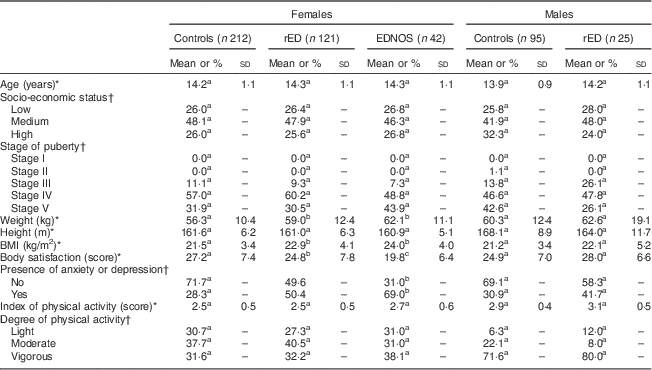
rED, risk of eating disorders; EDNOS, eating disorder not otherwise specified.
a,b,cValues within a row with unlike superscript letters were significantly different (P<0·05).
* Two-sample t test or ANOVA adjusted using the Bonferroni correction for multiple comparisons of continuous variables Values are presented as mean and standard deviation.
† χ 2 test for categorical variables. Values are presented as percentage.
Energy and nutrient intakes
Among the females, energy and nutrient intakes were significantly lower in those at rED and/or with EDNOS compared with the controls, except for intake of vitamin D. In contrast, for males significant differences were observed between the controls and the group at rED only for PUFA, Fe, vitamin E and vitamin C (Table 2).
Daily energy and nutrient intakes in relation to the severity of eating disorder among 495 adolescents, mean age 14·2 (sd 1·0) years, Tarragona, Spain
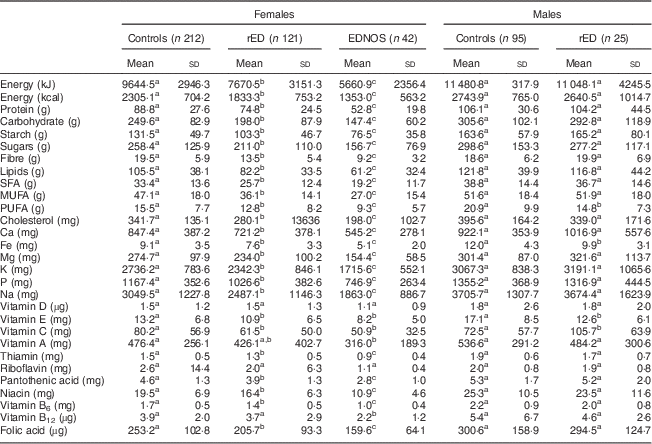
rED, risk of eating disorders; EDNOS, eating disorder not otherwise specified.
a,b,cMean values within a row with unlike superscript letters were significantly different (P<0·05).
Probability of intake inadequacy in the different degrees of severity of eating disorders
Table 3 shows the percentage of adolescents with inadequate intakes according to the degree of severity of ED. In females, we can see that the percentage with micronutrient intake inadequacy was significantly higher as the ED became more severe. More than 80 % of the females with EDNOS and more than 60 % of the females at rED had intake inadequacy regarding Ca, Fe, Mg, P, vitamin D and vitamin B6. In general, 57·8 % and 83·3 % of females at rED and with EDNOS, respectively, presented more than a 50 % risk of micronutrient intake inadequacy.
Percentage predicted to have inadequate intake of nutrients using a probability approach according to the severity of eating disorder and gender among 495 adolescents, mean age 14·2 (sd 1·0) years, Tarragona, Spain
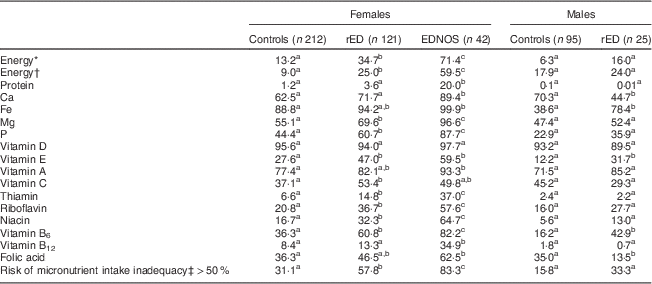
rED, risk of eating disorders; EDNOS, eating disorder not otherwise specified.
a,b,cValues within a row with unlike superscript letters were significantly different (P<0·05).
* Energy: inadequate intake was when intake was lower than two-thirds of the Recommended Dietary Intake created for the Spanish population.
† Energy: inadequate intake was lower than two-thirds of the estimated energy requirement calculated using equations from the Institute of Medicine.
‡ Risk of inadequate micronutrient intake was calculated by adding together the probability of intake inadequacy for each micronutrient and dividing the total by the number of micronutrients (mean of probability of inadequate micronutrient intake). Then we categorised the sample according to the percentage of the population whose probability of inadequate intake was above 50 %.
We observed that energy adequacy was significantly and progressively lower in the control, rED and EDNOS groups (mean 96·6 (SD 30·3) %, mean 76·3 (SD 22·6) % and mean 55·9 (SD 29·0) %, P<0·001; data not shown in the table) and that there were more females with an energy adequacy below two-thirds of the recommended level in the rED group and the EDNOS group than in the control group (Table 3). In relation to energy adequacy, when energy intake was compared with the estimated energy requirement, there were also differences between the control (mean 110·8 (SD 37·4) %), rED (mean 87·0 (SD 36·2) %) and EDNOS groups (mean 62·0 (SD 25·4) %, P<0·001; data not shown in the table).
Relationship between energy and macronutrient intakes and the presence of some form of eating disorder
We designed various multiple linear regression models to determine the association of ED with energy and macronutrient intakes and the risk of micronutrient intake inadequacy adjusted by different psychosocial and anthropometric factors. We show five linear regression models according to the dependent variable: energy intake (model 1), protein intake (model 2), carbohydrate intake (model 3), lipid intake (model 4) and risk of micronutrient intake inadequacy (model 5).
Table 4 shows that rED and EDNOS in the female adolescents was associated with a lower intake of energy (model 1), protein (model 2), carbohydrate (model 3), lipids (model 4) and a higher risk of inadequate micronutrient intake (model 5). Among the controls, the presence of some form of anxiety or depression was associated with a carbohydrate intake 27·9 g/d higher than in the absence of anxiety and depression (model 3). In contrast, among the male adolescents (Table 5), rED was not related to lower intakes or to a higher risk of intake inadequacy of micronutrients.
Factors related to the intakes of energy and macronutrients and with the risk of micronutrient deficiency in relation to the risk of eating disorders in female adolescents, Tarragona, Spain

rED, risk of eating disorders; EDNOS, eating disorder not otherwise specified; B, unstandardised coefficient; level of statistical significance, P<0·05.
* Risk of inadequate micronutrient intake was calculated using the mean of probability of inadequate intake.
Factors related to the intake of energy and macronutrients and with the risk of micronutrient deficiency in relation to the risk of eating disorders in male adolescents, Tarragona, Spain
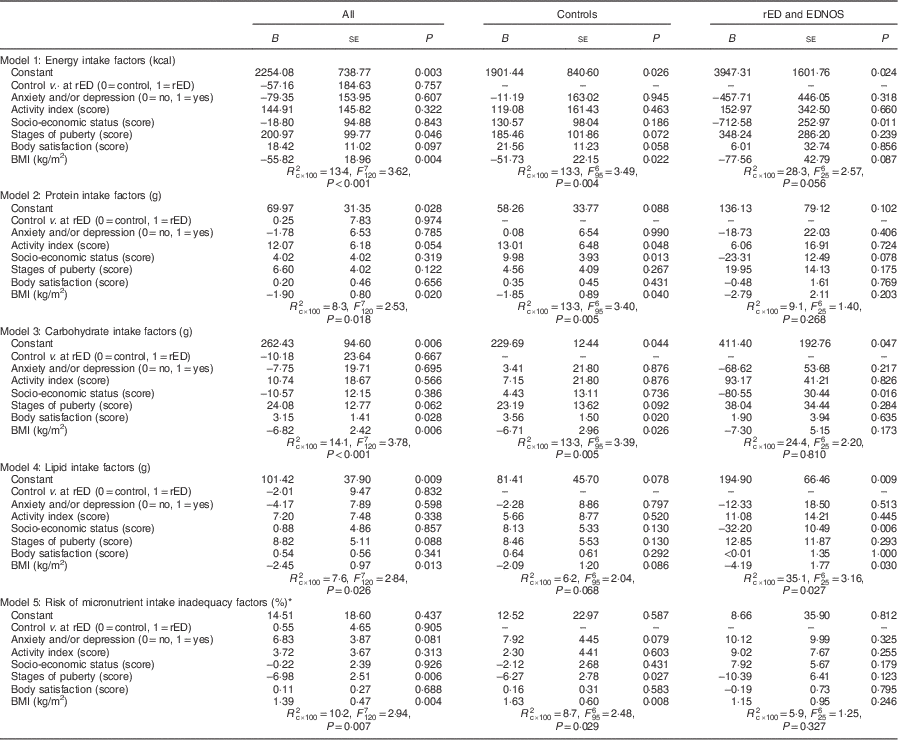
rED, risk of eating disorders; EDNOS, eating disorder not otherwise specified; B, unstandardised coefficient; level of statistical significance, P<0·05.
* Risk of inadequate micronutrient intake was calculated using the mean of probability of inadequate intake.
Discussion
Our findings showed that in a population of Mediterranean adolescents, females at rED presented substantially lower energy and nutrient intakes than the control group, which worsened in females with EDNOS. Although restricting energy intake in adolescents could be beneficial for those with EDNOS, given that the mean BMI (24·0 (sd 4·0) kg/m2) reached the level of overweight according to the classification of Cole et al. ( Reference Cole, Bellizzi and Flegal 43 ), when such a restriction was without the supervision of a health professional, it led to a high percentage of females at risk of inadequate micronutrient intake. In contrast, no great differences in nutritional intake were reported for the males.
Similar studies in adolescent males with anomalous dietary behaviours have also observed no significant differences in intake( Reference Neumark-Sztainer, Hannan and Story 44 ). In males, overweight and underweight are known to be risk factors of body dissatisfaction. Although our results did not show that males with rED performed more vigorous physical activity than the controls, we did observe more males than females performing vigorous physical activity. Some studies indicate that this is because, rather than making significant dietary modifications, males prefer to engage in greater levels of vigorous physical activity as means of avoiding weight gain and increasing muscle, and thus conforming to the ideal of masculine beauty( Reference Calzo, Sonneville and Haines 45 ). In general, our results in males should be treated with caution due to the small size of the sample.
Most of the literature on dietary intake and ED has studied clinical populations but none has studied populations with EDNOS and very little has studied populations at rED. In this regard, and in line with the findings of several authors( Reference Dunker and Philippi 9 – Reference Tsai, Chang and Lien 11 ), our study showed lower energy and/or macronutrient intake(s) in adolescent females at rED. The energy intake of females at rED was 20·0 % lower than that of the control group, a slightly higher percentage than that shown by the previously cited authors (4·8–16·0 %). At the same time, we observed that adolescent females with EDNOS presented reductions in macronutrients and an energy intake (3983·1 kJ/d (952·0 kcal/d)) which was closer to that observed in other studies on anorexic populations (between 1288·6 and 3895·3 kJ/d (308 and 931 kcal/d))( Reference Hadigan, Anderson and Miller 46 , Reference Jáuregui and Bolaños 47 ). Based on adjusted multiple linear regression, we confirmed that rED and EDNOS was associated with a lower energy intake of 1255·2 kJ/d (300 kcal/d) and 2928·8 kJ/d (700 kcal/d), respectively. Also, our results showed that the presence of rED and EDNOS was associated with lower protein, carbohydrate and lipid intakes, as has been found by other studies on rED and clinical populations. These lower intakes of energy and macronutrients in the ED population may arise because they usually choose foods that are low in energy and fat and avoid meats, sugars, cereals and fatty foods( Reference Neumark-Sztainer, Hannan and Story 44 ). However, Allen et al. ( Reference Allen, Mori and Beilin 12 ) found that a population at rED did not restrict energy intake but did restrict intakes of carbohydrates and lipids, except in the case of females with symptoms of bulimia, who consumed a higher amount of refined sugars. In this regard, individuals with symptoms of binge eating disorders have been observed to consume greater amounts of carbohydrates and fats, even to the point of consuming an extra quantity of 1673·6 kJ/d (400 kcal/d)( Reference Mirch, McDuffie and Yanovski 48 ).
With respect to energy adequacy, some studies in clinical ED( Reference Hadigan, Anderson and Miller 46 ) and community populations with symptoms of ED( Reference Dunker and Philippi 9 ) have shown higher energy inadequacy compared with the reference energy intakes and estimated energy requirements. In this sense, our results showed that between 30 % and 70 % of females with rED and EDNOS had an energy intake below two-thirds of the recommended reference value. It is known that energy expenditure depends on several factors such as BMR and level of physical activity. Therefore, if we take into account the estimated energy requirement, we also can observe that 25–60 % of females with rED and EDNOS presented an inadequate energy intake.
With regard to micronutrient intake, previous studies have identified lower intakes of thiamin, riboflavin, niacin, vitamins B6 and B12, Se, Zn, Cu, Ca, Fe and/or P in anorexic females( Reference Hadigan, Anderson and Miller 46 , Reference Jáuregui and Bolaños 47 ). Lower intakes of Na, Fe and vitamins B12, B6, A, E and/or C have been observed in females at rED( Reference Dunker and Philippi 9 – Reference Allen, Mori and Beilin 12 ). Compared with these studies, our results show lower intakes of a greater number of micronutrients (Ca, Fe, Mg, K, P, Na, thiamin, vitamins E, C, B6, B12, pantothenic acid and folic acid) in adolescents at rED and with EDNOS. These differences could be because these studies used different methodologies to assess dietary intake such as FFQ(12,47), a single 24 h recall( Reference Dunker and Philippi 9 – Reference Tsai, Chang and Lien 11 ) and diet histories( Reference Hadigan, Anderson and Miller 46 ).
In relation to inadequate micronutrient intake, we observed that a high percentage of females with rED (57·8 %) or EDNOS (83·3 %) presented risk of micronutrient intake inadequacy. In this vein, based on multiple linear regressions, our results showed that rED and EDNOS were associated with an 11 % and a 26 % greater risk of micronutrient intake inadequacy, respectively. This risk of energy and micronutrient deficiency becomes evident as soon as the first symptoms appear and may be sufficiently severe to interfere in the optimum development of the adolescent. Particularly, various studies have revealed that the adolescent population does not consume the recommended daily portions of dairy products and, therefore, does not meet its daily Ca requirement( Reference Mirch, McDuffie and Yanovski 48 ). This situation worsens in the presence of rED or EDNOS, as confirmed by our study and others( Reference Dunker and Philippi 9 , Reference Hadigan, Anderson and Miller 46 ). A deficient dairy intake can also lead to a deficiency in other micronutrients such as vitamin D, P and Mg. We observed that more than 50 % of females at rED and with EDNOS presented a risk of Mg and P deficiency; and that practically all of the adolescents presented a risk of intake inadequacy of vitamin D, similar to that in the general population( Reference Serra-Majem, Ribas-Barba and Perez-Rodrigo 49 ). All of these nutrients are essential to the mineralisation of the skeleton( Reference Price, Langford and Liporace 50 ). Consequently, nutrient deficiency can affect the formation of optimum bone mass or may even accelerate bone loss at a crucial moment during bone growth. Also, our results showed that Fe intake was lower as the ED became more severe. This may be due to a lower intake of meat and meat products in our participants, and has previously been observed in an anorexic population( Reference Jáuregui and Bolaños 47 ). In our study, practically all females at rED and with EDNOS and 88·8 % of the adolescent controls presented a risk of Fe intake inadequacy, with a larger percentage of the population at risk Fe deficiency than is reported for the general population( Reference Serra-Majem, Ribas-Barba and Perez-Rodrigo 49 ). Fe deficiency has been associated with the risk of anaemia, reduced immune response and cognitive impairment, among other problems, because Fe is involved in multiple metabolic functions( Reference Eden and Sandoval 51 ).
Apart from the physical repercussions, deficient intake may also be related to emotional disorders and may aggravate ED. In this regard, restricting energy or lipid intake, specifically the n-3 PUFA, may be associated with depression symptoms( Reference Preti, Girolamo and Vilagut 6 ). Likewise, deficient intakes of other micronutrients such as vitamins A, C, B6, B2, niacin, folic acid and Mg, among others, could be related to poorer mental health and lead to negative repercussions in the medium and long term( Reference Davison and Kaplan 52 ).
Therefore, our results showed that females with rED and EDNOS had low energy and macronutrient intakes and a high risk of micronutrient intake inadequacy, and these associations remained even when adjusting for confounding factors. Also, in these multiple linear regression models, we observed that several of these confounding factors contributed significantly to energy and macronutrient intakes and risk of micronutrient intake inadequacy in concordance with other studies. For example, we observed that the presence of anxiety and depressive symptoms was associated with a carbohydrate intake higher by 467·3 kJ/d (111·7 kcal/d) in females not at risk of ED. In this regard, intake of carbohydrate and palatable foods may serve to alleviate negative affective states via the physiological activation of the opioid and dopaminergic pleasure and reward systems( Reference Gosnell and Levine 53 ). However, we did not observe that anxiety and depression affected energy and macronutrient intakes in the groups with rED and EDNOS. A possible explanation might be that ED causes a contrary effect on dietary intake. Also, it is important to highlight that high body satisfaction score is associated with high energy and macronutrient intakes and/or with low risk of micronutrient intake inadequacy. In this vein, several authors have shown that females with body dissatisfaction (with or without ED) present lower energy intake and low diet quality which could involve inadequate intakes of micronutrients( Reference Babio, Arija and Sancho 39 , Reference Bibiloni, Pich and Pons 40 , Reference Mäkinen, Puukko-Viertomies and Lindberg 54 ).
In addition, similar to previous studies( Reference Micali, Hagberg and Petersen 3 ), we observed that both adolescents at rED and those with EDNOS were more dissatisfied with their bodies and that a higher percentage of these presented symptoms of emotional disorders. Moreover, as has been found by other authors( Reference Tsai, Chang and Lien 11 , Reference Allen, Mori and Beilin 12 ), adolescents at rED and with EDNOS showed BMI values close to overweight. However, in contrast to other authors who have shown that adolescents with ED engage in vigorous physical exercise, we observed that approximately one-third of the females in all groups were sedentary. Although diet and physical exercise form the central pillars on which the treatment of overweight and obesity is founded, any changes to diet and physical exercise need to be monitored to prevent situations of risk. As we mentioned above, adolescents at rED and with EDNOS adopt more energy restrictive diets compared with the control group. Such diets are not monitored by health professionals and, even in a context of overweight, can lead to a higher risk of inadequate intakes. On the basis of this, we recommend a healthy lifestyle with a proper energy intake and physical activity.
In general, the results of our study support previous findings albeit with certain differences, which may be due to: (i) socio-economic and cultural differences; (ii) the type and degree of severity of the ED; (iii) the use of a different methodology (screening questionnaires, consumption evaluations and food composition tables). With regard to the methodology’s limitations, the 24 h recall method is limited by the flat slope syndrome (i.e. it overestimates low intake and underestimates high intake)( Reference Gibson 55 ) and by misreporting due to various causes (voluntary omission of foods consumed, erroneous estimation of portion sizes eaten, memory lapses, etc.)( Reference Poslusna, Ruprich and de Vries 56 ). Another limitation is that the number of days required to assess habitual intake of a nutrient is not always the same; that is, it depends on the type of nutrient. Because of this, an assessment of the habitual intake of a certain nutrient may be inaccurate. The evidence indicates that at least three days of these recalls are necessary and that they should occur on non-consecutive days in order to asses habitual dietary intake with relative accuracy and without significantly diminishing participation( Reference Thompson and Byers 57 ); (iv) additionally, we did not record supplement intake, as in the previously cited studies of community samples with symptoms of ED( Reference Dunker and Philippi 9 – Reference Allen, Mori and Beilin 12 ). According to a recent review, in most cases supplement intake made very little difference to the proportion of individuals with inadequate intake below the recommended level( Reference Mensink, Fletcher and Gurinovic 58 ). In Spain, the percentage of the population consuming these products is not as high as in other countries( Reference Serra-Majem, Román-Viñas and Salvador 59 ). Therefore, supplement intake may have little influence on the assessment of micronutrient intake; and (v) finally, our study is limited by the weaknesses inherent in such cross-sectional studies and by the fact that it does not distinguish between the different types of EDNOS because intake can vary depending on the type of pathology. Further research needs to address this by studying in greater detail the relationship between intake and nutritional risk during the onset and continuation of ED.
Nevertheless, our study also has certain strengths in that: (i) it takes a representative sample of the adolescent population in order to evaluate intakes in relation to the degree of severity of ED; (ii) it uses not only self-administered tests to record the symptoms of ED, but also structured clinical interviews to obtain diagnoses of EDNOS; and (iii) furthermore, we employed the internationally used 24 h recall method to obtain real and quantitative data regarding the participants’ regular dietary intakes( Reference Beaton, Milner and Corey 23 ).
Our study is the first that has quantitatively examined dietary intakes in a school-based population of Mediterranean adolescents with symptoms of ED and EDNOS and that has identified the percentage at nutritional risk within these groups. In addition to the new information provided by the study, our findings have significant public health implications in that they highlight the value of early detection and intervention in individuals at rED. It shows that these adolescents are not usually clinically identified, which may lead to significant risks of nutritional deficiency in early stages of the disorder. Thus, by the time the individual is diagnosed with ED, he or she may already present serious nutritional problems. Furthermore, the high level of obesity and overweight in children and adolescents may lead to risky attitudes and behaviours, such as self-imposed dietary restriction and excessive physical activity, which increase the risk of ED onset and persistence. Given that the acquisition of healthy dietary habits starts in infancy, it is essential to implement integrated educational programmes on nutrition in the pre-adolescent stages of schooling to encourage the adoption of a healthy dietary intake, increase the likelihood of this being maintained in later life and prevent the development of ED and obesity( Reference Sanchez-Carracedo, Neumark-Sztainer and Lopez-Guimera 60 ). Families and professionals need to be aware that dietary treatments in overweight adolescents must be supervised by health professionals who specialise in prescribing diets that both restrict energy intake and ensure an adequate supply of nutrients.
Conclusion
To conclude, the female adolescents showed that energy and nutrient intakes fell as the ED became more severe, and this heightened the risk of micronutrient deficiencies. These nutritional risks combined with emotional factors could negatively affect physical and psychological development and increase the likelihood of chronic ED. Nutritional education strategies need to be implemented to correct these deficiencies and to prevent ED.
Acknowledgements
Acknowledgements: The authors acknowledge the collaboration of the participants, the schools and the Education Department of Catalonia. They also grateful to Elisabeth Biarnés, Oscar Asorey, Dolors Simón, Carolina Sancho, Nancy Babio and Marta Ferrer for their collaboration in recruitment and fieldwork. Financial support: These studies was supported by two grants from the Healthcare Research Fund (01/1364 and PI042596). The Healthcare Research Fund (FIS) of the Carlos III Institute of Health had no role in the design, analysis or writing of this article. Conflict of interest: None. Authorship: The authors’ contributions to manuscript were as follows: formulation of research questions, V.A. and J.C.; design of the study, V.A. and J.C.; data collection, J.C., V.A. and S.P.; analysis and interpretation, V.A., J.C. and E.A.; writing the article, E.A.; critical revision of the article, V.A. and J.C. Ethics of human subject participation: The study was approved by the Ethics Committee for Clinical Research at the Sant Joan University Hospital in Reus (Spain).



