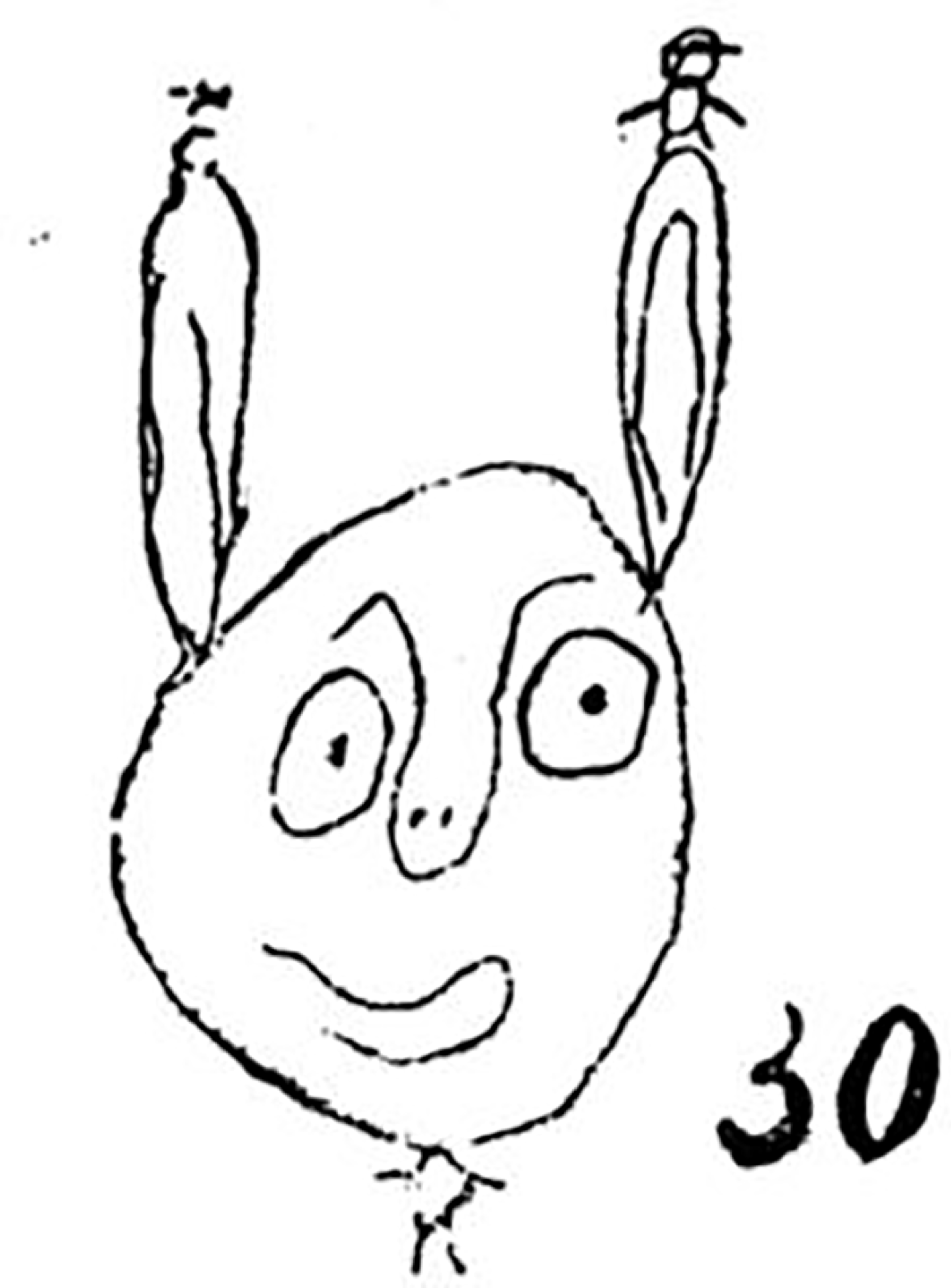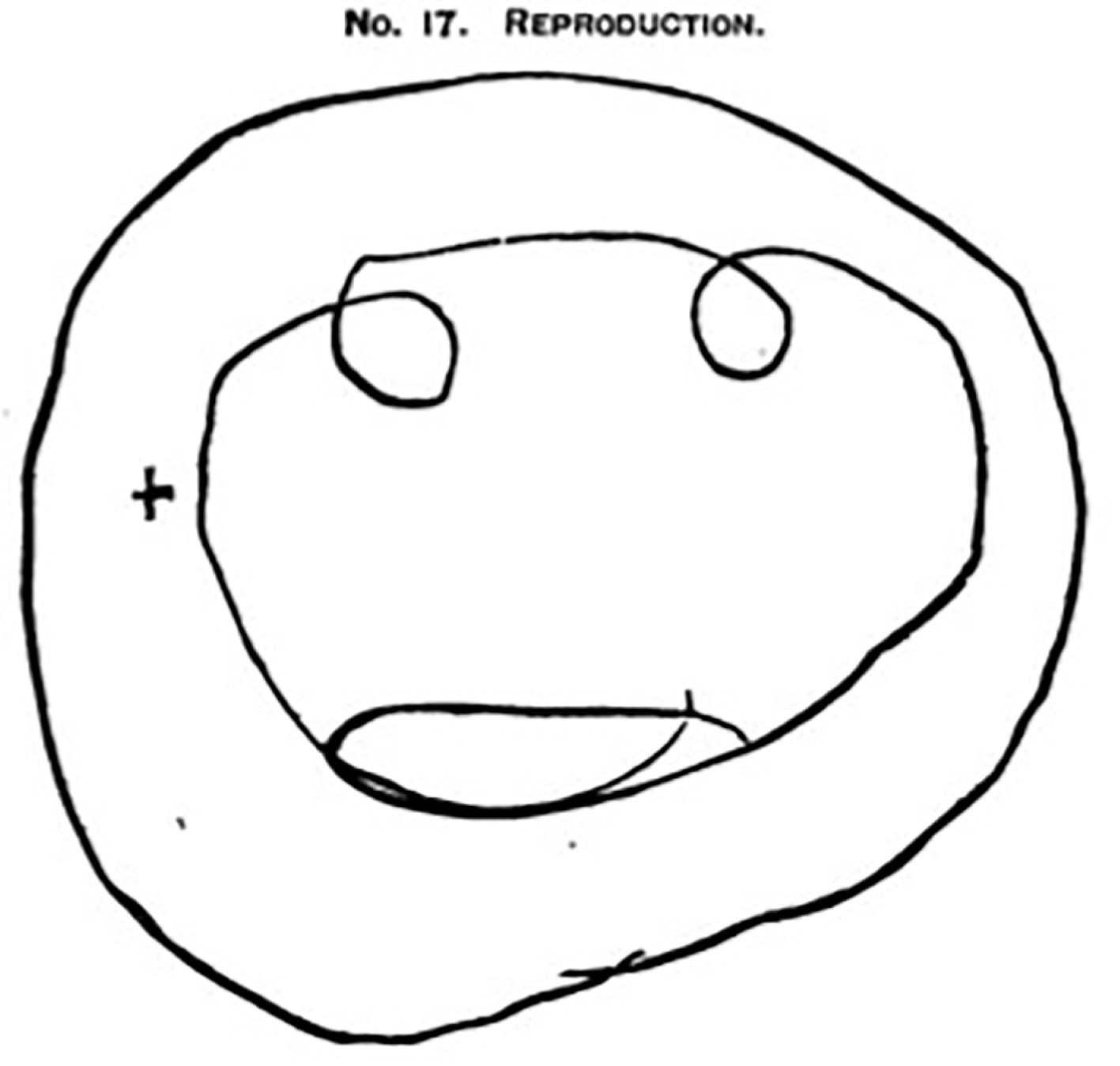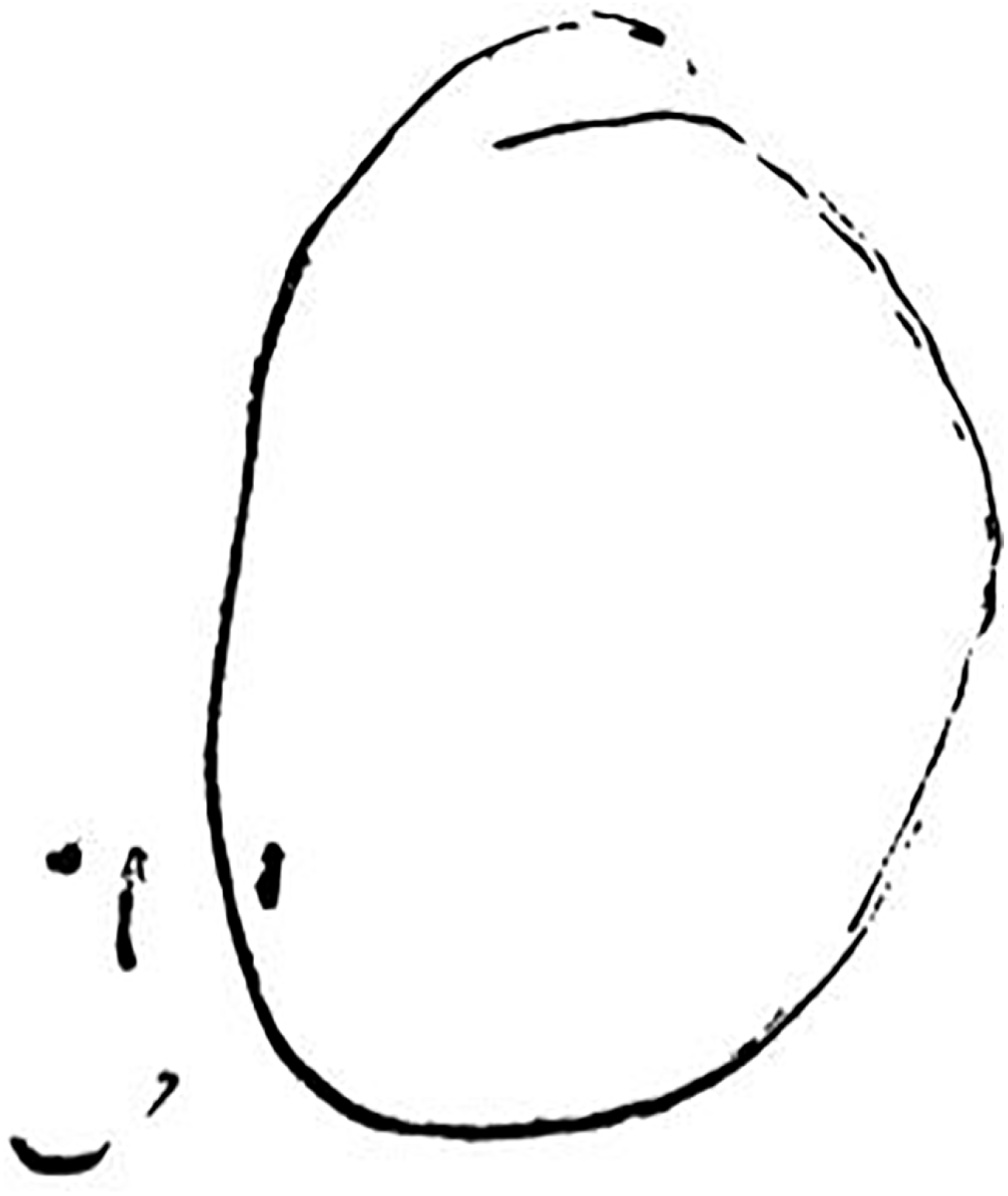


Does a child’s drawing ability correspond with his or her overall cognitive development? Is it possible to transmit a drawing from one mind to another outside of the recognised sensory channels? Does visualisation change in characteristic ways when an artist suffers from a neurological disorder? Figures 1, 2, and 3 held clues to each of these questions, respectively, and, for this reason, they appeared as evidence in very different scientific publications. Taken together, they raise a new question about how research in the mind sciences has dealt with the relationship between thinking, drawing and subjectivity. Researchers managed the complexity of this relationship in ways that asserted their ability to directly access the mind through the hand. Methodological conventions around drawing in the mind sciences developed from the convergence of practices that fall under this special issue’s purview – the apparatus of paper, pencil, hand and brain served as a ‘soul catcher’, fixing developmental, supernormal and pathological aspects of the self in a material form. This essay examines the epistemology of direct access through drawing as a phenomenon intertwined with methodological deployments of different types of drawing subject.Footnote 1
Drawing as a tool for the investigation of thought emerged simultaneously in multiple areas around the turn of the twentieth century, a period when the sciences of mind and brain were very much in flux.Footnote 2 Disciplinary boundaries between philosophy, psychology, neurology, pathology, and psychiatry were established, but still permeable, allowing for the proliferation of intermediate or marginal areas of investigation such as child study and psychical research.Footnote 3 At the same time, drawing as a practice of cognitive and manual discipline became integrated into primary and secondary education systems in the United States and Europe. This confluence allowed the application of similar methods to different subject groups, revealing the uses and limitations of drawing tasks for researchers.
In each of the cases presented here, researchers hoped to access the contents of the mind and observe its processes by asking subjects to draw; many of them believed that drawings could produce better evidence than linguistic modes of response, such as speech or writing.Footnote 4 By collecting and classifying drawings, they hoped to discover mental laws – both those governing entire populations and those at work in individual brains.Footnote 5 The child study movement, which spanned the last three decades of the nineteenth century, was relatively successful in normalising the large-scale collection and analysis of drawings for psychometric purposes: it led to widely applied developmental norms correlating drawing skills with intelligence and personality. The rhetoric of objectivity built into psychometric drawing tests made them useful in other areas of psychology in which controlling individual variability was crucial for establishing hypothesised categories of cognitive phenomena.
Psychical researchers from the 1880s to the 1940s attempted to demonstrate the telepathic communication of thought using drawing experiments, but ultimately failed to convince their counterparts in academic psychology that they had produced genuine evidence. The pervasiveness of fraud in psychical research highlighted the risks of interpreting drawing as an automatic record of mental function – it became clear that a complex human subject mediated the relationship between the brain and the hand.Footnote 6 Despite the tangle of subjectivity that stymied psychical research, mainstream psychology continued using drawings as evidence in special cases where their subjective content could be rhetorically minimised and controlled. This occurred, particularly, in the study of neurologically impaired patients, whose disorders became orderly when assessed through carefully designed drawing tasks.
The seemingly straightforward interaction in which a subject puts pencil to paper and an investigator interprets the resulting image has become a standard component of certain present-day clinical and therapeutic encounters. Historically, many scientists sought to keep drawings free from subjective psychological content and thereby preserve their integrity as objective evidence. Lorraine Daston and Peter Galison, in their landmark study of objectivity, characterise the vanguard sciences of the late nineteenth century as those which used mechanical and photographic methods for capturing ‘an image untainted by subjectivity’.Footnote 7 Scholars building on this argument have focused on scientific workers who made images of natural objects such as flowers, crystals and stars. Although, as in the case of Omar Nasim’s nebular researchers, some scientists carefully attended to their own perceptual idiosyncrasies, their process assumed a clear distinction between observational methods and the stable, if elusive, objects being observed.
Drawing of a face. Source: Lukens, ‘A Study of Children’s Drawings’, Pedagogical Seminary, 4, 1 (1896), 109.

Drawing of a face. Source: Edmund Gurney, et al., ‘Third Report of the Committee on Thought Transference’, Proceedings of the Society for Psychical Research, 1, 3 (1883), 205.
Drawing of a face. Source: Godwin-Austen, ‘A case of visual disorientation’, Journal of Neurology, Neurosurgery and Psychiatry, 28, 5 (1965), 456.
Psychology presents a special case in which the ‘personal equation’ was not an obstacle standing between object and observer but became, in itself, the object of inquiry, made visible through drawing. The drawings of psychological subjects were transformed into scientific images through a set of processes modelled on, but differing from, the artist- or instrument-produced images that dominate the literature on visual representation in the history of science.Footnote 8 The notions of mechanism associated with Wundtian psychophysics grounded drawings as psychological evidence alongside their uses in physics and astronomy, but researchers in psychology collapsed the distinction between the processes observed and the mechanisms of recording, creating a hybrid object-instrument for inscribing cognition.Footnote 9
Daston and Galison describe objectivity as ‘blind sight, seeing without inference, interpretation, or intelligence’, evoking the neurological sense of blindsight, a condition in which patients can respond to visual stimuli that they do not consciously perceive due to lesions of the primary visual cortex.Footnote 10 This double meaning illustrates precisely the promise of certain kinds of psychological subjects considered uniquely able to inscribe the mechanics of thought. A historical analysis of these subjects and the images they create raises a constitutive dilemma for psychology, that is, the question of how to relate the objective process of cognition to the subjective production of meaning.
1 Child Drawings
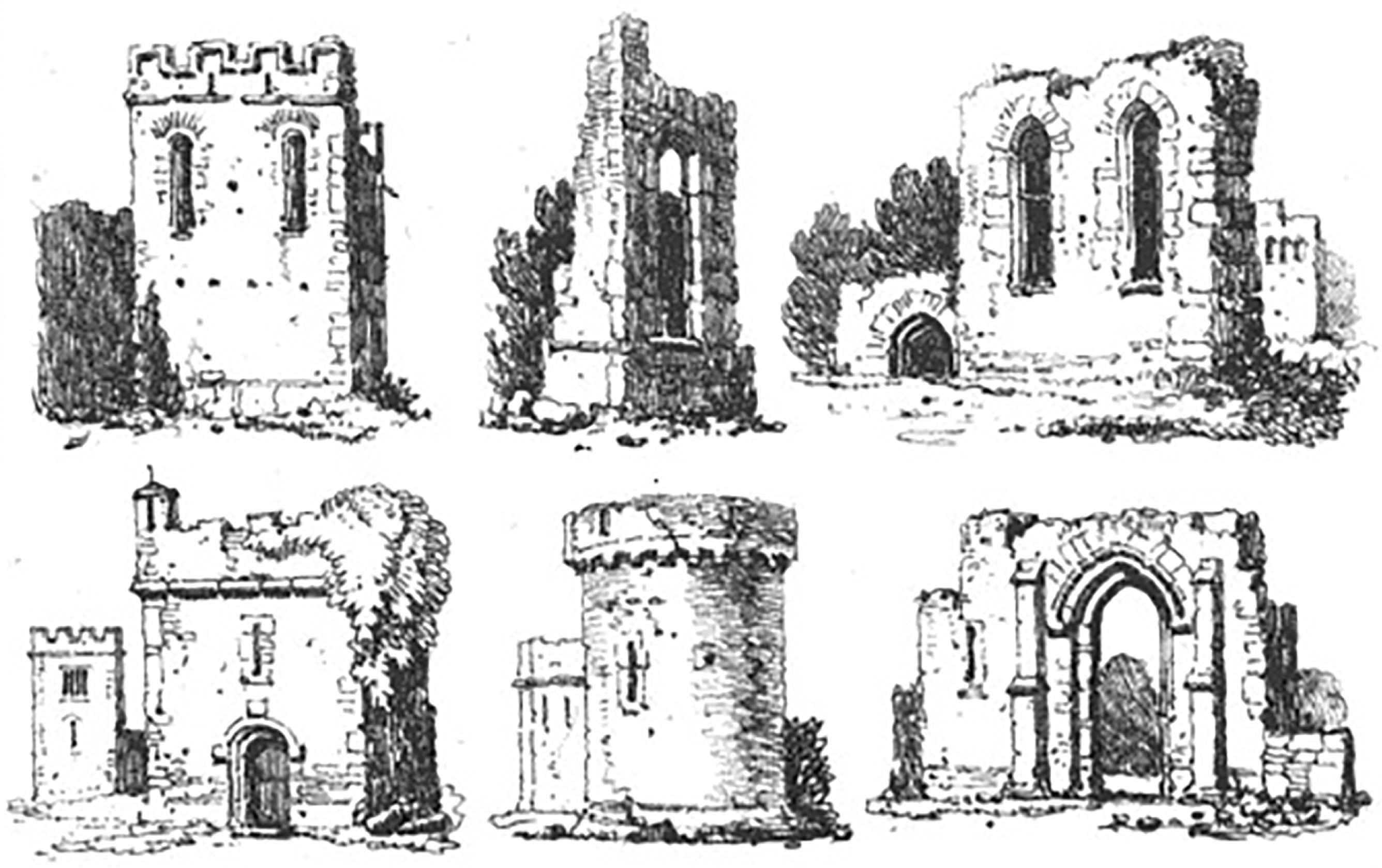
Drawings were collected and analysed as evidence for specific kinds of mental activity in the context of early child psychology, beginning in the 1870s. Researchers distinguished children’s image production from subjective artistic expression, establishing drawing as a material trace of universal patterns of cognitive development. Of course, scribbles, doodles and sketches populate the margins of countless documents belonging to everyone from eighteenth-century schoolboys to US presidents; in examining scientific uses of drawing, it becomes particularly important to underscore how the simple act of putting pen to paper is historically circumscribed.Footnote 11 Both in science and in art, changing norms of observation and representation have influenced the way that people draw. In early nineteenth-century Europe and America, representational drawing ability belonged to the set of socially valued skills cultivated in elite schools.Footnote 12 By the 1820s, a market for drawing instruction developed among the upwardly mobile middle classes, reflected in an explosion of popular how-to books such as Samuel Prout’s Easy Lessons in Landscape Drawing (figure 4). Drawing instruction was soon incorporated into the curricula of state-sponsored educational institutions, both for its salubrious influence on character and for its potential industrial applications.Footnote 13
Samuel Prout. Source: R. Ackermann, Easy Lessons in Landscape Drawing (London: R. Ackerman, 1820).
As a component of primary education, drawing had specialised instructors, textbooks and impassioned pedagogical debates.Footnote 14 Regardless of the strategies that instructors adopted, their efforts established representational drawing as an increasingly standardised visual language. In this vein, David Maclagan points out that drawings ‘are linked in different ways to conventional communicative modes’, reflecting the ‘established pictorial codes’ of a particular time and place.Footnote 15 However, Maclagan also notes that the unconscious reproduction of these codes was understood, starting in the late nineteenth century, as ‘a subliminal kind of pictorial lingua franca’ revealing the underlying essence of the human mind.Footnote 16 Indeed, it was precisely in this context – a society where most primary school students learned to evaluate the ‘correctness’ of outline, proportion and shading – that drawings could become a taken-for-granted indicator of cognitive development and mental soundness. Pioneers in the emerging field of child study turned the pedagogical goals of drawing instructors inside out by asking how the rules of visual language were acquired and what mental architectures they revealed.Footnote 17 They documented and classified the process of learning to draw as a proxy for learning to think, based on the proposition that images provided unique access to the developing mind.Footnote 18
G. Stanley Hall was, in large part, responsible for bringing quantitative, developmentally oriented child study to the United States from Germany, where the growth of state-sponsored education had produced a vigorous field of pedagogical research by the 1870s. In 1880, Hall asked hundreds of Boston school children to produce drawings of everyday objects as part of his ‘inventory of the child mind’. The ‘inventory’ was, quite literally, a laundry-list of things that children knew: animals, places and household objects. The list was generated through one-on-one interviews conducted by elementary school teachers using standardised response forms. Most of the prompts were verbal, but Hall expressed reservations about this methodology, acknowledging that children’s vocabulary did not necessarily correspond with their functional understanding.Footnote 19 He thus included drawing tasks in the inventory, claiming that ‘[d]rawings reveal the child’s psychic life in an extraordinary way and show its motor development [and] the directions of its interests ...’.Footnote 20 Hall’s main interest lay in amassing observations on a scale large enough to reveal generic patterns of the ‘child mind’.
Although Hall soon moved on from child study to other endeavours in the emerging constellation of the social sciences, his followers attempted to systematise his methods and build theories from the data they gathered. Pedagogical Seminary, the journal that Hall founded in 1891, regularly published analyses of children’s drawings, written by a growing class of psychologists and educators who had begun to specialise in this area. Among the more prolific was Herman T. Lukens, who served as an honorary fellow under Hall at Clark University from 1894 to 1895, and returned as a docent in pedagogy from 1899 to 1900.Footnote 21
Lukens collected 3400 drawings from children between two and sixteen years of age, publishing his findings in 1896. Such vast accumulations had become a trend in child study; some projects netted many thousands of drawings, and requested still more samples from the journal’s readers, with the promise that treasured artworks would be duplicated and returned.Footnote 22 The materiality and reproducibility of these drawings was crucial to their evidentiary status. Unlike other traces of the child mind that had to be abstracted from observed behaviour into tables and charts, drawings were printed directly in professional journals utilising a visual rhetoric of immediacy. Lukens presented series of drawings done by the same children over the course of many years to illustrate their linear development; the gradual ‘complete clarification of the mental image’ into a picture on the page.Footnote 23
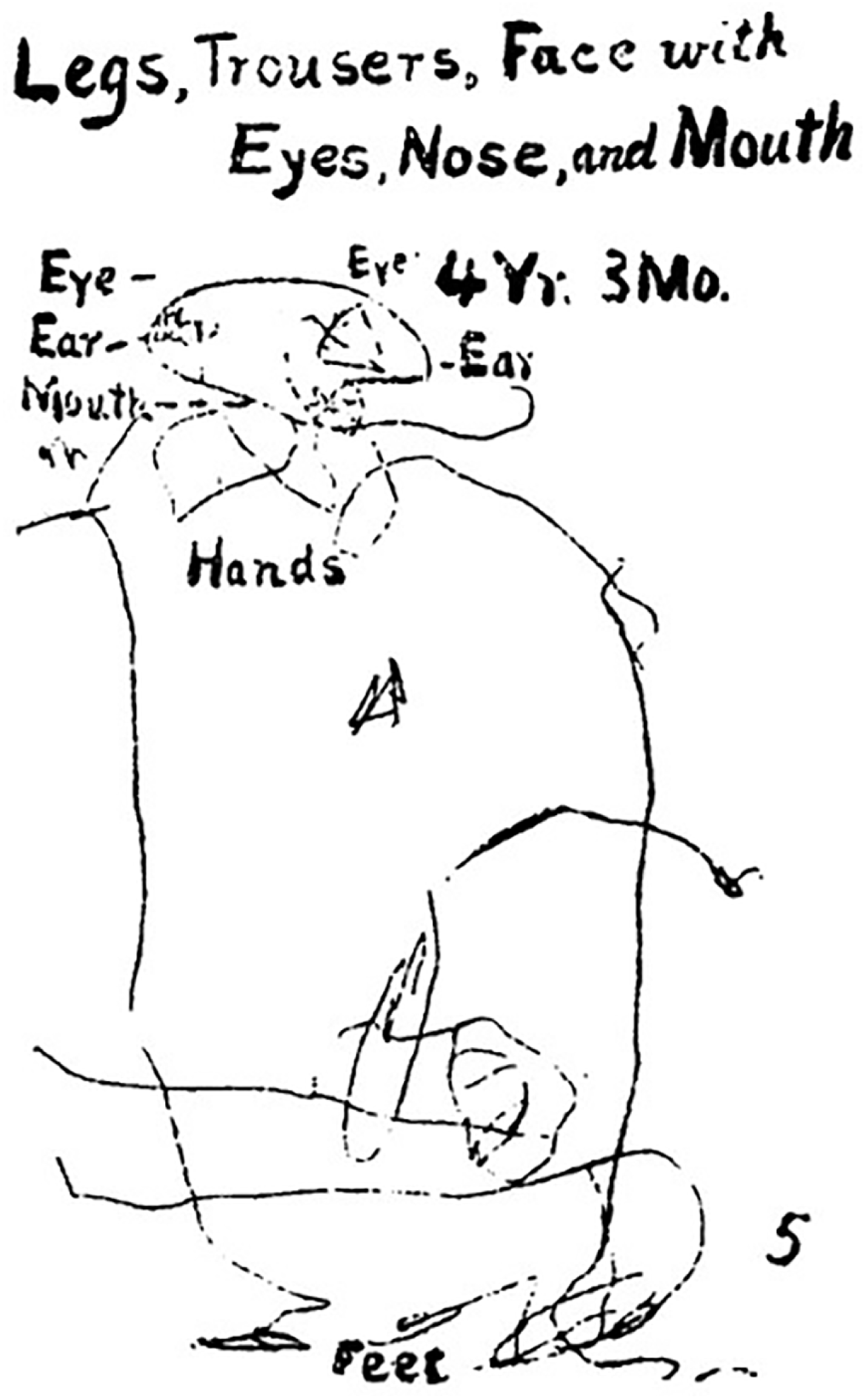
Drawing by Lillian L. at four years, three months old. Source: Lukens, ‘A Study of Children’s Drawings in the Early Years’, Pedagogical Seminary 4, 1 (1896) 102.
Because the children in Lukens’s study were so young, he saw their drawings as an unmediated glimpse into their mental architecture, ‘a subjective rather than an objective picture’ of the world as perceived and understood.Footnote 24 A certain level of expertise, however, was required to interpret these often jumbled glimpses. ‘The tangle of lines over the legs is not in any case to be interpreted as shading’, he asserted of the child’s drawing in figure 5.Footnote 25 Such an interpretation would violate the accepted developmental chronology, attributing faculties to the child that experts believed that he or she could not possess. His text framed the drawings with a narrative that included statements of his subjects about their drawing processes and their intentions: ‘The child drew one perpendicular line which she called a leg, then a parallel line which she called the other leg’.Footnote 26 He also provided reassurances about his control over the experimental setting. Although the collection of drawings did not take place in a psychological laboratory, and parents or teachers were often present, Lukens inserted narrative asides such as, ‘Her mother meanwhile looked on in silence, giving no suggestions’, asserting the impartiality of the arrangement.Footnote 27 When an adult intervened, Lukens was careful to justify the action and minimise its influence on the results. Barbara Wittmann has emphasised the drastic stripping away of context in early Italian and German studies of child art; later researchers, such as Lukens, recognised the need for some context, but maintained tight control over what information framed the material evidence.Footnote 28
Although Lukens spoke of children’s drawings as direct projections from their minds, motor development had an undeniable impact on the images. Lukens incorporated the relative manual dexterity of children at different ages into his assessment. This opened up the possibility that very young children were, in fact, visualising objects ‘correctly’, but lacked the capability to represent them. The drawings of Lillian L. at the age of two ‘show the utter lack of any apparent connection between a mental picture in consciousness and the movements made by the hand and fingers in attempting to draw it’.Footnote 29 Once Lillian L.’s drawing ability had improved to the point where she could capture contours, however, Lukens readily asserted a correspondence between the acuity of her mental imagery and the accuracy of her drawing: ‘It probably corresponds to a clarification of the mental image in the child’s mind by a gradually greater discrimination on her part between the motor elements and the strictly visual elements ...’.Footnote 30 This ‘clarification’ of the image by eliminating noise produced drawings of true scientific value. Thus, although young children were considered ideal subjects for research into the primitive mind, in practice, they were not so useful during their most primitive stages. The theories of child study experts presupposed a true hand that could accurately relay the mind’s messages. They focused on subjects within a particular developmental window who made optimal self-registering instruments.Footnote 31
Like Hall, Lukens used children’s drawings to argue for a recapitulation theory of human mental development: both saw ‘striking analogies in the pictorial evolution of man between the child and the race’.Footnote 32 Influenced by widespread scientific enthusiasm for Ernst Haeckel’s biogenetic law, they equated child art with the ‘simplistic’ images produced by primitive cultures, which progressed to the mastery of realism and linear perspective indicative of modern civilisation. Lukens, however, sought to nuance this ‘conventional and generic’ classification of children’s drawings. In his work, we see a turn away from Hall’s statistical abstractions and towards narrative interpretation. Although he would not go as far as Freud or later promoters of art therapy, Lukens swerved into a grey area between the survey style, which considered children’s affective states only in so far as they interfered with the registration of accurate responses, and the analytic style which saw drawings as manifestations of a non-verbalised subjectivity. ‘The little child draws from his own consciousness and thus puts his own consciousness into the picture’, Lukens claimed, meaning that the drawing could not be a pure scientific object in the way that some recapitulationists had supposed.Footnote 33 Although he considered child art analogous to ‘the pictographic stage in the race development [that] has preceded and led up to the alphabetic stage’, it also usefully encoded the particulars of a child’s experiences, likes and dislikes.Footnote 34 It was, paradoxically, a more objective modality than speech for getting at the unique thinking of each child, since ‘words are often repeated meaninglessly’, while drawings are pure ‘form synonyms for thoughts’.Footnote 35 Again, Lukens asserted that the mind–hand relay of the ideal drawing child was free from interference by contextual factors beyond those that he identified as relevant to the investigation of children’s interiority.
While child study gave way to laboratory-centred developmental psychology in the early twentieth century, the use of drawings to assess children’s cognitive ability was formalised in much the way that Hall had envisioned. Within the first decade after 1900, drawing tasks as a measure of development had become standard, with systems proposed by Frederic L. Burke, James Mark Baldwin, James Sully, William Stern and many others.Footnote 36 In 1926, the psychologist Florence Goodenough introduced the ‘draw-a-man’ test, establishing a widely adopted rubric for correlating children’s drawings with their intelligence as measured by the Stanford-Binet intelligence scale.Footnote 37 Also in the 1920s, Jean Piaget developed his influential four-stage theory of artistic development in children, which posited a progression from ‘drawing what is known’ to ‘visual realism’.Footnote 38 Recapitulation fell away as an explicit foundation for these rubrics, although informal comparisons between children, ‘primitive’ races and even primates and animals persisted.Footnote 39 Instead, the post-World War I professionalisation of American psychology led to a narrowing of scope from the domain of cognitive process to that of ‘cognitive performance and ability’.Footnote 40 Psychometric tests with industrial and military applications proliferated, often employing drawing tasks that extended child study techniques for circumscribing subjectivity to adult test takers.Footnote 41 The manual nature of these tests, the inscriptions they produced and the systems of evaluation that psychologists developed helped to naturalise a set of cultural assumptions about correct ways of drawing, making them a proxy for healthy ways of thinking.
Of course, the possibility of individualised meaning and interpretation was not excluded from all areas of psychology that employed drawing as a technique. Many practitioners understood patient art as a pathway to the otherwise inaccessible interior of troubled psyches.Footnote 42 Patient art figured prominently in the case studies of Freud, Jung and followers of psychodynamic psychology. This analytical approach to drawing filtered into American popular culture as the ‘cult of the doodle’ that arose in the 1920s and 1930s, wherein armchair analysts collected the doodles of the rich and famous and subjected them to psychobiographical interpretation.Footnote 43 Whether Freudian or popular, this interpretive school linked drawings to individual subjects and specific sociocultural settings. Practitioners still, however, assumed that the relay between mind and hand bypassed the subject’s conscious mediation – a mechanism that allowed subliminal desires to be manifested in the idle margin scrawls of patients, presidents and movie stars. This was the same assumption that allowed drawing to serve child study so well. It became embedded in the technique, even when that technique served differing ends.
This gives us one history of the emergence of drawing as a material research practice around the turn of the twentieth century. Child study understood drawing as revealing the workings of the mind on a stratum both evolutionarily and developmentally prior to that of language. Its seeming ‘primitiveness’ helped it stand as objective evidence within a recapitulationist framework, obscuring the larger cultural context of art education and the specific context of individual subjects. Hall’s concept of the child mind was a taxonomic one, and thus drawings were taken as quasi-archaeological artefacts that captured normalised developmental stages.Footnote 44 Such a concept lent itself to application on a mass scale, as the evaluation of images was based on formal criteria – correspondence with the conventions of representational drawing – rather than on subjective content. The position of psychology in the early twentieth century was such that practical applications in psychometry and intelligence testing were highly valued as routes to professional legitimacy and funding.Footnote 45
On the other hand, Lukens and those who leaned towards interpretation believed that ‘children’s drawings give us one of the surest ways with which to reach the contents of their minds’; the meaning of images lay in the subjectivity of their makers.Footnote 46 This inclination to interpret rather than evaluate, and to read drawings as expressions of complex subjectivity, saw its realisation in Freud’s Wolf Man drawings, the art therapy of Margaret Naumburg and Melanie Klein’s child psychoanalysis in which drawing served as a ‘paper tool’.Footnote 47 Although psychoanalysis approached the mind from a very different perspective to psychometry, both envisioned the drawing child as a circuit through which the mind’s contents flowed relatively unencumbered, an assumption facilitated by the earlier work of child study.
By the early decades of the twentieth century, a variety of practitioners embraced the notion that drawings reveal hidden information about the mind, but disagreed as to whether that information pertained to the mind’s contents or its function. The second and third cases presented here follow the functional strain of this divergence, showing how the exclusion of subjective content became especially important for researchers making new and controversial knowledge claims in psychology.
At the same time as child study took up drawings as psychological data, they became central to another fledgling field devoted to the investigation of the human mind. This field, psychical research, developed a different experimental methodology around the same techniques of pencil and paper. Like child study, it transformed its subjects into scientific object-instruments. Like the practitioners of child study, psychical researchers reproduced drawings as material proof of an elusive type of mental activity, in this case, telepathic communication.
2 Telepathic Drawings
Just as drawings could reveal a developmental resonance between the mind of an individual and the collective mind of a race, they could also demonstrate psychic resonance between two minds. Psychical researchers who studied telepathic phenomena employed drawings as evidence, portraying them as ‘thought-pictures’ that manifested, in objective material form, the otherwise-concealed mental processes of mediums. Even critics aiming to debunk telepathy used drawing to prove alternate explanations of the phenomenon; they argued for the prevalence of certain images in an unconscious ‘community of thought’, the contours of which they empirically determined by collecting drawings from the population.Footnote 48
Child study emerged concurrently with the first major surge of interest in psychical research, and thus, my comparison is not meant to suggest a chronological relationship in which drawing tests were passed from one to the other. Both fields sought to establish drawing as a straightforward instrument that accessed and recorded the contents of the mind. Both understood drawings as material evidence of thought processes. And both attempted to exclude the individualised, subjective meaning of images from their analyses by placing particular kinds of subjects into controlled experimental settings.
I position child study first in this essay because of its direct connection to the mid-nineteenth-century theories of pedagogy that established drawing as a universal human faculty with objective standards. Mandatory art instruction established drawing as a ‘conventional communicative mode’ shared by scientists, subjects and the public at large.Footnote 49 A professionalisation story would proceed from psychical research on the margins of science to more respectable child study, and thence to scientific neuropsychiatry. I have attempted to tell a story not about professionalisation, per se, but about changing attitudes towards subjects and subjectivity. Starting with child study sets the stage for a process of circumscription that did not proceed linearly or uniformly across the discipline. Further, this process generated popular offshoots that held intense interest for the public and continually smuggled subjectivity back into the psychological interpretation of drawings. This was very much the case with psychical research and its successors.
Interest in mind reading and thought transference surged in Anglo-American culture of the 1870s, in an environment suffused with spiritualist séances, mesmeric stage performances and other supernormal manifestations.Footnote 50 The public was caught up in the ‘fascination of the unusual’ to the great concern of sceptical scientists, who were often called upon to expose the tricks of psychic charlatans.Footnote 51 Historians assign this occult revival a dual meaning: it reflected an anti-materialist backlash against secular science, which threatened cherished beliefs about the immortality of the soul. At the same time, it proclaimed the progress of science in conquering the realm of the invisible.Footnote 52
The many proposed naturalistic explanations for telepathy worked by analogy to the transmission of light, magnetism and electricity. If those intangibles could be measured and quantified with the new instruments of physics, it seemed plausible that human thought, too, might have its own yet-to-be-discovered wavelength and might travel from mind to mind like a telegraph message.Footnote 53 In an age when communication technology had broken down the barriers of time and distance, and scientists were working towards the wireless telegraph and radio, such expectations were hardly far fetched. Indeed, the psychical researcher and outspoken spiritualist Oliver Lodge performed what many claim was the first public demonstration of wireless telegraphy at a meeting of the British Association for the Advancement of Science in 1894, proving that ideas, in the form of electrical impulses, could leap through space.Footnote 54
Psychical researchers hoped to determine whether ‘impressions from the minds of those about us [can reach] our own minds by channels distinct from those of the senses’.Footnote 55 This was the widely adopted working definition of the phenomenon alternately named thought transference or telepathy.Footnote 56 Although they saw their project as empirical, researchers faced the challenge of studying people who claimed that their powers of mediumship or clairvoyance appeared only under very particular conditions. Peter Lamont has pointed out that psychic practitioners and sceptical inquirers almost never agreed on the evidential criteria for psychic phenomena; their disagreements, however, were quite nuanced, as both claimed to be working in an empirical, evidence-driven paradigm. The production of evidence in settings that blended the scientific, social and performative made for minute wrangling over the limits of observation and self-report.Footnote 57
Practices surrounding mediumistic performance profoundly shaped the approach of psychical investigators. Both public mediums, who received payment for stage shows, and private mediums, who demonstrated in parlours and sitting rooms for small circles of invited guests, combined popular spiritualism in the form of channelling and automatic writing with parlour games such as guessing cards or locating hidden objects. Participants were expected to play the role of ‘impartial’ scientific observers, but they shared a social context that made certain behaviours unacceptable.Footnote 58 For instance, spiritualist publications criticised Harvard psychologist Hugo Münsterberg for an incident in which he took credit for grabbing the foot of the medium Eusapia Palladino to catch her cheating.Footnote 59 Palladino’s supporters argued that such breeches of conduct endangered the medium, who was already in a fragile mental state from her exertions.Footnote 60 Psychical researchers regularly exposed performers’ tricks, but they did so within a set of practices that positioned the medium as a particular kind of subject at the mercy of forces, whether spiritual or physiological, that he or she did not control.Footnote 61 Researchers attempted to use drawing, a technology of direct inscription, to bypass the epistemological tensions that marked their relationships with their subjects.Footnote 62
Such investigations first took an institutional form in 1882 with the founding of the British Society for Psychical Research (SPR) by physicist, inventor and professed spiritualist William Fletcher Barrett. The SPR placed mediums and sensitives under experimental conditions aiming to disentangle fraud from genuine phenomena. One of their foundational experiments involved the Brighton duo of George Albert Smith and Douglas Blackburn, whose successful transmission of images became a pillar of the SPR’s argument in favour of telepathy. Smith and Blackburn were adult men who performed on stage for profit. This made them less trustworthy and less ‘automatic’ than women, children or ‘private’ mediums, from whom verbal testimony might suffice. The SPR needed a more rigorous method to pre-empt deception, and they settled on drawing.
In August 1882, Blackburn, a local newspaper editor, wrote to the Spiritualist periodical Light, claiming that George Albert Smith could read his thoughts ‘with an accuracy that approaches the miraculous’.Footnote 63 Smith, only eighteen years old at the time, had recently begun performing as a medium in Brighton. He and Blackburn colluded to promote his act, with Blackburn serving as a confederate onstage at the same time as he published glowing reviews in his paper.Footnote 64 Their ambitions extended beyond Brighton’s tourist economy, however. Blackburn would later claim that, as a service to science and to the public, he and Smith decided to reveal ‘how easy a matter it was to ‘take in ‘scientific observers’ and ‘credulous spiritualists’.Footnote 65
The SPR’s Committee on Thought-Transference, led by Barrett, Edmund Gurney and Frederic Myers, responded to Blackburn’s letter with interest. Myers and Gurney were Cambridge educated and independently wealthy; they turned their philosophical and scientific training to establishing psychical research as an area of inquiry. During the autumn of 1882, the three committee members conducted a series of tests to verify Smith’s powers. They began with the bread-and-butter demonstrations of thought reading: guessing of numbers, names and colours chosen by the experimenters, shown to Blackburn and transmitted from Blackburn to Smith. These transmissions occurred, the SPR promised, with ‘no sound or movement of the lips of any one’; Smith and Blackburn were, however, allowed to hold hands.Footnote 66 When the two men were placed in separate rooms their run of successes came to an abrupt halt, and Blackburn complained of neuralgia caused by the strain of concentration.Footnote 67 Gurney and his colleagues allowed them to resume contact, and they produced more successful thought transferences.
Although the SPR investigators appreciated that hand-holding could be a means of sending a coded message, their subjects asserted that it was also the channel through which their extra-sensory thought transference worked. In the interest of fairness, the investigators decided to alter the content transmitted, rather than altering the experimental set-up, to exclude the possibility of coded communication. Gurney framed this methodological development with the question, ‘How far do impressions of drawings or geometrical figures, inexpressible in descriptive words, admit of being transferred?’Footnote 68 The activity of drawing would become an instrument for fraud-proof thought transference in the eyes of the SPR.
On the second day of experiments, Gurney, Myers and Barrett ‘drew some image at random, the figure being of such a character that its shape could not easily be conveyed in words ... in order to meet the assumption that some code – such as the Morse alphabet – was used by S. and B’.Footnote 69 They showed this image to Blackburn, Blackburn grasped Smith’s hands and Smith sat down and reproduced the image on paper, sometimes while wearing a blindfold. Smith’s drawings, ‘about as like the original as a child’s blindfold drawing of a pig is like a pig’, were nonetheless ‘recognisable as intended to represent the original figure’.Footnote 70 This comparison with the rough, unpolished appearance of child art supported the SPR’s assertion of naiveté on the part of the medium. As with child study, an objective concept was discernible through the garbled communication medium of the ‘scrawl’. As with child study, close attention to the signal’s distortion could reveal the path it travelled through the mental apparatus.
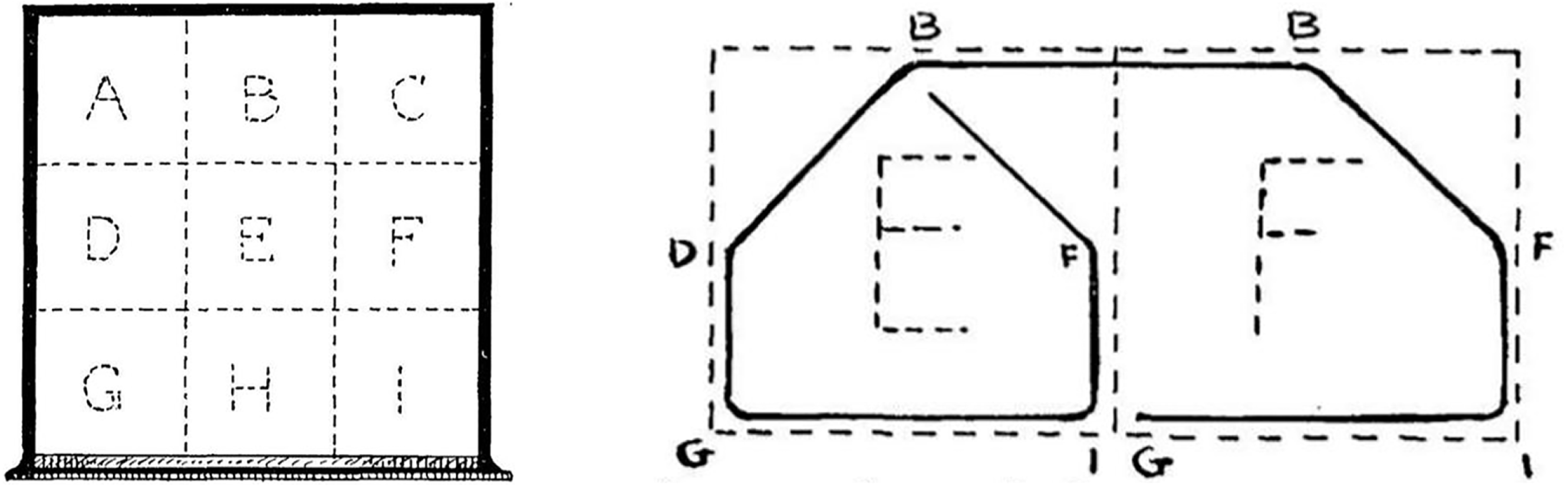
(a) The Committee’s drawing; and (b) Smith’s reproduction. Source: The ‘ (Third Report of the Committee on Thought-Transference’. Proceedings of the Society for Psychical Research, 1 (1883), 213.
The SPR took Smith’s drawings as authoritative evidence of direct communication between minds, asserting that ‘the burden of explaining these results rests upon those who deny the possibility of thought-transference’.Footnote 71 They made a point of reproducing the drawings in their journal, the Proceedings of the Society for Psychical Research, with the assurance that ‘the whole series of figures (nine in number) are given in the accompanying plates, which are engraved from photographic reproductions, on the wood blocks, of the original drawings’ (emphasis original).Footnote 72 The technology of photographic wood-block engraving guaranteed that no foul play had intervened; the direct, unmediated proof was plainly visible, and circulated in the persuasive form of a scientific journal.Footnote 73
Wood-block engraving, the illustration technique that generated the vast quantity of images demanded by nineteenth-century mass print, had transformed in the second half of the century from an interpretive art to a facsimile process. An engraver in the 1840s would have drawn or traced a copy of Smith’s figures onto the block, potentially smoothing over the rough, unsteady lines to distil a more ‘correct’ representational image. By 1882, Smith’s figures could be photographed, the film printed directly onto a wood block and this photographic block carved by a technician trained in mechanical exactitude. Engraving became ‘harnessed to photographic technologies’ whose rhetoric of verisimilitude made it possible for thousands of people all over the world to examine the same piece of evidence.Footnote 74 Photo-engraving enabled the reproduction of specific images from individual research subjects like Smith: it preserved the errors and idiosyncrasies that constituted the actual proof of Smith’s telepathic power. As engravings went from idealised representations to exact, unmediated copies, readers could use figures in scientific journals such as the SPR’s Proceedings and Hall’s Pedagogical Seminary in a new way.
Gurney, Myers and Barrett described the act of telepathic drawing with terms like ‘deliberate’ and ‘continuous’ that suggested the automatic nature of the medium’s activity; Smith worked ‘as if copying a drawing that is seen’.Footnote 75 The resulting artefacts could be used to reconstruct the process that produced them. This method was attractive because the standardised objects – cards, colours, numbers – that more statistically inclined psychical investigators hoped to employ for scientific data collection offered little insight into the cause or nature of thought transference. Were thoughts transmitted in the form of words, images or as pure concepts (what William Barrett termed ‘ideoscopy’)?Footnote 76 Smith’s success in reproducing drawings inspired the SPR to move forward with these interesting questions of how and why, using visual specimens to make their arguments to colleagues and readers.
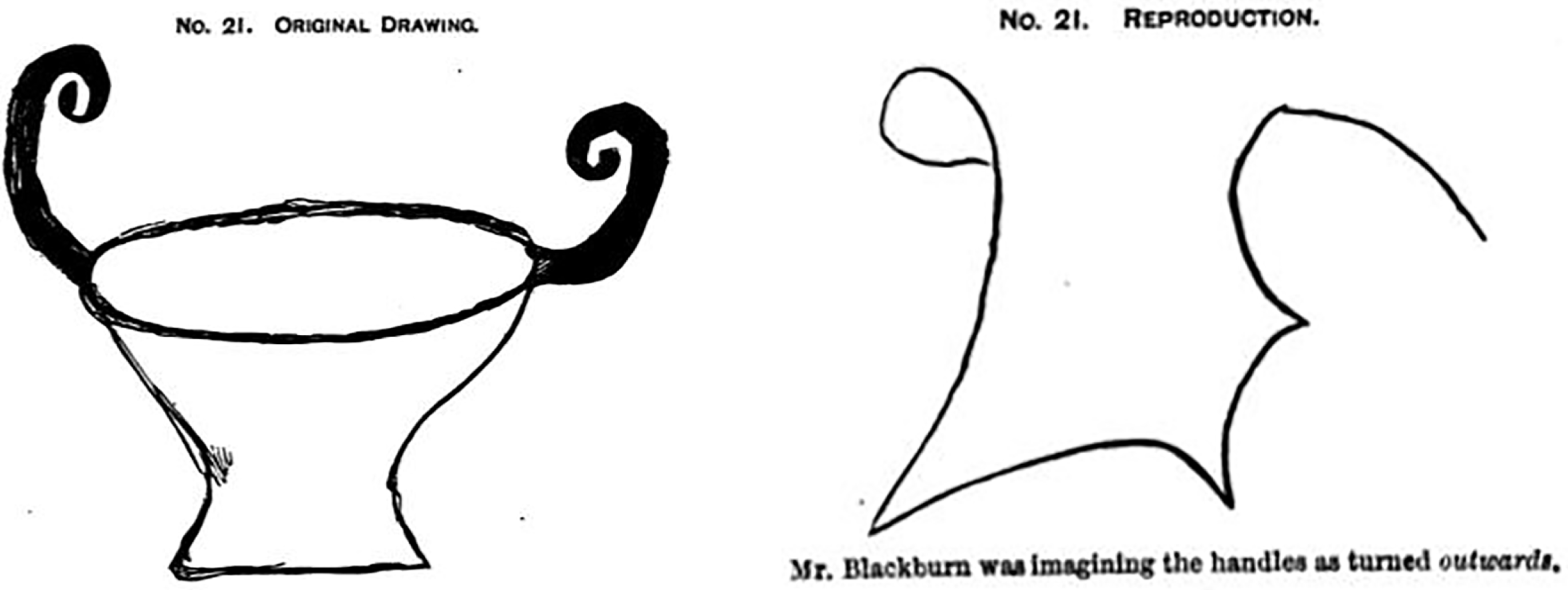
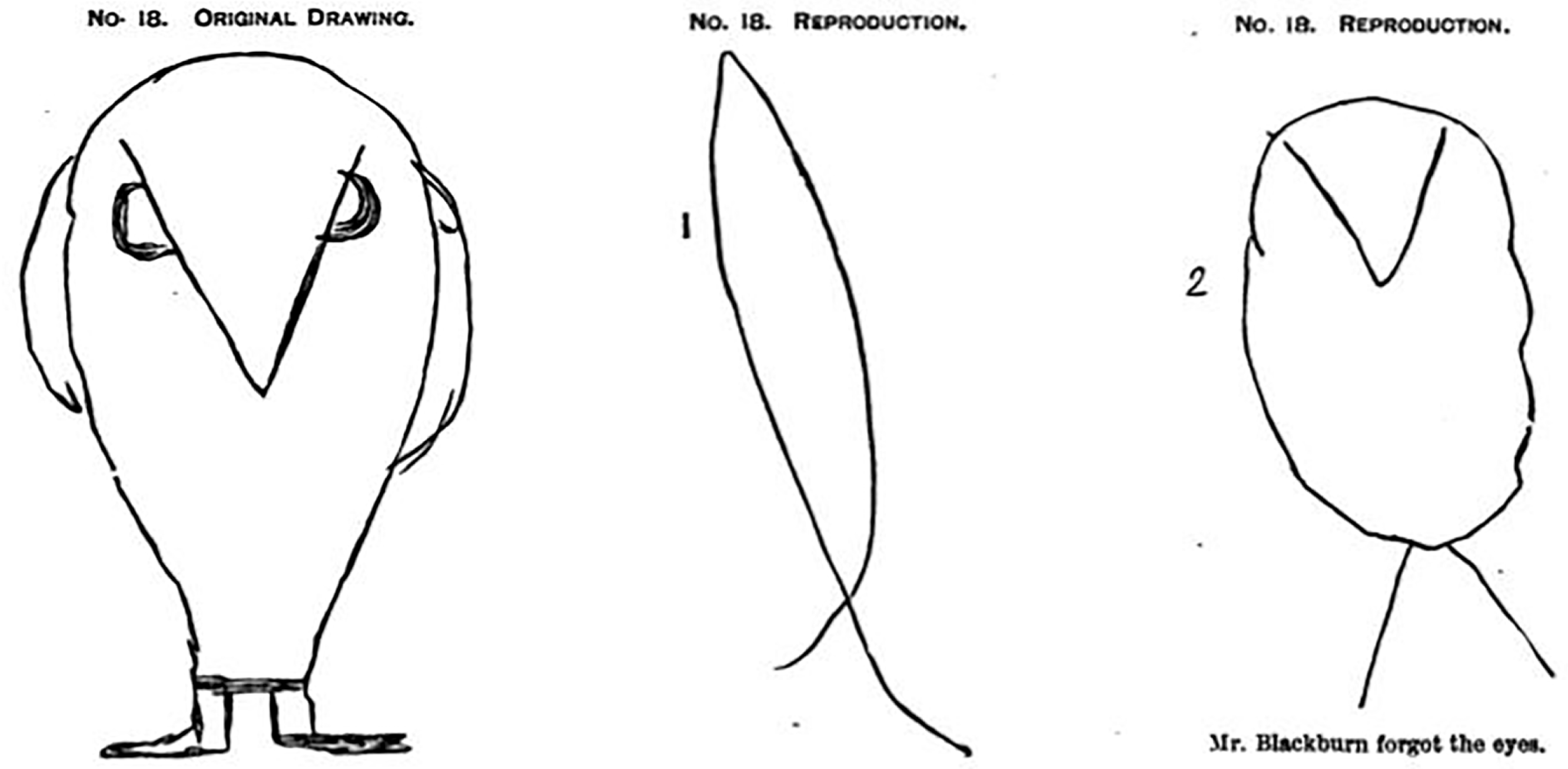
(a) The original drawing shown to Blackburn; (b) Smith’s first attempt at reproducing the drawing; and (c) Smith’s second attempt at reproducing the drawing, after Blackburn looked at the original again (Source: The ‘Third Report of the Committee on Thought-Transference’. Proceedings of the Society for Psychical Research, 1 (1883), 207).
To study the ‘how’ of thought transference, the SPR would have to disentangle perception from cognition and determine whether thought travelled as image or idea. After an apparently unsuccessful thirteenth trial, the SPR investigators asked Blackburn, the agent, to reproduce the original image that he had just seen and communicated telepathically to Smith (figure 7(a). Blackburn’s reproduction revealed that he had misremembered the original image, and communicated that incorrect image to Smith (figure 7(b). For the previous two decades, physiologists had debated whether visual perception was more dependent on processes within the eye or on ‘unconscious inferences’ at higher levels of the brain.Footnote 77 Psychical researchers saw an opportunity to weigh in on this question by accessing the mind as it pivoted between perception and cogitation. ‘The main errors of Mr Smith’s drawings existed already in Mr Blackburn’s recollection of the drawing’, they reported, demonstrating that Smith received the inaccurate image from Blackburn’s flawed memory rather than as a purely visual sense impression.Footnote 78 When the investigators showed Blackburn the image again, and allowed Smith to redraw it (after grasping Blackburn’s hand), they attributed the improvement in Smith’s accuracy to Blackburn’s improved memory (figure 7(c).Footnote 79
These very specific uses of drawing accessed the workings of two minds – that of the agent, Blackburn, and the percipient, Smith – as they supposedly communicated a visual image. The SPR’s Gurney, Myers and Barrett weighed the possibility of fraud and ruled it prohibitively difficult due to the ‘inexpressible’ nature of the images. They challenged sceptics to explain Smith’s feat by subterfuge. ‘Let our readers, who may be familiar with the Morse or other code of signals, try in some such way to convey a description of one of our drawings, to a friend who is blindfolded and has not seen the original.’Footnote 80 Drawing was such a useful instrument for the SPR because it seemed to capture the irreducible nature of thought in a material form that could be scrutinised for evidence of mental processes.
Descriptions of the Smith and Blackburn experiments arrived in the United States in the winter of 1882–3. American subscribers to the SPR’s Proceedings, including William James, G. Stanley Hall, George S. Fullerton of the University of Pennsylvania and Henry P. Bowditch of Harvard Medical School, would have seen the report, and it received favourable notice in the scientific press as an ‘elaborate report on “Thought Transference,” or mind-reading’ which ‘eliminate[d] every possible element of charlatanism’.Footnote 81 By the following year, with William James leading the charge for an autonomous American version of the SPR, the prospective leaders of this group began critically re-evaluating the British society’s findings.Footnote 82
Although the American society represented itself as a sceptical counterweight to the spiritualist leanings of the British, their reviews of the Smith and Blackburn report embraced the use of drawing as an experimental methodology. In the published text of his first presidential address to the American Society for Psychical Research (ASPR), circulated in the Proceedings of July, 1886, Simon Newcomb focused his critique on the SPR’s inconsistent procedures.Footnote 83 In the experiments with Smith and Blackburn, Smith was sometimes blindfolded, sometimes not; sometimes Smith and Blackburn spoke to each other, sometimes silence was enforced. Conditions changed constantly as the experimenters thought of new scenarios they wanted to test. Whereas Gurney, Myers and Barret asserted that ‘our experiments derive much strength and coherence from their very multitude and variety’, Newcomb regarded these conditions as unacceptably haphazard: without rigid controls, ‘we have no right to attribute the result to one cause [ie., telepathy] rather than another’.Footnote 84 This tension between the rigid planning and record keeping of the laboratory and the curiosity-driven exploration of the gentleman or amateur investigator would characterise the ASPR’s relationships with many of its own constituents, as well as with its British counterpart.
The actual drawings that Smith produced represented the most stable, scientifically valid element of the entire undertaking in Newcomb’s assessment. Even in less-than-ideal conditions, ‘these copies of drawings have a great advantage over verbal descriptions’, Newcomb noted, ‘in that the record can be made the subject of future study’.Footnote 85 The permanent, reproducible nature of images was an antidote to the anecdotal style that Newcomb and his colleagues found most galling in the SPR’s work. Interestingly, Newcomb’s published endorsement of the Smith drawings represented a change of course from the more suspicious note that he sounded in his actual presidential speech, on 12 January 1886. In the speech itself, he deemed Smith’s drawings fraudulent.Footnote 86 What changed his mind was a new set of sketches that he exchanged with William James in the months after his speech, through which James demonstrated the possibility of non-supernatural blindfolded draughtsmanship. ‘Your drawings seem to show that ... the [Smith] drawings in question were at least possible’, Newcomb wrote to James on 16 February.Footnote 87 Their correspondence reveals the extent to which the practice and material product of drawing served as a persuasive tool for leaders of the ASPR. While Newcomb doubted the circumstances of the British society’s procedure, a trustworthy colleague such as William James could produce corroborating evidence from his own hand. Thanks to an efficient postal service and the portable nature of drawings, Newcomb could then inspect the evidence first hand. Their disagreement was resolved through the mail over the course of a mere ten days, and Newcomb edited the text of his speech to reflect his confidence in drawings as evidence.
The ASPR further endorsed drawing as a methodology in 1885, urging its members to attempt ‘the experiments which have attracted so much attention from the English society’.Footnote 88 This represented an exciting expansion of their research program beyond the repetitive experiments requested in the society’s previous circulars, such as the guessing of numbers, colours and cards. The society acknowledged the heightened appeal of personalised and infinitely variable drawing tasks: ‘as the experiment of free-drawing may prove more interesting to some persons, it is hoped that more elaborate figures may be tried, and the results forwarded’.Footnote 89
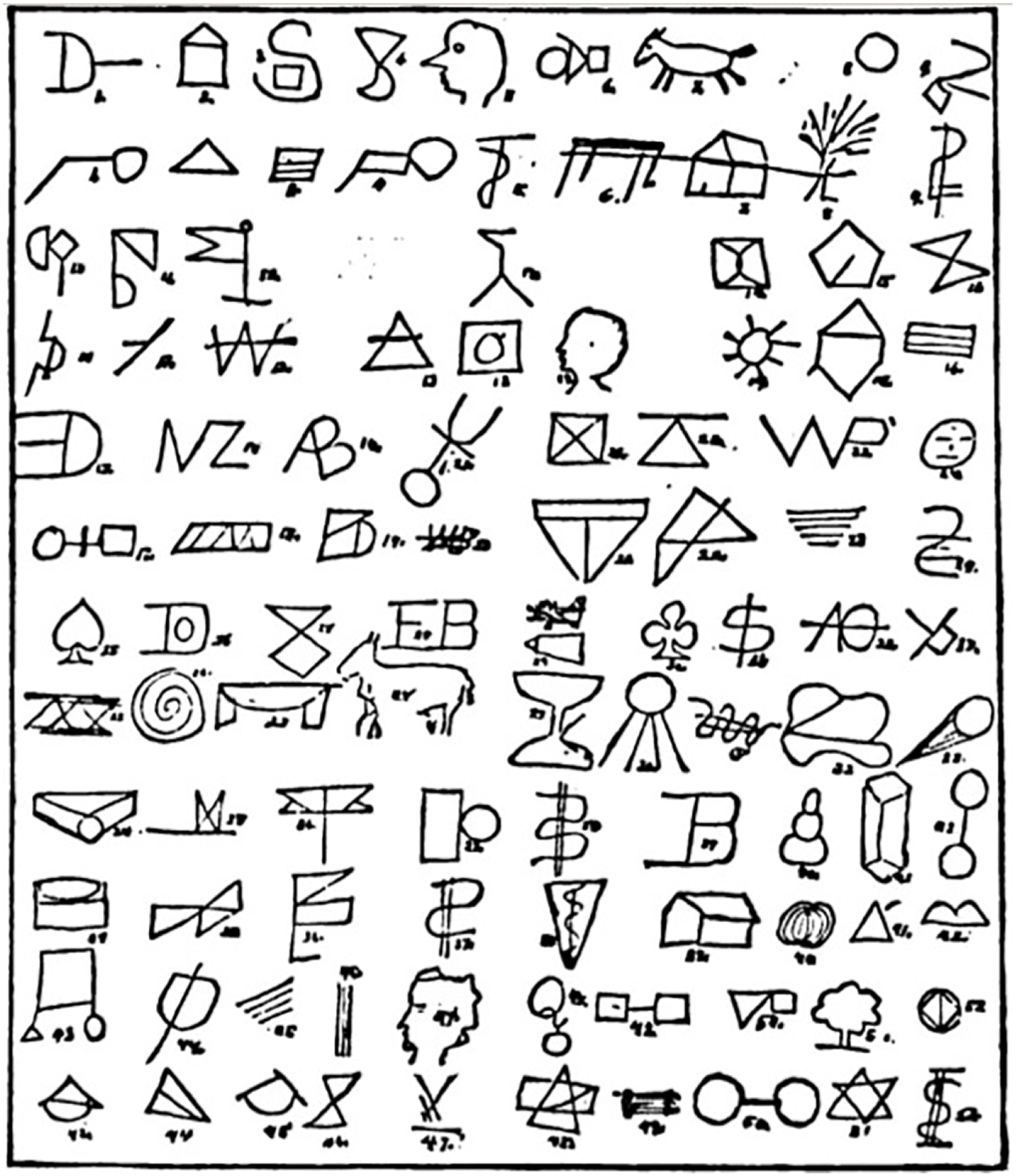
Illustration from ‘Thought-transference by Means of Pictures’. Source: Proceedings of the American Society for Psychical Research, 1 (1885), 44.
William Henry Pickering, a Harvard astronomer and founding member of the ASPR, published the results of such an experiment as a model accompanying this call for participation. Pickering’s drawings were made ‘on one or two evenings’ as an amusement among friends, with a female acquaintance acting as ‘the sensitive, so called’.Footnote 90 Like most psychical experiments, these were a parlour activity, but one with greater entertainment value and greater power as evidence than the mundane and easily fudged guessing tasks.Footnote 91 The graphic summary of Pickering’s experiment is particularly striking: all fifty-two pairs of drawings were reduced to thumbnail size and condensed into one page. This public presentation of a complete run of experiments asserted the scientific transparency of the ASPR in contradistinction to the SPR, which mainly printed examples of its successful results. The miniature images conserved valuable pages, but also conveyed the impression of a complete formal taxonomy rather than an informal parlour game. An aggregate view de-emphasised the idiosyncrasies of subject and circumstance that the SPR used to justify the failures and fine tuning of their procedures. Such serial presentation had become an important tool of visual rhetoric for nineteenth-century sciences ranging from physics to embryology, including Pickering’s discipline of astronomy, where debate over the ‘nebular hypothesis’ in the 1830s had centred around the arrangement of successively brighter nebulae into an order that suggested temporal progression from diffuse clouds of matter to stars.Footnote 92 Pickering’s grid of images, lacking any apparent order or progression, subtly asserted the absence of theory-driven manipulation and modelled the randomness necessary to ensure impartial psychical experimentation.
Drawings and diagrams featured regularly in the first year of the ASPR’s Proceedings, but, for sceptics within the organisation, this visual evidence soon lost the lustre of the early Smith and Blackburn successes – or rather, it was appropriated by a different camp within psychical research as proof against, rather than for, the reality of thought transference. Gurney, Myers and Barrett of the SPR interpreted resemblances among drawings as evidence of communication – demonstrating direct transmission of content between minds.Footnote 93 When Simon Newcomb embraced drawings as evidence, he cited the possibility for reinterpretation as their main advantage: they could be ‘made the subject of future study’.Footnote 94 As the ASPR set about gathering drawings from its own far-flung correspondents, some began to view the mass of responses as indicating unconscious habits or statistical probability rather than telepathy.Footnote 95
Such complex explanations were ultimately not necessary to account for the Smith and Blackburn phenomenon that had established telepathic drawing as a preferred methodology in psychical research. In a confession published in the popular magazine John Bull more than twenty years after his experiments with Smith, Blackburn explained that he had used a numbered ten-by-ten grid to reproduce the ‘transferred’ images, while Smith indicated coordinates on the grid through hand squeezes, breathing or tapping the carpet.Footnote 96 This method yielded drawings with an overall resemblance in shape, although Smith often failed to recognise (or intentionally botched) the referential content of the original picture. Interestingly, the use of a grid for proportion and perspective drawing was also part of art pedagogy, but faced criticism precisely on the grounds that it created superficial likeness without teaching the skills of active, synthetic observation.Footnote 97
The SPR’s Committee on Thought-Transference had acknowledged the possibility that Smith and Blackburn were using a secret code, but expressed confidence in their assessment of the men’s characters and in the difficulty of cheating. They opined, ‘It is probably no exaggeration to say that several scores, if not hundreds, of precise signs would be required to convey an idea as exact as that conveyed in many of Mr Smith’s representations’.Footnote 98 Indeed, a widely accessible popular literature for aspiring thought-readers provided systems for organising and communicating hundreds of precise signs. It is likely that Smith and Blackburn were familiar with such pamphlets, often attributed to famous stage performers such as W. Irving Bishop and Robert Houdin.Footnote 99
(a) An alphabetical grid for sending images in the form of a code; and (b) Calostro gives an example of how to use the grid to transmit the image of a house. Source: Calostro (pseudonym), The Radio Vision Mind-Reading Code (Closter, NJ: Calostro Publications, 1930), 32.
The SPR quietly dropped the Smith and Blackburn case from their canon of evidence, but the efforts of both the British and American societies to elicit telepathic drawings from the public had by then established this methodology among amateur researchers who understood it on their own terms, and adapted it to their changing interests. From 1904 until the 1940s, French parapsychologist René Warcollier worked with a method similar to the SPR’s, in which an agent observed a target image and distant percipients tried to draw it. Warcollier’s ‘remote viewing’ experiments were remarkable for their scale and global scope, involving ‘batteries’ of participants in Paris, London and New York.Footnote 100 Much like the SPR investigators, he was not searching for perfect matches, nor for insight into his subjects’ psyches. He believed that analysing discrepancies and resemblances between agent and percipient drawings would reveal the mechanisms of mind-to-mind communication.Footnote 101
By 1930, when the novelist Upton Sinclair published a book of his telepathic drawing experiments entitled Mental Radio, the popularisation of Freudian theory had opened up a wide range of new interpretive possibilities for mental imagery. Yet Sinclair largely hewed to the mode of analysis represented by the SPR and Warcollier, comparing the visual appearance of drawings and sometimes taking into account their manifest content; only in a few isolated cases did he note the potential impact of the subject’s history or emotions on a transmission.Footnote 102 Psychical researchers were engaged with the surface level of drawings, looking at their geometric and linear components and the explicit objects or ideas that they represented. Like the collectors of children’s drawings, they seemed increasingly naïve in their approach from the perspective of psychologists who were either unpacking or working to contain the problem of subjectivity.
After the deflation of the SPR’s case for telepathy in the first decade of the twentieth century, sceptical psychologists came to expect that, like Smith and Blackburn and any number of supposed psychic mediums, adults brought complex motives and resources to bear on drawing tasks. Understanding these motives would require more art than science, and thus was not particularly useful in the goal of gaining scientific legitimacy for psychical research or for laboratory psychology in general. Psychoanalysis threatened the integrity of drawings as automatic traces of mental processes by throwing open the gates of interpretation. However, there remained a special kind of subject whose neuropathologies produced characteristic changes in cognitive function that the act of drawing could make visible.
3 Neuropathological Drawings
Simple black-and-white line drawings floating on a page of scientific text, labelled with a figure number and caption, helped to define a new area of neuropsychology in the mid-twentieth century. Drawings became evidence of the internal workings of cognitive mechanisms not accessible through more holistic methods of testing and self-report. Neurologists had used patients’ drawings to study the mechanics of cognition since the 1870s, slowly embracing the notion that these drawings, if elicited under controlled conditions and analysed by the appropriate experts, reveal how localised damage impacts specific pathways in the brain. Neuropsychological literature has typically depicted patients with brain injuries in terms of their cognitive functions, or lack thereof, and, within this literature, patient art is presented as the output of damaged circuits rather than as subjective expression, in much the same way that child study and psychical research carefully circumscribed the agency of their drawing subjects, preferring to depict them as self-recording devices.Footnote 103
The German physiologist Herman Munk is credited with coining the term ‘Seelenblindheit’, translated as ‘psychic blindness’ or ‘mind-blindness’, in 1881 based on experiments in which he cauterised specific areas of the cortex in dogs.Footnote 104 Dogs with posterior occipital lesions were unable to identify their food bowls or recognise their handlers, although their vision was intact. In 1888, the neurologist Heinrich Lissauer examined an eighty-year-old patient, Mr Gottlieb L., suffering from a strange array of perceptual problems similar to those displayed by Munk’s dogs: the patient could see things but could not recognise them, unless allowed to examine them by touch. He could draw simple copies of pictures shown to him, but could not name the objects represented.Footnote 105
Lissauer used drawings to probe his patient’s visual processing deficits because ‘verbalization may not be accompanied by visual imagery ... one can get much further by asking people to draw from memory’ – the same reasoning given by Lukens in studying children’s conceptual knowledge.Footnote 106 Based on his extensive work with Gottleib L., Lissauer postulated that psychic blindness resulted from damage to the occipital areas of both hemispheres that prevented the association of visual perceptions with knowledge stored in memory, a condition that Sigmund Freud, still practising neurology in 1891, termed agnosia, or ‘loss of knowledge’. The concept of agnosia – that damage along its processing and integration streams can prevent the brain from connecting sensory input with meaning – raised the possibility of physiologically divorcing vision from comprehension. A patient with this class of disorder would become a seeing machine. A canny diagnostician could use the machine’s output to locate the point at which normal visual processing had broken down.
Interest in cognitive deficits caused by localised neurological injury, specifically in the disorders of language processing called aphasias, surged in the 1850s, as neurologists such as Paul Broca and Carl Wernicke pursued the localisation of functions by correlating patient histories with autopsy findings.Footnote 107 Broca, Wernicke and their peers debated the philosophical implications of language localisation; aphasia became a way of probing what defines the human and what constitutes a conscious self.Footnote 108 These high-profile aphasia debates are well studied, but few historians of science have engaged with the more recent history of agnosias, beginning with Lissauer in the 1880s. Unlike aphasia, which was manifested overtly in verbal communication, agnosias were slippery and difficult to observe in the clinical settings of the late nineteenth century. As Lissauer noted, accessing patients’ perceptions required a technique not dependent on language or self-report. Historians have, perhaps, been attracted to nineteenth-century aphasiology because its disruption of the correspondence between language and reality resonates strongly with late twentieth-century disruptions in the discipline of history itself. Agnosia engages more recent historiographic trends, allowing us to extend the narrative of how science has mobilised visual evidence to depict brain functions untethered from human subjects.Footnote 109
While aphasias are specific to the processing and production of language, agnosias encompass broader sensory deficits ranging from impaired face recognition (prosopagnosia) to impaired sensory perception of one’s own sensory perception disorder (anosognosia). The neuropsychologists discussed below worked with patients suffering from multiple overlapping impairments. Classification of these disorders has, as researchers inevitably note in their literature reviews on the subject, depended on the availability of patients with highly specific lesions, a rare occurrence given the diffuse damage normally caused by head injury or stroke.Footnote 110 Historically, a contingent of neuropsychologists have made the case that categorisation is a useless exercise due to the individualised nature of each patient’s difficulties, and that particular classes of agnosia do not exist as clinical entities.Footnote 111 In this debate, drawing once again became a decisive tool and evidentiary form. It helped researchers develop an etiology of agnosias; the examples given here centre on visual agnosia, but drawing became almost ubiquitous in assessments for a wide range of interrelated sensory perception and processing disorders.
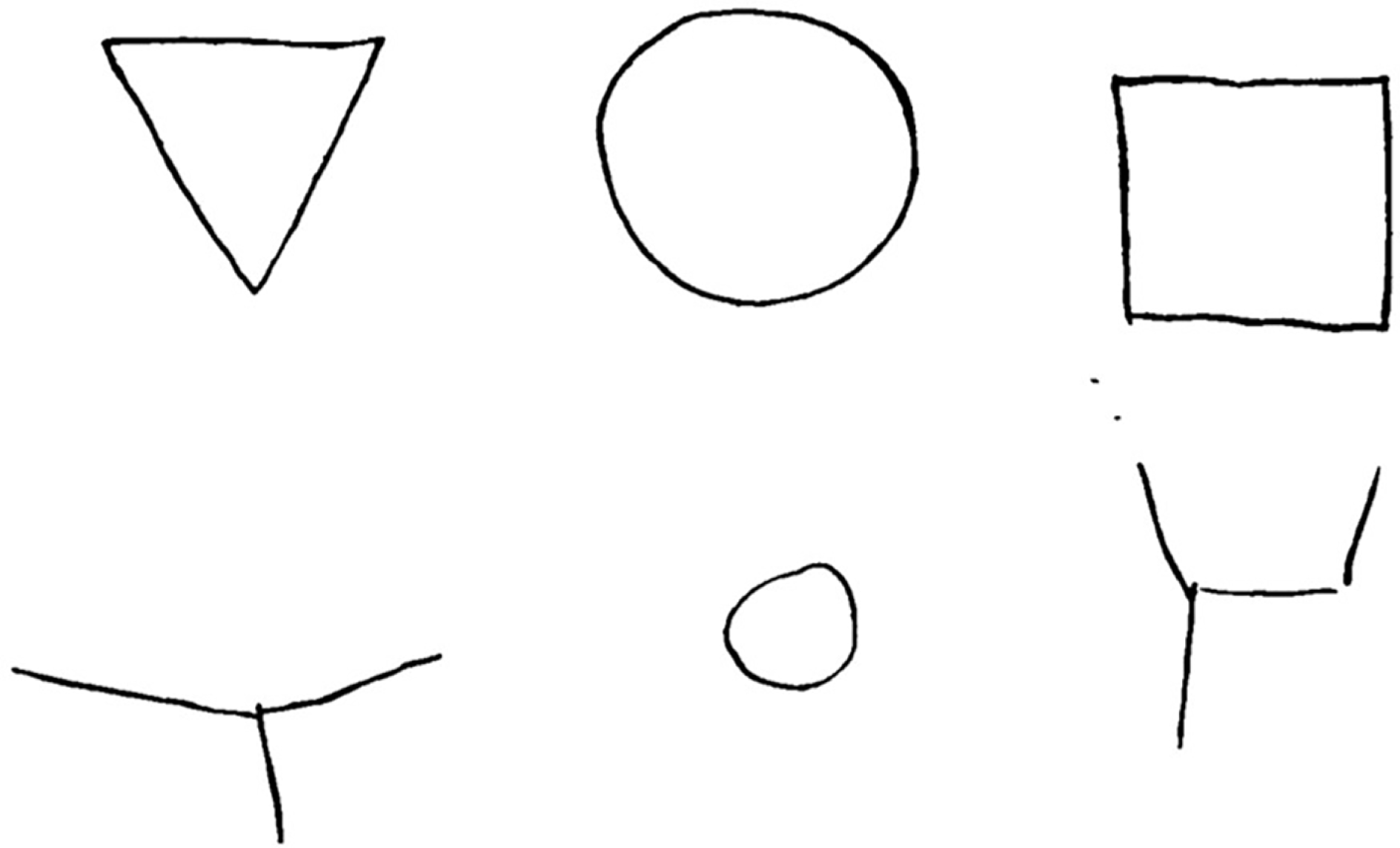
A drawing task with original images on the top line and the patient’s copies below. Source: W. Russell Brain, ‘Visual object-agnosia with special reference to the gestalt theory’. Brain 64 (1941), 48.
Tests like that shown in figure 10, in which a patient was asked to copy three geometric forms, seem to project the subject’s faulty perceptual function directly onto the page in a way that requires little interpretation. However, such images are rich with theoretical assumptions and rhetorical strategies that reinforce the immediacy of the drawing as a materialisation of mental processes. A set of characteristic drawing tasks emerged in European and American clinical neurology in the early twentieth century that relied on a shared visual repertoire of mundane objects, clocks, maps, geometry and perspectival rules. Some newly diagnosable cognitive disturbances were subtle enough that patients compensated for them in everyday life without overt signs of difficulty. Dysfunction was present, however, if a patient was quietly deviating from the normal pathways of image recognition and production built into the cultural practice of drawing.
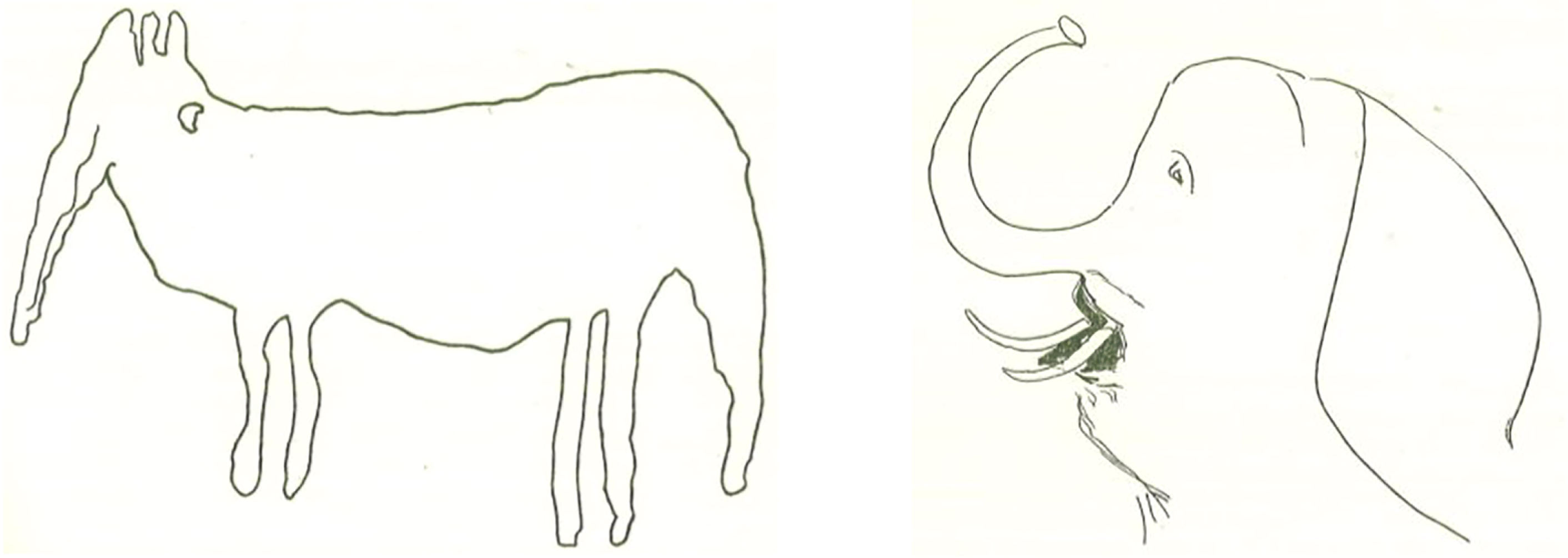
British neurologist Henry Head, in his authoritative 1926 work on aphasia, developed four drawing tasks for evaluating the nature of a patient’s cognitive disability: drawing from a model, drawing from command (Head generally requested an elephant), drawing the ground plan of a familiar room and drawing ‘anything that [comes] to mind’.Footnote 112 Each of these tasks assumed a shared visual grammar rooted in Western art and art education. L.S. Jacyna, in his biography of Head, underscores the importance of Head’s position at the Empire Hospital in Vincent Square during World War I, where he treated young, well-educated officers who had suffered acute head trauma.Footnote 113 Their social backgrounds and the specific nature of their battle wounds made these patients ideal for isolating ‘pure’ forms of aphasia and agnosia.Footnote 114 Whereas their presumed naiveté made the contents of children’s minds easy to capture in drawings, the presumed intellectual soundness of Head’s patients prior to injury meant that the injury itself was the thing captured in diagnostic drawing tests. Head reproduced their drawings as the only illustrations, aside from X-rays, in his two-volume tome.
(a) Patient no. 9’s attempt to draw an elephant. Source: Henry Head, Aphasia and Kindred Disorders of Speech; (Cambridge University Press, 1926), 131; and (b) Patient no. 25’s ‘successful attempt’ at drawing an elephant. Source: Head, Aphasia and Kindred Disorders, 385.
Head is a prominent example of how neurologists in clinical settings developed ad hoc drawing tasks for the evaluation of patients with agnosic symptoms, using logic to connect errors in representation with localised brain damage. Head attempted to create a more generalised set of evaluation criteria, applying a larger number of tests to a larger number of patients than previous researchers had.Footnote 115 Until this point, most agnosia research, like the Smith–Blackburn experiments, was performed on isolated patients under test conditions that varied depending on the patients’ responsiveness and abilities.
Despite Head’s attempt to impose a standardised diagnostic framework, there was no professional consensus on the disease categories that various drawing tasks identified until the 1970s. In the 1940s, Edinburgh neurologists Oliver Zangwill and Andrew Patterson developed a visual testing ‘battery’ for patients suffering from spatial disorientation. By asking patients to bisect lines, copy drawings and mark different times of day on a clock face, they connected the recognised phenomenon of unilateral neglect with specific disruptions in processing caused by unilateral parietal lesions.Footnote 116 Their testing battery was widely adopted, and their explanation of unilateral neglect supported a modular view of brain function that would gain increasing acceptance in subsequent decades, building on this model of matching a lesion to a deficit revealed through drawing.Footnote 117
Drawing tasks helped researchers distinguish the discrete cognitive operations contributing to patients’ broader deficits, and refined these cognitive operations into successively narrower categories. Throughout the 1950s and 1960s, a group of neuropsychologists argued that cases classed as agnosias did not reflect a specific disorder, but rather resulted from generalised brain damage and decreased cognitive functioning.Footnote 118 ‘To my knowledge of the literature, there does not exist a single case of agnosia without elementary sensory disorders and without mental deterioration‘, claimed German neurologist Eberhard Bay.Footnote 119 Bay and his supporters insisted that ‘there is no need to search for any mystical gnostic activity to be disturbed’, a point that sometimes led to questioning the intelligence or integrity of agnosic patients such as ‘Schn’, a World War I veteran whom Bay accused of exaggerating his symptoms.Footnote 120 Debates over the ‘reality’ of this syndrome were particularly fraught because clinicians also played an advocacy role for their patients, certifying the need for pensions or disability support.Footnote 121
Advocates for visual agnosia as an etiologically distinct syndrome used drawings as evidence for a new theory of visual processing, modelling it as a stream that flowed from lower-level perception to stored perceptual knowledge to stored conceptual knowledge. Along with a battery of other visual tasks, drawings helped to delineate a disorder which gained widespread acceptance with the work of George Ettlinger, Glyn Humphreys and Jane Riddoch from the late 1960s onwards.Footnote 122 ‘Dementia is a convenient label to apply when aspects of behavior are not fully understood’, wrote Humphreys and Riddoch; for agnosic patients, ‘having a problem identified and labeled can be a reassurance’.Footnote 123 Drawings captured patients’ subtle and disorienting errors in spatial representation, assembling parts into wholes, or recalling the forms of common objects, fixing in material form specific deficits that had once seemed diffuse and intractable.
Drawing tests mobilise an arsenal of familiar objects depicted in outline from a conventional point of view, in part, as an accommodation to the perceptual difficulties of neurological patients. ‘Pictures are much more difficult [to recognise] if the artist has used shade, reflection, or the skills of Impressionism’, reported John, the patient studied by Humphreys and Riddoch.Footnote 124 This visual vocabulary also dispenses with the subjective problem of artistic expression, aiming, instead, for a conventional sense of accuracy shared by patients and researchers. John explained to Humphreys and Riddoch that ‘I never had much drawing ability or the simplest comprehension of how to show a third dimension in scribbling…[but] I can comprehend enough of my own handiwork to know if it is a reasonable representation of what I had in mind’.Footnote 125 John’s ability to produce a drawing and then reflect on its correspondence with an objective reference point acts as an assurance that he has no special training or expressive intentions – he is a subject appropriately constrained in his use of drawing as an extension of pure cognitive function.
Batteries of drawing tests helped clinicians order lesions by location and construct a theory of the processing stream, in the same way that ordering children’s drawings along a developmental sequence enabled psychologists to construct an evaluative framework based on that sequence. Throughout these debates, neurologists recognised that deficits and lesions rarely match in a simple one-to-one correspondence because injuries are rarely limited to a single-function area of the brain; patients often suffer from a combination of difficulties following an injury. However, once the disorder ‘agnosia’ emerged as a medical category, neurologists could use the techniques developed in establishing the diagnosis to disaggregate symptoms and locate damaged points on the visual processing stream.
4 Conclusion
This systematic use of patient drawings in an experimental context to illuminate fundamental cognitive processes rests on the same material substrate as the SPR’s experiments with Smith and Blackburn and G. Stanley Hall’s catalogue of the child mind. Though not an intentional continuation of these practices, it reveals how the epistemological assumptions built into supposedly basic psychomotor tasks have shaped different areas of psychology in similar ways. Drawing seemed a reliable means to capture the mental processes of particular kinds of subject while bypassing the unruliness of subjectivity. In each of the examples above, researchers identified subjects who they believed could function as object-instruments capable of faithfully recording the desired mental phenomena. Naïve children, blindfolded mediums and head trauma victims, equipped with pencil and paper, could act as their own ‘soul catchers’ – in the sense of a material assemblage that fixes an ephemeral quality of the mind in a physical form. However, the goal of this process for researchers was to take what is conventionally understood as the ‘soul’ out of the picture, leaving a pure mental function traced in black and white.
Much of the literature on scientific illustration and objectivity focuses on the production of images by experts, whether scientists, technicians or artists, disciplined to act as ‘transparent’ recording media for the phenomena they observed.Footnote 126 The subjectivity of the image maker is not intended to be part of the image’s scientific meaning, although, of course, it is integral to the social and cultural construction of that meaning. On the other hand, certain image-making practices in psychology are understood to externalise important clues about the patient’s subjectivity that can be interpreted for purposes of diagnosis and therapy. The images of mental function and dysfunction discussed above occupy a strange intermediate space. They were not understood as professional scientific illustrations – they did not illustrate observed phenomena, but rather manifested hidden mental phenomena in visible form. Nor were they interpreted for emotional content – rather, their scientific validity depended on the exclusion of meaning, history and individual voice. Researchers in vastly different contexts elicited these drawings aiming to make an objective study of subjectivity and to access the mind through the hand.