


Introduction
The main objective of the European Project for Ice Coring in Antarctica (EPICA) is to investigate further climatic variations in the Southern Hemisphere and especially their mechanisms in the past. The time-scales range from centuries to several hundred thousand years. It soon became obvious that at least two ice cores from different locations would be needed to reach the envisaged goals. Therefore, it was decided to perform two core drillings: one in the area of Wilkes Land adjacent to the Pacific Ocean, the other in Dronning Maud Land (DML), adjacent to the South Atlantic Ocean. The first should allow extension of the ice-core record back to at least five climatic cycles; the second should provide a good time resolution for the last climatic cycle and allow, due to its proximity to the Atlantic Ocean, a detailed comparison with the Greenland records. The drilling of two deep ice cores in locations diametrically apart on the Antarctic ice sheet has been facilitated by the fact that European nations can offer existing logistic infrastructures in both areas.
For the first core drilling, a site in the area of Dome C was envisaged. Based on a site survey using radar echo sounding and surface topography determinations (Reference Tabacco, Passerini, Corbelli and GormanTabacco and others, 1998), a site with a flat bedrock at 75˚06'02"S, 123˚20'52" E was selected. The location, Concordia Station, is close to the topographic summit: the elevation is 3233 ma.s.l., the mean annual temperature –54.5˚C and the mean annual accumulation rate about 25.0 kg m–2. During field season 1996/97 a camp was constructed and was prepared for deep core drilling by installing a casing to 120m depth. Core drilling reached 364 m depth during the following field season, and 781.6 m in December 1998, but at this depth the drill got stuck and could not be recovered. Drilling had to restart from the surface in December 2000. A depth of 1458.2 m was reached during field season 2000/01, and a depth of 2871 m in February 2002. Drilling became difficult due to the increasing temperature at this depth which causes a remarkable change in the mechanical properties of the ice and, more importantly, in the ice cuttings produced during drilling. Therefore, it was no surprise that drilling progress during field season 2002/03 was relatively modest, and bedrock, expected at about 3300 m, could not be reached. The present depth is 3200.01 m, and a further 100 m of very difficult core drilling is needed to reach bedrock.
Core processing and first analyses had already been performed at Dome C. Ice cores were inspected, registered and sectioned for various types of analyses, which will be conducted back in European laboratories. Dielectric profiling (DEP; Reference MooreMoore, 1993) was performed on the entire core, and electrical conductivity measurements (ECM) on a freshly cut surface of the core. From the core a prismatic ‘sub-core’ with a cross-section of 34 ×34 mm2 is cut and melted continuously. The construction of the melt head allows the separation of water from the central part of the sub-core from that of the outer part. The uncontaminated water from the central part is used for continuous flow analyses (CFA) to determine the concentrations of Ca2+, Na+, N4 +, N3 –, H2O2, HCHO and dust, as well as electrical conductivity of meltwater (Reference RöthlisbergerRöthlisberger and others, 2000), and Fast Ion Chromatography (FIC), to determine the concentrations of SO4 2–, N3 – and Cl– (Reference UdistiUdisti and others, 2000). The remaining part is collected in Coulter Accuvette sample containers for additional chemical analyses by ion chromatography in different laboratories in Europe. A small cross-section of the core is also used to make investigations of the physical properties in the field.
In DML, which does not have a major dome structure, a more elaborate survey was needed to select a suitable drilling site. A reconnaissance was performed by three independent teams covering different parts of the area. It included in each case airborne and surface radio-echo sounding and the collection of snow samples from snow pits and by shallow core drillings, in a few cases down to 150 m depth. After 3 years of reconnaissance, a location east of Kottas camp at 75˚00'06" S, 00˚04'04" E was selected, based on a relatively flat bedrock and a reasonable accumulation rate, as the drilling site for the second EPICA deep ice coring. The location is at 2892 ma.s.l., and has a mean annual temperature of –44.6˚C and a mean annual accumulation rate of about 64 kg m–2. During field season 2000/01, a camp was erected at the selected site, now called Kohnen station, and preparations for the deep drilling, including the excavation of the drill trench and the installation of the casing, were performed. Deep drilling started during field season 2001/02. The final depth achieved in the very short field season was 449 m. Field season 2002/03 was much longer, as it was possible to transport people and equipment by air to Antarctica and Kohnen station. As a consequence, a depth of 1564.6 m was reached by the end of February 2003. The total ice thickness is about 2750 m.
Results from DML are so far mainly available from the reconnaissance of the drill sites and from the analyses of the upper part of the Kohnen ice core. Many new results from the middle part of the Dome C and the top part of the Kohnen core are presented in this volume. In this paper, an interesting result from the analyses of shallow cores from DML and a few results from the top part of the Dome C core are summarized. In the following sections, first results measured in the field from the deepest part of the Dome C core are presented, and some perspectives for this exciting old ice are discussed.
Reconnaissance and Top Part of the two Ice Cores
The reconnaissance in the DML area has resulted in a wealth of information on surface and bottom topography and on spatial and temporal variations of temperature and accumulation rates of this hitherto little-explored region of Antarctica. Chemical analyses on pit samples and shallow cores allowed identification of seasonal layers and provided new insight into an interesting climatic phenomenon.
The Antarctic Circumpolar Wave (ACW), characterized by periodic anomalies in sea-level pressure, sea-ice extent and sea-surface temperature, was recently observed with a periodicity of 4–5 years (Reference Fischer, Traufetter, Oerter, Weller and MillerFischer and others, 2004). The short direct observation time does not allow assessment of the persistency of this phenomenon. It appears that the ACW influences the concentration of sea-salt aerosols of the snow in DML. About 60% of the snow deposited on the Antarctic plateau of DML originates from the Atlantic sector of the Southern Ocean. Trajectory investigations also show that transport velocities are highest during spring, when the sodium concentration has a seasonal maximum. The interannual variations of a stacked Na+ record correlate with variations of the sea-level pressure in the source region between 1958 and 1984. Based on this correlation, it is concluded that interannual variations of the Na+ concentration in ice cores from DML are proxies for the ACW. Spectral analyses of longer records show peak values of 4 and 5.5 years, but also a very clear maximum at 14 years. This is a strong indication that ACW has been a persistent phenomenon over the past two millennia, the time-span covered by the shallow ice cores used for the Na+ measurements.
The deep core from Kohnen station was processed in summer 2002 down to 449 m and in summer 2003 down to 1564m at the Alfred Wegener Institute, Bremerhaven, Germany. First results are available, but it is too early for a general overview.
This is not, of course, the case with the Dome C core. Results from the upper 580 m of the Dome C core cover the Holocene, the transition from the last glacial epoch to the Holocene and the latest part of the last glacial epoch (Reference Schwander, Jouzel, Hammer, Petit, Udisti and WolffSchwander and others, 2001).
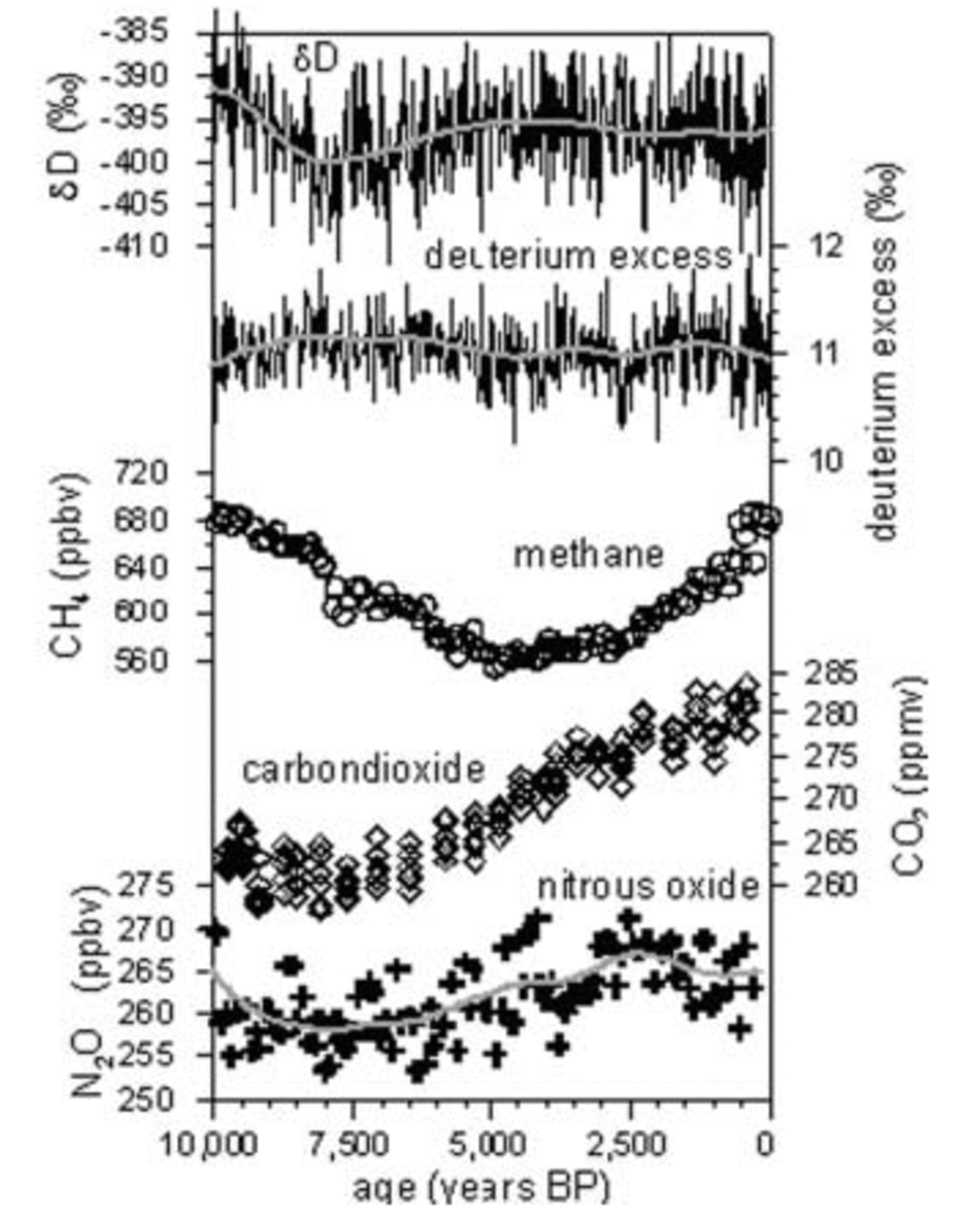
In the record representing the Holocene (Fig. 1), the deuterium record (δD) starts with a value of about –390% at 10 000 years BP, decreases thereafter to a value below –400% at about 8000 years BP, at just about the time when a distinct cooling event is recorded in Greenland ice cores, and slightly increases afterwards to values around –395% for the rest of the Holocene (Reference JouzelJouzel and others, 2001). The deuterium-excess record d (d = δD–8δ18O) shows a maximum at about 8000 years BP (Reference StenniStenni and others, 2001). It then decreases and shows distinct minima at about 4500 and 2400 years BP. It is remarkable that the general trends of the δD and d records are slightly anticorrelated, indicating that the temperature in the source region of the water vapour varied differently from the Dome C temperature. Gas analyses on ice representing the Holocene have allowed the reconstruction of a high-resolution record of the atmospheric CO2, CH4 and N2O concentrations (Reference FlückigerFlückiger and others, 2002). The CO2 record is generally in good agreement with the Taylor Dome record. Significant deviations are probably due to uncertainties of the age scale for the two cores. The CH4 record is in good agreement with other records from Antarctica and also from Greenland, taking into account the inter-polar concentration gradient. The distinct minimum of the CH4 concentration at 8200 years BP in Greenland ice cores is only faintly recognizable in the Dome C record. A model calculation taking into account the smoothing of the signal due to the much lower accumulation rate shows that a variation of the atmospheric CH4 concentration lasting only about 190 years is recorded in Greenland cores with an attenuation of 12%, but in the Dome C core with one of 56% (Reference Spahni, Schwander, Flückiger, Stauffer, Chappellaz and RaynaudSpahni and others, 2003). For N2O the Dome C record is the first to cover the entire Holocene with such a fine time resolution. The variations are small compared to variations parallel to Dansgaard/Oeschger events and to the glacial–Holocene transition. They are also relatively small compared to the analytical scatter of the results. However, the long-term trend (spline with a cut-off frequency of 3000 years) is likely to be significant. It is astonishing that the long-term trend is better correlated with the CO2 than with the CH4 record. This could be an indication that the ocean is responsible for the N2O variations. However, based on this similarity alone it is not possible to identify the mechanisms causing the N2O concentration changes. The measurement of the isotopic ratios δ15N and δ18O could help to answer this question, but measurements would have to be performed with a high accuracy and it has to be kept in mind that the range of the isotopic signature of natural soil sources and of the ocean source is rather large.
Records of the deuterium (δD) (Reference JouzelJouzel and others, 2001), the deuterium excess values (Reference StenniStenni and others, 2001), the CH4, CO2 and N2O concentrations (Reference FlückigerFlückiger and others, 2002) along the depth interval of the Dome C ice core representing the Holocene. The grey lines are splines with a cut-off period of 3 kyr (Reference EntingEnting, 1987).
Interesting new results have been obtained from the Dome C ice core covering the transition from the last glacial epoch to the Holocene. The δD record (Fig. 2) confirms the two-step warming starting at about 18 kyr BP, and ending at about 14 kyr BP, followed by a cooling trend, the Antarctic Cold Reversal (ACR), reaching the lowest temperatures between 13.5 and 12.5 kyr, and a second warming phase reaching the Holocene values at 11.5 kyr BP (Reference JouzelJouzel and others, 2001). Based on model calculations, it is concluded that the relation between δD values and temperature is close to the present spatial ratio of about 7.6%˚C–1 (Reference StenniStenni and others, 2001). This implies that the temperature change between the glacial maximum and the Holocene was about 9˚C. The deuterium-excess d was used to estimate the change of the temperature at the source region: assumed to be mainly the Indian Ocean at about 40˚ S. The estimated temperature change for the sea surface temperature is about 4.5˚C. The record of the deuterium-excess d also shows a two-step shape, with a cold reversal beginning at about 13.2 kyr BP. This implies a significant time lag between the ACR and the Ocean Cold Reversal (OCR) of 800 years (Reference StenniStenni and others, 2001).
Records of the deuterium (δD) (Reference JouzelJouzel and others, 2001), the deuterium excess values (Reference StenniStenni and others, 2001), the dust (Reference Delmonte, Petit and MaggiDelmonte and others, 2002b), sodium and calcium (Reference RöthlisbergerRöthlisberger and others, 2002) mass concentrations along a depth interval of the Dome C ice core covering the transition from the last glacial epoch to the Holocene. The grey lines and the thick black line for the dust are splines with a cut-off period of 500 years (Reference EntingEnting, 1987).
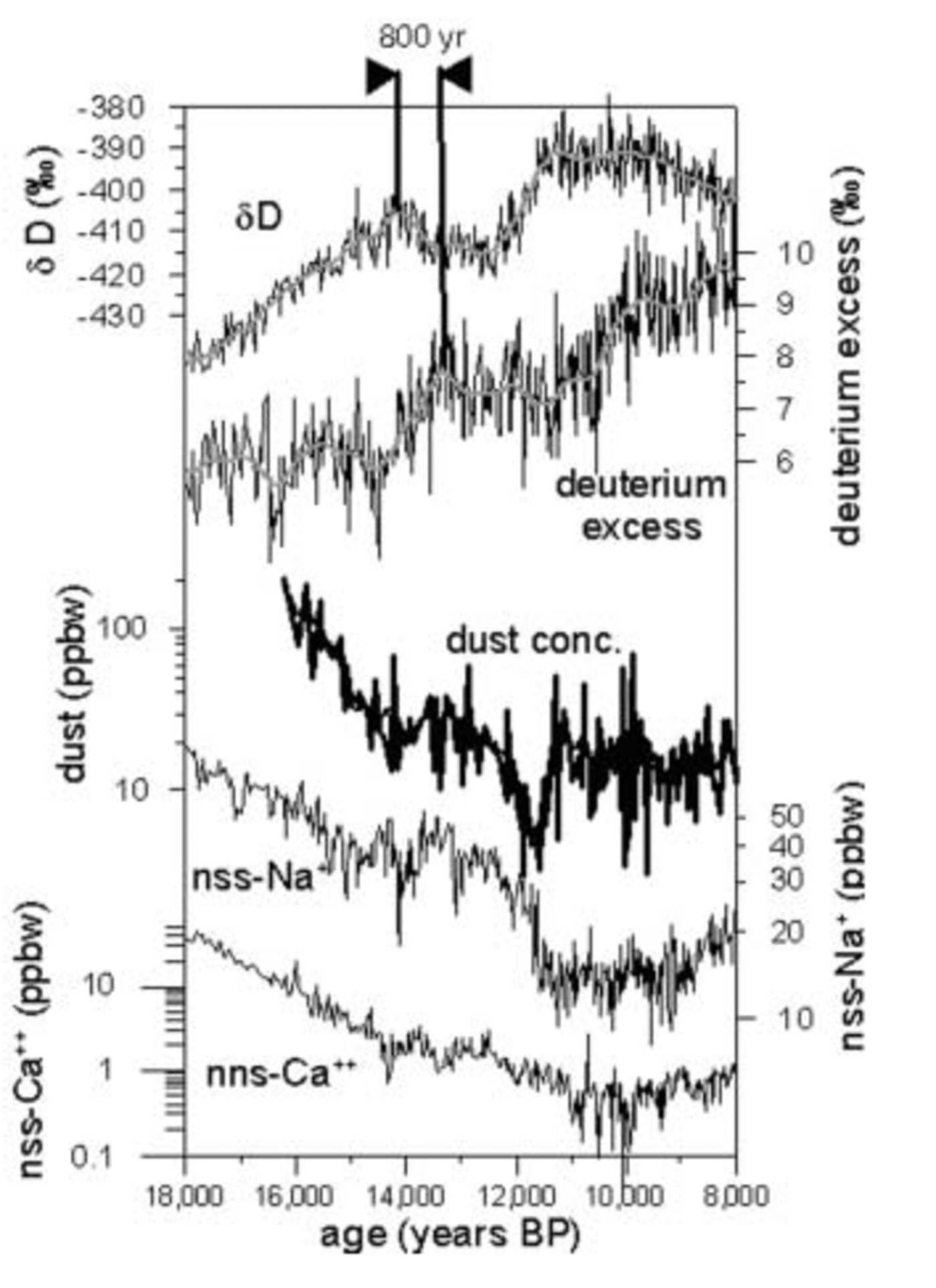
The dust record shows a very pronounced change between the glacial epoch and the Holocene (Reference Delmonte, Petit and MaggiDelmonte and others, 2002a, Reference Delmonte, Petit and Maggib). The mean dust concentration during the glacial maximum was about 800 ppbw, and decreased during the transition to the mean Holocene value of about 15 ppbw. This is a change of more than a factor of 50. For the dust fluxes, the accumulation rate, which changed almost a factor of two between the glacial epoch and the Holocene (Reference Schwander, Jouzel, Hammer, Petit, Udisti and WolffSchwander and others, 2001), has to be taken into account. The decrease of the dust concentration started about 18 kyr BP and reached a value of about 30 ppbw during the ACR. After the ACR the concentration decreased sharply to its lowest value of about 6 ppbw and remained at this low concentration for about 200 years. The reason for this distinct and short minimum is assumed to be a wet climatic period in southern South America, supposed to be the main source for dust reaching East Antarctica. The period corresponds to the end of the Younger Dryas epoch in the Northern Hemisphere. About 99% of the dust has a particle size of 0.7–5 μm (for the glacial epoch and the Holocene). Rather surprising is the finding that the mean particle size was larger during the Holocene than during the glacial epoch. This suggests a greater direct meridional transport of dust to the interior of Antarctica during the Holocene.
Ca2+ and Na+ have been measured continuously with CFA already in the field (Reference RöthlisbergerRöthlisberger and others, 2002). For the last glacial epoch, calcium is a typical terrestrial component, but during the Holocene about 50% is of marine origin. Sodium is a typical sea-salt component. From the measured concentrations, the non-sea-salt component of calcium (nssCa2+) and the sea-salt component of sodium (ssNa+) have been calculated. The nssCa2+ concentration decreased by a factor of about 50, and the ssNa+ by about a factor of 5 from the glacial epoch to the Holocene. While both nssCa and ssNa concentrations started to decrease at about 18 kyr BP, the decrease in nssCa was much more pronounced than in ssNa, with nssCa changing by a factor of 23 and ssNa only by a factor of 2 from 18 kyr to the ACR. During the ACR, nssCa and ssNa were rather stable, both at about twice the Holocene values. It is postulated that the large decrease in nssCa before the ACR is mainly due to changes in the dust source region, while the second, similar decrease of nssCa and ssNa from the ACR to the Holocene is mainly attributed to transport-related factors. The distinct dust minimum after the ACR is not seen in the nssCa record. However, this could be due to changes in dust composition, which could affect the dust/nssCa relationship (Reference Ruth, Wagenbach, Bigler, Steffensen, Röthlisberger and MillerRuth and others, 2002), and to some extent to the uncertainty in the measurements and in the calculation of nssCa.
The good core quality has also allowed the reconstruction of a very detailed CO2 record over the transition (Fig. 3) (Reference MonninMonnin and others, 2001). As is already known, the atmospheric CO2 concentration increased during about 6000 years by 76 ppmv. A new finding is that this increase occurred in four clearly distinguishable intervals. The increase started about 17 kyr BP, and the additional interval limits are at 15.4, 13.8, 12.3 and 11.2 kyr. In the first and fourth intervals the rate of increase was about 20 ppmv kyr–1, in the second interval it was smaller and in the third interval even slightly negative. This third interval coincided with the ACR according to the official EPICA time-scale (Schwander and others, 2001) for the ice and the enclosed air. The increases in these four intervals are correlated quite well with the temperature increase according to the δD record and support the idea that the Southern Ocean played a key role in the atmospheric CO2 increase during the transition. However, there are interesting sharp increases at the end of intervals two and four. These sharp increases are, by comparison with the CH4 record, simultaneous with the fast warmings 14.5 and 11.7 kyr BP in the Northern Hemisphere (Reference DansgaardDansgaard and others, 1993). These fast increases are, therefore, more likely caused by processes occurring in the Northern Hemisphere. Comparison of the CO2 and dust concentrations could answer the question whether a fertilization of the Southern Ocean played an important role in the CO2 increase. The dust concentration, shown again in Figure 3, starts to decrease before CO2 starts to increase. It decreases continuously until the end of interval two. It remains rather stable during interval three and shows, in interval four, the distinct minimum discussed already. More interesting would be the iron fluxes. Iron is an important fertilizer for the biological activity in the ocean and, therefore, the uptake of atmospheric CO2 by the ocean. With a decreasing Fe input, the Southern Ocean could take up less CO2 from the atmosphere (personal communication from C. Barbante, 2003.
Records of the deuterium (same record as in Fig. 2), the CO2, the CH4 and the dust (same record as in Figure 2, but only the spline) records. Dust is shown as surrogate for the iron concentration. The four intervals are selected based on the different rates of increase of the CO2 concentration.
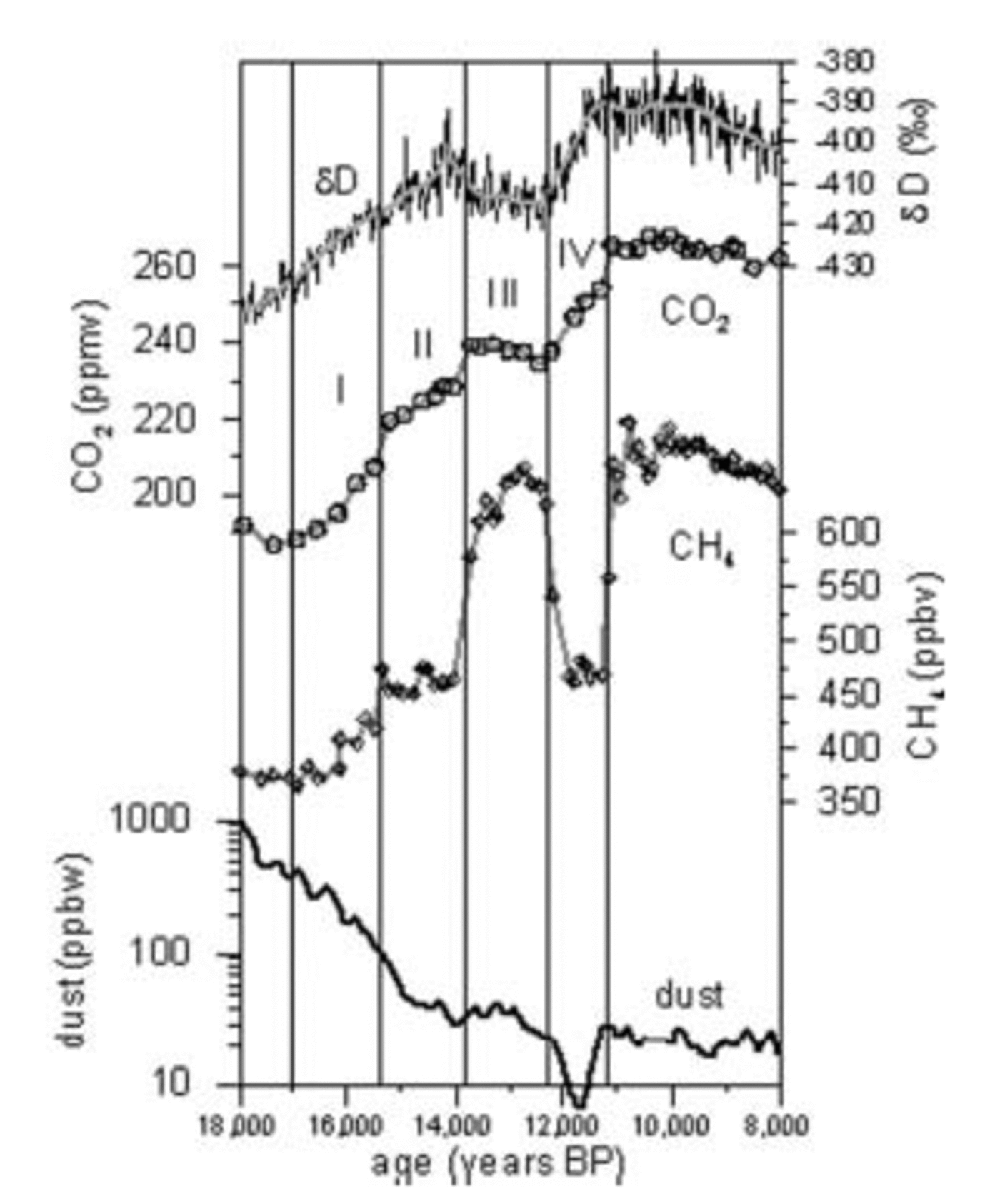
The enclosed air is younger than the surrounding ice. The age difference is calculated to be about 2000 years during the Holocene and 5500 years during the glacial epoch (Reference Schwander, Jouzel, Hammer, Petit, Udisti and WolffSchwander and others, 2001). The uncertainty of this age difference has to be taken into account when comparing gas with ice records. Comparing the δD record with the CO2 record, it was concluded that the beginning of the CO2 increase at the end of the last glacial epoch lagged the start of the temperature increase by 800 ± 600 years. This finding shows that atmospheric CO2 is unlikely to be the primary trigger signal for the end of the last glaciation, but this is not to question its role as probably the most important amplification factor for the temperature increase during the 6000 years of the transition.
The Dome C Ice Core Below 788 M
The need is most urgent for this part of the core to establish a reliable age scale down to the present depth of 3200.01 m. For the top 788 m a tentative chronology was established by a group of EPICA scientists (Reference Schwander, Jouzel, Hammer, Petit, Udisti and WolffSchwander and others, 2001) and adopted by the EPICA steering committee as the temporary official time-scale. It is based on an ice-flow model with a constant horizontal strain rate in the upper part of the ice sheet, a linearly decreasing strain rate below 1200 m and a certain sliding velocity at the bottom (Reference Johnsen, Dansgaard, Bard and BroeckerJohnsen and Dansgaard, 1992). The different parameters in the model have been optimized to fit certain age control points. Down to 233 m depth (7100 years BP) various volcanoes have been used (Reference UdistiUdisti and others, 2000), and for greater depth the end of the Younger Dryas cold period (11 530 ± 50 years) (Reference SpurkSpurk and others, 1998) and the 10Be maxima at 40 kyr BP (Reference YiouYiou and others, 1997) which is found at about 742m depth. The accuracy of the time-scale between 10 and 40 kyr is estimated to be 2 kyr. The age scale can be extended with the same flow model if the accumulation rates in the past can be estimated, but there are only limited possibilities to adjust the flow parameters for the deeper part, because reliable age control points are missing. Down to an age of 420 000 years the comparison of the ECM record with that from Vostok allows a certain control and shows that the extended age scale down to this depth is reasonable.
Reference ParreninParrenin (2002) has used a different glaciological flow model (Reference RitzRitz, 1992) and used an inverse modelling method to optimize the parameters. He used chronological events similar to those used by Schwander and others for his inverse modelling. The results obtained suggest that the accumulation during glacial stages is underestimated if the usual relation between isotope ratio and accumulation is used (Reference ParreninParrenin, 2002). At the bottom of the ice sheet a small melting rate of 0–1 mm a–1 is predicted, which is not unreasonable based on the measured temperature profile.
The two adjusted flow models give the same age for the top 788 m within the uncertainties. Extending the calculation with unchanged flow parameters down to 3200 m, both models give an age of about 900 000 years for the ice at this depth. However, this age has an uncertainty of about 200 000 years.
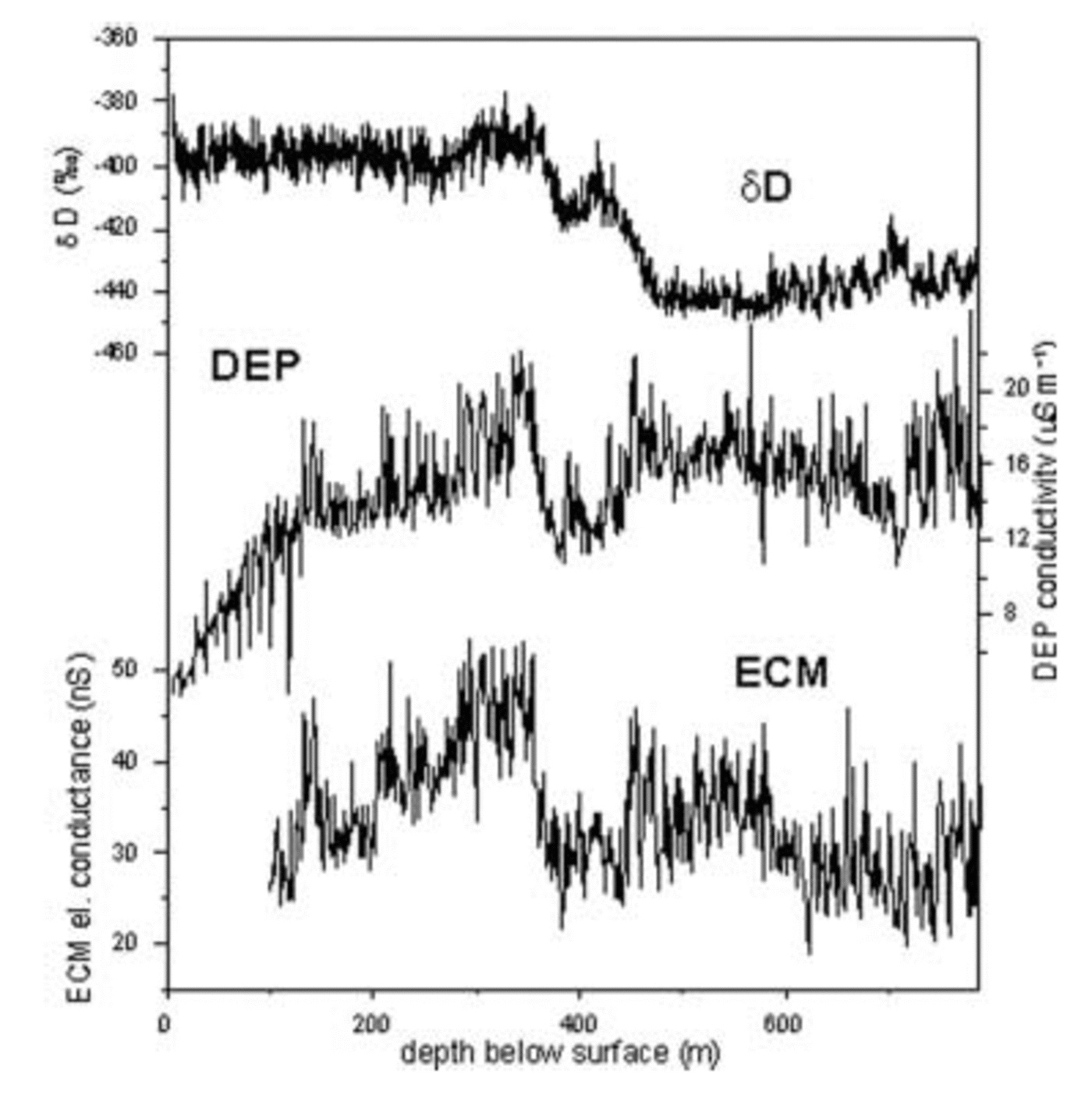
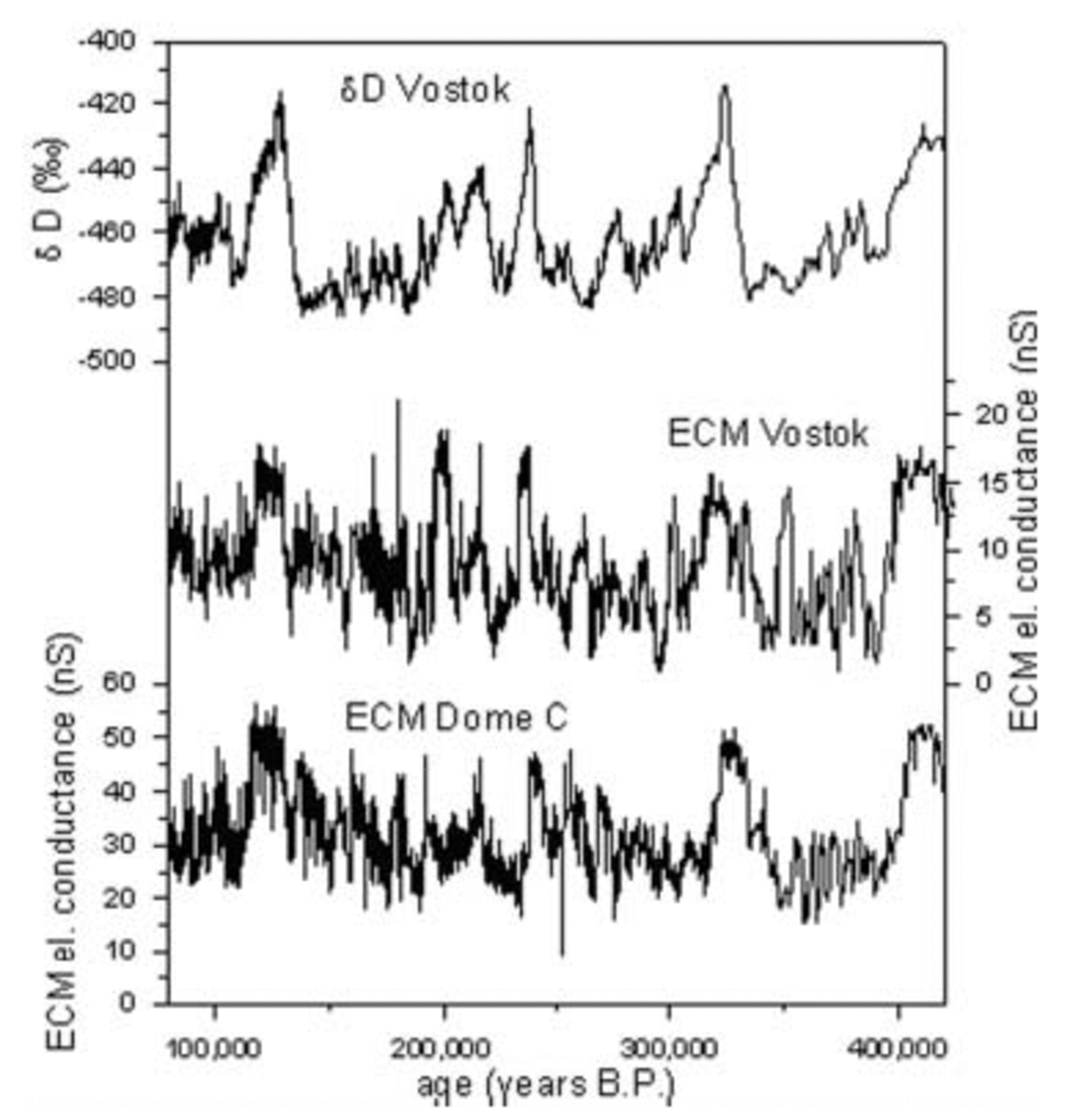
The calculated age scales have now to be compared with measurements along the ice core. As mentioned earlier, some measurements have been performed already in the field. The results of the dielectric profiling (DEP) and of the electrical conductivity measurements (ECM) are available, while the results from the chemical analyses by CFA and FIC have to be evaluated and partly calibrated. The DEP and ECM record are shown in Figure 4. DEP is performed along 2.2 m long sections of ice cores with the full cross-section. Conductance and capacitance are measured each 20 mm at different frequencies (Reference Wolff, Moore, Clausen, Hammer, Kipfstuhl and FuhrerWolff and others, 1995). The record shown in Figure 4 gives the temperature-corrected conductivity at a frequency of 100 kHz. ECM needs a freshly cut surface. Seven electrodes are lowered to the surface each millimetre and the d.c. conductance is measured between each pair of electrodes. Present knowledge suggests that ECM measures the acidity in the ice while DEP also responds to other ions. The good correlation between the DEP and ECM record suggests that acidity generally dominates the DEP signal at Dome C. The increase of the DEP signal with increasing depth over the top 100 m is due to the increasing density. ECM has not been measured for the first 100m of the firn core. Acidity in the ice at Dome C is high during interglacial epochs due to the higher accumulation rates which preserve HCl (Reference Wolff, Wolff and BalesWolff, 1996), but it is also high during very cold periods with low accumulation rates, causing especially higher sulphate concentrations if it is assumed that the fluxes are constant. This can be seen by comparing the δD record, a proxy for the local temperature, and the DEP and ECM records over the past 40 000 years shown in Figure 5. This complicates the interpretation of the electrical records. However, a comparison of the ECM record from Dome C with the ECM and δD record from Vostok (Reference PetitPetit and others, 1997) (Fig. 6) shows that the interglacials are characterized by the highest DEP and ECM signals during the past 420 000 years. Marine isotope records suggest that interglacials before MIS11 (MIS: Marine Isotope Stage) have been rather weak. In this case, the accumulation rates may be smaller during previous interglacials so that HCl is less well preserved, and the ice with the highest impurity, especially sulphate concentrations, from the coldest epochs could show maxima of the DEP and ECM values (EPICA community members, 2004). However, we are still optimistic that the pronounced maxima represent whole glacial cycles and that the last maximum represents either stage MIS23 or, if it represents a cold period, the end of MIS24. It would be too optimistic to conclude that the electrical records confirm the age scales calculated based on ice-flow models, but at least they are rather a support than a contradiction.
DEP and ECM records along the entire length of the Dome C ice core. For DEP the conductivity measured at 100 kHz is shown. DEP was measured with a resolution of 20 mm, ECM with a resolution of 1 mm. This figure sho ws 1 m averages. The measurements were performed on the EDC96 core down to 788 m and on the EDC99 core below.

Records of the deuterium (δD), the DEP conductivity at 100 kHz and the ECM conductance along the top 788 m of the Dome C core. The DEP and ECM records show high signals in the early Holocene as well as in the glacial maximum.
Comparison of the deuterium record with the ECM record from the Vostok ice core (Reference PetitPetit and others, 1997) and with the ECM record of the Dome C ice core for about the last 420,000 years. The absolute values of the ECM conductance depend on the arrangement and size of the electrodes. Since two different systems have been used at Vostok and at Dome C, the difference between the absolute values is not surprising.
The δD record along the ice core will certainly give more reliable information about the climatic cycles than the electrical records. However, it could be that the isotope record is not able to give a final answer either, because marine isotope records suggest that the climatic cycles before MIS stage 11 have been rather weak. In this case, δ18O measurements on O2 extracted from bubbles in the ice could allow a direct comparison with the isotope records of marine sediments (Reference BenderBender and others, 1994), but a great number of these time-consuming measurements would be required.
If the age of the ice at 3200 m depth is 900 000 years, it is also possible to estimate the mean annual layer thickness as a function of depth. A rough estimate shows that it is about 1.2 mm at 2800 m depth where the ice has an age of about 450 000 years, and 0.5 mm at 3200 m depth where the ice is estimated to be 900 000 years old. The question arises to what detail climatic signals can be resolved in the deepest parts of the core. The ACR discussed above has a duration of about 1300 years, and the age difference between the beginning of the ACR and the OCR is about 800 years (Reference StenniStenni and others, 2001). Such age differences correspond to depth intervals of 1.56 and 0.96m at 2800m depth and of 0.65 and 0.4m at 3200m depth. From an analytical point of view, the resolution of such an event is no problem, as long as the original characteristics of the climatic signals are not smoothed out by diffusion and as long as the stratigraphy is still preserved on the macro and on the micro scale.
Concerning the diffusion and redistribution of certain compounds, an interesting phenomenon has been observed in two dust layers of the ice core. The DEP and ECM signal over both dust layers at depths of 2788 and 2833 m, respectively, are completely different as shown in Figure 7. The obviously alkaline dust layer causes an ECM minimum, but because DEP measures part of the other ions as well, this signal shows, at least in the lower dust band, a maximum. Preliminary results from FIC and CFA measurements showed that the peaks are mainly caused by high Na+, Cl2– and SO4 – concentrations (Reference BarnesBarnes and others, 2003). The smaller broad minimum in the DEP and ECM records is due to the diffusion mainly of H+ toward the dust layer to neutralize alkalinic compounds. Reference BarnesBarnes and others (2003) have estimated effective diffusion constants based on the form of the different concentration peaks. The estimates are 8×10–15m2 s– 1 for acidic species, 3×10–16m2 s–1 for non-acidic solubles and 3×10–17m2 s–1 for precipitates. This limits the temporal resolution of H+ events to about 500 years (corresponding to about 0.6 m) at about 2800m depth, while immobile species still have a time resolution of better than 30 years (40mm depth resolution).
Same records as in Figure 4 but of two small depth intervals over core sections containing visible dust layers. The depth resolutions are 20 mm for the DEP conductivity and 1 mm for the ECM conductance. Both records show broad minima, but superimposed in the DEP is a narrow maximum, in ECM a narrow minimum over each of the dust layers.

The diffusion could also affect the isotope signals. Reference Johnsen, Clausen, Cuffey, Hoffmann, Schwander, Creyts and HondohJohnsen and others (2000) give an effective diffusion for δ18O which is an order of magnitude larger as measured on single crystals (about 3×10–15m2 s–1 for ice at –32˚C). This would smooth sharp isotope signals by several hundreds of years in 500 kyr old ice. It has also to be kept in mind that the diffusion of deuterium and 18O is different, so that the interpretation of possible time lags between stable-isotope signals and the deuterium excess of less than a few hundred years will become difficult. These effects are larger close to bedrock where the temperature approaches the pressure-melting point.
The diffusion and permeation of gases, enclosed in clathrates at greater depth, is small (Reference IkedaIkeda and others, 1999). A substantial attenuation of gas signals in the ice (in the firn such an attenuation can be substantial!) or a fractionation of air components in a depth interval where gas concentrations vary within a few centuries is not expected.
Until now, we have assumed that variations of climatic proxies in the ice are only affected by diffusion. However, we know from the Greenland Icecore Project (GRIP) and Greenland Ice Sheet Project II (GISP-2) ice cores from central Greenland that the stratigraphy can be substantially disturbed several hundred metres above the bedrock. Micro-folding was observed 500 m above bedrock in the GRIP ice core which was drilled on the present ice divide, and severe stratigraphic disturbances have started 200 m above bedrock (Reference Alley, Gow, Johnsen, Kipfstuhl and MeeseAlley and others, 1995). Some irregular features in the Dome C ice core have been observed at the depth of the two discussed dust layers. However, these features can be compared with the observation of the first micro-foldings at GRIP and do not indicate a severe stratigraphic disturbance. Dome C ice-core records below about 2800m will remain questionable as long as the stratigraphy cannot be tested with reliable time markers below this depth. If the tentative extended time-scale is correct, we expect at a depth of about 3070 m ice from the time of the Matuyama–Brunhes magnetic reversal, which took place at 789 ± 8 kyr BP (Reference Quidelleur, Carlut, Soler, Valet and GillotQuidelleur and others, 2003). It is certainly the most important time marker in the lower part of the Dome C core, but the question arises as to how it can be identified in the ice.
There are small concentrations of dust in the ice core and there are also some ferromagnetic particles in the ice (Reference Lanci, Kent, Biscaye and BoryLanci and others, 2001). The question is only answerable from this dust if it is incorporated into the ice at the time of firn and ice formation, and aligned with the Earth’s magnetic field, and further, if this is the case, only if the orientation remains unchanged over the long time in the ice sheet despite crystal growth and reorientation. This seems very unlikely but cannot be excluded and should be tested.
If a direct measurement of the remnant magnetization is not possible, there is still the possibility of identifying the reversal by radioisotopes produced in the atmosphere, such as 10Be and 36Cl. The 10Be found in Greenland and Antarctic ice cores is probably caused by the Laschamp event (Reference Laj, Kissel, Mazaud, Channel and BeerLaj and others, 2000). The strength of the Earth magnetic dipole moment was only about 10% of its present value at this time. For a reversal, the dipole moment would pass through 0%, so we can expect a slightly higher 10Be maximum.
Even if this important time marker can be found, there will remain some doubts about the interpretation of hopefully interesting and spectacular results. A confirmation will be urgent, but it will be a long time before a new core drilling at another site reaching 1 Myr old ice can be realized. Therefore, it would be important to have a technique to drill replicate cores from a certain depth in the Dome C hole down to the bedrock. The availability of replicate cores would allow analytical results to be checked and additional high-resolution measurements to be performed. Measurements on a core just a few metres from the original one do not have the same value as a new core, but would still answer many critical questions.
Acknowledgements
This work is a contribution to the European Project for Ice Coring in Antarctica (EPICA), a joint European Science Foundation/European Commission scientific programme, funded by the European Commission and by national contributions from Belgium, Denmark, France, Germany, Italy, the Netherlands, Norway, Sweden, Switzerland and the United Kingdom. This is EPICA publication No. 80. We thank B. Stenni, B. Delmonte, C. Barbante, H. Fischer, F. Parrenin and J. Schwander for partly unpublished results and information, and the two reviewers D. Peel and W. Budd for their valuable suggestions and corrections which improved the original manuscript.



