



The 2010 US census showed that between 2000 and 2010, the US Asian population grew faster than any other race in the country( 1 ). At 3·4 million, South Asians, those who trace their origins to countries such as India, Pakistan, Bangladesh, Nepal and Sri Lanka, are among the second fastest-growing ethnic community in the country( 1 ). There is some evidence to suggest that South Asians in the USA bear a disproportionate burden of chronic disease including type 2 diabetes and heart disease, some of it attributable to the adoption of Western-style dietary patterns and a sedentary lifestyle( Reference Palaniappan, Araneta and Assimes 2 – Reference Shah, Vittinghoff and Kandula 4 ).
Acculturation, a process in which members of one cultural group adopt the beliefs and behaviours of another group, is a complex, multidimensional and dynamic process( Reference Page 5 , Reference Satia-Abouta, Patterson and Neuhouser 6 ) and studies of US immigrants have shown mixed consequences of immigration and acculturation on diet and health outcomes. For example, some studies with Hispanics have demonstrated the replacement of healthful dietary patterns and practices with those emphasizing processed and fast-food type foods higher in saturated fats and added sugars( Reference Bermudez, Falcon and Tucker 7 , Reference Murtaugh, Herrick and Sweeney 8 ), and lower in fruit and vegetables( Reference Gregory-Mercado, Staten and Ranger-Moore 9 , Reference Neuhouser, Thompson and Coronado 10 ), whole grains and dietary fibre( Reference Gordon-Larsen, Harris and Ward 11 ). Others have shown positive consequences with higher consumption of low-fat meats and fish( Reference Batis, Hernandez-Barrera and Barquera 12 ), cereal fibre( Reference Batis, Hernandez-Barrera and Barquera 12 , Reference van Rompay, McKeown and Castaneda-Sceppa 13 ), fruit( Reference Romero-Gwynne, Gwynn and Grivetti 14 ), non-starchy vegetables and lower-glycaemic-index foods( Reference van Rompay, McKeown and Castaneda-Sceppa 13 ).
A recent review of studies examining the changes in dietary habits of South Asians after migration to European countries reported increases in energy and fat intakes, decreases in the consumption of total carbohydrates with an increased emphasis on refined sources, higher intakes of meat and dairy products, and a reduction in the consumption of fruit and vegetables resulting in an overall decrease in intakes of dietary fibre, conferring a higher risk of chronic disease( Reference Holmboe-Ottesen and Wandel 15 ).
Detailed investigations examining the role of immigration and acculturation on dietary intakes are lacking for South Asian populations residing in the USA. We therefore examined differences in nutrient and food intakes across South Asian immigrants classified on the basis of length of residence in the USA, which we used as a proxy for acculturation status. We hypothesized that nutrient and food intakes would differ by length of residence in the USA. Specifically, a longer length of residence in the USA would be associated with consumption of a less traditional diet with lower intakes of beans and lentils, breads, grain and flour preparations, and rice, and higher intakes of alcoholic beverages and animal products, leading to higher intakes of fat, protein and dietary cholesterol and lower intakes of carbohydrate and dietary fibre as compared with those having a shorter length of residence in the USA.
Methods
Participants and study design
The present analyses are based on data collected for the baseline examination of the Mediators of Atherosclerosis in South Asians Living in America (MASALA) study. The overall goals of the MASALA study are to study the prevalence, correlates and outcomes associated with subclinical atherosclerosis in a community-based sample of South Asian men and women between the ages of 40 and 84 years from two field centres. A detailed description of the study rationale, design, as well as methods has been provided elsewhere( Reference Kanaya, Kandula and Herrington 16 ). Briefly, using a community-based sample, 906 South Asians (mean age=55 (sd 9) years; 46 % women; 98 % immigrants who have lived for 27 (sd 11) years in the USA, range=2–58 years) were recruited from the two clinical sites including the nine counties of the San Francisco Bay area (representing the University of California at San Francisco (UCSF) field site) and seven census tracts closest to the Northwestern University (NWU) medical centre, as well as suburban locations with high proportions of South Asian residents as suggested by census data. The overall enrolment rate was 60·8 % (52 % at UCSF and 77 % at NWU).
Data collection was performed at the clinical sites and relevant to this analysis included: (i) administration of questionnaires querying demographic information, tobacco use, alcohol consumption, medical conditions, physical activity and dietary intakes; and (ii) a physical examination including anthropometry. The study was conducted according to the guidelines laid down in the Declaration of Helsinki and all procedures involving human subjects were approved by the institutional review boards of UCSF and NWU. All study participants signed informed consent. Further, the institutional review board of Johns Hopkins Bloomberg School of Public Health deemed this secondary analysis plan using de-identified data as not constituting human subjects research.
FFQ used in the MASALA study
Dietary intakes in the MASALA study were assessed using the interviewer-administered Study of Health Assessment and Risk in Ethnic groups (SHARE) FFQ. The SHARE FFQ was developed for use among South Asians residing in Canada and its relative validity has been previously documented( Reference Kelemen, Anand and Vuksan 17 ). The FFQ includes 163 items with open-ended frequency responses and three serving sizes for each food item. The quantity for a medium (or average) serving size was indicated on the form, small was 0·5 or less than medium and large was 1·5 or more than medium. The ESHA Food Processor nutrient analysis software version 6·11 (1996) was used to derive energy and nutrient estimates.
Energy, macro- and micronutrients, and self-reported intakes of foods and food groups, expressed as number of medium servings per week (Appendix) derived from the FFQ, were examined.
Prior to analysis, as has been done previously( Reference Merchant, Anand and Kelemen 18 , Reference Merchant, Anand and Vuksan 19 ), participants (n 13) with implausible dietary intake information (defined as ≤3347 or ≥16736 kJ/d for men and ≤2092 or ≥14644 kJ/d for women) were excluded.
Length of residence in the USA
Length of residence in the USA was derived by a question asking the study participants about this. For analysis purposes, length of residence in the USA was categorized into tertiles in the cohort. Information for this variable was available for 887 of the MASALA study participants.
Statistical analyses
Differences in sociodemographic and anthropometric variables across tertiles of length of residence in the USA were examined. For variables expressed on a continuous scale, differences were examined using t tests; for categorical variables, homogeneity across strata was tested with the χ 2 test. All nutrients except glycaemic index and those expressed as percentages of total energy intake were log-transformed prior to analysis; however, for clarity and greater interpretability, we present adjusted means for untransformed nutrients. Based on results from univariate analysis, final models were adjusted for age, sex, education and daily energy intake. Models were adjusted for multiple comparisons using Dunnett’s adjustment. Tests for trend were performed by assigning the median value of the length of residence for each tertile and treating these as a continuous variable, adjusting for all covariates. In order to determine whether there was effect modification by sex, age and education, we included interaction terms of them. Because we were testing multiple interactions, to avoid false positives, only those that were significant at P<0·01 were examined further. None of these terms were statistically significant (P>0·01) and hence were dropped from the models. Intakes of foods and food groups (servings/week) were non-normally distributed and differences between groups were tested using the Kruskal–Wallis test. Analyses were performed using the statistical software package SAS version 9·3 and all statistical tests were two-sided with significance level set at P<0·05.
Results
The characteristics of the study population are shown in Table 1. The mean age was 55·5 (sd 9·34) years, with women constituting 47 % of the cohort. Length of residence in the USA was directly associated with age (P<0·001). More than 87 % had at least a bachelor’s degree and over 73 % reported an annual family income above $US 75 000. The mean BMI was 26·0 (sd 4·28) kg/m2 and the sample was constituted predominantly of never smokers (83 %). No differences in education, income, sex distribution, BMI or smoking status were observed with respect to length of residence in the USA. Weekly physical activity was inversely associated and television viewing was directly associated with length of residence in the USA. Similarly, prevalence of self-reported of chronic diseases, including hypertension, type 2 diabetes and dyslipidaemia, was directly associated with length of residence in the USA.
Characteristics of the MASALA study participants according to length of residence in the USAFootnote †,Footnote ‡,Footnote §

MASALA, Mediators of Atherosclerosis in South Asians Living in America; MET, metabolic equivalent of task.
† Variables are reported as percentage or as mean and standard deviation, as appropriate.
‡ For variables expressed on a continuous scale, generalized linear models were used to examine differences across categories. For categorical variables, homogeneity across strata tested with the χ 2 test.
§ Due to missing data, the n for some variables is less than 874.
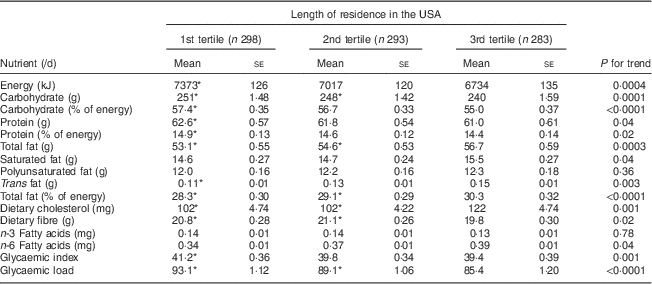
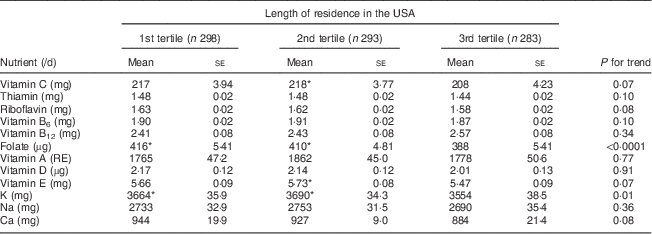
Intakes of energy, carbohydrate (total and as a percentage of energy), glycaemic index and load, protein (total and as a percentage of energy), dietary fibre, folate and K were inversely associated with length of residence in the USA; while intakes of fat (total and as a percentage of energy), saturated and trans fat, dietary cholesterol and n-6 fatty acids were directly associated with length of residence in the USA (Tables 2 and 3).
Daily energy and macronutrient intakes of the MASALA study participants according to length of residence in the USAFootnote †
MASALA, Mediators of Atherosclerosis in South Asians Living in America.
*Mean value was significantly different from that of the third tertile of length of residence in the USA: P<0·05.
† Variables are reported as mean and standard error, adjusted for age, sex and energy intake, except for energy intake itself. Differences between groups were examined using generalized linear models using Dunnett’s adjustment for multiple comparisons.
Daily micronutrient intakes of the MASALA study participants according to length of residence in the USAFootnote †
MASALA, Mediators of Atherosclerosis in South Asians Living in America; RE, retinol equivalents.
*Mean value was significantly different from that of the third tertile of length of residence in the USA: P<0·05.
† Variables are reported as mean and standard error, adjusted for age, sex and energy intake. Differences between groups were examined using generalized linear models using Dunnett’s adjustment for multiple comparisons.
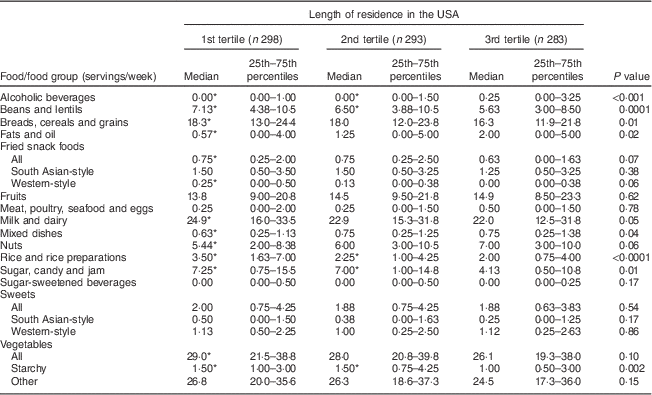
Intakes of alcoholic beverages, fats and oil, and mixed dishes differed across the tertiles of length of residence in the USA and were higher in the highest tertile compared with the lowest and/or the middle tertile; whereas intakes of beans and lentils, breads, cereals and grains, rice and rice preparations, sugar, candy and jam, and starchy vegetables were higher in the lowest and/or middle tertile compared with the highest tertile of length of residence in the USA (Table 4).
Weekly intakes of selected foods and food groups of the MASALA study participants according to length of residence in the USAFootnote †
MASALA, Mediators of Atherosclerosis in South Asians Living in America.
*Median value was significantly different from that of the third tertile of length of residence in the USA: P<0·05.
† Data on food group intake are presented as median value with interquartile range. Differences between groups were examined using the Kruskal–Wallis test.
Discussion
The objective of the present study was to evaluate whether dietary and nutrient intakes differed by length of residence in the USA in a cohort of middle-aged and older South Asians. In general, a longer length of residence in the USA was associated with lower daily intakes of energy, carbohydrate, dietary fibre, glycaemic index and load, and higher intakes of fat, protein and dietary cholesterol. When weekly consumption of foods and food groups was examined, a longer length of residence in the USA was associated with higher intakes of alcoholic beverages and mixed dishes, fats and oil, and lower intakes of beans and lentils, breads, cereals and grains, rice and rice preparations, as well as starchy vegetables and sugar, candy and jam.
Few studies have examined whether nutrient and food intakes differ by length of residence in the USA among South Asians. In a study of seventy-three South Asian immigrants living in New York City and Washington DC, differences in nutrient and food intakes after moving to the USA by length of residence in the USA were examined( Reference Raj, Ganganna and Bowering 20 ). Regardless of the length of stay in the USA, the participants reported consuming more fruit juice, snack chips, fruits, margarine, cola and alcoholic beverages after moving to the USA; and in contrast to recent residents, participants living in the USA for 10 years or longer reported lower intakes of foods such as ghee (clarified butter), milk and other dairy products. In the MASALA study, we did not query specifically whether participants had changed their dietary patterns after moving to the USA; however, intakes of alcoholic beverages and butter (including ghee), margarine and oil were higher among South Asians in the highest tertile of length of residence in the USA as compared with the lowest and middle tertiles. More recently, Lesser and colleagues( Reference Lesser, Gasevic and Lear 21 ) examined the associations between acculturation and dietary patterns among 207 participants of South Asian origin belonging to the Multi-Cultural Community Health Assessment Trial. Length of residence in Canada (examined as quartiles with cut-off values: ≤13·8 years, 13·9–21·1 years, 21·2–32·1 years and ≥32·2 years) was associated with positive dietary behaviours and practices including increased fruit and vegetable consumption and a preference for cooking methods such as grilling as compared with deep-frying. However, a longer period of residence in Canada was also associated with less healthy practices including higher intakes of meat and sugar-sweetened beverages and higher frequencies of eating outside the home, indicating mixed results from time spent in Canada. Findings from the MASALA study are consistent with those reported for South Asian immigrants residing in Europe( Reference Wandel, Raberg and Kumar 22 , Reference Patel, Vyas and Cruickshank 23 ), suggesting that immigration, culture and food environment all influence dietary intake among this population subgroup.
Our study has several strengths. South Asians are a growing minority in the USA with extensive disparities for chronic diseases such as type 2 diabetes and heart disease; however, few, if any studies have examined the role of factors such as diet and acculturation on these increased risks. The MASALA study has carefully collected and detailed information on several traditional and novel risk factors using validated methods. Dietary assessment in the cohort was conducted using a culturally appropriate FFQ whose relative validity has been previously examined. However, in general, diet assessment is fraught with measurement error which can sometimes be differential, and most commonly includes under-reporting of energy, nutrients and foods, thereby affecting the results of diet–disease relationships( Reference Kipnis, Subar and Midthune 24 , Reference Trabulsi and Schoeller 25 ). In addition, the study was observational in design and residual confounding due to factors that were imprecisely or not measured is also a possibility. The MASALA cohort is largely representative of the middle-aged and older South Asian population currently residing in the USA. However, the high educational and socio-economic attainment and older age of the cohort may limit the generalizability of any findings to those with lower education levels and younger ages.
The key finding of the current study was that dietary intakes among South Asian immigrants living in the USA differed by the length of residence in the USA, with largely mixed benefits. For example, a longer length of residence in the USA was associated with lower intakes of foods such as rice, starchy vegetables, and sugar, candy and jam but was positively associated with intakes of fats and oils. For some nutrients and foods (e.g. carbohydrate and alcohol), differences across groups were statistically significant; however, the absolute differences were relatively small. While small differences in intakes of nutrients and foods may not always translate to significant associations with chronic disease risk, they may be indicative of an overall eating pattern which may be more strongly correlated with health outcomes and therefore critical in informing policy recommendations. For example, health promotion programmes for South Asian immigrants should focus on emphasizing healthy behaviours such as the consumption of traditional foods like beans and lentils while limiting intakes of simple carbohydrates, fats and oil.
South Asians in the USA are a fast-growing ethnic minority and exhibit a higher risk for chronic diseases, thereby potentially posing a significant health-care expense( 1 , Reference Palaniappan, Araneta and Assimes 2 ). Dietary behaviours are an important predictor of chronic disease risk( Reference Satia-Abouta, Patterson and Neuhouser 6 , 26 ). Factors such as length of stay in the USA play an important role in the diet and health of immigrant populations( Reference Koya and Egede 27 – Reference Lee, Sobal and Frongillo 29 ). Therefore, understanding the changing dietary intakes of immigrant groups is crucial for developing effective diet and lifestyle interventions aimed at reducing the chronic disease risk of diverse populations.
Acknowledgements
Financial support: The MASALA study was supported by the National Institutes of Health (grant number 1R01-HL-093009). Data collection at UCSF was also supported by NIH/NCRR UCSF-CTSI (grant number UL1 RR024131). A.M.K. was also supported by grant K24HL112827. The funders had no role in the design, analysis or writing of this article. Conflict of interest: None. Authorship: N.R.K. and A.M.K. contributed to the original design and to data collection for the MASALA study. S.A.T. was responsible for the design and analysis of this report and drafted the manuscript. N.R.K., A.M.K., M.D.G. and D.D. consulted on the analysis. All authors made critical comments during the preparation of the manuscript. S.A.T. has primary responsibility for the final content. All authors read and approved the final version of the paper. Ethics of human subject participation: The study was conducted according to the guidelines laid down in the Declaration of Helsinki and all procedures involving human subjects were approved by the institutional review boards of UCSF and NWU. All study participants signed informed consent. Further, the institutional review board of Johns Hopkins Bloomberg School of Public Health deemed this secondary analysis plan using de-identified data as not constituting human subjects research.
Appendix
Food groups and average serving sizes in the MASALA study analysis



