


Healthy eating is important in all life stages. For children and adolescents, in particular, healthy eating is essential for ensuring optimal physical and cognitive development( Reference Jacka, Kremer and Berk 1 – Reference Park, Falconer and Viner 3 ). Dietary patterns and eating behaviours established during childhood and adolescence are likely to persist into adulthood( Reference Scaglioni, De Cosmi and Ciappolino 4 ). Thus, promoting healthy eating as early as possible is of particular importance. Furthermore, achieving and maintaining normal body weight is vital for favourable health outcomes throughout the life course( Reference Park, Falconer and Viner 3 , Reference Lloyd, Langley-Evans and McMullen 5 ). In more detail, childhood obesity is associated with a wide array of adverse health outcomes, both physical and psychosocial( Reference Quek, Tam and Zhang 6 ). Not only is excess weight in childhood and adolescence associated with dental caries and asthma( Reference Hayden, Bowler and Chambers 7 , Reference Tashiro and Shore 8 ), but is also likely to lead to lifelong overweight and obesity( Reference Singh, Mulder and Twisk 9 ). Furthermore, childhood obesity is associated with greater risk and earlier onset of chronic disorders such as hypertension, hypercholesterolaemia and type 2 diabetes( Reference Park, Falconer and Viner 3 , Reference Singh, Mulder and Twisk 9 – Reference Abdullah, Wolfe and Stoelwinder 11 ).
Be that as it may, the dietary patterns of children and adolescents in Greece over the last decades are shifting away from the traditional Greek diet, towards an unhealthier direction( Reference Tambalis, Panagiotakos and Moraiti 12 – Reference Farajian, Risvas and Karasouli 16 ). At the same time, approximately 40 % of children and adolescents are either overweight or obese, exhibiting one of the highest prevalence rates of paediatric overweight and obesity in Europe( Reference Farajian, Risvas and Karasouli 16 – 18 ). Hence, the promotion of healthy dietary patterns, based on the principles of the traditional Greek diet, as well as prevention and control of childhood obesity, is of notable importance in this particular European region.
Dietary guidelines constitute an essential policy tool for facilitating optimal dietary patterns and healthy eating behaviours. An evidence-based approach was employed to develop the 2014 National Dietary Guidelines of Greece (NDGGr) for adults( 19 ), as well as for specific population groups, including (i) infants, children and adolescents( 20 ); (ii) women (including women during pregnancy, lactation and menopause)( 21 ); and (iii) adults aged 65 years or older( 22 ). We report here the methodology adopted for the development of the food-based National Dietary Guidelines of Greece for Infants, Children and Adolescents, as well as the innovative aspects adopted for promoting healthy eating. In the present work we focus on the guidelines for children and adolescents aged 1–18 years. It should be also noted that through the promotion of healthy dietary patterns and physical activity, the NDGGr aim to serve as a policy tool for preventing childhood obesity.
Materials and methods
The NDGGr( 19 – 22 ) were developed under the Operational Program ‘Human Resources Development’ 2007–2013 of the Hellenic Ministry of Health. The private non-profit scientific organization, the Institute of Preventive Medicine, Environmental and Occupational Health – Prolepsis, was selected to develop a methodological protocol for the optimal development and to compile the NDGGr. The WHO, FAO and European Food Safety Authority methodologies( 23 – 25 ) were used for the development of the food-based NDGGr, so as to take into consideration valuable experiences and relevant methodology for developing such guidelines. A multidisciplinary research team (including nutritionists, physicians, health promotion specialists and food technologists) was selected to implement the entailed research tasks, compilation and authorship of the NDGGr, as well as its production and dissemination following Scientific Committee approval. In more detail, the synthesis and critical appraisal of the most robust peer-reviewed epidemiological evidence was undertaken by the Prolepsis team, which was responsible for compiling the final NDGGr and related health promotion materials for the general and scientific publics.
Additionally, Prolepsis selected and appointed an independent multidisciplinary Scientific Committee, responsible for the critical review and appraisal of the compiled NDGGr. The Scientific Committee consisted of twenty-eight experts in the nutritional sciences, including physicians, research scientists and academics, as well as representatives of relevant Ministries. Financial compensation was not awarded for Committee participation. Committee members were assigned to four Subcommittees (i.e. NDGGr Subcommittees for: (i) Infants, Children and Adolescents (ages 0 to <18 years old); (ii) Adults; (iii) Women (including women during pregnancy, lactation and menopause); and (vi) Adults aged 65 years or older) based on their particular field of expertise. Subcommittee members were responsible for reviewing the critically appraised literature regarding the potential aetiological association between the consumption of nutrients, foods and/or dietary patterns and subsequent risk of developing the most prevalent diet-related chronic diseases (including CVD, type 2 diabetes mellitus, metabolic syndrome, obesity and most prevalent cancers) and for approving the final dietary guidelines, as will be discussed below. The Committee members met regularly with the Prolepsis team to discuss the critically appraised evidence until a consensus was reached.
Synthesis of evidence
First, for the development of the dietary guidelines, the following were taken into consideration: (i) the consumption of food items and/or food groups in Greece, particularly in relation to the traditional Greek diet, was assessed based on the FAO food balance sheets( 26 ), the Hellenic National Statistics Authority household budget surveys( 27 ) and food consumption surveys( Reference De Henauw, Brants and Becker 28 ); (ii) related scientific publications, including population-based epidemiological investigations regarding the consumption of food items and/or meals at the individual level in Greece; (iii) the regional seasonal availability, financial cost and related environmental considerations (i.e. including the bioeconomy and biodiversity of foods), when applicable; and (vi) the pre-existing Dietary Guidelines for Adults of the Supreme Scientific Health Council of the Hellenic Ministry of Health and Welfare( 29 ). In addition, a systematic literature search was conducted to identify the most recent and related scientific reports and dietary guidelines published by international organizations, governmental entities and scientific societies in Greece, Europe and worldwide( 30 – 33 ).
Second, the epidemiological trends and public health importance of nutrition-related chronic diseases in Greece were evaluated based on a systematic literature search in PubMED, as well as the WHO European Health for All databases and GLOBOCAN database. Additionally, a systematic search was conducted to retrieve the most robust epidemiological evidence (i.e. meta-analyses of randomized trials or prospective cohort studies) regarding the consumption of nutrients, foods and/or dietary patterns, as well as physical activity, with the subsequent risk of developing the aforementioned most prevalent diet-related chronic diseases.
Evidence-level grading and compilation of the National Dietary Guidelines of Greece
The retrieved evidence was graded based on the methodology of the European Society of Cardiology (Recommendations for Guidelines Production; https://www.escardio.org/Guidelines/Clinical-Practice-Guidelines/Guidelines-development/Writing-ESC-Guidelines)( Reference Perk, De Backer and Gohlke 34 ), modified to accommodate for the particularities of nutritional data( Reference Mann 35 ). In particular, the following three Levels of Evidence were applied: (i) Level A, evidence arising from ≥1 meta-analysis of either prospective cohort studies or randomized clinical trials and/or ≥1 multi-centre randomized clinical trial; (ii) Level B, evidence arising from ≥2 randomized clinical trials or ≥ 2 prospective cohort studies or ≥5 case–control studies or ≥5 non-randomized clinical trials; or (iii) Level C, expert consensus and/or evidence arising from cross-sectional and/or case–control studies. The preliminary dietary guidelines were compiled based on the evidence-level grading and presented for review to all Subcommittee members. A series of expert panel meetings among Subcommittee members was conducted for the refinement of dietary guidelines until a consensus was reached. Finally, an analytical Report was compiled detailing the retrieved findings and associated strength of recommendation for each NDGGr food item/category. This Report served as the basis for further developing two volumes of the NDGGr targeting (i) the general public and (ii) health professionals, as detailed below.
Development of the National Dietary Guidelines of Greece
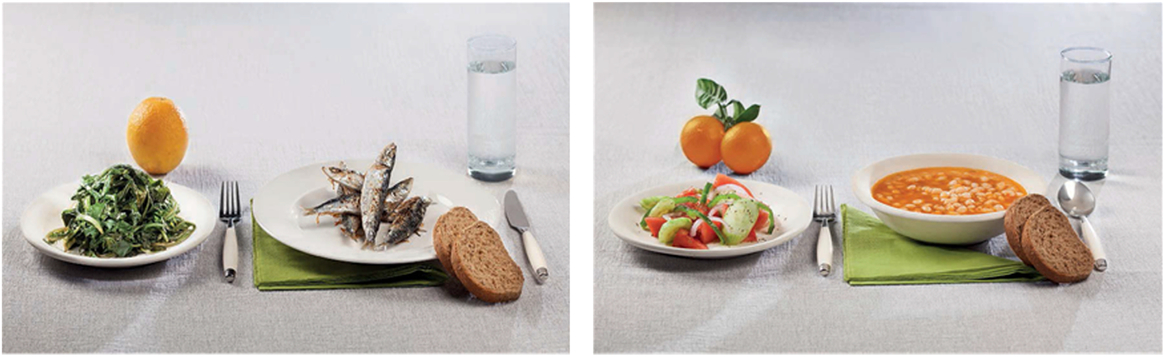
Food-based NDGGr, with nutritional education and health promotion messages for consumers, were subsequently developed, including the following food items/categories: (i) fruits; (ii) vegetables; (iii) milk and dairy products; (iv) cereals; (v) red and white meat; (vi) fish and seafood; (vii) eggs; (viii) legumes; (ix) added lipids, olives and nuts; (x) added sugars and salt; and (xi) water and beverages. Physical activity recommendations were also compiled. To facilitate uptake, a Nutrition Wheel consisting of the ten most vital nutrition and health promotion messages was developed (Fig. 1). Pictorial Healthy Meal recommendations were incorporated regarding the optimal frequency and serving sizes of main meals, based on the traditional Greek diet (Fig. 2). Specifically, the Healthy Meal depicts indicative serving sizes for adults and combinations of foods based on the traditional Greek diet (including a traditional main dish, salad and fruit) and prepared according to the NDGGr recommendations.
The 2014 Greek Dietary Guidelines for Infants, Children and Adolescents. The 2014 Greek Dietary Guidelines are depicted as a Nutrition Wheel entitled ‘Ten steps to healthy eating for children and adolescents’

Indicative examples of the Healthy Meals included in the Greek National Dietary Guidelines for Infants, Children and Adolescents
Finally, two volumes of the NDGGr were developed targeting (i) the general public and (ii) health professionals, respectively. Regarding the NDGGr for the general public, dietary recommendations were presented analytically in text and pictorial formats, as detailed above. With respect to the NDGGr for the health professionals, a detailed description of the evidence reviewed and strength of recommendations was compiled. To enhance uptake, the NDGGr were disseminated in print format and additionally made freely accessible in electronic format.
Results
The NDGGr for infants, children and adolescents primarily include food-based guidelines, as well as recommendations regarding the frequency of meals and parenting tips for promoting healthy dietary patterns and eating behaviours. Specifically, the NDGGr for children and adolescents (aged 1 to <18 years old) encompass age-specific recommendations regarding ten food groups and/or items, water and/or beverages, and physical activity. Age-specific recommended dietary intakes, as well as indicative serving/portion sizes, are summarized below and detailed in Table 1. In conjunction, a Nutrition Wheel, consisting of the ten most pivotal recommendations, was developed (Fig. 1).
Recommendations and indicative serving sizes* for the consumption of food items and food groups based on the 2014 Greek Dietary Guidelines for children and adolescents

* The nutritional needs of children and adolescents may differ according to sex, physical activity level and stage of development.
† 1 serving corresponds to 120–200 g fruit or 125 ml fresh fruit juice without added sugars.
‡ 1 serving corresponds to 150–200 g raw or cooked vegetables.
§ 1 serving corresponds to 150 ml milk or 200 g yoghurt or 30 g hard cheese or 60 g soft cheese.
║ 1 serving corresponds to 1 slice bread, or 120 ml cooked rice or pasta, or 120–150 g cooked potatoes.
¶ 1 serving corresponds to 15 ml olive oil or vegetable oil, 15 ml margarine or butter, or 10–12 olives.
** Avoid consumption of sweetened beverages, soft drinks and fruit juices with added sugars.
†† For table salt, it is recommended that infants aged 1–3 years old consume <2 g/d, children aged 4–6 years old consume <3 g/d, and children and adolescents aged 7–18 years old consume <5 g/d.
Vegetables and fruits
The category ‘Vegetables and Fruits’ encompasses all raw and cooked vegetables (including starchy vegetables, such as peas, corn and pumpkins), as well as raw and dried fruits and freshly squeezed fruit juices (i.e. without added sugars). Potatoes are not included in this category. Frequent consumption of vegetables and fruits is associated with a reduced risk of CVD, type 2 diabetes and gastrointestinal cancers in adulthood( Reference Mente, de Koning and Shannon 36 – Reference Aune, Lau and Chan 41 ). Additional health benefits of such consumption patterns include the prevention of overweight and obesity in both childhood and adulthood( Reference Perk, De Backer and Gohlke 34 ). Hence, the NDGGr recommendation entails the consumption of a variety of fruits and vegetables (preferentially those in season) several times per day in every main meal (Fig. 2).
Milk and dairy products
This category includes milk and dairy products, including yoghurt and cheese. Butter is excluded as it pertains to an added source of oils and fats. Moderate consumption of milk and dairy products is associated with a reduced risk of CVD, type 2 diabetes and colorectal cancer in adulthood( Reference Soedamah-Muthu, Ding and Al-Delaimy 42 – Reference Elwood, Pickering and Givens 45 ). Additional health benefits include increased bone density and a reduced likelihood of hypertension( Reference Ralston, Lee and Truby 46 ). Thus, the NDGGr recommendation endorses that children and adolescents consume milk and dairy products daily. Additionally, children >2 years old may consume either full-fat or semi-skimmed milk.
Cereals
Rice, potatoes, cereals and grains, as well as their by-products (e.g. flour, bread and rusks, pasta and traditional savoury pies), are included in this food category. Wholegrain cereals and their by-products are a rich source of carbohydrates, as well as dietary fibre, B-complex vitamins and minerals. Increased consumption of whole grains is associated with a reduced risk of CVD, type 2 diabetes and colorectal cancer, as well as a reduced likelihood of overweight and/or obesity( Reference Mente, de Koning and Shannon 36 , Reference Ye, Chacko and Chou 47 – Reference Hauner, Bechthold and Boeing 49 ). The NDGGr recommend that children and adolescents consume a variety of grains and cereals (preferably wholegrain) daily.
Red meat and white meat
This category encompasses all red (e.g. beef, pork, lamb, goat, deer and wild boar) and white (e.g. chicken, turkey, duck, rabbit, pheasant and game birds) meats, as well as their related processed products. While meats are a rich source of proteins, Fe, vitamins B and E, Mg and Zn, increased consumption of processed meats is associated with several adverse health outcomes( Reference Chen, Lv and Pang 50 – Reference Aune, Chan and Vieira 53 ). Hence, the NDGGr advise that children older than 2 years should consume red and/or white meats 2–3 times per week. However, all processed meats should be avoided at all ages.
Fish and seafood
All types of fish and seafood, including shellfish, are included in this food category. Fish and seafood are a primary source of high-biological-value proteins (while concomitantly a poor source of saturated fats) and a rich source of vitamin D, Se and Zn. The elevated consumption of oily fish rich in n-3 fatty acids is essential for optimal brain development and related health outcomes in adulthood( Reference Mente, de Koning and Shannon 36 , Reference Innis 54 – Reference Xun, Qin and Song 59 ). Thus, the NDGGr recommendation endorses children and adolescents to consume a variety of fish and seafood, corresponding to 2–3 servings per week. Additionally, at least one serving per week ought to regard the consumption of oily fish rich in n-3 fatty acids.
Eggs
Eggs are a readily available protein source with high biological value. Due to their high nutrient content (e.g. vitamins A, D and B12, thiamin and riboflavin, as well as carotenoids, Se and choline), and taking into consideration the associations of egg consumption with various health outcomes( Reference Mente, de Koning and Shannon 36 , Reference Li, Zhou and Zhou 60 – Reference Shin, Xun and Nakamura 62 ), children of all ages should consume 4–7 eggs per week. It is of note that children with hyperlipidaemia are advised to first consult with their physician.
Legumes
The ‘Legumes’ category, an integral component of the traditional Greek diet, includes lentils, beans, chickpeas, split peas and broad beans. Pulses and legumes constitute a rich source of proteins and fibre, as well as several vitamins and minerals, including Fe, Ca, Mg and Zn, with favourable health outcomes( Reference Aune, Chan and Lau 48 , Reference Bernstein, Pan and Rexrode 63 , Reference Bazzano, Thompson and Tees 64 ). Hence, the NDGGr recommend that children and adolescents should consume pulses and legumes at least once per week.
Added lipids, olives and nuts
This category includes added fats and oils (e.g. olive oil, seed and/or other vegetable oils, margarine and butter), olives and nuts, as well as their by-products (e.g. tahini). The consumption of added fats and oils is essential for normal child development. In particular, olive oil is a vital component of the traditional Greek diet, being concomitantly a rich source of MUFA, vitamin E and polyphenols. In contrast, the consumption of saturated and trans-fatty acids is associated with hyperlipidaemia, CVD, as well as overweight/obesity( 32 , Reference Mente, de Koning and Shannon 36 , Reference Mozaffarian, Micha and Wallace 66 – Reference Psaltopoulou, Kosti and Haidopoulos 69 ). Thus, the NDGGr recommend that olive oil ought to be the preferred choice of added oil in the preparation of cooked meals and/or salads. Furthermore, the consumption of added fats arising from animal sources (e.g. butter) should be limited and/or substituted with olive oil. Finally, the consumption of trans-fatty acids (e.g. in prepared food products, sweets and/or fast-food items) should be avoided.
Added sugars and salt
The ‘Added Sugars and Salt’ category encompasses all added sugars (e.g. granulated white and brown sugar, cane sugar, glucose powder and fructose powder) and honey, as well as table salt. Consumption of added sugars, including sweetened beverages and soft drinks, is associated with an increased risk of dental caries and childhood overweight/obesity( Reference Anderson, Curzon and Van Loveren 70 – Reference Vartanian, Schwartz and Brownell 72 ). Hence, the NDGGr recommend that the consumption of foods with added sugars should be limited to a minimum. In particular, it is recommended that the consumption of sweetened beverages, soft drinks and fruit juices with added sugars is avoided. In addition, table salt, as most often made available in the Greek market, is an essential source of iodine. However, consumption of elevated levels during childhood and adolescence is associated with an increased risk of hypertension and CVD in adulthood( Reference Aburto, Ziolkovska and Hooper 73 – Reference D’Elia, Rossi and Ippolito 76 ). As a result, the dietary guideline developed was that consumption of salt should be limited in children and adolescents.
Physical activity
Physical activity is associated with a wide array of health benefits in childhood and adolescence, including optimal physical and psychosocial development, normal body weight and the prevention of several chronic diseases in adulthood, including hypercholesterolaemia and type 2 diabetes( Reference Goran and Treuth 77 , Reference Must and Tybor 78 ). With respect to young children (aged 3–6 years old), the NDGGr recommend that total screen time should be limited to a minimum and children should be physically active, in a wide range of activities, for at least 1 h/d. Within this context, parental participation is also recommended. Regarding older children and adolescents (aged 7–18 years old), it is also recommended that total screen time is limited and at least 1 h/d is dedicated to either athletic and/or sports training activities. However, it is recommended that children aged younger than 10 years old should focus mainly on safe and fun activities rather than competitive sports.
Other recommendations
The NDGGr include several additional recommendations regarding the types and frequencies of meals. Particular emphasis is placed on the importance of consuming a healthy breakfast, including items from at least three food groups (i.e. dairy products, cereals, and fruits or vegetables). Additionally, for main meals, illustrations of a Healthy Meal (including a main dish, salad and fruit) based on the traditional Greek diet are illustrated for clarity. Furthermore, behavioural techniques are included as a separate chapter of the NDGGr, aiming to provide practical tips to parents for the promotion of healthy eating. The issues addressed include the influence of parental behaviours (e.g. acting as role models) for encouraging healthy dietary patterns( Reference Schwartz, Scholtens and Lalanne 79 , Reference Krolner, Rasmussen and Brug 80 ), the importance of consuming family meals( Reference Hammons and Fiese 81 , Reference Scaglioni, Arrizza and Vecchi 82 ), tips and ideas for improving the consumption of less preferred foods, as well as specific tips for adolescents. The aforementioned recommendations are summarized in the Nutrition Wheel Guidelines as follows: ‘Be a role model for your children by encouraging healthy eating. Eat 3 main meals and at least one snack every day. Eat breakfast every day. Drink plenty of water. Eat together as a family as frequently as possible. Turn the TV off. Cook at home healthy and safe food. Choose seasonal products.’
Discussion
We report the methodological approach adopted for the development of the 2014 NDGGr for infants, children and adolescents. Within this context, an evidence-based approach was employed to develop recommendations for promoting healthy dietary patterns and physical activity, as well as a Nutrition Wheel, to ultimately enhance the adoption of the aforementioned recommendations and promote healthy eating habits. The NDGGr have been adopted by the Hellenic Ministry of Education, while the Hellenic Institute for Educational Policies has approved their use and widespread dissemination in public schools nationwide. Additionally, the Ministry of Health, as well as the Hellenic Central Health Council, has endorsed their use as a tool for promoting healthy dietary patterns through their widespread dissemination to the general public (including students, parents and educators), as well as health-care professionals. To enhance extensive uptake, the NDGGr have been disseminated nationwide and are electronically freely accessible (English summary available at http://www.diatrofikoiodigoi.gr/?Page=summary−children). Finally, scientific volumes of the NDGGr, including a detailed description of the evidence reviewed and strength of recommendation in both print and electronic forms, have been made accessible to nutritionists and health-care professionals alike.
Food-based dietary guidelines for children and/or adolescents have been previously published by twenty-nine (including Greece) out of fifty-one countries in the WHO European Region (57 %). Of the other twenty-eight countries (presented in the online supplementary material, Supplemental Table S1)( 83 – 115 ), twenty-four adopt a pictorial illustration for the presentation of the guidelines; twelve adopt the pyramid; ten use other forms of pictorial models (mostly circles, plates or pies); and two countries (Finland( 83 ) and Slovenia( 84 )) use both the food pyramid and plate. The NDGGr also use two types of illustration: a Nutrition Wheel and pictorial Healthy Meal recommendations (Figs 1 and 2). Furthermore, the NDGGr are one of the few guidelines which encompass the greatest number of distinct food categories, including ten food groups, as well as physical activity (other dietary guidelines with eight or nine distinct food categories are those of Belgium( 85 ), Finland( 83 ), Luxembourg( Reference Alkerwi, Sauvageot and Nau 86 ), Netherlands( Reference Kromhout, Spaaij and de Goede 87 ) and Slovenia( 84 )).
It should be also noted that despite different geographical, socio-economic and cultural contexts among countries, the majority of the pivotal nutritional recommendations are similar. In fact, the principal messages include daily consumption of adequate amounts of fruits, vegetables, dairy products, as well as starches, cereals and grains, and moderate-to-limited intake of fats. In more detail, guidelines from all countries include recommendations regarding fruit and vegetable intake, most of which suggest the intake of five servings daily or at least 500 g/d. The NDGGr are one of the guidelines recommending the highest suggested intake of fruits and vegetables, as the lowest suggested intake (for children 1–3 years) is >300 g/d, reaching for adolescents more than 1000 g/d. Furthermore, nineteen of the twenty-eight countries (68 %) incorporate specific recommendations regarding the increased consumption of whole grains or provide the recommended dietary fibre intake. The NDGGr also promote the intake of wholegrain cereals with specific tips facilitating their consumption. Furthermore, it should be noted that even if the recommended intake of protein food and red meat is more or less common in the majority of the countries, it is noteworthy that only eleven of the twenty-eight guidelines (39 %) explicitly recommend the avoidance of processed meat. Finally, it should be mentioned that the majority of the WHO European Region countries (twenty-two out of twenty-eight) provide physical activity recommendations. Of these countries, only eleven recommend physical activity for 60 min/d (or longer) – the highest recommendation, similarly to the NDGGr.
All things considered, the recently developed NDGGr for infants, children and adolescents have employed an evidence-based approach to develop food-based nutritional and physical activity recommendations. The NDGGr novel aspects lie in the evidence-based approach applied, as well as the development of an age-specific Nutrition Wheel and indicative examples of Healthy Meals with pictorial depictions providing recommendations regarding the optimal frequency and serving sizes of main meals, based on the traditional Greek diet. Future longitudinal investigations are necessary to elucidate whether the application of the NDGGr is effective for promoting healthy dietary patterns and serves as a useful tool for childhood obesity prevention and maintenance of an optimal body weight throughout adolescence and subsequent adulthood.
Supplementary material
To view supplementary material for this article, please visit https://doi.org/10.1017/S1368980019001034
Acknowledgements
Acknowledgements: The authors would like to thank Enav Horwitz for her valuable contribution for the preparation of Supplemental Table S1. The authors would like to express their gratitude to all members of the National Dietary Guidelines Scientific Committee for generous contribution of their time and valuable knowledge: Ioannis Alamanos4 (Former Associate Professor, Patras Medical School); Maria Alevizaki1 (Professor of Endocrinology, Athens Medical School); Aristides Antsaklis3 (Professor of Obstetrics and Gynaecology, Athens Medical School); Vassiliki Benetou1,2,3,4 (Paediatrician, Associate Professor of Hygiene and Epidemiology, Athens Medical School); Maria Chasapidou2 (Professor of Nutrition – Dietetics, Alexander Technological Educational Institute of Thessaloniki); George P. Chrousos2 (Professor of Paediatrics, Athens Medical School); Aikaterini Dakou-Voutetaki2 (Professor Emeritus of Paediatric Endocrinology, Athens Medical School); George Dedoussis4 (Professor of Human Cellular and Molecular Biology, Harokopio University); Evanthia Diamanti-Kandarakis1 (Professor of Internal Medicine – Endocrinology, Athens Medical School); Stella Egglezou3 (Paediatrician–Neonatologist, Director of the Neonatal Department of the ‘Elena Venizelou’ Hospital, Athens); Eustathia Fouseki1,2,3,4 (Director of Directorate of Counselling, Career Guidance and Educational Activities of the Ministry of Culture, Education and Religious Affairs); Ioannis Karaitianos4 (Unr. Associate Professor of Surgery, Athens Medical School; Director of the ‘Agios Savvas’ Cancer Hospital; Chairman of the Board of Directors, Hellenic Association of Gerontology & Geriatrics); Eugenio Koumantakis3 (Professor Emeritus of Obstetrics and Gynaecology, University of Crete); Dimitrios Linos1,2,3,4 (Professor of Surgery, Athens Medical School); Evangelia Magklara-Katsilabrou4 (Clinical Nutritionist – Dietitian); Ioannis Manios1,2 (Associate Professor in Nutrition Education – Assessment, Harokopio University); Anastasios Mortoglou1 (Internist – Endocrinologist, Head of Endocrinology Department, Athens Medical Center); Demosthenes Panagiotakos1 (Professor in Biostatistics – Epidemiology of Nutrition, Harokopio University); Permanthia Panani3 (Midwife, President of SEMMA, ICM (International Confederation of Midwives) representative, European Midwives Association representative); Anastasia Pantazopoulou-Foteinea1,2,3,4 (Public Health Physician – Occupational Physician, former General Principal of Public Health, Ministry of Health); Evangelos Polychronopoulos3,4 (Associate Professor in Preventive Medicine & Nutrition, Harokopio University); Theodora Psaltopoulou1,4 (Internist, Associate Professor of Epidemiology and Preventive Medicine, Athens Medical School); Eleftheria Roma-Giannikou2 (Professor Emeritus of Paediatric Gastroenterology, Athens Medical School); Panagiota Sourtzi4 (Professor, Faculty of Nursing, University of Athens; Secretary, Board of Directors, Hellenic Association of Gerontology & Geriatrics); Chrysa Tzoumaka-Mpakoula2,3 (Professor Emeritus of Pediatrics, Athens Medical School); Antonis Zampelas1,3 (Professor of Human Nutrition, Agricultural University of Athens). 1Committee of the National Dietary Guidelines for Adults. 2Committee of the National Dietary Guidelines for Infants, Children and Adolescents. 3Committee of the National Dietary Guidelines for Women (including women during pregnancy, lactation and menopause). 4Committee of the National Dietary Guidelines for Adults aged 65 years or older. The National Dietary Guidelines of Greece Scientific Implementation Team (http://www.diatrofikoiodigoi.gr/?Page=summary-who-we-are): Scientific Coordinator: Athena Linos, MD, MPH, PhD (Professor & Chair of Department of Hygiene, Epidemiology & Medical Statistics, Athens Medical School, National and Kapodistrian University of Athens). Team of Authors: Vassiliki Benetou, MD, PhD (Scientific consultant) (Paediatrician, Assistant Professor of Hygiene and Epidemiology, University of Athens Medical School); Dina (Konstantina) Zota, MSc (Project manager) (Health Promotion Specialist, Prolepsis Institute); Katerina Belogianni, MSc (Clinical Nutritionist – Dietitian, Prolepsis Institute); Anna Kandaraki, MSc (Clinical Psychologist); Christina-Maria Kastorini, PhD (Clinical Nutritionist – Dietitian, Prolepsis Institute); Rena Kosti, MSc, PGCert, PhD (Food Scientist – Dietitian); Eleni Papadimitriou, MD, PhD (Physician, Prolepsis Institute); Fani Pechlivani, MSc, PhD (Midwife, Assistant Professor, Midwifery Department, Technological Educational Institute of Athens); Anastasia Samara, PhD (Clinical Nutritionist – Dietitian); Ioannis Spyridis, PhD (Health Promotion Specialist, Prolepsis Institute); Panagiota Karnaki, MSc (Health Promotion Specialist, Prolepsis Institute); Afroditi Veloudaki, MA (Health Communications Specialist, Prolepsis Institute). Financial support: The development of the 2014 National Dietary Guidelines of Greece was funded by the NSRF 2007–2013 Program (MIS code 346818, as part of the Operational Program ‘Human Resources Development’), the Hellenic Ministry of Occupation, Social Insurance and Welfare, and the Hellenic Ministry of Health. The funders had no role in the design, analysis or writing of this article. Conflict of interest: All authors report no conflict of interest. Authorship: A.L.C. and M.K.N. contributed equally to this work. E.C., A.L.C. and M.K.N. drafted the first version of the manuscript; C.M.K. and D.Z. drafted the revised version of the manuscript; D.Z., C.M.K., E.P., K.B., V.B. and A.L. are part of the scientific team of the national dietary guidelines. All authors contributed to the revising of the manuscript for important content and gave their final approval of the version submitted for publication. Ethics of human subject participation: Not applicable.



