


Since childhood obesity has increased continuously in the past resulting in high prevalence rates in Europe and many other regions in the world( Reference Lobstein, Baur and Uauy 1 , Reference Ng, Fleming and Robinson 2 ), changing dietary habits has become a public health goal. Even through the latest trends in childhood obesity show flattening in north-western Europe and first indications for stagnation in Germany, prevalence rates remain at a high level( Reference Brettschneider, Schaffrath Rosario and Kuhnert 3 , Reference Abarca-Gómez, Abdeen and Hamid 4 ). As eating habits established in childhood are likely to track into adulthood( Reference Fletcher, Wright and Jones 5 , Reference Lien, Lytle and Klepp 6 ), improving dietary habits during early youth seems to be a promising prevention strategy( Reference Baranowski, Mendlein and Resnicow 7 – Reference Chan and Woo 9 ) and might reduce subsequent disease risk and health-care costs of obesity, which have become a serious concern( Reference Afshin, Forouzanfar and Reitsma 10 , Reference Müller-Riemenschneider, Reinhold and Berghöfer 11 ).
Empirical studies and literature reviews document that successful prevention strategies should be broad-based and well-integrated into children’s lives( Reference Lytle, Jacobs and JR, Perry 12 , Reference Lobstein and Baur 13 ). Accordingly, the school setting is a natural fit for anti-obesity programmes and particularly effective when a multisector and bottom-up approach is applied( Reference Hassan 14 – Reference de Bourdeaudhuij, van Cauwenberghe and Spittaels 16 ). Increasing the intake of fruits and vegetables (F&V) has been shown to reduce long-term risk for obesity among adults, as incorporating them in the diet can reduce energy density, promote satiety and decrease energy intake( Reference Rolls, Ello-Martin and Tohill 17 – Reference Vioque, Weinbrenner and Castello 20 ), and is therefore one key element of many prevention strategies. The objective of increasing F&V intake also addresses the issue that children’s average consumption level of these food items is still below the recommended intake( Reference Yngve, Wolf and Poortvliet 21 , Reference Borrmann and Mensink 22 ). The effectiveness of various school-based interventions programmes aimed at promoting F&V intake has been previously summarized( Reference Evans, Christian and Cleghorn 23 , Reference de Sa and Lock 24 ). It was concluded that most schemes were successful in increasing F&V intake of children. In these reviews, also intervention approaches providing children with free or subsidized F&V were shown to be effective. These findings confirm those of previous empirical investigations in that accessibility and availability are considered to be strong predictors of children’s F&V consumption( Reference Rasmussen, Krolner and Klepp 25 ). Also more recent studies found that availability of F&V at home mediated children’s F&V intake( Reference Wolnicka, Taraszewska and Jaczewska-Schuetz 26 , Reference Wyse, Wolfenden and Bisquera 27 ). Additionally, research indicates that repeated exposure to a food is capable of increasing one’s willingness to consume it( Reference Martin, Watson and Preedy 28 ). Experimental studies with infants and children have provided strong evidence for the efficacy of exposure in increasing liking as well as intake of unfamiliar foods and drinks( Reference Birch, Gunder and Grimm-Thomas 29 – Reference Pliner and Stallberg-White 32 ). Availability as well as repeated exposure and thus increasing provision of healthy food choices in schools are therefore promising obesity prevention measures at the community level( Reference Lobstein and Baur 13 , Reference Shepherd, Harden and Rees 33 ).
Against this background, the EU launched a School Fruit and Vegetables Scheme (SFVS) which provides children with free F&V and thus encourages good eating habits in young people. The exact implementation of the scheme at national level is left to the member states but has to be based on national or regional strategies( 34 ). In North Rhine-Westphalia (NRW), the largest German federal state by population, the SFVS was launched towards the end of the 2009/10 academic year. Since its introduction, the number of schools participating in the scheme has increased continuously. The expansion was made possible due to an increase in the budget allocated to the programme and the reduction in the distribution frequency of F&V deliveries from daily to thrice weekly( 35 , 36 ). In the school year 2012/13, when the present data were collected, the total budget for the SFVS NRW was 5 million Euro, with 50 % being financed from federal state resources of NRW and 50 % by EU funds( 37 ). The effectiveness of the SFVS NRW in terms of increasing children’s F&V intake was evaluated during the first year of implementation in 2010/11 by Methner et al.( Reference Methner, Maschkowski and Hartmann 38 ), confirming the success of daily F&V deliveries in increasing children’s F&V intake. However, since then there has been a reduction in F&V deliveries and this current implementation form with only thrice weekly deliveries has not been evaluated in the specific context of the SVFS NRW before. Thus, the question arises whether thrice weekly F&V deliveries are sufficiently frequent to positively influence the dietary behaviour of children. Based on the assumption of a given budget, moreover, only a further reduction in F&V distribution frequency, namely to twice weekly F&V deliveries, will allow more schools’ participation in the future. Thus, a closer look should also be taken at the effects of twice weekly F&V deliveries. With thrice as well as twice weekly F&V deliveries, it is expected that during one school week days without provision of F&V will occur which have not been present before in NRW. This new situation raises the question whether effects that might be observed on days with F&V deliveries are also verifiable on days without those deliveries. The latter would provide a first indication of the potential existence of long-term effects of the scheme, due to an increase in F&V intake in the absence of F&V deliveries. Finally, it seems important to investigate whether subgroups (e.g. boys v. girls, low v. high SES) are affected differently by both implementation forms, as it has been shown that F&V intake is particularly low in boys and children with a low socio-economic status (SES)( Reference Yngve, Wolf and Poortvliet 21 , Reference Borrmann and Mensink 22 , Reference Fernández-Alvira, Börnhorst and Bammann 39 ).
Accordingly, the aim of the present study was to examine whether providing children F&V thrice or twice weekly within the scope of the SFVS NRW is effective in increasing F&V intake of participating children and relevant subgroups. Additionally, the study aims to give a first indication of possible long-term effects, by looking at the effects on days without F&V deliveries.
Methodology
Study design and data collection
The study used a quasi-experimental design with a pre-intervention and post-intervention survey conducted among the same primary-school children (third and fourth grade, aged between 7 and 10 years at pre-intervention) before and after one year of participation in the SFVS NRW. Data were collected at the beginning and end of the 2012/13 school year. Overall, four schools with a thrice and four schools with a twice weekly distribution frequency of F&V, as well as four schools not participating in the SFVS NRW (control schools), were included in the evaluation study. The four schools with a thrice weekly distribution frequency were selected from schools which successfully applied for the admission in the programme in the 2012/13 academic year.Footnote * The four schools with a twice weekly distribution frequency were chosen out of the group of schools which applied for the admission in the programme, but were initially rejected. Criteria for inclusion were social and regional criteria as well as the concept of accompanying nutrition education measures to be established by the schools in the case of acceptance( 37 ). The four control schools were schools that had never applied for admission in the SFVS NRW. Selection criteria for all schools included in the study were their spatial proximity and accessibility for the research team as well as their size. The latter implied that schools considered for the study had to have at least two parallel classes in each grade to ensure a sufficient sample size. In schools with more than two classes in the third and fourth grade, respectively, classes were selected based on class teachers’ willingness to participate in the survey. In total four classes of each school participated in the survey, resulting in forty-eight classes with 664 children included in the analysis. The study was carried out with the support of the Ministry for Climate Protection, Environment, Agriculture, Conservation and Consumer Protection of the State of North Rhine-Westphalia (MKULNV).Footnote † Furthermore, data handling was approved by the data protection officer of the University of Bonn.
Survey instruments
The F&V intake of children was recorded in three repeated 24h dietary recalls before as well as after one year of participation in the SFVS NRW, respectively. At both time points, the children completed a paper-and-pencil questionnaire as a class exercise, supervised by the research team at the first day of data collection. Using words and pictures, children were encouraged to recall the previous day and to describe the foods and drinks they consumed. For the analysis, all F&V consumed over the course of the day were added up, using predefined coding strategies. At post-intervention, F&V provided at school were included if children indicated that they have eaten F&V at school. Aspects of validity, reliability and sensitivity to change of this measurement were tested during the development of the questionnaire in the UK( Reference Edmunds and Ziebland 41 ). Furthermore, the version used in our survey has been adapted to the German school system and was successfully applied in the first evaluation study of the SFVS NRW carried out by Methner et al.( Reference Methner, Maschkowski and Hartmann 38 ). To ensure high data quality, manual data entry was done twice and inter-coder reliability was checked using Holsti’s inter-coder reliability test which yielded an average inter-coder reliability score of 0·99. Only questionnaires of children who filled in at least two 24h dietary recalls at pre- and post-intervention were included in the analysis. Applying this strategy resulted in a sample size of 783 children. Reasonability of answers of these children was investigated carefully by outlier detection via boxplot analysis at school level. We defined outliers as values that were more than 1·5 × interquartile range below the first quartile or more than 1·5 × interquartile range above the third quartile. Following this definition fifty-three children were excluded from the analysis, resulting in a sample size of 730 children. We assessed SES by written questionnaires addressed to parents who filled in the survey at home on a voluntary basis. Children were assigned to low, middle or high SES applying the Brandenburger Social Index( Reference Böhm, Ellsässer and Lüdecke 42 ). Written informed consent was obtained from all parents of included children. To be able to control for difference in SES, we had to exclude children with missing information on SES, due to missing information in the parent questionnaire, resulting in a final sample size of 664 children nested in forty-eight classes.
Statistical analyses
Differences between intervention groups with respect to demographic variables (proportion of children with low, middle and high SES, of third and fourth graders, of girls and boys, of children who eat lunch at home or at school) were analysed using χ 2 tests. We used hierarchical linear regression models according to Raudenbush and Bryk( Reference Raudenbush and Bryk 43 ) to determine whether there were differences in F&V intake change from the first measurement period (pre-intervention) to the post-intervention period (post-intervention) between control and intervention groups. We developed a four-step sequential modelling approach and fitted three-level models with days (level 1) nested in children (level 2), nested in classes (level 3). With only twelve schools in the sample we decided upon class as the highest level and treated the intervention variable as a class variable, given that the intervention was administered in classes. We refrained from adding dummy variables for schools because this would have resulted in a model with a very large number of additional fixed effects parameters (eleven main effects plus all interaction terms with the lower-level predictors). Bell et al.( Reference Bell, Morgan and Schoeneberger 44 ) have shown for two-level models that a very small sample size (of 10 units) at the highest level can lead to a bias in fixed effects and, more importantly, is related to a very low power to detect non-zero fixed effects. However, to account for possible school differences in composition of children, we decided to include child- and class-level covariates, namely SES, gender and grade (explained in more detail below).
Model I was the ‘empty’ model without any explanatory variables besides a dummy variable (Period) for the post-intervention period (post=1), which allows to partition the total variance in children’s F&V intake level into a variance between classes, children and time periods. The outcome Y tij at level 1 refers to the F&V intake (measured via 24 h recalls) on day t of child i in class j:
Level 1 (days):
 $$Y_{{tij}}\, {\equals}\, \pi _{{0ij}} {\plus}\pi _{{1ij}} \cdot Period_{{tij}} {\plus}e_{{tij}} $$
Level 2 (children):
 $$\pi _{{0ij}}\, {\equals}\, \beta _{{00j}} {\plus}r_{{0ij}} $$
 $$\pi _{{1ij}}\, {\equals}\, \beta _{{10j}} {\plus}r_{{1ij}} $$
Level 3 (classes):
 $$\beta _{{00j}}\, {\equals}\, \gamma _{{000}} {\plus}u_{{00j}} $$
 $$\beta _{{10j}}\, {\equals}\, \gamma _{{100}} {\plus}u_{{10j}} $$
Model II examined general intervention effects by adding a dummy-coded group membership variable for both intervention groups (control group=0). As the intervention was implemented on the class level, the intervention group variables were class variables and added as predictors in the level-3 equations. Accordingly, the level-1 and level-2 equations were the same as in Model I, while the level-3 equations were:
Level 3 (classes):
 $$\beta _{{00j}}\, {\equals}\, \gamma _{{000}} {\plus}\gamma _{{001}} \cdot Int.thrice_{j} {\plus}\gamma _{{002}} \cdot Int.twice_{j} {\plus}u_{{00j}} $$
 $$\beta _{{10j}}\, {\equals}\, \gamma _{{100}} {\plus}\gamma _{{101}} \cdot Int.thrice_{j} {\plus}\gamma _{{102}} \cdot Int.twice_{j} {\plus}u_{{10j}} $$
For an increase in F&V intake, due to the intervention, we expect γ 101 and γ 102 – that is, the mean differences between the groups (intervention group minus control group) with respect to the differences between the periods (intervention period minus control period) – to be significantly larger than zero( Reference Lischetzke, Reis and Arndt 45 ).
Model III additionally included level-2 covariates to control for compositional effects on the class level (e.g. clustering of children of high SES within a certain class). On the child level (level 2), a dummy variable capturing whether the children usually eat lunch at school (=0) or at home (=1), gender (boys=0, girls=1), and a dummy variable for low SES and middle SES, respectively, with high SES as the reference group (=0), were considered as covariates and centred around the grand mean. Centring a level-2 (child-level) dummy variable around the grand mean yields level-3 (class) coefficients that can be interpreted as adjusted outcome means( Reference Enders and Tofighi 46 ). Additionally, grade (third grade=−0·5, fourth grade=+0·5) was included at the class level (level 3) as an effect-coded covariate in each of the two level-3 equations, so that it can be tested whether group differences in F&V intake change exist beyond grade effects. The model equations were:
Level 1 (days):
 $$Y_{{tij}}\, {\equals}\, \pi _{{0ij}} {\plus}\pi _{{1ij}} \cdot Period_{{tij}} {\plus}e_{{tij}} $$
Level 2 (children):
 $$\eqalignno{ \pi _{{0ij}}\, {\equals}&\, \beta _{{00j}} {\plus}\beta _{{01j}} \cdot Lunch_{{ij}} {\plus}\beta _{{02j}} \cdot Gender_{{ij}} \quad \quad \quad \quad \quad \quad \cr & {\plus}\beta _{{03j}} \cdot SES.low_{{ij}} {\plus}\beta _{{04j}} \cdot SES.middle_{{ij}} {\plus}r_{{0ij}} $$
 $$\eqalignno{\pi _{{1ij}}\, {\equals}&\, \beta _{{10j}} {\plus}\beta _{{11j}} \cdot Lunch_{{ij}} {\plus}\beta _{{12j}} \cdot Gender_{{ij}} \, \, \, \, \, \, \, \, \, \quad \quad \quad \quad \cr & {\plus}\beta _{{13j}} \cdot SES.low_{{ij}} {\plus}\beta _{{14j}} \cdot SES.middle_{{ij}} {\plus}r_{{1ij}}$$
Level 3 (classes):
 $$\eqalignno{\beta _{{00j}}\, {\equals}&\, \gamma _{{000}} {\plus}\gamma _{{001}} \cdot Int.thrice_{j} {\plus}\gamma _{{002}} \cdot Int.twice_{j} \quad \quad \, \quad \quad \quad \cr & {\plus}\gamma _{{003}} \cdot Grade_{j} {\plus}u_{{00j}} $$
 $$\beta _{{01j}}\, {\equals}\, \gamma _{{010}} {\plus}u_{{01j}} $$
 $$\beta _{{02j}}\, {\equals}\, \gamma _{{020}} {\plus}u_{{02j}} $$
 $$\beta _{{03j}}\, {\equals}\, \gamma _{{030}} {\plus}u_{{03j}} $$
 $$\beta _{{04j}}\, {\equals}\, \gamma _{{040}} {\plus}u_{{04j}} $$
 $$\eqalignno{\beta _{{10j}}\, {\equals}&\, \gamma _{{100}} {\plus}\gamma _{{101}} \cdot Int.thrice_{j} {\plus}\gamma _{{102}} \cdot Int.twice_{j} \quad \quad \quad \quad \quad \cr & {\plus}\gamma _{{103}} \cdot Grade_{j} {\plus}u_{{10j}} $$
 $$\beta _{{11j}}\, {\equals}\, \gamma _{{110}} {\plus}u_{{11j}} $$
 $$\beta _{{12j}}\, {\equals}\, \gamma _{{120}} {\plus}u_{{12j}} $$
 $$\beta _{{13j}}\, {\equals}\, \gamma _{{130}} {\plus}u_{{13j}} $$
 $$\beta _{{14j}}\, {\equals}\, \gamma _{{140}} {\plus}u_{{14j}} $$
For each of the covariates, the deviance statistic was used to test which parameter should be included as a random effect( Reference Snijders and Bosker 47 ). Only significant random slopes were retained in the final model.
In Model III, the level-3 coefficients that capture the intervention effects on the change in F&V intake from pre- to post-intervention (i.e. γ 101 and γ 102) can be interpreted in the following way: γ 101 (γ 102) represents the mean difference between the thrice (twice) weekly intervention group and the control group with respect to the difference between the intervention and the control period, adjusted for differences in the proportion of compared groups (i.e. girls, children with low/middle SES, children who eat lunch at home) across classes. Grade was effect-coded so that the meaning of the estimated scores for the control group (i.e. γ 000, the pre-intervention scores, and γ 100, the pre – post difference scores) does not change from Model II to Model III.
Additionally, we explored whether subgroups were affected differently by the school F&V intervention (i.e. differential effectiveness of the intervention). To do that, we examined the cross-level interactions by adding the intervention group variables to each of the concerned level-3 equations (e.g. to examine whether children usually eating in the school canteen were affected differently by the school F&V intervention, group membership variables were added to equations (12) and (17)). This analysis was done in a stepwise procedure. First, the cross-level interaction with each covariate was tested one after another. Second, significant cross-level interactions were combined in one model to scrutinize the unique contribution of each interaction term. Due to the explorative character of this analysis, we accepted a significance level of 10 % for this part of our analysis.
Finally, we tested whether the two intervention groups (twice v. thrice weekly deliveries) differed with respect to the increase in F&V intake from pre- to post-intervention by analysing the data of the two intervention groups only (i.e. Model II was adapted so that only one dummy variable for twice v. thrice weekly intervention was included at level 3).
All analyses described above were carried out (i) jointly for days with and without F&V deliveries, (ii) for days with and (iii) for days without F&V deliveries. Children in schools with a thrice weekly distribution frequency filled in the 24 h dietary recall for two days with and one day without F&V deliveries, whereas children in schools with the twice weekly distribution frequency filled in the 24 h recall for one day with and two days without F&V deliveries, respectively. This allowed us to evaluate both the overall effect in the two intervention groups considering the differences in distribution frequency of school F&V, as well as differences in effects between days with and without F&V deliveries. Consequently, at pre-intervention for the control and both intervention groups and at post-intervention for the control group, the analysis was always based on three 24 h dietary recalls. This also holds in the case of the joint analysis of days with and without F&V deliveries for both intervention groups at post-intervention. However, for the analysis of days with F&V deliveries we considered at post-intervention only the respective days with F&V deliveries (two 24 h dietary recalls in the case of schools with thrice weekly deliveries, one 24 h dietary recalls in the case of schools with thrice weekly deliveries). Analogously, for studying the impact of the SFVS on days without F&V deliveries we considered at post-intervention only the respective days without F&V deliveries (one 24 h dietary recall in the case of schools with thrice weekly deliveries, two 24 h dietary recalls in the case of schools with thrice weekly deliveries).
Results
Characteristics of children
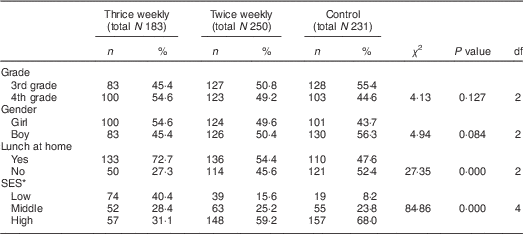
The final sample consisted of 664 primary-school children, who filled in two or more 24 h dietary recalls for the pre- and post-intervention measurement, respectively, without missing values for the considered control variables. Demographic characteristics of the three groups (children in twice/thrice weekly intervention groups and control group) are summarized in Table 1. Groups did not show significant differences regarding grade and gender, but did so with respect to SES and the proportion of children usually eating lunch at home. The proportion of children with high SES was higher in the control group than in the intervention groups. Furthermore, children with low SES were over-represented in the intervention group with the thrice weekly school F&V deliveries. The proportion of children eating lunch at home was lowest in the control group and highest in the thrice weekly intervention group. The identified differences between the groups clearly show the need for controlling for potential confounders in the following analysis.
Demographic characteristics of the study sample at pre-intervention: third and fourth grade children (n 664) from twelve primary schools in North Rhine-Westphalia, Germany, beginning of the 2012/13 school year
SES, socio-economic status.
* Brandenburger Social Index of Böhm et al.( Reference Böhm, Ellsässer and Lüdecke 42 ).
Overall intervention effect of school fruit and vegetable deliveries
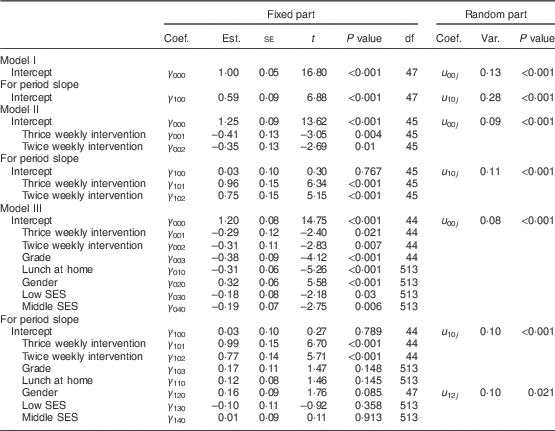
Results of the series of hierarchical linear regression models analysing the overall intervention effect on daily F&V intake of children are presented in Table 2. The empty model (Model I) showed that, on average, children’s daily F&V intake frequency increased by 0·59 (γ 100) from 1·00 (γ 000) at pre-intervention to 1·59 at post-intervention. To explain this increase by the school F&V intervention, dummy-coded group membership variables were added to the two level-3 (classes) equations. Intervention groups differed significantly in the mean pre-intervention scores, with an average daily F&V intake frequency of 1·25 in the control group (γ 000), 0·84 (γ 000+γ 001) in the thrice weekly intervention group and 0·90 (γ 000+γ 002) in the twice weekly intervention group. That is, the control group had a higher average F&V intake before the intervention. With respect to the change in daily F&V intake from pre- to post-intervention, the intervention groups showed higher increases than the control group: children in the control group did not significantly increase their daily F&V intake frequency (γ 100=0·03, P=0·789). The thrice weekly intervention group’s increase was significantly larger than the control group’s increase (by γ 101=0·96). That is, the thrice weekly intervention group increased their F&V intake by 0·99 (γ 100+γ 101), from 0·84 frequencies/d at pre-intervention to 1·83 frequencies/d at post-intervention. In a similar vein, the twice weekly intervention group’s increase was significantly larger than the control group’s increase (by γ 102=0·75). That is, the twice weekly intervention group increased their F&V intake by 0·78 frequencies/d (γ 100+γ 102), from 0·90 frequencies/d at pre-intervention to 1·68 frequencies/d at post-intervention. Adding the group membership dummy variables to the level-3 equations in Model II reduced the variance of the level-3 residuals of slopes for period (u 10j ). As a measure of effect size for the effect of group membership on change in F&V intake, we calculated the proportional reduction in level-3 variance of slopes for period when the two group dummy variables were added to the model( Reference Snijders and Bosker 47 ), resulting in a quasi-R 2 of 61·80 %, which can be considered a large effect.
Overall intervention effect of fruit and vegetable (F&V) deliveries of the European School Fruit Scheme in North Rhine-Westphalia, Germany, on the F&V intake of third and fourth grade children (n 664) from twelve primary schools, beginning to the end of the 2012/13 school year
Coef., coefficient; Est., estimate, Var., variance components; SES, socio-economic status.
The variance of the level-1 residual (e tij ) was estimated to be 1·08 in all models. The variance of the level-2 residual of intercepts (r 0ij ) was 0·20 in Models I and II and 0·14 in Model III. The variance of the level-2 residual of slopes for period (r 1ij ) was 0·20 in Models I and II and 0·17 in Model III.
In Model III, we added the grand-mean-centred child-level covariates (SES, gender, lunch at home) on level 2 (children) as well as effect-coded grade on level 3 (classes). The results can be found in the lower part of Table 2. By adding the child-level covariates grand-mean-centred, differences between classes with respect to compositional effects (i.e. proportion of girls, children with low/middle SES, children who eat lunch at home) are adjusted for. The results of Model III showed that the overall effectiveness of the school F&V intervention was confirmed when controlling for compositional effects and for grade. In this model, slopes for gender were treated as random (u 12j ). The adjusted F&V intake scores at pre-intervention and the adjusted F&V intake change scores (i.e. the expected scores with respect to the proportion of girls, of children with low/middle SES and of children who eat lunch at home being identical across classes) can be calculated from the fixed effects in Modell III, as explained above. The ‘main effects’ of the control variables in this model (gender, SES, lunch at home, grade) represent mean differences with respect to the intercept (i.e. effects on pre-intervention scores). The results revealed that children who usually eat lunch at home, children from homes with low and middle SES as well as in fourth grade had a significantly lower intake score at pre-intervention compared with their reference group. Girls showed significantly higher F&V intake scores at pre-intervention than boys.
Moreover, in a separate model that extends Model III, we explored whether the school F&V intervention affected subgroups of children differently. To do so, we examined the cross-level interactions between the group membership variables on level 3 and each child-level covariate on level 2. This analysis revealed that the twice weekly intervention group’s increase in F&V intake was 0·31 frequencies/d lower for children who usually eat lunch at home compared with children who eat lunch at school (P=0·085; see online supplementary material, Supplemental Table 1). For the thrice weekly intervention group, the coefficient was also negative (−0·22) but non-significant (P=0·297). No other cross-level interaction reached significance.
Intervention effect on days with school fruit and vegetable deliveries
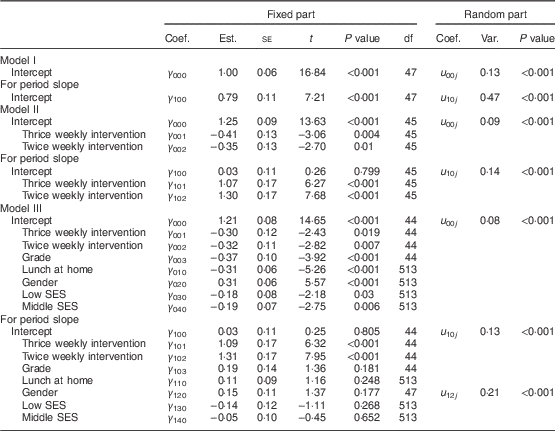
Besides the overall intervention effect, we were also interested in the effectiveness of the SFVS in increasing children’s F&V intake on days with and without school F&V deliveries. The effect on days with F&V deliveries can be interpreted as a direct effect due to the increase in F&V availability in schools (structural prevention), whereas an increase in F&V intake on days without school F&V deliveries might be considered a first indication of possible long-term effects of the SFVS. Table 3 presents the results of the series of hierarchical linear regression models in which only the days with F&V deliveries were included for the intervention groups in the post-intervention period. The empty model (Model I) showed that, on average, children’s F&V intake frequency increased by 0·79 (γ 100) from 1·00 (γ 000) at pre-intervention to 1·79 at post-intervention on days with school F&V deliveries. As can be seen in Table 3 (Model II), on school F&V days the thrice weekly intervention group’s increase was significantly larger than the control group’s increase (by γ 101=1·07). That is, the thrice weekly intervention group increased their F&V intake by 1·10 (γ 100+γ 101) frequencies/d, from 0·84 frequencies/d at pre-intervention to 1·94 frequencies/d at post-intervention. In a similar vein, the twice weekly intervention group’s increase was significantly larger than the control group’s intake (by γ 102=1·30). That is, the twice weekly intervention group increased their F&V intake by 1·33 (γ 100+γ 102) frequencies/d, from 0·90 frequencies/d at pre-intervention to 2·23 frequencies/d at post-intervention. The effect size for the effect of group membership on change in F&V intake (i.e. quasi-R 2 for the reduction in level-3 variance of slopes for period) was 70·58 %. Adjusting for differences between classes with respect to level-2 (children) compositional effects (gender, SES, lunch at home) and controlling for grade (on level 3) in Model III confirmed the overall effectiveness of the school F&V intervention on school F&V days (see Table 3). Comparing Tables 2 and 3 reveals that the intervention effect in the twice as well as the thrice weekly intervention group was considerably higher on days with school F&V deliveries compared with the effect considering days with and without F&V deliveries.
Intervention effect on days with fruit and vegetable (F&V) deliveries of the European School Fruit Scheme in North Rhine-Westphalia, Germany, on the F&V intake of third and fourth grade children (n 664) from twelve primary schools, beginning to the end of the 2012/13 school year
Coef., coefficient; Est., estimate; Var., variance components; SES, socio-economic status.
The variance of the level-1 residual (e tij ) was estimated to be 0·94 in all models. The variance of the level-2 residual of intercepts (r 0ij ) was 0·24 in Models I and II and 0·19 in Model III. The variance of the level-2 residual of slopes for period (r 1ij ) was 0·36 in Models I and II and 0·30 in Model III.
Again, as an extension of Model III, we explored whether subgroups of children were affected differently by the school F&V intervention focusing this time on school F&V days only. This analysis revealed that on days with school F&V deliveries, the twice weekly intervention group’s increase in F&V intake was 0·40 frequencies/d lower for children who usually eat lunch at home than for children who eat lunch at school (P=0·062) and 0·44 frequencies/d lower for children with middle SES (P=0·079) compared with children with high SES (see online supplementary material, Supplemental Table 2). For the thrice weekly intervention group, the corresponding coefficients were also negative but non-significant (lunch at home: −0·15, P=0·519; middle SES: −0·14, P=0·595).
Intervention effect on days without school fruit and vegetable deliveries
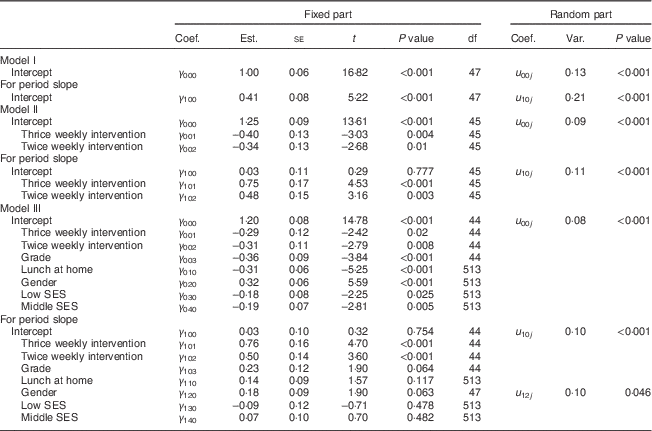
Table 4 presents the results of the series of hierarchical linear regression models in which only the days without F&V deliveries were included for the post-intervention period. The empty model (Model I) showed that on average children’s F&V intake frequency on days without school F&V deliveries increased by 0·41 (γ 100) from 1·00 (γ 000) at pre-intervention to 1·41 at post-intervention, and thus considerably less than if all days are considered (0·59; see Table 2). As can be seen from Table 4 (Model II), on days without school F&V deliveries, the thrice weekly intervention group’s increase was significantly larger than the control group’s increase (by γ 101=0·75). That is, the thrice weekly intervention group increased their F&V intake by 0·78 (γ 100+γ 101) frequencies/d, from 0·85 frequencies/d at pre-intervention to 1·63 frequencies/d at post-intervention. In a similar vein, the twice weekly intervention group’s increase was significantly larger than the control group’s intake (by γ 102=0·48). That is, the twice weekly intervention group increased their F&V intake by 0·51 (γ 100+γ 102) frequencies/d, from 0·91 frequencies/d at pre-intervention to 1·42 frequencies/d at post-intervention. The proportional reduction in level-3 variance of slopes for period (u 10j ) was 45·47 %. Adjusting for level-2 (lunch, gender, SES) and level-3 (grade) covariates as described above confirmed the stability of the results and changed the corresponding coefficients (γ 101 and γ 102) only slightly (Table 4, Modell III).
Intervention effect on days without fruit and vegetable (F&V) deliveries of the European School Fruit Scheme in North Rhine-Westphalia, Germany, on the F&V intake of third and fourth grade children (n 664) from twelve primary schools, beginning to the end of the 2012/13 school year
Coef., coefficient; Est., estimate; Var., variance components; SES, socio-economic status.
The variance of the level-1 residual (e tij ) was estimated to be 0·89 in Model I and Model II and 0·90 in Model III. The variance of the level-2 residual of intercepts (r 0ij ) was 0·26 in Models I and II and 0·20 in Model III. The variance of the level-2 residual of slopes for period (r 1ij ) was 0·34 in Models I and II and 0·30 in Model III.
Regarding the effect on days without school F&V deliveries, additional exploratory analyses revealed no subgroups that benefited more or less from participation in the programme. That is, no significant cross-level interactions were found.
Comparison of the effectiveness of different distribution frequencies of school fruit and vegetable deliveries
As presented in Tables 2 to 4, school F&V deliveries at a frequency of thrice as well as twice weekly significantly increased daily F&V intake of children participating in the SFVS compared with the control group on days with and without school F&V deliveries. Additionally, we aimed to test whether the two intervention groups (twice v. thrice weekly deliveries) differed with respect to the increase in F&V intake from pre- to post-intervention. The results showed that the two intervention groups did not differ with respect to the F&V increase over time (overall effect: P=0·207; effect on days with school F&V deliveries: P=0·274; effect on days without school F&V deliveries: P=0·151; see online supplementary material, Supplemental Tables 3–5).
Discussion
The data demonstrate that the current implementation of the SFVS NRW with thrice weekly F&V deliveries as well as an adjustment to a twice weekly delivery is successful in increasing children’s daily F&V intake. Thus, our results underline the effectiveness of increased availability and repeated exposure in mediating the dietary behaviour of participating children, as theory and previous empirical research have suggested( Reference Rasmussen, Krolner and Klepp 25 , Reference Gochman 48 – Reference Reinaerts, Nooijer and de, Candel 50 ).
A systematic review of published and unpublished studies identified fifteen studies focusing on interventions designed to increase F&V intake of 5- to 18-year-old children and adolescents. Of those none revealed a detrimental effect on F&V intake while ten of the studies found a significant effect on children’s F&V intake ranging from 0·3 to 0·99 servings/d( Reference Knai, Pomerleau and Lock 51 ). Thus, our estimates of 0·96 frequencies/d for the thrice weekly intervention group and 0·75 frequencies/d for the twice weekly intervention group are in line with previous research. Considering that intervention approaches vary greatly between studies and that we used F&V frequencies rather than servings to quantify the effect on F&V intake, our findings are most comparable to the results of Methner et al.( Reference Methner, Maschkowski and Hartmann 38 ). Those authors carried out the first evaluation study of the SFVS NRW and found an overall effect of 0·77 frequencies/d. Obviously, our results show a slightly greater effect compared with the estimates of Methner et al.( Reference Methner, Maschkowski and Hartmann 38 ), even though the authors investigated the effectiveness of the SFVS NRW with daily F&V deliveries. As our study used three repeated 24 h dietary recalls instead of only one as in Methner et al.’s study( Reference Methner, Maschkowski and Hartmann 38 ), a possible explanation for the small differences could be that the potential for recall bias was lower in our study. Additionally, the study by Methner et al.( Reference Methner, Maschkowski and Hartmann 38 ) was carried out in the first year of SFVS NRW. Guidelines and support for schools in implementing nutrition education programmes have improved considerably in the subsequent years and likely increased the application of those measures in the participating schools. This argument is supported by other studies showing that multicomponent programmes are more effective in changing dietary behaviour of children than single measures( Reference Knai, Pomerleau and Lock 51 , Reference van Cauwenberghe, Maes and Spittaels 52 ).
Interestingly, both types of interventions (twice and thrice weekly F&V deliveries) investigated in our study showed a similar increase in F&V intake from pre- to post-intervention and evidence for differential effectiveness was low. In contrast, an earlier evaluation study of the SFVS arrived at the conclusion that a distribution frequency of one to two times weekly is insufficient( Reference Elles, Kliebisch and Becker 53 ). Against this background, our results should be interpreted with caution in order to avoid premature conclusions. Besides subgroup analysis of the covariates included in our study, further analysis should also consider potential moderators of F&V intake such as personal and social determinants. The latter have been shown to influence F&V intake of children( Reference Rasmussen, Krolner and Klepp 25 , Reference Reinaerts, de Nooijer and van de Kar 54 , Reference Haß and Hartmann 55 ) and therefore might also moderate the effect of the SFVS NRW, even though determinants of F&V intake have not often been studied in the context of moderation effects( Reference Yildirim, van Stralen and Chinapaw 56 ). Differentiating the results according to days with and without school F&V deliveries revealed that on days with F&V deliveries children in the twice weekly intervention group who usually eat lunch at school tended to benefit more from the F&V deliveries compared with children who usually eat lunch at home. This result clearly shows a first indication for differential effectiveness and is most probably attributable to the fact that, as stated by school principals, leftovers of F&V in the twice weekly intervention group are distributed to children in the school canteen at lunch time. This interpretation is also supported by our finding that on days without school F&V deliveries eating lunch at school had no effect on children’s increase in F&V intake. As those children eating lunch at school showed a higher F&V intake at pre-intervention, this result may not be desired by the initiators of the SFVS NRW, because it advantages children with a higher initial F&V intake. Nevertheless, the appropriateness of this practice depends strongly on the nutritional value of food provided in the specific school canteen, which at present varies considerably across different schools in Germany( 57 ). Besides these findings, additional exploratory analyses provided little evidence for the existence of differential effects of the SFVS NRW with respect to class and child characteristics. This holds particularly true for grade and gender. Also SES showed no significant interaction effect in the overall model, a result which is in line with previous research analysing the effects of the SFVS NRW( Reference Methner, Maschkowski and Hartmann 38 ). Exclusively investigating the effect of the SFVS NRW on days with F&V deliveries revealed that children with a middle SES in the twice weekly intervention group benefit less from the scheme compared with those with a high SES. A similar effect was not detected for children with a middle SES, thus an interpretation of this result proves to be difficult. Regarding the thrice weekly intervention group not even low evidence for differential effectiveness was found, meaning that there were no subgroups benefiting more from the school F&V deliveries. This can be positively interpreted, but it also implies that it was not possible to give special support to subgroups, such as boys or children from homes with low SES who are known to eat less F&V( Reference Fismen, Smith and Torsheim 58 , Reference Leech, McNaughton and Timperio 59 ) and had significantly lower pre-intervention scores in our study as well. However, this is not to say that these subgroups did not benefit from the programme.
Overall our results indicate that particularly the thrice weekly F&V deliveries are an effective instrument for increasing the F&V intake of all children participating in the SFVS NRW. It therefore seems likely that the SFVS has relative advantages compared with other measures aiming to improve the dietary habits of the population. For example, previous research has indicated that high-risk approaches such as dietary advice typically widen socio-economic inequalities( Reference Capewell and Graham 60 ). This also seems to be true in general for interventions that require individuals to use a high level of agency to benefit( Reference Adams, Mytton and White 61 ). In contrast, those that require fewer agencies are considered to be more effective because they reach broader segments of society( Reference Frieden 62 ).
Our results also indicate that the SFVS NRW was successful in increasing F&V intake of children on days without F&V deliveries. Regarding the thrice weekly intervention group, this result was not surprising, as school principals stated in interviews that they distribute the delivered F&V over the whole school week. This also implies that the effect in the thrice weekly intervention group on days without F&V deliveries should be interpreted with caution, as it likely not indicates long-term effects, but rather reflects the increase in F&V availability due to the F&V leftovers from the previous day. Remarkable, however, is that children of the twice weekly intervention group increased their F&V intake on days without school F&V deliveries to a comparable degree. As mentioned before, school principals of all four schools in this group clearly stated that they provide the F&V only on two fixed days during one school week. Hence, these findings provide first evidence that the SFVS NRW can have a sustainable effect on children’s dietary behaviour apart from the direct effect of F&V deliveries. Nevertheless, it should be noted that F&V intake of children increased considerably more on days with school F&V deliveries, supporting the importance of accessibility and availability as predictors for F&V intake( Reference Evans, Christian and Cleghorn 23 – Reference Rasmussen, Krolner and Klepp 25 ).
In conclusion, even though there might be some determinants which have not yet been taken into account in terms of differential effectiveness, from the present state of analysis, the SFVS NRW reaches all considered subgroups, a result which holds particularly true for the thrice weekly implementation form and represents an advantage over many other strategies aiming to improve dietary behaviour. However, it should be noted that a clear limitation of our study is the non-randomization of schools to the study groups. Although differences between the groups were controlled by including respective variables as covariates and by applying a statistical method which best fits the data structure, there might be some other factors not addressed in our analysis. For example, the intensity and quality of accompanying measures could have had an influence on the effectiveness of both implementation forms and might be different between the study groups. However, regarding the selection criterion ‘nutrition education measures’, all schools are obliged to implement respective measures once entering the programme. Thus, this holds for schools originally selected by the ministry as well as those that were later included due to our study. We are therefore confident that this criterion will not influence our findings. Additionally, a pre–post design where subjects are not randomly assigned to groups is most common in evaluation research( Reference Weiss 63 , Reference Green, Camilli and Elmore 64 ). In terms of limitations, it should be also mentioned that measuring dietary intake is always a challenge and requires validated and reliable instruments. We addressed this issue by selecting an existing and validated 24 h dietary recall proven to be reliable for the specific age group of our sample and used before in the context of evaluating the effect of the SFS NRW( Reference Methner, Maschkowski and Hartmann 38 , Reference Edmunds and Ziebland 41 ). We also tried to reduce the potential for recall bias by using three instead of only one 24 h dietary recall at pre- and post-intervention. However, two 24 h dietary recalls at each time point were filled in by the children in the absence of the research team. Although teachers were given specific instructions on how to guide children while completing the questionnaire, we can neither completely exclude that teachers influenced children’s answers nor that some children had problems to remember the foods and drinks eaten on the previous day. However, as instruments and respondents did not change from pre- to post-intervention, we expect high comparability of pre- and post-intervention measurements.
Conclusions
Our results clearly indicate that the current implementation of the SFVS NRW of providing children thrice weekly with school F&V deliveries is successful in increasing children’s F&V intake. The findings also suggest that the impact of the SFVS NRW in its present form does not discriminate subgroups of children. This, however, also implies that those groups known to have a low intake level of F&V, such as boys or children from homes with a low SES, are not specifically supported by the programme. Reducing the distribution frequency of F&V to twice weekly deliveries is, according to the first findings presented here, similarly effective in positively influencing children’s F&V intake, but there is also some evidence that this implementation form would advantage children eating lunch in the school canteen. The findings also show that children’s F&V intake increases significantly on days without F&V deliveries. This result provides a first indication of the positive long-term effects of the scheme.
Assuming a given budget, the twice weekly implementation would allow to provide more children with F&V in school. However, a recommendation for one or the other implementation needs to consider the potential discriminating effect as well as the longer-term impact of both intervention types and thus should be based on further research.
Acknowledgements
Acknowledgements: The authors wish to thank the children and teachers in the schools in NRW that served as study sites for the analysis. They are grateful to Dr Sarah Methner for her thoughtful comments and ideas in the collection and coding of the data. They also want to express appreciation to Gesa Maschkowski who adapted the 24 h dietary recall used in this study to the German school system. Financial support: This work was funded by the North Rhine-Westphalian Ministry for Climate Protection, Environment, Agriculture, Conservation and Consumer Protection (MKULNV). MKULNV had no role in the design, analysis or writing of this article. Conflict of interest: All authors state that there are no conflicts of interest. Authorship: M.H. and J.H. developed the research question and designed the study, J.H. conducted the data collection with organizational support from M.H. The coding form was developed by J.H. based on previous work in the department in Bonn. J.H. supervised and controlled the coding and conducted the statistical analyses jointly with T.L. J.H. wrote the first draft of the manuscript. The methodology and results parts were extended and revised by T.L. M.H. revised the manuscript with a focus on the introduction, discussion and conclusion parts. All authors made substantive intellectual contributions to the scientific content and approved the final manuscript. Ethics of human subject participation: Written informed consent was obtained from all parents of included children. Anonymized number codes allowed to link baseline data to follow-up data for each individual. The study and data handling were approved by the Ministry of Education and the MKULNV of NRW as well as by the data protection officer of the University of Bonn.
Supplementary Material
To view supplementary material for this article, please visit https://doi.org/10.1017/S1368980017003949



