


It is widely acknowledged that poor diet quality contributes to an increased risk of chronic diseases such as CVD, type 2 diabetes and some cancers( Reference Kant 1 , 2 ). In order to improve dietary intakes, it is first necessary to explore the determinants of dietary behaviours and their influence on diet quality. Young adulthood presents as an ideal period to explore dietary habits as it is an important period of transition from adolescence to adulthood where independent influences on food behaviours and greater responsibility for food choices become established( Reference Papadaki, Hondros and Scott 3 ).
Promoting good nutrition and health is a primary focus of dietary guidelines( 4 ). Diet quality can be measured by comparing dietary intakes and dietary behaviours with these existing guidelines or recommendations using diet quality indices( Reference Waijers, Feskens and Ocke 5 ). These tools utilise a holistic approach, providing a comprehensive alternative measurement to traditional approaches based on individual nutrients( Reference Waijers, Feskens and Ocke 5 , Reference Kant 6 ). Diet quality indices provide a single numerical value that represents overall diet quality based on current scientific evidence and dietary guidelines. In most cases a higher score indicates better diet quality or better adherence to recommendations.
Although diet quality generally increases with age( Reference Thiele, Mensink and Beitz 7 ), a decline is often observed during the transition period from adolescence to adulthood( Reference Forshee and Storey 8 ). Alarmingly, some food-related behaviours developed by young adults including irregular meal patterns, such as meal skipping and frequent snacking( Reference Al-Rethaiaa, Fahmy and Al-Shwaiyat 9 – Reference Kremmyda, Papadaki and Hondros 11 ), and frequent consumption of commercially prepared meals, such as takeaway food, pre-packaged or restaurant meals, are often associated with a poorer diet quality( Reference Burns, Jackson and Gibbons 12 – Reference Nicklas, Myers and Reger 14 ). An additional concern is that these potentially negative behaviours developed in earlier life are likely to track into later life, having a lasting impact on the long-term health of individuals( Reference Papadaki, Hondros and Scott 3 ).
Given the poor diet quality observed among many young adults( Reference McNaughton, Ball and Crawford 15 ), it is important to explore the determinants or correlates of diet quality. Food-related lifestyle factors such as consumers’ attitudes to food quality, purchasing, cooking methods, ways of shopping and consumption situations and other food-related behaviours have been used to examine the potential determinants of food intake and obesity( Reference Pérez-Cueto, Verbeke and de Barcellos 16 – Reference Saba, Cupellaro and Vassallo 18 ). However, food-related behaviours, such as food purchasing and meal preparation, may be a more proximal determinant of diet quality and have been investigated previously in young adults( Reference Larson, Perry and Story 19 – Reference Smith, McNaughton and Gall 21 ).
Previous studies of adolescents (11–18 years) and young adults (18–23 years) in the USA have suggested that the level of involvement in food purchasing and preparation influences diet quality( Reference Larson, Perry and Story 19 , Reference Larson, Story and Eisenberg 20 ). However, an Australian study of 26–36-year-olds exploring associations between adherence to dietary recommendations and involvement in meal preparation showed little evidence to support this( Reference Smith, McNaughton and Gall 21 ). This may be a reflection of the slightly older age group in the Australian study compared with the US studies. Young adults often perceive their cooking skills as a barrier to preparing meals, along with available time and funds( Reference Larson, Perry and Story 19 , Reference Soliah, Walter and Antosh 22 ). As a result, they might choose to purchase commercially prepared meals( Reference Soliah, Walter and Antosh 22 – Reference Levy and Auld 25 ). In previous research, consumption of commercially prepared meals has been inversely associated with diet quality( Reference French, Story and Neumark-Sztainer 13 , Reference Mancino, Todd and Lin 26 – Reference Murakami, Sasaki and Takahashi 29 ). Individuals who consume high levels of commercially prepared meals are more likely to report less favourable dietary patterns, such as lower intakes of fruit, vegetables, dietary fibre and some vitamins and minerals, as well as report higher intakes of energy, fat, meat and confectionery( Reference French, Story and Neumark-Sztainer 13 , Reference Mancino, Todd and Lin 26 – Reference Murakami, Sasaki and Takahashi 29 ). However, much of this evidence is based on adult populations. Research that focuses on young adult populations is sparse.
Since the diet quality of young adults is often poor( Reference Forshee and Storey 8 ), it is important to explore the determinants of diet quality among this population group in order to inform future health initiatives. Given the limited research in the area, the purpose of the present study was to determine the diet quality of a sample of young adults and to assess the associations of young adults’ diet quality with food-related behaviours such as meal preparation and consumption of commercially prepared meals.
Experimental methods
Participants and procedures
The participants were selected from a convenience sample of 369 students enrolled in a first-year university food and nutrition class in 2011. A total of 337 students agreed to take part in the study (91 % response rate). Inclusion was restricted to young adults, defined as those aged 18–36 years( Reference Larson, Perry and Story 19 , Reference Smith, McNaughton and Gall 21 ). Participants who were outside the defined age range (n 5) or who had substantial missing responses on the FFQ (>10 % missing responses; n 23) were excluded, leading to a sample of 309 young adults (84 % of the initial sample). Further exclusions were made for the final multiple linear regression analysis due to participants with missing data (n 54). Therefore, a total of 255 (69 % of initial sample) participants were included in the multiple linear regression analysis. The sociodemographic characteristics (age, sex, BMI, nationality, maternal education, living arrangements, and study and work commitments) of this sample were not significantly different from those of the total sample. Participants completed a self-assessed food and diet questionnaire that included an FFQ( Reference McLennan and Podger 30 – Reference Ireland, Jolley and Giles 32 ). The study was conducted according to ethical guidelines laid down in the Declaration of Helsinki and all procedures were approved by Deakin University Human Research Ethics Committee (ethics number EC2009-163). Written informed consent was obtained from all participants.
Participant characteristics
The self-administered questionnaire was used to obtain participant characteristics (age, sex, BMI (calculated as weight (in kilograms) divided by the square of height (in metres)), nationality, maternal education, living arrangements, and study and work commitments). The questionnaire was similar to one used by Riddell et al.( Reference Riddell, Ang and Keast 33 ) based on a questionnaire previously used to investigate the eating habits of young adults( Reference Georgiou, Betts and Hoerr 34 , Reference Soriano, Moltó and Mañes 35 ).
Dietary assessment
Dietary intake was measured by a 107-item FFQ previously used in the 1995 National Nutrition Survey( Reference McLennan and Podger 30 , Reference McLennan and Podger 31 ) and based on an existing validated FFQ developed for Australian populations( Reference Ireland, Jolley and Giles 32 ). The FFQ asked the participants to recall the average number of times each food or beverage was consumed during the previous month. Participants were able to respond using nine categories ranging from ‘never or less than once a month’ to ‘six or more times per day’.
Measurement of diet quality
Diet quality was measured using data from the FFQ and the previously developed Dietary Guideline Index (DGI)( Reference McNaughton, Ball and Crawford 15 ). The DGI has been shown to reflect intakes of key nutrients and was inversely associated with poor health outcomes in previous research( Reference McNaughton, Ball and Crawford 15 , Reference McNaughton, Dunstan and Ball 36 ), suggesting it is a valid measure of diet quality among Australians. The DGI is a 150-point diet quality index, comprised of fifteen components that reflect the Dietary Guidelines for Australian Adults( 4 ). Each component contributed 10 points to the total score (Table 1). Criteria for the scores were devised from age- and sex-specific recommendations found in the Australian Guide to Healthy Eating( Reference Kellett, Smith and Schmerlaib 37 ). The fifteen components include diet variety, intakes of fruit, vegetables, cereal, meat/protein, dairy, alcohol, saturated fat, added sugar, added salt, fluids and ‘extra’ foods (foods not essential in providing nutrient requirements, such as high-energy and nutrient-poor sweets and snacks). The remaining three components reflect healthy choices made by the individual, including usually choosing wholegrain cereal, lean protein and reduced-fat dairy products. Appropriate adjustments in the score calculation were made for those who indicated that they were vegetarian or vegan. For all components, participants in between the criteria for maximum and minimum scores were assigned scores proportionately. The sum of the fifteen components represents the DGI score, where a higher score indicates better adherence to dietary recommendations. Full details of the DGI are described elsewhere( Reference McNaughton, Ball and Crawford 15 ).
Components and scoring methods of the Dietary Guideline Index (DGI) score
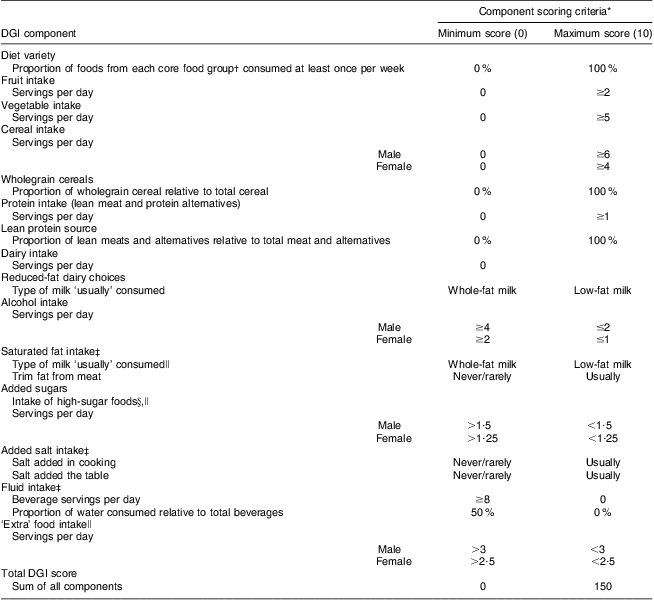
*Intakes in between the maximum and minimum intake are assigned a score proportionately.
†Core food groups consist of fruit, vegetables, protein, cereal and dairy.
‡There are two indicators for these components; each is allocated 50 % of the component score.
§High-sugar foods include soft drink, cordial, fruit juice drink, jam, chocolate and confectionery.
∥‘Extra foods’ include foods not essential in providing nutrient requirements such as high-sugar foods, chips, hot chips, hamburgers, cakes, muffins, pastry and desserts.
Measurement of food-related behaviours
Involvement in meal preparation was self-reported using two questions: ‘Do you do your own food shopping?’ and ‘Do you cook meals for yourself?’( Reference Riddell, Ang and Keast 33 ). Participants who indicated that they do cook meals for themselves also reported the frequency of cooking using five response categories ranging from ‘daily’ to ‘rarely’. Consumption of commercially prepared meals was measured by asking: ‘In an average week, how often would your main meal of the day be…?’ (i) ‘takeaway’; (ii) ‘convenience or pre-packaged’ (hereafter called a ‘convenience meal’); or (iii) ‘from a restaurant, café or pub’. The six response categories ranged from ‘never’ to ‘6–7 meals per week or more’. These questions were based on a similar question on takeaway consumption used in previous studies( Reference Smith, McNaughton and Gall 28 , Reference Smith, Blizzard and McNaughton 38 ). As few participants reported consumption of commercially prepared meals greater than two times per week, the frequency categories were collapsed into ‘never’, ‘<1 meal/week’, ‘about 1 meal/week’ and ‘≥2 meals/week’. These variables were used as continuous variables (frequencies) for the multiple linear regression analyses.
Statistical analysis
Data analysis was conducted using the statistical software package IBM SPSS Statistics Version 18. The normality of the distribution of DGI score was assessed before further analysis. As it was found to be approximately normal, no transformation was necessary. One-way ANOVA and t test analyses were used to examine associations between DGI score and the categorical variables. A multiple linear regression model was developed and used to assess the association between DGI score and the food-related behaviours. The model was adjusted for the potential confounders age, sex, BMI and maternal education as these are commonly associated with diet quality( Reference Kant 1 , Reference Thiele, Mensink and Beitz 7 , Reference Forshee and Storey 8 ). Adjustments were also made for nationality as this was shown to be associated with DGI score within the bivariate analysis of this sample. The low sample size and the further reduction in the sample size for the multivariate analysis was a limitation. However, with n 255, 80 % power and α set at 0·05, it was estimated that a correlation of 0·16 could be detected, which was only minimally reduced to a correlation of 0·14 with the sample size of 337 that originally agreed to participate. Significance level was set at 5 %.
Results
Table 2 shows the distribution of the participants’ key characteristics and the mean DGI scores. The majority of participants were aged 18–21 years with a mean age of 20·4 (sd 2·9) years. The mean DGI score was 93·4 (sd 17·1) points, with a range of 51·9–127·4 points. The majority of participants were female, had a BMI within the normal weight range, identified themselves as Australian, had a mother with a tertiary education, were living with their parents and were studying full time. As there was evidence to suggest that nationality was associated with DGI score, Tukey's Honestly Significant Difference post hoc test was performed (not shown in table) and it indicated that participants of Australian nationality had a significantly higher diet quality than those who were of Chinese nationality (P = 0·02). There was little evidence to suggest that age, sex, BMI, maternal education, living arrangements, or study and work commitments were associated with DGI score (P > 0·05).
Mean Dietary Guideline Index (DGI) score according to key characteristics of a sample of university students aged 18–36 years in Melbourne, Australia, 2011
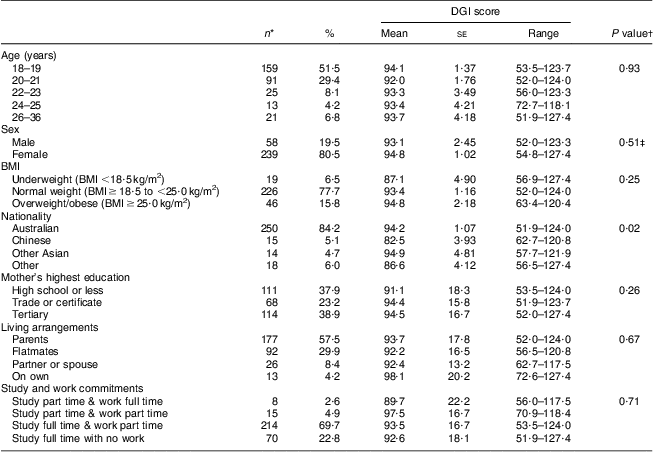
*Total n varies between measures due to missing responses.
†One-way ANOVA, except as indicated.
‡t Test.
Approximately half of the sample did their own food shopping (50·6 %), while the majority (71·4 %) of participants indicated that they cook meals for themselves (Table 3). There was no evidence (P = 0·98) to indicate a difference in diet quality between students who participated in shopping for food and those who did not. Cooking meals for oneself was associated with a higher mean DGI score compared with those who did not cook for themselves (mean 94·7 (sd 1·13) v. 90·2 (sd 1·89) points; P = 0·04). While 71·4 % of young adults reported cooking meals, only 48·6 % of these cooked daily, 32·1 % cooked three times weekly and 19·2 % cooked once weekly or less. No evidence was found to suggest an association between diet quality and cooking frequency (P = 0·86). There was evidence to support associations between DGI score and the frequency of takeaway (P < 0·001), convenience meals (P = 0·04) and restaurant meals (P = 0·04; Table 3).
Mean Dietary Guideline Index (DGI) score according to food-related behaviours of a sample of university students aged 18–36 years in Melbourne, Australia, 2011
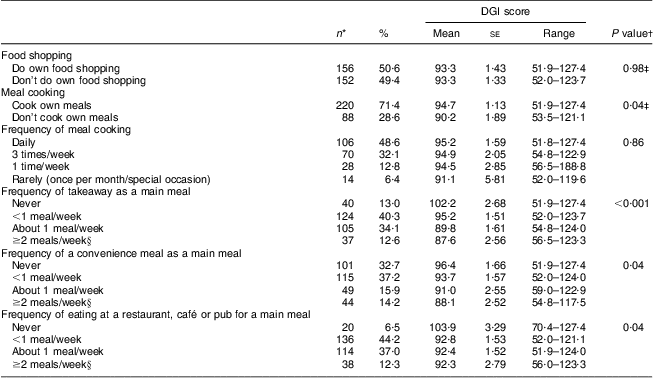
*Total n varies between behaviour measures due to missing responses.
†One-way ANOVA, except as indicated.
‡t Test.
§Variable categories were collapsed because very few participants reported 4–5 meals/week or 6–7 meals/week (<2 % each).
Those food-related behaviours significantly associated with DGI score in the preliminary bivariate analyses were included in the multivariate linear regression model (involvement in cooking of meals, consumption frequency of takeaway, consumption frequency of convenience meals and consumption frequency of restaurant meals; Table 4). In the multivariate model adjusted for age, sex, BMI, nationality and maternal education, cooking meals for oneself was positively associated with DGI score (β = 0·15; 95 % CI 1·15, 10·03; P = 0·01), while the frequency of takeaway consumption (β = −0·21; 95 % CI −9·96, −2·32; P = 0·002) and the frequency of convenience meal consumption (β = −0·16; 95 % CI −7·40, −0·97; P = 0·01) were both inversely associated with DGI score. The frequency of restaurant meal consumption was not associated with DGI score in the model (P = 0·89; Table 4). We also examined the relationships after excluding all nationalities other than Australian, since we did not have a sufficient number of participants to stratify the analyses for nationality, and the results were similar (results not shown).
Relationship of food-related behaviours to the Dietary Guideline Index (DGI) score of a sample of university students aged 18–36 years in Melbourne, Australia, 2011: results of bivariate and multivariate linear regression analyses (n 255)

*Model R 2 = 0·16 and P < 0·001, adjusted for age, sex, nationality, BMI and maternal education.
†β is the standard deviation change in DGI score per unit change in predictor variable.
Discussion
The present study suggested that participation in food preparation is associated with diet quality in young adults. Involvement in cooking and avoidance of commercially prepared meals were independently associated with higher diet quality. These results are consistent with previous research, which indicates that diet quality is positively associated with involvement in meal preparation( Reference Larson, Perry and Story 19 – Reference Smith, McNaughton and Gall 21 , Reference Levy and Auld 25 ) and negatively associated with the consumption of commercially prepared meals( Reference French, Story and Neumark-Sztainer 13 , Reference Mancino, Todd and Lin 26 – Reference Murakami, Sasaki and Takahashi 29 ). However, much of the previous research is based on either adult or adolescent population samples and few studies were within Australian populations. A number of key cross-country variations in food behaviours have been demonstrated( Reference Ball, Timperio and Crawford 39 , Reference El Ansari, Stock and Mikolajczyk 40 ) which is why it is important to consider the local context when conducting research and developing interventions specific for a population. Literature regarding the association of food-related behaviours and diet quality specifically among young adults is sparse( Reference Larson, Perry and Story 19 , Reference Smith, McNaughton and Gall 21 , Reference Smith, McNaughton and Gall 28 , Reference Riddell, Ang and Keast 33 ). While diet quality was higher among those who reported never consuming restaurant meals in the bivariate analyses, the association was not supported in the multiple regression analyses after adjustment for confounders.
In line with two US studies, one of young adults aged 18–23 years (mean age 20·4 years)( Reference Larson, Perry and Story 19 ) and another of adolescents aged 11–18 years (mean age 14·9 years)( Reference Larson, Story and Eisenberg 20 ), the current study indicated that involvement in cooking meals is associated with increased diet quality among young adults. Engaging in meal preparation may lead to increased skills and variety in food items consumed( Reference Soliah, Walter and Antosh 22 ) which, in turn, positively influences diet quality( Reference Levy and Auld 25 ). Conversely, those who do not cook their own meals may be more inclined to purchase commercially prepared meals. This behaviour has previously been associated with the consumption of foods with poor nutrient content and consequently linked to lower diet quality( Reference Mancino, Todd and Lin 26 – Reference Smith, McNaughton and Gall 28 , Reference Lin and Guthrie 41 ). However, the results from a previous study of Australian young adults (mean age 31·6 years) were not consistent with this( Reference Smith, McNaughton and Gall 21 ). That study did not find the level of involvement in cooking meals to be associated with diet quality( Reference Smith, McNaughton and Gall 21 ). The inconsistencies between studies could reflect the varying age range of the participants in the study samples. It might be that the diet quality of adolescents and the younger age bracket of young adults is more likely to be influenced by involvement in meal preparation than the diet quality of an older age group. The different measures used to measure involvement in meal preparation as well as the different contextual factors of the samples in these studies may also have contributed to the different results.
In previous research, young adults have identified cooking as a potential barrier to preparing healthy food( Reference Larson, Perry and Story 19 , Reference Soliah, Walter and Antosh 22 , Reference Marquis 42 ). For young adults who do not cook or cannot cook their own meals, their reliance on commercially prepared and processed foods is likely to be greater than for those who do cook( Reference Soliah, Walter and Antosh 22 , Reference Candel 23 , Reference Levy and Auld 25 ). As previously mentioned, this is concerning because foods and meals purchased from commercial providers are generally associated with a poorer diet quality compared with meals prepared at home( Reference Soliah, Walter and Antosh 22 , Reference Lin and Guthrie 41 ). In line with our results, a study of young adults in the USA (mean age 19·7 years) suggested that increased ability to cook is associated with increased diet quality( Reference Levy and Auld 25 ). Limited research is available regarding diet quality and ability to cook as it poses many methodological challenges, such as defining cooking abilities( Reference Engler-Stringer 43 ). Future research might benefit from further exploration of the associations between diet quality and cooking among young adults.
Within the present study only a small proportion of the participants reported that they regularly consume commercially prepared meals as their main meal of the day. A previous study from the USA found that 27·3 % of young adults (mean age 20·5 years) had takeaway three or more times in the week prior to the survey( Reference Larson, Neumark-Sztainer and Story 44 ). Similarly, in an Australian study 37·9 % of male and 17·7 % of female young adults (mean age 31·6 years) reported consuming takeaway at least two times weekly( Reference Smith, McNaughton and Gall 28 ). In comparison, only 12·6 % of the current sample reported that they consumed takeaway meals as a main meal two or more times in an average week. It is surprising that the university students in our sample reported a low frequency of eating commercially prepared meals. A difficulty with interpreting this is that the survey question did not specify whether the main meal in which the commercially prepared meal was consumed was lunch or dinner. The survey also did not measure the frequency of takeaway food as a snack, which may be important since young adults have a tendency to skip meals and frequently snack( Reference Al-Rethaiaa, Fahmy and Al-Shwaiyat 9 – Reference Kremmyda, Papadaki and Hondros 11 , Reference Zizza, Siega-Riz and Popkin 45 ).
Although low frequencies were reported, our results indicate that consumption of commercially prepared meals was associated with lower diet quality. The effect of takeaway consumption on diet quality has previously been reported in Australian adolescent and young adult populations( Reference Burns, Jackson and Gibbons 12 , Reference Smith, McNaughton and Gall 28 ) as well as in adolescent and adult populations in other countries( Reference French, Story and Neumark-Sztainer 13 , Reference Mancino, Todd and Lin 26 , Reference Schroder, Fito and Covas 27 ). These studies along with a systematic review( Reference Lachat, Nago and Verstraeten 46 ) consistently demonstrate that eating commercially prepared meals is associated with poorer diet quality. Analysis of data from a large US sample of adults (n 13 429; age >20 years) indicated that for every one meal purchased or prepared away from home, there was an additional energy intake of 544 kJ and a 2-point decrease in a diet quality index score( Reference Mancino, Todd and Lin 26 ). A likely contributor to the negative relationship between commercially prepared food and diet quality is the poorer nutrient content of the food. Commercially prepared food typically contains more total and saturated fat, and less fibre and important micronutrients than meals prepared and consumed at home( Reference Guthrie, Lin and Frazao 47 , Reference Todd, Mancino and Lin 48 ). This is concerning as it is common to find an increase in takeaway consumption in young adults( Reference Kremmyda, Papadaki and Hondros 11 , Reference Burns, Jackson and Gibbons 12 ), particularly following university enrolment( Reference Papadaki, Hondros and Scott 3 ). Furthermore, the social context of eating commercially prepared meals encourages the consumption of larger portion sizes( Reference de Castro 49 ) and higher energy-dense foods compared with eating meals cooked at home( Reference Nielsen and Popkin 50 ). It may be important to investigate motivators for young adults to choose commercially prepared meals over home cooked meals.
There are limited data available that explore diet quality and its relationship specifically with restaurant, café or pub meals( Reference Murakami, Sasaki and Takahashi 29 , Reference Larson, Neumark-Sztainer and Laska 51 ). A Japanese study found that the frequency of young women eating out at full-service restaurants, takeaway pizza delivery shops or cafés was associated with lower consumption of fruit, vegetables, rice and fibre, along with increased intakes of energy, meat, fat, bread and confectionery( Reference Murakami, Sasaki and Takahashi 29 ). Research on US young adults (mean age 25·3 years) has identified that the type of restaurant chosen influences dietary intake patterns( Reference Larson, Neumark-Sztainer and Laska 51 ). Eating food from restaurants that served primarily burgers and fries was associated with negative dietary patterns( Reference Larson, Neumark-Sztainer and Laska 51 ) while eating at restaurants that served sandwiches or full-service restaurants was unrelated to poor dietary patterns( Reference Larson, Neumark-Sztainer and Laska 51 ). Since eating out is increasing in popularity( Reference Guthrie, Lin and Frazao 47 , Reference Stewart, Blisard and Bhuyan 52 ), this may be an important area for further investigation.
Previous research has indicated that students living independently or out of their family home may have poorer diet quality( Reference Papadaki, Hondros and Scott 3 , Reference Kremmyda, Papadaki and Hondros 11 , Reference Sharma, Harker and Harker 53 ). However existing research is mixed, with one UK study suggesting that living independently does not necessary lead to a poorer diet quality in young adults( Reference Beasley, Hackett and Maxwell 54 ). Consistent with the UK findings, in the current study, 58 % of the sample lived with their family but living arrangements were not associated with diet quality. This may reflect the different circumstances of the young adults studied.
There are several limitations in the present study that should be considered. The study's cross-sectional design cannot provide evidence of causality and the evidence would be strengthened by future longitudinal study designs. Although the FFQ has been validated previously( Reference Ireland, Jolley and Giles 32 , Reference Georgiou, Betts and Hoerr 34 , Reference Soriano, Moltó and Mañes 35 ), the retrospective nature of this dietary data collection method may result in recall bias and measurement error. To reduce the cognitive burden and to capture the transition period as young adults begin university, participants were asked to report on their average dietary intake in the previous month, as opposed to the past 12 months, which was in the original questionnaire( Reference McLennan and Podger 30 , Reference McLennan and Podger 31 ). Furthermore, the low sample size, the relatively narrow age range and the large proportion of females within the sample made it difficult to examine associations between population characteristics and DGI score. In general, it is understood that diet quality increases with age and differs according to sex( Reference Kant 1 , Reference Thiele, Mensink and Beitz 7 ). As a result of the disproportions in these population characteristics, the study was limited in its ability to generalise the findings to the broader young adult population. Furthermore, since all of the study participants were university students undertaking a unit of study in nutrition, they may be more health and nutritionally conscious and therefore are unlikely to represent the behaviours of all young adults( Reference Georgiou, Betts and Hoerr 34 ). Consequently, the diet quality of other young adults may be worse than reported herein. There are limited studies of comparable nature to compare the frequency of commercially prepared meal consumption in Australian young adults. Data from a national sample of young Australians aged 26–36 years old indicated that 37·9 % of men and 17·7 % of women ate takeaway two or more times weekly( Reference Smith, McNaughton and Gall 28 ), which is more than the 12·6 % of the young adults in the current study. Furthermore, many of the participants (38·9 %) had mothers who had completed tertiary education. This is relatively high compared with national data for Australians, where approximately 23 % of 45–64-year-olds have completed a bachelor degree or higher( 55 ).
The utilisation of the comprehensive dietary guideline index (DGI) and a detailed FFQ was a significant strength of the current study. As mentioned, both the FFQ( Reference McLennan and Podger 30 – Reference Ireland, Jolley and Giles 32 ) and the DGI( Reference McNaughton, Ball and Crawford 15 ) were designed for use in Australian populations and therefore were able to suitably measure the dietary intake and diet quality of the participants. In addition to the consumption frequency of individual food items, the FFQ used for the study included several questions relating to eating habits, such as the type of milk typically consumed and the frequency of adding salt to a meal. These questions assisted in the calculation of the DGI and its ability to represent the degree of adherence to dietary guidelines by participants. However, comparisons of the DGI with other indices such as the Healthy Eating Index( Reference Kennedy, Ohls and Carlson 56 ) is difficult since the latter and most other dietary indices have been developed in the USA. Furthermore, other indices use varying methods of calculation and can have a different range of values compared with the DGI. It is also difficult to define a reference range to indicate ‘good’ or ‘bad’ diet quality as the DGI provides a continuous score in which an optimal score is one that is the highest possible. A strength of the present study was the ability to capture data from a unique population of young adults experiencing a life stage transition as they enter tertiary education. This may be an important time in which food-related behaviours are established among young adults.
Conclusion
The present study suggests that participation in cooking meals and avoiding commercially prepared meals may be important correlates of diet quality of young adults. These food-related behaviours warrant further investigation in longitudinal studies and in general young adult populations.
Acknowledgements
Sources of funding: S.A.M. is supported by an Australian Research Council Future Fellowship. Conflicts of interest: None of the authors declared a conflict of interest. Authors’ contributions: M.G.T. assisted with the study design, performed the statistical analysis, interpreted the results, prepared the tables and prepared the manuscript. S.A.M. assisted with the study design, in particular the calculation of the DGI scores, interpretation of the results, preparing the tables and writing and editing the manuscript draft. M.K. conceived the study design, oversaw the project, managed data collection, and assisted with the statistical analysis, interpreting the results and editing the manuscript draft. L.J.R. and R.S.J.K. conceived the study design, oversaw development of the data collection tools, secured ethical approval and assisted with editing the manuscript. All authors read and approved the final manuscript.



