


Vitamin K is a cofactor for the vitamin K-dependent carboxylase, a microsomal enzyme that facilitates the post-translational conversion of glutamyl to γ-carboxyglutamyl (Gla) residues(Reference Esmon, Sadowski and Suttie1). Its classic role in this respect involves the synthesis of several coagulation factors(Reference Shearer2–4). More recently, the identification of Gla-containing proteins in bone, notably osteocalcin and matrix Gla protein, has generated much interest in the role of vitamin K in bone metabolism and bone health(4–Reference Weber7). The circulating concentration of under-γ-carboxylated osteocalcin (ucOC), a sensitive marker of vitamin K nutritional status(Reference Sokoll and Sadowski8, Reference Vermeer, Knapen and Jie9), has been reported to be a marker of hip fracture risk and a predictor of bone mineral density in adults(Reference Vermeer, Jie and Knapen6, Reference Szulc, Chapuy and Meunier10–Reference Sugiyama and Kawai17). More recently, higher serum ucOC has been associated with increased bone turnover(Reference Kalkwarf, Khoury and Bean18) and lower bone mineral content(Reference O'Connor, Molgaard and Michaelsen19) in young girls.
The synthesis of functional osteocalcin depends on both vitamin D and vitamin K(Reference Szulc, Chapuy and Meunier10). Vitamin D (as 1,25-dihydroxyvitamin D3) induces the synthesis of osteocalcin by promoting the transcription of its gene(Reference Lian, Stewart and Puchacz20), while vitamin K is needed for its γ-carboxylation, as mentioned already. There is some in vitro evidence, however, that vitamin D might stimulate the γ-carboxylation of osteocalcin and other Gla-containing proteins(Reference Deyl and Adam21, Reference Karl and Friedman22). Szulc et al. (Reference Szulc, Chapuy and Meunier10) have suggested that these observations could be relevant to the age-related impairment of the γ-carboxylation of osteocalcin, in that vitamin D deficiency is a common feature of elderly populations. However, vitamin D deficiency is also very common during adolescence, a period of rapid bone development (for a review, see Cashman(Reference Cashman23)).
We have recently reported that serum %ucOC was inversely correlated with serum 25-hydroxyvitamin D (25(OH)D) levels, the most widely used marker of vitamin D status, in healthy Danish girls (aged 11–12 years)(Reference O'Connor, Molgaard and Michaelsen19). This is in line with a similar relationship reported in elderly women(Reference Szulc, Chapuy and Meunier10). In both studies, serum %ucOC as well as serum 25(OH)D concentrations exhibited clear seasonal variation (with lowest and highest values, respectively, evident in late summer/early autumn)(Reference Szulc, Chapuy and Meunier10, Reference O'Connor, Molgaard and Michaelsen19). Furthermore, serum %ucOC was correlated with sun exposure in the study by Szulc et al. (Reference Szulc, Chapuy and Meunier10). In a longitudinal 1-year follow-up study, Szulc et al. (Reference Szulc, Chapuy and Meunier10) showed that vitamin D plus Ca supplementation significantly reduced the %ucOC in elderly women. However, Bolton-Smith et al. (Reference Bolton-Smith, McMurdo and Paterson24) in a 2-year vitamin K and/or vitamin D plus Ca randomised control intervention trial in elderly women showed that vitamin D plus Ca had no effect on %ucOC. Whether the relationship between vitamin D status and serum %ucOC is causal in children has not been investigated.
Therefore, the objective of the present study was to test the hypothesis that improving vitamin D status in young adolescent girls would significantly lower serum %ucOC. This was possible by using data and samples available from a randomised, double-blind, placebo-controlled, 12-month vitamin D3 intervention study in Danish girls, aged 11–12 years(Reference Molgaard, Larnkjær and Cashman25).
Subjects and methods
Subjects
Our initial study investigated the relationship between vitamin K status and bone health indices in 223 Danish girls, aged between 10·9 and 11·9 years(Reference O'Connor, Molgaard and Michaelsen19). These girls were recruited for participation in a 12-month vitamin D3 intervention trial on bone health (as part of the Optimal Strategy for Vitamin D Fortification (OPTIFORD) project; http://www.optiford.org), details of which have been described previously(Reference O'Connor, Molgaard and Michaelsen19, Reference Molgaard, Larnkjær and Cashman25). Of the 221 girls who completed the double-blind, placebo-controlled vitamin D intervention trial, sixty-seven subjects were selected as a subset who began and finished the intervention during wintertime (November to April), and who were randomised to receive either placebo (n 34) or 10 μg vitamin D3 (n 33) for 12 months. Selection of this wintertime subgroup avoided the influence of seasonality on vitamin D status. The present study was conducted according to the guidelines laid down in the Declaration of Helsinki and all procedures involving human subjects were approved by the Research Ethical Committee of Copenhagen and Frederiksberg (J.nr (KF) 01-129/01). Written informed consent was obtained from the parent or guardian of each participant.
Design
This was a double-blind, placebo-controlled vitamin D3 intervention trial, which in the context of the present work examined the effect of improving vitamin D status on serum %ucOC, as a widely used marker of vitamin K status(Reference Sokoll, Booth and O'Brien26), in a cohort of healthy young Danish girls, aged 10·9–11·9 years. After an overnight fast, a blood sample (10 ml) was taken between 08.00 and 10.00 hours from each subject. On the same day as blood sampling, each girl, with the help of their parent or guardian and a trained researcher, completed various questionnaires, including a general health and lifestyle questionnaire, a FFQ, a physical activity questionnaire, and a pubertal status questionnaire, as described previously(Reference O'Connor, Molgaard and Michaelsen19, Reference Molgaard, Larnkjær and Cashman25). Anthropometric measurements (weight and height) were also taken at this time. Pubertal status was assessed and physical activity recorded in each subject, as described previously(Reference O'Connor, Molgaard and Michaelsen19).
Collection and preparation of samples
Fasting blood was collected by venepuncture into vacutainer tubes with no additive and was processed to serum, which was immediately stored at − 80°C until required for analysis.
Experimental techniques
Details of the analytical methodology for serum total osteocalcin and ucOC as well as 25(OH)D have been described in detail elsewhere(Reference O'Connor, Molgaard and Michaelsen19, Reference Andersen, Molgaard and Skovgaard27). In brief, total (intact) osteocalcin levels were measured in serum samples using an ELISA (Metra™ Osteocalcin EIA Kit; Quidel Corporation, San Diego, CA, USA). The intra- and inter-assay CV was 6·0 and 7·6 %, respectively. ucOC was measured by treating 60 μl of serum samples with 30 μl of hydroxyapatite (15 mg/ml) (Calbiochem, Merck Biosciences, Bestor, Nottingham, UK). Samples were shaken for 1 h at room temperature and then centrifuged for 5 min. ucOC in the supernatant fractions was quantified using the Metra™ Osteocalcin EIA Kit. ucOC was expressed as the percentage of total osteocalcin (%ucOC). The intra- and inter-assay CV was 9·5 and 12·8 %, respectively. Serum 25(OH)D levels were measured by an HPLC-based method.
Statistical methods
We have previously shown that %ucOC was significantly lower (14 %) during summer compared with wintertime in these girls, coinciding with better vitamin D status in summer also(Reference O'Connor, Molgaard and Michaelsen19). Therefore, using the mean and standard deviation of serum %ucOC in the girls in the present study at baseline and the percentage difference between summer and winter, possibly arising from improved vitamin D status (our hypothesis), we calculated we needed thirty subjects per group. Serum 25(OH)D and %ucOC were normally distributed as determined by Kolmorgorov–Smirnov tests and allowed for parametric statistical analysis. Data are presented as means and standard deviations. Baseline characteristics were compared between the placebo and vitamin D-supplemented group by unpaired Student's t tests and χ2 where appropriate. The effect of vitamin D3 supplementation on serum 25(OH)D concentration, %ucOC and total osteocalcin in the placebo and 10 μg vitamin D-supplemented groups was evaluated by repeated-measures ANOVA. Paired Student's t tests were used to compare serum 25(OH)D concentrations at baseline v. end-point in both the placebo and vitamin D-supplemented groups. P < 0·05 was considered significant.
Results
The mean age, height, weight, BMI, serum 25(OH)D and serum %ucOC of the girls were 11·3 (sd 0·2) years, 148·6 (sd 6·4) cm, 40·1 (sd 7·3) kg, 18·1 (sd 2·8) kg/m2, 36·0 (sd 12·1) nmol/l and 23·2 (sd 4·4) %, respectively. There were no significant differences in these baseline characteristics between the placebo and vitamin D-supplemented group (data not shown).
The effect of vitamin D3 supplementation on biochemical indices of vitamin D and vitamin K status in the Danish girls is shown in Table 1. There was no significant difference in serum 25(OH)D concentration or %ucOC between the placebo and vitamin D-supplemented groups at baseline. Repeated-measures ANOVA showed a significant time × treatment group interaction (P < 0·0001) in serum 25(OH)D concentration. While serum 25(OH)D concentration decreased ( − 16·9 %; P < 0·003) from baseline to end-point in the placebo group, it significantly increased (21·6 %; P < 0·002) in the supplemented group. There was no significant time × treatment group interaction (P>0·79) in serum %ucOC. There was, however, a significant change over time (from baseline to end-point) in serum %ucOC, with similar increases in the placebo and vitamin D-supplemented groups (15·8 and 18·6 %, respectively). There was no significant time × treatment group interaction (P>0·65) in serum total osteocalcin (data not shown).
(Mean values and standard deviations)
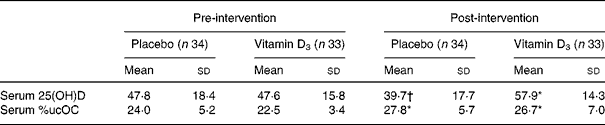
* Mean value was significantly increased relative to pre-intervention concentration within a group (P < 0·05).
† Mean value was significantly decreased relative to pre-intervention concentration within placebo group (P < 0·003).
Discussion
Interest in the role of vitamin K nutritive status in childhood bone health has heightened in recent times with the findings that better vitamin K status was associated with decreased bone turnover(Reference Szulc, Chapuy and Meunier10) and greater bone mineral content of total body and lumbar spine(Reference O'Connor, Molgaard and Michaelsen19) in healthy young girls. Of concern, there is evidence that a high proportion of girls have suboptimal dietary vitamin K intake and/or vitamin K status(Reference Kalkwarf, Khoury and Bean18, Reference O'Connor, Molgaard and Michaelsen19, Reference Collins, Cashman and Kiely28, Reference Van Summeren, Braam and Noirt29). Thus, with this in mind, strategies for improving vitamin K status during childhood and adolescence need to be developed. Various lines of epidemiological evidence point towards a nutritional interaction between markers of vitamin D and vitamin K status(Reference Szulc, Chapuy and Meunier10, Reference O'Connor, Molgaard and Michaelsen19, Reference Lian, Stewart and Puchacz20–Reference Karl and Friedman22). A causal relationship between vitamin D and vitamin K, should it exist, would offer a possible indirect benefit of increasing vitamin D intake to bone health. The findings of the present study, however, which had the possibility that improving vitamin D status of young adolescent girls would decrease serum %ucOC as its central hypothesis, do not support this notion. While vitamin D status, as reflected by serum 25(OH)D concentration, was significantly increased by vitamin D3 supplementation in the girls, serum %ucOC was not reduced.
The lack of effect of vitamin D supplementation on serum %ucOC in adolescent girls in the present study, which to our knowledge is the first to investigate this directly, is in line with recently reported lack of effect of vitamin D3 supplementation (plus Ca) on serum ucOC in postmenopausal women(Reference Bolton-Smith, McMurdo and Paterson24). In contrast, Szulc et al. (Reference Szulc, Chapuy and Meunier10) showed that vitamin D3 plus Ca supplementation significantly reduced the %ucOC in elderly women. There is no other report of vitamin D supplementation alone on serum %ucOC. Takahashi et al. (Reference Takahashi, Naitou and Ohishi30) reported no effect of 1 μg of 1α-hydroxyvitamin D3 (a synthetic pro-drug of the active form of vitamin D) on ucOC in elderly osteoporotic patients with vertebral fractures. Furthermore, Bolton-Smith et al. (Reference Bolton-Smith, McMurdo and Paterson24) and Takahashi et al. (Reference Takahashi, Naitou and Ohishi30) failed to find any evidence of an additive effect of supplementation with vitamin K and vitamin D (alone or plus Ca) on %ucOC. It is possible that the inverse associations observed between serum 25(OH)D and %ucOC in our young girls at baseline(Reference O'Connor, Molgaard and Michaelsen19), as well as in older women(Reference Szulc, Chapuy and Meunier10), may simply reflect the fact that the two biochemical measures track healthy diet and/or lifestyles. However, given that the dietary and other sources of vitamin D and vitamin K are so different, this area requires more investigation.
The mean increment in serum 25(OH)D concentration (10·3 nmol/l) over 12 months following daily supplementation with 10 μg vitamin D3 was similar to that reported recently in similarly-aged Finnish girls supplemented for 12 months with an equivalent dose of vitamin D3(Reference Viljakainen, Natri and Kärkkäinen31). There was a significant decrease in mean serum 25(OH)D ( − 8·1 nmol/l) in the placebo group over the 12-month intervention period. Viljakainen et al. (Reference Viljakainen, Natri and Kärkkäinen31) also showed a decline in serum 25(OH)D concentration over 12 months in a group of 11-year-old Finnish girls randomised to a placebo treatment and sampled during wintertime. The reasons for this decrease in serum 25(OH)D over time are not clear, but may relate to the advancing sexual maturity of the girls over the 12 months. For example, Tanner stage has been shown to negatively relate to serum 25(OH)D in children, aged 10–16 years(Reference El-Hajj Fuleihan, Nabulsi and Choucair32), although Ginty et al. (Reference Ginty, Cavadini and Michaud33), while reporting a decrease in serum 25(OH)D with advancing Tanner stage in boys (aged 11–16 years), did not see this relationship in girls. The increased rate of bone accretion during the pubertal spurt requires adequate serum Ca levels, and 25(OH)D may be more rapidly converted to 1,25-dihydroxyvitamin D3 to support the bone metabolic activity at this life-stage. Alternatively, the decrease in serum 25(OH)D may reflect differences in vitamin D stores achieved in these girls during the two preceding summers arising from differences in sun exposure and/or vitamin D intake during these times. Serum %ucOC increased in both groups over time. This, again, may have been related to the advancing sexual maturity of the girls over the 12-month intervention period. For example, Van Summeren et al. (Reference Van Summeren, Braam and Noirt29) recently reported that the ratio between ucOC and carboxylated osteocalcin (i.e. %ucOC) was highest at the end of puberty (Tanner stage V; 2·7) and during puberty (Tanner stages II–IV; 2·6) compared with pre-puberty (Tanner stage I; 2·0), although these were not statistically compared. The authors suggest that the high %ucOC in children compared with that seen in adults in their study may be suggestive of subclinical vitamin K deficiency during high bone turnover in children(Reference Van Summeren, Braam and Noirt29). Whether a high %ucOC has a detrimental effect on bone health outcomes in children requires further investigation. Data from available randomised controlled trials with vitamin K (alone or in combination with other micronutrients) in older adults have produced mixed findings in relation to its effect on bone mineral density even though it significantly reduced %ucOC (or ucOC where %ucOC was not reported) in all studies(Reference Bolton-Smith, McMurdo and Paterson24, Reference Booth, Dallal and Shea34–Reference Cheung, Tile and Lee37). However, vitamin K may lower the risk of osteoporotic fractures by other mechanisms, such as through effects on bone quality parameters, an area which would also require more research(Reference Van Summeren, Braam and Noirt29, Reference Cashman and O'Connor38).
In conclusion, improving vitamin D status did not reduce serum %ucOC in adolescent girls. Other strategies for improving vitamin K status need to be explored, especially as a high percentage of adolescent girls appear to have low vitamin K status(Reference Kalkwarf, Khoury and Bean18, Reference O'Connor, Molgaard and Michaelsen19, Reference Collins, Cashman and Kiely28, Reference Van Summeren, Braam and Noirt29). While achieving dietary recommendations for vitamin K would seem the best way forward in terms of improving status, there is evidence that phylloquinone intakes in many children and adolescents are below the recommended level(Reference Kalkwarf, Khoury and Bean18, Reference Andersen, Molgaard and Skovgaard27, Reference Booth, Pennington and Sadowski39–Reference Hannon, Cashman and Kiely42). For example, in a representative sample of Irish children aged 5–12 years about half of all boys and girls had suboptimal phylloquinone intakes(Reference Hannon, Cashman and Kiely42). Further research is needed to explore strategies of promoting vitamin K intake during childhood.
Acknowledgements
The present study was supported in part by funding made available under The European Commission Fifth Framework Programme (OPTIFORD; contract no. QLK1-CT-2000-00623) and the National Development Plan 2000–2006 (Dublin, Republic of Ireland), with assistance from the European Regional Development Fund.
E. O. C. contributed to the execution, data analysis, interpretation of results, and writing of the study. C. M., K. F. M., J. J. and K. D. C. contributed to the design, execution, data interpretation, and writing of the study. All authors read and contributed to the finalisation of the manuscript.
There are no conflicts of interest.



