The diets of adolescents in the USA are high in fat and sodium and low in vegetables, fruits, whole grains and dairy foods1. According to the United States Department of Agriculture's Continuing Survey of Food Intakes of Individuals (CSFII) in 1999–2002, only 27% of adolescent males and females met daily recommendations (three servings) for servings of vegetables, and only 15% of males and 21% of females met recommendations for servings of fruits (two servings)Reference Cook and Friday2. With respect to dairy products, only 32% of males and 17% of females consumed the recommended two daily servingsReference Cook and Friday2.
Parents and caregivers have the potential to influence their children's food intake positively through role modelling and the food environment they provide at homeReference Nicklas, Baranowski, Baranowski, Cullen, Rittenberry and Olvera3–Reference Campbell, Crawford and Ball9. Studies with young children have found that children's intakes were significantly correlated with their parents' intake for milkReference Fisher, Mitchell, Smiciklas-Wright and Birch10 and for fruits and vegetablesReference Fisher, Mitchell, Smiciklas-Wright and Birch4. However, the strong influence parents and caregivers have on their young children's food choices may be weakened as they transition to adolescence, and influences such as media, friends and the need for independence become more important in determining their behaviour and food choicesReference Neumark-Sztainer, Story, Perry and Casey11. Despite these outside influences, adolescents still look to their homes and parents for food availability and guidance in food choicesReference Hill, Casswell, Maskill, Jones and Wyllie8, Reference Neumark-Sztainer, Story, Perry and Casey11, Reference O'Dea12. Cross-sectional studies have found associations between intakes of parents and their adolescent children for fruit, vegetables and dairy foodsReference Hanson, Neumark-Sztainer, Eisenberg, Story and Wall13, Reference Young and Fors14. Home availability and accessibility of fruits and vegetables have also been correlated with intake of these foods by children and adolescentsReference Neumark-Sztainer, Wall, Perry and Story15–Reference Hannon, Bowen, Moinpour and McLerran18.
There are fewer longitudinal studies examining the association of home food availability and parental intake with adolescent intake of fruits, vegetables and dairy foodsReference Bere and Klepp16, Reference Lien, Jacobs and Klepp19, Reference Lytle, Varnell, Murray, Story, Perry and Birnbaum20. Longitudinal studies provide the advantage of studying the effects of exposures on future outcomes, establishing temporal order. In previous longitudinal studies, dietary intake of parentsReference Lien, Jacobs and Klepp19 and an authoritative parenting styleReference Lytle, Varnell, Murray, Story, Perry and Birnbaum20 were strong predictors of adolescent consumption of fruits and vegetables. Also, home accessibility to fruits and vegetables was found to increase preference for these foods in a 6-month follow-up studyReference Bere and Klepp16.
More longitudinal studies are needed to examine influences of parents and the home food environment on adolescents' long-term food intakes. The present study uses longitudinal data from two cohorts of socio-economically and ethnically diverse adolescents to examine whether parental eating habits and the home food environment predict adolescent intakes of fruits, vegetables and dairy foods, over a 5-year period (time 1, 1999; time 2, 2004). Data at time 1 were collected from both adolescents and their parents. To the best of our knowledge, this is the first longitudinal study to examine associations between parent and adolescent intakes of fruits, vegetables and dairy foods using both adolescent and parental reports of their own dietary intakes. Research questions addressed in this study are the following. (1) What is the longitudinal association between parental report of household availability of fruit, vegetables and dairy foods at time 1 and intake of these foods by their adolescent children at 5-year follow-up (time 2)? (2) What is the longitudinal association between parent dietary intake of fruit, vegetables and dairy foods at time 1 and intake of these foods by their children at 5-year follow-up (time 2)?
Methods
Study design and population
Project EAT (Eating Among Teens) was designed to assess socioenvironmental, personal and behavioural determinants of dietary intake and weight status. An initial cross-sectional survey (EAT-I), which included 4746 ethnically diverse adolescents from public middle and high schools in the Minneapolis, Saint Paul and Osseo school districts in MinnesotaReference Neumark-Sztainer, Wall, Perry and Story15, was conducted during 1998–1999. The same participants were reassessed during a second survey which was conducted 5 years later (EAT-II) in order to examine the progression of their eating patterns and weight status as they moved from early adolescence to middle adolescence (cohort 2) and from middle adolescence to late adolescence/young adulthood (cohort 1). Due to missing contact information at EAT-I and no address found at follow-up, 1074 members of the original study population were lost to follow-up. Of the remaining 3672 participants contacted by mail, 2516 completed the survey, representing 53.0% of the original cohort and 68.4% of the participants contacted for Project EAT-II. For both EAT-I and EAT-II, students completed the Youth and Adolescent Food-Frequency Questionnaire (YAQ) and the Project EAT Survey, which assessed factors hypothesised to be correlated with dietary intake and weight concerns.
During Project EAT-I, a modified version of the Project EAT Survey was administered to parents via the telephone within 1 month after their adolescent children completed the surveys at school. A subset of Project EAT-I participants were randomly selected from within each racial/ethnic stratum (n = 1182). Since the mother is usually the primary food preparer, the goal was to interview the mother of the adolescents; however, the primary caregiver was interviewed in the event the mother was not available or did not reside in the same household. A total of 902 parents participated in the survey (76.3% of the selected subset)Reference Hanson, Neumark-Sztainer, Eisenberg, Story and Wall13. Details of the study design and survey development have been described elsewhereReference Hanson, Neumark-Sztainer, Eisenberg, Story and Wall13, Reference Neumark-Sztainer, Wall, Perry and Story15, Reference Neumark-Sztainer, Story, Hannan, Perry and Irving21. Study protocols were approved by the University of Minnesota Human Subjects' Committee and at time 1 by the research boards of participating school districts.
Sample demographics
The present study includes 217 male (42.6%) and 292 female (57.3%) adolescents who completed surveys for both EAT-I (time 1) and EAT-II (time 2) and their parents who completed the survey at time 1 only. A third of adolescents (37.1%) were in the younger cohort (high school); at time 1, their mean age was 12.6 years (standard deviation (SD) = 0.6) and at time 2 their mean age was 17.1 years (SD = 0.5). Two-thirds of the participants (66.4%) were in the older cohort (young adult); at time 1, their mean age was 15.8 years (SD = 0.7) and at time 2 their mean age was 20.4 years (SD = 0.7). Thirty-seven percent of the sample was of low or middle to low socio-economic status (SES).
Measures
Adolescent dietary intakes
Adolescent servings of fruits, vegetables and dairy foods were measured using the 149-item, semi-quantitative YAQ. The validity and reliability of this instrument have been found to be acceptableReference Rockett, Wolf and Colditz22, Reference Rockett, Breitenbach, Frazier, Witschi, Wolf and Field23. Eleven fruit and juice items were summed to derive the total fruit servings. Vegetable servings included 16 different vegetables, mixed vegetables, tomato sauce and coleslaw. French fries and potato salad were excluded from the final calculations of total vegetable servings as these foods are more energy dense and less nutrient dense than most vegetable choices. Reported intakes of milk, yoghurt, cheese, ice cream and dishes such as macaroni and cheese were summed to derive servings of dairy foods. Fruit, vegetable and dairy intake estimates represented mean daily servings (e.g. over the past year how often did you eat spinach, or raw carrots) and were assessed using 5-point scales (never or less than once a month, 1–3 times per month, once a week, 2–4 times per week, ≥ 5 times per week). For whole fruits, response categories included never/less than 1 per month, 1–3 per month, 1 per week, 2 or more per week. Response categories for milk (glass or with cereal) included never/less than 1 per month, 1 glass per week or less, 2–6 glasses per week, 1 glass per day, 2–3 glasses per day, 4+ glasses per day.
Parental dietary intake
Parental intakes of fruits, vegetables and dairy were assessed with items adopted from the 5-a-Day Power Plus Program parent surveyReference Perry, Bishop, Taylor, Murray, Mays and Dudovitz24. Parental intakes of fruit were assessed with the question: ‘Thinking back over the past week, how many servings of fruit did you usually eat on a typical day?’ Vegetable and dairy intakes were assessed using similar questions. Serving sizes were defined for parents as a 1/2 cup or 1 medium piece of fruit, a 1/2 cup of cooked or 1 cup of raw for vegetables, and 1 cup of milk or yoghurt or 1 oz of cheese for dairy foods. Responses were categorised into less than 1 serving, 1 serving, 2 servings, 3 servings and 4 or more servings for analyses.
Parental report of household food availability
Measures used to assess household food availability were based on the 5-a-Day Power Plus Program parent survey and focus group research with adolescentsReference Neumark-Sztainer, Story, Perry and Casey11, Reference Perry, Bishop, Taylor, Murray, Mays and Dudovitz24. Household availability of fruits and vegetables as reported by parents was assessed with the question: ‘How often would you say fruits and vegetables are available in your home?’ Response categories included: (1) always; (2) usually; (3) sometimes; or (4) never. Similar response categories were offered for the questions ‘How often are vegetables served at dinner?’ and ‘How often is milk served at meals in your home?’ Since very few parents reported fruits and vegetables were never available at home (n = 1) or vegetables were never served at dinner (n = 3), these responses were combined with the ‘sometimes’ response for analyses.
Demographics
Adolescent gender, age and ethnicity/race, and parental SES were based on self-reports at time 1. The main determinants of SES were parental report of the highest education level attained by either parent, family income and higher job status of either parent. Factor analysis identified a single factor (explaining 63% of the variance) with weights approximately in the ratios 1:1:0.7, respectively. SES derived from parental data correlated 0.62 with SES derived from data reported by the student (having no income), but using eligibility for public assistance and eligibility for free or reduced-cost school mealsReference Neumark-Sztainer, Story, Hannan and Croll25, Reference McGuire, Hannan, Neumark-Sztainer, Cossrow and Story26.
Statistical analysis
Descriptive statistics were calculated for adolescent intake of fruits, vegetables and dairy foods stratified by gender and cohort and for the independent variables of parent intake and home availability of the same foods. Spearman correlations were examined between adolescent intakes, parent intakes and home food availability. Continuous dependent variables (i.e. adolescent intake of fruits, vegetables and dairy) were positively skewed, thus they were adjusted with square root transformations when determining the level of significance. The square-root-transformed variables were approximately Gaussian distributed, and hence P-values which depend on the tails of the distribution were more reliable. However, mean servings were generated on the natural scale (untransformed) as they are easier to interpret.
General linear modelling (PROC GLM) was used to generate time 2 adjusted means of adolescent dietary intake across the different levels of time 1 parental intakes and home food availability. All models were adjusted for time 1 adolescent intake of fruit, vegetables or dairy, adolescent race/ethnicity, adolescent age, adolescent cohort or gender, parent sociodemographic characteristics and parent categories. Parent categories were combined to form two categories representing the biological mother and ‘other’. In all of the models, t-tests of trend were estimated to examine the linearity of the dependent variables of adolescent intakes across the different ordered levels of parent intakes and home food availability. All analyses were stratified separately by gender or by cohort to assess gender and cohort differences in the association between parental intakes and home food availability at time 1 with adolescent intakes at time 2.
Project EAT developed a propensity weightReference Little27 to correct approximately for non-response bias in the EAT-II sample for comparisons with the original EAT-I sample. The non-response pattern among the youth with parental data was not dissimilar to that in the general EAT-I sample, such that weighting this subset of EAT-II respondents by the propensity weight improved the racial profile considerably in matching the racial profile for the original parental survey. In the current sample, the weighted ethnic/racial distributions are: 27.2% White, 26.4% African-American, 20.0% Asian, 13.3% Hispanic, 8.2% Native American and 4.8% mixed or other race. Analyses were conducted using SAS statistical software, version 8.0 (SAS Institute).
Results
Intakes of fruits, vegetables and dairy foods
At time 1, about half of adolescent males (54%) and females (49%) consumed fewer than two servings of fruit per day, and 91% of males and 86% of females consumed fewer than three servings of vegetables per day (Table 1). Fewer than three daily servings of dairy were consumed by 28% of males and 38% of females at time 1. Five years later, when the average ages of the two cohorts were 16 and 20 years, their daily intakes of fruits, vegetables and dairy foods were even lower than at time 1.
Adolescents' daily intakes of fruits, vegetables and dairy foods (%)*

SE – standard error.
* Fruits: raisins, grapes, bananas, melon, apples, pears, oranges, strawberries, peaches, plums, orange juice and apple juice. Vegetables: tomatoes, tomato or spaghetti sauces, string beans, broccoli, beets, corn, peas, mixed vegetables, spinach, greens or kale, peppers, yams, zucchini or squash, carrots, lettuce, coleslaw. Dairy: dairy content in milk, instant breakfast, yoghurt, cheese, cheeseburger, pizza, macaroni and cheese, grilled cheese sandwich, nachos with cheese, pudding, frozen yoghurt, ice cream, milk shake.
† Incidental missing data may occur to reduce the number available for analysis.
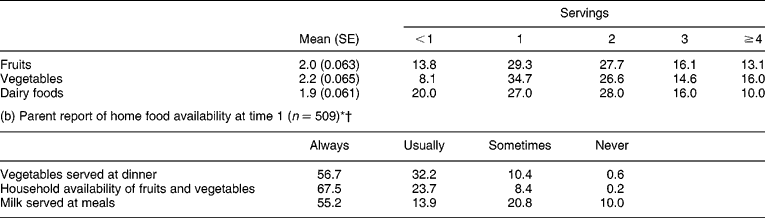
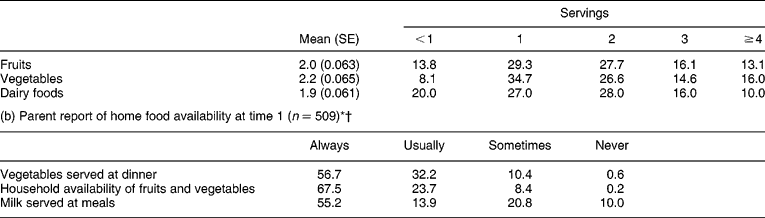
Parent intakes of fruits, vegetables and dairy foods closely resembled the intakes of their adolescent children at time 1. Despite the high prevalence of inadequate intake, 89% of parents reported that fruits and vegetables were usually or always available at home, and 87% reported that vegetables were usually or always served at dinner. About two-thirds of parents (65%) reported that milk was served at meals (Table 2).
Associations between household food availability at time 1 and adolescent intakes at time 2
Spearman correlations for household food availability at time 1 and adolescent intake of fruits, vegetables and dairy foods at time 2 ranged between 0.030 (availability of fruits and vegetables and adolescent fruit intake in the high school cohort) and 0.322 (milk served at meals and adolescent dairy intake in the young adult cohort) (Table 3). Parental report of serving vegetables at dinner was found to be predictive of adolescent intakes of vegetables at 5-year follow-up among both genders and cohorts after adjusting for adolescent intakes at time 1, age, race, cohort or gender, parent SES and parent gender (Table 4). Males consumed 0.45 and females consumed 0.62 additional servings of vegetables at time 2 in homes where vegetables were always served at dinner vs. sometimes/never at time 1. High school students consumed 0.76 and young adults consumed 0.32 additional servings of vegetables when they were always served at dinner vs. sometimes/never at time 1. Milk served at dinner was found to be predictive of dairy intake 5 years later for young adults but not for adolescents in the high school cohort. Young adults consumed 0.64 additional servings of dairy when milk was always served at meals vs. sometimes/never. Parent report of home availability of fruits and vegetables did not significantly correlate with adolescent intake of these foods.
Spearman correlations between parents' intakes and home food availability (time 1, T1) and adolescent intakes of fruits, vegetables and dairy foods (time 2, T2)

* P < 0.05.
Adjusted* adolescent intakes† of fruits, vegetables and dairy products at time 2 by parental report of availability at time 1, by gender and age group cohort

* Adjusted by parent socio-economic status, child race, child age, cohort or gender and adolescent intakes at time 1.
† Fruits: raisins, grapes, bananas, melon, apples, pears, oranges, strawberries, peaches, plums, orange juice and apple juice. Vegetables: tomatoes, tomato or spaghetti sauces, string beans, broccoli, beets, corn, peas, mixed vegetables, spinach, greens or kale, peppers, yams, zucchini or squash, carrots, lettuce, coleslaw. Dairy: dairy content in milk, instant breakfast, yoghurt, cheese, cheeseburger, pizza, macaroni and cheese, grilled cheese sandwich, nachos with cheese, pudding, frozen yoghurt, ice cream, milk shake.
‡ A higher mean value indicates a greater number of daily servings.
Associations between parental intakes at time 1 and adolescent intakes at time 2
Spearman correlations between parent fruit, vegetable and dairy food intakes at time 1 and adolescent intakes of the same foods at time 2 ranged from − 0.007 (parental dairy intake and adolescent vegetable intake in the young adult cohort) to 0.314 (parental dairy intake and female adolescent dairy intake) (Table 3). Parental intakes of fruit, vegetables and dairy foods were found to predict intakes of the same foods for young adults but not for high school students (Table 5). Young adults consumed 0.50, 0.62 and 0.54 additional servings of fruit, vegetables and dairy foods, respectively, when their parents consumed four or more servings vs. less than one serving of these foods.
Adjusted* adolescents’ intakes† of fruits, vegetables and dairy at time 2 by parent intakes at time 1, by gender and age group cohort

* Adjusted by parent socio-economic status, child race, child age, cohort or gender and adolescent intakes at time 1.
† Fruits: raisins, grapes, bananas, melon, apples, pears, oranges, strawberries, peaches, plums, orange juice and apple juice. Vegetables: tomatoes, tomato or spaghetti sauces, string beans, broccoli, beets, corn, peas, mixed vegetables, spinach, greens or kale, peppers, yams, zucchini or squash, carrots, lettuce, coleslaw. Dairy: dairy content in milk, instant breakfast, yoghurt, cheese, cheeseburger, pizza, macaroni and cheese, grilled cheese sandwich, nachos with cheese, pudding, frozen yoghurt, ice cream, milk shake.
‡ A higher mean value indicates a greater number of daily servings.
Parental intake of dairy foods was found to be predictive of female adolescents' dairy intake 5 years later (Table 5). A significant linear trend in mean dairy intakes indicates that at time 2 females consumed 0.55 more servings of dairy between the lowest and highest servings of parent dairy intake.
Discussion
The current study examined longitudinal associations between parental report of home food availability and their own dietary intakes, and adolescent intakes of fruit, vegetables and dairy foods. Frequency of serving vegetables at dinner predicted intakes of vegetables for both genders, and for high school students and young adults at 5-year follow-up. In addition, milk served at meals was significantly associated with dairy intakes of young adults 5 years later. Parental dietary intakes predicted dietary intakes of young adults, but not of high school adolescents. All analyses were adjusted for adolescent dietary intakes at time 1 and sociodemographic characteristics, suggesting the potential for a long-term role for parent modelling and home food availability on the dietary patterns of adolescents above and beyond any short-term impact.
The significant association between frequency of serving vegetables at dinner and adolescent intakes of vegetables was in agreement with findings from cross-sectional studiesReference Neumark-Sztainer, Wall, Perry and Story15, Reference Hearn, Baranowski, Baranowski, Doyle, Smith and Lin17. Serving vegetables at dinner was used as a measure of both availability and accessibility. Food can be available at home (e.g. in a compartment of the refrigerator) but not in plain view (e.g. on the kitchen counter) to be easily accessible to childrenReference Hearn, Baranowski, Baranowski, Doyle, Smith and Lin17. Therefore, the measure of serving vegetables at dinner is often included in studies that examine associations of availability and accessibility with intakes. Using the same data set, Neumark-Sztainer et al. cross-sectionally observed that a measure of home fruit/vegetable availability which included the measure of vegetables served at dinner was a significant predictor of adolescent intakeReference Young and Fors14. In addition, among adolescents who reported having greater home availability of fruits and vegetables, preferences for these foods were more strongly associated with intake. Likewise, in a longitudinal study of young adolescents (mean age 11.8 years), Bere et al. found that baseline high accessibility of fruits and vegetables correlated with greater increases in intake after 8 months of follow-upReference Bere and Klepp16. Daily availability of vegetables at dinner was one of the measures that defined accessibility in the 8-month follow-up study. The significant longitudinal association of vegetables served at dinner and vegetable intakes observed in the high school and young adult cohorts indicates that the benefit of mealtime exposure to healthy foods can be carried through adolescence and into young adulthood.
In the current analysis, home availability of fruits and vegetables did not significantly predict intakes of these foods for high school students or young adults. While these results are in agreement with one cross-sectional studyReference Befort, Harsohena, Nollen, Sullivan, Nazir and Choi28, other studies, including cross-sectional analyses from Project EAT-I, found significant associations between home food availability as reported by parents or adolescents and intakes of adolescentsReference Baranowski, Cullen and Branowski6, Reference Hanson, Neumark-Sztainer, Eisenberg, Story and Wall13, Reference Neumark-Sztainer, Wall, Perry and Story15. Use of a single-item measure of availability for combined fruits and vegetables may have contributed to the lack of any significant association with intake. Befort et al. in a cross-sectional study exploring correlates of parent report of food availability and adolescent intakes assessed the availability of multiple fruit (17 items) and vegetables (15 items), and found no association between home availability and intakeReference Befort, Harsohena, Nollen, Sullivan, Nazir and Choi28. Another possible explanation may be the low variability of parental responses to this item, as the majority of parents reported that fruits and vegetables were always available at home. Also, the time of exposure to home food availability or length of follow-up may affect the association of food availability and adolescent intakes.
Significant longitudinal associations were found between parental intake of fruit, vegetables and dairy foods, and intake of these foods by young adults, but not by high school adolescents. The limited longitudinal research examining associations between parental intakes and intakes of their adolescent children, and differences in study designs and choice of predictor variables, make the comparison of our results with those of other studies somewhat difficult. Our findings support one previous study conducted by Lau et al. examining associations of parental influence on health beliefs and behaviours of primarily Caucasian late adolescent and young adult malesReference Lau, Quadrel and Hartman29. Lau et al. found significant associations between parent intakes and the intakes of their children for fresh fruit, fresh vegetables, whole grains, soft drinks and ‘junk’ foodReference Lau, Quadrel and Hartman29. Studies have also shown that eating habits of young adults significantly correlate with eating practicesReference Branen and Fletcher30 and parental feeding stylesReference Fletcher and Branen31 during childhood, as they were recollected by these young adults.
The results of the present study suggest that parents continue to play an important role in their children's consumption of fruits, vegetables and dairy foods when they transition to young adulthood. When youth transition through adolescence, their diets may be more influenced by external factors and they may develop eating habits different from those of their parents and different attitudes from those experienced at home. However, as adolescents transition to young adulthood, their eating habits may revert to the way they were brought up and to the modelling of their parentsReference Branen and Fletcher30.
Parent dairy intake was significantly associated with dairy intake of girls but not of boys. Our results agree with the results of pevious cross-sectional studies that have found significant associations between parental intake of milk and dairy and their children's intakesReference Fisher, Mitchell, Smiciklas-Wright and Birch10, Reference Hanson, Neumark-Sztainer, Eisenberg, Story and Wall13, Reference Grove, Douglass, Heimbach, DiRenzo and Miller32, Reference Johnson, Panely and Wang33. Failure to observe an association between dairy intakes of male adolescents and parent dairy intake may be due to the majority of parents being female (85%). The results of our study indicate that parents have the potential to influence their daughters' consumption of dairy foods, which is especially important, given the strong association between consumption of milk in childhood and adolescence and bone density in adulthoodReference Sandler, Slemenda, LaPorte, Cauley, Schramm and Barresi34.
The current study has several strengths that enable us to draw meaningful conclusions. The prospective study design is preferable to cross-sectional with respect to its ability to establish temporal relationships between predictors and an outcome of interest. A second strength of the study that allows us to generalise the findings to other adolescent populations is the relatively large, ethnically and socio-economically diverse population of parents and adolescents. Analyses using the two cohorts enable us to see longitudinal changes in food consumption as adolescents move from middle school to high school and from high school to young adulthood, two critical transitional periods in human development. The use of dietary consumption reported by adolescents and separate parent reports of their own intake as well as home food availability minimised the risk for response bias.
When reviewing the results of this study, several limitations need to be considered. Parent self-reported dietary intake and home food availability data were used, which may be prone to social desirability biasReference Herbert, Clemow, Pbert, Ockenen and Ockene35. In addition, parent intake was assessed using the past week's consumption with a brief measure, which may yield results not directly comparable with estimates derived by the adolescent food-frequency questionnaire. Availability of fruits and vegetables was assessed using a single item that combined both fruits and vegetables. While the YAQ is a widely tested and validated instrument for measuring adolescent dietary intake, one study has indicated it may have lower validity among African-American youthReference Field, Peterson, Gortmaker, Cheung, Rockett and Fox36.
Study implications
The findings of this study indicate that parent dietary habits and the home food environment during adolescence influence their children's dietary habits later in life. Parent eating behaviour was found to be a significant predictor of children's intakes during young adulthood. Further longitudinal studies are needed to examine the long-term effects of parent report of their eating habits, parent eating habits as observed by their children, and home food availability on their adolescent children's consumption patterns. More specifically, prospective studies that follow families throughout adolescence and young adulthood with shorter follow-up periods are needed to determine better the role of parents in the long-term stability of their children's dietary habits, especially during critical transitional periods of development. Nutrition intervention studies that test the impact of increasing parent intakes and the home availability and accessibility of healthy foods on dietary habits of adolescents could provide better insight into the influence of the home environment.
Acknowledgements
Sources of funding: This study was supported by Grant R40 MC 00319 from the Maternal and Child Health Bureau (Title V, Social Security Act), Health Resources and Services Administration, Department of Health and Human Services. We would also like to acknowledge the Adolescent Health Protection Research Training grant T01-DP000112 from the Centers for Disease Control and Prevention (CDC), Department of Health and Human Services.
Conflict of interest declaration: The authors have no conflict of interest.
Authorship responsibilities: C.A. synthesized and conducted the analyses and led the writing. D.N-S. conceived the study and supervised all aspects of its implementation as principal investigator of Project EAT-II. P.H. assisted with study development and supervised the analysis of trends. P.v.d.B. assisted with the analysis and programming. M.S. assisted with study development and implementation. N.L. critically reviewed the manuscript. All authors helped to conceptualize ideas, interpret findings, and review drafts of the manuscript.