


This paper contains supplementary material that can be found online at http://journals.cambridge.org
Introduction
Ecosystem services are ecological functions underpinning human well-being (Daily, Reference Daily1997), and span regulatory, supporting and cultural services as well as the direct provision of food, timber, water, fibre and medicine (Millennium Ecosystem Assessment, 2005). Provisioning services, including wild products, often termed non-timber forest products (NTFPs), form an integral part of rural subsistence and cash economies around the world (Nepstad & Schwartzman, Reference Nepstad and Schwartzman1992). Growing commercialization of some wild resources, however, has led to an increase in the volume collected and fuelled fears of overexploitation and declining populations (Peters, Reference Peters, Nepstad and Schwartzman1996). Extraction can also lead to habitat degradation and changes in genetic patterns of populations and ecosystem level processes (Ticktin, Reference Ticktin2004). On the other hand, ensuring sustainable harvests is beneficial for both human well-being and biodiversity but requires an understanding of relationships between wild products, livelihoods and wealth within communities, and changing patterns of use (Davies & Brown, Reference Davies and Brown2007).
Although the Tibetan economy is undergoing a rapid transformation away from agriculture towards secondary and tertiary sectors (construction and the service industry; Fischer, Reference Fischer2011), a large proportion of Tibetans in China are rural, and there remain large socio-economic inequalities between rural and urban areas in western regions (Fischer, Reference Fischer2005). Rural Tibetan communities have the highest poverty rates in China according to household income, education and health indicators (UNDP, 2005). According to state figures the per capita mean rural income in Tibet was c. USD 425 vs the national mean of USD 708 in 2004 (Fischer, Reference Fischer2008; CNY converted to USD Purchasing Power Parity), although rural incomes are increasing in many Tibetan areas. In the last 2 decades the rural cash economy of Tibetan regions has been bolstered by a fungal gold rush in medicinal caterpillar fungus Ophiocordyceps sinensis and matsutake mushrooms Tricholoma matsutake. In 2004 caterpillar fungus contributed 8.5% of the GDP of the Tibetan Autonomous Region, exceeding the mining industry (Winkler, Reference Winkler2009). Although this trade and the livelihoods of rural Tibetans have been documented (Goldstein et al., Reference Goldstein, Jiao, Beall and Tsering2003; Arora, Reference Arora2008; Winkler, Reference Winkler2008a), there has been no quantitative analysis of the role of wild products as provisioning services for Tibetan households within rural communities.
People's livelihoods are not just dependent on whether an ecosystem service is available in the area but are a function of their ability to derive benefits from it, termed access (Ribot & Peluso, Reference Ribot and Peluso2003). Access can vary with a number of household level factors, as well as being related to social dynamics and politics; i.e. patterns of ecosystem service use vary within a community (Waylen, Reference Waylen2010). Conventional wisdom holds that poverty and forest resources are intimately related, so that the poorest sections of a community are often the most reliant on forest services as they have fewer alternatives (Belcher et al., Reference Belcher, Ruíz-Pérez and Achdiawan2005). The poor have been found to be more dependent on NTFPs (Mamo et al., Reference Mamo, Sjaastad and Vedeld2007; Kamanga et al., Reference Kamanga, Vedeld and Sjaastad2009) but other studies have shown that middle or wealthy households gain more from the products in absolute and relative terms (McElwee, Reference McElwee2008; Uberhuaga et al., Reference Uberhuaga, Smith-Hall and Helles2012). The relationship can depend on the type of resource (de Merode et al., Reference de Merode, Homewood and Cowlishaw2004; Narain et al., Reference Narain, Gupta and Van't Veld2008), and there may be no relationship at all (Wickramasinghe et al., Reference Wickramasinghe, Pérez and Blockhus1996). Wealth and, conversely, poverty are, however, complex concepts, with multiple dimensions that go beyond income and material assets and vary between communities and cultures. Theories of poverty based on the idea of livelihoods consider wealth to be constructed not only of financial assets but of four other types of capital: social, human, physical and natural (DFID, 1999). Despite the substantial body of knowledge on the relationship between poverty and ecosystem services in tropical forests, few studies have considered the provisioning role of ecosystem services in grassland systems, such as are found on the Tibetan plateau.
Generally NTFPs have been found to play an important part in livelihood strategies as a backup during times of need (McSweeney, Reference McSweeney2004). Typically therefore, access to alternative livelihoods such as wage labour and livestock decrease reliance on wild products (McElwee, Reference McElwee2008). However, when a product becomes commercialized, these relationships can change dramatically. For example the commercialization of Moroccan argan oil led to large gains in wealth and social benefits (Lybbert et al., Reference Lybbert, Aboudrare, Chaloud, Magnan and Nash2011) but boom can be followed by bust because of rapid extraction and changing markets, leaving dependent and poor households vulnerable to further poverty (Belcher & Schreckenberg, Reference Belcher and Schreckenberg2007).
Using data from semi-structured interviews we explore the wild provisioning services of the grasslands and forest to households in one Tibetan community. As the most widely used provisioning services, we examine firewood, caterpillar fungus and matsutake mushrooms. By focusing on these products we are able to contrast a purely subsistence resource (firewood) with two commodified resources (matsutake and caterpillar fungus). Based on recall data we evaluate (1) how fungal products are contributing to wealth and livelihoods, (2) what determines household access to provisioning services (the amounts of the resource collected, and the price received for caterpillar fungus), and (3) how local use of provisioning services has changed with time.
Study area
The study site is a valley in the west of Sichuan Province, an area recognized by conservation organizations for its high level of biodiversity and endemism (Conservation International, 2012). The valley community of Sangdui (Tibetan: Samdo) lies in the northern part of Daocheng County, in the Ganzi Tibetan Autonomous Prefecture, at an altitude of 3,950 m, and comprises four villages and c. 220 households. It is located in the easterly Kham region of ethnographic Tibet, the area on and around the Tibetan plateau historically home to a Tibetan civilization linked by ethnicity, religion and language (Richardson, Reference Richardson1984). The majority of rural Tibetans in this region are both pastoralist (herding cattle) and agriculturalist (growing barley and turnips), with households allocating varying levels of resources between the two livelihood types.
Forest ecosystems are primarily found in the south-east Tibetan plateau, where there are milder climatic conditions. Anthropogenic forest fragmentation has had a long history on the Tibetan plateau and its valleys, which have been cleared for firewood, timber, livestock rearing, agriculture and settlements (Ryavec & Winkler, Reference Ryavec and Winkler2006). It has been suggested that the survival of oak Quercus spp. in Tibet is threatened by firewood production and livestock grazing (Tang, Reference Tang2006), and cutting has been identified as a threat to species in the region (Xiang et al., Reference Xiang, Huo, Wang, Cui, Xiao, Quan and Tai2007).
Caterpillar fungus is a parasitic fungus found on the grasslands of the Himalayan region and in all but the driest areas of the Tibetan plateau (Winkler, Reference Winkler2009). Its unique morphology is the result of the fungus parasitizing the ghost moth larvae of the genus Thitarodes. The fungus grows inside the larvae, filling it with mycelium, and emerges from the head of the mummified caterpillar in spring. It is known as yartsa gunbu in Tibetan, meaning summer grass, winter worm, reflecting this seasonal process. It is used as a tonic for a wide range of ailments, from fatigue to cancer, but most famously as an aphrodisiac. Although caterpillar fungus has a long history of human use dating from at least the 15th century (Winkler, Reference Winkler2008a), it is only since economic liberalization in China in the early 1980s that it became widely commodified (Winkler, Reference Winkler2008b). It is now given as a fashionable luxury gift in Chinese cities and the domestic and international markets are booming. The annual production on the Tibetan plateau is estimated to be 85–200 t (Winkler, Reference Winkler2009) and concern has been raised over falling production (Stone, Reference Stone2008) and the environmental effects of destructive collection methods (Winkler, Reference Winkler, Boesi and Cardi2005).
Matsutake has been a prized edible mushroom in Japan for centuries. In Tibetan it is called beshing shamo, meaning oak mushroom, indicating its ectomycorrhizal association with species of oak. It is found in forested areas below 3,200 m (Zang, Reference Zang1984). As with caterpillar fungus there has been a dramatic rise in the price since the 1980s, since when Japanese companies have been able to access matsutake in western China. Prices are volatile, responding to shifts in supply and demand at regional and global levels (Yeh, Reference Yeh1998). NGOs have promoted sustainable harvesting of the fungus although there is not yet firm evidence of changes in populations or impacts to ecosystems from current harvesting levels (Menzies & Li, Reference Menzies, Li, Laird, McLain and Wynerg2010).
Methods
Interviews were carried out in Sangdui during January–April 2010. The household is the unit of economic activity, including natural resource use, and therefore interviews were conducted at this level, with the head of household or those involved in household decision-making. We selected households by numbering all the houses in the valley, selecting a random number and visiting the corresponding house. The interviews aimed to obtain measurable information on household demographics, natural resource use and livelihoods for statistical analyses but consolidated and enhanced these data with qualitative information through open-ended questions and discussion. Qualitative data focused on the particularities of the household; e.g. its history, income in previous years, livelihood, and changes in resource use. Recall data were for 2009 and the recall period was 1 year. The questions were piloted in six households in a neighbouring valley and then 50 interviews were conducted in Sangdui, one in each household sampled, representing 23% of the households in the valley. We sampled across the four villages in the valley community and used village as an explanatory variable in statistical models, to account for any differences between them. Interviews were carried out in Kham Tibetan in the respondents’ homes, with help from a translator, recorded in agreement with the participants, and translated into English.
To incorporate indigenous ideas of wealth, which may differ significantly from Western ideas and income-based indices (Chambers, Reference Chambers1987), key informants were used to draw up a list of locally relevant indicators of wealth such as house size and ownership of a tractor, which were used in the questionnaire. Based on these indicators households were categorized into three wealth categories: poor (n = 11), middle (n = 26) and wealthy (n = 13), and categories checked with a key informant.
Statistical analyses were carried out using R v. 1.14.1 (R Development Core Team, 2011). We used Generalized Linear Models (GLMs) to explore which household variables explained differences in amounts of natural resource extraction and the price of caterpillar fungus. GLMs relax the assumptions of standard linear regression models by allowing the response variable error to follow non-normal distributions and have non-constant variances (Crawley, Reference Crawley2007). The first step in using GLMs is to define the error structure of the model. The variable firewood is count data and exhibited Poisson errors. The response variables caterpillar fungus amount and caterpillar fungus price were square root transformed to normalize the distribution before carrying out the analyses, specifying a Gaussian error structure. For the response variable amount of matsutake a mixed compound Poisson-gamma within the Tweedie family of distributions was specified, which has a positive mass at zero and was otherwise continuous (nine households were not collecting any matsutake, and the variable is otherwise positive). The index parameter determining the distribution, P, was specified as 1.52.
Akaike's Information Criterion (AIC) was used as a basis for model selection. This is a penalized log likelihood that weighs up the trade-off between the number of parameters and the fit of the model. It ensures variables are not deleted prematurely and allows the ranking of a selection of candidate models (Burnham & Anderson, Reference Burnham and Anderson2002). Explanatory variables used in the GLMs (Supplementary Table S1) were chosen on the basis of a review of the literature on resource use and livelihoods, preliminary field work at the study site, and an exploration of the data. We explored interactions visually and included them when they were meaningful and seemed to have an effect. We checked co-dependency between variables, and wealth was excluded from models containing other variables because of its strong relationship with many variables.
Results
Resource extraction
Evergreen oak Quercus aquifolioides, the most commonly used species for firewood in Sangdui, is coppiced. Government regulations restrict collection to October and to two tractor loads per household per year (the volume of one trailer is 0.72 m3 but wood is stacked to double the height). Thirteen of the 50 respondents reported collecting firewood in other months. The mean amount collected was 2.9 loads per year in 2009 (n = 50); the modal number was 3 loads, with 19 households collecting this amount. Each tractor load costs USD 2.36, and those who collected more than two loads either paid the local government extra money or extracted the wood illegally. Households collected caterpillar fungus for a maximum of 2 months in 2009, from 20 April to 18 June. Since the price started to rise in the 1980s not only have more people started collecting but the community has expanded the areas where they collect and the time spent searching. This led to violent clashes over access with a neighbouring community in 2007. Local collectors were aware of spatial and temporal differences in quality of caterpillar fungus, which affected their patterns of collection; e.g. later in the season, people generally moved to higher slopes where the mushrooms fruit later. Specimens collected at higher altitude were also considered better quality, whereas those found in forest were less valuable.
During the height of the season people spent up to 10 hours per day scouring the grasslands. When the top of the mushroom is seen the collector uses a small axe to remove the topsoil, which is then replaced. Almost equal numbers of the collectors were male (53%, n = 100) and female (47%) and 18% of the collectors were under 16. On average 404 pieces were collected per household, median = 375, with a range of 20–1,100 pieces.
Matsutake has been collected for trade since the mid to late 1980s and was collected for c. 1 month during July–August in 2009. Local men, women and a small number of children collected the fungus from forest and forest edges, where the fruiting bodies occur in patches. Forty-one of the 50 households collected at least some matsutake in 2009, and the mean amount of matsutake collected per household was 32 kg (median 20 kg, range 0–150 kg).
Relationships between resource collection, wealth and livelihoods
Wealth was strongly connected with other household variables (Table 1), including income, but did not differ between villages. The mean household annual cash income was USD 1,566 (median USD 1,298, range USD 201–4,719, n = 50). Wealthier households tended to have greater household sizes and a pastoral livelihood strategy and were more likely to be educated. Mean dependency ratios were highest for medium wealthy households; low ratios of dependants to active adults in poor households are reflective of small household sizes.
Characteristics of households in the three wealth categories.

1 CNY have been converted into USD Purchasing Power Parity
2 Households with one or more members over the age of 16 who have received any formal education
3 Ratio of dependants to active adults
Firewood was collected by all households (n = 50) for their own use regardless of wealth and livelihoods, and was not sold. The mean percentage of household cash income earned from caterpillar fungus in 2009 was 72% (median 80%, n = 50). There is a significant difference between wealth levels in the proportion of income received from it (Kruskal Wallis K = 11.90, df = 2, P < 0.05; Fig. 1). Poor households received significantly less (52%) of their smaller income from the fungus but instead received a greater proportion from government subsidies and casual labour, mainly construction work. Three of 13 wealthy households earned < 70% of their income from caterpillar fungus, earning the rest from herding and other professions. The mean percentage of household income from matsutake is 6.0% (median 4.8%, n = 50) and is similar between wealth classes (poor 7.6%; medium 5.5%; wealthy 5.6%).
Proportion of household income gained from caterpillar fungus in 2009, by wealth category. The box indicates the lower and upper quartiles, the line in the box shows the median value, and the ends of the vertical lines indicate a maximum of 1.5 multiplied by the inter-quartile range. Circles show outlying data points.

Determinants of access to provisioning services
The variables herding, household size, income and village were included in the GLM to explain variation between households in firewood extracted (Supplementary Table S2). One household collecting 10 tractor loads of firewood was omitted from the analysis, as the majority of the wood was used for a death ritual and therefore the value was anomalous. The difference in AIC values between the models was not significant so we carried out model averaging on the models with delta values < 5 (a delta value is a measure of the support for each model relative to the best model) to determine which variables appeared to be most important. Household size is the most important (weighted model average 0.58), followed by income (0.40), herding (0.23) and village (0.14). Ownership of a tractor to collect wood did not affect the amount of firewood collected. Nine households that did not own a tractor relied on cash to hire someone, social relationships to borrow a tractor, and other economic transactions such as exchange labour.
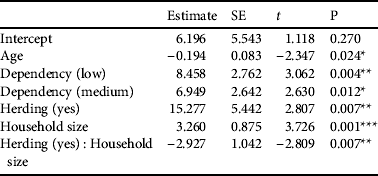
Given that the cash economy in this community was heavily dependent on caterpillar fungus, household income was not included in the model for amount collected, to avoid circularity. The variables included were herding, age, education, land, alternative work, dependency ratio, household size, village and the interaction between household size and herding (Supplementary Table S3). There is strong support for the first model (the delta AIC for the next model is > 2) and it was taken as the minimum adequate model, with parameter estimates given in Table 2. The model suggests that households with a younger household head, lower dependency ratios, more members, and a herding livelihood strategy tend to collect more caterpillar fungus. The interaction between herding and household size also explains some variation: for non-herding households, caterpillar fungus extraction increased with household size but within herding households the relationship was negative.
Summary of the minimum adequate model explaining the amount of caterpillar fungus Ophiocordyceps sinensis collected in 2009. High dependency was taken as the baseline condition. Overall model: n = 50, F = 4.8, df = 6, P < 0.001, R2 = 0.401, adjusted R2 = 0.318.
*** < 0.001; **, P < 0.01; *, P < 0.05
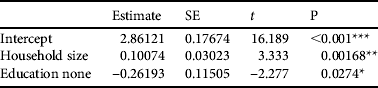
The mean price obtained for caterpillar fungus varied between households. Those that were able to send a household member to sell the fungus in Sangdui town received a higher price, whereas fungus sold on the mountain at the point of collection was generally cheaper. Quality differs between specimens and changes through the season; attributes indicating quality are hardness, a yellow colour, and large size of the larval host. Specimens collected at higher altitudes were considered higher quality, so those collectors able to travel further were at an advantage. The average reported price received per piece in 2009 was USD 2.60 (median 2.36, range 1.42–4.25). A GLM was run to explore which household factors explain differences in the mean price received between households in 2009 (Supplementary Table S4). The explanatory variables herding, village, education, household size and dependency were included in the maximal model. The first two models have similar AIC values so both models have considerable support. However, the model summary for the second model shows that herding does not explain a significant amount of variation (P = 0.2), and so the first model is the more parsimonious minimal model (Table 3). Larger households and those with educated adults were able to obtain a better price for the fungus.
Summary of minimal model for price of caterpillar fungus received in 2009. Overall model: n = 50, F = 7.225, df = 2, P < 0.01, R2 = 0.2352, adjusted R2 = 0.2026.
*** < 0.001; **, P < 0.01; *, P < 0.05
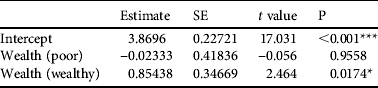
Wealth was initially not included in the maximal model for the amount of matsutake collected because of correlations with other variables. According to AIC values the null model was the best but when wealth was included in the model on its own, there was strong support for this model (ΔAIC = 3.71), with wealthy households collecting significantly more matsutake than other households (Table 4).
Summary of minimal model for mushrooms Tricholoma matsutake collected in 2009. Overall model: n = 50, P < 0.001, df = 2, F = 2.014 x 10⁴, % deviance explained = 11%.
*** < 0.001; *, P < 0.05
Changes in resource collection over time
For each of the three products, respondents most often reported they were collecting less in 2009 than 5 years previously but the reasons given were different for each. For firewood the most common reason given was that there are fewer trees available because many have been cut (12 respondents). Five respondents said they collected less because of government restrictions. Fourteen households said they collected the same amount as before, and only two reported more collection, because of greater need. Over a longer time period people suggested they collected a greater amount of firewood following the use of motorized vehicles.
Of the 28 out of 50 respondents who reported a decline in caterpillar fungus collected, the majority said it was because of the weather, and in particular a lack of rain. The second most common reason given was greater competition for the product and fewer pieces found per household. Only two people thought they could now collect more fungus, and nine said that the amount fluctuates annually because of the weather and therefore they could not judge overall.
Twenty-nine of the 50 respondents reported collecting fewer matsutake mushrooms, largely because the price had declined. This was also the explanation given by those households who chose not to collect any matsutake in 2009. As with caterpillar fungus, the crop fluctuates according to the weather, in particular with levels of precipitation.
Discussion
The community has use rights over the ecosystem provisioning services in this case study, yet there is differential access between households, which affects local patterns of service use. Household size was the most important variable explaining differences in firewood collected, probably because bigger households need more heating and cooking fuel. Some studies have suggested a negative correlation between income and firewood collection (Sharma et al., Reference Sharma, Gairola, Ghildiyal and Suyal2009). Here there was simply no alternative to firewood so that all households were reliant on it to a greater or lesser extent, and income was needed to pay the local government for the wood. Nonetheless, social relationships were an important means of access for some poorer households with no means to transport firewood.
In contrast, access to caterpillar fungus was related to a more complex set of factors. Firstly, households with a younger household head are not only likely to have fitter and healthier family members with a greater ability to collect the fungus, which relies on labour capacity, but also have more incentive to accumulate wealth to build up their household asset base (McSweeney, Reference McSweeney2004). Demographic variables are not static and the data show a snapshot of the community in one particular stage of its life cycle. But households grow, shift livelihoods, suffer mortality and are therefore in a dynamic relationship with the surrounding environment (Perz & Walker, Reference Perz and Walker2002). Livelihood type was also a significant factor; those households that herded cattle tended to collect more caterpillar fungus. Pastoralists are likely to have better access to and knowledge of the grasslands where the fungus grows. Tibetans use subsistence occupations based on provisioning services as a strong livelihood base for coping with uncertainty (Fischer, Reference Fischer2008). This strategy not only highlights the capabilities of the rural poor in meeting their livelihood needs through diversification (Ellis, Reference Ellis2000) but that the caterpillar fungus trade is being adeptly integrated into pastoralism, a livelihood connected to historically-rooted Tibetan identities (Yeh & Gaerrang, Reference Yeh2011)
Access is not only about being able to physically collect a natural resource but to use and sell it to gain benefits. Those with bigger households were more likely to be able to send someone into town to sell the fungus for a better price, and those with a member who was numerate and literate had an advantage in negotiating a higher price. The ability to speak Mandarin is also necessary for business with Chinese traders, a skill obtained largely through formal schooling. Herders and those with large family sizes can respond to the high levels of competition for caterpillar fungus by travelling further afield and at higher altitudes, to reach high quality specimens.
Although commodified, matsutake mushrooms, in comparison to caterpillar fungus, were contributing little to household incomes in 2009 and there was not such a clear explanation for differences in access. Broadly, the wealthy were collecting significantly more but there was little difference between households in the contributions to income made by the matsutake trade. Nine out of the 50 households were not collecting the fungus, mainly because they did not view it as sufficiently profitable, and there had been a shift in allocation of resources away from the product. The matsutake market is volatile, and it appears that as the market conditions change, people respond in different ways. Most were investing a small amount of household resources in collection but there was no notable pattern of access with household variables.
The relationship a household has with the environment is mediated by different kinds of capital (De Sherbinin et al., Reference De Sherbinin, VanWey, McSweeney, Aggarwal, Barbieri and Henry2008). Overall, we found that access to provisioning services was related to particular facets of wealth that in turn align with different types of capital: social, human, physical and financial. Wealth was strongly correlated with demographic factors, including education, household size and dependency ratio. For the provisioning ecosystem services in the local environment, human capital in the form of labour availability, education and knowledge was the most important factor in household access. Social relationships and cultural factors related to the pastoralist lifestyle were also significant.
Sale of caterpillar fungus was contributing on average 72% of household income in 2009, corroborating previous studies in the region (Winkler, Reference Winkler2008a), and more broadly the high reliance on NTFPs in the Himalayan region (Rijal et al., Reference Rijal, Smith-Hall and Helles2011). This case study contradicts the common notion that NTFPs provide natural insurance during times of need (Pattanayak & Sills, Reference Pattanayak and Sills2001); rather, caterpillar fungus now constitutes the core of almost all household income in the community. There is a difference between wealth classes, however, with the poor gaining less income from the fungus. Poverty, which is related to lack of access to ecosystem services, is pushing certain households into jobs such as construction, which are socially undesirable compared to herding, trade and artisanal crafts. Although there is some circularity involved in these relationships, so that access to caterpillar fungus was a means and end to wealth, elements of poverty were also barriers to access. In this way wealth, income and access to ecosystem services are in a mutual yet dynamic relationship.
The initial enthusiasm for enhancing access to NTFPs as a conservation and development tool has been tempered by concerns of elite capture by the wealthiest sections of society (Dove, Reference Dove1994) or, conversely, by evidence that it leads to the perpetuation of poverty (Neumann & Hirsch, Reference Neumann and Hirsch2000). The poor are left with low-value goods that they cannot use as a route out of poverty, whereas the affluent can benefit from commercialized products (Vira & Kontoleon, Reference Vira and Kontoleon2010). These ideas do not hold completely true for this case study. Although there was differential access, the poor were still gaining significantly because absolute barriers to service use were not present and capital-rich households could not completely monopolize the market, suggesting that the caterpillar fungus trade is alleviating poverty. In addition, firewood was accessed by all households out of necessity. Given the heavy dependence on the fungus, a decline in harvest rates or price would be potentially catastrophic for the whole community. Likewise, conservation regulations (such as restrictions on access to the montane grasslands) would affect the income of all households. Only a minority appeared to be able to access other skilled labour markets through education, as in other Tibetan areas (Fischer, Reference Fischer2005).
The ecological effects of provisioning ecosystem service extraction depend on a variety of factors, including frequency and intensity of collection, timing, size of specimens and the technique used, as well as specific context (Ticktin, Reference Ticktin2004; Belcher et al., Reference Belcher, Ruíz-Pérez and Achdiawan2005). Generally the greater the intensity of collection, the greater the ecological effects will be. Firewood collection appears to have increased over a long time period because of improved transport but the general trend during the last 5 years is unclear from these data. Some respondents reported that resource scarcity and increased government restrictions had decreased collection but illegal removal of firewood appears common. There is no doubt that intensity of caterpillar fungus collection has increased dramatically in the last 20 years, along with spatial expansion, and there is little or no regulation at the study site. But there is no clear evidence, or even expectation, of negative ecological effects on the target species, given that the fungus is itself a parasite causing mortality of the original host. Hence the effects of harvesting, mediated through a highly weather-dependent parasite–host relationship, are likely to be complex. Of more concern may be the indirect ecosystem effects of large numbers of people spending substantial amounts of time digging and living in fragile ecosystems. Winkler (Reference Winkler2009) draws attention to the unreliable data used in studies showing a dramatic fall in overall production over time but this does not preclude a cautious approach to maintaining the sustainability of harvesting, especially given currently high livelihood dependence on the fungus. Limiting collection seasons so that adequate fungal sporulation is maintained may be one conservation measure (Winkler, Reference Winkler2009). However, given the ecological and social complexities involved further research is warranted before embarking on conservation actions.
The data used in the study were limited in several respects. Estimates of household income from recall data over 1 year are likely to be underestimated (Rayamajhi et al., Reference Rayamajhi, Smith-Hall and Helles2012), and the use and value of resources vary annually because of climatic and economic changes (Cavendish, Reference Cavendish2000). We attempted to overcome these problems by discussing income season by season during household interviews, to improve accuracy of estimates, and including qualitative data regarding indigenous wealth and changes in resource availability across the community but a longitudinal study using repeat measures of income and natural resource use would be of value. There may not only be heterogeneity at the household scale but at the village level (McSweeney, Reference McSweeney2002) and this case study will not be completely representative of other communities in the region. However, the collection of caterpillar fungus and matsutake is widespread across the Tibetan and Himalayan region, so that although the results would not be replicated exactly because of variation in climate, wealth and other factors, they have relevance, especially for Tibetan communities in China.
This study demonstrates the diverse provisioning value of the grassland and forest ecosystems on the Tibetan plateau. It contributes to an emerging body of knowledge on the value of ecosystem services to the rural poor through a case study in a region of the world that has received little attention. In particular, the results contrast a purely subsistence necessity resource, firewood, with a highly commodified and profitable medicinal grassland fungus that has more complex issues of access reflecting high levels of competition, power and human capital as well as its widespread grassland habitat. Our focus on access draws attention to the heterogeneity of communities, and the dynamic relationships between households, their natural environments, and the provisioning ecosystem services that these environments provide. The value of these services is influenced by household life cycles and the broader socio-economic context in which communities are embedded. Conservation and development initiatives must address these complexities and be aware of the high dependence of livelihoods on provisioning services in this area.
Acknowledgements
We thank Dr Wang Nan and Beijing Forestry University, and our field assistants Tashi Rabden, Pema Dechin, Tsewang Chomtso and Gele Chopel for their invaluable help, the Forest Bureau of Daocheng county for permission and support, and the people of Sangdui for their hospitality and participation. The research was funded by the ESRC and the World Pheasant Association. EJMG acknowledges the support of a Royal Society Wolfson Research Merit Award.
Biographical sketches
Emily Woodhouse's research spans anthropology and ecology, exploring relationships between people and their environments and focusing on culture, institutions and livelihoods. Philip McGowan is concerned with ensuring that no species of Galliformes go extinct and balancing the needs of all 300 species of Galliformes with those of the communities that live alongside them. E.J. Milner-Gulland's research lies at the interface of social and ecological systems, with a particular focus on the conservation of harvested species. Her research group's website is http://www.iccs.org


 Open access

