


Almost all human societies seek exotic raw materials. Such materials come from afar, are often difficult to acquire in their own right, and carry properties that make them recognizably unusual. The meaning of such materials is negotiable, walking the line between signaling participation in social networks of varying complexity and the construction of particular identities. In smaller-scale societies especially, such exotic materials may be acquired by targeted, long-distance voyages in time/space (Bernardini and Carr Reference Carr, Carr and Chase2005; Helms Reference Helms1988) or moved through intricate patterns of hand-to-hand exchange across a continent (Kerwin Reference Kerwin2010:86, 99; Murillo-Barroso et al. Reference Murillo-Barroso, Bueno, Barroso, de Balbín and Martinón-Torres2018). Evaluating the various cultural dimensions of raw material relationships thus provides key windows into the lives of the past peoples we study.
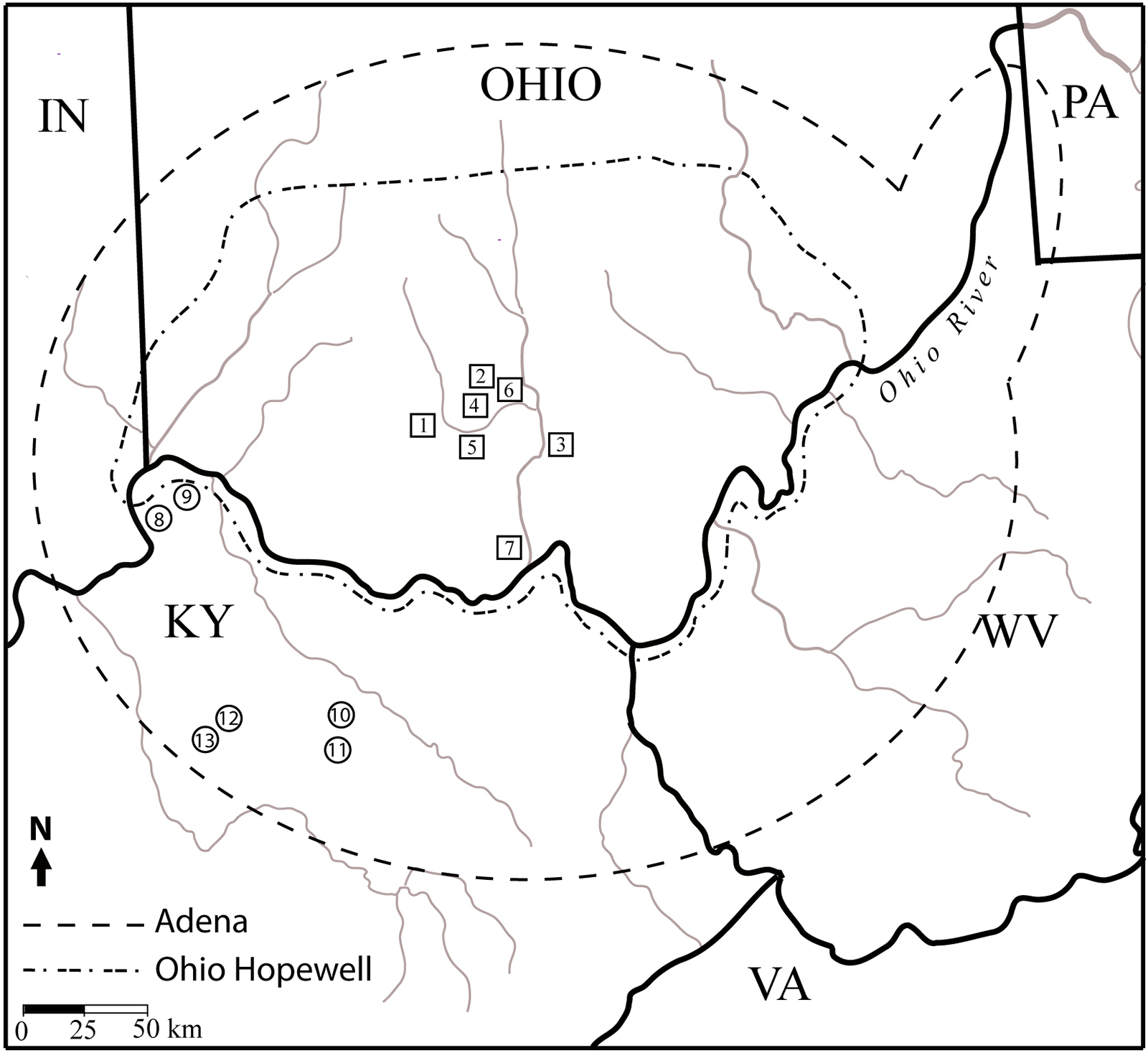
Copper is one such exotic material and comes with a history of use in North America of more than 10,000 years (Ehrhardt Reference Ehrhardt2009; Pompeani et al. Reference Pompeani, Steinman, Abbott, Pompeani, Reardon, DePasqual and Mueller2021). Here we focus on identifying the geologic source of 12 copper objects from the Mound City Group, a UNESCO World Heritage site and Ohio Hopewell ceremonial center in Ross County, Ohio (Figure 1). Ohio Hopewell, a regional complex based in public ritual, the construction of complex cultural landscapes, and the display and use of esoteric materials, held sway in the central Ohio Valley region from AD 90–120 to AD 395–430, as modeled by Seeman and Nolan (Reference Seeman and Nolan2023). Here we used (1) laser ablation–inductively coupled plasma–mass spectrometry (LA-ICP-MS), (2) the elemental signatures of four known copper sources, and (3) discriminant function analysis to classify these 12 “unknown” archaeological copper samples. We then compared the results with those of previous studies to elucidate long-term patterns of copper use in the middle Ohio River Valley (MORV).
Map showing the location of the Mound City Group and other Ohio Hopewell and Adena sites with LA-ICP-MS results: (1) Ater; (2) Hopewell; (3) Brown’s Bottom; (4) Rockhold; (5) Seip; (6) Mound City; (7) Tremper; (8) Robbins; (9) Crigler; (10) Wright; (11) Ricketts; (12) Fisher; (13) Drake.

Context of Our Evaluation
The sourcing of copper in eastern North America started with the nineteenth-century idea that it came from the Lake Superior Copper District (LSCD) in what is now northwestern Michigan and adjacent portions of Wisconsin, Minnesota, and Ontario (Levine Reference Levine2007:55; Squier and Davis Reference Squier and Davis1847:196). Geologically, all these occurrences are along the Mesoproterozoic Midcontinental Rift and are associated with igneous and sedimentary rocks (Bornhorst and Mathur Reference Bornhorst and Mathur2017). Here the abundance of native copper is greater than anyplace else in the world (Rapp et al. Reference Rapp, Henrickson, Miller and Aschenbrenner1980:37). Studies made accessible by Griffin (Reference Griffin1961; see also Halsey Reference Halsey2018) make clear that there was considerable mining here by American Indian well before any European exploitation or extraction. There were two basic types of mining: (1) hard-rock mining using pits and shafts and (2) mining of secondary deposits in till or as placer deposits. Exploiting secondary deposited nuggets could have in some cases reduced the cost of acquisition but would not have facilitated either high-volume output or making finished objects of standardized shapes or sizes. The available evidence indicates that this early mining in the LSCD was concentrated in three areas: the Keweenaw Peninsula, Isle Royale, and near or on Michipicoten Island (Griffin Reference Griffin1961). It was extensive enough to leave a clear signature in the sedimentary record that is still detectable today (Vall et al. Reference Vall, Murphy, Pompeani, Steinman, Schreiner, Bain, DePasqual and Wagner2022). The Keweenaw Peninsula, Isle Royale, and Michipicoten Island lay, respectively, 960 km, 1,060 km, and 940 km from the main centers of Ohio Hopewell ceremonialism in the MORV such as Mound City.Footnote 1 During the time frame in question the LSCD was occupied by hunting-fishing populations of the Laurel tradition (Brose and Hambacher Reference Brose, Hambacher and Halsey1999:183–184).
The other main focus of copper mining in eastern North America historically was a southern Appalachian (SA) ore band extending from Ducktown, Tennessee, to adjacent Georgia and northwest North Carolina (Goad Reference Goad, Brose and Greber1979:241). The Ducktown or Copper Basin locality of southeastern Tennessee was the main production area. It was commercially mined from the 1840s to the 1980s and was the main source of copper for the Confederacy. Over time, nineteenth- and twentieth-century mining practices poisoned the basin, causing degradation in water quality and vegetation. Hurst and Larson (Reference Hurst and Larson1958) were the first to recognize the SA source in an archaeological context, and Goad’s (Reference Goad1978, Reference Goad, Brose and Greber1979) subsequent work further demonstrated the long-term use of SA copper in the Southeast.
It is useful to note Goad’s (Reference Goad, Brose and Greber1979:244) conclusion that both SA and more distant LSCD copper were used to produce such diagnostic Hopewell object classes as earspools and panpipes recovered from archaeological contexts in the Southeast. To some degree this pattern parallels Levine’s (Reference Levine2007) work in New England on an earlier time horizon demonstrating the use of both LSCD and Nova Scotian copper. Neither Goad nor Levine, however, tested copper from any MORV archaeological context. The Ducktown Basin lies approximately 490 km south of the main Ohio Hopewell centers such as Mound City, 450 km closer than the LSCD source. During the time period of interest, the SA source area was occupied by groups assigned to the Connestee phase by regional archaeologists (Chapman and Keel Reference Chapman, Keel, David and Greber1979; Wright Reference Wright2020:149–152).
In addition to the LSCD and SA sources, dozens of other minor occurrences of native copper are linearly distributed along the Appalachians extending from Georgia to Canada (Hill et al. Reference Hill, Greenlee and Neff2016:352; Levine Reference Levine2007; Rapp et al. Reference Rapp, Henrickson, Miller and Aschenbrenner1980) and as erratics in the glacial till of Illinois, Michigan, Minnesota, and Wisconsin as derivatives of the parent LSCD deposits (Emerson and Farnsworth Reference Emerson and Farnsworth2022; Goad Reference Goad1978:174, 176; Rapp et al. Reference Rapp, Henrickson, Miller and Aschenbrenner1980:37, 39, Reference Rapp, Allert, Henrickson and Lambert1984:284). Here we do not sample these alternative sources but instead focus on a direct comparison of the LSCD and the SA areas as the two most likely and most predictable sources regularly used by Ohio Hopewell peoples.
Our archaeological samples are from the Mound City Group (33Ro32) located in Ross County in south-central Ohio. Mound City is one of the most significant archaeological sites in eastern North America and is a UNESCO World Heritage site (Hancock Reference Hancock2022). It was one component of an intensively used ceremonial landscape at the confluence of Paint Creek and the Scioto River starting in the second century BC and extending through the fourth century AD (Seeman and Branch Reference Seeman, Branch, Charles and Buikstra2006). Mound City’s construction involved the removal of the upper soil layers over a large area, the construction of special buildings and altars, the burning of human remains and selected preciosities, and the subsequent construction of 24 mounds, architectural pits, and an encircling embankment (Brown Reference Brown2017). Specialized crafting areas also were present (Everhart and Ruby Reference Everhart and Ruby2020). Brown (Reference Brown2017:41–43, 121) suggests that Mound City represented a critical link in the development of regional ranked societies. Exotica such as copper are well represented at Mound City, including mica, marine shell, crystalline quartz, chlorite, Knox flint, and Connestee pottery from the Southeast, as well as galena, silver, catlinite, and possibly Sterling pipestone from the north (Gundersen Reference Gundersen and Brown2017:451; Nolan et al. Reference Nolan, Hill, Seeman, Olson, Butcher, Chavali, Hillard, Redmond, Ruby and Burks2020:164–165, 168–169; Spence and Fryer Reference Spence, Fryer, Carr and Chase2005:716; Walthall Reference Walthall1981:55; see also Emerson et al. Reference Emerson, Farnsworth, Wisseman and Hughes2013:66).
Testing
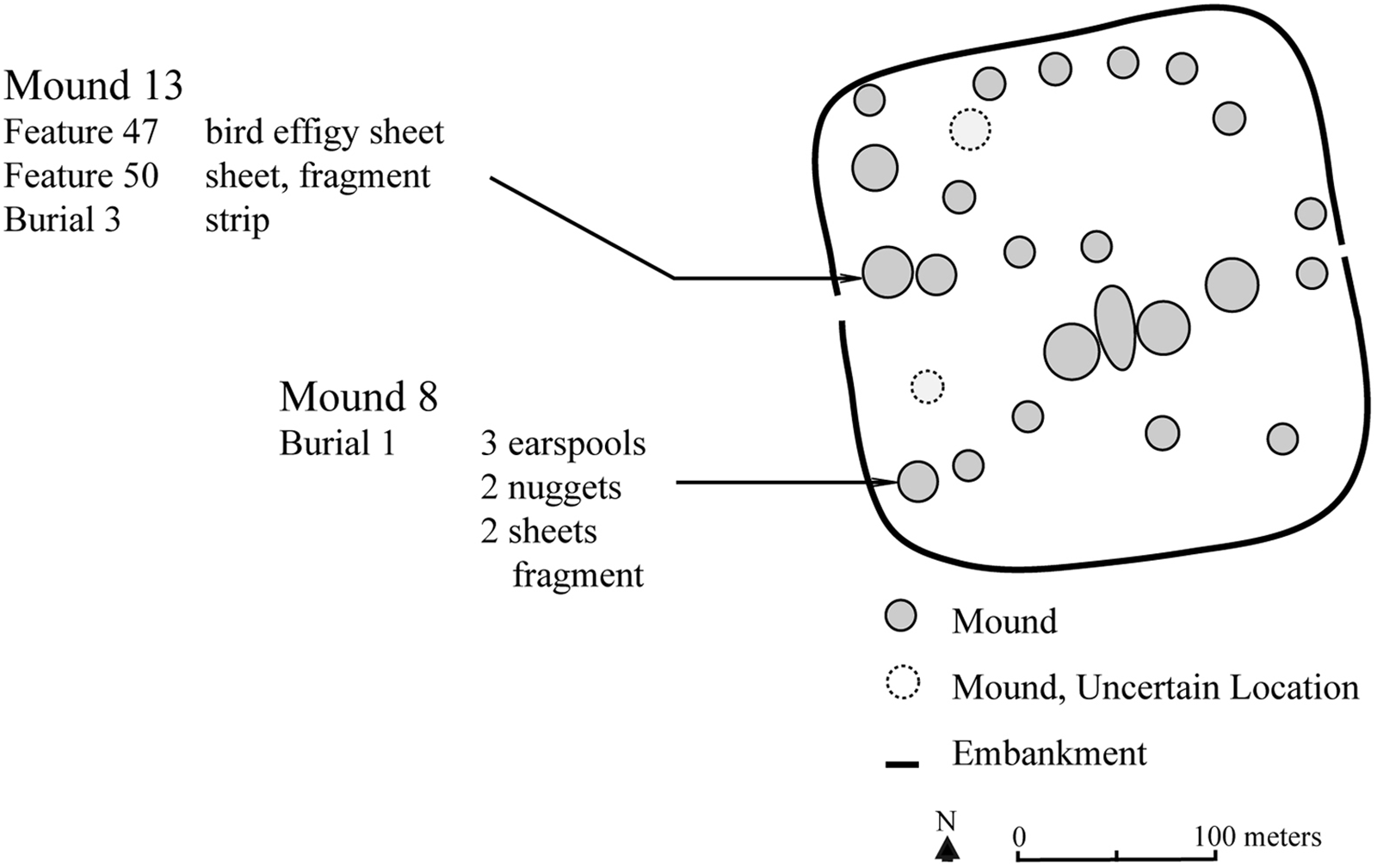
We obtained copper samples (N = 12) for our investigation from four specific contexts in Mound 8 and Mound 13 at Mound City (Figure 2). They were sampled based on their small size and perceived integrity. The Mound 8 samples came from the lower level of the mound and, based on artifactual cross-ties, were early in the construction sequence at the site (Brown Reference Brown2017:54–55, 79–80, 311, 331, 363; Seeman and Nolan Reference Seeman and Nolan2023). Mound 13 also had two main constructional episodes, and three of the four samples were associated with the upper of two buildings there. The fourth was recovered from Feature 47 and postdates the upper structure (Brown Reference Brown2017:162, 327). Based on artifactual cross-ties and AMS radiocarbon dates, the upper portion of Mound 13 should date to a later time frame than lower Mound 8 within the Hopewell episode, specifically to the late second century or the early third century AD (Brown Reference Brown2017:364; Seeman and Nolan Reference Seeman and Nolan2023).
Archaeological contexts of the Mound City copper sample.

LA-ICP-MS has been used successfully in other copper compositional studies in eastern North America (e.g., Hawkins et al. Reference Hawkins, Petrus, Anselmi and Crawford2016; Hill Reference Hill2012; Hill et al. Reference Hill, Seeman, Nolan and Dussubieux2018; Lattanzi Reference Lattanzi2008; McKnight Reference McKnight2007) and for source materials as varied as East Asian glass (Loewen and Dussubieux Reference Loewen and Dussubieux2021), obsidian (Orange et al. Reference Orange, Le Bourdonnec, Scheffers and Joannes-Boyau2016), carnelian (Kenoyer et al. Reference Kenoyer, Kusimba, Sarathi, Walz, Law and Dussubieux2024), basalt (Simpson and Dussubieux Reference Simpson and Dussubieux2018), clay (Sharratt et al. Reference Sharratt, Golitko, Williams and Dussubieux2009), and European alloy copper (Stevenson et al. Reference Stevenson, Gunter-Bassett and Dussubieux2024). LA-ICP-MS is especially useful for characterizing raw materials because it requires only a small sample of 100 μm (about the width of a human hair) and has high sensitivity (Dussubieux et al. Reference Dussubieux, Hill and Lattanzi2019). Pre-ablation enables the removal of most or all corrosion and weathering products, thereby minimizing the potential effects of contamination and diagenesis, as well as significant aesthetic impacts on museum specimens. We conducted the analyses at the Elemental Analysis Facility (EAF) at the Field Museum with an Analytik Jena ICP-MS. A New Wave UP213 laser was connected to the ICP-MS for direct induction of solid samples. Only objects smaller than 5 cm could be fit into the laser ablation chamber at the EAF. Specifics of the methodology are documented elsewhere and are the same as used on similar copper archaeological materials from the Ohio Hopewell sites of Ater, Brown’s Bottom, Hopewell, Rockhold, Seip, and Tremper (Hill et al. Reference Hill, Seeman, Nolan and Dussubieux2018).Footnote 2
After elemental characterization, the archaeological copper samples were compared to samples of copper known to be from the LSCD source (N = 96) and the SA source (N = 25) using discriminate function analysis (DFA), the most common statistical means of affiliating archaeological samples to potential sources (e.g., Levine Reference Levine2007:578; Rapp et al. Reference Rapp, Henrickson, Miller and Aschenbrenner1980).Footnote 3 The DFA was designed to (1) provide results for a two-sample test between the LSCD and SA sources and (2) test for affiliation within the LSCD sources to known samples from the Michipicoten (N = 30), Isle Royale (N = 36), and Keweenaw (N = 30) subareas. Subsequently, results were compared with those of Hill and colleagues (Reference Hill, Seeman, Nolan and Dussubieux2018) and McKnight (Reference McKnight2007) to examine long-term trends in MORV copper use.
Results
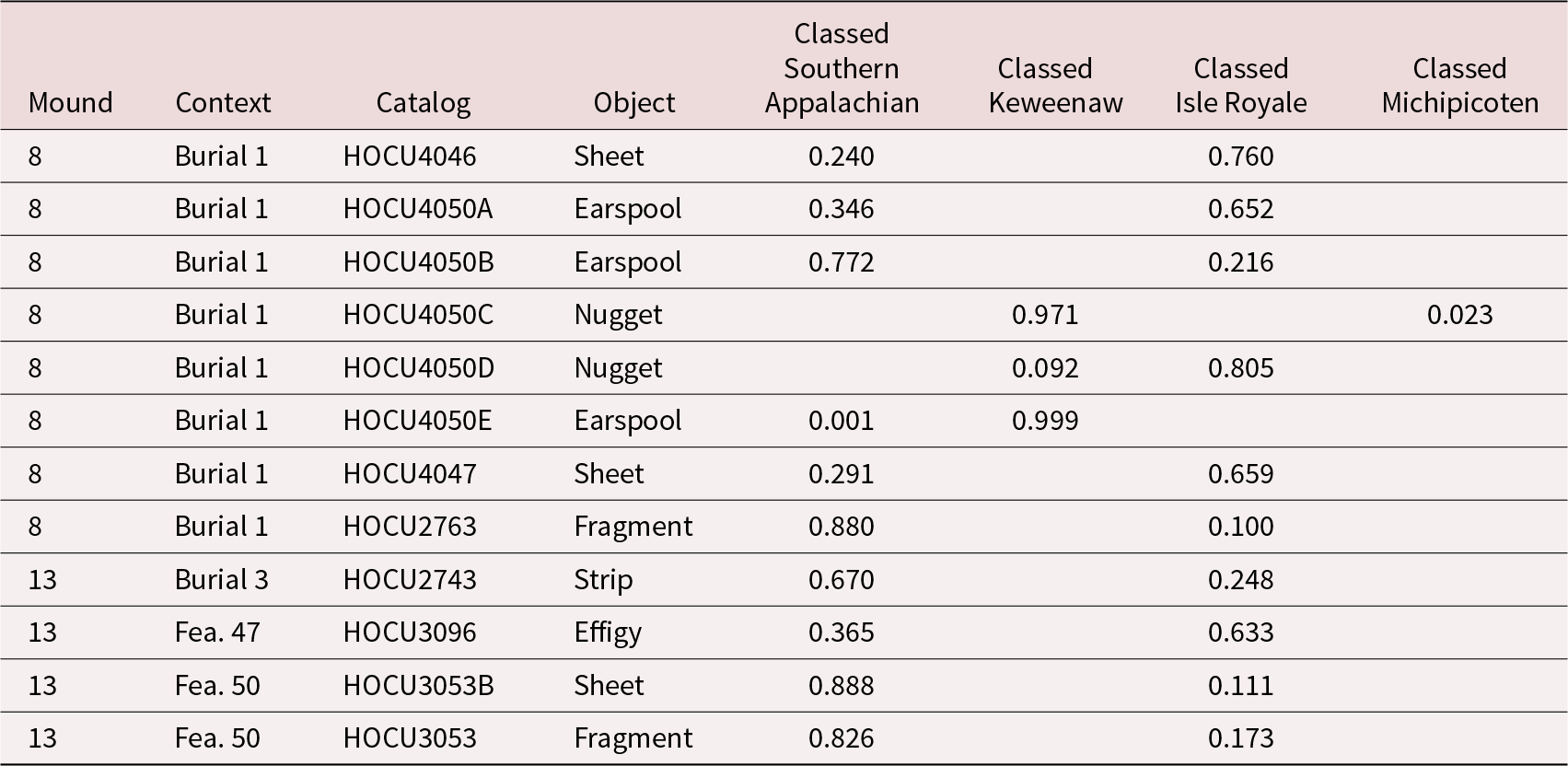
DFA successfully reclassified 94 (94/96 = 98%) of the copper samples from the LSCD source and 24 (24/25 = 96%) from the SA source. Of the “unknown” cases from Mound City archaeological contexts (Table 1), seven were classified as LSCD copper (7/12 = 58%) and five as SA copper (5/12 = 42%). Considering only those classifications that have a greater than 70% probability, which we consider strong evidence for a correct classification, the split is LSCD 4/7 = 57% and SA 4/5 = 80%. Mound 8 yielded mainly LSCD copper and Mound 13 mainly SA copper, which correlate with their different temporal placements (see the earlier discussion). Burial 1 in Mound 8 provided the largest sample from a specific context, and although six of the cases there were classified as LSCD (including two earspools), a third earspool was unambiguously classed as SA. In sum, these results support the interpretation that Ohio Hopewell copper was derived from multiple sources, and our specific test suggests that both LSCD and SA sources were used.
Highest and Second-Highest Discriminate Function Classification Probabilities for Assayed Mound City Group Copper.

We recognize that our tested sample from the site is small compared to the total volume of copper present at Mound City, but note that it provides the highest percentage of SA copper of those Ohio Hopewell sites with comparable sample sizes tested thus far (see Hill et al. Reference Hill, Seeman, Nolan and Dussubieux2018). As examples, analyses of Hopewell Mound Group copper indicated an SA percentage of 9% (SA = 2/23, LSCD = 21/23), Seip of 18% (SA = 2/11, LSCD = 9/11), and Ater of 25% (SA = 2/8, LSCD = 6/8). We offer no specific explanation for the high percentage at Mound City at this time, except to note that it also is characterized by the use of large quantities of mica and marine shell, both southeastern raw materials. The LSCD/SA relationship is variable among Ohio Hopewell sites, but LSCD copper is predominant (total LSCD = 50/64, or 78%; SA = 14/64, or 22%). This is similar to the mixed strategies documented by Goad for the Southeast and Levine for the Northeast. We note in particular Goad’s (Reference Goad1978:194–195) conclusion that at the Georgia Hopewellian sites of Tunacunnhee and Mandeville about 50% of the copper objects were made of SA copper and 50% of the LSCD source, quite similar to the Mound City case.
Focusing on the use of specific areas within the LSCD, our results suggest that, of the three subregions sampled, copper from both the Keweenaw Peninsula and Isle Royale subregions were used by Mound City peoples, with no evidence for use of the Michipicoten Island source. This pattern of use differs from the majority of other Ohio Hopewell sites. The dominant Ohio Hopewell pattern is more extensive use of the two difficult-to-access island sources, Isle Royale and Michipicoten Island, than the more easily reached Keweenaw Peninsula (see Hill et al. Reference Hill, Seeman, Nolan and Dussubieux2018). Historically, it is of note that the Giizhe Anishnaabe (Ojibwe) revere the mountain overlooking Isle Royale as the nesting site of the Thunderbirds and Michipicoten Island as the home of Mishepeshu, the Underwater Lynx (Chisholm et al. Reference Chisholm, Gutsche and Floren1998:101, 224, 235–236, 247). This historic pattern raises the prospect that Hopewell exotics such as copper provide connections that extend into mythic time, as well as place.
Discussion
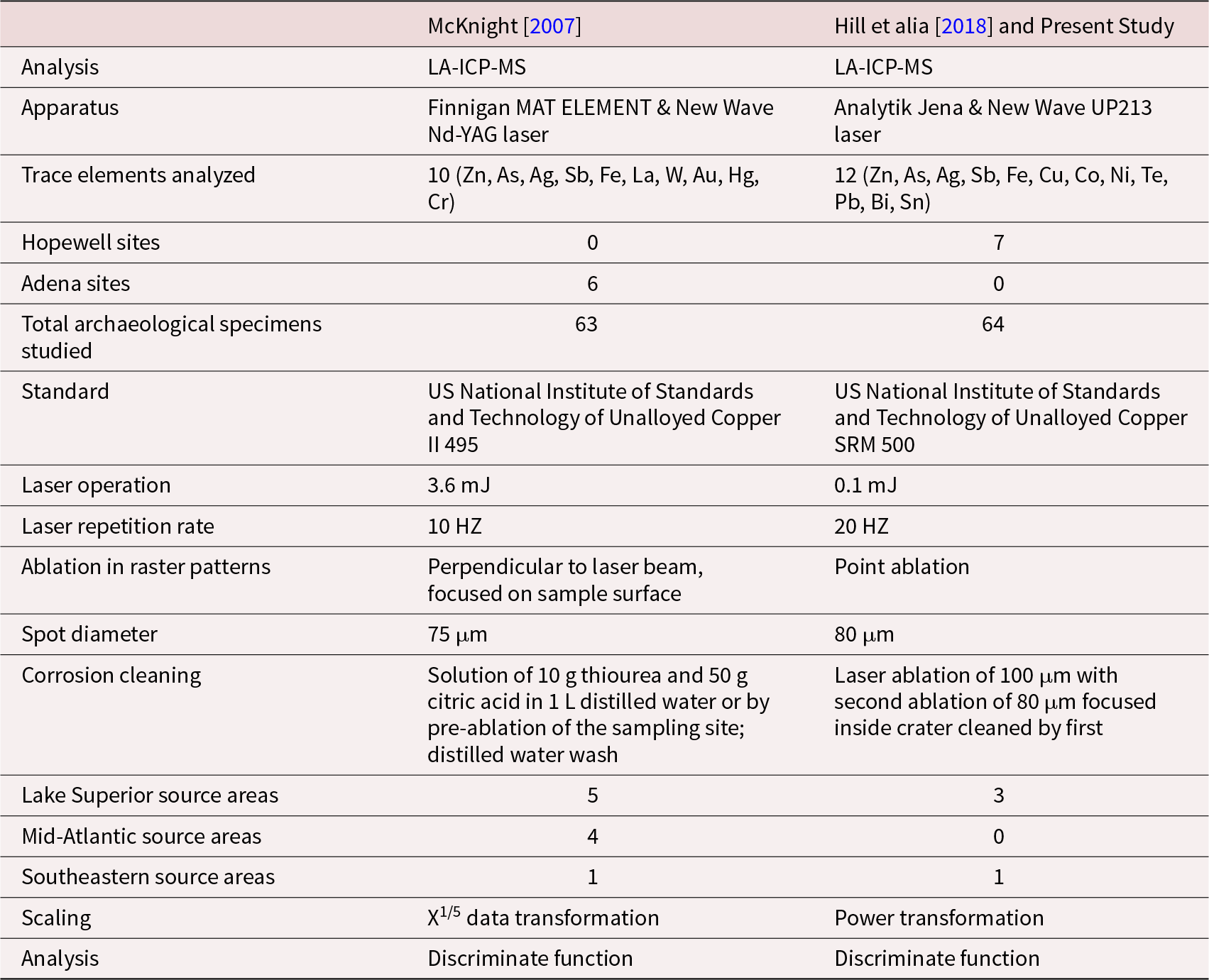
To better contextualize our findings, it is useful to view them within broader historical trends and in conjunction with other exotic raw materials to which Hopewell copper is linked. McKnight’s (Reference McKnight2007) LA-ICP-MS study of Adena copper sources in the MORV provides one such point of articulation, although the methodology is slightly different (Table 2). Inter-laboratory studies, however, do suggest broad comparability in results across different LA-ICP-MS protocols (Dussubieux et al. Reference Dussubieux, Hill and Lattanzi2019; Walder et al. Reference Walder, Petrus, Dussubieux, Hancock and Hawkins2021). Adena itself is a regional MORV ceremonial complex beginning before Ohio Hopewell and, although poorly dated, should span the period from 400 BC to AD 100 (see Hemmings Reference Hemmings1978; Lepper et al. Reference Lepper, Leone, Jakes, Pansing and Pickard2014).Footnote 4
Methodological Comparisons of Copper Studies Targeting MORV Unknowns.
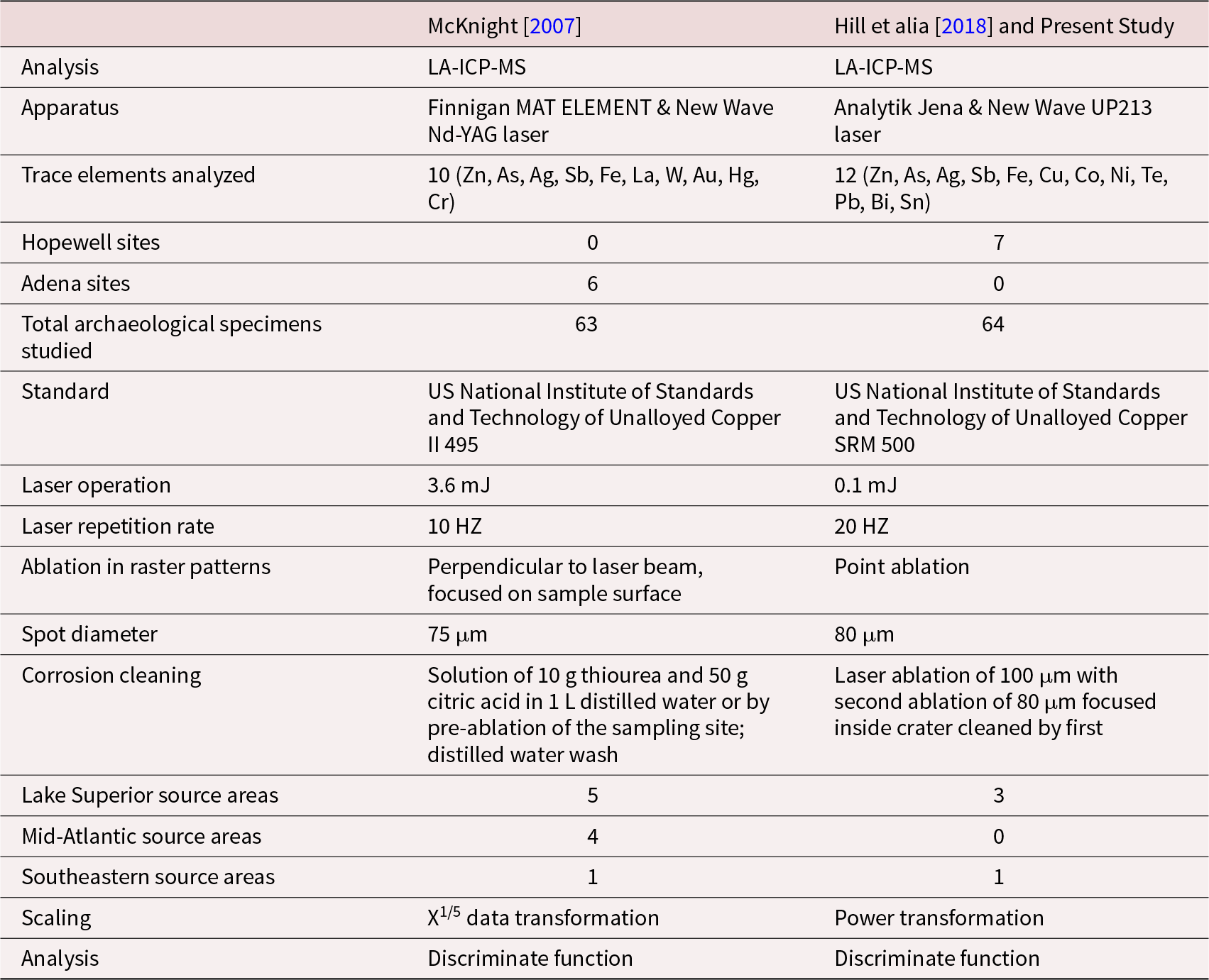
McKnight analyzed 63 Adena copper objects, mainly beads and simple bracelets, from six sites in northern Kentucky (Figure 1): nearly all the Adena copper came from the LSCD area (61/63 = 97%). A trace amount was classified as coming from the Middle Atlantic area (2/63 = 3%), and none from the SA source. As with the Ohio Hopewell sample, the majority of objects were affiliated with the two most difficult-to-reach subareas, Isle Royale and Michipicoten Island, within the LSCD. What this shows is that historically the LSCD source area was foundational to copper supply in the MORV. The “copper trail” north was well established before the development of Ohio Hopewell.
If the acquisition of copper by Ohio Valley peoples involved more complex relationships than direct procurement or simple transactions near the source, then such evidence for chain-like, down-the-line reciprocity has not been preserved at any place between the LSCD and the MORV. Ohio Hopewell groups built on this basic linkage by manipulating and amplifying it. First, the volume of copper increased considerably (see Greber Reference Greber1991:19; Webb and Snow Reference Webb and Snow1945:156). Using figures provided in Seeman (Reference Seeman1979), we would estimate that 270–360 kg (or more) of copper have been recovered from Ohio Hopewell contexts. Second, the range and sophistication of finished objects fabricated in copper increases considerably, denoting both increased skill in metallurgy and a conscious shift from Adena beads and bracelets. Hopewell copper thus resprents something old and deeply rooted in traditional values and at the same time something new: it came from different places and was associated with crafting new classes of finished objects. Thus, it carries with it a mutability that would have been useful in materializing different scales of interaction across the loosely structured Hopewell interregional network (Carr Reference Carr, Carr and Chase2005; Hill et al. Reference Hill, Nolan, Seeman and Donnellan2020; Wright Reference Wright2020).
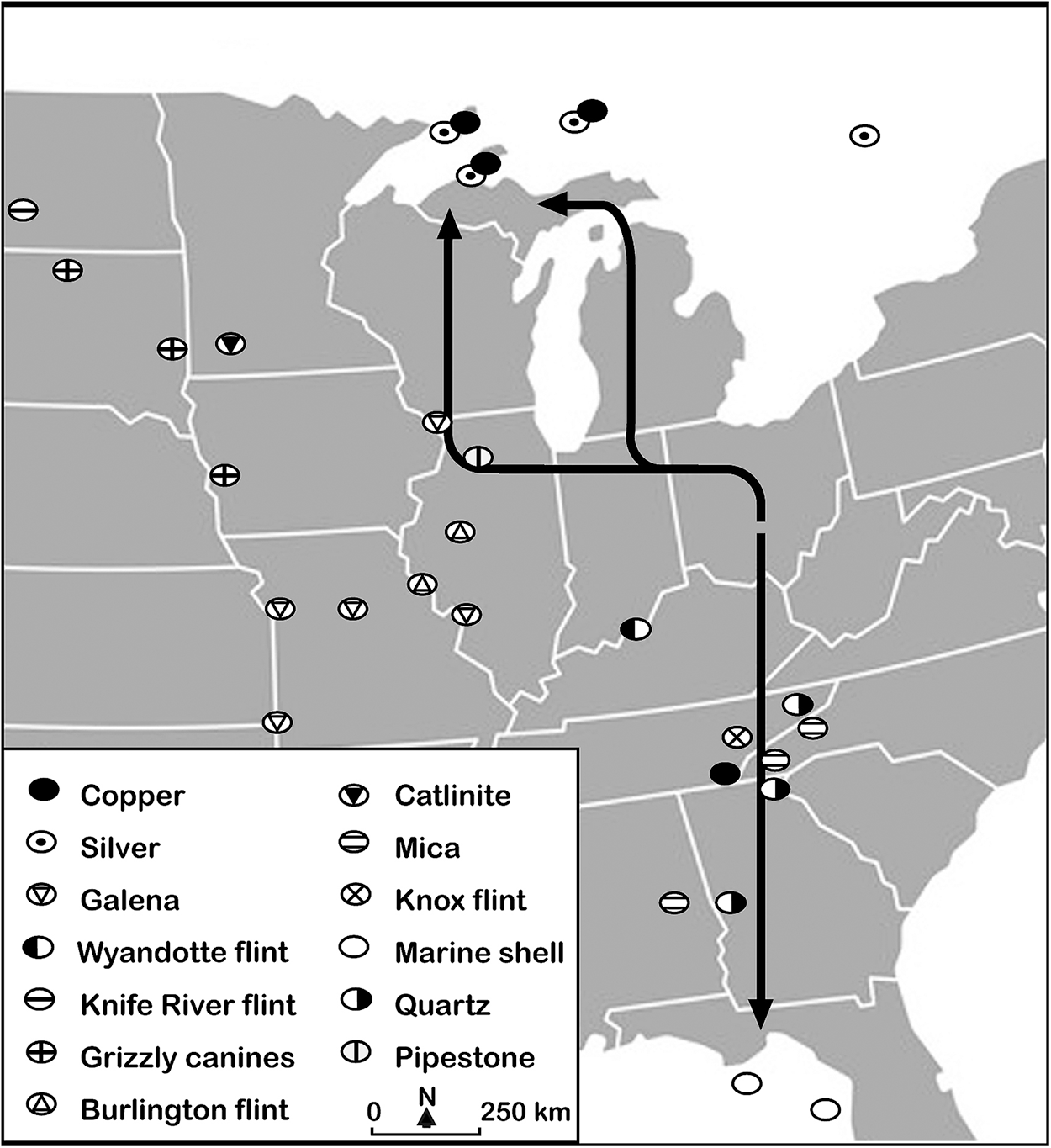
Finally, other exotic raw materials along the copper trail north—notably, LSCD silver and northwestern Illinois–southeastern Wisconsin galena—become important in constructing Ohio Hopewell identities. Proxemics suggests linked, not independent, relationships (Figure 3). Silver provides especially good support; all silver tested from Ohio Hopewell contexts comes from the LSCD, not from the alternative source near Cobalt, Ontario, that was used more extensively by other Hopewellian groups (Spence and Fryer Reference Spence, Fryer, Carr and Chase2005). Similarly, Walthall (Reference Walthall1981:37, 41, 44) points to this general direction as the source of Ohio Hopewell galena and contrasts it with sources used by lower Illinois Valley Hopewellian peoples.
Schematic model of main Ohio Hopewell copper supply routes.

We find no evidence for the use of the SA copper source in the MORV before Ohio Hopewell, despite the fact that SA copper was known and used by people in the South well before its beginning AD 90–120 (Hill et al. Reference Hill, Greenlee and Neff2016). We see the incorporation of SA copper as intertwined with a need for other exotic materials from this area (see Brown Reference Brown2017:364–365). Southern mica and marine shell, like copper, were key materials in constructing Ohio Hopewell identities. Mica flakes, cut pieces, finished objects of mica, or all three are found in nearly all Ohio Hopewell contexts, public and private. More generally, the available evidence shows that those interactions between Ohio Hopewell and various contemporary groups in both the Southeast and lower Ohio Valley were multidimensional and very different from those to the north (Seeman Reference Seeman, Redmond, Ruby and Burks2020:330–333). Here, the ceramic evidence deserves additional attention.
Three ceramic styles co-occur on most Ohio Hopewell sites. They were originally defined as the Scioto series, the Hopewell series, and the Southeastern series (Prufer Reference Prufer1968). The first two are distinguished from each other by surface treatment, design elements, range of vessel shapes, and the use of different manufacturing recipes. These differences are consistent with those resulting from use in the former case for cooking and storage and in the latter for serving, rituals, and ceremonies (Stoltman Reference Stoltman2015:188). Vessels of the third, or Southeastern, series are distinguished by their paddle-stamped surfaces, a treatment common and historically rooted in the southern Appalachians and farther south. Of the Southeastern series ceramics found on Ohio Hopewell sites, some were actually made in the Southeast, some were made as copies in local clay and temper, and some were made as copies in the lower Ohio Valley (Stoltman Reference Stoltman2015:188–189). This pattern implies multigender visits and the ritual participation of southern foreigners, the local incorporation of southern design modes, and/or longer residences of foreigners during which paddle owners replaced the pottery they brought with them into the MORV over time using local materials. Based on petrography, the local copies are quite common when compared to the Southeastern originals (Stoltman Reference Stoltman2015:64, 161–162, 165), and examples of the series are found on most Ohio Hopewell sites, from large ceremonial centers to small domestic homesteads. Pottery vessels from western regions such as the Illinois or central Mississippi Valleys have not been identified at Ohio Hopewell sites (Griffin Reference Griffin1983:42–43).
In sum, numerous raw material and style characteristics link the Southeast and the MORV and support the view that individual Hopewell lives were lived in both regions (Seeman Reference Seeman, Redmond, Ruby and Burks2020; Stoltman Reference Stoltman2015:190–191; Walthall Reference Walthall, Dickens and Ward1985). Specific social processes such as regular visitation, adoption, intermarriage, and the sharing of common values or beliefs fit the archaeological facts better than individual Odyssean quests for power, experience, or vision (sensu Helms Reference Helms1988). In particular, it is the bond of kinship, and the “instant” kinship created by marriage, that makes the movement of raw materials a contextualized certainty and occurring to a greater extent than can be expected from sporadic, transactional bartering. Under this interpretation, men and women along the Southeast/MORV axis would probably have become the apical “gifts” in the broader, overarching interregional symbolic system of prostrations in which the distinction between people and things is blurred (Douglas Reference Douglas1990:xix; Frank Reference Frank2016). Why such interregional social networks assemble and disassemble over time in eastern North America is another question entirely (see Sassaman and Nassaney Reference Sassaman, Nassaney, Nassaney and Sassaman1995; Wright and Gokee Reference Wright and Gokee2021). Returning to copper specifically, it is worth noting that Ohio Hopewell earspools were made of both LSCD and SA copper, just as Goad noted for contemporary sites in the Southeast. Larger Ohio Hopewell copper objects such as headplates and celts tended to be made of LSCD copper (Seeman et al. Reference Seeman, Nolan and Hill2019).
Thus, the various exotics used to materialize Ohio Hopewell relations need to be regarded not only individually but also interactively; historically the copper trail north to the LSCD not only became more vital with the establishment of Ohio Hopewell but also provided an opportunity for the embedding or entraining the procurement of other kinds of regionally available exotica such as galena and silver at low cost. Ohio Hopewell also is marked by the use of SA copper for the first time in the MORV, albeit in smaller quantities than brought from the more distant and dangerous cosmoscape of the upper Great Lakes. Quantitatively, SA copper in and of itself appears to be a much weaker driver of Ohio Hopewell identity but is folded into interregional ties built on broader, more complex social networks. Those networks were often cemented at the household level, rather than by anything more politically complex (Hill et al. Reference Hill, Nolan, Seeman and Donnellan2020).
Conclusions
The sourcing, mining, crafting, use, and final dispersion of copper—the last, often in a mortuary context—have been studied extensively by archaeologists, geologists, and metallurgists for more than a hundred years. Copper’s properties of malleability, shininess, color, and association with distant lands give a certain liveliness to it that has assured its special or symbolic importance in many cultural contexts. It comes from below the earth and shines like the sun. In eastern North America the movement of large amounts of native copper over long distances was at a highpoint during the early and middle portion of the Woodland period (ca. 1000 BC–AD 1000), with much of it coming to rest in the numerous Adena and Hopewell mounds of the MORV. Our analysis of copper from the Mound City Group indicates the use of both LSCD and SA sources, the latter in a higher frequency than at any other large Ohio Hopewell site. The interrelationships of history, distance, the proximity to other precious materials, and the breadth of interregional social networks suggest that the meaning of copper is itself complex and multifaceted, probably differing somewhat depending on its source. Ohio Hopewell represents a continuation and creative reimagining of copper supply to Ohio Valley communities. An important addition is the use of SA copper and the development of differently structured, more broadly based social networks within which the copper trade was infixed as compared to the traditional copper trail to the north. This implies a change in or broadening of the symbolism associated with copper over time with the incorporation of new relations to the Southeast.
Acknowledgments
We wish to acknowledge the cooperation of the Field Museum of Natural History and the National Park Service in this research. Specific individuals contributing to the project include Laure Dussubieux, Jamie Kelly, Bret Ruby, Eric Olson, Emily Butcher, and Sneha Chevali. We thank them. We also thank Matthew McKnight for comments on our manuscript, Yvonne McDermott for translating our abstract into Spanish, and the three anonymous reviewers.
Funding Statement
This research was supported by NSF grant BCS 1419225.
Data Availability Statement
Data are on file at the Applied Anthropology Laboratories, Ball State University, Muncie Indiana.
Competing Interests
The authors declare none.

 Open access

