


Food and nutrition security issues have drawn worldwide awareness since the 1990s, as part of international efforts towards ensuring access to adequate food as a human right( 1 , Reference Burity, Francheschini and Valente 2 ), and are now at the centre of global public agendas to fight hunger and poverty( 3 ). Assessing food insecurity is essential to this process, especially considering the negative impact of inadequate or even lack of food on health( Reference Olson 4 – Reference Weigel, Armijos and Racines 8 ).
Food security experience-based scales have been extensively used as a way to address food insecurity at the household level( Reference Pérez-Escamilla and Segall-Corrêa 9 – Reference Marques, Reichenheim and Moraes 13 ). Resulting from a thorough cross-cultural adaptation procedure of the US Household Food Security Survey Model (US-HFSSM)( Reference Bickel, Nord and Price 14 ) more than a decade ago( Reference Pérez-Escamilla, Segall-Corrêa and Maranha 15 , Reference Segall-Corrêa, Pérez-Escamilla and Marin-Léon 16 ), the Brazilian Household Food Insecurity Measurement Scale (Escala Brasileira de Insegurança Alimentar, EBIA) has since become the most widely used measurement tool, be it in nationwide surveys( 17 – 21 ) or targeted population-based studies( Reference Fávaro, Ribas and Zorzatto 22 – Reference Gubert, Segall-Corrêa and Spaniol 29 ). It has been consistently shown that the instrument has strong psychometric validity( Reference Pérez-Escamilla, Segall-Corrêa and Maranha 15 , Reference Segall-Corrêa, Pérez-Escamilla and Marin-Léon 16 , Reference Yuyama, Aguiar and Pantoja 30 – Reference Segall-Corrêa, Marin-León and Melgar-Quiñonez 33 ), reinforcing its suitability for monitoring and examining the determinants and consequences of food insecurity in at-risk and vulnerable households through prevalence surveys and observational studies( Reference Kepple and Segall-Corrêa 10 ).
Although initially comprised of fifteen items, the EBIA has undergone two revisions since its inception. One involved breaking down the question as to whether a ‘…member older than 18 years cut meal size or skipped meals…’ into two, which resulted in an expanded sixteen-item version( Reference Brasil 18 ). The second change occurred in 2014, when a Rasch analysis-based revision of the scale led to the current fourteen-item version( Reference Segall-Corrêa, Marin-León and Melgar-Quiñonez 33 , 34 ), in which the questions referring to ‘…member older than 18 years cut meal size…’ and ‘…member older than 18 years lost weight…’ were excluded. Inherent to instruments stemming from the US-HFSSM lineage, a common feature of the three versions is that the number of items answered depends on the presence or absence of individuals under 18 years of age. For instance, the current version comprises eight general/adult items applied in all households and six additional items if there are children and/or adolescents in the household( Reference Segall-Corrêa, Marin-León and Melgar-Quiñonez 33 ).
In parallel to the development of these different versions along the years, as well as several cross-cultural adaptations of the US-HFSSM lineage in many countries( Reference Gulliford, Mahabir and Rocke 35 – Reference Sahyoun, Nord and Sassine 40 ), there is a growing need to develop reduced versions of food security experience-based scales. A shorter version – possibly comprising a set of items that can be applied to all households – would be easier to apply in large-scale surveys, given that often there are limited financial and human resources as well as major time constraints for data collection( Reference Bickel, Nord and Price 14 , Reference Gulliford, Mahabir and Rocke 35 , 41 ). Indeed, the FAO recently conducted a global standardization of an eight-item scale named the Food Insecurity Experience Scale (FIES)( Reference Ballard, Kepple and Cafiero 42 ). The instrument was based on the eight adult items from the Latin American and Caribbean Food Security Scale, which in turn was strongly informed by EBIA( Reference Comité Científico de la ELCSA 43 ). FIES has now become the official food security scale for tracking one of the targets of the Sustainable Development Goals and has been applied in over 150 countries( 44 , 45 ). In the specific case of Brazil, it is important to consider that in 2014 an even more abbreviated version of EBIA which was comprised of five items was proposed for screening purposes( Reference Santos, Lindemann and Motta 46 ).
In addition to providing a continuous food insecurity score, the EBIA has also been operationalized categorically according to increasing groups of vulnerability, namely food security, mild, moderate and severe insecurity, as with the US scale( Reference Bickel, Nord and Price 14 ) since its conception( Reference Pérez-Escamilla, Segall-Corrêa and Maranha 15 , Reference Segall-Corrêa, Pérez-Escamilla and Marin-Léon 16 , Reference Segall-Corrêa, Marin-León and Melgar-Quiñonez 33 ). Focusing on monitoring, intervention and programme evaluation, the EBIA cut-off points were initially proposed for households with or without children and/or adolescents based on psychometric work and the experience from policy making. Accordingly, households with children and/or adolescents were proposed to be classified as mildly, moderately or severely food insecure if scoring 1–5, 6–9 and 10–14 points, respectively. The corresponding cut-off points for households where only adults lived were 1–3, 4–5 and 6–8 points, respectively( Reference Segall-Corrêa, Marin-León and Melgar-Quiñonez 33 ). For both household composition scenarios, households were considered as food secure if none of the items were affirmed (i.e. score = 0).
Recently, the initially proposed cut-off points were largely endorsed by two related studies based on latent class factor analyses (LCFA)( Reference Reichenheim, Interlenghi and Moraes 47 , Reference Interlenghi, Reichenheim and Segall-Corrêa 48 ). Except for the cut-off point separating food security from mild food insecurity (where the model-based analyses consistently indicated that both scores 0 and 1 entailed food security rather than just 0), there was a good agreement between the two approaches regarding the other cut-off points, irrespective of household type. As with the originally proposed cut-off points, in the LCFA studies, the food insecurity categories were made directly comparable in households with and without children and/or adolescents. However, the downside was that fourteen items would still be required in households with children and/or adolescents, adding time and complexity to the interview process.
Therefore, an important question to answer is whether a single set of items can be used in any household, regardless of whether children and adolescents reside in it or not. Another important question is if the degree of food insecurity severity based on this item set administered in all households provides similar classification results as when EBIA is applied in full in accordance with the household’s composition. Hence, the aim of the present study is to explore the psychometric performance of the eight general/adult-only items in this regard, i.e. in the classification of households with children and/or adolescents. Based on the model-based approach previously published by Reichenheim et al. ( Reference Reichenheim, Interlenghi and Moraes 47 ) and Interlenghi et al. ( Reference Interlenghi, Reichenheim and Segall-Corrêa 48 ), the specific objective of the study is to identify adequate cut-off points for stratifying households according to FI vulnerability groups, especially with regard to households where individuals under 18 years of age live. The secondary objective is to compare the classification thus founded with that obtained when applying LCFA models to the complete fourteen-item version of the scale.
Methods
Setting, study sample and the assessment of household food insecurity
Brazil is a heterogeneous country, territorially divided into five socioculturally and economically distinct macro-regions: North, Northeast, Midwest, Southeast and South. The first two regions are formed by the least-developed municipalities, as shown by their lower average household incomes, levels of education and worst health outcomes, compared with the South, Southeast and Midwest regions( 49 ). Indeed, the latter regions have substantially lower food insecurity rates, compared with the North and Northeast regions( 20 ).
The present study used data from the 2013 edition of the Brazilian National Household Sample Survey (Pesquisa Nacional por Amostra de Domicílios, PNAD), a periodic and nationally representative survey conducted by the Brazilian Institute of Geography and Statistics aiming to providing basic information for evaluating Brazil’s social and economic development( 20 , 50 ). The PNAD-2013 employed a three-stage probabilistic cluster-sampling design, with the selection of municipalities in the first stage, census tracts in the second stage and households in the third stage( 20 , 50 ). The final sample comprised 116 543 Brazilian households. A total of 58 401 households had children and/or adolescents under 18 years of age living in them, and 58 142 households had only adults (aged ≥18 years). Details of the sample characteristics have been published previously by Interlenghi et al. ( Reference Interlenghi, Reichenheim and Segall-Corrêa 48 ).
The survey applied the complete EBIA comprised by fourteen dichotomous items (‘yes’ or ‘no’), of which six items apply only to households with children and/or adolescents( Reference Segall-Corrêa, Marin-León and Melgar-Quiñonez 33 ).
Data analyses
Following the analytical strategy developed by Reichenheim et al. ( Reference Reichenheim, Interlenghi and Moraes 47 ) and Interlenghi et al. ( Reference Interlenghi, Reichenheim and Segall-Corrêa 48 ), the present study fitted LCFA models with the eight general/adult items of the EBIA with the aim to identify cut-off points able to accurately distinguish latent groups corresponding to different levels of food insecurity. Analyses were conducted both at the national level and by macro-regions of Brazil (i.e. North, Northeast, Southeast, South and Midwest).
It has been previously recommended that the first step for implementing LCFA models should involve(
Reference Clark, Muthén and Kaprio
51
): (i) separately detecting and using the best conventional confirmatory factor analysis and latent class analysis models as benchmarks; and (ii) fitting increasing complex f-factor, k-class LCFA models in the pursuit of a solution with the best fit and theoretical meaning. However, based on previous findings showing the one-factor, three-class and the one-factor, four-class models as the best solutions for EBIA(
Reference Reichenheim, Interlenghi and Moraes
47
,
Reference Interlenghi, Reichenheim and Segall-Corrêa
48
), it was decided to restrict model fit assessments and comparisons to these two models only. To this end, fit analyses considered the following statistical indices and parameters: (i) Bayesian Information Criterion, lower values indicating better model fit(
Reference Hagenaars and McCutcheon
52
,
Reference Nylund, Asparouhov and Muthén
53
); (ii) Vuong–Lo–Mendell–Rubin likelihood ratio test, a statistically significant P value (P < 0·05) between a k- and a ( $k\,{\minus}\,1$
)-class LCFA model favouring the k-class more complex solution(
Reference Lo, Mendell and Rubin
54
,
Reference Asparouhov and Muthén
55
); and (iii) entropy, to assess the quality of class separation (i.e. how well each latent class is distinguishable from the others)(
Reference Nylund, Asparouhov and Muthén
53
), with values ranging from 0 (no class separation) to 1 (perfect class separation)(
Reference Asparouhov and Muthén
56
). As recommended by Clark et al.
(
Reference Clark, Muthén and Kaprio
51
), the decision on the best model also contemplated theoretical considerations in addition to the formal evaluation of fit.
$k\,{\minus}\,1$
)-class LCFA model favouring the k-class more complex solution(
Reference Lo, Mendell and Rubin
54
,
Reference Asparouhov and Muthén
55
); and (iii) entropy, to assess the quality of class separation (i.e. how well each latent class is distinguishable from the others)(
Reference Nylund, Asparouhov and Muthén
53
), with values ranging from 0 (no class separation) to 1 (perfect class separation)(
Reference Asparouhov and Muthén
56
). As recommended by Clark et al.
(
Reference Clark, Muthén and Kaprio
51
), the decision on the best model also contemplated theoretical considerations in addition to the formal evaluation of fit.
Once the most suitable model was identified, the following LCFA parameters were obtained: (i) conditional item probabilities, which provide information on the probability of an observation (household) in a given class endorsing a specific item; and (ii) class probabilities, which concern the proportion of the population in a particular class( Reference Clark, Muthén and Kaprio 51 ). These probabilities are next used to assign class membership and allocate households to their most likely latent class membership. Analyses to this point used the software Mplus 8·1( Reference Muthén and Muthén 57 ) and accounted for the complex sampling structure of the data set.
The next step comprised ascertaining cut-off points to the overall raw score of the EBIA given the classes identified in the previous stage. For this purpose, raw scores were first computed by summing up item scores. Then, these raw scores were cross-tabulated with the classes specified according to the most likely membership assignment by the best LCFA model. This approach was used: (i) to detect optimal raw score cut-off points discriminating ordinal levels of food insecurity; and (ii) to examine the proportion misclassified. The analysis used the quadratic-weighted kappa coefficient (κ coefficient)( Reference Cohen 58 , 59 ) to assess the degree of agreement between the model-based classification and the empirical grouping based on the identified raw score cut-off points. These analyses were conducted separately by household type (i.e. households with and without children and/or adolescents) and performed in the statistical software package Stata version 15.0 using the svy estimation command for survey data to allow for the complex sampling design( Reference StataCorp 60 ).
To meet the ancillary goal of comparing the EBIA classification originating from the eight general/adult items with the fourteen-item scale, we used the same empirical food insecurity groupings identified and outlined by Interlenghi et al. ( Reference Interlenghi, Reichenheim and Segall-Corrêa 48 ) on the identical population study. To this end, classifications obtained using LCFA based on the fourteen-item scale were merged with those resulting from our current analyses based on eight items.
Results
A preliminary evaluation of model fit comparing the three-class and four-class solutions favoured the latter. Focusing on the aggregate data (i.e. Brazil total), although both models showed very high entropy values (≥0·94), the four-class solution had a lower Bayesian Information Criterion (298 029·9 v. 299 675·9) and a statistically significant Vuong–Lo–Mendell–Rubin likelihood ratio test (P <0·0001; data not shown). For this reason, it was decided to conduct the ensuing analyses with the one-factor, four-class LCFA model.
Table 1 contains the estimated class probabilities of classes 1 to 4 (C1–C4) based on the eight-item EBIA, at the national level and by household type (the estimated class probabilities by macro-regions are presented in the online supplementary material, Supplemental Table 1). The percentages of households in the more severe classes of food insecurity (C3 and C4) were about twice as high when comparing households with children and/or adolescents with those composed of adults only (9·0 v. 5·1 %). Table 1 also presents the cross-classifications of the four latent classes specified by the best LCFA model and the raw scores. In both households with and without children and/or adolescents, maximum discriminating inflection points were between scores 1 and 2 (1/2), 4 and 5 (4/5) and 6 and 7 (6/7). The same thresholds replicated in all macro-regions (Supplemental Table 1).
Percentage of households in each raw score for the eight general/adult items of the EBIA classified according to latent class membership identified through the one-factor, four-class LCFA model in the national sample, Brazil, PNAD-2013

EBIA, Brazilian Household Food Insecurity Measurement Scale; LCFA, latent class factor analysis; PNAD-2013, Brazilian National Household Sample Survey of 2013; FI, food insecurity; C, class.
* Percentage of households in each class.
Using these limits to specify cut-off points, Table 2 summarizes the degree of agreement/disagreement when contrasting the identified latent classes C1–C4 with the four-level variable grouped in this way. In the national-level data, misclassification percentages were 1·06 and 0·66 % in households with and without children and/or adolescents, respectively, both consistent with the κ coefficients which were close to 1·0. Classification disagreements between the fitted food insecurity latent classes and the ensuing grouping once applying the cut-off points ranged from 0·16 % (Southeast) to 1·48 % (North) in households with only adults, and from 0·22 % (Midwest) to 2·40 % (Northeast) in households with children and/or adolescents. Respective κ coefficients were all larger than 0·95.
Agreement/disagreement profile comparing the model-based cut-off points and the identified food insecurity latent classes based only on the eight general/adult items of the EBIA in the national sample and by macro-regions, Brazil, PNAD-2013
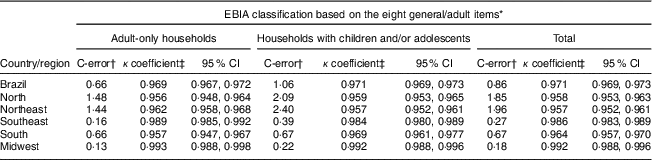
EBIA, Brazilian Household Food Insecurity Measurement Scale; PNAD-2013, Brazilian National Household Sample Survey of 2013; C-error, percentage of households misclassified (or reclassified).
* Model-based cut-off points for all household types (i.e. adult-only, with children and/or adolescents, and total): 1/2, 4/5 and 6/7.
† Sum of off-diagonal percentages for the aggregate data (Brazil) as shown in Table 1 and macro-regions; see text.
‡ Quadratic-weighted values (95 % CI) obtained via bootstrap (B = 1000) by using the Stata routine bootstrap, including clustering and sampling weights( 59 ).
Table 3 compares the EBIA food insecurity categories resulting from empirical groupings identified from the eight general/adult items for all households and the classification proposed by Interlenghi et al. ( Reference Interlenghi, Reichenheim and Segall-Corrêa 48 ), based on the fourteen-item scale. Overall, the classification pattern in both approaches was consistent. As expected in the adult-only households (columns 2 to 5), there was no misclassification since the post-modelling FI categorizations were based on the same eight items in both approaches. Focusing on the households with children and/or adolescents (columns 6–9), classification agreement was 96·2 % for Brazil at large and ranged from 92·3 % in the North region to 98·0 % in the Southeast. By extension, κ coefficients were about 0·9.
Contrast between the post-modelling categorization of the eight general/adult items of the EBIA and the post-modelling categorization of the complete (fourteen-item) scale, by household type, in the national sample and by macro-regions, Brazil, PNAD-2013
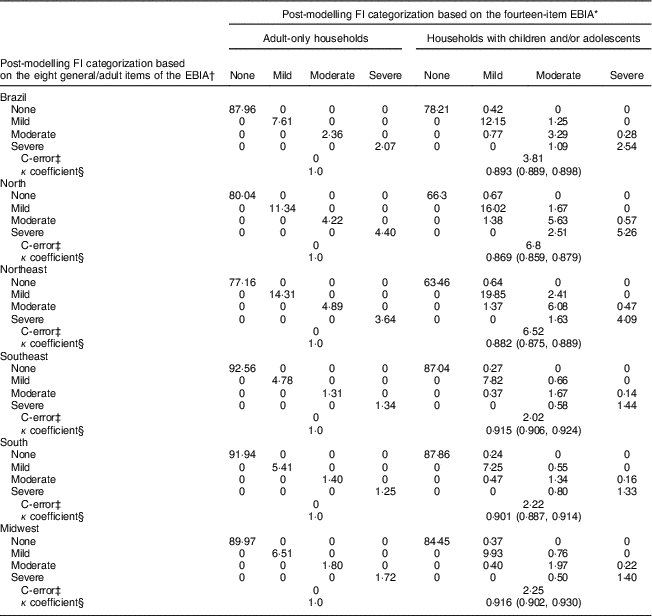
EBIA, Brazilian Household Food Insecurity Measurement Scale; PNAD-2013, Brazilian National Household Sample Survey of 2013; FI, food insecurity; C-error, percentage of households misclassified (or reclassified).
* Model-based cut-off points for adult-only households are 1/2, 4/5 and 6/7, whereas model-based cut-off points for households with children and/or adolescents are 1/2, 5/6 and 10/11.
† Model-based cut-off points for adult-only households and households with children and/or adolescents are 1/2, 4/5 and 6/7.
‡ Sum of off-diagonal percentages.
§ Quadratic-weighted values (95 % CI) obtained via bootstrap (B = 1000) by using the Stata routine bootstrap, including clustering and sampling weights( 59 ).
Discussion
The present study explored the classification of household food insecurity by considering only the eight general/adult items of the EBIA for all households and its implication in the classification of households with children and/or adolescents. Results indicated that the same cut-off points can be used across household types and country regions. Moreover, the classification of food insecurity in households with children and/or adolescents under the age of 18 years was similar regardless if the eight-item or the fourteen-item scale was used.
The percentage of households in each of the latent classes was consistent with the findings from Interlenghi et al. ( Reference Interlenghi, Reichenheim and Segall-Corrêa 48 ) on the one-factor, four-class LCFA model resulting from the analysis of the fourteen-item scale in the same data set. To illustrate, in households with children and/or adolescents, values for C1 to C4 in the former and the current study were very similar (78·2, 12·9, 6·25 and 2·7 % v. 78·6, 12·4, 5·3 and 3·7 %, respectively). It is worth noting that the proportion of households classified in the more severe classes combined were almost identical in both analyses (8·95 v. 9·0 %, respectively). Also, as expected, the combined figures were higher in households with children and/or adolescents compared with those where only adults lived. It should be noted, however, that the prevalence of severe food insecurity (C4) was slightly higher in households with children and/or adolescents with the eight-item EBIA compared with the prevalence based on the fourteen-item scale obtained by Interlenghi et al. ( Reference Interlenghi, Reichenheim and Segall-Corrêa 48 ) (3·7 v. 2·7 %).
Our findings also show, as anticipated, the ability to identify more severe cases of food insecurity in households with children and/or adolescents than in adult-only households despite using a reduced version devoid of items specifically covering the former age stratum. Added to the benefit of a smaller burden for the respondent when using eight items only, the shortened version may be included with confidence in large-scale studies and surveys where there are major time and financial constraints. The classification based on eight items is also more pragmatic given all households are classified using the same items irrespectively of household type. A drawback however is that policy makers involved in maternal–child or youth programmes may not feel as influenced by the eight-item scale as it does not include any child/adolescent-specific item. At any rate, it is relevant to consider that, from a functional standpoint, what matters is whether a scale is effectively able to detect an increasing intensity of the phenomenon under investigation, regardless of the items taken into account( Reference Wilson 61 ). This apparently occurs with the abridged version under scrutiny.
Concerning the class-separating cut-off points, the now uniform thresholds detected in the current study (1/2, 4/5 and 6/7) were the same as those identified by Interlenghi et al. ( Reference Interlenghi, Reichenheim and Segall-Corrêa 48 ) for the adult-only Brazilian households. In that study, however, small discrepancies were found across some macro-regions for the thresholds of the most severe categories (from C3 to C4). Despite this, the authors concluded that these divergences would be inconsequential for categorizing households across FI levels, hence uniform cut-off points could be used for the country( Reference Interlenghi, Reichenheim and Segall-Corrêa 48 ). This was confirmed in the current study where a single set of cut-off points was identified in all the five macro-regions, irrespective of household composition.
As in the preceding studies applying the same methodology for the ascertainment of cut-off points for EBIA( Reference Reichenheim, Interlenghi and Moraes 47 , Reference Interlenghi, Reichenheim and Segall-Corrêa 48 ), our findings in the current study indicated that households with one positive answer in the raw score should be grouped together with households who did not affirm any EBIA question. This contrasts with a reclassification of households from the mild food insecurity into the food security category in relation to the traditional classification in which only households with a raw score of 0 are considered as food secure( Reference Segall-Corrêa, Marin-León and Melgar-Quiñonez 33 ). This finding has been previously presented and discussed by Reichenheim et al. ( Reference Reichenheim, Interlenghi and Moraes 47 ) and Interlenghi et al. ( Reference Interlenghi, Reichenheim and Segall-Corrêa 48 ).
In the present study, when comparing the empirical groupings based on the cut-off points identified from the eight-item EBIA with the fourteen-item scale, the FI classification of adult-only households was the same by design, whereas some amount of reclassification occurred in households with children and/or adolescents. Concerning the latter, however, this reclassification should be viewed symmetrically, since it is not possible to establish which approach gives the most adequate estimates. Regardless, there is strong overall classification consistency when either fourteen or eight EBIA items are used. As mentioned before, the model-based grouping using the eight-item version confirms that households with children and/or adolescents have higher prevalence of moderate and severe food insecurity compared with adult-only households.
As mentioned in the present paper’s introduction, our study does not stand alone in pursuing an abridged version of the EBIA. A few years ago, a five-item version was proposed by Santos et al. ( Reference Santos, Lindemann and Motta 46 ) as a screening tool. The authors endorsed this version based on showing acceptable sensitivity, specificity and accuracy as compared with the reference fifteen-item EBIA. While that effort was an important start to developing an abbreviated EBIA, that work needed to be extended to identify a reduced scale faithful to the metric and scalar properties of the full EBIA version. Our specific contribution substantially adds to knowledge in this area by identifying an abbreviated EBIA version that retains the structural psychometric properties from the full scale( Reference Hackett, Melgar-Quiñonez and Pérez-Escamilla 31 – Reference Segall-Corrêa, Marin-León and Melgar-Quiñonez 33 ), especially regarding its ability to properly discriminate among the four food insecurity groups (classes). Additionally, the eight-item version derived from our study has the advantage of including the entire set of EBIA adult items and thus being aligned with the FIES scale being used by FAO for global monitoring of food insecurity( Reference Ballard, Kepple and Cafiero 42 ).
Conclusion
To conclude, our findings clearly indicate that in households with children and/or adolescents it is appropriate to apply the eight-item EBIA. This has important implications for large-scale epidemiological studies as well as surveillance systems or repeated surveys. For instance, the eight-item version could be included in the Brazilian Food and Nutrition Surveillance System (Sistema de Vigilância Alimentar e Nutricional, SISVAN)( 62 , 63 ) or in health-related surveys, such as the Surveillance System of Risk and Protection Factors for Chronic Diseases by Telephone Survey (Vigilância de Fatores de Risco e Proteção para Doenças Crônicas por Inquérito Telefônico, VIGITEL)( 64 ). Therefore, it is important to elicit input on the eight-item EBIA from nutrition, food security and public health policy makers. Moving forward, we recommend replicating our model-based approach in future national surveys to verify the stability and consistency of the results. Additionally, exploring this approach in data sets from other countries involving similar scales would be also opportune. We also recommend assessing construct validity of the eight-item EBIA by examining theoretically expected associations between food insecurity and key socio-economic and demographic indicators, such as family income, level of education and occupation of the head of the family, and household composition.
Acknowledgements
Financial support: G.S.I. was supported by the Coordination for the Improvement of Higher Education Personnel (Coordenação de Aperfeiçoamento de Pessoal de Nível Superior, CAPES) (grant numbers PROEX-1405766 and BEX-10645/14-4). M.E.R. was partially supported by the Brazilian National Research Council (Conselho Nacional de Pesquisa, CNPq) (grant numbers 302224/2013-0 and 301381/2017-8). C.L.M. was supported by CNPq (grant number 302851/2008-9). R.S.-C. was supported by the Carlos Chagas Filho Research Support Foundation (Fundação Carlos Chagas de Apoio à Pesquisa do Estado do Rio de Janeiro, FAPERJ) (grant number E-26/103.296/2011). The funders had no role in the design, analysis or writing of this article. Conflict of interest: None. Authorship: G.S.I., M.E.R. and R.S.-C. designed the study, wrote the paper and had primary responsibility for the final content. G.S.I. and M.E.R. performed the statistical analyses. G.S.I. undertook the literature review and wrote the first draft of the manuscript. A.M.S.-C., C.L.M. and R.S.-C. contributed to the interpretation of results. R.P.-E. collaborated in the writing of the final version of the manuscript. All authors critically reviewed the manuscript. All authors read and approved the final manuscript. Ethics of human subject participation: Ethical approval was not required for this paper. The study is based on secondary data analyses of unidentified public domain data collected through a national household sample survey under the auspices of the Brazilian Institute of Geography and Statistics, an institution from the Brazilian Government with the mandate to provide national statistics.
Supplementary material
To view supplementary material for this article, please visit https://doi.org/10.1017/S1368980018003592



