


Although chronic non-communicable diseases (NCD) are a matter of great public health concern worldwide, they affect developing countries more significantly( Reference Hosseinpoor, Bergen and Kunst 1 ). In Brazil, NCD cause approximately 70 % of deaths and the prevalence of their main risk factors has shown an unfavourable tendency. These facts make it necessary to implement surveillance programmes to form the basis of timely and strategic interventions( Reference Schmidt, Duncan and Azevedo e Silva 2 ).
Inadequate dietary habits stand out among the risk factors common to NCD as a whole. Surveys on the types of food available in Brazilian households conducted in the past three decades have shown a steady increase of ultra-processed foods and a significant reduction of natural or minimally processed foods and cooking ingredients in all socio-economic classes and geographical regions( Reference Martins, Levy and Claro 3 , Reference Monteiro, Levy and Claro 4 ). That tendency is a serious cause for concern because some features intrinsic to ultra-processed foods (high energy density, free sugar, sodium, total fat and saturated fat; low protein and fibre) are associated with excessive weight gain and increased risk for NCD( 5 – Reference Moubarac, Martins and Claro 7 ).
Although changes in dietary habits are required in all age ranges, adolescence should be a focus of particular attention because the changes in lifestyle and the development of dietary habits in that stage of life have striking effects( Reference Baş, Altan and Dinçer 8 ). Owing to the high prevalence of risk behaviours among adolescents( Reference Adrian, Charlesworth-Attie and Vander Stoep 9 ) and the future benefits afforded by the development of healthy habits at that life stage( Reference Birkhead, Riser and Mesler 10 ), monitoring the health risk factors in that population is key for the promotion of public health.
In that regard, the first National Survey of Schoolchildren’s Health (Pesquisa Nacional de Saúde do Escolar (PeNSE)) was conducted in 2009 by the Health Ministry in partnership with the Brazilian Institute of Geography and Statistics. That survey assessed schoolchildren residing in the capitals of the twenty-six Brazilian states and Federal District and attending the last year of middle school (grade 9). The second PeNSE, which was conducted in 2012, took several health-risk and health-protective factors into consideration and extended the targeted population to include adolescents representative not only of the state capitals, but also of the whole country and in each of its five major geographical areas( Reference Ministério and Orçamento 11 ).
The results of the first PeNSE showed that, as a whole, the regular intake of vegetables and fruits by adolescents residing in state capitals was low, while the frequency of foods considered to be markers of an unhealthy diet was high, with some differences according to sociodemographic characteristics( Reference Levy, de Castro and Cardoso 12 ). By analysing PeNSE 2012 it is possible to identify whether the pattern described for the students from state capitals occurs in the country as a whole and whether there are differences among the five geographic regions and among state capitals and other cities. Therefore, the aim of the present study was to analyse the nationwide and regional food intake patterns of adolescents based on PeNSE 2012 data and to investigate their association with sociodemographic features and some types of behaviours (such as physical activity and use of tobacco, alcohol and other drugs).
Methods
Study population, sampling and data collection
The present study was based on data supplied by PeNSE 2012( Reference Ministério and Orçamento 11 ). The study population comprised adolescents attending the last year of private and public middle schools (grade 9) in Brazil.
The design of PeNSE 2012 ensures sample representativeness relative to the country as a whole, the country’s five major geographical areas and the twenty-six state capitals and Federal District. The sample was selected from the 2010 School Census database using a complex design that included stratification per cluster and multistage selection. The sampling strata corresponded to each of the twenty-six state capitals and Federal District, in addition to the five major geographical areas. The procedure for selection of the sampling units applied to the state capitals was different from the procedure used for the set composed of the remainder of counties in each area. In the former case, the primary sampling units were schools and the secondary sampling units were school classes. In the remainder of the counties, primary sampling units were county clusters (established according to their homogeneity and geographical proximity) and secondary sampling units were schools, while the school classes composed tertiary sampling units. The procedure for school and class selection was similar in both cases. The odds for school selection were proportional to the school size (total number of ninth-year classes), while the classes in each school were chosen by simple random selection. Two classes were selected from the schools with three or more ninth-year classes, and one class was selected from the schools with one or two ninth-year classes. All of the students enrolled in the selected classes were invited to participate in the study( Reference Ministério and Orçamento 11 ).
From the total number of schools selected to compose the sample (n 3004), 162 were not considered for analysis owing to several reasons, including lack of ninth-year classes, strikes at the time of data collection and the school board’s refusal to participate. On the days of data collection, 84 % (110873) of the total number of students attended school, but 1651 refused participation and 118 did not report their gender or age and thus were excluded from analysis (total response rate of approximately 83 %). The sample was reweighted to represent the students enrolled in the ninth year of middle school who attended school on a regular basis. Therefore, the present article describes the data corresponding to 109 104 students from 2842 schools. Further details on the sampling process are available in the PeNSE report( Reference Ministério and Orçamento 11 ).
PeNSE 2012 used a self-reported structured questionnaire available as a smart phone application, which included the following thematic modules: sociodemographic characteristics, occupation, diet, body image, physical activity, smoking, use of alcohol and other drugs, support network (family and friends), hygienic habits, mental health, oral health, asthma, sexual behaviour, violence and accidents, and use of health-care services.
Description of variables and construction of indicators
The dietary intake was assessed using a validated questionnaire( Reference Tavares, de Castro and Levy 13 ) based on the frequency of intake in the previous 7 d of each of the following eleven groups of foods: (i) beans; (ii) raw vegetables; (iii) cooked vegetables; (iv) natural fruits; (v) milk; (vi) soft drinks (soda); (vii) sweets; (viii) sweet biscuits; (ix) bagged salty snacks; (x) fried salty snacks; and (xi) processed meats. The structure of the questions was: ‘During the last seven days, how often (on how many days) have you eaten (food)’, and options of answer were: ‘I haven’t eaten (food) in the last seven days’, ‘one day, in the last seven days’, ‘two days, in the last seven days’, ‘three days, in the last seven days’, ‘four days, in the last seven days’, ‘five days, in the last seven days’, ‘six days, in the last seven days’ and ‘every day in the last seven days’. The first five items were considered markers of healthy diet and the remainder of the items markers of unhealthy diet( 5 , 14 ).
For the purpose of data analysis, food intake was categorized by whether a food type was regularly consumed (at least five times in the previous 7 d)( Reference de Castro, Cardoso and Engstrom 15 ) and by means of a nutritional score based on the frequency of intake of each of the eleven food groups. The total score was calculated by adding the partial scores corresponding to the weekly frequency of intake of the food groups as follows: for the healthy diet markers, the scale ranged from 0 (did not consume) to 7 (every day); and for the unhealthy diet markers, the scale ranged from 7 (did not consume) to 0 (every day). Therefore, the total score could vary from 0 to 77 and the higher the score, the better the nutritional quality of the diet. The scale’s internal consistency was assessed by item correlation and calculation of Cronbach’s coefficient (α=0·7). The item correlation value varied from −0·002 to 0·40.
In addition, the frequency of the following behaviours in a regular week was assessed: having lunch or dinner with their parent or guardian, eating breakfast (markers of healthy behaviour); and eating while studying or watching television (marker of unhealthy behaviour). The level of physical activity was estimated based on the time allotted to gym classes at school, sports, leisure physical activities and active commuting in the previous week. The participants who spent at least 300 min on those activities were considered active( 16 ). Other behaviours, such as smoking, drinking alcohol or using drugs at least once in the previous 30 d, were also assessed.
The following sociodemographic variables were considered in the analysis: gender; age range (11–14 and ≥15 years); ethnicity/skin colour (white, black and brown, Asian, American Indian); and mother’s educational level (incomplete middle school, complete middle school, complete high school, complete higher education). Finally, we also assessed the type of county of residence (state capital, non-capital), geographical area (North, Northeast, South, Southeast and Mid-west) and school administrative status (public or private).
Multiple imputation by chained equations was used to attribute numerical values to mother’s educational level, which had 17 % missing values (n 18 527). For that purpose, we assumed that the losses were of the missing-at-random type, i.e. conditioned to the data corresponding to other variables. The following were considered predictive variables: student’s gender; father’s educational level; family goods (car, home telephone, mobile phone, number of bathrooms equipped with a shower in the house); and services (housemaid and access to Internet at home). Because multiple imputation is a stochastic procedure, the data were imputed ten times, and the results exhibited satisfactory statistical reproducibility according to Monte Carlo error analysis( Reference Royston and White 17 ).
Statistical analysis
First, the prevalence and distribution of the covariables of interest were analysed. Then, the relationships between regular intake (≥5 times/week) of each food group and the participants’ sociodemographic characteristics, school administrative status, geographical area and county type were assessed by Poisson regression models, whereby adjusted prevalence ratios (PR) with the corresponding 95 % confidence intervals were obtained( Reference Barros and Hirakata 18 ). The relationships between the nutritional scale score and sociodemographic and behavioural variables were assessed by multiple linear regression models. The cut-off point for statistical significance was established as P=0·05. All analyses were performed using the statistical software package Stata SE version 12·1 and took the complex design of PeNSE 2012 into account.
Ethical aspects
PeNSE 2012 was approved by the National Commission of Research Ethics (Comissão Nacional de Ética em Pesquisa (CONEP); record no. 16 805); it was performed in accordance with the Declaration of Helsinki and all participants gave their informed consent. Its database was made publicly available at the Brazilian Institute of Geography and Statistics’ website without any information allowing the identification of participants.
Results
Approximately 80 % of the assessed students attended public schools, and most of them resided in the Southeast area (44·3 %). The gender distribution was homogeneous, the age range 11–14 years was most common, and most participants were white- or black and brown-skinned. The mothers of about one-third of the participants had a low educational level (incomplete middle school) and one-third had an average educational level (incomplete higher education). Among the healthy diet markers, regular intake of beans (69·9 %) and milk (51·5 %) exhibited the highest proportions, regular intake of cooked vegetables the lowest (13·5 %). Among the unhealthy diet markers, regular intake of sweets (41·3 %), soft drinks (33·3 %) and sweet biscuits (32·5 %) were most prominent. As for food-related behaviours, most participants reported regularly (≥5 times/week) having meals with their parents, eating while watching television and eating breakfast (Table 1).
Sociodemographic characteristics, intakes of selected foods and health-risk and health-protective behaviours in Brazilian adolescents attending the ninth year of basic education; PeNSE 2012

PeNSE, Pesquisa Nacional de Saúde do Escolar (National Survey of Schoolchildren’s Health); TV, television.
Multiple analysis of the indicators of regular intake of healthy foods showed that a smaller proportion of the girls consumed beans (PR=0·85) and milk (PR=0·90) on a regular basis and a slightly larger proportion consumed fruit (PR=1·04) and raw vegetables (PR=1·09) regularly compared with the boys. Older age was associated with a lower proportion of regular intake of beans (PR=0·96) and milk (PR=0·94) and higher proportion of regular intake of cooked vegetables (PR=1·13). Increased mother’s educational level was associated with a higher proportion of regular intake of healthy foods, except for beans, which tended to decrease (PR=0·96). The proportions of individuals who consumed beans (PR=1·19), fruits (PR=1·08) and cooked vegetables (PR=1·07) were slightly higher among the students attending public schools, while the proportion of individuals who consumed milk (PR=0·95) was lower, compared with students attending private schools. Compared with the North, the Southeast exhibited a greater proportion of students with regular intake of beans and milk, and the Mid-west had a greater proportion of students with regular intake of fruits, raw vegetables and cooked vegetables. The counties that did not contain state capitals had a greater proportion of students who consumed beans (PR=1·17) and a smaller proportion who consumed milk (PR=0·91) on a regular basis compared with the counties that did have state capitals (Table 2).
Proportion of Brazilian adolescents who regularly consumed (≥5 times/week) foods considered to be markers of a healthy diet according to sociodemographic variables; PeNSE 2012
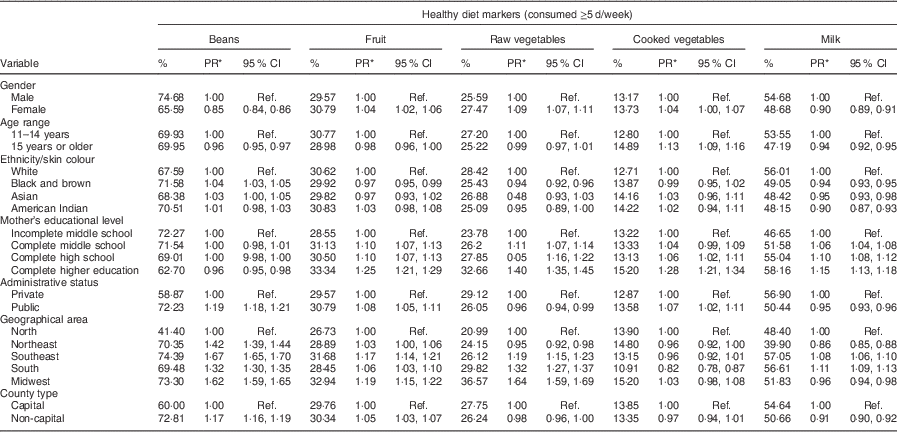
PeNSE, Pesquisa Nacional de Saúde do Escolar (National Survey of Schoolchildren’s Health); PR, prevalence ratio; Ref., referent category.
* Adjusted for the other variables in the model.
A higher proportion of girls than boys reported regular intake of all unhealthy diet markers except soft drinks. A higher proportion of older students tended to consume unhealthy foods on a regular basis, except for sweets, compared with their younger counterparts. Small differences were found between ethnicity/skin colour groups: the proportion of regular intake of bagged salty snacks, sweet biscuits and sweets was higher among the black- and brown-skinned and Asian participants compared with the white ones. The increase in maternal education was associated with a higher proportion of regular intake of all foods from this group. The proportions of participants who consumed bagged salty snacks (PR=1·18), sweet biscuits (PR=1·08) and sweets (PR=1·03) on a regular basis were higher among the students at public v. private schools, while the remainder of the unhealthy diet markers were higher among students from private schools. The Southeast exhibited the highest and the North the lowest proportion of regular intake of unhealthy foods. The counties not containing state capitals exhibited a greater proportion of students who consumed bagged salty snacks (PR=1·12) on a regular basis compared with the counties containing state capitals, while the opposite was found for processed meats (PR=0·91) and soft drinks (PR=0·92; Table 3).
Proportion of Brazilian adolescents who regularly consumed (≥5 times/week) foods considered to be markers of an unhealthy diet according to sociodemographic variables; PeNSE 2012
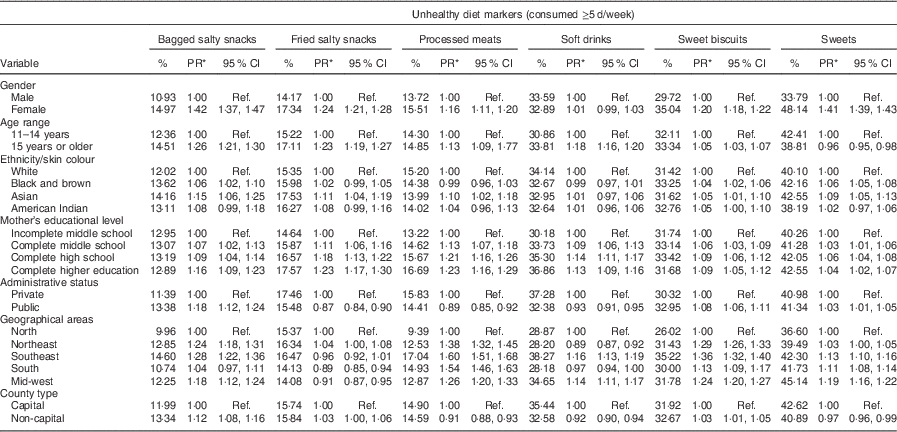
PeNSE, Pesquisa Nacional de Saúde do Escolar (National Survey of Schoolchildren’s Health); PR, prevalence ratio; Ref., referent category.
* Adjusted for the other variables in the model.
The average score on the nutritional scale was 42·50 (se 0·22), and the interquartile range was 36–50. Multiple analysis of the factors associated with the nutritional scale score showed positive associations with a higher frequency of meals eaten with parents, eating breakfast and being active, and negative correlations with female gender, eating while studying or watching television and having smoked, drunk alcohol or used drugs in the previous 30 d. The scores of the participants attending public schools from the Mid-west area were higher than those of the participants attending private schools or residing in the North area (Table 4).
Association of the nutritional scale score with sociodemographic variables and health-risk and health-protective behaviours in Brazilian adolescents attending the ninth year of basic education; PeNSE 2012

PeNSE, Pesquisa Nacional de Saúde do Escolar (National Survey of Schoolchildren’s Health); TV, television.
* The total score was calculated by adding the scores from the items measuring the frequency of intake of healthy foods – fruits, raw and cooked vegetables, milk and beans (0= never to 7= every day) – and subtracting the frequency of intake of unhealthy foods – sweets, sweet biscuits, bagged salty snacks, fired salty snacks and cold meats (0= every day to 7= never).
† The participants who spent at least 300 min on gym classes at school, sports, leisure physical activities and active commuting in the previous week were considered active.
Discussion
Assessment of a representative sample of students enrolled in the ninth year of Brazilian public and private schools showed that the frequency of regular intake of healthy foods such as fruits and vegetables was low, whereas the regular intake of unhealthy foods such as soft drinks, sweets and sweet biscuits was prevalent. In addition, the positive associations of the nutritional scale score with behaviours protective of health, as well as the negative associations of the score with other risk behaviours for NCD, show that healthy dietary behaviours coexist with other behaviours protecting against NCD in adolescents. This finding shows that there may be a profile of adolescents who are exposed to various health hazards and the assessment of dietary intake can help to identify these groups.
A study of adolescents from five Asian countries found that an absence of family-related protective factors (lack of family ties and parental supervision) and physical inactivity were associated with lower fruit and vegetable intake( Reference Peltzer and Pengpid 19 ). Cluster analysis and investigation of behavioural patterns have been performed in adults( Reference Galán, Rodríguez-Artalejo and Tobías 20 , Reference Steele, Claro and Monteiro 21 ). Future studies to identify risky and protective behaviours among Brazilian adolescents might be interesting. In addition, such studies might help establish which and how sociodemographic characteristics are associated with risky and protective behavioural patterns, leading to interventions targeting the groups at highest risk.
In our study, the girls exhibited a similar frequency of intake of healthy foods and a higher frequency of intake of unhealthy foods in comparison to boys; therefore the girls presented, on average, 1·60 less points on the nutritional scale. Although the frequency of regular intake of unhealthy foods was slightly higher among the older participants, the nutritional scale score was not correlated with age. These findings suggest that early interventions promoting healthy nutrition should take into account the greater exposure of girls to undesirable dietary habits, as well as the need to increase the frequency of regular intake of healthy foods in both genders.
Our results agree with the results from the Brazilian state capitals in PeNSE 2009( Reference Levy, de Castro and Cardoso 12 ) as well as with the results in adolescents attending public schools in the city of Rio de Janeiro( Reference de Castro, Cardoso and Engstrom 15 ). Comparisons with the international literature should be made cautiously because of the indicators used. Nevertheless, it is possible to compare the correlations and differences involving gender, age and economic level between the present study and other studies.
Undesirable dietary profiles and poorer dietary intake with increased age have also been found in Europe( Reference Currie, Roberts and Morgan 22 ) and the USA( Reference Eaton, Kann and Kinchen 23 ). Data from the US Youth Risk Behaviour Surveillance System (YRBSS) for 2011 show that 64·0 % and 62·3 % of youths consumed fruits/natural fruit juice and vegetables, respectively, at least once daily. In contrast to our study, those data indicate greater intake of those foods by boys (66·1 % and 62·8 % of boys regularly consuming fruits and vegetables, respectively). Daily intake of soft drinks was found in 27·8 % of youths in that study, also most frequently in boys (31·4 %)( Reference Eaton, Kann and Kinchen 23 ). Data from the European Health Behaviour in School-aged Children (HBSC) survey of adolescents aged 11, 13 and 15 years in thirty-nine countries indicate that inadequate dietary patterns occurred more frequently among the older and the male adolescents. The proportion of daily intake of fruit was lower among the 15-year-olds (31 %) compared with the 11-year-old group (42 %). The proportion of daily intake of soft drinks was higher among the oldest adolescents (25 % in 15-year-olds v. 18 % in 11-year-olds). A multicentre study conducted with European adolescents found that the average intake of fruits and vegetables was about half that recommended in the guidelines of the Optimized Mixed Diet and Food Guide Pyramid, and this dietary inadequacy was more frequent among the boys. In addition, excessive intakes of oil, fat and sweets were also found in both genders( Reference Diethelm, Jankovic and Moerno 24 ).
The positive association of the intake of both healthy and unhealthy foods with the mother’s educational level found in the present study may possibly be explained by the development of responsibility for health-related behaviours and attitudes among teenagers. Individuals’ autonomy about their food choice increases during adolescence and parents occupy a less important role, in addition to competing with the external influences of the adolescents’ peers( Reference Brown, McIlveen and Strugnell 25 , Reference Contento, Williams and Michela 26 ). Although research among children has found a protective effect of maternal education on obesity( Reference Lamerz, Kuepper-Nybelen and Wehle 27 ), studies among adolescents found results similar to ours( Reference Levy, de Castro and Cardoso 12 , Reference Eaton, Kann and Kinchen 23 ).
The public schools had a greater proportion of individuals who consumed beans and fruits on a regular basis. In addition, the score on the nutritional scale was higher among the public school students compared with those attending private schools (β=1·06). These results might be a consequence of the school food plans established by the National Program of Schoolchildren Nutrition. That programme is enforced by law and supervised by nutritionists, and one of its goals is to promote healthy nutritional habits( Reference Ministério 28 ). The Program for Health at School is a more recent initiative devoted to the promotion of health among schoolchildren, targeting public schools only( Reference Presidência da República 29 ). However, the proportion of regular intake of bagged salty snacks and sweet biscuits was higher among the public school students compared with the students in private schools. As the public school students eat only a part of their daily meals at school, public policies should include strategies targeting families and the adolescents’ family environment to increase their effectiveness( Reference Cullen, Watson and Zakeri 30 ).
The results of the present study should be assessed only after taking some possible limitations into consideration. The data on the nutritional scale should be interpreted cautiously because in the elaboration of that scale, the same weight was attributed to the intake of healthy and unhealthy foods, whereas low intake of healthy foods might not have the same biological effects as high intake of unhealthy foods. In addition, small correlation values were found even among unhealthy or healthy items, and this scenario reinforces the need for using several indicators of healthy and unhealthy food consumption in adolescents. Nevertheless, the internal consistency of the scale attained the minimum acceptable value and the direction of its association with sociodemographic and behavioural variables agrees with reports in the literature. It is also worth noting that since the size of the PeNSE sample guaranteed a high statistical power some associations reached statistical significance even when comparing slightly different prevalences between groups, thus the borderline associations shown in Tables 3 and 4 must be read taking this into consideration.
With regard to the external validity of PeNSE, it should be remembered that it used a representative sample of Brazilian children and adolescents enrolled in 9th grade from public and private schools. When the wide coverage of basic education in Brazil is taken into account – 97 % and 88 % of the population aged 6–14 and 15–19 years old, respectively – it is safe to assume that the total adolescent population of Brazil exhibits the same patterns of behaviour( 31 ). In addition, the rates of no response to PeNSE were low. Moreover the sample coverage was 83 %, which is considered adequate, and the factors of expansion used in the analyses were recalculated by taking the coverage losses into consideration.
The results of the present study might serve as a basis for public-health measures and broaden the scope of the strategies that have been implemented to promote health among adolescents in the Brazilian school setting. In this regard, the present system of surveillance and monitoring of the health-risk and health-protective factors in adolescents should be maintained and reinforced to provide an accurate picture of the tendencies and magnitudes of these factors, to (re)orient local actions and public policies.
Acknowledgements
Financial support: The present research received financial support from USP/FM/PROAP CAPES/PROAP – 055/2013 Medicina Preventiva/CGC·63·025·530/0018-52 for manuscript translation and formatting. C.M.A. received a doctoral scholarship from Conselho Nacional de Desenvolvimento Científico e Tecnológico (CNPq). L.F.M.d.R. received a masters scholarship from Coordenação de Aperfeiçoamento de Pessoal de Nível Superior (CAPES). The funders had no role in study design, data collection and analysis, decision to publish, or preparation of the manuscript. Conflict of interest: None. Authorship: C.M.A., R.B.L. and D.S.C conceptualized the study and were involved in the analysis and interpretation of the results. L.F.M.d.R was involved in data preparation and designed and prepared the tables. The initial draft of the paper was prepared by C.M.A. following extensive discussions with I.R.R.d.C., R.B.L., R.M.C. and O.d.C.L. Successive drafts were developed by C.M.A., D.S.C. and L.F.M.d.R., with inputs from the other co-authors. All authors have reviewed and approved the final version. Ethics of human subject participation: PeNSE 2012 was approved by the National Commission of Research Ethics (Comissão Nacional de Ética em Pesquisa (CONEP); record no. 16 805) and was performed in accordance with the Declaration of Helsinki. All participants gave their informed consent. Its database was made publicly available at the Brazilian Institute of Geography and Statistics’ website without any information allowing the identification of participants.



