




Introduction
The global and Canadian landscapes are marked by rising immigration and aging populations, with older adults constituting a growing but under-recognized group facing intersecting challenges related to aging and displacement (Burr et al., Reference Burr, Pheiffer and Xu2025; Guruge et al., Reference Guruge, Wang, Metersky, Al-Hamad, Zhuang, Catallo, Amanzai, Yang, Yasin and Illesinghe2025; Wang et al., Reference Wang, Guruge and Montana2019). In Canada, refugees represent a substantial proportion of this group, with over 11,000 older Syrian refugees residing in Toronto (Guruge et al., Reference Guruge, Wang, Metersky, Al-Hamad, Zhuang, Catallo, Amanzai, Yang, Yasin and Illesinghe2025; Statistics Canada, 2022). This broader demographic context is relevant to the Greater Toronto Area (GTA), where Syrian refugees reside across multiple municipalities and surrounding communities. Syrian refugees constitute one of the five largest refugee groups in Canada (Statistics Canada, 2022). Upon resettlement in Canada, older refugees frequently face socioeconomic, linguistic, and structural barriers that limit their access to equitable healthcare services (Wang et al., Reference Wang, Guruge and Montana2019, Reference Wang, Guinn and Brown2024; Yasin et al., Reference Yasin, Al-Hamad, Guruge, Metersky, Catallo, Wang, Yang, Zhuang, Salma, MacKenzie-Ede, Charbonneau and Ravichandran2025).
During their first year of resettlement, refugees in Canada receive health coverage through the Interim Federal Health Program, which offers access to healthcare services comparable to those available to Canadian citizens and permanent residents (Haight et al., Reference Haight, Kruth, Gokiert, Botwe, Dzunic-Wachilonga, Neves, Velasquez, Whalen-Browne, Ladha and Rogers2024). After approximately 1 year of settlement, federal coverage for prescription medications and specialized services is discontinued, leading many refugees to express concern about the affordability of medications and access to specialized healthcare services (Guruge et al., Reference Guruge, Sidani, Illesinghe, Younes, Bukhari, Altenberg, Rashid and Fredericks2018). As a result, many Syrian refugees turn to transnational healthcare practices to navigate these barriers and meet their healthcare needs (Guruge et al., Reference Guruge, Wang, Metersky, Al-Hamad, Zhuang, Catallo, Amanzai, Yang, Yasin and Illesinghe2025). Linguistic and economic barriers (Al-Hamad et al., Reference Al-Hamad, Forchuk, Oudshoorn and McKinley2022), pension benefits and medical insurance, and cultural differences (Kalich et al., Reference Kalich, Heinemann and Ghahari2016) represent major obstacles to older adults healthcare access. In particular, family-related cultural norms can impede access by conflicting with the host country’s healthcare schedules and the time required to engage with services (Hanley et al., Reference Hanley, Hassan, Al Mhamied, Guruge, Hajjar, Hynie, Jamil and Razavipour2024). Older Syrian refugees frequently reside in multigenerational households and depend on adult children and grandchildren, whose work and school responsibilities often constrain their capacity to offer consistent support (Hanley et al., Reference Hanley, Hassan, Al Mhamied, Guruge, Hajjar, Hynie, Jamil and Razavipour2024).
Limited English proficiency substantially impedes older Syrian refugees’ ability to navigate the Canadian healthcare system. Although interpreter services provide some assistance, they are often insufficient, particularly limiting women’s ability to fully articulate their healthcare needs (Al-Hamad et al., Reference Al-Hamad, Forchuk, Oudshoorn and McKinley2022; Guruge et al., Reference Guruge, Sidani, Illesinghe, Younes, Bukhari, Altenberg, Rashid and Fredericks2018). Inadequate interpretation services further undermine access to health care, with some refugees reporting feeling overlooked at reception desks and encountering clerks who were unhelpful or unresponsive to their needs (Guruge et al., Reference Guruge, Sidani, Illesinghe, Younes, Bukhari, Altenberg, Rashid and Fredericks2018). However, despite the shortage of interpreters in Canada, evidence indicates that refugees who receive interpretation services experience more positive healthcare outcomes than those who do not. As a result, refugees frequently rely on transnational health care to access culturally and linguistically appropriate services, using care options rooted in familiar norms to address gaps and barriers within the host healthcare system (Metersky et al., Reference Metersky, Guruge, Wang, Al-Hamad, Yasin, Catallo, Yang, Salma, Zhuang, Chahine, Kirkwood and Al-Anani2024). Many older Syrians integrate traditional practices, including herbal and natural therapies, to manage symptoms or reduce the side effects of biomedical treatments, as traditional medicine remains a familiar and culturally grounded source of care (Ahmed et al., Reference Ahmed, Ballout, Eldervis, Eddin, Tariq, Mehmet and Mollahaliloglu2025). However, traditional medicines commonly used in Syria are often dismissed or undervalued by Canadian physicians, leading older Syrian refugees to develop care pathways that integrate local healthcare services with transnational resources to better address their needs (Guruge et al., Reference Guruge, Sidani, Illesinghe, Younes, Bukhari, Altenberg, Rashid and Fredericks2018).
Transnational health care typically occurs through two primary pathways: travel-based care and non-travel-based care (Guruge et al., Reference Guruge, Wang, Metersky, Al-Hamad, Zhuang, Catallo, Amanzai, Yang, Yasin and Illesinghe2025; Roosen et al., Reference Roosen, Salway and Osei-Kwasi2021). Hybrid care emerges as older refugees respond to gaps within the host country’s healthcare system, including linguistic and digital barriers, fragmented continuity of care, and uneven access to services and coverage, prompting them to combine local and transnational resources to meet their healthcare needs. Many aging migrants draw on healthcare resources from both their countries of origin and settlement, frequently seeking second opinions from providers in their home countries (Roosen et al., Reference Roosen, Salway and Osei-Kwasi2021). Life-threatening conditions are typically treated within the host country, whereas non-urgent health concerns are often managed through transnational care networks (Roosen et al., Reference Roosen, Salway and Osei-Kwasi2021). As communication becomes increasingly digitalized, older adults are progressively incorporating social media platforms such as Facebook and Instagram into their sources of information (Anter et al., Reference Anter, Fischer and Kümpel2025). Migrants who access transnational health care through digital technologies report greater use of transnational services than those who do not use such technologies (Shin et al., Reference Shin, Koskinen, Kouvonen, Kemppainen, Olakivi, Wrede and Kemppainen2022). For Syrian refugees, travel is rarely feasible, rendering digital communication such as online consultations and phone or video calls the primary means of maintaining healthcare connections across borders (Hanley et al., Reference Hanley, Hassan, Al Mhamied, Guruge, Hajjar, Hynie, Jamil and Razavipour2024; Talhouk et al., Reference Talhouk, Akik, Araujo-Soares, Ahmad, Mesmar, Olivier, Balaam, Montague, Garbett and Ghattas2020). Phone and video calls enable older adult migrants to maintain connections with those left behind, supporting emotional well-being and continuity of care (Shin et al., Reference Shin, Koskinen, Kouvonen, Kemppainen, Olakivi, Wrede and Kemppainen2022). Technological barriers limit older Syrian refugees’ ability to engage in digital health care (Salma et al., Reference Salma, Au, Sayadi and Kleib2025). Additionally, limited access to appropriate devices and reliable technology further restricts older refugees’ participation, making digital transnational healthcare options inaccessible for those lacking the necessary tools (Abasi et al., Reference Abasi, Fatemi Aghda, Zahedian, Jamshiddoust Miyanroudi, Bahariniya, yazdani, Fallah-Aliabadi and Hazhir2025).
Transnational practices should not be understood as non-compliance or system avoidance; instead, they represent agency, resourcefulness, and culturally grounded strategies through which older refugees navigate gaps in a healthcare system that does not fully accommodate their linguistic and cultural realities. By examining these practices in depth, this study offers a nuanced understanding of how aging Syrian refugees sustain well-being across borders while aging in the GTA and surrounding regions. Although scholarship on refugee health is expanding, limited attention has been paid to aging Syrian refugees or to the role of transnational ties in shaping their health behaviors after resettlement in Canada. Significant gaps remain in understanding how aging Syrian refugees construct and navigate hybrid transnational healthcare practices. Addressing these gaps, this study provides empirical insights with implications for clinical practice, health policy, and the development of culturally grounded models of care.
This study is guided by three key research questions:
-
1. How do aging Syrian refugees in the GTA navigate and experience the Canadian healthcare system?
-
2. What transnational healthcare practices do aging Syrian refugees use, and how do these practices form hybrid care pathways?
-
3. How do digital tools and cross-border communication support or complicate aging Syrian refugees’ hybrid transnational healthcare management?
Theoretical framework
This study is informed by two complementary theoretical perspectives: the transnational social field framework (Levitt & Glick Schiller, Reference Levitt and Glick Schiller2004) and the circulation of care model (Baldassar & Merla, Reference Baldassar and Merla2014). The transnational social field framework conceptualizes migrants’ lives as embedded within interconnected social, cultural, and institutional networks that extend across national borders, shaping everyday practices, identities, and access to resources (Levitt & Glick Schiller, Reference Levitt and Glick Schiller2004). This perspective aligns with the study by situating aging Syrian refugees’ healthcare experiences within ongoing cross-border relationships rather than within a single national healthcare system. The circulation of care model further explains how care, knowledge, emotional support, and material resources circulate across borders among family members, healthcare providers, and institutions (Baldassar & Merla, Reference Baldassar and Merla2014). Together, these frameworks provide a coherent lens for examining how aging Syrian refugees actively construct hybrid healthcare pathways that integrate local services with transnational care practices to manage health needs, sustain continuity of care, and navigate structural and cultural gaps in the host healthcare system (Levitt & Glick Schiller, Reference Levitt and Glick Schiller2004). Within these pathways, social, emotional, informational, financial, and healthcare resources circulate continuously between countries of origin, transit, and settlement (Levitt & Glick Schiller, Reference Levitt and Glick Schiller2004). For aging Syrian refugees, this circulation reflects enduring medical relationships, culturally grounded health practices, and family networks that persist after resettlement. Care is sustained through multiple channels, including medical advice from relatives and clinicians abroad, cross-border access to familiar medications, and digital consultations facilitated by platforms such as WhatsApp. Transnational networks also transmit culturally embedded remedies, traditional healing practices, and Arabic-language health information through online communities. These channels create a web of support that extends beyond the limits of local healthcare services. This theoretical grounding reframes hybrid care not as fragmentation or non-compliance, but as a culturally coherent and pragmatic response to the realities of aging in displacement (Baldassar & Merla, Reference Baldassar and Merla2014; Levitt & Glick Schiller, Reference Levitt and Glick Schiller2004). The circulation of care framework helps illuminate how these structural constraints intersect with transnational ties to shape the movement of knowledge, resources, and support (Baldassar & Merla, Reference Baldassar and Merla2014). Ultimately, this theoretical lens reveals hybrid care as an adaptive, relational practice that sustains continuity, reinforces cultural identity, and supports aging refugees as they navigate the complexities of resettlement while maintaining strong ties to their past or homeland.
Methods
Study design
This study employed an interpretive descriptive qualitative design (Thorne, Reference Thorne2025), an approach well suited to applied health research and the generation of findings that directly inform practice, policy, and service delivery. Interpretive description extends beyond surface-level accounts by examining meanings, contextual experiences, and patterned variations that shape health behaviors within specific populations (Thorne, Reference Thorne2025). This design facilitated a detailed examination of everyday health decisions, cross-border care interactions, cultural understandings of health, and the ways participants combined the Canadian healthcare system with transnational and culturally grounded practices. The study followed the Consolidated Criteria for Reporting Qualitative Research (COREQ) guidelines to ensure methodological rigour and trustworthiness. Consistent with interpretive description, this study was guided by an applied practice question focused on how aging Syrian refugees navigate health care across borders and construct hybrid care pathways within the context of resettlement in Canada. While previous research has documented barriers to healthcare access among refugees and the growing role of transnational healthcare practices (Guruge et al., Reference Guruge, Wang, Metersky, Al-Hamad, Zhuang, Catallo, Amanzai, Yang, Yasin and Illesinghe2025), less is known about how aging Syrian refugees interpret, negotiate, and combine local, transnational, and digitally mediated care in everyday decision making. The findings are intended to inform clinicians, health and social service providers, and policy and system planners seeking to develop more culturally responsive, linguistically appropriate, and contextually relevant models of care for aging refugee populations.
Setting
The study was conducted with aging Syrian refugees residing across the GTA and surrounding communities, which has been home to one of Canada’s largest Syrian refugee communities since the initial resettlement waves in 2015 and 2016 (Statistics Canada, 2022). Twenty aging Syrian refugees took part in the study. Eligibility criteria included being 55 years of age or older, self-identifying as Syrian refugees, residing in the GTA and surrounding regions, and having experience accessing healthcare services, information, or advice within both Canadian and transnational contexts. Participants completed interviews in either Arabic or English. Recruitment was conducted through diverse community-based strategies to enhance cultural relevance and inclusivity, including outreach via Syrian community groups, settlement agencies, faith-based organizations, social networks, word-of-mouth referrals, and WhatsApp community groups. All recruitment materials were available in both Arabic and English to support accessibility and informed participation.
Ethics approval was granted by an institutional research ethics board (2024-468). Participants were provided with detailed information about the study’s purpose, procedures, potential risks and benefits, and the voluntary nature of participation, including their right to withdraw at any time. Written or verbal informed consent was obtained prior to data collection, and participants selected pseudonyms to ensure anonymity. Purposive sampling (Campbell et al., Reference Campbell, Greenwood, Prior, Shearer, Walkem, Young, Bywaters and Walker2020) was used to recruit aging Syrian refugees with experience accessing health care across Canadian and transnational contexts. Sampling aimed to capture variation in gender, sponsorship pathway, time since arrival in Canada, and place of residence in order to generate a sufficiently diverse range of healthcare experiences relevant to the study purpose. Consistent with interpretive description, sample size was not determined by a goal of achieving data saturation in the traditional sense (Thorne, Reference Thorne2025). Rather, recruitment proceeded until the data set provided sufficient depth, diversity, and analytic insight to support the identification of recurring patterns and meaningful variation relevant to the study’s practice-oriented aims (Thorne, Reference Thorne2025). Twenty interviews were considered adequate to generate a clinically and contextually meaningful interpretive account of how aging Syrian refugees navigated hybrid healthcare pathways.
Data collection
Data collection involved semi-structured, in-depth interviews conducted between July and September 2025 by two Arabic-speaking research assistants with extensive experience working with refugee populations. Interviews, lasting approximately 45–60 minutes, were conducted by phone or Zoom according to participants’ preferences and levels of technological comfort. All interviews were conducted in Arabic, audio-recorded with informed consent, and participants received a $50 honorarium in acknowledgement of their time and participation. The interview guide addressed key topics, including experiences accessing the Canadian healthcare system, engagement in cross-border consultations and medication use, the role of digital technologies in health management, the use of herbal and traditional remedies, and the influence of family and community support on everyday health practices. All interviews were conducted in Arabic and transcribed verbatim. Translation into English was completed by bilingual members of the research team with Arabic and English proficiency and experience working with refugee communities. To support translation accuracy, selected transcripts and translated excerpts were cross-checked by another bilingual team member, with attention to preserving contextual, cultural, and emotional meaning. Where direct word-for-word translation did not adequately capture Arabic expressions or idioms, translations were refined to reflect intended meaning while remaining faithful to participants’ accounts. To safeguard confidentiality, all transcripts were de-identified and personal identifiers were removed. Audio recordings were stored on encrypted, password-protected drives and deleted following verbatim transcription, while de-identified transcripts and related materials were securely stored and will be retained for 5 years.
Data analysis
Data were analyzed using an interpretive descriptive approach informed by Thorne’s methodology to generate practice-relevant insight into how aging Syrian refugees navigate hybrid healthcare pathways (Thorne, Reference Thorne2025). Analysis began with repeated reading of transcripts and initial coding of significant features of participants’ experiences, including healthcare access, digital engagement, cross-border care, medication practices, and culturally grounded understandings of health. Analytic discussions also considered how translation choices, culturally embedded phrasing, and idiomatic expressions might shape interpretation, and bilingual review supported the preservation of meaning across Arabic and English versions of the data. Codes were compared across interviews and grouped into broader interpretive patterns that captured recurrent experiences as well as meaningful variation. Through iterative analysis (Thorne, Reference Thorne2025) and team discussion, these patterns were refined into themes that illuminated how participants made care decisions across local, transnational, familial, and digital contexts. Representative participant quotations were incorporated to illustrate and ground analytic interpretations in the narratives of aging Syrian refugees. Throughout the process, bilingual team verification supported cultural sensitivity and translation accuracy, and NVivo software was used for data management. To enhance methodological rigour and trustworthiness, multiple strategies were employed to support credibility and dependability. Member checking was conducted with eight participants; seven affirmed that the interpretations accurately reflected their experiences, while one did not respond. Bilingual cross-checking of transcripts and codes ensured linguistic accuracy and cultural integrity. Reflexive journaling was used to document analytic decisions, and a comprehensive audit trail was maintained to track coding processes and methodological refinements.
From patterns to practice implications
Consistent with interpretive description, our analysis moved from initial coding to the identification of broader interpretive patterns and their implications for practice (Thorne, Reference Thorne2025). Codes were first developed around recurring aspects of participants’ experiences, such as healthcare access barriers, cross-border care, medication use, digital tools, and family support. These codes were then compared across interviews and refined through iterative discussion to identify patterns that illuminated how aging Syrian refugees made care decisions across multiple systems and resources. The aim was not simply to summarize experience, but to generate practice-relevant insight (Thorne, Reference Thorne2025) into how trust, continuity, language, familiarity, and access shaped hybrid healthcare pathways. A sample of 20 interviews was considered adequate for this interpretive descriptive study because it provided sufficient depth and variation to identify recurring experiential and practice-relevant patterns across participants’ accounts. Figure 1 presents the hybrid transnational healthcare pathway derived from participants’ accounts, illustrating how healthcare decisions unfolded across local, transnational, familial, and digital networks over time.
Hybrid transnational healthcare pathway among aging Syrian refugees.

Rigour and reflexivity
In keeping with interpretive descriptive methodology, methodological rigour was supported through ongoing attention to researcher positioning, analytic decision making, and the practical credibility of the findings (Thorne, Reference Thorne2025). The first author and several members of the research team are nurses with experience working with migrant and refugee populations. This disciplinary and practice-based knowledge informed the design of the study, development of the interview guide, and interpretation of participants’ healthcare experiences within contexts of migration, displacement, and resettlement. Interviews were conducted by two Arabic-speaking research assistants with experience engaging refugee communities, which supported culturally and linguistically appropriate data collection. Throughout the study, the team remained attentive to how prior clinical knowledge, professional assumptions, and contextual familiarity could shape data generation and interpretation. Reflexive journaling and regular analytic discussions were used to critically examine emerging interpretations and support analytic depth. Rigour was further strengthened through bilingual cross-checking to support linguistic and cultural accuracy, member checking with eight participants, and maintenance of an audit trail documenting coding processes and analytic refinement.
Consistent with interpretive description, the team recognized that this disciplinary, linguistic, and contextual positioning informed rapport, questioning, and interpretation. At the same time, reflexive attention was given to how interviewer roles, perceived authority, and community proximity could shape disclosure and meaning-making. Because interviews were conducted remotely by phone or Zoom, efforts were made to reduce power imbalances by allowing participants to choose their preferred interview format, language, and pace, and by beginning each interview with a clear explanation of the study purpose, voluntary participation, confidentiality, and the participant’s right to decline or stop at any time. Interviewers used a respectful, conversational approach and remained attentive to signs of discomfort, fatigue, or hesitation during the interview process.
Results
Participant characteristics
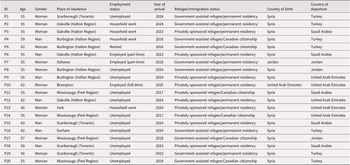
The study sample included 20 older Syrian refugees aged 55–63 years (mean age = 56), the majority of whom were women (13/20). Most participants resided in municipalities across the GTA and surrounding communities, including Scarborough, Mississauga, Oakville, Burlington, Brampton, Oshawa, York, and Durham. Arrival in Canada ranged from 2016 to 2025, encompassing both longer term settlers (2016–2019) and more recent arrivals (2023–2025), allowing for comparisons based on time since resettlement. Participants entered Canada through varied immigration pathways, including privately sponsored refugees with permanent residency (8), government-assisted refugees with permanent residency (6), and Canadian citizens from both streams (6). Most participants were unemployed (12), while others reported household work (4), part-time employment (2), retirement (1), or full-time work (1). Nearly all were born in Syria (18/20), though countries of departure included Turkey, Saudi Arabia, the United Arab Emirates, and Jordan (see Table 1). Analysis identified four interconnected themes highlighting transnational circulation of care, demonstrating how participants actively constructed hybrid healthcare pathways rather than relying on a single system. The analysis identified four interconnected themes that demonstrate how aging Syrian refugees developed hybrid care pathways linking local and transnational healthcare systems. Together, these themes illustrate how participants navigated systemic barriers, negotiated multiple healthcare frameworks, integrated cross-border therapeutic practices, and increasingly relied on digital tools to maintain continuity of care.
Participant characteristics (n = 20)

In addition, a conceptual pathway figure was developed to visually represent the interpretive patterns identified across participants’ accounts, including the movement between local and transnational care resources, the actors involved in care navigation, and the channels through which hybrid care was sustained (see Figure 1). This figure illustrates the hybrid transnational healthcare pathway described by aging Syrian refugees. Care navigation often began with a health need and entry into the Canadian healthcare system, but barriers such as long wait times, language discordance, cost, and limited continuity prompted many participants to activate hybrid care pathways. These pathways involved family, clinicians, and pharmacists across borders, supported through in-person encounters, phone calls, WhatsApp, translation apps, AI tools, medication flows, and, in some cases, travel or imagined return for care. The pathway reflects an ongoing process of negotiating trust, familiarity, access, and safety across local and transnational systems.
Theme 1: Hybrid care as an adaptive response to systemic barriers
Participants consistently characterized the Canadian healthcare system as fragmented, time pressured, and linguistically difficult to navigate, creating circumstances in which hybrid care practices became essential. Reliance on transnational sources was driven by prolonged wait times, communication barriers, and challenges establishing trust within unfamiliar clinical settings. This theme reflects how hybrid care pathways emerged within a transnational social field as participants responded to structural and linguistic barriers by drawing on care resources across borders; it clarifies that care decisions were shaped by efforts to restore trust, understanding, and continuity when local systems felt insufficient.
System barriers: Wait times, referrals, transportation, and out-of-pocket costs
Across interviews, long waits for specialist appointments, delays in diagnostic testing, and unexpected medication costs emerged as central sources of frustration. As one participant explained, ‘the referral took months; without coverage the medicine was too expensive. The pharmacist found a cheaper generic, and my son handled the calls because I couldn’t follow the English’ (P1, woman, age 55, Scarborough, government-assisted refugee, arrived 2024). Transportation challenges further compounded these barriers, particularly for those with chronic conditions or mobility limitations. As another woman described, ‘the clinic is far, buses are slow, and taxis cost too much. By the time I get an appointment, the pain is worse’ (P2, woman, age 55, Oakville, government-assisted refugee, arrived 2024). Together, these experiences contributed to uncertainty, anxiety, and declining confidence in the local healthcare system, prompting many participants to seek cross-border or alternative sources of care.
Language discordance and communication gaps
Linguistic barriers were among the most significant challenges shaping participants’ healthcare experiences in the GTA. Many participants described difficulties in expressing symptoms, understanding clinical explanations, or asking follow-up questions within the limited time of medical appointments. As one participant shared, ‘I went back twice because I didn’t understand the doctor the first time. I left with more questions than answers’ (P11, woman, age 55, Mississauga, privately sponsored refugee, arrived 2017). Although professional interpreters were sometimes available, several participants relied on family members, particularly adult children for translation, even when this created ethical and emotional tensions. As one mother explained, ‘my daughter translates, but sometimes she doesn’t say everything because she doesn’t want to worry me’ (P13, woman, age 60, York, privately sponsored refugee, arrived 2024). These dynamics placed substantial responsibility on families and raised concerns related to accuracy, patient autonomy, and privacy.
Trust, cultural expectations, and the perception of being ‘unheard’
Many participants contrasted Canadian clinical encounters with the longer, relationship-oriented consultations they had experienced in Syria, a difference that often produced feelings of being rushed or unheard. As one woman explained, ‘the visit was five minutes. I didn’t feel heard. So, I messaged a doctor in Syria to check the plan’ (P8, woman, age 55, Burlington, government-assisted refugee, arrived 2024). Syrian healthcare norms emphasized continuity, familiarity, and detailed explanations, shaping expectations that were difficult to reconcile with the brevity of Canadian visits. Nevertheless, trust could be established when providers demonstrated cultural sensitivity or took extra steps to support understanding. As one participant noted, ‘one doctor drew pictures to explain. That helped me trust him more’ (P6, man, age 55, Oakville, privately sponsored refugee, arrived 2023). Despite such positive encounters, systemic and linguistic barriers often impeded trust building, reinforcing reliance on transnational channels for validation and clarity. Collectively, participants’ narratives illustrate that hybrid care emerged as an adaptive response to structural and linguistic constraints. When participants felt confused, unheard, or underserved, they turned to trusted transnational networks for reassurance and culturally aligned explanations not to reject the Canadian system, but to bridge gaps and restore a sense of agency. Interpretively, this theme suggests that hybrid care was not simply a workaround but a practical decision-making response to structural, linguistic, and relational gaps in the local healthcare system, with implications for improving communication, access, and trust in care encounters.
Theme 2: Balancing dual healthcare systems
This theme reflects the continuous negotiation participants undertook as they compared the Canadian healthcare system with those they had previously experienced in Syria or transit countries. Healthcare decisions were made across two interconnected contexts, influenced by emotional ties, cultural expectations, and practical realities. This theme shows that hybrid care decision making was embedded in ongoing comparisons across healthcare systems, where transnational ties and prior care experiences shaped judgments about where care felt more familiar, responsive, and trustworthy.
Hybrid decision making: Choosing when and where to seek care
Participants often contrasted the immediacy and responsiveness of health care in Syria with what they perceived as the more bureaucratic and delayed processes of the Canadian system. These comparisons directly influenced decisions about where to seek advice and whose guidance to trust. As one participant noted, ‘back home they do tests the same day. Here they say, “wait and see”. So I ask on AI and wait for the results here’ (P10, woman, age 62, Brampton, privately sponsored refugee, arrived 2025). Others turned to relatives or trusted contacts abroad to help interpret test results or provide reassurance. One participant explained, ‘I do the tests in Toronto, but I wait for my nephew’s friend in Syria to read the results. He knows our history’ (P18, man, age 59, Scarborough, privately sponsored refugee, arrived 2023). In this way, hybrid decision making functioned as a strategy to maintain a sense of control and clarity amid uncertainty within the host healthcare system.
Imagining the possibility of returning for health care
Even when travel was neither practical nor safe, the idea of returning to Syria or to transit countries held strong symbolic meaning for participants. Several described imagining a return specifically for healthcare needs. As one woman reflected, ‘if travel was easy, I would do a quick check-up in Aleppo. Doctors there know us. But now it’s risky and expensive’ (P5, woman, age 62, Burlington, government-assisted refugee, arrived 2016). Another participant similarly expressed a longing for familiar specialist care, stating, ‘I wish I can go back to Syria to see the neurologist to fix my knee pain’ (P16, man, age 62, Durham, government-assisted refugee, arrived 2024). Together, these accounts illustrate how imagined return functioned as an emotional anchor, offering comfort and reinforcing culturally grounded expectations of care even when physical travel was not feasible.
Integrating Canadian health norms with cultural practices
Participants described incorporating Canadian health practices such as regular walking and reading nutrition labels while continuing to maintain cultural food traditions, herbal remedies, and socially embedded health routines. As one participant explained, ‘I started walking every day and checking the nutrition labels, but I still cook our soups and drink my thyme tea. I mix both worlds’ (P3, woman, age 55, Oakville, privately sponsored refugee, arrived 2023). Another participant similarly highlighted learning new health behaviors after resettlement, noting, ‘I am reading food labels now to check benefits and calories. This is a new thing I learned in Canada’ (P11, woman, age 55, Mississauga, privately sponsored refugee, arrived 2017). Together, these accounts illustrate hybrid care as a strategy for sustaining cultural continuity while adapting to new health norms and practices. This pattern shows that care decisions were shaped not only by service availability but also by familiarity, relational trust, and cultural expectations, suggesting that providers should recognize how prior health system experiences continue to influence present-day care choices.
Theme 3: Transnational flows and integrating cross-border therapeutics
This theme illustrates how participants integrated prescription medications, imported pharmaceuticals, traditional remedies, and dietary supplements to create hybrid therapeutic regimens aligned with their health needs and cultural expectations. These practices were influenced by affordability, trust in familiar brands, perceived effectiveness, and gaps in medication coverage within the Canadian healthcare system. This theme illustrates the circulation of care through the movement of medications, remedies, and health knowledge across borders, clarifying how participants made therapeutic decisions by balancing cultural familiarity, perceived effectiveness, affordability, and safety.
Transnational medication portability and brand loyalty
Participants often described obtaining medications from Syria, Turkey, or other transit countries through family and community networks. These cross-border medication flows were shaped by financial constraints, familiarity with trusted brands, and perceptions of greater effectiveness. Participants’ accounts suggested that hybrid medication practices could create safety challenges when remedies, imported medications, and Canadian prescriptions were used across multiple sources of advice without consistent clinical oversight. As one participant explained, ‘I still bring antibiotics and my usual skin cream from Syria. There I can buy them without a prescription. Here it’s expensive without coverage’ (P15, man, age 63, Scarborough, privately sponsored refugee, arrived 2024). Similarly, another participant described retaining medications obtained from abroad as a backup, noting, ‘My sister sends my blood thinner pills from Turkey because I trust that brand. The pharmacist here matched the ingredient, but I keep the Turkish box as backup’ (P16, man, age 62, Durham, government-assisted refugee, arrived 2024). Uncertainty surrounding Canadian insurance coverage further reinforced these practices, as one woman stated, ‘Some medicines are covered, some are not. I can’t keep track. It’s easier when my family back home sends what I need’ (P8, woman, age 55, Burlington, government-assisted refugee, arrived 2024). Together, these accounts highlight how transnational medication functioned as a strategy to manage cost, uncertainty, and trust in treatment.
Herbal and traditional remedies as cultural anchors
Herbal practices including cinnamon, ginger, turmeric, black seed, chamomile, and thyme remained integral to participants’ daily routines and were viewed as natural, safe, and culturally meaningful. Participants often described blending biomedical treatments with traditional remedies. As one participant explained, ‘For my diabetes, I take the pills, but I still use black seed oil and cinnamon tea. My son checked with the pharmacist about interactions’ (P17, woman, age 57, Mississauga, government-assisted refugee, arrived 2018). This account illustrates both a potential safety concern related to combining prescribed and traditional therapies and a participant-led mitigation strategy through pharmacist consultation. Another participant emphasized the therapeutic and cultural value of traditional teas, noting, ‘Olive’s oil, ginger and turmeric tea are my medicine for my joints, and it helps’ (P4, man, age 59, Burlington, government-assisted refugee, arrived 2016). These practices reflect cultural continuity, intergenerational knowledge exchange, and holistic understandings of well-being. In addition, some participants engaged in religiously grounded practices such as using water infused with Quranic verses as sources of emotional comfort and spiritual healing.
Supplement culture and preventive practices influenced by Canadian norms
Participants also described incorporating supplements commonly recommended within Canadian healthcare such as vitamin D, omega-3, and multivitamins into their existing herbal and traditional routines. As one woman explained, ‘Everyone here takes vitamin D, so I started too as the doctor said it will help my bones’ (P5, woman, age 62, Burlington, government-assisted refugee, arrived 2016). Another participant highlighted learning about new supplements after resettlement, stating, ‘Omega-3 is new for me, but many people here say it’s good for the heart. So, I bought a bottle’ (P11, woman, age 55, Mississauga, privately sponsored refugee, arrived 2017). These supplements were perceived as modern, accessible, and aligned with medical advice, making them easy to integrate into hybrid care routines. Taken together, participants’ accounts illustrate that medication practices among aging Syrian refugees are inherently hybrid, combining imported medicines, Canadian prescriptions, herbal remedies, spiritual practices, and supplements. While these regimens provided cultural reassurance, affordability, and a sense of autonomy, they also introduced potential risks, including dosage inconsistencies, herb–drug interactions, expired medications, and fragmented clinical oversight. This theme highlights that medication and remedy choices were embedded in culturally informed judgments about safety, trust, affordability, and effectiveness, pointing to the need for proactive, non-judgmental clinical conversations about cross-border and traditional therapeutic practices. Rather than suggesting unsafe practice in general, these accounts indicate that safety concerns emerged when participants navigated multiple therapeutic systems with limited coordination; participants often attempted to reduce this risk through pharmacists, family support, and cross-checking advice, highlighting the need for non-judgmental medication review in clinical care.
Theme 4: Digital technology as an enabler of hybrid care
Digital platforms were central to participants’ hybrid care practices, enabling communication, information seeking, and cross-border consultations. Through these tools, participants sustained medical, emotional, and social connections with trusted networks abroad while simultaneously navigating the Canadian healthcare system. This theme highlights how digital tools extended the circulation of care across distance by enabling access to advice, interpretation, and reassurance, and it clarifies that digital resources became part of participants’ hybrid decision making when local care alone did not fully meet their informational or relational needs.
Social media, AI, and informal digital consultations
Social media platforms, particularly WhatsApp, functioned as a form of virtual clinic where participants shared voice notes, images, and medical test results with family members and clinicians abroad. As one participant explained, ‘I send voice notes to my cousin the cardiologist on WhatsApp. He replies right away and explains everything in Arabic’ (P6, man, age 55, Oakville, privately sponsored refugee, arrived 2023). Others used YouTube to access exercise routines or health information recommended by providers overseas. One woman noted, ‘I watch YouTube for the exercises my doctor abroad recommended. It’s easier for me to follow’ (P17, woman, age 57, Mississauga, government-assisted refugee, arrived 2018). These digital exchanges did not replace engagement with the Canadian healthcare system; rather, they were used to clarify, interpret, and validate local medical advice.
Participants described using translation applications, voice-to-text tools, and AI platforms such as ChatGPT to better interpret test results, appointment instructions, and medical terminology. As one participant explained, ‘My son showed me how to use ChatGPT. I ask it to explain my blood test before I see the doctor’ (P19, woman, age 56, Scarborough, government-assisted refugee, arrived 2023). Another participant described relying on translation apps to prepare for clinical encounters, noting, ‘Sometimes I write what I want to say in Arabic and Google Translate tells me how to say it in English at the clinic’ (P12, man, age 62, Oakville, privately sponsored refugee, arrived 2024). These tools supported participants’ understanding and communication, helping them navigate linguistic barriers while engaging with the Canadian healthcare system.
Digital risks: Misinformation, contradictory advice, and privacy concerns
Despite the advantages of digital tools, participants raised concerns about misinformation and safety. Participants also described uncertainty when using digital health information across platforms. As one woman explained, ‘Videos contradict each other. One says do this, another says don’t. It’s confusing’ (P14, woman, age 55, Mississauga, privately sponsored refugee, arrived 2017). Rather than indicating widespread misinformation exposure in general, this account points to the difficulty of evaluating conflicting online advice and the need for accessible guidance on trusted digital health resources. In other cases, participants reduced uncertainty by using familiar contacts or family-supported interpretation of information before acting on it. Others expressed unease about privacy and data security when using digital platforms. One participant noted, ‘Sometimes I worry who is reading our messages on WhatsApp?’ (P9, man, age 55, Burlington, privately sponsored refugee, arrived 2024). These concerns reflected participants’ uncertainty about the reliability and privacy of digital health tools and their desire for safer, more culturally appropriate forms of digital support when engaging with online health resources.
Digital literacy and intergenerational learning in transnational care
Digital literacy was frequently supported by younger family members, particularly adult children, who guided participants in using digital tools. As one participant explained, ‘My son installed the apps and showed me how to use them. Without him, I wouldn’t know where to start’ (P3, woman, age 55, Oakville, privately sponsored refugee, arrived 2023). Participants described how this intergenerational support enabled them to use digital platforms more independently and to better assess the usefulness and credibility of online information. Across narratives, digital tools emerged as central to participants’ hybrid care practices, helping them manage language barriers, cope with long wait times, communicate with providers abroad, and access familiar sources of health information. At the same time, participants acknowledged ongoing uncertainties related to technology use, including concerns about accuracy, privacy, and reliance on others for digital navigation. Interpretively, this pattern shows that digital tools functioned as decision-support resources within hybrid care pathways, with implications for strengthening digital health literacy, safer online navigation, and culturally responsive virtual care supports.
Discussion
This study examined how aging Syrian refugees residing in the GTA navigate health care across borders and develop hybrid care pathways to meet their complex healthcare needs. Findings show that participants combined Canadian healthcare services with transnational and culturally grounded strategies to address gaps in the local healthcare system. Rather than merely documenting barriers or transnational practices, the findings illuminate a broader interpretive pattern: aging Syrian refugees actively construct hybrid care pathways as a practical and culturally meaningful response to gaps in communication, continuity, and accessibility within the host healthcare system. From an interpretive descriptive perspective, these patterns offer clinically relevant insight into how care decisions are made across local, transnational, familial, and digital resources. Interpreted through the transnational social field framework and the circulation of care model, the findings show that hybrid care pathways were not isolated behaviors but relational and practical responses shaped by ongoing cross-border flows of knowledge, support, and therapeutic resources. These frameworks help explain how participants made healthcare decisions across multiple systems while seeking continuity, familiarity, and culturally meaningful care.
The sample reflected substantial diversity in gender, sponsorship pathways including government-assisted and privately sponsored refugees, as well as individuals who had obtained Canadian citizenship and length of residence in Canada, which ranged from 1 to 9 years. Participants also varied in employment status and pre-migration experiences, with histories spanning multiple countries prior to resettlement. Participants’ accounts suggested that combining imported medications, prescribed treatments, and traditional remedies could create safety challenges when used across multiple care systems without consistent oversight (Metersky et al., Reference Metersky, Guruge, Wang, Al-Hamad, Yasin, Catallo, Yang, Salma, Zhuang, Chahine, Kirkwood and Al-Anani2024); however, some participants described mitigation strategies such as checking ingredients or interactions with pharmacists and seeking clarification from trusted family members or providers. Additionally, the sample was relatively young within older adulthood (mean age = 56), and the findings may not fully reflect the experiences of adults aged 70 and older. Older refugees with greater physical, cognitive, sensory, or digital literacy challenges may face additional barriers to engaging in hybrid care pathways, particularly when these rely on digital tools and remote coordination (Salma et al., Reference Salma, Au, Sayadi and Kleib2025). This highlights the need for more accessible and less digitally dependent models of care.
Participants consistently reported seeking health care across borders, drawing on services and advice from both their country of origin and countries in which they had previously resided (Guruge et al., Reference Guruge, Wang, Metersky, Al-Hamad, Zhuang, Catallo, Amanzai, Yang, Yasin and Illesinghe2025) and their experiences were shaped by the interplay of linguistic challenges and cross-border healthcare engagement (Haight et al., Reference Haight, Kruth, Gokiert, Botwe, Dzunic-Wachilonga, Neves, Velasquez, Whalen-Browne, Ladha and Rogers2024; Wang et al., Reference Wang, Guruge and Montana2019; Yasin et al., Reference Yasin, Al-Hamad, Guruge, Metersky, Catallo, Wang, Yang, Zhuang, Salma, MacKenzie-Ede, Charbonneau and Ravichandran2025), reliance on family members for interpretation and digital mediation (Juba et al., Reference Juba, Olumide and Azeez2024), inconsistent medication coverage, long wait times (Czukar et al., Reference Czukar, Wang, Guruge, Lum and Greenbaum2025), and deeply rooted cultural expectations of care informed by their experiences in Syria (Guruge et al., Reference Guruge, Sidani, Illesinghe, Younes, Bukhari, Altenberg, Rashid and Fredericks2018, Reference Guruge, Wang, Metersky, Al-Hamad, Zhuang, Catallo, Amanzai, Yang, Yasin and Illesinghe2025). Additionally, participants often reported difficulties accessing health-related guidance within the host country, which prompted many to seek advice and support from contacts abroad (Metersky et al., Reference Metersky, Guruge, Wang, Al-Hamad, Yasin, Catallo, Yang, Salma, Zhuang, Chahine, Kirkwood and Al-Anani2024). They often do so virtually, contacting friends or family for remedy advice or support with adjustment-related stress.
Hybrid care emerged as a practical necessity rather than non-compliance, with findings showing that transnational practices support resilience and continuity rather than risk (Adepoju et al., Reference Adepoju, Dang and Valdez2023; Wong et al., Reference Wong, Wong, Chow, Kwan, Lau and Lau2023). Participants remained engaged with the Canadian healthcare system and supplemented it to mitigate linguistic barriers (Anand & Joseph, Reference Anand and Joseph2023), prolonged wait times and long delays in accessing specialists or diagnostic testing (Al-Hamad et al., Reference Al-Hamad, Forchuk, Oudshoorn and McKinley2022; Guruge et al., Reference Guruge, Sidani, Illesinghe, Younes, Bukhari, Altenberg, Rashid and Fredericks2018), unfamiliar clinical communication practices, discontinuities in care, and the financial burden associated with medical insurance for medications and support services. Canadian health care was constantly viewed as advanced and professional, yet frequently described as too slow, too brief, and insufficiently communicative to fully meet participants’ expectations or needs. In contrast, Syrian health care was recalled as more relational, faster, and culturally intuitive, though now distant and shaped by financial and conflict-related uncertainty (Diab, Reference Diab2025). Navigating between these systems forced participants to balance practical considerations with emotional reassurance. It is also important to distinguish refugee experiences from those of migrants more broadly. While both groups may engage in transnational health care, refugee pathways are often shaped by forced displacement, interrupted care trajectories, financial insecurity, language barriers, and limited ability to safely return to the country of origin (Yasin et al., Reference Yasin, Al-Hamad, Guruge, Metersky, Catallo, Wang, Yang, Zhuang, Salma, MacKenzie-Ede, Charbonneau and Ravichandran2025). In this context, hybrid care may be more intensive or more necessary for refugees, not simply because of enduring transnational ties, but because return-based care is often constrained and barriers within the host healthcare system may be greater. For refugees, transnational health care may therefore function less as a matter of preference and more as an adaptive strategy for maintaining continuity, cultural familiarity, and access to care across disrupted systems (Yasin et al., Reference Yasin, Al-Hamad, Guruge, Metersky, Catallo, Wang, Yang, Zhuang, Salma, MacKenzie-Ede, Charbonneau and Ravichandran2025).
The use of integrative remedies (Jenssen et al., Reference Jenssen, Bode and Lenz2025) and medication portability further illustrate the cultural reasoning underlying hybrid care. Participants’ reliance on medications obtained from Syria or transit countries reflected comfort with familiar brands, concerns about medication costs in Canada, and beliefs in the effectiveness of Syrian treatments rather than mistrust of Canadian pharmaceuticals. These cross-border medication flows illustrate how care circulates across borders in tangible ways and underscore the importance of clinicians engaging patients in open discussions about treatment histories, imported medications, and culturally grounded health practices to promote safe and contextually responsive care (Tilley, Reference Tilley2021). The combination of herbal remedies with prescribed medications also underscores the need for informed clinical guidance to promote safety, reduce potential interactions, and support culturally responsive, patient-centered care.
Digital platforms enable older refugees to overcome linguistic and cultural barriers by sharing health information with trusted contacts and integrating local and traditional advice in their care decisions (Anter et al., Reference Anter, Fischer and Kümpel2025; Lintner, Reference Lintner2025). This finding is consistent with prior research indicating that older refugees use virtual connections to consult healthcare providers and traditional healers in their countries of origin (Guruge et al., Reference Guruge, Wang, Metersky, Al-Hamad, Zhuang, Catallo, Amanzai, Yang, Yasin and Illesinghe2025). However, limited digital literacy and strong emotional ties to healthcare systems in participants’ home countries influenced how older adults accessed, understood, and managed their care (Czukar et al., Reference Czukar, Wang, Guruge, Lum and Greenbaum2025; Wang et al., Reference Wang, Guruge and Montana2019). These dynamics show that hybrid care is an adaptive, culturally grounded response to navigating a complex healthcare system in a new country.
Digital technology expanded hybrid care strategies, enabled aging Syrian refugees to overcome geographic and linguistic barriers by seeking second opinions, sharing test results, and asking culturally grounded questions in Arabic through platforms such as WhatsApp, YouTube, and AI tools (Anter et al., Reference Anter, Fischer and Kümpel2025; Ekoh et al., Reference Ekoh, Okolie, Nnadi, Oyinlola and Walsh2023; Lintner, Reference Lintner2025). These tools helped participants prepare for Canadian appointments, understand care plans, and stay connected to trusted clinicians abroad. While virtual care expanded continuity across borders, participants also recognized risks related to misinformation and privacy (Brandhorst, Reference Brandhorst2024; Cabalquinto, Reference Cabalquinto2023), yet, continued using digital tools due to necessity, accessibility, and trust in familiar providers (Udwan et al., Reference Udwan, Leurs and Alencar2020). Participants were aware of these risks but continued to use digital tools out of necessity, familiarity, accessibility, and trust in familiar practitioners.
Intergenerational support and community networks were central to sustaining hybrid care, with adult children and extended family assisting with health information, digital navigation, appointments, medication access, and emotional support (Taylor et al., Reference Taylor, Hartzler, Osterhage, Demiris and Turner2018). While these informal supports helped address system gaps, they also placed demands on younger family members and can potentially constrain older adults’ autonomy (Mizrachi et al., Reference Mizrachi, Shahrabani, Nachmani and Hornik2020), raising ethical concerns related to accuracy, privacy, and reliance on non-professional interpreters (Angelelli, Reference Angelelli, Angelone, Ehrensberger-Dow and Massey2020; Martínez-Gómez, Reference Martínez-Gómez2015).
Implications
The findings advance the understandings of transnational care by illustrating how aging Syrian refugees navigate health care across borders through hybrid practices. These findings have implications for clinicians, service providers, and planners working with aging refugee populations across the GTA and similar urban settlement contexts. Digital platforms such as WhatsApp, YouTube, and AI-based tools reshape how care, information, and emotional support circulate within transnational social fields, showing that hybrid care emerges not only from cultural preference but as a practical response to systemic, linguistic, and structural barriers in the Canadian context. These patterns highlight the complex, multi-layered networks through which aging Syrian refugees sustain care across countries and modalities, reinforcing the importance of viewing hybrid care as a legitimate and culturally grounded system shaped by both local conditions and enduring transnational ties.
The findings also underscore important implications for practice and policy. Clinicians are encouraged to recognize hybrid care within routine encounters by asking about cross-border advice, imported medications, herbal remedies, and online health information to support safety and continuity of care. Strengthening language-concordant services, pharmacist involvement in medication review, and support for digital navigation is essential. At the policy level, expanding medication coverage beyond initial settlement, improving access to specialist care, and investing in digital health equity would reduce barriers. Educational and future research efforts should further prepare providers to engage effectively with hybrid and transnational care practices among aging refugee populations.
Strengths and limitations
This study offers several important strengths. Using an interpretive descriptive qualitative design enabled an in-depth and practice-oriented examination of how aging Syrian refugees navigate health care across local, transnational, familial, and digital contexts. The study also draws on rich interview data generated in Arabic, which supported participants in expressing their experiences in their preferred language and enhanced the cultural and contextual depth of the findings. In addition, the sample included variation in gender, sponsorship pathway, time since arrival, and place of residence, which strengthened the analytic breadth of the study and supported a more nuanced understanding of hybrid transnational healthcare pathways among aging Syrian refugees.
Although this study was not designed to compare participants by time since arrival, the sample included both more recent arrivals and longer term settlers, suggesting that time since resettlement may shape hybrid care navigation in important ways. Newer arrivals may face more immediate barriers related to language, healthcare system unfamiliarity, and interrupted continuity of care, whereas those with longer residence may have greater familiarity with local services while continuing to rely on transnational ties, family support, and culturally familiar practices. Future research could examine these differences more explicitly to better understand how time since arrival influences trust, access, digital engagement, and cross-border care decision making among aging refugees.
At the same time, several limitations should be considered. Although participants resided across the GTA and surrounding communities, the sample was not evenly distributed across all Toronto municipalities or GTA regions, and findings should be interpreted in relation to the specific communities represented in the study. Recruitment through community networks and WhatsApp groups may have introduced selection bias by over-representing participants who were more socially and digitally connected, which may have influenced the prominence of digital tools in the findings. Because interviews were conducted by phone or Zoom, the study may also have underrepresented older adults with limited digital access, low digital literacy, or discomfort with technology. Remote interviewing further limited access to non-verbal cues and reduced opportunities to review medications, written materials, or other documents during interviews. As with all qualitative research, the findings are intended to provide contextualized and practice-relevant insight rather than statistical generalizability.
Conclusion
Aging Syrian refugees in the GTA navigate health care across borders, languages, and cultures, revealing that aging in displacement is deeply transnational and increasingly shaped by digital tools. Although Canada offers universal coverage and high-quality health care, structural and linguistic barriers often limit access, understanding, and trust. In response, aging Syrian refugees developed hybrid care pathways that combine Canadian services with cross-border consultations, imported medications, herbal remedies, digital resources, and intergenerational support. Hybrid care reflects resilience, cultural continuity, and adaptive problem-solving rather than rejection of Canadian health care, helping Syrian refugees maintain familiar routines and a sense of agency. At the same time, these practices introduce risks related to fragmented care, misinformation, privacy, and medication safety. These findings underscore the need to recognize transnational care strategies within clinical practice. Advancing equitable care for aging Syrian refugees requires culturally responsive, digitally inclusive models that integrate interpretation services, medication coverage, digital navigation support, and meaningful discussion and incorporation of transnational care as legitimate and essential.
Data availability statement
All data supporting the findings of this study are presented within the article. Additional data may be made available upon reasonable request to the corresponding author, subject to ethical approval and confidentiality considerations.
Acknowledgements
The authors thank all contributors and colleagues who supported the development of this study.
Author contribution
All authors contributed to the study design. AA and YY completed the data analysis and wrote initial draft. AA, YY, SG, KM, LY, and ZZ reviewed the findings. All authors (AA, YY, SG, KM, LY, and ZZ) contributed to the preparation and revision of the manuscript.
Financial support
This study was funded by the Bridging Divides that is funded by the Government of Canada through the Canada First Research Excellence Fund (CFREF).
Competing interests
The authors declared no potential conflicts of interest with respect to the research, authorship, and/or publication of this article.
AI declaration
No generative AI tools were used in the development or writing of the manuscript; however, Google Gemini was used solely to assist in generating Figure 1, based on carefully developed and researcher-directed prompts.


 Open access

