


The dramatically increasing prevalence of childhood overweight worldwide is an important health issue( Reference Wang and Lobstein 1 , Reference de Onis, Blössner and Borghi 2 ). Overweight children face health risks such as increased blood pressure( Reference Gutin, Basch and Shea 3 ), diabetes( Reference Ehtisham and Barrett 4 ) and a decreased life quality( Reference Friedlander, Larkin and Rosen 5 ), as well as risks for adult health( Reference Reilly and Kelly 6 ). Understanding the relationship between childhood overweight and its risk factors can aid the development of interventions on prevention of childhood overweight. Childhood overweight is multifactorial, caused by an imbalance between energy intake and expenditure, and has a genetic and environmental interaction( Reference Padez, Mourao and Moreira 7 , Reference Maffeis 8 ). For pre-school and school children, a number of factors underlying childhood overweight have been found, both on the environmental and behavioural domains. The first level of factors includes the genetic and social predisposition of the child. A second level of factors consists of the child's dietary behaviour, physical activity level and sedentary behaviour. At a third level, the factors related to the obesogenic environment can be found.
Previous longitudinal studies have tried to reveal risk factors for childhood overweight for pre-primary and primary-school children, more specifically those aged 3 to 10 years. Parental overweight was the most important risk factor due to the combination of genes and environmental factors( Reference Padez, Mourao and Moreira 7 , Reference Svensson, Jacobsson and Fredriksson 9 – Reference Maffeis, Talamini and Tato 13 ). Hui et al.( Reference Hui, Nelson and Yu 14 ) and Scaglioni( Reference Scaglioni, Agostini and De Notaris 15 ), for example, found that children of overweight parents had a higher risk for overweight. Next to parental overweight, socio-economic status (SES) has been identified several times as a risk factor for childhood overweight( Reference Scaglioni, Agostini and De Notaris 15 – Reference Singh, Mulder and Twisk 19 ). Income, paternal/maternal employment and paternal/maternal educational level are often used as indicators of SES. Wijga et al.( Reference Wijga, Scholtens and Bemelmans 20 ) found children of mothers with a low education to be at a higher risk for childhood overweight and Anderson et al.( Reference Anderson, Butcher and Levine 21 ) found that a child is more likely to be overweight if the mother worked more hours per week. However, most studies limit the indicators of SES to one or two variables( Reference Lamerz, Kuepper-Nybelen and Wehle 16 , Reference Langnase, Mast and Muller 22 ).
Parental overweight and sociodemographic variables are important but not easily susceptible to change. To prevent childhood overweight changeable behavioural risk factors must also be identified. Several studies have revealed dietary, physical activity (PA) and sedentary risk factors for childhood overweight. Soft drinks consumption is a possible risk factor for childhood overweight and related health problems( Reference Agostini, Braegger and Decsi 23 , Reference Vartanian, Schwartz and Brownell 24 ). Welsh et al.'s( Reference Welsh, Cogswell and Rogers 25 ) longitudinal study among 2- to 3-year-old children showed that soft drinks consumption was related to the risk of being overweight. In their review of longitudinal studies of dietary risk factors for development of childhood obesity, Moreno and Rodriguez( Reference Moreno and Rodriguez 26 ) found a consistent positive relationship between sugar-sweetened beverage consumption and obesity development. Field et al.( Reference Field, Austin and Gillman 27 ) found snack consumption not to be a risk factor for weight gain and Wijga et al.( Reference Wijga, Scholtens and Bemelmans 20 ) found it to be inversely associated with the child's weight status.
Epstein et al.( Reference Epstein, Gordy and Raynor 28 ) found fewer overweight children in the group consuming more fruit and vegetables. The study by the US Department of Agriculture's Economic Research Service found a higher fruit consumption to be associated with a lower BMI for children( Reference Lin and Morrison 29 ). Field et al.( Reference Field, Gillman and Rosner 30 ) showed that vegetable intake was inversely related to BMI Z-score change if not controlled for energy intake. However, the association of fruit and vegetable intake to weight gain is not yet well understood( Reference Field, Gillman and Rosner 30 ). Other healthy promoted food products are milk products due to their Ca content; Skinner et al.( Reference Skinner, Bounds and Carruth 31 ) confirmed the inverse relationship between Ca intake and the child's weight status.
PA and sedentary behaviour also have a key role in the prevalence and development of overweight. The reviews by Jimenez-Pavon et al.( Reference Jimenez-Pavon, Kelly and Reilly 32 ) and Must and Tybor( Reference Must and Tybor 33 ) showed an inverse relationship between PA and childhood overweight. Several longitudinal studies confirmed this significant relationship( Reference LeBlanc, Martin and Han 34 , Reference Timmons, Proudfoot and MacDonald 35 ). Sedentary behaviour induces a reduction in energy requirements. Screen time, a specific sedentary behaviour that includes watching television (TV) and playing video and computer games, has been found to be positively related with childhood overweight in several longitudinal studies: Jago et al.( Reference Jago, Baranowski and Baranowski 36 ) found that TV viewing was a significant predictor of BMI of 3- to 6-year-old children and Hesketh et al.( Reference Hesketh, Carlin and Wake 37 ) found screen time to be an overweight risk factor for children aged 5 to 10 years.
The aim of the present longitudinal study was to assess significant risk factors on the familial, sociodemographic and behavioural domains for the development of childhood overweight in 3- to 6-year-old children.
Methods
Study design
The present study is a part of a project approved by the ethical committee of Ghent University (EC/2007/570). This project, the POP-project (Prevention of Overweight among Pre-school and school children), was conducted in six towns and municipalities in Belgium-Flanders as part of the Flemish Policy Research Centre for Welfare, Health and Family and commissioned by the responsible minister. These six towns and municipalities were selected for an intervention study from the research regions in Flanders as decided by the Flemish Policy Research Centre.
Longitudinal data analyses reported in the present study used data from control condition municipalities. The municipalities’ population ranged from 23 000 to 50 000 residents.
Participants
Recruitment of participants took place in schools. In Flanders, 98 % of children attend pre-primary school (age 3 to 5 years) and at the age of 6 years, education at a primary school is compulsory. In the three municipalities, all pre-primary and primary schools were invited to participate. Participation was voluntary and sixteen of the twenty eligible schools participated (80 %). Within these schools, all pre-primary children (age 3 to 5 years) and those in the first year of primary school (age 6 years) were invited to participate in the study. Of the 1308 eligible children, 621 participated at baseline (47·5 %). The baseline measurement took place in October of the school year 2008–2009; the follow-up measurements were conducted the following school years, in April 2010 and in April 2011.
Parents completed a questionnaire and height and weight of the children were measured. Parents provided a written consent at the start of the study that applied to the whole duration of the study.
The questionnaire used for the collection of sociodemographic and familial data, dietary behaviour, PA and sedentary behaviour was distributed by the teachers in the schools for parents to fill in. The questionnaire was returned to the teachers and collected by the research team. In some schools, parents experiencing language or other problems filling in the questionnaire were assisted by an intercultural worker or an interpreter.
Measurements
BMI
Height and weight of participating children, who were barefooted and in light clothing, were measured in the schools by the research team. Weight was measured to the nearest 0·1 kg (Seca Robusta 813; Seca, Hamburg, Germany) and height to the nearest millimetre using a mobile stadiometer (Seca 214; Seca). Parental height and weight data were collected through the questionnaire. BMI (kg/m2) was computed and BMI Z-scores were calculated with Flemish reference data using the LMS (curve–L, mean–M and coefficient of variation–S method)( Reference Cole 38 , Reference Roelants, Hauspie and Hoppenbrouwers 39 ).
Sociodemographic data
Demographic factors were collected through the questionnaire: gender, date of birth, living situation (with both parents, with one parent, co-parenting, other), number of children in the family, language spoken at home, parental educational levels (primary school, lower secondary, higher secondary, higher education) and parental professional statuses (paid work, other).
Dietary behaviour
A validated semi-quantitative FFQ( Reference Huybrechts, De Backer and De Bacquer 40 ) assessed quantities and frequencies of the consumption of the food groups water, soft drinks, milk and dairy products, vegetables, fruit and sweet and savoury snacks. Parents were asked to report consumption frequencies as (i) never or <1 d/month, (ii) 1 to 3 d/month, (iii) 1 d/week, (iv) 2 to 4 d/week, (v) 5 to 6 d/week and (vi) every day; and the average consumption per day. The answering categories varied according to the food item and were expressed in grams or millilitres. The FFQ was previously validated in a sample of children, using estimated diet records of 3 d for 650 children aged 2·5–6·5 years. This previous validation study measured reproducibility (n 124) by repeated FFQ administrations five weeks apart. For most foods, a moderate level of relative validity (67–88 %) was observed for estimated food intake.
Physical activity and sedentary behaviour
The child's PA was calculated by assessing PA at home and structured PA. There are many instruments for assessing PA and parental self-report has been proved to be a valid, reliable instrument( Reference Kohl, Fulton and Caspersen 41 , Reference Sallis, Condon and Goggin 42 ). Parents were asked to report the time of PA at home. The six answer categories ranged from nil to 6 h/d. PA at home was converted to hours per week in accordance with structured PA.
To assess structured PA, parents were asked whether their child was a sports club member and for how many hours per week (nil if not a member). Second, they were asked whether their child participated in after-school sports activities and for how many hours per week (nil if not a member). Structured PA was calculated by adding the time in a sports club and in after-school sports activities.
For screen time, parents filled in the average daily time the child spent in front of the TV, computer, watching DVD, etc. during weekdays and weekend days separately. The six answer categories ranged from nil to 6 h/d.
Statistical analyses
Data were analysed using the statistical software package SPSS/PC version 19·0 for Windows. Means and standard deviations were calculated for all variables. Independent-samples t tests and χ 2 analyses were performed to assess the differences in characteristics between the drop-out groups and the baseline participants.
Clustering at the school level was considered; however, multilevel analyses were not needed as the variance explained was less than 5 %. Baseline underweight participants (n 53) were not included for further analyses due to their favourability of weight gain. The cut-off point for underweight was chosen as BMI Z-score = −1( Reference Kuczmarski, Ogden and Guo 43 ). Missing data were handled using Multiple Imputation based on five imputed data sets. The imputed variables were: living situation, number of children in the family, maternal educational level, paternal educational level, language spoken at home, maternal professional status, paternal professional status, soft drinks consumption, water consumption, milk products consumption, fruit consumption, vegetable consumption, sweet and savoury snacks consumption, PA at home, structured PA, screen time on weekdays and screen time on weekend days. Missing data ranged from 3·6 % for language spoken at home to 25·6 % for maternal education.
Logistic regression analyses were performed to reveal the risk factors of being overweight on the two follow-up measurements. In the first model, all variables (sociodemographic and behavioural) were included in the regression model. For the relevance of prevention and the development of interventions, the second model only included changeable behavioural variables. All analyses were controlled for the child's baseline weight status. The cut-off point for overweight was BMI Z-score of 1( Reference Kuczmarski, Ogden and Guo 43 ). For the dummy coding of parental BMI, the cut-off point of 25 kg/m2 was chosen, the adult criterion for overweight. The familial living situation was divided into ‘living with both parents’ and ‘other’. The number of children in the family was reconverted into ‘1’ (no siblings) and ‘>1’ (siblings). The educational level of both parents was recoded into ‘≤higher secondary education’ (≤12 years of education) and ‘≥higher education’ (≥12 years of education). For language spoken at home, categories were ‘Dutch’ and ‘other’ (Dutch is the official language of Flanders, Belgium). For the professional status of the parents, we converted the answers into ‘paid work’ and ‘other’.
For other variables the mean was chosen as the cut-off point for recoding. P values ≤0·05 were considered statistically significant, P values >0·05 and ≤0·10 as a trend for significance.
Results
Characteristics of participants and drop-outs
Baseline values are shown in Table 1. The average age of the participating children was 5 years (mean 4·95 (sd 1·29) years). At baseline, 19 % of the children were overweight, 5 % became overweight during the 30-month study period; 26 % of the mothers were overweight and 48 % of the fathers were overweight at baseline. The mean paternal BMI was 25·3 (sd 3·43) kg/m2, the mean maternal BMI was 23·7 (sd 4·26) kg/m2. A great majority of the children lived with both parents (85 %) and spoke Dutch at home (94 %), 55 % of the mothers and 46 % of the fathers had a higher education, 86 % of the mothers and 91 % of the fathers had paid work as a professional status. The mean for soft drinks consumption was 65 ml/d, for water consumption 286 ml/d, for sweet and savoury snacks 54 g/d, for milk products consumption 329 ml/d, for fruit consumption 136 g/d and for vegetable consumption 72 g/d. The mean for PA at home was 6 h/week, for structured PA 4 h/week. Mean screen time was 1 h/d on weekdays and 2 h/d on weekend days.
Participant characteristics at baseline; 3- to 6-year-old children (n 568), Flanders, Belgium, 2008–2009 school year
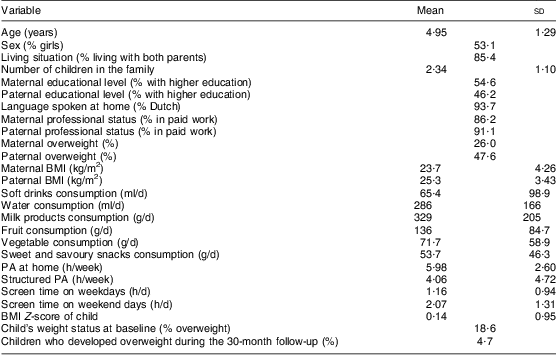
PA, physical activity.
The characteristics of the drop-out groups are shown in Table 2. Significant differences between the 18-month drop-out group and participants were found for living situation: the drop-out group had fewer children living with both parents; and for maternal and paternal professional status: parents who dropped out at the first measurement had less paid work. The drop-out group at the 30-month measurement differed significantly from the participants on maternal and paternal educational level: the drop-outs had less higher education. They also differed on language spoken at home: they spoke more Dutch than the participants; and on maternal and paternal status: although their percentage in paid work was higher than the first drop-out group, it was still significantly lower than that of the participants. The second drop-out group also consumed significantly more soft drinks and less milk products.
Baseline characteristics of the participants who dropped out at the 18-month and 30-month follow-ups; 3- to 6-year-old children (n 568), Flanders, Belgium (baseline 2008–2009 school year; first follow-up conducted in April 2010; second follow-up conducted in April 2011)
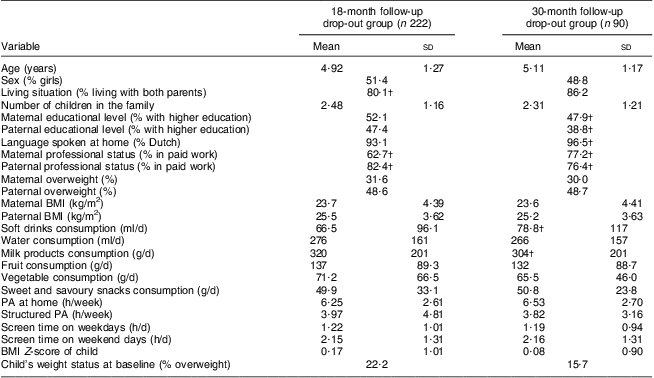
PA, physical activity.
†Value was significantly different from that of the participants (P ≤ 0·05).
Predictors of overweight at 18- and 30-month follow-ups
The results of the first model with sociodemographic and behavioural variables included are presented in Table 3. Being an only child was a significant risk factor for childhood overweight (first follow-up: OR = 0·48, 95 % CI 0·25, 0·94, P = 0·03): children without siblings were more likely overweight at the first follow-up measurement compared with children with siblings. This was no longer significant at the second follow-up measurement. If the mother had no higher education, the child had double the chance of being overweight at the second follow-up measurement compared with children of mothers with a higher education (second follow-up: OR = 0·51, 95 % CI 0·25, 1·08, P = 0·058). Maternal weight status was a significant risk factor on both measurements (first follow-up: OR = 2·62, 95 % CI 1·46, 4·69, P = 0·002; second follow-up: OR = 2·99, 95 % CI 1·80, 4·9, P < 0·001): children of an overweight mother had more chance of being overweight at both follow-up measurements. Paternal weight status was also a risk factor for childhood overweight on both measurements: children with an overweight father had more chance of being overweight at the follow-up measurements (first follow-up: OR = 2·16, 95 % CI 1·21, 3·86, P = 0·01; second follow-up: OR = 2·01, 95 % CI 0·97, 4·25, P = 0·06). Children with more than 1 h screen time on weekdays had more chance of being overweight on both follow-up measurements (first follow-up: OR =1·91, 95 % CI 0·91, 3·06, P = 0·08; second follow-up: OR = 2·07, 95 % CI 0·98, 4·25, P = 0·06). These analyses were controlled for the child's baseline weight status. The results showed that this was a significant predictor of being overweight: children who were already overweight at baseline had fifty-seven times more chance of being overweight at the first follow-up and thirty-four times more chance of being overweight at the second follow-up measurement (first follow-up: OR = 57·4, 95 % CI 28·1, 117, P < 0·001; second follow-up: OR = 33·6, 95 % CI 15·1, 74·8, P < 0·001).
Multiple logistic regression: association between all baseline risk factors and childhood overweight at the follow-up measurements, controlled for the baseline weight status; 3- to 6-year-old children (n 568), Flanders, Belgium (baseline 2008–2009 school year; first follow-up conducted in April 2010; second follow-up conducted in April 2011)

PA, physical activity.
(*) P ≤ 0·1, *P ≤ 0·05, **P ≤ 0·01, ***P ≤ 0·001.
The multivariate logistic regression analyses were repeated with only changeable behavioural variables in the model and controlled for the baseline weight status of the child (first follow-up: OR = 55·0, 95 % CI 26·9, 112, P < 0·001; second follow-up: OR = 31·3, 95 % CI 15·2, 64·4, P < 0·001). These results are shown in Table 4 and reveal that only soft drinks consumption was a risk factor: children who consumed more than 65 ml/d had more chance of being overweight at both follow-up measurements (first follow-up: OR = 1·92, 95 % CI 1·19, 3·11, P = 0·008; second follow-up: OR = 1·82, 95 % CI 1·11, 3·00, P = 0·02). The other behavioural variables showed no significances.
Multiple logistic regression: association between behavioural baseline risk factors and childhood overweight at the follow-up measurements, controlled for baseline weight status; 3- to 6-year-old children (n 568), Flanders, Belgium (baseline 2008–2009 school year; first follow-up conducted in April 2010; second follow-up conducted in April 2011)

*P ≤ 0·05, **P ≤ 0·01, ***P ≤ 0·001.
Discussion
The present results show that 19 % of the children were already overweight at the start of the study. This is in line with the general prevalence in European developed countries( Reference Lobstein and Jackson-Leach 44 ). Five per cent of the children developed overweight during the study. This is a relatively small number and it cannot be excluded that potential risk factors were not significant due to lack of power. Consumption characteristics at baseline were in line with those found in earlier studies in Flanders on the same age group( Reference Huybrechts, Matthys and Vereecken 45 ).
The present study aimed to reveal risk factors for the development of childhood obesity on the familial, sociodemographic and behavioural domains and revealed several significant risk factors. Confirming earlier longitudinal studies, parental weight statuses were very important significant risk factors for the child's weight status. Parental overweight affects the child's weight status through complex mechanisms: there is a clear genetic predisposition and a food environmental aspect( Reference Padez, Mourao and Moreira 7 , Reference Maffeis 8 ). Parents have specific practices, styles and beliefs, and are in charge of the type and amount of food served. This finding implicates that interventions should target parental behaviour as well as the child's behaviour practices, styles and beliefs.
We also found maternal educational level to be a significant risk factor for childhood overweight. Previous studies used maternal educational level as an indicator for SES. Our study confirmed earlier findings for SES through this indicator: children of mothers without a higher education more frequently developed overweight. Earlier studies found this association at the cross-sectional level for the same age group( Reference Lamerz, Kuepper-Nybelen and Wehle 16 ). Children of mothers with a low education have a higher risk of being overweight( Reference Semmler, Ashcroft and van Jaarsveld 18 ). Possibly the same mechanism plays a role in the relationship between maternal educational level and overweight of the child as in the relationship between maternal overweight and the child's overweight. We did not find any significance for the other sociodemographic indicators such as paternal educational level, maternal and paternal professional status and language spoken at home. When maternal professional status was analysed in the same model as (and therefore controlled for) maternal educational level, the results showed that the risk factor for childhood overweight is the educational level of the mother, irrespective of the mother's professional status. This could imply that previous studies that found effects of the risk of maternal employment, such as the study of Wijga et al.( Reference Wijga, Scholtens and Bemelmans 20 ) and Anderson et al.( Reference Anderson, Butcher and Levine 21 ), could be interpreted as the results of the underlying maternal educational level: educational level can partly explain professional status and the hours the mother is obliged to work( Reference Wijga, Scholtens and Bemelmans 20 , Reference Anderson, Butcher and Levine 21 , Reference Hawkins, Cole and Law 46 ).
Being an only child was shown to be a risk factor for childhood overweight. This reveals the importance of family structure for the child. Children without siblings are more at risk of being overweight than children with siblings, even when controlling for other variables in our model such as living situation, PA and sedentary behaviour. Although some previous studies did not found an association between weight status and family composition( Reference Reilly, Armstrong and Dorosty 47 ), Padez et al.( Reference Padez, Mourao and Moreira 7 ) also found in their cross-sectional study among 7- to 9·5-year-old children that being a single child was significantly associated with overweight in girls. This has also been reported in the past for the UK( Reference Whitelaw 48 ), the Netherlands( Reference Ravelli and Belmont 49 ) and more recently by the IDEFICS Study (Identification and prevention of Dietary- and lifestyle-induced health Effects In Children and infantS)( Reference Hunsberger, Formisano and Reisch 50 ) using data of eight European countries. Children without siblings possibly got less PA, had greater sugar consumption and were more likely to have a TV in their bedroom( Reference Hunsberger, Formisano and Reisch 50 ). This should be kept in mind when developing interventions addressing lifestyle behaviours.
In the first model analysis with both unchangeable and changeable variables, screen time on weekdays was associated with the child's weight status. Children with more than 1 h of screen time on weekdays had greater chance of being overweight at the follow-up measurements, despite the inclusion and therefore controlling for the sociodemographic and behavioural variables in the model. Interventions focusing on decreasing screen time should address every child and the reduction of screen time should always be an important focus for interventions on the prevention of childhood overweight.
When the sociodemographic variables were excluded from the model, soft drinks consumption became significant as a risk factor. Children who drank more soft drinks had a higher chance of becoming overweight. This is consistent with earlier studies( Reference Welsh, Cogswell and Rogers 25 , Reference Moreno and Rodriguez 26 , Reference Libuda and Kersting 51 , Reference Warner, Harley and Bradman 52 ). It is already known that low-SES children consume significantly more soft drinks( Reference De Coen, Vansteelandt and Maes 53 ). This is important for interventions on the prevention of childhood overweight with a focus on soft drinks consumption: they should focus on the soft drinks consumption in a more complex combination of environmental and behavioural strategies and customize the intervention for high-risk groups, such as low-SES families. No other behavioural variables were shown to be a significant risk factor for childhood overweight.
The present study has important implications for future interventions: it identified risk factors, showing the importance of parental weight and family structure on the child's weight status. Future interventions should not solely address the child but the whole family and lifestyle, especially high-risk groups such as low-SES families, and pay special attention to screen time and soft drinks consumption.
Strengths and limitations
The current 30-month longitudinal study was conducted among an understudied age group of 3- to 6-year-olds. This age range is crucial: the critical moment when adiposity rebound occurs( Reference Hui, Nelson and Yu 14 ) and it is a favourable time for prevention and interventions. The results gave an insight into the risk factors for developing overweight and the influence of sociodemographic and behavioural variables. A validated FFQ estimated the consumption behaviour. Weight and height of the children (for BMI) were objectively measured by the same team by the same measurement protocol.
However, there are some limitations to consider. There was a baseline non-response rate of 52·5 %. Some questions in the questionnaires were left blank. The collected data may not be representative. Most data for the variables (with the exception of the child's weight status) were self-reported; therefore social desirability cannot be excluded. Only 5 % of the children developed overweight during the study. It is possible that this sample is too small to reveal all relevant risk factors. Future research with longitudinal studies over a longer period of time among a larger sample is required.
Acknowledgements
Sources of funding: The study was commissioned, financed and steered by the Ministry of the Flemish Community (Department of Economics, Science and Innovation; Department of Welfare, Public Health and Family). The work was performed by the Centre of Expertise for Welfare, Public Health and Family. This is a consortium of researchers of the Catholic University of Leuven (KU Leuven), Ghent University (UGent), Vrije Universiteit Brussel (VUB) and Katholieke Hogeschool Kempen (KhK). The Ministry of the Flemish Community had no role in the design, analysis or writing of this article. Conflicts of interest: There are no conflicts of interest. Authorship: L.M., I.D.B. and V.D.C. conceived the outline for the study design. Data were collected by L.M. and V.D.C. V.D.C. carried out the literature search and analysed the data. Data were interpreted by all the authors. All authors were involved in writing the paper and had final approval of the submitted version.



