



Hip fractures are a serious public health problem in Western countries. Scandinavia has the world’s highest incidence rates of hip fractures( Reference Cauley, Chalhoub and Kassem 1 ). Traditionally the Northern European countries have had a high dietary intake of cows’ milk and high lactase persistence( Reference Swallow 2 ). Cows’ milk is a plentiful source of substrates for bone and muscle (energy, protein, Ca and P) in addition to riboflavin, vitamin B12, iodine, K and other minerals( 3 , Reference Gaucheron 4 ). Food-based dietary guidelines in many countries, including Norway, the UK, the USA, Canada and Australia, recommend daily use of low-fat milk and dairy products( 5 , Reference Weaver 6 ). Milk is promoted as a Ca source to osteoporosis patients( 7 ). Although Ca sufficiency is a key component of skeletal integrity, a link between dietary Ca intake or milk/dairy product intake and fracture risk has been difficult to detect in epidemiological studies( Reference Xu, McElduff and D’Este 8 – Reference Bischoff-Ferrari, Dawson-Hughes and Baron 11 ).
An earlier meta-analysis of seven cohort studies found no association between milk intake and risk of hip fracture in women and a suggestive (non-significant) protective association in men( Reference Bischoff-Ferrari, Dawson-Hughes and Baron 12 ). An updated meta-analysis published in 2018 with data from cohort studies found no association between milk intake and risk of hip fracture in sexes combined, with high heterogeneity between studies( Reference Bian, Hu and Zhang 13 ). Interestingly, a long-term follow-up of two large Swedish cohorts (included in the most recent meta-analysis) identified a clear linear trend of higher risk of hip fracture with higher milk consumption in 61 400 women, while soured milk and yogurt showed the opposite pattern. No association was observed in 45 300 men( Reference Michaëlsson, Wolk and Langenskiöld 14 ). An updated analysis of two US cohorts of 80 600 women and 43 300 men followed for an average of 20·8 and 17·5 years, respectively, found an overall reduced risk of hip fracture with increasing milk intake, and stratified analyses revealed that the reduced risk was most evident in obese men and women( Reference Feskanich, Meyer and Fung 15 ). Thus, the evidence is conflicting and the role of milk in bone health remains unclear( Reference Fardellone, Sejourne and Blain 16 ).
The aim of the present study was to study the association between milk consumption and risk of hip fracture in the Norwegian population.
Methods
Study population
Data from regional population-based health studies across Norway were used. These were analysed as two separate cohorts due to differences in periods of data collection, age range of participants, format of questionnaire data including milk consumption and available covariates.
The data from the Norwegian Counties Study included the third wave of large cardiovascular health screenings carried out in the west coast county of Sogn og Fjordane 1985–1986, the inland county of Oppland 1986–1988 and the northernmost county of Finnmark 1987–1988( Reference Bjartveit, Foss and Gjervig 17 ). The study population for analysis comprised those who attended the screening, responded to the question about milk, had valid weight, height and smoking data, and were 50 years and older and residing in Norway as of 1 January 1994 (start of follow-up).
The Five Counties Study consists of harmonised data from regional multi-purpose health examination surveys in five counties performed by the National Health Screening Service in 2000–2003 and previously described elsewhere( Reference Forsén, Bjørnelv and Bentzen 18 ). Counties included Oslo (the capital, urban south), Oppland, Hedmark (towns and rural areas, south) and Troms and Finnmark (towns and rural areas, north). The study population for analysis comprised participants 50 years and older who attended the screening, responded to the question about milk and had valid weight, height and smoking data.
Data collected at screening
In all health studies, the participants’ height and weight were measured by standardised tools. Self-reported information about lifestyle factors such as health and disease, smoking and physical activity were collected through questionnaires.
Milk consumption and diet
In the Norwegian Counties Study, diet was assessed through a sixty-item semi-quantitative FFQ which enabled calculation of nutrient intake. The FFQ was designed to cover dietary risk factors for CVD and had an emphasis on fat composition but is also suitable for studying other outcomes assumed to be related to dietary components covered by the questionnaire. A validation of the FFQ against 24 h recalls showed satisfactory agreement for common foods that are used daily, such as milk( Reference Løken and Solvoll 19 ). The question about milk consumption was posed as follows: ‘How many glasses of milk do you usually drink per day?’ with seven response categories ranging from ‘Do not drink milk or less than 1 glass per day’ to ‘6 glasses or more per day’. These response categories were recoded into a discrete numeric variable with values ranging from 0 to 6. For analyses with categories, the three highest response categories were recoded into one category indicating ‘4 or more glasses/d’. This was due to a low proportion responding to the higher categories, and for comparability with the second cohort (see below) and with previous studies. The milk question did not specify the type of milk to be reported (sweet or soured). A separate question asked about what type of milk the respondent usually drank, separating milk types according to the fat content.
In the Five Counties Study, only a few selected questions about diet were included, which did not allow energy and nutrient calculations. Information about milk consumption was obtained through three questions discriminating between types of milk according to the fat content. Sweet and soured milk, kefir and yogurt were combined in the same questions and could not be separated. The questions asked for number of glasses consumed per d, with the following five frequency categories: ‘seldom/never’, ‘1–6 glass/week’, ‘1 glass/d’, ‘2–3 glass/d’ and ‘4 glasses or more/d’. This was recoded into a numeric variable indicating frequency with the values 0, 0·5, 1, 2·5 and 4 glasses/d, respectively. When summing up the three milk questions, the resulting values ranged from 0 to 12 glasses/d. For analyses with categories, this summed variable was recoded into five categories ranging from ‘0’ to ‘4 or more glasses/d’. The volume of a glass of milk was not specified in either cohort, but the standard volume of a glass of milk at the time of the data collections was 150 ml (150 g milk)( Reference Blaker and Aarsland 20 ). Thus, the highest category may be considered to represent an intake level of ≥600 ml/d.
Hip fracture outcome
Incident hip fractures were identified by linkage to the NOREPOS hip fracture database (NORHip). This database includes information on all proximal femur fractures (femoral neck, trochanter and sub-trochanter) treated in hospitals in Norway 1994–2013, retrieved from the hospitals’ patient administrative systems (until 2008) and from the Norwegian Patient Register (2008–2013)( Reference Omsland, Holvik and Meyer 21 , Reference Søgaard, Holvik and Meyer 22 ). Data on hospital admissions with hip fracture before 1994 were not available as this was the first year the electronic patient administrative systems were used in all hospitals.
Demographic variables
The National Registry provided dates for deaths and emigration. Data on marital status and attained education level were obtained from Statistics Norway. Education level from the 1990 Norwegian Population and Housing Census was used for participants in the Norwegian Counties Study, while education level from the 2001 census was used for participants in the Five Counties Study.
Follow-up
For participants in the Norwegian Counties Study, follow-up started 1 January 1994; while for participants in the Five Counties Study, follow-up started at the date of participation. The subjects were followed until the date of their first incident hip fracture, death, emigration or 31 December 2013, whichever came first.
Statistical analysis
Statistical analyses were performed in R( 23 ) for Windows, version 3.4.3. Baseline characteristics across levels of milk consumption were tested by ANOVA for continuous variables and χ 2 test for categorical variables. Cox proportional hazards regression using attained age as time-scale( Reference Korn, Graubard and Midthune 24 , Reference Thiebaut and Benichou 25 ) was performed to estimate hazard ratios (HR) with 95 % CI for hip fracture according to the level of milk consumption. Plots and tests of Schoenfeld residuals against time( Reference Grambsch and Therneau 26 ) indicated that the proportional hazards assumption was met for milk consumption. To investigate a potential linear association with hip fracture, milk consumption was entered as number of glasses of milk per d on a continuous scale. To investigate a potential non-linear association between milk consumption and hip fracture, predefined analyses were also performed using penalised splines of milk consumption as the explanatory variable, and using categories of milk consumption ranging from <1 glass/d to 4 or more glasses/d, with 1 glass/d as reference category. Analyses were performed in sexes combined and separately for men and women. Tests were considered statistically significant at the 0·05 level. For both cohorts, three models with increasing statistical adjustment were constructed. The basic model (model 1) included adjustment for county (and sex in sex-combined analyses). Age was not entered as a covariate, as attained age defined the time-scale in the Cox models, but including adjustment for age at baseline participation (continuous) produced virtually identical results (data not shown). The intermediate model (model 2) included additional adjustment for BMI (kg/m2, continuous) and cigarette smoking (five categories: never-smoker, ex-smoker, currently smoking <15 cigarettes/d, currently smoking 15 or more cigarettes/d, and currently smoking with number of cigarettes per d not reported). The fully adjusted model (model 3) also included the following additional covariates: regular use of any vitamin supplement or cod liver oil, respectively (yes/no), comorbidity (mean number of self-reported chronic diseases among the following options: myocardial infarction, angina, stroke, diabetes, treated hypertension), body height (cm, continuous), physical activity during leisure time (four response categories dichotomised into sedentary v. moderately active/active/very active), marital status (dichotomised into married v. unmarried/widowed/divorced/separated), education level (nine levels recoded into five levels ranging from primary school or shorter to postgraduate education). Energy intake estimated from the FFQ in kJ/d (continuous) was available in the Norwegian Counties Study only, while the use of acid-suppressing drugs including proton pump inhibitors and H2 receptor antagonists (yes/no) and self-rated health in four response categories ranging from poor to very good were available in the Five Counties Study only. In the Norwegian Counties Study, some participants had missing data for education (1·1 %), energy intake (0·3 %), physical activity (0·08 %) and marital status (0·04 %). In the Five Counties Study, some participants had missing data for physical activity (3·1 %), self-rated health (1·5 %), education (1·3 %) and marital status (0·4 %). For these covariates, missing values were treated as a separate category in the fully adjusted Cox regression analyses.
Statistical interaction was tested in the fully adjusted models by including interaction terms for milk consumption as continuous exposure and each of the respective variables sex, county and BMI. Subgroup analyses were performed in strata of BMI and sex, based on the previous finding of an interaction between BMI and milk in the Nurses’ Health Study( Reference Feskanich, Meyer and Fung 15 ). For these subgroup analyses, BMI was divided in three categories using the cut-offs 24 and 27 kg/m2, which corresponded closely to the tertile limits of BMI in the Norwegian Counties Study.
In the Five Counties Study, sensitivity analyses were performed for follow-up time <6 and ≥6 years, corresponding to the 10 percentile of follow-up time, to investigate whether any potential influence of milk consumption may be more relevant for fractures occurring closer in time to the measurement of dietary exposure. In addition, we performed a sensitivity analysis limited to participants aged 75 years and older at participation in the health study. In the Norwegian Counties Study, the age of participants was too low and the follow-up time for the majority of participants too long to obtain meaningful results from such analyses.
Ethical approvals
The study and the data linkages have been approved by the Norwegian Data Protection Authority, the Regional Committee for Medical and Health Research Ethics, the Directorate of Health, Statistics Norway and the Norwegian Institute of Public Health.
Results
Baseline characteristics, milk consumption and incident hip fractures
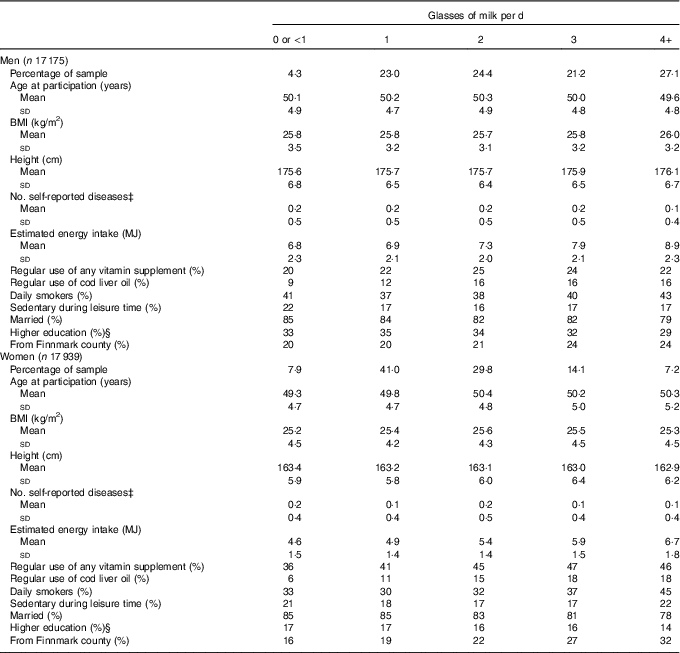
Of the 35 165 eligible participants in the Norwegian Counties Study, the study population for analysis constituted 35 114 individuals (99·9 % of participants) with valid height, weight and smoking data (51 % women). Median age at screening was 50 years (interquartile range (IQR) 46–53 years) and mean BMI was 25·7 kg/m2. In all, 36 % were daily smokers and 18 % were sedentary during leisure time. Mean number of glasses of milk consumed per d was 2·6 (sd 1·5) corresponding to 390 g milk/d in men and 1·7 (sd 1·1) corresponding to 255 g milk/d in women. In both sexes, those reporting the highest milk consumption had the highest energy intake, a lower proportion were married, a lower proportion had completed secondary education and a higher proportion were smokers (Table 1). Among men, there was a slightly higher proportion of sedentary among those consuming 0 or <1 glass of milk/d, whereas among women, the high consumers of milk were equally sedentary as the low consumers. In men, 603 incident hip fractures occurred during 291 335 person-years of follow-up, while in women 1262 incident hip fractures occurred during 321 683 person-years of follow-up. Median age at hip fracture was 72 (IQR 67–77) years.
Baseline characteristics across glasses of milkFootnote * consumed per d in the study population from the third wave of the Norwegian Counties Study 1985–1988Footnote † (Mean values, standard deviations and percentages)
* Type of milk was not specified in the question.
† All P values <0·05 except height in women (P=0·11). Continuous variables were compared using ANOVA and categorical variables were compared using χ 2 test.
‡ The options include myocardial infarction, angina, stroke, diabetes and treated hypertension.
§ Completed secondary education (baccalaureate) or higher v. first year of high school or lower, according to the data from the Norwegian Population and Housing Census 1990 (Statistics Norway).
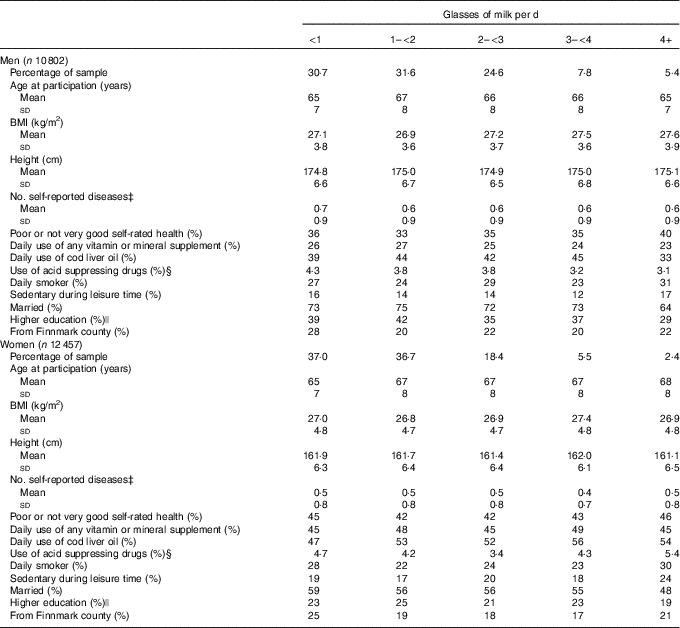
Of the 23 415 eligible participants in the Five Counties Study, the study population for analysis constituted 23 298 individuals (99·5 % of participants) with valid height, weight and smoking data (54 % women). Median age at screening was 62 (IQR 60–75) years and mean BMI was 27·0 kg/m2. In all, 26 % were daily smokers and 16 % were sedentary during leisure time. Mean number of glasses of milk consumed per d was 1·5 (sd 1·2) corresponding to 225 g milk/d in men and 1·2 (sd 1·1) corresponding to 180 g milk/d in women. In both sexes, those reporting the highest milk consumption had a higher prevalence of daily smokers, a lower proportion were married and a lower proportion had completed secondary education. Among women, those with the highest milk consumption were also older and more sedentary (Table 2). In men 473 incident hip fractures occurred during 114 876 person-years of follow-up; while in women 993 incident hip fractures occurred during 138 120 person-years of follow-up. Median age at hip fracture was 81 (IQR 76–85) years.
Baseline characteristics across glasses of milkFootnote * consumed per d in the study population from the Five Counties Study 2000–2002Footnote † (Mean values; standard deviations and percentages)
* The milk questions included sweet and soured milk, kefir and yogurt. Frequencies were summed from three questions according to the following frequency definitions: seldom/never=0; 1–6 glass/week=0·5; 1 glass/d=1; 2–3 glass/d=2·5 and 4 or more glass/d=4.
† All P values <0·05 except height in men (P=0·71), BMI in women (P=0·08), self-reported chronic diseases in women (P=0·13), self-rated health in women (P=0·14), vitamin/mineral supplements (P=0·22 in men, P=0·07 in women) and acid suppressing drugs (P=0·51 in men, P=0·11 in women). Continuous variables were compared using ANOVA and categorical variables were compared using χ 2 test.
‡ The options include myocardial infarction, angina, stroke, diabetes and treated hypertension.
§ Self-reported use of histamine-2 receptor antagonists and proton pump inhibitors.
ǁ Completed secondary education (baccalaureate) or higher v. first year of high school or lower, according to data from the Norwegian Population and Housing Census 2001 (Statistics Norway).
Milk consumption and hip fracture: the Norwegian Counties Study
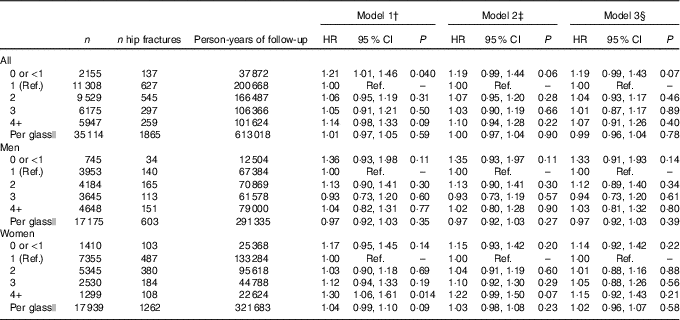
In the Norwegian Counties Study, the overall HR for hip fracture per daily glass of milk (type not specified) in the fully adjusted model (model 3) was 0·99 (95 % CI 0·96, 1·04), and it was not statistically significant in either sex: HR 0·97 (95 % CI 0·92, 1·03) in men and HR 1·02 (95 % CI 0·96, 1·07) in women (Table 3). Fully adjusted Cox regression with splines of milk consumption was not significant in men (P=0·55 for linear and P=0·27 for non-linear association) nor in women (P=0·36 for linear and P=0·55 for non-linear association). Compared with those drinking 1 glass of milk/d, HR increased non-significantly in those drinking 0 or <1 glass/d in both sexes, HR 1·33 (95 % CI 0·91, 1·93) in men and HR 1·14 (95 % CI 0·92, 1·42) in women (Table 3). In men drinking 4 or more glasses/d there was no tendency, while in women there was a suggested increased risk among the high milk consumers which was attenuated after adjustment for confounders; HR 1·15 (95 % CI 0·92, 1·43) (Table 3).
Hip fracture according to glasses of milkFootnote * consumed per d in the study population from the Norwegian Counties Study 1985–1988 (Hazard ratios (HR) and 95 % confidence intervals)
Ref., reference.
* Type of milk was not specified in the question.
† Adjusted for sex and county.
‡ Adjusted for sex, county, BMI (continuous) and smoking (five categories).
§ Adjusted for sex, county, BMI (continuous), smoking (five categories), body height (continuous), number of self-reported chronic diseases among the options: myocardial infarction, angina, stroke, diabetes, treated hypertension (continuous), regular use of vitamin supplement (yes/no), regular use of cod liver oil supplement (yes/no), physical inactivity (inactive, active, missing), marital status (married, single, missing), energy intake (increasing quartiles and one missing category), attained educational level in 1990 (five increasing categories and one missing category).
ǁ Discrete numeric variable 0–6 glasses/d entered as a continuous exposure variable.
Milk consumption and hip fracture: the Five Counties Study
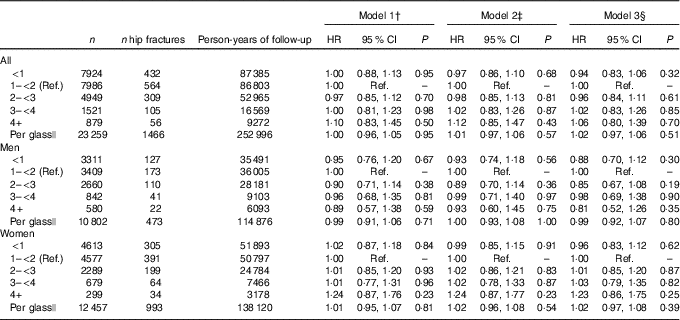
In the Five Counties Study, overall HR for hip fractures per daily glass of milk (including sweet and soured milk, kefir and yogurt) in the fully adjusted model (model 3) was 1·02 (95 % CI 0·97, 1·06) and it was not statistically significant in either sex: HR 0·99 (95 % CI 0·92, 1·07) in men, and HR 1·02 (95 % CI 0·97, 1·08) in women (Table 4). Fully adjusted Cox regression with splines of milk consumption was not significant in men (P=0·65 for linear and P=0·70 for non-linear association) nor in women (P=0·30 for linear and P=0·66 for non-linear association). For categories of milk intake with 1 glass/d as the reference category, there was no association except a non-significant 23 % risk increase in women who reported 4 glasses or more/d (Table 4).
Hip fracture according to glasses of milkFootnote * consumed per d in the study population from the Five Counties Study 2000–2002 (Hazard ratios (HR) and 95 % confidence intervals)
Ref., reference.
* The milk questions included sweet and soured milk, kefir and yogurt. Frequencies were summed from three questions according to the following frequency definitions: seldom/never=0; 1–6 glass/week=0·5; 1 glass/d=1; 2–3 glass/d=2·5; 4 or more glass/d=4.
† Adjusted for sex and county.
‡ Adjusted for sex, county, BMI (continuous) and smoking (five categories).
§ Adjusted for sex, county, BMI (continuous), smoking (five categories), body height (continuous), number of self-reported diseases among the options: myocardial infarction, angina, stroke, diabetes, treated hypertension (continuous), daily use of any vitamin or mineral supplement (yes/no), daily use of cod liver oil supplement (yes/no), use of acid suppressing drugs (yes/no), marital status (married/single/missing), self-rated health (poor/not very good/good/very good/missing), physical inactivity (active/inactive/missing), attained educational level in 2001 (five increasing categories and one missing category).
|| 0–12 glasses/d entered as a continuous exposure variable.
Statistical interaction and subgroup analysis
The interaction term for milk and sex approached statistical significance in the Norwegian Counties Study (P=0·08), while there was no interaction with sex in the Five Counties Study (P=0·49). There was no statistical interaction between milk and county in men or women in either cohort. Concerning BMI, it showed no interaction with milk consumption in men in either cohort (P=0·80 and P=0·49, respectively). In women, there was a marginally significant interaction between milk and BMI among women in the Five Counties Study (P=0·052), and stratified analyses within three categories of BMI suggested an elevated risk of hip fracture per daily glass of milk for those with BMI <24 kg/m2 (HR 1·09, 95 % CI 0·99, 1·19) but not for those with BMI ≥27 kg/m2 (HR 0·95, 95 % CI 0·86, 1·05) (online Supplementary Table S1). In subgroup analyses with 1 glass/d as the reference category, women in the Norwegian Counties Study with BMI <24 kg/m2 who reported a consumption of 4 or more glasses of milk/d had a statistically significant HR of 1·38 (95 % CI 1·02, 1·88) for hip fracture. In the Five Counties Study, the increased HR in the low-BMI high milk consuming women was not statistically significant (HR 1·60, 95 % CI 0·94, 2·73 in the fully adjusted model). The subgroup of women with BMI <24 kg/m2 who reported a milk intake of 4 glasses or more/d constituted 3·2 % of women in the Norwegian Counties Study and 0·7 % of women in the Five Counties Study. This group was also characterised by a higher smoking prevalence, a higher proportion being sedentary during leisure time and poorer self-rated health.
Sensitivity analyses
Cox regression confined to participants aged 75 years and older at baseline in the Five Counties Study yielded similar results as in the full cohort. In separate analyses according to length of follow-up in the Five Counties Study, an increased risk of hip fracture in high milk consuming women was observed only in the shorter term (<6 years). While there was not a significant linear trend, women reporting 4 or more glasses of milk/d (299 women, sixteen hip fractures) had HR 1·78 (95 % CI 1·05, 3·01) for hip fracture compared with the reference category (4577 women, 124 hip fractures) in the fully adjusted model. There was no association with regard to follow-up >6 years, neither a linear trend nor in categories of milk consumption. In men, separate Cox regression according to follow-up time did not yield any substantially different results.
Discussion
In this prospective study using two different cohorts linked with incident hip fractures from patient administrative systems over a 20-year period, we found no clear association between milk consumption and risk of hip fracture.
A previous follow-up to the first wave of the Norwegian Counties Study with 210 incident hip fractures (154 in women and fifty-six in men) identified in medical records during average follow-up 13·8 years found a reduced risk of hip fracture in men with higher milk consumption and no association in women( Reference Meyer, Pedersen and Løken 27 ). In men, multivariable adjusted relative risk (RR) of hip fracture was 0·46 (95 % CI 0·22, 0·98) in those drinking 4 glasses of milk/d or more (eleven hip fractures) compared with those drinking 1 glass/d or less. The corresponding RR in women was 0·83 (95 % CI 0·44, 1·56), also with eleven hip fractures in the highest milk consumption category. There was no linear trend through increasing milk consumption. Although we do not have a clear explanation for the discrepant findings of that study and the current results, it should be noted that the previous analysis was performed in the cohort participating in the first wave during the late 1970s, with short follow-up, few fractures and a younger study population (mean age at hip fracture 57 years in women and 55 years in men).
Findings from other countries have been conflicting. In 2011, a meta-analysis( Reference Bischoff-Ferrari, Dawson-Hughes and Baron 12 ) summed up the results of cohort studies investigating the association between milk intake and hip fracture. Based on six studies with 195 102 women and 3574 incident hip fractures, pooled RR per glass of milk per d in women was 0·99 (95 % CI 0·96, 1·02), with low heterogeneity. In men, based on three studies with 75 149 men and 195 hip fractures, pooled RR per daily glass of milk was 0·91 (95 % CI 0·81, 1·01). The authors concluded that there was no overall association between milk intake and risk of hip fracture in women, but that more data were needed for men.
However, interestingly, a different conclusion was arrived at in analyses from the Swedish Mammography Cohort (SMC), with n 61 433 women followed for an average of 20 years resulting in 4259 hip fractures, and the Cohort of Swedish Men with n 45 339 men followed for an average of 11 years, resulting in 1166 hip fractures( Reference Michaëlsson, Wolk and Langenskiöld 14 ). While no association was found between milk consumption and risk of hip fracture in men, a higher milk consumption was associated with increased risk of hip fracture in women, with HR 1·09 (95 % CI 1·05, 1·13) per glass of milk per d. HR for three or more glasses per d v. one glass or less was 1·60 (95 % CI 1·39, 1·84), while there was an increased risk even at 1–2 glasses/d with HR 1·19 (95 % CI 1·11, 1·28). The volume of a glass was defined as 200 g milk. These findings pertained to sweet milk, while a higher intake of soured milk and yogurt showed the opposite pattern and was associated with 8 % reduced risk per 200 g higher consumption per d. In an updated analysis in the SMC, these risk patterns persisted after stratification for fruit and vegetable intake( Reference Michaëlsson, Wolk and Lemming 28 ). Moreover, the associations did not differ across two BMI strata (divided at 25 kg/m2), however, BMI was based on self-reported height and weight( Reference Michaëlsson, Wolk and Lemming 28 ). The SMC is comparable to the cohort of women participating in the Norwegian Counties Study with regard to the time of baseline data collection (1987–1990), age distribution and magnitude of milk consumption (mean 240 g/d), and also in Sweden the smoking prevalence was higher among the women with the highest milk consumption. In addition, there was more comorbidity in the highest milk consumption category in the SMC( Reference Michaëlsson, Wolk and Langenskiöld 14 ). Results from the two Swedish cohorts were included in a meta-analysis published in 2018 that covered data from ten cohorts. The meta-analysis found no association between milk intake and risk of hip fracture in sexes combined( Reference Bian, Hu and Zhang 13 ). There was high heterogeneity between studies, which is a general shortcoming when performing meta-analyses of cohort studies in nutritional research.
Results from an updated follow-up to the Nurses’ Health Study and the Health Professionals’ Follow-up Study in US women and men were published in 2017( Reference Feskanich, Meyer and Fung 15 ) and were not included in the above-mentioned meta-analysis. The data included 2138 hip fractures in 80 600 women and 694 hip fractures in 43 300 men during an average follow-up of 20·8 and 17·5 years, respectively. RR 0·92 (95 % CI 0·87, 0·97) per daily glass of milk consumed was found in sexes combined. The hip fracture outcome was based on self-report. There was interaction between milk drinking and BMI (based on self-reported weight and height), and the reduced risk was most evident at BMI 30 kg/m2 or higher in both men and women.
The possible causes of the conflicting findings between different cohorts are not understood but have been intensely debated( Reference Byberg and Michaëlsson 29 ). Studies have predominantly been performed in Caucasian populations living in Europe and the USA. Milk drinking may represent different exposures across populations due to, for example, differences in fortification practices. Unlike the Scandinavian countries, the US has a long history of vitamin D fortification of milk( Reference Quick and Murphy 30 ). Different findings may also result from methodologic challenges. Participants’ age, proximity in time between measurement of exposure and outcome, exposure range for milk consumption, mode of fracture identification (registry linkage v. self-report), data collection method for height and weight (measured v. self-reported) and the available confounders differ between studies.
In the present study, subgroup analyses in women with low BMI at baseline (<24 kg/m2) showed that HR for hip fracture in those drinking 4 or more glasses/d were increased compared with the reference category reporting 1 glass/d in both cohorts, while there was no trend through increasing milk consumption. The associations were attenuated, but not eliminated, by adjustment for confounders. The low-BMI high milk consumers constituted a low proportion of the population; 3·2 and 0·7 % of women in the two respective cohorts. They were to a higher degree characterised by behaviour related to increased fracture risk, including high prevalence of cigarette smoking, physical inactivity and poor self-rated health. We cannot rule out that our results are influenced by residual confounding introducing a spurious positive association between milk consumption and hip fracture, and that a high milk intake may be an indicator of poor health in this subgroup of women rather than representing a causal risk factor for hip fracture. For example, it could be speculated that the increased risk associated with a high milk intake in the low-weight women could be related to illness associated with gastrointestinal complaints. Attempts were made to capture the potential influence of such illness by including information on use of acid-suppressing drugs, but this did not affect our associations.
Also, sensitivity analyses in the Five Counties Study population suggested that an increased risk in high milk consuming women was confined to shorter-term follow-up. This may suggest that self-reported milk consumption represents a more valid estimate of exposure the closer to event it is measured. However, it may also reflect that an effect is more detectable in the older and frailer segment of the population and that the characteristics of the population at risk changes during follow-up due to selection. The sub-cohort who were still alive and had not fractured within 6 years after baseline examination had slightly lower average age, higher average BMI, better self-rated health and lower smoking prevalence at participation when compared with the full cohort.
Range of exposure and portion sizes
Exposure classification was based on questionnaire data indicating number of glasses of milk usually consumed. The volume of a glass was not specified in the milk question in either study. Although standard portion sizes have changed over time( 31 ), a common standard portion of a glass of milk at the time of the data collections was 150 ml (150 g milk)( Reference Blaker and Aarsland 20 ). The highest category of 4 or more glasses/d is thus comparable to the highest consumption category in the analysis of the Swedish cohorts( Reference Michaëlsson, Wolk and Langenskiöld 14 ), corresponding to 600 ml or more/d. In the SMC, mean daily milk consumption at baseline in 1987–1990 was 240 g/d, which is similar to the mean daily milk consumption of women in the Norwegian Counties Study 1985–1988 (estimated to 255 g/d). In the US cohorts, the average intake in 1986 was slightly lower than that in the Norwegian Counties Study, with mean milk consumption reported to be 6·3 servings a 240 ml/week, corresponding to an average of 216 ml/d( Reference Feskanich, Meyer and Fung 15 ).
Strengths and limitations
The population-based design is a strength of the present study. Attendance rates were high in the third wave of the Norwegian Counties Study: 78, 86 and 87 % in the different counties. Attendance rates in the more recent health studies in five counties were somewhat lower and varied from 50 % in women aged 75–76 years in Oslo to 75 % in women aged 60 years in Troms and Oppland. Questionnaires were standardised and data were harmonised across studies. Of particular interest, the height and weight measurements were standardised and performed in the same way across all health studies included in both cohorts. Another important strength is the objective outcome measure obtained from patient administrative databases in all hospitals in Norway that have been carefully quality assured( Reference Omsland, Holvik and Meyer 21 , Reference Søgaard, Holvik and Meyer 22 ).
A limitation of both cohorts is the small variation in reported daily milk intake. The participants were homogenous with regard to milk: the large majority reported around 1 glass/d in women, while the proportion who reported to drink 4 or more glasses of milk/d was very low. As milk consumption in Norway as well as other countries has decreased steadily over time, more recent assessments of effects of variations in milk intake on health outcomes will be hampered by a narrow exposure range, making it more difficult to detect potential associations. Also, we were not able to separate fracture risk in individuals who never drank milk from individuals who drank milk infrequently, since the lowest response category in the two questionnaires was defined as ‘Do not drink milk or less than 1 glass per day’ and ‘Seldom/never’.
Another limitation in both cohorts was that sweet and soured milk could not be studied separately, as the wording of the questionnaire combined these types of milk (in addition to yogurt in the Five Counties Study) into the same questions. In the SMC, a higher intake of sweet milk entailed increased risk of hip fracture, while a higher intake of soured milk and yogurt showed the opposite pattern with fracture risk( Reference Michaëlsson, Wolk and Langenskiöld 14 , Reference Michaëlsson, Wolk and Lemming 28 ). We could not disentangle an effect of soured milk in our data. However, sweet milk is the predominant type of milk consumed in Norway. At the time of the data collection (1985–1988 and 2000–2002), soured milk constituted only 6–7 % of milk consumption in Norway (unpublished data, Norwegian Dairy Council).
In the Norwegian Counties Study, limitations also included a relatively young population at baseline, with a long average time period from baseline measurements to occurrence of hip fractures. Most hip fractures occurred towards the end of the follow-up period, with median age of 72 years at hip fracture. Dietary habits and other lifestyle factors and behaviour may have changed during the long follow-up period and thus contributed to dilute associations. Another limitation is that follow-up with regard to hip fracture did not commence until 1 January 1994, which was the first year all hospitals nationwide used electronic patient administrative systems. Any hip fractures occurring in the period from screening until the start of follow-up (median 7, maximum 9 years) have not been captured, and these participants will have been misclassified unless they suffered a second hip fracture during the subsequent years. However, we expect few hip fractures to have occurred in this period due to the low average age (median 50 years at participation), and we do not believe that this has influenced the results. Regardless of limitations, the results are supported by the similar results in the Five Counties Study, performed more recently and with an older age distribution (median age 62 years at participation and 81 years at hip fracture).
In the Five Counties Study, a limitation is the lack of data about energy intake since the questionnaires included only a few selected dietary questions. The semi-quantitative FFQ in the Norwegian Counties Study did not cover the entire diet, but yielded meaningful results concerning a positive association between milk consumption and calculated energy intake. Adjustment for energy intake in multivariable Cox regression had a small but not unimportant influence on the estimates for the milk–hip fracture association: In women, the HR changed from 1·20 (95 % CI 0·97, 1·48) to 1·15 (95 % CI 0·92, 1·43) for 4+v. 1 glass/d when including adjustment for energy intake.
Conclusions and implications
Results from our two cohorts of large population-based regional health studies in Norway did not support a clear protective nor risk-increasing association between milk consumption in adult life and later hip fractures. Milk and dairy products represent an important source of energy, protein, Ca and a number of other important nutrients, and based on current knowledge it should not be discouraged to the at-risk population.
Acknowledgements
Data from the Norwegian Patient Register has been used in this publication. The interpretation and reporting of these data are the sole responsibility of the authors, and no endorsement by the Norwegian Directorate of Health is intended nor should be inferred. Staff in the Norwegian Institute of Public Health (previously the National Health Screening Service) and Statistics Norway are acknowledged for data collection and linkage to hip fracture data. The authors thank Jon Marius Grasto Wickmann at the Norwegian Institute of Public Health for his valuable contribution in data management and quality assurance.
This work was financed by the Norwegian Institute of Public Health.
K. H. reviewed the literature, performed the data analyses and drafted the manuscript. K. H., H. E. M., T. K. O. and A.-J. S. contributed in the acquisition and quality assurance of hip fracture data. I. L. performed the calculations of energy and nutrient intakes in the Norwegian Counties Study and provided statistical advice. H. E. M., I. L., D. F., T. K. O. and A.-J. S. critically revised the manuscript for intellectual content. All co-authors approved the final version of the manuscript and take responsibility for its integrity.
The authors declare that there are no conflicts of interest.
Supplementary material
For supplementary material/s referred to in this article, please visit https://doi.org/10.1017/S0007114518003823



