

Introduction
Social attitudes toward dementia are becoming increasingly important as part of a wider shift in emphasis from cure to care. This implies new directions for public health education and campaigning. A number of factors are at play that will influence psychogeriatric practice and that of other helping professionals. First, following the wider disability and mental health survivor movements, people with dementia are finding a political voice, which brings that perspective into sharper focus (Swaffer, Reference Swaffer2015; Bartlett et al., Reference Bartlett, Windemuth-Wolfson, Oliver and Dening2017; Dementia Alliance International, 2017). This suggests not only that professional voices would no longer be the dominant perspective determining service systems and wider public attitudes; it also indicates that the voices of carers and people with dementia should be distinguished from each other (Yeandle et al., Reference Yeandle, Kröger and Cass2012). Market distinctions between providers and consumers become more difficult to sustain. Second, a shift toward managing dementia in the community means that it is both more visible in the public domain and that it makes everyday interactions increasingly important in maintaining well-being and social inclusion (Phillipson et al., Reference Phillipson2018). Third, as positive attitudes toward dementia can increasingly shape positive outcomes, public health campaigning should be progressively shifting toward understanding how messages are interpreted in the community (Gerritsen et al., Reference Gerritsen, Oyebode and Gove2016). Current public health approaches have tended to focus on information transmission to raise awareness of dementia as a disease, draw public attention to personal risk and prevention, and while age groups have been identified in their evaluation studies, age has predominantly served as a background variable or to allow for comparison between respondents above and below 60 or 65 years in terms of their understanding of these health-related messages (Léon et al., Reference Léon, Pin, Kreft-Jais and Arwidson2015; Cheston et al., Reference Cheston, Hancock and White2016; Miron et al., Reference Miron, McFadden, Hermus, Buelow, Nazario and Seelman2017). Understanding the priorities and reception of public health campaigning and education among different age groups is important for effective intervention design. As we know from empirical studies, it is worthwhile to support the adoption of positive attitudes and healthy lifestyle among all age group because with relatively small changes, we can prevent or stall cognitive impairment and dementia (Kivipelto et al., Reference Kivipelto, Mangialasche and Ngandu2017).
In this study, we have examined two potential factors affecting attitudes toward dementia and the reception of public health messaging: perspective and age. First, we have interviewed persons representing different perspectives, including that of people with dementia, carers and healthcare, social work and service professionals, and second, we have examined the effects of age-group on what they consider to be public health priorities. Throughout the three-year study, we have worked closely with an advisory group representing service providers, carers, and people with dementia. In addition to health and social work professionals, commercial service staff were interviewed at the advisory group's suggestion. Age has been examined in conformity with gerontological research showing that attitudes toward ageing vary by age-group and that these interact with attitudes toward dementia (Behuniak, Reference Behuniak2011; Zelig, Reference Zelig2014), often creating negative social perceptions (North and Fiske, Reference North and Fiske2012) and effects on people's sense of agency (Lamont et al., Reference Lamont, Swift and Abrams2015). Specific age groups may also hold distinctive perspectives on the purpose and meaning of growing old (Tornstam, Reference Tornstam2005; Biggs and Lowenstein, Reference Biggs and Lowenstein2011; Biggs, Reference Biggs2018). We know less about age group differences in relation to dementia and about appropriate ways to increase public capacity to empathic understanding toward those affected by it.
In this study, we have used dementia as an umbrella term to refer to the different types of progressive neurological conditions affecting the brain (Winblad et al., Reference Winblad2016). While dementias consist of a number of diverse conditions, in the public mind these frequently exist as a common and simplified social category (Cheston et al., Reference Cheston, Hancock and White2016).
Each of the factors identified above will cast new challenges to public health interventions and the negotiation of professional and patient role relationships. In previous two papers, we have separately identified perspective and age as important factors in peoples’ first impressions of dementia and personal desires were to be personally affected. It was found that closeness to the disease (in terms of family or caring connection) positively influenced perceptions across health, social work and commercial service professionals, plus differences in perspective between carers and persons with dementia (Haapala et al., Reference Haapala, Carr and Biggs2018). Age differences were also found to affect first impressions and empathic understanding (Biggs et al., Reference Biggs, Haapala, Carr, McDonald and Mears2018). In this paper, we examine what different perspectival groups think campaigning itself should prioritize and then re-examine these findings as they are inflected by age. The current paper, then, addresses two main questions: to what extent do different perspectival groups, and age groups within them, have different priorities concerning campaigning in relation to dementia and how should current and future campaigns take this into account?
Methods
The study
In this qualitative study, we carried out 111 semi-structured interviews among community-living self-selected people (83 women, 28 men) in 5 Australian states (QLD, SA, WA, NSW, and VIC) between March and September 2017 as part of a three-year project (2016–2018) approved by the University of Melbourne Humanities and Applied Sciences Human Ethics Sub-Committee (HESC 1647136).
Participant recruitment
Participants were recruited via key professional and consumer organizations and with calling cards placed in community-centers, cafes, and shops inviting participation from within the community and from as wide an age range as possible starting with 18 years. The final sample has an age range from 25 years to 87 years (Table 1).
Participant characteristics by voice; three professional groups as one and separately by field
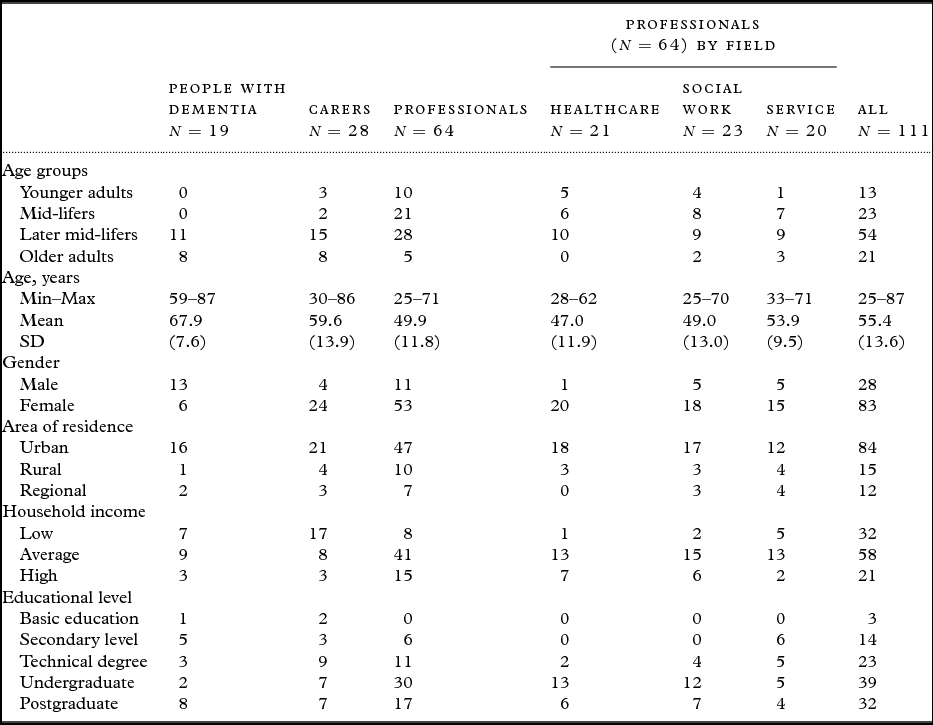
For this research, participants were grouped into four age groups, young adults (25–35 years), mid-lifers (36–50 years), later mid-lifers (51–65 years), and older adults (66–87 years), representing five “voices” and five perspective groups: people with dementia (n = 19), carers (n = 28), and three helping professional groups, i.e. healthcare professionals (n = 21), social workers (n = 23), and people who worked in service professions (n = 20). Service professions included hairdressers, IT- and media consultants, hospitality, and customer service staff.
Participant characteristics presented in Table 1 indicate that the youngest interviewees were in the two professional groups and oldest among people with dementia. Carers were in the middle by age. They were either currently or in the past had been in a carer's role; 14 for their partner, 14 for their parent(s), and sometimes also for another relative. Median time as a carer was 5.5 years, varying from 4 months to over 15 years, and the type of dementia in question also varied, including Lewy Body, frontotemporal, and Alzheimer's disease (AD); ten were caring for a person with young onset dementia. Thirteen of the nineteen interviewees with dementia had been diagnosed with young onset dementia 4–15 years ago (Lewy body, frontotemporal, or unspecified); four with AD 1–7 years ago and one with vascular dementia and one with suspected Alzheimer's; nine participated with their care partner. The two women with dementia are in the older adults’ age group, one with young onset dementia since age 59 years, and the other with AD. We did not ask about medication regimens.
Data collection procedures
Telephone interviews lasting about an hour were carried out by two interviewers, independently, with frequent debriefing on progress with each other, the project lead and advisory group consisting of seven representatives from the consumer dementia research network. With people with dementia and their care partner, a face-to-face interview was arranged as a rule. Couples were interviewed separately, unless by agreement the partner was present at the interview. All participants provided informed consent following the guidelines in National Statement on Ethical Conduct in Human Research, 2007 (Updated May 2015) (NHMRC, 2015) and the Alzheimer Europe (2011) Report on Ethics for Dementia Research. Each participant received an AU$40 voucher to major national retailers.
The two main probe questions posed during the interviews to answer our research question were:
1. “What would an effective campaign on dementia look like?” This question asked about action wanted in the public domain.
2. The question was followed by “Do you have specific target groups or settings in mind for the campaign?”
Data organization, code development, and analysis procedures
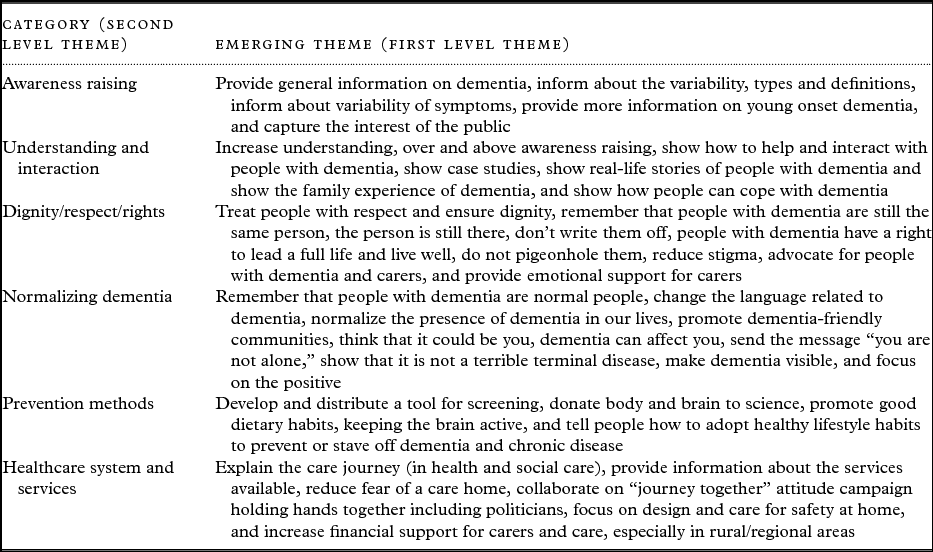
Data from 111 transcripts in Word was imported into NVivo 11. A sample of 40% of the transcripts was first coded by emerging themes by both interviewers (first and second authors) to ensure inter-coder reliability. Any discrepancies in coding were discussed by the research team and resolved before coding all of the transcripts. This resulted in 330 topics coded under 34 themes. Second round of coding allowed for higher order thematic grouping of the first level codes into six main areas of focus: (1) awareness-raising, (2) increasing understanding and interaction, (3) normalizing dementia, (4) ensuring dignity, respect, and rights (5) prevention methods and (6) improving healthcare systems and services. This “coding framework” is presented in Table 2. Suggestions for target group and settings selection were listed and analyzed by perspective and age group. Validity of this process was supported by researcher triangulation between the two coder-interviewers and principal investigator plus consultation with the advisory group of dementia research consumer network.
Coding framework for the question: “What would and effective campaign on dementia look like?”
Categorized data was extracted and imported into Excel 2016 to produce the descriptive tables and figures. Data is presented as a proportion of expressions within each group and entire sample, calculated as the number of expressions (for suggestions for effective campaign) divided by the total number of expressions within group. On average, each question received between two and three expressions per person. In other words, most interviewees had more than one comment to give on each question.
Analysis of the data was carried out first by perspective and then by age group within perspective. When age and perspective were looked at together, the professional groups were joined as one to achieve larger sample size within age group. Within the carers’ group, young adults’ and mid-life age groups were also combined to achieve sufficient numbers.
Results
Perspectival views on priorities for effective campaigning in relation to dementia
Figure 1 presents a radar chart of the spread of the topics for campaign under six focus areas by perspective, i.e. people with dementia, carers, and the three professional groups: healthcare professionals, social workers and service professionals. There are six main points to make on similarities and differences between perspectives.
Suggested campaign foci, percentage (%) of total number of topics within perspective. Figure 1 presents a radar chart of the spread of the topics for campaign under six focus areas by perspective, i.e. people with dementia, carers, and the three professional groups: healthcare professionals, social workers, and service professionals.
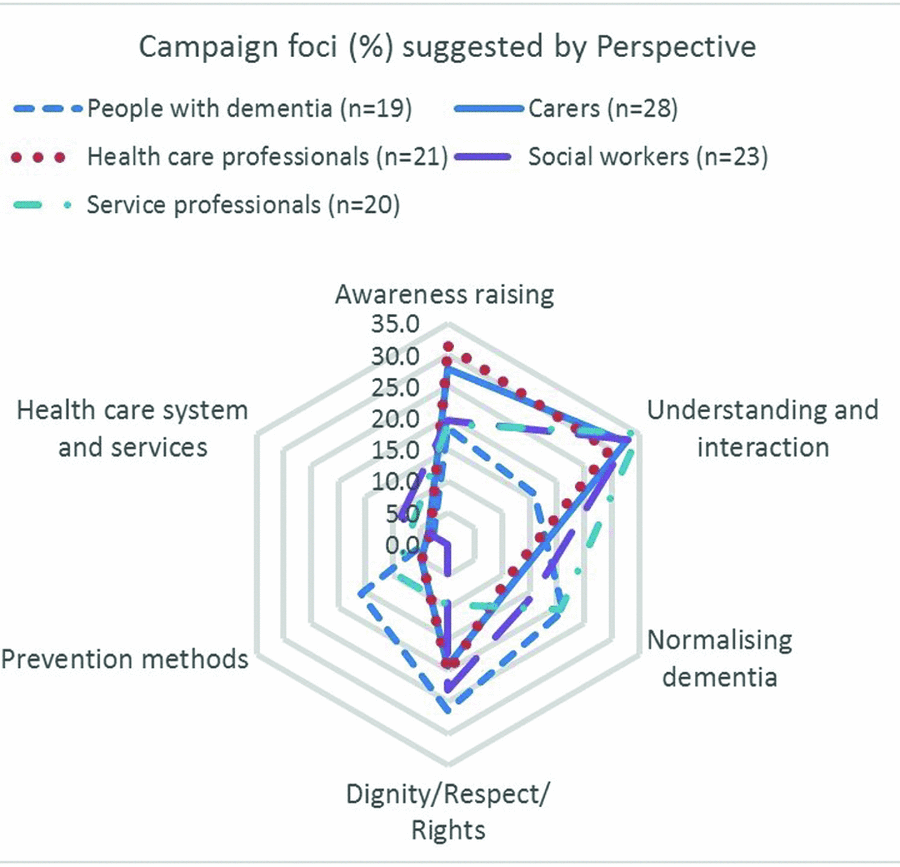
First, with the exception of people with dementia, priority has been placed on increasing understanding and interaction by all other groups.
Second, there is considerable overlap between the voice of carers and healthcare professionals in focusing on raising awareness, increasing understanding and interaction, and campaigns to secure the dignity, respect, and rights of people with dementia.
Third, people with dementia placed some emphasis on campaigns related to prevention methods and stalling the progression of the condition, but most of all they emphasized campaigns to normalize dementia in the public sphere and to secure the dignity, respect, and rights of people with dementia. This would imply that when examined by perspective, the views of people with dementia differ from the other groups, while the latter are somewhat similar.
Fourth, service professionals and social workers were closer to the emphasis placed by people with dementia on normalizing dementia. While the two also suggested campaigns on awareness-raising and increasing understanding and interaction, they diverged on prevention methods and dignity, respect, and rights issues, with the former mentioned more often by service professionals and the latter by social workers.
Fifth, and most surprisingly, given the emphasis of contemporary public health campaigning, healthcare systems and services were not prioritized by any group, including heathcare professionals.
Finally, when taken together, increasing understanding and interaction and normalizing dementia may represent complementary categories based on perspective. People with dementia may be wishing for social inclusion, while other groups want to know how to interact with them.
Considering age group differences within perspective
When we combined age group and perspective in our approach, we distinguished differences in emphasis between age groups within perspective. Age was shown to interact with perspective, disaggregating the concerns of particular groups. Figure 2 presents a radar chart of the spread of the topics suggested for campaigns under six main foci by age group within perspective. There are six main points to make:
1. Awareness-raising campaigns were most strongly identified by carers in young adulthood and mid-life, plus older adult carers, but rarely by later midlife carers.
2. Understanding and interaction -increasing campaigns were emphasized by all professional age groups regardless of age, plus by later midlife carers. It was less important for other carer age groups and people with dementia.
3. Normalizing dementia appeared as most important to later mid-lifers with dementia, followed by later midlife professionals. It was not emphasized by younger and midlife carers.
4. Dignity, respect, and rights were most emphasized by older adults with dementia, but not by older adult professionals.
5. Prevention methods -related campaigns were most emphasized by older adults with dementia.
6. Healthcare systems and services-related campaigns were not prioritized by any age group or perspective.
Suggested campaign foci, percentage (%) of total number of topics by age group within perspective. Figure 2 presents a radar chart of the spread of the topics suggested for campaigns under six main foci by age group within perspective.

In terms of priorities for campaigning, the interactions are complex, but certain trends stand out. Mid-life and older carers preferred awareness-raising, while later mid-life carers did not. They emphasized understanding and interaction. This latter trend was most aligned to professional groups regardless of age, who were almost uniform in their aggregated sense of priority. Age distinguished people with dementia, with older adults emphasizing prevention, followed by dignity and rights, but not normalizing, which was favored by mid-lifers.
It would appear, then, that when professional groups were aggregated, their professional status was reflected in their category emphasis. However, this centered on a need to increase understanding and interaction skills with people with dementia, rather than prevention or service issues. Where services were prioritized, this was among the younger and older adults rather than mid-lifers although the emphasis remained low and differences small. Carers and people with dementia, not only showed different patterns of priority, their prioritizing reflected age group differences. The split between increasing understanding interaction and normalizing dementia was most marked between professionals and later mid-lifers with dementia, with older people showing little interest in either. As with perspective alone, this may have reflected a complementary set of perspectives centered around social inclusion.
Target groups suggested for campaigning
While the most often suggested target for public health campaigning in relation to dementia, was the general public, mentioned by 98 of the interviewees, there were differences in emphasis between the perspectives: people with dementia and carers suggested adopting a universal approach and targeting the general public (60.9% and 64.3% of the suggestions) somewhat more often than adopting a selective settings approach, i.e. targeting families, communities, schools, work places or sectors, or specific age groups. All three professional groups, on the other hand, more often emphasized a selective (settings or age groups) approach (varying from 53.8% to 59.0%). From within the selective approach, unlike the other perspectival groups, service professionals emphasized an age group specific approach over the settings approach.
Discussion
In this paper, we have examined the narratives of 111 people interviewed about their views on public health campaigning and education in relation to dementia. We have addressed two main questions: to what extent does different perspectival and age groups have different priorities and how should current and future campaigns take this into account? Three main issues are discussed.
First, a major topic of concern identified by professionals and some carers was the need to increase everyday understanding and skills to positively interact with people within the public sphere. This dovetails with a desire to normalize dementia, particularly voiced by people with dementia and commercial service professionals. Normalizing reflects a wish to see dementia as a normal part of everyday life (as distinct from a normal part of ageing) and thus facilitate forms of social engagement and inclusion. It may, however, lead to confusion around messages that present dementia as exclusively a disease process, aimed to differentiate it from normal processes of ageing or something that increases with age. While this may point to a more nuanced communication through public health interventions, it speaks of two sides of the same trend, to forge an empathic bridge that would enable people with dementia to age in a place, remain socially included and stay engaged with society. It would appear from these findings that dementia is not so much associated with stigma, as an embarrassed absence of interaction skills in public spaces. This suggests a way to counter negative attitudes, including stigma in relation to dementia (Herrmann et al., Reference Herrmann2018), with a considered approach to address the upskilling needs of the public. Recent dementia-friendly community projects, such as the Kiama project in Australia (Phillipson et al., Reference Phillipson2018) have made good progress in this regard.
Second, healthcare services and prevention are not seen as a priority for campaigning from any perspective or by any age group. However, this has been the principal focus of interventions on attitude change to date. This might mean that these messages have been accepted and public awareness has moved on, although studies mentioned earlier would cast doubt on this conclusion. It may mean that perceptions are catching up with the shift away from cure toward coping and maintenance (Livingston et al., Reference Livingston2017; Prince, Reference Prince2017). Whatever the underlying trend, this finding identifies a potential mismatch between those sending public health messages and those now receiving them. As such, the priorities of the current group of participants differ in important ways from three priorities set by the WHO (2016) of understanding the disease, health service priorities, and preventative measures.
Third, that the views of healthcare consumers should not be lumped together, and fall into distinctive groups, by perspective and by age is re-emphasized by the current research. Indeed, while age played little role in the changing perceptions of professionals, it did when comparing these two groups. It indicates first that those who use services should be categorized less by market position and more by their relationship to the disease in question. Carers and people with dementia emerge as separate voices. Carers would appear to specifically emphasize awareness-raising, perhaps reflecting a sense of continued public misunderstanding and neglect of the problem. Including age as a variable, while muted in its effects, evidences a source of diversity which requires further analysis. Age is an important variable in identifying priorities related to dementia desired of public health messaging and therefore its successful reception. This study reinforces findings (Biggs et al., Reference Biggs, Haapala, Carr, McDonald and Mears2018), which have showed that empathic understanding of dementia appears to vary by age group. While younger adults in that study showed a form of distanced empathy, mid-lifers saw the other from a predominantly cognitive viewpoint, and later mid-lifers as another encountered in practical communication. Older adults exhibited a set of attitudes closer to their self-identity and based on interaction with others. These differences indicate the importance of a shift in emphasis for public health intervention from assessing the reception of pre-defined messages, to an awareness of where recipients are in terms of age-based priorities. While more extensive study is called for, age should be considered an important element in the perception of dementia and how messages are responded to.
Validity of our findings is supported by the large number of interviews and the volume of data, computer-assisted data coding and analysis, involvement of two collaborating researchers in data collection, triangulation between three researchers in data coding, analysis and interpretation of results, plus an active consumer advisory group in consultation throughout the study. As a limitation, our sample comprised predominantly women (Table 1) and the age group categories within perspective were skewed in so far as people with dementia only populated later midlife and older adults age groups, while professionals were most likely to be in midlife or later midlife with very few younger adults. Although this demographic may not be too far from reality in the field, it weakens the capacity to extrapolate our findings to younger adult age groups.
In terms of our two main questions: different age groups within perspectival groups have similar priorities among professional groups, but distinguish between both carers and people with dementia. Future campaigning in relation to dementia should recognize the expressed need for socially inclusive measures, most specifically normalizing dementia into daily life and the enhancing of interpersonal skills among professionals and others.
The current findings would suggest that a continuing shift toward the co-creation of public health campaigning and education is justified. It is important to include the voice of people with dementia, which in two recent reviews by Cole et al. (Reference Cole, Samsi and Manthorpe2018) and Conway et al. (Reference Conway, Watson, Tatangelo and McCabe2018) has been shown to be lacking in intervention and research design. People's needs for non-pharmacological, needs-addressing, and psychosocial interventions are likely to vary not only by type of dementia, as pointed out by Cohen-Mansfield (Reference Cohen-Mansfield2018), but also by age. Considering perspective and age difference in the reception of messages might provoke a rethink of how campaigns are targeted, taking the position of the recipient more explicitly into account. That attitudes are moving toward increasing understanding and interaction skills and normalizing dementia in the service of greater social inclusion, may form an important new direction of future campaigning and professional education.
Conflict of interest
None.
Description of authors’ roles
I. Haapala drafted the paper and led the analysis of the data. All three authors have equally participated in writing the paper. I. Haapala and A. Carr collected, coded, and analyzed the data in discussion with S. Biggs and the advisory group. S. Biggs as the principal investigator devised the overall strategy for the research.
Acknowledgments
We would like to thank all our interviewees for giving their time and sharing their stories and insight with us. We are also thankful to the research network coordinating organization, the Cognitive Decline Partnership Centre, members of Dementia Australia's National Consumer Network, Carers Victoria, the Brotherhood of Saint Laurence, and the funding organizations for their support and for facilitating the recruitment process in five Australian states. This project is funded through the Cognitive Decline Partnership Centre (CDPC; http://sydney.edu.au/medicine/cdpc/) receiving support from the Australian National Health and Medical Research Council (NHMRC grant Id: 9100000) and partners including Brightwater Care Group, Dementia Australia, Hammond Care and Helping Hand Aged Care.


 Open access

