Diet is one important determinant in the development of several chronic diseases, which represent the leading causes of morbidity and mortality worldwide(Reference Yach, Hawkes and Gould1, Reference Boeing, Wahrendorf and Becker2). Traditional nutritional epidemiology investigating diet–disease associations has focused on a single food or a few foods and nutrients. This conventional approach has several limitations, mainly the interaction between nutrients, confounding by foods and nutrients not consumed and the problem of collinearity(Reference Hu3). To overcome these limitations, nutritional epidemiologists have recently proposed studying dietary patterns as an alternative approach to evaluate diet–disease associations(Reference Hu, Rimm and Smith-Warner4–Reference Jacques and Tucker6). This approach looks beyond the single nutrient or food and attempts to capture the broader picture of diet that is hypothesized to discriminate between health and disease(Reference Slattery7). Many studies have reported associations between dietary patterns and disease risks, including metabolic abnormalities, CVD and some cancers(Reference Hu, Rimm and Stampfer5, Reference Fung, Willett and Stampfer8–Reference Kant13). Despite some inconsistencies, the results of these studies suggest that dietary patterns rich in whole grains, legumes, vegetables and fish are associated with favourable effects on metabolic abnormalities(Reference Williams, Prevost and Whichelow14, Reference Panagiotakos, Pitsavos and Skoumas15), whereas Western dietary patterns, characterized by high-fat foods, increase the risk of obesity and metabolic abnormalities, such as type 2 diabetes and CVD(Reference Van Dam, Rimm and Willett16–Reference Jacques and Tucker18).
At the population level, as per WHO recommendations, all UN member states are urged to promote lifestyles that include a healthy diet and foster energy balance(Reference Nishida, Uauy and Kumanyika19). In this context, the identification of the patterns of core staples around which diets are formed in a population is fundamental for planning and evaluating interventions on dietary intake. In fact, few recent interventional trials have shown that it is possible to modify underlying patterns in specific populations(Reference de Oliveira, Sichieri and Venturim Mozzer20, Reference Ello-Martin, Roe and Ledikwe21). The public health message that comes from a dietary pattern approach is often clearer and easier to follow compared with recommendations that stem from individual foods and nutrients, especially given the inconsistent associations reported for most foods and nutrients(Reference Slattery7). In addition, knowledge of the determinants of specific food patterns is instrumental for the identification of groups at risk of under- or overconsumption of specific nutrients.
In the Middle East, limited data on dietary patterns, their determinants and disease associations exist. In the present paper, we report the following main outcomes from nationally representative and comprehensive dietary data in Lebanon: (i) identification and characterization of dietary patterns among Lebanese adults using factor analysis; (ii) investigation of the association of these patterns with sociodemographic factors, physical activity and meal patterns; and (iii) assessment of the association of these patterns with BMI and waist circumference (WC).
Methods
Study design
The data presented in the present paper are from a secondary analysis of the Nutrition and Non-Communicable Disease Risk Factor Survey conducted in Lebanon between 2008 and 2009 on a nationally representative sample of 3656 individuals aged ≥6 years. The design and conduct of the survey are described in detail elsewhere (AM Sibai and N Hwalla, unpublished results). The present paper focused on 2048 adults aged 20–55 years of both sexes. The sample was drawn from randomly selected households on the basis of stratified cluster sampling. The strata consisted of Lebanese governorates. The clusters were selected further at the level of districts and urban and rural areas; housing units constituted the primary sampling units in the different districts of Lebanon. One adult from each household was selected from the household roster, excluding pregnant and lactating women and individuals with mental disabilities. The distribution of the study sample by sex and 5-year age group was similar to that of the Lebanese population, as estimated by the Central Administration for Statistics in Lebanon (2004)(22). The present study was approved by the Institutional Review Board of the American University of Beirut.
Face-to-face interviews were conducted using a standard questionnaire that gathered information about basic sociodemographic (age, sex, marital status, education and income) and lifestyle characteristics (tobacco use and physical activity). The short version of the International Physical Activity Questionnaire was used to assess physical activity. Total physical activity was calculated by assigning a weight to each type of activity on the basis of its energy requirements defined in MET-min (multiples of the RMR for an activity multiplied by the minutes taken to perform it). Three categories of physical activity (low, moderate and high) were assigned on the basis of MET-min/week(23). The interview schedule also included questions about meal patterns (breakfast consumption, snack consumption, eating out and eating while watching television (TV)).
Anthropometric measurements
Anthropometric measurements were taken using standardized techniques and calibrated equipment. Participants were weighed to the nearest 0·1 kg wearing light indoor clothing, and were barefoot or wearing stockings. Using a stadiometer, height was measured without shoes and recorded to the nearest 0·5 cm. BMI was calculated as weight in kilograms divided by the square of height in metres (kg/m2). WC was measured using a plastic measuring tape to the nearest 0·5 cm at the midpoint between the bottom of the rib cage and above the top of the iliac crest during minimal respiration.
Assessment of dietary intake
Dietary intake was assessed by a sixty-one-item FFQ that estimated food and beverage intakes over the past year. The questionnaire was administered by a trained dietitian who collected information on consumption of commonly consumed food items and beverages in Lebanon. Participants had the choice to report their intake either in terms of reference portion size or in grams. A reference portion, representing one standard serving expressed in household measures, was defined for each food item. Common household measures such as measuring cups, spoons and portion size photos were used for better estimation of the real portion consumed. The reported frequency of each food item and beverage was then converted to a daily portion intake. The daily energy and macronutrient consumption by participants was computed using the food composition database of the Nutritionist IV software (N-Squared Computing, Silverton, OR, USA).
Both the FFQ and the above-mentioned sociodemographic questionnaire were designed by a panel of experts including scientists in the fields of epidemiology and nutrition and were tested on a convenient sample to check for clarity and cultural sensitivity.
Determination of dietary patterns
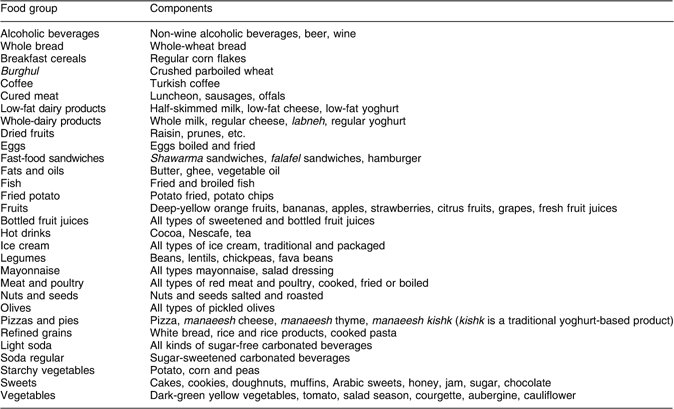
For the purpose of determination of dietary patterns, food items were grouped into thirty food groups on the basis of similarities in ingredients, nutrient profile and/or culinary usage (Appendix). Food items having a unique composition (eggs, burghul (parboiled wheat) and mayonnaise) were classified individually. The total consumption for each group was determined by summing up the daily portion intake of each item in this group. The exploratory principal component factor analysis (PCFA) was used to identify dietary patterns using intakes of the thirty food groups. PCFA is a data-driven method that identifies foods that are frequently consumed together by pooling food items on the basis of the degree to which the amounts eaten are correlated together. Its main purpose is to identify groups of food items that account for the largest variation in overall dietary intake among individuals(Reference Michels and Schulze24). Before running the factor analysis procedure, the correlation matrix among the thirty food groups was visually and statistically examined to justify undertaking factor analysis. The χ 2 for the Bartlett test of sphericity was significant at P < 0·05, and the Kaiser–Meyer–Olkin test showed a score of >0·6, indicating that the correlation among the variables was sufficiently strong for a factor analysis. The number of factors retained was based on three criteria: (i) the Kaiser criterion (eigenvalues >1); (ii) inflection point of the scree plot; and (iii) interpretability of factors. The factors were rotated using a Varimax rotation (orthogonal transformation). Factor loadings indicated the strength and direction of the association between the patterns and food groups. The derived dietary patterns were labelled on the basis of food groups having a rotated factor loading >0·4. Factor scores were calculated using the multiple regression approach and each individual received a factor score for each dietary pattern. These scores indicated the degree to which each participant's diet corresponded to the identified pattern. For each pattern, participants were grouped into quartiles of pattern scores.
Statistical analyses
To study the association between dietary patterns and nutrient intake, Pearson's correlation coefficients were calculated between the factor scores of each pattern and energy-adjusted nutrient intakes. Multiple linear regression analysis was applied to assess the associations of the dietary patterns, with factor scores of each of the identified patterns as the dependent variable and the sociodemographic characteristics and meal pattern as independent variables. The associations between BMI, WC and dietary patterns were evaluated using multivariate linear regression adjusted for age, sex, education, income, smoking, physical activity and energy intake. Tests were conducted to determine linearity (tolerance >0·4) of the covariates included in the regression models. Normality of the residuals was assessed by the histogram of standardized residuals and normal probability plot in all regression models. The Statistical Package for the Social Sciences statistical software package version 14·1 (SPSS Inc., Chicago, IL, USA) was used for all computations, and a P value <0·05 was considered significant.
Results
Out of 3178 visited households, 2836 agreed to participate in the study (response rate 90 %). No information existed on individuals who refused to participate. Our sample comprised 2048 adult participants aged 20–55 years (923 men with a mean age of 34·7 (sd 9·9) years and 1125 women with a mean age of 34·8 (sd 9·9) years). A significantly higher percentage of men were single, had a higher income and smoked cigarettes. Overall, almost half of the study population had a low level of physical activity (48·1 %). The frequency of breakfast consumption was about 5 times/week for both men and women. A greater percentage of men reported eating out and eating while watching TV. The prevalence of obesity (BMI ≥ 30·0 kg/m2) and elevated WC (≥94 cm for men and ≥80 cm for women, according to the International Diabetes Foundation cut-offs) was significantly greater among men as compared with women (Table 1).
Sociodemographic, lifestyle and anthropometric characteristics of the study populationFootnote †: nationally representative sample of Lebanese adults (n 2048) aged 20-55 years
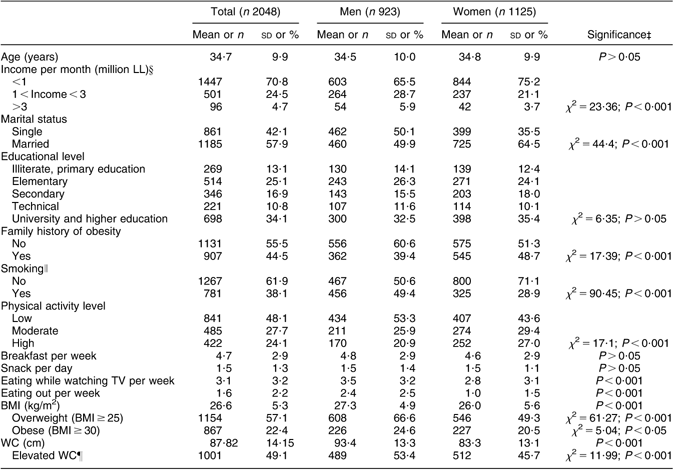
LL, Lebanese Liras; TV, television; WC, waist circumference.
† Categorical variables are expressed as n and % and continuous variables are expressed as mean and sd.
‡ Significance is derived using an independent t test for continuous variables and the χ 2 test for categorical variables.
§ Income is expressed in terms of LL (1500 LL is almost equivalent to $US 1).
∥ Smokers were defined as current smokers, whereas non-smokers included non-smokers and past smokers.
¶ Elevated WC is defined by a circumference ≥94 cm for men and ≥80 cm for women according to the International Diabetes Federation.
Principal component analysis revealed four dietary patterns, which collectively explained 27·6 % of the variance in dietary intake. Factor loadings of the four patterns are shown in Table 2. The patterns were named according to the food groups loading highest on the respective dietary pattern. Therefore, the patterns obtained were classified as follows: (i) the ‘Western’ pattern, which was positively associated with fast food including pies and pizzas, fast-food sandwiches, fried potatoes, regular soda, bottled juices, meat and poultry, cured meats, nuts and seeds, refined grains, mayonnaise, ice cream and sweets; (ii) the ‘Traditional Lebanese’, which was positively associated with traditional Lebanese food such as fruit, vegetables, burghul, legumes, olives, whole-fat dairy, starchy vegetables, fats and oils, and eggs; (iii) the ‘Prudent’ pattern, which was positively associated with food recognized as healthy, including primarily whole bread, low-fat dairy and light soda and negatively associated with refined grains, fats and oils and regular soda; and (iv) the ‘Fish and alcohol’ pattern, which was associated with consumption of fish and alcohol.
Factor loading matrix for the four dietary patterns identified in the study population
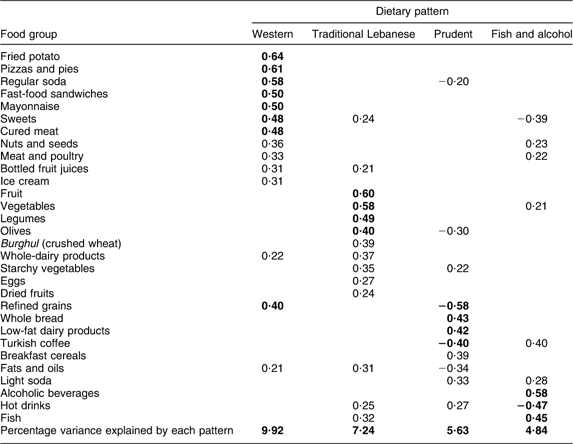
Total variance explained by all of the patterns is 27·64 %.
Absolute values <0·2 were excluded from the table for simplicity.
Loadings ≥0·4 are given in bold.
Table 3 describes the associations of the factor scores of various dietary patterns with energy and energy-adjusted nutrient intakes. Scores of the Western pattern had the strongest positive associations with energy (r = 0·78), fat (r = 0·11) and Na (r = 0·16) intakes. The traditional pattern scores were positively correlated with carbohydrates (r = 0·07) and cholesterol (r = 0·9) intakes. As for the prudent pattern, the higher the scores, the lower the energy (r = −0·26) and Na (r = −0·21) intakes and the higher the fibre intake (r = 0·42). The fish and alcohol pattern was characterized by a high intake of protein (r = 0·28) and low intake of carbohydrates (r = −0·32).
Pearson's correlation coefficients of dietary pattern scores with total energy and energy-adjusted nutrient intakesFootnote †
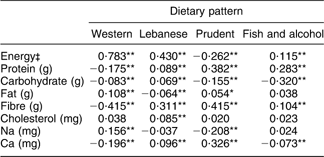
Correlation is significant at *P < 0·05 and **P < 0·01.
† Adjustment for energy was carried out as percentage of total energy intake for protein, carbohydrates and fat and as g or mg intake per kcal/d for all other nutrients.
‡ Absolute values for the correlation of total energy intake with dietary pattern scores are indicated.
Multiple linear regression models were applied to examine the independent associations of selected sociodemographic and lifestyle characteristics with the scores of the four dietary patterns identified in the present study. When examined, gender was not shown to be an effect modifier of the association between the various patterns and BMI and WC; hence, the results for both genders together are presented in Tables 4 and 5. Table 4 represents the regression coefficients and the corresponding P values of the aforementioned models. In particular, the Western pattern was positively associated with male sex, frequency of eating out, snacking and high socio-economic status, whereas it was negatively associated with age and education. The traditional Lebanese pattern was positively associated with age, breakfast consumption, snacking and higher economic status and negatively associated with the frequency of eating out. In addition, this pattern showed a significant positive association with physical activity. The prudent pattern was positively associated with female sex, breakfast consumption and education and negatively associated with marital status and eating while watching TV. The fish and alcohol pattern was positively associated with age, income and the frequency of eating out and negatively associated with female sex, eating while watching TV and breakfast consumption. Table 5 illustrates the multivariate-adjusted association of the four dietary patterns identified with BMI and WC of study participants. Scores of the Western pattern were significantly positively associated with BMI and WC (BMI: β = 0·49, 95 % CI 0·21, 0·76; WC: β = 1·08, 95 % CI 0·39, 1·76).
Association of baseline sociodemographic and lifestyle characteristics with various pattern scores in the study population as assessed by multivariate linear regressionFootnote †

TV, television.
* β and 95 % CI are significant at P < 0·05.
† All the sociodemographic and lifestyle variables were run in one multivariate model.
Association of BMI and WC of study participants with the scores of the four dietary patterns identified as assessed by multivariate linear regressionFootnote †

WC, waist circumference.
* β and 95 % CI are significant at P < 0·05.
† The multivariate regression model was adjusted for age, sex, education, income, smoking, physical activity and energy intake.
Discussion
In the present study, we report the results of the first national investigation of dietary patterns among Lebanese adults and their association with obesity, sociodemographic factors and lifestyle variables. Four major dietary patterns were identified in this population. The Western pattern was characterized mainly by a high consumption of fried potatoes, pizzas and pies, soda drinks, fast-food sandwiches and sweets. The traditional Lebanese pattern reflected high intakes of fruit, vegetables, legumes and olives. The prudent pattern consisted mainly of low-fat dairy, whole bread, breakfast cereals and light soda. The fish and alcohol pattern was, as its name depicts, characterized by a high consumption of fish and alcohol. Among the four dietary patterns identified, only the Western pattern was positively associated with BMI and WC. The percentage of variance of dietary intake explained by the aforementioned patterns was 27·64 %, with the largest variance being explained by the Western pattern (10 %). The percentage of variance explained by the first four dietary patterns identified is similar in magnitude to what has been reported in other studies(Reference Kerver, Yang and Bianchi25–Reference Terry, Hu and Hansen27). It should be noted, however, that the variance explained by all factors is a function of the number of factors that researchers choose to retain(Reference Paradis, Perusse and Vohl28).
Although the specific foods contributing to each pattern may vary in their level of contribution, the prudent and Western patterns are the most commonly identified dietary patterns among adults from the USA and Western Europe, where the Western pattern is generally defined as a high-fat diet with red and processed meat, high-fat dairy products and refined cereals, and the prudent or healthy pattern is often marked by consumption of fruit and vegetables, whole grains and fish(Reference Tucker29). The prudent pattern in the present study, although including low-fat dairy and whole bread, is slightly different from what has been reported in the literature, because fruit, vegetables and fish are loaded on other patterns. In addition to the fact that fruits and vegetables are essential elements of the Lebanese diet, as will be discussed later, these differences stem from the fact that factor analysis is a data-driven method and differences in the dietary assessment methods, the number and types of food groupings and statistical analysis techniques may explain the observed discrepancies in what constitutes a prudent dietary pattern across the literature(Reference Newby, Muller and Tucker30). As the use of dietary pattern analysis is becoming more widespread, additional patterns have been identified for ethnic or country-specific traditional diets, such as the ‘bean pattern’ among women of Chinese or Japanese ancestry(Reference Maskarinec, Novotny and Tasaki31), the traditional Korean pattern(Reference Yang, Kerver and Song32) and the traditional Iranian pattern(Reference Esmaillzadeh and Azadbakht33, Reference Esmaillzadeh and Azadbakht34). In our study, in addition to the Western and prudent patterns, we have identified the traditional Lebanese pattern, which shared elements with what are generally labelled as Western and prudent patterns, since it included fruit and vegetables and whole-dairy products in addition to olives and burghul (crushed wheat). The fourth pattern identified in the present study, the fish and alcohol pattern, is specific to the Lebanese population, although few other studies have identified patterns driven by alcohol(Reference Newby, Muller and Hallfrisch11).
A main criticism of dietary pattern analysis is the labelling of factors, which is arbitrary and based on the investigator's interpretation of the factors. In her recent review, Slattery(Reference Slattery35) stressed on the importance of understanding what is behind the label. The correlation of the patterns’ scores with energy and energy-adjusted nutrients in the present study further characterized the factors and explained the labelling. Similar to the majority of studies that have investigated dietary patterns, the pattern associated with higher energy consumption, fat, saturated fat and Na and lower fibre intakes was depicted as the Western pattern, whereas the prudent pattern was the factor that correlated with higher fibre and Ca intakes(Reference Tucker29).
We found that the factor scores were associated with several demographic factors, including age, sex and education. Similar to other studies, our results showed that younger individuals followed the Western pattern(Reference Rezazadeh, Rashidkhani and Omidvar36–Reference Sanchez-Villegas, Delgado-Rodriguez and Martinez-Gonzalez38). This finding is alarming from the point of view of population health given the reported relationship between Western dietary patterns and adverse health outcomes(Reference Hu, Rimm and Stampfer5, Reference Fung, Willett and Stampfer8–Reference Lutsey, Steffen and Stevens10, Reference Fung, Schulze and Manson39). The observed differences in eating patterns by gender are in accordance with those reported by other investigators(Reference Villegas, Salim and Collins40, Reference Winkvist, Hornell and Hallmans41), where women seemed to adhere more to the prudent pattern, whereas men were found to follow mainly the Western pattern. Similar to other reports in the literature, adherence to the prudent pattern was found to be positively associated with education. This was also reported in Iran, where adult women who had a university education degree were more likely to adopt a healthy eating pattern(Reference Rezazadeh, Rashidkhani and Omidvar36). This could be explained by the fact that education enables people to obtain information about health, especially nutrition-related information, and consequently contributes to improving behaviour and eating habits.
The relationship between dietary patterns and lifestyle characteristics found in the present study supports the theory that food choices are part of a larger pattern of health-related characteristics and behaviours(Reference Randall, Marshall and Graham42, Reference Perrin, Dallongeville and Ducimetiere43). The concept of a ‘prudent diet’ could be extended to a ‘prudent profile’ that includes breakfast consumption, no smoking and less eating while watching TV, in addition to higher education. Our findings indicate a positive association of the traditional Lebanese and prudent patterns with the frequency of breakfast consumption. In fact, regular breakfast consumption has been consistently reported to be associated with better eating habits and lower levels of overweight and obesity(Reference Veltsista, Laitinen and Sovio44–Reference Szajewska and Ruszczynski46). In addition, the results of the present study revealed that the Western and prudent patterns were strongly associated with eating while watching TV. Specifically, a positive association with the former and a negative association with the latter were noted. These findings are in accordance with the results of previously published studies, in which an unhealthy dietary pattern behaviour was found to be associated with an overall unhealthy lifestyle(Reference Kourlaba, Panagiotakos and Mihas47, Reference Vereecken and Maes48). These associations could be due to the fact that it is more common to eat sweets, desserts, salty snacks or ice cream while watching TV and due to the vast array of fast-food advertisements to which individuals are exposed while watching TV(Reference Harris and Bargh49–Reference Zimmerman and Bell51).
Our hypothesis that the Western dietary pattern is associated with obesity was confirmed by the significant associations with BMI and WC, even after adjustment for sociodemographic factors and energy intake. This finding is consistent with a body of literature that showed that the Western pattern is associated with an increased risk of obesity, including a high BMI and elevated WC(Reference Terry, Hu and Hansen27, Reference Langsetmo, Poliquin and Hanley52–Reference Cunha, de Almeida and Sichieri54). This result reinforces the importance of Westernization and nutritional transition in the alarmingly increasing prevalence of obesity in developing countries. The Lebanese traditional pattern that we defined in the present study was not consistently associated with BMI. This finding is similar to another study conducted in the region, where the Iranian traditional diet was also not found to be associated with obesity(Reference Esmaillzadeh, Kimiagar and Mehrabi53). The complex nature of these traditional patterns makes interpretation very difficult. The Lebanese diet, as defined in our findings, is highly loaded on fruit and vegetables. With these elements, a negative association between this dietary pattern and risk of obesity is expected. However, some energy-dense foods such as whole-dairy products and refined grains were also heavily consumed in this dietary pattern and may have counteracted the positive effects that the intake of fruit and vegetables might have had on obesity.
The strengths of our study include the extensive information on lifestyle and meal patterns, the large sample size, the national representation of the studied population and the objective method adopted to record height and weight. Some limitations should be considered when interpreting the findings of the present study. First, factor analysis is a data-driven method and tends to define population-specific patterns. Hence, our results are likely to represent patterns that are, in some aspects, specific to the Lebanese population. Second, this is a cross-sectional study and its findings can mainly be used to test associations rather than to assess causal relationships. Hence, it remains unclear from the results of the present study whether individuals who adhere to a Western type of diet have a higher BMI or those with a higher BMI tend to eat unhealthy food. In addition, limitations of the use of the FFQ for dietary assessment, such as measurement errors, reliance on memory, the limited number of food items included in the food list and the high proportion of low-energy reporters, should be taken into account(Reference Willett55). Nevertheless, studies have shown that the FFQ remains the most suitable dietary data collection tool in large epidemiological studies as it provides information on an individual's habitual diet over longer periods of time and allows ranking of individuals according to food or nutrient intakes(Reference Hu, Rimm and Smith-Warner4, Reference Khani, Ye and Terry56). It is important to note that the FFQ used in the present study was not validated in our study population; however, in another study investigating dietary patterns and metabolic syndrome among Lebanese men using the same FFQ, significant correlations were found between dietary cholesterol intake and plasma total and LDL cholesterol levels (Pearson's correlation r 2 = 0·3 and 0·2 for total and LDL cholesterol, respectively; F Naja and L Nasreddine, unpublished results). The FFQ used in the present study was administered by a trained dietitian and was not self-completed. This offers many advantages in that the self-administered FFQ requires a literate population and may also result in inconsistent interpretations and lower than desired response and completion rates, each of which may compromise the validity of the data(Reference Caan, Lanza and Schatzkin57). Finally, the use of factor analysis requires several arbitrary assumptions related to the selection of food groupings, the number of retained factors and their labels(Reference Hu3, Reference Newby, Muller and Hallfrisch11, Reference Martinez, Marshall and Sechrest58). Nevertheless, to minimize subjectivity, the food groupings used in the present study were similar to those reported by others(Reference Terry, Hu and Hansen27, Reference Slattery35, Reference Schulze, Hoffmann and Kroke59) and the selection of factors was carried out after evaluating the scree plots and eigenvalues.
In conclusion, the present study provides a better understanding of the nutritional intake of the Lebanese population. It identified four dietary patterns: Western, traditional, prudent, and fish and alcohol, with age, sex, education, income and meal patterns shown to be significantly associated with the adoption of these patterns. Only the Western pattern was associated with higher BMI and WC. These findings lay the grounds for future interventions targeted at reducing rates of overweight and obesity, which have lately been shown to be on the rise in the country (N Hwalla, unpublished results). The observed association between the Western pattern, BMI and WC justifies interventions: first, to discourage the intake of fast food and other energy-dense foods such as pies and pizzas, fried potatoes and sweets; and second, to promote the consumption of the traditional Lebanese diet based on fruit and vegetables.
Acknowledgements
The present study was funded by the Center for Disease Control, WHO and the Lebanese National Council for Scientific Research. The authors have no conflict of interest to declare. N.F. and N.L. wrote the paper; H.N. and A.M.S. designed and supervised the study and critically reviewed the paper; M.C.C. conducted the dietary survey; L.I. calculated nutritional intakes; N.F., N.L., N.A. and L.I. performed data analysis; N.F. and N.L. contributed equally to this manuscript. All authors contributed to writing the paper and discussed the results.
Appendix
Food groupings based on culinary usage and nutrient content