



Diet quality is important for healthy growth and development of young children. Abundant evidence also indicates that poor diet quality, as assessed by food intake or eating habits, can lead to health problems such as obesity and decreased immune system function in childhood and potentially into adulthood( Reference Darnton-Hill, Nishida and James 1 ). Thus, considerable attention in epidemiological and nutritional research has been given to understanding the determinants of diet quality in children.
The family is the most influential context for early childhood development and learning, as reflected by the preponderance of discussion about diet and eating behaviours in young children being focused on family and parental factors( Reference Patrick and Nicklas 2 ). Of these factors, behavioural and lifestyle determinants such as parental eating behaviours and modelling, home availability and accessibility of foods, child-feeding practices and parenting style have been well documented( Reference Wyse, Campbell and Nathan 3 – Reference Mak, Prynne and Cole 8 ). Social structural determinants of children’s diet quality such as parental education, occupation and family income, with their linkage to parents’ health knowledge, attention to health issues and economic resources in food choices, are deemed equally significant( Reference Patrick and Nicklas 2 , Reference Darmon and Drewnowski 9 , Reference Rosenkranz and Dzewaltowski 10 ). From an ecological perspective, health behaviours are embedded in and shaped by multilevel systems from the family and community to the wider socio-political system( Reference Evans, Roy and Geiger 11 ). However, the role of parental employment in children’s diets as part of the family system has not been addressed extensively and appears biased towards child diet-related health outcomes such as overweight and obesity( Reference Hawkins, Cole and Law 12 – Reference Champion, Rumbold and Steele 15 ). In the few studies that explicitly examined the linkage between parents’ employment status and diet quality of their children, the results were mixed. Although some found that less healthy eating habits or dietary quality occurred in children with full-time employed mothers( Reference Hawkins, Cole and Law 16 – Reference Brown, Broom and Nicholson 18 ), others reported the contrary( Reference Manios, Kourlaba and Kondaki 19 ) or no significant relationship( Reference Johnson, Smiciklas-Wright and Crouter 20 , Reference Leventakoul, Sarri and Georgiou 21 ). As for parental work characteristics, standard work schedules of both parents, greater perceived work control for fathers( Reference McIntosh, Kubena and Tolle 22 ) and lower levels of work–life stress for both parents( Reference Bauer, Hearst and Escoto 17 ) showed positive associations with a number of healthy eating indicators in families with school-aged children and adolescents.
In many developed societies, dual-earner families are increasingly prevalent( 23 ) and work characteristics have become more diversified amid complex economic dynamics, such as a rise in non-standard work schedules( Reference Li, Johnson and Han 24 ). Therefore, empirical inquiries into parental work and children’s diet quality will be of growing importance, particularly for the pre-school years, where scant literature is available. Therefore, the present study was designed to examine the relationship between parental work characteristics (work schedules and work hours) and diet quality (meal eating habits and dietary patterns) in 5-year-old Taiwanese children. The findings will also add to the existing evidence predominantly from North American, European and Australian studies.
Methods
Data source and subjects
Data for the present study came from the Taiwan Birth Cohort Study, a prospective population-based survey of children born in 2005. The Taiwan Birth Cohort Study was initiated to elucidate the health profiles of children in Taiwan and to examine early predictors of developmental health along the life course( Reference Chiang, Lin and Chang 25 ). The study cohort began with 24 200 live births drawn from the national birth report database using two-stage stratified random sampling, and 21 248 (87·80 %) infants participated in the first survey at 6 months old. Before children reached school age, follow-up surveys were conducted at 18 and 36 months and at 5 years of age. Because the present study focused on diet quality of pre-school children living in dual-parent households, the sample consisted of 18 046 subjects who had completed the 5-year survey and whose parents were married at the time of the interview. The survey questionnaires were designed to collect age-relevant information about each child’s physical growth, medical history and behavioural development. A range of social and physical exposures that young children may experience in their family, childcare and community environments were also queried( Reference Chiang, Lin and Chang 25 ). To obtain accurate and reliable information, the mothers or primary caregivers were designated as the respondents for face-to-face interviews. For the 5-year survey interviews, 98·55 % were conducted with mothers, 0·90 % with fathers and 0·43 % with grandparents.
Measures
Parental work schedules
Parental work characteristics captured during the study interview included the times and hours worked at current jobs. A question was first asked about the employment status of the mother and those employed further indicated the times they usually worked with four response categories: day shift, night shift, day–night rotating shift, and both days and nights. The mother’s work schedule was coded as ‘standard’ if she worked day shifts and as ‘non-standard’ otherwise. Mothers who reported not working were coded as ‘not employed’. Parallel inquiries and data were obtained regarding the father’s work schedule. Because parental employment and work schedule decisions are generally not independent, a variable was created to reflect the combination of parents’ work schedules as one of the primary predictors in the study. Based on the above information, six categories of combined parental work schedules were defined: (i) both working standard; (ii) one working standard and one non-standard; (iii) both working non-standard; (iv) only one employed and working standard; (v) only one employed and working non-standard; and (vi) neither parent employed. If there was no information on one of the parents’ work schedule, a missing value was coded for this variable.
Parental work hours
Parents’ work hours affect family life and it is high total work hours that raises concern for the well-being of children( Reference Brown, Broom and Nicholson 18 , Reference Mindlin, Jenkins and Law 26 ). Therefore, the average weekly work hours of each parent were recoded into four categories: ≤20, 21–40, 41–60 and >60 h. The cut-off points were chosen with reference to the statutory working hours (40 h/week) stipulated in Taiwan’s Labour Standards Act and the average hours of work for part-time employees (19·2 h/week) based on the 2014 Manpower Utilization Survey( 27 ).
Diet quality
The dietary quality of pre-school children was conceptualized in terms of meal eating habits and dietary patterns. Meal eating habits were measured by the frequency of eating breakfast and having home-prepared dinner. Preparation of food at home has been suggested to predict healthier diets( Reference Virudachalam, Long and Harhay 28 , Reference Chu, Storey and Veugelers 29 ). Dichotomous outcome variables (yes/no) were created to record whether the child was reported to ‘eat breakfast every day’ and ‘have home-prepared dinner most of the time’.
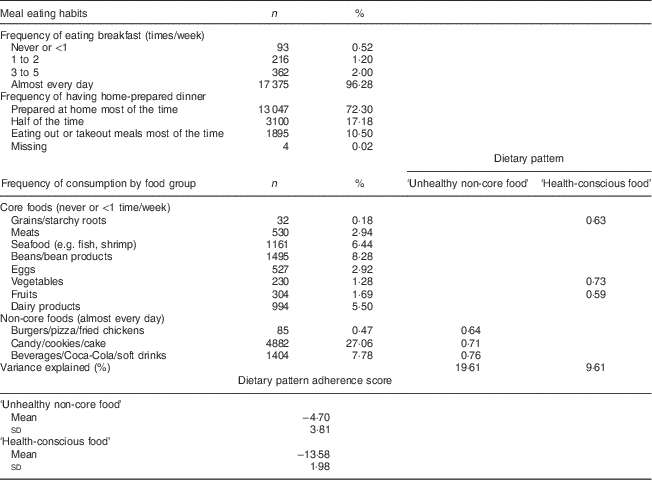
Foods are consumed in combination and there is usually a high correlation between consumption of certain nutrients or foods. Traditional focus on single nutrients or food groups in nutritional epidemiology therefore ignores the complex nature of the human diet and fails to depict the overall diet that is more useful in examining its linkage with a variety of health outcomes( Reference Hu 30 ). Owing to this concern, dietary pattern analysis – with which combinations of multiple food components by consumption frequency and/or amount are identified to capture the characteristics and habits of diet – has therefore been proposed( Reference Hu 30 , Reference Panagiotakos 31 ). Two major approaches can be used to derive dietary patterns. A variable-based approach involves grouping food variables into a reduced dimensionality reflecting major dietary traits, while an individual-based approach places study subjects into distinct groups with regard to shared characteristics of food consumption( Reference Kant 32 ). The present study was based on a variable approach using principal component analysis because it allows the comparison of individual variation in food consumption level and has been the most widely applied method in dietary pattern analysis( Reference Hu 30 , Reference Hoffman, Schulze and Schienkiewitz 33 – Reference Smith, Emmett and Newby 35 ). To assess children’s diet, the respondents were asked to rate ‘How often does your child eat the following foods?’, with eleven food groups presented: (i) meats; (ii) seafood such as fish and shrimp; (iii) beans/bean products; (iv) eggs; (v) grains/starchy roots; (vi) vegetables; (vii) fruits; (viii) dairy products; (ix) burgers/pizza/fried chicken; (x) candy/cookies/cakes; and (xi) beverages/Coca-Cola/soft drinks (tea, coffee and mineral water not included). The first eight items covered basic food groups defined in the Daily Dietary Guidelines for Taiwanese( 36 ), while the other three items were chosen as they are common processed and snack foods high in fat or sugar. Ratings were on a five-point frequency scale including ‘never’, ‘less than once per week’, ‘1 to 2 times per week’, ‘3 to 5 times per week’ and ‘every day’. Using the five ordinal levels of food group consumption, principal component analysis with varimax was conducted to generate the dietary patterns. The Kaiser–Meyer–Olkin value was 0·70 and the Bartlett’s test for sphericity was highly significant. Four components with an eigenvalue ≥1 were extracted, accounting for 53·15 % of total variance. Two dietary patterns were of special attention (Table 1): one represented an ‘unhealthy non-core food’ pattern (eigenvalue=1·56) characterized by high intakes of burgers/pizza/fried chicken, candy/cookies/cakes and beverages/Coca-Cola/soft drinks; while the other was characterized as a ‘health-conscious food’ pattern (eigenvalue=1·42) with high intakes of vegetables, fruits, grains/starchy roots. Regression-based component scores as a linear combination of food group consumption were computed for each component to represent dietary pattern scores. A greater dietary pattern score indicated that the child more frequently consumed the foods of that specific dietary pattern.
Descriptive statistics for eating behaviours and food group consumption, and dietary patterns derived by principal component analysis with factor loadings, in 5-year-old pre-school children (n 18 046) in dual-parent households, Taiwan Birth Cohort Study
Sociodemographic covariates
A set of child and family sociodemographic characteristics previously found to be associated with children’s dietary patterns( Reference Patrick and Nicklas 2 , Reference Kieft-de Jong, de Vries and Bleeker 7 – Reference Mak, Prynne and Cole 8 , Reference Rosenkranz and Dzewaltowski 10 ) were controlled for in the analytical models. These variables included the child’s sex, paternal and maternal education (formal schooling ≤9, 10–12 and ≥13 years), family monthly income (<30 000, 30 000–69 999 and ≥70 000 New Taiwan Dollars), pre-school attendance and family informal care resources indicated by the co-residence of any adult(s) in addition to parents in the household.
Statistical analyses
Multiple regression analysis was performed to examine the relationship between parental work characteristics and children’s diet quality using the statistical software package SAS version 9.4. Regression was performed for parental combined work schedules and long work hours on the outcome variables (Model 1) and further adjusted for covariates (Model 2) to reduce potential confounding and selection biases. Logistic regression was applied to estimate the OR and 95 % CI for optimal eating habits (eating breakfast every day and having home-prepared dinner most of the time), whereas multiple linear regression models were fitted for predicting children’s dietary patterns (‘unhealthy non-core food’ and ‘health-conscious food’ dietary pattern scores).
Results
Subjects’ characteristics
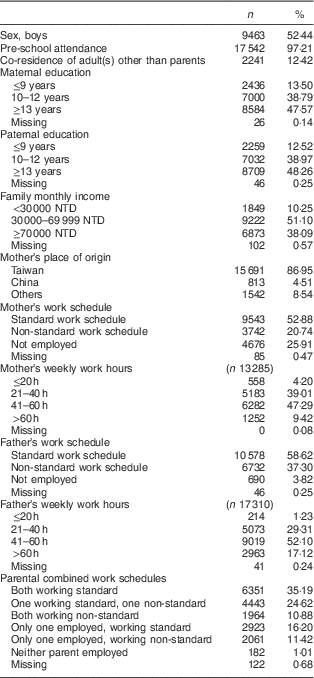
Table 2 presents the sociodemographic characteristics of subject children and their parents. Of the subjects, 52·44 % were boys, the majority (97·21 %) went to childcare and 12·42 % had at least one adult other than parents residing in the household. Almost half of the mothers (47·57 %) and fathers (48·26 %) had completed some college education. Of the mothers, 13·05 % were foreign-born (4·51 % from China and 8·54 % from South-East Asian or other countries) and were mainly marriage migrants.
Characteristics of the study population of 5-year-old pre-school children (n 18 046) and their parents in dual-parent households, Taiwan Birth Cohort Study
NTD, New Taiwan Dollars.
Parental work characteristics
As shown in Table 2, about a quarter (25·91 %) of mothers and only 3·82 % of fathers in dual-parent households were unemployed. Parents working non-standard schedules was not uncommon (20·74 % for mothers and 37·30 % for fathers) and the rates of working over 40 h weekly were 56·71 % for employed mothers and 69·22 % for employed fathers. The data combining parental work schedules indicated that having both parents working standard schedules was most prevalent (35·19 %), followed by one working standard and one non-standard (24·62 %), and finally both parents working non-standard schedules (10·88 %).
Children’s diet quality
Table 1 shows the descriptive statistics for meal eating habits and food group consumption among 5-year-old children in the present study. Most children (96·28 %) ate breakfast almost every day and 72·30 % had home-prepared dinner most of the time. For the consumption of core foods, the proportions of children reported with a frequency of ‘never’ or ‘less than once per week’ were generally low and highest for beans/bean products (8·28 %), seafood (6·44 %) and dairy products (5·50 %). With respect to non-core foods, a rather small group (0·47 %) of children had burgers/pizza/fried chicken almost every day, while over a quarter (27·06 %) reported having candy/cookies/cake daily. The dietary pattern scores were in the range of −13·58 to 1·98 for the ‘health-conscious food’ pattern and −4·70 to 3·81 for the ‘unhealthy non-core food’ pattern.
Logistic regression analyses: meal eating behaviours
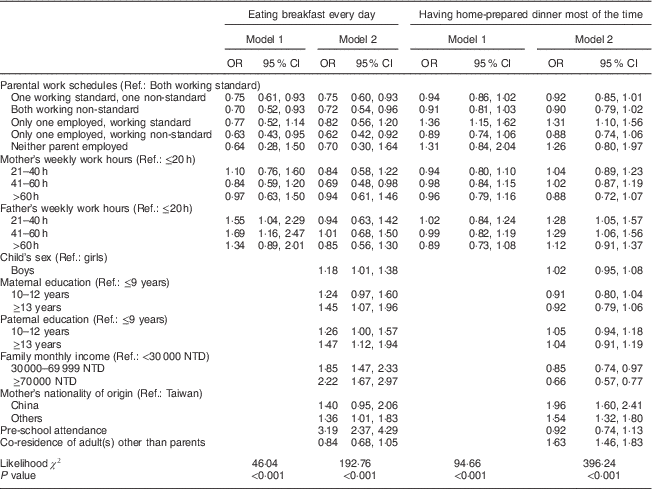
Table 3 presents the results from logistic regression analyses of parental work schedules and work hours on children’s breakfast habits. Model 1 shows that children with at least one parent working non-standard schedules were significantly less likely to eat breakfast every day than those whose parents both worked standard schedules. Father’s long weekly working hours at 41–60 h, as compared with ≤20 h, was associated with an increased likelihood of the child having breakfast every day. After adjustment for sociodemographic covariates in Model 2, the associations between parental work schedules and children’s breakfast habits remained. The OR were 0·75 (95 % CI 0·60, 0·93) for children with one parent working standard and the other non-standard, 0·72 (95 % CI 0·54, 0·96) with both parents working non-standard and 0·62 (95 % CI 0·42, 0·92) for those with only one parent employed and working non-standard schedules. The work hours of the father were no longer associated with the child’s breakfast eating habits, while mother’s long work hours (41–60 h/week) became significantly predictive of the child not having breakfast every day (OR=0·69, 95 % CI 0·48, 0·98).
Logistic regression analysis of parental work schedules and meal eating habits; unadjusted and adjusted OR and 95% CI for eating breakfast every day and having home-prepared dinner most of the time among 5-year-old pre-school children (n 18 046) in dual-parent households, Taiwan Birth Cohort Study
Ref., reference group; NTD, New Taiwan Dollars.
As shown in Table 3 (Model 1), the likelihood of children having home-prepared dinner most of the time was greater for those with only one parent employed and working standard schedules than for those whose parents both worked standard schedules. In the adjusted Model 2, the above association remained statistically significant (OR=1·31, 95 % 1·10, 1·56). Interestingly, longer work hours of fathers were significantly associated with increased odds of children having home-prepared dinner (21–40 h: OR=1·28, 95 % CI 1·05, 1·57; 41–60 h: OR=1·29, 95 % CI 1·06, 1·56), while mother’s work hours were not found to be a significant predictor.
Linear regression analyses: dietary patterns
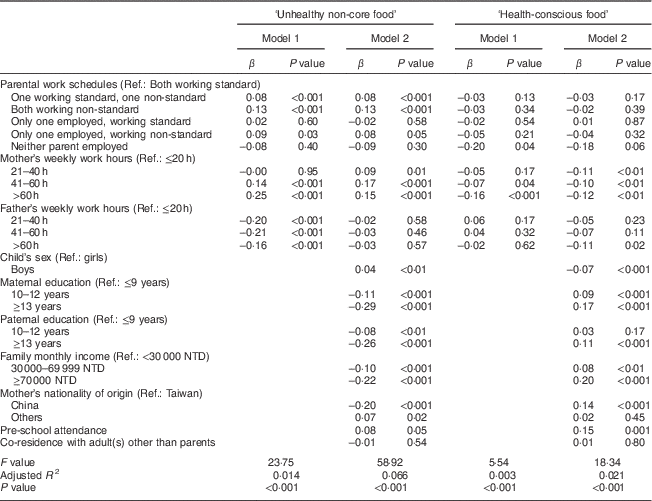
Table 4 shows the results of multiple linear regression analyses examining the association between parental work schedules and the children’s dietary patterns. As indicated by both unadjusted models (Model 1), parental work schedules and work hours could predict children’s consumption of unhealthy non-core food and health-conscious food. After children’s sex and family sociodemographic characteristics were controlled for (Model 2), having at least one parent working non-standard schedules was significantly associated with higher ‘unhealthy non-core food’ pattern scores compared with having parents both working standard schedules. The regression coefficients were 0·13 (P<0·001) for children with both parents working non-standard schedules and 0·08 with one parent working standard and the other non-standard schedules (P<0·001) as well as with only one employed and working non-standard schedules (P=0·05). However, parental work schedules became non-significantly associated with ‘health-conscious food’ pattern scores. In addition, compared with children whose mothers worked no more than 20 h weekly, those with mothers who had longer weekly work hours scored significantly higher on the ‘unhealthy non-core food’ dietary pattern (21–40 h: β=0·09, P=0·01; 41–60 h: β=0·17, P<0·001; >60 h: β=0·15, P<0·001), but lower on the ‘health-conscious food’ dietary pattern (β=−0·10 to –0·12, P<0·01).
Regression analysis of parental work schedules and dietary patterns; unstandardized β coefficients and P values for ‘unhealthy non-core food’ and ‘health-conscious food’ dietary scores among 5-year-old pre-school children (n 18 046) in dual-parent households, Taiwan Birth Cohort Study
Ref., reference group; NTD, New Taiwan Dollars.
Discussion
Main findings
The present study demonstrated significant associations between parental work schedules and diet quality among pre-school children after adjustment for sociodemographic covariates in a population sample of 5-year-olds in Taiwan.
When either or both parents worked non-standard schedules, their pre-school children tended to consume more unhealthy non-core foods and not to eat breakfast every day. The results echoed previous literature in relation to use of fast-food restaurants among school-aged children( Reference McIntosh, Kubena and Tolle 22 ). Parents may work at non-standard times for various reasons, fulfilling structural demands of the labour market or serving as a strategy to meet child caregiving needs( Reference Strazdins, Clements and Korda 37 ). Despite the reasons, reviews of empirical studies have concluded that if the parents have non-standard work schedules, there are negative effects on a range of behavioural and health outcomes of their children. This presumably is mediated by parents’ time, mental health, work–family stress, parent–child interactions and parenting( Reference Li, Johnson and Han 24 , Reference Cho and Ciancetta 38 ). As examples relevant to children’s diets, non-standard work arrangements pose challenges for parents to support family routines such as preparing meals at regular times and having meals together, or to monitor the child’s food intake consistently. This may result in children being more likely to resort to snack foods as a meal alternative or to have fast foods for convenience. Nevertheless, in the present study, parental non-standard work schedules did not predict lower scores on the health-conscious dietary pattern in their children. This finding was in line with earlier studies suggesting differences in determinants of consumption between healthy and unhealthy non-core foods( Reference McGowan, Croker and Wardle 5 , Reference Kieft-de Jong, de Vries and Bleeker 7 ). Nearly all children in the present study went to a pre-school where nutritionally balanced meals were provided and regulated by law( 39 ). This could be one of the reasons why having a parent with a non-standard work schedule did not interfere with young children having an adequate fruit and vegetable intake.
As for predictions based on parental work hours, having a mother who worked long hours was significantly associated with poorer diet quality in children, reflected by being less likely to eat breakfast, consuming more unhealthy non-core foods and less healthy foods. This can be anticipated because longer work hours of parents can indicate that less time is available for meal planning, preparation and food shopping( Reference Bauer, Hearst and Escoto 17 , Reference Cho and Ciancetta 38 ), especially for mothers who carry out relatively more housework duties in current Taiwanese society( Reference Qian and Sayer 40 ). However, the relationship was not described by a typical dose–effect curve. People working long hours constitute a heterogeneous group with respect to their sociodemographic status, work conditions and employment type( Reference Grosch, Caruso and Rosa 41 ). For example, compared with paid employees, the self-employed or those working in a family business are more likely to put in long hours but have greater flexibility in the timing and location of work for work–family balance( Reference Hill, Hawkins and Ferris 42 , Reference Baines and Gelder 43 ). This may explain why the highest bracket of mother’s work hours (i.e. >60 h/week) may not necessarily predict poorest diet in children.
Another finding of note was that mother’s long work hours did not predict children being less likely to eat home-prepared dinner. Time constraint due to labour force participation of married women has long been the dominant explanation for the decline in home meal preparation. However, more recent literature on the decision of dinner preparation at home pointed to a more complex picture in relation to such factors as the food market (e.g. availability of convenience food products, fast-food restaurants) and personal attitudes (e.g. enjoyment or self-efficacy of cooking, cost-effectiveness of preparing meal at home v. eating out)( Reference Virudachalam, Long and Harhay 28 , Reference Jabs and Devine 44 , Reference Robson, Crosby and Stark 45 ). All these may contribute to mothers’ practices of home dinner preparation regardless of their work hours.
It is also worthy of attention that mother’s nationality of origin was consistently related children’s diet quality, with a higher likelihood of having home-prepared dinner for children of non-Taiwanese mothers the most pronounced finding. Mothers not originally from Taiwan were mainly migrants from less developed countries (e.g. China, Vietnam and Indonesia) married to socially or functionally disadvantaged men in Taiwan( Reference Wu, Bradley and Chiang 46 ). Because family socio-economic covariates were controlled for in the regression models, the finding may be more appropriately attributed to cultural explanations in relation to health beliefs, values placed on family meals and representation of domestic female roles( Reference Bugge and Almås 47 , Reference Marquis and Shatenstein 48 ). An in-depth discussion of this finding is beyond the scope of the present study and can be further addressed in future research.
Strengths and limitations
Strengths of the current study include the use of a large-scale representative birth cohort with high response rates in all follow-up surveys, which rendered it possible to investigate different combinations of parental work schedules and to secure the generalizability of the findings. Another strength relates to the expanded scope that captures various work characteristics of both fathers and mothers. Previous studies focused largely on maternal employment and limited aspects of the employment status (e.g. employed v. unemployed and full-time v. part-time employment).
Such a research framework should provide more useful insights given the globalized and increasingly market-driven world economy as well as a growing emphasis on the paternal role in child rearing.
However, the present study is not without limitations and the first concerns the definition of non-standard work schedules of parents. Conceptually, non-standard work schedules refer to work hours not fitting in a typical daytime, five-day working week (Monday to Friday), which can include evening shifts, night shifts, rotating shifts, weekend work and irregular hours( Reference Li, Johnson and Han 24 , Reference Cho and Ciancetta 38 ). In the present study, the survey question selected to measure parental work schedules asked only about day or/and night shifts in a day, but no information about weekend work or irregular hours was sought and recorded. Thus, the prevalence of parents who worked non-standard work schedules might have been underestimated. Second, dietary assessment of children by parental reporting could elicit socially desirable responses, potentially leading to biased estimates of association. With the existing survey data set, unfortunately, the study was not able to include any social desirability measures to adjust for potential biases. However, participants in the longitudinal study have had follow-up interviews at least twice, and they may not associate dietary assessment with specific disease status as in case–control studies. Social desirability bias in such a case could be less of a concern( Reference Hebert, Clemow and Pbert 49 ).
Policy implications and future research
Parental work is a key social determinant of child health, yet it has not drawn sufficient attention( Reference Li, Mattes and Stanley 50 ). How parental work characteristics are linked to the quality of their children’s diets, particularly in the pre-school years when eating habits are shaped, remains even less explored. The present findings highlight the negative effects of parents’ non-standard work schedules and long work hours on both meal eating habits and dietary intake of children, with family sociodemographic factors held constant. Multifaceted policy efforts should be geared towards supporting both parents so as to create healthier family food environments. This can be achieved by giving parents greater control and choices over work times( Reference Strazdins, Clements and Korda 37 ), placing limits on work hours( Reference Bianchi and Milkie 51 ), coordinating after-school care and community resources during parents’ non-standard work hours( Reference Li, Johnson and Han 24 ), and enhancing the education of parents about childhood nutritional and health needs. Future research is needed to disentangle the interplay between parental work characteristics and diet quality of young children as modified by contextual factors such as family income and after-school care arrangements. Further application of longitudinal panel data will also help to elucidate the causal mechanisms linking parents’ work characteristics and family food environments that are critical to the diet quality and dietary behaviour of young children.
Acknowledgements
Acknowledgements: This study was based on longitudinal data from the Taiwan Birth Cohort Study, funded by the Health Promotion Administration, Ministry of Health and Welfare. The author gratefully acknowledges the time and continuing support from the participating families. Financial support: This research received no specific grant from any funding agency in the public, commercial or not-for-profit sectors. Conflict of interest: None. Authorship: The sole author, J.C.L.W. formulated the research questions, designed the study, analysed the data, interpreted the results and wrote the manuscript. Ethics of human subject participation: This research used data of a longitudinal survey study which was conducted according to the guidelines laid down in the Declaration of Helsinki and all procedures involving human subjects were approved by the Institutional Review Board of the Directorate-General of Budget, Accounting, and Statistics, Executive Yuan (No. 94-C3-09400005257). Written informed consent was obtained from all survey respondents.



