


Breakfast consumption is known as an important indicator of a healthy lifestyle and its regular use has excellent effects on physical and psychosocial well-being( Reference Rampersaud, Pereira and Girard 1 ). Breakfast consumption is also related to healthier food choices, reduced risk of becoming overweight or obese, decreased incidence of chronic degenerative diseases such as type 2 diabetes or CVD, and improved cognition and learning among adolescents( Reference Matthys, De Henauw and Bellemans 2 – Reference Gajre, Fernandez and Balakrishna 5 ). It has been found that those students who eat breakfast have better maths scores, fewer absences from school and fewer behavioural problems( Reference Kleinmann, Hall and Green 6 ). However, despite the importance of breakfast, young people often skip breakfast more than other meals( Reference Sjoberg, Hallberg and Hoglund 7 ). According to a recent review of worldwide studies about breakfast consumption in 2010, the percentage of breakfast skipping was reported variably from 1·7 % in Croatia to 30·0 % in Brazil( Reference Mullan and Singh 8 ). The rate for female Iranian school-aged students was estimated as approximately 20·8 %( Reference Ettehad, Nemati and Daryani 9 ).
Sex (girls are more likely to skip breakfast than boys), age, dissatisfaction with body image and weight control, perceived time constraints and low socio-economic status are known as the most important risk factors of breakfast skipping among adolescents( Reference Rampersaud, Pereira and Girard 1 , Reference Videon and Manning 10 – Reference Unusan, Sanlier and Danisik 12 ). Nutrition education is a well-established intervention in promoting sustainable healthy eating behaviours( Reference Foerster, Heimendinger and DiSogra 13 ). Teens who take advantage of nutrition and health education can be treated as change agents who spread the messages to a wide section of society( Reference Vijayapushpam, Antony and Rao 14 ). Hence, due to access to a large number of teenagers at a time, numerous efforts to develop changes in dietary behaviours have been conducted with schoolchildren, and in this context interventions to enhance breakfast consumption have been associated with success( Reference Rampersaud, Pereira and Girard 1 , Reference Moore, Moore and Tapper 15 ). A previous literature review also denoted educational strategies directly relevant to a behavioural focus and theory-driven strategies among the elements conducive to successful programmes( Reference Pérez-Rodrigo and Aranceta 16 ).
One of the models used in changing behaviour is Pender's Health Promotion Model (HPM). Pender's HPM is an attempt to illustrate the multidimensional nature of individuals interacting with their interpersonal and physical environments as they pursue health( Reference Pender, Murdaugh and Parsons 17 ). The model includes three basic components that influence health-promoting behaviour: (i) individual characteristics and experiences (prior related behaviour and personal factors); (ii) behaviour-specific cognitions and affect (perceived benefits of action, perceived barriers of action, perceived self-efficacy, situational influences, interpersonal influences and activity-related affect); and (iii) desirable health promotion behaviour (commitment to a plan of action and immediate competing demands and preferences)( Reference Pender, Murdaugh and Parsons 18 ). Although Pender's HPM is recommended for improving adolescent behaviour( Reference Guthrie, Loveland-Cherry and Frey 19 ), few studies have used this model for promoting healthy behaviour among adolescents( Reference Taymoori, Niknami and Berry 20 , Reference Guedes, Moreira and Cavalcante 21 ).
Therefore, given the advantages of nutrition education in changing the eating patterns and habits of adolescents( Reference Jenkins and Horner 22 ) and the lack of intervention studies in this field, the present study was undertaken to examine the effect of nutrition education intervention based on Pender's HPM in improving the frequency and nutrient intake of breakfast consumption among female Iranian students.
Method
Study participants and setting
The study was carried out among 100 female middle-school students in Qom, Iran, during April–June 2011. Given the estimated sample size, two middle schools were randomly selected. Then, fifty students were randomly selected from each school and assigned to the experimental group (recipient of classroom nutrition education plus designed nutrition education based on Pender's HPM) or the control group (recipient of classroom nutrition education). The two groups received the usual classroom nutrition education by a health instructor who had passed the nutrition training courses. Inclusion criteria in the study were: the student's agreement to participate, ability to read and write Farsi, residency in Qom city and studying in the 7th grade.
The study was conducted according to the guidelines laid down in the Declaration of Helsinki and all procedures involving human subjects were approved by the Ethic Committee of the Tehran University of Medical Sciences. All students were informed about the study and written consent was obtained from each of them. None of the participants refused to take part in the study. It is worth mentioning that in Iran, breakfast is not served at school.
Study instrument and measures
Demographic characteristics and Pender's HPM constructs were measured by means of a self-administered questionnaire. This questionnaire was elaborated and developed by the study researchers and included demographic characteristics and items related to the HPM. To develop the HPM items, we surveyed the related literature (especially the HPM manual( Reference Pender 23 )) and interviewed ten female students to collect their opinions concerning breakfast consumption. Then, the twenty students who participated in the pilot study were asked to reflect on the simplicity, clarity and readability of the items of the instrument (face validity)( Reference Jenkinson and McGee 24 ). For improving clarity of the scale, unclear questions and minor wording errors were changed according to the students’ opinions. Approximately, eight questions were rewritten. Content validity of the instrument was assessed quantitatively. For this purpose, the scale was reviewed by an expert panel of ten specialists in health education and nutrition. The panel was asked to judge the necessity and relevance of the items in order to calculate the content validity ratio (CVR) and content validity index (CVI). The necessity of the items was assessed using a three-point rating scale: essential (E), useful but not essential (U) and not necessary (N). The relevance of the items was assessed using a four-point rating scale: not relevant (N), slightly relevant (S), relevant (R) and very relevant (V). Based on the experts’ opinions, CVI and CVR were calculated. CVR of the instrument as a whole was 0·93 in the present study. Since, according to the Lawshe table, an acceptable CVR for a ten-expert panel is 0·62( Reference Lawshe 25 ), CVR of the scale was considered acceptable. Also, the CVI of total scale was 0·89. Polit and Beck( Reference Polit and Beck 26 ) suggested 0·80 as the acceptable lower limit for the CVI. Therefore, CVI of the scale was acceptable. The internal consistency of the sub-scales was measured by Cronbach's α and test–retest correlation coefficients. The estimate of α ≥ 0·70 is considered satisfactory( Reference Cronbach 27 ). A correlation coefficient ≥0·61 was also considered satisfactory( Reference Landis and Koch 28 ).
Prior related behaviour
In the final format of the questionnaire, two categories of questions including past attempts for regular breakfast consumption (five items; e.g. ‘Have you ever slept early at night so you could eat breakfast in the morning?’) and learning experiences of them (five items; e.g. ‘When I had breakfast, I could learn more’) were used to measure prior related behaviour. These items were measured on a Likert scale ranging from 1 (= ‘never’) to 5 (= ‘always’). Cronbach's α for the past behaviour scale was 0·91.
Perceived benefits of breakfast eating
The initial scale contained seven items. After assessing CVI and following the experts’ opinions, one item (‘Eating breakfast is enjoyable’) was deleted because they believed that enjoyment is a positive affect regarding breakfast eating and not a perceived benefit. Finally, six items were used to measure perceived benefits (e.g. ‘Eating breakfast reduces the consumption of low-nutritional-value snacks’). These items were measured on a Likert scale ranging from 1 (= ‘completely disagree’) to 5 (= ‘completely agree’). Cronbach's α of this scale was 0·83.
Perceived barriers to eating breakfast
This scale contained nine items initially. After assessing Cronbach's α of the initial scale (0·79), one item (‘There is nothing to eat for breakfast at home’) was deleted. Finally, eight items were used to measure perceived barriers (e.g. ‘I don't feel like eating breakfast early in the morning’). Items in this construct were measured on a Likert scale ranging from 1 (= ‘completely disagree’) to 5 (= ‘completely agree’). Cronbach's α of the final scale of perceived barriers was 0·80.
Perceived self-efficacy
Eight items were used to measure perceived self-efficacy (e.g. ‘I can plan my schedule in a way to have breakfast every day’). Items in this scale were measured on a Likert scale ranging from 1 (= ‘completely unconfident’) to 5 (= ‘completely confident’). Cronbach's α of this scale was 0·79.
Positive affect
Two items were used to measure positive affect (e.g. ‘Eating breakfast is enjoyable to me’). Items of this scale was measured on a Likert scale ranging from 1 (= ‘completely disagree’) to 5 (= ‘completely agree’). Cronbach's α of the positive affect scale was 0·88.
Negative affect
Two items were used to measure negative affect (e.g. ‘Eating breakfast is boring to me’). Items in this scale were measured on a Likert scale ranging from 1 (= ‘completely disagree’) to 5 (= ‘completely agree’). Cronbach's α of this scale was 0·87.
Interpersonal influences
Two categories of question including the person who expects (five items; e.g. ‘Does your mother expect you to eat breakfast every day?’) and encourages (five items; e.g. ‘Does your mother encourage you to eat breakfast regularly?’) the student to eat breakfast were used to measure interpersonal influences. These items were measured on a Likert scale ranging from 1 (= ‘never’) to 5 (= ‘always’). Cronbach's α for the interpersonal influences scale was 0·74.
Situational influences
Three items were used to measure situational influences (e.g. ‘I enjoy eating breakfast at school’). The items were measured on a Likert scale ranging from 1 (= ‘completely disagree’) to 5 (= ‘completely agree’). Cronbach's α for this scale was 0·78.
Immediate competing demands and preferences
Four items were used to measure competing demands and preferences (e.g. ‘I prefer to eat low-nutritional-value snacks instead of breakfast’). These items were measured on a Likert scale ranging from 1 (= ‘never’) to 5 (= ‘always’). Cronbach's α for the competing demands scale was 0·89.
Commitment to planning for breakfast eating
Five items were used to measure commitment to a plan of action (e.g. ‘How much are you committed to set your alarm clock for getting up early in the morning?’). These items were measured on a Likert scale ranging from 1 (= ‘never’) to 5 (= ‘very often’). Cronbach's α for this scale was 0·82.
Behavioural outcome
One item measured the weekly frequency of breakfast consumption using the question: ‘How many times during the week do you eat breakfast?’ The test–retest correlation coefficient with twenty female students (with a 2-week interval between the tests) for this scale was equal to 0·88 (P < 0·5). Also, the intakes of macro- and micronutrients of breakfast consumption were assessed using a 3 d breakfast record.
Nutrition education intervention
The questionnaire was completed by the two study groups (experimental group, control group) and a nutrition education intervention was designed according to the analysis of pre-test results of both groups.
The results of pre-tests showed that no desire to eat food in the morning or being alone, a lack of variety in breakfast meals, being in rush to go to school and a tendency to sleep during the morning hours were the most important perceived barriers to eating breakfast among the students (perceived barriers). Participants had little agreement with the positive effect of breakfast consumption on reducing obesity or eating snacks with little or no nutritional value and improving mood (perceived benefits). A small percentage of students were confident that they can adjust their schedule for eating breakfast before 08.00 hours. Also, students had low perceived self-efficacy for sleeping in the early hours of the night, eating breakfast alone and eating a supper (perceived self-efficacy). About half of the students stated that eating breakfast is boring and not enjoyable (behavioural-specific cognition and affect). Mothers and teachers were encouraging the students to eat a healthy breakfast regularly (interpersonal influences). Most students expressed that they prefer to eat breakfast first in front of the television (TV) at home and then at school, respectively (situational influences). The tendency to sleep more in the morning, enjoying eating low-nutritional-value snacks instead of breakfast, staying awake until midnight for watching TV and being worried about attending school on time were the most immediate competing demands and preferences for breakfast consumption (immediate competing demands and preferences). Commitment of the students to activities such as preparing their school bag at night, going to bed early at night, habituating themselves to eat breakfast, waking up early, setting their alarm clock the night before and consumption of varied breakfast meals was not adequate (commitment to a plan of action). Students' past attempts for eating breakfast included going to bed early at night, preparing the school bag at night and waking up early. As a result of eating breakfast, students learned experiences such as being alert, better mood and more concentration. Also, intakes of most macro- and micronutrients (such as vitamin A, vitamin C, Ca, niacin, vitamin B6, vitamin B12, dietary fibre) were lower than the standard requirements among the students. These findings were considered when designing training sessions.
The nutrition education intervention designed based on Pender's HPM for the experimental group included four 45–60 min training sessions over four weeks. The interval between the sessions was 7 d. During the sessions, students were divided into small groups and each of them did activities such as surfing the Internet, designing posters and role-playing about aspects of breakfast consumption. Groups also competed with each other to achieve better results. The first training session was an introduction to the importance of breakfast consumption for students and the benefits of and barriers to eating breakfast. One booklet about the importance and benefits of breakfast consumption, barriers to breakfast consumption and ways to overcome them was given to the students in the experimental group. In the second session, students in the experimental group were provided with information about a healthy balanced breakfast and the necessity to consume foods with high nutritional value – such as milk and dairy products, fruit, vegetables and eggs – for the breakfast meal. Also, the standard guideline on daily food intake for 13-year-old schoolgirls was given to the students. Specific guidance considering the recommended practical steps for regular breakfast consumption (e.g. eating supper, sleeping in the early hours of the night, preparing the school bag at night, setting the alarm clock the night before and waking up early) was given to students in the experimental group. They were also requested to practise these activities at home, record the results on a form and keep the form with them for use in future sessions. Their performance was reviewed at the beginning of the following session, enabling them for a discussion of problems and encouragement to practice. The third session focused on strategies to increase perceived self-efficacy for breakfast eating. During a group discussion session, students who ate breakfast regularly shared their positive experiences with other participants. Meanwhile, practical and step-by-step strategies for eating breakfast regularly were given to the students. Through verbal persuasions, students were assured that they can eat breakfast regularly. Since the pre-test results showed that students recognized school as a desirable place for eating breakfast, students brought breakfast to the school and ate it together in the fourth session.
One training session was also held for the teachers. This educational session focused on the role of breakfast in improving cognition and learning of school-aged children. We wanted them to remind students and their families about eating breakfast. One pamphlet was given to everyone. Also, one training session was conducted for the participants’ mothers. In this session, a nutrition expert taught mothers how to prepare and improve the quality of students’ breakfast consumption pattern. Finally, the mothers were given a pamphlet about these issues.
At the end of the training sessions, students received a multimedia CD. It consisted of stories, movies, happy music and games about breakfast consumption. The usual classroom nutrition education of both schools included educational sessions (two times in the month) with a focus on nutrition knowledge, modification of unhealthy dietary habits such as skipping the breakfast meal and eating healthy foods in the breakfast, lunch and dinner meals instead of unhealthy food. The two groups received the usual classroom nutrition education by a health instructor who had attended a nutrition training course. The two groups were followed up 1 month after the intervention and the post-test survey was administered to them.
Statistical analyses
The data were analysed using the SPSS statistical software package (English version). Food intake analysis was done with the Food Processor 2 program. The homogeneity of baseline data in demographic characteristics of the two groups was analysed by χ 2 and independent-samples t tests. Normality of the data was also examined through the Kolmogorov–Smirnov test. Since the data were normally distributed, differences in Pender's HPM constructs, the frequency and the nutrient intake of breakfast consumption between, before and after the intervention in each group were tested using Student's paired-samples t test. Differences in Pender's HPM constructs, the frequency and the nutrient intake of breakfast consumption between the groups were also tested using independent-samples t tests. Correlation of weekly frequency of breakfast consumption with Pender's HPM constructs was analysed through Pearson correlation analysis. Data are expressed as means and standard deviations, and P < 0·05 was considered significant.
Results
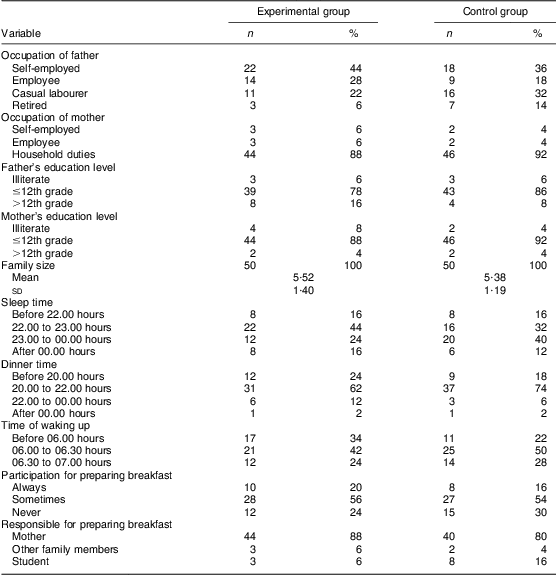
All of the participants were 13 years old. Before the nutrition education intervention, no significant differences were found between the two groups for any of the demographic characteristics, Pender's HPM constructs, and the weekly frequency or the nutrient intake of breakfast consumption. Table 1 shows the demographic characteristics of the students. Results indicated that the experimental group reported a significant increase in perceived benefit, self-efficacy, positive activity-related affect, interpersonal influences, situational influences, commitment to a plan of action and weekly frequency of breakfast consumption compared with the control group after the intervention. In addition, there were significant reductions in immediate competing demands and preferences, perceived barriers and negative activity-related affect constructs in the experimental group compared with the control group after the educational intervention (Table 2). Correlation analysis of the weekly frequency of breakfast consumption with each of Pender's HPM constructs (Table 3) showed that in both groups, before and after the intervention, there were significant associations between Pender's HPM constructs and frequency of breakfast consumption. Table 4 shows the mean energy and macro- and micronutrient intakes of breakfast consumption and comparisons with the recommended daily allowances (RDA) in the two groups before and after the intervention. The percentage of the RDA met for protein, dietary fibre, thiamin, niacin, pyridoxine, folate, pantothenic acid, vitamin E, Fe, P and Zn showed significant improvement in the experimental group compared with the control group following the intervention.
Descriptive statistics of participant characteristics according to study group: female students (n 100) attending two middle schools in average-income areas of Qom, Iran, April–June 2011
Comparison of constructs of Pender's Health Promotion Model and weekly frequency of breakfast consumption before and after the intervention according to study group: female students (n 100) attending two middle schools in average-income areas of Qom, Iran, April–June 2011
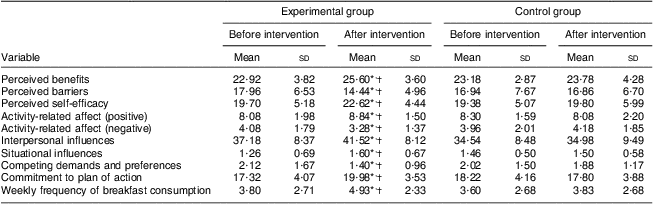
Mean values were significantly different from those of the control group (independent-samples t test): *P < 0·05.
Mean values were significantly different from those before the intervention (paired-samples t test): †P < 0·05.
Correlation of weekly frequency of breakfast consumption with each of construct of Pender's Health Promotion Model before and after the intervention according study group: female students (n 100) attending two middle schools in average-income areas of Qom, Iran, April–June 2011
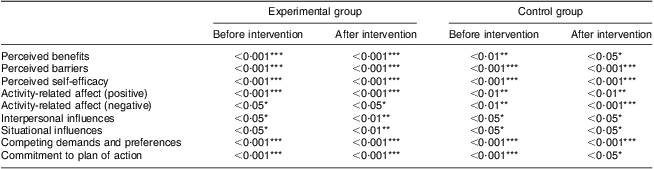
Correlation was significant: *P < 0·05, **P < 0·01, ***P < 0·001
Energy and macro- and micronutrient intakes of breakfast consumption and comparisons with the recommended daily allowances (RDA) before and after the intervention according to study group: female students (n 100) attending two middle schools in average-income areas of Qom, Iran, April–June 2011
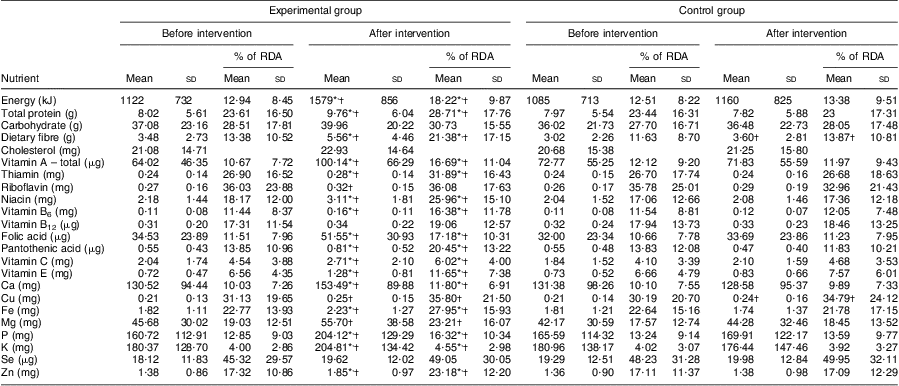
Mean values were significantly different from those of the control group (independent-samples t test): *P < 0·05.
Mean values were significantly different from those before the intervention (paired-samples t test): †P < 0·05.
Discussion
The present study demonstrated that the effect of a nutrition education intervention designed based on Pender's HPM constructs plus usual classroom nutrition education on increasing frequency of breakfast consumption among female students was more significant than that of nutrition education training alone (usual classroom nutrition education). To our knowledge, the effectiveness of nutrition education intervention for students based on Pender's HPM has not been widely studied.
However, our findings are consistent with those of Frenn et al. ( Reference Frenn, Malin and Bansal 29 ). Also, Kothe et al. ( Reference Kothe, Mullan and Amaratunga 30 ) reported that performing nutrition interventions based on theory is essential to improving the frequency of breakfast consumption and its quality among students. In the present study, it was observed that the experimental group had higher self-efficacy scores towards regular breakfast consumption than the control group after the intervention. We found that perceived barriers had a negative correlation with self-efficacy for breakfast eating and also had a negative correlation with frequency of breakfast eating among the students in the two groups before and after the intervention. Following the nutrition education intervention, the perceived barriers of students in the experimental group decreased significantly compared with the control group. Higher self-efficacy results in fewer perceived barriers in performing a target behaviour( Reference Pender, Murdaugh and Parsons 18 ). This finding is consistent with Bruening et al. ( Reference Bruening, Kubik and Kenyon 31 ). The claim that researchers should focus on interventions to address anticipated barriers to breakfast eating as a way to increase self-efficacy among students can be accepted.
It was interesting to find that the intervention effect on mean score of perceived benefits of consuming breakfast in the experimental group was drastic, with a significant increase from a mean of 22·9 (sd 3·8) at baseline to 25·6 (sd 3·6) at 4-week follow-up since the intervention. Reddan et al. ( Reference Reddan, Wahlstrom and Reicks 32 ) reported that students believed eating breakfast may help to increase energy and to enhance attention in school. So, in order to increase the effect of nutrition education interventions, an emphasis on increasing the knowledge of students and their parents about positive or reinforcing consequences of breakfast eating seems necessary.
The present results also demonstrated that the nutrition education intervention was able to increase the mean score of situational influences in the experimental group compared with the control group after the intervention. This construct can decrease or increase commitment to or participation in health behaviour( Reference Pender, Murdaugh and Parsons 18 ). This construct contains items about pleasurable place and atmosphere for breakfast consumption. So, the pre-test results showed that students reported that the most pleasant place for breakfast eating was in front of the TV at home especially. This finding is consistent with Le Bigot Macaux( Reference Le Bigot Macaux 33 ), who reported that students like to eat breakfast, afternoon snacks and evening meals in front of the TV. Since watching TV itself could act as a cue to eating more foods that are high in energy and fat( Reference Gore, Foster and DiLillo 34 ), training families to avoid eating food in front of the TV and to provide interesting and supportive home environments for eating breakfast for their children is essential. According to students’ report, the second desirable environment for breakfast consumption was school. Previous studies have demonstrated that school breakfast programmes can improve breakfast composition and the intakes of macro- and micronutrients( Reference Dwyer, Hewes and Mitchell 35 , Reference Ward 36 ). Therefore, encouraging school administrators and other policy makers to fund and support free and low-price breakfast in school is a practical strategy for increasing regular breakfast eating among students. The present study showed that, compared with the control group, there was a significant improvement in the mean score of interpersonal influences in the experimental group after the intervention. Most of the participants said that first their mother and then their teachers had a dominant role in encouraging them towards regular breakfast consumption and increasing nutrient intakes. Hallstrom et al. ( Reference Hallstrom, Vereecken and Ruiz 37 ) demonstrated that teens whose parents persuaded them to eat healthily were more likely to be regular breakfast consumers. Hallstrom et al. ( Reference Hallstrom, Vereecken and Ruiz 37 ) also reported that adolescents’ food choices at breakfast were more influenced by their parents. Moreover Pearson et al. ( Reference Pearson, Biddle and Gorely 38 ) suggested that, when designing programmes to promote healthy breakfast behaviour, parents should be encouraged to be positive role models for their children by targeting their own dietary behaviour.
Prior related behaviour is known as one of Pender's HPM constructs that influences beliefs, affect and behaviour of individuals( Reference Pender, Murdaugh and Parsons 18 ). In the present study, it was observed that the past related behaviour of students had a significant association with the frequency of breakfast eating, perceived self-efficacy, perceived benefits and barriers and positive feelings. Wong and Mullan( Reference Wong and Mullan 39 ) denoted that past behaviour is the most powerful predictor of breakfast consumption in the future. Since prior behaviour has indirect and direct effects on healthy behaviour( Reference Pender, Murdaugh and Parsons 18 ), it is necessary to attend more to past attempts of students (positive behavioural history) for eating breakfast and acquired experiences of them.
Immediate competing demands and preferences refer to other behaviours that intrude into consciousness as possible courses of action immediately prior to the intended occurrence of a planned behaviour( Reference Pender, Murdaugh and Parsons 18 ). In our study we observed a significant decrease in the average score of this construct in the experimental group compared with the control group after the intervention. The pre-test results showed that the tendency to sleep more in the morning, enjoying eating low-nutritional-value snacks instead of breakfast, staying awake until midnight for watching TV and being worried about attending school on time were the most competing demands to breakfast consumption. These factors should be identified and considered in nutrition interventions. The present findings also showed that, compared with the control group, there were significantly more positive feelings about consuming breakfast in the experimental group. In addition, these students’ negative feelings were significantly lower. This finding is consistent with Widenhorn-Müller et al. ( Reference Widenhorn-Müller, Hille and Klenk 40 ). We found that positive emotions had a positive correlation with perceived self-efficacy, commitment to a plan of action and frequency of breakfast consumption in both groups before and after the intervention. Interventions are needed to determine activity-related affects or positive and negative feelings associated with breakfast eating among other groups of students, such as male students, through qualitative and quantitative research.
Moreover, the intervention had significant effects on the intakes of macro- and micronutrients of breakfast consumption in the experimental group as compared with the control group, such that the mean intakes of protein, dietary fibre, thiamin, niacin, pyridoxine, folate, pantothenic acid, vitamin E, Fe, P and Zn improved significantly in the experimental group after the intervention. This finding is consistent with Allen et al. ( Reference Allen, Taylor and Kuiper 41 ) and Cox et al. ( Reference Cox, Anderson and Reynolds 42 ). It is noteworthy that despite the increase of energy, vitamin A, vitamin C and Ca intakes in the experimental group after the intervention, the intake amount is still inadequate and below the standards. It is recommended that breakfast should provide 25 % of the daily energy, vitamin A, vitamin C and Ca needs of a person( 43 ). What is suggested here is that more theory-based interventions should be conducted for increasing vegetable, fruit, natural juices and milk consumption at breakfast among female students. In the present study, intake of dietary fibre showed a significant improvement in the control group after the intervention compared with before the intervention. This finding showed that the usual classroom nutrition education had a significant effect on intake of this macronutrient; however, adding nutrition education intervention based on Pender's HPM constructs to the usual classroom nutrition education improved the intake of dietary fibre much more. This result is confirmed by Panunzio et al. ( Reference Panunzio, Antoniciello and Pisano 44 ) who emphasized the positive influence of the teacher in increasing fruit and vegetable consumption among students.
A limitation of present study is the small number of students. Also, the results are based on a small convenience sample of female students. Thus, the findings are not generalizable to other groups of students (e.g. those in other geographic areas or male students).
Conclusion
Adding nutrition education interventions based on Pender's HPM to usual classroom nutrition education in schools has major effects on increasing regular breakfast consumption and the nutrient intakes of this meal.
Acknowledgements
Sources of funding: The study was supported by the Tehran University of Medical Sciences, grant number 240/140. Conflict of interest declaration: There are no conflicts of interest. Authorship responsibilities: T.D. and T.R. initiated and designed the study. With the help of N.R., T.D. and T.R. designed and validated the scale. T.R. gathered the data. Data analysis of pre- and post-tests was done by T.R. and M.R.G. T.R. and T.D. designed and conducted the educational sessions. All co-authors made substantial contributions to data analysis and interpretation and writing of the manuscript.



