




I. PRECARIOUS RIGHTS OR “ARISTOCRATIC PRIVILEGE”?
Social Policy in India has emerged as an imaginable, if hardly appealing topic of historical research only recently. One reason for this delay may be that many of the policies and institutional forms of social security in postcolonial India do not seem to match Euro-American expectations: crucially, they have diverged from the proclaimed universalism of welfare policies in the centres of metropolitan capitalism in the period following World War II.Footnote 1 In terms of enforceability, “welfare” never became a universal social right or an integral attribute of citizenship in postcolonial India.Footnote 2 This blatant historical fact has facilitated the almost complete exclusion of India from existing scholarship on global welfarism, which, until recently, has been largely confined to the North Atlantic rim.Footnote 3 As we shall see, it has also led senior researchers of South Asian societies to make untenable historical claims, for instance that, at the time of independence, “the Indian project of what may loosely be called welfare was untouched by any of the contemporary debates on the subject”.Footnote 4
Such notions of an Indian disconnect from the twentieth-century global history of welfarism could be maintained more easily because, until the early 2000s, historians of South Asia were deeply reluctant to trespass the conventional chronological marker of 1947, when the double event of partition-independence seemed to have sharply severed India's national present from its colonial past. To examine the continuity of processes running across this chronological divide appeared as a belittlement of the achievement of political independence to a historiography that has often remoulded its “nationalist frames”Footnote 5 without being able to leave them behind for good. However, key characteristics and global connections of India's postcolonial social policy become perceivable only if we turn to their – generally miserable – origins in the colonial period, under political conditions of a barely veiled despotism where the State was less exposed to democratic pressures and in less immediate need of legitimizing authority than most European polities. The colonial Government of India survived, after all, with limited political damage, a chain of famines of genocidal proportions that stretched over the last three decades of the nineteenth centuryFootnote 6 – the very decades when the European “welfare state” originated in response to growing labour movements.Footnote 7 As late as 1943, the lack of formal entitlements, or citizen rights, to social protection let the political cost of millions of starvation deaths in Eastern India appear bearable to the British authorities,Footnote 8 at a time when the introduction of a system of universal social protection seemed unavoidable on the British Isles, even to conservatives. Nevertheless, the last seven decades of colonial rule, beginning with the Famine Codes of the 1880s, were arguably also the period when the foundations were laid for the pillars of Indian social policy as we know it, even though the edifice was fully erected and distinguishable in its current form only after the attainment of political independence in 1947. Three such pillars of social policy are distinguishable, which have borne the weight of the – altogether limited – Indian welfarism unevenly, the proportions shifting over time.
The first of these pillars originated from older conceptions of poor relief. After the famine crises of the last third of the nineteenth century, these forms of social policy took the shape of targeted “workfare” programmes and, if politically unavoidable, of price controls on essential goods or of provisioning schemes.Footnote 9 India's postcolonial and perpetually contentious food rationing systems and the more recent “National Rural Employment Guarantee” are important instances of this policy lineage.Footnote 10 A second pillar consists of the establishment of quotas regulating the access of specific social groups to public employment and public goods (crucially, education). This pillar, too, originated in the colonial period but assumed growing importance after the end of British rule and particularly when movements of dalit and “other backward” castes became more assertive in the 1980s.Footnote 11 This essay is solely concerned with the third pillar, which made social welfare benefits conditional on specific forms of employment. Such policies followed the welfare logic established by the Bismarckian social insurance reforms of the 1880s in that they conceived of welfare entitlements not as a universal right inherent in citizen status, but as derived from legally defined types of employment status and thus as a special right (or, legal privilege) conferred on certain categories of employees.
If the historiography of Indian social policy is meagre in general, it is almost non-existent in regard to employment-based welfare schemes.Footnote 12 To many they would appear, in any case, as being of little consequence to the majority of India's wage-earning population. Ninety-three per cent of the Indian workforce are conventionally (and somewhat simplistically) reckoned to be employed in the “informal sector” and thus largely exempt from the ambit of labour law and employment-based welfarism. Of the remaining seven per cent, about half are reported to be employed “informally” within the “formal sector”:Footnote 13 they are, in other words, employed by contractors or in other ways that permit paying much lower wages and evade labour law, particularly lay-off protection and entitlement to employment benefits. Many critical scholars would agree with apologists of neo-liberalism that India's labour laws – including employment-based social security schemes – are relevant only to a small proportion of the country's workforce and have hermetically sealed off a privileged labour aristocracy of formally employed workers from the vast informal labour economy.Footnote 14 This seemingly uncontroversial line of argument needs to be interrogated, however. At issue is not whether massive social differences exist among India's workforce: the shrinking proportion of effectively tenured workers in public-sector enterprises has undoubtedly little in common, for instance, with the day labourers constituting the majority of India's enormous construction labour force. Rather, the question is how to conceptualize this wide scope for differentiation among India's wage-earning people in terms of income, employment conditions, social status, and economic security. Whatever our answer to this question, we must be aware, it will have both analytical and political consequences.
Two eminent anthropologists of Indian labour, Jonathan Parry and Jan Breman, both exemplary in the depth of their empirical research, have come to very different conclusions. Parry provides us with fascinating insights into the relations between formally and informally employed workers in a public-sector steel town where he perceives two classes of labour with “divergent interests” – a diagnosis he extends to India's world of labour as a whole. Choosing a Weberian approach, Parry has no need for an examination of the relations between labour and capital for his reconstruction of “class”. Instead, he focuses exclusively on the juxtaposition of two distinct social strata of waged workers. He concludes that “state legislation and policies […] have created a structural divide within the industrial labour force that makes it unrealistic to see the two types of workers as members of the same social class” and that “the privileges of a now middle-class labour aristocracy have been at the expense of ‘the working classes’”.Footnote 15
Jan Breman, however, having studied informalization processes in Gujarat's countryside and cities for half a century, has frequently expounded the shortcomings of an understanding of India's working classes and labour markets in binary terms.Footnote 16 Like Breman, I would also plead for a more dynamic understanding of the phenomenon. For harsh exclusionary practices and merciless competition between segments of the workforce operate within a structure of graded informality: rather than assuming a stationary dichotomy between formal and informal labour status, I propose to examine formalization and informalization as processes that are contingent, continuous, and contentious. Boundaries and passages between the various segments of the workforce are, in other words, multiple and shifting; they are produced and reproduced through social conflicts and coalitions; they possess relative stability only.Footnote 17
Labour and employment-based social security laws have played a major role not only in the definition of boundaries (as Parry rightly points out), but also of passages between sharply differentiated segments of the workforce. This is not to play down the potency of structural boundaries, which has been reflected in all-too-real difficulties faced by trade unions in developing workable strategies encompassing all sections of the working classes based on a commonality of interest. But taking account also of the passages permits us to perceive counter-tendencies, potentials for cross-sectional alliances, and helps us make sense of the persistent demands of informally employed workers to be included in schemes like the Employees’ State Insurance (ESI) or the Provident Fund. If employment-based social security programmes have mattered not only to the fraction of the working classes covered by them explicitly, but to wider sections of India's workforce, it is because they span, together with other labour laws, a horizon of expectation, define possibilities, and help to formulate demands – a point we shall return to towards the end of this article.
If we thus assume “(in)formalization” to be a dynamic, bi-directional, even reversible process and that “formality” and “informality” are, accordingly, not to be understood as stable attributes of static and hermetically sealed “sectors” of the labour market, we need to reconstruct this process historically. In other words, we must trace the historical evolution of those patterns of segmentation within the workforce that came to be described, in many parts of the world, from the 1970s onwards with the adjectives “formal” and “informal”. Law has served, as Prabhu Mohapatra's studies show, as a crucial regulatory technology for the separation of “formal” from “informal” modes of employment.Footnote 18 A historical – as against a merely logical – reconstruction of this process of separation, a chronology of the intertwined processes of formalization and informalization, remains lacking, however.
As we begin to retrace this chronology, the middle of the twentieth century emerges as a key moment of these processes: almost all major pieces of legislation that have marked out the parameters of India's postcolonial regime of labour regulation up to the present day were passed during the six years from 1946 to 1952. These acts have regulated labour relations, industrial disputes procedures, trade union rights, and also employment-based social benefits, including the aforementioned Employees’ State Insurance and Provident Fund schemes.Footnote 19 This legislative explosion involved a consolidation of earlier acts as well as major new regulatory schemes but is rarely acknowledged and, in fact, counter-intuitive: even eminent historians of India feel that, in those years of decolonization, of the subcontinent's partition, and of constitutional restructuring, labour issues would have figured low on the list of political priorities.Footnote 20 An analysis of contemporary Indian newspapers shows, however, that labour issues hit the headlines frequently in the late 1940s. Moreover, India experienced its hitherto most extensive and broad-based strike movement during those years, thus contributing to the major global post-war strike wave.Footnote 21 Largely ignored by historians, the spate of legislation referred to above was at least in part a response of the outgoing colonial administration and their nationalist successors to extreme political volatility in general and to alarming levels of working-class unrest in particular.Footnote 22
The historians’ lack of interest in the origins of employment-based social security legislation is only one part of a wider gap in the historiography of contemporary South Asian societies. The present essay approaches this gap from a specific and limited angle: it traces the prehistory and the making of one major piece of protective labour legislation, the Employees’ State Insurance Act of 1948. This was a compulsory insurance scheme financed by contributions from employers, employees, and the state, which was to provide workers employed in “permanent factories” with monetary benefits as well as medical services to protect them from the risks of sickness, childbirth, and employment injury while also regulating sickness leave. In this essay, I confine myself to discussing the historical context from which this piece of labour legislation emerged and how it both gave legal expression and contributed to an increasing differentiation among the industrial workforce along the lines that would later be described in terms of a “formal”-“informal” divide. A more comprehensive discussion would have to examine the actual implementation and the appropriation of the Act by conflicting social actors – aspects that are no less important than the political and legislative processes from which it emerged.
The article is organized as follows: the next section (II) seeks to explain why the debate on industrial welfare emerged as a political issue at the all-India level during the interwar period. This is followed (in section III) by a discussion of international and imperial contexts of this debate in colonial India. Here, it is argued that the observable convergence of Indian, international, and imperial welfare discourses did not preclude a simultaneously emerging regulatory divergence. In order to explain this curious paradox, section IV moves from the international and imperial scales to that of “British India”. It examines the internal compulsions that would shape the specific form of Indian industrial welfarism, namely the needs of the war economy and the transformations of Indian industry in the context of deepening industrial conflict. The following section (V) traces the making of the Employees’ State Insurance Act in the political field of forces of the transitional 1940s. The article concludes with section VI, which argues that the results of this process were deeply contradictory: while the specific form of Indian health insurance contributed to a harsh segmentation of the working classes and while the promise of welfare as a citizen's right remained unfulfilled, horizons of expectation were spanned simultaneously that continue to inform struggles for social equality.
II. “EFFICIENCY” AND THE DEBATE ON INDUSTRIAL WELFARE IN INTERWAR INDIA
Before World War I, employers both British and Indian, colonial officials, and large sections of the press agreed that India did not require protective labour legislation or a welfarism focused on industrial labour. Two lines of argument stood out, the first asserting that India's young industry could not afford expensive welfare measures if it was to compete internationally. A leading nationalist newspaper, Amrita Bazar Patrika, formulated this position with admirable clarity in 1875: “A larger death rate amongst our operatives is far more preferable to the collapse of this rising industry. […] We can, after the manufactures are fully established, seek to protect the operatives”.Footnote 23 The second line of argument insisted that labour welfare was largely irrelevant to India since the country had “as yet practically no factory population, such as exists in European countries”.Footnote 24 Factory work, the adherents of this latter view reasoned, was no more than a temporary occupation of and a supplementary source of income for a migratory workforce. The mill worker, it was held, was “essentially an agriculturalist”: “His heart is in the country and not in his work”.Footnote 25 Moreover, workers’ health was provided for by their rural families and other “traditional” village-based forms of mutual aid: “in most cases”, the Factory Labour Commission asserted in 1908, “he is secured against want by the joint family system”Footnote 26 and an official report on the industrial city of Bombay concurred in 1923 that periodical visits to the home village had “a beneficial effect upon their health as reflected by weight and counteracts to a very large extent the effects of working and living conditions”.Footnote 27
Such opinions continued to be pronounced well into the postcolonial period and cracks appeared, initially, in this hegemonic construct only in certain industrial sectors and for limited periods. Exceptions were capital-intensive industrial enterprises such as the Tata steel works, founded in 1907 and operational by 1912, where profits depended on the stable employment of a skilled workforce and where – as in the case of the railways and their extensive engineering workshops – strategic needs of the empire were at stake. Here, welfare schemes, including housing and health services, were created even before World War I and expanded in the course of the 1920s.Footnote 28 Other exceptions were observable even in India's more typical labour-intensive industries when severe bottlenecks of labour supply threatened to stifle industrial production for periods sufficiently long to affect capital returns. Bombay's cotton textile industry experienced such a bottleneck during the plague crisis of the late 1890s. This induced industrialists to look for devices restricting the mobility of the workforce – devices that included company-level welfare measures and, more particularly, housing programmes.Footnote 29 When the exigencies of the “Great War” dictated a greater British reliance on India's labour markets and industries, the cracks widened and the “welfare” of industrial labour emerged, for the first time, as a political issue at the all-India level. The Indian Industrial Commission (1916–1918) was appointed by the Government of India with no labour representative while half of its members were Indian or British businessmen. Interestingly, the Commission moved cautiously away from the earlier consensus in its report: the lack of welfare facilities that addressed dismal health conditions among the industrial workforce was now identified as a competitive handicap since even the cheap wages of Indian workers could not make up, the Commission believed, for their alleged low “efficiency”:
The conditions under which industrial operatives live and work in this country ought, if efficiency be aimed at, to approximate, as nearly as circumstances permit, to those of temperate climates. […] The problem, not only on moral grounds, but also for economic reasons, must be solved with the least avoidable delay, if the existing and future industries of India are to hold their own against the ever-growing competition, which will be still fiercer after the war. No industrial edifice can be permanent, which is built on such unsound foundations as those afforded by Indian labour under its present conditions.Footnote 30
The recommendation of measures implying legal obligations on the part of employers was, however, carefully avoided. Even so, the argument of welfare as a precondition for “efficiency” stuck and was taken up time and again in subsequent years. Accordingly, in April 1922, a report published in The Servant of India, mouthpiece of an influential social reform society, summed up the rationale of India's first “Industrial Welfare Conference” as follows:
Welfare work wherever conducted on right lines has been found to be a veritable boon to the worker and a sound business proposition to the employer. India cannot hope to compete successfully with other countries unless the present low level of efficiency of the Indian labour is considerably raised.Footnote 31
The conference had been organized in 1922 in Bombay's industrial district by the politically moderate Social Welfare League, financed by two leading industrial concerns, Ebrahim Currimbhoy and Tata Sons. It was attended by representatives of various company-level welfare institutions, charitable societies, as well as employer organizations like the Bengal Chamber of Commerce, the Mill-Owners Association Ahmedabad, and the Indian Mining Association.Footnote 32 Unprecedented levels of labour unrest after the Great War added the desideratum of “social harmony” to that of “efficiency”. This induced Gandhi, for instance, to offer a nativist justification for welfarism by developing during these years the idea of a paternalist “trusteeship” that employers were morally obliged to take upon themselves for the benefit of their employees.Footnote 33 During the interwar years, a growing minority of industrial employers came up with voluntary, factory-level welfare schemes that addressed issues of social reproduction by providing for housing, crèches, educational facilities, subsidized grain shops, credit, or dispensaries. These generally modest schemes often had a sharp disciplinary edge as they sought to suppress the militancy and to reduce the horizontal mobility of core segments of the factory workforce. They were particularly prevalent in areas with large concentrations of industrial employment, such as the cotton textile metropolises of Bombay and Ahmedabad, where strikes and unionization were on the rise and where sizeable local labour markets enabled workers, at least in boom years, to shift to employers who offered better conditions.Footnote 34
A social policy in the sense of a legal regulation of the workforce's social reproduction based, in part, on statutory contributions by employers was, however, resisted, on the whole successfully, throughout the interwar period. As in other countries,Footnote 35 a Workmen's Compensation Act was the first piece of labour welfare legislation in colonial India. It was enacted in 1923 and put into force a year later. The divergence between European and Indian legislation was already perceivable, however, as the scope of workmen's compensation was defined much more narrowly than, for instance, in Britain. Small-scale industries and agriculture (including the sizeable quasi-industrial plantation complex) were expressly exempted from the law.Footnote 36 Numerous loopholes were created even with regard to labour market segments covered by it, which included initially not more than four million workers.Footnote 37 Moreover, the implementation was left to District Magistrates in general; even twenty years later, a special commissioner to adjudicate workmen's compensation cases had been appointed solely in Bombay, while in Bihar, Bengal, and Madras, Labour Commissioners were charged with workmen's compensation as an additional duty.Footnote 38 As a result, the Compensation Courts appear to have sat in some of India's vast provinces only twice a year.Footnote 39 Adjudication could only begin after private negotiations between the injured worker and the employer had failed, which made it almost impossible for uncounselled workers to stake their compensation claims. The injured worker, it was observed, ran “the risk of losing his job on top of losing a limb, if he decides to fight a case”.Footnote 40 Even when adjudication did take place, the actual payment of the awarded compensation was often not enforced.Footnote 41
When the economics professor and government councillor B.P. Adarkar submitted his Report on Health Insurance for Industrial Workers to the outgoing colonial dispensation in 1945, he recommended scrapping the Workmen's Compensation Act altogether. It was to be replaced by an integrated healthcare scheme as the working of the former had been “far from satisfactory”. He had similar remarks for the other major item of interwar labour welfare legislation, i.e. the province-level Maternity Benefit Acts.Footnote 42 The Report of the (Rege) Labour Investigation Committee similarly observed in 1946 that the
main defects of maternity benefits legislation are that it is neither uniform nor universal, that there is no provision for free medical aid before, during or after confinement except in a few provinces […], and that there is no provision for preventing an employer from dismissing a woman worker on the first sign of pregnancy except in a few provinces.
The Report also stated that women workers had often been dismissed when the Acts were put into force and that employers continued to “show a preference for the employment of unmarried girls, widows and women past child-bearing age”.Footnote 43 In a circular letter to the provincial governments in May 1945, H.C. Prior, Secretary to the Government of India, concurred that the Workmen's Compensation and the Maternity Benefit Acts had “serious defects […] which cannot be removed except by means of an integral scheme of insurance”.Footnote 44
Even though employers resisted any legal obligation to pay for welfare measures as an interference with the freedom of labour contract, the demand for social security legislation became if anything more insistent from the late 1920s onwards. The report of the Royal Commission on Labour in India (RCLI), presented to the British Parliament in 1931, accepted the view that continuing circulatory migration between city and countryside distinguished Indian factory workers from their European counterparts, but refuted the conventional notion that the former were “essentially” peasants.Footnote 45 They conceded that the “villages have hitherto provided a measure of insurance against the effects of the various changes which may reduce, interrupt or destroy the earning capacity of the worker”.Footnote 46 Yet, they added, this “measure of insurance” did not prevent workers even after short periods of illness from falling into debt and from finding themselves “destitute of resources, unable to take proper measures to restore [their] health and in difficulties regarding even the means of subsistence”.Footnote 47 The RCLI thus recommended the development, in due course, of a system of sickness insurance for industrial workers funded by contributions from employers as well as employees.Footnote 48 However, one of its members, N.M. Joshi, a prominent social reformer, legislator, and trade union leader with close links to the ILO in Geneva, went beyond this Bismarck-style, employment-based conception of social security: in February 1932, the consultative Committee of the Round Table Conference discussed (and promptly turned down with reference to “the peculiar conditions of India”) his suggestion
that the chapter on Fundamental Rights in the new Reformed Constitution for India should include a clause entitling every citizen to support from public funds, if no work could be found for him and to the provision, through a system of State insurance or otherwise, for maintenance during sickness, infirmity or old age and in the case of women for a reasonable period before and after confinement.Footnote 49
The oppositional Indian National Congress, too, endorsed the demand for social security: during the campaign for the provincial elections in 1936–37 its manifesto promised “protection against the economic consequence of old-age, sickness and unemployment”.Footnote 50 A National Planning Committee (NPC), instituted by the National Congress in the late 1930s, was chaired by the moderate socialist Jawaharlal Nehru, but also included a strong posse of Indian businessmen. In May 1940, the NPC resolved that “[a] system of compulsory and contributory social insurance for industrial workers should be established directly under the control of the State, to cover the risks of sickness and invalidity […]”. This and other social security schemes envisaged for independent India were to “be extended by stages, priority being given to particular classes of workers, with due regard to the relative urgency of their needs, facility of application, and to the ability of the community to provide for them”.Footnote 51 The NPC thus made entitlements to social benefits conditional, at least initially, on industrial employment and did not seek to establish them as a constitutional citizen's right. It thus chose to follow the RCLI's more restricted, Bismarck-style approach rather than N.M. Joshi's universalism.
With the National Congress assuming in 1937 the government of the majority of provinces, including Bombay with its sizeable industrial centres, the latter emerged as the main hub for the development of a nationalist labour policy. In their Labour Programme of August 1937, the Bombay Government already dampened the expectations raised during the election campaignFootnote 52 and had their Labour Commissioner declare a few months later that “conditions do not at present exist in the Presidency for the successful operation of a scheme of sickness insurance as it is understood and worked in the United Kingdom or other foreign countries”. As preliminary, cautious steps, the Government proposed to first generate the required statistics, to legally sanction three to four weeks of paid sick leave for industrial workers, and to deduct part of the wages for this leave period in order to create a State-administered provident fund. These were seen as the first steps towards a social insurance scheme that was to be restricted to industrial workers.Footnote 53
When the colonial government declared India's war entry in September 1939 without consulting the nationalist opposition, the Congress-led provincial governments stepped down. In 1942, Nehru and other nationalist leaders were arrested and the NPC ceased to function. The Congress's temporary exclusion from policymaking circles did not, however, cut short the debate on social insurance for industrial workers. To the contrary, the political process resulting eventually in the Employees' State Insurance Act intensified and accelerated during the war years – we will return to this development after the next section.
III. “WELFARE INTERNATIONALISM”: DISCURSIVE CONVERGENCE, REGULATORY DIVERGENCE
In order to reconstruct the making of the law, we need to consider first, however, the contexts in which it was shaped – contexts that were located at the global, imperial, and at the subcontinental spatial scales. I argue that the nature of employment-based welfarism in mid-twentieth century India can only be understood if all of these spatial scales are carefully examined. Recent studies tend to privilege the international and transterritorial contexts: Indian employment-based welfarism is thus interpreted either as a spinoff from a global, universalistic tendency most vocally expressed, after 1919, in the conventions and recommendations emanating from the International Labour Organization in Geneva, or as a derivative of British welfare legislation handed down along imperial communication channels from the metropolitan apex to the colonial lowlands. Whether precedence is given to the international or to the imperial context, the historical narrative will be framed by diffusionist assumptions. “In recent research”, Jasmien van Daele recapitulates approvingly, the ILO is regarded
as an international Organization for the conceptualization, diffusion, and transmission of ideas and policies on labour issues in a broader transnational network of diverse governmental and non-governmental actors (policy-makers, technical experts, and interest groups) acting beyond the nation-state.Footnote 54
This statement implies two assumptions that must be examined separately. First, that ideas, conceived of at a central location, such as Geneva, cannot only be transmitted but even “diffuse” outwards. This raises the question whether the quasi-natural metaphor of “diffusion” is adequate for the socio-cultural translation process that accompanies each transfer of ideas and involves, by necessity, qualitative changes as translators adapt ideas to their respective context. The second assumption goes even further, implying that not only ideas, but even policies can “diffuse” from centres to peripheries. Suffice it, for our present purposes, to engage with these assumptions at the empirical level: we find that internationally circulating ideas generated in Geneva, London, and elsewhere did impact on debates on labour welfare in India. It is also evident that certain regulatory devices developed in European contexts, such as social insurance, were applied to India's world of labour though in specific ways. The importance of these “specific ways” becomes apparent, however, when we turn to the labour regime that actually emerged as the result of labour policy and social conflict in mid-twentieth century India. We discover, then, that the incantation of the same ideas and the installation of similar regulatory devices could result in the emergence of strongly divergent labour policies and regimes.
Even so, at the discursive level, the diffusionist imagination of the process appears convincing at first sight. Global debates on welfare in industrial societies, on the need for achieving through regulation a “level playing field” internationally in terms of labour conditions,Footnote 55 or on the regulatory mandate of the state to rein in the destructive potentials of “the market” assumed greater importance for developments in India after World War I. The Great Depression enhanced the potency of these debates and related policy initiatives even further. The language and instruments of welfarist reform in India were, indeed, borrowed from the global welfare discourse to a great extent. In order to secure a second vote in that Versailles Treaty institution, the British Government had successfully negotiated for a separate membership of “British India” in the International Labour Organization when it was founded in 1919.Footnote 56 While the British colonial establishment, state officials, and business magnates alike, were less than enthusiastic about this involvement, the International Labour Conferences were soon recognized as an international stage for staking claims against the colonial state by Indian social reformers and nationalist politicians as well as by increasingly assertive South Asian business interests.Footnote 57 The establishment in 1920 of India's first national trade union federation, the All-India Trade Union Congress (AITUC), and of numerous local and industrial unions during the post-war years was stimulated and facilitated by the emergence of this new international forum.Footnote 58
India's colonial government had to engage with the growing body of ILO Conventions despite their own reluctance and even though employers resisted any state “interference” with workplace relations tooth and nail. In the course of interwar-period debates on labour legislation, more energy was generally expended on defining the ambit of a law than on its actual content. Employers, but also state officials were intent to keep the area of application of labour laws as narrow as possible. Collective labour law and social legislation thus became a structure of exclusion and differentiation right from their inception: at the conceptual level, a tiny “organized” workforce was separated from a vast, presumably “unorganized” workforce, while a pattern of graded social differentiation was produced at the practical level. This special form of labour policy flowed from a two-tier conception of the world prevailing even within the ILO, which kept the colonial world largely outside the ambit of welfare policies.Footnote 59
World War II, forcing governments of combatant states into broad-based social concords to secure the loyalty of the working classes, reinforced a tendency towards a universalization of social rights, however. This tendency towards universalization had two very different implications: in the centres of global capitalism, a drive could be observed towards including ever larger proportions of the population in more comprehensive welfare schemes,Footnote 60 while the establishment of severely restricted and sectional social security programmes took place in other parts of the world. This was reflected in the ILO's Declaration of Philadelphia of 1944, which envisaged the “progressive application” of universal labour standards to all parts of the world, including the “dependent” states or colonies, even though the need for differential temporal schedules of implementation was conceded. Historian Daniel Maul has considered this a “quantum leap” in the ILO's policy.Footnote 61 Even before that “quantum leap”, the ILO had influenced the Indian debate on the advisability of introducing a social insurance scheme ever since the 10th International Labour Conference passed conventions and recommendations that called for corresponding legislative measures in 1927. Though the Central Legislative Assembly decided in 1928 not to ratify these conventions for India,Footnote 62 the ILO submitted a detailed memorandum on the matter to the RCLI in 1930.Footnote 63 In 1945, under more conducive conditions, two ILO officials were asked by the government of India to review Adarkar's abovementioned report and their recommendations to expand the scope of the scheme eventually found their way into the Workmen's State Insurance Bill of 1948.Footnote 64
Supplementing the international narrative outlined above, the story of India's labour and social welfare legislation could also be framed as an extension or appendix of British labour policy. The above-mentioned Royal Commission on Labour in India conducted, in 1929–30, the first systematic survey of working and living conditions of labourers on the subcontinent, created an extensive body of documentation and submitted a report in 1931 to the British Parliament with detailed policy recommendations, including some cautious steps towards creating an industrial health insurance scheme.Footnote 65 The RCLI was chaired by John Henry Whitley, the former liberal MP and speaker of the House of Commons, who, in 1919, spearheaded the introduction in Britain of bipartite “Joint Industrial” or “Whitley Councils”.Footnote 66 In the 1940s, under the War Cabinet and the Interim Government, the agenda of Indian labour politics appeared to become ever more similar to that in Britain. Public housing and rent control, the establishment of health insurance and pension funds, the provision of free elementary education and of industrial training, even the issue of unemployment; in other words: Beveridge's famous five “Evil Giants” – Want, Disease, Ignorance, Squalor, and Idleness – all figured and were identified as the targets of employment-based welfare policy.Footnote 67 N.M. Joshi, the eminent trade unionist, legislator, and social reformer, demanded a Beveridge Plan for India in 1944,Footnote 68 while the famous “Bombay Plan”, drafted by leading Indian industrialists in the same year, quoted Beveridge's assertion that if “the giant Idleness can be destroyed, all other aims of reconstruction come within reach”.Footnote 69 B.P. Adarkar, the author of the “Report on Health Insurance” was reportedly dubbed, somewhat disparagingly, a “chhota Beveridge” (little Beveridge) by the strongman of Indian conservatism Vallabhbhai Patel.Footnote 70 William Beveridge himself was, indeed, officially approached with the request to advise on the “Social Security Plan for India” a year later.Footnote 71 Beveridge turned down the invitation – in public it was stated due to other obligations, but in fact it was because no agreement was achieved with the Government of India concerning the terms and conditions of his inquiry. He had envisaged a “Report on Freedom from Want in India”Footnote 72 and did not wish to be limited, in his inquiry, to social security for industrial workers only: “a formal limitation which, for many reasons, seems to me unfortunate”. He indicated that “freedom from want [was] probably to be sought for the greater part of the Indian population” in a “different direction”.Footnote 73
Even the rather cursory discussion of the preceding sections shows that a close connection existed from the 1920s through 1940s between labour policy debates at the international and imperial spatial scales and those in “British India”. At the discursive level, “social policy” seemed to aim, particularly during the final years of colonial rule as well as in early postcolonial India, at the workforce as a whole and not merely at a small section of the wage-earning population. India seemed to follow, albeit more slowly and through intermediary stages, the same trajectory as other world regions, including the home country of British imperialism. Yet, the inclusive British National Health Service and the highly selective Indian Employees’ State Insurance Scheme, both enacted in the same year and both referring to the famous Beveridge Report, could not have been more different in terms of scope. They would remain close to the opposite ends of an expansive spectrum, ranging from the legal guarantee of a universal social right based on citizen status to minoritarian legal entitlements linked to a narrowly defined employment status in specific labour market segments. The year 1948 thus marks not only a striking convergence of debates on the future of welfare states, but also a striking divergence of social policies: a secular parting of ways with regard to the social regulation of labour. To explain this paradox of discursive convergence and regulatory divergence we must turn to the subcontinental spatial scale, to the field of forces that determined the specific features of an employment-based social policy that would prove its resilience for more than half a century in postcolonial India.
IV. INTERNAL COMPULSIONS: WAR EXIGENCIES AND THE INDUSTRIAL LABOUR PROCESS
By the 1930s, a compulsory health insurance for industrial workers had entered the agenda of Indian mainstream politics. In his report for 1938, the British Chief Health Officer for the Delhi Province summed up a view that by now had gained influence even among the proverbially conservative colonial establishment:
Today industrialists in other parts of the world are satisfied that sickness benefit is not merely a measure of social welfare but a sound business proposition. However complex the problem, government cannot ignore this point of view. The industrialist thinks in terms of output; Government should think in terms of the health of the nation.Footnote 74
Prevarication prevailed, however, resulting in an explicit government decision in the same year not to implement the ILO's 1927 convention on sickness insurances and to disregard the corresponding recommendation of the RCLI in 1931.Footnote 75 Even so, the issue could not be laid to rest and re-emerged as early as in 1940, a mere two years later. This was no coincidence: it was the war that changed the game. Britain depended on Indian war supplies in terms of military workforces and agricultural products, but also in terms of industrial goods – textiles and ammunition in particular.Footnote 76 Employment in the armed forces, factories, mines, and railways thus doubled between 1939 and 1945 from three to 6.2 million with factory employment increasing from 1.75 to 2.64 million alone.Footnote 77 The increasing reliance on Indian resources coincided with a dwindling of the colonial regime's political support base among its Indian subjects: the legitimacy and authority of imperial power was on the wane and the feeling spread that its days were numbered.Footnote 78 In addition, the state emerged as a major industrial employer during the war when its share of the factory workforce rose from eight to seventeen per cent.Footnote 79 This new dual role as a large-scale and highly visible employer on the one hand, and as the fount of legal regulation on the other, generated new pressures as well as possibilities in regard of labour policy. Inflation and a drop in real wages by thirty per cent in the first three years of the warFootnote 80 created, moreover, high levels of industrial tension, which were countered by emergency laws, but also required at least the promise of future concessions to the highly urbanized and spatially centralized factory workforce.Footnote 81
This strained and precarious political situation paradoxically widened the room for manoeuvre of reformist forces within the proverbially conservative colonial administration. It enabled them to override, to some extent, the concerns raised by both British expatriate capital and Indian big business – concerns for the sanctity of property and for contractual freedom that had for decades held back collective labour laws and compulsory welfare schemes. In August 1942, the month when the militant nationalist Quit India Movement took off to face immediately the full repressive force of the colonial state, two Labour members of the British War Cabinet, Richard Stafford Cripps and Ernest Bevin, came up with the proposal to back up repression with a “more progressive social and industrial policy” in order to secure the support of Indian workers and peasants for the war effort. Initially, the proposal appears to have been favoured by Prime Minister Winston Churchill. However, the colonial administration of “British India”, represented in the War Cabinet by the Secretary of State, was staunchly opposed as they considered such schemes as politically counterproductive and financially unviable. The Indian members of the British War Cabinet, Atul Chatterjee and Ramasamy Mudaliar, took opposing positions, the latter fiercely supporting the stance of Viceroy and Secretary of State.
The official debate nevertheless lingered on for a year and it was in its shadow that the earlier blockage towards a social insurance scheme for Indian industrial workers was finally overcome.Footnote 82 For B.R. Ambedkar, the towering dalit leader who was then Labour Member of the Government of India, used the opportunity to push ahead with labour reforms – not always to the liking of the conservative colonial establishment. As late as December 1945, Viceroy Lord Wavell thus complained to the Secretary of State for India that Ambedkar had “introduced rather prematurely a unified scheme of insurance and social security for industrial workers”.Footnote 83 Yet, just at the time when Wavell formulated his misgivings in a secret letter, Ambedkar aptly and publicly summed up the policy shift that had occurred in the course of the war years: “the maintenance of proper industrial relations is a public affair and is not a mere matter of contract between the employer and the employee”.Footnote 84 It is not that business representatives or colonial administrators had ceased to oppose the introduction of a compulsory health insurance scheme, but from 1942 onwards the earlier flat refutation on the grounds of its presumed cultural unsuitability and of principles of political economy gave way, as we shall see in more detail, to a reluctant acknowledgement of the need for an industrial health insurance paired with tactics of foot-dragging and obfuscation.
The historical possibility of a compulsory health insurance for factory workers and the specific features this scheme eventually assumed cannot be explained exclusively, however, in terms of war-related shifts in political power equations. This possibility also emerged from a context, discernible at least from the 1910s, of changing industrial labour processes that depended on transformed modalities of recruitment and social reproduction. If the Indian Industrial Commission raised, as mentioned above, “rationalization” and “efficiency” of Indian industry to the status of an imperial policy issue during World War I, this was not an isolated intervention but indicative of a tendency towards a piecemeal, slow, and halting transformation of Indian industry in the late colonial period. This transformation is of crucial importance for the purposes of our investigation: the “rationalization” of labour processes entailed consequences not merely for the deployment of labour at the worksite, but necessarily also for the modalities of its recruitment and reproduction outside the worksite. In this essay, I can only briefly adumbrate four driving forces of this transformation of India's factory regimes that provided a crucial context for the emergence of a peculiar form of minoritarian welfarism: the exigencies of the war economy, competition in the global textile market, the intensification of labour struggles, and the diversification of Indian industry.
Turning to the first of these driving forces, we find that the world wars of the twentieth century changed not only states and social policies, but also generated an increased demand for labour and a greater concern for labour productivity. The warfare state required an increase and diversification of industrial production in India while, in the absence of a domestic machine-building industry, a large-scale renewal of the existing technical manufacturing base was no feasible option in the colonial context.Footnote 85 Increasing production implied, under these conditions, a rising demand for labour that generated severe, if sectional and temporary bottlenecks. It is, therefore, no coincidence that established, hitherto profitable practices of labour deployment came to be considered wasteful and that the problem of “rationalization” emerged during World War I. As Anna Sailer has shown in a recent dissertation on the Bengal jute industry, employers had practiced – in this as well as in other industries – a factory regime that generated high profits despite comparatively low levels of productivity. The latter was due not only to low levels of investment in fixed capital, but also to a pattern of regularly employing more workers than technically required to operate the machines. The workers were recruited and supervised through petty labour contractors (so-called sardars) as groups, which prevented a close monitoring of the individual worker's performance by the factory management. Under conditions of labour plenty, however, this system of contract labour and excess employment permitted the payment of comparatively very low wages as the factory's internal labour reserve helped to even out the resultant instability of employment patterns: high rates of labour turnover linked to patterns of circulatory migration between industrial districts and distant rural areas and a high incidence of “absenteeism” due to illness, diversified subsistence strategies, or other reasons could be dealt with in this manner without risking stoppages in the production process.Footnote 86 It is significant, then, that the linked issues of increasing the “efficiency” and of reducing the horizontal mobility of industrial workers were brought up by the Indian Industrial Commission between 1916 and 1918, exactly at a time when a war-related labour scarcity seemed to demand less “wasteful”, more intensive labour processes.Footnote 87 Both in the jute and in the cotton textile industries the issue of introducing more productive, but also more costly double shift systems were being discussed among employers from World War I onwards and with increasing heat.Footnote 88
That debates on welfare schemes for industrial workers grew more intense during World War II – just at a time when the colonial government incurred unprecedented levels of debt to pay for spiralling war expenses – can also be explained against this background. For the issue of productivity appears to have stared political authorities in the face, once again, during this second global war: while India's factory workforce grew, as we have seen, by about fifty per cent between 1939 and 1945, industrial output increased only by twenty per cent.Footnote 89 This was the time when “absenteeism” – defined as the loss of “manshifts” due to non-attendance of employed workers – was discovered (along with high labour turnover) as a problem of industrial “efficiency” both by employers and State officials. And low levels of industrial health were believed to be one of the main causes of high rates of “absenteeism” in Indian industry.Footnote 90 This rather late discovery of “absenteeism” as a managerial issue implied, however, that relevant statistics were, at the time, unavailable for most industries and considered unreliable even for the most advanced sections of the long-established cotton textile industry.Footnote 91 During the war years, the Government of India began to call for monthly returns on absenteeism from factories, but responses were uneven and patchy.Footnote 92 By 1947, however, the recording of “sickness absenteeism” at the company level had been established as a parameter of personnel management in Indian factories.Footnote 93 Simultaneously, statistics published in the Labour Ministry's monthly Indian Labour Gazette began to distinguish between “sickness or accident” and other reasons for “absenteeism” in ordnance, cement, and match factories as well as in the textile industry of the Madras province.Footnote 94 The urgency of the problem was admitted by growing sections of employers, even in industries where employment policies had relied on cheap, exchangeable and fluctuating workforces for long. The Ludlow Jute Company, for instance, which operated three mills at Chengail in the district of Howrah, employed a “Medical Officer” and began to create records of “absenteeism” on account of “medical” and “non-medical grounds”, distinguishing between “skilled” and “unskilled” workers.Footnote 95 The World Wars thus extracted from employers and State officials the admission of a causal link between health standards and levels of productivity. Yet, when war ceased to remould society and political independence inaugurated an age of nation-building and planning, “absenteeism” continued the be perceived, in official discourse, as “an important problem of labour welfare and one of the root causes of labour unrest and reduced national output”.Footnote 96
The second and third of the driving forces furthering the transformation of India's factory regimes – global competition and labour struggles – played out simultaneously in the interwar years and it seems impossible to state with any accuracy, at the present stage of research, which of them had the greater impact. It was only after the short-lived post-war boom of the early 1920s had died down that Indian industry, and particularly its largest component, the cotton textile industry, began to feel the pinch of global competition. The latter found itself increasingly outperformed by Japanese industrialists and pushed out of export markets for cotton yarn and textiles, particularly the important Chinese market. This gave rise to more insistent official demands for “rationalization”. Initially, however, Bombay's powerful cotton industrialists merely paid lip service to such demands, as Raj Chandavarkar showed in his early work. They sought relief, instead, in a protectionist customs policy for which they exerted concerted pressure on the colonial government: from 1927 onwards, heavy import duties of up to seventy-five per cent were imposed on cotton piece goods through a series of tariff laws, which, to some extent, succeeded in fending off Japanese and Chinese competitors from the growing home market – competition that was interestingly characterized by British-Indian government representatives as “unfair” on account of default on internationally established labour standards.Footnote 97 “Rationalization” in Bombay's cotton textile industry rarely involved a modernization of machinery and mainly implied that workloads were raised, while wages and employment declined accordingly. This provoked militant labour unrest and could be imposed, therefore, by employers only within limits.Footnote 98 But “rationalization” occurred also, from the 1930s, as a response to strikes when the old mode of managing labour through petty contractors was no longer capable of containing unrest among Bombay's 240,000 textile workers. “Rationalization” meant, in this context, more direct and centralized forms of recruitment and deployment, which permitted to weed out “trouble-makers” and break the resistance of militant sections of the workforce.Footnote 99 Using new quantitative material, Bishnupriya Gupta has confirmed Chandavarkar's analysis by showing that labour productivity grew faster in the more unionized industrial clusters of Bombay and Ahmedabad than in less unionized industrial centres, where lower wages permitted to continue the old forms of labour recruitment and deployment through intermediaries.Footnote 100 By the late 1930s, and with increased vigour during the war and post-war years of the 1940s, considerations of raising labour productivity also gained in importance when employers pondered over schemes of “rationalization”.Footnote 101 For this purpose, too, the assumption of a more direct and continuous managerial control over the workforce seemed to offer the cheapest and most feasible solution: “rationalization” was implemented, even then, mainly through a reorganization of labour recruitment and deployment, not by changes of the industry's technical base.
The new modes of recruitment and deployment implied a stabilization of skilled core workforces. Such a stabilization appeared possible at a time when patterns of circulatory migration were believed to be declining markedly among the factory workforce: the 1946 report of the Labour Investigation Committee thus explicitly revised the RCLI's findings of 1931 when they pronounced that few industrial workers were actively involved any longer in agriculture, that the continuation of village links mostly took the form of brief visits for social purposes and that migrant workers returned to their home village in the event of sickness or infirmity mainly due to the absence of affordable alternatives in the industrial centres.Footnote 102 Under these conditions, factory-level welfare facilities were more often created by millowners in these industrial centres as a means to further reduce the horizontal mobility of directly employed and supervised core workforces.Footnote 103 This “stabilized” core of long-term employees was supplemented by a semi-stable reserve pool of so-called badli or stand-by labourers. In Bombay, the “badli control scheme”, imposed by the Bombay Mill Owners' Association in 1935, undercut the autonomous power base of the petty labour contractor or sardar and supplied the industry with temporary or badli workers. The new scheme sought to reduce the labour turnover even among this supplementary workforce in order to established more direct employer control. Accordingly, badli workers were from now on individually registered and required to stand by for recruitment daily. Though their compensations and benefits were significantly lower than those of the more permanent core of skilled employees, they were still marked off clearly from the even more volatile “general” urban workforce that was still assumed to be of largely circulatory character. They served, as it were, as a regular reserve force that was held in “a system of probation” with only some of them eventually allowed to join the core workforce.Footnote 104
This tendency of increasing productivity through a partial stabilization and more direct managerial control of core as well as peripheral workforces was spread out extremely unevenly across the industries – the coal mining industry may be quoted as a counter-case where very little was spent on social infrastructure before the end of colonial rule, where circulatory migration continued to be the dominant pattern, and where employers continued to oppose any kind of welfarism except for small, highly specialized sections of the workforce.Footnote 105 The Labour Investigation Committee quoted and agreed with the opinion that the vast majority of industrialists in India “still regard welfare work as a barren liability rather than a wise investment”.Footnote 106 Yet, a growing section of Indian big business – while remaining averse to any compulsory welfare scheme that required employer contributions – experimented increasingly with the disciplinary potentials of differential entitlements to factory-level welfare in order to create more stationary segments of the workforce.Footnote 107 In 1943, differences among leading capitalists surfaced even among the proverbially conservative members of the Bengal Chamber of Commerce. While representatives of the coal and plantation industries repeated the old argument that welfare schemes were inapplicable to a largely migratory labouring population, other employers feared that the creation of workers' entitlements through a contributory social insurance might create new lines of conflict between capital and labour. Yet, other Bengal-based businessmen were not only in favour of a comprehensive contributory provident fund scheme but even of a strong involvement of the State who, they demanded, was not only to contribute but also to take over the administration of the scheme.Footnote 108 By 1946, the Indian Jute Mill Association announced a pension scheme that had been under discussion for six years at least: its scope was restricted, however, to a very small proportion of the workforce as it applied only to male and female workers who had continuously served in mills of the same “agency” (enterprise) for thirty and twenty-five years, respectively.Footnote 109
The establishment of a structure of differential entitlements and the consequent differentiation within the industrial workforce overlapped with the process of defeminization: women were confined, more often than not, to casual employment or were marginalized altogether. In the Bombay textile industry, processes of rationalization and standardization went along with a significant decline of the proportion of female employment, which dropped from 19.4 per cent in 1927 to 8.5 per cent in 1950. Overall, employment of women in Indian factories was reduced from 16.95 per cent in 1927 to 11.33 per cent in 1949.Footnote 110 The politics of calibrated formalization and minoritarian welfarism thus found material expression at the factory level even before they assumed normative form through postcolonial legislation. Decasualization schemes were implemented more rigorously in the textile as well as in other industries from the late 1940s onwards.Footnote 111 In combination with now legally mandatory “standing orders” at the company level, they were crucial for defining finely graded scales of employment status and corresponding scales of differential entitlements.Footnote 112 Hence they provided a scaffold for the creation of a narrowly defined minoritarian labour welfarism: an employment-based social policy confined continuously to small and overwhelmingly male sections of the workforce.
While my present emphasis lies on the importance of business strategies and changes in the labour process – aspects generally neglected in recent studies – the impact of labour struggles was always felt as the new labour regime was being shaped. “Rationalization” in the Bombay textile industry was, as we have seen, largely a response to increasing labour militancy and drove up this militancy further to unprecedented levels of intensity. Women played a growing role in labour mobilizations since the 1930s, but were marginalized by a policy linking “family wages” to male employment in “formalized” jobs, often with the support of trade unions.Footnote 113 Similarly, strike movements and unionization processes assumed a wider social base in the second half of the 1940s, extending to diverse occupational groups that would later be firmly categorized as “informal”. By creating a structure of graded legal entitlements for specific sections of the labour force while excluding simultaneously large parts of the working classes from legal recourse the postcolonial labour regime undercut these mobilizations, encouraged a legalistic trade unionism confined to a narrow clientele and rendered the development of inclusive trade union strategies more difficult. These aspects require a more systematic analysis, which has been commenced elsewhere.Footnote 114
We can distinguish a fourth driving force contributing to the transformation of the subcontinent's factory landscape: Indian manufacturing, limited in the main for decades to cotton and jute textiles, diversified considerably after the Great Depression and even more so during World War II. Engineering, for instance, which for long had its base almost exclusively in railway workshops, doubled its workforce in the first half of the 1940s to more than half a million employeesFootnote 115 and required higher levels of industrial skill. An official of the British Ministry of Labour who had been seconded in 1943 to act as Adviser to the Labour Member of the Government of India hence stated that while “no man-power problem” as such existed in India, there was “an acute shortage of skilled labour particularly in the engineering trades”.Footnote 116 For the first time, the colonial government engaged somewhat more seriously with questions of skill formation at the level of industrial workers: between 1940 and 1944 more than 100,000 Indian workers were channelled through a fast-track “Technical Training Scheme” to acquire engineering skills that were urgently required both in the armed forces and state-owned ordnance factories, but were also in high demand in the growing private engineering sector.Footnote 117 In addition, 845 so-called Bevin boys were sent during these five years from India to Britain to be trained as engineers – a highly publicized scheme named after the British labour minister and obviously not meant to include any “girls”.Footnote 118 Rising skill requirements went along with an even greater concern, especially among the employers of the more capital-intensive industries, for stabilizing the employment relations of a core workforce. Labour scarcity permitted skilled workers to move on to employers who paid higher wages. Growing rates of “absenteeism” and labour turnover, for this reason, too, emerged as a hot issue of debate among employers and state officials during the war years.Footnote 119 In fact, the ominous and often orientalist debate, initiated by US labour sociologists in the 1950s and revived by some economic historians in the 1990s, on how an assumed “lack of commitment” on the part of Indian industrial workers could be remediedFootnote 120 appears to have been triggered by such war-time worries. If India's industrial diversification required higher skill levels, lower rates of attrition, and more regular attendance at least in some sectors of employment, a more closely monitored reproduction of an industrial core workforce seemed to be an unavoidable precondition.
By the mid-1940s, the link between industrial efficiency and the provision of welfare schemes for industrial workers had been established as a “modern” standard within the developmental discourse of industrialization. Notwithstanding the continued misgivings among business circles, the future seemed clear to many promoters of industrial development and was delineated in statements like the following in a 1944 study on industrial location policy:
The progress towards permanent settlement of purely industrial workers in the factory area will facilitate the adoption of social security measures like the sickness, disability and unemployment insurance schemes, so essential for the promotion of an efficient class of skilled industrial workers.Footnote 121
V. THE MAKING OF THE EMPLOYEES' STATE INSURANCE ACT
While debates on a compulsory sickness insurance for Indian industrial workers date back, as we have seen, to the 1920s, the actual making of the Employees’ State Insurance Act commenced in 1942. Early in the year, at a meeting of employer and employee representatives with Feroze Khan Noon, then Labour Member of the Government of India, the issue was discussed extensively in preparation of the 3rd Labour Ministers’ Conference. On this occasion, business spokesmen did not fully rule out an “experimental” sickness insurance scheme, but insisted on a financial contribution by the workers as well as the State. Since the Labour Ministers of the Provinces and several princely states ruled out any financial contribution, the result of the subsequent conference was nevertheless that the scheme was shelved for the time being.Footnote 122 A few months later, however, when the colonial suppression of the nationalist Quit India Movement was in full swing and when the British War Cabinet discussed the expediency, under these circumstances, of a “more progressive social and industrial policy” in India,Footnote 123 the Government of India's new Labour Minister, B.R. Ambedkar, announced that a social insurance bill would be introduced in the Legislative Assembly by spring 1943.Footnote 124 B.P. Adarkar was appointed by the Labour Ministry to develop a “Report on Health Insurance for Industrial Workers”, which was submitted to the Sixth (Indian) Labour Conference in the fall of 1944.Footnote 125 The Report drew upon various tentative schemes developed in the preceding years – and particularly on that proposed by the Textile Labour Enquiry Committee in 1940 Footnote 126 – but developed a concrete financial and administrative structure for the first time. It was vetted subsequently by ILO experts at the request of the Government of India and revised by Adarkar by July 1945.Footnote 127
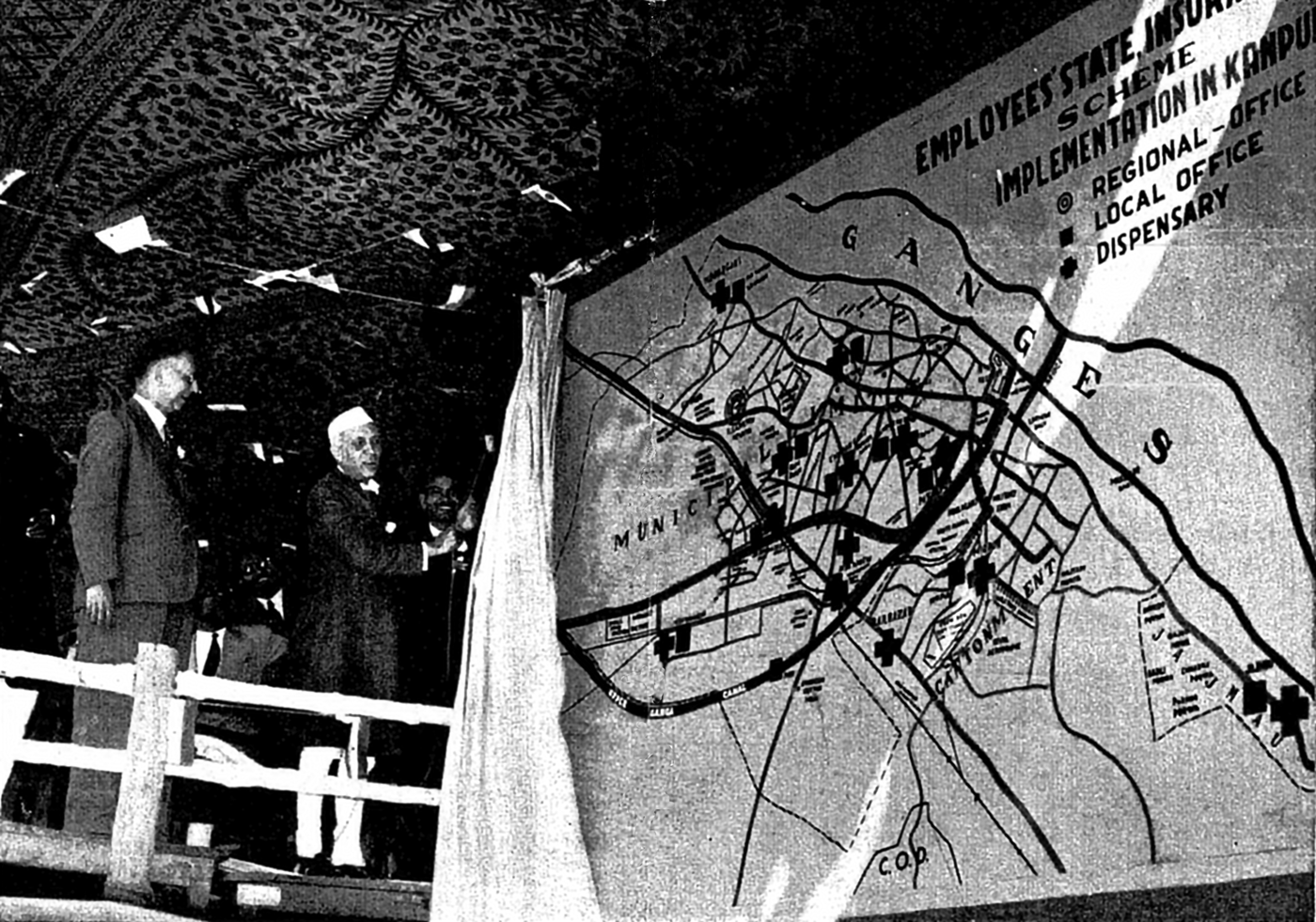
The Workmen's State Insurance Bill was introduced in the Central Legislative Assembly towards the end of the following year and eventually passed as the Employees’ State Insurance Act in March 1948. It was to provide workers in perennial factories with more than ten employees with eight weeks of paid sick leave, monetary benefits in case of maternity, accident or invalidity, as well as medical benefits to be offered by special medical services that were to be created for the purpose.Footnote 128 The law remained a dead letter for several years, however. The Times of India observed a year after the passing of the Act that while the ESI depended on the close cooperation of the Central Government, the Provincial Governments and of employers, “[a]ll the three are too preoccupied with their own problems to attend to the teething troubles of a child whom none consider as their own”.Footnote 129 In 1951, the All-India Organisation of Industrial Employers, a body representing Indian big business, demanded a further postponement of its implementation and particularly of any raising of contributions from the employers since they considered the scheme “socially unjust” and even “disastrous” in its economic consequences as it imposed “on industry a burden which it cannot bear”.Footnote 130 Influential forces within the ruling Indian National Congress supported this stance: a year earlier the government of the populous northern province of Uttar Pradesh had “signified their opposition to the scheme following a representation made to the Centre Government by certain employers at Kanpur” – the Times of India's commentator even feared that the project was about to be abandoned.Footnote 131 As late as in 1952, Jawaharlal Nehru finally inaugurated a pilot scheme that was confined, however, to Delhi and the industrial city of Kanpur (figure 1).Footnote 132 It was only in the course of the late 1950s that ESI coverage was rolled out more systematically, though considerable parts of the country still remained outside the remit of the Act. A full decade after the ESI Act had been passed by the Parliament of independent India, a “Study Group on Social Security” set up by the Ministry of Labour believed that of 2.2 million factory workers to which the law extended a mere 1.3 million were actually covered by the mechanisms of implementation established by then.Footnote 133
Jawaharlal Nehru unveiling a map illustrating a scheme at work at Kanpur on February 24, 1952.
The passing of the law had clearly not put a stop to the struggle over health insurance for workers – trench warfare over legislation now merely turned into an unending battle of attrition over its implementation. While these struggles over implementation require further research, we can here only discuss schematically four major lines of contestation that emerged in negotiations between business representatives, trade unionists, and state officials already in the process of law making. They were (a) the compulsory nature of the scheme, (b) its contributory character and the connected issue of financial liability, (c) its administrative structure as a state insurance, and (d) the vexed question of scope.
Backed up by the 1944 Recommendation of the ILO, government officials, and experts as well as trade union spokesmen agreed that sickness insurance for industrial workers had to be compulsory if it was to have any impact.Footnote 134 This caused some discomfort in business circles and even among industrialists, who admitted a certain need for an improvement of health services for industrial workers. At issue was not only that compulsory participation in a health insurance scheme implied an obligation to contribute to it financially – an aspect we shall discuss instantly. Employers were also concerned that a compulsory scheme regulating, among other things, the employees’ right to paid sickness leave brought the conditions of work or the modalities of the performance of the labour contract under the scrutiny of state officials. Employer spokesmen thus pointed out repeatedly that the issue of health insurance was directly connected to that of holidays with payFootnote 135 – the scheme was thus not external to the labour relationship but a mechanism that restricted the “freedom” of employers to fashion labour contracts as they pleased. In 1935, the Bengal Chamber of Commerce had flatly opposed any social insurance scheme based on compulsion, had suggested voluntary schemes at the company level according to a “model scheme” to be drawn up by government and had demanded that existing “adequate” arrangements should not be interfered with.Footnote 136 By 1943, when many employers recognized that a compulsory sickness insurance scheme could be forestalled for some time but not avoided altogether, the Bombay Chamber of Commerce still demanded that existing voluntary employer schemes should be allowed to continue, thus opening a route towards the exemption from legal obligation.Footnote 137 At the same time, employers could be hostile to insurance schemes that were initiated, in a few cases, by trade unions or cooperative societies – ostensibly because they anticipated financially unsound pyramid schemes,Footnote 138 but more likely because they feared increasing “interference” with labour conditions on the shop floor by “outsiders”. Trade unionists insisted, on their part, that “[e]xceptions in favour of any private factories will lead to unfair practices”.Footnote 139 Adarkar, while recommending strictly regulated exceptions wherever satisfactory insurance schemes had been created by employers for their workforces, emphasized that such schemes were extremely rare: “The existing medical facilities in most places are no doubt extremely inadequate; even some of the so-called health insurance schemes are a mere parody of what they should be.”Footnote 140 At the end of the day, employers could not prevent that the ESI Act defined health insurance as a compulsory scheme. The interdependence between employment-based health insurance and the conditions of the performance of the labour contract was even brought forward openly by B.R. Ambedkar as an argument for the urgency of regulating employment conditions through the Standing Orders Act that was passed by the Central Legislative Assembly in 1946.Footnote 141
The second line of contestation emerged over the contributory character of the ESI scheme and the connected issue of financial liability. From the early war years onwards, state officials and trade union representatives had agreed that the envisaged social insurance scheme needed to be based on contributions by employers and employees. Business spokesmen and trade unionists had, at the same time, concurred in the opinion that a financial contribution by the State was required.Footnote 142 Raising the threshold for the passing of an unwelcome law without having to contradict Government openly was surely, as we have seen before, one of the tactical considerations that prompted employers to pursue this line. The War Government at the central level responded by taking the comfortable stand that if state subsidies were required they would have to come from the Provinces – predictably, the latter ruled this out altogether.Footnote 143 The Adarkar Report, in 1945, argued strongly for a financial contribution by the State, but outlined two alternative models of funding, only one of which involved state subsidies.Footnote 144 The Report also advocated a state guarantee for the solvency of the social insurance schemeFootnote 145 – a demand taken up by the Bombay Millowners' Association when the Bill was eventually under discussion in the Constituent Assembly in order to protect the employers from financial liabilities.Footnote 146 As per the Act finally passed a year later, the Government of India undertook to cover two thirds of the administration costs for the first five years, while the Provinces were asked to finance one third of the costs of the medical facilities that were to be established for the provision of the medical benefits. An estimate calculated that, on this basis, employers were to contribute sixty per cent of the total ESI budget while employees and the State were answerable for twenty per cent each.Footnote 147 Again, the actual implementation of the Act created a rather different scenario: business advocates achieved a temporary exemption of companies from the payment of “maximum contributions”Footnote 148 and by the end of the 1950s trade unions calculated that employees had, in fact, contributed significantly more to ESI funds than employers.Footnote 149 The state governments, on their part, renegotiated their share of expenses for the ESI scheme's medical services and succeeded in reducing it from one third to one quarter.Footnote 150
Since state contributions remained narrowly circumscribed, the operational costs of the ESI scheme were mainly borne by bipartite contributions from employers and employees. The administrative structure – the third line of contestation we need to take account of – assumed a strongly tripartite form, however, and came to be dominated by state officials: while employers’ associations and trade unions were entitled to appoint their representatives, the administrative bodies in control of the ESI funds were controlled by government servants as were the special arbitration structures for ESI disputes.Footnote 151 This was a major departure from the implementation structure of the Workmen's Compensation Act where the respective employer was in charge of payments to beneficiaries and where hurdles had been created intentionally, as we have seen above, to render recourse of claimants to legal adjudication more difficult.Footnote 152 The state-centred administrative structure of the ESI was created with the explicit aim of preventing the malfunctions of the earlier Acts that were believed to be rooted in the principle of “employer liability”: “for if the employer is saddled with the responsibility of compensation, he is bound to find ways of avoiding it”.Footnote 153
The fourth and even more defining line of contestation arose in regard to the issue of scope. When the debate grew more intensive in 1940, an alliance of British and Indian big business demanded that a compulsory social insurance scheme, if it had to be created at all, was to have an extensive reach from the start. They insisted on including the Princely States – occupying almost one third of the subcontinent – to avoid unfair competitive advantages for industrialists operating from these territories.Footnote 154 For the Bombay Chamber of Commerce this was an issue sufficiently important to justify the “postponement of the scheme for several years”.Footnote 155 Sir Vithal Chandavarkar, spokesman of the Employers’ Federation of India, even combined his appeal to the new government of independent India not to “scare away private enterprise” with the demand that the undue focus of labour legislation on industrial workers should be overcome and that its scope needed to be extended to agricultural workers. Ostensibly in the best interest of the working classes, such proposals seemed to have the main objective of derailing the project altogether by raising the hurdles.Footnote 156 Adarkar envisaged a universal scheme in the long run, but recommended for the initial period a rather narrow focus on workers in perennial (i.e. non-seasonal) factories in three industrial sectors that had employed about 1.3 million workers in 1942: textiles, engineering, “minerals and metal” (i.e. the metallurgical and oil industries).Footnote 157 This would have covered about sixty per cent of the factory workforce.Footnote 158 The AITUC demanded that the scope should be wider and include all employees of “organized industries”, irrespective of occupation, whether working in factories or not and including those employed in seasonal factories (e.g. those processing agricultural produce like sugar) as well as “[s]ome of the dependents”.Footnote 159 Two ILO experts, Raghunath Rao and Maurice Stack, were assigned the task to revise the scheme and recommended to extend it to all factory workers in perennial factories.Footnote 160 This recommendation was incorporated into Adarkar's final report and subsequently in the Employees’ State Insurance Act of 1948.Footnote 161
Consequently, smaller manufacturing units, agricultural labour, including the workforce of India's sizeable quasi-industrial plantation economies, the enormous construction sector as well as miners and transport workers remained outside the remit of the ESI Act, though it allowed provincial governments to expand its scope. Nor were workers’ families covered by the health insurance initially. Furthermore, provincial governments were empowered to grant exemptions from the law to industries considered to be unable to contribute to the scheme. The provisions for the Act's implementation allowed for further exceptions even within the industries explicitly covered by the Act. Crucially, “the conditions of qualifying period for cash benefit exclude[d] casual workers”, while unpaid apprentices were not granted protection because the Act applied to remunerated labour only.Footnote 162
VI. GRADED INFORMALITY, A “BIRTHRIGHT” LOST AND THE HORIZON OF EXPECTATION
While the ESI Act thus permitted a differentiation of employment conditions even on the same shop floor, it also contributed to a process of differential formalization that generated a pattern of graded entitlements in the labour market and multiple rifts among the working classes as a whole. Certain sections of the workforce had, for instance, access to health facilities that were and would remain far superior to the ones provided by the ESI scheme – this was the case with the nationalised railways, which had generated their own medical services in the course of the 1920s, and it would hold true for new public sector enterprises of Nehruvian India.Footnote 163 Other and much larger sections of the industrial workforce were, at the same time, legally entitled only to a level of sickness and invalidity protection much inferior to that offered by the ESI. This becomes evident if we return to the Workmen's Compensation Act of 1923, which the ESI Act was to replace. In fact, it did so only for about a third of the six million workers that were entitled to workmen's compensation by the early 1950s. The incongruent remits of the two laws thus implied that the industrial workforce of postcolonial India was further divided into a minority segment entitled (by the ESI Act) to pensions in the event of work accidents and another segment, twice as large, entitled (by the Workmen's Compensation Act) to lump sum payments, which provided not only less security, but were also more difficult to claim.Footnote 164
This is only one of many similar instances, one element of a much larger phenomenon: multiple and overlapping central and provincial labour laws have defined the “workman”, the “worker” or the “employee” and, accordingly, their remit in widely diverging ways, while labour tribunals and courts of justice have added to the complexity of these definitions by way of conflicting interpretations.Footnote 165 The Employees’ Provident Fund Act of 1952 applied, on its part, only to about half of the factory workers covered by the ESI Act of 1948.Footnote 166 The incongruence of labour and employment-based welfare laws in terms of scope thus generated a complex site of conflict that was to engage employers, trade unions, judges, government officials, and various other social actors for the decades to come. Even at the present unsatisfactory state of research it thus appears to be evident that legislation did not result in a formal/informal bifurcation of the workforce, but in an instable, contested and to some extent malleable structure of graded (in)formality.
Despite its narrowly confined remit, postcolonial India's first Labour Minister, Jagjivan Ram, celebrated the ESI Act, when it was passed, as a breakthrough: “the tiny and tender sapling” would “in its own time, grow into a gigantic tree” and the scope of the scheme would be “extended gradually and steadily so that ultimately it becomes all-comprehensive”.Footnote 167 Health Minister Rajkumari Amrit Kaur confirmed that the scheme was to be extended, in due course, to about eighty-five per cent of the population.Footnote 168 A propaganda film (figure 2), released by the Government's Films Division in 1952, pronounced that the ESI scheme would be extended “until its benefits are available in every industrial section of our country, until not only our 2.5 million workers, but all employees, including our agriculturists enjoy this, their birthright”.Footnote 169 The choice of these words, read out in the King's English as the footage shifted from machine operators to ploughing farmers, was significant: “swaraj [self-governance] is my birthright” had been a rousing slogan in the independence struggle, associated with the militant nationalist Bal Gangadhar Tilak. Quoting this phrase elevated security from illness to the status of a fundamental right intrinsic to citizenship of independent India. The universalisation of health insurance from an employment-based privilege to a citizen right was thus announced and explicitly married to the nation-building project – here for the edification of a presumably middle-class audience. This official promise survived the bleak facts of implementation for quite some time. In 1965, when V.V. Giri's influential Labour Problems in Indian Industry was reprinted once again, the former Labour Minister and future President of India still characterized ESI as “a nucleus of a general social insurance scheme”.Footnote 170
Workers queuing before the desk of a welfare official; in the background, posters advertising the Employees’ State Insurance Scheme. Still from a promotional film entitled “Dawn of Social Security”, produced by the Films Division of the Government of India in 1952.
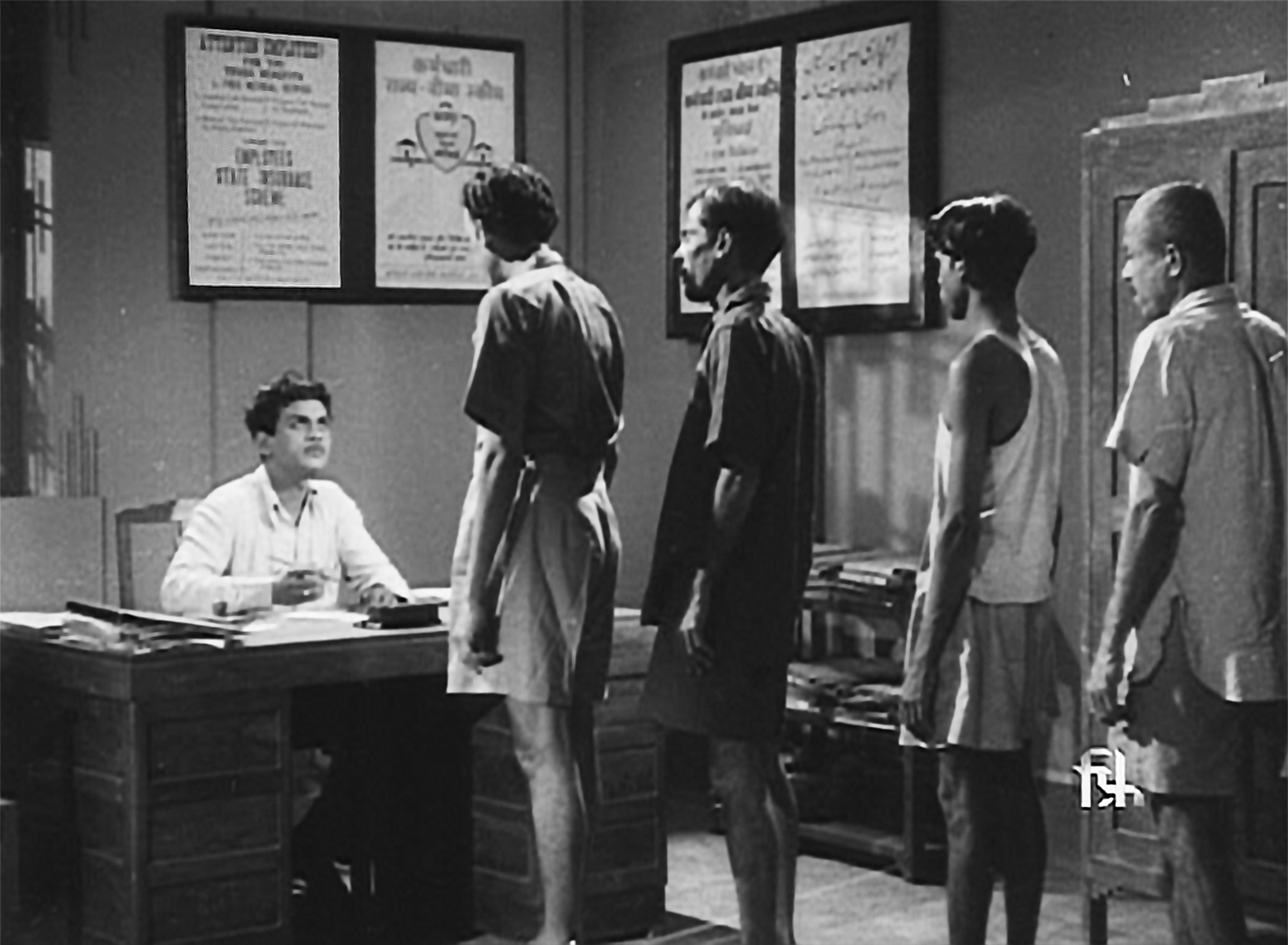
However, the universalization of health insurance turned out to be, as we know today, one of the unfulfilled promises of post-colonial citizenship and was postponed ad infinitum. As late as in 2013, a mere three per cent of India's almost half billion-strong workforce or less than half of the “organized sector” workers were entitled to often unsatisfactory ESI benefits.Footnote 171 Instead, the Employees’ State Insurance Act came to be one of the key mechanisms for the separation of India's formal and informal labour economies into an embattled, segmented structure of graded entitlements. Despite the many references to Beveridge and Geneva, the guarantee of a national minimum standard did not diffuse to India in subsequent decades as the basis of a universalist welfare policy. Employment-based Indian welfarism remained robustly minoritarian, confined to a very small and mostly male section of those who built postcolonial India for wages. William Beveridge's statement, in 1945, that “freedom from want [was] probably to be sought for the greater part of the Indian population” in a “different direction” was not only prescient, but also indicates that even liberal British reformers did not rule out, at the time, the possibility in India of social policies more far-reaching and comprehensive than those the postcolonial dispensation chose to accept as inheritance from their colonial and deeply conservative predecessors.Footnote 172
Yet, the lines, drawn by laws like the one discussed in this paper, should not be understood solely as borders breaking the workforce into a multiplicity of fragments, but also as a horizon of expectation – a horizon that would remain out of reach for most workers, but has been well in sight: it has created a language for the formulation of standards of “decent work” that are transgressively utopian as well as eminently carnal in their concreteness. They have thus endowed labour struggles with a moral edge and could even serve as blueprints for legislative initiatives for the protection of informally employed workers. A particularly striking case in point is the Dock Workers Act of 1948, which served as a template for mobilizations among the enormous and almost completely “informal” construction workforce for the establishment of welfare boards and for the (no doubt severely diluted) Unorganized Workers' Social Security Act of 2008.Footnote 173 Similarly, contract workers and employees of predominantly “informal sector” industries have for many years raised the demand for inclusion in “ESI”Footnote 174 – a demand that has signified not only the desire for protection against the existential risks and economic perils of sickness. For entering the remit of one of India's employment-based welfare laws – such as the ESI or the Provident Fund – also implied a formal acknowledgement of their employment status. This was no negligible achievement since certified employment status could serve as a legal basis for claiming further entitlements.
Employment-based social security schemes thus have mattered not only to the minority of the Indian workforce covered by them explicitly, but to wider sections of the working classes as they have defined possibilities, together with other labour laws, and have helped to formulate demands. While undeniably dividing wage earners according to graded entitlements, these schemes have simultaneously established a form for collective claims of workers against employers and a sense that the State bears an albeit oft-shirked duty to guarantee such claims. This paradox may help us to understand why a wholesale privatization of health insurance, while favoured both by neo-liberal governments and business interests, has been slow in the coming despite the steady decline of “formal” employment.
SUPPLEMENTARY MATERIAL
To view supplementary material for this article, please visit https://doi.org/10.1017/S0020859019000324


 Open access

