


INTRODUCTION
In the broadest sense, SLA studies endeavor to describe and explain how nonnative languages are acquired, processed, and used. Inherent to the process of SLA are transitional stages—interlanguage development—along a complex developmental continuum. The number of variables that affect SLA are undoubtedly many, ranging from linguistic and cognitive to individual and societal. The explanatory power of SLA theories crucially depends on uncovering which particular variables are influential at specific points of development and what their degree of influence is along the developmental continuum. Because there are so many aspects/variables to SLA that can be the specific focus of particular theories, it is not surprising that there are so many approaches to SLA. Each adds to the general field by isolating, describing, and explaining specific factors that influence linguistic performance and competence in adult nonnative language learners.
Given the comparative youth of SLA research, it is even less surprising that paradigmatic misconceptions abound, fueling perceptions of incompatibility or mutual exclusivity among various SLA approaches. To be sure, there are views across paradigms that are truly mutually exclusive; that is, either one or the other (and likely neither) is correct in absolute terms, but both cannot be because of their dichotomous nature. This is also true of competing theories within a paradigm. Specific theories within generative approaches to SLA (GenSLA) can be mutually exclusive (see Slabakova, Reference Slabakova2016; White, Reference White2003). For example, models that claim full transfer at the initial stages of adult SLA, such as full transfer/full access (Schwartz & Sprouse, Reference Schwartz and Sprouse1996), are mutually exclusive to theories maintaining very limited or no transfer of functional categories or features such as Minimal Trees (Vainikka & Young-Scholten, 1994, 1996). However, the actual level of incompatibility across paradigms, in our view, is much less than what is largely held true (Rothman & VanPatten, 2013; Slabakova et al., Reference Slabakova, Leal and Liskin-Gasparro2014, Reference Slabakova, Leal and Liskin-Gasparro2015; but see de Bot, Reference de Bot2015, for arguments against) in large part because the questions each paradigm pursues are only partially overlapping. In addition to valid and appropriate scientific debates on the perception of significant incompatibility across various SLA paradigms, there are historical reasons for blatant misunderstanding of what particular SLA theories claim. Unfortunately, an inevitable consequence of this fact is that young scholars are sometimes trained without being afforded the opportunity to understand for themselves why approach X is supposedly so ill-conceived, and, by extension, why approach Y is superior in certain respects. Another unintentional by-product is that the newest generation of scholars is perhaps less prepared than its predecessor to fully appreciate the role of competing paradigms in the broader field of SLA. Scientific progress runs the risk of being thwarted when one allows for misconceptions regarding false dichotomies to continue unabated. The goal of SLA is shared across all scholars: to be increasingly more accurate in our descriptions and explanations. The history of scientific inquiry, regardless of the discipline, has shown that virtually no theory at any snapshot in time is completely correct. This is unproblematic because the goal of science is not to be “right,” but rather increasingly more accurate over time. In all likelihood, no current theory of SLA is “correct” in absolute terms, but understanding competing theories accurately is the only way to perform the remit of science: A theory can only be meaningfully excluded from further consideration to the extent that it is properly understood.
The intended audiences of this article are graduate students and young scholars in the extended field of SLA. It has several interrelated goals. First, we offer a state of the science of GenSLA, orienting the readers to the main questions and trends in today’s GenSLA as opposed to questions of primary focus from 30 years ago. Second, we highlight where mutual exclusivity exists between GenSLA and usage-based approaches to SLA (e.g., Ellis & Larsen Freeman 2009a, 2009b; Ellis & Wulff, Reference Ellis, Wulff, VanPatten and Williams2014; Wulff & Ellis, forthcoming) and where we believe claims of incompatibility reflect misunderstanding more than anything tangible. Finally, we offer some insights into where we feel GenSLA is likely to progress in the future and how this fits within the broader field of SLA studies.
THE MAIN TENETS OF GenSLA
Like other cognitive-based theories of SLA, GenSLA has always focused on describing and explaining the system of implicit second language (L2) knowledge, especially how it comes to be represented in the mind and brain of the learner. The aim of much research in GenSLA from its beginning in the 1980s has been to provide an understanding of the interplay between knowledge pertaining to all human languages (henceforth Universal Grammar or UG), knowledge that comes from the mother tongue (henceforth L1 transfer), and knowledge that comes from exposure to the target language (henceforth acquisition based on L2 input). In an effort to contextualize the past of GenSLA studies, we provide a cursory summary of the two main questions that drove the research programs in GenSLA for its first two decades. Clearly, we cannot do justice to everything worthy of discussion from the early years of GenSLA. We sacrifice nuanced details in an effort to carve out space to dedicate ourselves to present-day GenSLA and because there are high quality and detailed summaries of the early years in existence to which we refer the reader (e.g., White, Reference White1989, Reference White2003).
Akin to other mental systems that need external stimuli to unfold (e.g., vision), UG is argued to be a genetically endowed blueprint to the most generalizable facts about language; that is, it contains the linguistic information that is common to all human languages, labeled principles. As concerns linguistic learnability, the idea is that UG fills the gap left by what is learnable based on input and domain general cognition alone. Equipped with UG, child learners can narrow down the search space for language learning by limiting their hypotheses about the target language from the superset of all logical possibilities to the subset UG allows; that is, only those that characterize potential human grammars. In listing a priori the limits on what is and what is not a possible grammar, UG also identifies and restricts the parameters of grammatical variation between languages. Clearly, many domain-general cognitive, social, and computational principles shape linguistic development. According to the generative perspective, all these factors in consort are the arsenal learners bring to the task of organizing and making sense of the input they encounter.
From its inception, generative language acquisition has been powered by the logical problem of language acquisition; namely, it defies logic that children should acquire their native language so fast and with so little trial and error, if the input that they are exposed to is uneven, inconsistent, and frequently underrepresents the knowledge they ultimately acquire. The argument is that acquisition processes are streamlined by domain-specific linguistic knowledge with which children are hypothesized to be born (e.g., Fodor, Reference Fodor1983; Pinker, Reference Pinker1995). Support for domain-specific linguistic knowledge comes from the Poverty of the Stimulus (PoS) argument (e.g., Schwartz & Sprouse, Reference Schwartz, Sprouse and Archibald2000, Reference Schwartz, Sprouse, Herschensohn and Young-Scholten2013; see an extended example in the following text). The logic goes like this: If one can show that a child’s knowledge of grammar extends beyond what could possibly be deduced from the input, even allowing for the operation of general cognitive principles, processing, and learning mechanisms, then such knowledge is left unaccounted for. If such unaccounted-for knowledge is arrived at by all learners despite the same improbability of extracting such knowledge from input or the gap being filled by domain-general cognitive mechanisms, then this constitutes good evidence that such a learner must have access to some built-in knowledge regarding what shape natural grammars can take.
From its outset, GenSLA was also powered by the logical problem of language acquisition and by discussions of how it applies to the learning of second and subsequent languages in adulthood (Schwartz, Reference Schwartz1998; White, Reference White1989). Linguists who accept that UG continues to be accessible in adulthood and thus constrains L2 acquisition point to knowledge that is demonstrably present in L2 interlanguage grammars, but could not be acquired based on observation of the input alone, transferred from the native language, or taught explicitly, in the case of classroom learners. The learnability issues highlighted by the PoS argument extend beyond evidence-based but constrained acquisition to knowledge of what is unacceptable despite a bankruptcy of input cues that should lead the learner to deduce this.
The most important research question that dominated the field during the 1980s and at least the beginning of the 1990s was: Is there or is there not access to UG in adult SLA? The dichotomous nature of this research question echoed the Critical Period Hypothesis (CPH) debates at the time: Is SLA subject to a critical period or not? In other words, the generative linguistic equivalent to the critical period was essentially maturationally conditioned accessibility to UG. Gray areas or degrees of success in L2 acquisition were not easily accommodated by the theory. In Bley-Vroman’s formulation (Bley-Vroman, Reference Bley-Vroman, Gass and Schachter1989, Reference Bley-Vroman1990; see Bley-Vroman, Reference Bley-Vroman2009 for an update), SLA was a fundamentally different process from native language acquisition because L2 learners did not have direct access to UG after the critical period.
Empirical evidence from the 1970s and 1980s convincingly pointed in the direction of a critical period for child first language acquisition; that is, a reduced ability over time to acquire the functional L1 morphosyntactic system (e.g., Curtiss, Reference Curtiss1977, Reference Curtiss1988). Extending the notion of a critical period to apply to the acquisition of all new morphosyntax after puberty seemed logical, especially because the path and outcomes of adult L2 acquisition, partially like the case of very late acquired L1 acquisition (e.g., Genie and other “wild children”), also differ from child acquisition. However, it is certainly not the case that typical adult L2 acquisition presents similarly to very late first language acquisition in adulthood (e.g., Mayberry, Reference Mayberry1994). It could be the case that a critical period (or lack of UG accessibility) pertains to all adults or that adult L2 learners are seemingly more successful than very late adult L1 learners because only the former can build off a previously acquired language. Alternatively, it might be the case that a critical period relates only to activating domain-specific information. In other words, having engaged UG in childhood, typical adult L2 learners continue to have access to UG in adulthood whereas the very late adult L1 learners did not activate UG prior to the critical period.
While it was assumed that UG was operable in child first language acquisition, constraining acquisition options and leading the child on a relatively error-free developmental path, determining whether adults had continued access to UG was not at all trivial; it was hotly debated. The answer revolved around establishing evidence of grammatical knowledge that went beyond what the language learners encountered, both in and outside classroom instruction. Starting in the 1990s, a line of research in GenSLA concentrated on testing whether L2 learners did indeed acquire properties of the L2 incidentally and, specifically, if L2 learners acquire PoS properties. Early work such as that by Kanno (Reference Kanno1997), Pérez-Leroux and Glass (Reference Pérez-Leroux and Glass1999), Dekydtspotter, Sprouse, and Anderson (1997), and Dekydtspotter, Sprouse, and Thyre (Reference Dekydtspotter, Sprouse and Thyre2000), among many others since, have showed that L2 grammars, despite significant differences from L1 grammars, instantiate universal linguistic properties that cannot be linked to transfer or accounted for by learning in the truest sense of the word (for an extended example, see the next section). Such evidence seriously questions any claims for a fundamental difference between L1 and L2 acquisition. Although it is still not agreed by all within GenSLA that adults have direct access to UG, PoS knowledge in adult L2 acquisition constitutes rather strong evidence that adults continue to access UG past puberty. Differences between adults and children are explained on the basis of something other than UG accessibility.
At the same time, another factor played into that central question, partitioning the possible answers. Because the native language of any learner contains the information universally present in all human languages (i.e., the linguistic principles), clearly this information was available for transfer into the L2. Linguistic properties were divided into three types: universal properties, parameterized properties whose values were transferable from the native language, and values that were not transferable. Clearly, the parametric options depend on the L1–L2 pairings. For example, learning Italian null subjects would be easier if your native language is Spanish, unlike if it were English. The interplay of UG access and L1 transfer allowed for several positions: UG is fully accessible (e.g., Epstein, Flynn, & Martohardjono, Reference Epstein, Flynn and Martohardjono1996; Schwartz & Sprouse, Reference Schwartz and Sprouse1996; Vainikka & Young Scholten, 1994; White, Reference White1989); UG is accessible through the L1 only (Bley-Vroman, Reference Bley-Vroman and Eubank1991); and UG constrains only L1 acquisition and is inaccessible in SLA (Clahsen & Muysken, Reference Clahsen and Muysken1986; Meisel, Reference Meisel1997). In addition, as argued by Hale (Reference Hale1996), it may be exceedingly difficult to differentiate whether it is access to Minimalist UG or L1 transfer that guides L2A.
In summary, despite the observable fact that in some ways adult L2 acquisition is different from child L1 acquisition in path and ultimate attainment, the first two decades of GenSLA research provided robust evidence that L2 interlanguage grammars instantiate abstract knowledge about the L2 that could not have been acquired on the basis of the L2 input, transfer from the L1 and/or instruction alone. Access to UG and the nature of L1 transfer were couched within this learnability context.
TOWARD THE HERE AND NOW
The late 1990s and the 2000s saw some significant theoretical developments in GenSLA, mostly inspired by changes in generative linguistic theory, namely, the Minimalist Program (Chomsky, Reference Chomsky1995). Although the idea of the feature as a unit of analysis at the right level of granularity and abstraction was always present in the formulation of parameters, it now came fully to the fore (Liceras, Zobl, & Goodluck, Reference Liceras, Zobl and Goodluck2008, and articles therein). A feature is a unit of grammar that reflects variation across languages. Features reflect grammatical meanings (such as tense, case, finiteness) or conceptual meanings (such as evidentiality, habitual aspect, definiteness). These grammatical and semantic features are captured in functional categories, phrase structure projections that come on top of lexical projections in a tree and provide the grammatical structure of each clause. There can be many features subsumed in one functional category. The functional category of Tense, for example, hosts a variety of features regulating the movement of the verb, the subject case, and its expression, among others. It is of crucial importance to distinguish between features (the grammatical meanings) and their overt expressions (frequently through inflectional morphology). For example, Mandarin Chinese has been argued to have null case, regulating comprehension of Noun−Verb−Noun sentences (Li, Reference Li1990). It also does not express past tense with overt morphology. Those are examples of grammatical features with a null expression but enormous consequences to sentence comprehension. Overtness of functional morphology plays a role in predictions about learner behavior, such, for example, that L2 overt morphology is easier to acquire when your native language has a similar affix. For instance, Jiang, Novokshanova, Masuda, and Wang (Reference Jiang, Novokshanova, Masuda and Wang2011) showed that Russian learners of English, unlike Japanese learners, were reliably sensitive to English plural errors in an online task. The authors attributed this differential sensitivity to Russian having overt plural morphology while Japanese lacks such morphemes.
Features that contribute to the sentence meaning, such as tense and aspect, are labeled “interpretable features.” Other features do not contribute to sentential meaning, but rather have grammatical import only. These features are called “uninterpretable features” and include case and grammatical gender. Moreover, the theory nicely accommodates the fact that a single head of a functional category can have any number of features associated with it and be morphologically expressed. For instance, languages that encode grammatical aspect often have a single morpheme that expresses both tense and aspect. This means that the “feature bundle” on the past morphology instantiates at least two features.
Current GenSLA theories make use of the preceding distinction. For example, a modern version of no or limited accessibility to UG captured under the Interpretability Hypothesis (Hawkins & Casillas, Reference Hawkins and Casillas2008; Hawkins & Hattori, Reference Hawkins and Hattori2006; Tsimpli & Dimitrakopoulou, Reference Tsimpli and Dimitrakopoulou2007) argues that only the meaningful, or interpretable, features remain accessible to adults in a second language. Such approaches do not take the position that UG is inaccessible per se in adulthood, but rather that purely grammatical (uninterpretable) features, not available in the L1 for transfer, present an insurmountable barrier to L2 learners. And so, there is partial access to UG; that is, there is a critical period effect for uninterpretable features. The claim is that inaccessibility to uninterpretable features explains much variation attested in adult L2 grammars. The fact that native Chinese speakers of L2 English—for example, the famous case study of Patty studied over two decades by Lardiere (Reference Lardiere1998, Reference Lardiere2007)—often omit third-person singular agreement morphology in obligatory contexts in English would be captured straightforwardly because Chinese does not instantiate the uninterpretable features for subject–verb agreement.
At roughly the start of the millennium, one could realize that GenSLA had shifted its attention well beyond the two classical questions related to UG accessibility and L1 transfer, especially as simple binary answers to them were concerned. As can be appreciated in the preceding text, theories such as the Interpretability Hypothesis reflect the desire in modern GenSLA to engage more directly with the dynamic nature of variation in performance as well as in competence. To be clear, there is no doubt that at some level adult SLA is different from child L1 acquisition in its process and typical outcomes. Notwithstanding, evidence in support of adult accessibility to (at least some properties of) UG (e.g., evidence of true PoS in L2 acquisition) had reached a critical mass (see White, Reference White2003) by the early 2000s. This motivated GenSLA theorizing to focus on and explain the documented differences between L1 and L2 linguistic knowledge and performance outside of the domain of UG accessibility alone, as well as individual-level variation across L2 learners. The Missing Surface Inflection Hypothesis (Haznedar & Schwartz, Reference Haznedar and Schwartz1997; Prévost & White, Reference Prévost and White2000); the Feature Reassembly Hypothesis (Lardiere, Reference Lardiere2009), the Prosodic Transfer Hypothesis (Goad & White, Reference Goad and White2006), the Competing Systems Hypothesis (Rothman, Reference Rothman2008), the Bottleneck Hypothesis (Slabakova, Reference Slabakova2008), and the Interface Hypothesis (Sorace, Reference Sorace2000, Reference Sorace2011; Sorace & Filiaci, Reference Sorace and Filiaci2006) are examples of generative-based hypotheses that have proposed various factors as deterministic for some cases of L1–L2 differences while still assuming that there is unabridged access to UG in adulthood. These hypotheses offer processing constraints and limitations, competition between acquired (implicit) and pedagogical (explicit) mental grammars, reconfiguration of formal features into new L2 bundles, the hypothesized greater difficulty of morphology as compared to syntax and semantics, as well as L1 prosodic influences—either independently or in combination—as factors contributing to and/or explaining specific variation in L2 acquisition. Although space limits a detailed discussion, we will review a few of these hypotheses in more detail in the following text.
A welcome development within GenSLA stemming back two decades is the proposal that features and linguistic mental representations may indeed be targetlike in L2 mental grammars even when production or comprehension is variably nontargetlike due to additional processing pressures. One such theoretical account is the Missing Surface Inflection Hypothesis (Haznedar & Schwartz, Reference Haznedar and Schwartz1997; Prévost & White, Reference Prévost and White2000), which attributes some production variability to imperfect lexical access to functional category exponents. When more specialized forms in a paradigm are not lexically accessible, they are substituted by a default form, for example, an infinitive or a singular noun. Such an approach is falsifiable because it makes predictions that are amenable to empirical scrutiny. The Missing Surface Inflection Hypothesis, for example, would predict that sufficiently advanced adult L2 learners who show variable production of inflectional morphology will demonstrate two things: (a) markedly better comprehension of the same morphology they variably produce and (b) when producing so-called morphological errors, these should not be random but rather predictably constrained by markedness factors; that is, to be the default, or unmarked, morphological exponent.
Another account, the Interface Hypothesis (e.g., Sorace, Reference Sorace2011; Sorace & Filiaci, Reference Sorace and Filiaci2006) capitalizes on the heightened processing burden of keeping track of grammar and discourse at the same time. Sorace argues that incorporating contextual information into the sentence meaning calculation heightens processing costs, and as a result even near-native speakers sometimes variably apply otherwise nativelike mental representations and language processing strategies. Moreover, Sorace (Reference Sorace2011) claims that there might also be a general bilingualism effect at play here. In other words, even if the processing strategies are shared between an L1 and a target L2, the mere fact that two grammars are simultaneously active in the mind of the L2 speaker entails that variable performance might obtain at particular interfaces.
The Feature Reassembly Hypothesis emphasizes that acquisition of the functional morphology is much more than acquiring binary parametric values. Assembling the particular lexical items of a second language requires that the learner reconfigure features from the way these are represented in the first language into new formal configurations (i.e., feature bundles) on possibly quite different types of lexical items in the L2 (Lardiere, Reference Lardiere2009, p. 173). These recent hypotheses, the Interpretability Hypothesis, Missing Surface Inflection Hypothesis, the Interface Hypothesis, and the Feature Reassembly Hypothesis, are just a few examples of how GenSLA theorists use generative linguistic constructs (grammatical features with and without meaning, linguistic interfaces, and feature bundles) to account for some well-known L1−L2 differences.
Since the turn of the millennium, in parallel with changes in formal generative theory as well as L2 acquisition evidence, contemporary theories within GenSLA as reviewed in this section have been much more concerned with explaining variation at the group and individual level. This means that the modern shift in GenSLA brought with it broader recognition that other variables, historically assigned less importance in the paradigm, needed to be incorporated more directly. As of the writing of this article in 2016, broader recognition of other variables had close to two decades of development within GenSLA.
MODERN GenSLA WITHIN THE WIDER SLA FIELD
Now that we have provided an update of current GenSLA theorizing, we direct our attention toward contextualizing GenSLA within the wider field of SLA. In doing so, our aim is twofold. First, we highlight how GenSLA has expanded both the remit of variables and populations it considers to explain individual variation in SLA, as well as the battery of methodologies it actively employs, corresponding to more sophisticated behavioral experimentation and especially psycho/neurolinguistic methods. Second, we explicitly make the case for why SLA studies benefit from competing theoretical approaches and how GenSLA is far more compatible with other theories than is commonly believed. Before we can address these two goals properly, we will acknowledge and discuss points of incompatibility with theories that deny a domain-specific linguistic capacity. In turn, we highlight what the explanatory benefits are from being open to the possibility that the mind is indeed preprogrammed specifically for the task of language acquisition.
WHAT IS DIFFERENT ABOUT GENERATIVE APPROACHES? POVERTY OF THE STIMULUS
Before examining and making a case for significant compatibility across various approaches to SLA, we must be clear that there are nontrivial differences between linguistic innatist theories and those that reject any type of linguistic domain specificity. The most important point of contention is the logical problem of acquisition and by extension the very existence of UG as domain-specific knowledge. Recall that UG embodies an attempted answer to the logical problem. UG is the purported gap-filler between ultimate attainment competence and what can be done using available input/intake and domain-general cognition. If there is no disparity in resulting linguistic competence between available input and what domain general learning should be able to construct, then there is indeed no need for UG. The main nontrivial point of difference then is whether there truly is a logical problem of acquisition.
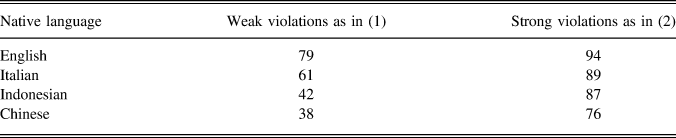
To be concrete, let’s discuss one example of a PoS learning situation provided by Martohardjono (Reference Martohardjono1993), a study documenting knowledge of subjacency violations and wh-movement. The Subjacency Condition was probably the most studied principle of UG in the 1980s and 1990s (Johnson & Newport, Reference Johnson and Newport1991; Schachter, Reference Schachter1990; see Belikova & White, Reference Belikova and White2009 for a review). Subjacency regulates the behavior of wh-words and phrases. In languages like English, wh-phrases move to the left periphery of the sentence, although their movement is highly constrained (Ross, Reference Ross1967); in other languages, such as Chinese and Indonesian, wh-phrases remain in situ close to the verb. Martohardjono tested native speaker of Indonesian, Italian, and Chinese, languages in which subjacency applies differently as compared to English. She tested rejection rates of ungrammatical constructions of two types: wh-islands and extractions out of relative clauses. These sentences look superficially similar and the obvious analogy suggests they should be treated in a similar manner. However, linguistic theory has identified that these two extractions differ in acceptability.
(1) ??Which boy did Amy wonder [CP why had _____ brought the parcel]]?
(2) *Which phonebook did Sue call the doctor [CP that _____ listed]]?
Sentences as in (1) violate subjacency, but do not lead to strong ungrammaticality: These are called weak violations, which is signaled by the two question marks. They should contrast in the reader’s judgments with strongly unacceptable sentences as in (2), which violate subjacency and another linguistic principle, the Empty Category Principle, which requires certain empty categories, namely, traces of movement, to be properly governed. Sentences as in (2) are considered strong violations and are marked as ungrammatical with a star. The concrete linguistic analyses are irrelevant to the point we want to make: the differences in acceptability.
The distinction between the acceptability of the two types of sentences as in (1) and (2) is clearly present in the judgments of the native English speakers, as can be seen in Table 1. Why does this difference in acceptability constitute a PoS situation? Neither type of sentence appears in the input addressed to learners because they are unacceptable. If acceptability is a matter of how many constituents come between the gap and the moved phrase (the so-called extraction complexity effects; Gibson, Reference Gibson1998, among many others), in the unacceptable sentence (2) the moved phrase jumps over fewer constituents compared to the more acceptable sentence in (1), so the former should be somewhat easier to compute. It is remarkable that the same pattern of acceptability demonstrated by the native controls is exhibited by the learners as well. Even more remarkably, the nativelike pattern differentiates between two relatively complex and unacceptable types of sentence, which the learners cannot transfer from the native language and they have not been taught to reject. Such findings and others like it are suggestive of access to universal grammatical principles (e.g., Dekydtspotter, Sprouse, & Anderson, Reference Dekydtspotter, Sprouse and Anderson1998; Dekydtspotter, Sprouse, & Swanson, Reference Dekydtspotter, Sprouse and Swanson2001; Hopp, Reference Hopp2005; Lakshmanan et al., Reference Lakshmanan, Kyoungsook, McCreary, Park, Suen, Dekydtspotter, Sprouse and Liceras2003; Marsden, Reference Marsden2009; Montrul & Slabakova, Reference Montrul and Slabakova2003; see Schwartz & Sprouse, Reference Schwartz, Sprouse, Herschensohn and Young-Scholten2013 for a range of PoS situations).
Rejection rates (percentages) of strong and weak violations (based on Martohardjono, Reference Martohardjono1993, Table 18, 124)
In principle, it should be relatively easy to disprove claims of a logical problem: Show that there are no instances of PoS or, when it is agreed by all that input alone is insufficient to explain resulting competence, that the grammatical knowledge in question falls out straightforwardly from domain general cognition and/or processing principles. That there is no logical problem has been argued rather extensively (e.g., Bybee, Reference Bybee2010; Evans, Reference Evans2014; Gerken, Wilson, & Lewis, Reference Gerken, Wilson and Lewis2005; Goldberg, Reference Goldberg, Hoffmann and Trousdale2013; Gries, Reference Gries2012; O’Grady, Reference O’Grady2005; Redington, Charter, & Finch, Reference Redington, Charter and Finch1998; Tomasello, Reference Tomasello2003). No cognitive-based theory denies the reality of low or even zero input frequencies, that is, properties and constructions that appear rarely or not at all in the input. And so, the main difference revolves around what is proposed to fill the apparent gap between attested knowledge and lack of specific evidence for that knowledge. Within generative theories, these are properties whose successful acquisition is attributed to UG. From the viewpoint of other cognitive theories, such grammatical properties simply fall out from statistical learning, domain general cognition, and/or processing considerations. In principle, both explanations are possible. However, our point is that the path of how learning happens―exactly how domain general cognition and/or processing principles fill the gap between the input and the specificity of the ensuing competence―must be articulated and demonstrated for each of the low- and zero-frequency structures before UG is completely abandoned.
Generative theory has been describing and explaining PoS for five decades (Schwartz & Sprouse, Reference Schwartz, Sprouse and Archibald2000, Reference Schwartz, Sprouse, Herschensohn and Young-Scholten2013). Each theoretical proposal for a PoS property provides not only the description of the learning task, but also a proposal of how it is overcome. At present, property theory in usage-based paradigms has not yet attempted this exhaustively. It is not enough to show that some (perhaps many) discrete domains of grammar can be acquired on the basis of available input and/or domain general cognition/processing; it must be shown that every one of the documented cases can be accounted for in the same manner (cf. Schwartz & Sprouse, Reference Schwartz, Sprouse, Herschensohn and Young-Scholten2013; Valian, Reference Valian2014). No matter how reduced the set of properties turns out to be for which a domain-specific language mechanism is required, linguistic innatism prevails to the extent that there are any properties that cannot otherwise be fully accounted for. To be fair, there have been recent attempts to provide alternative explanations regarding specific properties of UG from an emergentist perspective, for example, interpretation of pronouns and reflexives (O’Grady, Reference O’Grady2005, Reference O’Grady2008) formally captured under Chomsky’s principles of the binding theory (Chomsky, 1981). Still, there remain far too many properties of grammar for which there are no (or not yet) parsimonious alternative accounts that explain the resulting grammar from an interaction of input and domain general cognition/processing. In sum, to remove PoS from the equation, this venture needs to be exhaustive and time will tell how successful O’Grady and colleagues will be.
THE CENTRALITY OF LINGUISTIC THEORY
An important advantage of acquisition paradigms that adopt an innatist perspective on language (and in this we include all theories that adopt a formal linguistic approach, be it Minimalism, [generative] Lexical Functional Grammar, Head-Driven Phrase Structure Grammar, Optimality Theory, among others) is the level of prediction―and by extension explanatory power―they have as a result of the granularity of the adopted theories. Formal linguistic theoretical granularity affords two important things for acquisition research as it relates to descriptive and explanatory powers. Firstly, proposals from formal theory provide a road map of what to look at/for, inclusive of what array of properties might be good to examine together. Linguistic properties that have little obvious surface connection, yet are argued by theoretical proposal to be inherently related to each other at an abstract level (e.g., properties at linguistic interfaces, properties related to the same functional category), give the researcher a starting point on what is interesting to test as well as a model by which superficially unrelated properties can be understood. In other words, formal theory provides principled predictions a priori. An example is provided by the syntax-before-morphology discussion in White (2003, pp. 187–193): Only looking at all the properties that are associated with the functional category of tense can we ascertain that most learners know the syntactic properties before they supply the functional morphology exponent of tense to criterion.
Secondly, formal linguistic theory (as a foundation of acquisition proposals) provides a way to make sense of bodies of data, not only discretely on a property-by-property level but also how datasets fit together to elucidate developmental stages and explain the complexity of a given linguistic system. Linguistically savvy explanations look at development as the growth of a grammatical system, as argued by Hawkins (Reference Hawkins2001) for the morpheme studies from the 1960s (see also Zobl & Liceras, Reference Zobl and Liceras1994).
Two consequences of relying on linguistic theory emerge: (1) acquisition data of all types can be used to falsify theoretical proposals and (2) one avoids the circular argumentation that there is a one-to-one relationship between late acquisition, variability, and computational complexity. For many reasons (e.g., the cost of bilingual processing, labored lexical access, slower reading and reactions), it does not have to be the case that complexity and ease/timing of acquisition map onto each other completely. New hypotheses in GenSLA theory are in a position to seamlessly explain the different contributions of computational complexity and these other factors that give rise to difficulty and variability.
An example of such an approach is provided by the Interface Hypothesis (Sorace, Reference Sorace2011; Sorace & Filiaci, Reference Sorace and Filiaci2006) that we introduced in the preceding text. Much work in the early 2000s up until the present day has focused on modeling interfaces, points in linguistic computation where information across modules (e.g., syntax and semantics, syntax and discourse) is integrated. The proposal is that properties at interfaces are more computationally complex precisely because they require information integration across domains. A further insight comes from the proposal that not all interfaces are the same. Rather, interfaces between linguistics domains (e.g., syntax and semantics) are less taxing on the limited processing resources of the brain than when information must be integrated between a linguistic component and a, strictly speaking, nonlinguistic one (e.g., syntax and discourse). The Interface Hypothesis capitalizes on these theoretical insights in arguing that external interfaces such as the syntax-discourse interface will prove more problematic for L2 adults than internal ones such as the syntax-semantics interface (cf. Tsimpli & Sorace, Reference Tsimpli, Sorace, Bamman, Manitskaia and Zaller2006). Although it has spawned a great deal of research in recent years, evidence to date is unclear as to whether the hypothesis is accurate or generalizable (see Lardiere, Reference Lardiere2011; Montrul, Reference Montrul2011; Rothman & Slabakova, Reference Rothman and Slabakova2011; White, Reference White2011, for discussion).
Using formal linguistic theory opens another avenue that relates to L1 transfer. Recall that generative theory provides robust descriptions as well as formal proposals on how specific properties work and are mentally realized. As a result, it is possible to model, under comparable conditions, which L1–L2 language pairings will have problems with SLA in a property-by-property manner. Of course, the same can be done simply to render predictions about a single pairing. For example, where can linguistic theory predict stumbling blocks along the interlanguage continuum for an English L1 speaker learning L2 German? How will this differ if the L2 is Farsi, Italian, or Swedish? The notion of formal features and their bundling on lexical items, as discussed in the preceding text, again proves crucial. As stated before, the concept of feature bundles allows for a more nuanced way of looking at linguistic properties, especially variation. So, while it might be the case that languages superficially have analogous forms that significantly overlap in meaning, the task of an L2 learner is to reconfigure the bundle of features of specific lexical items to match those of the target grammar. Formal linguistic descriptions tell us what the precise compilation of these feature bundles is. To the extent that L1 and L2 feature bundles overlap, no remapping is needed. To the extent they differ, the difference defines the L2 learning task, whereby some transferred features from the L1 may need to be removed from the corresponding L2 bundle, whereas others may need to be added through L1 remapping or simply newly acquired if the L1 lacks a feature altogether. This inherent complexity of feature bundles and the possibly different conditioning environments for specific features in a bundle entail that not all features of a particular functional category may be learned at the same time.
Although there is no question that frequency in the input matters a great deal (see the next subsection), it is equally clear that there are limits on the explanatory power of input frequency in L2 acquisition (cf. VanPatten & Williams Reference VanPatten and Williams2007, Reference VanPatten and Williams2014). A second line of research addressing linguistic variability and difficulty shows this nicely. Let’s take for example, obligatory morphology in the target language. When morphology is obligatory, like third-person singular -s marking in present tense or -ed past marking in English, it is provided reliably, at least in native input, 100% of the time for relevant contexts and is often quite frequent irrespective of how frequency is measured.Footnote 1 Moreover, for the vast majority of L2 learners who are formally trained in the target L2, explicit teaching of morphology is abundant, repetitive over time, and supported with correction and feedback. Notwithstanding, research and anecdotal observation both show that morphological suppliance in L2 production is highly variable, even in learners who are otherwise demonstrably highly proficient and even when the L1 also has similar obligatory morphology in the same domain. Recent GenSLA studies have focused on why this might be. For example, Lardiere’s (2009) Feature Reassembly Hypothesis, Slabakova’s (2008) Bottleneck Hypothesis, and Goad and White’s (2006) Prosodic Transfer Hypothesis, among others, offer empirically falsifiable predictions that attempt to explain why, despite frequency, morphology proves so problematic in L2 use.
Understanding acquisition in this way—an updated version of parameter resetting—enables us to capture the subtleties of the L2 learning task for specific language pairings (L1→L2) even and especially when two languages in a pairing have a similar property, broadly speaking. In this way, formal linguistic descriptions reveal experimental predictions for acquisition and performance. Because linguistic descriptions generally capture the facts of specific languages well—disagreements are usually limited to particular explanations not the descriptions—and in recent years they come in the form of feature configurations, one can straightforwardly use them to derive predictions between typologically similar and distinct language pairings. Descriptions of feature bundling not only capture subtle differences well, but they also provide an easy way to model learnability predictively over time.
SIMILARITIES BETWEEN GenSLA AND OTHER COGNITIVE THEORIES: INPUT MATTERS AND MATTERS OF INPUT
Having reviewed macrolevel theory differences, we now turn to commonalities between generative and other cognitive approaches, specifically as they relate to the importance of the input learners are exposed to.
Within GenSLA, the importance of the input has always been assumed, but until the last decade and a half it was not highlighted or emphasized as much as it should have been (for an exception, see Carroll, Reference Carroll2001). A newer idea in generative theorizing is that L2 convergence crucially depends on how much evidence in the input there is and how clear such cues are in the input (e.g., Rankin & Unsworth, Reference Rankin and Unsworth2016; Slabakova, Reference Slabakova2013; Westergaard, Reference Westergaard2009; Yang, Reference Yang2002; Yang & Montrul, Reference Yang and Montrul2017). In the sense that input is indispensable for acquisition, GenSLA is, to a point, compatible with statistical learning approaches to acquisition. For example, learning lexical items and set expressions clearly happens through some mechanism of frequency and collocation-based statistical learning. By the GenSLA account, access to input is the main driving force of parameter resetting (White, Reference White1989, Reference White2003). The context under which input is provided is of crucial importance as well, especially in SLA, because context is a partial proxy for quantity and quality of input as well as a delimiter of potential language use. On these points, we all agree. However, generative approaches maintain that input factors have more limited effects than other paradigms claim.
Of course, no theory of SLA maintains that input alone is the sole driving force. For both GenSLA and usage-based approaches, the fact that learners already have a fully developed language at the outset of L2 learning is significant because it affects the way input becomes used in the acquisition process (e.g., converting input into intake). In recent years, many generative acquisition studies have examined the role of the input in explaining patterns of development/acquisition, highlighting both the crucial role input plays and, somewhat differently from usage-based approaches, the limits input has on some areas of linguistic development.
Studies examining potential differences by context of L2 acquisition, for example between classroom L2 learners and naturalistic L2 learners, where quantity and qualities of input vary in obvious ways, show promising results. In the typical case, naturalistic exposure, especially study abroad, would furnish richer and more varied language experience. In a telling example study, Pliatsikas and Marinis (Reference Pliatsikas and Marinis2013) examined the processing of two similar groups of Greek-English bilinguals with the same age of acquisition (8–9 years). Using long-distance wh-movement stimuli, they found that their naturalistic learners (but not the classroom learners) were indeed processing the intermediate copies of movement just like native speakers. These results are in line with the importance of ecologically valid experience for nativelike and efficient parsing, as well as acquisition.
In the previous section, we highlighted that the abundant frequency of tense and agreement functional morphology (e.g., –s, –ed) does not translate into superior suppliance in L2 production (VanPatten, Keating, & Leeser, Reference VanPatten, Keating and Leeser2012). Recently, generative studies have also focused on qualitative factors related to the role that variation in the input has on ultimate attainment across grammatical domains, even within core syntax. Meisel, Elsig, and Bonnesen (Reference Meisel, Elsig and Bonnesen2011), Miller (Reference Miller2013), Miller and Schmitt (Reference Miller and Schmitt2012), Montrul and Sánchez Walker (2013), Rothman (Reference Rothman2007), Unsworth (Reference Unsworth, Grüter and Paradis2014), and Yang (Reference Yang2002), as examples, show how issues pertaining to quality (including ambiguities), quantity, and inconsistencies in the input affect both the rate at which properties are acquired and have lingering effects in ultimate attainment. Moreover, such studies demonstrate how input factors, as well as other sociolinguistic variables such as socioeconomic status, can be modeled within a generative framework (Yang, Reference Yang2002; Yang & Montrul, Reference Yang and Montrul2017). Directly examining the role of qualitative input factors has been more significant to date within generative approaches to monolingual or bilingual child language as opposed to adult ultimate attainment outcomes. Incorporating the same guiding questions in examining learners in a range of proficiencies will be of increasing importance in the future.
PSYCHOLINGUISTICS BRINGS NEW RESEARCH TECHNIQUES AND METHODS
One criticism of GenSLA we often hear relates to its experimental limits; that is, the perception that grammaticality judgment tasks (GJTs) are either overused or even exclusively used. The main issue seems to be that GJTs are not true reflections of how language is used. To start, it is simply not true that GenSLA studies limit themselves to the GJT methodology. GJTs rarely stand alone, that is, they are simply part of a suite of tasks testing the same properties in varied ways. In addition to GJTs, GenSLA studies have employed other behavioral tasks such as picture verification tasks, scalar judgment tasks, context felicity tasks, constrained/forced elicitation tasks, repetition tasks, open-ended elicitation tasks, and closed/fill-in the blank production tasks, to name just a few. Whole strands of GenSLA research, for example studies on semantic interpretation, use predominantly truth value judgment tasks, among a variety of other interpretation tasks (e.g., Dekydtspotter, Sprouse, & Swanson, Reference Dekydtspotter, Sprouse and Swanson2001). Considering GenSLA over at least the past 15 years, one would be hard-pressed to find published work that exclusively used GJTs.
Nevertheless, GJTs are indeed a staple within GenSLA precisely because of GenSLA’s interest in trying to tap underlying representation as opposed to being uniquely concerned with variation at the level of production. To be sure, knowing what is produced by L2 learners is of great importance, hence the production measures we often include as part of our testing batteries. However, GenSLA is equally interested in determining what L2 learners’ intuitions are regarding ungrammaticality, semantic and contextual unacceptability. GJTs and truth judgment tasks are indeed a good way to determine not only what L2 learners know is acceptable, but crucially if they also know that certain structures are not acceptable in the L2, especially for properties that would be acceptable in their L1. Because GJTs isolate grammatical intuitions, they are a good means to determine the composition of L2 feature bundles (e.g., tease apart number from gender knowledge).
The relationship between psycholinguistics and generative grammar is a long one. In fact, it would not be a far stretch to say that the original idea of UG stems from the idea that there is a rich relationship between processing and grammatical representation. The alignment between psycholinguistics and GenSLA is also not new, but it is fair to say that the upsurge in interest focusing specifically on L2 processing is recent. Nowadays, GenSLA has not only aligned itself better with psycholinguistic inquiry, characterized by shifts in methodological design and experimentation techniques, GenSLA is also using processing findings to address/make claims regarding debates on L2 competence. Take for example, the Shallow Structures Hypothesis (SSH) (Clahsen & Felser, Reference Clahsen and Felser2006), which argues that L2 processing is qualitatively different from L1 processing because only the latter employs complete underlying representations. The SSH is considered a mainstream theory of L2 psycholinguistics, in fact potentially the main promoter of the surging interest in L2 processing since the early 2000s (cf. Keating & Jegerski, Reference Keating and Jegerski2015). Because it most directly corresponds to claims of processing proper, its main thesis can be applied within multiple theories of linguistic representation. However, the SSH is predicated, at least in the minds of its authors, on a UG understanding of linguistic representation and mental computation. Returning to Sorace’s (2011) Interface Hypothesis, we see yet another example of an important mainstream psycholinguistic proposal that is grounded in a generative understanding of language.
With the enhanced interest in psycholinguistics in recent decades, methodologies employed by GenSLA scholars have expanded as well. Eye-tracking is now used abundantly by GenSLA scholars (e.g., Clahsen, Balkhair, Schutter, & Cunnings, Reference Clahsen, Balkhair, Schutter and Cunnings2013; Cunnings, Batterham, Felser, & Clahsen, Reference Cunnings, Batterham, Felser, Clahsen, VanPatten and Jegerski2010; Felser & Cunnings, Reference Felser and Cunnings2012; Hopp, Reference Hopp2013; Hopp & León Arriaga, 2016; Kim, Montrul, & Yoon, 2015). The electroencephalography/event-related potential (EEG/ERP) method is also being used by GenSLA scholars in recent years, specifically to test neurological correlates of GenSLA hypotheses (e.g., Alemán Bañón, Fiorentino, & Gabriele, 2014; Alemán Bañón, Miller, & Rothman, 2017; Gabriele, Fiorentino, & Alemán Bañón, 2013; Reichle & Birdsong, 2014; Rothman, Alemán Bañón, & González Alonso, 2015; Sabourin & Stowe, 2008). For example, Alemán Bañón et al. (Reference Alemán Bañón, Fiorentino and Gabriele2014) examined the processing of grammatical gender and number in English L1 learners of L2 Spanish, arguing that ERPs could be used to test the Interpretability Hypothesis (Tsimpli & Dimitrakopoulou, 2007). As described earlier, the Interpretability Hypothesis claims that uninterpretable features—those that are purely grammatical in nature, or core syntactic features—not instantiated in the L1 will not be acquirable in a nativelike manner by L2 learners. Alemán Bañón et al. proposed that if the Interpretability Hypothesis is correct, then one should expect L2 learners to show qualitatively different processing for the purportedly unacquirable L2 features. Because English has grammatical number but not grammatical gender, the predictions of the Interpretability Hypothesis would be that the L2 learners might show evidence of nativelike processing for number violations, but not for grammatical gender violations. The study showed that by advanced stages of L2 acquisition, English learners of Spanish do have qualitatively similar processing for both gender and number violations. Specific results are of less consequence to our point, which was to provide an example of how psycholinguistic and neurolinguistic methodologies are being used in GenSLA and in ways that add to theory-internal debates as well as contribute to psycholinguistics more generally.
Another long-standing idea is being reinforced with evidence from psycholinguistic findings recently: that perceptions of L1–L2 acquisition differences may in part be due to processing effects; that is, while learners’ grammatical representations are indeed in place, their slower and labored processing produces an impression of a faulty grammar (as in the case of the Missing Surface Inflection Hypothesis). Experimental support comes from Hopp (Reference Hopp2013, Reference Hopp2015), who has argued that differences in the input between natives and L2 learners can lead to unstable lexical representations of L2 gender and problems with gender assignment lexically, hence slower lexical access provides the semblance of errors even if competence is grammatically constrained. In turn, lexical effects may produce nontarget processing of the syntactic aspects of gender agreement, such as predicting what is to come next in the sentence. Thus, the long-standing debate on whether L2 learners are fundamentally different from native speakers is seen in a new light: While L2 competence may be fundamentally similar, L2 processing might not be, or might not be as efficient (see also Grüter et al., Reference Grüter, Rohde and Schafer2016, in press; Kaan, Reference Kaan2014).
Furthermore, the conventional division of labor between underlying linguistic representations and the parserFootnote 2 has been reconsidered in the parsing-to-learn proposal (Fodor, Reference Fodor and Swinney1998) that the parser is in a symbiotic relationship with the language acquisition device (cf. Dekydtspotter & Renaud, Reference Dekydtspotter and Renaud2014; Phillips & Ehrenhofer, Reference Phillips and Ehrenhofer2015). In essence, the idea is that learning happens through processing failure (e.g., Carroll, Reference Carroll2001; VanPatten & Cadierno, Reference VanPatten and Cadierno1993). The incremental structural analysis of the input and the subsequent reanalysis, when the input cannot be parsed by the interlanguage grammar, provide the triggers for grammar acquisition. This is a potent transition theory that has a high potential to explain how learners move from one stage of knowledge to another.
NEW POPULATIONS ADDED TO THE INQUIRY
In the last decade or so, there has been a sharp increase in generative studies examining populations complementary to typical adult L2 acquisition, for example, heritage bilingualism, child L2 acquisition, and third or additional language (L3/Ln) acquisition. Together with adult learners, these new populations help to paint a comprehensive picture of the human language faculty in action. Comparisons between these populations and adult L2 acquirers also provide new evidence for perennial debates within SLA studies, for example, the CPH.
As is now well known, heritage language bilingual grammars typically diverge in their ultimate attainment from age-matched monolingual norms (Montrul, Reference Montrul2008, Reference Montrul2016). This is true even though heritage bilinguals are native speakers of the heritage language and the acquisition process takes place naturalistically in early childhood (Rothman & Treffers-Daller, Reference Rothman and Treffers-Daller2014). Differences between monolinguals and heritage speaker adults and monolinguals and adult L2 learners partially overlap (e.g., Montrul, Reference Montrul2012). The mere fact that bilingual naturalistic childhood acquisition (in heritage speakers) can result in significantly different grammars by adulthood, reminiscent of the types of divergences observable in adult L2 grammars, sheds doubt on the CP claim that age is the main deterministic variable. Heritage speaker bilingual data reveal that prepubescent acquisition does not guarantee convergent acquisition. And why would it? After all, despite being child native speakers, they have grown up in bilingual environments where access to the heritage language is highly limited in quantity, the quality of the input is likely different from what monolinguals receive, access to literacy and formal training may be sporadic, and so on. These same facts apply to adult L2 acquisition as well. And so, if such comparative differences to monolinguals obtain even for naturalistic child bilinguals where explanation cannot be reduced to CP effects precisely because heritage speakers were child acquirers, there is no reason to view similar outcomes in adult acquirers as evidence of a CP in SLA.
Another population becomes crucial when questions of fundamental similarity or difference are invoked: child L2 acquirers. If a child is exposed to the nonnative language between the ages of 4 and 7, she is classified as a child L2-er. Schwartz (Reference Schwartz1992, Reference Schwartz2003, Reference Schwartz2004, Reference Schwartz2009, see also Haznedar, Reference Haznedar2013; Lakshmanan, Reference Lakshmanan1995) calls the child-adult L2 comparison the “perfect natural experiment” (2004, p. 64). The logic of the CPH entails that adult and child acquirers should demonstrate fundamentally different pathways of development. For example, in Johnson and Newport’s classic (1989) study, the child acquirers were generally more successful than those who started as adults, and a negative age-to-nativeness correlation was observed. Thus, if research uncovers evidence that the developmental paths of child L2 and adult L2 look similar, in the sense that they make the same types of errors and exhibit the same developmental stages, this would question the claim that differences in sequencing paths between child L1 and adult L2 can be attributed to inaccessibility to UG. The reason is because under any generative approach, child L2ers under the age of 7 to 8 have access to UG. And so, if child L2ers and adult L2ers of the same L1 have the same developmental trajectory (both different from the child L1 path for the target language), it is likely that the basis of difference is the shared experience they have with their L1. If, by contrast, children and adults acquire along different developmental continua, this would support claims that adult L2 acquisition is not UG constrained but is instead due to explicit learning, various problem-solving strategies, and superficial noticing of linguistic rules. Understanding child L2 acquisition more completely over the next decade or so will have the knock-on effect of fine-tuning adult SLA theories.
Generative acquisition scholars have also shifted focus toward multilingual acquisition, that is, the acquisition of a third or additional language. One small offshoot of the larger research program is especially interesting for debates in L2 acquisition, again for the claims related to the CP. Iverson (Reference Iverson, Pires and Rothman2009, Reference Iverson2010) proposed that testing the very initial stages of L3 acquisition could shed a unique light on claims related to the so-called critical period for syntax. The logic is as follows: If adult L2 learners can transfer properties at the very beginning of L3 acquisition that are only available from an L2 grammar because such properties are not contained in the L1, then multilingual transfer can be used as evidence against a strict interpretation of the CP for SLA. To demonstrate this properly, he proposed that such transfer cannot be superficial, that is, one must examine properties that could not be reasonably learned using explicit rules, but rather reflect acquisition in the truest sense. The best candidates for relevant L3 properties to be tested are those that are L2 PoS properties because these should only come as a by-product of true L2 acquisition. Rothman and Cabrelli Amaro (2010) follows this logic, adding to the overall methodology a comparison of ab initio L2 and L3 learners who share the same L1. Combined, these studies show that the beginning stages of L3 interlanguage can be characterized by properties that must have come from proper L2 acquisition at the level of underlying representation. If on the right track, then these datasets also cast doubts on the CPH in SLA.
CONCLUSION: A PLACE FOR MULTIPLE THEORIES IN SLA
Having traced the trajectory of GenSLA over four decades, we now shift to specifically carving out its place in the broader study of SLA theory. In recent years, it has been argued that SLA studies as a macrofield benefits from a multiplicity of approaches, precisely because a single approach, at least at present, is not equipped to adequately address all the dimensions pertinent to SLA (cf. Rothman & VanPatten, Reference Rothman, VanPatten and García-Mayo2013; Slabakova et al., Reference Slabakova, Leal and Liskin-Gasparro2014, Reference Slabakova, Leal and Liskin-Gasparro2015; VanPatten & Rothman, 2014). To name a few, there are social, individual, and cognitive aspects to SLA. And while no one denies that these aspects interact in nontrivial ways, it is not necessarily the case that paradigm-internal priorities and/or methodological expertise allow for equal treatment of all aspects. This fact might reflect more the relative youth of SLA studies than anything else; however, it should be fairly uncontroversial to claim that at present theories with a primary focus on the social side of acquisition will not be able to engage as fully with the cognitive aspects of acquisition to the same extent that cognitive theories do and vice versa. The questions posed by each, all worthy of serious inquiry, are simply different. None are better or worse and none should be privileged as all contribute to the puzzle that is SLA. The primary imperative of each paradigm is to test theory-internal proposals of a select domain of SLA, discard proposals through scientific inquiry along the journey and arrive at a place of relative agreement. When theory-internal proposals have been exhaustively tested and paradigm-specific consensuses are more solid, transitional theories of SLA that incorporate all aspects might be possible. The field is simply not there yet.
As we hope is clear at this point, because GenSLA (as well as all other cognitive approaches) focuses on only some aspects of the entirety of the SLA process, it is not incompatible with other foci studied by other traditions. For example, GenSLA says nothing about social dimensions of language. However, we know that the sociology of language is a variable that interacts with mental representation. Minimally, language ideologies, sociolinguistic variation, language policies, and linguistic identities affect access to and quality of language input, the external ingredients needed for grammatical growth. Whatever the case, there is little proposed by sociolinguistics and generative grammar that is a priori mutually exclusive. Having a genetic component to linguistic computation and an understanding that language is a by-product of human interaction are not at odds. The question does not have to be nature versus nurture, why can it not be both? And so, SLA approaches that focus on motivational aspects, for example, need not run in contrast to any tenet of generative linguistics. In fact, we would argue they are completely complementary.
GenSLA is part of the cognitive side of SLA, and so if there are tangible incompatibilities between theories of SLA then they should be found across competing cognitive theories. Here too, we suggest that there is much less mutual exclusivity than most—on any “side”—might agree. As it pertains to acquisition of the lexicon and even acquisition of syntactic properties that clearly have correspondent cues in the input, the data are neutral to the tenets that seemingly divide us, that is, the logical question of acquisition. To give a tangible example, there is great work examining the acquisition of verbal argument structure that could be labeled as strictly generative (e.g., Juffs, Reference Juffs1996) and strictly usage-based (e.g., Ellis, Romer, & O’Donnell, Reference Ellis, Römer and O’Donnell2016). Of course, the methodological approaches differ across studies due mostly to paradigm tradition. While generative scholars investigate acceptability and interpretation through eliciting judgments, usage-based scholars predominantly look at corpora and linguistic production. This is so because GenSLA scholars are primarily concerned with learners’ mental representations, while usage-based scholars are more concerned with what learners do with language, which in turn is taken to reflect what they know. The interpretations of findings are also shaped by the working assumptions, terminology, and specific questions of the respective paradigm. However, a neutral reading of the conclusions shows they are not so different. The bottom line in each case is that L2 learners can acquire novel argument structure and the usage-based approaches even show how this reflects nicely the probabilistic contingencies of the input in language use/exposure.
Perhaps it is not so surprising that the data offered and the ultimate conclusions on argument structure acquisition do not differ wildly. Argument structure, and the mental lexicon more generally, is not an ideal domain to examine where these sets of theories diverge with respect to the necessity for innate knowledge. At the same time, there is also a considerable proportion of acquisition facts that cannot be explained with Zipfian learning,Footnote 3 salience of the form, and prototypicality of the meaning, all input factors affecting ease and difficulty of acquisition suggested by Ellis and Collins (Reference Ellis and Collins2009). Specifically, the majority of L1–L2 syntax-semantics mismatches (discussed in Slabakova, Reference Slabakova2008, Reference Slabakova2016) and feature reassembly learning situations (Lardiere, Reference Lardiere2009) would not find a ready explanation under usage-based procedures. The semantic differences between the aspectual tenses in English and Spanish constitute one well-known example of a syntax-semantics mismatch. What Ellis and Collins call “contingency of form–meaning mapping,” perhaps the most relevant factor for explaining syntax-semantics mismatches and feature reassembly, does not come close to doing them justice. One cannot make fine-gained predictions about behavior based on this factor because it is not founded on a substantially granular property theory.
Our point is that much, maybe most, of what we study under cognitive approaches cannot address the innateness question profitably. Usage-based approaches nicely explain acquisition where lexical learning is involved, including functional morphology learning. Generative approaches do better, in our view, at explaining the acquisition of subtle complexities of language that do not find direct cues in the input or even indirect cues that should lead to inductive learning. Moreover, generative approaches are better at connecting properties that are superficially unrelated but underlyingly linked to the same parameter, for example, properties that emerge at the same time in development (Snyder, Reference Snyder2001), precisely because the granularity of the formal theory employed can account for this and, in fact, even predicts this. There remain plenty of properties that allow a head-to-head framework comparison, see specifically Shantz (Reference Shantz2017) and Zyzik (Reference Zyzik2017) for some good examples. Where we differ incommensurably is in delineating the parts of language that are claimed to be truly universal and otherwise unacquirable, that is, PoS properties illustrating the logical problem of acquisition. Some claim that PoS properties simply do not exist (e.g., Evans, Reference Evans2014; Pullum & Scholz, Reference Pullum and Scholz2002). We take that criticism seriously. But as we pointed out, more than claiming PoS does not exist is needed. What one needs to show, to eradicate once and for all the very notion of PoS, is to provide alternative explanations for how properties described in the literature as PoS are acquirable. The descriptions of PoS structures are not in question, what is in question is that the input in consort with domain general cognition is not sufficient to acquire these properties (O’Grady, Reference O’Grady2008).
Our point is simple: Many people working on acquisition from either a generative tradition or a usage-based position currently do not appreciate that the area of mutual exclusivity is as small as we have claimed here. The good news is that the strict divide between the so-called sides of cognitive approaches to SLA is more a matter of tradition and mutual misunderstanding than tangible. Much work can be done at the crossroads of where data are neutral. No one needs, therefore, to compromise core beliefs to begin to engage in interdisciplinary research where our views are indeed not mutually exclusive. Combining efforts means that the results of such research should be more easily understandable and satisfactory to all sides, no matter what the results seem to favor in the end. GenSLA scholars, in our view, have much to offer other SLA subfields as we hope is evident by now, and other subfields of SLA have much to offer GenSLA in terms of methodology and beyond. For example, usage-based theorists have teamed up with great success in recent years with corpus linguists who hold the keys to a methodology crucial to revealing facts about language (see, e.g., Wulff, Reference Wulff2016). We see no reason why the same could not be true of GenSLA with other traditions of linguistics. Of course, until we have crystal clear evidence that is truly irrefutable, we will continue to agree to disagree on nontrivial points. But disagreement should not be a bottleneck to progress for the broader SLA field. It is our hope, that this invitation is the beginning of many collaborations that help move the broader field of SLA forward, while respecting the centrality of linguistic theory and the contributions that each subfield makes in its own right.


 Open access

