




1. Introduction
Effective risk management and accurate forecasting reduce market transaction costs and lower the risk premium embedded in interest rates. The ability to manage risk is strengthened by institutions that enhance investors’ access to market information, enforce contracts, and promote risk sharing. These dynamics have historically played a crucial role in the early modern trading boom (North, Reference North and Tracy2010, p. 27). The development of risk-sharing mechanisms during the 17th and 18th centuries facilitated capital mobility, potentially providing a few maritime routes with a competitive advantage in dealing with distance.
This article examines whether Portugal was among the early modern colonial powers that improved risk management, leading to positive impacts on capital costs. It explores a risk-sharing instrument—the sea loan—in maritime routes to Brazil and compares its use in the Cape of Good Hope route from 1600 to 1800. This research examines the potential for a consistent decline in the pricing of sea loans used to finance trade and shipping in Brazil. By examining the location and timeframe of any such trend, this work will expand the discussion of how risk-sharing contracts were priced, considering their geographic and historically diverse market.
In Portugal, a sea loan was literally called “credit bearing a risk” (dinheiro ou crédito a risco). The rules of the credit stipulated the borrowers’ obligation to repay the principal and interest on the successful completion of the journey that a ship nominated in the contract was about to perform. This defines a contingent proviso of the agreement anywhere it was transacted, distinguishing sea loans from regular credit (obligation) (Lisboa, Reference Lisboa1963 [Reference Lisboa1817]; Barbour, Reference Barbour1929; Boiteux, Reference Boiteux1968; Bernal, Reference Bernal1992; Go, Reference Go2009; Rivera Medina, Reference Rivera Medina, Hellwege and Rossi2021; Žiha, Reference Žiha, Hellwege and Rossi2021). The lender assumed the risk of the borrower, but the latter was not entitled to an indemnity in the event of loss. This is why the instrument was not an insurance policy either. Still, it bore features common to insurance because one of the parties of the contract buys the other’s risk of capital loss.
The contract dates back to ancient Middle Eastern civilizations. It spread across the Roman and Asian maritime worlds and was applied abundantly in the medieval Mediterranean trade renaissance (Boiteux, Reference Boiteux1968; Hoover, Reference Hoover1926; Van Doosselaere, Reference Van Doosselaere2009; González De Lara, Reference González De Lara2008). Maritime colonial empires in the early modern era saw their widespread and continued use in the Iberian world, demonstrating the contract’s enduring importance alongside the development of insurance. The first Portuguese treaty on maritime insurance, authored by Pedro de Santarém in 1554, distinguished the sea loan from an insurance policy, but saw both risk-sharing instruments as satisfying investors’ appetite for gambling. Purportedly writing for merchants, Santarém referred to the common “wagers, whereby traders pledge or stipulate a predetermined sum contingent upon the occurrence or non-occurrence of a specified event” (Santarém, Reference Santarém and Amzalak[1552] 1959, p. 29).Footnote 1
Information opacity and physical hazards—due to distance and perils at sea—made decision-making resemble gambling, particularly when the rules of privateering governed international economic relations. Viewed through the lens of the economics of information, this situation created significant informational asymmetries. Specifically, borrowers had more knowledge than lenders regarding the conditions affecting contract fulfilment, a phenomenon formally known as hidden information. This asymmetry could lead to a moral hazard problem, as the contractual relationship relied on the borrower’s actions, which were either unobservable or, if observable, difficult to assess. In particular, it was often unclear whether a voyage’s non-completion resulted from external factors or the borrower’s exerting minimal effort to enable success. (Macho-Stadler and Pérez-Castrillo, Reference Macho-Stadler and Pérez-Castrillo2001, pp. 9–10, 51–53). To counter this, the risks of “sea, fire, and corsairs” that influenced the borrower’s effort were factored into a sea loan’s interest rate by a premium for uncertainty.
The fulfilment of the contract thus depended on the involvement of public-order institutions in providing defense. However, the extent of public institutions’ involvement influenced economic outcomes in potentially conflicting ways. While rulers’ efforts to organize navigation and escort merchant fleets aimed to reduce the likelihood of capital loss—thereby lowering sea loan prices—regulating the use of sea loans or imposing a ceiling on interest rates could potentially restrict the supply of funds.
This inherent tension between institutional settings is a central issue in this article, and it serves as a lens to examine the gap between the rate of return on safe credit and the expected return on sea loans. By enhancing the contract’s versatility, we show that loan pricing was shaped by various institutional contexts, such as the presence of naval escorts versus free, unprotected navigation, or the complexity and risk profile of the trade and nautical routes for which the loan was contracted. Our research engages with significant studies on the subject in the Castilian Atlantic (Bernal, Reference Bernal1992; Baskes, Reference Baskes2013). Antonio Bernal’s extensive research on interest rates for sea loans in the Carrera de Indias distinguishes the use of this financial instrument from the logic of insurance. He argues that the dominant factors influencing loan pricing were the expected profit from trade and market liquidity (Bernal, Reference Bernal1992, pp. 39, 43, 286, 372, 482).Footnote 2
This article argues that it is unlikely that the distribution of explanatory factors remained constant over two centuries of sea loan contracting. However, the central hypothesis aligns with studies that view the maritime convoy system—as a top-down organization—as having an almost technological impact on how investors managed uncertainty and information problems (Baskes, Reference Baskes2013; González De Lara, Reference González De Lara2008). If this hypothesis holds, the convoy system should have led to the convergence of sea loan prices with those of safe bonds (short-term obligations). Conversely, if sea loans were primarily designed to manage risk and uncertainty, frequent attacks or traffic disruptions under dispersed shipping conditions should have driven up the interest rate.
The test of the hypothesis relies on notarized records of sea loans from two Portuguese cities, Porto and Lisbon, covering the period from 1600 to 1800 for the maritime route to Brazil and from 1700 to 1790 for the Cape Route to Asia. Additionally, the analysis incorporates a series of sugar markups. Significant gaps in the preservation of archival records necessitate the juxtaposition of various sources to construct a long-term series that ensures the consistency of interest rate comparisons over a two-century period. Observations of sea loans used to finance the Cape Route play an instrumental role by enabling a comparative approach to the Brazilian connection, which is the central focus of this study.
Regardless of the maritime route, the credit contract under analysis differed from risk-free credit obligations in several ways. Its maturity was contingent upon the completion of the voyage, and while it stipulated an interest rate, it also included a penalty for delays—typically 30 days after the ship’s arrival—equivalent to the interest rates of short-term obligations. The loan could be used to finance either the outfitting of ships or the cargo. Lenders assumed the risk of loss at sea, while borrowers bore the market risk, whether related to commodities or shipping. According to the notary, the transfer of funds to the borrower occurred at the moment the contract was drawn. Repayment of both principal and interest after the voyage’s completion was made in the same unit of account: the Portuguese real (réis). In this regard, the contract provides no evidence of arbitrage involving precious metals in the pricing of sea loans.
Despite numerous references in the literature to interest rates and financial solutions across different geographies and time periods, consistent data series enabling long-term trend analysis remain scarce. This article addresses this gap by presenting a two-century-long series of sea loan interest rates for Portuguese-Brazilian maritime trade, as well as approximately 50 years of data for the Cape Route. The data reveal that by the mid-18th century, the cost of capital for financing Atlantic trade was 20–22 percentage points lower than that of the route to the Indian Ocean World. Between 1656 and 1756, interest rates on the former route declined from 65% to 10%, whereas those on the connection to Asia remained relatively stable at around 30–34%. This study highlights the role of physical and moral hazards in the pricing of sea loans, demonstrating that these risks were effectively mitigated through a collective protection system, such as the convoy.
The remainder of the article is divided into five sections. Section 2 examines sailing regimes as the framework for borrowers’ and lenders’ decision-making. Section 3 presents the documentary sources. Section 4 explores the interplay between physical hazards and maritime insurance in the pricing of sea loans. Section 5 analyzes the pricing of sea loans on the 18th-century Brazilian route in comparison with the Cape Route. Section 6 discusses the key factors influencing sea loan pricing in this study. The article concludes with final remarks.
2. Public-order institutions: the rules of the game
Sea loans were drawn up with numerous anticipated perils, chief among them being the threat of privateering. Given this backdrop, the conditions for contract fulfilment varied significantly depending on diplomatic contexts and the prevailing shipping regime, which ranged from: a) Free shipping, with no protection—ships sailing independently, lacking heavy artillery on board, and without gunners in the crew; b) Small formations of five or six well-armed ships sailing together, as seen in the Armadas da Índia; c) Large convoys, consisting of dozens of unarmed merchant ships escorted by royal warships. This convoy model required departure from and arrival at politically designated harbors.
In Brazil, the convoy system was established in response to the war against the Dutch West India Company in 1649 and remained in place until 1765. The escorted merchant fleet sailed annually from Lisbon to three main destinations—Pernambuco (sometimes also Maranhão), Bahia, and Rio de Janeiro—and operated with a consistency that the Spanish Carrera de Indias never achieved (Morineau, Reference Morineau1985, p. 213). By contrast, on the Cape Route to Asia, from the mid-17th century onward, the previously small fleets of five to six well-armed ships gave way to an average of one or two vessels maintaining the connection. Throughout the 18th century, the Cape Route was best characterized by scattered sailings of licensed private ships, which tended to diversify their destinations across the Indian Ocean.
The institutional framework is crucial for analyzing sea loan pricing, as the shipping sector adapted to different sailing regimes with varying equipment costs, and overall risk exposure for both lenders and borrowers depended on the level of protection (North, Reference North1968). The high degree of protection provided by convoys created a clear distinction between the mercantile function of merchant ships and the military role of their escorts. This system allowed merchant ships to sail unarmed, reducing armament costs. The fee for escort protection was typically set as a percentage of freight and cargo values, which helped lower expenditures compared to the average charged by shipmasters to freighters in scattered sailing (Costa et al., Reference Costa, Rocha and Sousa2013, pp. 32–33). In contrast, free shipping gave shipowners the autonomy to decide whether to invest in additional armament and navigate independently, foregoing protection in favor of smaller, faster ships capable of evading military threats.
The two systems presented cost-benefit trade-offs. The convoy system resulted in a slower turnover of capital—a round voyage to Brazil took between 9 and 11 months—but it facilitated the dissemination of information (Baskes, Reference Baskes2013, pp. 47–57; González De Lara, Reference González De Lara2008). Convoys required the bureaucratic registration of goods aboard merchant vessels. During the Brazilian gold mining boom (1700–1765), the precious metal (whether coined or in bars) was stored in the chests of escorts, necessitating detailed records of the remittances and the individuals claiming them in Lisbon, including an indication of who had assumed the risk of shipping (Costa et al., Reference Costa, Rocha and Araújo2011, p. 5). The arrival of Brazilian fleets was a highly anticipated event, playing a central role in diplomatic and economic correspondence. The gazettes reported on the ships’ fates and reflected the information circulated through printed cargo manifests (Boxer, Reference Boxer1962; Morineau, Reference Morineau1985; Godinho, Reference Godinho1950; Pinto, Reference Pinto1979, pp. 137–184; Costa et al., Reference Costa, Rocha and Sousa2013, pp. 25–27). The widespread public curiosity surrounding the arrival of convoys highlights their role in making market information publicly available, while they created a safer maritime environment for contract fulfilment. The system of collective navigation inherently involved mutual monitoring, with ships observing each other throughout the voyage.
Unlike the convoy, free and scattered shipping offered the advantage of significantly reducing the round-trip voyage to Brazil to approximately 5 months (Costa, Reference Costa2002, p. 345). However, it imposed additional security requirements that forced captains to increase crew size and integrate defense expenditures with commercial investments. This resulted in underutilized cargo space, impacting overall freight revenues unless freight rates were raised to offset the added personnel and armament costs. Such increases inevitably hindered shipping productivity (North, Reference North1968).
Despite these economic disadvantages, free navigation shaped seafarers’ preferences during the first century of Brazil’s economic exploitation. The monarchs consistently encouraged captains to sail in company and with artillery onboard. Yet, multiple laws passed in 1552, 1557, 1571, and again in 1622 indicate that these regulations were not effectively enforced (Costa, Reference Costa2002, pp. 208–211).Footnote 3 Scattered shipping, however, facilitated plundering, which was particularly critical during the war against the Dutch West India Company in Brazil (1625–1654). Social consensus to stop the casualties through the introduction of the convoy system emerged with the new Braganza dynasty in the mid-17th century (1640–1654). A joint-stock company, the Companhia Geral do Comércio do Brasil, organized the convoy and in return for the defense service, was granted a monopoly on exports from Portugal (Costa, Reference Costa2002, pp. 475–515).
The system gained new regularity and significance until 1765, when it was effectively ended by royal decree (Morineau, Reference Morineau1985, p. 200–205). While scholars have yet to find a convincing explanation for the political decision to resume free navigation, contemporary political discourse justified the change by citing delays caused by the fleets (Melo, Reference Melo2023, p. 358). The fact is that the return of free navigation shortened a round trip to just 5 months. Despite the end of the convoy system, the Crown continued to send warships annually to Bahia and Rio de Janeiro until 1808, and traders still preferred to ship gold cargo in the chests of these warships to Portugal (Costa et al., Reference Costa, Rocha and Sousa2013, pp. 45–46).
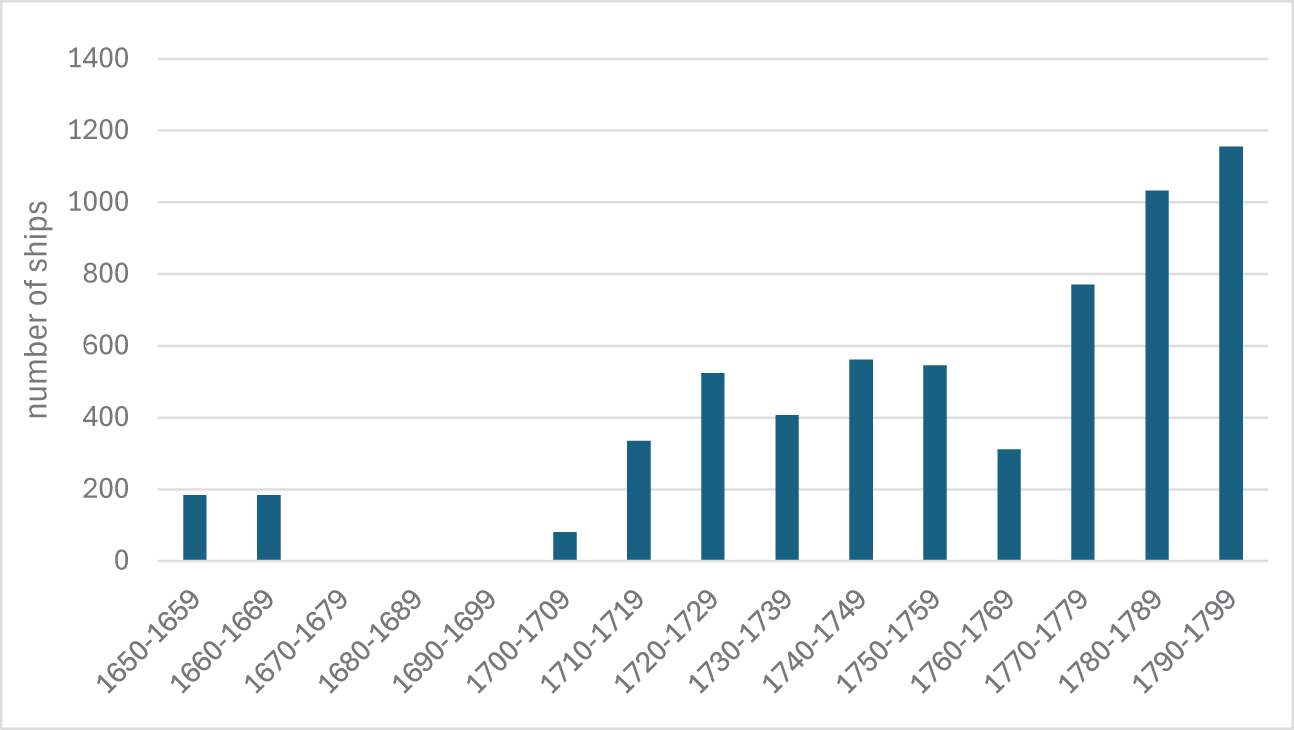
Archival evidence of arrivals in Lisbon indicates that the end of the convoy system coincided with an increase in traffic (Figure 1). Most of the ships carried 200–400 tons of cargo, and at least 120 ships reached the impressive limit of 800 tons after 1770 (Frutuoso et al., Reference Frutuoso, Guinote and Lopes2001, p. 97). The change in the navigation regime should not be the sole explanation for the increase in traffic. The last quarter of the century saw the rise of a new economic cycle in the colony, driven by diversified agricultural production (Carrara et al., Reference Carrara, Menz, Melo and Dominguez2023).”
Arrivals in Lisbon from Brazil—number of ships under the convoy system (1650–1800).

In Asian shipping regulation, the Crown’s primary intervention in shipping stemmed from its royal monopolies on this route, driven by public concern over the protection of valuable cargo. The so-called Armadas da Índia operated regularly from 1500 to 1640 and were largely financed by the Crown or by private partnerships to whom the king granted monopoly rights for exploitation. The Crown or private contractors outfitted five to six well-armed warships, which traveled together on round voyages, each lasting an average of 18 months (Godinho, Reference Godinho1983, III, pp. 53–69).
A few changes were introduced during the Habsburg rule in Portugal (1590–1640). A short-term attempt was made to transfer the Cape Route import-export business and shipping to a joint-stock Portuguese India Company (1628–1635) (Disney, Reference Disney1978). However, the company’s returns fell drastically short of covering its escalating costs in sustaining the spice import-export trade, especially against the competition from the Dutch VOC and English EIC companies. Financial strain led the Portuguese enterprise into liquidation in 1635, resulting in a severe decline in trade and traffic.
Regular traffic resumed after 1674, albeit on a much smaller scale. Two frigate-type ships began to sail annually to Goa, accompanied by an impressive revival of Portuguese trade within the Asian world, exploiting a chain of transactions later referred to by the English as the “country trade,” which developed independently from the route around the Cape (Ames, Reference Ames2000, pp. 16, 95). The few ships that travelled the Cape Route often stopped in Brazil, showing that the sea routes of the Portuguese empire were increasingly interconnected, and the Cape Route merged with the dynamic economy of the South Atlantic (Lapa Reference Lapa1968). The growing interest of Lisbon-based merchants in intra-Asian trade and links with Brazil is reflected in several proposals urging the authorities to open routes to the Coromandel Coast, Benguela, and China (Macau) to free navigation (Miranda and Salvado, Reference Miranda and Salvado2019, pp. 73, 80).
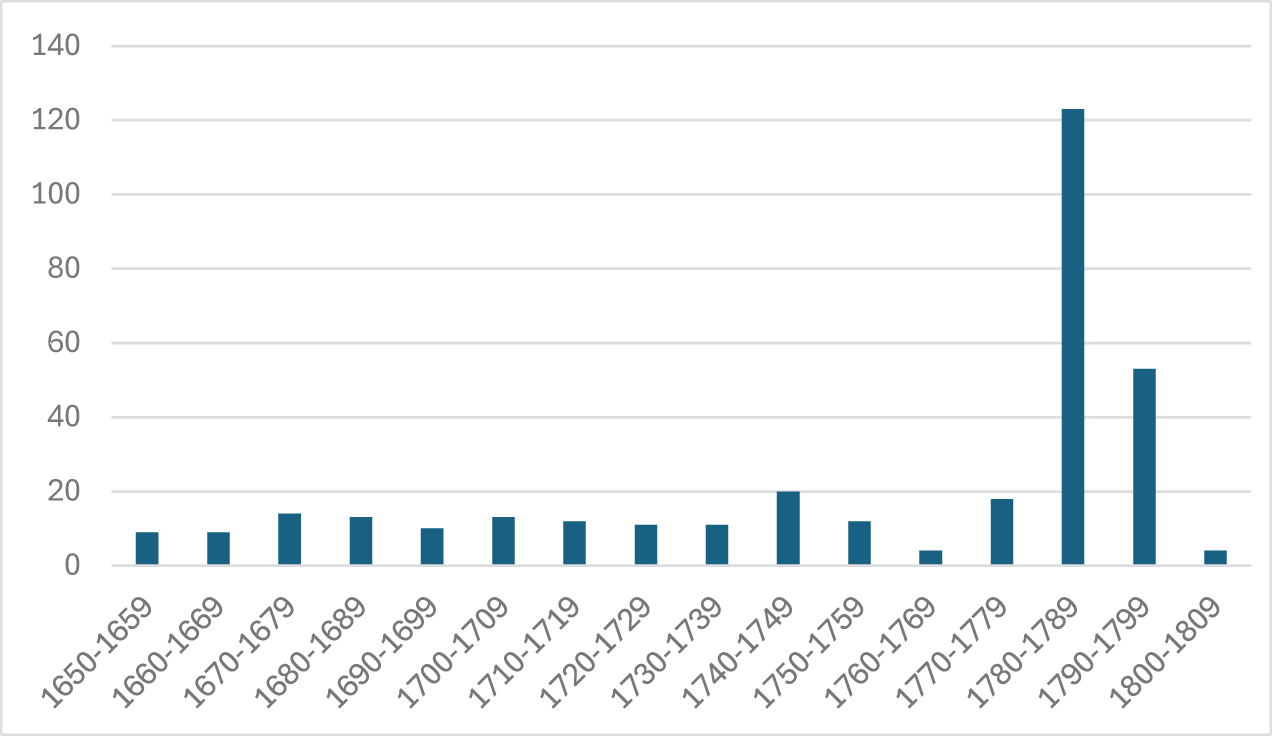
A newly established system of authorized, license-based trade defined the institutional framework for this route, which subsequently experienced significant growth during the 1780s (Figure 2) (Pinto, Reference Pinto2003; Albuquerque, Reference Albuquerque2020). While between 1710 and 1760, about 70 ships sailed under these new rules, a shipping scale comparable to that of the East India Company was finally achieved during the American War of Independence (1775–1783), largely due to Portugal’s neutrality that conferred a competitive advantage on Portuguese-flagged vessels (Godinho, Reference Godinho1978, pp. 321–322). Nevertheless, the revival of the Cape Route trade and the access this connection provided to trade in the Indian Ocean never approached the scale of the traffic to and from Brazil. By the 1780s, despite a clear boom in the Asian trade, the number of ships entering Lisbon was only about one-tenth of those arriving from Brazil.
Arrivals in Lisbon from Asia—number of ships under licensed regime (1650–1800).

Portugal’s colonial empire was sustained by two primary maritime routes, and in the late 18th century, public defense mechanisms were absent from both. This divergence hints at a spectrum of operational realities, which we will further explore. Before that, Section 3 will introduce the dataset and illuminate the significance of our documentary sources, laying the groundwork for our analysis.
3. The data
Sea loan contracts provide consistent evidence of the costs of risk management in various nautical contexts, including diverse levels of government protection measures. The loans under analysis were intended either for working capital, represented by wares aboard the designated vessel and voyage,Footnote 4 or for outfitting the ship and paying the crew, similar to bottomry.Footnote 5 This distinction relates to the sociology of borrowers and the guarantees they provide. The ship served as collateral for the latter use and was contracted by captains or shipmasters. When financing cargo—not specified in the contract, simply designated as “wares”—the collateral consisted of goods being transported, and merchants or traveling commissioners (in a few cases also, mid-ranks of the crew, like carpenters or physicians) were the dominant social categories of borrowers. In all instances, the contract specified the principal and interest rate, with no clause linking it to potential profits, making it legally distinct from any form of partnership between lender and borrower.Footnote 6 Notwithstanding the differences in uses, any loan explicitly covered “the risks of sea, fire, corsairs, enemies, and false friends” and was repaid in cash.
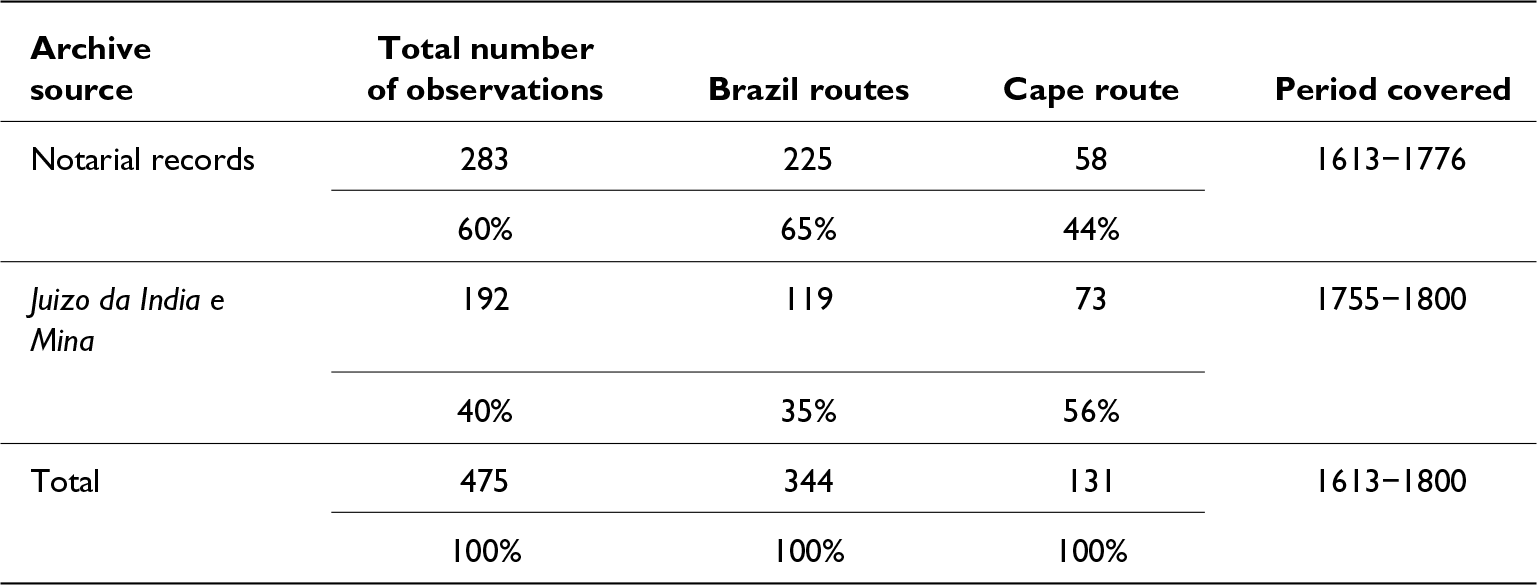
Our sample includes 475 contracts for round voyages, which provide such details and pertain exclusively to Brazilian and Asian destinations (Table 1).Footnote 7 The majority of the sample, specifically 89%, comprises 18th-century deeds derived from notarial protocols and the Court of Juízo da India e Mina.
Contribution of each archival source to sea loan dataset

Sources: Notarial protocols: a) ANTT_ Torre do Tombo, Cartórios Notariais de Lisboa, Office 1, Boxes 1–49; Office 7 A (currently Office 2), boxes 1−67; 74 to 135; Office 9A, boxes 1–40; Office 11 boxes 1–75; Office 12A, boxes 1–40; Porto archives: Arquivo Distrital do Porto, Cartórios Notariais Porto, Office 1–3rd series, books 67–187; Office 1–4th series, books, 143–154; Office 2, books 3–133; Office 4 1st series, books 1–54.
b) ANTT-Cartório Notarial do Distribuidor nooks 116–136; c) ANNT- Torre do Tombo, Feitos Findos, Juizo da India e Mina, (JIM) court bundles 1–77.
Before presenting the information provided by the archive funds in a longitudinal perspective, it is important to emphasize that all the documentary sources describe the full content of a sea loan contract. Notarial records provide access to the original deed and the Court of Juizo da India e Mina (JIM) records contain copies of the deed requested by the parties to the notary and included in the legal proceedings.
The limitations arising from the lack of surviving notarial protocols, on the one hand, and the much more limited information available for the 17th century, on the other, led to the adoption of diverse data collection strategies for the 17th and 18th centuries. For the 17th century, we examined all preserved notarial offices in Lisbon and Porto. For the 18th century, we took a selective approach to the existing offices that provided data before the 1755 earthquake, focusing on those that were not affected by the catastrophe. We selected a single notary’s office in Lisbon (the Barbuda office), which showed no decline in overall activity afterward. However, unexpectedly, it documented far fewer sea loans after 1755.
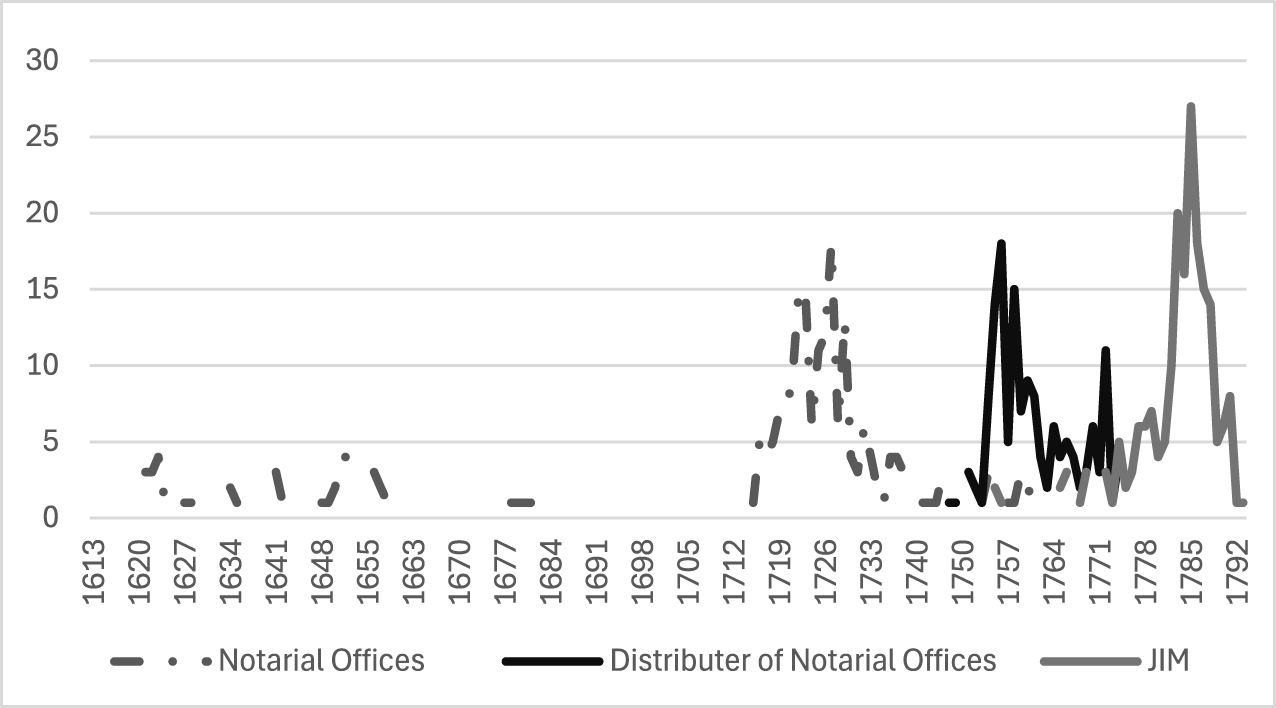
Additionally, within the notarial corporation, we relied on a specific fund related to the role of the Distributor of deeds through the notarial offices. The Distributor’s books contain detailed descriptions of contracts signed in Lisbon between 1755 and 1776, including information on the parties, contract values, uses of credit, and interest rates. This data corroborated the hypothesis that the Barbuda office experienced a decline in clients seeking sea loans, while simultaneously allowing for the collection of more observations to extend the dataset until 1776. After that, Distributor records ceased, making the Court of Juízo da Índia e Mina archive crucial for filling the series until the late 18th century (Figure 3).
Annual distribution of the sea loans by archive sources.

The archive fund of the Court of Juizo da India e Mina starts in 1756 and oversaw legal disputes related to the Portuguese overseas empire (Brazil, Africa, and Asia). In cases of default, creditors first called in the register of the debt before a notary and then pursued legal action. The documentary evidence, if uncontested by the debtor, quickly became an enforceable title. Court proceedings moved swiftly, with most cases concluding within 12 months from initiation to debt enforcement, which highlights the relative efficiency of third-party intervention in contract enforcement. The dataset from this archival collection corresponds to the period when the state provided no defensive structures.
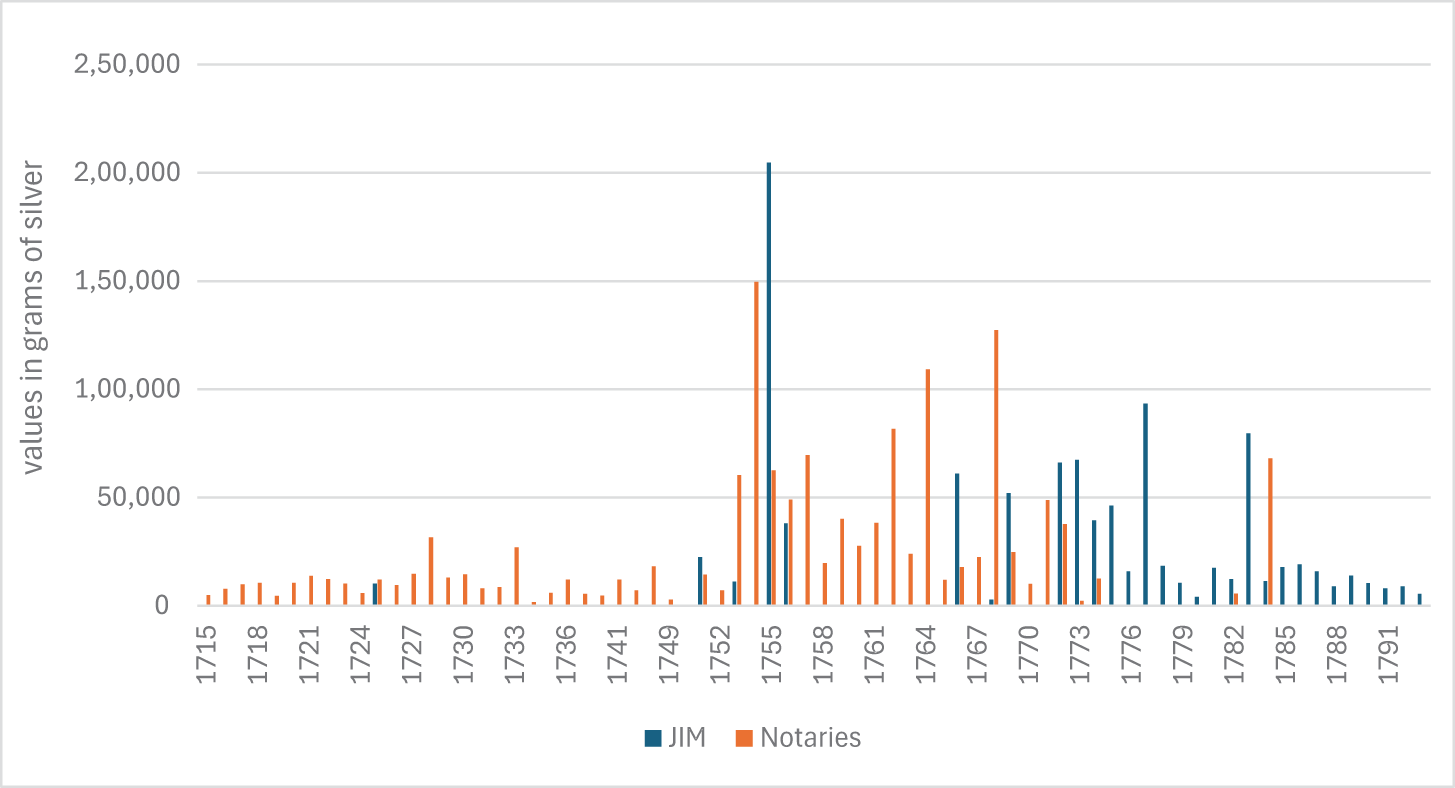
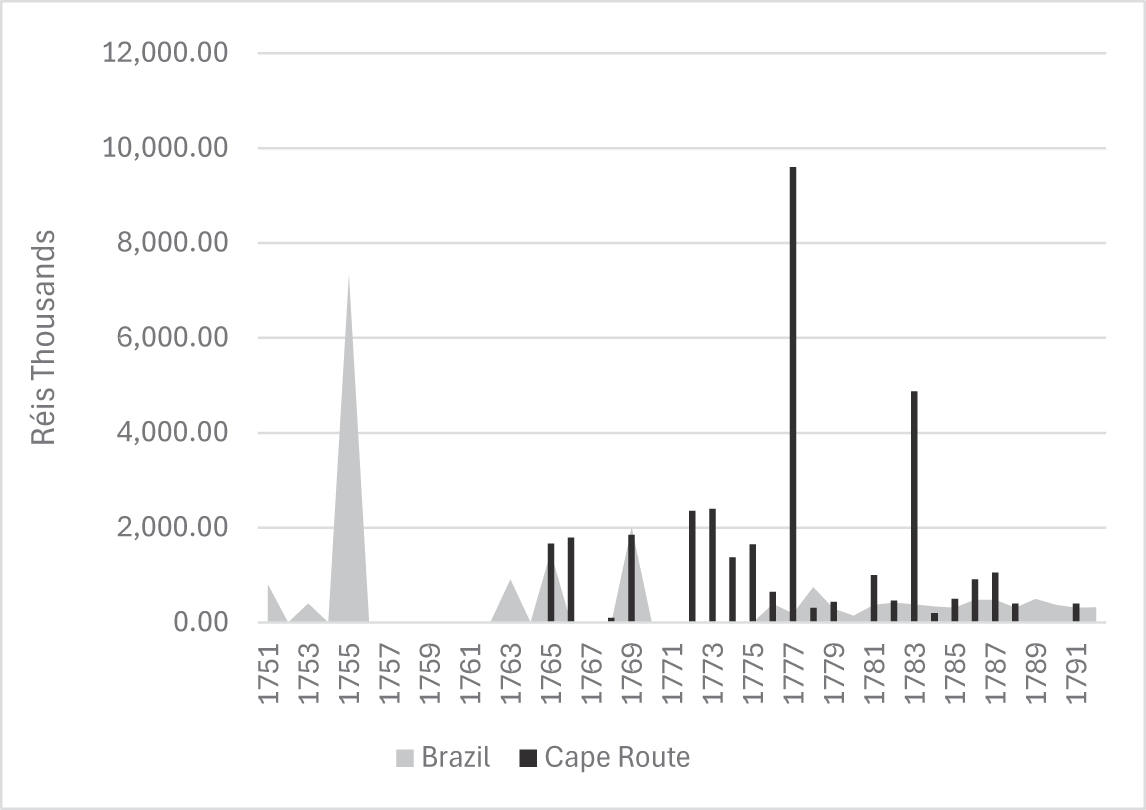
In terms of geographical scope, our sample comprises a greater number of sea loans for Brazil (344) than for Asia (131). However, within the Juízo da Índia e Mina records, cases pertaining to Asia (61%) exceeded those for Brazil (39%), suggesting a higher likelihood of non-performing loans for these voyages (Table 1). Figure 4 presents a broader perspective on the average contract value, using grams of silver as a deflator. The period between 1754 and 1785 exhibits the highest average values, with records from the Juízo da Índia e Mina demonstrating a comparatively higher valuation.Footnote 8
Average value of sea loans (1700–1800).

Having presented the characteristics of the sources that allowed the creation of the dataset on interest rates, we highlight the abundance of cases from the mid-18th century in our sample, partly because only one notary’s office covers the first half of the century. However, this imbalance does not pose critical issues for analyzing interest rate trends, as the rates are explicitly stated in all the records in the sample. However, it is important to recognize that the current data do not permit an examination of the impact of credit volume or liquidity constraints on lending activity. This limitation arises because transaction volumes cannot be compared over time without considering the context of each source individually.
Knowing the limitations of our sources, in the next sections, we discuss the factors of sea loan pricing that we found in the contracts.
4. Sea loans interest rates
In this section, we examine sea loan interest rates for the period of free navigation in the 17th century, during the critical threat of war in the South Atlantic against the Dutch West India Company, which challenged the regular traffic between Portugal and Brazil.
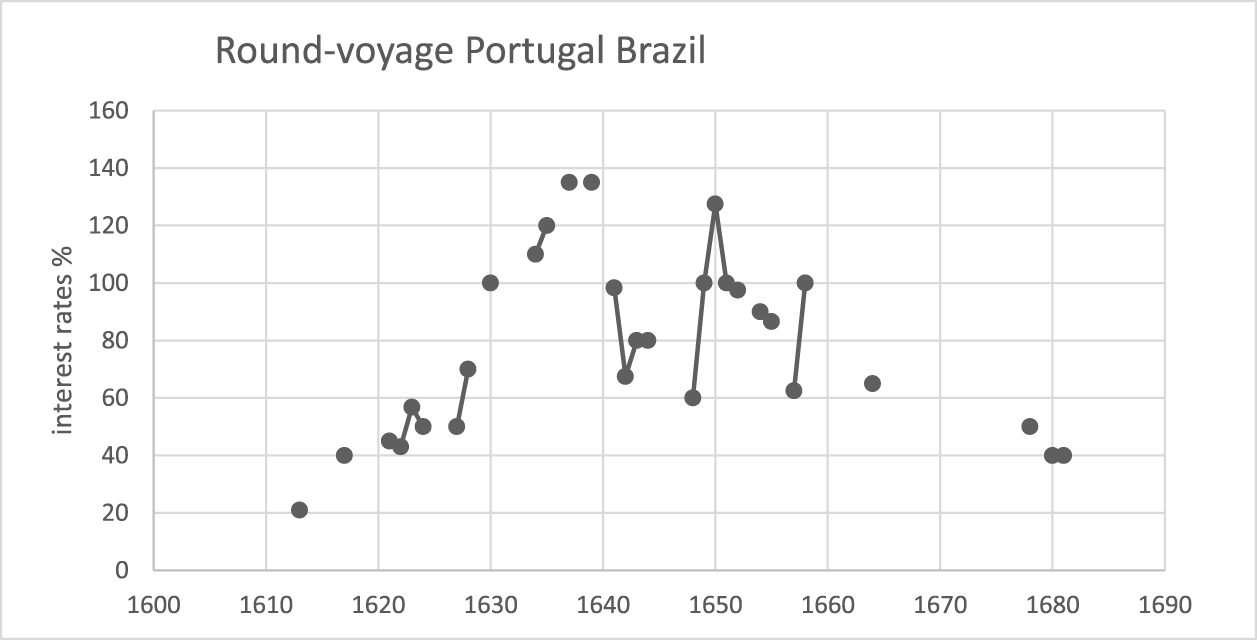
Figure 5 shows that while interest rates fluctuated between 21% and 40% during the 12 Years’ Truce (1609–1621), they increased substantially during the war (1625–1654). In the period of most severe hostilities, the price of credit rose incessantly. Starting at 50% in 1624, it reached 135% in 1637 and 1639.
Sea loans interest rates in round voyages Portugal–Brazil (1600–1680). Interest rate is the annual average of interest rates charged on loans for round trips to different ports: Bahia, Rio and Pernambuco.

We lack extensive data on ship departures and arrivals that would allow us to estimate the rate of damage by systematically comparing the number of shipwrecks to the overall fleet size. However, we can use the fleet size from 1630 as a benchmark, as this marks the peak of a sustained expansion in sugar production from 1560 and coincides with the onset of significant disruptions caused by the Dutch West India Company’s conquest of northeastern Brazil (1630–1654). By focusing on this period, we examine the political debate on how warfare influenced the risk-sharing strategies of private investors. This qualitative information offers insight into the functioning of the sea loan market under conditions of extreme uncertainty, helping to contextualize the peak observed in Figure 5.
By 1630, approximately 230–334 ships sailing on this route assured a substantial annual cargo capacity of about 33,000 tons (Costa, Reference Costa2002, pp. 178, 190–192). Such a merchant fleet of roughly 300 vessels dwarfed the rest of Portugal’s naval resources but suffered heavily from warfare during this conjuncture (Costa, Reference Costa2002, p. 178; Boxer, 1952, p. 180; Schwartz, Reference Schwartz1986[Reference Schwartz1995] p. 155). By 1623, over 23% of the Portuguese naval resources allocated to Brazil shipping had been captured. Contemporary Dutch sources report an annual average of 35 ships captured or destroyed between 1624 and 1635, indicating a loss probability of 10–12% (Laet, 1925 [Reference Laet1636], pp. 621–636). However, the Portuguese Treasury Council, by effectively assessing the gravity of the situation, also acknowledged that merchants typically absorbed shortfalls of 40–50%, which actually exceeded the observed probability of 10–12% (Costa, Reference Costa2002, p. 207). Nevertheless, interest rates on sea loans during this period were close to 100%. This discrepancy suggests that sea loans were influenced by factors other than the mere probability of physical risks.
Despite the Treasury Council’s attention to the critical situation in the colony and in the ocean, the central administration in Madrid offered no effective protection to merchant shipping. The intense privateering placed the burden of risk management squarely on colonial merchants and ship captains. Paradoxically, persistent attacks led ship captains to favor maneuverable, unarmed caravels (under 80 tons). On one hand, this gave them a competitive advantage, a protection rent (Lane, Reference Lane1979), allowing them to charge lower freight rates than larger, well-armed ships. On the other hand, the lack of weaponry meant captains had to surrender to privateers if escape tactics failed. At the same time, the governor in Brazil recognized that international networks allowed investors to contract insurance, not just in Portugal but particularly in Dutch and Hanseatic markets.
The governor’s view that insurance was a factor contributing to the sustainability of the Brazilian shipping industry is corroborated by studies examining the Brazilian sugar trade (Strum, Reference Strum2013). Multinational networks of investors, based in Antwerp and Amsterdam, backed international transactions, acting as both insurers and merchants. Individuals like Rodrigo Ximenes brokered insurance for cargoes shipped from Pernambuco to Portugal. The policies were underwritten in Amsterdam, where the insurer, Cornelis Snellinck, also conducted his own trade with Brazil through partners in Portugal and Antwerp (Ebert, Reference Ebert2011, pp. 105, 107; Go, Reference Go2009).
Notably, policies for voyages to Brazil were issued in Amsterdam, the financial center of a maritime power where privateering was organized. Before the war escalated, policies carried a 22% premium (Ebert, Reference Ebert2008, p. 123), but in the 1640s, the premium surprisingly dropped to between 4% and 5%. As for insurance finance in Portugal, more limited data on premiums indicate that they were significantly steeper than in Amsterdam, reaching around 15% in the 1640s (Costa, Reference Costa and Cavaciocchi2006, p. 718).Footnote 9 However, in any case, they were still below the rates charged on sea loans, as displayed in Figure 5. Consequently, sea loans were priced significantly higher than the probability of loss (10–12%), which appears to be comparable to the insurance premium in Portugal (15%).
While lender merchants and the freighters of potentially raided ships covered the risk of loss with insurance of principal (Santarém, Reference Santarém and Amzalak[1552] 1959, p. 33; Go, Reference Go2009, p. 122), borrowers were ship captains who sought loans for the ship’s equipment and the crew’s wages. They benefited in two ways from their lenders’ international networks. First, insurance supported a steady flow of funds for loans. Second, although the overall risk drove up interest rates on sea loans—well above the 5% to 6.25% rates on short-term obligations—contracts with interest rates of 100% or more and a contingent repayment clause still were the best means of sharing capital risk. Nevertheless, these high interest rates influenced borrowers’ decisions during the voyage, increasing uncertainty about the contract’s ex-post consequences. If a voyage had any chance of completion, repayment of both principal and interest was mandatory, regardless of damage to collateralized assets. Conversely, encounters with Dutch privateers had two outcomes: the ship was either captured and sent to a nearby harbor, such as Pernambuco, or set on fire. Under such a threat, it appears a rational choice to deliver the whole capital to the enemy. The borrower did not have the chance to select which capital to save.
The uncertainty surrounding the voyage was reflected in the pricing of sea loans. Between the yield on a safe loan (6.25%) plus the insurance premium that lenders charged borrowers (a maximum of 15% in the 1640s), the pricing of sea loans at 100–130% reflected a risk spread that accounted for the observed difference of 80–100 percentage points. Although additional data are needed for further statistical testing, uncertainty about prices and quantities—which affect markups on goods—must have been factored into loan pricing (Section 6). However, another equally important but often overlooked factor in studies of sea loans (though not in insurance) is lenders’ expectations that borrowers would exert minimal effort to protect the lent capital. Consequently, due to the stipulations within the contract, borrowers were encouraged to capitulate during an attack, thereby increasing the premium.
Somehow, the business was kept afloat in spite of high interest rates, with well-capitalized merchants and merchant-shipmasters interested in dealing with the Brazil trade under such circumstances. However, this institutional setting raised a social cost by reducing the state’s capacity to deploy naval resources at a time when requesting private large ships for military campaigns was still the norm. According to reports from the Portuguese Treasury Council to Madrid, the risk at sea and the contractual conditions altered shipbuilding outputs. Since the 1620s, private agents had ordered the construction of smaller vessels (between 70 and 100 tons) specifically designed to evade combat. In part, this preference for smaller vessels reflected a traditional strategy of dispersing risk, but did not meet the royal need for large ships whenever they were necessary for war campaigns (Costa, Reference Costa2002, p. 197).
The royal decree of 1623, informed by the Portuguese Treasury Council, explicitly prohibited sea loans, citing their potential to foster moral hazard and encourage the use of small, less defensible vessels: “Ship captains surrender to the enemy without defending themselves together, and this was undoubtedly due to the prior payment of maritime loans, which effectively covered the risk associated with these [small] ships” (Costa, Reference Costa2002, p. 234). This concern regarding risk-sharing instruments and their propensity to induce moral hazard was also a recurring theme in the development of insurance across diverse geographies and time periods (Kingston, Reference Kingston2007; Pearson, Reference Pearson2002; Rivera Medina, Reference Rivera Medina, Hellwege and Rossi2021). Despite the 1623 prohibition, the law’s inconsistent enforcement highlights the vital role sea loans played in sustaining Brazil’s maritime trade, revealing how agents, with the aid of notarial cooperation, circumvented the regulation.
A completely different status quo emerged in the 1640s when insurance records in Portugal revealed a staggering 249 ships captured in just 2 years—about half of the merchant fleet was either seized or incinerated in 1647 and 1648 (Boxer, Reference Boxer1957, Appendix III). Both rulers and market participants recognized the relative advantages of establishing a collective defense. In response, powerful sugar merchants agreed to replace the customary 15% insurance premium in the domestic market with a tax on goods and cargo to fund the convoy system in 1649. The provision of men-of-war and the organization of voyages began with the Crown’s contract to escort with a private company, the General Company of the Brazil Trade.
The immediate effect of the change in the shipping regime on interest rates is unclear, as interest rates had returned to 100% by 1654 (Figure 5). The convoy system also took a considerable amount of time to become a regular means of securing transportation. The General Company of the Brazil Trade failed to fulfil its obligation to escort two convoys per year, partly due to a shortage of warships capable of providing protection. Well-armed escort ships were frequently contracted from the English navy, which played a significant role in the Dutch surrender in Pernambuco (Boxer, Reference Boxer1957).
Although data from the second half of the 17th century are critically sparse (only four observations), they suggest that the declining trend began around 1664 and continued into the 18th century, as will be discussed in the next section. The question is why and how this downward trend persisted, given that the colony’s economic boom during the gold rush (1700–1765) must have fueled demand for credit, and the exploitation of Brazil’s gold mines was accompanied by inflation in the colony.
In the next section, we analyze a larger sample of sea loan contracts for Brazilian routes and compare them with those for the Cape Route to Asia to assess how different the Brazilian connection was. Before delving into this comparative analysis, we underscore the fundamental challenges of seafaring during this period. The absence of convoy protection created a particularly arduous environment, which directly impacted the financial instruments used to mitigate risk. This leads us to two preliminary conclusions: First, while sea loans coexisted with insurance, insurance premiums were only one component of loan pricing. Dismissing the influence of shipping and nautical losses on sea loan pricing based solely on the legal distinctions between insurance and sea loans (Bernal, Reference Bernal1992, p. 41, 43) ignores a crucial point: insurance facilitated the supply of funds for sea loan contracts. Consequently, both instruments played a vital role in risk-sharing within early modern finance, and the cost of insurance was likely embedded in the pricing of the loan.
Second, notarial records illustrate the enduring popularity of sea loans, which effectively circumvented the 1623 ordinance. The legislation presumed that sea loans incentivized reckless behavior by debtors, imposing a social cost due to the shortage of privately owned large ships available for the Crown’s use. However, the relative abundance of small ships created greater challenges for the ruler than for lenders. Lenders met the demand for sea loans by increasing interest rates well beyond the probability of loss as inferred from historical data and insurance premiums. The significant increase in loan prices depicted in Figure 5 between the years 1625 and 1654 was ultimately mitigated once routine traffic began operating under convoy systems.
5. The golden age of the convoy system and beyond
During the Brazilian economic boom in the 18th century, the risk of physical hazards in maritime transport remained low (Morineau, pp. 200–205). Furthermore, ship losses on voyages from Lisbon to Asia also declined, with estimates since the late 17th century indicating a rate of 5% and 14% on the outward and return journeys, respectively (Ames, Reference Ames2000, pp. 97, 101). While European ocean shipping became safer in many regions, Portugal’s diplomatic alliance with Britain, dating back to 1703, allowed it to rely on the military resources and protection of the dominant maritime power of the 18th century.Footnote 10
This safer environment was reflected in insurance markets, with premiums for destinations at similar latitudes to northeastern Brazil (categorized as Surinam) fluctuating between 2.5% and 6% annually (Spooner, Reference Spooner1983, pp. 257–285). The premium also shows a downward trend in Portugal, dropping from 4% to 5% in 1724–1727 (Miranda and Salvado, Reference Miranda and Salvado2024) to 3% in 1763,Footnote 11 indicating how much the perception of risk had changed since the 1640s. Sources on Macau round-trip insurance specify a 7.5% premium per voyage leg (Miranda and Salvado, Reference Miranda and Salvado2024), reflecting a higher risk on this route. For analytical purposes, insurance premiums provide an estimated probability of physical hazards to be compared with sea loan interest rates.
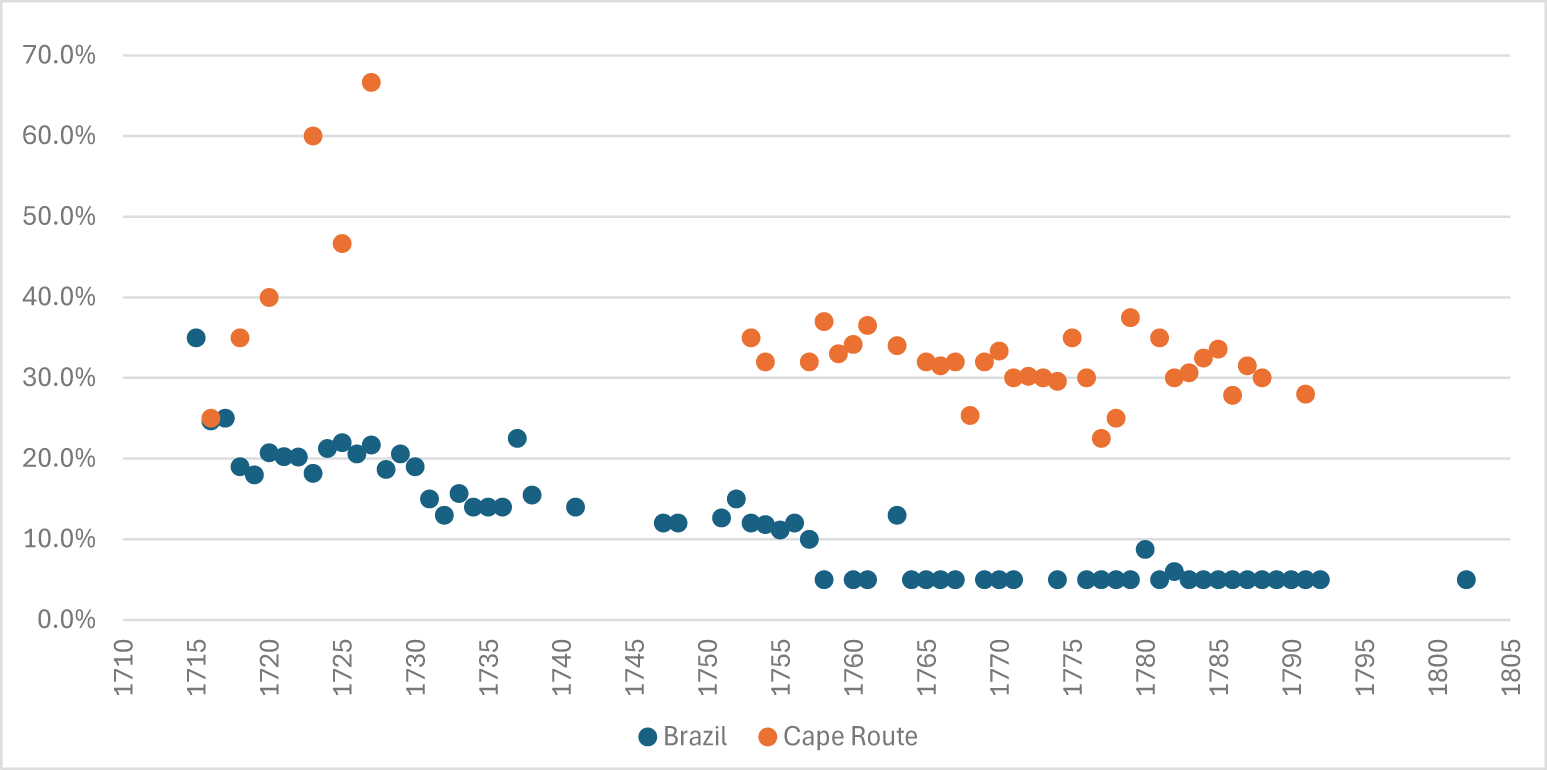
At the beginning of the 18th century, sea loans financed trade and shipping, with interest rates on both the Brazilian and Cape routes averaging approximately 35% (Figure 6). However, their trajectories differed over time. In Brazil, this level had already resulted from a long-term decline following the end of the war in the 1660s. The downward trend continued further over the first half of the 1700s, eventually reaching 10% by the 1750s. In contrast, interest rates on the Cape Route briefly increased between 1725 and 1727. Then they stabilized at 30–40% by 1753. The exact starting point of this stabilization remains unclear. From 1756 onward, interest rates in Brazil also stabilized at around 5%, a shift reinforced by legislative changes discussed later.
Sea loans interest rates in round voyages Brazil and Cape Route (1700–1800).

In summary, the cost of financing Atlantic ventures decreased significantly, from 35% to 10–12%, whereas the cost of sea loans on Portugal–Asia route remained relatively unchanged, regardless of whether the destination was Goa or Macau. Complex journeys with stopovers could influence loan pricing, but did not push rates above 40%. Consequently, by the mid-18th century, funding voyages, whether to Macau, Goa, Coromandel, or other destinations in the Indian Ocean, exceeded Brazilian ones by an average of 25–30 percentage points. The comparison can be even broader. Funding for the Cape Route was on par with trade expeditions to Africa, both of which exceeded the rates agreed upon in contracts to Brazil. Unlike the other routes, the Brazilian connection was the only case to experience a sustained decline.
Another conclusion to be drawn from Figure 6 is that this downward trend occurred under the well-established convoy system, whose annual regularity was assured—unlike the Carrera de Indias, which was often interrupted for years (Morineau, Reference Morineau1985, pp. 271–275). In Portugal, the Crown’s interest in safely transporting the yield of the gold tax on production justified the annual organization of the convoy. Two warships escorted the merchant ships sailing together from the four main Brazilian ports (Maranhão, Pernambuco, Bahia, and Rio de Janeiro) to Lisbon, the merchant ships carrying bulk commodities, the escort transporting private and Crown-owned gold. Although it was mandatory to register the cargo on the convoy, whether it was gold or another commodity, it is through these registers, paying 1% for convoy protection, that we learn the most. About 75% of the gold shipped to Portugal was minted in Brazilian mints. The gold consisted of Portuguese dobroes that circulated only in Portugal (and were eventually exported to Europe) but not in the colony. Private owners of the gold claimed their property at the Lisbon Mint House, which functioned as a customs house (Costa et al., Reference Costa, Rocha and Sousa2013).
Aside from their fiscal purpose, the registers generated a wealth of information due to the bureaucratic demands of the navigation system, providing investors with verifiable data on cargo value, quantity, and voyage events. While the system eliminated military expenditures for merchant shipping, the regularity of trade and the flow of news about the success of the voyage helped reduce uncertainty and minimize information problems. This significantly lowered the risks once associated with wartime trade. Furthermore, the integration of Brazil into the broader international relations of the Anglo-Portuguese alliance opened the colonial trade to English capital, which also applied to sea loans. This occurred at a time when the English community could benefit from increasingly efficient British insurance (Kingston Reference Kingston2007).
Consequently, the convoy system, operating under the Anglo-Portuguese alliance, contributed to more stable financial conditions, aligning sea loan interest rates (around 10%) more closely with their theoretical benchmark. This benchmark consisted of the expected return on obligations without contingent provisions (5%), the insurance premium (3%), and a modest margin (risk premium) of about 2% to cover unforeseen contract risks—such as difficulties in selecting trustworthy contracting parties. It is reasonable to attribute confidence issues, as historical evidence indicates that such problems were widespread in sea loan transactions—especially within Spanish trade from Cádiz following the dissolution of the convoy system. Bernal describes this period as one of “flexibility of the price of money,” which, worsened by the war of 1779–83, coincided with several bankruptcies (Baskes, Reference Baskes2013, pp. 88–89). According to a merchant letter, “to issue or accept a bill of risk, such thorough investigations were made that they would embarrass a true merchant, and this affected financing conditions, depending on the trustworthiness and financial solidity of the borrower” (Bernal, Reference Bernal1992, p. 484). Apparently, the end of the convoy system increased the likelihood of information problems in sea loan contracting and triggered what Bernal called “flexibility,” driving interest rates well above 12%.
The volatility in interest rates in Cadiz stands in stark contrast to the more stable conditions that developed in Lisbon. The decline in interest rates on Brazilian routes and their subsequent stabilization at 5% is attributable to key changes in the credit market. First, as early as the 1740s, credit without contingent proviso was notarized to finance trade with Brazil at a 5% rate, indicating that this rate aligned with agents’ perceived risk. Second, the flat trend after 1757, as shown in Figure 6, resulted from a different institutional setting. The 1757 law capped interest rates on both short-term obligations and Brazilian sea loans at 5%, effectively equating credit contracts with and without contingent provisions. Notably, the law did not impose any interest rate caps on credit for the Cape Route.
The new legal framework may not have had significant consequences for lenders while the convoy system remained in operation. After all, they were willing to lend at 5% prior to its implementation. However, in a context of business boom, as evidenced by the number of ships entering Lisbon after 1770 (Figures 1 and 2), the city could have experienced the same information problems described earlier in a merchant’s letter from Cádiz in the 1780s. The issue is that lenders in Portugal were unable to raise the premium accordingly.
The changing legal framework could have spelled the end for the sea loan market. However, court proceedings from the Court of Juízo da Índia e Mina suggest otherwise. Due to limitations in sampling from notarial protocols (as discussed in Section 3), our understanding of credit operations now relies primarily on judicial records. The juxtaposition of samples—one from the Court of Juízo da Índia e Mina and the other from notaries—is too limited to allow for an accurate estimation of the ratio of bad credit. For the period during which archival sources overlap (1756–1776), the ratio is 4%.Footnote 12 Nevertheless, the sample from the Court of Juízo da Índia e Mina, which is most valuable for the last 20 years of the century, reflects cases of poor credit across both routes and illustrates what was happening in the market for funding Brazil routes under the interest rate cap regulations.
The number of contracts in lawsuits indicates that the market did not completely dry up, while the expanding maritime trade attracted new seafarers and merchants. When comparing the financing of both routes, the higher average value of Asian loans is consistent with the dominant use in financing long-distance trade (Figure 7). Conversely, half of the cases involving the smaller-value Brazilian loan contracts after the end of the convoy system (1765) relate to seafarers borrowing to pay crews and outfit shipsFootnote 13 By contrast, during the gold mining period throughout the first half of the 18th century, the most representative group of borrowers was commissioner traders travelling back and forth on convoy-escorted merchant ships. The relatively biased sample comprising only judicial proceedings suggests that the period post 1757–1766 was one of change in the social profile of borrowers involved in maritime liaison with Brazil.
Sea loans in lawsuits at the court of Juizo da India e Mina (1750–1800).

From the lenders’ perspective, issuing loans at a 5% interest rate under contingent provisions would be a rational decision if they chose not to spread the risk through insurance, but could instead rely on effective legal enforcement to ensure debt repayment. This situation suggests that moral hazard in the last quarter of the 18th century had a different context than in the 17th century. Previously, moral hazard primarily arose from uncertainty caused by war and disruptions in traffic. In wartime, the actual capture or destruction of ships made it rational for borrowers not to fight, as it would have been impossible to preserve the ship or bring it back to Portugal in undamaged condition. Survival was the priority. The situation experienced by the borrower ex post, at sea, is what economists call hidden information, but the lender could factor the asymmetry of information into the loan premium because rates were not capped. Meanwhile, in the late 18th century, legal cases reveal non-compliance, which existed in both contracts with and without contingent provisions. However, after 1765, based on our examination of judicial proceedings, moral hazard appears to have been primarily driven by borrower wilful default. Given the legal constraints that prevented lenders from compensating for this risk by increasing sea loan interest rates, recourse to the courts became the primary mechanism for lenders’ risk mitigation.
There were other changes in the market. Cases at the Court of Juízo da Índia e Mina involved the Cape Route to Asia, for which a significant amount of credit was contracted. The financing of trade on extremely long routes appears as a new pattern. A single journey could encompass several destinations: departure from Lisbon, stopovers in Madeira, Brazil, Mozambique, ports on the Coromandel Coast, Mumbai (Bombay), Madras, Macau, and finally, return to Lisbon—with an interest rate of 40% on the capital. The interest rate cap on loans to Brazil may have led to contracts for Asian trade, also masking Brazilian financing. Alternatively, funds may have been diverted to support the developing imperial trade, strengthening Brazil’s integration into the broader Chinese trade network, for which interest rates were not legally restricted. In either case, long voyages involving a complex chain of transactions lasting at least a year and a half were financed with a 40% loan, while voyages directly to Macau or Goa (with no difference) were financed at an interest rate of 30–32%.
The idea that institutional settings and the convoy system impacted sea loan pricing remains credible. But further discussion of explanatory variables of sea loan pricing should account for lenders’ and borrowers’ expected profits from transactions financed by this risk-sharing instrument. In the next section, we engage with the explanation proposed for the Carrera de Indias, which considers markups or profit margins as primary determinants of sea loan interest rates (Bernal, Reference Bernal1992).
6. Did markups matter?
The inflated cost of sea loans, which significantly exceeded the 5% interest rate on regular short-term obligations, may well have influenced borrowers’ decisions to transfer risk to lenders, as 17th-century shipmasters commonly did. Their decision was likely based on expected income from shipping or trade ventures. Since the size of the vessels themselves constrained returns on shipping, shipmasters faced with soaring borrowing costs were pressured to diversify their investments in trade. One strategy was vertical integration, in which transportation was combined with ownership of the ship and cargo. Another approach was to act as commission agents for their charterers, earning a percentage of the cargo’s profits (Costa, Reference Costa2002, p. 441). From the lender’s perspective, markups played a crucial role in determining whether to extend credit under a contingent payment clause.
These considerations support Bernal’s hypothesis that commodity price gaps were a key factor influencing interest rates in the Carrera de Indias. This hypothesis requires further investigation, although a comprehensive price series for Carrera de Indias commodities has not yet been established to support it. We propose using sugar as a proxy for analyzing price differences in Portuguese trade with Brazil for several reasons. First, sugar’s high density dictated the maximum freight cost per ton and significantly influenced shipping returns (Costa, Reference Costa2002, Chapter 4, especially pp. 369–372). Second, as gold remittances increased, the value of cargo returning to Portugal, gold was transported on royal ships escorting the merchant fleet, while sugar remained the most valuable commodity until the 1770s. In 1703, the value of the cargo leaving Brazil was composed of 57% sugar, 18% tobacco, 15% leather, and 9% miscellaneous wares. In the mid-18th century (1761), sugar still represented 60% of the cargo value onboard the merchant ships (Morineau, Reference Morineau1985, pp. 155–156). Finally, we can leverage a comprehensive series of price gaps for sugar, resorting to export prices from Bahia (Schwartz, Reference Schwartz1986[Reference Schwartz1995], Appendix) and market purchase prices in Lisbon—Prices, Wages and Rents in Portugal (pwr-portugal.iseg.ulisboa.pt) (Figure 8).
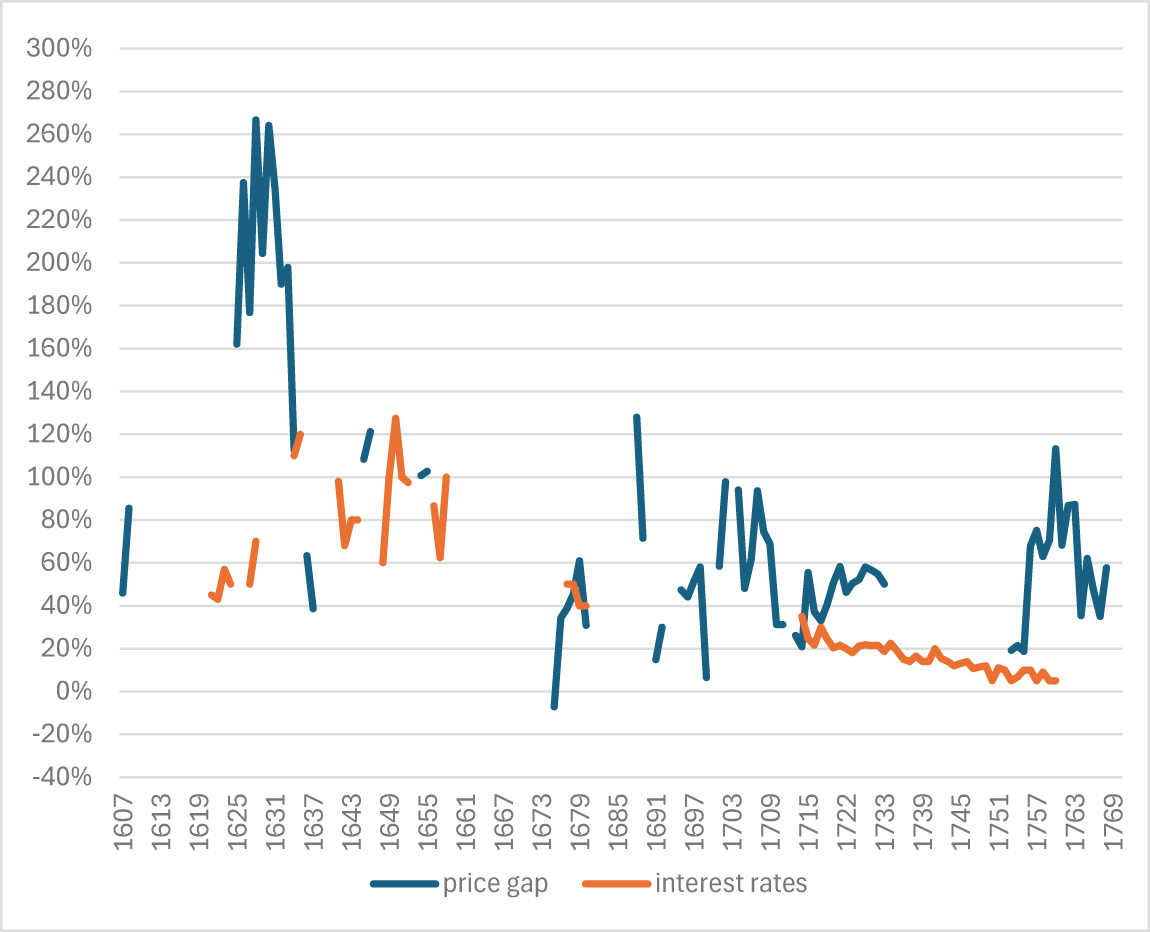
Sugar markups between Bahia and Lisbon and interest rates on sea loans to Brazil (1613–1769).

The impact of disrupted traffic during the war in Brazil (1625–1654) is illustrated in Figure 8, where price gaps exceeded 250%.Footnote 14 This created opportunities for leveraged investments in colonial shipping and trade, financed by loans with interest rates ranging from 100% to 135%. If borrowers successfully arrive in Portugal, they could secure a gross return on capital of close to 250% and service loans with interest rates of 100–130%. Overall, both markups and the cost of credit were correlated with the pace of maritime traffic. Furthermore, the graph reflects shifts in both international and colonial economic conditions. Markups declined in the 18th century, yet no clear trend emerges; most years saw fluctuations between 40% and 60% from 1700 onward. Conversely, interest rates exhibit a persistent decline.
To evaluate the hypothesis that markups influenced sea loan pricing, regardless of context, we begin by considering the entire series. This is especially significant due to the limited number of observations available that include both markups and interest rates, particularly during the 17th century, where data is restricted to only ten observations. We estimate a regression using these two series, with interest rates as the dependent variable and markups as the independent variable (Table 2).
Linear regression results – interest rates as function of markups, 1613–1757

Significance codes
* p < 0.05, **p < 0.01, ***p < 0.001
The resulting coefficient of 0.1825 indicates that a one-unit increase in markups is associated with a 0.1825-unit increase in interest rates. The p-values suggest that both coefficients are statistically significant. This test confirms that approximately 18% of the variation in the loan premium can be explained by expectations of trade profits. This is a significant result that partially reduces the margin of uncertainty regarding the gap between the observed price of the sea loan and the sum of the interest rate on safe credit plus the insurance premium.
Since a break, the Fin structure is displayed in Figure 8, the second test of the hypothesis accounts for the different institutional backdrops. The second regression is estimated using only the series from the years of the convoy, 1665–1765 (Table 3).Footnote 15
Linear regression results – interest rates as function of markups, 1665–1765

Significance codes
* p < 0.05, **p < 0.01, ***p < 0.001
The conclusions differ significantly. The intercept (α) is 16.92, meaning that when markups are zero, the expected interest rate is 16.92%. The coefficient on markups (β) is 0.01989, indicating that a 1-unit increase in markups is associated with a 0.01989 percentage point increase in interest rates. However, the p-value for the markup coefficient is 0.366, which is not statistically significant, and intercept (highly significant [p < 0.001]) indicates that interest rates maintain a strong baseline level regardless of markups. This suggests that markups may not have a meaningful impact on interest rates in this model.
Our 18th-century analysis questioned markups as a factor for sea loan pricing, while we found statistical significance when war period data were included. Therefore, markups appear to be a relevant factor within specific institutional settings, accounting for approximately 18% of the variation in loan premiums during periods of critical uncertainty, as was the case during the first half of the 17th century. The remaining 82% of unexplained variation likely includes information problems, namely moral hazard. This supports the 17th-century political perspective on the issue, particularly given the limitations of available merchant correspondence. Our central hypothesis, that shipping regimes significantly influenced sea loan pricing through their impact on information flows, is not contradicted by the markup analysis. Indeed, markups themselves were influenced by the disruption in the traffic.
A similar test for the Cape Route is not feasible. Unfortunately, the lack of comprehensive price data for imported goods in Portugal prevents us from calculating markups. Lawsuits (JIM) suggest that loans for the Cape Route averaged 1,775,640 reis and were allocated to cargo, referred to as “fazendas” (an undifferentiated designation, translated as “wares”). When silver (patacas) was cargo destined for trade in Macau, it required a stop in Rio de Janeiro or Madras (Albuquerque, Reference Albuquerque2020). On the other hand, data on rates of return on investment are limited, with examples ranging from 30.4% for trade in specific cotton fabrics to a remarkable 127% return for another type of textile (Pinto, Reference Pinto2003, p. 159). Additionally, returns of 300% or a much lower 50% for large-scale investments in partnerships trading with Coromandel ports indicate the wide scope of business possibilities in Asian trade (Miranda and Salvado, Reference Miranda and Salvado2019; Albuquerque, Reference Albuquerque2020). Considering that loans were contracted at interest rates of 30–40% in the 18th century for various geographies, it is unlikely that the price of the loan varied according to expected profits.
The flat trend characterizing sea loan interest rates involving the Cape Route is also observed in cases concerning West Africa (see note 16). Therefore, complex itineraries, implying transactions of commodities along several stops, appear to be compatible with a conventional price, covered by insurance charging a 7.5% premium (Miranda and Salvado, Reference Miranda and Salvado2024). However, the prevalence of lawsuits also suggests that borrower willful default was a concern on the Cape Route. This likely hindered the reduction of interest rates. Therefore, what appears unique in lending for Brazilian maritime routes was the lender’s decreasing premium.
7. Conclusion
This study demonstrates that the pricing of sea loans in the Portuguese colonial empire between 1600 and 1800 varied according to institutional settings. Using a comprehensive dataset of notarized contracts and judicial records, it provided empirical evidence that interest rates on Brazilian sea loans declined from 1650 throughout the 18th century, converging with the remuneration of risk-free obligations (5%) in the 1740s, while rates for Asian routes remained persistently above 30%. Institutionally, the convoy system differentiated Brazilian trade from all other maritime trade within the colonial empire from the mid-17th century. This allowed us to establish a correlation between the convoy system and the unique financial conditions observed in the Portuguese Atlantic trade with Brazil.
This investigation was grounded in the notion that the sea loan was not only a risk-sharing instrument but, more importantly, a contract. As with most contracts, asymmetric information posed a challenge. In critical situations involving physical hazards, the contingent clause created incentives for the borrower to exert little effort to protect the capital, a trade-off made to prioritize their own safety. This study demonstrated that the sea loan remained viable not because it replaced insurance, but because it required insurance to spread the lenders’ risk assumed from the borrower. Debtors, for their part, benefited from a financial mechanism tailored to high-risk situations where the potential for capital loss was a real concern. Therefore, the introduction of the convoy system reduced the aggregate risk, improved market transparency, and minimized the problem of asymmetric information. As a result, the loan price came to mirror the return on a risk-free loan closely.
This research reveals that the factors influencing the price of sea loans were complex and multifaceted. Long-term series and comparisons of various routes within the Portuguese Empire show that a single set of explanatory factors does not provide a comprehensive understanding of when and how this instrument was used, or how it adapted to uncertainty.
By integrating quantitative and qualitative data, this research advances our understanding of financial contracting in early modern economies. It reinforces the view that financial institutions and state interventions were fundamental in shaping the economic landscape of European colonial trade.
Acknowledgments
We owe particular thanks to Alejandra Irigoin for her valuable discussions, comments on the data, and the emphasis she placed on this case study. We also benefited from initial conversations on the specificities of sea loans with Yadira Gonzalez de Lara and Daniel Strum. We thank Paulo B. Brito for the discussion on data analysis. We are grateful to the three anonymous referees for their insightful comments during the revision process. Our thanks also go to the FCT for financial support through the project Money Supply and Credit Market in Pre-Modern Economies (EXPL/EPH-HIS/1742/2012).



 Open access

