





1. Introduction
Cross-field transport is critically important for fusion devices such as tokamaks, as it governs the overall energy and particle confinement time. This transport is mainly driven by turbulence at the ion scale. The question of turbulence saturation is then crucial for the design of future machines. The underlying saturation mechanisms also represent a fundamental question, still largely debated. Three main mechanisms can be identified for turbulence saturation in tokamak core plasmas: the relaxation of the profiles (density $n$
, temperature
$n$
, temperature $T$
), the energy transfer towards dissipative scales and the generation of secondary structures such as zonal flows (ZFs). The second and last mechanisms are partly related since ZFs can contribute to the generation of small-scale structures via vortex shearing.
$T$
), the energy transfer towards dissipative scales and the generation of secondary structures such as zonal flows (ZFs). The second and last mechanisms are partly related since ZFs can contribute to the generation of small-scale structures via vortex shearing.
The profile relaxation is a direct result of the cross-field transport induced by turbulence. A lower thermodynamic gradient reduces the drive for the instability and resulting turbulence. The transfer towards dissipative scales can occur through mode–mode couplings which lead to turbulent cascades such as those described by Kolmogorov (Reference Kolmogorov1941): the energy flows down from the injected scales towards the small scales where it gets dissipated through viscosity. Additionally, the magnetic and velocity shears can lead to the decorrelation of turbulent structures into smaller cells (Biglari, Diamond & Terry Reference Biglari, Diamond and Terry1990; Terry Reference Terry2000). Finally, the generation of ZFs – large-scale symmetric flows, constant on magnetic surfaces – is considered crucial in tokamaks because their action on turbulence is twofold. First, they are generated by the turbulence and store a part of its energy without inducing cross-field transport. Second, ZFs induce a velocity shear that participates in the shear decorrelation mechanism (Lin et al. Reference Lin, Hahm, Lee, Tang and White1998). Third, they can also be radially structured, resulting in a set of micro-barriers which is expected to efficiently limit the extension of the radial transport. This process can generate ExB staircases in the form of localized velocity shear layers associated with steps in the pressure profile (Dif-Pradalier et al. Reference Dif-Pradalier, Diamond, Grandgirard, Sarazin, Abiteboul, Garbet, Ghendrih, Strugarek, Ku and Chang2010, Reference Dif-Pradalier2015). The transport in between the staircase steps is often considered mediated by avalanches: quasi-ballistic transport events of heat or particles (Dif-Pradalier et al. Reference Dif-Pradalier, Hornung, Garbet, Ghendrih, Grandgirard, Latu and Sarazin2017).
Zonal flows are generated by turbulence through the action of the Reynolds stress – coupling of velocity fluctuations in the radial $x$
and poloidal
$x$
and poloidal $y$
directions – being the sum of two contributions, the electric
$y$
directions – being the sum of two contributions, the electric $\varPi _{E}$
(Diamond & Kim Reference Diamond and Kim1991) and the diamagnetic
$\varPi _{E}$
(Diamond & Kim Reference Diamond and Kim1991) and the diamagnetic $\varPi _\star$
(Smolyakov, Diamond & Medvedev Reference Smolyakov, Diamond and Medvedev2000; Hallatschek Reference Hallatschek2004; McDevitt et al. Reference McDevitt, Diamond, Gürcan and Hahm2010; Sarazin et al. Reference Sarazin2021; Dif-Pradalier et al. Reference Dif-Pradalier2022):
$\varPi _\star$
(Smolyakov, Diamond & Medvedev Reference Smolyakov, Diamond and Medvedev2000; Hallatschek Reference Hallatschek2004; McDevitt et al. Reference McDevitt, Diamond, Gürcan and Hahm2010; Sarazin et al. Reference Sarazin2021; Dif-Pradalier et al. Reference Dif-Pradalier2022): $\varPi _{tot} = \varPi _E + \varPi _\star$
. The first,
$\varPi _{tot} = \varPi _E + \varPi _\star$
. The first, $\varPi _E = \langle \widetilde v_{Ey} \widetilde v_{Ex} \rangle$
, relates to the electric drift
$\varPi _E = \langle \widetilde v_{Ey} \widetilde v_{Ex} \rangle$
, relates to the electric drift $\boldsymbol{v}_E = \boldsymbol{E} \times \boldsymbol{B}/B^2$
which involves the electric
$\boldsymbol{v}_E = \boldsymbol{E} \times \boldsymbol{B}/B^2$
which involves the electric $\boldsymbol{E}$
and magnetic
$\boldsymbol{E}$
and magnetic $\boldsymbol{B}$
fields. The second,
$\boldsymbol{B}$
fields. The second, $\varPi _\star = \langle \widetilde v_{Ey} \widetilde v_{\star x} \rangle$
, stems from the diamagnetic drift,
$\varPi _\star = \langle \widetilde v_{Ey} \widetilde v_{\star x} \rangle$
, stems from the diamagnetic drift, $\boldsymbol{v}_\star = \boldsymbol{B} \times \boldsymbol{\nabla } p/(enB^2)$
which involves the plasma pressure
$\boldsymbol{v}_\star = \boldsymbol{B} \times \boldsymbol{\nabla } p/(enB^2)$
which involves the plasma pressure $p$
, electron charge
$p$
, electron charge $e$
and plasma density
$e$
and plasma density $n$
.
$n$
.
The generation of ZFs and their impact on turbulence have been studied extensively for the past 20 years (Diamond et al. Reference Diamond, Itoh, Itoh and Hahm2005). While their important role has been assessed, the turbulence regimes leading to their generation and radial structure are still actively explored in view of quantitative prediction. In collisional drift-wave turbulence (Hasegawa & Wakatani Reference Hasegawa and Wakatani1983), a bifurcation is observed from turbulence dominated regimes to flow dominated regimes. On the one hand, gradient-driven models tend to indicate a collapse of the relative ZF energy at large collisionality (Numata, Ball & Dewar Reference Numata, Ball and Dewar2007). On the other hand, Panico et al. (Reference Panico, Sarazin, Hennequin, Gürcan, Bigué, Dif-Pradalier, Garbet, Ghendrih, Varennes and Vermare2025) with a flux-driven model – where the profiles can adapt freely to the turbulence parameters – found a more gradual reduction of the ZF energy when increasing collisionality. The collisional drift-wave (CDW) instability is controlled using the adiabaticity parameter $C = (k_\parallel \rho _s)^2 \omega _{ce}/\nu _{ei}$
, being the parallel wavenumber
$C = (k_\parallel \rho _s)^2 \omega _{ce}/\nu _{ei}$
, being the parallel wavenumber $k_\parallel$
normalized to the Larmor radius
$k_\parallel$
normalized to the Larmor radius $\rho _s = \sqrt {m_i T_i}/(eB)$
divided by the electron–ion collision frequency normalized to the electron cyclotron frequency
$\rho _s = \sqrt {m_i T_i}/(eB)$
divided by the electron–ion collision frequency normalized to the electron cyclotron frequency $\omega _{ce}=eB/m_e$
, where
$\omega _{ce}=eB/m_e$
, where $m_i$
and
$m_i$
and $m_e$
are respectively the ion and the electron mass. However, in tokamaks, it appears important to also take into account the interchange instability that originates from the magnetic field inhomogeneity. The interchange instability is controlled through an effective gravity parameter
$m_e$
are respectively the ion and the electron mass. However, in tokamaks, it appears important to also take into account the interchange instability that originates from the magnetic field inhomogeneity. The interchange instability is controlled through an effective gravity parameter $g=2\rho _s/R$
, ratio of the Larmor radius to the major radius
$g=2\rho _s/R$
, ratio of the Larmor radius to the major radius $R$
of the tokamak. This latter instability has been shown to be important in describing avalanche transport in early reduced flux-driven models (Sarazin & Ghendrih Reference Sarazin and Ghendrih1998; Garbet et al. Reference Garbet, Sarazin, Beyer, Ghendrih, Waltz, Ottaviani and Benkadda1999). Synergy between interchange and CDWs has also proved to be important in the context of gradient-driven simulations (Scott Reference Scott2005). Exploring the phase space in this context showed that different confinement properties can be found depending on the turbulence regime (Rogers, Drake & Zeiler Reference Rogers, Drake and Zeiler1998; Eich et al. Reference Eich2021).
$R$
of the tokamak. This latter instability has been shown to be important in describing avalanche transport in early reduced flux-driven models (Sarazin & Ghendrih Reference Sarazin and Ghendrih1998; Garbet et al. Reference Garbet, Sarazin, Beyer, Ghendrih, Waltz, Ottaviani and Benkadda1999). Synergy between interchange and CDWs has also proved to be important in the context of gradient-driven simulations (Scott Reference Scott2005). Exploring the phase space in this context showed that different confinement properties can be found depending on the turbulence regime (Rogers, Drake & Zeiler Reference Rogers, Drake and Zeiler1998; Eich et al. Reference Eich2021).
In this framework, the goal of the present paper is threefold. First, we use the Tokam1D model derived in Panico et al. (Reference Panico, Sarazin, Hennequin, Gürcan, Bigué, Dif-Pradalier, Garbet, Ghendrih, Varennes and Vermare2025) to study the generation of ZFs in a flux-driven competing CDW – interchange turbulence. Second, we investigate the radial structure of the flows and in particular the regimes leading to the appearance of staircases. Third, we explore the impact of ZFs and their radial structure on the transport and confinement. These questions will be tackled by performing several scans of the turbulence parameters $C$
and
$C$
and $g$
on particle confinement time scales while still resolving the small turbulence scales.
$g$
on particle confinement time scales while still resolving the small turbulence scales.
In § 2, the Tokam1D model is briefly recalled and the performed simulations are detailed. In particular, the role of the source is discussed. In § 3, the generation of ZFs is studied. The regimes leading to a large ratio of flow to turbulence energy are understood through a study of the underlying Reynolds stress components. Additionally, the ZFs radial structure and the impact of the profile’s distance to the instability threshold are studied. Finally, in § 4, the impact of the flows – and more particularly of their radial structure – on the overall confinement is investigated. Interestingly, depending on the turbulence regime, the ZFs are shown to interact with passing avalanches either constructively or destructively.
2. Tokam1D model and performed simulations
Tokam1D is a flux-driven reduced code derived in Panico (Reference Panico2024) and Panico et al. (Reference Panico, Sarazin, Hennequin, Gürcan, Bigué, Dif-Pradalier, Garbet, Ghendrih, Varennes and Vermare2025) that features two dominant instabilities of the plasma edge: CDWs and interchange. Assuming an electrostatic isothermal plasma with hot ions, the role of the diamagnetic component of the Reynolds stress is considered. The model stems from the electron density conservation equation and charge conservation equation solved in a slab geometry. It evolves the logarithm of the density $N=\ln n$
and the general vorticity
$N=\ln n$
and the general vorticity $\varOmega = \nabla _\perp ^2 (\phi + \tau N)$
self-consistently, with
$\varOmega = \nabla _\perp ^2 (\phi + \tau N)$
self-consistently, with $\phi$
the electric potential and
$\phi$
the electric potential and $\tau = T_i/T_e$
the ion to electron temperature ratio
$\tau = T_i/T_e$
the ion to electron temperature ratio
 \begin{align} &\partial _t N + \{ \phi , N \} = g \partial _y ( \phi - N)+ \sigma _0 \nabla _\parallel ^2 (N - \phi ) + D \nabla _\perp ^2 N + S_N, \end{align}
 \begin{align} &\partial _t \varOmega + \nabla _{\perp ,i} \big\{ \phi , \nabla _{\perp , i} ( \phi + \tau N) \big \} = - (1 + \tau )g \partial _y N + \sigma _0 \nabla _\parallel ^2 (N - \phi ) + \nu \nabla _\perp ^2 \varOmega. \end{align}
Here, $\sigma _0 = \omega _{ce}/\nu _{ei,0}$
is the plasma conductivity taken at a reference plasma density, and
$\sigma _0 = \omega _{ce}/\nu _{ei,0}$
is the plasma conductivity taken at a reference plasma density, and $D$
and
$D$
and $\nu$
are dissipation coefficients. Note that the time is normalized to the ion cyclotron frequency
$\nu$
are dissipation coefficients. Note that the time is normalized to the ion cyclotron frequency $\omega _{cs} = (eB)/m_i$
, the lengths to the sound Larmor radius
$\omega _{cs} = (eB)/m_i$
, the lengths to the sound Larmor radius $\rho _s = (m_i c_s) / (eB)$
and the electric potential is normalized to the electron temperature
$\rho _s = (m_i c_s) / (eB)$
and the electric potential is normalized to the electron temperature $\phi = e \Phi / T_e$
. The model is further reduced to one dimension by separating the quantities into so-called equilibrium (actually flux-surface averages) and fluctuations
$\phi = e \Phi / T_e$
. The model is further reduced to one dimension by separating the quantities into so-called equilibrium (actually flux-surface averages) and fluctuations
 \begin{align} N_{eq}(x,t) = \frac {1}{(2\pi )^2} \int _{y,z} N \mathrm{d}y \mathrm{d}z, \end{align}
where $x$
stands for the radial,
$x$
stands for the radial, $y$
the poloidal and
$y$
the poloidal and $z$
the parallel direction. The fluctuating components are Fourier transformed and projected onto single parallel and poloidal wave vectors
$z$
the parallel direction. The fluctuating components are Fourier transformed and projected onto single parallel and poloidal wave vectors $(\boldsymbol{k}_\parallel , \boldsymbol{k}_y)$
 \begin{align} \begin{pmatrix} N \\ \phi \end{pmatrix} = \begin{pmatrix} N_{eq} \\ \phi _{eq} \end{pmatrix} (x,t) + \begin{pmatrix} N_k \\ \phi _k \end{pmatrix} (x,t) \exp \big[i\big(k_y y + k_\parallel z\big)\big] + \text{ cc}, \end{align}
where $cc$
stands for the complex conjugate. The resulting system solves the equilibrium density
$cc$
stands for the complex conjugate. The resulting system solves the equilibrium density $N_{eq}$
, the equilibrium velocity
$N_{eq}$
, the equilibrium velocity $V_{eq} = \partial _x \phi _{eq}$
, the density fluctuations
$V_{eq} = \partial _x \phi _{eq}$
, the density fluctuations $N_k$
and the vorticity fluctuations
$N_k$
and the vorticity fluctuations $\varOmega _k$
both taken at the poloidal wavenumber
$\varOmega _k$
both taken at the poloidal wavenumber $k_y$
. The Tokam1D equations read
$k_y$
. The Tokam1D equations read
 \begin{align} \partial _t N_{eq} &= - \partial _x \varGamma _{turb} + D_0 \partial _x^2 N_{eq} + S_N,\\[-10pt]\nonumber \end{align}
 \begin{align} \partial _t V_{eq} &= - \partial _x \varPi _{tot} + \nu _0 \partial _x^2 V_{eq} - \mu V_{eq},\\[-10pt]\nonumber \end{align}
 \begin{align} \partial _t N_k &= +\, i k_y \big( \phi _k \partial _x N_{eq}{-}V_{eq} N_k \big) + i g k_y (\phi _k{-}N_k) + C (\phi _k{-}N_k ){+}D_1 \nabla _\perp ^2 N_k,\\[-10pt]\nonumber \end{align}
 \begin{align} \partial _t \varOmega _k &= -\, i k_y g (1+\tau ) N_k -ik_y V_{eq} \varOmega _k + i k_y \partial _x\big[\phi _k \partial _x\big(V_{eq}+\tau \partial _x N_{eq}\big)\big]\nonumber \\ & \quad -ik_y \partial _x V_{eq} \partial _x(\phi _k+\tau N_k) + C(\phi _k-N_k) + \nu _1 \nabla _\perp ^2\varOmega _k. \end{align}
The reduction to one dimension effectively removes mode–mode (in $k_y$
) interaction as those terms involve modes that are not accounted for in the model. The principal consequence is that turbulence saturation through cascade processes is not included in the model. However, nonlinear terms are still retained through the interaction with the equilibrium fields, without any scale separation assumption in time or in the radial direction. As such, turbulence saturation principally occurs through profile relaxation, ZF generation and shear-induced transfer towards stable radial wavenumbers. In this model, it is argued that those mechanisms are essential in fusion plasmas close to marginality (Panico et al. Reference Panico, Sarazin, Hennequin, Gürcan, Bigué, Dif-Pradalier, Garbet, Ghendrih, Varennes and Vermare2025). Additionally, Staebler et al. (Reference Staebler, Candy, Howard and Holland2016) have shown that, in the gradient-driven regime, while mode–mode coupling and ZF shearing are competing mechanisms for turbulence saturation at low
$k_y$
) interaction as those terms involve modes that are not accounted for in the model. The principal consequence is that turbulence saturation through cascade processes is not included in the model. However, nonlinear terms are still retained through the interaction with the equilibrium fields, without any scale separation assumption in time or in the radial direction. As such, turbulence saturation principally occurs through profile relaxation, ZF generation and shear-induced transfer towards stable radial wavenumbers. In this model, it is argued that those mechanisms are essential in fusion plasmas close to marginality (Panico et al. Reference Panico, Sarazin, Hennequin, Gürcan, Bigué, Dif-Pradalier, Garbet, Ghendrih, Varennes and Vermare2025). Additionally, Staebler et al. (Reference Staebler, Candy, Howard and Holland2016) have shown that, in the gradient-driven regime, while mode–mode coupling and ZF shearing are competing mechanisms for turbulence saturation at low $k_y$
, the latter largely dominates at large
$k_y$
, the latter largely dominates at large $k_y$
(see their figure 1).
$k_y$
(see their figure 1).
The code is flux driven with a particle source $S_N$
and no scale separation in
$S_N$
and no scale separation in $x$
and time is assumed between equilibrium and fluctuating components. The equilibrium density (2.5) results from the balance between the turbulent flux of particles
$x$
and time is assumed between equilibrium and fluctuating components. The equilibrium density (2.5) results from the balance between the turbulent flux of particles $\varGamma _{turb} = - 2k_y \mathrm{Im} (N_k \phi _k^*)$
, where
$\varGamma _{turb} = - 2k_y \mathrm{Im} (N_k \phi _k^*)$
, where $\mathrm{Im}$
stands for the imaginary part, and the particle source. The equilibrium velocity evolved in (2.6) is that of the ZFs generated through the action of the total Reynolds stress
$\mathrm{Im}$
stands for the imaginary part, and the particle source. The equilibrium velocity evolved in (2.6) is that of the ZFs generated through the action of the total Reynolds stress $\varPi _{tot}$
defined as the sum of the electric and diamagnetic components
$\varPi _{tot}$
defined as the sum of the electric and diamagnetic components
 \begin{align} \varPi _{tot} = \varPi _E + \varPi _\star = - 2k_y Im \big[\big(\phi _k^* + \tau N_k^*\big) \partial _x \phi _k\big]. \end{align}
Each instability is controlled through a physical parameter. The interchange instability is driven by the magnetic curvature $g=2\rho _s/R$
with
$g=2\rho _s/R$
with $\rho _s$
the sound Larmor radius and
$\rho _s$
the sound Larmor radius and $R$
the tokamak major radius. The CDW instability is governed by the adiabatic parameter
$R$
the tokamak major radius. The CDW instability is governed by the adiabatic parameter $C=(k_\parallel \rho _s)^2 \omega _{ce}/\nu _{ei}$
, with
$C=(k_\parallel \rho _s)^2 \omega _{ce}/\nu _{ei}$
, with $\nu _{ei}$
the electron–ion collision frequency normalized to the electron cyclotron frequency
$\nu _{ei}$
the electron–ion collision frequency normalized to the electron cyclotron frequency $\omega _{ce}$
(Hasegawa & Wakatani Reference Hasegawa and Wakatani1983). Dissipation and viscosity are accounted for via the coefficients
$\omega _{ce}$
(Hasegawa & Wakatani Reference Hasegawa and Wakatani1983). Dissipation and viscosity are accounted for via the coefficients $(D_0, \nu _0)$
for the equilibrium and
$(D_0, \nu _0)$
for the equilibrium and $(D_1, \nu _1)$
for the fluctuations. An additional friction
$(D_1, \nu _1)$
for the fluctuations. An additional friction $\mu$
is considered for the flows, representative of magnetic pumping or neoclassical friction.
$\mu$
is considered for the flows, representative of magnetic pumping or neoclassical friction.
Main model parameters and their range for typical values of WEST, TCV and MAST-U tokamaks. Plasma parameters are computed at the separatrix: $T_e = T_{sep}$
,
$T_e = T_{sep}$
, $n_0=n_{sep}$
and
$n_0=n_{sep}$
and $B=B_{sep}$
. The parallel wavenumber is computed assuming a connection length
$B=B_{sep}$
. The parallel wavenumber is computed assuming a connection length $k_\parallel =1/(q_{95} R)$
.
$k_\parallel =1/(q_{95} R)$
.

The order of magnitude of $C$
and
$C$
and $g$
can be estimated from plasma parameters. Typically, the parallel wavenumber is estimated considering a connection length,
$g$
can be estimated from plasma parameters. Typically, the parallel wavenumber is estimated considering a connection length, $L_q = 2\pi q R$
, with
$L_q = 2\pi q R$
, with $q$
the safety factor, which gives
$q$
the safety factor, which gives $k_\parallel = 2\pi /L_q = 1/(qR)$
. Note that
$k_\parallel = 2\pi /L_q = 1/(qR)$
. Note that $k_\parallel$
can be characterized experimentally using long range correlation, see for example Mahdizadeh et al. (Reference Mahdizadeh, Greiner, Happel, Kendl, Ramisch, Scott and Stroth2007). Estimations of the main parameters are given for standard edge values of the WEST, TCV and MAST-U tokamaks in table 1. The values are computed considering a major radius
$k_\parallel$
can be characterized experimentally using long range correlation, see for example Mahdizadeh et al. (Reference Mahdizadeh, Greiner, Happel, Kendl, Ramisch, Scott and Stroth2007). Estimations of the main parameters are given for standard edge values of the WEST, TCV and MAST-U tokamaks in table 1. The values are computed considering a major radius $R=2.5$ $m$
and minor radius
$m$
and minor radius $a=0.5$ $m$
for WEST,
$m$
for WEST, $(R,a)\,{=}\,(0.87, 0.25)$
m for TCV and
$(R,a)\,{=}\,(0.87, 0.25)$
m for TCV and $(R,a)\,{=}\, (0.9,0.6)$
m for MAST-U.
$(R,a)\,{=}\, (0.9,0.6)$
m for MAST-U.
It appears from the parameter dependencies that the strong variation of density and temperature profiles at the edge of tokamak plasmas translates into a wide range of $g$
and
$g$
and $C$
values. It is interesting to note that
$C$
values. It is interesting to note that $C$
decreases when density increases. It has implication for the interpretation of the nonlinear simulations: a high density (respectively low
$C$
decreases when density increases. It has implication for the interpretation of the nonlinear simulations: a high density (respectively low $C$
) leads to a decrease in the ZF energy for CDW turbulence, see § 3.1.
$C$
) leads to a decrease in the ZF energy for CDW turbulence, see § 3.1.
In order to characterize the generation of ZFs and their impact on the transport as a function of the parameters $C$
and
$C$
and $g$
, a total of
$g$
, a total of $104$
simulations are performed starting from a stable density profile with constant dissipation coefficients
$104$
simulations are performed starting from a stable density profile with constant dissipation coefficients $D_0=\nu _0=D_1=\nu _1=10^{-2}$
, friction
$D_0=\nu _0=D_1=\nu _1=10^{-2}$
, friction $\mu =10^{-4}$
, poloidal wavenumber
$\mu =10^{-4}$
, poloidal wavenumber $k_y=0.3$
and ion to electron temperature ratio
$k_y=0.3$
and ion to electron temperature ratio $\tau =1$
. Simulations are performed on a radial domain of
$\tau =1$
. Simulations are performed on a radial domain of $L_x=400$ $\rho _s$
using a grid of
$\rho _s$
using a grid of $1024$
points. Dirichlet boundary conditions ensure vanishing fluctuations and vanishing equilibrium velocity on both boundaries. A Neumann boundary condition is used for the equilibrium density on the left-hand side of the simulation and Dirichlet (
$1024$
points. Dirichlet boundary conditions ensure vanishing fluctuations and vanishing equilibrium velocity on both boundaries. A Neumann boundary condition is used for the equilibrium density on the left-hand side of the simulation and Dirichlet ( $N_{eq} = 0.1$
) on the right-hand side. Each simulation is run until the density profile has reached statistical steady state. The particle confinement time is defined as
$N_{eq} = 0.1$
) on the right-hand side. Each simulation is run until the density profile has reached statistical steady state. The particle confinement time is defined as
 \begin{align} \tau _p = \frac {\int N_{eq} \mathrm{d} x}{\int S_N \mathrm{d}x}. \end{align}
The source is taken Gaussian with the maximum located at the inner boundary of the domain. In order to develop turbulence, one needs to ensure that the maximum gradient achievable by the simulationFootnote
1
– when the diffusion balances the source in (2.5) – called the diffusive gradient $\lvert \partial _x N_{eq} \rvert ^{diff} = \int S_N/D_0$
, is larger than the linear threshold defined by the critical gradient
$\lvert \partial _x N_{eq} \rvert ^{diff} = \int S_N/D_0$
, is larger than the linear threshold defined by the critical gradient $\lvert \partial _x N_{eq} \rvert ^{crit}$
. The critical gradient is computed by solving the linear dispersion relation of the Tokam1D system with
$\lvert \partial _x N_{eq} \rvert ^{crit}$
. The critical gradient is computed by solving the linear dispersion relation of the Tokam1D system with $V_{eq}^{n} = 0$
(the equilibrium velocity and all of its derivatives) and
$V_{eq}^{n} = 0$
(the equilibrium velocity and all of its derivatives) and $N_{eq}^{p} =0$
for
$N_{eq}^{p} =0$
for $p\geq 2$
. Details of the computation are provided in Panico (Reference Panico2024). Two sets of simulations are performed with different source strategies. The first is performed with a constant source
$p\geq 2$
. Details of the computation are provided in Panico (Reference Panico2024). Two sets of simulations are performed with different source strategies. The first is performed with a constant source $S_N(0)=10^{-4}$
, chosen such that any simulation is above its linear threshold. Since the explored parameter space is large and some cases exhibit large
$S_N(0)=10^{-4}$
, chosen such that any simulation is above its linear threshold. Since the explored parameter space is large and some cases exhibit large $\lvert \partial _x N_{eq} \rvert ^{crit}$
, some simulations yield steady-state gradients much larger than their linear threshold. To palliate this problem and take into account the linear instability threshold depending on the turbulence parameters
$\lvert \partial _x N_{eq} \rvert ^{crit}$
, some simulations yield steady-state gradients much larger than their linear threshold. To palliate this problem and take into account the linear instability threshold depending on the turbulence parameters $(C,g)$
, a second set of simulation is performed using an adapted source similarly to Panico et al. (Reference Panico, Sarazin, Hennequin, Gürcan, Bigué, Dif-Pradalier, Garbet, Ghendrih, Varennes and Vermare2025). In this latter case, the source is chosen such that the diffusive gradient is
$(C,g)$
, a second set of simulation is performed using an adapted source similarly to Panico et al. (Reference Panico, Sarazin, Hennequin, Gürcan, Bigué, Dif-Pradalier, Garbet, Ghendrih, Varennes and Vermare2025). In this latter case, the source is chosen such that the diffusive gradient is $6$
times the critical gradient. This ensures that each simulation remains relatively close to its linear threshold. Note that the choice
$6$
times the critical gradient. This ensures that each simulation remains relatively close to its linear threshold. Note that the choice $\lvert \partial _x N_{eq} \rvert ^{diff}= 6 \lvert \partial _x N_{eq} \rvert ^{crit}$
is arbitrary and has been made such that the turbulent flux
$\lvert \partial _x N_{eq} \rvert ^{diff}= 6 \lvert \partial _x N_{eq} \rvert ^{crit}$
is arbitrary and has been made such that the turbulent flux $\varGamma _{turb}$
is larger than the diffusive flux
$\varGamma _{turb}$
is larger than the diffusive flux $\varGamma _{diff}$
at steady state. The diffusive, critical and steady-state gradients are shown in figure 1 for a scan of the parameter
$\varGamma _{diff}$
at steady state. The diffusive, critical and steady-state gradients are shown in figure 1 for a scan of the parameter $C$
at
$C$
at $g=10^{-4}$
. The case with a constant source is shown on the left, the one with adapted sources on the right.
$g=10^{-4}$
. The case with a constant source is shown on the left, the one with adapted sources on the right.
Diffusive (diamond), critical (square) and steady-state (circle) gradients. The first corresponds to the maximum gradient achievable by the simulations, the second to the linear instability threshold and the last to the mean gradient at steady state. (a) Simulations with a constant $S_N(0)=10^{-4}$
. (b) Simulations with adapted sources such that
$S_N(0)=10^{-4}$
. (b) Simulations with adapted sources such that $\lvert \partial _x N_{eq} \rvert ^{diff} = 6 \lvert \partial _x N_{eq} \rvert ^{crit}$
. Both figures as a function of
$\lvert \partial _x N_{eq} \rvert ^{diff} = 6 \lvert \partial _x N_{eq} \rvert ^{crit}$
. Both figures as a function of $C$
for
$C$
for $g=10^{-4}$
.
$g=10^{-4}$
.

Scanned parameter space for constant source cases, each point corresponds to a simulation that has reached statistical steady state. The color indicates the absolute value of the gradient at the steady state. (circles) scan of $C$
at
$C$
at $g=10^{-4}$
; (triangles) scan of
$g=10^{-4}$
; (triangles) scan of $C$
at
$C$
at $g=10^{-3}$
; (squares) scan of
$g=10^{-3}$
; (squares) scan of $C$
at
$C$
at $g=5\times 10^{-3}$
. (diamond) scan of
$g=5\times 10^{-3}$
. (diamond) scan of $g$
at
$g$
at $C=10^{-3}$
.
$C=10^{-3}$
.

Performing simulations using a constant source is closer to experiments. However, the effective applied forcing is not constant as a function of the turbulence parameters. Indeed, simulations that have a lower instability threshold – at low $C$
– are forced more than simulations at large
$C$
– are forced more than simulations at large $C$
. As a result, the steady-state gradient can be forced very far from its linear threshold, especially for the low
$C$
. As a result, the steady-state gradient can be forced very far from its linear threshold, especially for the low $C$
cases. Using an adapted source allows one to have a constant distance to the threshold. Therefore, the system’s stiffness, i.e. the relation between the turbulent flux and the equilibrium density gradient, can be studied. In the following, both results from the constant and adapted sources will be compared.
$C$
cases. Using an adapted source allows one to have a constant distance to the threshold. Therefore, the system’s stiffness, i.e. the relation between the turbulent flux and the equilibrium density gradient, can be studied. In the following, both results from the constant and adapted sources will be compared.
The scanned parameter space is displayed in figure 2. Each point represents a simulation that has reached statistical steady state. The color indicates the absolute steady-state gradient. Here, $C$
is scanned from
$C$
is scanned from $C=2\times 10^{-4}$
to
$C=2\times 10^{-4}$
to $8 \times 10^{-2}$
for
$8 \times 10^{-2}$
for $g\,{=}\,10^{-4}$
,
$g\,{=}\,10^{-4}$
, $10^{-3}$
and
$10^{-3}$
and $5\times 10^{-3}$
and
$5\times 10^{-3}$
and $g$
is scanned from
$g$
is scanned from $10^{-4}$
to
$10^{-4}$
to $3\times 10^{-2}$
for
$3\times 10^{-2}$
for $C=10^{-3}$
. The figure features a total of
$C=10^{-3}$
. The figure features a total of $52$
simulations performed at constant source. Large gradients at large
$52$
simulations performed at constant source. Large gradients at large $C$
result from the stabilization of both instabilities when getting close to the adiabatic regime. As a matter of fact, simulations at large
$C$
result from the stabilization of both instabilities when getting close to the adiabatic regime. As a matter of fact, simulations at large $C\gt 6\times 10^{-2}$
correspond to low turbulence regimes where the turbulent flux is comparable to the diffusive flux. The lowest gradients are obtained for the cases at large
$C\gt 6\times 10^{-2}$
correspond to low turbulence regimes where the turbulent flux is comparable to the diffusive flux. The lowest gradients are obtained for the cases at large $g$
, small
$g$
, small $C$
, when the interchange instability dominates. Note that very large values of
$C$
, when the interchange instability dominates. Note that very large values of $g\gt 10^{-2}$
are stabilizing because of the compressibility terms – divergence of the electric drift and diamagnetic flux in the density conservation equation – and that very low values of (
$g\gt 10^{-2}$
are stabilizing because of the compressibility terms – divergence of the electric drift and diamagnetic flux in the density conservation equation – and that very low values of ( $C,g)=(2\times 10^{-4}, 10^{-4})$
lead to the stabilization of the CDW instability. Three regimes are identified: the CDW, the interchange and the adiabatic regimes. The transition from one to the other is loosely defined. The CDW dominates at low
$C,g)=(2\times 10^{-4}, 10^{-4})$
lead to the stabilization of the CDW instability. Three regimes are identified: the CDW, the interchange and the adiabatic regimes. The transition from one to the other is loosely defined. The CDW dominates at low $g$
medium
$g$
medium $C$
, interchange at low
$C$
, interchange at low $C$
large
$C$
large $g$
and the adiabatic regime takes over at very large values of
$g$
and the adiabatic regime takes over at very large values of $C$
regardless of
$C$
regardless of $g$
.
$g$
.
3. Generation of zonal flows in competing turbulence
In this section, we study in detail the generation of ZFs in competing CDW-interchange turbulence. The ZFs act on turbulence in two principal ways. The first is by storing energy: the more energy is stored by the ZFs, the less is available for turbulence to produce transport. The second is by inducing a shear that will decorrelate turbulent eddies. The latter mechanism requires ZFs to live on a longer time scale than the typical lifetime of turbulent structures (Biglari et al. Reference Biglari, Diamond and Terry1990; Hahm et al. Reference Hahm, Beer, Lin, Hammett, Lee and Tang1999).
3.1.
Flow dominated regimes at large $C$
or
$g$
$C$
or
$g$


Numata et al. (Reference Numata, Ball and Dewar2007) have shown that there was a collapse of relative energy stored into the flows at low $C$
. Since
$C$
. Since $C\propto 1/\nu _{ei}$
, large collisionality is expected to lead to a strong decrease of ZF activity. Later on, Guillon & Gürcan (Reference Guillon and Gürcan2025) brought forward a hysteresis mechanism around the transition point. In another contribution, by using a flux-driven code, Panico et al. (Reference Panico, Sarazin, Hennequin, Gürcan, Bigué, Dif-Pradalier, Garbet, Ghendrih, Varennes and Vermare2025) have hinted that the decrease of ZF energy could be more gradual than previously expected. Gradient-driven and flux-driven contributions are in agreement provided that one accounts for the evolution of the density gradient together with the adiabatic parameter. However, in all the above cases the turbulence is driven by CDWs only. In this section, we propose to come back to the turbulence–flow energy partition by including the interchange instability. Additionally, by comparing simulations with constant and adapted sources, the impact of the distance to the linear threshold is studied.
$C\propto 1/\nu _{ei}$
, large collisionality is expected to lead to a strong decrease of ZF activity. Later on, Guillon & Gürcan (Reference Guillon and Gürcan2025) brought forward a hysteresis mechanism around the transition point. In another contribution, by using a flux-driven code, Panico et al. (Reference Panico, Sarazin, Hennequin, Gürcan, Bigué, Dif-Pradalier, Garbet, Ghendrih, Varennes and Vermare2025) have hinted that the decrease of ZF energy could be more gradual than previously expected. Gradient-driven and flux-driven contributions are in agreement provided that one accounts for the evolution of the density gradient together with the adiabatic parameter. However, in all the above cases the turbulence is driven by CDWs only. In this section, we propose to come back to the turbulence–flow energy partition by including the interchange instability. Additionally, by comparing simulations with constant and adapted sources, the impact of the distance to the linear threshold is studied.
To compare the different simulations, the flow-to-turbulence energy partition of the system is used. The energies of the flows and turbulence, $E_{Veq}$
and
$E_{Veq}$
and $E_{turb}$
(derived in Panico et al. Reference Panico, Sarazin, Hennequin, Gürcan, Bigué, Dif-Pradalier, Garbet, Ghendrih, Varennes and Vermare2025), are recalled
$E_{turb}$
(derived in Panico et al. Reference Panico, Sarazin, Hennequin, Gürcan, Bigué, Dif-Pradalier, Garbet, Ghendrih, Varennes and Vermare2025), are recalled
 \begin{align} E_{Veq} &= V_{eq}^2, \end{align}
 \begin{align} E_{turb} &= 2 (1+\tau ) \lvert N_k \rvert ^2 + 2 \lvert \partial _x \phi _k \rvert ^2 + 2 \lvert \tau \partial _x N_k \rvert ^2 + 4 \tau \textit{Re} \big(\partial _x \phi _k \partial _x N_k^*\big)\nonumber \\ &\quad + 2k_y^2 \big[ \lvert \phi _k\vert ^2 + \lvert \tau N_k\rvert ^2 + 2 \tau \textit{Re} \big(\phi _k N_k^*\big) \big]\nonumber \\ &\quad - 2 k_y \Im \left [ \left ( \phi _k \partial _x \phi _k^* \right ) + \tau N_k \partial _x \phi _k^* + \tau \phi _k \partial _x N_k^* + \tau ^2 N_k \partial _x N_k^* \right ].\\[10pt] \nonumber \end{align}
The parameters $E_{Veq}$
and
$E_{Veq}$
and $E_{turb}$
are further coarse grained on
$E_{turb}$
are further coarse grained on $4$
autocorrelation times of the turbulence
$4$
autocorrelation times of the turbulence $\tau _{turb}$
. Then, the root-mean-square (r.m.s.) radial profiles are computed
$\tau _{turb}$
. Then, the root-mean-square (r.m.s.) radial profiles are computed
 \begin{align} E_{turb}^{rms}(x) = \sqrt { \big\langle E_{turb}^2 (x,t) \big\rangle _t }, \end{align}
with $\langle \ldots \rangle _t$
the time average. Finally, to produce a single estimate per simulation, the energy partition ratio is averaged radially
$\langle \ldots \rangle _t$
the time average. Finally, to produce a single estimate per simulation, the energy partition ratio is averaged radially $\langle E_{Veq}^{rms}/(E_{Veq}^{rms}+E_{turb}^{rms})\rangle _x$
.
$\langle E_{Veq}^{rms}/(E_{Veq}^{rms}+E_{turb}^{rms})\rangle _x$
.
The results are summarized in figure 3 for the cases $g=10^{-4}$
,
$g=10^{-4}$
, $g=10^{-3}$
and
$g=10^{-3}$
and $g\,{=}\,5\,{\times}\,10^{-3}$
as a function of
$g\,{=}\,5\,{\times}\,10^{-3}$
as a function of $C$
. Simulations with an adapted source (‘fixed’ distance to linear threshold) are displayed with dotted lines.
$C$
. Simulations with an adapted source (‘fixed’ distance to linear threshold) are displayed with dotted lines.
Energy partition between turbulence and flows as a function of $C$
for three scans at different values of
$C$
for three scans at different values of $g$
. Cases with a constant source
$g$
. Cases with a constant source $S_N(0)=10^{-4}$
are indicated with full lines, those with an adapted source are shown with dotted lines.
$S_N(0)=10^{-4}$
are indicated with full lines, those with an adapted source are shown with dotted lines.

For all considered values of $g$
, a flow dominated regime is found at large
$g$
, a flow dominated regime is found at large $C$
, as expected from previous contributions (Numata et al. Reference Numata, Ball and Dewar2007; Grander, Locker & Kendl Reference Grander, Locker and Kendl2024; Panico et al. Reference Panico, Sarazin, Hennequin, Gürcan, Bigué, Dif-Pradalier, Garbet, Ghendrih, Varennes and Vermare2025). Note that, in gradient-driven models, the transition point between flow and turbulence dominated regimes depends on the value of the density gradient. In Numata et al. (Reference Numata, Ball and Dewar2007), the collapse occurs at
$C$
, as expected from previous contributions (Numata et al. Reference Numata, Ball and Dewar2007; Grander, Locker & Kendl Reference Grander, Locker and Kendl2024; Panico et al. Reference Panico, Sarazin, Hennequin, Gürcan, Bigué, Dif-Pradalier, Garbet, Ghendrih, Varennes and Vermare2025). Note that, in gradient-driven models, the transition point between flow and turbulence dominated regimes depends on the value of the density gradient. In Numata et al. (Reference Numata, Ball and Dewar2007), the collapse occurs at $C=0.1$
because the gradient is large:
$C=0.1$
because the gradient is large: $\kappa = \partial _x \ln n_0 = 0.1$
. In comparison, the steady-state box-averaged gradients in the present simulations are lower (see figure 2). Therefore, we expect the transition to occur at lower values of
$\kappa = \partial _x \ln n_0 = 0.1$
. In comparison, the steady-state box-averaged gradients in the present simulations are lower (see figure 2). Therefore, we expect the transition to occur at lower values of $C$
. Adding the interchange instability modifies the trend at low
$C$
. Adding the interchange instability modifies the trend at low $C$
. The low
$C$
. The low $g$
case is analogous to cases without interchange: although not collapsing, the ZF energy is subdominant compared with that of turbulence. When
$g$
case is analogous to cases without interchange: although not collapsing, the ZF energy is subdominant compared with that of turbulence. When $g$
increases, the flows become more important with approximately
$g$
increases, the flows become more important with approximately $30$
$30$ $\%$
of stored energy at
$\%$
of stored energy at $g=5 \times 10^{-3}$
. Additionally, simulations with an adapted source – closer to the linear threshold – display a larger flow to turbulence energy ratio.
$g=5 \times 10^{-3}$
. Additionally, simulations with an adapted source – closer to the linear threshold – display a larger flow to turbulence energy ratio.
The reader should be reminded that the friction exerted on the flows $-\mu V_{eq}$
is set constant in those simulations. However, increasing density also increases the friction coefficient. The large amount of energy captured by the flows at large
$-\mu V_{eq}$
is set constant in those simulations. However, increasing density also increases the friction coefficient. The large amount of energy captured by the flows at large $g$
and small
$g$
and small $C$
may be less pronounced if the friction applied to the flows increases with density (low
$C$
may be less pronounced if the friction applied to the flows increases with density (low $C$
). Gianakon, Kruger & Hegna (Reference Gianakon, Kruger and Hegna2002) provide a heuristic expression for this neoclassical coefficient. Simulations taking into account the dependence of
$C$
). Gianakon, Kruger & Hegna (Reference Gianakon, Kruger and Hegna2002) provide a heuristic expression for this neoclassical coefficient. Simulations taking into account the dependence of $C$
and
$C$
and $\mu$
with density is left for future work.
$\mu$
with density is left for future work.
3.2. Both components of the Reynolds stress are crucial depending on turbulence regime
The generation of ZFs and of the associated shear is governed by the total Reynolds stress $\varPi _{tot}$
, which is the sum of two contributions: electric
$\varPi _{tot}$
, which is the sum of two contributions: electric $\varPi _E$
and diamagnetic
$\varPi _E$
and diamagnetic $\varPi _\star$
. While the former has been recognized as crucial for years (Diamond & Kim Reference Diamond and Kim1991), the latter has been less studied (Smolyakov et al. Reference Smolyakov, Diamond and Medvedev2000; Hallatschek Reference Hallatschek2004; Ivanov et al. Reference Ivanov, Schekochihin, Dorland, Field and Parra2020; Sarazin et al. Reference Sarazin2021; Dif-Pradalier et al. Reference Dif-Pradalier2022). The parameter
$\varPi _\star$
. While the former has been recognized as crucial for years (Diamond & Kim Reference Diamond and Kim1991), the latter has been less studied (Smolyakov et al. Reference Smolyakov, Diamond and Medvedev2000; Hallatschek Reference Hallatschek2004; Ivanov et al. Reference Ivanov, Schekochihin, Dorland, Field and Parra2020; Sarazin et al. Reference Sarazin2021; Dif-Pradalier et al. Reference Dif-Pradalier2022). The parameter $\varPi _{tot}$
, being the sum of two contributions, depends on their relative amplitude and whether they are in phase. In this section, both components of the Reynolds stress are studied with the objective to understand the two regimes leading to a large flow to turbulence energy ratio, namely at high
$\varPi _{tot}$
, being the sum of two contributions, depends on their relative amplitude and whether they are in phase. In this section, both components of the Reynolds stress are studied with the objective to understand the two regimes leading to a large flow to turbulence energy ratio, namely at high $C$
and high
$C$
and high $g$
.
$g$
.
First, let us take a look at the general behavior of $\varPi _{tot}$
through the correlation and relative amplitude of its two contributions. In figure 4, the r.m.s. value of the total Reynolds stress is shown as a function of
$\varPi _{tot}$
through the correlation and relative amplitude of its two contributions. In figure 4, the r.m.s. value of the total Reynolds stress is shown as a function of $C$
for three different values of
$C$
for three different values of $g$
for cases with a constant source (left) and with adapted sources (right). A general trend observed in this figure is that the total Reynolds stress increases with
$g$
for cases with a constant source (left) and with adapted sources (right). A general trend observed in this figure is that the total Reynolds stress increases with $C$
in most of the parameter domain. Furthermore, at low
$C$
in most of the parameter domain. Furthermore, at low $C$
, the interchange dominated case stands out with a somewhat large Reynolds stress, especially for cases with constant sources, where it decreases until the CDW instability takes over at
$C$
, the interchange dominated case stands out with a somewhat large Reynolds stress, especially for cases with constant sources, where it decreases until the CDW instability takes over at $C\approx 4 \times 10^{-3}$
. The simulations sitting closer to their linear threshold, displayed in figure 4(b), depart from the results with constant source in figure 4(a). Indeed, the total Reynolds stress is smaller for the same values of
$C\approx 4 \times 10^{-3}$
. The simulations sitting closer to their linear threshold, displayed in figure 4(b), depart from the results with constant source in figure 4(a). Indeed, the total Reynolds stress is smaller for the same values of $C$
and
$C$
and $g$
(at the exception of very large
$g$
(at the exception of very large $C\leq 4\times 10^{-4}$
). That is understood from the linear analysis point of view: as the gradient increases, so does the growth rate, which leads to a larger fluctuation amplitude and resulting Reynolds stress. Interestingly, this behavior is not recovered in the flow–turbulence energy partition in figure 3. This indicates that the turbulence intensity keeps increasing with the gradient, thus leading to a larger
$C\leq 4\times 10^{-4}$
). That is understood from the linear analysis point of view: as the gradient increases, so does the growth rate, which leads to a larger fluctuation amplitude and resulting Reynolds stress. Interestingly, this behavior is not recovered in the flow–turbulence energy partition in figure 3. This indicates that the turbulence intensity keeps increasing with the gradient, thus leading to a larger $\varPi _{tot}$
, but that the generated flows are not able to capture all the added energy. Note that this does not imply that the ZF energy decreases at large gradients: it keeps increasing with the drive
$\varPi _{tot}$
, but that the generated flows are not able to capture all the added energy. Note that this does not imply that the ZF energy decreases at large gradients: it keeps increasing with the drive $\varPi _{tot}$
but less than the background turbulence (see figure 7).
$\varPi _{tot}$
but less than the background turbulence (see figure 7).
Radial average of the r.m.s. profile of $\varPi _{tot}$
as a function of
$\varPi _{tot}$
as a function of $C$
for three values of
$C$
for three values of $g$
. (left) Simulations with constant source
$g$
. (left) Simulations with constant source $S_N(0)=10^{-4}$
. (right) Simulations with adapted sources.
$S_N(0)=10^{-4}$
. (right) Simulations with adapted sources.

To get more insight into $\varPi _{tot}$
, the correlation between the electric and diamagnetic contributions to the total Reynolds stress is shown in figure 5, together with their relative amplitude. To take into account the possible radial structure of the Reynolds stress, the radial average is computed after having performed the ratio of the r.m.s. profiles.
$\varPi _{tot}$
, the correlation between the electric and diamagnetic contributions to the total Reynolds stress is shown in figure 5, together with their relative amplitude. To take into account the possible radial structure of the Reynolds stress, the radial average is computed after having performed the ratio of the r.m.s. profiles.
(Top) Correlation between electric and diamagnetic contributions to the Reynolds stress $\mathcal{C}(\varPi _\star , \varPi _E)$
. (Bottom) Amplitude ratio
$\mathcal{C}(\varPi _\star , \varPi _E)$
. (Bottom) Amplitude ratio $\langle \varPi _\star ^{rms} / \varPi _E^{rms} \rangle _x$
. (Left) Simulations with constant source
$\langle \varPi _\star ^{rms} / \varPi _E^{rms} \rangle _x$
. (Left) Simulations with constant source $S_N(0)=10^{-4}$
. (right) Simulations with adapted sources.
$S_N(0)=10^{-4}$
. (right) Simulations with adapted sources.

The three different regimes appear clearly in figure 5. The adiabatic regime, at large $C$
, displays the two contributions correlated and in phase, independently of
$C$
, displays the two contributions correlated and in phase, independently of $g$
. The interchange regime, at low
$g$
. The interchange regime, at low $C$
, shows the contributions in phase opposition, all the more so when
$C$
, shows the contributions in phase opposition, all the more so when $g$
is large. The CDW regime, at medium
$g$
is large. The CDW regime, at medium $C \gtrsim g$
, indicates that the diamagnetic contribution is dominant. The amplitude ratio reaches its maximum at a value that depends on both
$C \gtrsim g$
, indicates that the diamagnetic contribution is dominant. The amplitude ratio reaches its maximum at a value that depends on both $(C,g)$
and the distance to the linear threshold. It then decreases towards one at large
$(C,g)$
and the distance to the linear threshold. It then decreases towards one at large $C$
. At low
$C$
. At low $C$
, for cases at medium and large
$C$
, for cases at medium and large $g$
, the electric contribution is dominant, especially as the simulation is close to the linear threshold (figure 5
b).
$g$
, the electric contribution is dominant, especially as the simulation is close to the linear threshold (figure 5
b).
The behavior of the tensors is consistent with the underlying turbulence. On the one hand, getting closer to the adiabatic regime at very large $C$
leads to
$C$
leads to $N_k \sim \phi _k$
, leading to in-phase and roughly equal Reynolds stress contributions. On the other hand, at low
$N_k \sim \phi _k$
, leading to in-phase and roughly equal Reynolds stress contributions. On the other hand, at low $C$
and large
$C$
and large $g$
, interchange turbulence is characterized by amplitudes of electric potential fluctuations greater than density fluctuations. This directly impacts the resulting tensors with
$g$
, interchange turbulence is characterized by amplitudes of electric potential fluctuations greater than density fluctuations. This directly impacts the resulting tensors with $\lvert \varPi _E \rvert \gt \lvert \varPi _\star \rvert$
. Similarly, CDW turbulence in Tokam1D is characterized by
$\lvert \varPi _E \rvert \gt \lvert \varPi _\star \rvert$
. Similarly, CDW turbulence in Tokam1D is characterized by $\lvert N_k \rvert \gt \lvert \phi _k \rvert$
, which leads to a dominant diamagnetic Reynolds stress contribution. The transition towards the adiabatic regime is obtained for lower values of
$\lvert N_k \rvert \gt \lvert \phi _k \rvert$
, which leads to a dominant diamagnetic Reynolds stress contribution. The transition towards the adiabatic regime is obtained for lower values of $C$
in cases with adapted sources as compared with fixed sources cases. This is consistent with Gürcan (Reference Gürcan2024), that puts forward
$C$
in cases with adapted sources as compared with fixed sources cases. This is consistent with Gürcan (Reference Gürcan2024), that puts forward $C/\kappa$
,
$C/\kappa$
, $\kappa$
being the logarithm of the density gradient, as the correct parameter to study the transition towards adiabaticity. Since simulations with an adapted source tend to have a lower steady-state density gradient, they have a larger
$\kappa$
being the logarithm of the density gradient, as the correct parameter to study the transition towards adiabaticity. Since simulations with an adapted source tend to have a lower steady-state density gradient, they have a larger $C/\kappa$
for the same values of
$C/\kappa$
for the same values of $C$
. Interestingly, the case
$C$
. Interestingly, the case $g=5\times 10^{-3}$
with an adapted source shifts from interchange dominated to adiabatic without transitioning to the CDW dominated regime. The resulting behavior of
$g=5\times 10^{-3}$
with an adapted source shifts from interchange dominated to adiabatic without transitioning to the CDW dominated regime. The resulting behavior of $\varPi _{tot}$
as a function of
$\varPi _{tot}$
as a function of $C$
and
$C$
and $g$
can be summarized as follows:
$g$
can be summarized as follows:
-
(i) Interchange at small
$C$
, large
$g$
:
$\varPi _E^{rms} \gt \varPi _\star ^{rms}$
, contributions in phase opposition. -
(ii) CDW at medium
$C$
(or very low
$g$
):
$\varPi _\star ^{rms} \gt \varPi _E^{rms}$
, contributions weakly correlated. The range of
$C$
values for this intermediate regime depends on the forcing (constant vs adapted source), hence on the distance to the threshold. -
(iii) Adiabatic at very large
$C$
:
$\varPi _E^{rms} \sim \varPi _\star ^{rms}$
, contributions in phase.


One can get further insight into the origin of the correlation between $\varPi _E$
and
$\varPi _E$
and $\varPi _\star$
by their analytical study. Bearing in mind that fluctuations can be decomposed into amplitude and phase,
$\varPi _\star$
by their analytical study. Bearing in mind that fluctuations can be decomposed into amplitude and phase, $\phi _k = \lvert \phi _k\rvert e^{i\theta _k^\phi }$
, the electric component of the Reynolds stress reads
$\phi _k = \lvert \phi _k\rvert e^{i\theta _k^\phi }$
, the electric component of the Reynolds stress reads
 \begin{align} \varPi _E = - 2k_y \lvert \phi _k \rvert ^2 \partial _x \theta _k^\phi. \end{align}
Similarly, the diamagnetic component reads
 \begin{align} \varPi _\star &= - 2k_y \tau \lvert N_k \rvert \lvert \phi _k \rvert \left [ \partial _x \theta _k^\phi \cos \Delta \theta _k + \frac {\partial _x \lvert \phi _k \rvert }{\lvert \phi _k \rvert } \sin \Delta \theta _k \right ],\\[-10pt]\nonumber \end{align}
 \begin{align} &= - 2k_y \lvert \phi _k \rvert ^2 \partial _x \theta _k^\phi \tau \frac { \lvert N_k \rvert }{ \lvert \phi _k \rvert }\cos \Delta \theta _k - 2 k_y \lvert N_k \rvert \lvert \phi _k \rvert \sin \Delta \theta _k \tau \frac {\partial _x \lvert \phi _k \rvert }{\lvert \phi _k \rvert },\\[10pt]\nonumber \end{align}
with $\Delta \theta _k = \theta _k^\phi - \theta _k^N$
the cross-phase between the density and electric potential fluctuations taken at the poloidal wavenumber
$\Delta \theta _k = \theta _k^\phi - \theta _k^N$
the cross-phase between the density and electric potential fluctuations taken at the poloidal wavenumber $k_y$
. The first term on the right-hand side is proportional to the electrostatic component
$k_y$
. The first term on the right-hand side is proportional to the electrostatic component $\varPi _E$
of the Reynolds stress while the second relates to the logarithmic gradient of the amplitude of the electric potential fluctuations and the turbulent flux of particles (
$\varPi _E$
of the Reynolds stress while the second relates to the logarithmic gradient of the amplitude of the electric potential fluctuations and the turbulent flux of particles ( $\varGamma _{turb} = - 2 k_y \lvert N_k \rvert \lvert \phi _k \rvert \sin \Delta \theta _k$
). The degree of correlation between the two components of the total Reynolds stress depends on the relative weight of the second term with respect to the first. If the second term is negligible, the two tensors are well correlated. In this situation,
$\varGamma _{turb} = - 2 k_y \lvert N_k \rvert \lvert \phi _k \rvert \sin \Delta \theta _k$
). The degree of correlation between the two components of the total Reynolds stress depends on the relative weight of the second term with respect to the first. If the second term is negligible, the two tensors are well correlated. In this situation, $\cos \Delta \theta _k$
determines the sign of the phase coupling, i.e. whether
$\cos \Delta \theta _k$
determines the sign of the phase coupling, i.e. whether $\varPi _\star$
and
$\varPi _\star$
and $\varPi _E$
are in phase or in phase opposition.
$\varPi _E$
are in phase or in phase opposition.
The real and imaginary parts of $\tau N_k/\phi _k$
– which correspond respectively to
$\tau N_k/\phi _k$
– which correspond respectively to $\lvert \phi _k \rvert / \lvert N_k \rvert \cos \Delta \theta _k$
and
$\lvert \phi _k \rvert / \lvert N_k \rvert \cos \Delta \theta _k$
and $\lvert \phi _k \rvert / \lvert N_k \rvert \sin \Delta \theta _k$
– allow one to understand qualitatively the correlation between
$\lvert \phi _k \rvert / \lvert N_k \rvert \sin \Delta \theta _k$
– allow one to understand qualitatively the correlation between $\varPi _E$
and
$\varPi _E$
and $\varPi _\star$
. It can be computed both from the nonlinear simulations and from linear analysis. The latter is obtained by performing the linear analysis of the system using the r.m.s. value of the equilibrium density gradient at steady state and discarding other equilibrium parameters:
$\varPi _\star$
. It can be computed both from the nonlinear simulations and from linear analysis. The latter is obtained by performing the linear analysis of the system using the r.m.s. value of the equilibrium density gradient at steady state and discarding other equilibrium parameters: $V_{eq} = \partial _x V_{eq} = \partial _x^2 N_{eq} = 0$
. The real part of
$V_{eq} = \partial _x V_{eq} = \partial _x^2 N_{eq} = 0$
. The real part of $\tau N_k/\phi _k$
is shown in figure 6(a), the imaginary part is displayed in figure 6(b) for the cases with a constant source. In both figures, the linear estimate is plotted with dotted lines.
$\tau N_k/\phi _k$
is shown in figure 6(a), the imaginary part is displayed in figure 6(b) for the cases with a constant source. In both figures, the linear estimate is plotted with dotted lines.
Real (a) and imaginary (b) parts of ratio $\tau N_k/\phi _k$
for three scans as a function of
$\tau N_k/\phi _k$
for three scans as a function of $C$
. Simulations performed with a constant source
$C$
. Simulations performed with a constant source $S_N(0)=10^{-4}$
.
$S_N(0)=10^{-4}$
.

Overall, for both the real and imaginary parts, the linear estimate is close to the nonlinear one even though the analysis is performed without including flow shear. First, in figure 6(b), the amplitude of the imaginary part of the fluctuation ratio is small at large $C$
and at small
$C$
and at small $C$
for the case large
$C$
for the case large $g$
. Consistently, the correlation between the tensors is large in these regimes. Second, the real part of the fluctuation ratio is negative at low
$g$
. Consistently, the correlation between the tensors is large in these regimes. Second, the real part of the fluctuation ratio is negative at low $C$
whatever the value of
$C$
whatever the value of $g$
, indicating contributions in phase opposition. It becomes positive and roughly equal to one at large
$g$
, indicating contributions in phase opposition. It becomes positive and roughly equal to one at large $C$
, in agreement with
$C$
, in agreement with $\varPi _E \sim \varPi _\star$
in figure 5(a).
$\varPi _E \sim \varPi _\star$
in figure 5(a).
The value of $\Delta \theta _k$
and the sign of
$\Delta \theta _k$
and the sign of $\cos \Delta \theta _k$
depend on the underlying turbulence regime. In particular, the sign of the frequency – or equivalently, phase velocity – is shown to be crucial in determining the sign of the phase relationship between
$\cos \Delta \theta _k$
depend on the underlying turbulence regime. In particular, the sign of the frequency – or equivalently, phase velocity – is shown to be crucial in determining the sign of the phase relationship between $\varPi _E$
and
$\varPi _E$
and $\varPi _\star$
. Consider the simple case of the density conservation equation with no compressibility, source or diffusion. In the framework of Tokam1D, the equation reduces to
$\varPi _\star$
. Consider the simple case of the density conservation equation with no compressibility, source or diffusion. In the framework of Tokam1D, the equation reduces to
 \begin{align} \partial _t N + \{ \phi , N \} = C (\phi - N). \end{align}
In the limit of very small $C$
, the density behaves as a passive scalar advected by the electric drift. Then, the Fourier transform on the fluctuations leads to
$C$
, the density behaves as a passive scalar advected by the electric drift. Then, the Fourier transform on the fluctuations leads to
 \begin{align} \hat N_{k \omega } = \frac {\omega _{\star e}}{\omega } \hat \phi _{k \omega }, \end{align}
with $\omega _{\star e} = -k_y \partial _x N_{eq}$
the electron diamagnetic frequency. In the absence of compressibility terms, whenever
$\omega _{\star e} = -k_y \partial _x N_{eq}$
the electron diamagnetic frequency. In the absence of compressibility terms, whenever $C$
is negligible, the density and electric potential fluctuations are always correlated and either in phase or in phase opposition depending on the sign of the frequency with respect to
$C$
is negligible, the density and electric potential fluctuations are always correlated and either in phase or in phase opposition depending on the sign of the frequency with respect to $\omega _{\star e}$
. It is generally accepted that electron-driven instabilities tend to have a frequency of the sign of the electron diamagnetic frequency while ion-driven instabilities have a frequency of the sign of the ion diamagnetic frequency. In the present case, the CDW instability is driven by electrons and
$\omega _{\star e}$
. It is generally accepted that electron-driven instabilities tend to have a frequency of the sign of the electron diamagnetic frequency while ion-driven instabilities have a frequency of the sign of the ion diamagnetic frequency. In the present case, the CDW instability is driven by electrons and $\omega _{\star e}/\omega \gt 0$
. The interchange instability can be driven either by the ions or the electrons, and one cannot conclude which within the present model only. However, it is commonly observed in Tokam1D that simulations driven by the interchange instability have a frequency of the sign of the ion diamagnetic frequency.
$\omega _{\star e}/\omega \gt 0$
. The interchange instability can be driven either by the ions or the electrons, and one cannot conclude which within the present model only. However, it is commonly observed in Tokam1D that simulations driven by the interchange instability have a frequency of the sign of the ion diamagnetic frequency.
All in all, the behavior of the Reynolds stress depends on the underlying turbulence regime through the correlation and the relative amplitude of its two contributions: electric and diamagnetic. Let us summarize the three different regimes characterized,
-
(i) Interchange: turbulence dominated by electric potential fluctuations in the ion diamagnetic direction. Leads to electric and diamagnetic contributions to the Reynolds stress in phase opposition with the former larger than the latter.
-
(ii) CDW: turbulence dominated by density fluctuations in the electron diamagnetic direction. Electric and diamagnetic contributions non-correlated with the latter dominating the dynamics.
-
(iii) Adiabatic: fluctuations roughly in phase and of the same amplitude. Leads to in-phase contributions to the Reynolds stress of the same amplitude.
3.3. ZF structure into staircases in interchange regimes close to the threshold
The second mechanism on which ZFs act on turbulence is by inducing a velocity shear. The determining factor is not only the amplitude of the flows but whether or not they are organized into well-defined sheared layers (Kosuga et al. Reference Kosuga, Diamond, Dif-Pradalier and Gürcan2014; Dif-Pradalier et al. Reference Dif-Pradalier, Hornung, Garbet, Ghendrih, Grandgirard, Latu and Sarazin2017). A strong shear is expected to tilt and elongate turbulent structures, leading to their decorrelation, provided that the shear persists longer than the lifetime of the turbulent eddies (Biglari et al. Reference Biglari, Diamond and Terry1990).
The radial structure of ZFs in Tokam1D changes with the physics parameters $(C,g)$
and with the distance to the linear threshold. In figure 7, some examples of steady-state flow profiles, as a function of time
$(C,g)$
and with the distance to the linear threshold. In figure 7, some examples of steady-state flow profiles, as a function of time $t$
and radius
$t$
and radius $X$
, are displayed for different values of
$X$
, are displayed for different values of $g$
. On the top row, the simulations are performed at constant source
$g$
. On the top row, the simulations are performed at constant source $S_N(0)=10^{-4}$
for low
$S_N(0)=10^{-4}$
for low $g=3 \times 10^{-4}$
and large
$g=3 \times 10^{-4}$
and large $g=10^{-2}$
. On the bottom row, simulations have the same physics parameter but are performed with adapted sources.
$g=10^{-2}$
. On the bottom row, simulations have the same physics parameter but are performed with adapted sources.
Examples of equilibrium (zonal) velocity $V_{eq} = - \langle E_r \rangle$
at steady state: (a, c)
$V_{eq} = - \langle E_r \rangle$
at steady state: (a, c) $(C,g)=(10^{-3}, 3 \times 10^{-4})$
; (b, d)
$(C,g)=(10^{-3}, 3 \times 10^{-4})$
; (b, d) $(C,g)=(10^{-3}, 10^{-2})$
. Cases (a) and (b) are computed with a fixed source
$(C,g)=(10^{-3}, 10^{-2})$
. Cases (a) and (b) are computed with a fixed source $S_N(0)=10^{-4}$
and (c) and (d) are computed with an adapted source, respectively
$S_N(0)=10^{-4}$
and (c) and (d) are computed with an adapted source, respectively $S_N(0) = 1.57 \times 10^{-5}$
and
$S_N(0) = 1.57 \times 10^{-5}$
and $S_N(0)= 1.76 \times 10^{-5}$
.
$S_N(0)= 1.76 \times 10^{-5}$
.

With constant source amplitude, the flows tend to structure radially at larger values of $g$
compared with cases with adapted sources. Furthermore, with adapted sources – closer to the linear threshold – the flow radial structures are observed to be more stable in time. This will be emphasized further when discussing figure 8. When less structured, such as in figure 7(a), the flows exhibit a complex behavior with splitting (
$g$
compared with cases with adapted sources. Furthermore, with adapted sources – closer to the linear threshold – the flow radial structures are observed to be more stable in time. This will be emphasized further when discussing figure 8. When less structured, such as in figure 7(a), the flows exhibit a complex behavior with splitting ( $X=120$
) and merging (
$X=120$
) and merging ( $X=60$
) events. Those events are correlated with large turbulent flux bursts, as will be analyzed in § 4.2. Note that simulations with a constant source lead to flow amplitudes approximately two times larger than for the adapted source cases. As a matter of fact, larger forcing for the constant source cases leads to a larger turbulence intensity and a stronger ZF drive.
$X=60$
) events. Those events are correlated with large turbulent flux bursts, as will be analyzed in § 4.2. Note that simulations with a constant source lead to flow amplitudes approximately two times larger than for the adapted source cases. As a matter of fact, larger forcing for the constant source cases leads to a larger turbulence intensity and a stronger ZF drive.
In the present version of Tokam1D, the flows originating from the plasma radial force balance equation are discarded and only ZFs are considered (2.6). Efforts to include this background radial electric field in the Tokam1D model have already been reported in Panico et al. (Reference Panico, Sarazin, Hennequin, Gürcan, Bigué, Dif-Pradalier, Garbet, Ghendrih, Varennes and Vermare2025). The present study focuses on the interplay between turbulence and self-generated flows. Possible impacts of the equilibrium $E_r$
field on the overall dynamics of the system are discussed in § 4.2. Also, the turbulence parameters
$E_r$
field on the overall dynamics of the system are discussed in § 4.2. Also, the turbulence parameters $C$
and
$C$
and $g$
are set constant radially. Therefore, the resulting flows are mostly sinusoidal around zero. One can use their energy spectral density,
$g$
are set constant radially. Therefore, the resulting flows are mostly sinusoidal around zero. One can use their energy spectral density, $S_V(k_x)$
, computed from the radial Fourier transform of the equilibrium velocity to study their spatial structure. The radial Fourier transform
$S_V(k_x)$
, computed from the radial Fourier transform of the equilibrium velocity to study their spatial structure. The radial Fourier transform $\hat V_{eq} (k_x, t)$
is computed for
$\hat V_{eq} (k_x, t)$
is computed for $n=100$
time samples that are then averaged:
$n=100$
time samples that are then averaged: $S_V(k_x) = \sum \lvert \hat V_{eq} \rvert ^2 / n$
. The spectra are displayed in figure 8 for the
$S_V(k_x) = \sum \lvert \hat V_{eq} \rvert ^2 / n$
. The spectra are displayed in figure 8 for the $g$
-scan with constant and adapted sources.
$g$
-scan with constant and adapted sources.
Energy spectral density of the equilibrium velocity $S_V$
as a function of
$S_V$
as a function of $k_x$
for different values of the interchange parameter
$k_x$
for different values of the interchange parameter $g$
. Each spectrum is the average of
$g$
. Each spectrum is the average of $100$
independent spectra. (a) Simulations using constant source
$100$
independent spectra. (a) Simulations using constant source $S_N(0)=10^{-4}$
. (b) Simulations using adapted sources.
$S_N(0)=10^{-4}$
. (b) Simulations using adapted sources.

Equilibrium velocity shear $\partial _x V_{eq}$
and equilibrium density gradient
$\partial _x V_{eq}$
and equilibrium density gradient $- \partial _x N_{eq}$
. (b) Equilibrium velocity shear and effective diffusivity
$- \partial _x N_{eq}$
. (b) Equilibrium velocity shear and effective diffusivity $D_{eff} = - \varGamma _{turb}/\partial _x N_{eq}$
. Both are averaged on
$D_{eff} = - \varGamma _{turb}/\partial _x N_{eq}$
. Both are averaged on $\omega _{cs} \Delta t = 3\times 10^4$
around time
$\omega _{cs} \Delta t = 3\times 10^4$
around time $\omega _{cs} t=1.985 \times 10^{6}$
and taken from the case
$\omega _{cs} t=1.985 \times 10^{6}$
and taken from the case $(C,g)=(10^{-3}, 10^{-2})$
with constant source.
$(C,g)=(10^{-3}, 10^{-2})$
with constant source.

Two groups of simulations can be distinguished in figure 8(a). The first, at low $g \in [10^{-4} - 10^{-3}]$
, is dominated by CDW instability and exhibits a broad extremum around
$g \in [10^{-4} - 10^{-3}]$
, is dominated by CDW instability and exhibits a broad extremum around $k_x \approx 0.015$
with amplitude and decay qualitatively similar. The second, at large
$k_x \approx 0.015$
with amplitude and decay qualitatively similar. The second, at large $g\gt 10^{-3}$
, is driven by interchange and exhibits an overall larger spectral density than the first one. For these simulations, the spectrum amplitudes increase together with
$g\gt 10^{-3}$
, is driven by interchange and exhibits an overall larger spectral density than the first one. For these simulations, the spectrum amplitudes increase together with $g$
. This is in agreement with figure 3: ZFs have a larger energy when
$g$
. This is in agreement with figure 3: ZFs have a larger energy when $g$
increases. Importantly, a peak appears with its maximum shifting from
$g$
increases. Importantly, a peak appears with its maximum shifting from $k_x \approx 0.02$
to
$k_x \approx 0.02$
to $k_x \approx 0.03$
as
$k_x \approx 0.03$
as $g$
increases. The appearance of a peak in the spectrum indicates a clear structuring of the ZFs for
$g$
increases. The appearance of a peak in the spectrum indicates a clear structuring of the ZFs for $g\gt 10^{-3}$
. Structures have a size between
$g\gt 10^{-3}$
. Structures have a size between $30$
and
$30$
and $50$
$50$ $\rho _s$
(slightly thinner at large
$\rho _s$
(slightly thinner at large $g$
). Simulation with adapted sources, in figure 8(b), always display a peak in the energy spectral density. In most cases, the flows are structured and stable in time with the exception of very small
$g$
). Simulation with adapted sources, in figure 8(b), always display a peak in the energy spectral density. In most cases, the flows are structured and stable in time with the exception of very small $g$
cases where some merging and splitting events occur. Similarly, larger overall spectrum amplitudes are found for cases at large
$g$
cases where some merging and splitting events occur. Similarly, larger overall spectrum amplitudes are found for cases at large $g\gt 3\times 10^{-3}$
. Overall, a more stable in time flow structure is found for simulations close to the linear threshold.
$g\gt 3\times 10^{-3}$
. Overall, a more stable in time flow structure is found for simulations close to the linear threshold.
Simulations presenting ZFs radially structured lead to staircases in the form of steps in the density profile. This is illustrated in figure 9 for case $(C,g)=(10^{-3}, 10^{-2})$
. The equilibrium density and velocity are plotted as a function of
$(C,g)=(10^{-3}, 10^{-2})$
. The equilibrium density and velocity are plotted as a function of $X$
for
$X$
for $t=1.985 \times 10^6$
. The effective diffusivity
$t=1.985 \times 10^6$
. The effective diffusivity $D_{eff} = - \varGamma _{turb}/\partial _x N_{eq}$
is shown in figure 9(b). To remove small-scale effects, both profiles are coarse grained on
$D_{eff} = - \varGamma _{turb}/\partial _x N_{eq}$
is shown in figure 9(b). To remove small-scale effects, both profiles are coarse grained on $\omega _{cs} t = 3 \times 10^4$
. The velocity shear oscillates around zero in an almost symmetric pattern. The equilibrium density gradient is negative as a result of the particle source located at
$\omega _{cs} t = 3 \times 10^4$
. The velocity shear oscillates around zero in an almost symmetric pattern. The equilibrium density gradient is negative as a result of the particle source located at $X=0$
. When the velocity pattern is stable in time, the density profile is modulated by the shear so that large (in absolute value) density gradients are located at velocity shear extrema, independently of the sign of the shear. By contrast, all zeros of flow shear coincide with minima of the absolute value of the density gradient, and therefore with maxima of transport. The combined structure of flow shear and ‘steps’ in the density profile corresponds to the staircase regime described by Hornung et al. (Reference Hornung, Dif-Pradalier, Clairet, Sarazin, Sabot, Hennequin and Verdoolaege2016) and Dif-Pradalier et al. (Reference Dif-Pradalier, Hornung, Garbet, Ghendrih, Grandgirard, Latu and Sarazin2017). Note that there is a negative correlation between the transport – effective diffusivity
$X=0$
. When the velocity pattern is stable in time, the density profile is modulated by the shear so that large (in absolute value) density gradients are located at velocity shear extrema, independently of the sign of the shear. By contrast, all zeros of flow shear coincide with minima of the absolute value of the density gradient, and therefore with maxima of transport. The combined structure of flow shear and ‘steps’ in the density profile corresponds to the staircase regime described by Hornung et al. (Reference Hornung, Dif-Pradalier, Clairet, Sarazin, Sabot, Hennequin and Verdoolaege2016) and Dif-Pradalier et al. (Reference Dif-Pradalier, Hornung, Garbet, Ghendrih, Grandgirard, Latu and Sarazin2017). Note that there is a negative correlation between the transport – effective diffusivity $D_{eff}$
– and the absolute value of the density gradient. This departure from a standard local flux vs gradient relation – which implies that the gradient causes the flux – has also been pointed out by Villard et al. (Reference Villard, Angelino, Bottino, Brunner, Jolliet, McMillan, Tran and Vernay2013) for temperature gradient corrugations in global gyrokinetic simulations. Seemingly, micro-barriers of transport are generated in location of large shear. From these results only, we expect that the micro-barriers observed in the presence of staircases lead to a better overall confinement. The role of staircases on confinement is further analyzed in § 4.3.
$D_{eff}$
– and the absolute value of the density gradient. This departure from a standard local flux vs gradient relation – which implies that the gradient causes the flux – has also been pointed out by Villard et al. (Reference Villard, Angelino, Bottino, Brunner, Jolliet, McMillan, Tran and Vernay2013) for temperature gradient corrugations in global gyrokinetic simulations. Seemingly, micro-barriers of transport are generated in location of large shear. From these results only, we expect that the micro-barriers observed in the presence of staircases lead to a better overall confinement. The role of staircases on confinement is further analyzed in § 4.3.
It is interesting to note that, in reduced models, such as Tokam1D or modified Hasegawa–Wakatani, the generated ZFs have a sinusoidal pattern (see for example Numata et al. Reference Numata, Ball and Dewar2007; Parker & Krommes Reference Parker and Krommes2013; Majda, Qi & Cerfon Reference Majda, Qi and Cerfon2018; Grander et al. Reference Grander, Locker and Kendl2024). Therefore, the distance between the staircase steps is similar to the size of the velocity structures. In more complex models, including flux-driven $5D$
gyrokinetic codes, the distance between staircase steps is larger than the steps themselves and closer to the avalanche size
$5D$
gyrokinetic codes, the distance between staircase steps is larger than the steps themselves and closer to the avalanche size $\approx 40$ $\rho _s$
(Dif-Pradalier et al. Reference Dif-Pradalier, Hornung, Garbet, Ghendrih, Grandgirard, Latu and Sarazin2017). A possible explanation is the lack of
$\rho _s$
(Dif-Pradalier et al. Reference Dif-Pradalier, Hornung, Garbet, Ghendrih, Grandgirard, Latu and Sarazin2017). A possible explanation is the lack of $q$
-profile and mode localization effects in those reduced geometries. Including this, one could expect the turbulence, when dominated by instabilities favoring
$q$
-profile and mode localization effects in those reduced geometries. Including this, one could expect the turbulence, when dominated by instabilities favoring $k_\parallel \approx 0$
, to localize on rational surfaces and then to generate ZF structures accordingly (Dominski et al. Reference Dominski, McMillan, Brunner, Merlo, Tran and Villard2017). This has been hinted at experimentally on the TJ-II stellarator by Van Milligen et al. (Reference van Milligen, Voldiner, Carreras, García and Ochando2022). Finally, one can mention the model – based on the wave kinetic equation accounting for the dynamics of drift waves coupled to an equation governing the ZF dynamics – proposed by Garbet et al. (Reference Garbet, Panico, Varennes, Gillot, Dif-Pradalier, Sarazin, Grandgirard, Ghendrih and Vermare2021) where different shapes of staircase patterns can be obtained. There, it is found that staircases result ‘from the interaction between propagating wave packets (understood as avalanches) and waves that are trapped in zonal flow velocity wells’. The detailed characteristics of the staircases (amplitude, shape and periodicity) are determined by those of the background fluctuations, notably their spectra and growth rates. In particular, structured ZFs appear to exhibit non-sinusoidal radial profiles, peaked at their maxima (located at the O-points of the islands that trap the drift waves in their phase space), when the growth rate of the drift waves is maximum at vanishing radial wavenumber. Experimentally, work from Choi et al. (Reference Choi2024) hints towards a Fréchet-like distribution of the staircase steps, in agreement with Dif-Pradalier et al. (Reference Dif-Pradalier, Hornung, Garbet, Ghendrih, Grandgirard, Latu and Sarazin2017).
$k_\parallel \approx 0$
, to localize on rational surfaces and then to generate ZF structures accordingly (Dominski et al. Reference Dominski, McMillan, Brunner, Merlo, Tran and Villard2017). This has been hinted at experimentally on the TJ-II stellarator by Van Milligen et al. (Reference van Milligen, Voldiner, Carreras, García and Ochando2022). Finally, one can mention the model – based on the wave kinetic equation accounting for the dynamics of drift waves coupled to an equation governing the ZF dynamics – proposed by Garbet et al. (Reference Garbet, Panico, Varennes, Gillot, Dif-Pradalier, Sarazin, Grandgirard, Ghendrih and Vermare2021) where different shapes of staircase patterns can be obtained. There, it is found that staircases result ‘from the interaction between propagating wave packets (understood as avalanches) and waves that are trapped in zonal flow velocity wells’. The detailed characteristics of the staircases (amplitude, shape and periodicity) are determined by those of the background fluctuations, notably their spectra and growth rates. In particular, structured ZFs appear to exhibit non-sinusoidal radial profiles, peaked at their maxima (located at the O-points of the islands that trap the drift waves in their phase space), when the growth rate of the drift waves is maximum at vanishing radial wavenumber. Experimentally, work from Choi et al. (Reference Choi2024) hints towards a Fréchet-like distribution of the staircase steps, in agreement with Dif-Pradalier et al. (Reference Dif-Pradalier, Hornung, Garbet, Ghendrih, Grandgirard, Latu and Sarazin2017).
To sum up, ZFs are found to be radially structured in near-marginal, interchange-driven plasmas. For all studied cases, a stable and radially localized flow shear always leads to staircase steps in the density profile. The sign of the zonal shear does not play a role and the density steps follow the flow sinusoidal pattern. This is associated with the formation of a micro-barrier of transport in the form of a reduced effective diffusivity.
3.4. Larger flows close to the instability threshold
In figure 3, the distance to the linear threshold plays a role in the energy partition of the system. In this section, the objective is to compare two simulations that share similar flow with turbulence energy ratios but that have different control parameters and hence different turbulence properties. The first, driven by CDW, has a large $C=2 \times 10^{-2}$
and small
$C=2 \times 10^{-2}$
and small $g=10^{-4}$
, the flows are little structured with meandering and splitting events. The second is driven by interchange. It has a large magnetic curvature
$g=10^{-4}$
, the flows are little structured with meandering and splitting events. The second is driven by interchange. It has a large magnetic curvature $g=5 \times 10^{-3}$
and small adiabaticity parameter
$g=5 \times 10^{-3}$
and small adiabaticity parameter $C=4 \times 10^{-4}$
, the flows are highly structured and stable in time.
$C=4 \times 10^{-4}$
, the flows are highly structured and stable in time.
To vary the distance to the instability threshold, the source is slowly lowered, ensuring that the simulation reaches a steady state at each step. When reducing the source, the simulation approaches its nonlinear threshold, until turbulence is lost. The relative distance to the linear threshold is quantified with the following dimensionless parameter $\Delta _{lin}$
:
$\Delta _{lin}$
:
 \begin{align} \Delta _{lin} = \left \lvert \frac {\partial _x N_{eq} - \partial _x N_{eq}^{crit}}{\partial _x N_{eq}^{crit}} \right \rvert. \end{align}
To monitor the amount of ‘turbulence’, the ratio between the turbulent and diffusive fluxes is computed along with the flow–turbulence energy partition. The result is shown in figure 10 as a function of $\Delta _{lin}$
. The horizontal error bars account for the corrugation of the equilibrium density gradient, the vertical error bars indicate the standard deviation for each dataset.
$\Delta _{lin}$
. The horizontal error bars account for the corrugation of the equilibrium density gradient, the vertical error bars indicate the standard deviation for each dataset.
Relative turbulent flux $\varGamma _{turb}/\varGamma _{tot}$
, energy partition
$\varGamma _{turb}/\varGamma _{tot}$
, energy partition $E_{V_{eq}}/(E_{V_{eq}}+E_{turb})$
and distance to linear threshold as a function of the source
$E_{V_{eq}}/(E_{V_{eq}}+E_{turb})$
and distance to linear threshold as a function of the source $S_n$
: (a) CDW driven;
$S_n$
: (a) CDW driven; $g=10^{-4}$
,
$g=10^{-4}$
, $C=2 \times 10^{-2}$
and (b) interchange driven;
$C=2 \times 10^{-2}$
and (b) interchange driven; $g=5 \times 10^{-3}$
,
$g=5 \times 10^{-3}$
, $C=4 \times 10^{-4}$
.
$C=4 \times 10^{-4}$
.

As the simulations get closer to the linear threshold, the turbulence intensity decreases and so does $\varGamma _{turb}/\varGamma _{diff}$
: turbulence generates a smaller part of the total transport. An important point to notice is the difference in stiffness for drift-wave and interchange turbulence, the latter leading to a larger turbulent flux just above the linear threshold. In both cases, the nonlinear threshold is very close to the linear critical gradient and no significant upshift is found. However, the simulations being flux driven, it is difficult to define properly the gradient and the threshold because the profiles can be corrugated. In those cases, larger gradients can occur locally and produce turbulence even though the averaged profile is below the linear threshold. In agreement with figure 3, the case at (large
$\varGamma _{turb}/\varGamma _{diff}$
: turbulence generates a smaller part of the total transport. An important point to notice is the difference in stiffness for drift-wave and interchange turbulence, the latter leading to a larger turbulent flux just above the linear threshold. In both cases, the nonlinear threshold is very close to the linear critical gradient and no significant upshift is found. However, the simulations being flux driven, it is difficult to define properly the gradient and the threshold because the profiles can be corrugated. In those cases, larger gradients can occur locally and produce turbulence even though the averaged profile is below the linear threshold. In agreement with figure 3, the case at (large $g$
, small
$g$
, small $C$
) (figure 10
b) displays an increased flow to turbulence energy ratio as the threshold is approached. In this case, the flows store more energy close to the threshold.
$C$
) (figure 10
b) displays an increased flow to turbulence energy ratio as the threshold is approached. In this case, the flows store more energy close to the threshold.
The marginality – loosely defined as the distance to a linear/nonlinear instability threshold – has already been considered important for both simulations Dif-Pradalier et al. (Reference Dif-Pradalier, Hornung, Garbet, Ghendrih, Grandgirard, Latu and Sarazin2017) and experiments Hornung et al. (Reference Hornung, Dif-Pradalier, Clairet, Sarazin, Sabot, Hennequin and Verdoolaege2016). In those contributions, it is reported that staircases are found in near-marginal ion drift-wave turbulence and are not observed in the electron drift-wave regimes. In the present work, the statistics offered by the large number of simulations stands in agreement with those previous observations as the staircases are found in interchange close to the linear threshold.
4. Role of zonal flows on transport and avalanches
Ultimately, the generation of ZFs is crucial for a fusion machine because they mitigate the turbulent transport (Lin et al. Reference Lin, Hahm, Lee, Tang and White1998). Two mechanisms are at play: they constitute a sink of energy for turbulence (and create no transport themselves) and they induce a shearing (Biglari et al. Reference Biglari, Diamond and Terry1990; Diamond & Kim Reference Diamond and Kim1991). In particular, the existence of radially localized time stable shear layers of flows is expected to lead to a better confinement (Dif-Pradalier et al. Reference Dif-Pradalier, Hornung, Garbet, Ghendrih, Grandgirard, Latu and Sarazin2017). However, the transport itself is also complex and self-organizes into various structures. In Tokam1D, the linear analysis indicates that the growth rate is maximum for the lowest values of $k_x$
accessible by the system. As a result, turbulence tends to develop radially extended vortices, often called streamers, that mix large portions of the plasma. The flow shear is instrumental in breaking those extended structures into smaller cells. Transport also exhibits complex structures in the form of avalanches: almost ballistic transport events of heat and particles on long distances with respect to the turbulence correlation lengths. A single, large transport barrier resulting from a large shear could possibly stop the transport event (Fedorczak et al. Reference Fedorczak, Gunn, Ghendrih, Monier-Garbet and Pocheau2009). However, the question of the interplay between avalanches and staircases is still debated. Staircases can be expected to either limit the radial extent of avalanches or arise as a result of avalanches themselves, see respectively work from Choi et al. (Reference Choi2024) and Kosuga et al. (Reference Kosuga, Diamond, Dif-Pradalier and Gürcan2014). In this section, the transport is analyzed in the drift-wave and interchange regimes. It is shown that the confinement largely depends on the control parameters
$k_x$
accessible by the system. As a result, turbulence tends to develop radially extended vortices, often called streamers, that mix large portions of the plasma. The flow shear is instrumental in breaking those extended structures into smaller cells. Transport also exhibits complex structures in the form of avalanches: almost ballistic transport events of heat and particles on long distances with respect to the turbulence correlation lengths. A single, large transport barrier resulting from a large shear could possibly stop the transport event (Fedorczak et al. Reference Fedorczak, Gunn, Ghendrih, Monier-Garbet and Pocheau2009). However, the question of the interplay between avalanches and staircases is still debated. Staircases can be expected to either limit the radial extent of avalanches or arise as a result of avalanches themselves, see respectively work from Choi et al. (Reference Choi2024) and Kosuga et al. (Reference Kosuga, Diamond, Dif-Pradalier and Gürcan2014). In this section, the transport is analyzed in the drift-wave and interchange regimes. It is shown that the confinement largely depends on the control parameters $C$
and
$C$
and $g$
. Then, the role of avalanches is analyzed. They prove to be of importance both as a means to carry particles and as quantities that interact with the dynamical zonal structures. Finally, the influence of staircases on transport is assessed.
$g$
. Then, the role of avalanches is analyzed. They prove to be of importance both as a means to carry particles and as quantities that interact with the dynamical zonal structures. Finally, the influence of staircases on transport is assessed.
First, let us analyze the confinement in a statistical sense by looking at the confinement time of particles (2.10). Note that this quantity yields similar information to the ratio of the turbulent to diffusive fluxes of particles at the steady state. In the framework of Tokam1D, the ‘diffusive flux’ is linked to the term $D_0 \partial _x^2 N_{eq}$
in (2.5). At the steady state, a better confinement is obtained when the diffusive flux of particles accounts for a larger part of the transport. Actually, the theoretical ‘optimum’ confinement is when there is no turbulence, hence
$D_0 \partial _x^2 N_{eq}$
in (2.5). At the steady state, a better confinement is obtained when the diffusive flux of particles accounts for a larger part of the transport. Actually, the theoretical ‘optimum’ confinement is when there is no turbulence, hence $\varGamma _{turb} \approx 0$
and
$\varGamma _{turb} \approx 0$
and $\partial _x N_{eq} \approx \partial _x N_{eq}^{diff}$
. The particle confinement time at the steady state is displayed in figure 11.
$\partial _x N_{eq} \approx \partial _x N_{eq}^{diff}$
. The particle confinement time at the steady state is displayed in figure 11.
Confinement time of the particles $\tau _p$
as a function of
$\tau _p$
as a function of $C$
for three values of
$C$
for three values of $g$
.
$g$
.

The particle confinement time $\tau _p$
relates to the steady-state density profile and the source. It is mostly governed by the instability threshold and the system’s stiffness, i.e. its ability to depart from the instability threshold. The threshold – defined loosely as marginality – has already been pointed out as crucial for the overall confinement by Diamond & Hahm (Reference Diamond and Hahm1995). In figure 11, the confinement times of the constant
$\tau _p$
relates to the steady-state density profile and the source. It is mostly governed by the instability threshold and the system’s stiffness, i.e. its ability to depart from the instability threshold. The threshold – defined loosely as marginality – has already been pointed out as crucial for the overall confinement by Diamond & Hahm (Reference Diamond and Hahm1995). In figure 11, the confinement times of the constant $S_N$
cases are mostly governed by the linear threshold. For the adapted source cases, the linear instability threshold is taken into account in the source, and the confinement depends on the system’s stiffness only. As such, it is easier to infer the role of nonlinear quantities, such as ZFs or avalanches, on the particle confinement time.
$S_N$
cases are mostly governed by the linear threshold. For the adapted source cases, the linear instability threshold is taken into account in the source, and the confinement depends on the system’s stiffness only. As such, it is easier to infer the role of nonlinear quantities, such as ZFs or avalanches, on the particle confinement time.
In figure 11, the confinement time mostly increases with $C$
for two main reasons: the critical gradient increases with
$C$
for two main reasons: the critical gradient increases with $C$
(cf. figure 1) and the stiffness reduces with
$C$
(cf. figure 1) and the stiffness reduces with $C$
. The threshold is also larger at small
$C$
. The threshold is also larger at small $C$
, small
$C$
, small $g$
, leading to an increased confinement. Note that the cases with an adapted source yield a larger confinement time as they are closer to their linear threshold. They exhibit a larger flow to turbulence energy ratio and a more stable in time radial structuring of ZFs. When the source is larger, the excess of energy is stored into the turbulence which leads to an increased transport.
$g$
, leading to an increased confinement. Note that the cases with an adapted source yield a larger confinement time as they are closer to their linear threshold. They exhibit a larger flow to turbulence energy ratio and a more stable in time radial structuring of ZFs. When the source is larger, the excess of energy is stored into the turbulence which leads to an increased transport.
4.1. Transition to avalanche-like transport in interchange turbulence
The turbulent transport is shown to transit towards avalanche-like transport when increasing $g$
at fixed
$g$
at fixed $C$
. Choosing the cases (a) and (b) of figure 7, the turbulent flux of particles as a function of
$C$
. Choosing the cases (a) and (b) of figure 7, the turbulent flux of particles as a function of $X$
and time is displayed in figure 12 with a low
$X$
and time is displayed in figure 12 with a low $g=3\times 10^{-4}$
on the left and a large
$g=3\times 10^{-4}$
on the left and a large $g=10^{-2}$
on the right.
$g=10^{-2}$
on the right.
Examples of turbulent flux of particles $\varGamma _{turb} = -2k_y \Im (N_k \phi _k^*)$
at steady state. (a)
$\varGamma _{turb} = -2k_y \Im (N_k \phi _k^*)$
at steady state. (a) $(C,g)=(10^{-3}, 3 \times 10^{-4})$
. (b)
$(C,g)=(10^{-3}, 3 \times 10^{-4})$
. (b) $(C,g)=(10^{-3}, 10^{-2})$
. Both are computed with a fixed source at
$(C,g)=(10^{-3}, 10^{-2})$
. Both are computed with a fixed source at $S_N(0)=10^{-4}$
.
$S_N(0)=10^{-4}$
.

At larger $g$
, the turbulent flux of particles displays diagonal stripes across large portions of the simulation domain. Those correspond to ballistic transport events of particles compatible with avalanches. Note that the information of the avalanche travels both in and outwards while the flux is always positive, i.e. the transport of particles is always outwards from the domain. The propagation of the avalanche is often understood similarly to a sand pile avalanche (Diamond & Hahm Reference Diamond and Hahm1995). A local relaxation of the profile leads to two high gradients on each side of the plateau. At those locations, the larger gradient induces a larger growth rate and a resulting increased transport, which leads to a flattening of the steep regions. As such, the perturbation moves in two directions: a bump propagates down gradient while a void propagates up gradient. Actually, it is possible to verify on the equilibrium density profile whether there is a propagation of voids and bumps by plotting
$g$
, the turbulent flux of particles displays diagonal stripes across large portions of the simulation domain. Those correspond to ballistic transport events of particles compatible with avalanches. Note that the information of the avalanche travels both in and outwards while the flux is always positive, i.e. the transport of particles is always outwards from the domain. The propagation of the avalanche is often understood similarly to a sand pile avalanche (Diamond & Hahm Reference Diamond and Hahm1995). A local relaxation of the profile leads to two high gradients on each side of the plateau. At those locations, the larger gradient induces a larger growth rate and a resulting increased transport, which leads to a flattening of the steep regions. As such, the perturbation moves in two directions: a bump propagates down gradient while a void propagates up gradient. Actually, it is possible to verify on the equilibrium density profile whether there is a propagation of voids and bumps by plotting $N_{eq}(x,t) - \langle N_{eq} \rangle _t (x)$
. This is done in figure 13 for the case
$N_{eq}(x,t) - \langle N_{eq} \rangle _t (x)$
. This is done in figure 13 for the case $(C,g) = (10^{-3}, 10^{-2})$
. The diagonal stripes indicative of avalanches appear clearly. This time, events traveling to the right-hand side are positive perturbations – bumps – in red while events traveling to the left are negative – voids – in blue.
$(C,g) = (10^{-3}, 10^{-2})$
. The diagonal stripes indicative of avalanches appear clearly. This time, events traveling to the right-hand side are positive perturbations – bumps – in red while events traveling to the left are negative – voids – in blue.
Propagating avalanches on the equilibrium density profile, case $(C,g)\,{=}\,(10^{-3}, 10^{-2})$
with constant source
$(C,g)\,{=}\,(10^{-3}, 10^{-2})$
with constant source $S_N(0)=10^{-4}$
.
$S_N(0)=10^{-4}$
.

Note that the avalanche patterns exhibit an almost symmetric bi-directional behavior, i.e. as many avalanches propagate inward and outward at each radial position. The direction of propagation of avalanches has been shown to depend on the sign of the mean flow shear in earlier publications. Different mechanisms were proposed to understand this behavior by Idomura et al. (Reference Idomura, Urano, Aiba and Tokuda2009) and McMillan et al. (Reference McMillan, Jolliet, Tran, Villard, Bottino and Angelino2009). The reason for equi-probable inward- and outward-moving avalanches in Tokam1D likely stems from the absence of equilibrium radial electric field in the present version of the code – the radial force balance is not enforced. As a result, the radial derivative of $E_r$
does not have a well-defined sign in large radial regions of the system. Conversely, it oscillates with positive and negative values in response to turbulent bursts. Studying the impact of such equilibrium
$E_r$
does not have a well-defined sign in large radial regions of the system. Conversely, it oscillates with positive and negative values in response to turbulent bursts. Studying the impact of such equilibrium $E_r$
on avalanche dynamics with Tokam1D is left for future work. The avalanche-like pattern presented above occurs in simulations with highly structured flow profiles. In the observed simulations, when the ZFs are structured, there is always an avalanche-like dominated transport. The avalanches are also visible directly on the flow pattern, as they perturb it when propagating across. More details regarding the interaction with flows are given in the next section.
$E_r$
on avalanche dynamics with Tokam1D is left for future work. The avalanche-like pattern presented above occurs in simulations with highly structured flow profiles. In the observed simulations, when the ZFs are structured, there is always an avalanche-like dominated transport. The avalanches are also visible directly on the flow pattern, as they perturb it when propagating across. More details regarding the interaction with flows are given in the next section.
Note that the two cases presented figure 12 are at both ends of the $g$
-scan. The intermediate values of
$g$
-scan. The intermediate values of $g$
lead to intermediate behaviors with avalanches that propagate on smaller parts of the domain. Avalanches can be studied statistically by computing the skewness
$g$
lead to intermediate behaviors with avalanches that propagate on smaller parts of the domain. Avalanches can be studied statistically by computing the skewness $S$
and kurtosis
$S$
and kurtosis $K$
, respectively third and fourth moments of the probability density function (pdf)
$K$
, respectively third and fourth moments of the probability density function (pdf) $p$
of the turbulent flux of particle,
$p$
of the turbulent flux of particle, $Z=\varGamma _{turb} (t)$
 \begin{align} S(Z) = E \left [ \left ( \frac {Z - \mu }{\sigma } \right )^3 \ \right ] \ \ ; \ \ K(Z) = E \left [ \left ( \frac {Z - \mu }{\sigma } \right )^4 \ \right ] \ , \end{align}
with $\mu$
the statistical mean and
$\mu$
the statistical mean and $\sigma$
the standard deviation of the fluctuating signal
$\sigma$
the standard deviation of the fluctuating signal $Z(t)$
and
$Z(t)$
and $E[F(Z)]=\int _{-\infty }^{\infty } F(Z) p(Z) dZ$
. These functions measure respectively the pdf asymmetry and width (weight of the tails). For a Gaussian statistics,
$E[F(Z)]=\int _{-\infty }^{\infty } F(Z) p(Z) dZ$
. These functions measure respectively the pdf asymmetry and width (weight of the tails). For a Gaussian statistics, $S=0$
and
$S=0$
and $K=3$
. In the present case, avalanches are radially extended and ‘rare’ events. Therefore, we expect them to lead to important values for skewness and kurtosis. For both cases with constant and adapted sources,
$K=3$
. In the present case, avalanches are radially extended and ‘rare’ events. Therefore, we expect them to lead to important values for skewness and kurtosis. For both cases with constant and adapted sources, $S$
vs
$S$
vs $K$
is plotted in figure 14 for the
$K$
is plotted in figure 14 for the $g$
-scans. Simulations with a constant source are indicated in red (left), the ones with adapted sources are in blue (right).
$g$
-scans. Simulations with a constant source are indicated in red (left), the ones with adapted sources are in blue (right).
Probability distribution function of the turbulent flux for simulations at constant (a) and adapted (b) sources as a function of $g$
. All the simulations are computed for
$g$
. All the simulations are computed for $C=10^{-3}$
. Statistics are computed at each radial position.
$C=10^{-3}$
. Statistics are computed at each radial position.

The kurtosis increases with the skewness in an almost polynomial way. Interestingly, the relation between kurtosis and skewness is similar to the one reported in experiments Labit et al. (Reference Labit, Furno, Fasoli, Diallo, Müller, Plyushchev, Podestà and Poli2007). Also, both the skewness and the kurtosis are shown to increase with larger values of $g$
, displaying a more skewed and deviated pdf. Overall, the avalanches account for a larger part of the statistics as
$g$
, displaying a more skewed and deviated pdf. Overall, the avalanches account for a larger part of the statistics as $g$
is increased and as the system is far from the linear threshold. Note that this behavior is not universal, other contributions for example from Diamond & Hahm (Reference Diamond and Hahm1995) and Sarazin et al. (Reference Sarazin, Garbet, Ghendrih and Benkadda2000) discuss the transport to be avalanche-like close to the linear threshold.
$g$
is increased and as the system is far from the linear threshold. Note that this behavior is not universal, other contributions for example from Diamond & Hahm (Reference Diamond and Hahm1995) and Sarazin et al. (Reference Sarazin, Garbet, Ghendrih and Benkadda2000) discuss the transport to be avalanche-like close to the linear threshold.
4.2. Interplay between avalanches and zonal flows
As stated in the previous sections, staircases are observed mainly at large $g$
where they coexist with avalanches. To get more insight into the interaction between flows and avalanches, we plot on top of the flow profiles the
$g$
where they coexist with avalanches. To get more insight into the interaction between flows and avalanches, we plot on top of the flow profiles the $90$
$90$ $\%$
quantile of the turbulent flux presented in figure 12. In other words, we add the largest events of the turbulent flux of particles. The result is shown in figure 15 for the case at small
$\%$
quantile of the turbulent flux presented in figure 12. In other words, we add the largest events of the turbulent flux of particles. The result is shown in figure 15 for the case at small $g$
, dominated by CDW and in figure 16 for the case at large
$g$
, dominated by CDW and in figure 16 for the case at large $g$
dominated by interchange.
$g$
dominated by interchange.
(left) Example of flow as a function of $X$
and time with super-imposed
$X$
and time with super-imposed $90$
$90$ $\%$
quantile of the particle flux. Case
$\%$
quantile of the particle flux. Case $(C,g) = (10^{-3}, 3 \times 10^{-4})$
with constant source
$(C,g) = (10^{-3}, 3 \times 10^{-4})$
with constant source $S_N(0) = 10^{-4}$
.
$S_N(0) = 10^{-4}$
.

In the first case, there are no avalanches per se but bursts of turbulent flux of particles occuring throughout the simulation. The radial extent of those bursts is roughly of the size of the flow structures themselves. Interestingly, the locations of the bursts are correlated to modifications of the flow topology. This is the case both for merging events (bottom left of the zoom) and for splitting events (top right).
(left) Example of flow as a function of $X$
and time with super-imposed
$X$
and time with super-imposed $90$
$90$ $\%$
quantile of the particle flux. Case
$\%$
quantile of the particle flux. Case $(C,g) = (10^{-3}, 10^{-2})$
with constant source
$(C,g) = (10^{-3}, 10^{-2})$
with constant source $S_N(0) = 10^{-4}$
. (right) Reactivation of an existing ZF structure by passing avalanches. Temporal slice taken at
$S_N(0) = 10^{-4}$
. (right) Reactivation of an existing ZF structure by passing avalanches. Temporal slice taken at $X=305$
.
$X=305$
.

On the second case, in figure 16, the avalanches are large enough so that they propagate across the ZF structures. Here, two types of ZFs can be identified. The first type consists of ZFs at finite frequency moving along the almost ballistic trajectories of the avalanches of flux: these avalanches leave a faint imprint on the flow pattern as can be seen on the color map. These ones exhibit the usual predator–prey dynamics (see Diamond et al. Reference Diamond, Liang, Carreras and Terry1994 for a heuristic model, and e.g. Morel, Gürcan & Berionni Reference Morel, Gürcan and Berionni2013 for its observation in gyrokinetic simulations): ZFs feeding on turbulence and contributing to its saturation. This mechanism is suspected to govern the local time duration of an avalanche burst: the flux increases locally, leading to the increase of ZFs with some time delay; the latter then act to reduce turbulence and the associated flux. The second type is made of the structured ZF layers at almost zero frequency which exhibit a peculiar behavior when an avalanche passes through. To investigate the interaction, we display a slice at $X = 305$
as a function of time on the right-hand side of figure 16. The flows decay exponentially in the absence of any turbulent drive. This results from the imposed friction (
$X = 305$
as a function of time on the right-hand side of figure 16. The flows decay exponentially in the absence of any turbulent drive. This results from the imposed friction ( $-\mu V_{eq}$
) in (2.6). Conversely, when an avalanche passes through the layer, the flow structures are observed to be reactivated. The particularity here is to have a staircase structure, where ZFs are radially localized, that is maintained by the passing avalanches. In these localized layers of strong ZFs, the flows (predator) are no longer tied to the avalanche (prey) dynamics as would be expected in a predator–prey model. Such a regime can be expected when the system is efficient in converting turbulent energy into flow energy (large predator population growth for a given prey population) and/or when the life time of the flows (small damping) is long with respect to the time interval between avalanche bursts (regeneration time of the prey). Note that this kind of dynamics where bursts of turbulence, or proxy for avalanches, contribute to the self-sustainment of long-lived ZFs layers has already been hinted at in both reduced gradient-driven (Ivanov et al. Reference Ivanov, Schekochihin, Dorland, Field and Parra2020) and gyrokinetic (Dif-Pradalier et al. Reference Dif-Pradalier, Hornung, Garbet, Ghendrih, Grandgirard, Latu and Sarazin2017) models. This generation mechanism has been considered by Zhu, Zhou & Dodin (Reference Zhu, Zhou and Dodin2020) for a Hasegawa–Wakatani type of model and by Kosuga et al. (Reference Kosuga, Diamond, Dif-Pradalier and Gürcan2014). In the latter contribution, the key element is to consider a delay between the instantaneous and the mean heat flux, thus leading to ‘jams’ of heat flux waves. A possible way of closing the gap with their model would be to compute the distribution of the avalanches ‘waiting time’ in the present simulations. This comparison is left for future work.
$-\mu V_{eq}$
) in (2.6). Conversely, when an avalanche passes through the layer, the flow structures are observed to be reactivated. The particularity here is to have a staircase structure, where ZFs are radially localized, that is maintained by the passing avalanches. In these localized layers of strong ZFs, the flows (predator) are no longer tied to the avalanche (prey) dynamics as would be expected in a predator–prey model. Such a regime can be expected when the system is efficient in converting turbulent energy into flow energy (large predator population growth for a given prey population) and/or when the life time of the flows (small damping) is long with respect to the time interval between avalanche bursts (regeneration time of the prey). Note that this kind of dynamics where bursts of turbulence, or proxy for avalanches, contribute to the self-sustainment of long-lived ZFs layers has already been hinted at in both reduced gradient-driven (Ivanov et al. Reference Ivanov, Schekochihin, Dorland, Field and Parra2020) and gyrokinetic (Dif-Pradalier et al. Reference Dif-Pradalier, Hornung, Garbet, Ghendrih, Grandgirard, Latu and Sarazin2017) models. This generation mechanism has been considered by Zhu, Zhou & Dodin (Reference Zhu, Zhou and Dodin2020) for a Hasegawa–Wakatani type of model and by Kosuga et al. (Reference Kosuga, Diamond, Dif-Pradalier and Gürcan2014). In the latter contribution, the key element is to consider a delay between the instantaneous and the mean heat flux, thus leading to ‘jams’ of heat flux waves. A possible way of closing the gap with their model would be to compute the distribution of the avalanches ‘waiting time’ in the present simulations. This comparison is left for future work.
4.3. Staircases improve the overall confinement
Do staircases improve the overall confinement? As stated in figure 11, the confinement is mainly governed by the linear threshold and the system’s stiffness. While the effect of the linear threshold is ‘neutralized’ in simulations with the adapted source, the system’s stiffness results from both linear – instability growth rate, linear cross-phase – and nonlinear – ZFs, avalanches – properties. Therefore, it is necessary to normalize the particle confinement time to a linear estimate so that simulations with different turbulence parameters can be compared.
In the framework of the quasilinear theory, the transverse transport is diffusive, characterized by the diffusion coefficient $D_{QL} = \gamma _k \sin (\Delta \varphi _k) / k_y^2$
, with
$D_{QL} = \gamma _k \sin (\Delta \varphi _k) / k_y^2$
, with $\gamma _{k}$
the linear growth rate and
$\gamma _{k}$
the linear growth rate and $\Delta \varphi _k$
the linear cross-phase between density and electric potential fluctuations, both taken at the poloidal wavenumber
$\Delta \varphi _k$
the linear cross-phase between density and electric potential fluctuations, both taken at the poloidal wavenumber $k_y$
. Therefore, the confinement time is simply defined as the square of the radial distance over which confinement is required, namely
$k_y$
. Therefore, the confinement time is simply defined as the square of the radial distance over which confinement is required, namely $L_x$
, divided by this transport coefficient
$L_x$
, divided by this transport coefficient $D_{QL}$
. It results that simulations with a large growth rate and cross-phase lead to a small quasilinear confinement time. The chosen estimate reads
$D_{QL}$
. It results that simulations with a large growth rate and cross-phase lead to a small quasilinear confinement time. The chosen estimate reads
 \begin{align} \tau _{QL} = \frac {k_y^2 L_x^2}{-\gamma _{k} \sin \Delta \varphi _{k}}. \end{align}
The minus sign comes from the fact that a negative $\sin \Delta \varphi _{k}$
leads to an outward turbulent flux
$\sin \Delta \varphi _{k}$
leads to an outward turbulent flux $\varGamma _{turb}$
. The linear quantities
$\varGamma _{turb}$
. The linear quantities $\gamma _{k}$
and
$\gamma _{k}$
and $\sin \Delta \varphi _k$
are computed without taking into account profile corrugations: only the averaged steady-state equilibrium density profile is considered. However, simulations that include staircases usually also include density profile corrugations. Those lead to larger gradients locally and can give a larger estimation of
$\sin \Delta \varphi _k$
are computed without taking into account profile corrugations: only the averaged steady-state equilibrium density profile is considered. However, simulations that include staircases usually also include density profile corrugations. Those lead to larger gradients locally and can give a larger estimation of $\gamma _{k}$
. However, the linear quantities are also computed without taking into account any kind of equilibrium flows:
$\gamma _{k}$
. However, the linear quantities are also computed without taking into account any kind of equilibrium flows: $V_{eq} = \partial _x V_{eq} = 0$
, because the objective is to assess the role of the flows on the confinement. All in all, we choose to keep the linear estimate simple by taking only a mean estimate of the gradient and no flows. In the situation where the growth rate or the cross-phase vanishes, the mixing length estimate for the confinement time diverges as no transport is expected. In practice, we choose
$V_{eq} = \partial _x V_{eq} = 0$
, because the objective is to assess the role of the flows on the confinement. All in all, we choose to keep the linear estimate simple by taking only a mean estimate of the gradient and no flows. In the situation where the growth rate or the cross-phase vanishes, the mixing length estimate for the confinement time diverges as no transport is expected. In practice, we choose $\tau _L = \min (\tau _{QL}, \tau _{diff})$
with
$\tau _L = \min (\tau _{QL}, \tau _{diff})$
with $\tau _{diff}= \int N_{eq}^{diff} \mathrm{d}x/\int S_N \mathrm{d}x$
the maximum confinement time achievable in a Tokam1D simulation. The particle confinement time normalized by the linear estimate is shown in figure 17 as a function of
$\tau _{diff}= \int N_{eq}^{diff} \mathrm{d}x/\int S_N \mathrm{d}x$
the maximum confinement time achievable in a Tokam1D simulation. The particle confinement time normalized by the linear estimate is shown in figure 17 as a function of $C$
and
$C$
and $g$
. The normalization is performed on cases with an adapted source so that the forcing is the same across the parameter space.
$g$
. The normalization is performed on cases with an adapted source so that the forcing is the same across the parameter space.
Normalized particle confinement time $\tau _p/\tau _L$
. (a) As a function of
$\tau _p/\tau _L$
. (a) As a function of $C$
, note that
$C$
, note that $\tau _L = \min (\tau _{QL}, \tau _{diff})$
. (b) As a function of
$\tau _L = \min (\tau _{QL}, \tau _{diff})$
. (b) As a function of $g$
for
$g$
for $C=10^{-3}$
. Both for simulations with an adapted source
$C=10^{-3}$
. Both for simulations with an adapted source $S_N(0)=10^{-4}$
.
$S_N(0)=10^{-4}$
.

In figure 17, the trend is different from the non-normalized particle confinement time $\tau _p$
in figure 11. Simulations leading to the largest
$\tau _p$
in figure 11. Simulations leading to the largest $\tau _p/\tau _L$
are those at large values of
$\tau _p/\tau _L$
are those at large values of $g$
. The normalized confinement time also increases with
$g$
. The normalized confinement time also increases with $C$
at low and medium
$C$
at low and medium $g$
but then reaches a plateau. We argue that, in the framework of Tokam1D, the normalized confinement time can be used to study the role of ZFs in improving the confinement. To this end, we compare the above figure to the system’s energy partition, figure 3, and to the flows radial structure figure 8. The largest flows in terms of energy are found either at large value of
$g$
but then reaches a plateau. We argue that, in the framework of Tokam1D, the normalized confinement time can be used to study the role of ZFs in improving the confinement. To this end, we compare the above figure to the system’s energy partition, figure 3, and to the flows radial structure figure 8. The largest flows in terms of energy are found either at large value of $C$
or at large value of
$C$
or at large value of $g$
. The second case also leads to radially structured ZFs that induce a more stable shear. The normalized particle confinement time is larger for cases yielding a large flow to turbulence energy ratio and even more so when they are strongly radially structured (large
$g$
. The second case also leads to radially structured ZFs that induce a more stable shear. The normalized particle confinement time is larger for cases yielding a large flow to turbulence energy ratio and even more so when they are strongly radially structured (large $g$
, small
$g$
, small $C$
). This supports the conclusion that flows, and in particular radially structured flows, lead to a better overall confinement.
$C$
). This supports the conclusion that flows, and in particular radially structured flows, lead to a better overall confinement.
5. Conclusion
Three important topics have been assessed in this paper: (i) the generation of ZFs in competing CDWs – interchange turbulence, (ii) their radial structure and (iii) the role of ZFs and staircases in transport and avalanches.
To this end, the reduced flux-driven nonlinear model Tokam1D that features both CDW and interchange instabilities has been used. The CDW instability is controlled by the adiabatic parameter $C$
which scales like the square of the turbulence parallel wavenumber divided by the electron–ion collision frequency. Interchange is driven by an effective curvature
$C$
which scales like the square of the turbulence parallel wavenumber divided by the electron–ion collision frequency. Interchange is driven by an effective curvature $g$
which, in the framework of Tokam1D, relates to the strength of the magnetic field inhomogeneity. The isothermal and electrostatic model includes a finite ion temperature, so that both the electric and diamagnetic contributions to the Reynolds stress are taken into account in the generation of ZFs. This model is reduced to one dimension by separating the density and electric potential into equilibrium – to be understood as flux-surface averages – and fluctuating components. The latter is Fourier transformed and projected onto single poloidal
$g$
which, in the framework of Tokam1D, relates to the strength of the magnetic field inhomogeneity. The isothermal and electrostatic model includes a finite ion temperature, so that both the electric and diamagnetic contributions to the Reynolds stress are taken into account in the generation of ZFs. This model is reduced to one dimension by separating the density and electric potential into equilibrium – to be understood as flux-surface averages – and fluctuating components. The latter is Fourier transformed and projected onto single poloidal $k_y$
and parallel
$k_y$
and parallel $k_\parallel$
wavenumbers. As such, while mode–mode nonlinear coupling between finite
$k_\parallel$
wavenumbers. As such, while mode–mode nonlinear coupling between finite $k_y$
modes is discarded, nonlinear transfer to different radial wavenumbers
$k_y$
modes is discarded, nonlinear transfer to different radial wavenumbers $k_x$
still occurs through the coupling with the equilibrium fields. Importantly the model is flux driven and does not assume any scale separation between equilibrium and fluctuating components. This is crucial for the density and flow profiles to corrugate and form staircases (Panico et al. Reference Panico, Sarazin, Hennequin, Gürcan, Bigué, Dif-Pradalier, Garbet, Ghendrih, Varennes and Vermare2025). A total of
$k_x$
still occurs through the coupling with the equilibrium fields. Importantly the model is flux driven and does not assume any scale separation between equilibrium and fluctuating components. This is crucial for the density and flow profiles to corrugate and form staircases (Panico et al. Reference Panico, Sarazin, Hennequin, Gürcan, Bigué, Dif-Pradalier, Garbet, Ghendrih, Varennes and Vermare2025). A total of $104$
simulations have been evolved on the particle confinement time while still resolving the turbulence time and spatial scales. Two sets of simulations with different strategies for the source are used with the same parameters
$104$
simulations have been evolved on the particle confinement time while still resolving the turbulence time and spatial scales. Two sets of simulations with different strategies for the source are used with the same parameters $C$
and
$C$
and $g$
. The first is set with a constant amplitude at
$g$
. The first is set with a constant amplitude at $S_N(0)=10^{-4}$
throughout the whole scanned parameter space. The second is adapted for each simulation so that each one remains at a controlled distance from the linear stability threshold.
$S_N(0)=10^{-4}$
throughout the whole scanned parameter space. The second is adapted for each simulation so that each one remains at a controlled distance from the linear stability threshold.
Three main regimes are identified. The first, at low $C$
and large
$C$
and large $g$
, is the interchange regime. The second, at medium
$g$
, is the interchange regime. The second, at medium $C$
and low
$C$
and low $g$
, is the CDW regime. The third, at very large
$g$
, is the CDW regime. The third, at very large $C$
, is the adiabatic regime. Flows are shown to be generated and to efficiently store a significant part of the turbulence energy in both the interchange and the adiabatic regimes. Unlike previous publications that include only CDW instability, the presence of the interchange instability allows ZFs to still be generated even when the adiabatic parameter is small. One of the consequences is that the ‘ZF collapse’ routinely observed in gradient-driven codes featuring the sole CDW instability, is not present in the Tokam1D simulations. The interchange dominated regime also exhibits radially structured ZFs – intimately associated with corrugations in the equilibrium density profile – and avalanche transport.
$C$
, is the adiabatic regime. Flows are shown to be generated and to efficiently store a significant part of the turbulence energy in both the interchange and the adiabatic regimes. Unlike previous publications that include only CDW instability, the presence of the interchange instability allows ZFs to still be generated even when the adiabatic parameter is small. One of the consequences is that the ‘ZF collapse’ routinely observed in gradient-driven codes featuring the sole CDW instability, is not present in the Tokam1D simulations. The interchange dominated regime also exhibits radially structured ZFs – intimately associated with corrugations in the equilibrium density profile – and avalanche transport.
The two regimes leading to large flow-to-turbulence energy ratio are understood from the role of the underlying Reynolds stress. The interchange dominated regime is dominated by the electric contribution to the Reynolds stress with the subdominant diamagnetic contribution in phase opposition. As expected, the adiabatic regime is characterized by similar amplitude and in-phase electric and diamagnetic contributions. The third regime, dominated by CDW instability, is driven by the diamagnetic contribution to the Reynolds stress reaching roughly two times the electric contribution.
The distance from the equilibrium density profile to the instability threshold plays a role in generating the ZFs. First, flows tend to be more structured when close to the instability threshold. Second, in interchange-driven plasmas, flows are able to capture more turbulent energy close to the threshold. This second characteristic is not observed in CDW-driven turbulence for the explored parameter range.
Finally, the role of ZFs in transport is assessed. First of all, the zonal structures are shown to interact with the avalanches. In the CDW dominated case, the turbulent flux of particles is shown to disturb the ZF structures, leading to modifications of their topology. In the interchange-driven case, the large avalanches are shown to reactivate the radially localized ZF structures – otherwise exhibiting an e-folding decay in time due to collisional friction – by traveling through them. At last, using a normalization that takes into account the linear properties of the system, the cases with radially localized ZFs – in the form of staircases – exhibit a larger normalized particle confinement time. Staircases are shown beneficial for the overall confinement.
The results and trends reported in the present contribution, including the generation of ZFs and staircases in near-marginal interchange dominated turbulence, should be understood as guides to conduct simulations and analyze the results of more advanced models, which can ultimately validate these findings. The minimal requirement for these models is to be flux driven and to include both contributions – electric and diamagnetic – to the Reynolds stress.
We can think of at least two main physical ingredients that are missing in the present Tokam1D model – apart from the nonlinear mode–mode coupling already discussed at length – and that may affect the reported dynamics. The first one deals with geodesic acoustic modes, the high-frequency branch of the ZFs, that are known to exchange energy with both turbulence and low-frequency ZFs (Miki & Diamond Reference Miki and Diamond2010). Actually, there may be a way to incorporate their dynamics, at least heuristically, in an extended version of Tokam1D by adding another mode at a different $k_y$
. The second one relates to the intrinsically three-dimensional nature of turbulence in tokamak plasmas. Especially, higher dimensions allow one to explore the correlated role of the ballooning character of interchange turbulence and of the radial localization of modes around rational flux surfaces, hence the role of the safety factor
$k_y$
. The second one relates to the intrinsically three-dimensional nature of turbulence in tokamak plasmas. Especially, higher dimensions allow one to explore the correlated role of the ballooning character of interchange turbulence and of the radial localization of modes around rational flux surfaces, hence the role of the safety factor $q$
, possibly impacting the flow structures themselves, as recently suggested (Van Milligen et al. Reference van Milligen, Voldiner, Carreras, García and Ochando2022).
$q$
, possibly impacting the flow structures themselves, as recently suggested (Van Milligen et al. Reference van Milligen, Voldiner, Carreras, García and Ochando2022).
Regarding the Tokam1D model itself, obvious improvements can be envisaged to enrich the addressed physics, hence the relevance of the model. Adding the temperature equations would enable more experimentally relevant modes such as resistive ballooning and ion temperature gradient modes. This would also allow one to study the conditions for the possible decoupling between particle and heat transport channels – some works point towards the critical role the parallel electron heat flux (Manz et al. Reference Manz2020). Also, describing high-confinement regimes such as the H-mode requires us to take into account electromagnetic effects which are known to affect the electron response in large gradient regimes (Scott Reference Scott1997; Zholobenko et al. Reference Zholobenko2024). Also, this would permit us to address the role of additional instabilities such as kinetic ballooning modes. Last, Tokam1D can also be extended to the scrape-off layer by providing an adequate closure for the parallel dynamics. These improvements are ongoing and will be reported in future works.
Acknowledgments
The authors would like to thank the Isaac Newton Institute for Mathematical Sciences, Cambridge, for support and hospitality during the programme ‘Anti-diffusive dynamics: from sub-cellular to astrophysical scales’, where work on this paper was undertaken.
Editor Alex Schekochihin thanks the referees for their advice in evaluating this article.
Funding
This work was supported by EPSRC grant EP/R014604/1. G.D.P. and Y.S. acknowledge that this work was partially supported by a grant from the Simons Foundation. This work has been carried out within the framework of the EUROfusion Consortium, partially funded by the European Union via the Euratom Research and Training Programme (Grant Agreement No 101052200 — EUROfusion). The French contribution to this work has been partially funded by the Research Federation Fusion par Confinement Magnétique (FRFCM). Views and opinions expressed are however those of the author(s) only and do not necessarily reflect those of the European Union, the European Commission or SERI. Neither the European Union nor the European Commission nor FRFCM can be held responsible for them. This work was supported by the EUROfusion Theory and Advanced Simulation Coordination (E-TASC) initiative under the TSVV (Theory, Simulation, Verification, and Validation) ‘Physics of the L-H Transition and Pedestals’ (2021–2025).
Declaration of interests
The authors report no conflict of interest.
Data availability
The data that support the findings of this study are available upon reasonable request.


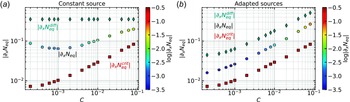


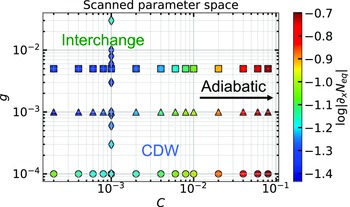


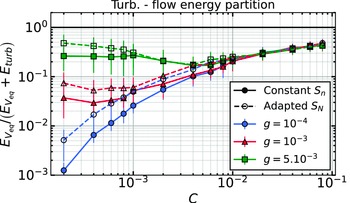


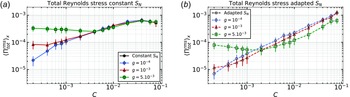


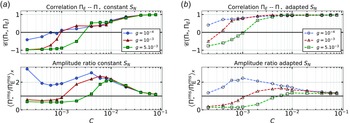


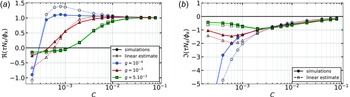


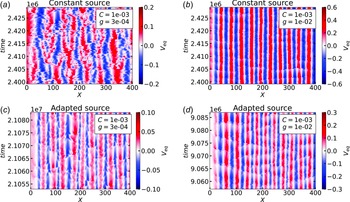


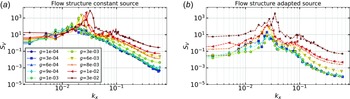


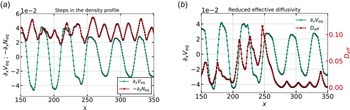


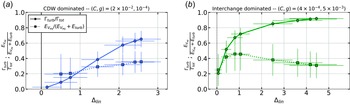


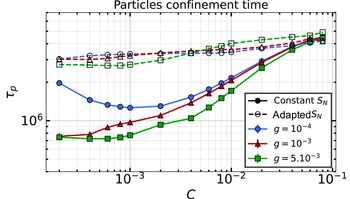


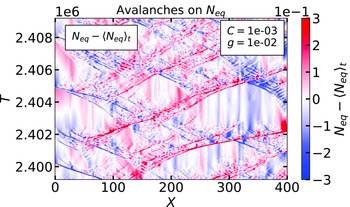


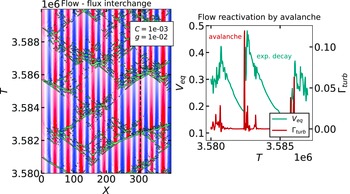


 Open access

