


Mali is one of the poorest countries in Africa, with 72 % of its population surviving on less than $US 1·00 per day. Health and demographic indicators are bleak; life expectancy from birth is 49·8 years and maternal mortality is 580 per 100 000 people. Several studies including the most recent national analysis from the Demographic and Health Surveys (DHS) examining the nutritional situation of children throughout Mali have shown significant numbers of stunted and wasted children(Reference Samaké, Traoré and Ba1). Further, the WHO reports that approximately 30 % of children under 5 years of age are underweight, 40 % are stunted and about 4 % are overweight(2). Recent research has shown evidence of poor nutrition among adolescent girls in Mali, suggesting that poor nutritional status is not a risk limited to childhood but extends into adolescence(Reference Pawloski3, Reference Leslie and Pawloski4). Most of the studies concerning the nutritional situation in Mali have focused primarily on infants and children and have ignored adolescents and adults. With the exception of studies related to infant feeding, reproductive health and violence against women, studies related to the health of women in Mali have largely been under-represented. Other field studies in Mali are generally dated and focus on children and infant feeding(Reference Dettwyler5, Reference Fishman and Golaz6). Dettwyler(Reference Dettwyler7) reported that while Malian women revealed evidence of stunting, they actually were better off nutritionally compared to Malian men, suggesting that women in Mali may experience some degree of buffering from environmental stresses.
In Mali, as in many countries in Sub-Saharan Africa, a woman's worth is based on her ability to have children(Reference Grosz-Ngate8). Grosz-Ngate states many Malians believe ‘the inherent weakness of womanhood is seen to be a handicap only for women who are “worthless”, who are lazy … and … [a] woman can rise above the disadvantages of her gender by excelling in her tasks’(Reference Grosz-Ngate8). Because of their primary roles as child-bearers and care-providers, women's health status has the potential to impact on the health of other household members. Maternal nutritional status has been shown to impact on breast-milk production and quality and to be a significant predictor of children's nutritional and health status in both developed and less-developed nations(Reference Brown, Akhtar and Robertson9–Reference Fraser, Tilling and Macdonald-Wallis13). The major types of malnutrition affecting women throughout Africa include chronic and acute undernutrition with an increasing trend of overweight and obesity in wealthier Sub-Saharan Africa(Reference Gewa14–Reference Venter, Walsh and Slabber16). Deficiencies of micronutrients such as Fe, vitamin A and iodine are common(Reference McLean, Cogswell and Egli17–19). Maternal iodine deficiency has been associated with reproductive failure, poor fetal growth and mental development, and child mortality(Reference Zimmermann20). Thus poor nutritional status not only affects the physical health of a woman but it may also impact her emotional health and social standing. Adequately iodized salt has been identified as a cost-effective strategy to prevent and treat iodine-deficiency disorders. The present study aimed to (i) describe geographic and health variations of women of reproductive age, (ii) describe geographic variations of household salt iodine levels and (iii) investigate potential factors associated with women's anthropometric status and use of adequately iodized salt among households in Mali.
Materials and methods
Participants
We used the most recent DHS available, conducted in 2006, for our analysis. The DHS are intended to be nationally representative and provide data for a wide range of monitoring and impact evaluation indicators in the areas of population, health and nutrition. We selected women between the ages of 19 and 44 years. The lower age of 19 years was chosen as it marks the end of adolescent growth and the upper limit of 44 years was used to avoid including women past their reproductive years. Pregnant women (determined based on self-reports as collected by the DHS enumerators) were removed so that the complicating nutritional aspects of pregnancy did not bias our results. We further excluded data from households with multiple women so that these households were not oversampled. These reductions to the DHS data set resulted in a sample size of 6015 women. The DHS protocol was approved by ORC Macro's Institutional Review Board. Individuals with at least secondary school education who are fluent in the language of the interview were trained to conduct DHS interviews and measurements. Quality control team members were trained to observe interviews/measurements and to conduct daily review meetings with the interviewers(21).
Women's anthropometry
Interviewers were trained to conduct anthropometry measurements in teams of two. Training occurred over a period of 3 d and included classroom and field-based demonstrations in nearby kindergarten and health facilities(22). Anthropometry measurements were taken at the women's homes in an area with adequate lighting and level floor. Women were not required to fast prior to measurements. Weight was measured to the nearest 0·01 kg using a lightweight bathroom-style SECA digital scale (Hamburg, Germany). Height was measured using a Shorr height board (Olney, MD, USA). Participants were measured wearing light clothing and without shoes. BMI was computed as weight in kilograms divided by the square of height in metres (kg/m2). BMI cut-offs were based on the recommended international cut-offs as follows: underweight was defined as BMI < 18·5 kg/m2, normal body weight as BMI = 18·5–24·9 kg/m2, overweight as BMI = 25·0–29·9 kg/m2 and obese was defined as BMI ≥ 30·0 kg/m2. Women with a height below 150 cm were identified as being of short stature.
Adequate salt iodine
Household salt iodine levels were reported in parts per million (ppm). Households with salt iodine levels less than or equal to 15 ppm were categorized as having inadequate household salt iodine levels.
Household wealth
The DHS wealth index factor score was used as a household wealth indicator. The wealth index is based on all household assets. Each asset was assigned a factor score generated through principal components analysis, and the resulting asset scores were standardized in relation to a normal distribution with a mean of zero and standard deviation of one. Each household was then assigned a score for each asset and the scores were summed for each household. The sample was then divided into quintiles from one (lowest) to five (highest)(Reference Samaké, Traoré and Ba1). The DHS wealth index allows for the identification of problems particular to the poor, such as unequal access to health care, as well as those particular to the wealthy, such as, in Africa, increased risk of HIV infection(23).
Women's education
We defined a two-level variable to indicate women who reported no years of education and those who reported any years of schooling. There is a relatively large body of literature showing improved nutritional status following increased education in Africa and other developing countries, and thus the mother's education level can have an impact on nutritional status(Reference Bouvier, Papart and Wanner24, Reference Vella, Tomkins and Borghesi25).
Breast-feeding status
Women were asked if they were breast-feeding at the time of the survey. Lactation is associated with higher energy and nutrient demands on mothers; failure to meet these demands may lead to poor maternal nutritional status(Reference Otten, Hellwig and Meyers26, Reference Butte and Hopkinson27).
Modern contraceptives
We defined a two-level categorical variable to identify women who used a least one form of modern contraceptives and those who did not. Women with greater numbers of births have been shown to suffer from additional health and nutritional complications(Reference Merchant, Martorell and Haas28). Modern contraception use could also be a proxy for modernity and utilization of health services.
Number of wives
Number of wives within each household was identified. Many households in Mali are polygynous, allowing for up to five wives(Reference Marcoux29). Some literature on Mali reports that additional wives, servants and children are a resource that may in fact improve the nutritional status of a family, as the household load is spread over a greater number of individuals(19). It is possible that additional wives may also require more food within the household and their contributions may not outweigh this need, leading to a net loss for the household(Reference Pawloski and Kitsantas30).
Number of births in the last 5 years
We used the number of births in the last 5 years to account for the burden of bearing children. Women with greater numbers of births have been shown to suffer from additional health and nutritional complications(Reference Merchant, Martorell and Haas28). High values could indicate greater nutritional and economic stress on a woman, and we expect this variable to have a negative effect on nutritional status and BMI. BMI is an indicator of acute malnutrition, which favours our decision to focus on the last 5 years.
Women's age
Women's age in completed years was calculated from the participants’ date of birth and the date of interview. Age is an important control because in reference populations adults’ weight typically increases as they age, particularly during mid-life due to decreased mobility and lean muscle mass(Reference Worthington-Roberts and Williams31). Previous research in Mali documented that women may lose weight as they age, particularly through adolescence(Reference Leslie and Pawloski4).
Cartographic analysis
Cartographic analysis was used to provide a broader understanding of factors influencing nutritional status in Mali. We created continuous surfaces across Mali of the variables of interest in order to highlight differences across the country and reveal broad locational patterns. Interpolation provides predicted values so that aspects of health, nutrition and socio-economic behaviour can be examined at a national level, instead of providing snapshots of the ‘clusters’ of households located in close proximity (with precise individual locations obscured by DHS to preserve respondent anonymity). The 408 ‘clusters’ of geographic survey locations denoted by the DHS for several variables of interest are used in an inverse-distance process that predicts values based on the values of surrounding points, weighting nearby locations more than those further away(Reference Watson and Philip32). A smoothing process was incorporated into this calculation so that local surface variations that would exaggerate data precision were removed(Reference Achilleos33). Estimation surfaces were cut off at the borders of Mali to the west, south and east, and by the northernmost observations. Estimates are less confident further away from DHS collection points.
The number of individual observations in each cluster ranged from three to twenty-six, with an average of fifteen. We mapped modelled variables, including the percentages of overweight and households with adequately iodized salt. Our other maps, including births in the last 5 years and breast-feeding status, are explanatory variables for differences in nutritional status. Legend groupings were determined using a natural breaks method. DHS clusters are included in the map to indicate areas of greater uncertainty.
Data analysis
We modelled women's nutritional status using three variables: BMI, overweight/obese indicator and underweight indicator. Additionally, we assessed factors associated with adequate household salt iodine levels in Mali. The SAS statistical software package version 9·2 was used for data analysis. Survey analysis procedures are appropriate for complex survey study designs and were utilized to help estimate sampling errors. SAS procedures SURVEYFREQ, SURVEYMEANS, SURVEYREG and SURVEYLOGISTIC were used to estimate means, percentages, linear regression coefficients and odds ratios. Linear regression analysis was used to assess the relationship between selected independent variables and women's BMI. Logistic regression analysis was used to assess the odds of a woman being overweight/obese or underweight and the household using adequately iodized salt. Independent variables included women's age, education, use of modern contraceptives and breast-feeding status; household wealth and location (urban or rural); number of other wives and number of births in the last 5 years. Including women's stature in the regression model did not bring about any changes to the results and a decision was made to exclude the height variable from the regression analysis. Variables came together as a multivariate model of the following form:
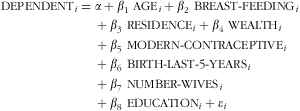 $$\displaylines{ {{\rm DEPENDENT}_i}\: = \: & \alpha + {{\beta }_1}\ {{\rm AGE}_i}\: + \:{{\beta }_2} \ {\rm BREAST {\hbox-} FEEDIN}{{\rm G}_i}\: \cr + \:{{\beta }_3} \ {{\rm RESIDENCE}_i}\: + \:{{\beta }_4}\ {{\rm WEALTH}_i} \cr & + {{\beta }_5} \ {\rm MODERN {\hbox-} CONTRACEPTIV}{{\rm E}_i}\: \cr + \:{{\beta }_6} \ {\rm BIRTH{\hbox-}LAST} {{\hbox -} 5 {\hbox -} {\rm YEAR}}{{\rm S}_i} \cr + {{\beta }_7} \ {\rm NUMBER}{\hbox -} {\rm WIVE}{{\rm S}_i}\:\cr + \:{{\beta }_8}\ {{\rm EDUCATION}_i}\: + \:{{{\epsilon}}_i} \rm$$
Non-response across variables, particularly concerning the number of other wives in a family, reduced the effective sample size to 5668 in the regression analysis.
Results
Descriptive statistics
Mean women's age was 29·60 (sd 0·10) years (Table 1). Mean BMI was 22·37 (sd 0·09) kg/m2. Approximately 19 % were overweight or obese and 10 % were underweight. Over 78 % of the households consumed salt with adequate iodine levels. Mean height was 161 (sd 0·001) cm. Just over 3 % of the women had a height below 150 cm. Only 8 % of the women reported using at least one form of modern contraceptives. Number of births in the last 5 years ranged from 0 to 5, with a mean of 1·33 (sd 0·01). Twenty-one per cent of the women reported no births in the last 5 years. About 54 % of the women were breast-feeding at the time of the survey. Women's education level was relatively low, with only 17 % of the women reporting having at least a primary level of education. Number of other wives ranged from 0 to 4 with a mean of 0·31 (sd 0·01). Over 72 % of the women interviewed claimed no other wife was present in the household. A majority of the women resided within rural parts of Mali with only 39 % living within urban areas.

Cartographic analysis
Figure 1 shows the interpolated surface for the percentage of the population that is overweight. Estimated values ranged from a low of 11 % in the south to over 60 % of the population in the north-west. As a general trend, the population changed in a relatively linear manner along a north-east–south-west axis. Bamako and Timbuktu showed a higher prevalence of high-BMI women compared with the surrounding regions. However, Mopti showed no increase in high-BMI women. The surface of the underweight population was almost an exact inverse. Our second modelled variable, adequately iodized household salt, is shown in Fig. 2. This variable appeared to radiate away from positive values in the south of the country, decreasing to the north-west and north-east. Timbuktu showed a lower percentage of households with adequately iodized salt compared with the surrounding regions. Bamako and Mopti showed no differences from the surrounding areas. Four localities, Timbuktu, Kita and Gao included, had the lowest percentage of households consuming adequately iodized salt. Figure 3 shows the estimated average number of births for each woman in the last 5 years across the country. Birth loads within the last 5 years were highest in the south, except in Bamako. Values generally decreased to the north-east and to the west, with one point in the west having an extremely low value. Highly reproductive areas had 18–44 % more children in the last 5 years than the least reproductive areas. Figure 4 shows the interpolated levels of breast-feeding frequency across Mali. It was largely an inverse of high-BMI women (Fig. 2), having the high values in the south and low values in the north-east. Bamako and Timbuktu had lower levels of breast-feeding than the surrounding region, while Mopti had higher levels. Our final variable map in Fig. 5 shows the distribution of modern contraception users across Mali. Contraception use was highest in Bamako and regions nearby in the south-west, as well as in the far north-east.
Interpolated surface of overweight levels among non-pregnant women aged 19–44 years by cluster, Demographic and Health Survey (DHS) data, Mali, 2006. Frequency of overweight (BMI ≥ 25·0 kg/m2):  $$$$, 11·38–15·39 %;
  $$$$, 15·40–21·25 %;
  $$$$, 21·26–29·83 %;
  $$$$, 29·84–42·37 %;
  $$$$, 42·38–60·11 %.
  $$$$ indicate DHS cluster sample locations

Interpolated surface of adequately iodized household salt levels among non-pregnant women aged 19–44 years by cluster, Demographic and Health Survey (DHS) data, Mali, 2006. Frequency of homes with adequate household salt:  $$$$, 40·00–54·32 %;
  $$$$, 54·33–65·79 %;
  $$$$, 65·80–75·01 %;
  $$$$, 75·02–82·40 %;
  $$$$, 82·41–88·34 %.
  $$$$ indicate DHS cluster sample locations

Interpolated surface of the average number of births in the last 5 years among non-pregnant women aged 19–44 years by cluster, Demographic and Health Survey (DHS) data, Mali, 2006. Average number of births in the last 5 years:  $$$$, 0·991–1·111;
  $$$$, 1·112–1·187;
  $$$$, 1·188–1·235;
  $$$$, 1·236–1·311;
  $$$$, 1·312–1·431.
  $$$$ indicate DHS cluster sample locations

Interpolated surface of breast-feeding frequency among non-pregnant women aged 19–44 years by cluster, Demographic and Health Survey (DHS) data, Mali, 2006. Frequency of breast-feeding:  $$$$, 38·54–46·07 %;
  $$$$, 46·08–50·83 %;
  $$$$, 50·84–53·84 %;
  $$$$, 53·85–56·85 %;
  $$$$, 56·86–61·61 %. $$$$ indicate DHS cluster sample locations

Interpolated surface of the frequency of modern contraception use among non-pregnant women aged 19–44 years by cluster, Demographic and Health Survey (DHS) data, Mali, 2006. Frequency of use of modern contraception:  $$$$, 3·43–5·98 %;
  $$$$, 5·99–7·87 %;
  $$$$, 7·88–10·41 %;
  $$$$, 10·42–13·85 %;
  $$$$, 13·86–18·49 %.
  $$$$ indicate DHS cluster sample locations

Regression analysis
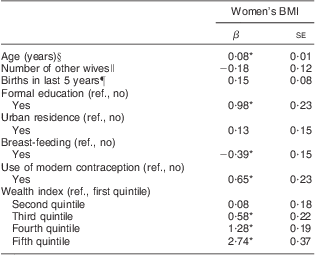
Having formal education, use of modern contraceptives, increase in woman's age and higher household wealth index were each associated with significantly higher BMI values (Table 2). Mean BMI among women with some formal education was 0·98 points higher than that among women with no formal education. Mean BMI value among women using modern contraceptives was 0·65 points higher than that of non-users and a 1-year increase in women's age was associated with an increase of 0·08 points in BMI. There was a dose–response effect with mean BMI values rising with wealth index categories. Mean BMI among women living in households within the highest wealth index was 2·74 points higher than that of women living in households within the lowest wealth index. No significant differences were noted between the last two wealth index categories. Breast-feeding at time of the study was associated with significantly lower BMI values. The mean BMI value among women who were breast-feeding at the time was 0·39 points lower than that of women who were not breast-feeding. Residence location (urban/rural), number of other wives and number of births in the last 5 years did not predict women's BMI. Our regression model explained 12·23 % of the variability in women's BMI.
Socio-economic, demographic and health determinants of BMI (kg/m2) among non-pregnant women aged 19–44 years: Demographic and Health Survey data, Mali, 2006†,‡
ref., reference category.
*β estimates were statistically significant (P < 0·05).
† n 5668.
‡ β and 95 % CI values are estimates from a single multiple regression model that include all variables shown in the table.
§β values computed for a 1-year increase in women's age.
∥β values computed for one additional wife in the household.
¶β values computed for one additional birth in the last 5 years.
The overweight/obese regression model results were consistent to a certain extent with the overall BMI model (Table 3). Women's age, having some formal education and household wealth index were each associated with higher odds of being overweight or obese, while breast-feeding status at time of study was associated with significantly lower odds of being overweight or obese. One-year increase in women's age was associated with 1·06 odds of being overweight or obese. Women with formal education were associated with 1·65 odds of being overweight or obese compared with those without any formal education. Women from households categorized within the third, fourth and fifth wealth index quintiles were each associated with 2·28, 3·15 and 6·12 odds of being overweight or obese compared with women in households categorized within the first wealth index quintile. Residence location (urban/rural), number of other wives and number of births in the last 5 years did not predict overweight or obesity among this group of women. Unlike the BMI model, use of modern contraceptives did not significantly predict overweight/obesity.
Socio-economic, demographic and health determinants of overweight/obese and underweight among non-pregnant women aged 19–44 years and household use of adequately iodized salt: Demographic and Health Survey data, Mali 2006†,‡

ref., reference category.
*OR values were statistically significant (P < 0·05).
† n 5668.
‡ OR and 95 % CI values are estimates from logistic regression models that include all variables shown in the table.
§OR values computed for a 1-year increase in women's age.
∥OR values computed for one additional wife in the household.
¶OR values computed for one additional birth in the last 5 years.
Only one variable in our regression model predicted women's underweight. A one-unit increase in number of births in the last 5 years was associated with significantly lower odds of being underweight.
Only two variables were significantly associated with adequate household salt iodine. Women with formal education and women who utilized modern contraceptives were associated with 1·33 and 1·49 odds of living in households with adequately iodized salt, respectively.
Our logistic regression models explained 15·75 % of the variability in women's overweight/obesity status, 1·81 % of the variability in women's underweight status and 1·97 % of the variability in utilization of adequately iodized household salt. There was no statistically significant association between women's BMI and household use of adequately iodized salt.
Discussion
The cartographic analyses provide an interesting presentation of health indicators in Mali. Underweight women were more prevalent in southern Mali, while obesity was more frequent in the north-east. Women in major urban areas were more likely to be obese than their rural counterparts. Our findings are supported by other reports of greater overweight individuals in urban regions of Sub-Saharan Africa(Reference Abubakari, Lauder and Agyemang34). As overweight populations increase, spatial representations like maps inform practitioners by guiding efforts to fight obesity and malnutrition. Similar methodology has been used to guide public health intervention in malaria prevention and access to modern contraceptives and other health-care resources(Reference Hightower, Ombok and Otieno35–Reference Rosero-Bixby37). Our cartographic analyses concur with results of the recent DHS that reported overweight and obesity prevalence was highest among women living in urban areas and in Kidal region in the north-eastern part of the country and the city of Bamako, while underweight prevalence was highest among women living in rural areas and in Sikasso and Gao regions in the southern and north-western parts of the country(Reference Samaké, Traoré and Ba1). Household use of adequately iodized salt appears to be a function of household proximity to Cote d'Ivoire. Sikasso, Bamako and parts of Koulikoro regions had the highest percentage of households with adequately iodized salt. Although Mali imports iodized salt from Senegal(38), only 54–66 % of the households located in close proximity to Senegal (Kayes region) were shown to have adequately iodized salt.
The regression analyses suggest, not surprisingly, that wealth is a key indicator in the nutritional status of women in Mali. These results agree with some previous research in Mali(Reference Dettwyler7, Reference Bouvier, Papart and Wanner24), but differ from a recent analysis in Mali based on a local socio-economic index(Reference Leslie and Pawloski4). The findings that women with more education were less likely to be underweight and were more likely to come from households that utilized adequately iodized salt support intervention efforts to keep girls in school(Reference Jamison, Feachem and Makgoba39).
Results for age show that women became heavier as they aged. This association could potentially be due to multiple factors including pregnancy and weight retention associated with child birth, survivor bias against low-weight women especially in poor nations like Mali, and the general metabolic slow-down associated with age. Use of modern contraceptives was positively associated with women's BMI and household use of adequately iodized salt. Previous research has shown that modern contraceptive users tend to have higher education levels and exposure to information in media and to come from wealthier households(Reference Stephenson, Baschieri and Hennink40). Because our analysis has adjusted for education and wealth index, the noted ‘modern contraceptive use’ effect on BMI and use of adequately iodized salt goes beyond these two factors and may be an indicator of access, awareness or acceptance of modern health-care practices. A general lack of awareness of existing programmes or products such as iodized salt may lead to lower levels of demand and use, and cultural preference for locally produced non-iodized salt may also hinder consumption of the imported iodized salt(Reference Pawloski, Shier and Fernandez41). Timbuktu and Gao were among the four localities with the lowest percentage of households consuming adequately iodized salt. These two centres are historical commercial centres that were involved in the trans-Saharan salt and gold trade. There may be economic and socio-cultural factors that influence acceptance and utilization in these areas. Knowledge of community members’ perception, beliefs and acceptance of iodized salt would provide information pertinent to increasing iodized salt consumption rates in Mali. Appropriate social marketing strategies should be employed to reach hard-to-reach communities. Supporting communities to test for household salt iodine levels using simple rapid test kits would help raise consumers’ awareness and decision-making abilities and inform monitoring and evaluation efforts. In addition, public–private partnerships should be engaged to explore ways to strengthen quality control measures at various importation and distribution points and to explore the possibilities of iodizing locally produced salt.
Women who were breast-feeding at the time of the survey were associated with significantly lower odds of being overweight or obese. Breast-feeding mothers have higher requirements for energy and most nutrients compared with non-breast-feeding mothers(Reference Dewey42, 43). Inability to meet these demands, as is often common in many resource-limited low-income countries, may lead to a decrease in maternal nutritional status. Studies have reported lower body fat levels among breast-feeding mothers in low-income nations(Reference Dorea44, Reference Winkvist and Rasmussen45). High number of births in the last 5 years was significantly associated with underweight among women. Pregnancy places high nutritional demand on a mother's body which, if not met, will lead to utilization of existing body stores and eventually to loss of protein and nutrients from the body.
Limitations to these conclusions are notable. The DHS data set is primarily focused on reproductive health issues for adult women, with nutritional information data focused on children. Using secondary data in general also presents limitations, as there are only a limited number of variables to explore. There was no statistically significant association between women's BMI and household use of adequately iodized salt. It is possible that women's obesity, women's underweight and household utilization of adequately iodized salt are determined by different sets of explanatory variables. Information on respondent's knowledge of the risk of iodine-deficiency disorders and benefits of iodized salt, and on quality control measures within and outside the home, would increase our understanding of salt iodine outcomes. Availability of morbidity data and dietary intake would increase our understanding of women's BMI status as well as enable additional analysis of variables such as anaemia.
Our results show that both under- and overnutrition exist among women aged 19 to 44 years in Mali, with a greater percentage being overweight, and that the use of adequately iodized salt varies across different regions in the country. Our results also show that having a higher BMI and use of adequately iodized salt in Mali are generally correlated with other qualities that may improve quality of life (despite obesity) such as higher education, wealth, modern contraceptives and age. Previous research studies among African women have reported a social and cultural preference for a heavier and curvier body(Reference Venter, Walsh and Slabber16, Reference Puoane, Fourie and Shapiro46). The problem of overweight and obesity is only beginning in Mali, as the country continues to deal with the effects of stunting, wasting and micronutrient deficiencies. Finally, these findings show the viability of merging DHS nutrition and geographic data that may be applied to other developing countries. Identifying the geographic distribution of nutritional indicators can be used to target region-specific interventions.
Acknowledgements
Source of funding: This research received no specific grant from any funding agency in the public, commercial or not-for-profit sector. Conflict of interest declaration: None. Authorship responsibilities: C.A.G., T.F.L. and L.R.P. contextualized the analysis; T.F.L. was responsible for the cartographic analysis; C.A.G. was responsible for the statistical analysis; and all three co-authors were responsible for the writing of the manuscript. All authors read and approved the final manuscript.



