





Folate is an essential B-vitamin, important for (neural) cell replication and growth, as well as for the methylation and synthesis of DNA. It is well-known that maternal folate deficiency in the critical period of early pregnancy is a risk factor for neural tube defects – that is, serious malformations of the spine, skull and brain. For this reason, folic acid supplement use – in addition to a healthy diet – is advised in the peri-conception period( Reference Berti, Biesalski and Gärtner 1 ). Moreover, previous research provides evidence that prenatal folate deficiency might have a negative impact on global fetal brain growth. In animals, experimentally induced folate deficiency has been found to result in a decrease in progenitor cells and an increase in apoptopic cells in the fetal brain( Reference Craciunescu, Brown and Mar 2 ), a net reduction of fetal brain cells( Reference Xiao, Hansen and Horsley 3 ) and reduced brain weight( Reference Middaugh, Grover and Blackwell 4 ). In humans, Schlotz et al. ( Reference Schlotz, Jones and Phillips 5 ) reported a positive association between maternal erythrocytes folate (RCF) concentration in early pregnancy and head circumference of the child at birth, suggesting that maternal folate status affects fetal head growth, which can be regarded as a proxy for fetal brain growth.
There is an increasing interest in the long-term effects of prenatal folate deficiency on brain development in offspring( Reference Benton 6 , Reference Breimer and Nilsson 7 ). Through the epigenetic mechanism of DNA (hypo)methylation, folate deficiency in pregnancy can possibly modify gene expression, causing long-lasting changes in the biological programming of brain development( Reference Nyaradi, Li and Hickling 8 ).
Few studies have investigated the association between prenatal folate status and cognitive performance, which is reflective of brain development, in offspring so far. Rodent studies have shown structural brain abnormalities in pups of folate-deficient rats( Reference Craciunescu, Brown and Mar 2 ). In humans, maternal folate deficiency was found to be associated with poorer performance on neurodevelopmental tasks in infancy( Reference Del Rio Garcia, Torres-sanchez and Chen 9 ) and childhood( Reference Veena, Krishnaveni and Srinivasan 10 ). Furthermore, higher maternal folate intake (as measured by an FFQ) in early pregnancy was associated with higher general intelligence in 3-year-old children( Reference Villamor, Rifas-Shiman and Gillmann 11 ). Studies on the psychological functioning of children have reported mixed findings( Reference Nyaradi, Li and Hickling 8 ). In the present prospective cohort study, we found that children of mothers who did not use folic acid supplements in early pregnancy had a higher risk of emotional and behavioural problems at 18 months of age, as reported by the parents( Reference Roza, van Batenburg-Eddes and Steegers 12 ). We also found that at the age of 3 years, low maternal plasma folate concentration in early pregnancy was associated with parent-reported emotional problems, but not with behavioural problems( Reference Steenweg-de Graaff, Roza and Steegers 13 ). Schlotz et al. ( Reference Schlotz, Jones and Phillips 5 ) reported that low maternal RCF concentration in early pregnancy was specifically associated with behavioural problems such as hyperactivity and peer problems in 9-year-old children, as reported by the mothers in the Strengths and Difficulties Questionnaire (SDQ). Moreover, this association was mediated by fetal head growth( Reference Schlotz, Jones and Phillips 5 ). Additional studies are needed to shed more light on the long-term postnatal impact of prenatal folate status on brain morphology, cognitive development and psychological functioning in offspring.
The primary aim of the present study was to examine the association between prenatal maternal plasma folate status and brain anatomy of children between the ages of 6 and 8 years using MRI. As previous studies have suggested that prenatal folate deficiency has an effect on global brain growth( Reference Craciunescu, Brown and Mar 2 , Reference Schlotz, Jones and Phillips 5 ), we focused on the volumes of cortical and subcortical brain structures. We hypothesised that maternal folate insufficiency in early pregnancy was associated with a smaller brain volume in children. The secondary aim of the present study was to extend the results of the above-mentioned epidemiological studies, by exploring whether brain volume accounted for any association between prenatal folate status and the occurrence of cognitive performance or emotional and behavioural problems in our study sample. Owing to the inter-relatedness between folate, vitamin B12 and total homocysteine (tHcy) levels( Reference Nyaradi, Li and Hickling 8 , Reference Molloy, Kirke and Brody 14 ) and the associations between vitamin B12 and tHcy and cognitive outcomes in children( Reference Veena, Krishnaveni and Srinivasan 10 , Reference Bhate, Deshpande and Bhat 15 ), brain volume, cognitive and psychological outcomes were additionally examined in relation to maternal plasma B12 and tHcy levels.
Methods
Subjects
Between 2002 and 2006, nearly 10 000 pregnant women of Rotterdam, the Netherlands, were enrolled in the Generation R Study. For detailed information, see Jaddoe et al. ( Reference Jaddoe, van Duijn and Franco 16 ).
Between September 2009 and February 2012, structural brain scans (T1) were collected from 608 children between the ages of 6 and 8 years. For a comprehensive overview of the neuroimaging procedures in Generation R, see White et al. ( Reference White, El Marroun and Nijs 17 ). We utilised a nested case–control design, in which a subgroup of seventy children from the Generation R Study were specifically invited for the neuroimaging session based on the following selection criteria: (1) low prenatal maternal plasma folate concentration <8 nmol/l; (2) children of Dutch ethnic origin, meaning that both parents had Dutch nationality; and (3) the parents agreed to participate in phase 3 (school period) of Generation R data collection. Controls were selected from the remaining 538 scanned children: 244 were eligible to participate because they had a Dutch ethnic background and prenatal maternal folate data were available.
The exclusion criteria were as follows: (1) the T1 scan was of poor quality (n 14, see below); (2) FreeSurfer cortical reconstruction did not succeed (n 2) or segmentation quality was poor (n 32, see below); (3) the exact prenatal maternal plasma folate concentration was unknown due to technical restrictions (n 3, see below); and (4) children were (one of) a twin (n 7). The present study sample consisted of 256 children with sixty-two in the ‘low-folate’ group and 194 in the ‘normal-folate’ group.
Ethical consent from the Medical Ethics Committee of the Erasmus Medical Center (EMC), Rotterdam, has been obtained at multiple time points during the course of this longitudinal study. Separate approval has been obtained for the prenatal phase of the study and again for the collection of brain scans of children of 6 years of age and older. In addition, written informed consent was obtained from all the mothers at prenatal intake and from (one of) the parents of all the children for the collection of cognitive and MRI data.
Maternal folate concentrations
Venous blood samples were collected in early pregnancy (mean gestational age=13·5 (sd 1·8) weeks. Within 3 h after venepuncture, blood samples were transported to a regional laboratory, centrifuged and stored at –80°C. Analysis of folate and homocysteine concentrations in EDTA plasma samples was conducted in 2008 by the Department of Clinical Chemistry of EMC, Rotterdam. After thawing, folate and tHcy concentrations were analysed using an immunoelectrochemiluminence assay on the Architect System (Abbott Diagnostics B.V.). The between-run CV depending on folate and tHcy concentrations ranged between 1·5 and 8·9 %. The analytic ranges for folate and tHcy concentrations were 1·8–45·3 nmol/l and 1–50 µmol/l, respectively. Folate concentrations above 45·3 nmol/l could not be quantified and were recorded as 45·3 nmol/l. As a folate concentration of 45·3 nmol/l was possibly the result of technical errors, children of mothers with this concentration were excluded( Reference Steenweg-de Graaff, Roza and Steegers 13 ). Based on normative concentrations determined by the EMC laboratory, ‘low folate’ or folate insufficiency was pre hoc defined as plasma folate <8 nmol/l and ‘normal folate’ as plasma folate ≥8 nmol/l. However, following other studies in which a stricter definition of folate insufficiency was used, and to exclude the possibility that effects were missed because of the chosen cut-off of 8 nmol/l, we also conducted analyses using a cut-off of 7 nmol/l.
Emotional and behavioural problems
Mothers completed the Child Behavior Checklist (CBCL) when their children were approximately 6years of age (mean age=6·20 (sd 0·48) years). The CBCL is a ninety-nine-item parent-report questionnaire that assesses the presence of emotional and behavioural problems in children. The items refer to problems that might have occurred in the preceding two months and are rated on a three-point scale (0=not true, 1=somewhat or sometimes true and 2=very or often true). The ‘emotional problems’ score includes the subscales of emotionally reactive and anxious/depressed symptoms, as well as somatic complaints and symptoms of being withdrawn. The ‘behavioural problems’ score includes attention problems and aggressive behaviours. Good reliability and validity have been reported for the CBCL( Reference Achenbach and Rescorla 18 ).
CBCL information on emotional and behavioural problems was available for 238 children (93 %) of the present study sample. In line with Steenweg-de Graaff et al. ( Reference Steenweg-de Graaff, Roza and Steegers 13 ), CBCL scores were dichotomised because they were not normally distributed. The mean CBCL emotional problems score was 5·84 (sd 5·96) (range 0–32, median=4·00); the mean CBCL behavioural problems score was 7·86 (sd 7·22) (range 0–39, median=5). For emotional problems, a score ≥9 was considered highly problematic (highest 21·8 % of the study sample); for behavioural problems, a score ≥12 was considered to be highly problematic (highest 23·9 % of the study sample)( Reference Achenbach and Rescorla 18 – Reference Tellegen, Winkel and Wijnberg-Williams 21 ).
Intelligence testing
Intelligence was assessed by conducting two subtests of the Snijders-Oomen Niet-verbale intelligentie Test – Revisie (SON-R.2·5-7), which is a non-verbal intelligence test suited for children aged 2·5–7 years( Reference Tellegen, Winkel and Wijnberg-Williams 21 ). The two subtests used were Mosaics, which measures visuospatial abilities, and Categories, which measures abstract reasoning. The raw scores were transformed into an overall non-verbal intelligent quotient (IQ) score using age-specific norms( Reference Tellegen, Winkel and Wijnberg-Williams 21 ), making the obtained IQ score independent of age at the time of intelligence testing. Mean total IQ was 104·4 (sd 13·4). Although slightly higher, this corresponds to the general population, which has a mean and sd of 100 and 15, respectively.
NEPSY-II-NL
Neuropsychological data of children were acquired at the same day as scanning using the Dutch version of the NEPSY-II-NL. The NEPSY-II is a flexible battery of neuropsychological tests, designed for assessing neurocognitive abilities in pre-schoolers, children and adolescents( Reference Brooks, Sherman and Strauss 22 ). The battery originally consists of thirty-four subtests covering six cognitive domains (executive functioning/attention, language, memory and learning, sensorimotor functioning, visuospatial processing and social perception). In the present study, a subset of ten tasks was used( Reference White, El Marroun and Nijs 17 ), each falling into one of the five specific domains (executive functioning, language, memory and learning, sensorimotor functioning and visuospatial processing) The NEPSY-II has been validated for both healthy children and clinical groups aged 5–16 years, and correlates with the Wechsler Intelligence Scale for children( Reference Brooks, Sherman and Strauss 22 ). In order to reduce multiple testing for all separate test scores of the NEPSY-II-NL, a total NEPSY score was used in the analyses. As the NEPSY-II-NL does not provide a score as such, a total score was obtained by means of principal component analyses (PCA) on all test scores of the NEPSY-II-NL. By selecting the first unrotated factor score of each PCA, we created a score for each of the domains, as well as a total score, for each participant (S Mous, N Schoemaker, L Blanken and E Al, submitted).
Structural MRI
The procedures involved in MRI data collection and scanning session are described in detail by White et al. ( Reference White, El Marroun and Nijs 17 ). In brief, MRI were acquired on a 3 T scanner (General Electric Discovery MR750; General Electric). A high-resolution T1-weighted inversion recovery fast spoiled gradient recalled sequence was obtained with the following parameters: TR=10·3 ms, TE=4·2 ms, TI=350 ms, NEX=1, flip angle=16° and an isotropic resolution of 0·9×0·9×0·9 mm3. T1 images were visually inspected, and scans that were rated as unusable or poor were excluded from further analyses.
Segmentation and anatomical parcellation of the high-resolution structural imaging data were performed using FreeSurfer, which is a set of automated software tools that are documented and freely available online (http://surfer.nmr.mgh.harvard.edu/). Following the cortical reconstruction and volumetric segmentation of the structural MRI data, a second quality check was performed, and if cortical reconstruction failed or if left- or right-hemispheric segmentation quality was rated as poor, children were excluded from further analyses.
FreeSurfer output was imported into IBM SPSS 20.0 for statistical analyses. Based on these hypotheses and to reduce the number of tests, the following dependent variables were chosen: total brain volume (TBV), total, cortical and subcortical grey matter volumes, white matter volume, total volume of the ventricles and volumes of the thalamus, caudate, putamen and hippocampus.
Covariates
A number of maternal and child characteristics was considered as potential confounding variables due to their demonstrated influence on brain development, cognitive development, plasma folate levels, plasma B12 levels, plasma homocysteine levels and/or the child’s psychological development( Reference Steenweg-de Graaff, Roza and Steegers 13 , Reference White, El Marroun and Nijs 17 ).
The child’s age (at time of testing) and sex determine brain size, cognitive and social/behavioural development to a great extent( Reference De Bellis, Keshavan and Beers 23 ), and were therefore included as covariates in model 1 for all the analyses. Handedness direction (left/right) of the child was assessed by means of a twelve-item handedness form that was completed on the same day as scanning. Information on gestational age (in weeks) was obtained from obstetric records, midwife or hospital registries( Reference Jaddoe, van Duijn and Franco 16 ). Maternal characteristics that were considered were as follows: age at enrolment, educational level (primary/secondary or higher education), pre-pregnancy BMI, months of breast-feeding and smoking during pregnancy (yes/no). Information on these factors was obtained by means of self-report questionnaires in early to mid-pregnancy. For all the brain analyses, TBV was added as a covariate in a second model to correct for global effects, because all brain regions are likely to be reduced in size if total brain size is reduced. In the cognition-related analyses, maternal APM score (as proxy for IQ) was additionally included in the model. Maternal IQ was assessed on the same day as child IQ. Mothers performed a shortened (twelve items) version of the Raven’s matrices. Due to an observed ceiling effect, raw scores (1–12) instead of converted IQ scores were included in the analyses. Covariates changing the effect estimate with <5 % were excluded from the final models (gestational age, handedness).
Statistical analyses
Descriptive differences between the low-folate and normal-folate groups for maternal and child characteristics were examined using independent samples t tests for normally distributed continuous variables, Mann–Whitney U tests for non-normally distributed continuous variables and χ 2 tests for categorical variables. Analyses on brain volumes and cognitive performance were performed using multivariate linear regression models, in which model 1 was controlled for sex and age at testing. Maternal age at enrolment, pre-pregnancy BMI, maternal education, smoking during pregnancy and months of breast-feeding were entered as covariates; TBV was added in a next step to the brain volume models, and maternal APM score was added to the cognitive performance models.
To explore the association between prenatal folate status and CBCL emotional and behavioural problems scores, the statistical procedures of Steenweg-de Graaff et al. ( Reference Steenweg-de Graaff, Roza and Steegers 13 ) were followed: logistic regression analyses were conducted with the folate group (low v. normal) as predictor and the CBCL emotional or behavioural problems group (normal v. high) as outcome. Adjustments were made for the above-mentioned child and maternal characteristics.
To reduce the potential bias associated with missing data, missing values (0·5–48 %) were multiple imputed (n 5 imputed data sets). Data were imputed five times, generating five imputed data sets, each with missing values replaced by values randomly generated from the predictive distribution based on the correlation between each variable with missing values and the other subject characteristics. The same statistical analyses (i.e. linear regressions) were carried out for each of these five data sets. Averaging the effect sizes of these data sets resulted in pooled effect sizes and CI. The outcomes of the pooled sets were used for reporting the results( Reference Sinharay, Stern and Russell 24 ).
A 95 % CI and a P value of 0·05 were considered statistically significant. All the analyses were carried out using IBM SPSS statistics 21.
Results
Maternal and child characteristics
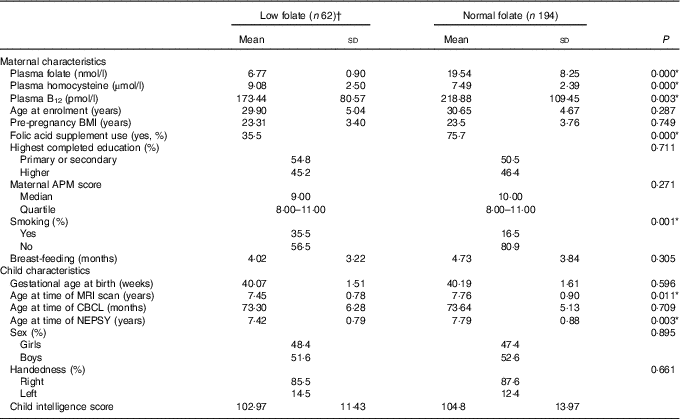
Child and maternal characteristics of the low-folate and the normal-folate group are displayed in Table 1. Mothers with adequate plasma folate levels more often used folic acid supplementation (perinatal or within 10 weeks after conception), χ 2(1, n 210)=43·68; P=0·000. A larger proportion of low folate mothers smoked during early pregnancy compared with normal-folate mothers, χ 2(1, n 246)=11·99; P=0·001. In addition, low folate children were, on average, a few months younger than normal-folate children at the time of scanning, t(117·10)=2·60; P=0·001 and NEPSY-II-NL performance t(116·04)=3·13; P=0·003.
Maternal and child characteristics of the low-folate and the normal-folate groups (Mean values and standard deviations; percentages; median and quartile range)

* Significant P values (≤0·05).
† Low folate is defined as maternal plasma folate concentration <8 nmol/l in early pregnancy. Between-group differences were assessed using independent samples t test for normally distributed continuous variables; Mann–Whitney U test for non-normally distributed continuous variables; χ 2 test for categorical variables; Brief Symptom Inventory, gives an index of the presence of psychiatric symptoms. There was a small number of missing values for highest completed education (2·3 %), pre-pregnancy BMI (7·8 %), smoking (3·9 %), folic acid supplementation use (18 %) and breast-feeding duration (48 %).
Brain volumetric measurements
Folate
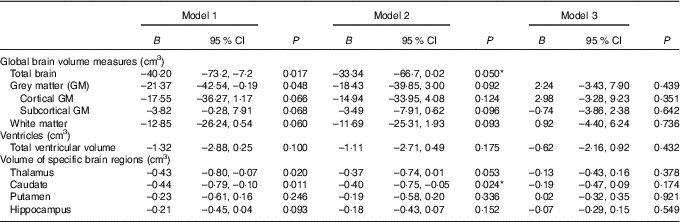
Results of the regressions of maternal plasma folate levels on brain volume outcomes, adjusted for primary child and maternal characteristics, are displayed in Table 2. All brain volumes were smaller in the low folate group compared with the normal-folate group. This difference was statistically significant (P≤0·05) for TBV and caudate volume. When TBV was added as a covariate into the model, the differences between folate groups in cortical and subcortical volume measurements disappeared, supporting a global effect of low prenatal folate status on TBV. When the analyses were repeated applying a stricter definition of folate insufficiency (<7 nmol/l), similar results were found (data not shown).
Maternal pregnancy folate levels and child brain volumes at ages 6–8 years (n 256)Footnote † (B coefficients and 95 % confidence intervals)

* Significant P values (<0·05) for the fully adjusted model.
† B, b value (unstandardised). Results of the multiple linear regressions in the imputated data set. Pooled effect estimates are displayed. Folate level in early pregnancy was divided into two groups and defined as normal plasma folate concentration >8 nmol/l. Model 1 is adjusted for sex and child’s age at the time of MRI scan. Model 2 is additionally adjusted for breast-feeding status at 6 months and for maternal characteristics: age at enrolment, smoking during pregnancy, pre-pregnancy BMI and education level. Model 3 is additionally adjusted for total brain volume.
Vitamin B12 and homocysteine
Neither prenatal plasma B12 nor homocysteine levels predicted any brain volume outcomes.
Emotional and behavioural problems
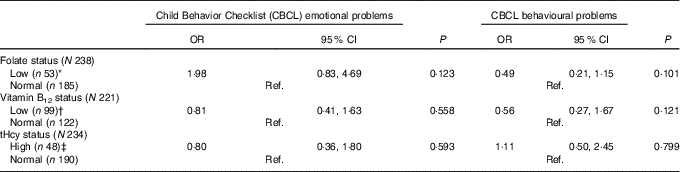
No significant associations between prenatal plasma folate, vitamin B12 or tHcy levels and children’s emotional and behavioural problems were found (Table 3).
Associations between maternal folate, vitamin B12 and total homocysteine (tHcy) status (low v. normal) and child emotional and behavioural problems (normal v. high) (Odds ratios and 95 % confidence intervals)

Ref, referent values.
Results of the multiple linear regressions in the imputated data set. Pooled effect estimates are displayed. CBCL scores were dichotomised with the highest 20 % of emotional and behavioural problems scores being considered as ‘highly problematic’. Logistic regression analyses were carried out, with adjustments made for the child’s age at the time of CBCL testing and sex, as well as the following maternal characteristics: age at enrolment, education level, pre-pregnancy BMI, breast-feeding and smoking during pregnancy
* Low folate is defined as a plasma folate concentration <8 nmol/l in early pregnancy.
† Low vitamin B12 is defined as plasma concentration <150 pmol/l.
‡ High tHcy is defined as >9·1 µmol/l.
Child cognition
Intelligence
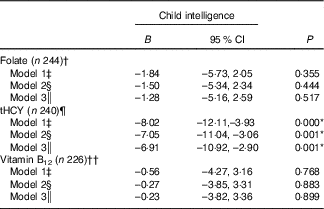
Children with prenatal homocysteine levels >9·1 µmol/l had a significantly lower (7 points) IQ at age 6 years (Table 4). Although the effect estimates were in the same direction, no significant associations between prenatal folate levels or vitamin B12 levels and child intelligence were found.
Maternal pregnancy folate, total homocysteine (tHcy) and vitamin B12 levels and child intelligent quotient (IQ) (B coefficients and 95 % confidence intervals)

B, b value.
Results of the multiple linear regressions in the imputated data set. Pooled effect estimates are displayed.
* Significant P values (≤0·050) for the fully adjusted model.
† Folate level in early pregnancy was divided into two groups and defined as normal plasma folate concentration >8 nmol/l.
‡ Model 1 is adjusted for sex and the child’s age at the time of testing.
§ Model 2 is additionally adjusted for maternal characteristics: breast-feeding (months), age at enrolment, smoking during pregnancy, pre-pregnancy BMI, APM score (as proxy for maternal IQ) and educational level.
║ Model 3 is additionally adjusted for total brain volume.
¶ Homocysteine level in early pregnancy was divided into two groups and defined as normal plasma tHcy concentration <9·1 µmol/l.
†† Low vitamin B12 was defined as plasma concentration <150 pmol/l.
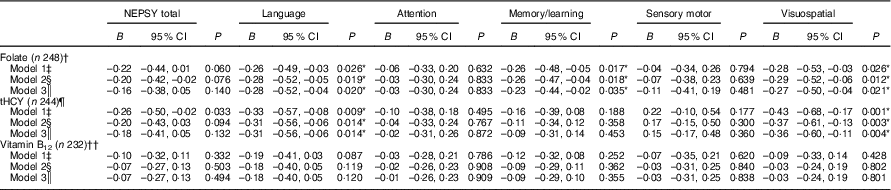
NEPSY-II
Prenatal folate levels predicted performance on the language, memory/learning and the visuo-spatial subdomains of the NEPSY-II. There was only a trend in the association between prenatal folate levels and NEPSY-II total score (Table 5). Prenatal homocysteine levels predicted performance on the language and visuo-spatial subdomains of the NEPSY-II (Table 5). No associations between prenatal plasma vitamin B12 and NEPSY-II performance were found. The correlation between the SON-R and the NEPSY-II was r 0·181; P=0·005.
Maternal pregnancy folate, total homocysteine (tHcy) and vitamin B12 levels and NEPSY-II performance (B coefficients and 95 % confidence intervals)

B, b value.
Results of the multiple linear regressions in the imputated data set. Pooled effect estimates are displayed.
* Significant P values (≤0·050) for the fully adjusted model.
† Folate level in early pregnancy was divided into two groups and defined as normal plasma folate concentration >8 nmol/l.
‡ Model 1 is adjusted for sex and the child’s age at the time of testing.
§ Model 2 is additionally adjusted for maternal characteristics: breast-feeding (months), age at enrolment, smoking during pregnancy, pre-pregnancy BMI, APM score (as proxy for maternal intelligent quotient) and educational level.
║ Model 3 is additionally adjusted for total brain volume.
¶ Homocysteine level in early pregnancy was divided into two groups and defined as normal plasma tHcy concentration <9·1 µmol/l.
†† Low vitamin B12 was defined as plasma concentration <150 pmol/l.
Discussion
The primary aim of the present study was to investigate the association between maternal folate status during early pregnancy and child brain development, as indexed by brain volume of 6- to 8-year-old children. Various cortical and subcortical brain regions were found to be substantially reduced in children of mothers with low plasma folate concentrations during early pregnancy compared with children of mothers with normal folate concentrations. This difference was significant for TBV and caudate volume. Importantly, and in support of our hypothesis, when corrections were made for TBV in the statistical analyses, between-groups differences disappeared. This finding suggests that a mild-to-moderate prenatal maternal folate insufficiency (defined as plasma folate <8 nmol/l) has a ‘global’ effect on postnatal brain development in offspring: it is associated with an overall decreased brain volume and not with a decreased volume in specific brain regions. We expected this ‘global’ effect on brain development, as animal experiments have previously demonstrated that prenatal maternal folate insufficiency is associated with an overall reduced number of cells in the fetal brain( Reference Craciunescu, Brown and Mar 2 , Reference Xiao, Hansen and Horsley 3 ) and reduced fetal brain weight( Reference Middaugh, Grover and Blackwell 4 ). Moreover, in humans, there is evidence that children of mothers with folate insufficiency during pregnancy have a smaller head circumference at birth, indicating reduced brain growth during prenatal life. No effects of plasma B12 or tHcy levels on child brain volumes were found in the present study.
It was expected that possible differences in brain morphology would be reflected in differences in psychological and cognitive functioning of the children. Child intelligence at age 6 years was found to be substantially lower (7 points) in children of mothers with high plasma tHcy concentrations during early pregnancy compared with children of mothers with normal tHcy concentrations. Furthermore, high prenatal plasma tHcy levels were associated with poorer performance on the language and visuo-spatial subdomains of the NEPSY-II.
There have not been many studies on prenatal tHcy levels and cognitive child outcomes. Contrary to our result, one study examining the associations between prenatal plasma folate, vitamin B12, homocysteine levels and cognitive outcomes found higher maternal tHcy levels to be associated with better scores for verbal fluency( Reference Veena, Krishnaveni and Srinivasan 10 ), a measure believed to be related to intelligence( Reference Ardila, Pineda and Rosselli 25 ). However, in the elderly, higher tHcy levels are related to lower scores on tests of intelligence( Reference Duthie, Whalley and Collins 26 ). Future studies should further investigate the exact mechanism and specific effects of prenatal tHcy levels on child cognitive outcomes.
Low prenatal plasma folate levels were associated with poorer performance on several of the subdomains of the NEPSY-II. Children with lower prenatal plasma folate levels scored lower on the language, learning/memory and the visuo-spatial subdomains. This is in line with a previous study, similar to ours, on maternal folate levels and child cognition( Reference Veena, Krishnaveni and Srinivasan 10 ), in which children from mothers with higher folate levels during pregnancy performed better in a battery of cognitive tests. Low folate status has been linked to alterations in myelination and brain atrophy( Reference Nyaradi, Li and Hickling 8 ), both of which might explain the findings of decreased performance in children exposed to prenatal folate deficiency.
Low prenatal folate was not significantly associated with a lower child intelligence score at 6 years of age, although the direction of the effect estimate was towards lower IQ related to lower maternal folate levels. In addition, we also did not find a significant relationship between total NEPSY score and low maternal folate levels; however, we did find differences in several specific NEPSY domains. As global cognitive measures tap multiple neuropsychological functions, each having different time courses of maturation, it is possible that the specific cognitive domains are better able to detect more subtle differences. The discrepancy in results for the effect of low plasma folate on intelligence score and NEPSY-II performance has several explanations. First, it might be explained by the low correlation between child IQ and NEPSY-II performance in our study sample. Where the NEPSY-II consisted of ten subtests tapping into five different cognitive domains, the IQ test may not have been sensitive enough to detect differences in specific domains of cognitive development. Second, folate levels and homocysteine levels were weakly correlated. Due to the inter-relatedness of folate and tHcy metabolism, the fact that the similar neuropsychological domains are associated with both tHcy and folate provides support for a neurochemical influence of these agents on specific neuropsychological functions.
In addition, we expected that children of mothers with low prenatal folate concentrations would demonstrate more emotional and/or behavioural problems at age 6 years. Previous Generation R studies have reported that an inadequate prenatal folate status was associated with emotional and behavioural problems at age 1·5 years( Reference Roza, van Batenburg-Eddes and Steegers 12 ) and with emotional problems only at age 3 years( Reference Steenweg-de Graaff, Roza and Steegers 13 ). In the present study, conducted in a subgroup of the same cohort, there was no indication that the ‘low folate’ children had more emotional or behavioural problems than the ‘normal folate’ children at age 6 years. This finding suggests that effects of prenatal folate insufficiency on the psychological functioning of children might disappear in the course of development, possibly because of compensating environmental factors, such as adequate nutrition and family functioning, or social stimulation and support( Reference Nyaradi, Li and Hickling 8 ). Importantly, our study sample consisted of Dutch children with fairly well-educated parents, and thus adequate childhood environmental conditions are likely in this group. It should be noted that in a study by Schlotz et al. ( Reference Schlotz, Jones and Phillips 5 ), a negative association was found between maternal folate concentrations in early pregnancy and child behavioural problems, in a study sample that was similar to ours (100 children of Caucasian origin between the ages of 7 and 9 years). There might be various reasons for the discrepancies between the two studies, such as different choices of instruments used to assess the behavioural and emotional problems (CBCL v. SDQ) and a different choice of folate assessment (plasma v. RCF.). No association between prenatal plasma B12 or tHcy levels and CBCL scores were found in the present study.
Our study results suggest that prenatal folate insufficiency has a long-lasting impact on brain growth, as indexed by a smaller TBV at 6–8 years of age. In the future, it remains to be investigated whether this effect is permanent, hence still visible in adolescence and adulthood. Furthermore, we demonstrated that in our study sample both a lower prenatal plasma folate level and a higher prenatal plasma tHcy level were related to performance on several cognitive domains at age 7 years. In addition, higher prenatal plasma tHcy levels were related to lower IQ scores at age 6 years. However, we could not demonstrate that the folate-related differences in brain volume explained any long-term risk of emotional or behavioural problems in children. More research is needed to investigate whether reduced TBV is reflected in specific problem behaviour and how reduced TBV is specifically related to cognitive dysfunctioning in children. Furthermore, the underlying mechanisms of how early low folate and high tHcy affects brain development remain unclear. The exact mechanisms should be explored in future studies.
Nonetheless, the present study stresses the importance of (adequate) prenatal nutrition, especially folate supplementation. In our study, mothers with adequate folate levels had a higher percentage of folate supplement use before or within 10 weeks after conception. As folate and homocysteine correlate negatively, folate supplementation both has the opportunity to increase folate levels and to decrease tHcy levels. In addition to the well-known risks of neural tube defects, low folate levels and/or high homocysteine levels during pregnancy could have long-lasting consequences for brain development and cognitive performance during childhood.
The present study has several strengths. First, the total study sample was large: brain scans of 256 6- to 8-year-old children were included. This is an exceptionally large number for a neuroimaging study, and particularly for a neuroimaging study in children of this young age.
Second, data were available on several measures of child cognitive and psychological development. Third, the present study was embedded in the Generation R Study, a prospective longitudinal study, which enabled us to include prenatal and postnatal measurements in the analyses, including a substantial number of confounding variables. Fourth, we had access to data on plasma folate, vitamin B12 and tHcy concentrations during the critical period of early pregnancy.
This study also has a number of limitations. First, caution should be exerted in extending the results of this study to other ethnic or socio-economically more disadvantaged populations. Second, maternal folate, vitamin B12 and tHcy concentrations were measured at only one time point – in early pregnancy. It would be better to have repeated measurements of these concentrations during pregnancy. Intakes through diet or by supplement use can change throughout pregnancy, influencing the blood folate level. Serum or plasma folate concentrations are considered to provide a more objective and reliable index of folate status than self-reported folic acid supplement use. In addition, it has been suggested that serum or plasma folate concentrations provide equivalent clinical information as RCF concentrations( Reference Breimer and Nilsson 7 , Reference Black 27 ). However, in general, serum and plasma folate concentrations are an index of short-term folate status, whereas RCF concentrations rather reflect long-term folate status. Nonetheless, the measurement of RCF folate concentration is more complex and time consuming, and for this (economic) reason plasma folate measurements are generally preferred in large epidemiological studies. Third, although adjustments for various maternal and child characteristics were made, the effects of residual confounding variables can never be fully excluded. For this reason, our data do not allow us to draw causal relationships between predictor and outcome. The causal relationship between prenatal folate status and long-term postnatal brain development should be explored in future animal experiments. Fourth, although the effect of low folate on TBV can be interpreted as a global effect, multiple testing could be an issue in the results of the different NEPSY domain scores. However, the consistency in the results of these analyses on specific NEPSY domain scores for both folate level and tHcy level supports a true effect of folate and tHcy on these domain scores. Future studies should try to replicate our results.
In conclusion, we found that mild-to-moderate folate insufficiency in early pregnancy has a long-lasting and global effect on brain development in offspring, as indexed by a reduced brain volume in 6- to 8-year-old children. This effect may partially have accounted for the observed lower test scores on some of the cognitive domains in children with low prenatal plasma folate levels. Higher levels of maternal tHcy were associated with both lower child intelligence scores and poorer performance on some of the cognitive subdomains. More research is needed to confirm our findings and to investigate the underlying mechanisms by which prenatal folate, vitamin B12 and tHcy status influences brain development, as well as the implications for the daily functioning, achievements and well-being of the child.
Acknowledgements
The Generation R Study is conducted by the Erasmus Medical Center in close collaboration with the School of Law and the Faculty of Social Sciences of Erasmus University Rotterdam, the Municipal Health Service in Rotterdam and the Stichting Trombosedienst & Artsenlaboratorium (Star-MDC) in Rotterdam, the Netherlands. The authors gratefully acknowledge the contribution of participating parents and children, general practitioners, hospitals, midwives and pharmacies in Rotterdam. In addition, the authors thank their colleagues and students of the Generation R Pediatric Neuroimaging team who contributed to MRI scanning, quality ratings and analyses, and particularly Sandra Langeslag, Sabine Mous, Nikita Schoemaker, Gerbrich van den Bosch, Sandra Thijssen, Laura Blanken and Andrea Wildeboer.
The general design of the Generation R Study was made possible by financial support from the Erasmus Medical Center Rotterdam, the Erasmus University Rotterdam, the Dutch Ministry of Health, Welfare and Sports and the Netherlands Organization for Health Research and Development (ZonMw). The present study was additionally supported by a research grant from the European Community’s 7th Framework Programme (FP7/2008–2013) under grant agreement 212652: NUTRIMENTHE project, ‘The effect of diet on mental performance of children’ and a ZonMw TOP 40-00812-98-11021 grant awarded to T. W.
The authors’ contributions were as follows: as members of the Generation R Pediatric Neuroimaging team, C. L. A. and I. M. N. share first authorship. They both were involved in data collection, analysed the data and wrote the manuscript under the primary supervision of T. W. and H. E. M.; M. S. and R. M. delivered important technical support in pre-processing of MRI data and FreeSurfer analyses; H. E. M. contributed an important part to quality ratings of the scans and in pre-processing of the structural data; J. S.-d. G. assisted in understanding plasma folate data collection; A. v. d. L. – as a radiologist – conducted a primary check of all scans; T. W., H. T., F. C. V., A. H., V. W. J. and E. A. S. provided comments and significant consultation regarding the analyses and manuscript. All the authors read and approved the final version of the manuscript.
The authors have no conflicts of interest.

 Open access

