


The past four decades have seen a worldwide increase in obesity and non-communicable diseases(Reference Popkin1,Reference Malik, Willett and Hu2) . In Latin America many countries face the malnutrition double burden(Reference Rivera, Pedraza and Martorell3,Reference Uauy, Albala and Kain4) . Children and adolescents are particularly vulnerable(Reference Rivera, de Cossío and Pedraza5,Reference Corvalán, Garmendia and Jones-Smith6) , as a high BMI in childhood or adolescence has been associated with increased risk of CVD later in life(Reference Lawlor, Benfield and Logue7).
In Chile, 74·4 % of the population was either overweight or obese in 2016(8) compared with 64·3 % in 2009(9), and obesity-related health problems were prevalent, with high blood pressure and diabetes affecting 27·5 and 9·4 % of the population, respectively(8). In the Chilean diet processed and ultra-processed foods(Reference Cediel, Reyes and da Costa Louzada10) account for 55·2 % of the total energy consumption. Processed foods include items such as bread, cheese, and canned fruits and vegetables(Reference Monteiro, Cannon and Moubarac11). Ultra-processed foods include chips (crisps), ice cream, chocolate and other candies, and carbonated drinks, among others. Ultra-processed foods in particular have been associated with excess weight(Reference Canella, Levy and Martins12,Reference Mendonca, Pimenta and Gea13) and hypertension(Reference Mendonca, Lopes and Pimenta14). Only 12·9 % of the population adheres to the recommendations of the Chilean National Dietary Guidelines(15). Furthermore, less than a fifth of the population consumes five or more servings of fruits or vegetables daily, less than 15·0 % consumes whole grains at least once daily and less than 50·0 % consumes fish or seafood once or more weekly(9).
Despite this evidence of generally unhealthy diets, little is known about the extent of snacking behaviours and the types of snacks the Chilean population consumes. Snacking is prevalent in the high-income North American countries of Canada(Reference Nishi, Jessri and L’Abbe16) and the USA(Reference Dunford and Popkin17,Reference Dunford and Popkin18) and in Latin America, including Brazil(Reference Duffey, Pereira and Popkin19) and Mexico(Reference Taillie, Afeiche and Eldridge20,Reference Duffey, Rivera and Popkin21) . Identifying snacking patterns is particularly important for children and adolescents, since eating behaviours are acquired early and track into adulthood(Reference Beckerman, Alike and Lovin22). Moreover, some evidence suggests that snacking may be linked to increased energy intake(Reference Duffey and Popkin23–Reference Chapelot25) and also that snacking on energy-dense or unhealthy foods may contribute to overweight status(Reference Larson, Miller and Watts26), suggesting that the types of snacks consumed are important. Furthermore, social, environmental and individual factors affect snack selection and consumption(Reference Hess, Jonnalagadda and Slavin27). The objective of the present study was to examine snacking patterns and snack food and beverage sources in Chilean children and adolescents in 2016 and compare the nutrient profiles of foods selected as snacks v. those eaten at main meals.
Methods
Study design and sample
The present study includes dietary data from two cohorts: the Growth and Obesity Cohort Study (GOCS) and the Food Environment Chilean Cohort (FECHIC), both recruited from low- and middle-income neighbourhoods in the south-eastern area of Santiago, Chile. The GOCS started in 2006 and enrolled children (n 1195) who attended fifty-four nursery schools in the National Nursery Schools Council Program (JUNJI, acronym for the name in Spanish)(Reference Kain, Corvalan and Lera28,Reference Gaskins, Pereira and Quintiliano29) . The GOCS participants visited the Institute of Nutrition and Food Technology Diagnostic Clinic (CEDINTA) at least once per year for a physical examination, which included dietary assessments starting in 2012. In 2016 dietary data were collected for 80·8 % of the 953 GOCS participants (n 770). The GOCS included children who were a single birth with birth weight >2500 g, who were enrolled the previous year in a JUNJI centre, and who did not have physical or psychological conditions that could severely affect growth(Reference Kain, Corvalan and Lera28). In 2016 these children were 12–14 years old and constituted our adolescent group.
The FECHIC included children 4–6 years old (born between 2010 and 2012) who attended one of fifty-five public schools in 2016. Because of the young ages of these children, they were invited to participate along with their mothers, since in Chile mothers are the primary caregivers and the main household food preparers, enabling them to respond to the questionnaires and dietary recalls for their children. Of 2625 families who initially expressed interest, 962 enrolled in the study. The FECHIC included children who attended the contacted schools, who were single births, whose mothers were the primary caregivers and were in charge of food purchases for the home, and who (along with their mothers) had no mental illnesses or gastrointestinal diseases that would affect food consumption. The dietary data of eighteen GOCS participants and four FECHIC participants were not reliable enough to be included in the analysis; therefore, our total analytic sample was 1710: 752 GOCS participants and 958 FECHIC participants.
We obtained informed consent from the mothers of participants; in the case of adolescents, we also obtained an assent prior to conducting the interviews. The ethics committee of the Institute of Nutrition and Food Technology (INTA) approved the study protocol. The study was exempt from review by the Institutional Review Board of the University of North Carolina at Chapel Hill, because the university had no contact with the human subjects and received only secondary unidentified data.
Dietary assessment and food groups
The data analysed in the present study were collected between April and July of 2016 either at the study participants’ homes or at the CEDINTA. Trained nutritionists conducted 24 h food recalls using a multiple-pass method assisted by computer software (SER-24) developed for that purpose. For pre-school children, mothers were the primary reporters of dietary intake and the children provided complementary information for times when the mother was not present. Interviewers used a food atlas(Reference Cerda, Barrera and Arena30) with images of bowls, plates, mugs and glasses to assess serving sizes of common Chilean foods and beverages. Interviewers entered participants’ responses directly into SER-24, and a second nutritionist reviewed the information later to check for inconsistencies and to ensure quality in reported data. When two interviews were available for the same participant, we used only the first day’s data.
We used the US Department of Agriculture’s Food and Nutrient Database(31), which contains nutrient information searchable by food item, food group or manufacturer’s name, to calculate nutrient values. To determine the nutrient values for traditional Chilean dishes not present in the Food and Nutrient Database we separated the specific ingredients and quantities and found the closest match to each ingredient using this same US Department of Agriculture database(31).
Our team adapted food and beverage groups from a system previously developed at the Public Health Nutrition Department of the INTA(Reference Quintiliano and Jara32) (see online supplementary material, Supplemental Table S1). We disaggregated the components of mixed dishes and classified them correspondingly (i.e. for arroz a la jardinera, we grouped rice with cereals and onions and peppers with vegetables) except for those dishes that, according to the previously established groups, were of interest when consumed whole. For example, sopaipilla (fried pumpkin dough), completo (traditional Chilean-style hot dog) and pizza were not disaggregated into ingredients (Supplemental Table S2).
Definitions of meals and snacks
Participants identified the names and times of eating occasions (EO) during the interviews. They reported EO as breakfast, colación (a small meal or snack), lunch, once (a small late-afternoon meal), dinner or picoteo (a snack or small appetizer). Participants could report several instances per type of EO, for example, two breakfasts at different times, but each EO could have only one label; that is, an EO could not be identified as both breakfast and snack. For our analyses, we always considered breakfast, lunch, once and dinner a main meal, whereas we considered colación and picoteo snacks.
Once, a sit-down meal, typically consists of bread, an assortment of fixings (such as avocado, jam, butter and cheese) and coffee or tea. Depending on one’s lifestyle and upbringing, once sometimes replaces dinner. Due to the large proportion of our sample reporting once and not dinner, for our analysis we considered it a meal and not a snack. A study conducted in Mexico(Reference Taillie, Afeiche and Eldridge20) similarly considered almuerzo, which is usually mid-morning but before lunch, a meal and not a snack.
We defined frequency of snacking based on the number of snack EO reported per day, which ranged from 0 to 10. For descriptive purposes only, we classified respondents as non-snackers (0 snacks/d), light snackers (1–2 snacks/d) and heavy snackers (≥3 snacks/d), an approach previously used elsewhere(Reference Duffey, Pereira and Popkin19). Participants also reported the locations of EO as home, school, another person’s home, mall or food court, restaurant, work, street, transportation or other.
Statistical analyses
We determined the proportion of children and adolescents consuming snacks and the mean number (se) of snacks consumed per age group, gender and mother’s education level (less than high school, high school completed, above high school) and explored differences using χ 2 tests and t tests at a significance of P < 0·05. We also determined per capita and per consumer energy intake from snacks v. meals and explored differences within each age group. ‘Per capita’ refers to the mean consumption using our total sample as a denominator (stratified by age group) and ‘per consumer’ refers to the mean consumption of a food group among those who reported consuming it. We then determined the top ten food and beverage groups consumed as snacks and meals based on mean per capita contribution, the percentage of consumers for each food or beverage group, and the mean energy contributions of these food and beverage groups to the total energy intake among consumers.
Finally, we determined energy (kilocalories) and nutrient density (macronutrients, saturated fat, total sugars, fibre and sodium) intake per 100 g of foods and beverages consumed as snacks v. meals for each participant. For example, we calculated energy density for snacks as (kilocalories from snacks × 100)/total grams of snacks. We calculated measures per 100 g because using product weight allowed us to understand the energy density across different products and eased comparability between different EO. We analysed sodium, total sugars and saturated fats in addition to macronutrients since they are the nutrients defined in recent Chilean food regulations(33,Reference Corvalan, Reyes and Garmendia34) as critical nutrients whose excess consumption should be avoided. Additionally, these nutrients have been defined as critical by global health organizations(35), due to their link with obesity and non-communicable diseases. In such regulations, cut-off points are established per 100 g of a product. We used paired t tests at a significance level of 0·05 to compare the nutrient profiles of snacks v. meals within each age group. We used the statistical software package Stata version 14.3 (2017) for all analyses.
Results
Overall eating occasions
Children reported slightly more EO than adolescents (5·7 v. 5·3 EO/d, P < 0·05), likely due to a greater percentage of children reporting colación and dinner than adolescents (Table 1). More children than adolescents consumed breakfast, colación and dinner (95·6 v. 87·2 %, 81·0 v. 54·6 % and 43·3 v. 17·8 %, respectively, P < 0·05). More adolescents than children consumed picoteo (72·1 v. 63·3 %, P < 0·05). Less than half of the participants in both age groups reported dinner (43·3 % in children, 17·8 % in adolescents), suggesting that many might either substitute once for dinner or might have referred to dinner as such.
Mean energy and percentage of energy consumed per day and snacking frequency among FECHIC (children, 4–6 years) and GOCS (adolescents, 12–14 years) study participants (n 1710), south-eastern area of Santiago, Chile, 2016

FECHIC, Food Environment Chilean Cohort; GOCS, Growth and Obesity Cohort Study.
1 kcal = 4·184 kJ.
* Significant difference between children and adolescents by sex for each type of eating occasion using χ 2 test (P < 0·05).
† Participants reporting ≥1 snack/d.
As shown in Fig. 1, lunch contributed the most to total daily energy intake in both age groups (27·9 % in children, 28·7 % in adolescents), followed by once (17·1 % in children, 23·6 % in adolescents) and dinner (17·2 % in children, 16·1 % in adolescents). The per capita contribution of dinner to total energy intake was small in both age groups (8·7 % in children, 4·2 % in adolescents), which is expected due to the small percentage of participants who reported consumption of dinner.
Percentage contribution of each type of eating occasion ( , breakfast;
  , lunch;
  , once;
  , dinner;
  , snack) to total daily energy intake of FECHIC (children) and GOCS (adolescents) study participants (n 1710), south-eastern area of Santiago, Chile, 2016 (FECHIC, Food Environment Chilean Cohort; GOCS, Growth and Obesity Cohort Study)

General snacking patterns
Snacking was a prevalent behaviour in both age groups, with 95·2 % of children and 89·9 % of adolescents reporting at least one snacking event in the previous day (Table 1). Snacks contributed on average 1506 kJ/d (360 kcal/d) in children and 2218 kJ/d (530 kcal/d) in adolescents. Furthermore, the mean daily energy contribution from snacks was 29·0 % for children and 27·4 % for adolescents (Fig. 1). The mean number of meals, snacks and EO per day did not differ significantly by sex in children (Table 2); however, adolescent females reported slightly more snacks than adolescent males (mean 2·47 (se 0·09) v. 2·19 (se 0·08) snacks/d).
Eating occasions (EO) per day, by sociodemographic characteristics, among FECHIC (children, 4–6 years) and GOCS (adolescents, 12–14 years) study participants (n 1710), south-eastern area of Santiago, Chile, 2016

FECHIC, Food Environment Chilean Cohort; GOCS, Growth and Obesity Cohort Study.
* Significantly different compared with the reference group (P < 0·05). Independent-sample t test used for the mean number of snacks, meals and EO when comparing males and females. Linear regression model used to determine.
Top foods and beverages consumed
The food and beverage categories consumed as snacks were similar among children and adolescents, with eight of the top ten groups present in both age groups (grain-based desserts, dairy products, other sweets and desserts, fruit-flavoured drinks, salty snacks, fruits and vegetables, cereal-based foods, fast food). Dairy beverages and ready-to-eat breakfast cereals ranked in the top ten in children, whereas empanadas and sopaipillas and carbonated beverages ranked in the top ten in adolescents (Tables 3 and 4). Fruits and vegetables were the most commonly consumed snack food category in children (40·0 %), but grain-based desserts ranked first in adolescents (46·0 %).
Daily energy intake per capita, percentage of consumers and energy intake per consumer for the top ten food and beverage groups consumed as snacks and meals in the FECHIC (children, 4–6 years) study participants (n 958), south-eastern area of Santiago, Chile, 2016

FECHIC, Food Environment Chilean Cohort.
1 kcal = 4·184 kJ.
† Mean daily per capita food group intake (including both consumers and non-consumers of each food group). For all food groups, the mean total energy intake was 5050 kJ (1207 kcal).
‡ Indicates the number and percentage of participants reporting each food group as a snack or a meal.
§ Mean daily kcal per food group among consumers.
Daily energy intake per capita, percentage of consumers and energy intake per consumer for the top ten food and beverage groups consumed as snacks and meals in the GOCS (adolescents, 12–14 years) study participants (n 752), south-eastern area of Santiago, Chile, 2016

GOCS, Growth and Obesity Cohort Study.
1 kcal = 4·184 kJ.
† Mean daily per capita food group intake (including both consumers and non-consumers of each food group). For all food groups, the mean total energy intake was 5050 kJ (1207 kcal).
‡ Indicates the number and percentage of participants reporting each food group as a snack or a meal.
§ Mean daily kcal per food group among consumers.
Similarly, for foods and beverages consumed as meals, eight out of the top ten food groups were the same in both age groups (cereal-based foods, dairy beverages, meat and meat substitutes, fruits and vegetables, oils and fats, dairy foods, grain-based desserts, fast food). Legumes and eggs were among the other top energy contributors in children, whereas for adolescents carbonated beverages and empanadas and sopaipillas ranked in the top ten (Tables 3 and 4).
Nutrient profile by eating occasion
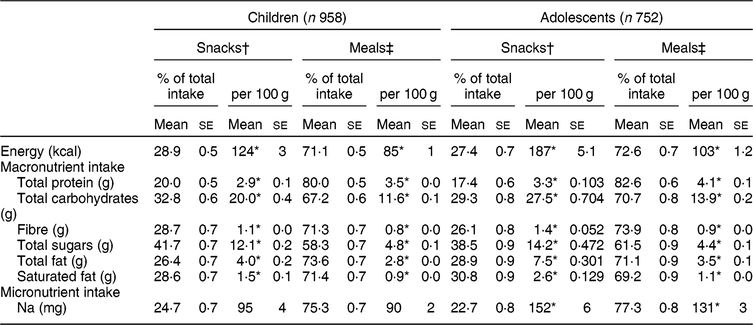
As Table 5 shows, while snacks contributed about a third of the daily energy (kcal/100 g) in both age groups, they more contributed more to the total daily sugar intake (41·7 % in children, 38·5 % in adolescents) and slightly less to the total daily protein intake (20·0 % in children, 17·4 % in adolescents) than would be expected given their energy contribution compared with that of meals. Among participants who reported at least one meal and one snack in a day (n 1585), the daily energy density was higher for snacks (519 kJ (124 kcal)/100 g for children, 782 kJ (187 kcal)/100 g for adolescents) than for meals (356 kJ (85 kcal)/100 g for children, 431 kJ (103 kcal)/100 g for adolescents) in both age groups (P < 0·05). Furthermore, snacks were significantly less protein dense and more carbohydrate, total sugars, total fat and saturated fat dense than meals. The mean per capita intakes of energy and nutrients, by snacks and meals, can be found in the online supplementary material, Supplemental Table S3.
Nutrient profile (expressed in quantities per 100 g) of snacks and meals among FECHIC (children, 4–6 years) and GOCS (adolescents, 12–14 years) study participants (n 1710), south-eastern area of Santiago, Chile, 2016
FECHIC, Food Environment Chilean Cohort; GOCS, Growth and Obesity Cohort Study.
1 kcal = 4·184 kJ.
* P < 0·05. Paired-sample t test comparing snack v. meal energy/nutrient densities within each age group.
† Snack energy/nutrient density calculated for 912 children and 676 adolescents who reported at least one snack.
‡ Meal energy/nutrient density calculated for 957 children and 750 adolescents who reported at least one meal.
Meal and snack consumption locations
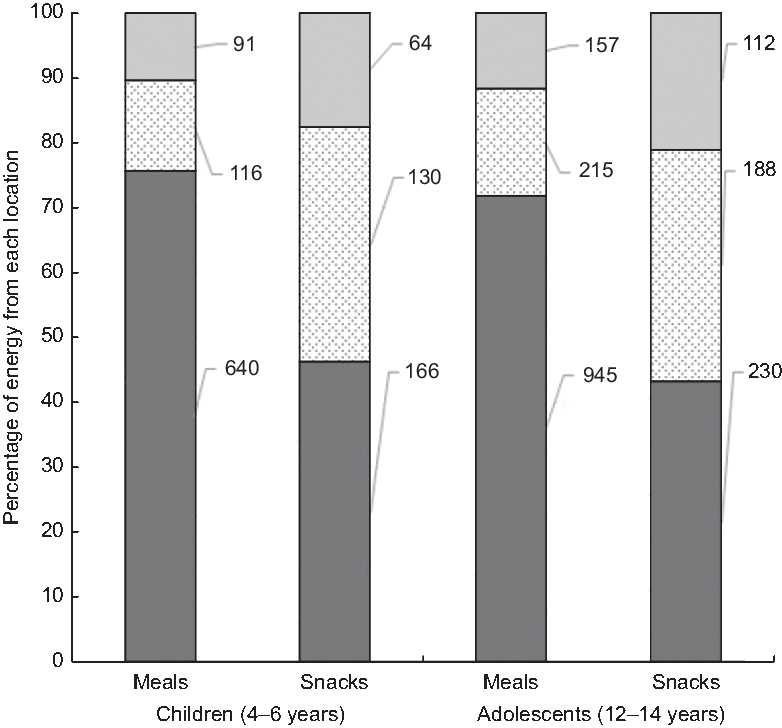
Most of the daily energy intake from both snacks and meals was consumed at participants’ homes (3372 kJ (806 kcal) for children, 4916 kJ (1175) kcal for adolescents) or school (1029 kJ (246 kcal) for children, 1686 kJ (403 kcal) for adolescents; Fig. 2). However, both groups reported a larger percentage of energy from snacks consumed at school, 35·5–36·0 %, compared with 13·7–16·3 % from meals. That is, on average children consumed 544 kJ (130 kcal) in snacks at school and adolescents consumed 787 kJ (188 kcal) in snacks at school. In contrast, on average children consumed 485 kJ (116 kcal) in meals at school and adolescents 1050 kJ (215 kcal).
Per capita energy intake (kcal) provided by location ( , home;
  , school;
  , other) per type of eating occasion (meals, snacks) of FECHIC (children) and GOCS (adolescents) study participants (n 1710), south-eastern area of Santiago, Chile, 2016 (FECHIC, Food Environment Chilean Cohort; GOCS, Growth and Obesity Cohort Study). 1 kcal = 4·184 kJ
Discussion
Our study shows that snacking is prevalent among Chilean children and adolescents. Snacking accounts for 29·0 and 27·4 %, respectively, of the mean daily energy consumption in children and adolescents. In total 95·2 % of the children and 89·9 % of the adolescents in our study consumed at least one snack per day, with a mean per capita of 2·30 (se 0·03) snacks/d. Grain-based desserts, salty snacks, other sweets and desserts, dairy foods, cereal-based foods, dairy beverages, fruits and vegetables, fruit-flavoured drinks, fast food, and sopaipillas and empanadas contributed the most energy from snacks in the overall sample.
To our knowledge, the present study is the first to thoroughly report on snacking patterns in Chilean children and adolescents. A previous study explored the association between unhealthy snacking and academic outcomes in Chilean students from the Santiago Metropolitan Region, using a validated FFQ with fifth and ninth graders. That study reported that 56 % of students consumed snacks that were high in fat, sugar, salt and energy and that unhealthy snacking lowered the odds of good academic performance(Reference Correa-Burrows, Burrows and Orellana36). Another study looked at food preferences among 10- to 13-year-old adolescents in seven public schools in Chile and found that the snacks most commonly purchased were sweet snacks (35 %), juice and ice cream (33 %), salty snacks (30 %), yoghurt (11 %) and fruit (7 %)(Reference Bustos, Kain and Leyton37). Similar to these studies, in our larger sample size with both children and adolescents, snacks tended to be foods and beverages that are energy dense and high in total sugars and saturated fat.
Several studies have assessed snacking behaviours in low- and middle-income countries, including Brazil, Mexico and China. The percentage of snackers among both age groups in our study (90 % or above) was higher than that reported in Mexico (75 % among 2- to 5-year-olds, 68 % among 6- to 13-year-olds). Similarly, the average number of snacks consumed per day was higher in our study than that reported in Mexico (1·6 snacks/d and 1·2 snacks/d, respectively)(Reference Taillie, Afeiche and Eldridge20). Likewise, snacking by adolescents was more prevalent and more frequent in Chile than in Brazil, where 79 % of 10- to 18-year-olds reported at least one snack daily and an average of 1·6 snacks/d(Reference Duffey, Pereira and Popkin19). This difference might be partly explained by the way we defined snacking (self-identified by participants as either colación or picoteo) in comparison to a definition based on the reported time of day, the energy content of the EO or the time lapsing between EO. Snacking patterns in Chile are more like those reported in the USA, where 95 and 92 % of children and adolescents, respectively, report at least one snacking occasion daily and an average of 3·0 and 2·5 snacks are consumed per day(Reference Dunford and Popkin17).
One of the main concerns is the quality of the foods and beverages consumed as snacks by our sample. In children the most frequently reported snack items were fruits and vegetables, grain-based desserts (i.e. cookies and other sweet bakery products), dairy foods (i.e. yoghurt), dairy beverages, and other sweets and desserts (i.e. chocolates, other candies and frozen treats). Adolescents most frequently reported grain-based desserts, other sweets and desserts, fruits and vegetables, cereal-based foods and salty snacks. It is important to note that even though fruits and vegetables rank high in terms of reported frequency as snacks, due to their lower energy density, other foods and beverages considered less healthy provide a greater proportion of the energy per capita from snacks. These food and beverage choices consumed as snacks are similar to those reported as snacks in other countries. In Brazil(Reference Duffey, Pereira and Popkin19) the top five food groups consumed by 10- to 18-year-old snackers were sweets and desserts; sugar-sweetened beverages; fried or baked dough with meat, cheese or vegetables; sweetened coffee and tea; and fruit. In Mexico fruit, milk and yoghurt, salty snacks, candy, cookies, sweetened breads and atoles contributed to snacking occasions among 2- to 5-year-olds. Similarly, among 6- to 13-year-olds these food groups were important in addition to sandwiches, tortas or filled rolls, and carbonated sodas(Reference Taillie, Afeiche and Eldridge20).
In our study the food and beverage groups consumed as meals could potentially be of a healthier profile than that of snacks. For children meat and meat substitutes, legumes, eggs, and oils and fats (likely used in food preparation) are the top contributors to meals but not to snacks, whereas for adolescents, meat and meat substitutes, oils and fats, and dairy beverages were the main contributors to meals but not to snacks. Given these differences in food groups consumed as snacks or meals, the differences in the nutrient profile of both types of EO are somewhat expected. Even though snacks contribute to about a third of the daily energy in both age groups, they contribute more total sugars and slightly less total protein (expressed as a percentage of total intake) compared with meals. Snacks were also more energy dense; less protein dense; and more carbohydrate, total sugars, total fat and saturated fat dense than meals.
Of interest is the apparent shift from snacks that might contribute important nutrients in children to less healthy snacks in adolescents. In our study 40·0 % of children consumed fruits and vegetables as snacks, but only 28·7 % of adolescents did so; 34·8 % of children consumed dairy foods (mostly yoghurt), but only 19·8 % of adolescents did so; and items high in added sugars and fats (desserts, salty snacks, fast food, and empanadas and sopaipillas) were reported more frequently by adolescents. Specifically, 37·6 % of children reported grain-based desserts v. 45·7 % of adolescents, 27·5 % of children reported other sweets and desserts v. 30·7 % of adolescents, 13·4 % of children reported salty snacks v. 21·8 % of adolescents, and 4·7 % of children reported fast food v. 6·3 % of adolescents. When considering both snacks and meals in our sample, the shift by age in some food group consumption is even more evident. For example, 25·5 % of children reported consuming carbonated beverages, while in adolescents this percentage nearly doubled to 47·2 %. Similarly, fast food (12·8 % in children, 21·7 % in adolescents) and empanadas and sopaipillas (5·6 % in children, 14·1 % in adolescents) were noticeably more commonly consumed by adolescents than children. Adolescents are more independent in their food selections and preferences might play a greater role in their decisions. Thus, the role of the school food environment in snacking choices should not be overlooked, as it influences the snack foods available to children and adolescents during the day, especially given that it is likely that children have money to purchase these snacks(Reference Bustos, Kain and Leyton37).
Our findings show that a larger percentage of energy reported from snacks is consumed at school (35·5–36·0 %) in comparison to the percentage of energy reported from meals consumed at school (13·7–16·3 %). This should raise awareness regarding the importance of the availability of healthy snacks at school. In Chile both primary and secondary schools tend to have a kiosko escolar, a small store in the school where foods are made, sold or both (separate from the school lunch programme)(38). As in other Latin American countries, these small food stores have traditionally sold a mix of foods made on-site and packaged foods, and until recently had not been subject to regulations regarding the nutritional quality of the items sold(Reference Fraser39). Previous research has evidenced that unhealthful food options were readily available to Chilean students in school kioskos (Reference Prochownik, Vera-Vergara and Cheskin40,Reference Bustos, Kain and Leyton41) . However, whether and how this has changed in the current policy context is yet to be determined.
For example, the Chilean Government recently passed a law regarding food labelling and advertising (approved in 2012 and implemented starting in 2016)(Reference Corvalán, Reyes and Garmendia42) that can potentially affect snacking behaviours, particularly among adolescents. The law requires front-of-package warning labels for foods and beverages that surpass previously specified levels of energy, sodium, total sugars and saturated fats. Furthermore, these products are subject to marketing restrictions and cannot be sold in schools(33). These regulations may affect many of the foods and beverages typically consumed as snacks by children and adolescents.
The front-of-package labelling regulations are an especially promising way of nudging snacking behaviours. A study in Guatemala seeking to understand which snack foods are most frequently purchased by children and how aspects of food packaging influence their perceptions found that some visual aspects influenced their favourite products and also led some children to incorrectly perceive that foods contained healthy ingredients when they did not(Reference Letona, Chacon and Roberto43). This suggests that the Chilean front-of-package labelling can potentially influence children and adolescents’ selections of snack foods, but whether and how this will occur is an important question to address, particularly in light of our results.
We acknowledge several limitations in our study. First, we investigated snacking patterns over a one-day period, which might not be representative of children and adolescents’ usual food consumption, and therefore usual snacking patterns might be different. Second, recall bias is always a possibility in self-reported dietary intake measures, especially when working with younger populations. Despite the different strategies we used (such as a food atlas to probe for portions consumed and caregivers responding for younger children during interviews), there is a possibility of misreporting by participants. Third, the literature has previously raised the challenges of defining what is considered a snack and the implications of different definitions(Reference Hess and Slavin44). As in previous studies, our participants self-identified snacks(Reference Dunford and Popkin17,Reference Taillie, Afeiche and Eldridge20,Reference Duffey and Popkin45) . For each EO participants reported whether they considered the EO a snack or a meal. However, this measure of snacking might exclude snack foods that are consumed as part of main meals and therefore might not give a complete picture of the population’s consumption of snacks(Reference Hess and Slavin44).
Finally, due to our recruitment strategies, the socio-economic characteristics of our study sample are likely homogenous and not representative of the entire population in Chile. However, it is important to note that 92 % of Chilean children and adolescents (1st–8th grade) attend public-funded schools(46), and we therefore believe that our results can be generalizable to a vast majority of this age group.
Conclusion
We found that snacking is widespread among Chilean children and adolescents and that it contributes greatly to daily energy intakes. Even though, as others have noted, snacking as a behaviour is not necessarily unhealthy(Reference Duffey, Pereira and Popkin19), the food categories consumed as snacks in our sample are generally considered high in energy, saturated fat, sodium and/or total sugars, and therefore are potentially targeted by the newly implemented nationwide food regulation, with the exception of the fruits and vegetables frequently consumed as snacks. Future research is needed to understand how these regulations affect snacking behaviours and how snacking in this population is associated with weight gain trajectories through childhood and adolescence.
Acknowledgements
Acknowledgements: The authors thank Phil Bardsley and Karen Ritter for their assistance with data management; Natalia Rebolledo and Michael Essman for support with food and beverage grouping; and Fernanda Sanchez, Nancy Casas and Macarena Jara for their help in understanding the data collection process in Chile. Financial support: Funding for this study came from Bloomberg Philanthropies with additional support from IDRC Grant 108180 (INTA–UNC), CONICYT FONDECYT #1161436, and the NIH National Research Service Award (Global Cardiometabolic Disease Training Grant) #T32 HL129969-01A1. The funders had no role in the design, analysis or writing of this article. Conflict of interest: None of the authors have conflict of interests of any type with respect to this manuscript. Authorship: All authors designed the study; C.C. and M.R. acquired the data; M.L.J. analysed the data and drafted the manuscript with contributions from all co-authors; all authors assisted in the interpretation of the results, provided critical intellectual feedback to help revise, and approved the final manuscript. Ethics of human subject participation: This study was conducted according to the guidelines laid down in the Declaration of Helsinki and all procedures involving human subjects were approved by the Ethics Committee of the Institute of Nutrition and Food Technology (INTA) at the University of Chile. Written informed consent was obtained from all subjects or their legal guardian.
Supplementary material
To view supplementary material for this article, please visit https://doi.org/10.1017/S1368980019000971
Author ORCID
Melissa L Jensen, 0000-0002-9830-076X.



