




Introduction
Age-associated neurocognitive disorders, such as dementias, significantly impact cognitive functions and cause the deterioration of older adults’ abilities to maintain autonomy in their daily lives. An important precursor to the onset of neurocognitive disorders is age-related subjective cognitive decline, which can begin decades prior to the emergence of pathological markers of neurocognitive diseases (Hadjichrysanthou et al., Reference Hadjichrysanthou, Evans, Bajaj, Siakallis, McRae-McKee, De Wolf and Anderson2020). According to the Alzheimer Society of Canada, the percentage of Canadians with some form of dementia will rise from 8.4% to 13.2% by 2050, highlighting the need for psychosocial interventions to buffer against changes in cognition and prevent or postpone cognitive decline.
Among many contributors to cognitive decline in aging, lack of participation in cognitively stimulating activities and social isolation have both been identified as modifiable risk factors (World Health Organization, 2019). Increased cognitive activity can have a buffering effect against cognitive decline (Stern & Munn, Reference Stern and Munn2010) and may be achieved through a variety of means, such as cognitive training (CT) or cognitive stimulation (CS). Intervention programs referred to as CT involve the repetitive practice of specific tasks, often using standardised materials and administered by trained personnel to enhance particular cognitive functions, including, for example, attention and executive function (Clare & Woods, Reference Clare and Woods2004), and their efficacy has been demonstrated in large-scale trials (Belleville et al., Reference Belleville, Hudon, Bier, Brodeur, Gilbert, Grenier, Ouellet, Viscogliosi and Gauthier2018; Tennstedt & Unverzagt, Reference Tennstedt and Unverzagt2013). For instance, the ACTIVE trial consisted of ten bi-weekly one-hour intervention sessions and found that participation in the intervention produced an immediate improvement in cognitive ability in healthy older adults, which was durable through five years (Ball et al., Reference Ball, Berch, Helmers, Jobe, Leveck, Marsiske, Morris, Rebok, Smith, Tennstedt, Unverzagt and Willis2002). In comparison with CT, CS is a term applied to both formal (i.e., standardised) and informal activities that engage a variety of cognitive skills such as playing games, listening to the radio, gambling, and reading. CS activities are also increasingly being recognised as a promising and relatively low-resource, cost-effective, easier-to-implement approach compared to CT, to protect against cognitive decline in older age (World Health Organization, 2019). Contrary to CT programs, CS activities do not have specific objectives nor targeted skills but rather are intended to improve overall cognitive and social functioning through stimulating activities, which are often leisure based (Buschert et al., Reference Buschert, Bokde and Hampel2010).
Due to the nature of CS interventions being less standardised and the wide range of possibly stimulating leisure activities available, there is a relatively smaller body of evidence supporting the efficacy of any one type of CS intervention in older adults. However, previous studies have found that regular participation in a variety of CS activities in older adulthood can improve overall cognitive functioning and quality of life, increase the ability in performing activities of daily living, promote social interactions, and reduce behavioral challenges, such as the loss of motivation or drive (i.e. apathy) and social disturbance (Woods et al., Reference Woods, Aguirre, Spector and Orrell2012). In fact, a previous large-scale CT trial recommended future studies to assess the use of cognitive and psychosocial engagement in combination with stimulating leisure activities via the addition of a CS intervention (Belleville et al., Reference Belleville, Hudon, Bier, Brodeur, Gilbert, Grenier, Ouellet, Viscogliosi and Gauthier2018). Given the diversity and relatively low-resource requirements of many CS activities, increasing the evidence base concerning the impact of CS interventions on cognitive function, social engagement, and factors affecting the feasibility of such interventions in community-based settings could help empower communities to provide accessible and practical resources for the promotion of healthy aging.
Among the many activities that may protect against cognitive decline, reading has been identified as one of the most influential ways to maintain cognitive function and buffer against the later risk of cognitive impairment. Reading has been shown to be a highly stimulating cognitive activity that is associated with numerous benefits in the short term and long term, such as vocabulary growth, reduced risk of cognitive decline (Chang et al., Reference Chang, Wu and Hsiung2021), and prolonged life (Jacobs et al., Reference Jacobs, Hammerman-Rozenberg, Cohen and Stessman2008). However, with age often comes a variety of changes to physical and mental well-being that can affect reading and literacy skills such as reduced processing speed, a greater tendency to be distracted, and reduced capacity to process and remember new information (Rothbauer & Dalmer, Reference Rothbauer and Dalmer2018). With these changes, older adults can become less inclined to read by themselves. Group reading has similar cognitive benefits to reading alone but may be a better alternative. Group reading provides individuals with the opportunity for social connection and promotes their motivation to read, despite age-related challenges (Merga, Reference Merga2017). Although reading meets certain elements of the definition of CT by engaging specific cognitive processes such as attention and working memory (Slattery et al., Reference Slattery, Ryan, Fortune and McAvinue2021), group reading is perhaps better defined as a CS activity in that it promotes not only overall cognitive functioning but also social engagement, as proposed by Genuis (Reference Genuis2015). Previous studies indicate that group reading is a generally positive and engaging activity for older adults and helps improve social connections (Plummer et al., Reference Plummer, Nguyen, Everly, Kiesow, Leith and Neils-Strunjas2023).
Bibliotherapy is a broad term referring to the use of reading as a therapeutic means for promoting well-being and has been previously evaluated for efficacy in the treatment of mood disorders in young adults (Yuan et al., Reference Yuan, Zhou, Zhang, Zhang, Pu, Yang, Liu, Jiang and Xie2018) and the promotion of social relationships in healthy older adults and those with dementia (Steptoe et al., Reference Steptoe, Shankar, Demakakos and Wardle2013). Accordingly, group bibliotherapy, or book clubs, are a promising avenue for promoting healthy aging that includes both CS and social participation. One example of a bibliotherapy intervention designed specifically for older adults with or without cognitive decline is the Hearthside Book Club (HBC), an evidence-based reading and discussion intervention created by researchers and professionals at Hearthstone Alzheimer Care. The club provides specialized reading materials to promote group reading and discussions with simple storylines and large, easy-to-read print, designed for older adults with varying levels of cognitive skill. The nature of this club centers around a group activity aiming to promote overall cognitive and social functioning, meeting the definition of a CS intervention. Previous research by Skrajner & Gorzelle using the HBC resources in a group reading activity for older adults with dementia has found an increase in quality of life, engagement, and pleasure from the baseline to post-treatment after participating in the club four times per week for four consecutive weeks (2018). However, previous empirical research using the materials from the HBC has only been conducted in the United States with persons with diagnosed early-to-late-stage dementia living in residential care and has not explored the participants’ experiences and more specifically pertaining to their perceived cognitive and social engagement nor the feasibility in a community setting (Skrajner & Gorzelle, Reference Skrajner and Gorzelle2018).
Current study
In this study, we explored the perceived efficacy and feasibility of a reading- and discussion-based CS intervention in older adults living in a shared residential setting. From our results, we offer recommendations for the implementation of future applications in a similar community setting. There are a limited number of small-scale studies investigating the effect of specialized CS interventions, such as bibliotherapy, on both overall cognitive function and social engagement in older adults with subjective cognitive decline. Therefore, the purpose of this study was to (1) explore the perceived efficacy of a reading- and discussion-based CS intervention on cognitive function and social engagement and (2) determine the feasibility of the intervention in the context of a Canadian retirement community by exploring factors affecting the implementation of the HBC. This study was conducted in a retirement community in Canada with individuals with subjective cognitive decline (Jessen et al., Reference Jessen, Amariglio, Buckley, Van Der Flier, Han, Molinuevo, Rabin, Rentz, Rodriguez-Gomez, Saykin, Sikkes, Smart, Wolfsgruber and Wagner2020). Using reflexive thematic analysis of the contents of focus group discussions and responses to a short program evaluation questionnaire, we assessed program efficacy via participants’ perceptions of how their involvement in the activity engaged their cognitive skills and influenced their level of social engagement. We also explored participants’ views of factors that affected the feasibility of the intervention (i.e., facilitators and barriers) by looking for patterns of meaning and developing themes from the data collected during the focus group discussions, as well as in the responses to a short program evaluation questionnaire.
Overall, this study contributes to our understanding of Canadian older adults’ experiences participating in a group reading- and discussion-based intervention. Furthermore, it helps to identify why such programs may or may not be beneficial and provides insight into characteristics that could affect the success of implementing such programs in different contexts.
Methods
Design
The current study presents qualitative data collected through focus group discussion sessions. Quantitative measures were also used to describe the study sample. Specifically, participants completed a pre-intervention assessment of cognitive skill function using the Montreal Cognitive Assessment (MoCA) (see Supplementary Material 1) (Nasreddine et al., Reference Nasreddine, Phillips, Bédirian, Charbonneau, Whitehead, Collin, Cummings and Chertkow2005) and the UCLA three-item loneliness scale (see Supplementary Material 2) (Hughes et al., Reference Hughes, Waite, Hawkley and Cacioppo2004).
Ethical approval was received from the Ethics Committee for Student Research (ERCSR) of Bishop’s University to conduct the study. Participants were recruited and signed the consent form before completing baseline measurements with the researcher.
Setting
The retirement community chosen for this study follows an independent supported living care framework, housing approximately 100 older adults. They provide a full-service lifestyle with three meals per day, weekly housekeeping and laundry, and basic health care monitoring. Residents have the option of adding extra care services, such as assistance with dressing, bathing, and medications, as requested to suit their needs. If additional services are required more constantly, residents typically move from the retirement community to an assisted living facility or nursing home. A variety of physical, creative, and social activities are organised by the staff on a weekly basis.
The intervention sessions were conducted in a quiet, comfortably furnished private room located within the same establishment, ensuring a familiar and accessible environment for participants. The room was easily reachable via elevator, accommodating participants with limited mobility.
Participants
For participant recruitment, an advertisement was posted on the News billboard at the retirement home. In addition, the HBC was advertised in the retirement home’s activities schedule and promoted by word of mouth by the home’s activities coordinator, who knows all residents personally.
Ten older adults (9 women, 1 man, all above 70 years old) with subjective cognitive decline or self-reported memory complaints who were residents of a retirement home in Eastern Ontario, Canada, were recruited for this study. Residents with a diagnosed neurodegenerative condition from a health care professional, such as Alzheimer’s disease or any other type of dementia, were not included in the study, as described in the screening procedures below. In addition, as the resources from the HBC are in English, the club operated exclusively in English, and participants had to be able to speak, read, and understand English. A series of questions in the demographics questionnaire asked participants about changes in their cognitive function, such as the frequency of occurrences, severity, and types of symptoms experienced to assess the degree of subjective cognitive decline and confirm their eligibility to participate in the intervention. Please see Supplementary Material 3 for the complete demographic questionnaire.
Intervention
Participants were assigned to one of two reading groups according to individual participants’ weekly schedules. Two reading groups of four to five participants were created to ensure the group size was small; both groups followed the same intervention protocol. Each group met at a set time twice per week for four weeks, as per HBC recommendations (Skrajner & Gorzelle, Reference Skrajner and Gorzelle2018). Each group session lasted approximately one hour, for a total of eight hours over four weeks. The groups met in the retirement home’s lounge with the primary author, who also served as the group facilitator for the intervention.
During the bi-weekly group sessions, participants took turns reading aloud pages of the book and following along in their own copy when others were reading. The group facilitator also spontaneously prompted discussions throughout the duration of the meeting about the reading, for instance, by asking, ‘Has anyone had a similar experience in their own life?’ Participants were encouraged to share with the group their thoughts, opinions, and personal stories as they related to what was being read. Light refreshments were provided during each session. The groups were presented with a new book at the beginning of each session, which they read and discussed together. The topics of the books were those included in a free trial period of eight books from the HBC. The eight books read over the course of this study were, in order: Famous Chefs, Mount Everest, All about Pets, American Automakers, French Cuisine, Marilyn Monroe, Staying Healthy, and African Safari Animals. It should be noted that between the start of the present project and the submission of this manuscript, the HBC underwent enhancement and rebranding and is now known as Viva Stories. The reading materials are available through the CONNECT engagement platform, and it is now possible to download only one free book. More information and examples of the material are available at this link: www.vivastories.com.
Procedure
Before the first group session, interested residents met individually with the researcher for approximately twenty minutes to determine eligibility. After having given informed consent, participants completed the demographic questionnaire, the MoCA, and the UCLA 3-item Loneliness Scale during this initial meeting.
The MoCA is a brief screening instrument used to detect mild cognitive impairment and is the most sensitive and validated cognitive screening tool used internationally in populations of 55- to 85-year-olds (Bernier et al., Reference Bernier, Gourdeau, Carmichael, Beauchemin, Voyer, Hudon and Laforce2023; Sala et al., Reference Sala, Inagaki, Ishioka, Masui, Nakagawa, Ishizaki, Arai, Ikebe, Kamide and Gondo2020). Possible MoCA scores range from 0 to 30, and scores of 25 or less indicate the potential presence of cognitive decline. Scores were adjusted using the one-point correction for individuals with twelve years of education or less, as recommended by MoCA scoring rules, for participants who meet this criterion.
Loneliness was measured using the UCLA Three-Item Loneliness Scale, an interviewer-administered questionnaire with good psychometric properties and test-retest reliability within one year (Daniel et al., Reference Daniel, Espírito-Santo, Lemos, Guadalupe, Barroso, Gomes Da Silva and Ferreira2023). It consists of three questions, each of which is rated on a three-point scale. All items are summed to give a total score out of nine, with scores below six considered as reflecting ‘not lonely’ and above six as ‘lonely’ (Steptoe et al., Reference Steptoe, Shankar, Demakakos and Wardle2013).
The intervention began one day following the initial meeting and lasted for four consecutive weeks, with two sessions per week. The focus group discussions happened immediately following the eighth intervention session. Participants met again individually with the researcher one month after the final group session to complete the MoCA (version 8.2) and the same UCLA Three-Item Loneliness Scale from the initial meeting. The complete dataset from these measures is available upon request.
Focus groups
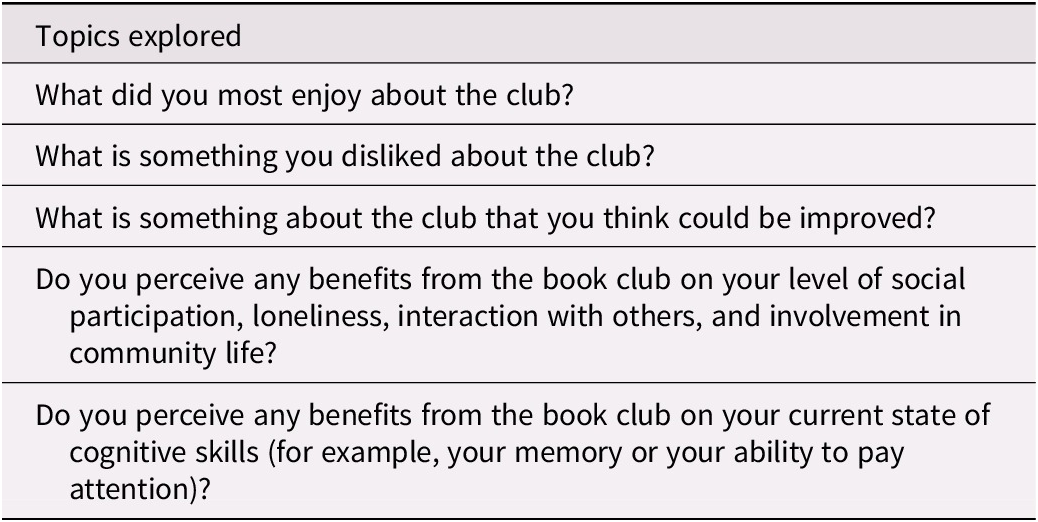
Participants were invited to participate in a semi-structured roundtable discussion (i.e., focus group) (Leung & Savithiri, Reference Leung and Savithiri2009) with members of their respective reading group. The focus groups were led by SR, a female undergraduate honours psychology student and primary author. The focus group discussions lasted approximately one hour. Please see Table 1 for a list of questions discussed during the focus groups. Finally, participants received a short questionnaire to complete individually with two questions asking about their intent to continue with the program and if they would recommend the program to others (see Supplementary Material 4). Focus group discussions were recorded and transcribed using Otter.ai (Version 3.44.240226.933) and proofread by the primary investigator.
Key topics explored in the roundtable focus group discussions
Data analysis
Qualitative analysis
Two participants (participants 2 and 3) were unable to join their respective groups for the focus group discussion due to scheduling conflicts. These participants were interviewed separately during the one-month post-intervention meeting and asked the same questions as those discussed during the focus groups. The focus group discussion transcripts were analysed using reflexive thematic analysis. We followed the guidelines from Braun & Clarke (Reference Braun and Clarke2019, Reference Braun and Clarke2021a; Byrne, Reference Byrne2022) on quality practice in reflexive thematic analysis over a six-stage process: (1) familiarisation of transcripts, (2) generating recurrent data into codes, (3) collating codes into themes, (4) reviewing of themes, (5) refinement of themes, and (6) production of the report. Coding was approached as an active and interpretative process, with codes developed organically through immersion in the data, rather than being predefined or structured in a codebook. The primary researcher (SR) occupied a dual role as the program facilitator/leader of focus group discussions and was responsible for coding and theme development. At the time of the study, SR possessed prior experience facilitating group activities, working with older adults in a retirement home setting, and conducting qualitative data analysis. The researcher’s embeddedness within the intervention context provided a unique lens through which the data were interpreted. Thus, they had an active role in constructing themes and interpreting the data, which was shaped by their own subjective experience, not only during the focus group discussion, but throughout the intervention period. The second author (SH) also engaged with the data and participated in collaborative discussions at key stages of the analysis to support reflexive dialogue, offering a space to explore alternate readings, challenge assumptions, and enhance analytical depth. These discussions did not aim to produce consensus or coding reliability, but rather to support theoretical sensitivity and critical engagement with the data. SR and SH generated a set of codes from deductive reasoning derived from the questions from the semi-structured focus groups and then inductively identified new data-driven codes focused on participants’ experiences. Please see Supplementary Material 5 for the focus group codebook.
In addition to the reflexive thematic analysis, the program facilitator, who was also the primary investigator, collected notes of their interactions with the participants throughout all the steps of the recruitment, intervention, and data collection periods. These notes were then used to draw connections between the program facilitator’s personal insights and the themes generated from the participants’ comments from the qualitative analysis. Finally, for additional measures of program acceptability, frequency tables were used to compile the number of yes/no/unsure responses to the two self-report questions about the intent to continue with the club and to recommend the club to others.
Results
Participant characteristics and descriptive measures
Nine out of ten participants completed the intervention and measures. One participant dropped out of the study due to personal health considerations. This sample size is adequate for the purposes of qualitative analyses. Consistent with methodological guidance in qualitative research, the focus was on the depth and richness of data rather than on larger sample sizes (Braun & Clarke, Reference Braun and Clarke2021b; Guest et al., Reference Guest, Bunce and Johnson2006). Our analysis indicated that key themes were consistently represented across data, suggesting that the sample size was sufficient to address our research objectives.
Of these nine participants who provided complete data, eight were women and all were White (ages 82 – 90, M = 85.3, SD = 2.74). The sample thus represents a subset of middle-old and old-old Canadian adults. Most participants (n = 8) attended six or more of the eight intervention sessions. One participant attended four of eight group intervention sessions. Adherence rates (i.e. participation in the sessions compared to the total number of sessions planned) to the bi-weekly book club meetings averaged 85%. Reasons reported for missing group intervention sessions included having medical appointments, other prior commitments, or feeling unwell. Please see Table 2 for complete demographic information.
Baseline characteristics of participants (N = 9)
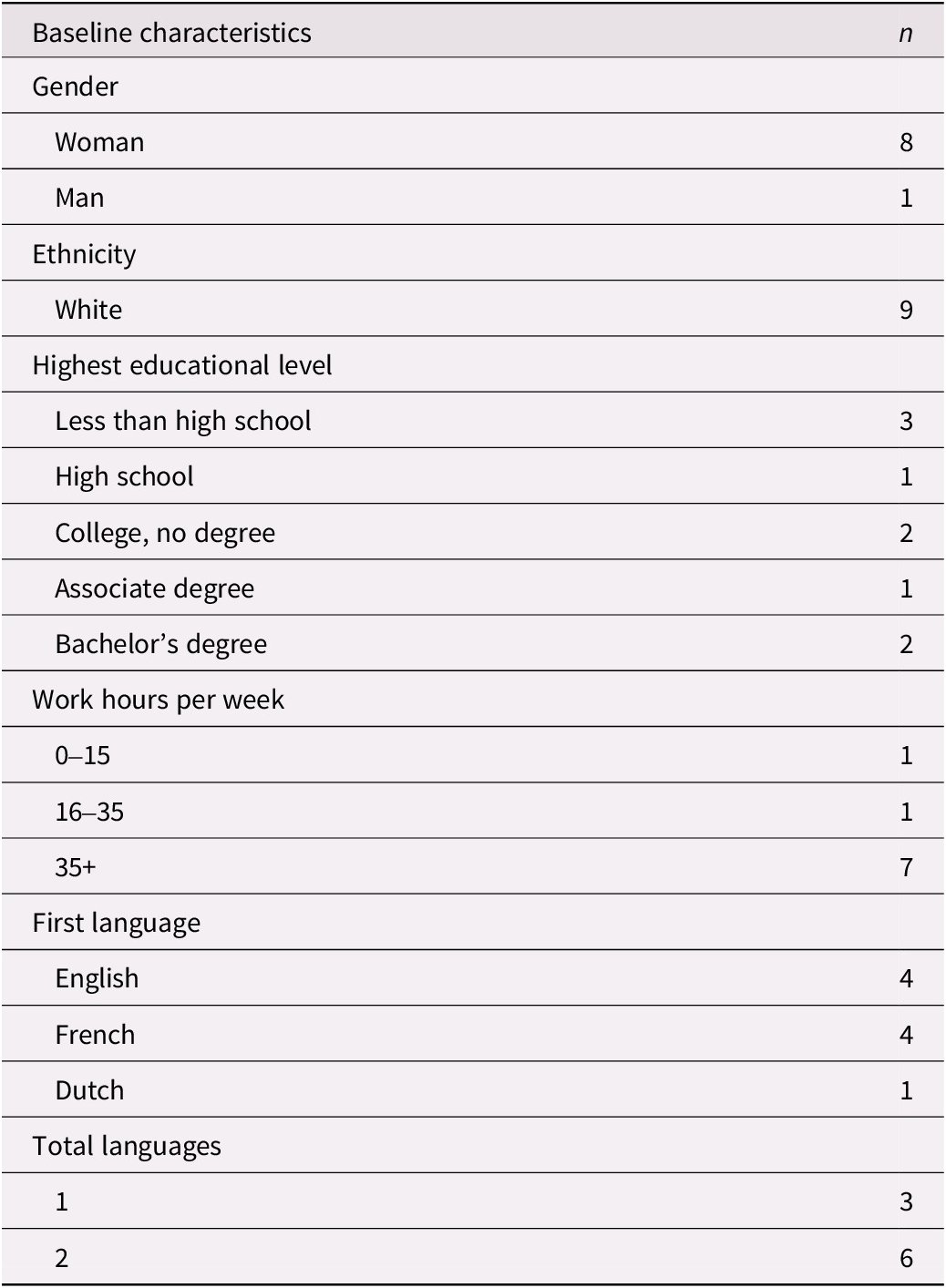
Note. Participants whose first language was not English were also fluent in English. Total languages refers to the total number of languages currently spoken and understood.
Researchers categorised cognitive complaints based on participants’ descriptions. These categories reflected the primary symptoms or features according to participants’ descriptions. The most commonly reported symptoms of subjective cognitive decline were poor short-term memory (n = 7) and long-term semantic memory (n = 7). Participants either reported experiencing these symptoms most days (n = 3) or less than once per week (n = 6). A complete description of individual participant’s subjective symptoms of changes in cognitive function can be found in Supplementary Material 6. Overall, the sample was below the threshold for scores on the MoCA to be considered within the normal range (M = 20.4, SD = 4.28), indicating the potential presence of cognitive decline. The sample was also considered as ‘not lonely’ according to the previously proposed criteria for scoring the UCLA loneliness scale (Mdn = 4; range min. = 3, max. = 5), and one person’s score fell within the threshold of loneliness (6 points).
Most participants (n = 7) self-reported that they would continue with the activity should it be offered permanently at the retirement home, and they would recommend the activity to others. Two participants (participants 1 and 4) reported being unsure if they would both like to continue with the program and recommend it to others. As further discussed in the thematic analysis below, the primary investigator noted that both participants experienced barriers, making it more difficult for them to connect with the rest of the group. Participant 1 was the only man in the group, and participant 4 had difficulty speaking due to medical reasons, which may provide some insight as to why they both reported being unsure about the two questions on program acceptability.
Focus group insights: Thematic analysis
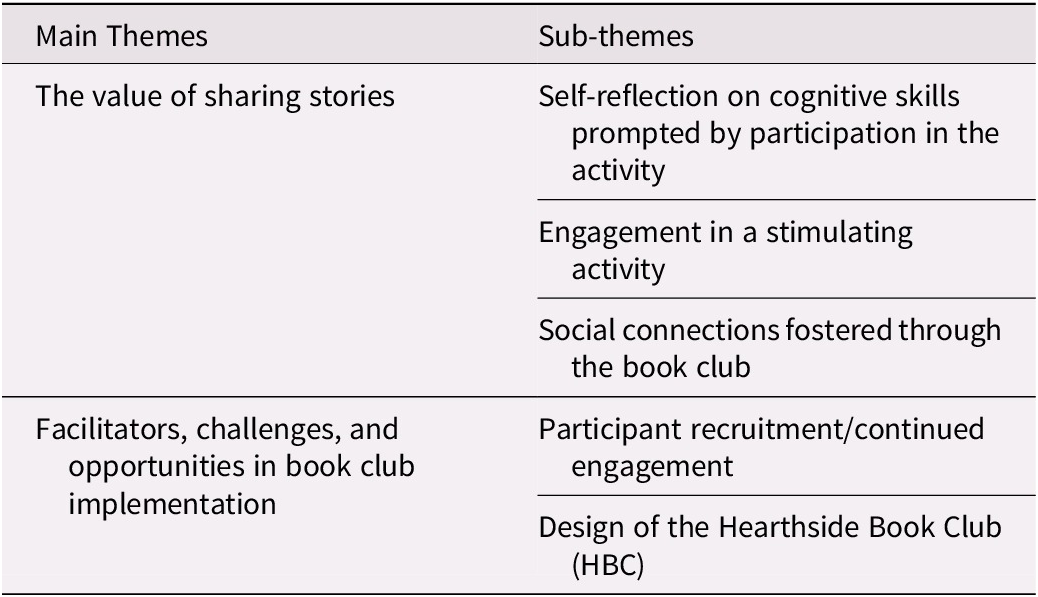
As described above, participants were invited to share their perceptions about their experience participating in the club – more specifically, its influence on their subjective cognitive function and loneliness – as well as their overall thoughts about the book club. Please refer to Table 1 for the outline of discussion questions. From the analysis of the focus group discussions, two main themes were identified, with a total of five sub-themes, as depicted in Table 3. We interpret the first main theme as providing insight into the efficacy of this intervention through three sub-themes. The second theme we identified was related to the facilitators and barriers of implementing this intervention, shedding light on the factors that are important to promote the feasibility of this type of activity.
Themes arising from qualitative analysis of the data gathered in the focus groups

Intervention efficacy: The value of sharing stories
In reflecting on what participants valued about their involvement in the book club, several commented about how much they appreciated being able to share their personal life stories, ideas, anecdotes, and perspectives with others – an activity closely resembling reminiscence therapy (Huang et al., Reference Huang, Chen, Chen, Huey-Lan Hu, Liu, Kuo and Chiu2015; Woods et al., Reference Woods, O’Philbin, Farrell, Spector and Orrell2018). Standard practices in reminiscence therapy suggest the use of personal prompts, such as old family photos, to evoke memories from the past. In contrast, the HBC materials were not personally tailored to any participant. This lack of personal prompts encouraged participants to draw their own connections with what was being read and discussed by other participants in the club. Although the intervention was not designed as a form of reminiscence therapy, personal memories and reflections naturally emerged as a central theme in group discussions.
This overarching theme on The Value of Sharing Stories is in line with findings from Genuis’s (Reference Genuis2015) study on personal experiences of older adults participating in a group bibliotherapy intervention. In the present study, when participants were asked about what they liked the most about the program, Participant 3 stated: ‘What I really liked is the exchange of ideas that, you know, we all had, we’re all different from different upbringings and different cultures’. Participant 8 also mentioned liking listening to others’ stories in relation to the topics discussed in the reading materials:
Discussing in the group about different subjects which was interesting and made you think of things that you did remember then, and everyone would talk about something you’d remember, oh okay, I remember this and that, I found that very interesting.
This demonstrated engagement of their cognitive skills by making links between what was being read and the stories discussed. Reflecting on stories shared by other participants also prompted their own reminiscing, which engages memory and cognitive skills (Cotelli et al., Reference Cotelli, Manenti and Zanetti2012). Exchanging personal stories was also a means to build social connections with other members of the club based on shared personal histories and backgrounds. Participants discovered that others in the group, although from different areas in the country, shared similar upbringings and noted how it was ‘funny how we all grew up in the same way, everyone in this group’ (Participant 6). With The Value of Sharing Stories as a starting point, we identified three sub-themes of self-reflection on cognitive skills, engagement in a stimulating activity, and social connections through the club.
Self-reflection on cognitive skills
Through the sharing of their stories, participants were able to self-reflect on their level of cognitive skills. For example, Participant 1 commented:
I also found out a lot of stuff… I used to be able to tell stories, you know, and especially if there was another guy or another lady telling the story. I could tell stories for hours. Now, once I get started, maybe you know… and there’s certain stories I can recall. But I need a book now. And somebody threw away the story book when we moved, and they’re gone forever.
This participant reported noticing changes in their ability to tell stories as they are getting older and the usefulness of participating in such an activity that uses books to directly prompt discussions. Participation in this club with other older adults who were also experiencing subjective cognitive decline encouraged participants to talk about their perception of aging: ‘We’re not going back, we’re going ahead with age’, said Participant 9. Linked to the perception of aging comes the reflection on the changes in their cognitive skills, as noted by Participant 7:
I guess it goes with the age too. We’re young and we forget things. So that’s it at our age, I guess it’s normal that we forget things. Yeah. But when it gets to a point that you don’t remember where you live, or where you’re supposed to eat, that’s different. That’s not just forgetting things, it’s the disease. And if it affects your day-to-day life you have to do something about it.
The book club created a space for participants to openly discuss and reflect upon these topics that can sometimes be challenging.
Approximately half of the participants reported thinking that their participation in this activity had a benefit on their cognitive skills – ‘I’m sure it does’ (Participant 6) – whereas the other half thought there was ‘not much’ benefit, especially ‘not at this stage yet’ (Participant 3). Those who reported no benefit on their level of cognitive skills were already involved in different activities at the retirement home and seemed to understand the importance of cognitive engagement. This idea was expressed by Participant 2, who noted that ‘it’s the same because I do lots of crossword puzzles and I always have a book’. Some of the benefits experienced by those who reported seeing changes in their cognitive skills after participating in the club included ‘staying more focused on what we were doing’ (Participant 7) during the reading activity and improved attention for others’ point of view, as raised by Participant 6: ‘In discussion you’re going beyond your individual topics. I mean, you’re hearing other people’s, what they think of about something maybe not quite the same way as you think about it’. Participants also mentioned developing an ability to integrate different stories and perceptions with their own, as well as with the topics of the book. Participant 9 explained this process and how it engaged their cognitive capacities: ‘Well, I put the two together as we were going into it. So that’s the best way to put it; what I didn’t know together with what I did know’. Notably, the cognitive skills that participants reported engaging, such as executive function and attention, are in line with those previously reported by research on the cognitive benefits of reading activities.
Some participants disliked gaining insight into their cognitive skills via participation in the book club, like Participant 1:
I didn’t particularly like finding out how much I forgot. For a long time, I thought that, you know, what, what are we doing here? We’re not learning anything. But we’re learning that we’re forgetful. And did I enjoy it? No, not really enjoyed it, but I kept coming every time because I was willing to be surprised every time.
As mentioned, this participant did not like this aspect of the self-reflection on their cognitive skills while reading and discussing in a group context in real time, but they kept participating and remained engaged for the whole intervention. The interviewer followed up by asking: ‘Do you feel like participating in this club helped you identify that, or you knew it already?’ Another participant (9) responded, ‘Well, I knew it, but I doubted it. I didn’t know but now I know for sure’ and Participant 1 nodded in agreement, showing that participants were drawn to participate in the club, even if for purposes other than to benefit their level of cognitive skills, as further discussed below.
Engagement in a stimulating activity
Participants explained that participation in this activity was stimulating, principally because they were trying something new and learning new things. This is consistent with one of the themes identified by Plummer and colleagues (2023) of a book club activity being a positive and engaging experience for their older adult participants. In the current study, certain participants said they liked the club ‘because we learn things that I didn’t know, like the Safari and the different things that we read’ (Participant 7), referring to the value of the reading material itself. Other participants found that what was stimulating for them was participating in an activity that was not already offered at the retirement community. ‘It was different, but it was good. It was good’, said Participant 5. Participants explained that, oftentimes, they and other residents stay in their rooms all day and are not involved in many activities, as described by Participant 1: ‘people just sit, and that’s what they do, they sit’. Those who were not already engaged in many activities at the retirement community reported that the book club gave them a reason to get out of their room, as did Participant 1: ‘Well, you got me out of my room, that’s something!’ About half of the participants reported already being involved in many activities, but they still noticed that a lot of residents lack engagement in stimulating and social activities, in accordance with previous research indicating the urgent need for programs to stimulate and engage, both cognitively and socially, older adults. This idea was expressed by Participant 7, who noted:
I’ve been here for eight years and there are some people that I see only in the dining room. I don’t see them anywhere else. They don’t participate in any game. They don’t do anything else. That’s the only place I see them is in the dining room. Me, I participate to all the activities that we have downstairs.
Another way that participants explained this activity was stimulating was that it transformed an activity that is typically done individually into a group social activity, promoting social connections, which is linked to the third sub-theme presented below. ‘Otherwise, I mean, I read alone in my room, and that’s what most people do. They’re always alone to read’, said Participant 2.
Social connections through the club
As recommended by Skrajner & Gorzelle (Reference Skrajner and Gorzelle2018), creators of the HBC, the small group size of four to five participants is intended to promote the development of social connections between members of the club. Following this format may have helped to create a small, tight-knit atmosphere during the activity, and participants mentioned appreciating the opportunity to get to know the other participants, mainly through the discussions. ‘It was not like reading a book with 210 pages […] It was more interesting, because just a small group, we can talk about it’, said Participant 4. The small and casual group setting was especially appreciated by a resident who had recently moved into the retirement community:
I’d say I’m a bit shy or maybe not shy, but I have a hard time meeting people. For something like this, it helps me to… to just carry on a conversation, but if they don’t answer me back, I’m finished. I can’t go ahead with it (Participant 5).
The interviewer followed up by asking the participant about their experience in meeting new people through this activity, and participants nodded in agreement that ‘it was more than needed, and it was very helpful’ (Participant 5).
Through the sharing of stories and group discussion, participants discovered their shared histories with fellow participants, which then helped to create or strengthen social connections. ‘I will keep saying something when somebody’s saying something, but it’s everything’s kind of tied in together somehow’, said Participant 6, showing how the sharing of stories during group reading and discussions helped to uncover common shared backgrounds and create grounds for social relationships.
Having gotten to know each other better through this club, Participant 7 said that they now partake in other activities together: ‘I knew [Participant 9] before, but I know her more now being in this group, just like [Participant 1 and Participant 4]. Now, I learned how to play SkipBo [with them]’. Finally, participants recognised the importance of maintaining social connections, and the benefits of activities like this one to promote social interactions, as said by Participant 6: ‘Anything that gets people together is good. It’s a good thing’.
The program facilitator’s notes strongly support this theme of social connections through the club. The facilitator observed that, no matter the topic of the book, the stories that participants shared were almost always about their upbringing, which encouraged them to connect through their similar lived experiences. In line with Genuis’s study (18), the program facilitator noted that the bibliotherapy seemed to fill a void for necessary social expression in the lives of the participants and was more well accepted by the participants who were able to connect with others based on their own expression of their lived experiences. Notably, the facilitator perceived that participants were deeply moved by the insights shared and by the sense of intimacy that developed among group members over the course of the intervention. Additionally, throughout the duration of the study, the program facilitator had the chance to get to know each participant and develop a relationship with them. Participants commented on how they not only enjoyed sharing their stories with fellow participants, but also with a younger person from a different generation (the program facilitator). In turn, the program facilitator noted that they were able to share with the participants their own perspectives and insights about the topics discussed, which added a layer of richness and an intergenerational component to the group conversations.
Intervention feasibility: Facilitators, challenges, and opportunities in book club implementation
This second theme that we identified in the focus group discussions offers insights into the features that encouraged or discouraged participants to sign up and continue participating in the intervention and into specific design aspects of the HBC materials. We interpreted these sub-themes with a view towards developing practical recommendations to implement a similar activity in related or different contexts.
Recruitment and continued engagement of participants
Participants reported various reasons for their participation in the HBC, such as they ‘enjoyed the research’ (Participant 9) and the fact that it was an opportunity to help ‘find something for the future generation’ (Participant 7), suggesting the opportunity for future successful interventions. Others reported that their main drive to join the book club was because they ‘love to read’ (Participant 2) and would ‘rather do active things than sitting down to play cards’ (Participant 9), implying that this activity was more active because it included a group discussion element. Participants were also driven to join this club to try something new, especially due to the decrease in activities offered at the retirement home since the COVID-19 pandemic, as noted by Participant 7: ‘I used to play cards but it’s not really my thing. And reading. It’s not my thing. I start reading a book and I just quit. Yeah, but participating to different activit[ies] that we have here. That’s my thing’. The variety of reasons reported for joining the book club shows the interest of these older adults in being engaged in activities and the overall acceptability of such a program, as participants were open and keen to try this new activity, especially due to the current lack of ones offered. Participant 7 reported that they were directly encouraged by the retirement community’s activities coordinator to join the club:
When [activities coordinator] talked to me about it, I wasn’t going to sign it. She said, yeah, you should go, you would be a good candidate. I said if you think so I’ll sign in. So, I did, that’s my reason why I’m here. Because I forget things sometimes, I do like everybody else, I guess. But most of the time, I remember. Most things that happened. So, she said it will be a good thing for you. I’d be a good candidate. I said, okay, I’ll go. I don’t regret it. It was fun.
Even though Participant 7 said they enjoyed trying new and different activities, encouragement from the activities coordinator to participate was helpful, suggesting that some kind of leadership in recruitment may be needed to make this kind of intervention work.
In accordance with Skrajner & Gorzelle (Reference Skrajner and Gorzelle2018), participants also reported appreciating the flexibility of participation in this activity, such that they were able to join when they wanted to and skip sessions if they were unable to attend or did not want to participate, as highlighted by Participant 5: ‘You don’t have to participate in what you don’t want to’. Taken together, these insights indicate that there are many motives for participating in this kind of activity, and each of these could be highlighted to recruit potential participants in a future iteration of this activity.
Thus, to optimise recruitment and participation, researchers or program facilitators should talk to older adults about the program and introduce the importance of CS. To further aid with the promotion of the club, future programs might consider encouraging older adults to sit in on a reading and discussion club meeting to gain a better idea of what this activity entails.
Design of the Hearthside Book Club
Some of the comments shared in the focus groups highlighted the value of the HBC materials specifically. Most participants enjoyed the varied topics covered in the different books, as said by Participant 2: ‘I liked everything, and the choice of books was good, it’s some general interests’. Participants especially liked those that opened the discussion to share personal stories and anecdotes, as described by Participant 5; ‘I enjoyed the ones about the animals. Yeah. And the cooking. I enjoyed them all to be honest with you’. Certain topics were among the favorites among many participants, such as the ones pertaining to food, pets, and cars, whereas others that were more specific, like Marilyn Monroe or French Cuisine, were not identified as being among anyone’s favorites. When asked about why participants thought they had favourites, Participant 5 said: ‘probably what you were accustomed to, what you grew up with, what you worked with as you matured over your lifetime’, bringing back the concept of sharing common stories and reminiscing about the past. Another participant (8) responded by saying that their favorite book was the one about cars because ‘I have something in common with cars. My brother had a car dealership, and I love cars. I love to drive and so it was interesting’, so they felt connected to the reading material and were able to share their own stories in relation to the topic discussed in the book. When asked about the level of challenge of the reading materials, most participants reported that the materials suited their level. Two participants reported noticing that others in the group had trouble with the reading, as did Participant 2: ‘Some of the people it shows that they don’t read often enough, or maybe their eyes are sick, I don’t know’, suggesting future iterations of the activity scale the difficulty level of the material depending on the attributes of the participants.
Participants agreed that they ‘can’t think of anything that [they] didn’t enjoy’ (Participant 5), but something that could be improved about the HBC resources is that the resources could be specifically tailored to a Canadian, rather than American, audience (the books were originally developed in the United States). ‘If you could get something that’s in regard for our country instead than somebody else’s country? Yeah, that would be more interesting to learn about our place’, said Participant 7. Thus, future projects in Canada or countries other than the United States might consider developing tailored resources for their country or region.
As for the logistics of the activity, in line with the appreciated flexibility in participating, all participants agreed that the duration and frequency of the meetings were satisfactory. However, on certain days when the participants were particularly engaged in discussion, participants ‘made the length ourselves by the discussions’ (Participant 5), and the sessions lasted longer than one hour; once up to two hours, as explained by Participant 8:
Sometimes we wanted to keep on with it, stay in it stay longer, and we could stay longer, kept discussing and talking about things, even after I’d finished to read or dang why we’d still discuss why we were reading and after each one that read something. And yet at the end, we kept talking about different things about the subject.
The program facilitator noted that small groups of four to five participants were ideal for this activity to encourage both interesting discussions and social connections, while maintaining an intimate and tight-knit group environment. The small group size was also crucial to allow for flexibility with the duration and frequency of the meetings. These observations of appreciated flexibility and intimate group size are in line with practical recommendations proposed by Genuis (Reference Genuis2015) to implement future group bibliotherapy programs for older adults.
Discussion
The purpose of this study was to explore participants’ perceptions of the efficacy of a reading- and discussion-based CS intervention for cognitive and social engagement and to explore the factors that affect its feasibility in a Canadian retirement community setting with participants with subjective cognitive decline. This study addressed the recommendations of previous studies (Belleville et al., Reference Belleville, Hudon, Bier, Brodeur, Gilbert, Grenier, Ouellet, Viscogliosi and Gauthier2018) to conduct interventions that combine both CS and social participation for the purposes of evaluating their relations to both cognitive and social engagement.
The themes constructed from the thematic analysis of participants’ focus group comments suggest that the intervention may have had some subjective positive benefits for participants’ cognitive function and sense of social engagement. According to our interpretation of participants’ comments, the program seemed to be well accepted, as shown by the continued engagement and feedback. Overall, this study suggests that reading- and discussion-based CS interventions may be a promising and feasible avenue to engage cognitive function and reduce loneliness via the development of social connections. Importantly, this study contributes practical information regarding the implementation of such interventions in shared residential settings, which can help inform future CS intervention design and delivery. Future studies should collect qualitative data by incorporating focus group discussions following CS interventions as they are helpful to contextualise quantitative results and, importantly, valorise participants’ experiences.
In the present study, it is notable that the patterns of meaning (themes) identified, analysed, and reported by the researcher from the qualitative discussion are in fact consistent with patterns of quantitative results reported in previous work conducted with larger samples (Frey et al., Reference Frey, Sublett, Stanley and Stearns2022; Plummer et al., Reference Plummer, Nguyen, Everly, Kiesow, Leith and Neils-Strunjas2023): that is, self-reflection of participants’ cognitive skills, active participation in both a cognitively and a socially stimulating activity, and the increased engagement of cognitive faculties. Additionally, the two cognitive domains that are most associated with CS and reading; executive function and attention, were both brought up during the focus group discussions as participants reported being able to juggle the tasks of reading, listening to others, and sharing their own stories, as well as having to pay attention to other’s points of view, demonstrating another parallel between the themes identified here and previous studies highlighting the cognitive benefits of reading (Iizuka et al., Reference Iizuka, Suzuki, Ogawa, Takahashi, Cho, Yamashiro, Sato, Li, Kanabe, Kobayashi and Fujiwara2021; McVay & Kane, Reference McVay and Kane2012). These observations provide valuable information about how CS interventions may be useful tools to promote the personal reflection of the participants’ own cognitive skill status, even when these reflections may involve challenging aspects of cognitive change during aging.
In the current study, according to the scores on the UCLA Loneliness Scale, the sample was not lonely or isolated at either the initial meeting or after the intervention. Nonetheless, the participants’ comments indicated that they were aware of the value of the intervention for social engagement and connectedness. As reported and shown through the themes generated, participants developed new connections or strengthened their previous social relationships via their participation in the book club. Importantly, in this study, participants were residents in a shared residential setting, where opportunities for social contact may significantly differ from those available to older adults living independently. Therefore, the perceptions of social engagement and loneliness might be different in studies involving community-dwelling older adults. Thus, future research might consider using a measure of self-reported satisfaction with social participation, such as the PROMIS (Cella et al., Reference Cella, Yount, Rothrock, Gershon, Cook, Reeve, Ader, Fries, Bruce and Rose2007), in addition to a loneliness scale because it could reveal additional facets of loneliness and social engagement such as those identified in the themes that emerged during the focus group discussions. Previous studies have shown the complex interplay between the two distinct concepts of loneliness and social participation, supporting the adequacy of measuring them separately and both quantitatively and qualitatively (O’Rourke et al., Reference O’Rourke, Collins and Sidani2018).
A recent mixed-methods study by Plummer and colleagues (2023) about a bibliotherapy intervention for older adults found, during their qualitative analysis, the recurring discussion of the importance of sharing stories in the group and participating in discussions of shared histories with other members of the group. In their study, the theme was defined as ‘Participants enjoyed sharing ideas and perspectives’. Similar to our study and a study by Frey and colleagues (2022), this study found that participants perceived having the space to share their own stories and listen to others’ stories to be important for the stimulation of cognitive faculties, the development of social connections, and the reduction of loneliness. Our study also extends these findings by highlighting that the cognitive and social benefits of the CS intervention may be amplified when the activities incorporate elements of reminiscence, allowing participants to engage in personal reflection, storytelling, and memory recall in a social context. Therefore, the creation of an atmosphere promoting the sharing of stories is an important feature that seems to facilitate the efficacy and feasibility of the intervention. This is consistent with findings from two large-scale reviews on the use of reminiscence therapy with older adults which demonstrated that engaging in structured reflection on memories can improve participants’ quality of life and life satisfaction – outcomes directly linked to positive psychological factors and health promotion (Cotelli et al., Reference Cotelli, Manenti and Zanetti2012; Woods et al., Reference Woods, O’Philbin, Farrell, Spector and Orrell2018). Therefore, this suggests that there may be subjective value derived from any type of CS intervention which creates space for individuals to reflect on and communicate meaningful life memories.
Additionally, in both ours and Frey and colleagues’ study (2022), the reading and discussion were facilitated by one or a few younger adults. This intergenerational characteristic of book clubs may provide additional benefits such as supporting age-friendly interactions between younger and older individuals from the community, possibly decreasing ageism, and increasing social connectedness among diverse age groups. This combination of rich social and cognitive engagement is an important and readily available characteristic of CS, which provides further support for the use of CS in community-based settings. Finally, as said by Participant 2: ‘I wish more people who need it would come because the ones who need it real bad didn’t come’, highlighting the need to make CS interventions like this one more known, available, and accessible to older adults.
Limitations
It is important to consider the limiting factors of the current study. The lack of diversity represented in the sample, including the fact that most participants belonged to the old-old age category and lived in a retirement community, and the small sample size, restricts the transferability of our findings. Despite not all participants attending every session, the program facilitator and researcher observed a high level of engagement, as reflected in participants’ enthusiasm for the biweekly meetings. Several participants even expressed feeling disappointed when they were unable to attend a session. In addition, since reflexive thematic analysis is inherently interpretative and reflexive, it represents a possible limitation in that the results are shaped by the researcher’s perspective and influence. Despite this limitation on the broad transferability of our results, we note that our analysis of participants’ unique experiences highlighted a potentially critical feature of this type of CS activity. Specifically, the successful implementation of this type of activity may, in fact, depend on how well community- and participant-specific characteristics are integrated into its design (for example, in creating groups of individuals that have some similarities in their backgrounds to support the sharing of stories, in the use of materials that reflect individuals’ interests). Future research into CS activities for older adults could use qualitative methods to specifically assess the needs and interests of potential participants in a community prior to the design and implementation of an intervention, given the customisable nature of CS activities. This approach may be of most value in future studies examining the implementation of such activities with community-dwelling older adults, as this difference in living context may affect the number of common backgrounds and shared stories among participants.
Conclusion
We sought to gain insights into both the efficacy and the feasibility of the HBC as a reading- and discussion-based CS intervention. This study is among the few that use reading as a leisure activity and assess both cognitive and social components in a group setting for individuals with subjective cognitive decline. Reflexive thematic analysis revealed that the intervention seemed to positively engage participants’ cognitive functions via the self-reflection on cognitive skills and engagement in a stimulating activity and promoted social connections. The group discussions also helped provide recommendations and considerations for future applications of CS as feasible, relatively low-cost, low-resource, flexible, and easy-to-implement interventions. Group bibliotherapy interventions are a promising CS approach to promoting cognitive engagement and social relationships and may help buffer against the challenges associated with cognitive decline and loneliness in aging.
Supplementary material
The supplementary material for this article can be found at http://doi.org/10.1017/S0714980825100378.
Acknowledgements
We wish to thank all the participants in this study, as well as the directors and staff at the retirement community where this project was conducted. We also wish to thank Dr. Joel Montanez from Bishop’s University for their support and guidance.
Author contribution
SR designed the study, recruited participants, conducted the intervention, and performed data collection. RN and SH contributed to the study design and ethical approval. RN contributed to the funding and data storage. SR and SH performed the statistical analysis and analysed the qualitative data. SR drafted the manuscript, SH, RN, and CC reviewed the manuscript and provided revisions. All authors have read and approved the final version of the manuscript.
Competing interests
The authors declare none.
Availability of data and material
The data sets used and/or analysed during the current study are available from the corresponding author upon request.



 Open access

