


Globally, average daily dietary salt intake is much higher than the WHO-recommended level of less than 5 g/d for adults( Reference Brown, Tzoulaki and Candeias 1 , 2 ). Excessive salt intake is associated with higher risk of CVD as it raises blood pressure level with age( Reference Alburto, Ziolkovska and Hooper 3 – Reference Mozaffarian, Fahimi and Singh 5 ) and there is evidence that reducing salt intake can lower blood pressure( Reference MacGregor, Markandu and Sagnella 6 , Reference Sacks, Svetkey and Vollmer 7 ). Most salt intake comes from commercially prepared or manufactured foods (e.g. bread, soup, olives, restaurant meals), although there are significant variations among products and countries( Reference Mattes and Donnelly 8 , Reference Newson, Elmadfa and Biro 9 ). The food manufacturing industry has already lowered salt levels in many products using a ‘stealth’ approach, gradually reducing salt over the years in a stepwise fashion without actively informing consumers( Reference Dötsch, Busch and Batenburg 10 – Reference Webster, Dunford and Hawkes 12 ). However, the need for further salt reductions in manufactured food products remains pressing. This is a significant challenge, as further reductions in salt might affect taste and liking of these products( Reference Dötsch, Busch and Batenburg 10 , Reference Liem, Aydin and Zandstra 13 , Reference Zandstra, Lion and Newson 14 ).
The relationship between liking and salt intensity is described in an ‘optimum salt curve’ in which a certain salt level in food is preferred the most, and higher and lower levels are liked less( Reference Bolhuis, Lakemond and de Wijk 15 , Reference Zandstra, De Graaf and Mela 16 ). There are individual differences in people’s preferred salt concentration based on prior food experience and dietary habits( Reference Bobowski, Rendahl and Vickers 17 , Reference Busch, Feunekes and Hauer 18 ) such as habitually adding table salt and regularly consuming products with high salt levels( Reference Farleigh, Shepherd and Wharf 19 – Reference Shepherd, Farleigh and Land 22 ). Ultimately, it is important to shift this curve to lower salt levels. There is evidence that preferred levels of saltiness can be modified through repeated exposure, for example by placing people on salt-restricted diets for several months( Reference Bertino, Beauchamp and Engelman 23 – Reference Huggins, Di Nicolantonio and Morgan 25 ) or by repeatedly exposing people to the taste of a single salt-reduced product, even when it is not accompanied by a reduction in the salt levels of the total diet( Reference Bobowski, Rendahl and Vickers 17 , Reference Bolhuis, Temme and Koeman 26 – Reference Willems, Van Hout and Zijlstra 29 ). The implication is that people should be able to shift their preference and ‘learn’ to prefer products with lower salt concentrations. However, it is not yet known how many exposures are required to shift salt preference and how long the observed preference shift persists( Reference Zandstra, Lion and Newson 14 , Reference Bobowski 30 ).
One risk of introducing lower-salt products is that consumers may add salt back via the salt shaker at the table, thereby reducing the impact of salt-reduced products. A key question is therefore whether people compensate for lower salt content by adding it back via a salt shaker( Reference Zandstra, Lion and Newson 14 ). On a daily basis, it is estimated that salt use at the table accounts for 15–20 % of total salt intake compared with 75 % from commercially prepared and manufactured foods in Western-style diets( Reference Mattes and Donnelly 8 , Reference Grimes, Riddell and Nowson 31 , Reference Sanchez-Castillo, Warrender and Whitehead 32 ). Although it has been shown that people only partly compensate via a salt shaker when their total diet was reduced in salt( Reference Beauchamp, Bertino and Engelman 33 ), recent research has also shown that if the salt content of a single product was reduced to an unacceptably low level, consumers added extra salt at the table, even to the point of overcompensation( Reference De Kock, Zandstra and Sayed 34 , Reference Liem, Miremadi and Zandstra 35 ).
The introduction of salt-reduced products may therefore benefit from an increase in consumer awareness of the need to reduce salt intake( Reference Sutherland, Edwards and Shankar 36 ). The underlying assumption is that if people are not aware they need to change their behaviour, they are unlikely to do this. In line with this, the Transtheoretical Model proposes that individuals can be categorized according to their temporal stage of change for particular health behaviours( Reference Prochaska and Velicer 37 , Reference Weinstein, Lyon and Sandman 38 ). In this model, behaviour change starts with awareness; for example, one has to be aware of the risks of a high salt intake before one considers lowering one’s salt intake. Consumers who are not aware of the need to change their salt intake are called ‘pre-contemplators’ (stage 1). Once they are aware of the need to change they are categorized as ‘contemplators’ (stage 2). They subsequently move into a ‘preparation’ phase (stage 3), then an ‘action’ phase (stage 4) and finally a ‘maintenance’ phase (stage 5). Thus, consumers may respond differently to the introduction of salt-reduced products depending on the stage they are in and it may be necessary to tailor messages to these different stages, to ensure that consumers adopt lower-salt products and do not add salt back at the table. No research has investigated whether and how the stage in which people are influences liking and the use of table salt when repeatedly consuming a single salt-reduced product with or without accompanying communication messages.
One way to increase consumers’ awareness to consume lower-salt products is via specific communication messages on packaging. Previous research has shown that communication messages can influence both expected and perceived smell, taste and acceptance of food products( Reference Cardello 39 – Reference McClure, Li and Tomlin 42 ). Two approaches of communication have been described before( Reference Dubé and Cantin 43 ): (i) a functional approach (i.e. messages with a focus on the nutritional value of foods and their health consequences); and (ii) a psychological approach (i.e. messages with a focus on sensory, social or emotional aspects of consumption). The extent to which these types of communication messages influence the liking of food products is less clear. A psychological approach in communication seems to be more effective in increasing liking than a functional approach. For example, Dubé and Cantin showed that a (psychological) message with a focus on taste and emotions increased liking of a food product (‘Milk, so refreshing! So silky! Milk has the taste of my childhood! Come on! The milky way is waiting for you!’), whereas a (functional) message with a focus on nutrition and health increased consumption of the food product (‘Milk, So convenient! So wholesome! Milk feeds you! To your health!’). In addition, other research showed that salt-reduced soups with a nutritional message (‘Now reduced in salt’) were expected to be less liked, were perceived to be least salty and were less liked after tasting( Reference Dubé and Cantin 43 ). It also increased the use of table salt( Reference Liem, Miremadi and Zandstra 35 ). In these studies, people were exposed to the messages only once.
The present study investigated the impact of different types of communication messages on the liking of salt-reduced soups and the use of table salt over repeated consumption, something that has not been investigated before. Three communication messages were investigated in relation to salt reduction: (i) a nutritional message (‘30 % reduced in salt’); (ii) a sensory (taste) message (‘Same great taste, less salt’); and (iii) a sensory/social message (‘More taste, less salt and kids will love it’). These three message conditions were compared with a control condition (no message). The sensory and social messages were constructed on the basis of the finding that consumers want high-quality food products that are healthy yet tasty at the same time( Reference Liem, Aydin and Zandstra 13 , Reference Zandstra, Lion and Newson 14 , Reference Liem, Miremadi and Zandstra 35 , Reference Zandstra, Miyapuram and Tobler 44 ). However, people often appear to make a ‘healthy=not tasty’ inference, such that they expect and perceive healthier alternatives of foods to be less tasty( Reference Grunert and Wills 45 – Reference Raghunathan, Naylor and Hoyer 48 ). We therefore examined whether adding a reassurance about taste would increase the long-term liking of the product and would result in a decreased salt use at the table. Additionally, we added a social aspect of eating to the taste reassurance in the social message as research showed it is possible to increase liking of a food by providing information about others’ liking for the food( Reference Thomas, Liu and Robinson 49 , Reference Zandstra, Carvalho and Van Herpen 50 ).
We hypothesized that: (i) salt-reduced products with a sensory or a sensory/social message on-pack would score higher on liking and result in less table salt use compared with the same products with a nutritional message and no message, and that this effect would be sustained over repeated consumption; and (ii) consumers who are actively reducing salt intake in their diet (stage 4 and 5) would add less salt back to the salt-reduced product with a nutritional message, whereas consumers who are not aware or interested in reducing their salt intake (stage 1) would add less salt back to the same products with a sensory and social message. Also, this effect would become larger over time due to the learning process that would take place over repeated exposure.
Materials and methods
Participants
In total, 518 participants were recruited by a market research agency (Sensory Dimensions, UK) according to four selection criteria: (i) 25–65 years of age; (ii) likes chicken noodle soup (scoring ≥4 on a 7-point scale); (iii) is (partly) responsible for the groceries; and (iv) consumes dry soups at least once every half year. Twenty-five subjects dropped out due to personal reasons (Christmas obligations and influenza). Of the remaining 493 subjects (47 % male; 51 % with children), 240 participated in the study at the sensory facilities of the market research agency in Nottingham (UK) and 253 participated in Reading (UK) in November and December 2013. The two sensory facilities followed the same protocol, and the data were combined for all analyses. Table 1 shows the main characteristics of all 493 subjects per experimental group (see also Table 2 for the meaning of the five experimental groups). Consumers were not informed about the actual purpose of the study (i.e. assessing discretionary salt use) but were informed at the start of the study that the study consisted of tasting and eating a chicken noodle soup.
Characteristics of the participants per experimental group: British consumers (n 493) aged 24–65 years, November–December 2013
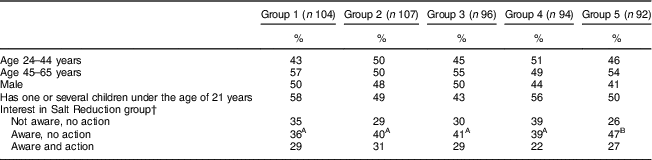
A,BPercentages within a row with unlike superscript upper-case letters from group 1 to group 5 were significantly different (P<0·05).
† The three Interest in Salt Reduction groups were based on the five stages of the Transtheoretical Model of Behavioural Change( Reference Prochaska and Velicer 37 ), i.e. ‘not aware, no action’ group (stage 1), ‘aware, no action’ group (stages 2 and 3) and ‘aware and action’ group (stages 4 and 5)( Reference Willems, Van Hout and Zijlstra 29 ).
Soups and communication messages used in the present study

By means of a questionnaire at the end of the study, based on the five stages of the Transtheoretical Model of Behavioural Change( Reference Prochaska and Velicer 37 ), we assessed participants’ interest in engaging in salt reduction (i.e. what behavioural stage of change they were in). Participants were asked to describe which statement best represented their current interest in salt reduction from the following options: ‘I am not at all interested in lowering salt in my diet and I have no intention in doing so in the next 6 months’ (stage 1); ‘I am interested in lowering salt in my diet and I have the intention of doing that within the next 6 months’ (stage 2); ‘I am interested in lowering salt in my diet and I have the intention in doing that in the next month’ (stage 3); ‘I am interested in lowering salt in my diet and I have started lowering my salt intake during the last 6 months’ (stage 4); and ‘I am interested in lowering salt in my diet and I have already lowered my salt intake for longer than 6 months’ (stage 5)( Reference Newson, Elmadfa and Biro 9 ). Participants were then regrouped into three ‘Interest in Salt Reduction’ groups: ‘not aware, no action’ group (stage 1); ‘aware, no action’ group (stages 2 and 3); and ‘aware and action’ group (stages 4 and 5)( Reference Willems, Van Hout and Zijlstra 29 ). Men and women and the two age groups (25–44 years and 45–65 years) were distributed equally across the five experimental groups. The study was performed according to the ICC/ESOMAR Code on Market and Social Research guidelines( 51 ) and participants received £50 on study completion.
Materials
Soups
Two dry soups varying in salt content were included in the study: (i) a regular-salt chicken noodle soup as available on the UK market at the time of the study in 2013 (555 mg salt/100 ml prepared soup); and (ii) a 30 %-reduced-salt chicken noodle soup (389 mg salt/100 ml prepared soup). The recipe for the soups was the same, only the salt content was different. The soups were specifically developed for the purposes of the present study (Unilever Deutschland GmbH, Germany).
Communication messages, soup bowls and salt shakers
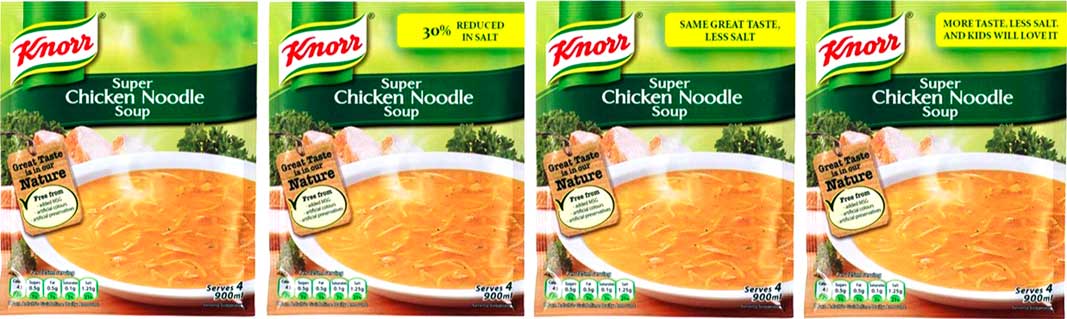
All participants were offered a bowl of soup together with a visual of the soup pack (Fig. 1). The visuals of the soup pack had a similar layout as the commercial soup pack available on the UK market with the Knorr brand name and logo. The soup packs contained either no message or one of the three communication messages (see Fig. 1). These communication messages were chosen based on the results of a message selection test. In this message selection test, 500 British consumers (50 % male; aged 18–65 years) completed an online questionnaire individually at home. Consumers had to rank and score three sets of soup packages with four different on-pack messages each on how appealing they were. The most preferred message within each condition was selected for the main study. The consumers from the message selection test did not participate in the main study. The three selected communication messages were: (i) nutritional message: ‘30 % reduced in salt’; (ii) sensory message: ‘Same great taste, less salt’; and (iii) sensory and social message (referred to as ‘social message’ hereafter): ‘More taste, less salt and kids will love it’.
(colour online) Soup pack images with messages that were shown to the participants during tasting the soups. From left to right: no message, nutritional message, sensory message and social message
Each participant was served 200 ml of soup in a 280 ml porcelain bowl. Participants were provided with stainless steel spoons and commercially sourced salt shakers that were made from glass, were completely transparent and contained 16 g of salt (2·5 cm×2 cm, six holes). Unknowingly to the participants, the salt shakers were weighed on a digital weighing scale that measured at 0·001 g accuracy before and after participants consumed the soup. The salt shaker provided on average 0·05 g salt per shake. A weight difference of 0·02 g was recorded as a change in salt intake (i.e. this person was considered to have used the salt shaker).
Procedure
Each participant consumed five servings of one of the two soups (with or without one of the three messages) at five different tasting sessions (Table 2).
The tasting took place at the same time twice weekly across 3 weeks in individual tasting booths. Participants were asked not to eat or drink anything 2 h before each tasting session. They were instructed to consume a full portion of chicken noodle soup each time. The soups were served at about 65–70 °C in a soup bowl. Participants were offered the same soup–message combination every tasting session. The communication message was provided on a plasticized, full-colour image of the package just before the start of the tasting session and was visible during the whole tasting session. The salt shaker was provided next to the communication message and soup bowl. Food intake was measured by weighing the amounts served and the leftovers when participants did not eat the full portion. We measured this to check that participants consumed sufficient amounts of the soups to really taste them. On average, participants consumed 87 % of the soup, with no differences between the groups (P>0·05).
Measures
Just before tasting the soup, participants were asked how hungry and thirsty they were, and they rated the expected liking, greasiness, saltiness, sweetness and sourness of the soup. Participants then rated the soups twice on perceived liking, greasiness, saltiness, sweetness, sourness and buying intention: once after tasting one spoonful of the soup and once directly after finishing the soup. All questions were answered on 9-point scales, ranging from respectively ‘not at all hungry’ to ‘very hungry’, ‘not at all thirsty’ to ‘very thirsty’, ‘not liked at all’ to ’liked very much, ‘not at all greasy’ to ‘very greasy’, ‘not at all salty’ to ‘very salty, ‘not at all sweet’ to ‘very sweet’, ‘not at all sour’ to ‘very sour’ and ‘not at all likely to buy’ to ‘very likely to buy’. The questions on the sensory attributes (expected) greasiness, sweetness and sourness were part of the cover story to divert attention away from the salt reduction (and are therefore not reported here). After tasting and rating the first spoonful of soup, participants were instructed to eat the rest of the soup and they were then allowed to add as much salt as they wanted. Participants were free to decide whether they wanted to add salt or not. At the fifth session, a choice behaviour task was added: ‘If someone were to offer you some of these packets to take home to use yourself at home, how many packets would you want to take home?’, with a response scale from 0 to 8. And finally, at the end of the fifth tasting session, respondents answered additional questions on salt awareness, attitudes and beliefs about salt intake (not reported here).
Statistical analysis
Data are presented as means and standard errors. Statistical analyses were performed using the statistical software package SPSS version 16.0. P<0·05 was used as the criterion for statistical significance.
Data on expected and perceived liking and saltiness as well as buying intention and table salt use were analysed using ANOVA with repeated measures. We used models with Experimental Group, Time (the five visits as repeated measures), Interest in Salt Reduction and their two-way interactions as independent variables and each product rating and table salt use as dependent variables. Tukey multiple range tests were applied to test for significant differences.
For those who added salt after tasting the soups, a salt compensation score was calculated for the salt-reduced soups by expressing the added table salt as a percentage compared with the amount of salt that was taken out of the regular-salt soup.
Results
As we observed no statistically significant differences by gender, age and having children or not (P>0·05), we report only the means of the experimental groups for all analyses. There was a significant difference in terms of Interest in Salt Reduction for experimental group 5, with relatively more participants in the ‘aware, no action’ group than in the ‘not aware, no action’ and ‘aware and action’ groups (P<0·05). Furthermore, we do not report the results of liking, saltiness and buying intention after one spoonful of the soup, since the results of these were similar to the results of liking, saltiness and buying intention directly after finishing the full portion of the soup.
Liking, salt intensity and buying intention
For expected liking, there was a significant main effect for Experimental Group in that, averaged across the five visits, participants expected salt-reduced soups with a social message to be liked less than salt-reduced soups with a sensory message (mean 5·71 (se 0·09) v. 5·93 (se 0·09) respectively, P<0·05). There was also a significant interaction effect for Experimental Group×Time: the soups without communication (regular and salt-reduced) and the salt-reduced soups with the social message scored significantly higher on the first visit than on the fifth visit, whereas expected liking of the salt-reduced soups with the nutritional or social message did not change over time (P<0·05; Table 3). The main effect of Interest in Salt Reduction (P>0·05) and the interaction effect between Experimental Group and Interest in Salt Reduction (P>0·05) were not significant.
Mean (expected) liking, (expected) saltiness and buying intention scores (and their standard errors) for the soups with different communication messages, averaged across the five visits and separate from visit 1 to visit 5, among British consumers (n 493) aged 24–65 years, November–December 2013
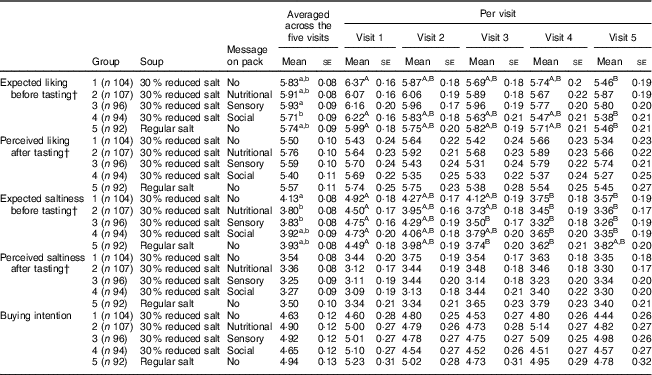
a,bMean values within columns with unlike superscript lower-case letters were significantly different (P<0·05).
A,BMean values within rows with unlike superscript upper-case letters from visit 1 to visit 5 were significantly different (P<0·05).
† Expected and perceived liking and saltiness were measured on a 9-point scale: 1=‘not liked at all’/‘not at all salty’ to 9=‘liked very much’/‘very salty’.
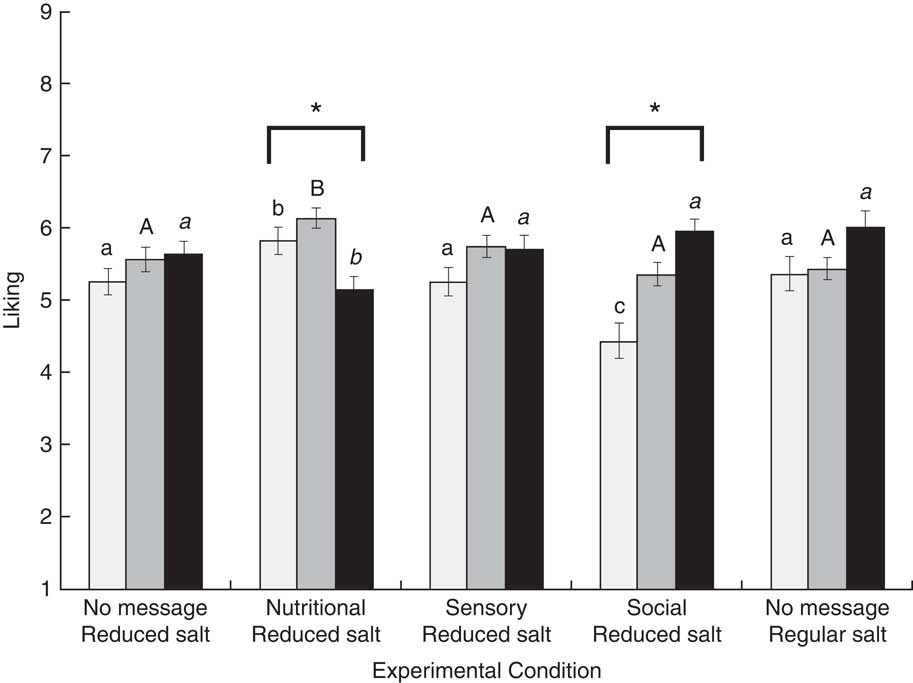
For perceived liking, the main effects for Experimental Group, Time and Interest in Salt Reduction, and the interaction for Experimental Group×Time, were not significant (P>0·05; Table 3). However, there was a significant interaction effect between Experimental Group and Interest in Salt Reduction (P<0·01; see Fig. 2). The ‘not aware, no action’ group and the ‘aware and action’ group differed significantly for the nutritional and social messages. More specifically, participants in the ‘not aware, no action’ group had the highest liking scores for the salt-reduced soup with the nutritional message, whereas they liked the salt-reduced soup with the social message significantly less than the soups with the other messages. Moreover, the ‘aware, no action’ group liked the salt-reduced soup with the nutritional message significantly better than the other soups. The ‘aware and action’ group scored the opposite and liked the soup with the nutritional message significantly less than the soups with the sensory and social messages and no message.
Mean liking scores of the soups (with their standard errors represented by vertical bars) per experimental condition for the ‘not aware, no action’ ( ), ‘aware, no action’ (
 ) and ‘aware and action’ (
 ) Interest in Salt Reduction groups, measured on a 9-point scale (from 1=‘not liked at all’ to 9=‘liked very much’), among British consumers (n 493) aged 24–65 years, November–December 2013. *Mean values were significantly different between the three Interest in Salt Reduction groups for the same soup. a,b,cMean values for products with unlike superscript lower-case letters were significantly different within the ‘not aware, no action’ group across the soups (P<0·05). A,BMean values for products with unlike superscript upper-case letters were significantly different within the ‘aware, no action’ group across the soups (P<0·05).
a,b
Mean values for products with unlike superscript lower-case italic letters were significantly different within the ‘aware and action’ group across the soups (P<0·05)
) Interest in Salt Reduction groups, measured on a 9-point scale (from 1=‘not liked at all’ to 9=‘liked very much’), among British consumers (n 493) aged 24–65 years, November–December 2013. *Mean values were significantly different between the three Interest in Salt Reduction groups for the same soup. a,b,cMean values for products with unlike superscript lower-case letters were significantly different within the ‘not aware, no action’ group across the soups (P<0·05). A,BMean values for products with unlike superscript upper-case letters were significantly different within the ‘aware, no action’ group across the soups (P<0·05).
a,b
Mean values for products with unlike superscript lower-case italic letters were significantly different within the ‘aware and action’ group across the soups (P<0·05)
The ANOVA for expected saltiness showed a significant main effect for Experimental Group (P<0·05): participants expected the salt-reduced soups with a sensory or nutritional message to be less salty (mean 3·83 (se 0·08) and 3·80 (se 0·08), respectively) than the salt-reduced soup without a message (mean 4·13 (se 0·08)). There was also a main effect for Time (P<0·05), with follow-up Tukey’s tests indicating that expected saltiness was significantly higher at the first visit than at the fourth and fifth visits. The main effect of Interest in Salt Reduction and the interaction effect for Experimental Group×Interest in Salt Reduction were not significant (all P>0·05).
For perceived saltiness, there were no significant main effects for Experimental Group, Time and Interest in Salt Reduction, and no significant interaction effects (all P>0·05): participants perceived the soups with the different messages to be similar in saltiness, initially and over repeated consumption. Interestingly, although the salt-reduced soup was 30 % lower in salt, the salt-reduced soup without a message was perceived as similar in saltiness as the regular-salt soup without a message (Table 3).
For buying intention, none of the main effects (Experimental Group, Time, Interest in Salt Reduction) nor any of the interactions were significant (all P>0·05). At the end of the last session, respondents were asked how many packs they would take home if they were allowed to take between zero and eight packs of the soup that they had been presented with. The mean number of packs taken home ranged from 4·9 (se 0·3) packs for the salt-reduced soup without a message to 5·4 (se 0·3) packs for the regular soup without a message. There were no significant main (Experimental Group, Interest in Salt Reduction) or interaction effects (all P>0·05): the number of packs chosen was not significantly different between the different experimental conditions or between the three Interest in Salt Reduction groups.
Adding salt
The amount of salt added back varied greatly across respondents. Overall, 31 % of participants did not add salt to the soups at all, whereas 51 % infrequently added salt (adding salt at two to four visits) and 18 % added salt at each visit (Table 4).
Mean table salt use and salt compensation (and their standard errors) among consumers who added salt over time, per 200 ml of soup and message condition, among British consumers (n 493) aged 24–65 years, November–December 2013
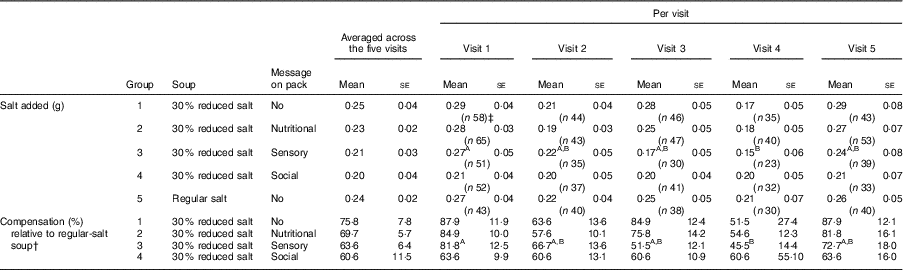
A,BMean values within a row with unlike superscript upper-case letters from visit 1 to visit 5 were significantly different (P<0·05).
† 0·33 g salt was taken out per portion of 200 ml soup.
‡ Number of participants who added salt.
When averaged across the five visits, there were no differences in the average grams of salt added to the soups between the experimental groups (P>0·05; Table 4). However, there was a significant interaction effect for Experimental Group and Time (P<0·05), such that participants added significantly less salt to the salt-reduced soup with a sensory message at visit 4 (0·15 (se 0·06) g) than at visit 1 (0·27 (se 0·05) g). Surprisingly, the decrease in the amount of added salt at visit 4 was no longer observed at visit 5 (0·24 (se 0·08) g). The main effect for Interest in Salt Reduction and the interaction effects were not significant (P>0·05). Importantly, consumers added similar amounts of table salt to the salt-reduced soups as to the regular-salt soup, suggesting that adding salt at the table was a habitual behaviour. Across all participants, on average less salt was added back than was originally taken out, with compensation percentages ranging from 60·6 % for the salt-reduced soup with a social message to 75·8 % for the salt-reduced soup without a message (i.e. a 100 % compensation means full compensation via use of table salt; Table 4). This indicates that the net effect for the total group was on average a 29 % reduction in salt intake (i.e. salt content in soups plus added table salt). However, the group of consumers who added salt at each visit (18 %) overcompensated the reduction in salt, with a 30 % higher salt intake for the salt-reduced soups overall.
Discussion
The present study investigated the impact of different front-of-pack messages and repeated consumption on liking, salt taste perception and table salt use of salt-reduced products. The main outcome was that it mattered whether consumers were considering salt reduction or not: the ‘not aware, no action’ group liked salt-reduced soups with a nutritional message most, whereas the ‘salt aware and action’ group liked salt-reduced soups with a social message most. In addition, consumers added similar amounts of table salt to the salt-reduced soups as to the regular-salt soup, not only the first time but also over repeated consumption, suggesting that adding salt at the table was a habitual behaviour. Importantly, the net effect for the total group was on average a 29 % reduction in salt intake (i.e. salt content in soups plus added table salt). Further research under realistic choice conditions in a ‘real-world’ environment is required to confirm these findings.
Salt is commonly used to provide a salty taste and to enhance or interact with other flavour elements of foods, for example to suppress unpleasant tastes such as bitterness( Reference Busch, Feunekes and Hauer 18 , Reference Breslin and Beauchamp 52 ). We therefore expected the salt-reduced soup to be less salty and less liked than the regular-salt soup: the salt was removed and not replaced by other salts nor was the recipe adjusted in other ways to compensate for the reduction in salt. In contrast to our expectations, the perceived saltiness and liking of the salt-reduced soup were similar to the saltiness and liking of the regular-salt soup without a message, initially and over repeated consumption. This is in line with earlier research showing similar effects in soups where salt had been reduced by up to 32 %(20,28,29). It contradicts other research showing significantly lower saltiness and liking scores for comparable reduced-salt samples( Reference Liem, Miremadi and Zandstra 35 ). An explanation for these contrasting findings might be found in the study design used. Whereas the former studies and the current study used a between-subjects design in which participants tasted only one of the products as such, the study of Liem et al. ( Reference Liem, Miremadi and Zandstra 35 ) used a within-subjects design in which participants tasted all products successively in one session and could directly compare one product with another. These different results may thus reflect context effects on judgements of taste intensity and liking( Reference Lawless 53 , Reference Rankin and Marks 54 ). This also implies that a coordinated industry-wide approach is required to reduce the salt content of food segments simultaneously, because if only some food manufacturers in a certain food segment reduce the salt content of their products it will be more difficult for consumers to learn to like the taste of salt-reduced foods( Reference Zandstra, Lion and Newson 14 ).
The fact that we did not find a main effect of the front-of-pack messages on liking is surprising, as we predicted based on earlier research that salt-reduced soups with a sensory or social message would score higher on liking than the same products with a nutritional message or no message. However, when we compared consumers in the different stages of change, we found an interaction between experimental group and the stages of change: the ‘not aware, no action’ group had the highest liking scores for the soups with the nutritional message, whereas the ‘aware and action’ group had the highest liking scores for the soup with the social message. The present study is the first one that has investigated the stages of behavioural change for salt reduction in relation to salt taste perception and acceptance of salt-reduced foods. With regard to behaviour change and salt intake behaviours, the most impactful salt reduction initiatives around the world were those that combined food reformulation with consumer education and front-of-pack labelling actions, such as the Healthy Choice logo or Guideline Daily Amounts (%)( Reference Webster, Dunford and Hawkes 12 , Reference Webb, Fahimi and Singh 55 ). The national salt campaigns in the UK and Finland are the most cited examples to show that modest reductions in dietary salt intake can be achieved at population level, although it is not precisely clear which specific aspects of the strategies contributed to this( Reference Sutherland, Edwards and Shankar 36 , Reference Laatikainen, Pietinen and Valsta 56 – Reference Valsta and Hirvonen 58 ). In a study conducted by Newson et al. ( Reference Newson, Elmadfa and Biro 9 ), countries differed in the extent to which their populations were interested in reducing salt intake. Given the observed differential effects of front-of-pack messages among the Interest in Salt Reduction groups in our study, tailored, country-specific communication strategies based on countries’ action states may be required not only in nutrition communication and education programmes, but also in front-of-pack communication messages of salt-reduced products.
Participants expected salt-reduced soups at first exposure to be saltier than on the fourth and fifth exposure. However, we could not confirm our hypothesis that salt-reduced soups with a sensory or social message on-pack would score higher on salt expectations compared with salt-reduced soups with a nutritional message. It could be that familiarity with the brand or the presence of other packaging information may have overruled the specific message effects on saltiness expectations. In addition, participants perceived the soups with the different messages to be similar in saltiness, initially and over repeated consumption. A reason could be that a longer exposure period is required to have larger impacts from the front-of-pack messages on salt taste responses while tasting.
Despite clear effects of front-of-pack messages on expected liking and saltiness of the soup, no evidence was found for transfer of these effects to buying intention. It is important to realize that buying intention was measured after respondents had tasted the soup and that actual liking did not differ across the different front-of-pack messages. We would argue that expected liking and expected saltiness will influence the decision to buy a product in store, where there is usually not an opportunity to taste the soups (cf. Zandstra et al. ( Reference Zandstra, Carvalho and Van Herpen 50 )).
There does not seem to be any evidence of reduced table salt added over time due to a learning process that would take place over repeated exposure. Interestingly, the amount of salt added back to the regular-salt soup was similar to that of the salt-reduced soup, which suggests a strong role for habit in table salt use. Earlier research showed that people only partly compensated via a salt shaker when their total diet was reduced in salt( Reference Beauchamp, Bertino and Engelman 33 ). Recent research showed that if the salt content of a single product was reduced to an unacceptably low level, consumers added extra salt at the table, even to the point of overcompensation( Reference De Kock, Zandstra and Sayed 34 , Reference Liem, Miremadi and Zandstra 35 ). In line with earlier research, our study showed that some respondents compensated as well: 51 % of participants infrequently added salt to the soups (adding salt at two to four visits) and 18 % added salt at each visit. Despite this, a 29 % reduction in salt intake overall was still achieved. A further reduction of table salt use may be achieved by increasing consumers’ awareness of the need to reduce salt intake. A recent study showed that the number of people in the UK adding salt to food at the table fell by more than a quarter in the five years following a national salt reduction campaign( Reference Sutherland, Edwards and Shankar 36 ). The study showed that from 1997 to 2007 there was a steady decline in salt use at the table, but this reduction was greater after the introduction of the national salt reduction campaign in 2003. An additional reduction of table salt use may be achieved by reducing the size of holes in salt shakers because of the strong role for habit in table salt use( Reference Greenfield, Maples and Wills 59 , Reference Mittelmark and Sternberg 60 ). For example, research has shown that significantly less salt was used with small- as compared with large-holed salt shakers, both in a canteen setting at a company( Reference Farleigh, Shepherd and Wharf 19 ) as well as in takeaway meals from shops( Reference Goffe, Hillier-Brown and Doherty 61 ). Importantly, just as in our study, there was no evidence that this effect disappeared over time as people got more familiar with the salt shakers and/or products( Reference Farleigh, Shepherd and Wharf 19 ).
A few limitations of our research should be mentioned. Salt preference may depend on overall dietary salt intake: individuals who consume a high-salt diet generally prefer saltier foods( Reference Bertino and Beauchamp 62 ) and consumers who consume a low-salt diet generally prefer less salty foods( Reference Bertino, Beauchamp and Engelman 23 , Reference Blais, Pangborn and Borhani 24 ). Our study would therefore have benefited from dietary assessment measures to assess each participant’s dietary salt intake and how this may have affected liking and salt taste perception scores of the salt-reduced soups. Also, it could have been that the social message was not framed in the most optimal way to maximize its effectiveness. Almost half of the population did not have children, and the social message ‘More taste, less salt and kids will love it’ may have been perceived as less relevant for them compared with the other half of the population with children. In addition, this research took place in a laboratory setting in sensory booths at a central location. Previous research showed that the context in which testing is conducted can bias observations: larger reductions in salt content of a food were accepted when assessed in a home environment compared with a laboratory setting( Reference Willems, Van Hout and Zijlstra 29 ). It is therefore critical to extend the current research towards realistic choice and consumption conditions in natural contexts as well. In a similar vein, the study needs to be replicated to confirm the applicability of the findings in other manufactured products and other populations.
Conclusion
In conclusion, research in the area of consumer perception of salt reduction is limited, while the need for acceptable salt-reduced products is high. To our knowledge, the present study is the first that investigated the impact of different front-of-pack messages on salt taste perception and table salt use of salt-reduced products over time. Given the observed differences in acceptance of salt-reduced products between different front-of-pack messages and Interest in Salt Reduction groups, this research provides further evidence that a country-specific tailored communication strategy is recommended to attract consumers towards salt-reduced products based on their action state. How to best inform consumers about healthier options, drive purchase and choice behaviour, and minimize counteractive table salt use behaviours are still unanswered questions.
Acknowledgements
Acknowledgements: The authors greatly acknowledge Anja Ruedel and Volker Jonas from Unilever Deutschland GmbH, Germany, for their support in the development of the soups. Financial support: Unilever R&D Vlaardingen, The Netherlands, funded this research. Unilever Deutschland GmbH, Germany, developed and produced the soup prototypes for the study. Conflict of interest: E.H.Z., A.A.W. and R.L. are employees of Unilever R&D Vlaardingen, The Netherlands, which markets food, home and personal care products. Authorship: E.H.Z. was responsible for the design, data analyses and manuscript. A.A.W. carried out the study and contributed to the data analyses and manuscript writing. R.L. was involved in the design and earlier drafts of the manuscript. Ethics of human subject participation: This study was not approved by a medical ethical committee but was performed according to ESOMAR guidelines (2013). Written informed consent was obtained from all subjects.



