



Consuming a sufficient, safe and nutritious diet is critical for human growth and development and for reducing chronic disease risk later in life( Reference Nicklas and Hayes 1 – Reference Bryan, Osendarp and Hughes 3 ). Dietary practices can also have substantial environmental implications, shaped by the ways that food is produced, processed and transported, and how food waste is managed( Reference Gussow and Clancy 4 – Reference Harmon and Gerald 7 ). Advocates for a healthy and more environmentally sustainable food system are therefore urging the general public and public institutions to consider both the health consequences of poor dietary quality as well as the significant social and ecological costs of food system outputs and food choices( Reference Hamelin, Lamontagne and Ouellet 5 , Reference Harmon and Gerald 7 ). These issues are particularly critical for children, whose future health and that of the world they will grow up in is affected by the current food system. Schools are therefore promising spaces where children and their families can potentially cultivate positive food practices and understandings about food systems. What students learn inside and outside classrooms can shape how young people think about connections between where food comes from and environmental costs, and can have persisting impacts on personal health and the ecosystems within which schools are situated( Reference Rojas, Valley and Mansfield 8 ).
Despite increasing research and advocacy calling for improved availability of healthy foods at school, school-based actions to increase the environmental sustainability of the food system are relatively sparse in North America( 9 – Reference Jones, Dailami and Weitkamp 11 ). Sustainable food initiatives are, however, gaining traction in some school districts, occasionally accompanying more traditional nutrition education and health promotion approaches. For example, many school districts across the USA and some in Canada now have Farm to School programmes providing fresh, locally grown fruit and vegetables to students and are often supplemented with nutrition and/or sustainable agriculture education programmes( 12 , 13 ). Increased access to sustainable foods is hypothesized to improve students’ knowledge and attitudes regarding healthy and sustainable eating and likely contribute to increased intake of healthy foods such as fruit and vegetables( Reference Taylor and Johnson 14 – Reference Joshi, Azuma and Feenstra 16 ).
Few studies to date have comprehensively evaluated the extent to which schools support healthy eating (e.g. through the availability of fresh fruits and vegetables and food-related learning activities) and integrate environmentally sustainable food choices into school food environments (e.g. by offering opportunities to grow food or reduce food waste on school grounds, or by providing minimally processed, locally and sustainably grown options). As efforts to improve school food systems mature, both subjective and objective indicators will be critical for documenting the complex nature of how and where progress is made and which interventions are most effective. Despite the growing need for user-friendly evaluation approaches, few indicators exist for use in diverse school contexts. Existing tools largely evaluate only narrow components of school food environments such as local food procurement policies or access to healthy food in lunch programmes, but seldom concurrently consider multiple facets of complex school food systems. Moreover, it is difficult to compare changes over time or progress between schools because there is no standard language or scale for describing a school’s level of engagement in food system actions.
The present study therefore emerged in response to the need for a pragmatic approach for characterizing and comparing school food environments. The objectives of the present study were to: (i) describe the development of the School Food Environment Assessment Tools (SFEAT) which include a qualitative scoring system to assess the extent to which schools have integrated healthy and environmentally sustainable food initiatives; (ii) characterize a sample of elementary and secondary schools in Vancouver, Canada using the proposed scoring system; and (iii) identify opportunities for applying this approach for future research, monitoring and to inspire school-based actions. This work is part of (and directly informed by) a community–university research alliance called the Think&EatGreen@School project which evolved over a decade through a collaboration between the Vancouver Board of Education, the University of British Columbia and several community partners( Reference Rojas, Valley and Mansfield 8 , 17 ). Vancouver is an opportune context for studying school food system changes given the growing network of government, academic and community-based agencies working on school health, sustainability and food system issues and school board support for improving dietary health and reducing carbon emissions in school buildings( 17 – Reference Atkinson, McKenna and Bays 20 ).
Theoretical framework and working definitions
For the present study, the ‘school food environment’ was broadly defined and incorporated the core pillars of the comprehensive school health (CSH) framework( Reference Stewart-Brown 21 , 22 ) which include: (i) the macro-level school health policy environment (e.g. school, district and provincial policies that support food and sustainability initiatives); (ii) the social and physical environment (e.g. design of eating spaces, food gardens and compost systems, what foods are available, where and for what price); (iii) teaching and learning (e.g. where healthy eating, environmentally sustainable food practices, food skills and food literacy are embedded in curricula); and (iv) partnerships and services (e.g. vendors and food-service workers who source, prepare and sell food, or support food-related initiatives). Definitions from the four CSH pillars were supplemented with additional factors from the local context and literature about amenities and programmes supporting healthy eating and environmentally sustainable food systems. For example, physical environments in CSH typically describe features such as playgrounds and buildings, but are augmented here with food system amenities including gardens and compost systems.
For the present study, the definition of healthy eating was guided primarily by national dietary recommendations articulated in Canada’s Food Guide( 23 ). Assessment of nutritious food availability focused largely on foods prioritized by provincial and national health interventions aimed at increasing compliance with Food Guide recommendations, including increased intake of fruit, vegetables, low-fat dairy and whole grains. Foods described here as ‘unhealthy’ were operationalized based on provincial nutritional guidelines which prohibit the sale of food items that fail to meet limits regarding serving sizes, energy content, fat, added sugar, saturated and trans fats, sodium and caffeine, or that do not contain minimum values for some essential nutrients( 24 ).
‘Environmentally sustainable’ food was defined based on current best practice guidelines articulated by national and international agencies( Reference Harmon and Gerald 7 , 25 , 26 ). While fully explicating current nutrition and sustainability guidelines is beyond the scope of the present paper, the study focused on several key tenets espoused by recent consensus statements related to sustainable food systems including the availability of foods that are minimally processed, grown or sourced locally, seasonally and organically, include vegetarian options and create less waste from packaging( Reference Harmon and Gerald 7 , 25 , 26 ).
Experimental methods
Tool development and refinement
Given the complexity of school food environments, a crucial step of the present study was to identify existing school-based measures through a systematic literature search and via consultation with a wide variety of local stakeholders. Thirty-five documents were identified and reviewed, including surveys, school self-assessments and reports related to healthy or sustainable eating, food environments and policy, funding and programming. While the majority of resources identified were developed or used in the USA, eight were from Canada( 27 – Reference Rideout, Levy-Milne and Martin 34 ) and one was identified from each of Wales( 35 ), New Zealand( Reference Carter and Swinburn 36 ) and Australia( Reference Finch, Begley and Sutherland 37 ). All tools examined some facet of school-related health, nutrition or students’ food practices, but less than one-third explicitly examined sustainability concepts. In general, sustainability-related questions were brief and most commonly focused on local food procurement policies, availability of farm to school programmes or school gardening initiatives. Relevant questions were selected from ten tools( 27 , Reference Strange 30 , Reference Kroeker, Manske and Beyers 31 , 35 , Reference Rimkus, Jones and Ona 38 – 43 ), adapted where necessary and additional questions were created to fill noted gaps. Moreover, standards outlined in provincial policy documents including the School Meal and School Nutrition Program Handbook( 32 ) and the Guidelines for Food and Beverage Sales in British Columbia (BC) Schools (hereafter referred to as the Guidelines)( 24 ) were carefully reviewed. Questions were subsequently developed to examine the extent to which schools implemented programmes and policies of interest.
Two versions of the SFEAT data collection tool were developed: one for elementary schools (kindergarten to grade 7 in most Vancouver schools) and one for secondary schools (generally grades 8 to 12). The versions overlapped for most core measures, but accounted for known differences between Vancouver elementary- and secondary-school food contexts. Unlike the USA, there is no federally funded school meal programme in Canada. Instead, foods are available from a variety of sources including cafeterias, subsidized lunch programmes (available only at some schools), vending machines, school stores, fundraisers and special food days, and/or food provided by parents or community groups, which vary between elementary and secondary schools( Reference Rideout, Levy-Milne and Martin 34 ). Tools were reviewed by co-investigators and project partners to ensure face and content validity and clarity of questions, and were tested for feasibility at six elementary schools from diverse areas of the city and one secondary school during the 2010–2011 school year. The study met the guidelines laid down in the Declaration of Helsinki and all procedures involving human subjects were approved by the Behavioural Research Ethics Board at the University of British Columbia and the Vancouver Board of Education. Written consent was obtained from participating school stakeholders.
Data collection
Purposive sampling was used to recruit a representative set of Vancouver’s public elementary and secondary schools and included schools from diverse neighbourhoods in terms of geographic location, socio-economic status, surrounding food environment characteristics and commercial densities. All Think&EatGreen schools were offered the SFEAT assessment as a component of project participation. Sampling aimed to recruit an equal number of schools engaged in the Think&EatGreen@School project and schools with no previous relationship to the study team. Purposive sampling ensured that at least one elementary and one secondary school from each of Vancouver Board of Education’s six geographic sectors was included in the study. Of the pilot schools, three of the elementary schools and the one secondary school were assessed a second time and included in the final analytic sample.
Data collection had three main components beginning with direct observations of each school’s physical food environment. This included open-ended questions for characterizing available eating spaces, places where food is sold (e.g. cafeterias, vending machines, fundraisers) and the presentation of available food items. Itemized lists then examined the extent of availability of food items that align with nutrition (and sustainability) targets, such as fresh fruit and vegetables, non-flavoured low-fat milk and whole grains, and of minimally nutritious items that contravene the Guidelines, such as deep-fried foods and sugar-sweetened beverages. The second section involved an interview with a key stakeholder (usually a food-service worker or teacher) inquiring about available programmes and policies related to healthy eating and sustainable food systems, including details about food procurement and sales. The final section included interview questions directed at a school administrator (principal or vice principal), who contributed additional insight regarding actions, concerns and goals related to healthy eating and sustainable food systems initiatives including composting and gardening programmes.
Data collection occurred over two school years; first, in September to December 2011 in twelve public elementary and nine secondary schools; and second, from November 2012 to April 2013 in an additional six elementary and six secondary schools. Trained research assistants made introductory visits approximately one month before data collection to familiarize themselves with the school layout, identify key informants and introduce themselves to personnel. When an in-person introductory visit was not feasible, initial contact was made via email or telephone. On the second visit, researchers conducted all observations and interviews in pairs when possible to verify and cross-check data.
Domain development and scoring
After data were entered and reviewed for accuracy and completeness, the research team collaboratively developed a set of six key domains and identified the corresponding indicator questions from data collection tools to inform the scoring of healthy and environmentally sustainable school food domains (Table 1). Domain selection was based on: (i) a Think&EatGreen@School logic model that took the entire food system into consideration, from production through to waste management; (ii) an indicator selection and ‘dotmocracy’ exercise( 44 ) conducted in 2010 where over thirty diverse stakeholders including researchers, school administrators and community partners identified the most important metrics for monitoring changes in school food environments; and (iii) whether data from the SFEAT were available to assess proposed domains. The six most relevant domains identified by this process were: development and use of (i) food gardens; (ii) composting systems; (iii) food preparation activities; (iv) food-related teaching and learning activities; and availability of (v) healthy food; and (vi) environmentally sustainable food.
Description of the six food system environment domains, the School Food Environment Assessment Tools (SFEAT) indicator questions used to guide the scoring process and the interpretation of each score across the six domains
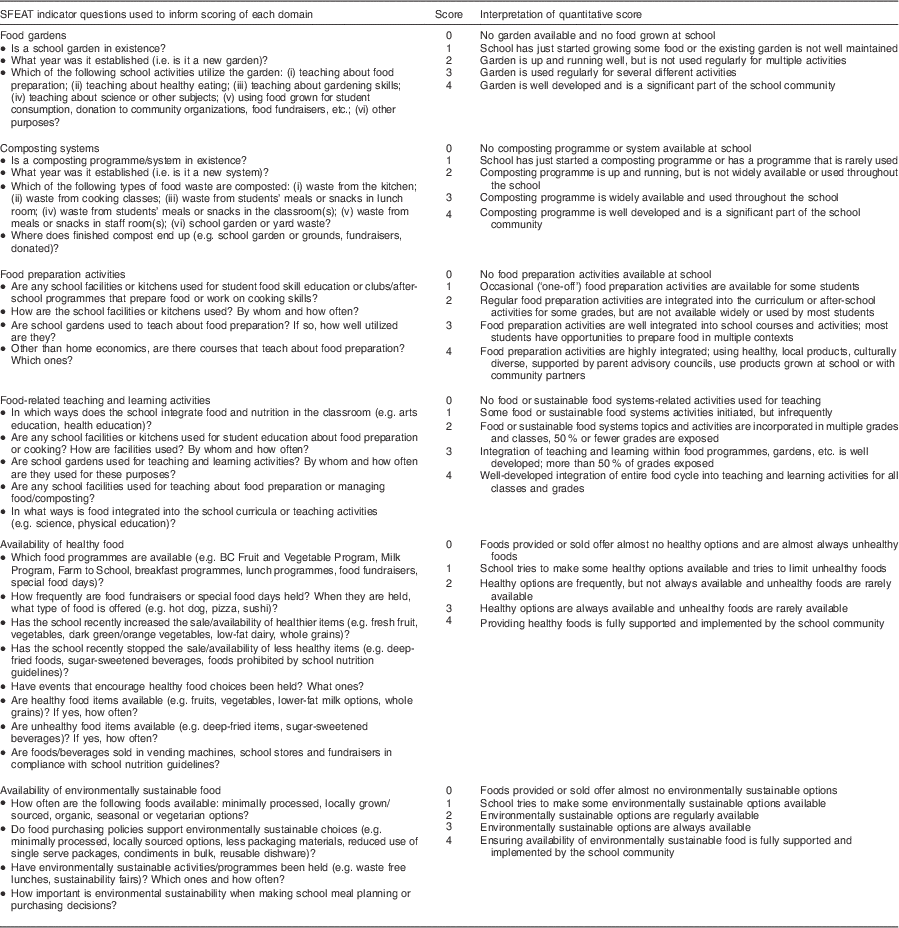
Domains were scored using a five-point scale, through an iterative and collaborative approach that involved co-investigators, research assistants and dietitians including a community nutritionist who worked with participating schools. Broadly, the scoring system was as follows: 0=nothing happening in this area; 1=initial steps have been taken; 2=initiatives are happening regularly and engage some members of the school community; 3=initiatives are happening often and engage many members of the school community (in multiple ways if relevant); 4=exceptional progress has been made with full integration within the school. For each school, the team examined a mix of available qualitative and quantitative indicators for each domain (described in Table 1) and applied a scoring system to rate each school on each domain. Team discussion then added additional first-hand knowledge of particular school settings and reached consensus as to which descriptor best characterized that school (see last column in Table 1). While a quantitative coding system guided the initial scoring, the final scores reflect a hybrid approach that incorporated subjective opinion and interpretive reasoning to reach team consensus about final scores.
Data analysis
Descriptive statistics (e.g. median, range, frequencies) were used to characterize the distribution of domain scores across schools. Differences in score distributions were compared between elementary and secondary schools using Fisher’s exact test (using P<0·05 to determine statistical significance) because χ 2 test assumptions were violated (i.e. some cells had an expected count <1 or more than 20 % had expected frequencies <5)( Reference Greenwood and Nikulin 45 ). The final sample size was thirty-three for all domains except gardens (n 32) because there were insufficient data to reach consensus about garden use and development in one elementary school.Footnote *
Results
Participating schools drew from all geographic sectors of the city and represent all but four of Vancouver Board of Education’s secondary schools and more than one-fifth of Vancouver’s ninety-one elementary schools and annexes. This sample represents a diverse range of schools in terms of size and ethnic mix and socio-economic characteristics of the students served, and reflects Vancouver’s demographic heterogeneity. Secondary schools are typically larger than elementary schools; 2010 school enrolments ranged from approximately 100 students for the smallest elementary school and one alternative secondary programme sampled, to over 2100 students for the two largest secondary schools. Median school size was 340 in sampled elementary schools and 1294 students among secondary schools( 46 ). Over half of participating Think&EatGreen schools volunteered to participate in SFEAT as a project activity and at the time of data collection, twenty schools (61 %) had been involved in some way with the Think&EatGreen@School project. Thirteen schools (39 %) had no previous relationship to the study team and response rates were only marginally lower compared with Think&EatGreen schools.
Food gardens
Figure 1 shows that 75 % of schools (24/32) had a garden (score of 1 or higher), six of which had only launched gardening initiatives in the year prior to assessment. Gardens varied in size and scope and were used for diverse purposes including teaching activities related to healthy eating, cooking, plant science and agriculture. Most gardens primarily grew vegetables and/or fruit, while one grew only herbs. Products from the gardens were used in diverse and creative ways. For example, produce was used for school salad bars or hot lunch programmes (albeit usually contributing only a small amount to the total quantity of food served), in classroom cooking activities to teach concepts from basic maths to culinary arts skills and for school fundraisers. Although the scores on the garden domain were not statistically significantly different, elementary schools used their gardens more frequently than secondary schools and often involved more students and classrooms throughout the school (Table 2). Additionally, two elementary schools had the most highly developed gardens where garden-related activities were available to all grades (earning a score of 4). No secondary school garden programmes were as fully developed or integrated as the two most innovative elementary schools and no secondary schools received a score greater than 3 (Fig. 2). However, two secondary schools had recently partnered with a community-based organization to establish ‘schoolyard market gardens’, which aimed to become commercially viable, educational farms housed on school grounds( 47 ).
Distribution of scores ( , nothing happening (0);
  , just getting started (1);
  , up and running (2);
  , well used (3);
  , fully developed and integrated (4)) on the six food system environment domains of the School Food Environment Assessment Tools (SFEAT) for all schools (n 33)*, Vancouver, Canada. *n 32 for food gardens score

Distribution of scores ( , nothing happening (0);
  , just getting started (1);
  , up and running (2);
  , well used (3);
  , fully developed and integrated (4)) on the six food system environment domains of the School Food Environment Assessment Tools (SFEAT) for (a) elementary schools (n 18)* and (b) secondary schools (n 15), Vancouver, Canada. *n 17 for food gardens score

Descriptive statistics of scores on the six food system environment domains of the School Food Environment Assessment Tools (SFEAT) among elementary and secondary schools, Vancouver, Canada
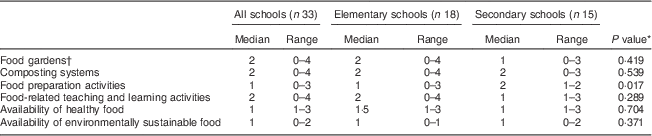
The domain scores can be interpreted as follows: 0=nothing happening in this area; 1=initial steps have been taken; 2=initiatives are happening regularly and engage some members of the school community; 3=initiatives are happening often and engage many members of the school community (in multiple ways, if relevant); 4=exceptional progress has been made with full integration within the school.
* Differences in the distribution of scores were compared between elementary and secondary schools using the Fisher’s exact test (using P < 0·05 to determine statistical significance).
† Sample size for food gardens score was thirty-two due to insufficient data available to reach consensus about garden use and development in one elementary school.
Composting systems
The majority of schools (27/33) had a compost system of some form (Fig. 1). Three-quarters of these schools (20/27) earned a score of 2 or higher, indicating that their system was operational and engaged at least some members of the school. Schools were approximately normally distributed across the five-point compost score, yet varied greatly in approaches to administration and implementation, including the variety of materials composted and the type and scale of the system. For example, some schools had collection bins in limited locations such as a staff room, while others had highly developed systems to dispose of waste from kitchens/cafeterias, cooking classes, student and staff meals, as well as yard or garden clippings. Composters ranged from small in-class or outdoor worm bins, to single-bin and higher-volume systems, and were managed by various stakeholders including students, staff or community partners. Finished compost was used primarily in school gardens; however, one school donated compost to a community pickup system and another’s was used by an urban agriculture initiative that grows food on their (and other) school grounds. Overall, elementary and secondary schools were quite similar for the compost domain (Table 2).
Food preparation activities
Figure 1 shows that 91 % of schools had at least some food preparation facilities or activities at their school (30/33 had a score of 1 or higher). Slightly more than half of the sample (18/33) had taken only initial steps to offer food preparation activities (score of 1), with nearly one-third (10/33) having food preparation as a regular activity for some students (score of 2). Compared with elementary schools, secondary schools offered more regular food preparation activities (P=0·017; Table 2). In elementary schools, the frequency with which food preparation facilities were used ranged from a few times per year to weekly. Food preparation was used to teach a range of subjects, for after-school programmes and occasionally by community organizations offering food preparation activities. However, this was not the case in secondary schools where food preparation was most often included in home economics courses, and occasionally as part of other relevant classes such as career and personal planning and science courses, or in extracurricular clubs (e.g. sustainability and business clubs). Some secondary schools ran a basic or advanced culinary arts programme, where students prepare meals to be sold in the school cafeteria.
Food-related teaching and learning activities
All but one school integrated some food-related teaching and learning within classroom activities (Fig. 1). Most schools had only recently begun to incorporate activities into the classroom (14/33) or were doing so on a regular basis for only some students (12/33; a score of 1 and 2, respectively). Although not statistically significant, there were more elementary schools with well-developed food-related classroom activities, both informal and formal, than secondary schools (Table 2). Among elementary schools, examples of classroom activities included taste tests and cooking competitions, as well as using food to build cultural awareness among diverse student groups. One elementary school reported integrating the entire food cycle into teaching and learning activities, including English, art, maths and social science subjects. All secondary schools had some formal integration of food-related activities within the curriculum, but only one school reported such activities as being available in every grade. In secondary schools, the food-related teaching and learning activities were most commonly reported as part of home economics courses, where students may learn about food safety or food preparation, for example. Nutrition education was also frequently described as being incorporated into physical education and health and career courses.
Availability of healthy food
No school scored a 0 on the healthy food availability domain, indicating that all schools had made at least some effort to make healthy options available (Fig. 1). Many schools (24/33) indicated participating in the BC School Fruit and Vegetable Nutritional Program, which provides fresh BC produce bimonthly as snacks in kindergarten to grade 12 classrooms across the province( 48 ). Schools also reported offering other healthy food options in the cafeteria or as part of a school meal programme and frequently mentioned providing items including low-fat milk and whole grains.
Direct assessment of cafeterias, school stores, vending machines, other special food days and fundraisers revealed that nearly all schools (28/33) continued to sell items prohibited under the Guidelines such as sugar-sweetened beverages and snack foods high in sodium and fat content (e.g. potato chips). Moreover, the frequency of school food fundraisers varied from none or only a few per year to weekly; and fundraisers often still sold non-compliant items, including French fries or potato chips containing 0·2 g trans fats or more and 15 g of fat or more per serving( 24 ). Overall, no school fully followed the Guidelines pertaining to nutritional quality of available foods. Patterns were similar between elementary and secondary schools, where despite the fact that schools consistently made healthy foods available to students, many still sold unhealthy items. As a result, no school scored higher than 3 out of 4 on this domain (Fig. 2).
Availability of environmentally sustainable food
The distribution of the environmentally sustainable food domain indicates that most schools (28/33) made an effort to provide food choices proposed to be supportive of environmental sustainability goals( Reference Harmon and Gerald 7 , 25 , 26 ). Sustainable initiatives included using foods produced locally, organically or in the school garden, selling minimally processed whole foods with less/minimal packaging and making vegetarian options available. Slightly more than three-quarters (26/33) of schools scored a 1 on this domain, characterized as taking only initial steps to provide environmentally sustainable options. Just two schools (both secondary) offered sustainable foods on a regular basis, scoring a 2. No schools were categorized as having environmentally sustainable food options always available or fully integrated within their school; scores were similar between elementary and secondary schools for this domain (Table 2).
Discussion
The present study describes a method for gaining insight into and catalysing dialogue about domains where progress within school food environments has been or could be made. In Vancouver, SFEAT revealed that many schools have begun efforts pertaining to both healthy and environmentally sustainable food-related initiatives, although uptake varied widely between schools and across domains. Schools scored highest overall in the areas of food garden and compost system availability and use, where the proportion of schools with initiatives occurring on a regular basis and involving many students and staff was largest. Several schools also regularly integrated hands-on food preparation experiences and food-related teaching and learning activities into school mandates. Yet, despite increasing calls for ensuring access to nutritious foods at school( 9 , 10 ), the healthy food availability domain lagged compared with most others. Similarly, few schools demonstrated widespread integration of food-related environmental sustainability initiatives. As a whole, findings indicate that the distribution of scores for all domains was either roughly normal or skewed right and no median score exceeded 2. These findings suggest that there is still ample opportunity for progress within all aspects of the school food environment to move towards more ‘initiatives happening often and engaging many members of the school community’ or ‘exceptional progress, with full integration within the school’.
The proliferation of school gardens in three-quarters of this Vancouver sample exceeds recent national estimates that only 15 % of Canadian schools offer gardening activities( Reference Browning, Laxer and Janssen 49 ). Few estimates are available with which to compare availability of Vancouver’s school composting programmes with national or other municipal estimates. However, at the time of the present study, over 80 % of Vancouver schools had a compost system in place and the remainder were expected to gain access as the city transitions to district-wide compost collection in 2014( 50 ). It is possible that current findings slightly overestimate garden and composting integration in Vancouver, since more engaged schools could have been more likely to participate in the study than typical schools. However, this sample included over three-quarters of all secondary schools and a diverse mix of elementary schools. Hence, although potentially biased upward, levels of engagement around garden and composting activities more likely reflect pervasive trends across the city catalysed by inputs from school board partners and local grass-roots food systems advocates promoting garden-based learning as a strategy for supporting improved dietary outcomes and environmental stewardship( Reference Robinson-O’Brien, Story and Heim 51 , 52 ).
Regular integration of food-related teaching and learning activities and hands-on food preparation experiences into school mandates was also relatively popular in this sample. Similarly, a recent study of over 400 schools across Canada suggests that cooking classes and healthy eating-related media literacy education are now fairly common in Canadian schools (reported in 59 % and 67 % of sampled schools, respectively)( Reference Browning, Laxer and Janssen 49 ). Yet, national estimates are based only on reported availability of ‘any’ healthy eating education opportunities reported by school administrators and not level of engagement with those programmes. It is therefore not possible to compare the extent to which food-related educational opportunities are integrated throughout schools nationally, or how incorporation of educational experiences in Vancouver compares with schools across Canada. In Vancouver, progress with food preparation activities was more advanced in secondary schools, most likely because of home economics courses, which have food preparation skills modules built into curricula. At the elementary school level, most food preparation activities were classroom-specific and frequently only occurred on a small scale led by a very engaged teacher or as a one-time lesson or unit given by an outside community organization.
More broadly defined food-related teaching and learning activities (that do not necessarily require food preparation infrastructure) existed to some degree at most schools, yet also were not well integrated across the entire school curriculum. All secondary schools had integrated food-related topics, usually within home economics, physical education or health and career education courses; however, elementary schools typically offered more developed teaching and learning activities related to the food cycle within classrooms. This may reflect the greater flexibility available to elementary teachers to incorporate innovative ways of teaching about the food cycle into different subjects. Our research team is also developing more in-depth assessment approaches to better gauge whether students are exposed to the entire food cycle (i.e. from food production through consumption and waste disposal) or rather learning about discrete elements of the food system in isolation( Reference Stephens 53 ). Given evidence that urban schoolchildren hold a ‘black box’ with limited understanding about how food is transformed between the farm and food store( Reference Calabrese Barton, Koch and Contento 54 ), further research is needed to examine impacts of food-related learning activities and their integration on student-level outcomes.
Both the healthy food and environmentally sustainable food availability domains scored lowest compared with other domains. While most schools offered some healthy options to students and most stakeholders noted an attempt to conform to the Guidelines for Food and Beverage Sales in BC Schools, analyses of actual food availability indicated that nearly all schools sold prohibited items. Although the Guidelines were originally mandated for all public schools in 2008, our findings were similar to a 2005 study of BC schools where ‘less healthy’ items (e.g. sugar-sweetened beverages, candy bars) were widely available across schools( Reference Rideout, Levy-Milne and Martin 34 ). Current findings and those from other Canadian school assessments indicate that progress towards improving the quality of food available within schools is still needed( Reference Browning, Laxer and Janssen 49 ).
Likewise, availability of environmentally sustainable food options is still relatively low. There are currently few formally established incentives for schools to move towards sustainable options and ambiguity remains surrounding the definitions, best practices and benefits of offering sustainable choices. It was therefore not surprising that most initiatives were relatively diffuse, small scale and ad hoc. Developing a clear definition of sustainable food and ideas for action that are communicated regularly to stakeholders coupled with institutionalized policies, incentives and professional development for food-service workers and those making procurement and sales decisions could further nurture current efforts.
Implications and limitations
While the body of research surrounding school food systems is increasing, this emerging field lacks generalizable assessment tools and a common language for describing the multiple domains where schools are taking action. The current study therefore presents a method for evaluating school food environments and engagement with key aspects of the school food system which schools or researchers could adapt and apply in diverse school settings to examine needs and opportunities for action and progress over time. Documenting these factors is particularly important in cities like Vancouver where the school food context is changing rapidly.
The SFEAT was developed to assess six key domains but takes into account the individuality of schools and allows users to adapt and apply the tools in a variety of ways. For example, the SFEAT could be used in its current form as a needs assessment tool to gain initial understanding of the level of engagement for each domain or to determine opportunities for future action. Alternatively, the tool could be modified to suit other local, regional or national contexts through a similar iterative and collaborative process in an effort to narrow topic areas that are of priority or to generate new domains for programme planning.
Several strengths and limitations of the current findings and SFEAT approach are important to note. First, this sample included only public schools from one urban area and may not reflect trends outside Vancouver’s public schools. Second, data collection efforts were time-intensive and incorporated three tiers of data collection (school appraisals and interviews with two informants) coupled with a team-based scoring system. While the SFEAT interviewees spoke to certain aspects of the school food environment, most could not comment on the full variety of food-related initiatives across their school. Given the complexity of multiple ongoing initiatives, no single teacher, administrator or food-service worker was fully aware of the numerous initiatives taking place in all contexts, which necessitated gathering input from more than one key respondent. This level of input may not be feasible for assessments of schools located across large geographical areas or with higher sample sizes (e.g. provincial or national samples or multi-city evaluation projects). Still, the framework and indicators described in Table 1 could be examined using less resource-intensive methods. For example, we are currently developing a brief self-assessment tool that asks schools to more simply rank their progress (and future areas for action) across the six domains, and next steps will be to validate this brief assessment compared with the rigorous data collection process reported in the current study.
Future users should also keep in mind the qualitative nature of the scoring system. The SFEAT draws on a ‘systems approach’( Reference Bawden, Macadam and Packham 55 – Reference Checkland 57 ) by incorporating numerous indicator questions into the scoring process to understand a complex system. Using multiple items within each domain and perspectives from three data collection approaches created a more complete picture of the availability and use of food-related actions within schools, and incorporating team discussion and first-hand knowledge of school settings into scoring decisions was a particular strength of the data analysis process. However, given the contextual differences between schools, the subjective nature of some responses and the multifaceted aspects of school food environments, it is important to recognize that these domains do not always neatly fit into distinct, fixed quantitative categories. Therefore, this approach is ill suited for the examination of specific quantitative indicators or for tracking very small or specific differences in food availability or school food production. For example, SFEAT was not designed to track specific nutritional content (e.g. grams of trans fats or sodium in vending machines, specific land area used for gardening, weight or energy provided by garden harvest or volume of food waste collected). These specific questions and metrics can certainly be integrated into data collection approaches and can inform the qualitative domain scoring process.
Given the cross-sectional nature of the study design, we cannot make causal claims about why some schools are more engaged in food systems initiatives than others and did not specifically probe the underlying determinants of progress within each school. But overall, this approach provides a broad but valuable sense of where schools ‘are at’. Moreover, in the context of the present study, the SFEAT process often catalysed dialogue about healthy and sustainable food systems among interview participants, potentially deepening their awareness of health and sustainability issues and areas for future action.
Conclusions
Overall, some level of engagement was documented across all six domains of the school food environment among Vancouver schools, particularly with respect to development of gardens and composting systems. However, more comprehensive strategies, including funding, training, support and advocacy, will likely be necessary to increase the availability of healthy and environmentally sustainable food within these schools and to more fully integrate programmes and policies both school- and district-wide. Future research applying the SFEAT approach could contribute to improved understanding of the ways that school food environments influence short- and long-term dietary outcomes, environmental stewardship knowledge and food practices among children and adolescents. Given the complexity and recent growth of this field of research and the scope of interventions and advocacy, tracking school progress with respect to these domains is valuable and worth pursuing. The scoring system described in the present study offers a pragmatic approach to understand the relative state of a school’s engagement in initiatives that support healthy eating and environmentally sustainable food systems and to move research in this area forward.
Acknowledgements
Financial support: Funding support was from a Community University Research Alliances grant from the Social Sciences and Humanities Research Council of Canada (from the Think&EatGreen@School project). Additional support was received from a Canadian Institute of Health Research (CIHR) Operating Grant related to the Food Practices on School Days Study; and C.E.V. received funding from a CIHR fellowship. The funders had no role in the design, analysis or writing of this article. Conflicts of interest: None. Authorship: J.L.B. and G.E.C. designed the study in collaboration with S.C., A.R. and the Think&EatGreen@School coordinating committee, and contributed to oversight of data collection, analysis and manuscript preparation. J.E. and S.S. contributed meaningfully to data collection, including school recruitment, the design and revision of data collection tools, and training and management of data collection personnel. N.A. and C.E.V. participated in data analysis, preparation of key tables and figures, and critical revisions to the manuscript text. C.E.V. provided additional coordination, data collection support and led a substantial portion of the manuscript writing process in collaboration with J.L.B. T.S. supported recruitment efforts and all authors were involved in the revision and final approval of the manuscript. Ethics of human subject participation: The study met the guidelines laid down in the Declaration of Helsinki and all procedures involving human subjects were approved by the Behavioural Research Ethics Board at the University of British Columbia and the Vancouver Board of Education. Written consent was obtained from participating school stakeholders.



