


1 Introduction
In its 2014 assessment report, the Intergovernmental Panel on Climate Change (IPCC) notes that recent impacts of climate change “reveal significant vulnerability and exposure of some ecosystems and many human systems to current climate variability” (Intergovernmental Panel on Climate Change, 2014: 40). One potentially important adaptation response which has recently received increasing attention in both the public and academic debate is migration, both within countries and across borders. Yet, much of the empirical literature fails to observe increases in international migration due to climate change (e.g., Millock, Reference Millock2015; Burzynski et al., Reference Burzynski, Deuster, Docquier and de Melo2019; Bertoli et al., Reference Bertoli, Docquier, Rapoport and Ruyssen2020; Hoffmann et al., Reference Hoffmann, Dimitrova, Muttarak, Cuaresma and Peisker2020). This finding is in contrast to the large-scale international movements frequently predicted to occur as a result of climate change (e.g., Myers, Reference Myers2005; Stern, Reference Stern2006).
The current paper attempts to resolve this “immobility paradox” (Beine et al., Reference Beine, Noy and Parsons2021) by applying a real-options framework to the relationship between climate change and international migration. First developed by Dixit (Reference Dixit1992) and Dixit and Pindyck (Reference Dixit and Pindyck1994), this framework has been applied extensively in the economic literature on migration (e.g., Burda, Reference Burda1995; O'Connell, Reference O'Connell1997; Anam et al., Reference Anam, Chiang and Hua2008; Moretto and Vergalli, Reference Moretto and Vergalli2008; Gardner and Hendrickson, Reference Gardner and Hendrickson2018; Mense, Reference Mense2018) and suggests that migration is akin to an investment under uncertainty: migration (in particular across borders) is typically associated with large unrecoverable costs; in addition, future conditions in both origin and destination locations are often highly uncertain. As a result, it may be optimal to postpone the migration decision in order to acquire more information about the economic environment.
Applied to the context of climate change and migration, this framework suggests that individuals may postpone their migration response to climate change and only migrate once impacts of climate change have exceeded certain thresholds (Mense, Reference Mense2018). Since such thresholds are likely much higher for international migration than for internal migration, the real-options framework potentially explains some of the empirical evidence indicating that climate change-induced international migration is relatively uncommon. In this regard, the current paper relates to a large literature that employs a real-options approach to analyze investments in climate change adaptation (Ginbo et al., Reference Ginbo, Di Corato and Hoffmann2021).
In addition, the current paper contributes to a growing body of research which empirically investigates internal and international migration responses to climate change, with much of the literature focusing on developing countries (for a more extensive review see, e.g., Cattaneo et al., Reference Cattaneo, Beine, Fröhlich, Kniveton, Martinez-Zarzoso, Mastrorillo, Millock, Piguet and Schraven2019). One of the first studies to investigate the impact of changes in climatic conditions on internal migration is Barrios et al. (Reference Barrios, Bertinelli and Strobl2006). Using cross-country panel data for Sub-Saharan Africa, the authors find that decreases in rainfall are associated with an increase in urbanization rates. More recently, using panel data for 32 African countries, Henderson et al. (Reference Henderson, Storeygard and Deichmann2017) document a positive effect of declines in moisture on urbanization rates. Baez et al. (Reference Baez, Caruso, Mueller and Niu2017a, Reference Baez, Caruso, Mueller and Niu2017b) find a similar effect for Latin American and Caribbean countries; in particular, they show that younger individuals have a higher propensity to migrate in response to droughts, hurricanes and prolonged heat exposure. Although some other studies only observe modest effects of certain climatic factors on internal migration (e.g., Gray and Mueller, Reference Gray and Mueller2012; Mueller et al., Reference Mueller, Gray and Kosec2014) for flooding in Bangladesh and Pakistan, respectively), the majority of studies find significant impacts of climate change on internal migration patterns.
However, empirical evidence on climate change-induced international migration is considerably more mixed. In their seminal paper, Marchiori et al. (Reference Marchiori, Maystadt and Schumacher2012) find that temperature and precipitation anomalies affect international migration in Sub-Saharan Africa through both their impact on amenities and on wages in the agricultural sector. Cattaneo and Peri (Reference Cattaneo and Peri2016), using a larger sample of 115 non-OECD countries, observe a positive relationship between average temperature and emigration rates, but only for middle-income countries. For low-income countries, on the other hand, the authors find a negative effect of average temperature on emigration rates. Drabo and Mbaye (Reference Drabo and Mbaye2015) study the effect of natural disasters related to climate change on emigration rates in developing countries. They report significant positive effects of natural disasters on emigration, but only for individuals with high levels of education, suggesting that developing countries may experience brain drain effects due to climate change.
In contrast, several other studies find no evidence that climatic factors influence international migration patterns. Ruyssen and Rayp (Reference Ruyssen and Rayp2014), using panel data on migration flows between Sub-Saharan African countries, observe no significant impact of temperature anomalies on international migration. Beine and Parsons (Reference Beine and Parsons2015) likewise find no evidence of direct effects of climatic factors on international migration; however, their results suggest that natural disasters induce internal migration in developing countries. Gröschl and Steinwachs (Reference Gröschl and Steinwachs2017), using decennial panel data on bilateral migration flows, also fail to find significant effects of natural disasters on international migration. Overall, the literature suggests that changes in climatic variables are primarily associated with internal migration, in particular in developing countries, but not with international migration.
In order to empirically assess the real-options framework, we follow Burda et al. (Reference Burda, Härdle, Müller and Werwatz1998) and Basile and Lim (Reference Basile and Lim2006, Reference Basile and Lim2017) and apply semiparametric regression methods developed by Hastie and Tibshirani (Reference Hastie and Tibshirani1986). More specifically, we estimate generalized additive models (GAMs), which provide a flexible estimation approach that allows us to identify the nonlinear relationship between climate change and international migration implied by the real-options framework. To the best of our knowledge, the current paper is the first to apply these methods to the climate-migration nexus. However, our findings are generally inconsistent with the real-options framework. Instead, the results are in line with the notion of “trapped populations” raised by recent literature (e.g., Cattaneo and Peri, Reference Cattaneo and Peri2016; Beine and Parsons, Reference Beine and Parsons2017; Gröschl and Steinwachs, Reference Gröschl and Steinwachs2017; Cui and Feng, Reference Cui and Feng2020): particularly in developing countries, individuals are unable to move due to liquidity constraints, which are likely aggravated by negative impacts of climate change on agricultural productivity.
The rest of the paper is organized as follows. Section 2 provides a review of related literature and introduces a simple real-options framework of climate change and international migration. Section 3 describes the data and variables. Sections 4 and 5 present the empirical strategy and results, respectively. Section 6 shows some robustness checks, and section 7 concludes.
2 Background
2.1 Thresholds in the climate-migration relationship
While the existence of “tipping points”– that is, thresholds at which small perturbations may induce abrupt, long-term changes in the system – has been investigated in biophysical systems for some time (e.g., Lenton et al., Reference Lenton, Held, Kriegler and Schellnhuber2008), more recently, a growing body of literature has begun to analyze such nonlinearities in the adaptation of social systems to climate change. In this context and for the purposes of this paper, a threshold can be defined as “a situation where a significant change in collective social behaviour results” (Bardsley and Hugo, Reference Bardsley and Hugo2010: 243) because existing adaptation options to climate change are either no longer available or are perceived as insufficient to maintain valued objectives (Dow et al., Reference Dow, Berkhout, Preston, Klein, Midgley and Shaw2013).
One of the first attempts at conceptualizing thresholds in climate change adaptation is Adger et al. (Reference Adger, Dessai, Goulden, Hulme, Lorenzoni, Nelson, Naess, Wolf and Wreford2009), who discuss the social and individual factors which may limit adaptation responses. The authors argue that rather than being exogenously determined, limits to adaptation are inherently endogenous and are shaped by the values, risk perceptions and organizational arrangements present within a given society. Adger et al. (Reference Adger, Dessai, Goulden, Hulme, Lorenzoni, Nelson, Naess, Wolf and Wreford2009) conclude that these factors currently hamper adaptation capacities at the social and individual level but that these limits are mutable and could to some extent be overcome.
Once local adaptation measures cease to be effective, however, migration – either internally or internationally – may be undertaken as the most extreme form of adaptation to climate change. Such migration responses, in turn, are likely themselves characterized by important thresholds and nonlinearities. Bardsley and Hugo (Reference Bardsley and Hugo2010), for example., analyze thresholds in climate-related migration patterns using two case studies on Nepal and Thailand. They identify significant potential for nonlinear migration responses in the two countries, in particular due to increasing risk of flooding and sea level rise. The authors emphasize that more effective migration governance is necessary in order to address the fundamental changes in migration patterns that may occur as a result of climate change.
Building on the work of Adger et al. (Reference Adger, Dessai, Goulden, Hulme, Lorenzoni, Nelson, Naess, Wolf and Wreford2009) and Bardsley and Hugo (Reference Bardsley and Hugo2010), McLeman (Reference McLeman2018) develops a more refined conceptualization of thresholds in the climate-migration relationship. The author argues that with increasing severity of climate change impacts, multiple thresholds occur along the adaptation process: first, households adopt some initial adaptation strategies (e.g., irrigation). If these strategies cease to be effective, however, households may be required to explore other adaptation strategies (e.g., more drought-resistant crops), switch to other livelihood options entirely (e.g., off-farm employment) and ultimately migrate once local adaptation is no longer feasible. Finally, individual migration decisions may lead to large and nonlinear changes in aggregate migration patterns. McLeman (Reference McLeman2018) notes, though, that these thresholds are highly context-specific and influenced by the social, economic and climatic factors of the human and natural systems at hand.
Relating the current paper to McLeman (Reference McLeman2018), the focus of our theoretical and empirical analysis is the threshold between local adaptation and migration. We argue that by explicitly modelling the migration decision as an option to an (at least partially) irreversible investment under uncertainty, the real-options approach is a suitable framework for explaining such thresholds and accounting for the relative absence of climate change-induced international migration observed empirically.
Previous work has applied the real-options framework to both migration and climate change adaptation decisions. One of the earliest contributions from the migration literature is Burda (Reference Burda1995), who uses a real-options framework to explain the low migration rates from East to West Germany after the German reunification. O'Connell (Reference O'Connell1997) extends this framework to allow for return migration. More recently, Gardner and Hendrickson (Reference Gardner and Hendrickson2018) develop a real-options framework to explain why even in regions where the quality of labor market conditions is declining, outmigration rates tend to remain relatively low. Regarding climate change adaptation, the real-options framework has been used to model investment decisions on flood risk control (Abadie et al., Reference Abadie, Sainz de Murieta and Galarraga2017; Kim et al., Reference Kim, Nicholls, Preston and de Almeida2018), water resources management (Erfani et al., Reference Erfani, Pachos and Harou2018) and agriculture and livestock adaptation (Narita and Quaas, Reference Narita and Quaas2014; Sanderson et al., Reference Sanderson, Hertzler, Capon and Hayman2016).
The only previous paper applying the real-options approach to environmental migration is Mense (Reference Mense2018). Focusing on the issue of air pollution, the author develops a real-options framework to show that individuals may choose to wait and only migrate once environmental quality has decreased below some critical threshold. Our paper differs from Mense (Reference Mense2018) insofar as we are primarily concerned with slow-onset climate change and thus assume that the quality of climatic conditions declines on average over time. In addition, our paper contributes to the literature by attempting to empirically verify the implications of the real-options framework.
2.2 Theoretical framework
Based on recent work by Gardner and Hendrickson (Reference Gardner and Hendrickson2018) and Mense (Reference Mense2018), in this section we present a specific application of the real-options framework that illustrates why it may be optimal for individuals to postpone their migration response to the impacts of climate change in the face of uncertainty. Consider a representative household who chooses whether to stay in their home country or migrate abroad. The quality of climatic conditions $c(t)$ with $c(0)=c_{0}$
 evolves according to a geometric Brownian motion (GBM):

where $\mu <0$ is a drift parameter capturing the long-term trend of the GBM, $\sigma$
 is the standard deviation per unit of time and $dz$
 is the increment of a Wiener process of the form $z(t)=\varepsilon (t)\sqrt {dt}$
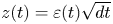 with $\varepsilon (t)\sim \mathcal {N}(0,\,1)$
 . Eqn (1) implies that $c$
 changes gradually over time without discrete “jumps”, which may apply quite well to a range of slow-onset climatic events such as temperature increase, drought and sea level rise (Mense, Reference Mense2018; Cattaneo et al., Reference Cattaneo, Beine, Fröhlich, Kniveton, Martinez-Zarzoso, Mastrorillo, Millock, Piguet and Schraven2019). The GBM is characterized by a negative long-term trend (indicated by $\mu <0$
 ) while there is uncertainty as to how $c$
 evolves in the short term, i.e., although climatic conditions are deteriorating on average over time, there is a positive probability that they will improve in the next period (Gardner and Hendrickson, Reference Gardner and Hendrickson2018).
We assume that the household obtains a perpetual constant dividend $w$ if they choose to emigrate. $w$
 could be thought of as an exogenous outside opportunity, reflecting the idea that households may lack accurate information about the prospective destination country (Burda, Reference Burda1995). Migration is also associated with a fixed upfront cost $M > 0$
 , which encompasses both monetary and psychological cost.
The household's Bellman equation can be expressed as

where $r$ is the real interest rate (Dixit and Pindyck, Reference Dixit and Pindyck1994: 101–105). If we apply Ito's Lemma, substitute the right-hand side of equation (1 ) and take expectations, we obtain the following second-order partial differential equation:

The solution of this differential equation is given by

with $A_{1}c^{\gamma _{1}}$ and $A_{2}c^{\gamma _{2}}$
 as homogenous solutions and $V_{p}(c)$
 as the particular solution. $A_{1}$
 and $A_{2}$
 are constants, and $\gamma _{1}$
 and $\gamma _{2}$
 are the solutions of the characteristic equation $( \sigma ^{2}/2) \gamma ^{2}+( \mu -\sigma ^{2}/2) \gamma -r=0$
 :
:

The first two terms in equation (4) represent the option value of migrating abroad, whereas $V_{p}(c)$ represents the value of staying in the home country.
Following Gardner and Hendrickson (Reference Gardner and Hendrickson2018), we impose two boundary conditions on this solution in order to solve the model. The first condition requires that the option value of migrating be reduced to zero as $c$ tends to infinity, i.e., there is no incentive to migrate if the quality of climatic conditions is sufficiently high:

Since $\gamma _{2}$ is positive, equation (6) implies that $A_{2}=0$
 . The second condition, also known as the “value-matching” condition, then requires that the value function $V(c)$
 be equal to the present value associated with migrating abroad $w/r$
 less the cost of migration $M$
 :
:

where $c^{\ast }$ denotes the quality of climatic conditions at which it is optimal to migrate. Put differently, this condition implies that migration is optimal when the household is indifferent between migrating and staying. Substituting $A_{1}$
 back into equation (4), we obtain

Choosing a lower value of $c^{\ast }$ , which implies that the household will on average have to wait longer before migrating, lowers the value of $V_{p}(c^{\ast })$
 , thus increasing the present value of the net benefit of migration $V(c)$
 . On the other hand, a lower $c^{\ast }$
 increases the stochastic discount factor $(c/c^{\ast })^{\gamma _{1}}$
 , thus reducing $V(c)$
 . The household therefore chooses $c^{\ast }$
 so as to maximize $V(c)$
 .
.
The first-order condition is given by

As previously noted, the particular solution represents the present discounted value of staying in the home country, i.e.,

$c^{\ast }$ is thus given by

The model provides two clear predictions: first, migration will only occur once the quality of climatic conditions falls below $c^{\ast }$ , that is, once adverse impacts of climate change have exceeded certain thresholds. Second, $c^{\ast }$
 negatively depends on migration costs $M$
 . This implies that the higher the cost of migration, the lower the quality of climatic conditions the household is willing to endure before migrating. The intuition behind this prediction is the following (Mense, Reference Mense2018; Ginbo et al., Reference Ginbo, Di Corato and Hoffmann2021): because migration is costly and to a certain extent irreversible and information about climatic conditions is revealed gradually, it is valuable to postpone the migration decision; this incentive is greater the higher the costs of migration are. However, once climatic conditions deteriorate past a critical level, the household will no longer be better off waiting and will choose to migrate instead.
A number of limitations of the model should be noted. First, as mentioned above, due to the nature of the GBM, the model only applies to gradual changes in climatic conditions and may thus not be suited to capture the effects of fast-onset climatic events such as storms, flooding or extreme heat on international migration. Such events may be modeled more appropriately using Poisson processes (as done, e.g., by Abadie et al. (Reference Abadie, Sainz de Murieta and Galarraga2017)). Incorporating this type of process would present an interesting extension of the model; in the current paper, however, we will instead focus on slow-onset climatic events such as drought and temperature increase and leave these considerations for future research.
Second, the fact that climate-induced international migration appears to be relatively uncommon may also be consistent with a number of alternative explanations. In particular, as noted by Cattaneo and Peri (Reference Cattaneo and Peri2016), this result may be generated by liquidity constraints faced by households in their countries of origin, i.e., households may simply lack the resources to finance the costs of migration. For now, the available data does not allow us to determine the exact mechanism behind a potential threshold effect. However, if households do make their migration decisions according to an option value of waiting rule, we should observe the corresponding threshold to be lower in low-income countries than in middle-income countries since liquidity constraints are likely more relevant in the former. Similarly, equation (11) implies that $c^{\ast }$ is greater the lower the costs of migration, and thus we should expect the threshold level of quality of climatic conditions to be higher for migration to close destinations than to more distant ones.
3 Data
Data on bilateral international migration flows is taken from Abel and Sander (Reference Abel and Sander2014). Based on international migrant stock tables published by the United Nations’ Department of Economic and Social Affairs (United Nations, 2013), the dataset provides information on bilateral migration flows between 196 countries over five-year intervals from 1990 to 2010. The dataset thus allows us to include middle- and low-income countries as both origins and destinations, which is an advantage over other datasets such as Ortega and Peri (Reference Ortega and Peri2013), Vezzoli et al. (Reference Vezzoli, Villares-Varela and de Haas2014) and Wesselbaum and Aburn (Reference Wesselbaum and Aburn2019) which only include OECD countries as destinations.
Information on GDP per capita is obtained from the World Development Indicators (World Bank, 2021), Penn World Tables (Feenstra et al., Reference Feenstra, Inklaar and Timmer2015) and the World Economic Outlook Database (International Monetary Fund, 2021). The data on country population is taken from the World Development Indicators (World Bank, 2021). Drawing from the migration data, we compute bilateral migration rates as the ratio between the migration flow from origin country i to destination country j during five-year period t and the population of i at the beginning of t. Figure A1 in the online appendix shows the kernel density estimation for bilateral migration rates, which reveals that the distribution of this variable is heavily right-skewed.
Following Cattaneo and Peri (Reference Cattaneo and Peri2016) and Beine and Parsons (Reference Beine and Parsons2017), we only include non-OECD countries as countries of origin and distinguish between middle-income and low-income countries, where low-income countries are defined as those countries in the bottom quartile of the distribution of (purchasing power parity-adjusted) GDP per capita in the year 1990. The resulting final sample includes 138 countries of origin, 34 of which are classified as low-income countries according to the above definition, while the remaining 104 are classified as middle-income countries (see the lists of low- and middle-income countries in the online appendix).
Data on monthly mean temperature and precipitation is taken from version 4.05 of the gridded climate dataset created by the Climatic Research Unit of the University of East Anglia (Harris et al., Reference Harris, Osborn, Jones and Lister2020). The original data are gridded to a 0.5$^{\circ }$ latitude by 0.5$^{\circ }$
 longitude grid and are then aggregated to area-weighted country-level averages. As argued by Beine and Parsons (Reference Beine and Parsons2015, Reference Beine and Parsons2017), using absolute levels of temperature and precipitation is not appropriate because these variables would not adequately capture how individuals respond to deviations from standard climatic conditions. We follow their suggested approach and instead calculate standardized anomalies of temperature and precipitation as deviations from the respective long-run mean, divided by the respective long-run standard deviation.
However, in order to identify thresholds in the climate-migration relationship at a more granular level and also account for seasonal volatility, we first compute standardized monthly anomalies of temperature and precipitation and then take the average of these over the five-year periods, i.e.,

where $C_{level,i,t,k,m}$ is the level of temperature or precipitation in origin country $i$
 in five-year period $t$
 , year $k$
 and month $m$
 . $\mu _{i,m}^{LR}(C_{level})$
 is the 1901–1970 mean of temperature or precipitation of origin country $i$
 for month $m$
 , and $\sigma _{i,m}^{LR}(C_{level})$
 is the 1901–1970 standard deviation of temperature or precipitation of origin country $i$
 for month $m$
 . As an alternative measure of climatic anomalies, used as a robustness check, we follow Nawrotzki and Bakhtsiyarava (Reference Nawrotzki and Bakhtsiyarava2017) and Nawrotzki and Bakhtsiyarava (Reference Nawrotzki and Bakhtsiyarava2017) and calculate the share of months of five-year period $t$
 in which mean temperature was more than one standard deviation above and mean precipitation was more than one standard deviation below the 1901–1970 mean.
Figure A2 in the online appendix presents kernel density estimations for the standardized temperature and precipitation anomalies. Most notably, figures A2a and A2c indicate that temperature anomalies are not centered around zero in both low- and middle-income countries, and few countries experienced negative temperature anomalies in either sample. Moreover, the distributions of temperature anomalies in low-income countries and precipitation anomalies in middle-income countries appear to be characterized by some extreme positive and negative outliers, respectively. This finding is corroborated by respective excess kurtosis values of 0.38 and 1.14, suggesting that extreme anomalies occur more frequently than would be predicted by an otherwise equivalent normal distribution.
Across the sample period, five low-income countries experienced extreme positive temperature anomalies of more than two standard deviations above the low-income sample mean,Footnote 1 while three countries experienced extreme negative precipitation anomalies of less than two standard deviations below the sample mean.Footnote 2 These observations correspond to 5.88 and 2.21 per cent of the low-income sample, respectively. Likewise, among middle-income countries, extreme positive temperature anomalies were experienced by eight countries,Footnote 3 and eight countries experienced extreme negative precipitation anomalies,Footnote 4 corresponding to 3.13 and 1.92 per cent of the middle-income sample, respectively. We conduct robustness checks in section 6 in order to assess whether these outliers may affect the estimation results.
Table 1 presents summary statistics. We observe that middle-income countries have a higher average emigration rate than low-income countries. Consistent with previous literature (e.g., Oezden et al., Reference Oezden, Parsons, Schiff and Walmsley2011), the majority of migration from non-OECD countries can be attributed to migration flows to other non-OECD countries, which account for 76.4 per cent of the migration flow volume between 1990 and 2010. In addition, although migration flows between neighboring countries comprise only 1.4 per cent of observations in the sample, they account for 28.8 per cent of the migration flow volume.Footnote 5 This pattern is also reflected in the average migration rates to neighboring countries, which are an order of magnitude larger than migration rates to non-neighboring countries.
Summary statistics.

4 Empirical strategy
To identify the nonlinear effects of climate on international migration implied by the real-options framework, we follow Burda et al. (Reference Burda, Härdle, Müller and Werwatz1998) and Basile and Lim (Reference Basile and Lim2006, Reference Basile and Lim2017) and estimate generalized additive models (GAMs). First developed by Hastie and Tibshirani (Reference Hastie and Tibshirani1986), GAMs are an extension of generalized linear models (GLMs) and provide a flexible empirical framework that is particularly well-suited for estimating nonlinear relationships. Unlike GLMs, in a GAM the explanatory variables are specified in terms of smooth nonparametric functions, thus requiring no restrictive a priori assumptions about any parametric functional form (Abe, Reference Abe1999; Ferrini and Fezzi, Reference Ferrini and Fezzi2012). Instead, the degree of nonlinearity is determined directly from the data using an automated smoothing selection criterion. Despite their flexibility, however, GAMs retain the interpretability of GLMs, and results can be interpreted in a straightforward manner using graphical representations of the estimated relationships.
Like GLMs, GAMs require the specification of the distribution of the response variable. In our specific case, online appendix figure A1 indicates a heavily right-skewed distribution of bilateral migration rates, and thus we choose to follow Basile and Lim (Reference Basile and Lim2017) and estimate a GAM with Gamma distribution:

where $y_{ijt}$ is the bilateral migration rate from origin country $i$
 to destination country $j$
 in five-year period $t$
 and is assumed to follow a Gamma distribution. To deal with the issue of zero observations in the bilateral migration rates, we apply a common solution used in the literature (e.g., Ortega and Peri, Reference Ortega and Peri2013; Cai et al., Reference Cai, Feng, Oppenheimer and Pytlikova2016; Grimes and Wesselbaum, Reference Grimes and Wesselbaum2019) and add one to all migration flows before computing migration rates. $g(\mathbb {E}(y_{ijt}))=\log (\mathbb {E}(y_{ijt}))$
 is the canonical log-link function, which relates the expected value of $y_{ijt}$
 to the explanatory variables. $s_{1}(T_{it})$
 and $s_{2}(P_{it})$
 are unknown smooth functions of the temperature and precipitation anomaly in origin country $i$
 in five-year period $t$
 , respectively, which are estimated using penalized cubic regression splines (Wood, Reference Wood2017). As suggested by Wood (Reference Wood2011), smoothing parameters for the estimated functions $\hat {s}_{1}(T_{it})$
 and $\hat {s}_{2}(P_{it})$
 are selected using the restricted maximum likelihood (REML) method, which is implemented in the R package mgcv (Wood, Reference Wood2001). $\phi _{i}$
 and $\phi _{j}$
 are sets of origin and destination country fixed effects, respectively, in order to control for unobserved heterogeneity at the origin and destination country level, and $\phi _{t}$
 is a set of time fixed effects.
Following recent literature (Dell et al., Reference Dell, Jones and Olken2014; Cattaneo and Peri, Reference Cattaneo and Peri2016; Beine and Parsons, Reference Beine and Parsons2017; Cattaneo and Bosetti, Reference Cattaneo and Bosetti2017), we choose a parsimonious specification that includes fixed effects but no additional control variables such as GDP per capita, population, quality of institutions or probability of conflicts. As argued by these authors, those variables are likely themselves affected by changes in climatic conditions, and thus including them in the regression may result in an over-controlling problem, leading to biased estimates of the effects of climate on migration.
5 Results
5.1 Main results
Table 2 presents our main results. As a baseline exercise, we estimate a semiparametric GAM using our total sample before separately conducting estimations for low-income and middle-income countries. In each case, temperature and precipitation anomalies enter via nonparametric smooth functions. Column 1 reports the effective degrees of freedom (edf) of the estimated smooth functions for the total sample, while columns 2 and 3 report the edf for low- and middle-income countries, respectively. The edf indicate the degree of nonlinearity or “wiggliness” of the function, with an edf of 1 corresponding to a linear relationship. However, the edf provide no information about the significance or magnitude of the estimated relationship, as smooth terms with high edf may not be statistically significant or vice versa. Instead, the estimation results are best understood by examining visual representations of $s$ (T) and $s$
 (P). All models include origin, destination and time fixed effects.
Climate change and international migration: main results.

Note: Time period: 1990–2010. The dependent variable is the bilateral migration rate from country $i$ to country $j$
 in five-year period $t$
 . s(T) and s(P) are smooth non-parametric functions of temperature and precipitation anomalies, respectively. Approximate p-values in parentheses. edf: effective degrees of freedom, REML: restricted maximum likelihood, AIC: Akaike information criterion.
For the total sample we find a significant and nonlinear effect of temperature anomalies but no significant effect of precipitation anomalies. When estimating GAMs separately for middle- and low-income countries, however, the effect of precipitation anomalies turns significant in both samples. These results are corroborated by $\chi ^{2}$ difference tests comparing the GAMs with corresponding GLMs: for both the total sample and low-income and middle-income countries, the $\chi ^{2}$
 difference tests indicate that the GAM fits the data better than a linear specification.
Figure 1 shows the estimated effects of temperature and precipitation anomalies on the log of bilateral migration rates with 95 per cent Bayesian confidence intervals (Marra and Wood, Reference Marra and Wood2012). For the total sample, Fig. 1(a) suggests a flat relationship between temperature anomalies and international migration for much of the data range. Regarding precipitation anomalies, we find an S-shaped relationship with slightly positive and negative effects at the upper and lower ends of the data range, respectively, but the relationship is not statistically significant. Estimated relationships for middle-income countries in figures 1(e) and 1(f) appear similar to those found for the total sample, with negative effects of precipitation anomalies below $-0.5$ being somewhat more pronounced than in the total sample. In contrast, figures 1(c) and 1(d) show rather different relationships for low-income countries: We observe a positive effect of temperature anomalies between 0.2 and 1.5 on migration, which then becomes negative for the remaining range of data. Figure 1(d), on the other hand, shows no clear relationship between precipitation anomalies and international migration for low-income countries.
Nonlinear effects of temperature and precipitation anomalies on migration. (a) Temperature, total sample, (b) Precipitation, total sample, (c) Temperature, low-income countries, (d) Precipitation, low-income countries, (e) Temperature, middle-income countries, (f) Precipitation, middle-income countries.

Overall, the findings are not in line with the threshold effect suggested by the real-options framework, which would be verified empirically if the model estimated a flat relationship for low levels of climatic anomalies and a positive relationship past certain thresholds (Basile and Lim, Reference Basile and Lim2017). Instead, the observed negative effect of temperature anomalies on migration in low-income countries is consistent with the role of liquidity constraints as emphasized by recent literature (e.g., Cattaneo and Peri, Reference Cattaneo and Peri2016; Beine and Parsons, Reference Beine and Parsons2017; Gröschl and Steinwachs, Reference Gröschl and Steinwachs2017; Cui and Feng, Reference Cui and Feng2020): Increases in average temperature increase households’ incentives to emigrate; past a certain threshold, however, tightening liquidity constraints due to worsening agricultural productivity dominate, as households are less able to afford the cost of migration, resulting in a negative effect on migration. The findings thus suggest that rather than employing a “wait and see” strategy, households in these countries may become “trapped” in place due to the adverse impacts of climate change.
5.2 Migration to neighboring countries
In the previous subsection, we demonstrated nonlinear relationships between temperature and precipitation anomalies and international migration that cannot be explained by the real-options framework but are in part consistent with the existence of liquidity constraints. However, such constraints should matter to a lesser extent for migration to nearby destinations (Beine and Parsons, Reference Beine and Parsons2017), and thus the real-options framework potentially does a better job at explaining migration to those destinations. Therefore, in this subsection we follow Beine and Parsons (Reference Beine and Parsons2017) and interact our measures of climatic anomalies with a dummy variable indicating whether the origin and destination countries are contiguous (i.e., share a common border) or not, resulting in the following model:

where $C_{ij}$ is equal to one if $i$
 and $j$
 are contiguous and zero otherwise.
The results are reported in online appendix table A1. For low-income countries, we find significant effects of temperature and precipitation anomalies on migration to nonneighboring countries and a significant effect of temperature anomalies on migration to neighboring countries. Again, edf of about 8.7 and 8.9 for the respective smooth functions of temperature and precipitation anomalies indicate that the relationships are highly nonlinear. As for the interaction term between temperature anomalies and contiguity, on the other hand, an edf of close to 1 suggests a linear effect of temperature anomalies on migration to neighboring countries. For middle-income countries, we only find significant effects on migration to nonneighboring countries but not on migration to neighboring countries. Compared to the main results, pseudo-R$^{2}$ values for models (1) and (2) increase from 0.544 to 0.61 and from 0.416 to 0.496, respectively, suggesting that including interaction terms for contiguity increases the explanatory power of the GAM for both low- and middle-income countries.
Figures A3 and A4 in the online appendix plot the estimated effects for low- and middle-income countries, respectively. While the relationship between temperature anomalies and migration to nonneighboring countries shown in figure A3a appears similar to the one estimated in our main results – with migration decreasing with temperature anomalies greater than 1.5 – we observe a linear and negative effect on migration to neighboring countries (see figure A3b). This finding suggests that temperature anomalies constrain migration to both types of destinations, which is in contrast to Cattaneo and Peri (Reference Cattaneo and Peri2016) who find that increases in temperature constrain migration from poor countries to distant destinations but not to close ones. Furthermore, similar to our main results, there is no clear relationship between precipitation anomalies and migration from low-income countries to both types of destinations (shown in figures A3c and A3d). Likewise, for middle-income countries the GAM estimates flat relationships between climatic anomalies and migration to both neighboring and nonneighboring countries (shown in figure A4).
5.3 Migration to OECD countries
The results presented in the previous subsection suggest that even for migration to neighboring countries, for which liquidity constraints should be less binding, the real-options framework does not explain migratory responses to climate change. In this subsection, we further investigate specific emigration patterns by differentiating between emigration to OECD and non-OECD destination countries. Analogous to equation (14), we estimate the following model:

where $OECD_{j}$ is a dummy variable that equals one if destination $j$
 is an OECD country and zero otherwise.
Online appendix table A2 presents the regression results. For low-income countries, relationships between climatic anomalies and migration show differing degrees of nonlinearity for OECD and non-OECD destination countries: while edf of 8.4 and 8.9 for the respective smooth terms of temperature and precipitation anomalies are comparable to those found in the main results in table 2, edf for the corresponding OECD interaction terms are somewhat lower at 6.6 and 7.4, with the latter not being statistically significant. In contrast, all smooth terms for middle-income countries are statistically significant with edf between 8.4 and 8.9.
Figures A5 and A6 in the online appendix plot the estimated effects of climatic anomalies on migration to OECD and non-OECD destination countries for low- and middle-income countries, respectively. For low-income countries, the relationships between temperature and precipitation anomalies and migration to non-OECD countries in figures A5a and A5c, respectively, closely resemble the effects found in our main results (see figures 1(c) and 1(d)). This suggests that climate change-induced international migration from low-income countries occurs primarily to other low- and middle-income countries, which is consistent with recent literature (e.g., Hoffmann et al., Reference Hoffmann, Dimitrova, Muttarak, Cuaresma and Peisker2020). Figure A5b shows a similarly hump-shaped relationship between temperature anomalies and migration to OECD countries, although the negative effect of high levels of temperature anomalies is considerably less pronounced than in figure A5a. A possible interpretation of this difference is that migration from low-income countries to OECD countries in response to climate change is primarily undertaken by high-skilled individuals (Drabo and Mbaye, Reference Drabo and Mbaye2015; Kaczan and Orgill-Meyer, Reference Kaczan and Orgill-Meyer2020) who are likely less affected by declines in agricultural income due to increasing temperatures.
Likewise, for middle-income countries the relationships between climatic anomalies and migration to non-OECD destination countries shown in figures A6a and A6c are similar to those estimated in our main results (see figures 1(e) and 1(f)). Interestingly, we find a pronounced negative effect of shortages in precipitation on migration to OECD countries (see figure A6d). This finding is in contrast to Cattaneo and Peri (Reference Cattaneo and Peri2016) who find no effect of precipitation on migration from middle-income countries to OECD countries. Overall, the results again are inconsistent with the migration patterns predicted by the real-options framework.
6 Robustness checks
For our empirical analysis we followed Cattaneo and Peri (Reference Cattaneo and Peri2016) and Beine and Parsons (Reference Beine and Parsons2017) in defining countries in the bottom quartile of the GDP per capita distribution as “low-income countries”. Nevertheless, this delineation inevitably involves some arbitrariness since there is no clear definition of what a low-income country is, and thus a potential concern is that varying the threshold between low- and middle-income countries may yield differing results. To address this concern, we repeat our analysis using the 20th and 30th percentile of the GDP per capita distribution as alternative thresholds.
The results are presented in online appendix table A3. For both alternative thresholds, the edf estimated by the GAM are of similar magnitude compared to the main results, and effects remain statistically significant. Turning to the plots of the estimated effects in online appendix figures A7 and A8, we find very similar relationships compared to the main results when using the 30th percentile of the income distribution as the threshold between low- and middle-income countries. The relationships estimated using the 20th percentile threshold are generally similar to the main results as well.
Another potential concern is that the results may be affected by the choice of the smoothing parameter selection method. While likelihood-based methods such as REML tend to exhibit faster convergence of smoothing parameters to their optimal values than prediction error-based methods such as generalized cross validation (GCV) (Wood, Reference Wood2011), they have also been shown to have a tendency to undersmooth, i.e., to choose a too complex model (Wahba, Reference Wahba1985; Kauermann, Reference Kauermann2005). Therefore, we reestimate equation (13) using GCV rather than REML. As shown in online appendix table A4 and figure A9, the results are very similar to our main findings.
Additional robustness checks are presented in the online appendix. In table A5 and figure A10, we test whether the negative effect of temperature anomalies on international migration in low-income countries is in fact driven by declines in agricultural productivity. For this purpose, we follow Cai et al. (Reference Cai, Feng, Oppenheimer and Pytlikova2016: 149–150) and Cattaneo and Peri (Reference Cai, Feng, Oppenheimer and Pytlikova2016: 134–135) and interact our measures of climatic anomalies with a factor variable indicating origin countries’ quartile in the distribution of agricultural value added as a share of GDP. As shown in figure A10, we observe a negative effect of high positive temperature anomalies for all but the least agriculturally dependent countries. In fact, the results suggest that the higher the level of agricultural dependence, the lower the threshold beyond which the relationship becomes negative. This effect is particularly pronounced for the most agriculturally dependent countries (shown in figure A10 g), which exhibit a negative effect of temperature anomalies on migration across much of the data range. While these findings do not definitively prove that our results are driven by the existence of liquidity constraints, they do provide corroborative evidence of the transmission channel of agricultural productivity postulated by Cattaneo and Peri (Reference Cattaneo and Peri2016).
Furthermore, to address potential concerns over omitted variable bias regarding our parsimonious main specification, in table A6 we include a number of control variables identified as important determinants of international migration in the literature (e.g., Ortega and Peri, Reference Ortega and Peri2013; Beine and Parsons, Reference Beine and Parsons2015). More specifically, we control for the log of the ratio of GDP per capita in origin and destination countries, whether origin-destination pairs share a common language, log distance between origin-destination pairs and the number of years per five-year period in which origin countries experienced civil war.Footnote 6 Parametric estimates for the control variables are statistically significant and have the expected signs, and edf of smooth terms are similar in magnitude to the main results. Turning to the estimated relationships between climatic anomalies and international migration shown in figure A11, including the control variables appears to smooth out some of the “wiggliness” present in the relationships in figure 1. Even so, we continue to observe a strong negative effect of high temperature anomalies on international migration for low-income countries.
Next, in table A7 and figure A12, we follow Nawrotzki and Bakhtsiyarava (Reference Nawrotzki and Bakhtsiyarava2017) and Nawrotzki and Bakhtsiyarava (Reference Nawrotzki and Bakhtsiyarava2017) and use five-year period shares of heat and drought months as alternative measures of climatic anomalies (see section 2). Again, edf of smooth terms are similar in magnitude to our main results, and effects remain statistically significant. For low-income countries, we find a hump-shaped relationship between heat month shares and international migration similar to figure 1(c). For middle-income countries, figure A12c suggests a slightly positive effect of high shares of heat months on international migration, but confidence intervals are quite large for this part of the sample.
Finally, to assess whether the results are driven by extreme outliers, we exclude observations with temperature anomalies more than two standard deviations above or precipitation anomalies more than two standard deviations below the respective sample mean. The results are presented in table A8 and figure A13. Compared to the main results, excluding outliers moderates the estimated relationships to an extent. Most notably, the negative effect of negative precipitation anomalies observed in figure 1(f) disappears. However, the remaining relationships are qualitatively similar to the main results.
7 Conclusions
The potential impact of climate change on international migration patterns has recently received considerable attention in both the public and academic debate. Yet, much of the empirical literature fails to find increases in international migration due to climate change. In light of this evidence, the current paper theoretically and empirically investigates why climate change-induced international migration appears to be relatively uncommon. Drawing on recent contributions by Gardner and Hendrickson (Reference Gardner and Hendrickson2018) and Mense (Reference Mense2018), the current paper presents an application of the real-options framework in which individuals may decide to postpone their migration response to climate change due to the fixed cost of migration as well as the option value of waiting. This framework implies that individuals choose a threshold level of quality of climatic conditions and migrate only once climatic conditions have deteriorated past this critical point.
We test this prediction empirically by estimating generalized additive models, which allow us to assess the threshold effects suggested by this theoretical framework. For low-income countries, we find a robust hump-shaped relationship between temperature anomalies and migration rates; this effect appears to be primarily driven by migration to other low- and middle-income countries. For middle-income countries, on the other hand, no robust effects of temperature and precipitation anomalies on migration rates can be observed.
We generally find no evidence of the threshold effects suggested by the real-options framework. Rather, consistent with recent literature (e.g., Cattaneo and Peri, Reference Cattaneo and Peri2016; Beine and Parsons, Reference Beine and Parsons2017; Gröschl and Steinwachs, Reference Gröschl and Steinwachs2017; Cui and Feng, Reference Cui and Feng2020), the findings suggest that in low-income countries, individuals’ migration response is hampered by the existence of liquidity constraints. These are likely to become more binding due to climate change-induced decreases in agricultural productivity.
A key implication of our findings is that instead of attempting to deter migration from areas increasingly affected by the impacts of climate change, policymakers should focus on both fostering migration and assisting “trapped” populations by facilitating alternative adaptation strategies. Such strategies may include shifting planting dates and planting crop varieties with different maturation periods (McCord et al., Reference McCord, Waldman, Baldwin, Dell'Angelo and Evans2018), investing in irrigation systems (Benonnier et al., Reference Benonnier, Millock and Taraz2019) as well as cash transfer and social protection programs (Chort and Rupelle, Reference Chort and de la Rupelle2017; Mueller et al., Reference Mueller, Gray, Handa and Seidenfeld2020).
Finally, a number of potential directions for future research emerge from our results. First, it should be noted that the aggregate nature of our analysis likely masks some considerable heterogeneity in local thresholds of climate-related migration. As pointed out by Adger et al. (Reference Adger, Dessai, Goulden, Hulme, Lorenzoni, Nelson, Naess, Wolf and Wreford2009) and McLeman (Reference McLeman2018), such thresholds may be highly dependent on the social, economic and climatic context, and the measures of climatic anomalies used in this paper may only imperfectly capture the effects of climate change on local living conditions. Future research should thus consider applying the real-options framework to local and regional migration patterns as well as other aspects of the climate-migration relationship. This may include, for example, the impacts of fast-onset events such as flooding, storms and wildfire as well as the prevalence of infectious diseases (Marchiori et al., Reference Marchiori, Maystadt and Schumacher2012). Second, the current paper demonstrates how semiparametric estimation methods can be applied to assess nonlinearities in the relationship between climate and international migration. This methodology could be easily utilized by future research to investigate other determinants of international migration patterns.
Supplementary material
The supplementary material for this article can be found at https://doi.org/10.1017/S1355770X23000013.
Conflict of interest
The author declares none.


 Open access

