


Rates of overweight and obesity have been increasing rapidly in much of the world over the past 40 years( 1 ). Obesity has been linked to higher mortality rates( Reference Berrington de Gonzalez, Hartge and Cerhan 2 ) and such diseases as type II diabetes, CVD, osteoarthritis and some cancers( 3 ). The traditional approach to weight loss has been to restrict food intake (i.e. ‘go on a diet’) and exercise more. Such an approach, however, is generally unsuccessful in decreasing body mass in the long term( Reference Bacon and Aphramor 4 – Reference Jeffrey, Epstein and Wilson 6 ). Moreover, there is evidence that dieting, and particularly repeated dieting attempts (i.e. ‘yo-yo dieting’), may be harmful to both physical and mental health( Reference Bacon and Aphramor 4 , Reference Marchesini, Cuzzolaro and Mannucci 7 , Reference Polivy 8 ). There is also research indicating that rates of eating disorders, which may have their genesis in low-energy diets( Reference Hill 9 , Reference Neumark-Sztainer, Wall and Guo 10 ), appear to be increasing in recent times( Reference Hoek and van Hoeken 11 , Reference Currin, Schmidt and Treasure 12 ).
In response to the failure of restricted-energy diets to reduce individuals’ body mass in the long term and/or in reaction to the possible link between dieting and disordered eating, some clinicians have begun to explore an approach to weight management known as ‘intuitive eating’, sometimes also referred to as ‘normal eating’ or ‘adaptive eating’. Its basic tenets are to respond to innate hunger and satiety signals (i.e. eat when hungry and stop when satiated, without restrictions on types of food consumed)( Reference Tylka 13 ). Numerous pressures exist to disregard such signals: food advertisements encourage eating regardless of hunger; restaurants serve overly large portions; diets promote the eating of prescribed foods in set quantities. Moreover, since children learn how to eat from their parents, this disregard for innate hunger and satiety signals is taught to the next generation( Reference Kroon Van Diest and Tylka 14 ).
Although the past 10 to 15 years has seen considerable media coverage and numerous self-help books published on the topic of intuitive eating and related non-dieting approaches, to our knowledge there are no reviews summarizing research on this topic. The purpose of the current literature review is to present and summarize the scholarly literature on associations between intuitive eating and physical and psychological health outcome measures.
Background
Origins of ‘intuitive eating’
The term ‘intuitive eating’ was coined in 1995( Reference Tribole and Resch 15 ) and first appeared in a peer-reviewed journal in 1998( Reference Gast and Hawks 16 ). Given the attention paid to ‘the obesity epidemic’ among public health officials and the medical community and the 15 years that have passed since Gast and Hawks published their article( Reference Gast and Hawks 16 ) outlining the potential benefits of an intuitive eating approach, it is surprising how little research on this topic was published in peer-reviewed academic journals until recently.
Definition of intuitive eating
The fundamental premise behind intuitive eating is that, if listened to, the body intrinsically ‘knows’ the quantity and type of food to eat to maintain both nutritional health and an appropriate weight. This concept is sometimes referred to as ‘body wisdom’( Reference Gast and Hawks 16 ). Societal cues that work to override this innate body wisdom include: diets; being made to clear one's plate as a child; eating because it's ‘dinner time’; and advertisements encouraging people to eat irrespective of hunger. The fundamental principles of intuitive eating are to regain ‘body wisdom’ so that one mostly eats when hungry and stops eating when satiated. There is no restriction on the types of food one can eat, unless dictated by specific health issues (e.g. diabetes, food allergies), because the body will instinctively choose a variety of foods that provide nutritional balance( Reference Tylka 13 , Reference Gast and Hawks 16 – Reference Dalen, Smith and Shelley 19 ).
Tylka and Kroon Van Diest (2013)( Reference Tylka and Kroon Van Diest 20 ), in developing a revised Intuitive Eating Scale (Tylka IES-2), argue that Intuitive Eating comprises four central features: (i) unconditional permission to eat when hungry and what food is desired; (ii) eating for physical rather than emotional reasons; (iii) reliance on internal hunger and satiety cues to determine when and how much to eat; and (iv) honouring one's health, or practising ‘gentle nutrition’. Hawks et al.( Reference Hawks, Merrill and Madanat 17 ), who developed an alternative Intuitive Eating Scale (Hawks IES), summarise the Intuitive Eating model as consisting of: (i) intrinsic eating – the ability to recognise the physical signs of hunger, satisfaction and fullness; (ii) extrinsic eating – consideration of a full range of food possibilities and eating what one wants; (iii) anti-dieting – appreciation of food and paying attention to the physical effects of eating; and (iv) self-care – valuation of health and energy more than appearance.
Development and validity of scales to measure intuitive eating
The first intuitive eating scale published in the academic literature was developed and tested by Hawks et al. in 2004( Reference Hawks, Merrill and Madanat 17 ). This twenty-seven-item scale was based on a systematic survey of the self-help and counselling literature on intuitive eating and reviews by a panel of six experts and fifty-six university students enrolled in upper division health courses. Among university students, internal consistency estimates for each of the factors ranged from 0·42 to 0·93. Retesting after 4 weeks resulted in a reliability estimate for the total scale of 0·85. Construct validity was supported by findings of inverse relationships between Hawks IES scores and obesity, presence of an eating disorder and restrictive dieting, as well as higher IES scores for men.
Tylka's (2006) original Intuitive Eating Scale( Reference Tylka 13 ) was based on ten principles of Intuitive Eating set out by Tribole and Resch (1995)( Reference Tribole and Resch 15 ) which Tylka clustered into three domains: (i) Unconditional Permission to Eat (UPE); (ii) Eating for Physical Rather Than Emotional Reasons (EPR); and (iii) Reliance on Hunger and Satiety Cues (RHSC). Exploratory and confirmatory factor analyses upheld its three-factor structure, with the three subscales loading on a higher-order Intuitive Eating factor. Among university women, internal consistency estimates for the total scale have ranged from 0·85 to 0·88. The scale was highly stable over a 3-week period (r = 0·90). Supporting its construct validity, IES scores were negatively related to eating disorder symptomatology, body dissatisfaction, poor interoceptive awareness, pressure for thinness, internalization of the thin ideal and body mass; and positively related to several indices of well-being; moreover, scores were unrelated to impression management. A number of subsequent studies have supported the scale's construct validity with women, finding that the scale is negatively associated with disordered eating symptomatology( Reference Tylka and Wilcox 21 ) and BMI( Reference Augustus-Horvath and Tylka 22 – Reference Oh, Wiseman and Hendrickson 24 ); and positively associated with various measures of psychological well-being( Reference Tylka and Wilcox 21 ).
The Intuitive Eating Scale-2( Reference Tylka and Kroon Van Diest 20 ) is a twenty-three-item instrument developed to improve on the original Intuitive Eating Scale( Reference Tylka 13 ). Changes to the original IES include: adding seventeen positively worded items; integrating an additional component of Intuitive Eating, namely Body–Food Choice Congruence; and testing the new scale with men as well as women. Exploratory and confirmatory factor analyses upheld its four-factor structure, with the four subscales loading on a higher-order Intuitive Eating factor. Among university men and women, IES-2 scores have been estimated to be internally consistent (α = 0·87 and 0·89 for women and men, respectively) and stable over a 3-week period (r = 0·88 and 0·92 for women and men, respectively). IES-2 scores are positively related to body appreciation, self-esteem and satisfaction with life; inversely related to eating disorder symptomatology, poor introspective awareness, body surveillance, body shame, BMI and internalisation of media appearance ideals; and negligibly related to social desirability. Incremental validity is shown by its prediction of psychological well-being above and beyond eating disorder symptomatology.
Differences between intuitive eating and other ‘non-diet’ approaches to eating
Non-/un-/anti-dieting and Health at Every Size
Intuitive eating is a fundamental component of non-dieting and Health at Every Size approaches to eating( Reference Madden, Leong and Gray 25 ). These latter approaches, however, generally argue that one can be healthy regardless of (over)weight and often address prejudice against overweight or obese people( Reference Bacon, Stern and Van Loan 26 – Reference Gagnon-Girouard, Begin and Provencher 29 ). Intuitive eating, in contrast, usually omits discussion of body weight or whether attaining a ‘normal’ weight is one of its goals. However, this position is not universal; Gast and Hawks( Reference Gast and Hawks 16 ), for example, argue that eating intuitively will result in a healthy body weight. Health at Every Size and non-dieting approaches also often include modules on body acceptance, nutrition, activity, social support and self-acceptance( Reference Bacon, Stern and Van Loan 26 , Reference Hawley, Horwath and Gray 30 ).
Mindful eating
Mindful eating involves full awareness of one's eating, including the taste and texture of one's food, and generally slowing down the pace of one's eating. Proponents of mindful eating encourage people to remove all distractions, such as television, while eating, and refrain from multi-tasking, such as working while eating( Reference Gast and Hawks 16 , Reference Matheiu 18 , Reference Outland 31 , Reference Framson, Kristal and Schenk 32 ). There is some disagreement among scholars as to the precise connection between Mindful Eating and Intuitive Eating. Gast and Hawks( Reference Gast and Hawks 16 ) claim Mindful Eating comprises part of Intuitive Eating, incorporating two of the four factors of Intuitive Eating (intrinsic eating and anti-dieting). Framson et al.( Reference Framson, Kristal and Schenk 32 ), in contrast, argue that Mindful Eating includes all of the components of Intuitive Eating, but adds ‘the non judgmental awareness of physical and emotional sensations while eating or in a food-related environment’. Matheiu( Reference Matheiu 18 ) asserts that Mindful Eating and Intuitive Eating share similar principles but the former also includes meditation.
Methodology
The literature search was conducted using three electronic journal databases: PubMed, PsycInfo and ScienceDirect. Searches were limited to peer-reviewed academic journals and university (Masters or PhD) theses. Articles and theses published in 2005 or later were searched using the following terms in the title or abstract: ‘intuitive eating’, ‘normal eating’, ‘adaptive eating’, ‘mindful eating’, ‘non-dieting’, ‘non dieting’, ‘un-dieting’ and ‘Health at Every Size’. Articles and theses published prior to 2005 were searched using the following term in the title, abstract or keywords: ‘intuitive eating’.
The focus of the searches was on literature that examines links between intuitive eating and health indicators – physiological or psychological. Articles on un-/anti-/non-dieting, Health at Every Size programmes and mindful eating were included only when the eating approach discussed clearly includes three core components of intuitive eating: (i) eating when hungry; (ii) stopping eating when sated; and (iii) no restrictions on types of food eaten unless for medical reasons. We excluded articles that just described the development and implementation of specific intuitive eating-type programmes (IE programmes) and did not report any associations between intuitive eating and health indicators. We also excluded the single study on intuitive eating in children given its conclusion that Intuitive Eating may be a somewhat different construct for non-adults( Reference Dockendorff, Petrie and Greenleaf 33 ). We included a total of twenty-six articles meeting the above criteria in the current literature review. Seventeen of these articles consist of cross-sectional studies, which provide evidence regarding associations between intuitive eating and health indicators; nine are clinical studies with overweight participants, thus providing evidence regarding whether teaching intuitive eating has clinical benefits. Eight of the nine clinical studies are randomised controlled trials (RCT), which allow us to draw causal conclusions regarding the impact of intuitive eating on health outcome measures. The clinical studies have follow-up periods ranging from 3 months to 2 years. Table 1 presents a summary of the methodology and outcomes for each of the studies included.
Table 1 Overview of empirical studies

HaES, Health at Every Size; IE, intuitive eating; ME, mindful eating.
*Aged 30–45 years; non-smoker; not pregnant or lactating; no recent myocardial infarction, active neoplasms, type 1 or 2 diabetes, or history of cardiovascular or renal disease.
†Free of significant physical and psychiatric disorders (e.g. hypertension, type 2 diabetes, major depression, binge eating disorder); not pregnant or lactating; not lost >5 kg or used weight-loss medications within the past 6 months.
‡BMI ≥ 28 kg/m2.
§Premenopausal; stable body weight for at least 2 months; preoccupation with weight and eating; not currently dieting to lose weight, taking oral contraceptives, pregnant or lactating, presenting metabolic or important psychological disorders, or under treatment for CHD, diabetes, dyslipidaemia, depression or endocrine disorders (with the exception of stable thyroid disease).
||Premenopausal; undertaken numerous unsuccessful attempts to lose weight; exhibiting restriction over food choices for at least 2 years.
¶Aged 18 years and older; no specific dietary restrictions.
**BMI ≥ 30 kg/m2 and willingness to commit to the course and the research study.
††Premenopausal, stable weight (± 2.5 kg) for a minimum of 2 months prior to the beginning of the study, not currently dieting to lose weight, not taking oral contraceptives, not pregnant or lactating, not presenting metabolic or important psychological disorders, including anorexia and bulimia, had no drug addiction or alcoholism problem, not under treatment for CHD, diabetes, dyslipidaemia, depression or endocrine disorders (except stable thyroid disease).
‡‡No history of chronic diseases; no contraindication to light to moderate physical activity.
§§Except in China, where there was no correlation between the scores on the IE index and BMI.
||||Enrolled in introductory psychology courses at a US university.
¶¶81 % female; 90 % Caucasian.
***Undergraduates at a US University (almost all of whom are Mormon) enrolled in introductory classes in English, sociology and psychology; not participating in collegiate athletics; not pregnant; aged 18 years and over.
†††Not pregnant or breast-feeding at the time of the survey.
‡‡‡Undergraduate students at a US University (almost all of whom are Mormon) enrolled in a Health Education class taken by 50 % of students.
§§§But not statistically different from that of the control group for BMI and less weight loss compared with control group.
Findings
Intuitive eating and weight/BMI
A fundamental premise of Intuitive Eating is accurately interpreting and adhering to instinctive feedback regarding the required content and volume of food consumption. Therefore, regardless of whether intuitive eating explicitly includes the goal of normalising weight, eating intuitively should correlate with a lower weight/BMI( Reference Gast and Hawks 16 ).
Nineteen of the twenty-six studies investigate links between an intuitive eating approach and weight/BMI. Eleven of these are cross-sectional studies and eight are clinical (including seven RCT). Taken as a whole, the cross-sectional survey studies indicate that intuitive eaters indeed have lower BMI than do non-intuitive eaters, at least among university students and women. The clinical studies provide some evidence that implementation of an intuitive eating approach assists in weight maintenance, although perhaps not weight loss, for overweight and obese Caucasian women.
Ten out of the eleven cross-sectional studies find that intuitive eaters have significantly lower BMI than do non-intuitive eaters. The only exceptions were 18–25-year-old women in the study by Augustus-Horvath and Tylka (2011)( Reference Augustus-Horvath and Tylka 22 ) and Chinese students in the study by Hawks et al. (2004)( Reference Hawks, Merrill and Madanat 17 ); in both cases no association between the two measures was found. In all of the cross-sectional studies, height and weight are self-reported.
There is little evidence from the clinical studies of a cause-and-effect relationship between participation in an IE programme and weight reduction. The two out of eight studies that found weight reduction are limited by inadequate sample size (eight per group)( Reference Anglin 34 ), lack of a control group( Reference Dalen, Smith and Shelley 19 ) and very short follow-up periods( Reference Dalen, Smith and Shelley 19 , Reference Anglin 34 ). However, there is some evidence that whereas traditional dieting results in initial weight loss followed by weight regain, an IE programme may assist in weight maintenance( Reference Bacon, Stern and Van Loan 26 , Reference Provencher, Begin and Tremblay 28 – Reference Hawley, Horwath and Gray 30 , Reference Cole and Horacek 35 , Reference Leblanc, Provencher and Begin 36 ). Moreover, completion of an IE programme may result in weight loss( Reference Bradshaw, Horwath and Katzer 37 ).
This research indicates the importance of longer follow-up periods. All studies with follow-up periods of longer than 18 months( Reference Bacon, Stern and Van Loan 26 , Reference Gagnon-Girouard, Begin and Provencher 29 , Reference Hawley, Horwath and Gray 30 ) find that participants in the IE programmes maintained their weight. Moreover, if these researchers are accurate in assessing the different longitudinal projections of IE v. non-IE participants, then we would expect eventually to see a significant difference in BMI between IE participants and others, with the former maintaining their weight and the latter, increasing. Bacon et al.( Reference Bacon, Stern and Van Loan 26 ), however, found no statistically significant differences in BMI between the groups at 2-year follow-up. At 1 year post-programme, the dieting group had lost weight; at the 2-year follow-up they had regained it. Therefore, perhaps the main effect on weight/BMI of an intuitive eating approach among overweight Caucasian women is that it reduces weight cycling, which may have a health benefit in itself. Alternatively, follow-up periods of even longer than 2 years may be required.
A major difficulty with evaluating the impact of an intuitive eating approach on weight/BMI among overweight and obese people, in addition to the short follow-up periods, small sample sizes and homogeneity of sample demographics, is that none of these clinical studies includes any information on programme adherence either during or after programme implementation. This lack of information may underestimate the impact of intuitive eating on BMI. An intuitive eating approach may significantly lower BMI among those who implement the approach successfully both during and after the intervention. Bradshaw et al.( Reference Bradshaw, Horwath and Katzer 37 ) assessed completion rates, but not programme adherence, for a group non-dieting intervention and found that successful programme completion, which they define as attending at least eight of the ten sessions, was associated with greater body weight reduction. Moreover, the paucity of information on compliance rates makes an intuitive eating approach difficult to evaluate from a public policy perspective. If intuitive eating reduces BMI, but adherence is low either during or after programme implementation, it is not a very useful public health approach. Such additional information from studies regarding adherence would be helpful.
Intuitive eating and physical health indicators other than BMI
Only four of the studies on intuitive eating investigate links between intuitive eating and physical health indicators other than BMI; three of these are RCT( Reference Bacon, Stern and Van Loan 26 , Reference Provencher, Begin and Tremblay 28 , Reference Hawley, Horwath and Gray 30 ). Other physical health measures include blood pressure, cholesterol levels and other inflammation markers (e.g. oral glucose tolerance test; C-reactive protein concentrations; adiponectin and plasminogen activator inhibitor-1). Comparison groups consist of a traditional dieting programme( Reference Bacon, Stern and Van Loan 26 ); two other IE programmes – one that focused on ‘relaxation-response training’ and the other a self-guided, mail-delivered programme( Reference Hawley, Horwath and Gray 30 ); a Social Support programme (which differed from the IE group in that the health professionals served as facilitators of group discussion rather than leaders and participants did not receive any verbal or printed information); and a control (wait-list) group( Reference Provencher, Begin and Tremblay 28 ). One of the studies had no comparison group( Reference Dalen, Smith and Shelley 19 ).
From this rather limited evidence it appears that, similar to BMI outcomes, the longer the follow-up period with intuitive eating the better the outcomes, both compared with baseline and with other interventions, although the evidence is mixed. Two years after participants completed IE programmes, one study found significant improvements from baseline in total, LDL and HDL cholesterol levels( Reference Bacon, Stern and Van Loan 26 ). However, there was mixed evidence regarding blood pressure, with one study finding improvement in diastolic but not systolic blood pressure( Reference Hawley, Horwath and Gray 30 ), and the other finding improvement in systolic blood pressure but not diastolic( Reference Bacon, Stern and Van Loan 26 ). At the 1-year follow-up, however, there was no evidence of improved total cholesterol, HDL cholesterol, TAG or diastolic blood pressure levels among the IE participants, and mixed evidence regarding LDL cholesterol and systolic blood pressure levels. At 12 weeks post-intervention, Dalen et al.( Reference Dalen, Smith and Shelley 19 ) found improvements in C-reactive protein but not in other physical health measures. Therefore, it appears that there may be some connection between intuitive eating and improved physical health indicators, but more studies with longer follow-up periods are needed.
Intuitive eating and physical activity levels
Seven studies investigate associations between intuitive eating and physical activity levels – four clinical trials and three cross-sectional surveys. Three of the seven studies involve Health at Every Size programmes, all RCT, which would be expected to include measures of physical activity since this approach focuses on health as a broader concept. Intuitive Eating and Mindful Eating, however, have no specific theoretical connection to physical activity (see, for example, Hawks et al.( Reference Hawks, Merrill and Madanat 17 )). The ‘My Body Knows When’ programme, however, which the authors describe as an ‘Intuitive Eating’ programme, contains a module devoted to physical exercise( Reference Cole and Horacek 35 ).
It does not appear from the evidence that intuitive eating is associated with higher levels of physical activity. Of the three cross-sectional studies that test this possible relationship, none finds any significant association( Reference Framson, Kristal and Schenk 32 , Reference Hawks, Merrill and Madanat 38 , Reference Nielson 39 ). Of the four clinical studies, only Bacon et al.( Reference Bacon, Stern and Van Loan 26 ) find a significant positive association, at the 2-year follow-up. Overall, therefore, it seems unlikely that there is a strong association between intuitive eating and physical activity unless, perhaps, an IE programme specifically includes a focus on physical activity as part of a larger emphasis on improving health.
Intuitive eating and quality of dietary intake and eating patterns
Given that intuitive eating encompasses the notion of ‘body wisdom’ (that the body will instinctively drive the variety of food needed to maintain good health), it might be expected that intuitive eaters would have a more nutritious dietary intake and more positive eating patterns than non-intuitive eaters. The evidence for this contention is mixed. Two of the five studies investigating this association find support for this hypothesis. Hawley et al.( Reference Hawley, Horwath and Gray 30 ) reported that all three groups participating in variations of an IE programme improved their nutritional intake as measured by the nine-item Dietary Quality Score. Madden et al.( Reference Madden, Leong and Gray 25 ), in a cross-sectional survey, found positive associations between intuitive eating and vegetable intake and time taken to eat main meal, and negative associations with binge eating and self-reported rates of eating. They found no association, however, between intuitive eating and other nutritional intake, including consumption of fruit and several types of foods with high levels of saturated/trans fats and/or refined carbohydrate.
In two of the three studies which find no association between intuitive eating and dietary intake, the sample sizes are small and homogeneous (sixty-one overweight female military spouses and thirty-two mostly university students, respectively)( Reference Cole and Horacek 35 , Reference Banks 40 ) and in one of these, participants are characterised as ‘intuitive eaters’ or ‘dieters’ based purely on whether they score above or below the mean on the Hawks IES. Leblanc et al.( Reference Leblanc, Provencher and Begin 36 ) found no specific impact of an IE programme on proportion of energy intake from breakfast, alcohol or snacks.
Intuitive eating and psychological health indicators
Proponents of intuitive eating argue that even if intuitive eating does not necessarily result in lowering body weight in overweight people, it is strongly and positively associated with psychological health indicators, such as better body image and lower levels of depression, particularly among women. Six of the clinical studies( Reference Dalen, Smith and Shelley 19 , Reference Bacon, Stern and Van Loan 26 , Reference Crerand, Wadden and Foster 27 , Reference Gagnon-Girouard, Begin and Provencher 29 , Reference Hawley, Horwath and Gray 30 , Reference Cole and Horacek 35 ), five of which are RCT, and eight of the cross-sectional survey studies( Reference Tylka 13 , Reference Kroon Van Diest and Tylka 14 , Reference Tylka and Kroon Van Diest 20 – Reference Oh, Wiseman and Hendrickson 24 , Reference Iannantuono and Tylka 41 ) investigate this connection. The available evidence indicates that, along with associations between intuitive eating and BMI in the cross-sectional surveys, the clearest positive association between intuitive eating and health outcomes is with psychological health.
All eight of the cross-sectional survey studies conclude that intuitive eating is significantly associated with a variety of measures of psychological health. Most of these studies have been conducted with female university students. Intuitive eating has been found to be positively associated, either directly or indirectly via other variables, with: self-esteem in university men and women( Reference Tylka 13 , Reference Tylka and Kroon Van Diest 20 , Reference Tylka and Wilcox 21 ); positive body image or body esteem in women aged 18–65 years, university men and women, and university women athletes( Reference Kroon Van Diest and Tylka 14 , Reference Tylka and Kroon Van Diest 20 , Reference Augustus-Horvath and Tylka 22 – Reference Oh, Wiseman and Hendrickson 24 , Reference Iannantuono and Tylka 41 ); body acceptance by others in women aged 18–65 years, university women, and university women athletes( Reference Augustus-Horvath and Tylka 22 – Reference Oh, Wiseman and Hendrickson 24 ); resisting others’ perceptions of one's body in women aged 18–65 years( Reference Augustus-Horvath and Tylka 22 ); body function (i.e. focusing on how one's body functions as opposed to its appearance) in university women and university women athletes( Reference Avalos and Tylka 23 , Reference Oh, Wiseman and Hendrickson 24 ); satisfaction with life in university men and women( Reference Tylka 13 , Reference Tylka and Kroon Van Diest 20 ); optimism in university women( Reference Tylka 13 , Reference Tylka and Wilcox 21 ); positive affect in university women( Reference Tylka 13 , Reference Tylka and Wilcox 21 ); proactive coping in university women( Reference Tylka 13 , Reference Tylka and Wilcox 21 ); perceived social support in women aged 18–65 years( Reference Augustus-Horvath and Tylka 22 ); general unconditional acceptance in university women and university women athletes( Reference Avalos and Tylka 23 , Reference Oh, Wiseman and Hendrickson 24 ); unconditional self-regard in university women( Reference Tylka and Wilcox 21 ); and social problem solving in university women( Reference Tylka and Wilcox 21 ). Studies have found intuitive eating to be negatively associated with attachment anxiety, restrictive or critical eating messages from a carer when growing up, and attachment avoidance in university women( Reference Iannantuono and Tylka 41 ).
Less definitive is whether implementation of IE programmes is more successful in improving psychological health than other programmes or even no programme at all. The available evidence suggests that up to about 1 year post-treatment, IE programmes are not significantly better than social support programmes, traditional dieting programmes or even no programme in improving psychological health. Crerand et al.( Reference Crerand, Wadden and Foster 27 ), for example, found that the ‘dieting’ group, which included those following either a meal replacement diet or a balanced deficit diet, scored significantly better on the depression index compared with the IE group at 40 weeks post-treatment. In the longer term, however, the IE participants continued to show improvements whereas others regressed( Reference Bacon, Stern and Van Loan 26 , Reference Gagnon-Girouard, Begin and Provencher 29 ). Crerand et al.( Reference Crerand, Wadden and Foster 27 ) hypothesised that the increases in psychological health among the dieting group were most likely due to weight loss, which would most likely be regained over time, whereas those among the non-diet group were likely due to attitudinal shifts, which are likely to last longer.
Sustainability of intuitive eating
Even if intuitive eating is successful in improving health, it has little value as a public health policy if, like traditional dieting, it is difficult to implement and maintain. Gast and Hawks( Reference Gast and Hawks 16 ) assert that people eat for three main reasons: (i) they are physically hungry; (ii) in response to environmental or social cues; or (iii) for emotional reasons (e.g. to relieve boredom or anxiety). The intuitive eating approach proposes eating mainly for the first reason. However, doing so may be difficult for many people.
An intuitive eating approach assumes that people have control over when and what they eat, when such control is often not the case. For example, individual family members often cannot choose what and when to eat, since the same meal is usually prepared for all family members and eaten at a single time. Western culture places a premium on productivity, requiring meal breaks to be taken at designated times and/or meals to be eaten quickly, often while engaged in other activities, which is not conducive to mindful eating. Moreover, there is evidence that both the quality and quantity of diet are learned, with research indicating that some people have difficulty perceiving when they are hungry or satiated( Reference Gast and Hawks 16 ). In addition, appropriate levels of satiety may be culturally defined( Reference Gast and Hawks 16 , Reference Matheiu 18 ). Finally, people may have difficulty resisting cultural messages and messages from family and friends that equate dieting and weight loss with success and attractiveness( Reference Kroon Van Diest and Tylka 14 ).
We have little empirical data from the academic literature regarding how easy or difficult it is to eat intuitively, particularly in the long term. None of the cross-sectional studies discusses this issue and there is therefore no information regarding whether people who already eat intuitively do so with ease or difficulty, with or without conscious effort. Of the clinical studies, only two include participant evaluations, and neither asks about the ease or difficulty in following the proscribed programme, or whether or the extent to which the participant adhered to the programme( Reference Bacon, Stern and Van Loan 26 , Reference Cole and Horacek 35 ).
The only other evidence available from the clinical trials literature on this issue is comparison of dropout rates between participants of IE programmes and other types of eating programmes or control groups. If IE programmes are easy to follow or result in positive outcomes, one might expect dropout rates to be relatively low compared with other, non-IE programmes. In the four studies that compare programme dropout rates, two report considerably higher dropout rates among participants in the non-IE programme( Reference Bacon, Stern and Van Loan 26 , Reference Leblanc, Provencher and Begin 36 ); but the others report similar rates( Reference Gagnon-Girouard, Begin and Provencher 29 , Reference Cole and Horacek 35 ). One other study evaluated completion rates for a group non-dieting intervention but there was no comparison group( Reference Bradshaw, Horwath and Katzer 37 ). Even if IE programmes demonstrate lower dropout rates than non-IE programmes, however, we would need to know if this difference is due to dissatisfaction with specific aspects of the programme or something else. Leblanc et al.( Reference Leblanc, Provencher and Begin 36 ) reported that one of the four women who dropped out of the IE intervention did so because of disappointment with the programme, compared with three of nine from the Social Support group, and four of ten from the control group.
Conclusions
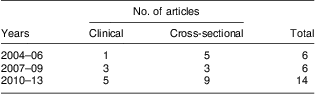
Our search of the academic literature found a total of twenty-six articles investigating relationships between intuitive eating and health indicators: seventeen cross-sectional surveys and nine clinical studies, eight of which are RCT and four of which evaluated a Health at Every Size programme. Of the seventeen survey articles, six were authored or co-authored by Tylka. The number of articles on this topic has increased in recent years (see Table 2).
Table 2 Number of publications about intuitive eating by year
The cross-sectional survey studies indicate that intuitive eating is negatively associated with BMI, positively associated with various psychological health indicators, and possibly positively associated with improved dietary intake and/or healthy eating behaviours, but not associated with higher levels of physical activity. From the clinical studies, we conclude that the implementation of intuitive eating does not result in significant weight loss but may aid in weight maintenance, particularly over the long term, and in improved psychological health. It is unclear whether intuitive eating results in improved physical health indicators other than weight, and it appears unrelated to increases in physical activity.
Gaps/future research
There is a dearth of research including a broad mix of respondents/participants such that results can be generalised to the larger population. Most of the cross-sectional studies use convenience samples of university students; most of the clinical studies involve Caucasian women. Future cross-sectional studies should include both men and women and a wider range of ages, occupations and socio-economic status, and, ideally, random sampling. Some work has already been undertaken to validate Tylka's Intuitive Eating Scale with groups other than university women, including older women( Reference Augustus-Horvath and Tylka 22 ), university men( Reference Kroon Van Diest and Tylka 14 ) and early adolescents( Reference Dockendorff, Petrie and Greenleaf 33 ). In addition, longitudinal studies would allow investigation of change over time in eating behaviours and health indicators. Intuitive eating surveys should also include questions that ask about ease or difficulty in eating intuitively, nutritional intake and eating behaviours, and, if possible, physical health indicators other than weight. Information regarding the process by which people eat intuitively or not is probably better gathered via qualitative research (see, for example, Leske et al.( Reference Leske, Strodl and Hou 42 )). Such research could contribute to our understanding of how and why people eat, including whether or how people eat in accordance with the principles of intuitive eating. Although Caucasian women may be easiest to recruit for both surveys and clinical studies, obesity and obesity-related health conditions are at least as much a problem among men and non-Caucasians( Reference Flegal, Carroll and Ogden 43 ), who may respond differently to IE programmes or have different outcomes. Clinical studies should be conducted as RCT whenever possible in order to strengthen conclusions regarding causality.
Given the stronger associations seen between IE programmes and health outcomes at 2 years post-intervention as compared with 1 year or sooner, future clinical trials should include longer follow-up periods to see whether this trajectory continues. Such an approach would provide a useful comparison with some of the traditional dieting studies, which have generally found that although participants lose weight in the short term, they gain back all or more of this weight in the longer term. In addition, all clinical studies should include a control or non-treatment group for comparison and participants should be randomly assigned to groups.
Also important would be data gathered on participant adherence to intuitive eating. Such data would not only provide valuable information regarding the ease or difficulty with which people can shift their eating behaviour, both in the short and long term, but also provide potentially stronger evidence of the positive impacts of intuitive eating; sub-analyses could be conducted with those participants who most strongly adhered to the intuitive eating approach. Finally, although the main focus of IE programmes thus far has been to improve BMI and/or physical health indicators of people who are overweight and/or obese, the strong and consistent associations found in the extant studies between intuitive eating and psychological health suggest that such a programme may be particularly beneficial for people with mental health issues, including body image issues, depression and self-esteem.
Acknowledgements
Sources of funding: This research was funded in part by a Research Development Fund from Charles Sturt University. In addition, The Social Research Centre and headspace provided in lieu contributions of 4 h per week of N.V.D.'s time to work on this project and Market Solutions provided infrastructure support. None of these funders had any role in the design, analysis or writing of this article. Conflicts of interest: There are no conflicts of interest. Ethics approval: This study received ethics approval from the Charles Sturt Human Research Ethics Committee. Authorship: Each of the authors contributed to the conception, development and writing of the manuscript. Acknowledgements: The authors would like to acknowledge the assistance of their Research Assistant, John Hicks, who conducted the initial literature search for the review. They would also like to thank The Social Research Centre for conducting the focus groups and computer-assisted telephone interview survey at cost.



