


Introduction
Setting aside priority areas for conservation is viewed as a crucial strategy in securing dwindling biodiversity (Rodrigues et al., Reference Rodrigues, Akcakaya, Andelman, Bakarr, Boitani and Brooks2004; Geldmann et al., Reference Geldmann, Barnes, Coad, Craigie, Hockings and Burgess2013). However, the establishment and maintenance of protected areas is controversial. Although many people regard protected areas as an essential conservation strategy, others perceive them as a threat to their livelihoods (Brockington & Wilkie, Reference Brockington and Wilkie2015).
The establishment and maintenance of protected areas usually involves restricting access to essential resources, evicting communities living within the new boundaries and modifying traditional land use rights (Wilkie et al., Reference Wilkie, Redford and McShane2010; Cobbinah et al., Reference Cobbinah, Black and Thwaites2015). In developing countries areas demarcated for protection are usually surrounded by people who are generally impoverished and whose livelihoods depend on such areas (King, Reference King2010). Restricting access to natural resources can make it difficult for these people to meet their basic livelihood needs (Amoah & Wiafe, Reference Amoah and Wiafe2012; Cobbinah et al., Reference Cobbinah, Black and Thwaites2015). This does not inspire collaboration for conservation but instead breeds resentment and apathy (King, Reference King2010; Amoah & Wiafe, Reference Amoah and Wiafe2012).
Not only does the establishment of protected areas preclude people from resource acquisition, it can sometimes bring untold hardships (Mfunda, Reference Mfunda, Gereta and Røskaft2010; Masud et al., Reference Masud, Kari, Yahaya and Al-Amin2014). Local communities may be forced to bear significant losses (e.g. raided crops, depredation of livestock, damage to other property) associated with the management of these areas (Kideghesho & Mtoni, Reference Kideghesho and Mtoni2008; Karanth & Nepal, Reference Karanth and Nepal2012; Vedeld et al., Reference Vedeld, Jumane, Wapalila and Songorwa2012; Cobbinah, Reference Cobbinah2015). Restricted resource access coupled with crop damage often leads to negative attitudes (Wang et al., Reference Wang, Lassoie and Curtis2006).
Local communities are often excluded from the management of conservation areas, and this exclusion is believed to be a source of conflict (Lewis, Reference Lewis1996). Communities who do not feel they are part of the conservation effort but have to bear the costs of conservation are understandably unsupportive (Gillingham & Lee, Reference Gillingham and Lee2003). However, when communities are actively involved they tend to exhibit positive attitudes (Infield & Namara, Reference Infield and Namara2001), which correlate with conservation success in protected areas (Struhsaker et al., Reference Struhsaker, Struhsaker and Siex2005).
A prerequisite for effective management of protected areas is the inclusion of local communities (Nyahongo, Reference Nyahongo, Gereta and Røskaft2010). Moreover, effective management also calls for an understanding of people's attitudes and the underlying factors that form these attitudes (Allendorf et al., Reference Allendorf, Swe, Oo, Htut, Aung and Aung2006, Reference Allendorf, Aung and Songer2012; Sarker & Røskaft, Reference Sarker and Røskaft2011). Understanding attitudes towards conservation and incorporating these into management interventions could further improve attitudes, park–people relationships and conservation in general (Allendorf et al., Reference Allendorf, Aung and Songer2012). We assessed the attitudes of fringe communities towards protected areas in Ghana, using the country's two largest National Parks, Mole and Digya, as case studies. Factors affecting peoples’ attitudes were assessed and compared across the two protected areas to identify similarities and differences.
People's attitudes towards protected areas are largely influenced by the perceived costs and benefits of these areas (Allendorf et al., Reference Allendorf, Swe, Oo, Htut, Aung and Aung2006; Tessema et al., Reference Tessema, Lilieholm, Ashenafi and Leader-Williams2010). Attitudes tend to be positive when people benefit from a protected area (Infield & Namara, Reference Infield and Namara2001; Mehta & Heinen, Reference Mehta and Heinen2001; Scanlon & Kull, Reference Scanlon and Kull2009; Cobbinah, Reference Cobbinah2015). Conversely, if protected areas threaten the livelihoods of the surrounding communities (e.g. if crops are raided by wildlife from the protected area) their attitudes towards the protected area are usually negative (Baral & Heinen, Reference Baral and Heinen2007; Kideghesho et al., Reference Kideghesho, Røskaft and Kaltenborn2007; Manyama et al., Reference Manyama, Nyahongo and Røskaft2014).
Against this backdrop we hypothesized that households benefiting from a protected area would have more positive attitudes towards the protected area (H1). Likewise, considering the potential losses incurred by local people, we hypothesized that households overwhelmed by these losses would have less favourable attitudes towards the protected area (H2). There is evidence that livelihood programmes can have a positive effect on people's attitudes and behaviours, making them more amenable to conservation (Abbot et al., Reference Abbot, Thomas, Gardner, Neba and Khen2001). We therefore hypothesized that households that are aware of or have participated in livelihood support projects would have favourable attitudes towards the protected area (H3). We also assessed the effects of socioeconomic and demographic variables on attitudes, as they have been found to influence conservation attitudes (Infield & Namara, Reference Infield and Namara2001; Holmes, Reference Holmes2003; Wang et al., Reference Wang, Lassoie and Curtis2006; Karanth & Nepal, Reference Karanth and Nepal2012; Sarker & Røskaft, Reference Sarker and Røskaft2011; Masud & Kari, Reference Masud and Kari2015).
Literature pertaining to local community attitudes towards protected areas in Ghana is scant. This study is among the first to assess community attitudes towards Mole and Digya National Parks. The findings will broaden our understanding of the factors that influence the attitudes of local residents and could also serve as a baseline for evaluating conservation attitudes in relation to the implementation of new policies.
Study areas
Ghana has an extensive network of protected areas, spanning a variety of ecosystems, and conservation dates back to the colonial era. The first wildlife policy for the country was adopted in 1974, recognizing the importance of protected areas as a conservation strategy. In 1994 this policy was revised to emphasize the role of communities in wildlife conservation (Ntiamoa-Baidu et al., Reference Ntiamoa-Baidu, Owusu, Daramani, Nuoh, Fishpool and Evans2001).
Mole National Park (4,800 km2), in northern Ghana (Fig. 1), is the country's largest National Park. Although protected since 1958, it was not designated a National Park until 1971 (Ntiamoa-Baidu et al., Reference Ntiamoa-Baidu, Owusu, Daramani, Nuoh, Fishpool and Evans2001). The habitat is Guinea savannah woodland and the mean annual rainfall is c. 1,000 mm (Jachmann, Reference Jachmann2008; Burton et al., Reference Burton, Buedi, Balangtaa, Kpelle, Sam and Brashares2011). Over 90, 300 and 740 species of mammals, birds and plants, respectively, are protected within the Park (Forestry Commission of Ghana). There are c. 33 villages in the vicinity (IUCN-PAPACO, 2011b), and these communities are largely engaged in subsistence farming that is seasonal and dependent on rainfall.
Locations of communities around (a) Mole and (b) Digya National Parks, Ghana, where interview surveys were conducted to assess local attitudes towards the protected areas.
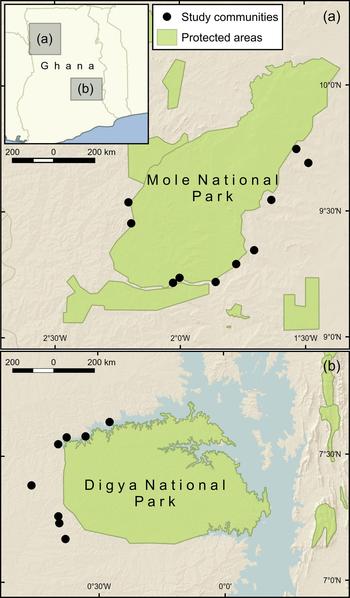
Digya National Park (3,480 km2), in central Ghana, is the country's second largest National Park (Fig. 1), spanning the Brong Ahafo, and Eastern and Ashanti regions. It is bordered to the east by Lake Volta, to the north by the Sene River and to the south by the Obosum River. Vegetation is largely Guinea savannah woodland and transitional semi-deciduous forest. Mean reported annual rainfall is 1,200–1,300 mm. The area was first established as a game reserve in 1909 and later expanded and gazetted as a National Park in 1971 (Twumasi et al., Reference Twumasi, Coleman and Manu2005). The Park is inhabited by elephants Loxodonta africana, ungulates, manatees Trichechus senegalensis, and primate species, among others (Twumasi et al., Reference Twumasi, Coleman and Manu2005; Jachmann, Reference Jachmann2008). It is fringed by indigenous and migrant communities that are engaged in farming and fishing. However, there are conflicts between park officials and local communities over where people are permitted to fish.
These two protected areas are important for conservation in Ghana. Tourism is well established at Mole National Park but not at Digya. Compared to Mole, communities around Digya play virtually no role in the management of the protected area. Furthermore, communities around Mole have benefited more from activities aimed at enhancing livelihoods (IUCN-PAPACO, 2011a,b). Poverty is reported to be the root cause of conflicts between fringe communities and Digya National Park (Ayivor et al., Reference Ayivor, Gordon and Ntiamoa-Baidu2013). We are of the opinion that the same is true for communities bordering Mole National Park.
Methods
Data collection
Household interviews were conducted using a semi-structured questionnaire. We recorded demographic details of the respondents, the perceived costs and benefits of the protected area, and attitudes towards the protected area. We used 12 statements to assess attitudes (Table 1), using a 5-point Likert scale ranging from strongly disagree to strongly agree (Likert, Reference Likert1932). Attitude is defined as the tendency to act in a particular manner when confronted with a particular object or situation (Oppenheim, Reference Oppenheim1992), based on evaluations of or opinions about the object or situation (Petty et al., Reference Petty, Wegener and Fabrigar1997).
Mean scores of attitude statements by local people in communities around Mole and Digya National Parks, Ghana (Fig. 1). Negative statements are in bold; their scores were reversed so that high scores indicate more positive attitudes.
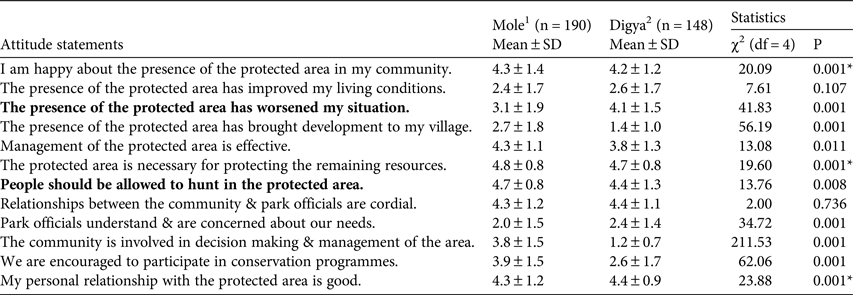
*Statistically significant, but difference between mean scores is small.
1 Cronbach's α = 0.77
2 Cronbach's α = 0.70
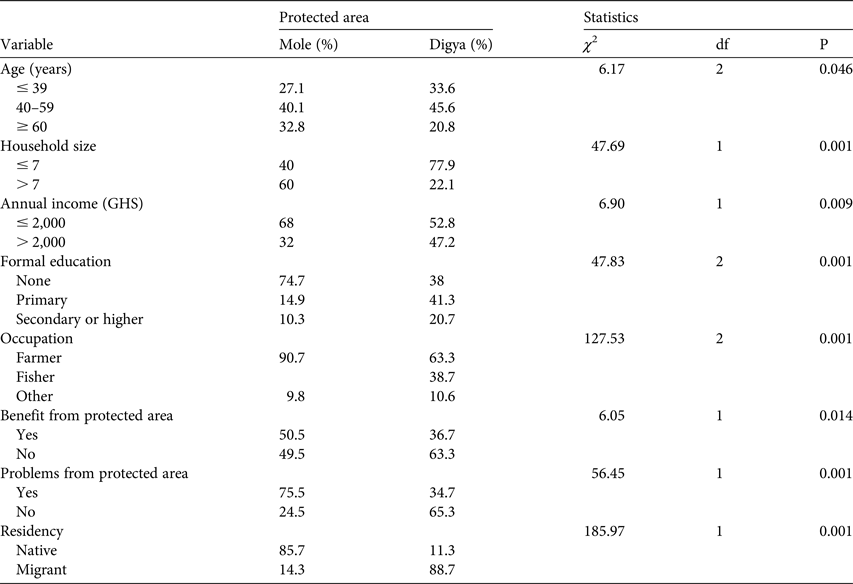
Interviews were conducted with a total of 346 randomly selected households during June–August 2015; 196 of the households were from 10 communities around Mole National Park and 150 were from eight communities around Digya National Park. Communities were selected based on discussions with local officials, and are representative of those around the protected areas in terms of distribution of costs and benefits, and local economies. Heads of households were interviewed face-to-face. In their absence, another member of the household over 18 years of age (mostly housewives) was interviewed. In > 90% of households surveyed the head of the household was male. This resulted in a disproportionately large number of male interviewees. However, most of the interviews were conducted in the presence of female members of the household, who were allowed to contribute. Interviews were conducted mainly in local languages, with the aid of translators. Table 2 presents descriptive statistics of respondents’ socio-economic status and demographic characteristics at the two protected areas. Differences between the two areas were explored using χ2 tests.
Characteristics of respondents from communities around Mole and Digya National Parks, Ghana (Fig. 1), with results of χ2 tests showing differences between the two areas.
Data analyses
Analyses were performed using SPSS v. 23 (IBM, Armonk, USA). To provide a general measure of attitude we summed scores of individual statements to produce a composite attitude score. Prior to the summation, scores of negative statements were reversed to ensure that scoring on all statements was uniform. Thus, high scores on negative statements connote positive attitudes. Scores above the halfway point on the continuum of computed scores (12–60) were considered to be indicators of positive attitudes (Oppenheim, Reference Oppenheim1992). With this composite attitude scale an independent-sample t-test was conducted to compare the mean attitude scores of households from the two protected areas to determine whether there were significant differences in attitudes.
We performed multiple regression analyses on the attitude scale for both protected areas to assess how demographic variables, as well as costs and benefits, affect attitudes towards the protected areas. Socio-demographic variables included in the regression model were chosen based on their significance in influencing attitudes, as reported in similar studies. These variables were age (Karanth et al., Reference Karanth, Kramer, Qian and Christensen2008; Masud & Kari, Reference Masud and Kari2015), years of formal education (Tessema et al., Reference Tessema, Lilieholm, Ashenafi and Leader-Williams2010; Manyama et al., Reference Manyama, Nyahongo and Røskaft2014), occupation (Khatun et al., Reference Khatun, Ahsan and Røskaft2012; Masud & Kari, Reference Masud and Kari2015), household size (Tessema et al., Reference Tessema, Lilieholm, Ashenafi and Leader-Williams2010), annual household income (Sarker & Røskaft, Reference Sarker and Røskaft2011; Lepetu & Garekae, Reference Lepetu and Garekae2015), residency status (Holmes, Reference Holmes2003), alternate form of employment (Nyahongo, Reference Nyahongo, Gereta and Røskaft2010; Lepetu & Garekae, Reference Lepetu and Garekae2015), and awareness of or participation in livelihood support projects (Mehta & Heinen, Reference Mehta and Heinen2001; Kideghesho et al., Reference Kideghesho, Røskaft and Kaltenborn2007). We used annual household income as a measure of poverty. Households were categorized as either poor (≤ GHS 2,000) or not poor (≥ GHS 2,000). Preliminary analyses were carried out to ensure there were no violations in the assumptions of the multiple regression (Pallant, Reference Pallant2005; Tabachnick & Fidell, Reference Tabachnick and Fidell2013). This led to the logarithmic transformation of household size and annual income. Years of formal education deviated slightly from normal. However, we found no transformation that produced a nearly normal distribution without the loss of values, and therefore we used the untransformed data.
Results
Household characteristics
All interviewees were aware of the existence of a protected area within their locality. Of the 346 interviewees, 334 (96.5%) were male. The mean age of respondents was 48.8 ± SD 15.6 years (median = 47.0, range 20–101). Approximately 59% of respondents had received no formal education, 26% had attained some primary education and 15% had attained secondary education or higher. The majority of respondents (c. 79%) were from farming households; 17% were fishers; and 10% were engaged in other forms of employment, including employment in the formal sector, petty trading and charcoal burning (some respondents reported more than one occupation). The mean size of participating households across the study areas was 8.3 ± SD 5.6 people.
Approximately 45% of respondents stated that they benefited from the protected areas, with benefits including access to non-timber forest products (88.6%), water (26.6%) and financial incentives (14.9%). Conversely, c. 58% of respondents stated that they faced problems because of the protected areas. Crop raiding was the most cited problem (87% of responses), followed by restricted access, conflicts with officials, and depredation of livestock, which summed to 18.5% of cases. As each respondent was allowed to give multiple responses, these percentages do not sum to 100%. Respondents’ characteristics in each of the two protected areas are in Table 2.
Attitudes towards protected areas
The attitude scale reliability index was 0.73 for both protected areas (Table 1). Interviewed households had a mean attitude score of 42.60 ± SE 0.47, indicating mild positive attitudes towards the protected areas. Households around Mole National Park had a mean score of 44.56 ± SE 0.66, and households around Digya National Park had a mean score of 40.07 ± SE 0.61. Attitude scores were statistically different between the two areas (t (335) = 5.02, P < 0.001). Although this analysis inferred mildly positive attitudes towards the protected areas, not all households shared the same views. Approximately 24% (82 households) expressed negative attitudes.
Factors influencing attitudes towards protected areas
For households around Mole National Park, 22.7% of the variation in attitudes was explained by the regression model (F (10,153) = 4.48, P < 0.001). Benefits (P = 0.002), problems (P = 0.017) and household size (P = 0.029) significantly affected attitudes. Households that held positive attitudes were likely to be small in size and to have benefited from the protected area and encountered few if any problems with the protected area (Table 3).
Results of multiple regression analyses showing the effects of predictor variables on attitudes around the two protected areas (some households were excluded because of incomplete responses to the questionnaire). For analysis across the two protected areas, the areas themselves were included as predictor variables.
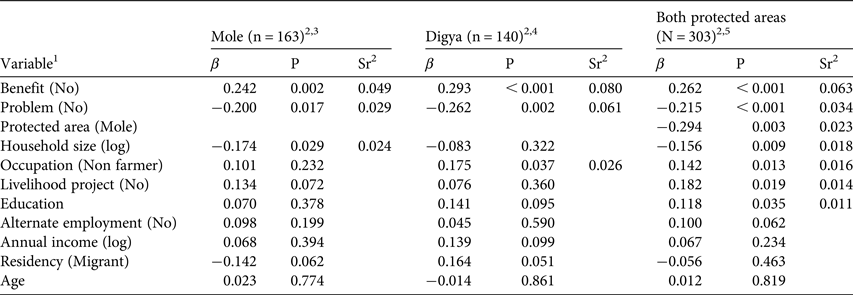
1The direction of predictor variables, or the type of transformation in the case of Household size and Annual income, are indicated in parentheses.
2β, standardized regression coefficient; P, statistical significance; Sr2, unique contribution of variable to total variance.
3R = 0.476; R 2 = 0.227; Adjusted R 2 = 0.176
4R = 0.478; R 2 = 0.228; Adjusted R 2 = 0.169
5R = 0.502; R 2 = 0.252; Adjusted R 2 = 0.223
For households around Digya National Park, the regression model helped explain c. 23% of the variance in attitudes (F (10,130) = 3.85, P < 0.001). Households expressing positive attitudes were likely to have benefited from the protected area (P < 0.001) and encountered no problems with the protected area (P = 0.002). They were also likely to be farmers (P = 0.037; Table 3).
For both protected areas, problems, benefits, protected area, household size, occupation, awareness of livelihood support projects and education were significant in influencing attitudes (P < 0.05). Together, these variables explained 25.2% of the variation in attitudes (F (11,292) = 8.95, P < 0.001). Despite findings elsewhere, we found no evidence that income, age, residency status or alternative means of employment significantly affected attitudes (Table 3).
Discussion
Attitudes towards protected areas
Generally, local communities were mildly positive towards the protected areas and conservation in general. This may be attributable to their understanding that protected areas are necessary for the protection of resources. However, although communities regarded the protected areas as essential, they neither improved their living conditions markedly nor brought any major development to the communities (Table 1). The perceived lack of understanding and concern among park officials for the needs of the communities could also explain why attitudes were only marginally positive.
Although household attitudes were mildly positive across the two protected areas, residents around Mole National Park were more positive. We believe this disparity may be explained by the level of engagement of the communities in decision making and management of the protected areas (Table 1). It may also be attributable to unresolved conflicts between protected area management authorities and fringe communities around Digya National Park (Ayivor et al., Reference Ayivor, Gordon and Ntiamoa-Baidu2013), which make it difficult to foster harmonious park–people relationships (Infield & Namara, Reference Infield and Namara2001). Protected areas themselves (e.g. local conditions, management interventions) are vital predictors of attitudes (Karanth & Nepal, Reference Karanth and Nepal2012; Allendorf et al., Reference Allendorf, Aung and Songer2012), as supported by our regression results. Our findings suggest that an exclusive and militaristic approach to protected area management, such as that used in Digya, may not augur well for conservation in general.
Factors influencing attitudes towards protected areas
This study was based on the assumption that attitudes are largely influenced by perceived costs and benefits, and regression analyses for both National Parks emphasized the importance of perceived costs and benefits in influencing attitudes towards conservation (Table 3). This finding is congruent with similar studies conducted elsewhere (Gillingham & Lee, Reference Gillingham and Lee1999; Holmes, Reference Holmes2003; Kideghesho et al., Reference Kideghesho, Røskaft and Kaltenborn2007; Tessema et al., Reference Tessema, Lilieholm, Ashenafi and Leader-Williams2010). The results affirm that receiving benefits elicits favourable attitudes (H1) and therefore makes people more acquiescent to the concept of protected areas. It also gives credence to the hypothesis that households experiencing losses have less favourable attitudes (H2; Table 3).
It is reported that the achievement of positive conservation outcomes is more likely when local communities receive socioeconomic benefits from conservation initiatives (Oldekop et al., Reference Oldekop, Holmes, Harris and Evans2016). Considering this, conservation policies need to ensure that communities receive tangible benefits from protected areas if they are to wholly or partly support conservation. These benefits must outweigh the perceived costs (Scanlon & Kull, Reference Scanlon and Kull2009) and address the needs of the people (Kideghesho & Mtoni, Reference Kideghesho and Mtoni2008).
Regarding H2, Kideghesho et al. (Reference Kideghesho, Røskaft and Kaltenborn2007) conversely reported that people experiencing minimal conflicts or losses were more positive than their counterparts. The majority of households around Mole National Park reported more problems than households around Digya National Park (Table 2); the disparity between losses and attitudes in this case may be explained by the fact that benefits received by Mole residents may have offset the costs.
Problems and benefits were the most significant variables influencing attitudes in both of the study areas. Household size significantly influenced attitudes in Mole but not in Digya. Considering the two areas as a unit in an attempt to identify a general pattern as to which factors were likely to influence attitudes, household size correlated negatively with attitudes. A similar finding was reported from Zimbabwe (Mutanga et al., Reference Mutanga, Vengesayi, Gandiwa and Muboko2015). Larger households tend to require more resources from protected areas and not to perceive conservation as an optimal land-use option, which probably explains their apathy.
The occupation of respondents significantly influenced attitudes around Digya but not around Mole, where non-farmers appeared to be less favourable towards the protected area. A large proportion of non-farmers are fishers and they are in constant conflict with park officials as a result of restrictions on fishery resource acquisition. Digya National Park is largely surrounded by water, with boundaries extending into the water, and most fishers knowingly or unknowingly drift into the Park. Punitive sanctions are applied, which creates a sense of antagonism and resentment towards Park officials and towards the Park in general. Similar findings were reported by Ayivor et al. (Reference Ayivor, Gordon and Ntiamoa-Baidu2013). Such altercations and the negative attitudes they engender could also explain the variation in attitudes between Mole and Digya National Parks.
On the whole, households that were aware of or had participated in livelihood projects exhibited positive attitudes (Table 3). This finding is in accordance with our hypothesis H3. People can lose their livelihoods when conservation areas are established and this can incite negative sentiments. Conversely, when livelihoods are secured through conservation, attitudes are often positive. This underscores the need to make more livelihood-relevant projects and schemes available to local communities. However, the establishment of such programmes must include inputs from local people, as projects have reportedly been abandoned because local inputs were not sought or adequately factored in (Cobbinah et al., Reference Cobbinah, Black and Thwaites2015).
The other factor affecting community attitudes in the study areas was education. Other studies (Kideghesho et al., Reference Kideghesho, Røskaft and Kaltenborn2007; Manyama et al., Reference Manyama, Nyahongo and Røskaft2014; Masud & Kari, Reference Masud and Kari2015; Mutanga et al., Reference Mutanga, Vengesayi, Gandiwa and Muboko2015) also reported a correlation between the level of education and conservation attitudes. Better-educated people may be better able to understand the role of protected areas in conservation, as well as the environmental services they provide (Tessema et al., Reference Tessema, Lilieholm, Ashenafi and Leader-Williams2010; Allendorf et al., Reference Allendorf, Aung and Songer2012). There is a need for more conservation-related education in communities bordering conservation areas.
This study had some limitations. Firstly, regardless of their status as important conservation areas, Mole and Digya National Parks are not representative of all conservation areas in Ghana, and therefore extrapolation of these findings to other areas should be undertaken with caution. Secondly, the components and variables from which attitudes were inferred are not all-inclusive. Thirdly, the differences in attitude scores between the two areas could be a result of sampling anomalies. The presence of fishers may have lowered the overall attitude score of residents around Digya National Park.
To conclude, this study examined attitudes of surrounding communities towards two protected areas in Ghana. The results depict mildly positive attitudes across the conservation areas, with residents around Mole more positive than those around Digya. Attitudes were largely dependent on losses and benefits. On this basis we subscribe to the notion that most of the prevailing conflicts between local communities and protected areas can be resolved if benefits are extended to local people and/or if negative impacts associated with living close to protected areas are mitigated (Lewis, Reference Lewis1996). We also found that awareness of or participation in livelihood support projects had positive effects on attitudes. Furthermore, prevailing local conditions in each of the protected areas significantly influenced attitudes.
Achieving conservation goals while meeting the resource and livelihood needs of local communities is challenging but not impossible. Based on our findings we recommend the following to improve the relationships between the authorities of these two parks in Ghana and the neighbouring communities: (1) management could capitalize on their cordial relationship with local communities (Table 1) and actively engage them in conservation, and (2) policies and projects that have a direct impact on people's livelihoods, and park–people relations, could be given prime consideration. If these recommendations could be incorporated into management programmes, a future reassessment of community attitudes could be undertaken to ascertain whether the desired attitudinal changes had occurred. A longitudinal study taking into consideration other factors that are likely to influence peoples’ attitudes towards conservation would also be useful. To facilitate these matters, our findings and recommendations will be passed to the relevant authorities of the two protected areas.
Acknowledgements
We thank Newton Seidu and Richard Asare of Mole National Park and Emmanuel Nimo and Mohammed Issifu of Digya National Park for their help during data collection, and all of the respondents who took time to provide us with information. We also acknowledge the constructive comments provided by Martin Fisher and two anonymous reviewers.
Author contributions
SD and ER designed the study. SD collected and analysed the data, and wrote the article with support from ER.
Biographical sketches
Selase Dewu is a biologist interested in the conservation and management of natural resources. Eivin Røskaft specializes in evolutionary biology and conservation and is interested in understanding the exploitation of natural resources in light of evolution and human behaviour. He is also interested in the coevolution of avian brood parasites and their hosts.



