

9.1 Introduction
This chapter explores connections between the intellectual work done by Hugh Hamshaw Thomas (1885–1962) in two separate domains: first, as an academic palaeobotanist; and second, as a military intelligence officer during the First and Second World Wars. In both domains, Thomas relied on the use of fragmentary visual evidence (and photography in particular) to attempt to understand landscapes. In his palaeontological work he was looking at fossil plants and past environments; in his military work he was piecing together landscapes of enemy activity. Rather than considering the visual fragments as elements in a process of ‘mapping’ those landscapes, I emphasize the way in which, in both domains, they were part of narratives.
In what follows, I review the wide range of material and intellectual resources drawn upon by Thomas to undertake this narrative work under the umbrella of what I call a ‘narrative practice’. I argue that this ‘narrative practice’ included particular techniques for handling and analysing visual material, the accretion of visual evidence into archival architectures and the inculcation of epistemic virtues, with and alongside the construction of conjectural accounts about historical processes. In other words, the nature and the usefulness of the archive was predicated on narrative techniques and outcomes. An exploration of the figurative terms used by Thomas’s peers to characterize the kind of work he was engaged in allows us to see ‘narrative practice’ as a unified whole.
Thomas pursued his career in palaeobotany almost exclusively at the University of Cambridge, where he was Fellow at Downing College, and later university lecturer in Botany. He was awarded the prestigious Darwin Centenary medal in 1958 (Reference HarrisHarris 1963). That academic career was punctuated by war and work with aerial photointerpretation. In the First World War, he was Photographic Officer for the 5th Wing of the Royal Flying Corps. It has been claimed that the success of the British campaign in Palestine and Egypt (in which T. E. Lawrence famously also played a part) was to a great extent attributable to Thomas’s contribution. In the Second World War, Thomas was responsible for producing the Manual of Photointerpretation used by the Allied Central Interpretation Unit, and, as Chief of Third Phase Interpretation, initiated the allied investigation into rocket development at Peenemunde (Reference SmithSmith 1985: 189).
Both of Thomas’s domains of work relied heavily on visual records. Figure 9.1 is an image from a First World War manual on the use of aerial photography: ‘The Interpretation of Aeroplane Photographs in Mesopotamia’.Footnote 1 It is one of a series of sample images that offered military officers an introduction to the different physical and social features of the terrain as viewed from the sky. ‘The study of photographs’, the manual explains, ‘is only of value in so far as the results may be turned to practical account, either in the way of assisting tactical operations, or of obtaining information regarding the Enemy’s intentions and dispositions’.Footnote 2 In other words, the photographs were to be used to generate narrative conjectures about what the enemy would do next.

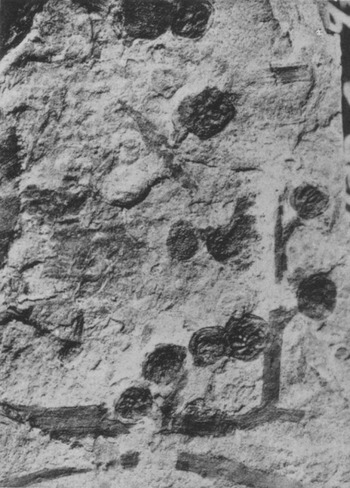
Figure 9.2 is visual evidence from Thomas’s most important paper, published in 1925. It depicts a fossil that he had collected in Yorkshire. In the paper in which the figure was published, Thomas was presenting a new fossil species that he had named ‘the Caytoniales’. Thomas was proposing that the Caytoniales were an entirely new order of plants that corrected a ‘missing’ link between ferns and flowering plants. He was offering an important narrative conjecture about the evolution of plant life.
Photograph of a fossil collected by Thomas in Yorkshire
‘Part of an infructescence showing its attachment to a larger branch, also isolated fruits in which the outlines of seeds can be made out. No perianth scars can be found on the axis or on the branch’ (original caption).
Each of these forms of visual evidence was being woven into narrative conjectures in a similar way. To explore the connections between his use of images in each context I make two propositions. First, that we should frame Figures 9.1 and 9.2 as constitutive of a ‘narrative practice’ that Thomas deployed in each domain.Footnote 3 Second, that we should understand that practice as a hybrid association of multiple forms of activity.
Historical studies of the different activities that I consider to lie within Thomas’s narrative practice have often been pursued in separate fields. From the historical epistemology of early twentieth-century photography we know that the status of each of these photographic reproductions as evidence was, as John Tagg puts it, a ‘complex historical outcome […] [of] certain institutional practices and historical relations’ (Reference TaggTagg 1988: 4–5). Both the aerial photograph and the depicted fossil fell within institutional practices and historical relations that could be described as ‘a colonial habitus’ (Reference PinneyPinney 2008). Both items were implicated within British efforts to know in order to dominate, motivations that through the nineteenth century had prioritized data collection on a massive scale in attempts to map physical, biological and social processes of increasing scale and complexity (Reference DriverDriver 2000; Reference CoenCoen 2018). That effort included innovation in modes of producing, refining, labelling and categorizing visual evidence within archives (Reference RudwickRudwick 1976; Reference KelseyKelsey 2007; Reference TuckerTucker 2013). This scholarship provides us with a strong basis from which to consider how the role of visual evidence in each of Thomas’s domains was being developed and negotiated.
We can also draw on a rich and flourishing scholarship on the relationship between evidence and causal explanations in the historical sciences, particularly biology, palaeontology and archaeology. A scholarly resurgence of interest in this field has offered several further important strategies for thinking about Thomas’s narrative practice, particularly with respect to visual evidential materials, many of which are discussed in this volume.Footnote 4 Such scholarship has emphasized that narrating the past can entail a variety of epistemic techniques for drawing together and assessing evidential elements (Reference Richards, Nitecki and NiteckiRichards 1992; Reference TurnerTurner 2000; Reference MorganMorgan 2017). Scholars, in particular Alison Wylie, have shown that these approaches require certain epistemic skills that might include opportunism, flexibility, a respect for ambiguity and epistemic humility (Reference Chapman and WylieChapman and Wylie 2016), and that those modes offer different scopes for developing and extending historical claims (Reference ClelandCleland 2011). Adrian Currie’s Rock, Bone, and Ruin (Reference Currie2018) situates many of these alongside each other.
This chapter connects and extends these two largely separate discussions in several ways. First, it situates narrative as the central and unifying principle of an epistemic practice that encompassed multiple simultaneous activities, in which neither evidence collection nor explanatory accounts were prior. Second, this chapter contextualizes that practice within early twentieth-century figures of speech: working ‘like Sherlock Holmes’, ‘reading the book of nature’, and thought as being ‘like a river’. The interplay of these figurative terms allows us to characterize the unifying narrative practice as reticulate (networked), multi-scalar and dynamic; qualities that have resonance with more recent descriptions of explanatory practices in the historical sciences. This characterization is reinforced when we follow the translation of Thomas’s narrative practice in palaeobotany into the arena of military intelligence.
9.2 A Narrative Practice? Finding Traces?
9.2.1 Fossils
To begin, we need to ask how the items in Figures 9.1 and 9.2 were being used as evidence. The dark spots on the surface of the rock fragment depicted in Figure 9.2 were identified by Thomas in his Reference 205Thomas1925 paper as seeds from a newly identified prehistoric plant species. However, at the moment he was formulating that proposition, the function of the plant organ he had identified, the nature of the organism it came from and the nature of the prehistoric environment which hosted the plant were all unknown. For Thomas to arrive at his conclusion, several different and interlinked questions need to be resolved simultaneously.
How might I recognize or define a prehistoric plant organ?
How is this organ related, developmentally, to others, such as leaves, in an individual plant? Does its tissue share common properties with other organs?
What is the role of this structure in the development of a species or evolutionary branch? Is this an early flowering plant (angiosperm)?
What does the presence of a fossil with these characteristics tell us about the environment? For example, how was pollen transmitted?
What inadvertent effects might have been produced in the preservation and preparation of the fossil that falsely suggest botanical features?
In Reference 205ThomasThomas’s (1925) paper we can follow how he asked and answered these parallel questions of the fossil (Figure 9.2). He observes to the reader that some of the seed-membranes were not cleanly extracted and therefore appear ‘broken up’ (Reference 205ThomasThomas 1925: 359). They could nonetheless be interpreted. The proto carpel and fruit-bearing structures appeared to share some characteristics with their equivalents in modern flowering plants: they had a foliar-type tissue, i.e., shared some qualities with leaf tissue (Reference 205ThomasThomas 1925: 306). They didn’t have the scars that would indicate they were originally part of hermaphrodite flowers (Reference 205ThomasThomas 1925: 315). Crucially, however, for Thomas, the structure depicted in Figure 9.2 seemed to function more like carpel than the reproductive organs of a seed-bearing fern. The important difference being whether the ovule was open to the air (ferns) or closed with a stigma and pollen-tube leading to it (flowering plants) (Reference 205ThomasThomas 1925: 325). Thomas made the assertion that he could identify a proto stigma.
In Thomas’s account, all these questions are deeply interrelated. For example, in recounting the difficulty that he had in extracting the remains of seeds and seed membranes from the rock matrix Thomas offers some insight into the potential for representational artefacts to weaken his interpretation – that the effects of his process might misguide our ‘reading’. However, that account also informed his suggestion that the seeds were stuck in a fleshy fruit, adding weight to an account of the plant as a proto angiosperm (flowering plant) rather than a seed-bearing fern. We see how interconnected questions, therefore produced interconnected narratives (of the process of extraction and of the function of the plant organ) from which Thomas arrived at an overarching narrative in which the fossil represented a transitional stage between a fern and the first flowering plants.Footnote 5
9.2.2 Aerial Photographs
In considering how the aerial photograph in Figure 9.1 was interpreted, the guide from which it was drawn identifies a similar set of interconnected questions. The overarching question addressed to the image in Figure 9.1 would be: what can we understand about enemy strategy from this landscape feature? Here, as with the fossil fragments, there was a scarcity of material to interpret, and multiple unknowns. The network of questions would include:
How can a particular track in use by the enemy be identified?
What is the role of the track in relation to other elements in the image? (How is it networked with other resources?)
What is the role of this track in the context of an immediate goal of the enemy?
What does the nature of the track tell us about the broader capabilities and intentions of the enemy?
The section in the guide on interpreting tracks is particularly revealing.
They disclose dumps; battery positions; headquarters; wire which is otherwise invisible, and gaps through it; patrol paths; observation posts; in villages, those houses which are important centres; advanced listening posts […] the evidence of numerous tracks and shortcuts leading across irrigated and cultivated fields may be taken to denote the presence in the neighbourhood of bodies of troops. The local population would not make sufficient use of these foot-paths to cause destruction to growing crops.Footnote 6
As with the fossil evidence, a set of interconnected questions at different scales were all being developed as the basis for narratives that functioned in dialogue with each other. We see much more than a mapping of landscape features. Each question tested an emergent overarching narrative that would be a conjectural account of the enemy’s activities. Importantly, however, some of these questions were not all posed or answered once the photograph was in hand. Some were determined in advance, some emerged as by-products of the processing or preparation of the photographs (gridding, annotating), while others emerged from direct analysis of a single image. To understand the resulting narratives requires expanding our field of analysis to a narrative practice that encompasses all of these stages. Figurative descriptions of this kind of work that were contemporary to Thomas offer us ways to take such a holistic approach.
9.2.3 From Questions to Narratives?
Sherlock Holmes made his first public appearance just two years after Thomas’s birth and within a short space of time, was being used as a methodological role model in a variety of contexts (see ‘New Habits of Media Use’, section 9.4.1, below).Footnote 7 Carlo Ginzburg has placed Holmes in a late nineteenth-century zeitgeist that connected the modus operandi of the consulting detective with an emergent episteme that touched art history, psychology, and medicine (Reference GinzburgGinzburg 1989). Picking up Ginzburg’s perspective, it is sensible to propose that to think ‘like Sherlock Holmes’ meant to formulate whodunnit and howdunnit narratives using a network of traces of an event. We could take, for example, an episode from Holmes’s debut in A Study in Scarlet in which he lends his attention to minute aspects of the appearance of a watch. After an examination of a series of scratches and pawnbrokers’ marks, Holmes connects them into a conjectured biography of the watch which is intertwined with a conjectural biography of its former owner.
The second trope that was applied to visual practices such as Thomas’s by his contemporaries was that of reading evidence ‘like a book’. Critical histories of the use of aerial photography in the social sciences such as Reference HauserHauser (2007) and Reference HaffnerHaffner (2013) have drawn attention to early twentieth-century use of the ‘book’ trope to describe the interpretation of aerial views. In one of Haffner’s examples, an early advocate of the value of the aerial view in human geography argued that air photographs let you ‘read the land as one reads a great open book’ (Reference HaffnerHaffner 2013: 27).Footnote 8 The study by Lorraine Daston and Peter Galison of visual epistemic authority (Reference Daston and Galison2007) has drawn attention to the use of this expression in other modes of scientific practice as indicative of authority through ‘trained judgement’.
The act of interpretation is characterized slightly differently in these two cases. Haffner suggests in The View from Above that reading a landscape process from an aerial view ‘was simply a matter of noting what had existed before versus what had appeared’ (Reference HaffnerHaffner 2013: 13). In Hauser’s account, the longer (past) human histories that are evidenced by aerial views are described as being stored below the ground, a history simply waiting to be revealed by new angles of flight and light (Reference HauserHauser 2007). Daston and Galison go somewhat further in describing what visual interpretation requires. They cite examples of introductory texts in early twentieth-century scientific atlases that exhorted their readers to consider image interpretation as the ‘skills required to read a new language using an unfamiliar alphabet and a different script’ (Reference Daston and GalisonDaston and Galison 2007: 328). A common trope for this mode of analysing of visual evidence, Daston and Galison argue, was the intuitive scanning of facial physiognomy – the rapid and possibly subconscious recognition and comparison of complex and minute differences within facial appearances. Attention to those differences could be learned.
Yet both of the above retrospective accounts using the figure of the book have flattened the role of narrative that it implies. We can reinvigorate the narrative component of the book trope if we reconnect it to Holmes tracing the contours of a human life from the incidental features of a watch. Conan Doyle’s emphasis on the unique possession of these skills in the consulting detective, encourages us to put aside the idea that the interpretation of the phenomena under scrutiny is determined by the phenomena itself (is read). Instead, we can investigate how interpretations were ‘written’ or constructed.
A third figurative expression, which sheds further light on the first two, is provided by the philosophical writing of Agnes Arber, one of Thomas’s botanist colleagues at Cambridge.Footnote 9 For our purposes, her most useful expression was one in which she compared biological thought to a river. Through this expression, Arber was rejecting the idea that thought was strictly linear and proposing that it was better imagined as a reticulum (a network) moving through three dimensions in one direction. She saw the flow of thought that would eventually produce a narrative account as including eddies and currents, and therefore, by consequence, as dynamic. In Arber’s words (drawing from yet another three-dimensional analogy), a biological explanation does not ‘grow by accretion of ready-made parts, as a building’, but rather ‘in passing from phase to phase […] suffers transformation from within’ (Reference ArberArber 1954: 69).
Bringing these three expressions together, we have: (i) the gathering of evidence to narrate a crime as offered by the figure of the consulting detective; (ii) attention to the relationship of phenomena within and across images as offered by the analogies to learning to read; (iii) the conceptualization of biographical thought as a river, encompassing data collection, analysis and the production of an explanatory narrative. All these reinforce the value of exploring a narrative practice that encompasses multiple modes of work. Understanding how a practitioner might seek to develop such a practice is best understood by returning to the context in which Thomas received his botanical training and then to the reworking of that practice in a military context.
9.3 Linking Vision and Narrative in Thomas’s Scientific Work
9.3.1 Botanical Visual Cultures
Scholars have demonstrated that training in botany and biology in the late nineteenth century had a very strong emphasis on the visual. Botanical and biological knowledge were primarily transmitted as a visual practice. Posters, chalkboard drawings and field outings were the primary access to understanding plant life in schoolchildren. However, they remained the key tools for teaching at undergraduate level, as Thomas’s own mentor, Albert Charles Seward, testified in a paper for the New Phytologist (Reference SewardSeward 1902). By the turn of the century, British botanists had become actively interested in the possibilities that were offered by photographs as a research resource. In 1901, the British Association for the Advancement of Science (BAAS), Section K (Botany), joined other BAAS groups who had begun their own systematic image collections.
Kelley Reference WilderWilder (2008) and others have identified the changing uses of photography in science in this period as a tool for both classification and measurement. Scholars have also explored how image technologies and analytical techniques were co-developed (Reference HentschelHentschel 2002; Reference KelseyKelsey 2007). Photography operated with and alongside gridding, labelling and diagramming practices that highlighted or abstracted particular aspects of a phenomenon, as well as indexing practices, which placed each image within ordered and signifying relationships to places, people, specimens and to other images. The epistemic architectures for botanical photography calibrated scientific visions of the vegetative world and formed the basis of a disciplinary visual practice (Reference HughesHughes 2016). In other words, visual record systems were set up that would allow comparisons between photographs as epistemic objects and identify particularity within individual visual records (Reference RheinbergerRheinberger 2015). They trained a botanical or palaeobotanical observer’s attention to groupings of related features within a visual record, allowed them to find new or unknown features to explore, and cultivated in them an ‘exceptionally seeing eye’ (Reference Meinig and MeinigMeinig 1979: 199).Footnote 10
There is more at work here than what has been called expert training in ‘pattern recognition’ (Reference Daston and GalisonDaston and Galison 2007: 329). The background to the publication of Figure 9.2 offers excellent insight into how several layers of material and epistemic work built the photograph into a disciplinary visual archive through reticulate narratives. The fossils that came to be known as Caytoniales were found in Cayton Bay in Yorkshire. Their geographical origin was recorded in their new names, in the archival records alongside the original specimens in the Sedgwick Museum, Cambridge, and noted in the scientific paper in which they were presented (Reference 205ThomasThomas 1925: 302). Figure 9.2 shows a rock from Cayton Bay, on the surface of which the fruits of Caytonia Sewardii are identified (magnified to 2.5 × their original size) to allow inspection of the form of the plant organs at the relevant level of visual detail. Once logged, such rocks were then subject to extensive further preparation including boiling for several weeks in specific chemicals, passing through alcohols and slicing with a microtome. This process revealed the chemical composition of different parts of the fossilized plant matter creating further sets of microscopic images at a cellular level that were identified as different plant organs.
We start to see how these processes created epistemic objects that had a networked relationship to each other, crossing multiple scales of place (from the cliff-face to the laboratory) and of plant function (from prehistoric landscape ecologies to organ to cell). These relational features of the image are accounted for through questions that produced various smaller narratives, smaller narratives which are held in unity by the overarching narrative of Caytoniales as a missing link between ferns and flowering plants. That overarching narrative includes the relationships between site, process, archive and conjecture, linking place and plant function in a reticulate and partly predetermined and partly emergent manner.
9.3.2 Writing Botanical Relationships
The role of narrative in the use of visual archives has received less critical attention than the social and political processes that shape those archives’ production. Yet the narrative techniques involved were just as much subject to culturally specific processes, to disciplining and to epistemic virtues. Here, I propose an analysis of two particular narrative ‘challenges’ that demonstrate this. The first of these challenges was the deceptively simple task of translating the profoundly visual experiences of research of plant lifeforms into verbal accounts.Footnote 11 Another was the entanglement of botany within arguments about the nature and destiny of life forms.
The relationship between categorizing and narrating plant physiology is revealed by a banal but profoundly perplexing problem that was offered to readers of the New Phytologist by the botanist Leonard Alfred Boodle in 1903. Boodle’s worries about botanical accounts of the vascular structure in leaves give us an insight into the connection between botanical visual and narrative practices. He argued that an individual vascular structure needed to be traced from the stem towards the leaf in order to observe the increasing complexity of the structure. Boodle is specifically arguing against a proposition by Reference BaryHeinrich Anton de Bary (1884) that the course of vascular structures could be most easily understood by tracing them down from the base of the leaf into the stem. Important to both Boodle and Bary was that the order in which you approached the description might unwittingly commit you to a different perspective on the evolutionary or developmental precedence in the plant’s physiological features. A narrative artefact might impede your interpretation.
As Boodle pointed out, ‘In many cases according as one describes the vascular and other tissues as traced upwards or downwards, one is easily led to use phrases which commit one to a different opinion as to their morphological nature in the two cases’ (Reference BoodleBoodle 1903: 108). While you could choose a direction for descriptive purposes, ‘the topographical statement must be reworded according to the view arrived at of the first origin of these tissues’ (Reference BoodleBoodle 1903: 109). We see a focusing of attention on the epistemic pitfalls that could occur as a result of clumsy expression. One might suggest that Boodle is simply arguing for a clarity of thought that distinguishes between the spatial relation and physiological origin of an organ in a scientific description. However, the case material itself (the relationship between the leaf and the stem) demonstrates that he is also arguing for a particular kind of ‘openness’ required to solve problems in a field of knowledge with so few parameters. To return to the terms set up in this chapter, he is arguing for a dynamic narrative practice.
A second challenge in constructing botanical narratives lay in the question not just of process but of the destiny of plant forms, a question that interested Thomas himself. This was the question of emergent differences in plant tissue (stem, leaf, bud) and whether there was an essential or original nature of plant tissue. This question had been under debate for decades and was the focus of Goethe’s essay ‘On the Metamorphosis of Plants’ (Reference Goethe1790) that had been seminal in the discipline. Although Thomas rejected the thesis that Goethe put forward in that essay (that the leaf was the urform of plant matter), he celebrated the epistemic openness of Goethe’s investigation. In a manifesto for plant morphology from 1933, Thomas directly quoted Goethe to underline a point on epistemic method: ‘The thing now to be aimed at is to keep habitually in view the two contrary directions in which variations are developed’ (Reference ThomasThomas 1933: 47). For Thomas, narratives about process and progress had to be dynamic, open to radical reshaping.
In Thomas’s case, as those of many of his colleagues, that openness included scepticism about oversimplifying evolutionary processes. In his advocacy for a ‘new morphology’, in 1933 Thomas affirmed the value of using the forms of both living and fossilized plants to construct narratives about evolutionary history. However, Thomas argued, these narratives should be assembled with caution. In particular, he emphasized, one should not rely on the stability of concepts such as the leaf, petal or stamen (Reference ThomasThomas 1933: 48; Reference Thomas1934). One might also be cautious about over-reliance on simplistic models for the mechanisms of inheritance when similar characteristics might emerge across different, and widely separated, groups (Reference ThomasThomas 1934: 176; Reference WinsorWinsor 1995).
Thomas’s manifesto bears the echoes of one made by his predecessors as President of Section K (Botany) of the BAAS, William Henry Lang. Lang had also argued for the value of morphological study some years earlier, in 1915, suggesting that it offered the means to untangle an interrelationship of plant species that looked ‘more like a bundle of sticks than a tree’ (Reference LangLang 1915: 242). When we understand the opacity of the biological mechanisms at the heart of Thomas’s narrative accounts of plant life, it becomes clear why it was important to hold so many questions open simultaneously. We can see why the narratives about fossil plants needed to be dynamic. Thomas was bringing together multiple narratives that were all under formulation at the same time, and which, borrowing Arber’s expression, when passing from ‘phase to phase’ suffered ‘transformation from within’ (Reference ArberArber 1954: 69).Footnote 12
Casting our minds back to the analogy of the ‘book of nature’, the relationship of narrative to traces evidenced in plant tissue reveals how much more like writing than reading this process was. We see that the archive was bound into narrative relations and we see the vital importance of narrative skills in Thomas’s work as a palaeobotanist. That training included attention to narrative artefacts that might inadvertently be introduced into verbal description. It included the measured use of existing explanatory mechanisms. It also included the capacity simultaneously to explore multiple networks of significance at multiple scales in order to produce a reticulate, multi-scalar architecture of narratives that constrained and supported each other and that were flexible enough to accommodate instability in the identity of the narrated objects. Leaves, stems or proto stamens might be called upon to play entirely new roles in narratives that shifted with and around them.
9.4 Thomas’s Narrative Practice and Military Intelligence: The ‘New Morphology’ of War
9.4.1 New Habits of Media Use
If Thomas’s narrative practice was a valued technique for botanical enquiry, the capacity to narrate enemy behaviour might seem an even more obvious and essential part of warfare. Retrospectively, it also seems common sense that the military would use aerial photography to construct such narratives. The scholarship of military historians has often suggested a continuous enthusiasm for photographic and aerial surveillance technologies since the mid-nineteenth century. Yet in fact there was dissent and difficulties in their uptake into intelligence practices.
It is often stated that the use of photography by British soldiers and military engineers was already widespread in the nineteenth century, particularly in imperial endeavours (Reference Mattison and HannavyMattison 2008). The Royal Engineers School at Chatham began to teach photography in 1856. Photography was in use in reconnaissance during the 1867–68 campaign in Abyssinia. The Royal Engineers also began to develop balloon technology to generate photography from the air during the nineteenth century. By 1878, there were four balloon sections with men also trained in photography (Reference MeadMead 1983: 19). Balloons and unmanned kites were used for reconnaissance by the British in the South African conflicts, particularly from 1898 to 1902 (Reference MeadMead 1983: 25). In this reading, nineteenth-century institutional uptake paved the way for a spectacular deployment of photography in the First World War, when millions of photographs were produced, and the merits of the aerial view were proven.
These accounts of the use of remote sensing in war overplay its roots. In fact, to paraphrase Elizabeth Edwards, while photographs offered the armed forces ‘a whole new different class of knowledge’, it had to be ‘recognized, contained and utilized within […] existing habits of media use’ in the early twentieth century (Reference EdwardsEdwards 2014: 175).Footnote 13 That process was not a straightforward one. In the early twentieth century, the British armed forces’ habits of use for photography were not analytically oriented. While in previous decades botanists, archaeologist and geologists had enthusiastically begun to assemble visual records for analytical purposes, in military contexts, photography appears to have been used largely to other ends. In the late nineteenth century, the British military’s primary official use of photography was in fact as ‘the readiest and most accurate mode of copying’ officers’ hand sketches of the terrain, maps and charts (Reference Holland and HozierHolland and Hozier 1870: 360). Where original images were being made in an official capacity, they were not being used for field intelligence, but rather to document scenes ‘after the fact’. Some images were made of peoples and places in an ethnographic vein. Some images were made of military manoeuvres in progress or completed military engineering projects. Some images were made to document the effects of bombardment or sieges (Reference BollochBolloch 2004; Reference Sampson and HannavySampson 2008). In sum, photography was being used to record seen events rather than to make conjectural narratives about unseen events. Even the military value of the panoptic view from the air was not a given. The potential of balloons and kites for military reconnaissance was tested in South Africa; however, this had been due to strong advocacy by enthusiasts, and in the face of some reluctance by officials.
During this period of prevarication about photography, the whole field of military intelligence was, however, in flux. At the end of the nineteenth century, concerns about the nature of combat in any future European wars were prompting institutional change. It was recognized that British field intelligence expertise was minimal and ill-adapted either to fighting across large fronts in wars that involved civilians, industry and distributed resources or to meeting ‘guerrilla’ forces in relatively unknown terrain. Previously, field intelligence activities had been mustered in response to each crisis; there was no ongoing training. Nonetheless, British failures in South Africa had caused some anxiety, and in 1907 the first attempts were made to provide a permanent core of experts in the form of a field-intelligence training course (Reference Siegel, Jackson and SiegelSiegel 2005). The impact of this course was doomed to be limited, as there were only around eight attendees each year. Its content was also not very rigorous. Attendees were given little instruction in observation; instead, it was recommended that they closely examine ‘the adventures and methodology of Sherlock Holmes’ (Reference Siegel, Jackson and SiegelSiegel 2005: 136).
Within the first year of combat in the First World War, attitudes to photography began to change. In February 1915, the Royal Flying Corps began to innovate cameras for use from aeroplanes, and the aerial photographs that were produced were taken up eagerly in the field. The technologies and techniques for photographic capture, organization and analysis were innovated rapidly. British military success in Palestine and Sinai was attributed to aerial photography (and, Air Chief Marshall Salmond said, to Thomas’s work in particular, as Photographic Officer, RFC 5th Wing) (Reference HarrisHarris 1963).
In both the Western and the Eastern conflicts in the First World War, aerial photography was eventually integrated into forms of hybrid media produced from cartography, photography, annotation and diagramming. However, the narrative power of the visual material in each arena was not the same. Contemporaries who observed the enthusiastic uptake of aerial photography in the East attributed it, at least in part, to the difference in the amount of pre-existing knowledge that the British had about the environment and societies in that region (Reference DowsonDowson 1921). Although the changing scale and pattern of warfare was devastating and unprecedented in the West, the campaigns in France and Belgium were being fought in terrains that had familiar social and physical geographies, and of which the British had detailed topographical maps. It was relatively easy to identify changes in the landscape that were due to enemy action. In the East, the aerial photographs that were taken carried the additional epistemic burden of providing more general understandings of the physical terrain, as well as the socio-cultural habits and material dispositions of enemy forces.Footnote 14 Narrative conjectures about the enemy were riskier, and there was a greater need to link questions and visual evidence in a reticulate, dynamic, multi-scalar fashion.
Despite the importance of this work during the First World War, in the years that followed the conflict the British armed forces did not continue to develop further techniques to analyse aerial photographs. The military seemed relatively indifferent to the powerful potential of photointerpretation for intelligence purposes, despite some effort by Thomas and other veterans from the war in Palestine and Mesopotamia, including T. E. Lawrence.Footnote 15 When the British entered into conflict in 1939, that lack was fairly rapidly felt, and Thomas himself, along with other photo-interpretation veterans, were re-recruited in military intelligence.
When Thomas was transferred back to strategic photointerpretation work his first role was to review the RAF manual of photointerpretation. He subsequently became leader of the ‘third phase’ of the Joint Forces photointerpretation work, in which specialist groups produced long-term studies of changes on the ground (Reference Rose, Rose, Ehlen and LawrenceRose 2019). His interests led to the founding of two new photointerpretation sections in the third phase dedicated to topography and to industry. Thomas eventually led his section in one of the most celebrated moments in the history of military intelligence, the identification and destruction of German V-2 rocket capabilities at Peenemünde.
9.4.2 A Military Narrative Practice
The epistemology of military photointerpretation has been subjected to far less academic analysis than the epistemological role of photography in academic science. However, we know that it was not only the 1908 British military intelligence officers who invoked Sherlock Holmes for methodological instruction. As Paul K. Saint-Amour notes, instruction manuals for photointerpretation regularly called on Holmes as a role model (Reference Saint-AmourSaint-Amour 2003: 359). We are learning from our association of Holmes, books and rivers in Thomas’s botanical narrative practice that the apparently simple evocation of ‘Holmesian’ practice conceals a highly complex process.
First, we see the emergence of visual infrastructures in military intelligence that were intended to produce ‘exceptionally seeing eyes’. Very early use of photography in First World War military intelligence often involved unwieldy photomontage panoramas of enemy encampments. These were not easy to circulate or report upon. One of Thomas’s key contributions in the East was organizing systematic, gridded, aerial photography of the unknown landscapes in which war was unfolding. That photography was abstracted to produce topographic maps of the terrain, from which significant changes could be more easily observed and upon which they could be more easily notated. We see the first steps in practice similar to the organizing principle for visual materials in botany, creating systems from which similarity and difference across sets of features could be discerned (Reference RheinbergerRheinberger 2015).Footnote 16 That systematizing of photography also allowed the production of ‘atlas-like’ documents such as the one from which Figure 9.1 is drawn: ‘The Interpretation of Aeroplane Photographs in Mesopotamia (Part 2)’. These guides taught observers how to find visual indicators of enemy activity in and against non-signifying landscape features.
Ultimately, such documents allowed for reticulate and multi-scalar narrative accounts of enemy activity. We see this in the gradual extension of the role of aerial photography in the East during the years of the First World War. Initially it was used for identifying targets and calculating the effect of bombing campaigns. Later it was deployed to more obviously narrative ends: creating track maps that showed human movement in the landscape or estimating troop deployments based on types of tents and shelters (Reference SheffySheffy 2014: 189). During the Second World War, the value of narrative practices such as Thomas’s for that photo-interpretative work was more substantially recognized. Via his scientific networks, Thomas was responsible for the recruitment of ‘many men and women accustomed in their professional lives to examining subjects in depth’, recognizing potentially signifying features of an image, ‘and pursuing a “lead” until its nature and purpose were established’ (Reference HalsallHalsall 2005).
As this new military narrative practice emerged, we see that an emphasis was placed on working in a dynamic way. In the context of rapidly and regularly providing reports, the need to keep an open mind, as a technique for disciplining the imagination, was highly valued. André-H. Carlier (a French photo-interpretation expert from the First World War) noted the activity required someone who would, ‘not give in to his imagination, and be willing to surround himself with all sources of information, ignoring none’ (quoted in Reference HaffnerHaffner 2013: 13). Art historian Ernst Gombrich recounted the story of a photographic interpreter who had been crucial to the success at Peenemünde whose imagination was later insufficiently disciplined. In looking at a photographic trace, Gombrich warns:
There can be no professional stocking of minds with an infinite variety of possibilities. All the professional should learn, and obviously never learns, is the possibility of being mistaken. Without this awareness, without this flexibility, interpretation will easily get stuck on the wrong track.
Here we have advocacy for flexibility in the construction of narratives that is similar to that which we encountered in the context of studying plants. We see that the objects whose traces were being both sought in and narrated from the aerial photographs had conjectural definitions that might be highly unstable. Was this site an ordinary factory, or a laboratory for a secret Nazi weapon? Dynamism in narrative accounts, while managing the possibility of being mistaken, were qualities common to each of Thomas’s domains.
Overall in military narrative practice based on aerial photography we can identify epistemic techniques similar to those deployed in palaeobotany. We see the collection and organization of fragments of traces into visual evidence, into archives and atlases. We see the need to find ways to train attention on small details of landscape change, of similarity and of difference that would be accounted for by mini narratives that would provide ‘leads’. We then see those accumulate in overarching narratives. We see the need to work flexibly, considering multiple narratives simultaneously and at multiple scales so that parallel accounts of visual traces might test each other’s coherence. We can see that this emergent military narrative practice paralleled skills that Thomas had honed in his scientific work.
9.5 Conclusion
Bringing together the two domains of Thomas’s work offers us a clearer view of each. Existing scholarship on the architectures of visual knowledge in botany and ecology allow us to identify the emergence of similar practices when the armed forces developed new habits of media use around aerial photography. Juxtaposing Thomas’s two domains serves to reinforce that such narratives were not read from the visual record but mutually developed with the accretion of visual evidence. The co-construction of archival architectures with narrative required working in a way that was reticulate (networked), multi-scalar and dynamic, characteristics that are reflected in the various figurative expressions used by Thomas’s peers. We can recognize this practice as particularly well adapted to investigating complex processes for which evidence was scarce. In addition to its contributions to understanding the role of narrative in scientific practice, this chapter provides new perspectives on the visual cultures of twentieth-century biology, and on the legacy of military aerial photography in civilian spatial sciences.Footnote 17


 Open access