


Social influences and interactions embedded in our domestic environment seem to play an important and critical role in the development and regulation of our eating behaviour( Reference Sobal and Bisogni 1 ). Efforts to implement changes in our daily eating routines fail not least because the domestic environment, which often remains constant over long periods, can trigger disadvantageous eating habits. Therefore, it is especially interesting to investigate special periods in a person's life that might be associated with adopting new eating patterns. To gain insights into the individual's dietary behavioural development over time and to detect factors triggering change, previous research has focused on special periods marked by major events in a person's life. Special life events such as childbearing, starting to cohabit with a partner or leaving home are powerful determinants of rapid changes in a person's domestic environment. They indicate transitions from one life stage to another, and are accompanied by the acquisition of new social roles and changes in family status and living environments( Reference Wethington and Johnson-Askew 2 , Reference Elder 3 ). These new life circumstances require behavioural adaptations in general, lead to changes in consumer behaviour in particular( Reference Mathur, Moschis and Lee 4 , Reference Andreasen 5 ) and might also be linked to the acquisition of new nutritional strategies.
Moving in with a partner and cohabitation
Living with a partner and its effect on eating habits has most often been studied in terms of marital status. Marital status was suggested as an important determinant for health-promoting behaviours including healthier eating habits( Reference Umberson 6 – Reference Yannakoulia, Panagiotakos and Pitsavos 12 ). It has been hypothesized that marital relationships provide social support and guidance, and especially men were reported to be positively influenced by the presence of a female partner and her more health-conscious food decisions( Reference Waite 13 – Reference Horwath 15 ). Accordingly, cross-sectional evidence has shown that married people have a higher consumption of foods such as vegetables, fruit and fish and a lower consumption of energy-dense foods compared with their unmarried counterparts( Reference Pollard, Greenwood and Kirk 10 – Reference Yannakoulia, Panagiotakos and Pitsavos 12 , Reference Horwath 15 – Reference Schafer 17 ). Nevertheless, longitudinal studies are required to unravel the individual dietary behavioural adaptations brought on by significant life events. For example, Craig and Truswell reported that a sample of newly married Australian couples converged their diet after marriage or following on from setting up home together( Reference Craig and Truswell 18 ). Moreover, the highest convergence occurred in the traditional ‘core’ foods of the Australian diet such as beef, lamb, potatoes, breakfast cereals and cakes. Additionally, Eng et al. and Lee et al. suggested that, on the one hand, remarriage was associated with an increase in vegetable consumption in both genders and, on the other hand, with an increase in meat and alcohol consumption in females( Reference Lee, Cho and Grodstein 19 , Reference Eng, Kawachi and Fitzmaurice 20 ). However, given that those results were based on a 4-year follow-up period, the authors admitted it was likely that long-lasting effects rather than transitional-related effects had been observed in the cohort.
Another limitation of the previous research is that it is mostly based on qualitative interviews with couples shortly before and after marriage or when starting cohabitation( Reference Craig and Truswell 21 – Reference Kemmer, Anderson and Marshall 23 ). Moreover, the majority of those studies focused on marriage per se rather than on cohabitation. The early cohabitation period, however, is assumed to be particularly important, because people start sharing their eating environment, are confronted with their partner's preferences and food negotiations occur. Additionally, cohabitation before or without getting married has become an increasingly popular form of living status in Western societies( Reference De Vaus 24 – Reference Kalmijn 26 ), and it seems more appropriate to concentrate on living status and its associations with health affairs instead of on the presence of a ‘legal’ relationship( Reference Lund, Due and Modvig 27 , Reference Anderson, Marshall and Lea 28 ).
Birth of a first child and living with children
Another important event in a person's life is the birth of the first child. Such a life event can encourage parents, especially mothers, to change their health attitudes and to start paying more attention to their diet than they did prior to the event( Reference Devine, Bove and Olson 29 , Reference Szwajcer, Hiddink and Koelen 30 ). In particular, pregnancy marks the beginning of a new life stage in which women are more motivated to take care, not only of their own nutritional needs, but also of those of their child( Reference Wethington and Johnson-Askew 2 ). A study by Olson emphasized that two years after motherhood transition, the proportion of women having breakfast daily and eating three or more fruits and vegetables per day was higher than prior to pregnancy( Reference Olson 31 ). Similar results were observed by Pollard et al., who found that women with younger children ate more servings of vegetables than did childless women( Reference Pollard, Greenwood and Kirk 10 ). Furthermore, in most families, women are the nutritional gatekeepers and are responsible for meal preparation( Reference Hartmann, Dohle and Siegrist 32 ). Their food choices are influenced by various factors, such as the family members’ food preferences and their beliefs about nutritional requirements in terms of maintaining the health and optimal growth of their children( Reference Devine and Olson 33 , Reference Devine and Olson 34 ). The presence of children might therefore not only affect women's eating behaviours, but may also have an impact on the whole family's food system. Additionally, with the beginning of parenthood people might be more motivated to improve their food choices and to set a good example for their children with their own eating habits( Reference Devine and Olson 33 ).
What is known about eating-behaviour changes in the transition to parenthood is based largely on cross-sectional studies that include children as a sociodemographic factor( Reference Pollard, Greenwood and Kirk 10 , Reference Roos, Lahelma and Virtanen 11 , Reference Devine, Wolfe and Frongillo 16 ) and on several qualitative studies( Reference Devine, Bove and Olson 29 , Reference Devine and Olson 33 , Reference Devine and Olson 34 ). One study investigated food-choice behavioural changes when transitioning to parenthood( Reference Olson 31 ). Unfortunately, only three food groups were analysed in the study and the study was limited to women. In general, most of the previous work focused on females and there is a lack of studies examining dietary behavioural adaptations in males during the transition to parenthood.
The present study
Given the importance of domestic influences on nutritional routines, the present study focuses on two life events which are experienced by most people within their family life course; namely, moving in with a partner and birth of the first child. Both life events are accompanied by a rapid change in a person's domestic environment and might lead to nutrition behaviour adaptations. Cross-sectional analysis was conducted to examine if usual food consumption differed between three different household types. The household types comprised living alone, living in a two-adult-person household with a partner and living in a two-adult-person household with a partner and children. The present study sought to examine if the differences in food choices reported in studies focusing on marital status could also be detected if household types outside marital status were considered. To account for changes in eating behaviour due to changes in household type and family composition, repeated measurements, collected before and after one of the two life events, were analysed. They provide insights into within-individual changes over time and, through this, a better understanding might be gained of the domestic context in which people make their food choices. It was hypothesized that men's dietary behaviour would be influenced positively by the presence of a woman in the household and that better food choices would be made in families with children. We predicted that vegetable and fruit consumption would mainly be higher in those households.
Methods
Swiss Food Panel
The Swiss Food Panel is a population-based longitudinal study of the eating behaviour of the Swiss population and of other aspects related to nutrition. The Swiss Food Panel started in February 2010; the same individuals filled in a paper-and-pencil questionnaire for each subsequent year. The questionnaire included, among other things, an FFQ and questions related to eating behaviour, lifestyle factors, sociodemographic characteristics and life events.
Participants
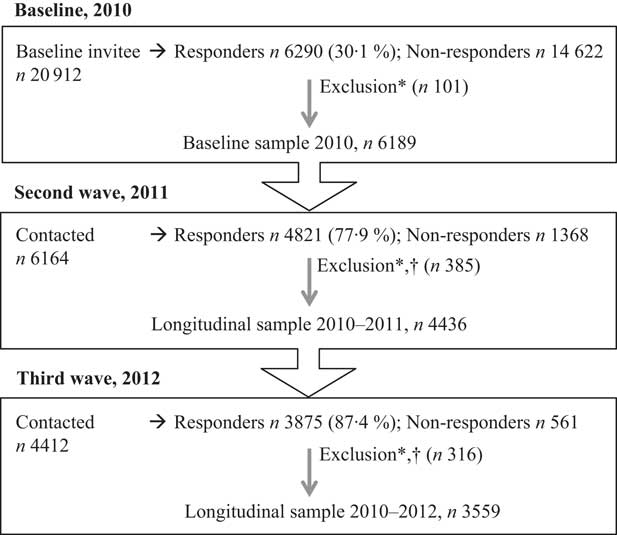
A mail survey was sent out to 20 912 randomly selected household addresses from the telephone book in the German-speaking and French-speaking parts of Switzerland. In 2010, 6290 of all those who were invited filled in the questionnaire (a response rate of 30 %). In 2011, all of the respondents from 2010 were contacted for the second survey, except for those persons who had to be excluded (see Fig. 1). For the third survey in 2012, only those who responded in 2011 and who did not have to be excluded in the data-file-matching procedure because of differences in their indicator variables (gender, birth date) were contacted (n 4412). Additionally, respondents who reported inconsistent body height at baseline and follow-up (>5 cm difference; n 164) were also excluded, because it was assumed that another person had filled in the questionnaire on their behalf. The longitudinal sample for 2010, 2011 and 2012 consisted of 3559 persons; 46 % of the participants were male. In 2012 the mean age was 56 (sd 14) years (range 22–94 years). Compared with the general Swiss population, the percentage of young adults (20–39 years old) was lower and more respondents had a higher secondary or college/university degree( 35 ). The whole sample's mean BMI was 25·7 (sd 0·1) kg/m2 for men and 23·4 (sd 0·1) kg/m2 for women.
Flow chart depicting the study sample from the Swiss Food Panel. *Those with missing gender, age or address details, those who died, those unwilling to participate in the next survey or those who filled in less than 50 % of the questionnaire were excluded. †Those with inconsistent genders or birthday dates between the survey periods, or with body height differences of >5 cm, were also excluded
Dietary and eating behaviour assessment
The FFQ was specially designed for the Swiss Food Panel and was used to estimate the frequency of habitual consumption of various foods (Table 1). The 2-week test–retest reliability for the FFQ was determined in a separate study. Test–retest correlations for the foods varied between r = 0·7 and r = 0·9; a detailed description of the test–retest study has been published previously( Reference Hartmann, Siegrist and van der Horst 36 ). The following food items were included in the present study: fruit; salad (lettuce, tomatoes) or raw vegetables; vegetables (cooked/steamed); pork; beef or veal; poultry (e.g. turkey, chicken); processed meats (e.g. cold cuts, sausages, ham); cookies, sweet pastries, chocolate; savouries (e.g. chips, nuts, salty snacks); wine; and beer. These foods were chosen because either they are part of dietary recommendations or their high or low frequency of consumption had been shown to have unfavourable health effects( Reference van der Horst, Brunner and Siegrist 37 – Reference Lock, Pomerleau and Causer 40 ). One additional question that was asked related to participants’ eating behaviour: ‘How often do you usually eat your main meal with the whole family?’ Participants responded based on a five-point scale, which was coded as shown in Table 1.
Food-group and eating behaviour variables of the present study and their underlying items from the FFQ
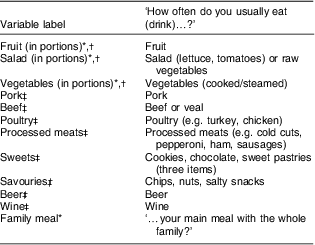
*Variables were measured using a five-response category (coding): ‘daily’ (7 times/week), ‘4–6 times per week’ (5 times/week), ‘1–3 times per week’ (2 times/week), ‘1–3 times per month’ (0·5 times/week) and ‘less or never’ (0).
†Participants were additionally asked how many portions of vegetables and salad (one portion = a handful) as well as fruits (one piece or one handful) they usually ate when they consumed these foods. Consumption frequencies and portion numbers were multiplied. All other variables indicate consumption frequencies only.
‡Variables were measured using a six-response category (coding): ‘several times per day’ (14 times/week), ‘daily’ (7 times/week), ‘several times per week’ (3 times/week), ‘several times per month’ (0·75 times/week), ‘several times per year’ (0) and ‘less or never’ (0).
Sociodemographic characteristics
Age, gender, educational level and household income were also assessed. The educational level was coded as follows: no education, primary school and lower secondary school (1); vocational school (2); higher secondary school (3); college (4); and university (5). Household income was coded as follows: low, ≤5000 CHF (Swiss Francs) (1); medium, 5001–9000 CHF (2); and high, ≥9001 CHF (3). In order to identify household type, participants were asked how many adults and how many children under 16 years old lived in their household.
Life events
Respondents were asked if they had moved in with their partner in the last year (yes or no) and if they had experienced the birth of a child in the last year (yes or no). Only persons who reported a life event in the survey period from 2011 or 2012 were aggregated into the life-event group. This selection was based on the fact that the earliest data were available for 2010 and baseline consumption values for the statistical procedure corresponded to the survey period before the life event was noted.
The life event of ‘moving in with a partner’ was reported by a total of 159 persons for 2011 and 2012 combined. Only those participants who lived alone prior to the life event were included. The final group of ‘moving in with a partner’ consisted of seventy-two participants (thirty-five males, thirty-seven females) with a mean age of 44 years for males and females and a mean BMI of 25·1 (sd 0·7) kg/m2 for males and 23·2 (sd 0·7) kg/m2 for females in the year prior to the life event.
The second life event of birth of a child was reported by 184 persons for 2011 and 2012 combined. Persons who lived in a household with children prior to the life event were excluded from the group, because the paper's focus is on individuals who have experienced their first childbirth. Seven females over 45 years old were also excluded, as a first pregnancy in this age grouping was implausible. The final group of ‘birth of a first child’ consisted of sixty-five participants (thirty-seven males, twenty-eight females) with a mean age of 32 years for females (Swiss population: 31 years on average( 35 )) and 44 years for males in the year prior to the life event. The mean BMI in this group was 25·6 (sd 0·5) kg/m2 for males and 24·1 (sd 0·6) kg/m2 for females.
Data analysis
Initially, one-way ANOVA and χ 2 tests were used to examine the characteristics according to the three different household types: single-person households without children <16 years (n 809), two-adult-person households without children <16 years (n 1293) and two-adult-person households with children <16 years (n 647). In a second step, the longitudinal data were analysed in a mixed-design mode to examine if the studied life events were linked to within-individual changes in eating behaviour. A mixed ANCOVA was conducted with the life event (yes, no) and gender (male, female) as between-subjects factors and with time (T1, T2) as a within-subjects factor. The within-subjects factor was defined by the repeated measurements of the consumption frequencies before (T1) and after the life event (T2). Age (at T1) and education (at T1) were included as covariates. Every food group and eating behaviour variable was analysed with its own model. What were particularly interesting for the present study were the within-subjects effects that included the life event as a factor, because those denote that the behaviour changed notably in the life-event group.
Despite the large sample, only a few participants indicated that they had had a life event in the period under consideration. Therefore, to take full advantage of the available data, the three waves were pooled for those participants who reported a life event. More precisely, T1 values corresponded to data from 2010 and T2 values correspond to data from 2011, for all participants who indicated a life event in 2011. At the same time, for all participants who indicated a life event in 2012, the T1 values corresponded to data from 2011 and the T2 values corresponded to data from 2012. Additionally, the life-event factor led to the implementation of a reference group consisting of all participants without a life event to detect actual trends in dietary behaviour over the study period at the population level. The T1 values for the reference group corresponded to data from 2010 and the T2 values corresponded to data from 2012.
All analyses were performed with the longitudinal data set from 2010–2012 (n 3559) with the statistical software package IBM SPSS Statistics 19·0.
Results
Comparison of different household types
Cross-sectional analysis of the data from 2010 revealed significant differences in eating behaviour between household types (Tables 2 and 3). Women living alone consumed meat, particularly pork, beef and processed meats, less often compared with those living with a partner (with or without children). Women living in a family with children most frequently consumed the majority of all studied food groups. They reported not only the highest intake of vegetables and a high salad intake, but they also consumed poultry, processed meats, sweets and savouries most often compared with women living in one of the other household types. In contrast, men's food-choice patterns seemed to be relatively similar between household types. Their meat consumption, except for poultry, and their consumption of sweets and savouries did not differ significantly between household types. Men's vegetable consumption was the highest when living with a partner (with or without children). No significant differences were observed for fruit intake in both genders. With regard to wine consumption, males and females living with a partner consumed wine more frequently than participants in the other household types.
Characteristics of the female study population according to household type (Swiss Food Panel, data 2010)
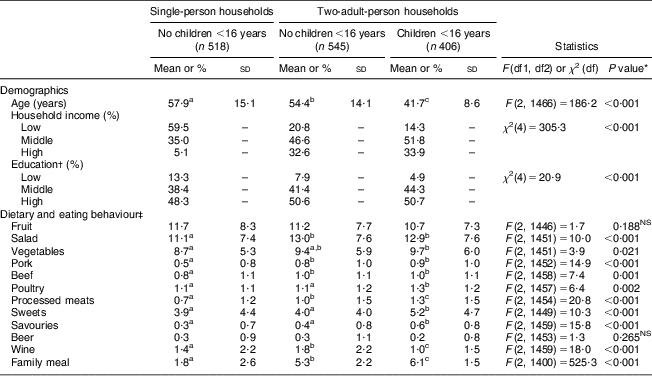
a,b,cOne-way ANOVA and χ 2 tests were used to examine differences between household types. Mean values within a row with unlike superscript letters were significantly different (post hoc test: Bonferroni, P < 0·05).
*P < 0·05 is statistically significant.
†For descriptive purposes, educational level was categorized into three categories: low (primary and lower secondary school), middle (vocational school) and high (higher secondary school, college and university).
‡All variables reflect frequencies per week, except for fruit, salad and vegetable consumption, which reflect portions per week.
Characteristics of the male study population according to household type (Swiss Food Panel, data 2010)
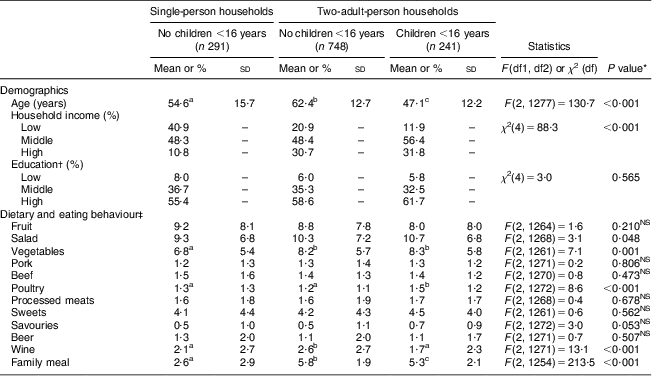
a,b,cOne-way ANOVA and χ 2 tests were used to examine differences between household types. Mean values within a row with unlike superscript letters were significantly different (post hoc test: Bonferroni, P<0·05).
*P<0·05 is statistically significant.
†For descriptive purposes, educational level was categorized into three categories: low (primary and lower secondary school), middle (vocational school) and high (higher secondary school, college and university).
‡All variables reflect frequencies per week, except for fruit, salad and vegetable consumption, which reflect portions per week.
Moving in with a partner
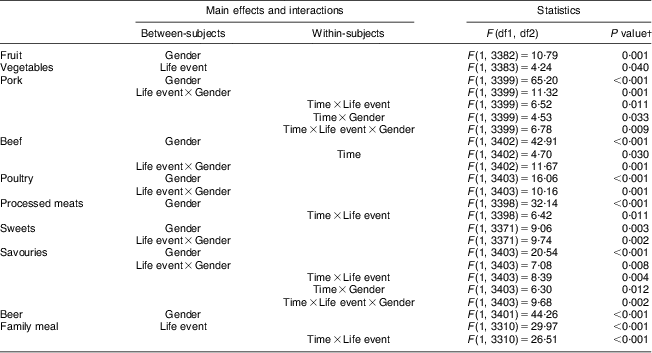
The transitional effects of the life event of ‘moving in with a partner’ on food choices are shown in Table 4. First, significant within-subjects two-way and three-way interactions were detected. Time × Life event as highest-order interactions were found for processed meats and family meals. These interactions indicate that processed meat consumption and family meal frequencies varied over time within persons, but with different manifestations for individuals in the life-event group and for those in the reference group. In particular, newly cohabiting participants increased their processed meat consumption from meanT1 = 1·1 (se 0·2) times/week before moving in with their partner to meanT2 = 1·4 (se 0·2) times/week after the life event, while consumption frequencies in the reference group remained stable over time (meanT1 = 1·3 (se <0·1) times/week; meanT2 = 1·3 (se <0·1) times/week). Additionally, newly cohabiting individuals had family meals more often after they moved in together (meanT1 = 2·7 (se 0·3) times/week; meanT2 = 3·6 (se 0·3) times/week).
Results for the life event of ‘moving in with a partner’ (n 72*). Significant main effects and interactions were found by conducting a mixed ANCOVA with two between-subjects factors (life event, gender), one within-subjects factor (time), and age and education as covariates. A mixed ANCOVA was conducted for every food-group variable and the family meal variable
*n varies between sixty-eight and seventy-two, because individuals with missing information in the FFQ in one of the survey periods were excluded in the statistical procedure, resulting in slightly varying group sizes being used in every model.
†P < 0·05 is statistically significant.
Time × Life event × Gender interactions were found for the consumption of pork and savouries, indicating life-event-related changes in pork and savouries consumption that varied by gender. While men's pork consumption increased from meanT1 = 1·4 (se 0·2) times/week before the life event to meanT2 = 2·1 (se 0·2) times/week after the life event, the females’ consumption remained stable (meanT1 = 0·4 (se 0·2) times/week; meanT2 = 0·4 (se 0·2) times/week). The same pattern was found for the consumption of savouries. While men's savouries consumption increased from meanT1 = 0·5 (se 0·2) times/week to meanT2 = 1·1 (se 0·1) times/week, the females’ consumption remained stable (meanT1 = 0·2 (se 0·1) times/week; meanT2 = 0·2 (se 0·1) times/week). No significant life-event-related within-subjects effects were detected for fruit, vegetables, salad, beef, poultry, sweets, wine or beer. Therefore, those food groups did not change significantly over time in the life-event group.
Second, there were significant between-subjects main effects and two-way interactions. A main effect of the life event was found for vegetable intake and family meal frequency. These main effects indicate intake differences between individuals in the life-event group and the reference group. Vegetable intake in the life-event group had a mean value of 7·5 (se 0·6) servings/week, which was lower when compared with the reference group with mean = 8·76 (se 0·1) servings/week. The same pattern was found for family meal frequencies, with lower frequencies in the life-event group (mean = 3·1 (se 0·3) times/week) compared with the reference group (mean = 4·7 (se <0·1) times/week).
Life event × Gender interactions were found for pork, poultry, beef, sweets and savouries consumption. These interactions indicate that consumption frequencies differed between participants in the life-event group and those in the reference group, but with different manifestations for males and females. Male participants in the life-event groupFootnote * ate the mentioned food groups more often compared with male participants in the reference group.Footnote † In contrast, females in the life-event groupFootnote ‡ reported lower consumption frequencies for all these food groups, except beef, compared with the reference group.Footnote §
Birth of a first child
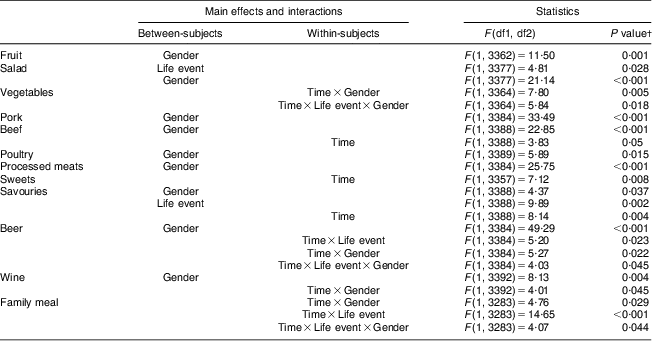
The second set of analyses examined if the life event of ‘birth of a first child’ was associated with changes in dietary and eating behaviour between the baseline and follow-up periods (Table 5). Significant within-subjects Time × Life event × Gender interactions were found for vegetables and beer consumption as well as for the frequency of family meals. Thus, consumption of vegetables in the life-event group changed between baseline and follow-up, with different manifestations for males and females. While females’ intake of vegetables increased remarkably after transition to motherhood (meanT1 = 6·3 (se 1·2) portions/week; meanT2 = 9·6 (se 1·2) portions/week), males’ intake decreased (meanT1 = 8·2 (se 1·0) portions/week; meanT2 = 7·6 (se 1·0) portions/week). Additionally, men consumed beer less frequently after the transition to parenthood (meanT1 = 1·9 (se 0·2) times/week; meanT2 = 1·3 (se 0·2) times/week), while women's consumption remained stable and on a low level (meanT1 = 0·2 (se 0·3) times/week; meanT2 = 0·1 (se 0·3) times/week). No significant life-event-related within-subjects effects were detected for fruit, salad, pork, beef, poultry, processed meats, sweets, savouries or wine.
Results for the life event of ‘birth of a first child’ (n 65*). Significant main effects and interactions were found by conducting a mixed ANCOVA analysis with two between-subjects factors (life event, gender), one within-subjects factor (time), and age and education as covariates. A single mixed ANCOVA was conducted for every food-group variable and the family meal variable
*n varies between sixty-three and sixty-five, because individuals with missing information in the FFQ in one of the survey periods were excluded in the statistical procedure, resulting in slightly varying group sizes being used in every model.
†P < 0·05 is statistically significant.
Second, there were also significant between-subjects main effects. A main effect of the life event was found for salad and savouries consumption. In particular, salad intake in the life-event group was generally lower (mean = 9·2 (se 0·8) portions/week) compared with the reference group (mean = 11·1 (se 0·1) portions/week), and with regard to savouries intake, individuals in the life-event group ate savouries more often (mean = 0·7 (se 0·1) times/week) compared with those in the reference group (mean = 0·5 (se <0·1) times/week).
Discussion
The main achievement of the present study was to point out that people adapt their food choices to life-event-related changes in their domestic eating environment. The research approach combined cross-sectional and longitudinal data analysis and provided not only insights into within-individual changes over time, but also showed that cross-sectional evidence for life-event-related changes in food choices can only partially be confirmed by longitudinal results.
Moving in with a partner and cohabitation
Although the literature suggests that married men eat healthier diets due to their partners’ influences, we found no indication of healthier food choices in men within one year of starting cohabitation. Even though, in the cross-sectional analysis, vegetable consumption was higher in men living with a partner compared with men living alone, longitudinal results showed no improvement in salad, vegetable or fruit consumption with beginning of cohabitation. In contrast, men's dietary behaviour shifted to a more undesirable diet, with a higher consumption frequency of red meat, processed meats and savouries. However, it cannot be ruled out that the positive influences of a female partner, due to her more health-conscious food decisions and her role as nutritional gatekeeper, will affect a man's diet positively in the long term. Women's food choices, on the other hand, changed significantly only in regard to a higher consumption frequency of processed meat after moving in together. The consumption of processed meats such as cold cuts and sausages might be a compromise between men's desire for meat and women's avoidance of high meat consumption. Women's food decisions might also be influenced by a ‘need to please’( Reference Murcott and Gamarnikow 41 ), accompanied by a propensity to prepare and consume food that is preferred by their partner( Reference Craig and Truswell 18 ), and as an adaptation towards the man's eating style. Additionally, some foods are less likely part of dietary convergence, because they are mostly consumed alone, independent of the partner's preferences( Reference Craig and Truswell 18 ). For example in a previous study, high fruit consumption was linked to high snack frequency( Reference Hartmann, Siegrist and van der Horst 36 ), and the lack of significant differences in fruit intake in the present study might, therefore, reflect that fruit consumption is likely to be more influenced by an individual's snacking behaviour than by a family's meal behaviour.
Birth of a first child and living with children
Another life event which was expected to be linked to changes in food choices was the transition to parenthood. In fact, vegetable consumption was much higher in women after pregnancy, and slightly higher consumption was also reported by women living in households with children. In contrast, men's food frequency pattern did not change after the transition to parenthood, and cross-sectional analysis revealed men's food choices as being relatively stable between household types as well. Roos et al. found similar results and suggested that parental status was a determinant of women's food behaviour, but not of men's( Reference Roos, Lahelma and Virtanen 11 ). On the one hand, pregnant women are much more likely to achieve support and guidance through health-care systems and could be confronted with aspects of healthy eating during and after pregnancy. On the other hand, barriers to better food choices in men such as the symbolic value of foods( Reference Sobal 42 ), objections to the taste of and reduced satisfaction from healthy foods( Reference Gough and Conner 43 ) as well as an unwillingness to alter their diets in favour of health aspects( Reference Gough and Conner 43 ) might have a greater impact on men's intentions for dietary changes than factors embedded in their domestic social environment. Additionally, increasing vegetable intake might be a strategy for women in transition to eat a more health-enhancing diet, but it could also be targeting weight loss after pregnancy, induced by body shape dissatisfaction and peer pressure( Reference Devine, Bove and Olson 29 ).
Two additional results are interesting when comparing food choices of women living in childless households with those living with children. First, the cross-sectional findings showed that women living in households with children were more likely to consume sweets. These findings appear to be well substantiated by the fact that especially older children have an influence on the family's purchase behaviour in terms of sweets and snack foods( Reference Lackman and Lanasa 44 ). Increased eating cues triggered by the availability of the children's preferred sweets in the household, and increased stress levels due to the requirements associated with a mother's social role, might tempt women to consume more sweets( Reference Torres and Nowson 45 ). Second, women's processed meat, beef and poultry consumption frequency was higher in households with children. Traditionally family meals in Western societies are centred around meat( Reference Murcott and Gamarnikow 41 , Reference Sobal 42 , Reference Murcott 46 ) and in a study from 1986, the interviewed women reported meat as being the most important part of a proper family meal, because of its nutritional value for children's growth( Reference Murcott 46 , Reference Charles and Kerr 47 ). Mothers of today might still hold those beliefs, which could explain the observed high frequency of meat consumption in families with children.
In interpreting the results of the present study, it is important to consider that the results are based on an FFQ in which usual consumption frequencies of some core food groups within the previous year were assessed. The frequency scores might be biased by conscious or unconscious under- or over-reporting of people's true food-consumption patterns( Reference Kroke, Klipstein-Grobusch and Voss 48 ). Furthermore, given the high mean ages of the respondents in the life-event groups, at least for those who reported the beginning of cohabitation, it is possible that the results are not representative for younger adults. Food-choice patterns of younger persons might be more flexible and less established than those of people in older age groups who experience these transitions. Life-event-related changes in dietary behaviour could be more pronounced in younger people.
The current study was limited by repeated-measurement analysis of two time points; thus, no statement can be made regarding either the stability or the duration of any changes in dietary behaviour. Still, the follow-up period of 1 year is regarded as being long enough to develop new habits and as short enough to limit the number of other life events or influential experiences. Furthermore, we cannot exclude other household types including two individuals – such as living in a shared flat – because we asked solely about the number of adults within a household. Nevertheless, the prevalence of private non-family households is, at 1·4 % (2011), rather small in the Swiss population( 35 ).
Conclusion
The evidence from the present study implies that in the transition to cohabitation, people are more likely to change their dietary behaviour, although both men's and women's food choices shifted in an unfavourable direction. This may have far-reaching consequences, because the early cohabitation period seems to be a crucial time period in which people start creating their future family's eating habits( Reference Anderson, Marshall and Lea 28 ). The transition to parenthood seems to be an additional period in which people are more likely to implement dietary changes. The results pointed out, however, that a transition to parenthood only seems to positively influence women's dietary behaviours. The study not only highlights that factors embedded in a domestic environment can contribute to changes in eating habits in general, but also that life events can be a window of opportunity for a change towards better food choices. Therefore, health promotion programmes or nutrition counselling should pay more attention to such special time periods in a person's life, because they seem to be promising with regard to the implementation of new nutritional strategies.
Acknowledgements
Sources of funding: C.H. is funded by the Swiss Federal Office of Public Health. The Swiss Federal Office of Public Health had no role in the design, analysis or writing of this article. Conflicts of interest: The authors declare no conflicts of interest in writing the present paper. Ethics statement: Ethical approval was not required. Authors’ contributions: C.H. conducted the data analysis and wrote the manuscript. M.S. participated in the design of the study. M.S. and S.D helped to interpret the results and provided critical feedback on drafts of the article.



