


The tenth All-African Women's Conference took place in Dar es Salaam in 1972. Maria Luísa Costa Dias represented the Portuguese Movement of Democratic Women (Movimento Democrático de Mulheres, MDM), a “unitary, progressive, antifascist movement”,Footnote 1 which was founded at the end of the 1960s in the context of the mobilization of the unitary movement of democratic opposition, the Commission for Democratic Elections (CDE), against the Estado Novo dictatorship.Footnote 2 Costa Dias had a long history of political militancy against Portugal's Estado Novo, a conservative, authoritarian corporatist regime that launched in 1933. Arrested in 1953 and accused of membership of the Portuguese Communist Party (Partido Comunista Português, PCP), Costa Dias spent one year in prison. She was arrested again in 1958; and, after four years and an international campaign, she left Caxias prison in April 1962. She continued to be engaged in political activism from exile in Algeria, where a Patriotic Front of National Liberation (Frente Patriótica de Libertação Nacional, FPLN) had been constituted by various left-wing elements, including PCP members. Costa Dias became an internationally known personality, travelling across Europe, Africa, and Latin America, and denouncing the conditions of Estado Novo's political prisoners. She became the FPLN's delegate abroad and represented the MDM inside the Women's International Democratic Federation (WIDF). Costa Dias's presence at the All-African Women's Conference and the meeting's opening dedication to women struggling – and often fighting – against the Portuguese army in Angola, Guinea-Bissau, and Mozambique exemplify the existence of a larger history of global contacts and encounters among women (Figure 1).
During Portugal's colonial wars women created many opportunities for anti-fascist and anti-imperialist encounters. The map illustrates the places mentioned in the article.

WOMEN'S TRANSNATIONAL NETWORKS: A NEW PERSPECTIVE OF ANALYSIS
This article focuses on the transnational networks of women who were opposed to the Estado Novo dictatorship and to Portugal's colonial wars in Africa (1961–1974). The war began in Angola in February 1961; the second front was opened in Guinea-Bissau in January 1963; and the third in Mozambique in September 1964. On 25 April 1974, the Carnation Revolution ended the Estado Novo and the colonial wars. The dictatorship fell under the coup d’état carried out by the Armed Forces Movement (Movimento das Forças Armadas), composed of officers and soldiers who had fought in the Portuguese Army in the colonial wars in Africa, which was immediately followed by the population's mobilization and mass intervention. Mozambique became independent in June 1975 and Angola in November 1975, while Guinea-Bissau unilaterally declared its independence in September 1973. Against this backdrop, the article discusses the MDM, the Women's Democratic Union of Guinea and Cabo Verde (União Democrática das Mulheres, UDEMU), the Organization of Angolan Women (Organização da Mulher Angolana, OMA), and the Organization of Mozambican Women (Organização da Mulher Moçambicana, OMM). All of these groups were born during the decades of the colonial wars of Portugal – MDM in 1968/1969, UDEMU in 1961; OMA in 1962; OMM in 1973. Activist women directly experienced these wars and engaged themselves against the Portuguese colonialism of Estado Novo and imperialism. Moreover, these four groups shared the socialist inspiration of the WIDF, which was created in November 1945 with four interrelated purposes: to combat fascism; to promote lasting peace; women's rights; and better conditions for children.Footnote 3
By focusing on women, this article offers a wider consideration of anti-colonial opposition to the colonial wars of Portugal, which has previously focused primarily on left-wing groups, students, draft-dodgers, refugees, and on the PCP's winding road to the support of national liberation movements. From the 1920s to the 1950s, the PCP did not support the independence of the colonies: only in October 1957 did the PCP's Fifth Congress declare itself in favour of the complete independence of colonized peoples. The PCP's Sixth Congress of 1965 was a turning point in the party's politics, because of the increased centrality of the colonial question in the struggle against the Estado Novo.Footnote 4 By investigating the international relationships between women's groups, the article also aims to indicate the scale of women's resistance and mobilization under the Estado Novo regime,Footnote 5 furnishing a wider perspective than previous studies, which have inscribed their analyses within Portugal's national borders.Footnote 6
The limited literature about Portuguese women and the colonial wars has focused on women who accompanied men to the wars, on those remaining in Portugal while their men were in Africa, or on women such as parachutist nurses who played a role in the wars.Footnote 7 African women are strikingly absent in these works: the testimonies of women who accompanied their husbands to the African wars’ three fronts reveal their experiences, thoughts, hopes, and fears, but do not refer to African women in Angola, Guinea-Bissau, and Mozambique.Footnote 8 Disciplines such as anthropology and ethnology, rather than history, have furnished studies that are focused on women and their struggles in the former Portuguese colonies;Footnote 9 but issues such as the scale of women's activism, the circulation of people and ideas, and the relationships established among women and groups have been largely overlooked.
By focusing on connections among women, this article makes visible the political action of women's groups outside organizations and networks that were dominated by male leaders. Existing scholarship on Portugal's colonial wars has paid little attention to women as political subjects. As the following sections will demonstrate, focusing on women's displacement and connections frees our knowledge about women from the antagonism between male and female subjects or from the opposition between, on the one hand, the doctrines of political parties on women's emancipation and, on the other, women's emancipation in its own right. By demonstrating the existence of the transnational networks through which women shared political objectives, this article seeks to provide new meanings to historiographical categories, such as anti-imperialist opposition to colonial wars, by restoring women as protagonists therein.
This article adds a new dimension to existing scholarship on women's activism from Portugal, Guinea-Bissau and Cabo Verde, Mozambique and Angola, which has insisted on highlighting the implications of the relationships between women's groups and (male-dominated) political parties. Daniela Melo has addressed women's activism in Portugal between the Carnation Revolution and 1977, focusing on the MDM together with two other movements, the Women's Liberation Movement (Movimento de Libertação da Mulher, formed in 1974), and the Antifascist and Revolutionary Women's Group (União de Mulheres Antifascistas e Revolucionárias, formed in 1976). This article focuses on an earlier period than Melo's study, which pays particular attention to the relationships between women's movements and political parties, arguing in the case of the MDM that the connections between it and the PCP have influenced strategies and tactics adopted by the movement.Footnote 10 Andreas Stucki has focused on the OMA and the OMM, arguing that the projects of modernization undertaken by the People's Movement for Liberation of Angola (Movimento Popular de Libertação de Angola, MPLA) and the Mozambique Liberation Front (Frente de Libertação de Moçambique; FRELIMO) were only partially consistent with the effective emancipation of women.Footnote 11 Despite Stucki's recognition of the international projection of OMA and OMM in Africa and beyond, and of the occasions that “provided essential platforms for promoting transnational solidarity”,Footnote 12 the focus remains on the nation-building projects proposed by the MPLA and FRELIMO and on the process through which the two organizations postponed issues of women's emancipation. This article reverts the paradigm: rather than looking at international encounters as occasions for promoting transnational solidarity, it considers such encounters as the multiple signs of the existence of a transnational network of women's movements, whose political life developed autonomously from national projects led by male parties.
In studying Guinea-Bissau and Cabo Verde, Aliou Ly has pointed both to UDEMU's failure and the lack of support from the male leaders of the African Party for the Independence of Guinea and Cabo Verde (Partido Africano para a Independência da Guiné e Cabo Verde; PAIGC) for women's emancipation.Footnote 13 Galvão and Laranjeiro used the PAIGC's political documents – especially the speeches and interviews given by Cabral – and women's oral interviews to investigate different perspectives on women's emancipation in the liberation struggle.Footnote 14 In emphasizing the harmony and/or distance between existing political parties or organizations and women's activism or emancipation, these works have demonstrated the importance of considering national contexts in which women's groups were born, their ideological background, and how their relationships with previous political organizations could have influenced their histories. However, by emphasizing these connections – the alliances and the oppositions – these studies have circumscribed the political engagement of women mostly to their relations – in accordance or in contrast – with pre-existing political parties. In this sense, the understanding of women's role remained conceptually confined within national boundaries and within the concepts developed by nationalist leaders.
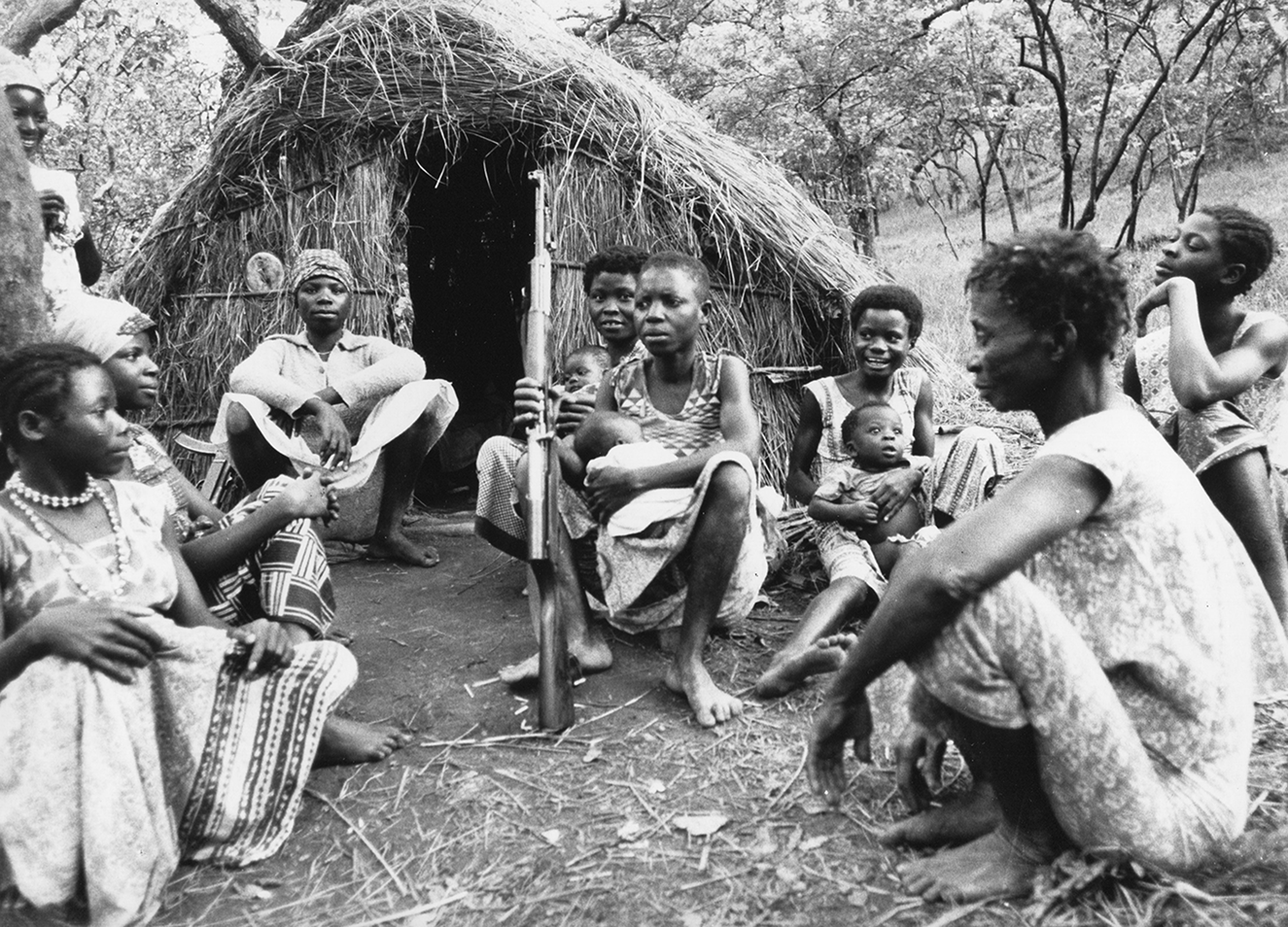
This article adds to these works by shifting the focus from the relationships with the national parties to the relationships between women's groups. PCP, PAIGC, FRELIMO, and MPLA remain in the background compared with women's associations and relationships between women's groups. Even when women's organizations were formed by – or were close to – organizations mainly directed by men, their histories, values, and political heritages should be researched in their own right (Figure 2). Contacts among women's groups in Portugal and in the Portuguese colonies were framed by the socialist internationalism promoted by the WIDF and the Pan-African Conference of Women. These relationships were established by various means. Women's groups established contact through letters, telegrams, pamphlets, journal articles, and radio programmes. These materials demonstrate their joint participation in conferences and seminars, the organization of international solidarity campaigns, affiliation to international organizations, and the declarations regarding the need for and procurement of material support. To recreate these networks and connections, and to broaden our historical understanding of opposition to Portugal's colonial wars, this article draws on archival and other sources produced by women's groups themselves and on reports produced by the Estado Novo surveillance and control organizations in Portugal and its colonies.Footnote 15
Women in Angola ensure defence of a village displaced into the bush, 1968.
Archive and copyright: Augusta Conchiglia. Digitization and restoration of negatives: Maria do Carmo Piçarra and José da Costa Ramos.
WOMEN'S ACTIVISM IN PORTUGAL: NATIONAL PROHIBITION AND INTERNATIONAL PROJECTION
This section discusses the genealogy of the MDM and the international links that Portuguese anti-fascist women established in the context of illegality that was imposed by the Estado Novo dictatorship and the underground travels that ensued. The MDM was founded at the end of the 1960s, despite the Estado Novo ban on the creation of women's associations; this had resulted in the closure of older women's organizations, such as the Portuguese Women's National Council (Conselho Nacional das Mulheres Portuguesas, CNMP), created in 1914 under the umbrella of the International Council of Women and banned since 1947,Footnote 16 and the Portuguese Female Association for Peace (Associação Feminina Portuguesa para a Paz, AFPP), created in 1936 and banned since 1952.Footnote 17 The internationalism of Portuguese women has a long history, and the underground travels of the delegates demonstrate the network of contacts that women had established with international organizations. When the WIDF was formed in 1945, Maria Lamas represented the CNMP delegation.Footnote 18 In 1953 – the CNMP had already dissolved – Lamas was arrested while returning from the World Peace Council in Budapest where she had denounced colonial oppression. As Ana Barradas remarked, “among anti-fascists, few of them would be able to denounce the conditions of women workers, and even fewer, of colonialism”.Footnote 19
In 1963, a Portuguese delegation participated in the WIDF's Fifth Congress in Moscow. A year earlier, delegates from Portugal had also been among the 300 representatives of women's organizations from fifty-nine countries who had attended the World Gathering of Women for Disarmament held in Vienna.Footnote 20 By the early 1960s, the WIDF had existed for almost two decades, and over that time different political perspectives had arisen.Footnote 21 The Portuguese delegation to the Fifth WIDF Congress consisted of Maria Lamas, Georgette Ferreira, Alice Sena Lopes, Laura Cunha, and Margarida Tengarrinha. They stressed the solidarity of Portuguese women with female fighters from around the world. Tengarrinha emphasized the feelings of the Portuguese women who were there with female fighters from around the world and expressed the delegation's solidarity to “our sisters of liberation movements in Portuguese colonies, in the same fraternal fight against the common enemy”.Footnote 22
In April 1965, Free Portugal Radio (Rádio Portugal Livre), the clandestine radio controlled by PCP from Bucharest,Footnote 23 mentioned a memorandum that the WIDF had sent to all national organizations of women, inviting them to show their solidarity with Portuguese women and protesting against the Salazar government for its inhumane treatment, including torture, of women in prison. The memorandum mentioned Maria Alda Nogueira,Footnote 24 Fernanda Tomas, Serafina Ferreira, Clara Fernandes, Natalia Rodrigues, Olivia Sobral, Albertina Diogo, and Aldina Pato, all of whom had received prison sentences from two to five and a half years.Footnote 25 The presence of a Portuguese delegation at these meetings demonstrates that Portuguese women were active internationally before the creation of the MDM in 1969 and the number of groups opposed to the Estado Novo multiplied in the late 1960s, when the change of dictator opened new perspectives on ways to defeat the dictatorship.Footnote 26
The MDM was the first women's group in Portugal to be founded as a unitary association of anti-fascist women. However, writing about its own history in the mid-1970s, during the WIDF meeting held in Lisbon in 1976, the organization affirmed that the MDM was “reorganized” in 1969 – suggesting its history preceded its official foundation – in the context of activist democratic opposition in Portugal (the CDE).Footnote 27 The MDM referred to the tradition of opposition by previous Portuguese women's organizations: the CNMP; the AFPP; and the female component of the Movement of Democratic Unity, which was formed after the World War II. The self-description affirmed that the organization was made up of “a small group of anti-fascists, democratic with different views, a lot of them with a long past as resistant against the fascist regime”.Footnote 28 The group later defined itself as a unitary, progressive, anti-fascist movement; in the same year, it joined the WIDF. Then, in 1970, the Federation attributed the Eugénie CottonFootnote 29 honour to the group; and until the Carnation Revolution and the end of Estado Novo, the group continued its activities underground.
In October 1973, still under the Estado Novo, the MDM held its first National Encounter in Cova da Piedade, Almada; 250 women attended the meeting.Footnote 30 After the Revolution, in August 1974, the organization declared its support of the WIDF and its commitment to prepare for International Women's Year (Mexico City, 1975) and the World Congress of Women (Berlin, East Germany, 1975).Footnote 31 Both the National Encounter of the MDM and this international engagement could count on a past in which Portuguese women had already experienced practices of organization and resistance, and had established relationships of solidarity across Portugal's national borders.
A VANGUARD GROUP AGAINST COLONIALISM: AFRICAN UNITY AND INTERNATIONALISM IN THE WOMEN'S DEMOCRATIC UNION OF GUINEA AND CABO VERDE (UDEMU)
In addressing UDEMU's history, this section underlines how this women's organization enhanced international relationships aimed at African unity and affirms that these connections enrich our interpretation of women's political role during the wars.
UDEMU was founded in 1961. Any woman from Guinea-Bissau and Cabo Verde could, from the age of fourteen, participate in the organization, without any distinction based on origin, ethnic group, fortune, social provenance, political opinion, or religious belief. The UDEMU's objective was described as the “complete emancipation of the woman in the ‘Portuguese’ Guinea and in Cabo Verde islands”.Footnote 32 The Statutes also affirmed that UDEMU's women were engaged in the struggle for national liberation and complete decolonization, as a first step towards the emancipation of Guinean and Cape Verdean women, and that they recognized the role of the PAIGC as the vanguard in the national liberation struggle.Footnote 33
International connections were integral to UDEMU from its founding; the original statutes refer to its affiliation with the Women's Federation of West Africa and affirmed its right to participate in other international women's organizations. After the 1958 WIDF Congress in Vienna, African delegates decided to create a continent-wide organization. This initiative occurred in the context of the wider movement for pan-African unity, of which the first All-Africa Peoples Conference convened in Accra in December 1958 was a milestone. The creation of this conference was the culmination of previous attempts and meetings and conferences for smaller groups, and from its formation three key phrases marked the official meetings: African women; international solidarity; and peace.Footnote 34 In June 1962, a committee of women's organizations from ten countries met in Mali, and the Conference of African Women was launched in Dar es Salaam that July. The Pan-African Women's Organization was formed in 1974 in Dakar, Senegal.Footnote 35
On behalf of UDEMU, Catherine Turpin de Barros took part in the first Conference of African Women, which was held in Dar es Salaam in 1962. Among the manuscripts attributed to Amilcar Cabral is the text of the intervention that was read by de Barros at that conference. Cabral's text stressed that women and men had to be equal in the fight against colonial oppression, and called for the unity of all countries in this struggle:
For women whose country, like ours, is still under colonial domination, the main work is to actively participate in the liberation struggles of their peoples […] Our fight is just one [fight]; because of that we must unite more firmly day by day, for ideals like liberation, independence, progress, African peoples’ happiness.Footnote 36
African unity, to be achieved through mutual understanding, entente, and collaboration among peoples as well as governments, was considered the focus of national liberation. The same document admitted that women were aware that independent Africa had been and would continue for a long time to be almost exclusively governed by men, adding that their aim was not immediate participation in governments. The latter goal, the speech affirmed, would be pursued step by step, at the same pace as their liberation as human beings. By contrast, entente and collaboration among independent African countries towards African unity was urgent. The role of women in national liberation was to be underlined, as was the fact that they were in the vanguard of the struggle, fighting in the PAIGC as militants and as leaders. The need for the unity of African women was part and parcel of the need for African unity: women were not separate from men or from the party, in the same way as colonized countries were not separate from independent ones.
Previous studies have considered this kind of argument as demonstrating the party's ideological shaping of female emancipation: “If for no other reason than for her performance of tasks crucial to family's daily sustenance, the African woman imagined by Cabral on her route to emancipation, should ‘take her part in politics’.”Footnote 37 Here, the declared focus of analysis is women's resistance against male domination. When considered from the opposite perspective, encounters among women provide us with a wider conceptualization of women's history, moving from a depiction of women resisting male domination toward one of women politically organized against imperialism and for decolonization. Taking this perspective, more important than reflecting on Cabral's ideas – whether sincere, rhetorical, realized, or failed – on female emancipation seems to be underlining that Guinean and Cabe Verdean women were active participants in founding events of the history of African women's political organizations. The Statutes of the Conference of African Women, in which Turpin de Barros participated as a delegate – introduced in its preamble issues such as the awareness of African women's responsibilities when facing common problems, the effects of the imperialist system on African women, the strength attributed to solidarity and human values, the opportunity and need of decolonization and the recognition of United Nations resolution on decolonization (December 1960), and the struggle for posterity against injustice and ignorance.Footnote 38 Moving the focus from PAIGC leaders’ ideas about women's role in society to women's participation in the Conference extends the categories of analysis relevant to women who became political delegates in transnational encounters. Conferences and seminars are articulated spaces where women did politics, debated – formally and informally – about women's problems and rights, made efforts to mutually understand each other, established friendships and relationships, and established common political objectives, all the time being aware of common problems and differences.
In 1963, UDEMU accepted the WIDF's invitation to collaborate with the Federation's secretarial office in Berlin; Maria da Luz Andrade was chosen to represent it.Footnote 39 According to Stephanie Urdang, the PAIGC ended UDEMU in 1966, after a year of agony. The reasons, according to her research, concerned the allegedly elitist character of the movement. It was based in Conakry, and its members could not leave the city to work in rural areas. Only after independence, in September 1973, did a new group form; this was the Organization of Women.Footnote 40 Between 1966 and 1973, therefore, women did not have a specific organization, but rather were integrated into the PAIGC. Guinean women did not engage in combat, but after years of separate revolutionary roles for unarmed women and armed men, women started to receive military training at the Madina Boé camp. However, the war ended shortly after the PAIGC's decision to include women in combat. Urdang also reported that Guinea-Bissau's female leaders referred to Vietnamese and Mozambican guerrilla women as examples of leadership, calling for a change of mentality in Guinea-Bissau. Nonetheless, when the guerrilla militia was transformed into a national army, few women engaged in armed struggles, instead remaining in defence units.Footnote 41 Despite this, the revolutionary process for women in Guinea-Bissau (“the revolution within a revolution” and “fighting two colonialisms” were the most popular slogans concerning women) was deep and varied, indicating that women's engagement was not linear and homogeneous. Rather, this process reflected differences between generations, between those who lived in revolutionary zones and those who did not, between Muslim and animist, between mothers and women without children, between those who considered food preparation as a revolutionary task and those who demanded a different role in the struggle.Footnote 42
Awa. La revue de la femme noire magazine dedicated the cover of its May 1973 issue and a long article inside to women struggling for the liberation of Guinea-Bissau and Cabo Verde.Footnote 43 The article suggested that women were engaging against colonial domination in multiple forms and that they could count on international solidarity, including the courses for women that were organized by the WIDF in liberated zones of Guinea-Bissau. The article included a speech given by Ana Maria Cabral about the idea of women's liberation from all forms of oppression, which she considered fundamental for the “true, national and social liberation of the people”.Footnote 44
Analysing Guinean women's struggles during the wars and women's role in post-independence, Ly has noted that “women in Guinea-Bissau struggled to find a place for themselves in the war for independence but failed to change male attitudes toward the role of women in peacetime”.Footnote 45 This kind of analysis has the unquestionable merit of challenging the official narratives that were produced by the movements of national liberation with male leaders. Without questioning these conclusions, this section has tried to demonstrate that the research on women's participation in the colonial wars can go beyond the confrontation between women and male hierarchical attitudes, thus widening our knowledge of women at this time and in this situation, and enlarging our categories of analysis. The links between UDEMU and the WIDF, the participation in pan-African organizations and the presence and speeches of Guinean women at the first international African Arab Women's Seminar, held in Algiers in March 1974,Footnote 46 the encounters, in conferences and seminars,Footnote 47 with women from the whole world made women's activism visible, and offer us the chance to look at women as political participants in transnational meetings.
BUILDING GLOBAL RELATIONSHIPS: OMA STRUGGLING AGAINST PORTUGUESE COLONIALISM AND FOR EQUALITY
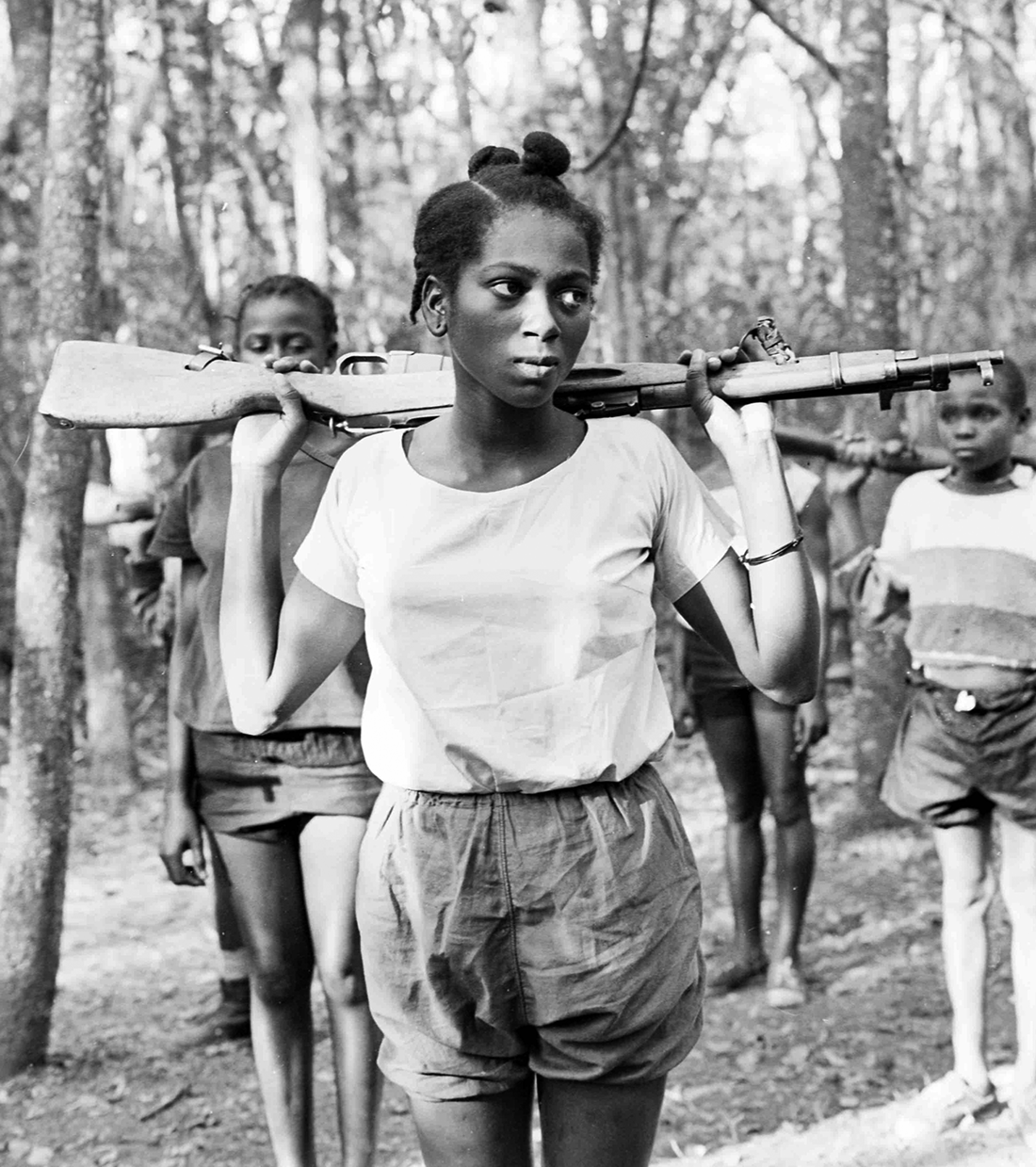
This section focuses on OMA's discourse on gender equality, and on the role of Angolan women in the revolution; it underlines the transnational references and the organization's alliances. OMA was born in 1962 and had its headquarters in Brazzaville, Congo. It was created within the MPLA to mobilize women to fight in the war at different levels, providing political education and combating illiteracy (Figure 3). It was open to all African women born in Angola who were aged fifteen and over. In a document directed “to the Angolan sister”, probably written in 1964 because it noted that three years had passed since the start of the colonial war, OMA specifically expressed the value of the presence of women, affirming that Angolan women were more numerous and important than men: they had always done a major part of the work in agricultural and other sectors, often performing extremely difficult tasks. Besides underlining their role in the national economy, the document declared that women had suffered greatly during the war.Footnote 48 OMA was a member of the WIDF and of the African Women's Conference, and the organization clearly stated the main reasons that it was part of these international organisms: “to enable us to let the women of the whole world know about the Angolan people's struggle against Portuguese colonialism and, especially, to mobilize feminine public opinion to give us political and material support”.Footnote 49 Moreover, on more than one occasion, OMA underlined that international solidarity helped the organization, not only in reaching their objectives, but also because of the feelings of closeness that were created among women. After meeting the University Branch of the Union of Women of Tanzania, Umoja wa Wanawake wa Tanzania, OMA's representative was impressed by the large attendance at the meeting, and reported: “such gestures of solidarity not only encourage the Organisation of Angola women to carry on steadfastly until final victory, but they also make us feel close to women in other women's organisations”.Footnote 50
Luzia (Inga) Inglês, 1968. Between 1999 and 2021, she was secretary-general of the Organization of Angolan Women.
Archive and copyright: Augusta Conchiglia. Digitization and restoration of negatives: Maria do Carmo Piçarra and José da Costa Ramos.
In explaining the place of Angolan women in the revolution, OMA made reference to women struggles in other countries, inviting women to focus on the common grounds of their struggle, rather than just expressing a generic “female solidarity”: “the fact that we are women does not condition our direct and active participation in the liberation struggle of our country or make it impossible. In Algeria, Cuba or Vietnam women have proved they can do the most difficult works and fight side by side with men”.Footnote 51
During the 1970s, the guerrilla activities of Angolan women, including their use of weapons, were proudly proclaimed and became internationally known. In March 1970, for instance, the Times of Zambia published an article entitled “Angola's Women Now Start Active Combat”, which included a long interview with “Fuxi”, OMA's information officer and head of the external propaganda unit. She explained OMA's old and new missions, the latter including the formation of guerrilla units, in which women would complete their emancipation. As with other information about liberation movements, the DGS based in Angola collected this article and sent it to the surveillance headquarters in Lisbon.Footnote 52 The stress on women's equality with men, demonstrated by their use of arms, and the reference to other situations around the world where women had fought or were fighting was a recurrent theme in women's organizations. Apart from the valorization of the role of women in society and in guerrilla groups, OMA reflected on different times of women's history to clearly delineate the space and position of Angolan women in the past, present, and future. Criticism of where women had been placed was strong and explicit: “The Angolan woman of today has long since left behind her the tragic and repulsive image of the domestic-woman, the object-woman, the slave-woman. This image remains in history as testimony of the long years of slavery and exploitation.”Footnote 53
The turning point was considered to be the revolution, the start of the liberation struggle against colonialism, because with that revolution women became conscious of their role, “overcoming the many complexes inculcated in her for centuries”.Footnote 54
The documents produced by OMA tell us that the organization's horizon of reference was large and that it founded its reasons for struggle on more than one issue. In expressing the opportunity of equality between women and men, the reference was not only women's participation in the armed struggle, as their work on a wider canvas was a crucial reason for equality.
WOMEN'S REPRESENTATIONS AGAINST THE WAR: BEING GUERRILLA FIGHTERS AND BEING MOTHERS
The defence of motherhood and its representation have a long history in women's and feminist movements; images concerning motherhood had a large global circulation. This section shows how the issue was expressed in different contexts. On 2 March 1967, five OMA members were captured by the MPLA's adversary, the Angolan People's Union (União das Populações de Angola), while returning from armed action in the interior of the country. In commemoration, 2 March was established as Angolan Women's Day. The five women, Deolinda Rodrigues, Engrácia dos Santos, Irene Cohen, Lucrecia Paim, and Teresa Afonso, were transferred to the Kinkuzu concentration camp and presumed dead (the hypothesis is that they were killed after being tortured in late 1969).Footnote 55 They became the women guerrilla heroes of the liberation movement and the “mothers of the revolution”. This is a fixed point in the discourse and the iconography, in pamphlets, official documents, and journal articles that had national and international circulation.Footnote 56 Thus, Angolan women have been both “guerrilla fighters” and “mothers of the revolution”, a dual role that is still present in memory and is clearly visible in the monumental statues that represent the “heroines”: armed women carrying children.Footnote 57 If these definitions of heroism were born from historical episodes in the women's movement, critical analyses of the relationships between gender, nationalism, and liberation struggles have demonstrated how the stereotypes of “mothers of the revolution” and “comrades in arms” were constructed alongside the maintenance of a hierarchical system in which men represented the nation and were seen as superior to women.Footnote 58
In the case of Mozambican women, the representations emphasize the roles of women as guerrilla fighters, in their uniforms; as workers, engaged in everyday occupations and specific tasks; and mothers, or women caring for children. Brochures and pamphlets furnished a series of recurrent images of women's bodies with weapons, with children, and carrying water or other products and materials on their heads.Footnote 59 The Portuguese women in the MDM and affiliated to the WIDF also focused on the importance of being mothers; but in their case mothers were not those armed for the revolution, but “mothers and sisters” of soldiers sent to the colonial fronts. The MDM organized one of its first actions against the colonial wars around the image of mothers and sisters of soldiers.Footnote 60
At the 1969 WIDF Congress in Helsinki, MDM was represented by five women, including Sofia Ferreira and Maria Luisa Costa Dias.Footnote 61 A brochure produced by the FPLN in Algiers on behalf of MDM was dedicated to the condition and struggles of Portuguese women under the fascist regime.Footnote 62 It contains a broad denunciation of women's severe lack of rights: inequality of salaries, working conditions, family roles, and gender discrimination. According to the new civil code, it was argued, and under the expectations of cohabitation, women were obliged to follow men abroad and to the colonies. Mothers (mostly workers) and children needed elementary rights such as healthcare, housing, and education. MDM clearly affirmed the importance of women in the struggles against the colonial war. It argued that there had been a limited take-up of women's voluntary service in the colonial wars, despite the demagogic propaganda surrounding its introduction; the exception was an extremely limited number of parachutist nurses. MDM provided concrete examples of rebellion, recounting the demonstrations its members had organized on docks where soldiers embarked for the colonies. It also pointed out that women encouraged their children to refuse to be sent to the colonial fronts, as the Portuguese delegates had stated during the WIDF's Helsinki Congress.Footnote 63
This is a focal point for analysing the women's movement's relationship with the PCP. From the beginning of the colonial wars, desertions were a continuous and important phenomenon. Throughout much of the 1960s, the PCP welcomed and approved draft dodgers and deserters. However, in 1967, the Central Committee argued that communist militants should not desert, but rather remain inside the army to engage in anti-fascist propaganda.Footnote 64 The MDM's statement in support of desertion at the Helsinki conference did not mean that the MDM was impermeable to communist policy. Indeed, the PCP was the strongest organized force against Estado Novo, and communist women participated in the MDM. Nevertheless, despite the MDM's proximity to the PCP, its position on desertions and refusal of the war was articulated around issues and claims that were born inside women's international organizations rather than in communist parties. Since the WIDF's formation, expressing women's role as mothers was a pivotal issue for women's engagement, and the Federation dedicated particular attention to underlining the connections between the role of mothers, women's engagement in socialist perspectives, friendship among women from all over the world, the rights of children, and the struggle for peace and against imperialism. The international petitions, resolutions, and iconography produced by the women's groups that participated in the WIDF and by the communications organisms of the Federation attest, through texts and images, the strong articulation of these links.Footnote 65 At the Helsinki meeting, the MDM referred to women and people in Vietnam, in Palestine, and in Angola, Mozambique, and Guinea-Bissau – the latter three brought together by their common struggle against Portuguese fascism. The MDM delegates also mentioned women in Greece and Spain, but they expressed special concern for Vietnamese “sisters” because their organization was participating in the WIDF commission of solidarity with women and children in Vietnam.
Portuguese women's international activism focused on Estado Novo practices – mostly regarding political prisons, women's conditions and rights, anti-fascism, anti-imperialism, and struggles against the colonial wars. Being women and the importance accorded to the identity of motherhood were not separable from the fact that they were socialist militants.
MOZAMBICAN WOMEN: AVOIDING SEPARATION FROM MEN AND DENOUNCING TWOFOLD OPPRESSION
This section analyses how the OMM articulated ideas of struggle, oppression, and emancipation, as well as the international circulation of people and ideas beyond Mozambican borders. The first Conference of Mozambican Women did not refer specifically to Portuguese women, but rather to “the fourth front opened in Portugal by the anti-fascist and anti-colonialist patriot”.Footnote 66 The conference was held between 4 and 6 March 1973, after FRELIMO's Central Committee meeting of December 1972 approved the formation of the OMM. A Women's Detachment (Destacamento Feminino, DF) had existed prior to that.Footnote 67 When the DF was born, in 1966 according to FRELIMO's sources, it had precise objectives: the mobilization and organization of the masses; the recruitment of young people of both sexes to be integrated into the armed struggle; the production and transport of materials; and military protection of the civilian population,Footnote 68 As Josina Machel, the leader of the DF and a FRELIMO militant,Footnote 69 stated: “One of the prime functions of a women's army is, quite naturally, just like the men's army: participation in combat.”Footnote 70 The implication was that emancipated women bearing arms shamed men into action. Another women's organization, the Mozambican Women's League (Liga Feminina de Moçambique), held its first Congress in Tanzania in 1966 and joined the DF after the April 1969 decision of FRELIMO's central committee that women were to struggle alongside men, and not only by protecting liberated zones with arms (Figure 4).Footnote 71 This was the first and fundamental experience for Mozambican women who were debating and acting on women's issues.Footnote 72 Once founded, declared Josina Machel, the OMM was to be integrated into FRELIMO: “the OMM will be an organic part of FRELIMO's structures, where it will be like an arm including all the new sectors of women, whose total and opportune participation was neglected until now”.Footnote 73 The will of the organization, she added, was to create a centralized and structured movement to channel all potential energies to fight for national liberation: “the new organization will conduct, mobilize, organize and unify women, young and old, married and single, wherever they are, in the villages, in schools, in the FRELIMO's centers abroad”.Footnote 74
Front cover of the brochure The Mozambican Woman in the Revolution, edited by the FRELIMO Women's Detachment, 1969.
Social History Archives of the Institute of Social Sciences, University of Lisbon, reference code PT-AHS-ICS-CAHS-MNA-058.
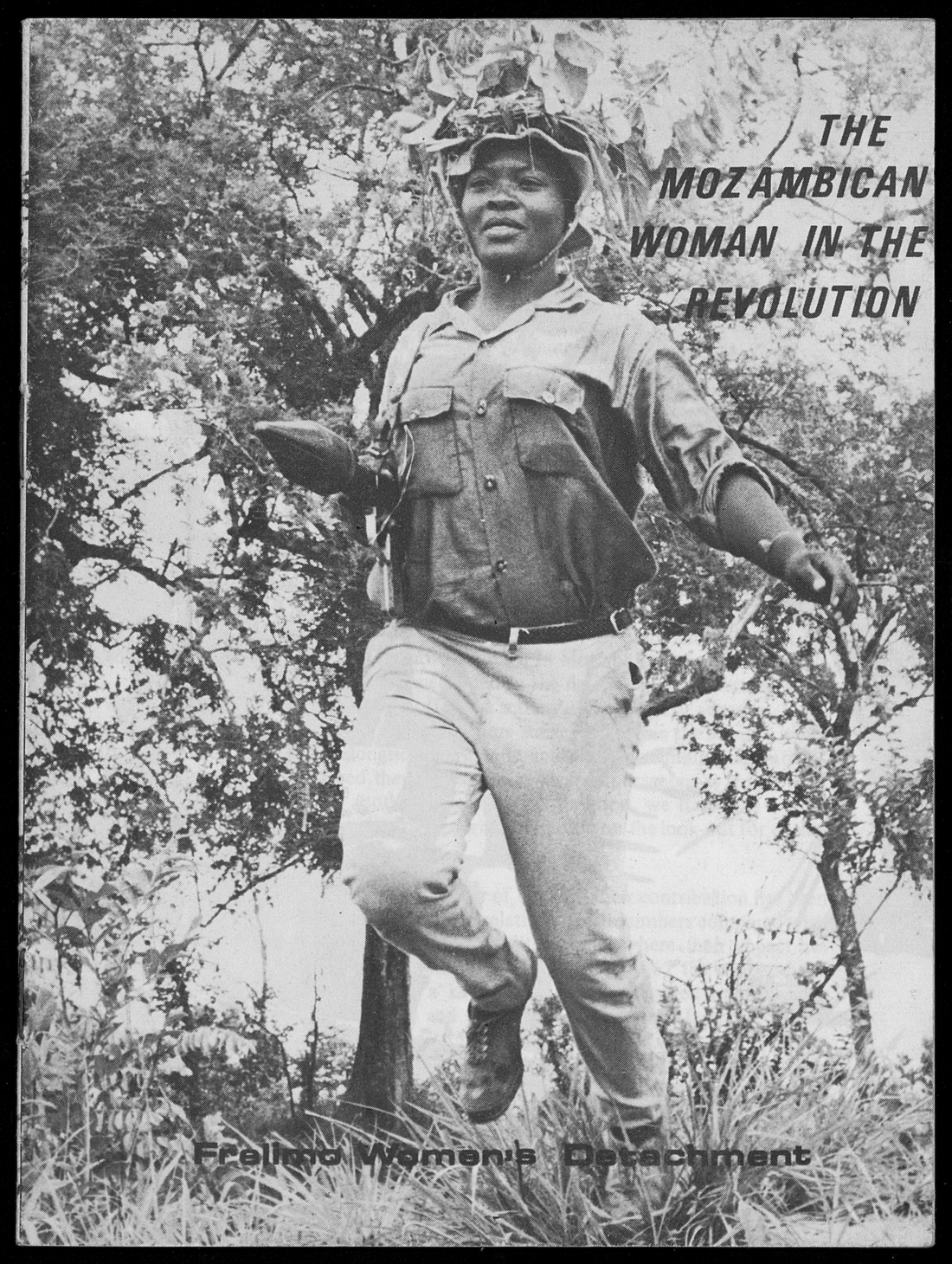
When Josina Machel died from illness, on 7 April 1971, FRELIMO underlined her role as a militant in the struggle for the liberation of Mozambique, her role as a leader of a women's organization, and her dedication in promoting the role of women against Portuguese colonialism and imperialism. In 1972, the Front established 7 April as the day of Mozambican Women, and the smiling face of Josina Machel in her military uniform became one of the best-known images that achieved international circulation.Footnote 75
The Mozambican sources insist on the avoidance of separation between men and women, focusing on the common struggle against colonialism, racism, imperialism, exploitation, and discrimination, in Western, socialist, and colonized countries. Moreover, Mozambican women were aware of the existence of other women's movements around the world. The works of the first conference of Mozambican Women included a discussion of Western women's movements, calling the delegates’ attention to their problematic objectives. The examples used were the “much-discussed” (tão-falados) movements for the liberation of women in capitalist countries:
these movements are directing their struggles against the men, accusing them of being their oppressors and exploiters. The Conference highlighted the fact that men who work were also oppressed and exploited like women, and that the system they were acting in inculcated them with reactionary ideas.Footnote 76
However, the insistence on equality with men in the liberation struggle did not mean that Mozambican women did not reflect on their oppression: they explained this, and also how, thanks to the revolutionary process, they had become politically conscious and emancipated. If Angolan women identified colonialism and revolution, or oppression and emancipation, as opposite terms, the Mozambican organization was rather focused on two processes of oppression, colonialism and the traditional system; their combination was the problem. They also saw traditional culture as a source of a psychological inferiority complex that was touching many comrades: this involved initiation rites and also the dowry and polygamy; although different in form depending on the region, these had in common the fact that they inculcated in women the idea of submission to men and a secondary role in society.Footnote 77 These issues were circulating in female organizations, and had also become known beyond Africa, as attested by the diversity of sources.Footnote 78 Ideas and images were circulated beyond the borders of Mozambique by Mozambican women who represented the OMM in important events. This was the case for the first African Arab Women's Seminar, held in Algiers on March 1974. The OMM was represented by the General Secretary Dominga Vicente, who explained the “multi-purpose” role of Mozambican women in the struggle. As Jeanne Martin Cissé, General Secretary of the Conference of African Women, explained, it was the first time that the feminine organizations of Africa, the feminine organizations of Arab countries, and the WIDF had met. In this context, Dominga Vicente underlined how women's groups from dominated countries found inspiring examples in women's groups from African and Arab countries.Footnote 79
This statement by the OMM, and the speech given by OMA representatives in Tanzania, expand the conceptions of women's political activism during the liberation struggles. In concluding an analysis of OMA and OMM, Andreas Stucki states that “African women accepted the assignment, ‘a triple burden’, as a nationalist leaflet read”,Footnote 80 thus corroborating the idea that the MPLA and FRELIMO's promises of a new status for women remained only promises, while women firmly stood in their assigned, traditional roles of mothers and educators. The reference to the feeling of being close to other women or to the inspiration coming from other women's groups should widen – if not reverse – these kinds of conceptions. The focus on the multiple traces of women's activism enhances the autonomous channels through which women met transnationally. In this perspective, women's political life can be valued beyond the lens of the traditional role that male parties assigned to them; thus allowing other questions to be raised about further research into the effective impact that encounters beyond borders had on women, as collective groups and as individuals. In turn, this can stimulate other narratives about women during the colonial wars of Portugal, considering them to be the protagonists of a large, internationalist, political network of activists, rather than the contrasting feminine reflection of projects led by the PCP, FRELIMO, MPLA, or PAIGC.
YOUR VICTORY IS OUR VICTORY: THE STRUGGLE CONTINUES
While celebrating African Women's Day on 31 July 1973 (established by the African Union after the Conference of African Women held in Dar es Salaam in 1962), the MDM declared that the movement was particularly sensitive to issues of concern to African women:
Among the ranks of African women who are playing such an important role in Africa's struggle for peace, for national freedom and independence, against apartheid and colonialism, for the recovery of their national sovereignty and wealth, for social progress and the strengthening of their achievements, are our sisters of struggle, the women of Angola, Guinea-Bissau, and Mozambique. […] You can always count on the unfailing presence of Portuguese anti-fascist and anti-colonialist women, firmly in solidarity with your struggle and your activity.Footnote 81
In the previous months of 1973, the WIDF General Secretary Fanny Edelman sent a letter to the Chair of the United Nations Human Rights Commission denouncing Portuguese crimes in Mozambique. The Special Committee of Twenty-Four on Decolonization decided to circulate the communication by Edelman as a petition and to give it the widest possible publicity.Footnote 82
Finally legal, the MDM affirmed its aims of creating a national network and promoting international collaboration with “the WIDF, and all women's movements in the world”, for unity in struggle, for peace, and for the end of exploitation.Footnote 83
Elisabete Andrade led the delegation of Mozambican women to the WIDF meeting in Warsaw in May 1974, immediately after the Carnation Revolution. In her speech, she addressed Portuguese democratic forces and then Portuguese mothers, to enable them to understand the unfair war against the Mozambican people. She clearly explained the grounds of struggle:
The enemy of the Mozambican people is not the Portuguese people, itself a victim of fascism, but the Portuguese colonial system. […] We want to reaffirm, to our sisters in the fight against colonialism, the principle of cooperating fully on the basis of independence, equality, interest, and mutual respect with all the peoples of the world. […] We wish – once again – to greet the Portuguese women: our victory is your victory, as your victory is our victory.Footnote 84
The WIDF meeting in Warsaw was the first occasion on which MDM was represented after the end of the Estado Novo, with the delegation being led by Maria Luisa Costa Dias, who, interviewed on her arrival in Lisbon, underlined it was the first time the MDM could appear legally and freely after the long years of dictatorship. She also underlined the strong emotions felt at the meeting and the wide welcome at international level that had exceeded her expectations and imagination.Footnote 85
The contacts among women's groups did not end with the conclusion of the colonial wars and of the Estado Novo. In subsequent years, women's groups – and the WIDF – continued their struggles within and beyond national borders, in the context of the democratization of Portugal and the decolonization process in former African colonies.
WOMEN'S ALLIANCES AND SOCIALIST INTERNATIONALISM
The examples in this article show the bases on which women's socialist internationalism in the MDM, UDEMU, OMA, and OMM functioned during the colonial wars, both in practice and in theoretical political terms. Portuguese women and African women from Angola, Guinea-Bissau, and Mozambique met through international organizations, notably the pan-African conferences and the WIDF. Their exchanges of solidarity and mutual support were possible because of this. These groups seem to have had a lot in common because of their political ideals and the identification of a common political enemy, in the Estado Novo context; but without a previous association that was based on the mutual recognition of a gender identity, this encounter would not have been possible. At the same time, they had more than one commonality because they were anti-fascist and anti-colonialist women. In Portugal, they were against the colonial wars. In Angola, Guinea-Bissau, Cabo Verde, and Mozambique, they fought the colonial wars. In the sources, women refer to other women as “comrades”, “friends”, “women”, and “sisters”, concepts that have had and still have a history.Footnote 86 Alongside specific references to their diverse contexts, women insisted on the common struggle against fascism and imperialism rather than their common conditions as women. Yet the denunciation of women's oppression was present and strong in all these organizations, for instance in the MDM's pamphlets on women's and children's rights,Footnote 87 in the OMM's arguments about the two processes of oppression,Footnote 88 and in the OMA's analysis of the equal value of women's work.Footnote 89 Reflections on women's conditions and oppression existed and circulated at the international level.
Nevertheless, the closeness among groups was shaped more around socialist issues – struggles for peace, the end of colonialism, imperialism, and fascism – than around the fact of being women. Rights for women and better conditions for children were inscribed within the framework of radical change of society. When women demonstrated that they felt discriminated against or oppressed, they connected this not only with the fact of being women, but also with the fact of being women in a specific context. Taking this perspective, alliances among women were based on political objectives more than on a shared reflection on the meaning of being women. Thus, solidarity among women was more oriented towards a socialist sense then towards a feminine or feminist sisterhood. This does not mean that all these women's groups have always and fully embraced internationalism, but that, in concrete terms, women established left-wing transnational alliances within the frame of socialist internationalism aimed at a radically transformed society. However, this does not mean that the fact of being women was irrelevant, because it was precisely this gender identification that allowed the groups’ foundation. Since the groups studied here shared a socialist framework with pre-existing, male-dominated political parties, the question arises whether they should be understood as being women's groups with their own – and independent – relationships; or rather, for instance, left-wing groups of women tied to – and hence overly dependent on – pro-Soviet, national political parties, as the literature seems to suggest. Studying the connections of women's groups that were directly involved in the struggles against the Portuguese colonial wars actually makes visible at least four points that are obscured when focusing on the relationship with male-dominated parties. First, women's groups were formed on the basis of both gender and political involvement. Their political life overcame both national borders and their identification with political parties. Second, women created large networks of solidarity under the common impulse of struggling against the Portuguese regime and its colonial wars. Third, when these groups formed, women's emancipation gained a significance that was previously unknown, and this overflowed into the ideological framework of political parties. Women's emancipation became a struggle – a transnational struggle – of women for women's rights. Women struggled as women and as militants. For the first time, in the anti-colonialist struggle against the Estado Novo, the claims for women's emancipation were carried out by women's groups, and these groups established networks of militancy. Fourth, and finally, the significance accorded to emancipation and the networks of solidarity then established constitute a crucial political heritage for the present and future of socialist internationalism.



