


Introduction
In AD 79, the Roman city of Pompeii and its hinterland were buried beneath thick layers of ash and lapilli (small volcanic fragments) following the eruption of Mount Vesuvius. Beneath this volcanic cover, other types of ashes were also preserved, including the burnt organic material contained within two terracotta vessels recovered from domestic contexts during twentieth-century excavations (Figures 1 & 2). These residues identify the vessels as incense burners or censers—fireproof containers used for burning fragrant resins and other aromata, often as part of religious rituals. Numerous incense burners have been identified in Pompeii and other Roman cities, some found in domestic shrines and occasionally bearing scorch marks on their interiors (e.g. D’Ambrosio & Boriello Reference D’Ambrosio and Boriello2001; Eber Reference Eberin press). Burnt organic residues, however, are rarely preserved. In some cases, successful analyses of samples, for example from Nabataean incense burners (Huber et al. Reference Huber2018) and Judahite altars (Arie et al. Reference Arie2020), enhance our understanding of ancient cult practices and enable reconstruction of ancient odours and smellscapes (Huber et al. Reference Huber2022), thus forming an essential basis for research in the emerging field of ‘sensory archaeology’ (cf. Skeates & Day Reference Skeates and Day2020).
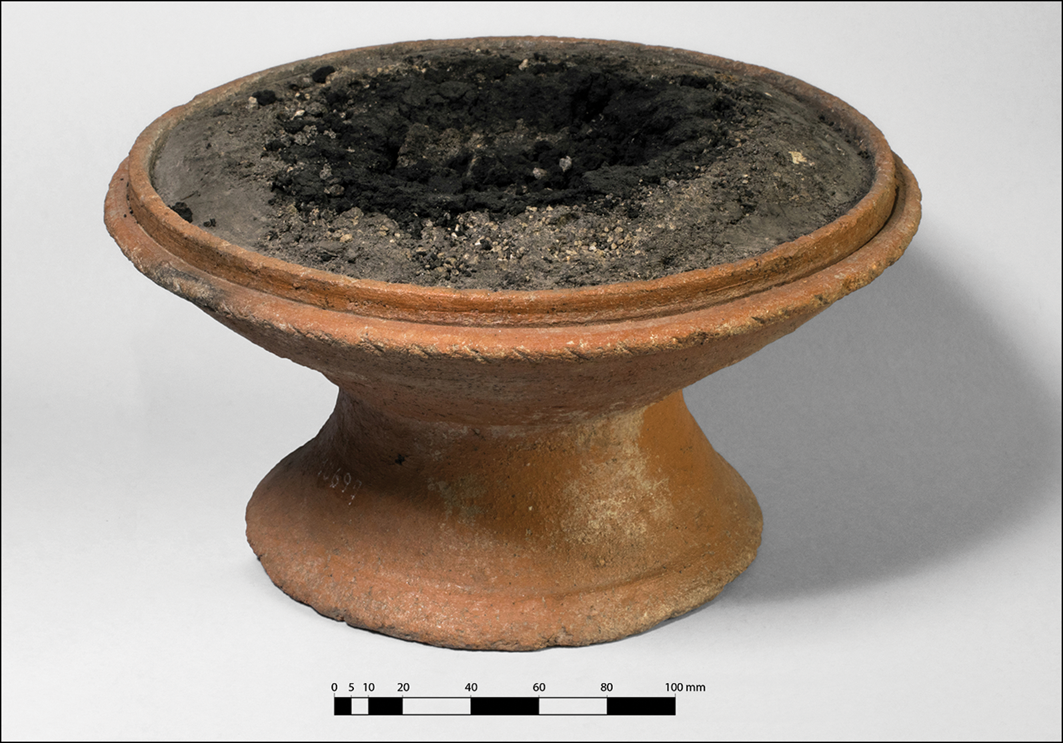
Censer no. 1 (PAP inv. 10697) (photograph by J. Eber).

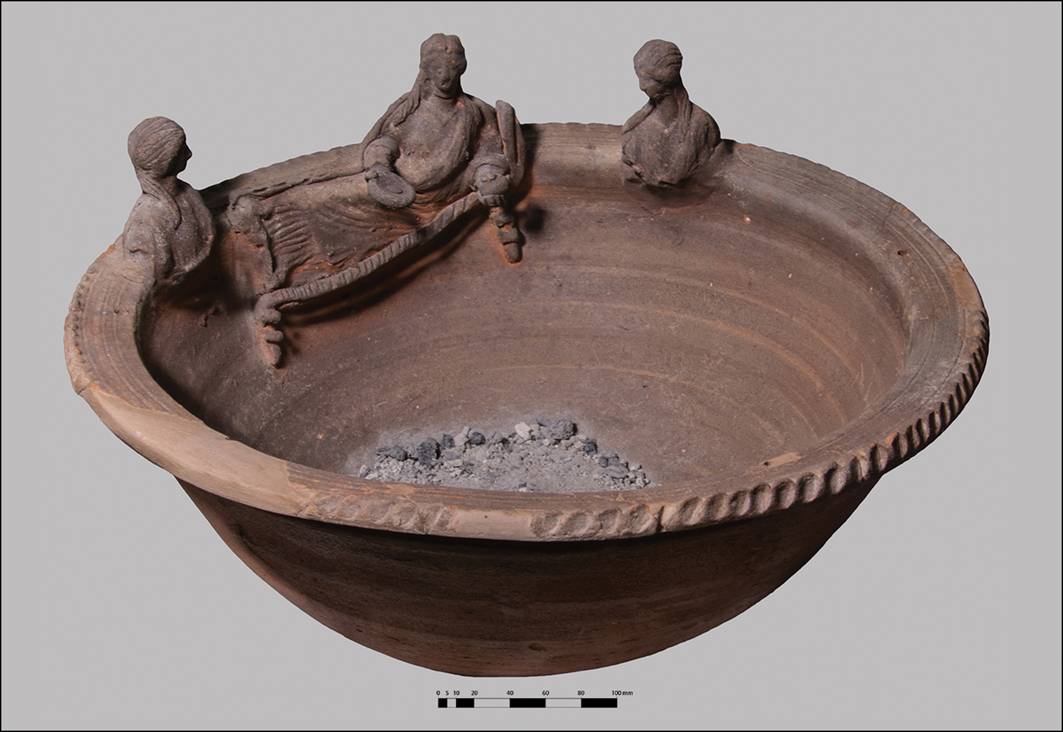
Censer no. 2 (PAP inv. 40196) (photograph by J. Eber).
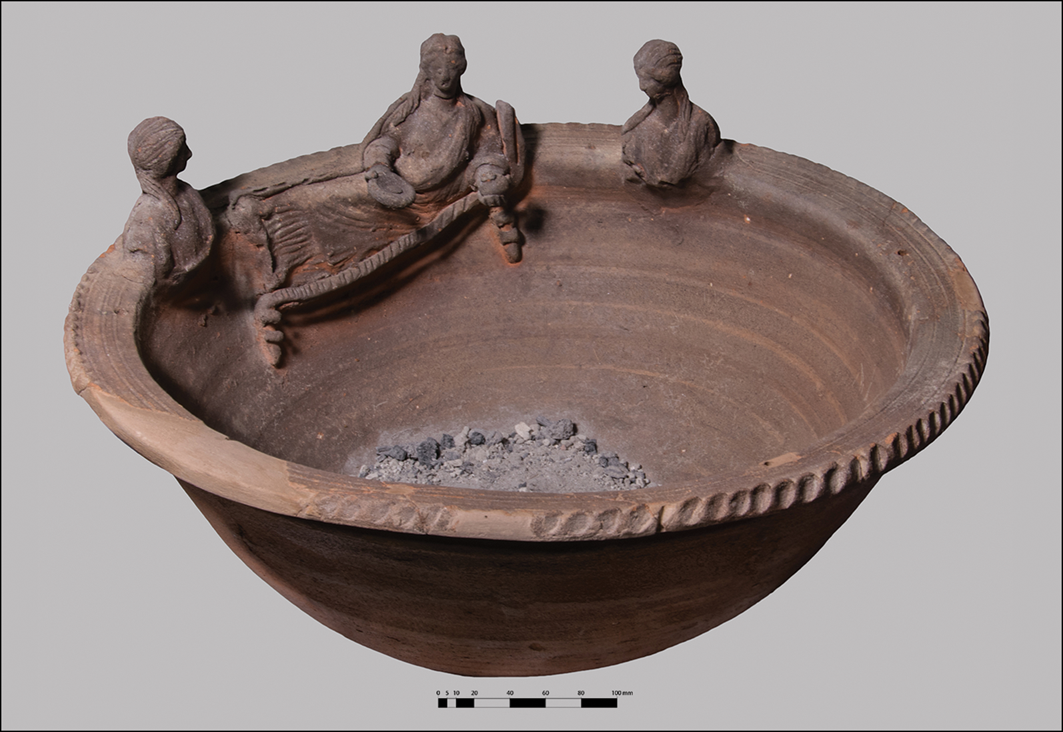
Figure 2 Long description
The terracotta censer features a wide, circular base with a slightly raised rim. On the surface, there are three human figures, each in a distinct pose. One figure is seated in a boat-like structure, holding an object. The other two figures are positioned on either side of the boat, appearing to interact with it. The interior of the censer contains some ash residue.
The two Pompeian incense burners are therefore an invaluable resource for deepening our understanding of smoke offerings in the Roman domestic cult. Through the application of organic residue analysis and the examination of phytoliths and calcitic (calcite-based) micro-remains, this article aims to identify the substances burnt in each vessel. The results of these analyses contribute to reconstructions of Roman domestic sacrifices, which have so far been primarily based on ancient texts and images (e.g. Fröhlich Reference Fröhlich1991; Elsner Reference Elsner, Faraone and Naiden2012; van Andringa Reference van Andringa2021: 79–98).
Classification, contexts and chronology of the censers
The two incense burners fit well into the typological spectrum of censers from Pompeii and beyond. Censer no. 1 is an incense cup, a goblet-like terracotta vessel composed of two parts: a conical foot and a shallow bowl (Figure 1) (D’Ambrosio & Boriello Reference D’Ambrosio and Boriello2001: 45, cat. 54). This form, encompassing minor morphological variations, is commonly found in the Vesuvian cities, Italy, Dacia and the north-western Roman provinces (Mihăilescu-Bîrliba Reference Mihăilescu-Bîrliba1996; D’Ambrosio & Boriello Reference D’Ambrosio and Boriello2001: 70–1, Gruppo G). Censer no. 1 was discovered in 1954 in the Officina di Sabbatino (II.8.4–5; this number format is specific to the Pompeian address system and identifies the location of a house or unit, which does not necessarily have a modern name), a building converted from a residence into an inn around the mid-first century AD. At the time of the volcanic eruption, the conversion was probably incomplete and the house uninhabited (Dentamaro Reference Dentamaro1997: 103–106). Smoke offerings and domestic sacrifices at construction sites were not uncommon in Pompeii and are attested at several other locations, such as IX.10.1 (Comegna & Corbino Reference Comegna and Corbino2023). The find context, together with the stratigraphic dating of comparable examples, places this censer in the Early Imperial period (late first century BC to the eruption of Mount Vesuvius in AD 79).
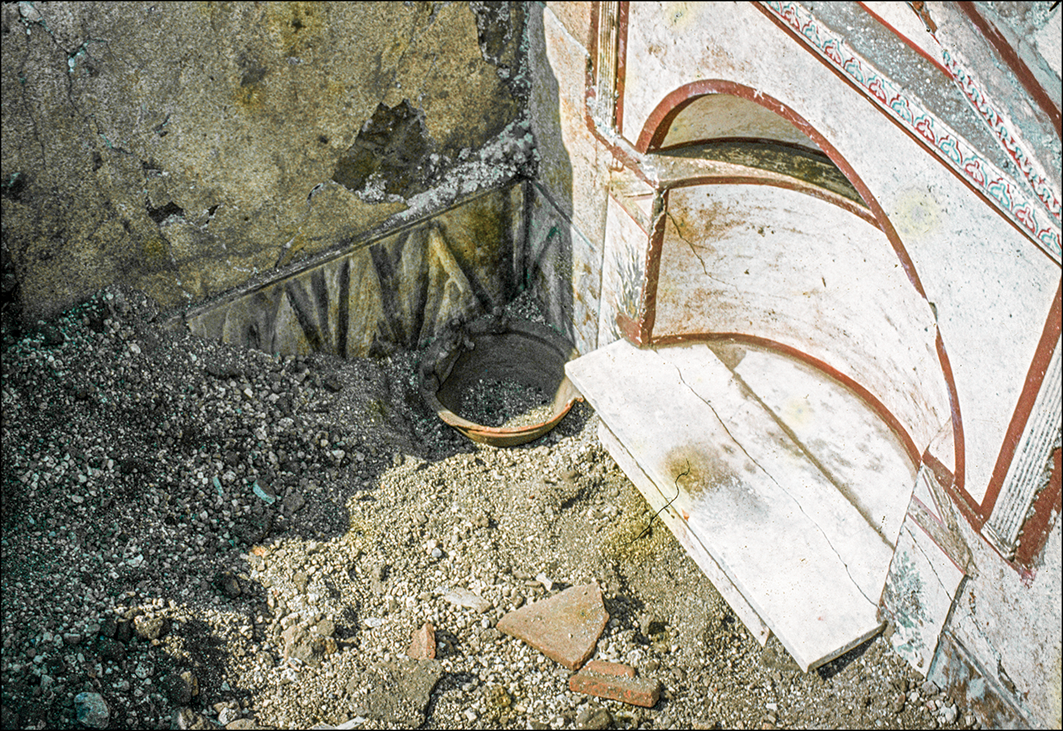
Censer no. 2 is a hemispherical bowl decorated with three anthropomorphic female appliqués—two busts flanking a reclining woman (Figure 2) (Fergola Reference Fergola1987: 165). Similar examples with attached female figures are attested at Pompeii and Campania, though they appear to represent a local type (D’Ambrosio & Boriello Reference D’Ambrosio and Boriello2001: 46–60, Gruppo E). The reclining figures likely depict deceased individuals venerated after their death (Eber Reference Eberin press). The censer was found in 1986 in situ within the fully furnished domestic shrine of a villa rustica in Boscoreale, a town near Pompeii (proprietà Risi di Prisco), together with a marble statuette of a reclining woman, a silver plaque and several vessels (Figure 3) (Stefani Reference Stefani2002: 112–15). This context identifies censer no. 2 as a cult instrument used for burning offerings during domestic rituals. Based on its form and the iconography of the appliqués, the vessel can be dated to the mid-first century BC to the mid-first century AD.
Censer no. 2 in situ in the domestic shrine at Boscoreale (Pompeii, Archivio Fotografico inv. H6803).
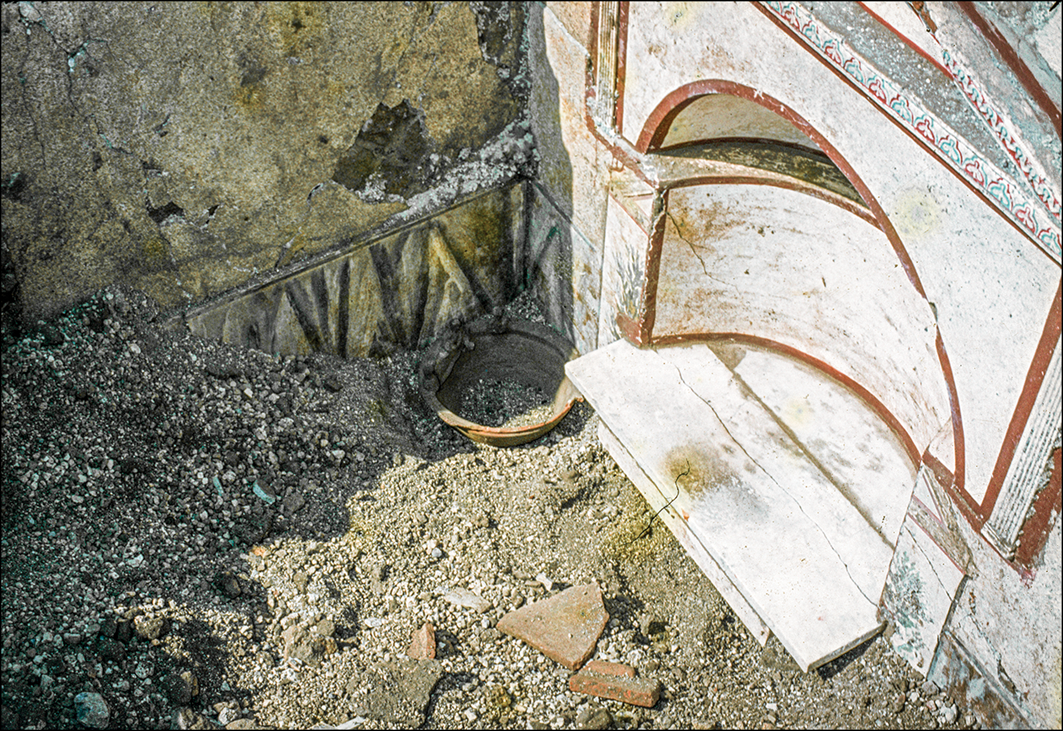
Figure 3 Long description
An image of censer number 2 situated within a domestic shrine at Boscoreale, Pompeii. The censer is surrounded by layers of ash and lapilli, remnants of the eruption of Mount Vesuvius in AD 79. The terracotta vessel shows signs of use, indicating it was likely used for burning fragrant resins as part of religious rituals. The surrounding area includes remnants of burnt organic material, which are rarely preserved in such contexts.
Smoke sacrifices in the Pompeian domestic cult
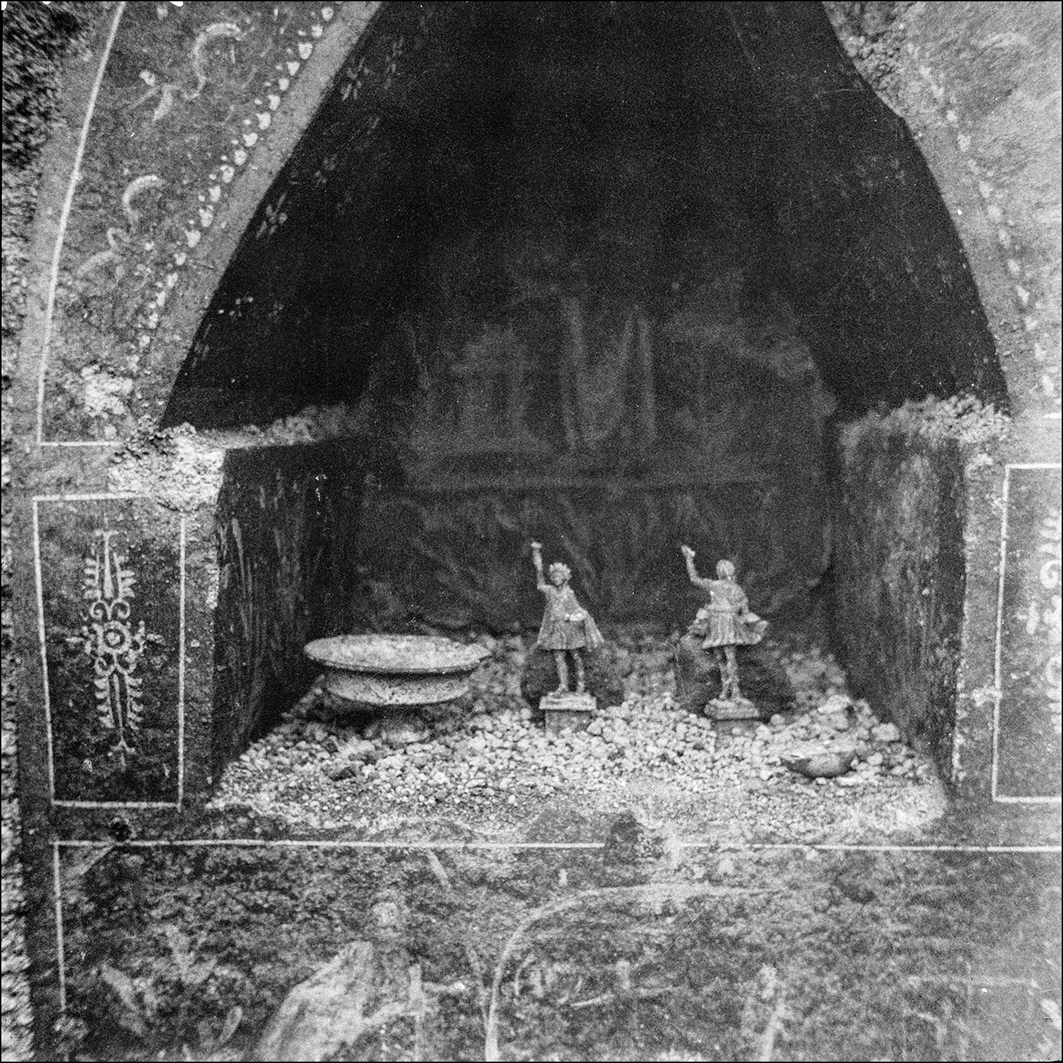
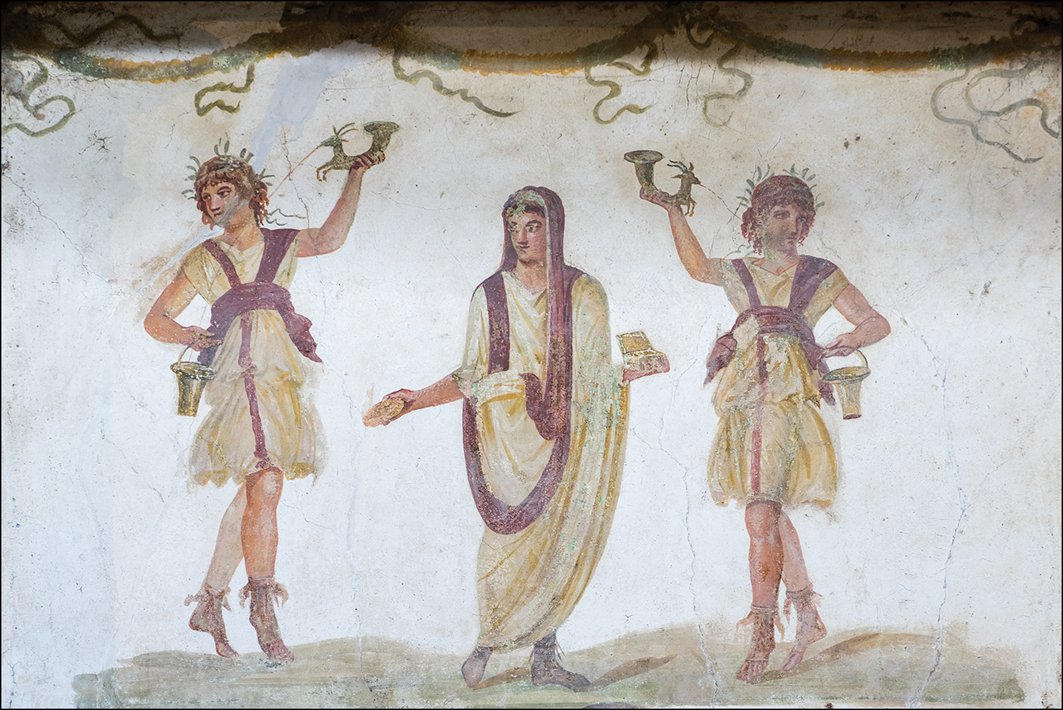
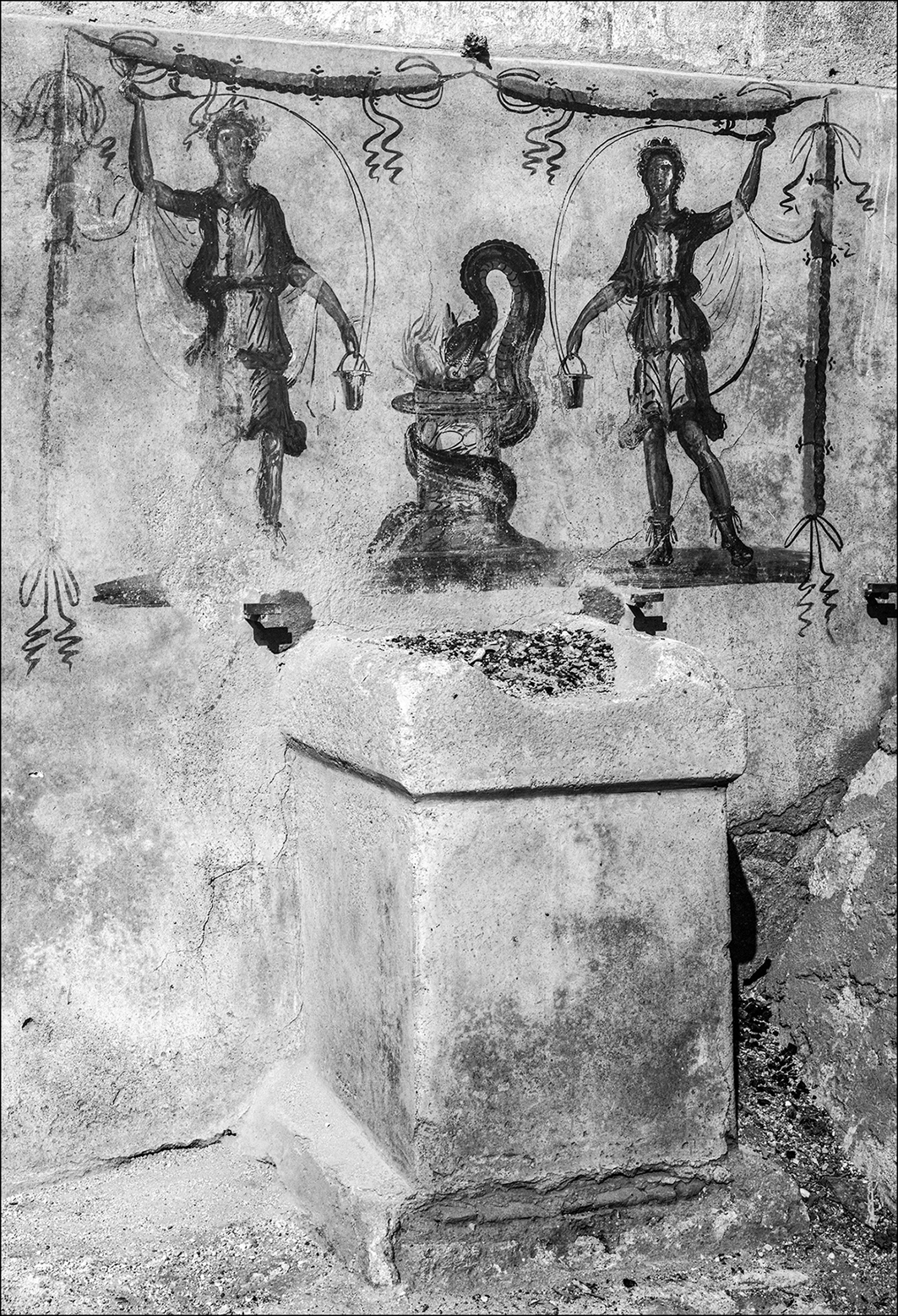
The archaeological contexts of both censers indicate an association with domestic cult practices—religious rituals conducted in residential and commercial buildings at household shrines (lararia) (Bassani Reference Bassani2008; van Andringa Reference van Andringa2009: 217–69). About 570 such shrines are known from Pompeii (Boyce Reference Boyce1937; Orr Reference Orr1972; Giacobello Reference Giacobello2008). They often include painted or sculptural depictions of the deities worshipped there—the Lares (guardians of the house and land), the Genius of the pater familias (the protective spirit of the male head of the household) and the Penates (protectors of the pantry) (Fröhlich Reference Fröhlich1991; Kaufmann-Heinimann Reference Kaufmann-Heinimann1998: 209–26). The shrine in Boscoreale, where censer no. 2 was found, as well as the lararium of the Casa del Larario del Sarno in Pompeii (I.14.7), demonstrate that such domestic shrines held ritual instruments for sacrificial offerings, including censers (Figure 4) (Maiuri Reference Maiuri1958: Tav. II; Eber Reference Eber2022; Eber Reference Eberin press). Domestic sacrifices are also well documented in Latin literature: Roman authors often mention incense offered to the Lares and Penates (e.g. Juvenal 12.87–89: Morton Braund Reference Morton Braund2004; Propertius, Elegies 3.10.19–22, 32: Goold Reference Goold1990); the scent of burning incense was considered sacred and pleasing to the gods (Elegies 4.4.1). Other sources record additional offerings such as wine, fruit, cakes, grain, flowers and wreaths (e.g. Plautus, Aulularia 24–25: De Melo Reference De Melo2011; Ovid, Tristia 3.13.13–17: Wheeler Reference Wheeler1924). Visual depictions also reflect incense offerings: in a painting in the lararium of the Casa dei Vettii (VI.15.1) a Genius flanked by two Lares holds a libation bowl and an open incense box (Figure 5).
Household shrine in the Casa del Larario del Sarno (I.14.7) with statuettes of Lares (PAP inv. 12125, 12126), a lamp (PAP inv. 12124) and a censer (PAP s.n.) (Pompeii, Archivio Fotografico inv. D964).
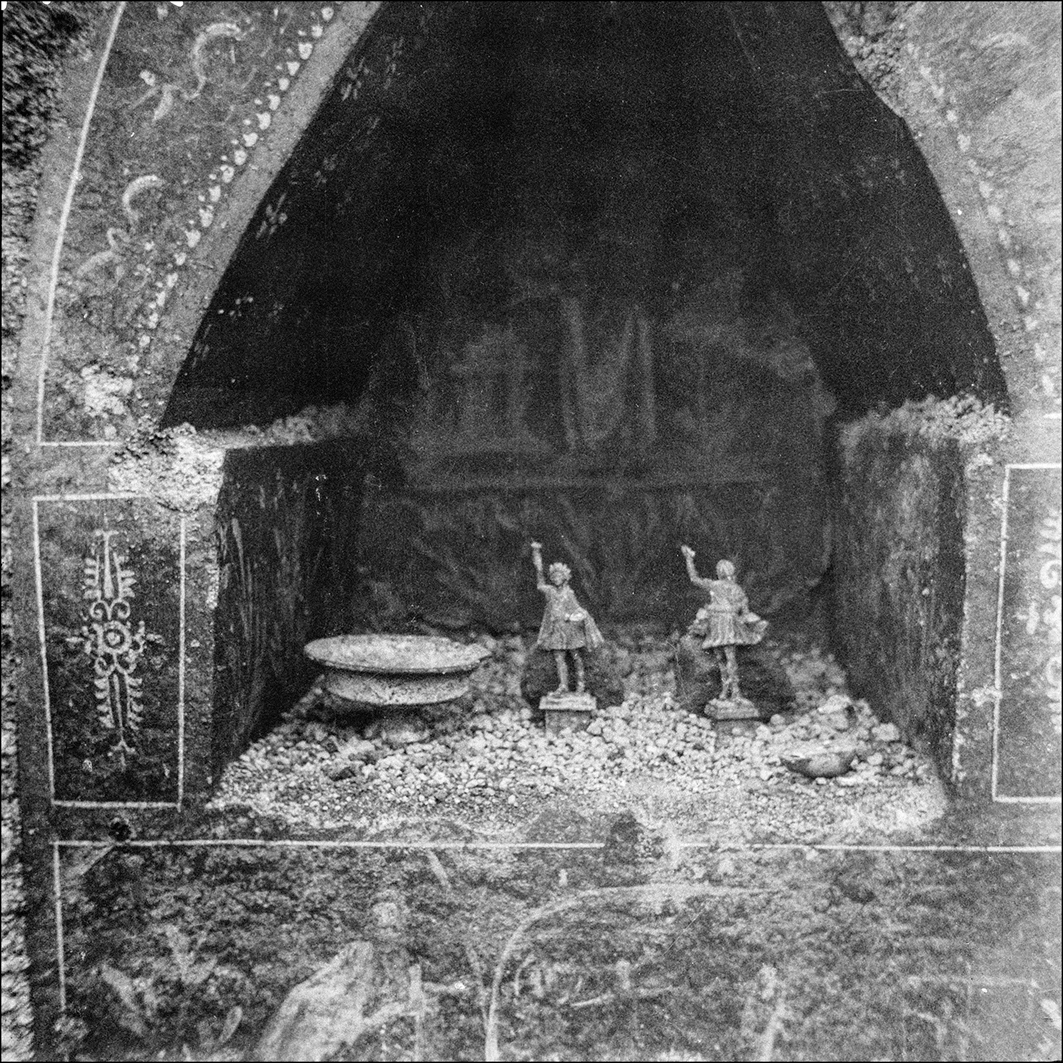
Figure 4 Long description
The image depicts a household shrine located in the Casa del Larario del Sarno, identified as I.14.7 in Pompeii. The shrine features two statuettes of Lares, labeled as PAP inv. 12125 and 12126, a lamp labeled as PAP inv. 12124, and a censer labeled as PAP s.n. The shrine is set within a niche, framed by decorative elements. The statuettes of Lares, which are protective household deities in Roman religion, are positioned prominently. The lamp and censer are placed in front of the statuettes, indicating their use in ritual offerings. The overall setting suggests a domestic religious practice, common in ancient Roman households.
Lararium of the Casa dei Vettii (VI.15.1) with painted Lares (height 660mm) and Genius (height 630mm) (photograph by J. Eber).

Figure 5 Long description
The fresco shows three figures standing on a raised platform. The central figure, draped in a long robe, is flanked by two younger figures wearing shorter tunics. The figures on the sides each hold a libation bowl and an open incense box, while the central figure extends a hand forward. The background features decorative elements, including swirling patterns and possibly snakes, suggesting a sacred or ritualistic setting. The figures are likely representations of Lares and a Genius, deities associated with domestic worship in ancient Roman culture.
Evidence of (frank)incense and sacrifices in Pompeii
Frankincense (the resin of the Boswellia tree, Latin: t(h)us) and other aromatic resins have so far not been archaeologically attested in Pompeii. Their presence is, however, documented epigraphically: a graffito from the Thermopolium di Fabius Memor e Celer (IX.7.24–25), probably written after AD 62, lists a small quantity of thus priced at one As, alongside staples such as oil, cheese and dates (CIL IV (Corpus Inscriptionum Latinarum vol. 4) 5380; Solin & Caruso Reference Solin and Caruso2016). The funerary inscription of the magistrate M. Obellius Firmus, from his tomb outside Porta Nola, also records that 10kg of frankincense were burnt at his burial (Cooley & Cooley Reference Cooley and Cooley2014: 195, F114).
Burnt remains of (domestic) sacrifices have been found in several Pompeian contexts. Early excavation reports from the eighteenth and nineteenth centuries mention residues on several altars and in incense burners, including ash residues on a bronze tripod from the sacrarium (shrine) of the Praedia di Giulia Felice (II.4.2; MANN Inv. 27874; Winckelmann Reference Winckelmann1762: 48–49) and the remains of a bird skeleton and a laurel branch in bronze tripods near the garden shrine of the Casa del Fauno (VI.12.2; Fiorelli Reference Fiorelli1862: 253). In the twentieth century, further ash residues were discovered on altars such as the street altar at I.11 (Figure 6; Della Corte Reference Della Corte1913: 189). However, none of these samples were scientifically analysed, and no material has survived.
Pompeii, street altar on the façade of I.11, height of the altar is 870mm (Pompeii, Archivio Fotografico inv. C756).

Figure 6 Long description
The image depicts a black-and-white photograph of a street altar located on the facade of a building in Pompeii. The altar stands at a height of 870 millimeters. Two figures are present on either side of the altar, each holding objects that appear to be part of a ritual or ceremonial context. The figure on the left holds a staff or rod, while the figure on the right also holds a similar object. Between these two figures, there is a serpent-like figure emerging from the altar, which is likely symbolic of the religious or ritualistic nature of the scene. The altar itself is a simple, rectangular structure with a flat top, and there are some small objects or offerings placed on it. The background shows a rough, textured wall, indicative of the ancient Roman architecture.
More recently, ritual deposits of miniature censers, ashes and charcoal, containing burnt plants and animal bones, have been excavated in several houses and studied microscopically (Ciaraldi & Richardson Reference Ciaraldi, Richardson and Fincham2000: 79; Robinson Reference Robinson2002, Reference Robinson2003, Reference Robinson and Roberts2019; Ellis et al. Reference Ellis2023: 144–45). Identified materials include the remains of various plants, fruit stones, pine nuts, walnuts, figs and pomegranates. Similarly, residues from the lararium in IX.10.1 revealed figs, dates, olives, pine nuts, eggshells and fish vertebrae (Comegna & Corbino Reference Comegna and Corbino2023) and the contents of an incense cup from the lararium of the Casa di Fedra (IX.12.B) consisted of burnt wood fragments—probably fuel—together with charred fig syconia and twigs with small leaves (Comegna Reference Comegna2024). While these observations are revealing, scientific analyses have the potential to identify further offerings.
Material and methods
The residues preserved in the two censers have not previously been studied. Analysis of the ashes from censer no. 2 is mentioned by G. Stefani (Reference Stefani2000: 438, note 76), but results were never published, and no documentation exists regarding any post-excavation treatment. Based on the excavation photograph (Figure 3), some lapilli appear to have been removed from the interior of censer no. 2; similar documentation is not available for censer no. 1. As neither censer was recovered during recent excavations, control samples of the surrounding soil and lapilli could not be obtained.
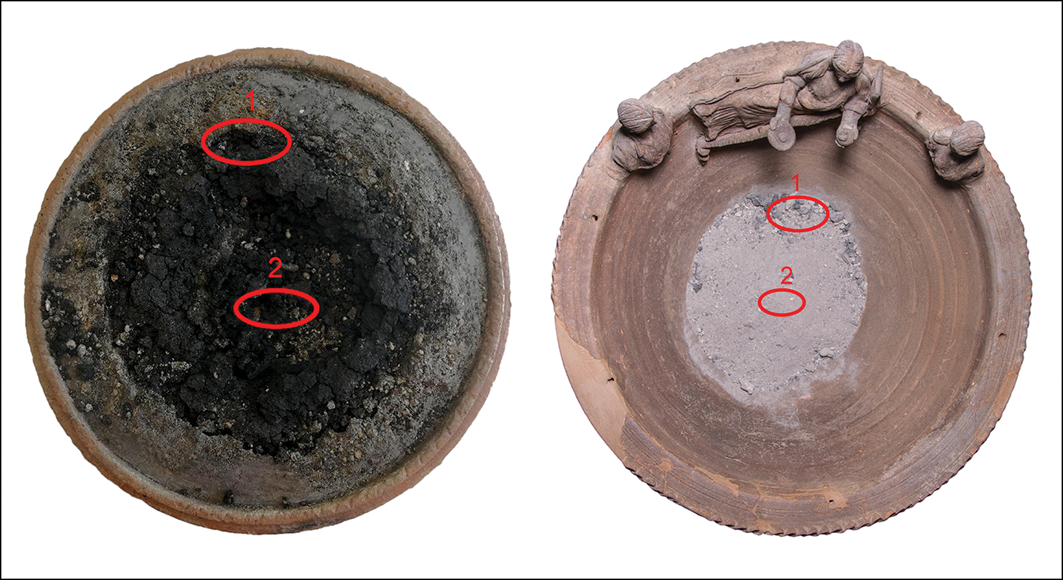
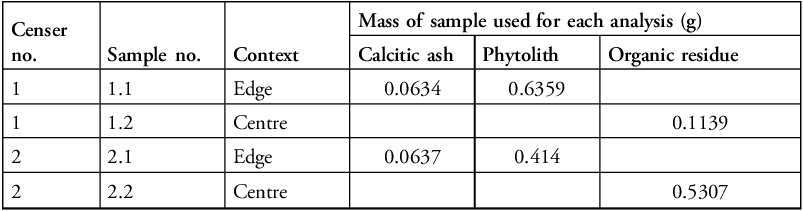
Sampling was minimally invasive to preserve the original appearance of both objects. For each vessel, samples of burnt material were taken at two points: near the rim and in the centre (Figure 7). Samples of the pebble-like, charcoal-rich material from censer no. 1 and the fine ashy residues from censer no. 2 were collected not from the surface but from a slightly deeper layer to avoid contamination. Details of the samples are provided in Table 1.
Locations from which the samples were taken. Left: sample nos. 1.1, 1.2; right: sample nos. 2.1, 2.2 (censers not to scale) (photographs by C. Comegna (PAP) & J. Eber).

Figure 7 Long description
The image shows two incense burners, each with marked sample locations. The left burner has samples labeled 1.1 and 1.2, while the right burner has samples labeled 2.1 and 2.2. The burners are not to scale. The left burner features a conical foot and a shallow bowl, typical of incense cups found in Vesuvian cities and other Roman provinces. The right burner has a similar structure with additional decorative elements on the rim. The samples are taken from specific points within the burners, indicated by red circles and arrows.
Measurements and distribution of the samples.

Ash calcitic micro-remains
The concentration of calcitic ash micro-remains in each sample was quantified to determine whether additional fuel was used for incense burning and, if so, what type. Two micro-remains were quantified: ash pseudomorphs of calcium oxalate crystals (CaOx; biominerals formed in woody plants) and dung spherulites, which develop in the intestines of ruminants and indicate the use of dung as fuel (Gur-Arieh & Shahack-Gross Reference Gur-Arieh, Shahack-Gross and Henry2020). Concentrations of dung spherulites and CaOx/ash pseudomorphs per 1g of sediment were calculated following the method of Gur-Arieh and colleagues (Reference Gur-Arieh2013). Approximately 40mg of sediment were sieved through a 150μm mesh. The residue was suspended in 500μL sodium polytungstate (2.4g/L density) and sonicated for 10 minutes to prevent aggregation. The suspension was vortexed, and immediately 50μL was mounted on a glass slide, covered with a 24 × 24mm cover slide and analysed at ×400 magnification—first under plane-polarised light for ash pseudomorphs and then under cross-polarised light for dung spherulites. Micro-remains were counted in about 30 fields of view, and their concentration per gram of sediment was calculated following the formula presented by Gur-Arieh and colleagues (Reference Gur-Arieh2013: 4335). The formula includes the following steps:
 $${{{\it{\sum }}{\;of\;microremains\;counted\;} \over {\;Area\;counted\;( {no.\;\;of\;fields\;counted\;\times\;area\;of\;1\;field\;of\;view} )}} \times Area\;of\;the\;slide \\ = no.\;of\;microremains\;on\;the\;slide\;\left( {50\mu l} \right) = A}$$
 $${{{10A = no.\;of\;microremains\;in\;all\;the\;solution\;\left( {500\mu l} \right)} \over {Initial\;sample\;weight\;( {mg} )}} \times 1000 \\ = no.\;of\;microremains\;in\;1\;gr\;sediment}$$
Sample no. 1.1 consisted mainly of charred material, preventing reliable identification of ash micro-remains; it was therefore reanalysed after heating at 500°C for four hours, leaving approximately 6mg of residue.
Phytoliths
Phytoliths are durable biogenic silica particles that form in plants and can survive decomposition or burning. They often preserve the shape of the cells in which they developed, allowing identification of plant species and plant parts (Power et al. Reference Power2014). To eliminate large charcoal fragments, sample no. 1.1 was dry-ashed by heating it to 550°C for three hours in a muffle oven and leaving it to cool for 30 minutes. One millilitre of 6M hydrochloric acid (HCl) was then added to sample no. 2.1 and the dry-ashed sample no. 1.1 to decalcify combustion-generated calcites. The samples were left until the reaction ceased (approximately two hours), then rinsed and centrifuged at 2000 × g for 10 minutes (Roth Mini-centrifuge) to remove the HCl, which was extracted from the samples by pipetting off the supernatant. This process was repeated three times.
A weighed portion of each processed sample was mounted on glass slides with 18 × 18mm or 22 × 22mm coverslips, depending on sample volume. Approximately 20µL of 25% glycerine solution was added before applying the coverslip. The mounting was performed in a laminar flow hood, and the slides were examined under brightfield and cross-polarised light using a Leica DM 5500 B microscope (N Plan 20×/0.40, HCX Plan 40×/0.65, HC PL Fluotar 63×/0.90, halogen light source). Phytoliths were enumerated through single and multi-cell counts using standard methods, counting each on its own tally (Weiss et al. Reference Weiss2022). Single-cell tallies include each single-cell phytolith as part of each multi-cell. Morphotypes were then counted using a field count method, which involved counting a recorded slide area, column by column, until a set count was reached. The number of phytoliths on the slide was calculated using the following algorithm (Power et al. Reference Power2014):
 $$No.\;phytoliths\;per\;slide = {{no.\;phytoliths\;counted} \over {no.\;fields\;counted}} \times total\;no.\;fields\;on\;the\;slide$$
This value was then used to derive a comparable unit of quantification for each phytolith type per gram of dry sediment as follows:
 $$\small{No.\;phytoliths\;per\;gram = {{no.\;phytoliths\;per\;slide} \over {tota\;amount\;of\;sediment\;mounted\;( {mg} )}} \times {{total\;phytolith\;amount\;( {mg} )} \over {total\;initial\;sediment\;(mg)}} \times 1000}$$
Organic residue analysis
Samples 1.2 and 2.2 (from the centres of the censers) were used for organic residue analysis, a bioarchaeological approach examining biomolecular components derived from the metabolites of plant and animal resources. Lipids are generally the most studied compounds, but other products, including plant secondary metabolites such as resins or fragrance oils, are also considered. Following established protocols (Mottram et al. Reference Mottram1999; Garnier & Valamoti Reference Garnier and Valamoti2016), lipid/resin extraction was performed using organic solvents (DCM:MeOH 2:1), followed by acid extraction and butylation to target fruit diacids, which are insoluble in organic solvents. The samples were then trimethylsilylated and analysed by gas chromatography and gas chromatography mass spectrometry (GC and GC-MS), following established parameters (Rageot et al. Reference Rageot2019a).
Results
Analysis of ash calcitic micro-remains indicates that neither sample contains dung spherulites and both have a high concentration of mostly rhombs-shaped ash pseudomorphs in the range of 3–3.6 million per gram of sediment. These results indicate the burning of woody plants, mainly eudicotyledons (or eudicots: flowering plants with two seed leaves (cotyledons) at the time of germination) based on the dominance of rhombs-shaped pseudomorphs (cf. Table S1; Durand et al. Reference Durand and Stoops2010; Prychid & Rudall Reference Prychid and Rudall1999).
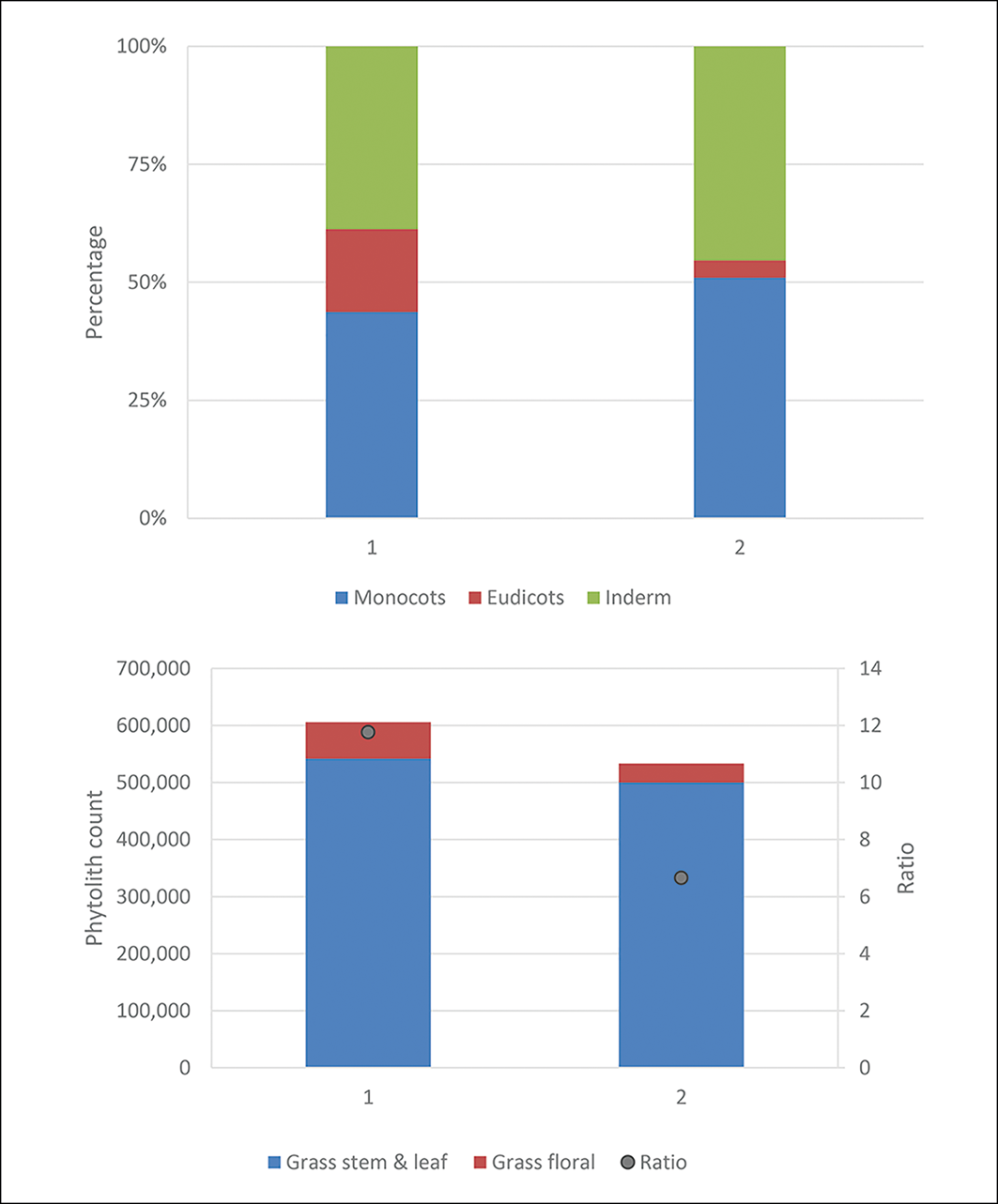
Phytoliths are present in both censers, showing concentrations of 4 866 660 (no. 1.1) and 384 578 (no. 2.1) per gram (cf. Table S2). Both samples are characterised by higher percentages (60–93%) of phytoliths derived from monocots and lower percentages of phytoliths derived from eudicots (6.3–40%; Figure 8). Grass short-cells are dominated by grasses of the subfamily Pooideae (sample no. 1.1: Pooideae = 414 493, Chloridoideae = 79 710, Panicoideae = 47 826; sample no. 2.1: Pooideae = 14 438, Chloridoideae = 1313, Panicoideae = 1313). Pooideae grasses typically grow in areas with seasonal climates, while Chloridoideae are associated with arid climates and Panicoideae are typical of tropical growing conditions. Morphotypes from eudicots are present in both samples (1.1 = 621 739; 2.1 = 13 126), with the presence of the facetate tracheids, hairbases, polyhedron and angular morphotypes indicating leafy eudicots (Hermans et al. Reference Hermans2025).
Attribution of phytoliths (top); total numbers of floral versus leaf/stem from the total monocots phytolith counts that can be assigned to plant parts on left axis, with floral-stem/leaf ratio on right axis (lower) (figure by R. Power).

Figure 8 Long description
The image contains two bar graphs. The top graph shows the attribution of phytoliths, divided into monocots, eudicots, and indeterminate categories. The x-axis represents two different samples labeled 1 and 2, while the y-axis shows the percentage distribution. The bottom graph displays the total numbers of floral versus leaf/stem parts from the total monocot phytolith counts. The left y-axis indicates the phytolith count, and the right y-axis shows the floral-stem/leaf ratio. The bars in blue represent grass stem and leaf, while the bars in red represent grass floral. The circles on the bars indicate the ratio values. The graphs illustrate the distribution and ratio of different plant parts in two samples.
Phytoliths indicate the presence of a variety of plant types and parts, including grass stems and husks. Most of the phytoliths derive from C3 grasses but there is also some evidence for C4 grasses (Panicoideae and Chloridoideae) and thick-leaved shrubs in both censers.
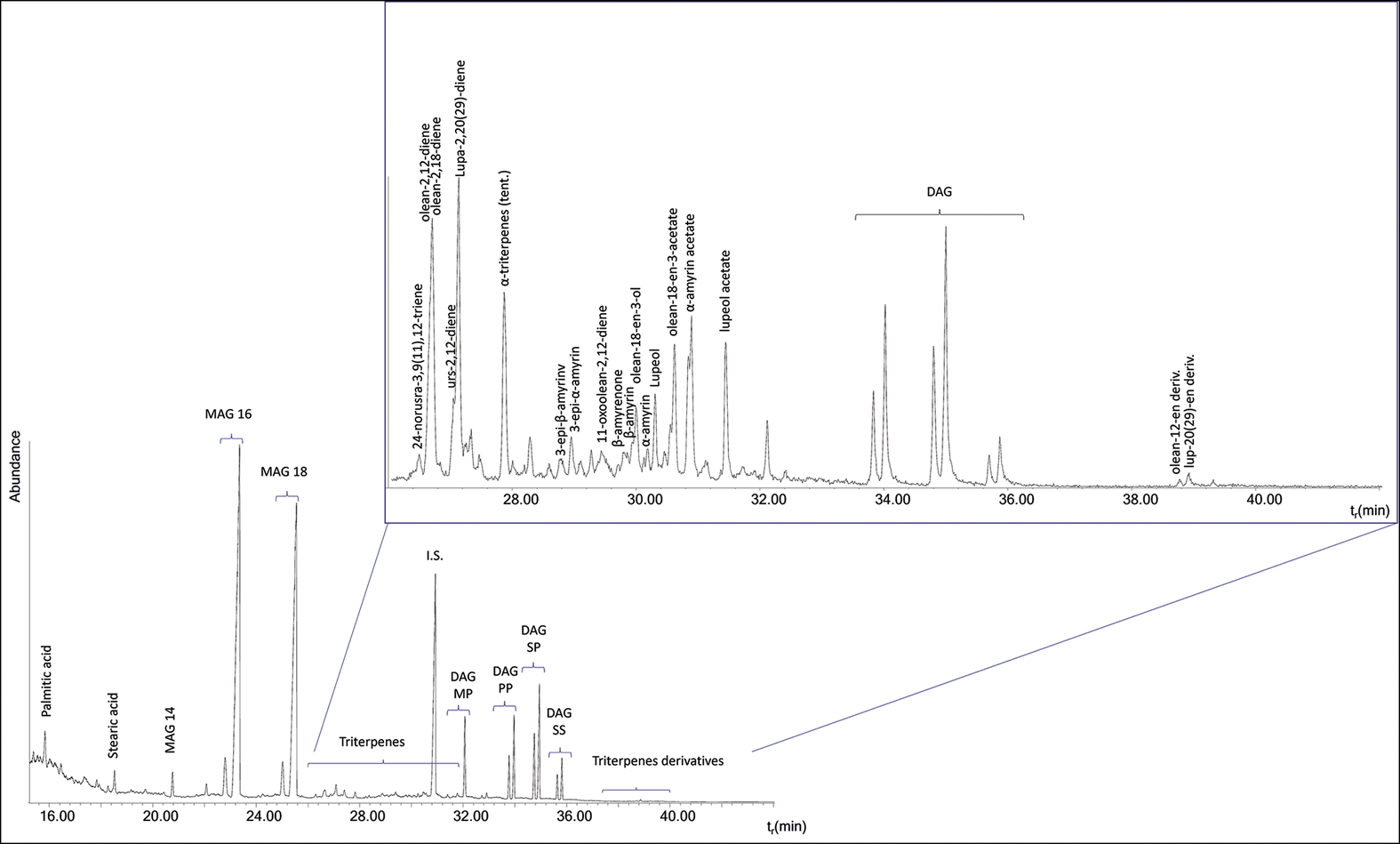
Molecular analysis of the organic residues reveals no biomarkers in sample no. 1.2. This suggests that lipids/resins are not preserved in censer no. 1. However, molecular analysis of sample no. 2.2 via GC-MS identified triterpenic markers that can be associated with a Burseraceae resin, probably from Canarium (a genus of tropical and subtropical trees), as well as markers of fatty substances and aldaric acids suggesting the presence of a grape product. The association of α- and β-amyrins, lupeol and their derivatives also strongly suggests the presence of a Burseraceae resin, in particular a Canarium resin also known as elemi (e.g. Rageot et al. Reference Rageot2023). In addition to α-amyrin acetate and lupeol acetate, the presence of epi-amyrins (α and β) and epi-lupenol confirms the presence of Burseraceae resin, as these compounds are identified in both frankincense and elemi (Mathé et al. Reference Mathe2004; Regert et al. Reference Regert2008; Rageot et al. Reference Rageot2023). However, boswellic acids/acetates, which are characteristic markers of frankincense, were not detected in sample no. 2.2, nor were their degradation products (24-noroleana-3,12-diene and 24-norursa-3,12-diene) (Evershed et al. Reference Evershed1997).
Although the presence of some of the identified compounds may be related to natural decay processes, the detection of pentacyclic triterpene hydrocarbons, mainly derived from the dehydration of resin biomarkers (e.g. lupa-2,20(29)-diene; urs-2,12-diene), suggests exposure to heat treatment (Rageot et al. Reference Rageot2019b). The presence of acetate derivatives of olean-18-en-3-ol, α-amyrin and lupeol could also be considered as a secondary indicator of resin heat treatment (Rageot et al. Reference Rageot2023), although α-amyrin acetate has also been identified as a biomarker of Canarium strictum resin, the Indian elemi (Hinge et al. Reference Hinge1965).
The presence of a combination of succinic, fumaric, malic and tartaric acids in significant quantities within the residues contained in censer no. 2 (sample no. 2.2) (>5µg/g of residue) suggests the presence of a fruit-derived product, most likely of grape origin (e.g. Rageot et al. Reference Rageot2019a; Drieu et al. Reference Drieu2020). A malic-to-tartaric acid ratio of 0.7 could correspond to the chemical signature of a ripe grape product, such as wine or vinegar (Drieu et al. Reference Drieu2021). However, caution is required in identifying these biomarkers, particularly when they are not retrieved from the clay matrix of the vessel (Garnier Reference Garnier and Bernal-Casasola2021) and post-depositional contamination cannot be excluded. Indeed, no sediment control samples from the context were preserved, preventing the final confirmation that these biomarkers are associated with the original content of the incense burner. Likewise, the presence of fatty substance markers in this surface residue (i.e. not absorbed into the clay matrix of the vessel), such as monoacylglycerols or even diacylglycerols, does not rule out later contamination from biological soil activity (including from modern human contact), especially when they are associated with a low quantity of free fatty acids (Figure 9 & S1).
Partial gas chromatograms of organic residues extract from censer no. 2. The top right window corresponds to the Ion Extract Chromatogram (m/z 189) showing the triterpenes constituents of the Burseraceae resin. MAG: monoacylglycerols; DAG: diacylglycerols; M: Myristin; P: Palmitin; S: Stearin; I.S.: internal standard (figure by M. Rageot).

Figure 9 Long description
The line graph displays partial gas chromatograms of organic residues extracted from censer number 2. The top right window corresponds to the Ion Extract Chromatogram (m/z 189), showing the triterpenes constituents of the Burseraceae resin. Key components such as monoacylglycerols (MAG), diacylglycerols (DAG), myristin (M), palmitin (P), and stearin (S) are labeled. An internal standard (I.S.) is also indicated. The graph provides detailed peaks and troughs representing the abundance of various compounds over time, with specific labels for MAG 16, MAG 18, and other triterpenes and their derivatives.
Discussion
The concentration of ash pseudomorphs in both analysed samples indicates that woody plants were burnt in both censers. This may reflect the use of charcoal or a similar fuel but could also derive from the offered plant or incense itself. Identified phytoliths suggest that the plant groups represented most likely include oaks (Quercus), laurel (Lauraceae) and mulberry or other stone-fruit plants (Moraceae or Prunus sp.). This identification is indicative rather than definitive due to capture biases and taphonomic filtering in phytolith assemblages (Power et al. Reference Power2021). Both censers thus contain traces of burnt plants, consistent with some of the votive deposits described in classical texts and previously published microscopic analyses. The similarity of these residues to those recently analysed from the lararium in house IX.10.1 (Comegna & Corbino Reference Comegna and Corbino2023) and the incense cup from the Casa di Fedra (IX.12.B) (Comegna Reference Comegna2024) suggests that plant offerings were a common practice in the Pompeian domestic cult. While some plants, such as the C4 grasses, may have been imported, the simultaneous presence of similar plants in non-cult-related contexts at Pompeii (Ciarallo Reference Ciarallo2004: 212–50; cf. Jashemski et al. Reference Jashemski2002) suggests that most of the plants used as offerings were locally grown. Roman authors report that some of these plants were sacred to specific gods: oak was sacred to Jupiter (Pliny the Elder, Historia Naturalis 16.11: Rackham Reference Rackham1945), while laurel was burnt in honour of Apollo (Elegies 2.28a, 36). Written sources are, however, not always explicit about plant sacrifices in domestic contexts and the wreaths (coronae) mentioned in several texts cannot be further specified (e.g. Aulularia 385–87; Tristia 3.13.13–18).
The burnt Burseraceae resin residues in censer no. 2 represent the first archaeological evidence of an imported resin in Pompeii. While the possibility of a Boswellia resin, derived from trees endemic to the southern Arabian Peninsula or East Africa, cannot be entirely excluded, the traces most likely derive from Canarium (elemi), which may have originated in sub-Saharan Africa or Asian rainforests, particularly India (Rageot et al. Reference Rageot2023: fig. 5). In conjunction with finds such as the Indian statuette of Lakshmi from the Casa della Statuetta Indiana (I.8.5; MANN Inv. 149425; Ferrari Reference Ferrari2016), this resin underscores Pompeii’s integration into a trade network extending far beyond the borders of the Roman Empire. Odoriferous resins from Arabia and the African and Asian rainforests were traded alongside commodities from India and sub-Saharan Africa, moving northward across the Red Sea from at least the first century BC (Historia Naturalis 12.64; cf. Groom Reference Groom1981; Young Reference Young2001; Mattingly et al. Reference Mattingly2017; De Romanis Reference De Romanis2020). These goods were eventually shipped via Alexandria to Italy through Portus and Puteoli, where incense traders are also attested epigraphically (Faider-Feytmans Reference Faider-Feytmans1952: 151, cat. R.71).
Beyond these economic insights, the results presented here provide a rare archaeological perspective on ritual practices, previously attested only in written and visual sources. Alongside the burnt Burseraceae resins, organic residue analysis detected traces of fat and grape biomarkers in censer no. 2. While caution in interpretation must be maintained, this may suggest that wine was poured into the vessel. The combined offering of wine and (frank)incense (ture ac vino) was among the most commonly enacted preliminary sacrificial acts in Imperial Rome. Known as the praefatio, this ritual is frequently depicted in sacrificial scenes showing a togatus (a man wearing a toga) with an open incense box pouring a libation onto an altar. Relief work and painted lararia in Pompeii indicate that this ritual also took place in the city (Figure 4; e.g. CIL VI 2065 I 19; Cato, De agri cultura 134, 1–2, Hooper Reference Hooper1934; cf. Scheid Reference Scheid2003: 79–83; Elsner Reference Elsner, Faraone and Naiden2012). As noted above, the iconography of the appliqué busts on censer no. 2 links the vessel to domestic commemoration of the dead. The offering of incense and wine also played a central role in the Early Imperial funerary cult, as evidenced by literary descriptions by Statius and Martial and by the recovery of incense burners from Pompeian funerary contexts and the inclusion of libation tubes used for wine and perfume as offerings in graves (e.g. Statius, Silvae 2.1.158–62; 2.6.85–90, Shackleton Bailey Reference Shackleton Bailey2015; Galeandro et al. Reference Galeandro and Osanna2021: 249; Van Andringa Reference van Andringa2021: 115–28).
Conclusion
By using a combination of different analytical methods, we can gain a broader understanding of the different substances that were burnt inside Pompeian censers. Although the sparsely documented post-excavation histories of both artefacts analysed here necessitates caution in interpreting the results, the preserved ash pseudomorphs and phytoliths support the identification of (presumably) locally grown plants. This provides an additional perspective on domestic rituals, as written sources often emphasise the use of imported (frank)incense. The presence of resin remnants of this kind, identified through organic residue analysis, are reported archaeologically for the first time from Pompeii. These findings not only reinforce understandings of Pompeii’s wide trade connections but, together with the traces of grape biomarkers, offer an archaeological complement to written and visual sources concerning Early Imperial sacrificial practices.
Acknowledgements
We thank the former and current directors of the Parco Archeologico di Pompei (PAP), Massimo Osanna and Gabriel Zuchtriegel, for authorising the analyses and the publication of this study. Many thanks go also to Anna Maria Sodo, Valeria Amoretti and Chiara Comegna (PAP) for further authorisation and practical help, as well as to Ruth Bielfeldt (Ludwig-Maximilians-Universität München). All photographs are courtesy of the Ministero della Cultura, Parco Archeologico di Pompei; reproduction by any means is prohibited.
Funding statement
This study was co-funded by the European Research Council (ERC) under the European Union’s Horizon 2020 research innovation programme (ERC-2015-StG 678901-Food-Transforms) as part of Philipp Wolfgang Stockhammer’s ERC Starting Grant project ‘FoodTransforms: Transformations of food in the Eastern Mediterranean Late Bronze Age’. Johannes Eber’s research was funded as part of ‘Distant Worlds. Munich Graduate School for Ancient Studies’ (GSC 1039). Robert C. Power is funded by Research Ireland 32/PATH-A/9284.
Online supplementary material (OSM)
To view supplementary material for this article, please visit https://doi.org/10.15184/aqy.2026.10320 and select the supplementary materials tab.
Author contributions: using CRediT categories
Johannes Eber: Conceptualization-Lead, Data curation-Equal, Formal analysis-Equal, Investigation-Equal, Methodology-Equal, Project administration-Lead, Supervision-Lead, Visualization-Equal, Writing - original draft-Lead, Writing - review & editing-Lead. Shira Gur-Arieh: Data curation-Equal, Formal analysis-Equal, Investigation-Equal, Methodology-Equal, Writing - original draft-Equal, Writing - review & editing-Equal. Robert C. Power: Data curation-Equal, Formal analysis-Equal, Investigation-Equal, Methodology-Equal, Visualization-Equal, Writing - original draft-Equal, Writing - review & editing-Equal. Maxime Rageot: Data curation-Equal, Formal analysis-Equal, Investigation-Equal, Methodology-Equal, Visualization-Equal, Writing - original draft-Equal, Writing - review & editing-Equal. Philipp Wolfgang Stockhammer: Conceptualization-Supporting, Funding acquisition-Lead, Project administration-Equal, Writing - original draft-Supporting, Writing - review & editing-Supporting.


 Open access

