Excessive consumption of energy-dense and nutrient-poor foods by children is associated with poorer diet quality and increased risk of overweight and obesity( Reference Swinburn, Caterson and Seidell 1 , 2 ). In the Australian Guide to Healthy Eating, energy-dense and nutrient-poor foods are distinguished from ‘core foods’ and referred to as ‘extra foods’ which should provide only 10–20 % of young children's daily energy intake. In fact, they comprised 35 % of Australian children's daily energy intake in 2007( Reference Rangan, Kwan and Flood 3 ). Another study of 16–24-month-old Australian children showed that those children with highest ‘extra food’ intake had significantly lower nutrient intakes, suggesting that these foods displace nutrients( Reference Webb, Lahti-Koski and Rutishauser 4 ). Observation of Australian pre-school children's lunch boxes also indicated that most were ‘overloaded’ with ‘extra foods’( Reference Hardy, King and Kelly 5 ).
While socio-economic status (SES) is associated with weight in Australian pre-school children( Reference Wake, Hardy and Canterford 6 ) and parents’ values regarding weight status( Reference Pagnini, Wilkenfeld and King 7 ) and knowledge of food and health( Reference Coveney 8 ), few studies have specifically explored parents’ views on ‘extra foods’ or focused on low-SES parents.
The present study sought to investigate parents’ understanding and approaches to providing ‘extra foods’ to their pre-school children and any variations between parents of low SES (LS) and high SES (HS).
Experimental methods
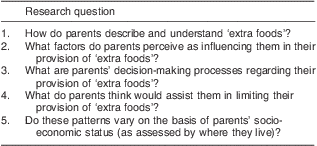
The specific research questions are listed in Table 1. Focus groups were used as an appropriate means of exploring parents’ understanding and perceptions and how they present these ideas among their peers( Reference Green and Thorogood 9 ).
Research questions addressed in the present study
Focus groups were organised through child-care centres and comprised parents and carers from the same centre.
Selection of study sites and participants
Child-care centres in two distinctively LS and two distinctively HS local government areas within New South Wales, Australia were identified. The SES of the local government areas was determined using the Socio Economic Index for Areas (SEIFA)( 10 ).
A mix of both pre-schools and long-day-care centres was purposefully selected, as these provide different care and educational arrangements and may attract parents of different social characteristics. All centres in target LS local government areas were telephoned and invited to participate. In HS local government areas, centres were invited to participate through one of their routine network meetings. Following an agreed protocol, centre directors recruited parents for focus groups.
Focus group participants comprised parents or carers who were the primary carer of a 3–5-year-old child attending the selected centre and involved in family food provision. All group discussions were conducted in English.
The study was conducted according to the guidelines laid down in the Declaration of Helsinki and all procedures involving human subjects were approved by the Harbour Human Research Ethics Committee and ratified by the University of Sydney Human Research Ethics Committee. Both child-care centres and parents received information about the study and its purpose, and provided written consent to participate. A supermarket voucher and a full colour cookbook were provided as an incentive for parents to participate.
Focus group questions
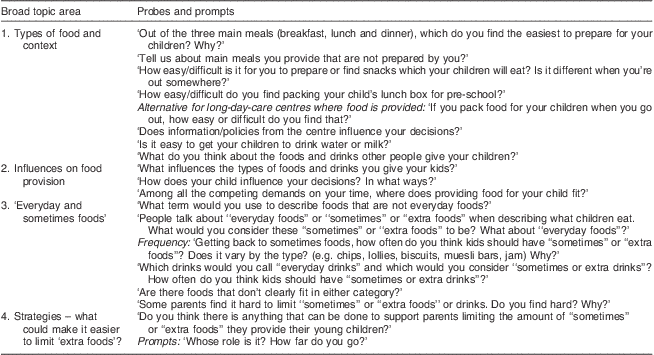
A set of focus group discussion questions based on the research questions organised into four topic areas, with prompts within each, were formulated (Table 2). A pilot focus group was conducted to check that the questions were understood and elicited the types of information that addressed the research questions.
Schedule for the focus group discussions
Conduct of the focus groups
All focus groups were held at child-care centres; refreshments were provided. The introduction emphasised that the study was not about food provided in child care and that discussion was confidential. The two lead investigators (N.A.P., R.L.W.) alternated roles as facilitator and note-taker. The note-taker documented important characteristics of group members not otherwise known, non-verbal behaviour, interaction and other key points to help interpret transcripts. Participants provided written consent for discussions to be digitally recorded. Interviews were transcribed in full, with the identity of groups retained. Digitally recorded files were erased once transcripts were finalised. Participants also provided demographic information.
Coding and analysis
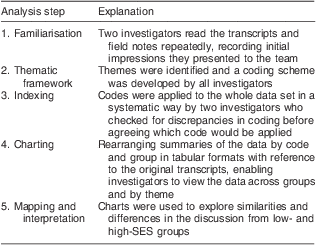
Data were coded and analysed according to the methods of framework analysis and thematic analysis( Reference Green and Thorogood 9 , Reference Ritchie and Lewis 11 ), which are summarised in Table 3.
Framework analysis steps and an explanation of each step
SES, socio-economic status.
A lead investigator and co-investigator each reviewed half of the transcripts and generated a list of codes. All investigators reviewed the combined lists of codes and agreed on a final set to be applied to the complete data set.
Framework analysis was used to address research questions 2, 3 and 4; this facilitated rigorous, systematic and transparent exploration of similarities and differences between LS and HS groups. Data were summarised into tables for each of the major themes and sub-themes by LS and HS, in order to create summaries for each SES group and a final integrated summary( Reference Ritchie and Lewis 11 ). The data addressing research question 1, comprising simple descriptions of foods (‘extra foods’ or ‘sometimes foods’ and ‘everyday foods’), were charted separately for LS and HS groups.
Results
Group and participant characteristics
Thirteen focus groups were conducted, six in LS areas and seven in HS areas, with similar numbers across pre-schools (six) and long-day-care centres (seven). There were eighty-eight participants, forty-four from LS areas and forty-four from HS areas, with three to eleven participants in each group, and an average of seven.
Table 4 provides a summary of the demographic characteristics of participants according to SES group. The groups’ SES differences were reflected in participants’ education levels (59·1 % of LS participants completed Year 12 v. 84·1 % of HS participants). Most participants were female (93·2 %). The majority (79·5 %) of participants recruited from centres located in LS areas resided in this same postcode; 96·7 % of HS participants lived in locations with SES matching that of their child-care centre. Participants from LS groups were predominantly from English-speaking backgrounds, with one group containing participants from Aboriginal and Torres Strait Islander backgrounds. Participants from HS groups comprised people from English-speaking backgrounds and people who spoke a language other than English at home.
Demographic profile of participants: eighty-eight parents of children aged 3–5 years, New South Wales, Australia
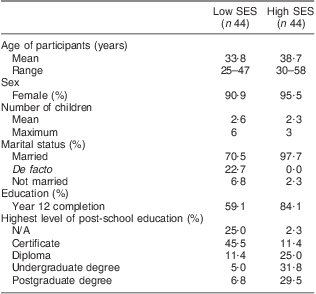
SES, socio-economic status; N/A, not applicable; SEIFA, Socio Economic Index for Areas.
Low SES, SEIFA deciles 2 and 3; high SES, SEIFA decile 10.
Data saturation, where no new information was emerging, was achieved within the thirteen groups. The thematic findings are summarised below in relation to the research questions.
How do parents understand and describe ‘extra foods’?
In response to the question about what term they would use to describe foods that are not ‘everyday foods’, parents nominated ‘treats’, ‘sometimes foods’ and ‘junk’, with the term ‘treats’ most frequently used. The ten foods parents most frequently referred to as examples of ‘extra’ or ‘sometimes foods’ were chips, ice cream, lollies, chocolate, cakes/doughnuts, sweet biscuits, takeaway (food eaten off the restaurant premises, referred to as ‘takeout’ in some countries), soft drinks, savoury biscuits and spreads.
When asked to identify foods that do not easily fit into either ‘everyday’ or ‘sometimes’ categories, parents discussed sugar and salt, as well as the presence of additives. Examples of foods less easily categorised included breakfast cereals, muesli bars, rice crackers, some flavoured dairy snacks, cheese sticks, some biscuits, and fruit juices.
When prompted to discuss drinks, water and milk were consistently identified as ‘everyday’ drinks. A smaller number of parents described juice or cordial as an ‘everyday’ drink. Soft drinks were consistently perceived as ‘sometimes’ drinks. Some parents reported that they limited their children's consumption of sugar-dense drinks to a ‘treat’ or special occasion; and less frequently, some mentioned that they did not have sugar-dense drinks in the house. Some parents described diluting soft drinks, cordial and juice, in order to limit consumption: ‘…and then at dinner, so a little bit of Coke in the water and then milk before bed that is pretty much what they drink’ (LS). Others described specific routines or rituals for consumption: ‘Friday night is our fizzy night we would have one bottle’ (LS).
What factors do parents identify as influencing them in their provision of ‘extra foods’?
Parents’ perceptions regarding what influenced them in providing food to their children were coded into personal/dispositional influences or environmental/situational influences. The dispositional influences include: the influence of the child; food-related parenting practices; and health considerations. Situational influences include: food costs and convenience; external factors perceived as influencing their child; factors related to centre-based child care; and social influences and occasions. In describing how frequently they provided ‘extra foods’, participants’ responses were balanced between situational factors, describing situations or contexts when ‘sometimes’ foods were consumed (12/12), and dispositional factors, particularly their parenting approach (10/12). There was more discussion related to situations in HS groups (6/6) and less among LS groups (4/6).
The seven parent-perceived influences promoting parents’ provision of ‘extra foods’ are described in detail below.
1. Influence of the child
Parents frequently described how their children influence the food they provide, highlighting this as a significant influence. This influence took a number of forms, such as children's taste preferences and fussiness/faddishness, children making decisions on the type of food provided, persistent requests or pestering for certain foods, or general descriptions of children as an influence. Most of the discussion in the majority of groups (11/13) was about how children's taste preferences influenced the food parents provided: ‘Your child can influence how you feed them, definitely, depending on their likes and dislikes’ (HS).
2. Food-related parenting practices
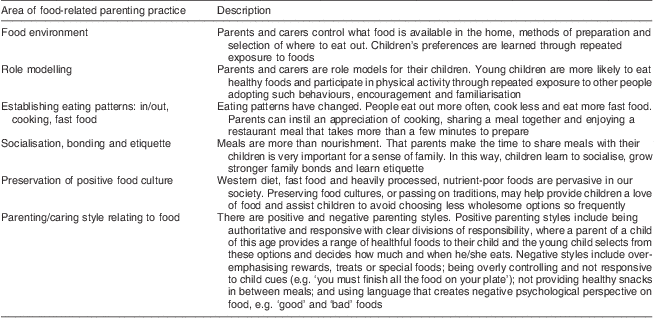
Parents’ food-related parenting approaches were expressed throughout the discussions and were a dominant theme in terms of discussion time and involvement of all participants. The main areas of parenting practices discussed are summarised in Table 5.
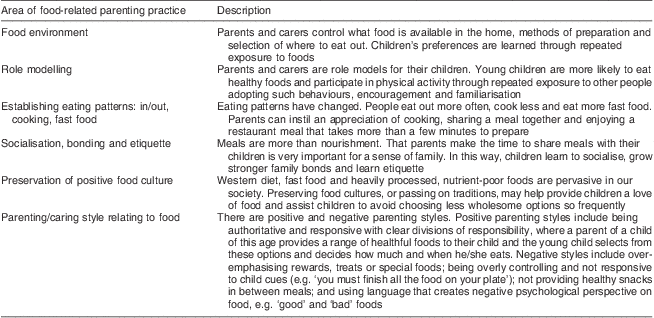
Using food as a bribe, treat or reward was frequently discussed (six LS, five HS). It emerged that it was common practice to use food as a reward to encourage children to finish all the food on a plate or to eat certain healthy foods. For example: ‘I use a bribe especially for my little boy, three-year-old, if I have to go up the shops… if you are a good boy you can have a lollipop’ (HS).
The practice of controlling the home food environment by not having extra foods or drinks available in the house was discussed as a common food-related parenting practice (six LS, five HS), particularly in discussions about ‘extra’ drinks and some foods (e.g. chocolate and chips).
Parents in a number of groups expressed a fear of overly restricting foods and the potential consequences of this for their children, saying that this might lead to over-consumption of these foods in situations where children are permitted to eat them (e.g. parties). Conversely, being restrictive with certain food was described in ten groups.
In most groups (10/13) there were comments reflecting the divisions of responsibility around food provision, where a parent provides healthful foods and young children decide how much and when they eat( Reference Lindsay, Sussner and Kim 12 , Reference Dietz 13 ). In a small number of groups (3/13) the discussions indicated that parents’ practices did not reflect this division of responsibility, and children were allowed to determine the range of foods that parents provided. For example: ‘…people say “sometimes foods” … realistically it should be all food and they should be able to make the choice and it shouldn't be just a treat’ (HS).
3. Health considerations
Overall, health considerations generated a lot of discussion as an influence on the provision of ‘extra foods’. Although general healthy eating concerns were discussed most, there were specific concerns about food additives and preservatives, and food allergy and intolerance. General healthy eating concerns related to immediate problems (e.g. dental health, children's behaviour) or general well-being in LS groups: ‘…health factor is a big thing for us, you know you want to eat food that makes you feel good and gives you energy…’ (LS). In some HS groups, participants described being influenced by what they read and often discussed specific nutrients, food additives and specific disease states related to excessive food consumption.
In about half of the groups, parents expressed a desire to provide a variety of foods, implying that ‘extra foods’ contribute to the variety of foods.
4. Cost and convenience
Cost was reported as a major concern and primary influence in most groups, but particularly in LS groups (six LS, four HS). One group member commented: ‘Oh we definitely spend most of our money on food’ (LS). Many groups discussed the high costs of specific fruit that their child liked. The belief that healthy food was expensive was reflected in comments by most LS groups (4/6). The convenience of takeaway or packaged foods was often weighed up with cost, with cost determining purchase decisions in LS groups.
The majority of groups (six LS, four HS) commented on convenience, comparing less convenient, healthier options with less healthy, but convenient foods. Fast foods, packaged food and energy-dense and nutrient-poor snacks were considered convenient by LS groups. Packaged foods were seen to reduce time in food preparation and mess, compared with fresh food. Parents described using them when eating on the run: ‘Like rice crackers…’, ‘a convenience thing, usually it is in between meals or you know, as we say we are on the go, so if you are going out to their activities…’ (LS).
5. Centre-based child care as an influence
There was a large volume of discussion on centre-based child care as an influence, with the majority (five LS, six HS) considering this as helpful. For example: ‘Yeah I actually find it easy because I mean you have got your sort of rules what you follow’. Parents also noted many activities centres used, that assisted them in providing healthy food for their children. At the same time, it was common for parents to describe child-care food policies as restrictive: ‘Well it is hard to find snacks that you can actually pack to come here…’ (LS). Parents highlighted restrictions related to allergies (e.g. nut-free policies), the difficulty of providing food variety, the lack of convenient and healthy food options and, for some, the desire to provide a treat: ‘So it is really hard to find something special to put in the lunch box’ (LS).
6. Parents’ perceptions of what influences their children
Media advertising was discussed, with parents in most groups (five LS, four HS) referring to the strong effect on their children of promotional characters on packaging, with yoghurt consistently mentioned as an example.
The majority of groups (four LS, six HS) referred to the influence of peers and siblings. In LS groups this was typically considered as positive, but in HS groups this was more mixed: ‘…like he wants what everyone else has and everybody else has the packet stuff but he can't have that, so yeah’ (HS).
The majority of groups (7/13) commented on the influence of large supermarkets on their food purchases, with many comments describing advertising and product placement that targeted young children: ‘If you take a child into the supermarket it's got it's eyes fixed on something … the direct marketing is towards the child, it is not towards the adult’ (LS) and ‘…it is all about making money and the big business’ (LS).
7. Social influences – friends, family and occasions
The power of parental role modelling was acknowledged across most groups (five HS, five LS), and considered negative when a parent (mostly fathers and grandparents) consumed a ‘treat’ food and as a positive when it involved healthier foods.
The influence of friends and social occasions on food provision was discussed almost exclusively in HS groups. Social influences were discussed in positive terms (e.g. new ideas for healthy snack and recipe options) and as creating challenges. For example, some parents found social situations to be challenging when this involved providing foods that they considered inappropriate (e.g. provision of soft drinks or regularly meeting socially at fast-food restaurants). However, most parents felt that some leniency around social occasions with friends was acceptable most of the time.
The range of social occasions with friends included mothers’ group meetings, organised activity (e.g. dancing, children's yoga), play dates, barbeques, parties, after church and socialising around children's sport.
What are parents’ decision-making processes regarding provision of ‘extra foods’?
Parents’ decision-making processes regarding provision of ‘extra foods’ and drinks were not described directly. Rather, their decision-making processes were embedded in responses about food provision and the practical ways in which they balanced competing influences.
While participants referred to seeking a balance of foods across a day or week, they adopted different approaches for different foods or drinks. While participants did not generally have fixed rules about frequency of consumption of ‘extra foods’, parents in some groups expressed a fixed rule of never offering soft drinks to their children.
Parents were concerned with moderation and balance in their food provision to children, and they described a high degree of thought, time and effort around food provision. They frequently expressed the position that as long as a child is eating healthy foods, then treats are appropriate; and for many parents, this might apply every day or frequently: ‘something little as a treat isn't a problem, … as long as I know that my children are getting good nutritious meals then in between those meals I don't mind them having extra things’. For some parents this balance meant that they avoided being overly restrictive as they feared that restrictions may result in their child being excessively focused on certain foods.
Decisions to provide ‘extra foods’ or not were also discussed in relation to parents’ time management and the value of convenience. Parents spoke about the need to be highly organised due to their work or family commitments, as well as for child behaviour management. Parents across all groups discussed the various strategies they use to prepare for going out or for compensating for occasions when less healthy foods are eaten (e.g. parties and contact with grandparents). Parents in two HS groups discussed deliberate strategies they used to ensure children are less exposed to ‘extra foods’ (shop online, not taking children shopping).
What do parents think would assist them in limiting their provision of ‘extra foods’?
Parents felt that they are ultimately responsible for the food they provide their children, but that some assistance would be helpful. Although education of children and parents as well as food supply strategies (simpler form of package labelling, food pricing and food product reformulation) dominated discussion, parents described other strategies that reflect the factors influencing them. They also discussed multiple stakeholders including government, the food industry and advertising bodies: ‘The majority of it [should be the parent's role] yeah otherwise advertisers basically, and the manufacturers too I suppose…’.
Do these patterns vary according to parents’ socio-economic status (as assessed by where they live)?
There were more similarities than differences between LS and HS parents.
Overall, LS and HS parents’ understanding of what constitutes an ‘extra food’ was accurate and in accordance with professional knowledge. The terms used to describe ‘extra foods’ were also consistent across groups. References to takeaway meal choices were more common in LS groups and they appeared more accepting of these foods. Energy-dense and nutrient-poor takeaway was usually associated with travelling for holidays in HS groups. More parents from LS groups described providing soft drinks, with regular provision discussed only by them. Provision of caffeinated or cola drinks to young children, daily provision of cordial or soft drinks, and diluting soft drinks or cola were mentioned in LS groups.
All parents were concerned about the general health of their children, but parents in LS groups were more likely to describe practical and immediate concerns (dental health, behaviour) in relation to sugar-dense food or drink. Although concern about additives and preservatives was common across groups, the immediate effects on children's behaviour were more commonly mentioned in LS groups. Cost was discussed in most groups, but was a major concern and primary influence for LS parents. Many LS parents expressed the belief that healthy food is more expensive. Convenience was also important for all groups, with parents in LS groups more likely to weight cost over convenience (i.e. providing less pre-packaged snacks, convenient but expensive fruit such as blueberries, strawberries and bananas, and buying takeaway). The influence of friends and social occasions was discussed almost exclusively in HS groups.
Discussion
Parents in all groups used the terms ‘treats’ or ‘sometimes foods’, while the term ‘extra foods’, introduced in the Australian Guide to Healthy Eating, was not used by parents. The mix of responses may reflect the lack of expert consensus on the most appropriate term to use to communicate to consumers about ‘extra foods’( Reference Webb, Lahti-Koski and Rutishauser 4 , Reference Rangan, Randall and Hector 14 ). However, parents’ use of the term ‘sometimes foods’ may reflect the impact of health programmes conducted through child-care and education settings; and this term seems well accepted by parents of young children, and also understood by pre-school children, according to some parents.
The lack of currency of the Australian Guide to Healthy Eating's term ‘extra foods’ among parents and the absence of any widely accepted term pose challenges for nutrition education. While the term ‘sometimes foods’ was well understood, this term is ambiguous and may not be acceptable to older children or adults generally. The term ‘treat’ is problematic from a nutrition education or health professional perspective, as it has a positive connotation. The absence of a precise descriptor is apparent in other English-language countries. The UK's national dietary guidelines refer to foods high in fat, sugar and salt( 15 ) and in the USA the term ‘extra foods’ is used to refer to foods high in sugar and fat and low in essential nutrients.
Parents were found to have a good understanding of ‘extra foods’ and were generally able to identify them. Parents found it difficult to classify some foods, particularly where there are inconsistencies in the amounts of sugar and salt between different products in the same category. Total energy or fat content of foods was not identified by parents as a way of determining ‘extra foods’. The focus on sugar was consistent with other findings( Reference Morton, Sanitch and Worsley 16 ).
The study shows that juice and cordial were accepted as ‘everyday’ drinks, while soft drinks were not. The consistent negative perceptions of soft drinks suggest that parents could be responsive to strategies to further reduce sugar-dense drink consumption. The findings suggest that parents may not always be aware of young children's dislike of new foods and preference for high-sugar, high-salt foods as a normal developmental issue, and that nutrition information and appropriate parenting responses presented according to developmental stage may be valuable( Reference Lindsay, Sussner and Kim 12 , Reference Golan and Crow 17 ).
The observed differences between LS and HS groups in their use of language and approach to health considerations is highly consistent with findings from another Australian qualitative study exploring socio-economic differences in parental knowledge of food and health( Reference Coveney 8 ). The minimal mention and concern about weight status is also consistent with research showing that parents underestimate their children's weight status( Reference Carnell, Edwards and Croker 18 ).
Given that most groups discussed food allergy or intolerance, it may be that the present study disproportionately attracted parents of children with food allergies or intolerance. It is also possible these results reflect general views in a population where food allergy and food intolerance are relatively prevalent (6 % and 5–20 % respectively in 0–5-year-olds( Reference Hodge, Swain and Faulkner-Hogg 19 )) and the media attention related to research on these topics( Reference Burke 20 , Reference McCann, Barrett and Cooper 21 ).
Parents expressed the belief that provision of ‘extra foods’ can be frequent, as long as children are eating a healthy balance of foods. The idea of reducing consumption of ‘extra foods’ has received little attention in Australia, with the exception of a short one-off campaign to promote water and reduce sugary drink consumption in New South Wales in 2008( Reference Orr, Milat and Lin 22 ). Consideration should be given to specifically addressing the issue of excessive provision and consumption of ‘extra foods’.
In the present study the ability to explore individuals’ precise motivations was limited as the analysis was conducted at group level. However, the level of participant interaction means that we were confident we captured the full range of ideas. The method of analysis allowed exploration of subgroups in a rigorous, transparent and reproducible way, and increases confidence in findings relating to similarities and differences between LS and HS groups. The focus group method means that social desirability bias may influence the results; however, the strength is that these groups provide access to how people display their social knowledge, as well as the content of that knowledge. As groups were not conducted in rural areas or with culturally and linguistically diverse groups, the findings may not be generalisable to these population segments.
Conclusions and implications
The range of influences on parents’ food provision indicates the value of multi-setting, multi-strategic interventions to reduce the consumption of ‘extra foods’. There is specific scope for strategies promoting food-related parenting practices appropriate to developmental stages. The common belief that provision of these foods can be frequent as long as children are eating a healthy balance of foods suggests that challenging this belief may be necessary. The lack of vocabulary to clearly refer to ‘extra foods’ suggests that formative research on terms that are acceptable to parents and children would be valuable. Health promotion campaigns and programmes should promote messages and actions that focus on reducing the consumption of energy-dense and nutrient-poor foods.
Acknowledgements
Sources of funding: Funding for the study was provided by Health Promotion, Lower North Shore, Northern Sydney Local Health District. Conflicts of interest: The authors declare no competing interests. Authors’ contributions: N.A.P. planned the study, alternated focus group facilitation and scribing with R.L.W., participated in all stages of data analysis and created all drafts of the manuscript. R.L.W. assisted in research planning, alternated focus group facilitation and scribing with N.A.P., participated in all stages of data analysis and commented on most drafts of the manuscript. L.A.K. participated in the design of the study, participated in most stages of data analysis and made substantial comments and revisions on all drafts of the manuscript. V.M.F. participated in study design, commented on some drafts of analysis and also commented on some drafts of the manuscript. All authors read and approved the final manuscript. Acknowledgements: The authors would like to thank Dr Deana Pagnini for assistance with development of the focus group questions and prompts and Dr Stacy Carter for suggesting that framework analysis would appropriate for our research questions.