

天下之水, 莫大于海, 万川归之……而吾未尝以此自多。 [Of all the waters under heaven, none is greater than the sea. All rivers flow into it … yet never have I prided myself on this.]
—⟪庄子·秋水⟫ [Zhuangzi, “Autumn Floods”]
Do the mass public in a rising authoritarian power overestimate their country’s reputation, power, and influence in the world? National overconfidence may derail a country’s progress or worsen international tensions, and the risks are especially significant for a nation rapidly gaining global prominence. Surprisingly, the issue has rarely been systematically studied. There is a lack of microlevel evidence on the existence or prevalence of national overconfidence. Perhaps more importantly, can overconfidence in factual beliefs be corrected and its effects on attitudes mitigated?
Consider China’s global image and its self-image. In a Pew Research Center survey conducted in the summer of 2020 (after the outbreak of the COVID-19 pandemic) in fourteen advanced economies, most of the respondents in each country reported an unfavorable view of China, with a median of 73 percent.Footnote 1 This was partly driven by negative opinions on China’s handling of the outbreak (a median of 61 percent were negative about that), but it also reflected the general souring of global public opinion on China over a longer period.Footnote 2 For example, in Gallup World Polls, a global median of no more than 30 percent said they approved of China’s leadership since 2020,Footnote 3 and Pew’s twenty-four-country survey in 2023 saw record-high negative ratings for China in most countries surveyed, including an 83 percent unfavorable rating in the US.Footnote 4 Unfavorable or deteriorating opinions of mainland China during the period were also found outside the developed West, such as in Southeast Asia,Footnote 5 major Latin American countries,Footnote 6 and Hong Kong and Taiwan,Footnote 7 although views tend to be more positive in less developed regions than in high-income ones.
But such unfavorable news is rarely reported in China’s mainstream media. Instead, Chinese discourses throughout the pandemic stressed how other countries were grateful for China’s support, “copying [China’s] homework,” or criticizing their governments for not following Chinese practices to contain the coronavirus.Footnote 8 News headlines hyping how the world admired China’s success, such as “Wuhan Once Again Awes Foreign Media”Footnote 9 and “American Media Marvels at Qingdao’s Testing of Eight Million People in Three Days,”Footnote 10 were ubiquitous. Even after China’s eventual hasty and ill-managed reopening from COVID lockdowns in late 2022,Footnote 11 the country’s state television network, CGTN, still claimed that 88 percent of the respondents in its global poll praised China’s COVID-19 prevention and control over the previous three years.Footnote 12
These narratives were not just temporary efforts to boost morale during a pandemic. They were part of a larger and long-standing propaganda campaign touting the greatness of the country, which is perhaps best represented by the 2018 film Amazing China (厉害了, 我的国), China’s top-grossing documentary of all time.Footnote 13 Chinese social media is similarly full of stories hyping China’s influence and attraction, including content produced by popular Western influencers catering to Chinese audiences.Footnote 14 Promoting an image of competence and international influence, including selectively collecting and displaying foreign commentaries, is a common tactic of contemporary authoritarian regimes that can effectively shape public opinion.Footnote 15 It is not surprising, then, that nationalistic grandiosity and calls for a “breakthrough” in the international arena pervade Chinese society,Footnote 16 paralleling Chinese officialdom’s belief that “the East is rising and the West is declining”Footnote 17 and its assertive and confrontational “wolf warrior” diplomacy.Footnote 18
Such overconfidence can lead to both international and domestic harms. In terms of international consequences, scholars of international relations have long argued that overconfidence and false optimism can intensify conflicts and even contribute to the outbreak of wars.Footnote 19 As Van Evera notes, “At least some false optimism about relative power preceded every major war since 1740, as well as many lesser and ancient wars.”Footnote 20 Before Russia launched its 2022 invasion of Ukraine, for example, it apparently overestimated not only its military prowess but also pro-Russia sentiments in Ukraine.Footnote 21 When they entered the country, Russian soldiers, who expected to be welcomed as liberators and “with flowers,”Footnote 22 were “surprised that people were hostile to them and kept asking why no one liked them.”Footnote 23 The war turned out to be much more protracted than Russia had expected, with enormous costs to Russia’s economy, society, and international standingFootnote 24—even though, domestically, the Russian public believe their country is more respected in the world than a decade ago.Footnote 25
For a domestic example, complacency about China’s low mortality under the stringent “zero Covid” policy contributed to the lack of protective measures when China was eventually compelled to lift the policy. The widespread perception of the superiority of China’s prolonged lockdowns and containment under the policy made the public largely go along with it despite its heavy toll on the economy; moreover, a false sense of security reduced the incentive for vaccination among its citizens, particularly the elderly, and national pride led the country to insist on native solutions rather than introducing and stocking more effective foreign-made mRNA vaccines and antiviral drugs.Footnote 26 This underpreparation proved fatal when the country reopened in late 2022. In the ensuing months, a sudden and dramatic surge in infections led to a COVID-19 mortality rate that was sharply higher than the rate in the US during the large Omicron surge in early 2022,Footnote 27 although the overall mortality rate during the pandemic was lower in China.
Despite the importance of the issue, research on overconfidence, primarily conducted within psychology and economics, has focused on individuals’ perceptions of their personal ability, performance, and information quality,Footnote 28 rather than perceptions of national influence or performance. The aforementioned international relations literature on optimism focuses on the consequences as well as the causes of misperceptions by state leaders and decision makers, not the empirical regularity of such perceptions or their existence among the masses.
A few psychological studies have shown that people often have overly positive conceptions of their countries’ contributions to world history,Footnote 29 perhaps due to national or collective narcissism.Footnote 30 But there has been little research on citizens’ perceptions of their country’s current standing in the world, which should have a more significant and direct influence on its international and domestic behavior than perceptions of historical achievements. Perhaps most importantly, the research on overconfidence, be it personal overconfidence or collective narcissism, has not examined whether it can be effectively corrected, a matter of significant theoretical and policy relevance.
I study national overconfidence in China, the largest authoritarian power and one that has been vying for global superpower status. While national overconfidence can be about hard power, such as military capability and material wealth, I focus on overconfidence in soft power—a country’s image, reputation, and attraction around the worldFootnote 31—which is essential in the competition for global influence and leadership. Because soft power depends on a country’s acceptance by foreign publics, it can be gauged by international opinion pollsFootnote 32 and then compared to the country’s domestic perceptions of international opinion to yield a measure of overconfidence. Hard power such as military strength can be harder to measure, since it depends not just on weapons and personnel but also on such intangible factors as morale and quality of intelligence, as the Russia–Ukraine War has highlighted.Footnote 33 A country’s damaged influence and soft power may also make other countries erect obstacles to its hard power.Footnote 34 Perceptions of a nation’s soft power can thus provide a useful starting point in the study of national overconfidence.
In spring 2020 (in the wake of the initial COVID-19 outbreak), I conducted a pilot, single-wave survey, which showed that the Chinese public significantly overestimated the favorable opinion of China internationally, even when the country was deep in a crisis that would soon engulf the world. This suggests that national overconfidence has more to do with citizens’ information exposure than with a country’s actual performance. My main study, a two-wave survey experiment conducted in spring 2021, again showed that the Chinese public overwhelmingly and systematically overestimated China’s international reputation relative to benchmark global public opinion polls.
Critically, informing respondents of China’s actual international image substantially changed their factual perceptions (by over twenty percentage points). It also moderately altered their evaluations of China, its governing system, and their expectations for the country’s role and success in the world (by five to six percentage points). These effects largely endured in a second-wave survey two to four weeks later. A third, post-pandemic survey experiment among Chinese international students in the US confirms that these results are general and not confined to a particular time or setting, and that correcting overconfidence can even temper nationalism. These findings provide strong microlevel evidence of the prevalence of national overconfidence in a rising power. They also show that overconfidence can be meaningfully corrected and triumphalism mitigated.
This research is situated at the intersection of political cognition and opinion, international relations, and authoritarian politics. Most directly, it contributes to the study of misperceptions and public opinion. First, it expands the overconfidence literature beyond personal overconfidence and considers a form of collective overconfidence that can have drastic social consequences. It also shows that overconfidence can be corrected. Relatedly, studies on meta-perceptions have focused on how individuals often have overly pessimistic or negative perceptions of out-groups’ views of in-groups.Footnote 35 This research draws attention to an opposite type of meta-perceptions: overly confident perceptions of other groups’ views of one’s own nation, which can also be undesirable. Second, the findings enrich our understanding of misinformation and corrections. Scholarship on misinformation has found that corrections generally improve the accuracy of factual beliefs but often have little effect on political attitudes.Footnote 36 The present research finds that correcting misperceptions about national image and soft power has clear and potentially enduring effects on individuals’ political attitudes, although they are indeed smaller than the effects on factual beliefs.
This research’s focus on perceptions of national power also has significant implications for understanding the informational and perceptional sources of international tensions. Perceptions and misperceptions fundamentally shape international relations, as interpretations of others’ intentions and actions often matter more than objective realities in determining conflict and cooperation outcomes.Footnote 37 This article enhances our understanding of misperceptions among the mass public and their ramifications for international relations.Footnote 38 This research also contributes to our understanding of authoritarian information politics, including the power of propaganda and how it can be offset by more truthful information. As I discuss in the concluding section, research on national overconfidence in more countries is needed to investigate cross-national variations in overconfidence and its correctability, as well as these variations’ implications for international relations and domestic politics.
The findings also have policy implications for a rising power’s development trajectory and international relations. The Chinese society commonly regards China as in the process of regaining the traditional and rightful superpower position it once had.Footnote 39 For decades, though, China has been at pains to reassure the world of its benign and pacific intentions.Footnote 40 Domestically, admiration of Western socioeconomic prosperity was also, for a long time, a more dominant form of public sentiment in China than national overconfidence.Footnote 41 In the early twenty-first century, China’s rapid but relatively low-profile growth, well captured by its former leaders’ dicta of “hiding your strength … and never taking the lead” (Deng Xiaoping) and “keeping quiet while making a fortune” (Jiang Zeming), made some analysts wonder whether China would blindside the West.Footnote 42 Not long afterward, however, China’s course shift and announcement of its ascendancy and superiority appear to blind the nation itself with an information filter bubble. The resulting conceit contributes not just to domestic difficulties, as with responses to the COVID challenge, but also to international suspicions, backlash, and even containment that harm China’s global economic relations, strategic interests, and potential leadership.Footnote 43 Although such an inimical international environment often includes overreactions to China’s postures,Footnote 44 overconfidence may impede the nation’s long-sought “peaceful rise.”
National Overconfidence and Its Correction
Prevalence of National Overconfidence
Can a nation be overly confident about its reputation, power, and influence in the world? A large body of psychological literature has shown that overconfidence or overoptimism about one’s personal performance, ability, or judgment is a common feature of human psychology.Footnote 45 Kahneman notes that “the optimistic bias may well be the most significant of the cognitive biases” of human beings.Footnote 46 The literature has identified several types of overconfidence,Footnote 47 and this research examines the type that is perhaps most common: overestimation of one’s actual performance, ability, or chance of success. While some scholars have argued that a moderate level of “positive illusion” about oneself could be a normal adaptive trait that contributes to mental and psychological health,Footnote 48 numerous studies have shown negative consequences of self-aggrandizement for personal well-being, social interactions, and decision making,Footnote 49 especially if the illusions are excessive.Footnote 50 Recent research in economics has also found that personal overconfidence can have greater negative effects at the collective than at the individual level, causing ideological extremismFootnote 51 and exacerbating the adverse effects of misinformation.Footnote 52
If individuals can be overconfident about themselves, the same psychological need for positive illusion and self-enhancement suggests they can also be overconfident about the groups they belong to. Psychological studies have demonstrated that collective and national narcissism—beliefs about the greatness and superiority of one’s own group and nation that demand external recognition—is ubiquitous.Footnote 53 As a result, individuals commonly and considerably overestimate their nations’ historical achievements and contributions to the world.Footnote 54 In the same vein, it is reasonable to expect that they will also have inflated perceptions of their nation’s current attraction and standing in the world.
Various state-level processes, group dynamics, and individual psychological tendencies mean that information and discourses that sustain national overconfidence will be actively produced, popularly circulated, and widely accepted. At the state level, modern nation-states emphasize nationalistic or patriotic values, whether through deliberate construction of national identities or through routine symbols and language that maintain nationalistic sentiment.Footnote 55 To boost self-esteem and pride, school textbooks and curricula under all regime types often highlight national achievements and myths while eliding failures.Footnote 56 News media routinely frame international events in ways that put the home country in a more positive light or portray domestic troubles as other nations’ fault.Footnote 57
At the group level, social identity theory holds that individuals categorize themselves as belonging to social groups and internalize group attributes to define themselves.Footnote 58 This creates fertile ground for collective overconfidence about national capabilities, along with pressure for conformity to these views. Dissenting voices may be silenced, as fear of social isolation from majority opinion leads to a spiral of silence and even preference falsification.Footnote 59 Meanwhile, expressions of national pride and confidence garner social validation and rewards, further reinforcing collective overconfidence.
At the individual level, people commonly seek out information congruent with their prior attitudes, beliefs, and emotions,Footnote 60 to avoid cognitive dissonanceFootnote 61 or to satisfy personal gratification,Footnote 62 or because congenial information is viewed as having higher quality and utility.Footnote 63 Given the psychological need for collective positive illusion and self-enhancement, national overconfidence and inflated self-perceptions may thus be perpetuated through individual confirmation bias and social reinforcement.
Although this suggests that national overconfidence may occur in many different political settings, it is likely more pronounced in an authoritarian state that uses pervasive propaganda glorifying the country and censors unfavorable information. Information manipulation is a hallmark of authoritarian rule, and for contemporary authoritarian regimes, spinning competence, influence, and likability has become even more important than imposing fear or ideology.Footnote 64 A major purpose of China’s nationalistic propaganda is to bolster regime legitimacy and stability, as is evident in the patriotic-education campaign,Footnote 65 efforts to increase and tout China’s soft power abroad,Footnote 66 and comparison of perceived Chinese achievements with foreign problems.Footnote 67 Thus, China’s recent meteoric economic rise and expanding global role have been accompanied by persistent propaganda about the country’s accomplishments and “great power” status, all aimed at exhorting the population to embrace the “four matters of confidence”Footnote 68 and to recognize not only that “the East is rising and the West is declining” but also that China is moving “closer to the center of the world stage than it has ever been.”Footnote 69 After China initially got COVID-19 under control through Leninist mobilization and draconian lock-in policies, and as many other major countries struggled with the pandemic, China’s propaganda machinery inundated the nation with narratives lauding the country’s policy effectiveness while highlighting other countries’ fumbling responses, fueling public claims that many foreign countries could not even “copy [China’s] homework.”Footnote 70
Besides news propaganda, China has also been actively using entertainment for self-exaltation. The 2018 documentary Amazing China is a quintessential example. Trumpeting China’s recent accomplishments in areas such as technological advancement and international engagement, the movie shot up to become China’s all-time top-grossing documentary amid glowing domestic reviews (aided by compulsory viewings in some cases).Footnote 71 Its reception on international platforms, however, has been quite the opposite, with the average user rating on IMDb, a major international movie review site, sometimes as low as 1.2 out of 10,Footnote 72 likely due to its excessive bravado. The state has also supported or commissioned the private sector to produce popular movies lionizing China, and ultra-nationalistic, military-themed movies have become the top-grossing ones.Footnote 73 The private sector has also actively monetized nationalism, as social media platforms and publications regularly publish sensational stories hyping China’s influence and attraction on the world stage or hyperbolizing foreign countries’ plights.Footnote 74 Foreign social media influencers who “made their lives about being a foreigner in China to tell China how great it is” have also enjoyed large followings.Footnote 75
Whereas heavy-handed, “hard” propaganda is unpersuasive and may even backfire,Footnote 76 this kind of soft and often sleek spin that emphasizes a country’s achievements and appeal or provides psychological gratification is likely effective in shaping beliefs and attitudes,Footnote 77 particularly given authoritarian regimes’ lack of open debates and independent evaluative institutions that could counter false optimism and presumptions.Footnote 78 In addition, most citizens do not have the direct experience or hard evidence that would enable them to dispute a regime’s framing of international affairs,Footnote 79 perhaps especially regarding intangible matters such as national reputation and influence. Indeed, a lower degree of globalization in factors such as the flow of ideas and information is associated with stronger national narcissism.Footnote 80
The combination of common psychological tendencies toward overconfidence and confirmation bias, relentless propaganda and self-aggrandizing narratives about China’s rise, and censorship of negative information creates ideal conditions for national overconfidence. State propaganda and individual-level psychological biases can in fact interact with each other and amplify national overconfidence. Therefore, I expect the Chinese public to overestimate China’s reputation, power, and standing in the world. More specifically, I expect them to overestimate the extent to which China is positively viewed in the world, as compared to actual global opinion poll results.
Anecdotal evidence of complacency and triumphalism in Chinese society abounds,Footnote 81 and self-congratulations and condescension toward other countries are regular features of public discourses.Footnote 82 Many grassroots nationalists sometimes also eagerly bypass China’s internet restrictions to launch debates on international platforms—this often ends in embarrassment due to their general disconnection from the world.Footnote 83 Even some leading intellectual advocates of Chinese nationalism, as well as government officials, think the Chinese public’s nationalist bubble and sense of superiority have gone too far, especially among the young generation.Footnote 84 But it is crucial to understand the breadth and depth of the phenomenon among the general public.
There has been relatively little research on how people’s perceptions of their country’s current reputation, power, and influence in the world may differ from reality.Footnote 85 A few studies on US–China relations, however, are related. One suggests that, as late as in the mid-2010s, the Chinese public viewed China as significantly behind the US in national (hard) power.Footnote 86 By 2020, however, another study finds that the Chinese population had become quite confident, with most respondents saying that China would catch up with the US in military power within ten years.Footnote 87 Besides focusing on hard power rather than soft power, these valuable studies differ from the present research in that they did not directly compare perceptions with reality to assess the degree to which the two might be misaligned, whereas this research explicitly does so.
Consequences of National Overconfidence
Research in international relations has shown that overconfidence among state leaders and decision makers is consequential. But does national overconfidence at the mass level matter, and is correcting it important? While the examples in the introduction have suggested that national overconfidence among the public can make a nation ill-prepared for crises, it can also affect a rising power’s international relations and overall development more generally.
In terms of international or intergroup relations, psychological studies have demonstrated that collective narcissism rather than individual narcissism predicts intergroup aggressiveness, as the narcissistic self-image demands constant validation, and the actions of others are likely to be seen as signs of disrespect or disapproval of the ingroup, which leads to aggressive reactions.Footnote 88 More generally, mass overconfidence is closely associated with nationalism, which, after all, is about “one’s self-view, of one’s estimation of oneself and one’s place in the world,”Footnote 89 and can be regarded as a form of collective narcissism.Footnote 90 Overconfidence can thus heighten nationalism, and I expect that the degree of national overconfidence will be associated with the strength of national identity and nationalism, and that correcting overconfidence will dampen nationalism.
Heightened nationalism has downstream consequences. Public charges that the government had failed to defend the homeland have brought down authoritarian regimes, from China’s Qing DynastyFootnote 91 to Argentina’s military junta following the Falklands conflict.Footnote 92 More recently, nationalism in China has repeatedly ignited mass outrage and harmed China’s international relations,Footnote 93 even over incidents as insignificant as a seemingly unfriendly tweet from a foreign sports executive.Footnote 94
Although the lack of electoral accountability in authoritarian regimes limits the extent to which citizen preferences and beliefs are reflected in government decision making, public opinion can still influence and even constrain government behavior in various ways. First, authoritarian regimes have legitimacy concerns, and nationalism is often a central pillar of this legitimacy.Footnote 95 Being responsive to public opinion can increase regime legitimacy by giving citizens a sense of inclusion and influence on policy outcomes.Footnote 96 The lack of institutional mechanisms for citizen representation and uncertainty about aggregate citizen preferences can even make a regime feel particularly insecure and thus often hyper-responsive to perceived social demands and grievances.Footnote 97 Thus, the Chinese government tends to be overly attentive to extreme and xenophobic views on foreign affairs,Footnote 98 leading it to talk tough in international engagements, which can lock it into hard-line positions and chilly relationships with foreign governments.Footnote 99 When it does not live up to its tough rhetoric or hard-line positions, it faces significant public opinion costs and sometimes threats of citizen mobilization.Footnote 100
For these reasons, the Chinese government has often been responsive to nationalistic sentiments.Footnote 101 Although nationalist campaigns can sometimes be used to strategically signal resolve to foreign powers, they also create “entrapment” effects where leaders feel compelled to respond to public sentiment or take a hard line to maintain credibility with domestic audiences.Footnote 102 Recently, for example, due to public anti-immigration backlash, the Chinese government had to shelve a draft regulation on foreigners’ permanent residency, which aimed at attracting global talent.Footnote 103 In the first high-level meeting between the Biden administration of the US and the Chinese government, top Chinese diplomats made unusually strong and lengthy remarks to appeal to domestic nationalists; the remarks went viral on Chinese social media, but they also further strained relations between the two countries.Footnote 104
More generally, surveys show that the Chinese public tend to view “wolf warrior” diplomacy as a “necessary gesture,” with many even thinking it is not tough enough.Footnote 105 This nationalist culture has created bottom-up pressure for hard-line diplomatic postures and nourished the “fighting” orientation of official diplomacy,Footnote 106 souring foreign public opinion of China and boosting support for hard-line policies toward China.Footnote 107 In other words, domestic overconfidence about China’s power and influence puts pressure on the government to embrace more assertive or expansionist foreign policies. It is thus important to make national sentiments and mass opinion conducive to de-escalation in crisis situations, rather than have leaders feel that their hands are tied.Footnote 108 At the very least, since nationalism is a critical determinant of the magnitude of audience costs,Footnote 109 unfavorable public opinion will increase both the political costs and the difficulty of using government propaganda to shift public sentiment in such situations.
This article focuses on mass beliefs, but understanding public overconfidence can also shed light on elite perspectives. In the authoritarian setting, public opinion is shaped by leader/elite preferences, but it can also reinforce those preferences in a closed information feedback loop; consequently elite opinion in China can sometimes be more hawkish than mass opinion.Footnote 110 As Snyder notes, a country’s “ruling group might come to believe their own propaganda” or become “entrapped in its own rhetoric.”Footnote 111 For example, the Chinese government has recently gone to great lengths to stress the importance of people-to-people (as opposed to government-to-government) ties in reviving the China–US relationship—placing high “hopes on the American people,”Footnote 112 which likely reflects a lack of keen awareness that a large majority of Americans actually have negative opinions about China.
Overconfidence also matters for a country’s overall development. Complacency has contributed to China’s recent inward-looking turn, with many citizens and the government alike shunning or even disparaging global engagement and foreign ideas that have previously nourished China’s growth.Footnote 113 Even many formerly liberal scholars are now championing hard-line policies on various issues that have heightened political and social tensions in the country. As one of these scholars put it: “Back when I was weak, I had to totally play by your rules. Now I’m strong and have confidence, so why can’t I lay down my own rules and values and ideas?”Footnote 114 China’s grassroots nationalists, emboldened by beliefs in China’s increasing prosperity and global clout, have sometimes engaged the world in chauvinistic ways, contributing to the worsening of global opinion on China.Footnote 115 Along with the country’s official overreach, belligerent diplomacy, and statist turn in economic policies, these developments hamper China’s strategic goals in democracies where politicians know that their voters dislike China, cost China opportunities for global and regional leadership as other powers gain influence in its place, compel some countries to seek alternatives to their economic reliance on China, and encourage the formation of formal and informal alliances against the country.Footnote 116
Correcting National Overconfidence
Can national overconfidence be corrected? The large literature on misinformation correction has focused on false news and socioeconomic or policy misinformation,Footnote 117 not overconfidence. Meanwhile, scholarship on individual overconfidence and collective narcissism has overlooked correctability. The question has two dimensions. First, can people’s factual beliefs about a country’s reputation and image be corrected? Second, will factual corrections affect related attitudes, particularly political evaluations of the country’s performance? It is also important to know whether any correction effects are fleeting or durable.
With regard to factual beliefs, there is an emerging scholarly consensus that corrections are usually effective in improving the accuracy of citizens’ factual perceptions and that backfires are rare.Footnote 118 Though some previous research had seen the possibility of backfire, many recent studies have shown that corrections reliably and often substantially improve belief accuracy, even among partisans for whom the misinformation was congenial;Footnote 119 in particular, citizens generally respond to persuasive information that provides sound explanations or comes from credible or unexpected sources.Footnote 120 For example, scholars have found that correcting political mistruth can increase the accuracy of belief or reduce the share of people who believe misinformation by twenty to thirty percentage points, even weeks after the corrections.Footnote 121 While the literature has focused on advanced democracies, correcting misinformation in developing and authoritarian countries similarly results in more accurate factual beliefs.Footnote 122 Evidence on whether the factual correction effects are durable is less definitive, but many studies find that they endure for one or more weeks, although the effect tends to attenuate.Footnote 123
Whether factual beliefs can be corrected has not been studied in the context of overconfidence, but since overconfidence is a type of factual misperception, it is reasonable to expect that the general findings on factual correction apply here too. Specifically, informing Chinese citizens of China’s actual global image will likely improve their belief accuracy, perhaps substantially. And because perception of their country’s international standing is fundamental to a person’s national identity,Footnote 124 well-sourced corrective information in the form of actual global opinion poll results could be revealing, vivid, and even astounding to respondents, and thus leave a somewhat lasting influence.
Whether factual corrections can change political attitudes is less certain, as research on corrections and persuasion has yielded mixed evidence, and there has been little research on the attitudinal effect of correcting overconfidence. Coppock surveys twenty-three recent persuasion experiments conducted in the US and finds that people generally update their political attitudes in the direction of new information by about five percentage points, with relatively little effect heterogeneity across demographic characteristics or predispositions.Footnote 125 Huang finds a similar level of change in Chinese citizens’ evaluations of government when their misperceptions about foreign socioeconomic conditions or domestic events are corrected.Footnote 126 Moreover, correcting US partisans’ misperceptions of rival partisans’ support for violence and Saudi Arabian men’s misperceptions of the level of public support for women working outside the home significantly changed their relevant behavioral attitudes.Footnote 127 On the other hand, some other studies cited earlier that show substantial correction effects on factual beliefs also find that the effects on attitudes are minuscule;Footnote 128 that is, citizens may take fact-checking “literally but not seriously.”Footnote 129 For example, correcting politicians’ misstatements did not affect voters’ support for those politicians or their probability of voting for them.Footnote 130
A major reason for the inconsistency in these findings could be that voting intentions and candidate support are consequential decisions informed by a variety of political, socioeconomic, and cultural considerations, and they are thus harder to change,Footnote 131 particularly if corrections are only about the veracity of a few specific statements. Opinions more directly related to the corrective information, such as candidate performance, may be more responsive. Indeed, confirming or disconfirming the accuracy of a candidate’s statement has been shown to affect evaluations of the candidate’s debate performance.Footnote 132 And having substantially more false statements from a candidate corrected than true statements confirmed can reduce support for the candidate.Footnote 133 Applying this reasoning to overconfidence, then, one can expect that if the Chinese public’s overestimation of China’s global reputation is significant and across the board, being repeatedly informed that their estimations of China’s image in various parts of the world are incorrect will affect their evaluation of the country’s performance, even if it does not shift their policy preferences.
Finally, can the effects of correcting national overconfidence on political evaluations endure? Here the evidence is also mixed. Mernyk and colleagues find that the effect of correcting partisans’ misperceptions about out-partisans’ willingness to engage in violence on their own willingness to engage in violence can last a month.Footnote 134 Broockman and Kalla find that a ten-minute doorstep conversation encouraging someone to take the perspective of transgender people can reduce prejudice for at least three months.Footnote 135 Hill and coauthors show that while the bulk of TV advertising in US elections decays quickly, some effects can endure for at least six weeks, particularly in the more important and engaging presidential elections.Footnote 136 Coppock’s analysis of twelve panel survey experiments finds that treatment effects are still present after ten days, but at only about a third of their original magnitude.Footnote 137 Other studies find that the persuasion effects of information provision are more fleeting, with attitudinal changes largely disappearing after a period of one week to one month.Footnote 138
These findings suggest that citizens engage in both memory-based information processing, whose effects last only as long as memory of the relevant information lasts, and online processing, which integrates information into judgment and stores the summary judgment to be used or updated later, with more durable effects.Footnote 139 With important issues, people are more likely to engage in more active and deliberate online processing, and persuasion effects are also more likely to persist and be stable.Footnote 140 Arguments that provide new information should also have longer effects than framing or priming treatments that only change the combination of existing considerations.Footnote 141 To the extent that the Chinese public have strong expectations for how China is respected in the world, being informed that the country’s current international image is largely negative rather than positive, or that only a small percentage of the Taiwanese public support reunification, could be a striking experience that invites strong, deliberate, and online engagement. The effects of such corrections might thus be durable. But the success of information corrections in changing political attitudes cannot be assured, and both attitude updating and its durability need to be empirically tested.
A Pilot Study: National Overconfidence During a Crisis
In March 2020 I conducted a pilot survey of the Chinese public’s perceptions of China’s global image. A total of 2,330 respondents from diverse sociodemographic backgrounds were recruited through a well-established market survey firm in China,Footnote 142 and they completed the survey anonymously on Qualtrics.Footnote 143 The pilot and main studies have many similarities in the recruitment of respondents, sample characteristics, and survey design; these common features will be discussed in the next section.
The pilot survey asked respondents to guess six results from recent, actual public opinion polls around the world: the percentage of Hong Kong residents with favorable views of the mainland Chinese government; the percentage of Taiwanese people supporting reunification with mainland China (as opposed to maintaining the status quo or declaring independence); the median percentage of people in the US, Canada, and Western European countries with positive views of China; the median percentage of people in Asian, sub-Saharan African, and Latin American countries with positive views of China; the median percentage of people in countries around the world who approve of the Chinese leadership’s job performance; and the average user rating of Amazing China on IMDb at the time. For each question, a range of six numbers, including the correct one, were given as response options.
Figure 1 shows the distribution of responses, with the correct answer and the median response marked for each question. On each question, the (vast) majority of respondents overestimated China’s reputation, sometimes to a striking degree. For example, in a January 2020 poll, following the Hong Kong protest movement of 2019, only 22.6 percent of Hong Kong residents expressed positive views of the mainland Chinese government, but the median response was 56.6 percent. This misperception might be partly driven by a popular narrative in the mainland that a “silent majority” in Hong Kong supported the Hong Kong and mainland governments.Footnote 144 The distance between reality and perception was even greater for the questions on Taiwan and Amazing China. The lack of awareness of the situations in Hong Kong and Taiwan is especially noteworthy, as both are salient, familiar “internal” issues in Chinese society.
China’s global image and its self-image (2020)
Notes: Distribution of responses on China’s global image in the 2020 study. The numbers on the X-axis are choices for each question, and the percentages on the Y-axis are shares of respondents choosing each answer. The questions referred to the following public opinion polls: (A) Hong Kong Public Opinion Research Institute Poll, January 2020; (B) 2019 Cross-Strait Relations and National Security Opinion Survey, National Chengchi University; (C and D) Pew Research Center’s 2019 Global Attitudes Survey; (E) Gallup’s 2019 Rating World Leaders report; and (F) IMDb.com, March 2020.

A reasonable measure of reputational overestimation, or national self-image inflation, is respondents’ net number of overestimating answers (the number of overestimates minus the number of underestimates, ignoring correct answers). By this measure, 97.5 percent of the respondents overestimated China’s reputation; and for 60.9 percent of respondents, all six of their answers were overestimates. Applying post-stratification weights derived from the nationally representative China Family Panel Studies (CFPS) survey of 2020 to adjust the sample’s demographic representation on gender, education, age group, and party membership increased these two numbers to 99.1 percent and 64.5 percent, respectively. Overconfidence about China’s reputation is thus a very broad phenomenon and not a result of the sample’s demographic characteristics.
Figure A1 in the appendix shows the relationship between personal characteristics and the degree of national self-image inflation in the pilot study. The results were not identical to those of the main study, but in both studies, participants who used foreign media as a major information source and who had visited foreign developed countries overestimated China’s reputation to a smaller degree. While this result is correlational, it is consistent with previous research showing that exposure to critical information from foreign sources makes people more pessimistic about China.Footnote 145 For reasons beyond the scope of this research, in both studies females were somewhat more confident about China’s global image, which differs from previous research suggesting that males are more confident about their prospects of success.Footnote 146
Figure A2 explores the relationship between national overconfidence and nationalism,Footnote 147 controlling for personal characteristics including demographics, media consumption, and overseas experience. Although overconfidence is different from nationalism or national identity in that the former refers to factual beliefs whereas the latter is about emotional attachment and values, the net number of overestimating answers clearly predicts respondents’ level of nationalism. While this relationship is also correlational rather than causal, it fits squarely with the notion that nationalism is very much related to “one’s estimation of oneself and one’s place in the world.”Footnote 148
Unlike the main study, the pilot study was conducted at the early stage of the COVID-19 pandemic, when central China’s Wuhan was still considered the global coronavirus epicenter and the crisis was beginning to engulf the entire world. As mentioned, China’s global image took a major hit from the outbreak of COVID-19, but Chinese overconfidence was manifest in the survey even during this historic emergency and reputational threat. That people’s perception of their national image was not correlated with the nation’s actual performance or image is in line with some earlier research showing a lack of correlation between personal overconfidence and performance,Footnote 149 and it suggests the importance of information exposure in shaping national overconfidence and potentially nationalism. It is thus critical to analyze whether such overconfidence and inflated national self-image can be corrected through information intervention, a key goal of the main study.
The Main Study: Correcting National Overconfidence
Wave A Study Design
My main study, a two-wave survey experiment, spanned March and April of 2021, when the initial wave of COVID-19 was contained in China and life had largely resumed normality (before the country suddenly reopened in late 2022, as discussed earlier). Respondents were recruited through the same market survey firm as in the pilot study, but pilot participants were excluded. Compared to oral and in-person interviews, anonymous online surveys are known to yield higher response validity, less survey satisfying, and lower social desirability biases.Footnote 150 Respondents also completed the study on Qualtrics, which allowed me to maintain full control over the data collection, and they were informed that the recruitment firm had no access to the data. The study was preregistered before data collection began.Footnote 151
A total of 2,545 respondents participated in Wave A of the main study. The sample achieved broad demographic representation and was comparable to China’s general internet population, though somewhat younger and better educated (see Table A1 in the appendix), which is typical for online surveys in China.Footnote 152 As we will see, applying post-stratification weights to make the sample more nationally representative does not change the sample’s overall perception of China’s global image. Since over a billion Chinese people are now online,Footnote 153 an internet sample is also appropriate for gauging general public sentiments in China.
Following a few general questions and a simple attention-check question, respondents were asked to guess six results from recent public opinion polls around the world: the median percentage of people in fourteen advanced economies with positive views of China; the median percentage of people in African countries who think China’s economic and political influence on their country is positive; the percentage of Southeast Asian academic researchers, government officials, and other opinion leaders who have confidence in China’s contribution to global peace, prosperity, and governance; the median percentage of people around the world who approve of the Chinese leadership’s job performance; the percentage of Taiwanese people supporting reunification with mainland China; and the percentage of Hong Kong residents with favorable views of the mainland Chinese government. The questions on world leadership approval, Taiwan, and Hong Kong were the same as in the pilot study but asked in the context of the latest opinion polls.
As in the pilot study, the relevant polling organization (such as Gallup, Pew, or the Hong Kong Public Opinion Research Institute) was named in each question, and referenced again later in the experimental treatments. If the original poll referenced in a question allowed neutral responses (such as the option of maintaining the status quo in the Taiwan poll), participants were again explicitly informed of this. Some (but not all) questions also asked about the median, as that was the measure reported in the original polls; as in the pilot study, an explanation of the concept (with examples) was provided before the questions and briefly recapitulated within the relevant questions.
For example, the question on the fourteen advanced economies was:
Pew, a well-known international public opinion polling organization, conducted nationally representative polls in 14 advanced economies in summer 2020. What do you think is the median percentage of people in these countries with positive views of China? (That is, if we arranges the 14 countries from high to low according to their levels of positive views of China, what is the average of the two middle countries?) The 14 countries were: …
To improve on the design of the pilot study, I asked the respondents to write down a percentage between 0 and 100 for each image question, rather than giving them a few fixed options. See Appendix 4.1 for the wording of all image questions and correction treatments.
The number of high-quality and representative public opinion polls on attitudes toward China is limited, and I was restricted to using what was available.Footnote 154 Still, these questions covered diverse regions, both geographically and political-economy-wise. For ethical reasons and for the external validity of the experiment, I used real polls from actual organizations rather than fictional ones. Since most of these are nonprofit polling organizations rather than political entities, this also avoids the issue of having the information coming from a rival government, which could complicate the treatment due to geopolitical considerations.Footnote 155
Following these questions about China’s global reputation and image, the respondents were randomly assigned to a control group (N = 1,286) and a treatment group (N = 1,259); almost all covariates were well balanced (see Table A2). Subjects in the treatment group were reminded of their own answers to the image questions and then informed of the actual results from the relevant polls. To minimize potential respondent inattention, the correct answers were repeated and appeared in red type (here in bold), as in the example below:
A moment ago, you guessed that the median percentage of people with positive views of China in the 14 advanced economies that Pew surveyed in summer 2020 was [the respondent’s answer]. The actual result according to the Pew survey is 24%. Yes, the median percentage of people with positive views of China in the 14 advanced economies is 24%.
Afterwards, all respondents answered a set of outcome questions. As mentioned, two types of correction effects are relevant for the study: effects on participants’ factual beliefs about China’s global reputation and image; and effects on political attitudes, particularly evaluations of the country’s performance. While scholarship has typically tested the correction effect on factual beliefs immediately following corrections, I opted to leave this to Wave B rather than immediately after the participants saw the correct answers. This reduced the length of the Wave A survey and enabled me to focus on the corrections’ effects on political attitudes, where even short-term effects are meaningful. In Wave B I could then test the durability of correction effects on both factual beliefs and political attitudes.
As outlined in the preregistration, my main research question was whether correcting inflated national self-image would affect participants’ evaluations of their country, including (1) evaluation of its overall and domestic situations, including support for its governing system, and (2) expectation for the country’s role and success in the world. The questions on China’s overall and domestic situations covered evaluations of its current overall situation, future prospects, political system, the so-called China Model (that is, China’s political and economic systems), and trust in the government. The questions on China’s global role and external success included expectations for the success of the Belt and Road Initiative, China’s signature international infrastructure initiative; the influence of the Community of Shared Future (Common Destiny) concept, China’s overarching foreign policy proposal; international opinion of China’s handling of the COVID-19 outbreak; the prospect of Taiwan’s peaceful reunification with mainland China in the foreseeable future; and the success of China’s political framework for Hong Kong.Footnote 156 Many of these external questions are about the prospects for China’s international leadership and strategic interests, which scholars argue have been affected by China’s actions.Footnote 157
After these political evaluation and expectation questions, I asked a few preregistered secondary questions on the respondents’ policy and political preferences with regard to “wolf warrior” diplomacy, using military force in foreign affairs, the COVID-19 origin investigation, national leadership turnover, and support for democracy. Since these questions are less directly related to China’s international image than political evaluation questions, in a sense they can serve as placebos. But it is also worthwhile to see whether any effect on political evaluations might spill over to foreign and domestic policy preferences. See Appendix 4.1 for the wording of the outcome questions.
Wave A Results
I first report the respondents’ perceptions of China’s global image, and then the effects of corrections. Figure 2 shows how the respondents answered the six image questions, with the thick red lines indicating the actual results from the relevant public opinion polls (that is, the correct answers to the image questions) and the black lines indicating the median responses. We see that the respondents were generally unaware of China’s unfavorable image around the world. On every question, the median answer was significantly higher than the correct answer, indicating that the (vast) majority of respondents overestimated China’s reputation on that question. The differences between the reality and the median perceptions were more than fifty percentage points for the Southeast Asia and Taiwan questions. On average, the respondents overestimated China’s global reputation and popularity by 34.4 percentage points per question.
China’s global image and its self-image (2021)
Notes: Distribution of responses on China’s global image in six public opinion polls: (A) Pew’s Summer 2020 Global Attitudes Survey; (B) 2019–2020 Afro-Barometer Survey; (C) ISEAS–Yusof Ishak Institute’s 2021 State of Southeast Asia survey; (D) Gallup’s 2020 Rating World Leaders; (E) “The Public’s View of Cross-Strait Relations,” by Taiwan’s Mainland Affairs Council, November 2020; (F) Hong Kong Public Opinion Research Institute Poll, January 2021. The thick red lines indicate actual results from the different polls, and the black lines indicate the median responses.

Using the aforementioned measure of overestimation, 96.6 percent of the respondents overestimated China’s reputation in the world. And 65.4 percent of the respondents did this on all six questions. Adjusting the sample’s demographics by weights derived from China’s general internet population data (CFPS 2020) slightly increases the two percentages, to 96.7 percent and 66.9 percent, respectively. The results once again indicate that the Chinese public are overwhelmingly and systematically overconfident about China’s soft power.
Figure A3 shows the relationship between personal characteristics and the degree of national self-image inflation in the main study. As in the pilot study, respondents who used foreign media as a major information source and who had visited foreign developed countries had less national self-image inflation. Figure A4 again shows that national self-image clearly predicts nationalism. The main and pilot studies thus both show that national overconfidence is prevalent in China, is associated with information exposure, and can predict national identity and sentiments.
What would be the effects of learning about China’s actual global image and soft power? Figure 3 presents the results of all preregistered main analyses of correction effects, using the preregistered covariates. Informing the respondents of China’s actual global image lowered their evaluations of China’s current overall situation, the country’s future prospects, its current political system, and the China Model; it also reduced their trust in the government. The size of the effect on aggregate overall/domestic evaluation, an additive index of the individual outcome measures, was five percentage points. Correcting inflated national self-image also reduced the respondents’ expectations for the success of the Belt and Road Initiative; the influence of the Community of Shared Future foreign policy framework; the international community’s opinion of China’s handling of COVID-19; the prospect of Taiwan’s peaceful reunification with mainland China in the foreseeable future; and the success of China’s political framework for Hong Kong. The effect size on the aggregate external expectation was 6.4 percentage points, somewhat larger than the effect on overall/domestic evaluations, which is natural given that the treatment was about China’s international image. Thus, being repeatedly informed that one’s perceptions of China’s image across the world were incorrect (since most respondents overestimated China’s reputation in some or even all questions) moderately but consistently tempered their evaluation of the country’s performance. Contra much of the literature on misinformation correction, correcting national overconfidence does have notable attitudinal effects.
Information corrections’ effects on political evaluations in Wave A
Note: Regression coefficients (treatment effects) with 95 percent confidence intervals. All variables are rescaled to range between 0 and 1. The aggregate measures are simple additive indexes. See Tables A3 and A4 for numerical results of full models.

Even though the results showed overall effectiveness, it is possible that those with more extreme overestimations of China’s global reputation had a stronger incentive to resist corrections, due, for example, to motivated reasoning. However, the evidence indicates otherwise (Figure A5). Respondents who overestimated China’s reputation on all six questions (“extremists”) updated their political attitudes similarly to those who were less overconfident and had reservations about China’s reputation at least in some areas (“non-extremists”), with the effect sizes more precisely estimated for the former.Footnote 158
I also dichotomize all preregistered demographic and predispositional variables and analyze the treatment effects on each subgroup separately while controlling for other covariates (Figure A6). Given the number of outcome questions, I focus on aggregate attitudes. The correction treatment dampened the overall/domestic evaluation and external expectation for almost all subgroups,Footnote 159 and the effect heterogeneity between the corresponding subgroups (such as male versus female and college-educated versus not college-educated) was minor. This means that the information correction was broadly effective and the sample’s degree of representativeness did not pose challenges to the generalizability of treatment effects. The result indicates not only that the public is broadly susceptible to confidence propaganda, but also that the influence of such propaganda is somewhat fragile, since corrections are effective regardless of personal characteristics.
With regard to the secondary analyses of policy and political preferences, the treatment largely had null effects, although it did reduce support for aggressive diplomacy (Figure A7). The contrast between the significant effects on more closely related political evaluation questions and the null effects on more distant policy preferences questions indicates that the former were genuine. But it also means that these effects did not immediately shift respondents’ policy and political preferences.
Wave B Study Design
To see whether the effects of corrections on political attitudes are fleeting or at least somewhat durable, and to see how much they changed participants’ factual beliefs about China’s reputation and soft power, two weeks after Wave A, participants were recontacted for a follow-up survey (multiple times in the following ten days if needed), as preregistered. Almost all Wave B respondents participated within four weeks of their Wave A participation, with the median response time being fifteen days, and 82 percent of the respondents participated in Wave B within three weeks. Wave B participants were roughly equally drawn from the two Wave A conditions, and most demographic and other covariates were also well-balanced (Table A5). There were somewhat higher shares of female, older, and better-educated individuals in Wave B than in Wave A, but, crucially, Wave A national self-image, Wave A treatment status, income, life satisfaction, political interest, party affiliation, overseas visit, and most media source variables did not predict participation in the Wave B survey (Table A6).Footnote 160
In the Wave B survey, respondents first re-answered the six image questions from Wave A, and then two new questions related to China’s international reputation: the extent of favorable views of China in Latin America, and global confidence in China’s COVID-19 vaccines. They then answered the same political evaluation questions as in Wave A.Footnote 161 The Wave B survey also asked three new political attitudes questions: whether China is on the right track (overall evaluation), whether China should compete with the US to be the top global power (foreign policy preference), and the respondent’s support for a statement about freedom of speech that became well known in China following the COVID-19 outbreak: “a healthy society should not have only one voice” (domestic policy preference).
Finally, I asked Wave B respondents an exploratory question: “What do you think is the first thing that Americans think about when they think about China?” A February 2021 Pew survey asked US respondents what first came to mind when they thought about China, and human rights topped the list of answers.Footnote 162 I used the top six items in Pew’s poll results as choices (excluding the residual category of “generally negative adjectives”) and randomized their order.
Wave B Results
For the six original image questions, those who were assigned to the control condition in Wave A overestimated China’s global reputation by 34.5 percentage points per question in Wave B (Figure 4, top panel), which was very similar to the average in Wave A, indicating belief stability. Those treated in Wave A, on the other hand, overestimated China’s reputation by a more modest 12.9 percentage points per question in Wave B. By this measure, corrections improved the accuracy of the respondents’ factual beliefs by 21.6 percentage points, which exceeds the effect on political attitudes.
Wave A corrections’ effects on factual beliefs about China’s global image in Wave B
Note: These plots show the degree of overestimation in Wave B respondents’ new answers to the six original image questions in Wave A (top panel) and their answers to two new image questions (middle and bottom panels).

Information correction also had effects on the two new image questions: those treated in Wave A were less sanguine about China’s reputation in Latin America and global confidence in Chinese vaccines (Figure 4, middle and bottom panels).Footnote 163 The differences were all significant (Figure A8). That is, two to four weeks later, the treated respondents did not just mechanically remember what they learned in Wave A about China’s global image; their general perceptions of China’s international reputation had changed. The treatment effect on perceptions of global confidence in Chinese vaccines was smaller than on the other questions, likely due to extensive propaganda in China about the superiority of Chinese vaccines and how they were eagerly sought abroad.Footnote 164 Overall, while the substantial correction effects on factual belief accuracy are consistent with the misinformation literature, it is notable that the effects are not only durable, but they are also seen in new factual questions not included in the treatment.
The effects of Wave A treatment on respondents’ political evaluations were present two to four weeks later in Wave B (Figure 5). The size of the treatment effect on aggregate overall/domestic evaluations held at 4.9 percentage points in Wave B, and the effect size for external expectation was 5.9 percentage points, using models with covariates. For policy and political preference questions asked in both waves, the Wave A treatment, unsurprisingly, had little effect in Wave B (Figure A9), although there was more support for investigating COVID-19’s domestic origin. For the new political attitudes questions in Wave B, respondents treated in Wave A were less likely to agree that China was on the right track, but the treatment had no effect on preferences for competing with the US or allowing more freedom of speech (Figure A10). This is consistent with the results in Wave A: the treatment changed respondents’ political evaluations but largely did not shift their policy preferences.
Wave A corrections’ effects on political evaluations in Wave B
Note: Regression coefficients (treatment effects) with 95 percent confidence intervals. All variables are rescaled to range between 0 and 1. The aggregate measures are simple additive indexes. See Tables A7 and A8 for numerical results of full models.

Although two to four weeks is not the same as the long term, these results indicate that the effects of overconfidence corrections are not fleeting. Exposing Chinese citizens to the information that mainland China’s global image, even among other Chinese societies, is significantly worse than they thought was a striking and compelling experience and likely led to deliberate and effortful processing and hence at least a somewhat lasting influence. The size differences between the treatment effects on factual beliefs, political evaluations, and policy preferences also demonstrate the genuineness of the subjects’ responses.
Finally, being treated in Wave A increased the respondents’ probability of naming human rights, the modal answer among American respondents, as the first thing that Americans think about regarding China by about 7.5 percentage points, controlling for covariates (Figure 6). In other words, being informed of China’s global image increased the respondents’ awareness of what people in other countries think about China and the salience of negative aspects of China. This result, obtained more than two weeks after the initial correction and on a question quite distinct from the Wave A questions, further testifies to the relative durability of correction effects.
Wave A corrections’ effects on perceptions of the first thing Americans think about regarding China
Note: Marginal effect estimates with 95 percent confidence intervals from multinomial logistic regressions. See Table A9 for numerical results.

A Post-Pandemic Study
Although the pilot and main studies have shown that national overconfidence is prevalent during both crisis and non-crisis periods, they were both conducted during the COVID-19 pandemic, and they left a few important questions unexplored. First, can the findings travel to other time periods and contexts? Second, while the two studies have shown that overconfidence is closely associated with nationalism, is there any causal relationship between the two, and can correcting national overconfidence affect nationalism? To address these questions, in Spring 2025 I conducted a study among Chinese international students at a large American public university, Ohio State (OSU).Footnote 165 The goal was to see whether overseas students also exhibit national overconfidence, given that they should be more exposed to foreign criticism of China, and whether correcting national overconfidence would affect their political attitudes, including nationalism.
The study was embedded in a survey designed for a different purpose. Students were invited via email to participate in an anonymous Qualtrics survey, with a small financial incentive. Over 700 students participated, and 559 completed the survey, of whom 43 percent were female and 57 percent were undergraduate students.Footnote 166
Like the main study, the post-pandemic study asked six questions about the results of recent international surveys measuring China’s favorability around the world, including the Pew Global Attitudes Survey, the State of Southeast Asia Survey, the Latin American Public Opinion Project survey, Gallup’s Rating World Leaders report, and Taiwan’s Mainland Affairs Council survey.Footnote 167 Since the students were studying in the US, a separate question about Americans’ views of China, as measured by Pew, was included.
In this post-pandemic survey, Chinese international students overestimated China’s global reputation and influence in all six questions (Figure 7), consistent with findings from the general Chinese population in the two previous studies. But if we compare the three questions that were in both the main study and the post-pandemic study (Southeast Asia, Gallup, and Taiwan), we see that these overseas students’ overestimations were more modest. This is consistent with the findings in the two previous studies that respondents who had been to foreign developed countries had less national overconfidence.
China’s global image and Chinese international students’ national self-image (2025)
Notes: Distribution of the responses on China’s global image in six public opinion polls: (A) 2024 Pew Global Attitudes Survey; (B) 2024 Pew Global Attitudes Survey (USA); (C) ISEAS–Yusof Ishak Institute 2024 State of Southeast Asia Survey; (D) 2023 Latin American Public Opinion Project Survey; (E) Gallup’s 2024 Rating World Leaders report; (F) “Public’s View of Cross-Strait Relations,” by Taiwan’s Mainland Affairs Council, November 2024. The thick red lines indicate actual results from the relevant public opinion polls, and the black lines indicate the median answers among myrespondents.

The respondents were then randomly assigned to a control group or a treatment group, and the treatment group received correction information on the image questions, as in the main study. The survey then posed two questions about overall political evaluations: whether China is currently on the right track; and whether the twenty-first century would be a “Chinese century.” Given that the study was embedded in a survey developed for a different purpose, the number of political evaluation questions was by necessity smaller than in the main study, and they focused on overall evaluations. But I also asked four questions about nationalism: whether China is a better country than most other countries; whether the world would be a better place if people from other countries were more like people from China; how proud one feels when Chinese athletes win in international sports; and whether one would rather be a citizen of China than of any other country. These questions are commonly asked by the International Social Survey Programme to measure nationalism and national identity,Footnote 168 and a simple additive nationalism index was constructed for the analysis.
Figure 8 shows the treatment effects. To improve precision, given the relatively small sample size, I include demographic and media consumption covariates in all regressions. Though the Chinese international students overestimated China’s soft power less than the domestic public did, being informed of China’s actual image still made them less likely to agree that China was on the right track, and the effect size was comparable to that in the main study. The correction also made them less likely to agree that the twenty-first century would be a Chinese century, though the effect was only significant at the 90 percent level due to the sample size. Most interestingly, being informed of China’s actual global image also tempered the respondents’ nationalism, underscoring the point that nationalism is closely related to one’s perception of the nation’s position in the world.
Correction effects on Chinese international students’ political attitudes
Notes: Regression coefficients (treatment effects) in estimations with covariates included for precision. All variables are rescaled to range between 0 and 1. See Table A11 for numerical results.

These results demonstrate that overconfidence in China and its effects on political attitudes are not confined to the pandemic but are more general. They also indicate that information exposure is a critical determinant of the degree of overconfidence. And, importantly, national overconfidence is not just correlated with nationalism. As theorized earlier, a major consequence of excessive national overconfidence is heightened nationalism, and correcting national overconfidence can moderate nationalism. Empirically demonstrating the causal relationship between overconfidence and nationalism, as well as showing that nationalism can be mitigated, are significant contributions, as they have not been studied in earlier research on misinformation and nationalism.
Concluding Remarks
These three studies show that the Chinese public overwhelmingly and systematically overestimate China’s reputation and soft power in the world. This pattern persists even during a national crisis and, to a lesser degree, among Chinese respondents living overseas. They provide microlevel evidence for the prevalence of mass overconfidence and grandiose self-imagery in a rising power. More importantly, the experimental evidence shows that national overconfidence can be meaningfully corrected and triumphalism mitigated, and that the effects are at least somewhat durable.
To be sure, foreign opinions of a country can be misinformed or biased, but it is nevertheless critical for a nation to know what those opinions are, and the first step in improving one’s image is to recognize what the image is.Footnote 169 How to facilitate exposure to accurate information at scale is beyond the scope of this article, but the findings do show the possibility of effective information intervention. It is especially encouraging that both factual beliefs and political evaluations can be updated, although the lack of a significant effect on policy preferences indicates that there are also limits to persuasion, at least in the short run.
The combination of state control of information flow and common psychological and cognitive biases makes China a textbook case of national overconfidence. To what extent is this overconfidence due to propaganda and information restriction, versus psychological and cognitive biases? This question cannot be precisely answered in the current context, but given that cognitive biases are difficult to correct, the experimental finding that exposure to accurate information can effectively reduce national overconfidence shows that propaganda and information control are a crucial reason for national overconfidence in China. And that overseas Chinese students, who are more exposed to foreign criticism, are less overconfident, further indicates the role of information.
The results contribute to the misperceptions and public opinion literature not just by providing the first set of systematic evidence that overconfidence can be corrected, but also by strengthening the case that the effects of factual corrections can be extended to political attitudes. Even nationalism can be attenuated with exposure to accurate information. Overconfidence in soft power is an example of overconfidence in national power, and there is reason to believe that the present findings can extend to perceptions of hard power. This contributes to our understanding of the informational and perceptual sources of international conflicts and international relations more broadly.
The findings also enrich our understanding of authoritarian information politics. Propaganda can powerfully shape citizen perceptions, but it is also fragile, since its power hinges on the lack of alternative information, and the provision of more accurate information can at least partly undo the influence of propaganda. Relatedly, propaganda can be a double-edged sword: an inflated national self-image may increase regime support, but excessively high expectations are hard to meet and will inevitably lead to disappointment when people are exposed to more accurate information. This may in turn necessitate continuous information manipulation to avoid losing public trust, leading to a propaganda trap.
Is national overconfidence restricted to rising authoritarian powers, or is it more universal? As I discussed earlier, modern nation-states commonly promote nationalistic or patriotic values through propaganda and other means, and collective narcissism as well as confirmation biases in information seeking and processing are ubiquitous. This suggests that national overconfidence might be quite general. For example, the finding that the Chinese public similarly overestimated China’s global reputation at the early stage of the COVID-19 pandemic, when China was deep in a crisis that was beginning to engulf the entire world, suggests that national self-image has as much to do with propaganda as with performance. Accordingly, national overconfidence can be prevalent in a declining power too, as is apparently the case in Russia.Footnote 170 National self-image inflation can also occur in relatively democratic settings where press freedom and civil liberties are eroding. For example, in India, a long-standing democracy undergoing democratic backsliding, the public also appear to be overestimating their country’s global influence.Footnote 171
Still, overconfidence should be more pronounced in an authoritarian regime with more pervasive propaganda and strict information control. If the country is genuinely ascending on the world stage, it will provide an even more fertile breeding ground for overconfidence, as the confidence propaganda may appear more convincing. At the same time, given the prevalence, intensity, and social reinforcement of mass overconfidence in a rising authoritarian power, it might be harder to correct overconfidence in such a setting. The correctibility of overconfidence in a rising authoritarian power is thus particularly informative. Future research, however, can investigate national overconfidence and its correctability in more countries and compare different information environments, regime types, and developmental status. This will enhance our understanding of the scope conditions and contributing factors in national overconfidence as well as their implications for both international relations and domestic governance.
Supplementary Material
Supplementary material for this article is available at <https://doi.org/10.1017/S0020818325100969>.
Acknowledgments
I am grateful to two anonymous reviewers, Alexa Bankert, Shiyu Bo, Frederick Chen, Jamie Druckman, Hanming Fang, Songying Fang, Christopher Gelpi, Yue Hou, Junyan Jiang, Joshua Kertzer, Edmund Malesky, Daniel Mattingly, Victor Menaldo, Diana Mutz, Margaret Pearson, Ethan Porter, Molly Roberts, Arturas Rozenas, Melissa Sands, Paul Schuler, Susan Shirk, Matthew Singer, Yuhua Wang, Yu Xie, Yiqing Xu, Jack Zhang, and audience members at Columbia University, Ohio State University, Princeton University, UCSD, University of Pennsylvania, University of Washington, APSA, WPSA, Chinese Politics Research in Progress Workshop, and Zooming in China Webinar for helpful comments on previous versions of the paper, which were circulated under the title “Triumphalism and the Inconvenient Truth: Correcting National Overconfidence in a Rising Power” or its variants.


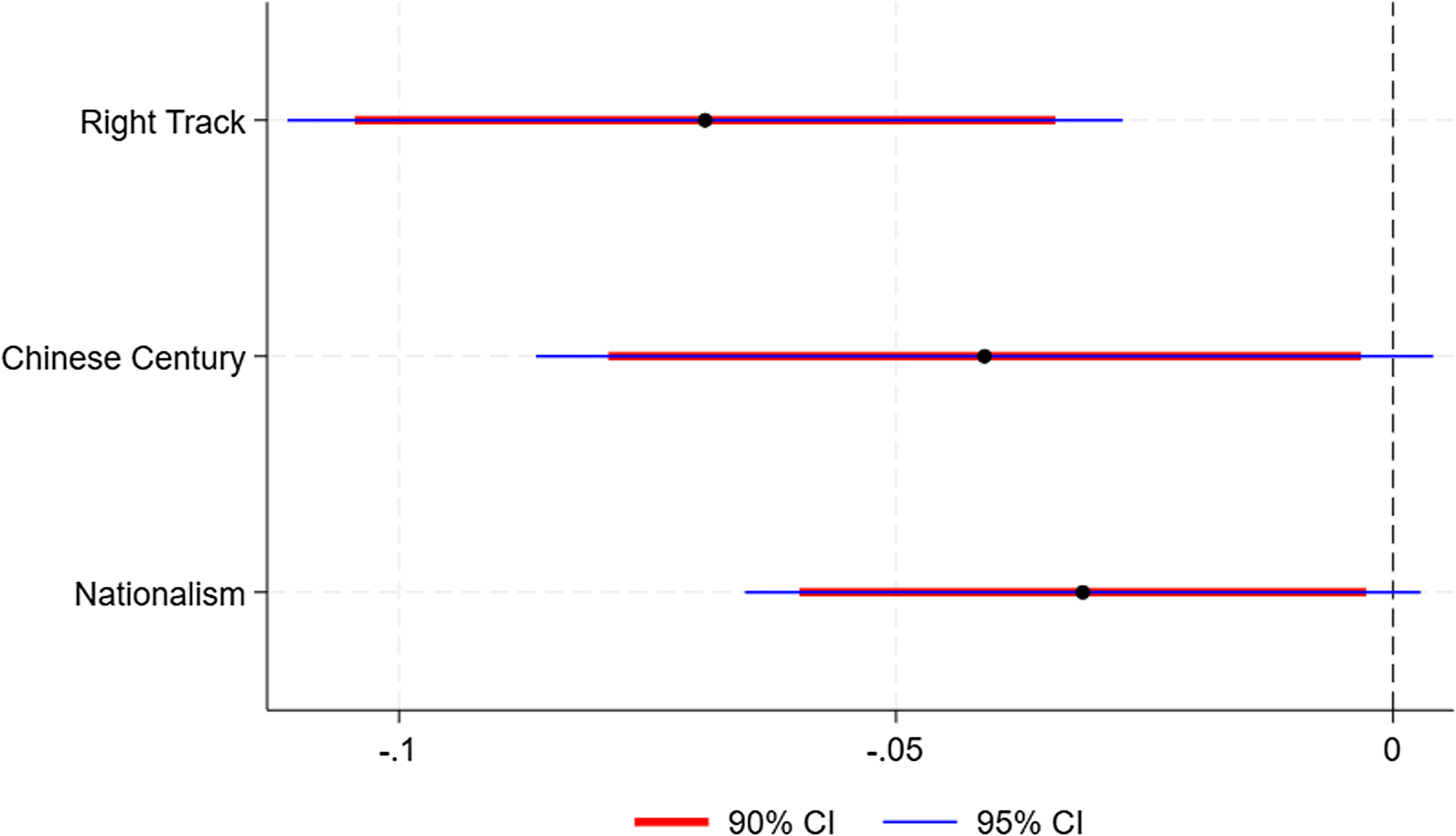


 Open access

