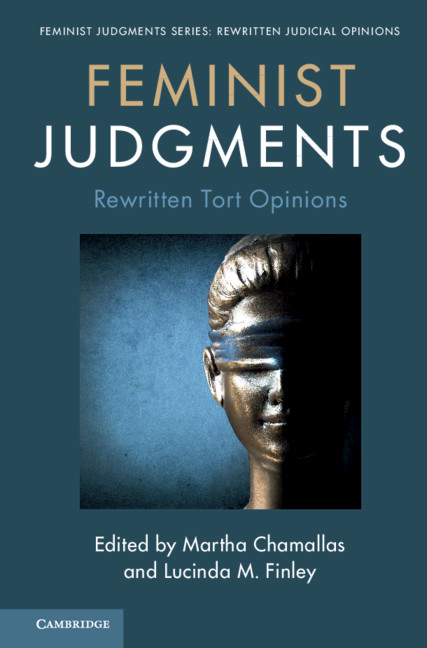

By rewriting both canonical and lesser-known tort cases from a feminist perspective, this volume exposes gender and racial bias in how courts have categorized and evaluated harm stemming from pre-natal malpractice, pregnancy loss, domestic violence, sexual assault and harassment, invasion of privacy, and the award of economic and non-economic damages. The rewritten opinions demonstrate that when confronted with gendered harm to women, courts have often distorted or misapplied conventional legal doctrine to diminish the harm or deny recovery. Bringing this implicit bias to the surface can make law students, and lawyers and judges who craft arguments and apply tort doctrines, more aware of inequalities of race, gender, class, and sexual orientation or identity. This volume shows the way forward to make the basic doctrines of tort law more responsive to the needs and perspectives of traditionally marginalized people, in ways that give greater value to harms that they disproportionately experience.
‘A strong point of this book is that the cases are all relevant and interesting, and each analysis differs enough from the original opinion. Each rewritten judgment makes enough relevant points that it is easy for readers to wish that they had been the actual decisions. Academic librarians, practitioners interested in gender and the law, as well as law students would certainly benefit from reading this book.’
Emily Benton Source: Canadian Law Library Review
Loading metrics...
* Views captured on Cambridge Core between #date#. This data will be updated every 24 hours.
Usage data cannot currently be displayed.
This section outlines the accessibility features of this content - including support for screen readers, full keyboard navigation and high-contrast display options. This may not be relevant for you.
Accessibility compliance for the PDF of this book is currently unknown and may be updated in the future.
