

This is a study of the development of alternative international relations through the medium of fan clubs – a distinctive form of transnational actor the significance of which has to date received scant attention in international relations scholarship. Through its comparative analysis of two case studies of similar scale yet differential composition – the global network of Tottenham Hotspur (Spurs) Supporters’ Clubs (SSCs) and the BTS ARMY – the article offers a tripartite framework illuminating fan clubs’ cross-border practices, identity construction, and activism. In doing so, the article sheds light on not only previously neglected forms of transnational advocacy, but the development of parallel transnational institutions that both mirror and mimic those among states, as well as representations of world politics that may reframe and refract elite discourses.
While sharing with other transnational actors a structure extending beyond national borders and the capacity to mobilize substantial numbers of people, fan clubs are distinct from other forms of transnational actors that have dominated attention in established international relations research.Footnote 1 They are, for instance, distinctive from both non-governmental organizations in their ineligibility for consultative status with the United Nations,Footnote 2 and from social movements in their orientation towards a popular culture object such as a sports team or musical act rather than social change agendas.Footnote 3 Their primary orientation around shared popular interests such as sport and music also distinguishes fan clubs from other better-studied transnational actors in world politics such as religious institutions and transnational advocacy networks, research on which has emphasised orientation around shared values.Footnote 4 Given that popular culture artefacts are often in the possession of profit-making enterprises, fan clubs occupy an interesting middle position between the corporate and non-profit domains, and this article will investigate the tensions that result from this positioning.
Use of the term ‘fan’ to describe enthusiastic followers of sports teams dates to the late nineteenth century,Footnote 5 and it was adapted to refer to dedicated audiences of music by the early twentieth century.Footnote 6 Fandoms are understood to involve at least three key defining characteristics: (i) consumption (and also co-production), (ii) affect (‘strong embodied and emotional attachments’), and (iii) a sense of community, with ‘politicised’ fandoms also involving (iv) contestation of social relations.Footnote 7 According to John Fiske’s classic analysis, fandom ‘is typically associated with cultural forms that the dominant value system denigrates … [and] is thus associated with the cultural tastes of subordinated formations of the people, particularly with those disempowered by any combination of gender, age, class and race’, even though the object of the fandom may be controlled by powerful business interests.Footnote 8 A fan club is one of the principal infrastructures through which a fandom is mobilised, with their participants self-identifying not merely as fans but as participants in an organized group with direct linkages among one another.Footnote 9
In its focus on fan clubs, this article seeks to offer a contribution at the intersection of several significant trends in contemporary international relations research, including the role of the ‘everyday’, popular culture, transnational activism, and world society in international relations. Attention to the ‘everyday’ in international relations has blossomed in the last two decades.Footnote 10 From the early stages, analysis of everyday international relations has involved consideration of not only ‘the production of “international” representations, the reproduction of relations of domination – gendered, economic, social – at the international “level”’, as well as the consumption of ‘“international” goods, ideas and norms’,Footnote 11 but also forms of ‘quotidian resistance’: ‘the almost daily mediation individuals have to face in their relations to diverse and diffuse forms of domination and hegemony without necessarily possessing the ability and⁄or will to actually fight against or transform the power relations they are enmeshed in’.Footnote 12 At the same time, popular culture and emotions have become increasingly prominent in international studies, shedding light on particular dimensions of everyday practices in world politics.Footnote 13
Despite the efforts that have been made to address questions such as the ways in which ‘issues in world politics [are] narrated, reproduced and challenged in sites of everyday practice’, there remain significant areas of international relations research where ‘methodological elitism’ has remained a problem.Footnote 14 Although popular culture objects such as sports organizations and musical acts have been a growing focus in the study of international relations, there has often been an emphasis on themes at the elite level such as ‘soccer diplomacy’ and the role of musicians in ‘celebrity diplomacy’.Footnote 15 Studies of South Korea’s soft power have frequently made reference to the role of K-Pop (including BTS),Footnote 16 while the role of the Premier League in British soft power is also widely acknowledged,Footnote 17 and research into the global political economy of sport and music is well-established.Footnote 18 In wider political studies, there has been emerging interest in ‘politicised fandom’, primarily oriented around supporters of politicians such as Jeremy Corbyn.Footnote 19 On the other hand, it is in the literature on ‘popular geopolitics’ where reference to fans in international relations has to date been perhaps most extensive, with especial emphasis having been placed on illuminating popular (re-)constructions of the international, national, and regional.Footnote 20 This article, by contrast, directs attention to the ways in which the international relations of fan clubs offer alternatives to rather than reproduce or amend established political forms, given – as Lori Morimoto has argued – their ability ‘to forge transnational alliances of affect that exceed hegemonic state definitions of the “national”’, albeit with limitations which this article will subsequently consider.Footnote 21
While there is long-established research into transnational activism and forms of ‘politics beyond the state’ that may bypass governmental and intergovernmental dynamics altogether, the preponderant focus in that literature has been upon the cross-border advocacy work of NGOs and social movements primarily oriented around political and social change agendas rather than as a secondary interest to other concerns.Footnote 22 As this article will highlight with reference to the case of Black Lives Matter, fan clubs have developed distinctive activist techniques in relation to their fandom object that have been transferred to global political issues, broadening the array of forms of transnational activism beyond those traditionally studied in international relations.
Although the study of transnational activism has tended to be associated with ‘liberal’ or constructivist perspectives on international relations, it has also become a feature of English School approaches to the discipline, where there has been developed the concept of a ‘world society’ of non-state actors which is considered primarily in relation to its advocacy role in respect of the interstate domain of ‘international society’.Footnote 23 While there has been growing attention to the idea that ‘world society’ may also involve the development of shared institutions that parallel those of the ‘international society’ of states, there has as yet been inadequate consideration of dynamics beyond advocacy or to the particular practices of different sectors within this domain.Footnote 24
Given these multiple gaps in international relations scholarship, the sections ahead offer a threefold framework unpacking the alternative international relations of fan clubs. First, the article delineates fan clubs as distinctive transnational actors, considering their cross-border structures and processes, and the development of their own transnational institutions that contrast with the subordination to international society implicit in the advocacy orientation of other more commonly studied transnational actors. In so doing, the article sheds light on how particular sets of actors within transnational society exhibit distinctive transnational institutions of their own, extending beyond those assumed to be common to all transnational actors in standard English School accounts.Footnote 25
Second, the article turns to normative dimensions, considering how fan clubs offer alternative discourses to dominant state-centric approaches, oriented around transnational forms of ‘imagined community’ with more direct linkages than alternatives, as well as deconstructing and reframing militarised discourses. The analysis thereby extends the study of the vernacular in international relations to aspects of popular culture that have traditionally been interpreted in terms of the ways in which they reinforce rather than challenge elite narratives.Footnote 26 Whereas use of the language of sport in elite discourses legitimating the international status quo is well known,Footnote 27 here the focus is on the reverse: the ways in which fan clubs may advance alternative representations of international phenomena that subvert the status quo, however limited in manner. Such a focus therefore extends into new areas of research into how ‘micropolitical lenses reveal sites that promise to reshape how we view global politics and our place in it’.Footnote 28
Third, the article delineates the particularities of organized fans’ transnational activism, including their adaptation of consumer tactics to the international political arena, using their role in the Black Lives Matter (BLM) movement as a case study to illustrate how they can advance social and political causes through transnational cultural pressure. Through this focus, the article addresses two significant gaps in the transnational activism literature: (i) the advocacy work of popular associations whose primary focus lies beyond social change agendas; and (ii) the adaptation of consumer techniques initially oriented around consumption to address global political issues.
The article subsequently turns to consideration of the limitations of fan clubs in the advancement of alternative practices of world politics, given their embedding in capitalist relations and diverse political contexts, their internal divisions, and the roles of radical flanks. Particular attention is paid to the tensions that arise when there are conflicts between fan loyalties, especially in relation to international political divisions. In view of the foregoing analysis, the conclusion reviews the extent which fan clubs may offer prospective alternatives to dominant practices in international relations, as well as the potential for further research.
The BTS ARMY and the global network of SSCs have been selected as the primary case studies to illuminate each of these aspects of fan club world politics. They are two of the most extensive – and most extensively transnational – examples of their category in the present day, with the fandoms in which they are situated being of similar scale and international reach despite their different orientation and composition. Even before much of their recent expansion, Spurs fans were estimated a decade ago to number 180 million worldwide, many of them organized in just over 100 SSCs.Footnote 29 In the period since, the number of SSCs has more than quadrupled to over 450 worldwide, active in more than 100 countries.Footnote 30 On the other hand, BTS fans may exceed 100 million in number, including 24 million linked through HYBE’s official fan app Weverse.Footnote 31 Whereas SSCs generally conform to the more traditional fan club format involving formally constituted associations, in the case of the BTS ARMY, participation varies from membership of registered non-profit organizations such as the US BTS ARMY through to mobilization in informally organized ARMY divisions whose members are directly linked through their participation in common social media groups, ranging from those institutionalized via Weverse to those very loosely brought together through participation in common feeds on services such as Reddit and X.Footnote 32
While they involve very different aspects of popular culture, mobilize in different structures, and originate in contexts 9000 kilometres apart, these differences between the cases indicate the wide prospective application of the framework offered in this article. Moreover, despite their differences, organized Spurs and BTS fans have a number of relevant similarities and complementarities in their normative orientation that render them especially suitable for comparative analysis, besides their similar scale and reach. In both cases the fandom object has prioritised a wider social role beyond sport or music, as shall be explored later in considering their contributions to BLM, a cause which elements of both fandoms were involved in promoting. Their fandom objects also each claim purported ‘outsider’ origins: ‘the first and, to date, only non-league side to win the FA Cup’,Footnote 33 and emergence outside the ‘big three’ K-Pop agencies,Footnote 34 respectively. Moreover, despite notable limitations considered later given the great range of identities and values among participating fans, diversity and inclusion have been asserted to be a significant concern among many BTS and Spurs fan associations, in the former case rooted in the role of overseas fans in establishing BTS’ initial popularity and their following among minority groups,Footnote 35 and in the latter case rooted in the historic support for Spurs among Jewish refugees in North London.Footnote 36
Fan clubs as distinctive transnational actors with distinctive transnational institutions
Fan clubs serve diverse functions both for fans and for the object of their attention, institutionalizing the co-dependency relationship between them. In respect of their mutual relations, the cases of SSCs and the BTS ARMY underscore how greatly fan clubs may vary in terms of both the purposes they serve and the ways in which they are organized across national borders. In contrast to traditional interpretations of fan clubs emphasizing their embedding in intra-capitalist dynamics of production and consumption, here the emphasis will be upon the ways in which fan clubs operate as a distinctive set of transnational actors, unpacking their functions and structures, and indicating how in their transnational practices they may not only bypass state-centric international politics but in some ways also parallel, mimic, or even mock the institutions of international society, contrasting with the subordination to international society of other transnational actors.Footnote 37 In so doing, the analysis extends beyond established scholarship on world society emphasizing its advocacy orientation by highlighting how distinctive subsets of transnational actors may establish varied institutions of their own, including transnational constitutions, mutual recognition criteria, and practices of convocation and hospitality.Footnote 38 The ways in which the contexts of these actors limit the independence of these institutions is considered later in the article.
Spurs Supporters’ Clubs as transnational actors
Present-day fan clubs of Premier League football teams are quite different from those that operated in earlier periods. In their early years, supporters’ clubs for UK-based association football teams tended to be domestically organized and centred around services such as providing fan goods and arranging travel to away matches, eschewing advocacy roles, and forming the now-obsolete National Federation of Football Supporters’ Clubs in 1926.Footnote 39 By the 1980s, as Paul Brown has argued, many fans had become ‘disillusioned with the state of the game, the way it was governed, and the way it was reported in the media’ and in 1985 the Football Supporters’ Association was formed as a vehicle for their grievances.Footnote 40 At the same time, an increasing number of supporters’ clubs were beginning to be formed outside the UK, spearheaded by the creation in Malta in 1959 of a supporters’ club for Manchester United.Footnote 41 Following the formation in 1992 of the Premier League, internationalization of both the teams and their fans was an increasingly significant priority among its participants.Footnote 42
These wider trends were echoed in the evolution of SSCs. The original SSC formed in 1948 was a centralized national body, yet self-organized by fans, which sold fan goods, organized away travel, and published fan magazine The Lilywhite.Footnote 43 The SSC was notable for pioneering the provision of mass away trips in the 1960s for UK-based fans for matches in Europe, but it had to cease operations after Tottenham Hotspur Football Club (THFC) launched its own membership scheme monopolizing ticket sales and official travel arrangements.Footnote 44 Moreover, fans disillusioned with the football club’s management and policies participated in alternative groups aimed at lobbying for change such as Tottenham Independent Supporters’ Association (TISA).Footnote 45
In the present day, Tottenham Hotspur fan clubs are organized in two primary transnational structures. The most formal and centralized is the One Hotspur membership system organized by the football club itself, participation in which is required to be able to buy match tickets and which provides various other services such as fan goods.Footnote 46 The other is the loose network of self-organized SSCs operational around the world which are organized around diverse local, national, and transnational constituencies; 464 of them have registered for ‘Official Supporters’ Club’ status which binds them to a set of common rules.Footnote 47 The first SSCs organized outside the UK emerged in the late twentieth century, including Malta Spurs in 1981 and Norway Spurs in 1987.Footnote 48 Accompanying the expanding reach of Premier League matches on international broadcasting platforms, overseas SSCs increased in number dramatically in the twenty-first century, and they now include 154 located in the Americas, 95 in Europe (excluding the UK), 81 in Asia, 18 in Africa, and 3 in Oceania.Footnote 49
There are several dimensions along which we can delineate the functioning of SSCs as transnational actors, in certain respects mirroring and refracting in the non-state domain the practices of international society.Footnote 50 First, they operate according to an international set of common standards, including an international constitution in the form of the registration criteria for Official Supporters’ Club status, which encompass the boundaries for their names and geographical scope, standards of expected conduct including in communications, provisions for non-discrimination, and a common non-profit organizational form with a committee, regular meetings, and audited accounts.Footnote 51 These features provide a set of criteria of mutual recognition as legitimately operating SSCs, offering among one another their non-state equivalent to ‘the constitutive principle[s] as to who are the members of international society’ and which ‘set out the minimum conditions of their coexistence’.Footnote 52 As among states in international society, SSCs recognise one another’s territorial limits, but these may extend to a ‘region, town, city, [or] state’ and there is no implicit hierarchy among these levels, with subnational SSCs able to operate independently of national ones, and multiple transnationally oriented SSCs being organized around non-territorial identities, as shall be explored in the next section.Footnote 53 Whereas literature on states’ recognition practices has emphasized competitive struggles for recognition and their contribution towards conflict,Footnote 54 this has been less evident among SSCs, where overlap of territorial or other forms of scope is permitted and shared loyalty to the fandom object is paramount.
Like states and other international actors, SSCs engage in common international activities, but these are distinguished by their orientation around support for the fandom object, encompassing distinctive events such as simultaneous match screenings, as well as wider activities including global convocations such as annual SSCs’ events at which both player and fan awards are distributed.Footnote 55 Besides multilateral initiatives such as these, SSCs also undertake bilateral undertakings such as friendly matches between one another, some of which have become institutionalized on a regular basis, such as the Jack Wong Cup featuring the SSCs of Malaysia and Singapore.Footnote 56 The SSCs may further be understood to have developed transnational practices of mutual hospitality in their according to members of one another’s clubs arrangements to participate in each other’s activities, including offering provision of arrangements to enable members of distant SSCs to visit safely in conflict zones, for instance, as offered by the Lebanese SSC.Footnote 57 While such arrangements may be small-scale in nature, they are one way in which the divisions in international society may be partially overcome at the micro level through transnational practices that to date have been overlooked in the study of international relations, where the advancement of peace through the extension of hospitality has largely been interpreted in terms of states’ practices, as anticipated in Kant’s Perpetual Peace. Footnote 58 Among SSCs, as among international society, hospitality falls short of the Derridean ideal of ‘the unlimited welcome of the foreigner’ in that delimitations are made as to ‘which foreigners to welcome and how to limit that welcome’,Footnote 59 but in this case it is fellow SSC membership rather than national origin that is the primary consideration.
There is a significant contrast between the subordination to international society implicit in the orientation of many other actors in ‘world society’ that aim to lobby for transformed state practices, and the orientation around facilitating their own transnational practices of SSCs.Footnote 60 Also in contrast to the subordination of transnational pressure groups to international society, SSCs are subordinated instead to their fandom object, extending in the case of their global constitution to its being provided by the football club rather than being negotiated among its participants, with the football club asserting the right to amend its provisions ‘at any time at our sole discretion’.Footnote 61 This is one among several constraints to the ability of SSCs to operate independently that will be considered further. Nevertheless, many of the other transnational activities of SSCs are self-organized, and another feature of the functioning of these supporters’ clubs as transnational actors is their provision of arenas in which ideas and understandings are contested and transformed internationally, a theme which shall be explored in the subsequent section of this analysis in respect of forms of identification beyond the nation.
The BTS ARMY as a transnational actor
Like fan clubs of association football, those for popular musical acts have a history dating back over a century and have transformed over time from more formally centralized structures to looser often digitally mediated mobilizations.Footnote 62 In contrast to the old model of artist-controlled fan clubs sending out membership cards and various printed updates via direct mail, it was claimed by 2014 that a ‘great pop power shift’ had taken place with online self-organized ‘fan armies’ such as ‘Beliebers’ and ‘Little Monsters’ taking their place.Footnote 63 Despite their comparative informality, digitally mediated fan armies nevertheless involve direct linkages among their members such as through participation in common social media groups that are often organized around a particular locality or other form of mutual identification. At the same time, as we shall see in the example of BTS, artist control (or at least that of an artist’s management) has found means to reassert itself in the digital domain.
K-Pop fan clubs have undergone a distinctive evolution. When BTS was formed, the primary format of direct fan engagement was the fan café, an extraordinarily hierarchical institution requiring members to pass an examination demonstrating sufficient knowledge of a K-Pop artist to gain admission.Footnote 64 With a far greater number of fans self-organizing through platforms such as Facebook and X (formerly known as Twitter), one response by the companies managing K-Pop artists has been to set up their own social networking platforms, with HYBE’s Weverse serving the BTS fan community with exclusive privileges in exchange for an annual subscription fee, superseding the BTS fan café since 2019.Footnote 65 While this constitutes the ‘BTS Global Official ARMY Fanclub Membership’ with its own membership card and mailing list,Footnote 66 a far greater number of ARMYs remain self-organized through diverse social media, with X being especially influential among those located beyond South Korea.Footnote 67
As with Spurs fan associations, the BTS ARMY therefore combines both a centralized membership structure (in this case via Weverse) with a looser array of wider mobilizational forms. Unlike the array of relatively homogeneous SSCs bound by a set of common rules set by the football club, the array of divisions of the BTS ARMY exhibit a much more diverse set of structural formats. As previously noted, some are quite formal, such as the US BTS ARMY, which has been officially registered as a non-profit organization in the state of California since February 2019.Footnote 68 Far more numerous, on the other hand, are informal mobilizations brought together in online communities and through participation in common social media that despite lacking formally constituted rules of association provide organization through direct (digitally mediated) linkages among distinctive self-identified sets of fans.Footnote 69
In contrast to SSCs, BTS ARMY sections lack a common global constitution. However, they do share multiple common transnational norms and institutions understood to be shared among the fandom as a whole. For instance, in her wide-ranging survey of BTS fandom, Jeeheng Lee observed that ‘tolerance and inclusivity’ were characteristics that were commonly emphasised among the ARMYs as distinguishing features of a fandom alleged to have ‘always embraced all kinds of people’, although as shall be considered later in the article such an orientation is not universal.Footnote 70 Besides this self-ascribed normative orientation, there are various instruments guiding ARMY practices, such as fan-produced ‘ARMY Handbooks’ outlining interpretations of what it means to be an ARMY, as well as an online ‘ARMYpedia’ by which ARMYs recognise one another’s achievements in diverse contexts, and an ‘ARMY Census’ describing their demographic characteristics.Footnote 71 Moreover, BTS ARMY sections participate in common transnational mass actions, initially largely in service of the group, such as online campaigns for enhanced BTS airtime, increased recognition in chart rankings, and the securing of fan-voted music awards, as well as grass-roots marketing campaigns.Footnote 72 In this latter regard, ARMY sections are serving the mission assigned to them when the fandom’s name was announced to the world by Big Hit Entertainment on 9 July 2013, the rationale for which was rather crudely described as follows: ‘ARMY is military in English, the body armor and military are always together, so it means the fans will always be together with the Bangtan Boys’.Footnote 73 The ARMYs therefore self-organize in various action units with their common mission in mind, co-opting and reorienting military discourses in support of the object of their fandom, with manifestations including the ‘BTS Voting Brigade’, ‘BTS ARMY Pupper Division’, ‘BTSInFANtry’, ‘BTS ARMY Corps’, and ‘BTS ARMY Combat Support Squadron’, among many others.Footnote 74 As shall be explored further in the next two sections, the units through which BTS ARMY has mobilized have also been oriented around a diverse array of identarian and wider social change agendas. In these respects, ARMY methods initially developed in the service of the business interests of a popular culture object have been redeployed in the pursuit of wider social and political ends.
Fan clubs and alternative transnational identity
The significance of transnational fan clubs to world politics lies not only in their development of parallel institutions to those of the society of states, but in their ability to advance forms of identity extending beyond those centred around both the state and dominant groups (albeit in relation to a limited domain of activity). Whereas there is well established research into the use of popular culture representations in the service of state elites,Footnote 75 the analysis ahead also explores the opposite relationship: the reframing and refracting of state-oriented representations among fan communities of popular culture objects. After highlighting how organized fans may reconfigure state-oriented discourses, the analysis turns to the ways in which transnational fan clubs provide infrastructures for the advancement of the identities of marginalized groups, serving as a bridge to the next section on fan club activism.
In some degree the organizational form of SSCs and BTS ARMY sections reproduces the territorial demarcations of the society of states. Many of the largest SSCs are organized by nation, with the largest in South Korea, for instance, being South Korea Spurs with 28,000 members.Footnote 76 Similarly, the BTS ARMY features numerous national divisions, albeit sometimes with multiple units claiming the same territorial scope, such as UK BTS ARMATION and BTS UK ARMY UNITE.Footnote 77 However, a notable feature of both SSCs and the BTS ARMY is that national organization is not the most common format. Far more frequently mobilization is localized in orientation, often with no oversight by the national-level institution, or even without national organization altogether. In South Korea, for instance, SSCs operate independently of the national association in diverse locations including Boryeong, Daegu, and Gangwon. In many other countries, including China, India, and South Africa, there are multiple local SSCs, but no national one.Footnote 78 Similarly, BTS ARMY units are often organized around localized contexts, which in the case of UK-based ARMY units include constituent nations such as Scotland, regions such as Yorkshire, and cities such as Birmingham.Footnote 79
While these largely localized organizational forms challenge the reproduction of state-centrism in popular culture from below, participants’ transnational identification with the fandom object challenges a state-centric lens from above. As Jonathan Dean argues, ‘to be a fan is to have some sense of oneself as a member of, to use Benedict Anderson’s terminology, an imagined community’.Footnote 80 Just as nations may vary in the extent to which they are organized in formal institutions, with only a handful mutually recognized as states, so too the imagined communities of transnational fandoms vary in their institutionalization, from the formal constitutional and mutual recognition practices of SSCs through to the often informal yet nonetheless digitally directly linked activities of BTS ARMY sections. However, there is a significant contrast between the ‘imagined communities’ of nations whose participants – as Anderson notes – ‘will never know most of their fellow-members, meet them, or even hear of them’,Footnote 81 and the direct contacts formed among the members of the fan associations considered here where – for example – social media make possible direct (online) contacts among all participants, even if very few will meet one another in person. These direct linkages among fans offer a form of cosmopolitanism which is less abstract and more directly mediated than assertions of cosmopolitan belonging based on broad ideas, whether regional, ideological, or even religious, where direct linkages may not be present in the same degree. Moreover, given the reach of SSCs and the BTS ARMY beyond both national borders and diverse cultural contexts, each of these may be described as not only transnational but ‘transcultural’.Footnote 82 Whereas national imagined communities are – as Anderson observed – ‘imagined as limited’ with ‘finite ... boundaries, beyond which lie other nations’,Footnote 83 these fan associations are prospectively open to all (although participation in fan clubs for multiple musical acts is more common than for multiple football teams within the same league).
As was highlighted in the introduction, there has been rich inquiry into the deployment of popular culture representations in the service of national elites, but among fan clubs we can identify reverse dynamics. Processes of identity construction among organized Spurs and BTS fans have facilitated development of reframings of state- and empire-centric discourses that may be in opposition to rather than complementary of elite understandings. This is significant, as if there is a tension between elite discourses and those in the fandom, the resonance of the former may be undermined. In some cases, it is difficult to distinguish whether representations are simply reproductions of or challenges to the status quo. Take, for instance, the redeployment of imperial discourses by one Spurs supporter thus: ‘the sun never sets. Every minute of the day, someone, somewhere is supporting Spurs’Footnote 84: in this case, Spurs has taken the place of the United Kingdom as the imperial actor in this framing, but it could be argued that the global popularity of Spurs itself in some ways complements assertion of British power in the post-imperial age.
At Tottenham Hotspur football matches, the names of local SSCs from around the world, from Sonoma County CA to Huazhong China, are proudly displayed on electronic ticker tape surrounding the stadium, highlighting how – as one fan put it – despite their remarkable diversity, ‘one thing unites them all’ in their support for their team.Footnote 85 Stanfill and Valdivia have described of supporters of FIFA World Cup teams a form of ‘transnational affinity’ where ‘“the nation” is the object of transnational affinity, not simple or spatially located’.Footnote 86 When considering SSCs – whose object of attention is a multinational team based in a sub-national locality – the concept of transnational affinity needs to be radically reinterpreted to decenter the nation (and the state) altogether. As one fan observed, given the multinational nature of Spurs team members, their loyalties are divided when tournaments such as the FIFA World Cup are played among teams based on national composition, with transnational loyalty to Spurs undermining attachment on the basis of national citizenship.Footnote 87
In the case of the BTS ARMY, transnational and transcultural fan mobilization in support of a popular culture object dramatically reframes discourses usually associated with the mobilization of people in the service of a state. In contrast to a national army, the BTS ARMY is capitalized and can refer to a single individual as well as collectivities. Moreover, as noted in the previous section, the units in which ARMYs mobilize include those whose nomenclature imitates (and arguably mocks) the structures of armed forces, such as ‘batallions’, ‘corps’, ‘divisions’, ‘infantries’, and ‘squadrons’. At BTS concerts, ARMYs hold up lightsticks which they describe as their (pacific) ‘ARMY Bombs’, which they illuminate in extraordinary displays of (non-violent) ‘bombing waves’ through the stadiums.Footnote 88 ARMY grass-roots marketing campaigns through social media have been self-described as being undertaken by (non-violent) ‘guerillas of BTS’.Footnote 89 In turn, discourses associated with the use of violence either by or in relation to a state are reframed in the service of pacific objectives. As one fan put it: ‘When I see YouTube reaction clips where international fans joyfully watch BTS music videos, but then break into tears after reading the translated lyrics, I can’t help but wonder if world peace is actually up to regular people who open up to each other, rather than politicians’.Footnote 90 In small ways such as this, transnational fan clubs may play a part in incremental change towards a more pacific world through transformed mutual human perceptions, a feature of bottom-up and incremental approaches to peaceful change.Footnote 91 At the very least, by offering discourses that are hard to reconcile with elite narratives, these practices help to undermine the resonance of the widely observed efforts of elites to deploy popular culture representations in the service of military agendas.Footnote 92
Besides reframing elite discourses from the bottom-up, transnational fan clubs have also served as media through which marginalized communities may assert their identities. The organization of SSCs is not limited to locality. For instance, Proud Lilywhites was formed a decade ago to advance ‘LGBTQ +, and wider inclusion, across all the intersections of the fan base’.Footnote 93 SpursAbility Supporters’ Club, on the other hand, aims ‘to focus specifically on matters that affect disabled people’,Footnote 94 while Spurs REACH ‘are the official Tottenham Hotspur Race, Ethnicity and Cultural Heritage supporters’ association’, aiming ‘to promote the values of Tottenham Hotspur supporters from diverse and under-represented ethnic backgrounds’.Footnote 95 Other associations seek to advance the position of fans of particular ethnic backgrounds, for instance, with Punjabi Spurs seeking since 2017 to do so ‘in a way that celebrated the relationship between the culture of football and individual cultures’, for example, through introducing Punjabi cultural performances to Spurs matches.Footnote 96 On an informal basis, Spurs fans have also organized in sections dedicated to particular political causes, for instance, the group ‘Spurs Fans Against Apartheid’ that has made Israel’s occupation of Palestinian territories a focus of its attention.Footnote 97
A significant cohort among the BTS ARMY – especially in its earlier years – is understood to have been comprised of members of ethnic minority communities ‘who projected their own selves onto BTS … to yield the positive self-image that they could make it too, despite discrimination’.Footnote 98 In the US, the Black ARMY Coalition aims towards ‘giving Black ARMY a space to feel seen, celebrated, and safe; all the while coming together with the common interest of liking BTS’.Footnote 99 The BTS ARMY collectivities further encompass the‘BTS ARMY Disabled Community’ and the ‘Disabled ARMY Advocacy and Support Network’, among many others.Footnote 100 The LGBTQ + ARMY have mobilized in diverse ways, including the hashtag #ProudBTSArmy and through making their identity public on dedicated ‘selca days’.Footnote 101 These are just a handful of examples of how participation in ARMY units has been linked to concerns extending beyond the fan object, as shall be explored further in the next section.
Fan clubs and transnational activism through consumer pressure
Both football and music fan associations have been involved in diverse forms of consumer pressure, which may be applied both on behalf of the fandom object and to influence its actions. More significantly, as the example of the advancement of BLM by organized Spurs and BTS fans will demonstrate, they may adapt their consumer pressure techniques to advance wider social and political causes. In contrast to traditional studies of consumer activism in world politics, focused on how groups with a primary orientation around campaigning apply pressure from outside, such as through product boycotts,Footnote 102 here the focus is on actors whose primary concern is with consumption and the ways in which their approaches to consumption may be adapted to advance social and political causes. Techniques originally developed to mobilize fans in support of their fandom object were redeployed both to raise awareness of and funding for the cause and to undermine the capabilities of BLM’s opponents.
Both Spurs and BTS fan associations were able to build on prior practices of consumer pressure in relation to their fandom object when advancing BLM. With Tottenham Hotspur being the first major club to list shares on the stock market in 1983,Footnote 103 their fans were to organize to apply pressure on the club’s management even before the formation of the Premier League. Early fan protest groups included Left on the Shelf, which was formed in 1988 to campaign against the replacement of a section of raised terrace by executive boxes.Footnote 104 Despite the failure of that campaign, TISA was later to have greater success, and shareholder activism played a role in preventing the club’s takeover by notorious businessman Robert Maxwell in 1991.Footnote 105
In the case of BTS, the relationship between the advocacy mobilization of their fan associations and the commercial interests of their management has been more harmonious. The early success of BTS cannot be understood without reference to their fans’ efforts to maximise the airtime and chart position of the group in multiple countries. While fan alliances such as BTSx50States have directly lobbied radio stations for airplay, other mobilizations have sought to publicise BTS through hashtag and thread campaigns on social media, and even by collaborating to purchase physical advertisement space on behalf of the group.Footnote 106 Mobilization of the BTS ARMY through social media has ensured the group’s position as the world record holder for Twitter (X) engagements for any entity,Footnote 107 as well as being the most followed musical artist on Instagram,Footnote 108 and the recipient of every Billboard Top Social Artist Award from 2017 onwards.Footnote 109 As shall be explored through the case of BTS ARMY involvement in BLM, this experience has been adaptable in the pursuit of wider social and political causes.
The BLM movement is a cause with which both THFC and BTS have sought association, and mobilization in support of this campaign in each case originates from both the fandom object and (segments of) the fandom. With Tottenham having been the location of police killing of Mark Duggan in 2011, the BLM movement was to have especial resonance in the Spurs’ locality.Footnote 110 The THFC was to play a leading role in the adoption in the Premier League of the taking of the knee and the wearing of BLM symbols on match shirts from June 2020.Footnote 111 The team’s star player Harry Kane was a high-profile figure in promoting continued use of these symbols given the Premier League’s global reach, stating: ‘we’re a huge platform to share our voices across the world … we are watched by millions of people round the world … adults can teach generations what it means, and what it means to be together and help each other no matter what your race’.Footnote 112 The club also found common cause in the matter with the ARMY, evident for instance in a series of social media posts tagging one another and highlighting the issue.Footnote 113
The BLM cause resonated among substantial segments of BTS fandom, given the role of marginalized communities in the initial establishment of the group’s popularity beyond Korea.Footnote 114 In view of the resonance of the cause among the ARMY, BTS formally announced support for BLM on 4 June 2020 in a social media post that was retweeted 1.9 million times.Footnote 115 At the same time, a donation of $1 million was made by Big Hit Entertainment to BLM, and within a day the ARMY matched this donation through the independently organized #MatchAMillion campaign on social media.Footnote 116 In part, the public support of BTS for BLM represented a response to fandom ARMY social media posts using the hashtags #BlackARMYsequality and #BlackARMYsMatter.Footnote 117 For both BTS and THFC, public association with BLM marked a break with the traditional norm of abstention from association with political causes of K-Pop artists and Premier League football teams respectively.Footnote 118
The success of the ARMY in quickly raising funds for BLM is in part attributable to its existing consumer mobilization infrastructure, not least the ‘One in an ARMY’ charitable fundraising platform, as well as the influence of ARMY social media groups with large numbers of participants.Footnote 119 The ARMY further contributed to BLM through wider deployment of their skills in mass mobilization through digital media. One of the most significant examples of this is their overwhelming of Dallas police’s iWatch reporting app with fancams, causing the app to crash after the police had appealed on social media to report protests through the app.Footnote 120 The ARMY’s social media accounts also hijacked counter-movement hashtags such as #AllLivesMatter through uploading BTS fan media with the hashtag, crowding out racist deployments.Footnote 121 For their part, Spurs social media fan accounts were deployed to delegitimate opponents to the club’s support for BLM, through posts emphasising that ‘If you’re racist you’re not a Spurs fan. Full stop. Black Lives Matter’.Footnote 122 Such an approach was accompanied by actions as spectators, for instance, in December 2020 when Millwall fans notoriously booed players taking the knee, Spurs fans responded by clapping loudly when their team performed the same gesture.Footnote 123
The cases examined here therefore illustrate how transnationally organized fans – especially those mobilized more informally through social media – can apply distinctive forms of consumer pressure that originated in the service of the fandom object but which were adapted in the service of a political and social change objective. This was undertaken both positively in support of the BLM cause – by enabling the raising of awareness and funds – as well as negatively by obstructing and deligitimating the movement’s opponents.
Limitations to the transnational alternatives offered by fan clubs
Although a wide range of alternative forms of transnational institutions, identities, and activist practices have been identified in the analysis so far, there are considerable limitations to the ability of fan clubs to operate independently of the economic, social, and political contexts in which they are situated. The role of business control of fandom objects, the reproduction of international divisions among fandoms, and the diverse social constituencies of fans all limit the extent to which fan clubs offer alternatives to established hierarchies and divisions.
One of the distinctive features of the form of transnational identification advanced by fan clubs is its attachment to a fandom object usually controlled by a profit-making enterprise, such as a football club or a music agency. The activism undertaken through these transnational actors has therefore tended to operate within rather than against prevailing capitalist economic relations, given reliance on techniques of consumer pressure. In consequence, while it is evident from the foregoing analysis that SSCs and the BTS ARMY offer in their respective domains alternative forms of belonging and social organization to state-centric frameworks and can play a part in the advancement of comparatively mainstream political and social causes, the extent to which they represent challenges to wider aspects of the status quo is limited. Moreover, the causes with which they have been associated – such as BLM – have tended to be those with substantial support in the Global North (where their fandom object is located), thereby reproducing rather than challenging structural asymmetries in the international system. The limitations to the alternative international relations offered by fan clubs extend not only to their embedding within established patterns of consumer capitalism and established geopolitical hierarchies, but also to their reproduction of state-centric discourses and norms, given the potency these retain among significant sectors of the fandoms.
The relationship between fan clubs and the profit-making enterprises controlling the fandom object has generally been supportive, with their development as transnational actors forming a part of the fandom object’s international growth strategies.Footnote 124 While a number of Spurs fan associations have objected to commercial practices such as raised ticket prices and the replacement of stands with executive boxes,Footnote 125 the establishment of SSCs around the world has been integral to THFC’s Premier League-era strategy to reach expanding markets, especially in Asia and the Americas.Footnote 126 Moreover, SSCs are now more tightly overseen by the football club, with previously independent supporters’ associations being largely superseded by ‘Official Supporters’ Clubs’ meeting the football club’s registration criteria.Footnote 127 In the case of the BTS ARMY, the relationship between fan mobilization and artist management objectives was close from the outset, with BTS having been specifically developed by Big Hit Entertainment to address declining album sales through advancement of a new type of ‘idol group’ via diverse media and an engaged fandom.Footnote 128 Nevertheless, BTS ARMY sections have mobilized to prevent BTS’s management overstepping the boundaries of the group’s perceived socially conscious normative orientation, notably the inhibition through a consumer boycott of a proposed collaboration with Akimoto Yasushi on account of his alleged ‘right-wing ideology and previously writing misogynistic lyrics’.Footnote 129
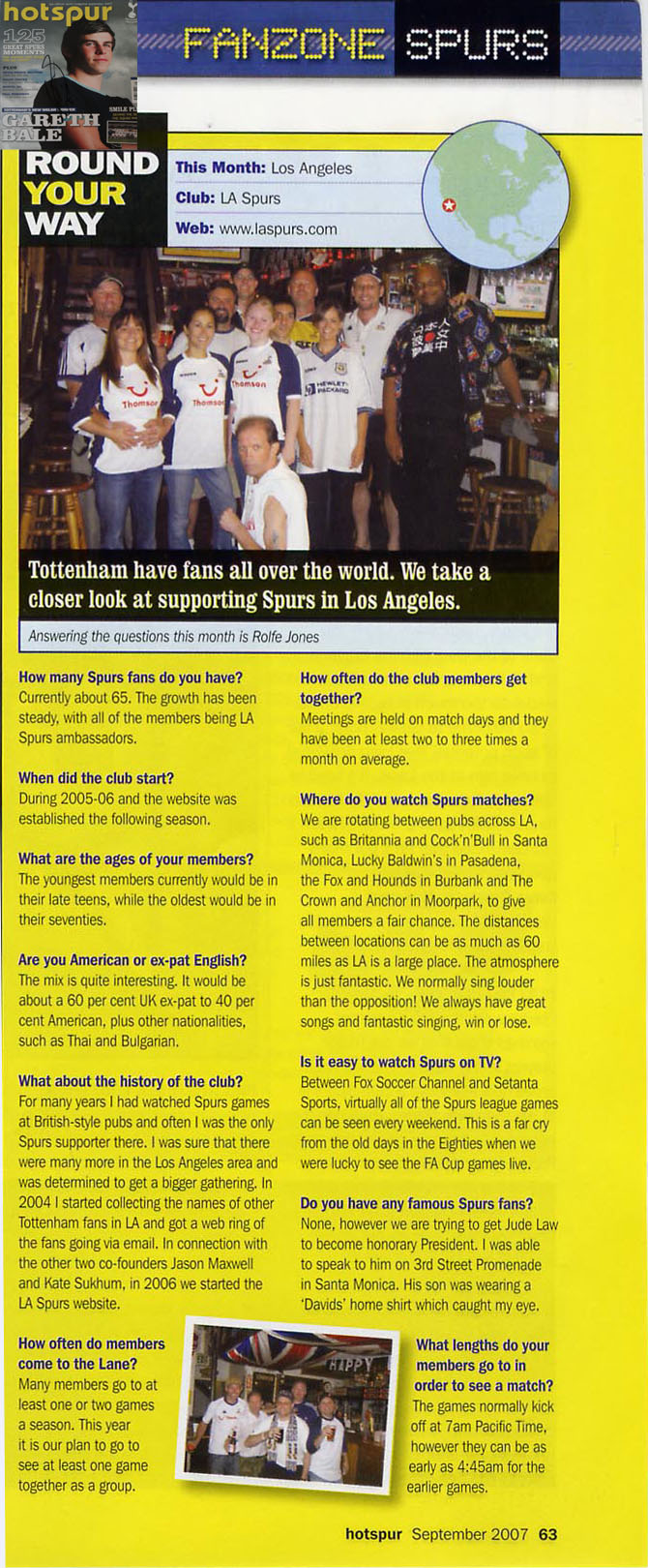
With national forms of belonging playing a part in the structures and processes of fan club mobilization, there are also limitations to the extent to which the transnational mobilization of SSCs and ARMY sections challenge state-centric forms of organization and identification. In the case of the ARMY, although the formation of units such as ‘US ARMY, INDIAN ARMY, K- ARMY (Korean ARMY) etc’Footnote 130 in certain respects mocks through mimicry the organization of official armed forces, it nevertheless reproduces in the fandom national forms of belonging in tandem with their transnational identification as the ARMY, with national units providing well-established forms of identity around which fan organization may be structured and facilitated. Similarly, many of the largest SSCs are organized on a national basis, and the motivation for their establishment often coincides with the signing of a team member from that country, for instance, with Sweden Spurs being established in 2004 at the time of the signing of Erik Edman.Footnote 131 The extent to which many SSCs serve as focal points for British expatriate communities is also worth noting, including, for example, one of the largest North American supporters’ clubs LA Spurs, set up in 2005 with a 60% British expatriate membership.Footnote 132 These clubs provide at the popular level services for citizens of particular countries in relation to a fandom object, forming a cultural complement to the formal consular services of state diplomatic institutions.
Given their embedding in diverse political contexts, fan clubs may also serve to reproduce rather than overcome divisions in international society, with sports in particular having been critiqued as serving as vectors of antagonism.Footnote 133 This problem may be illustrated in the case of SSCs with reference to responses to the Hamas attack of 7 October 2023. Despite its considerable following in Israel, the THFC was slow to issue a statement on the attack, and when it did it condemned violence but failed to mention Hamas, leading many Israeli fans to cancel their memberships.Footnote 134 Arabic Spurs, on the other hand, supported THFC’s stand, issuing a statement calling for ‘a neutral stance’ and emphasising how ‘our shared love for football, and by extension, our club has been a source of solace and unity in times of adversity’ and asserting ‘the power of sports to unite people from all walks of life’.Footnote 135 By contrast, such an approach was condemned as ‘vanilla’ by Israeli winger Manor Solomon, reflecting a concern about the role of sports in the depoliticization of fans.Footnote 136 As the Israel-Gaza conflict has progressed, there has been expressed concern among Arabic Spurs fan communities that THFC has since been serving also to depoliticize fans by blocking X accounts of fans tagging @OfficialSpurs on the issue, with Moroccan-Spanish sports journalist Leyla Hamed asserting that ‘supporters who spoke up against genocide are being silenced by the very club they love’.Footnote 137 Subsequently, THFC unblocked some of these accounts, in cases where the ‘threshold of malicious communication’ was not met, with accounts deemed abusive towards players remaining blocked.Footnote 138
Besides their role in the reproduction of national demarcations and international conflicts, a further limitation to the transnational consciousness of SSCs and the ARMY lies in the tensions that have developed between what might be termed ‘home’ fans in the fandom object’s country of origin and ‘overseas’ fans in other countries. Some UK-based Spurs supporters’ organizations such as Tottenham Hotspur Supporters’ Trust have organized in opposition to the reaching out of the football club to international fans, with increased prices seen in part as a consequence of the globalized fan base.Footnote 139 Although Korean BTS fans have in some instances warmly welcomed international ARMYs – especially given their role in the group’s early successes – through deployment of labels such as ‘I-lovelies’, there have also been mobilizations against management’s perceived ‘privileging foreign fans over domestic fans’.Footnote 140 In each case, the globalization of the fandom limited the ability of domestic fans to access the privileges they previously expected given their proximity to the fandom object, with the infrastructures of SSCs and ARMY groups providing a means to voice these concerns.
Besides the perpetuation of capitalist and nationalist dynamics among SSCs and the ARMY, the extent to which they offer coherent transnational alternatives to preponderant international dynamics is further limited by the role of radical flanks in both fandoms, especially among elements not formally organized.Footnote 141 Given their vast scale – comprised of hundreds of millions of fans – fandoms encompass very diverse social constituencies, including those that are far removed from the normative orientations that may be associated with ‘mainstream’ fans.Footnote 142 Lee has observed the problem of ‘racism in the fandom’ among the BTS ARMY, including the use of anonymous messaging apps to spread ‘discriminatory statements and insults against black ARMYs’.Footnote 143 In football fandom, the problem of radical flanks has historically been much greater, for instance, with a number of (unorganized) Spurs fans gaining international notoriety for their role in rioting during the 1974 UEFA Cup final in Rotterdam.Footnote 144 There have been numerous efforts to address hooliganism in the period since, including through the work of supporters’ groups.Footnote 145 Nevertheless, problems have persisted, and in June 2020 the THFC had to intervene to condemn actions of a number of alleged Spurs fans in the racist abuse of participants in a BLM march in Hoddesdon in June 2020, stating ‘these are no fans of ours’ and promising to take action against them.Footnote 146
Conclusion
The transnational activities of fan clubs represent a significant under-explored feature of world politics beyond state-centrism. Through their transnational organization, fan clubs have developed alternative practices of non-state diplomacy that mirror and refract practices in international society in diverse ways. Aspects highlighted in this article include fan clubs’ subscription to transnational constitutions and global norms, and their development of transnational processes of mutual recognition, intercourse, hospitality, and co-ordinated action.
Moreover, fan clubs mobilize identities beyond the nation, not only in respect of their fandom object, but at intersections of race, sexuality, gender, locality, and disability, among other aspects. We have seen how – especially in their digitally mediated forms – transnationally organized fans have been able to serve as applicators of diverse mechanisms of consumer pressure for wider political and social change objectives such as BLM, adapting techniques developed in relation to the fandom object to other causes.
In the case of the BTS ARMY, its organization in parallel non-violent structures to those of standard armed forces subtly mocks the terminology of the latter, placing into reverse the usual focus on how state institutions deploy popular culture representations to advance their causes, and potentially even undermining such use. Fan clubs advance forms of transnational belonging that embody a cosmopolitanism that is distinctive from the divisive ideological orientations of dominant variants, even though we have seen divisions in international society reproduced among fan clubs. The challenges that transnational fan clubs pose to national orientation and the opportunities they may represent for overcoming divisions are highly incremental and limited by their political contexts, but they may mark small steps in the direction of alternative modes of international social organization.
Fan club world politics constitutes a rich area for prospective further research, not least given the great array of fandoms extending beyond the domains of sport and music. Further interrogation of these should shed light on the wider array of forms of transnational activism, transnational identity politics, and alternative practices of cross-border relations, extending beyond those set out in this article. While this article has largely focused on harmonious relations between fan communities, more research would also be welcome into conflicts between them, and the factors underpinning the contrasting forms of relations that may develop, including the role of wider social cleavages such as gender and class. While this study has been able to highlight the dynamics involved in its two cases, further comparative research should shed light on the extent to which similar dynamics may operate in other domains.
Acknowledgement
The author is very grateful for the rigorous feedback provided by the three anonymous reviewers.

 Open access