Introduction
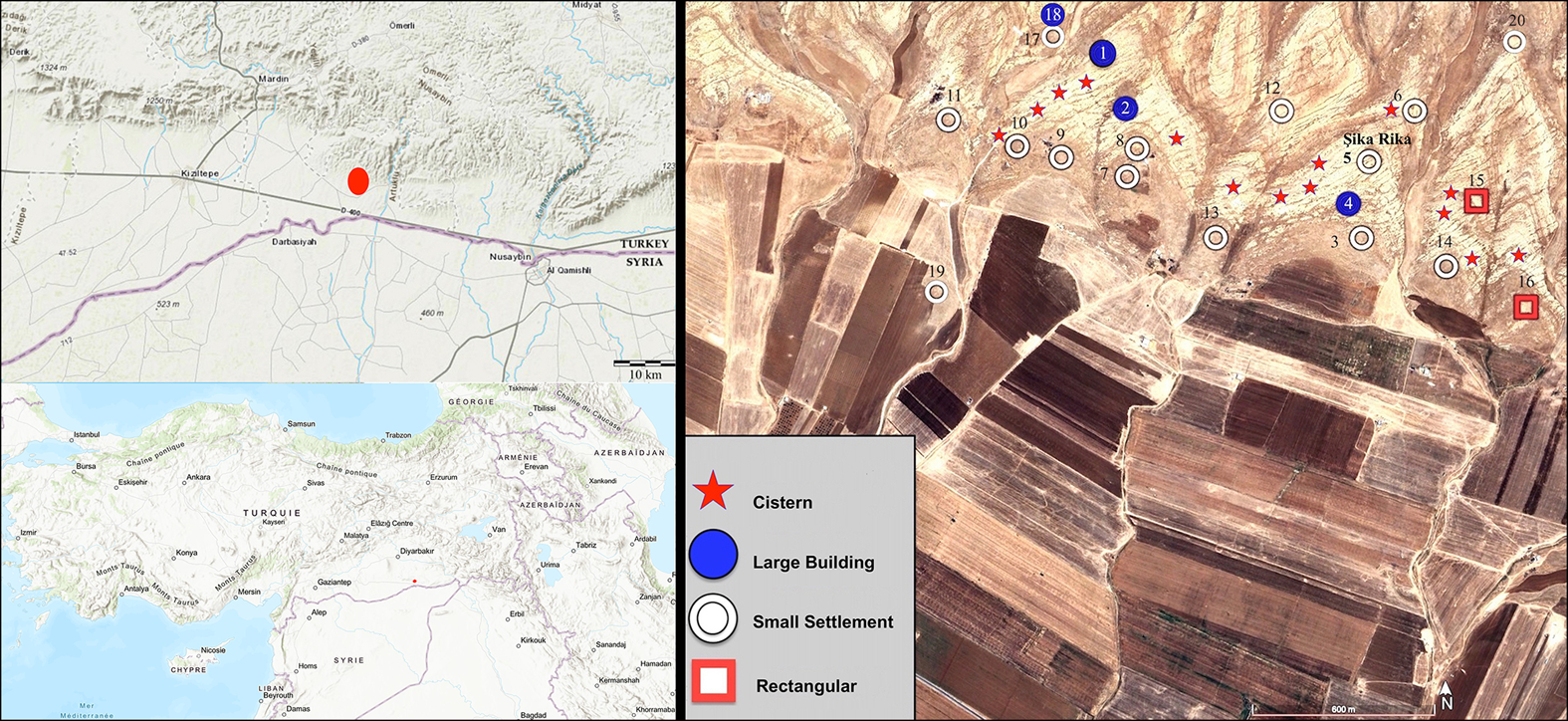
Numerous Neolithic settlements (c. 10 000–6000 BC) have been uncovered in south-eastern Anatolia, including the well-published site of Göbekli Tepe, in modern-day Türkiye. As a result, research on prehistoric societies and the adoption of Neolithic lifeways in this region has largely been defined through studies conducted along the banks of the Tigris and Euphrates rivers, which frame ancient Mesopotamia (Figure 1; Karul Reference Karul2022). In comparison, studies conducted in the Ḥabur Valley are fewer in number. Surface surveys conducted in the Syrian part of the region in the 1990s did not yield any archaeology relating to the Upper Palaeolithic and Epipalaeolithic periods (c. 50 000–12 000 BC) (Nishiaki Reference Nishiaki and Lyonnet2000; Bar-Yosef & Valla Reference Bar-Yosef and Valla2013) while the section within Türkiye’s borders remains underexplored (Kodaş Reference Kodaş2023), limiting our understanding of the development of sustained occupation in south-eastern Anatolia, and in northern Mesopotamia more generally.
Location of the Şika Rika 5 settlement and Şika Rika 1–4, 6–20 (figure by E. Kodaş).

Figure 1 Long description
The map displays a detailed view of southeastern Anatolia, highlighting the location of the Sika Rika 5 settlement and Sika Rika 14. The map includes various symbols indicating cisterns, large buildings, small settlements, and rectangular structures. The inset map shows the broader region of Turkey and surrounding areas, with a red dot marking the specific location of interest. The main map provides a close-up view of the terrain, with fields and geographical features clearly visible. The legend explains the symbols used to mark different types of structures and settlements.
In this article, we present preliminary results from studies conducted in the north-eastern Ḥabur Valley during 2022 and 2023, which shed light on prehistoric patterns of settlement in the limestone foothills of the Tur Abdin. While most of the settlements surveyed are dated to the Pre-Pottery Neolithic period (c. 10 000–6000 BC), some have been assigned to the preceding Epipalaeolithic period. Şika Rika 5, discovered in 2023 and first excavated in 2024, offers new insights into the transition to settled life and the cultural framework preceding the Neolithic period.
Excavations at Şika Rika 5
The Şika Rika locality, approximately 2km north-east of Akıncı village, in the Artuklu District of Mardin Province, Türkiye, contains a cluster of 20 prehistoric settlements (Figure 1). These lie on the southern margin of the Mardin Plateau, on a limestone bedrock, and are spaced 300–500m apart. Architectural features are clearly visible on the surface. At least three distinct types of settlement are present within the area: some with angular plans (Şika Rika 15, 16); some with large, round areas (Şika Rika 1, 2, 4, 18); and others with smaller, round structures (Şika Rika 3, 5–14, 17, 19, 20). This article will focus on Şika Rika 5, a small, round prehistoric site located immediately above a rocky slope in the north-eastern part of the Şika Rika locality.
Architectural remains
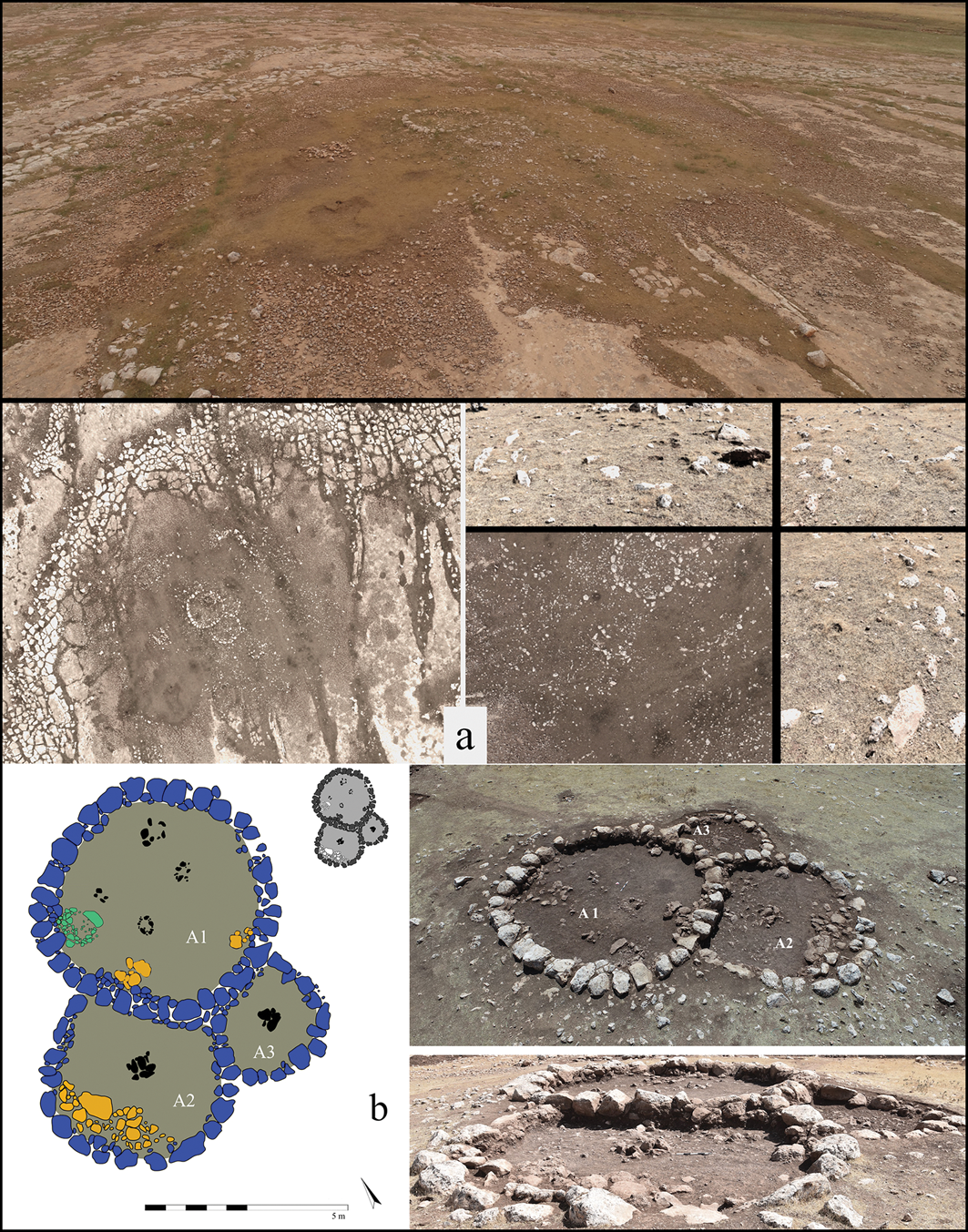
During field-walking surveys, 34 limestone dwellings were identified at Şika Rika 5. Surface architectural features extend over more than 1200m2. In the centre are three adjoining circular structures (A1–3) (Figure 2). The largest, A1, has a diameter of 6.3m and its floor is marked by four stone-ringed postholes and a round, stone-built hearth. A2 and A3 measure 5m and 3m in diameter, respectively, and both feature a central posthole. Unlicenced digging activity was particularly intense within and around these structures and another structure located immediately to the east (A4), so excavations were conducted in 2024 to salvage information from these structures. A4 has a diameter of 4.9m and contains a posthole, a hearth and possibly a funerary pit.
Overview of Şika Rika 5 site and the exposed architectural remains: 1) drone photograph; 2) drawing and after the excavation (figure by E. Kodaş).
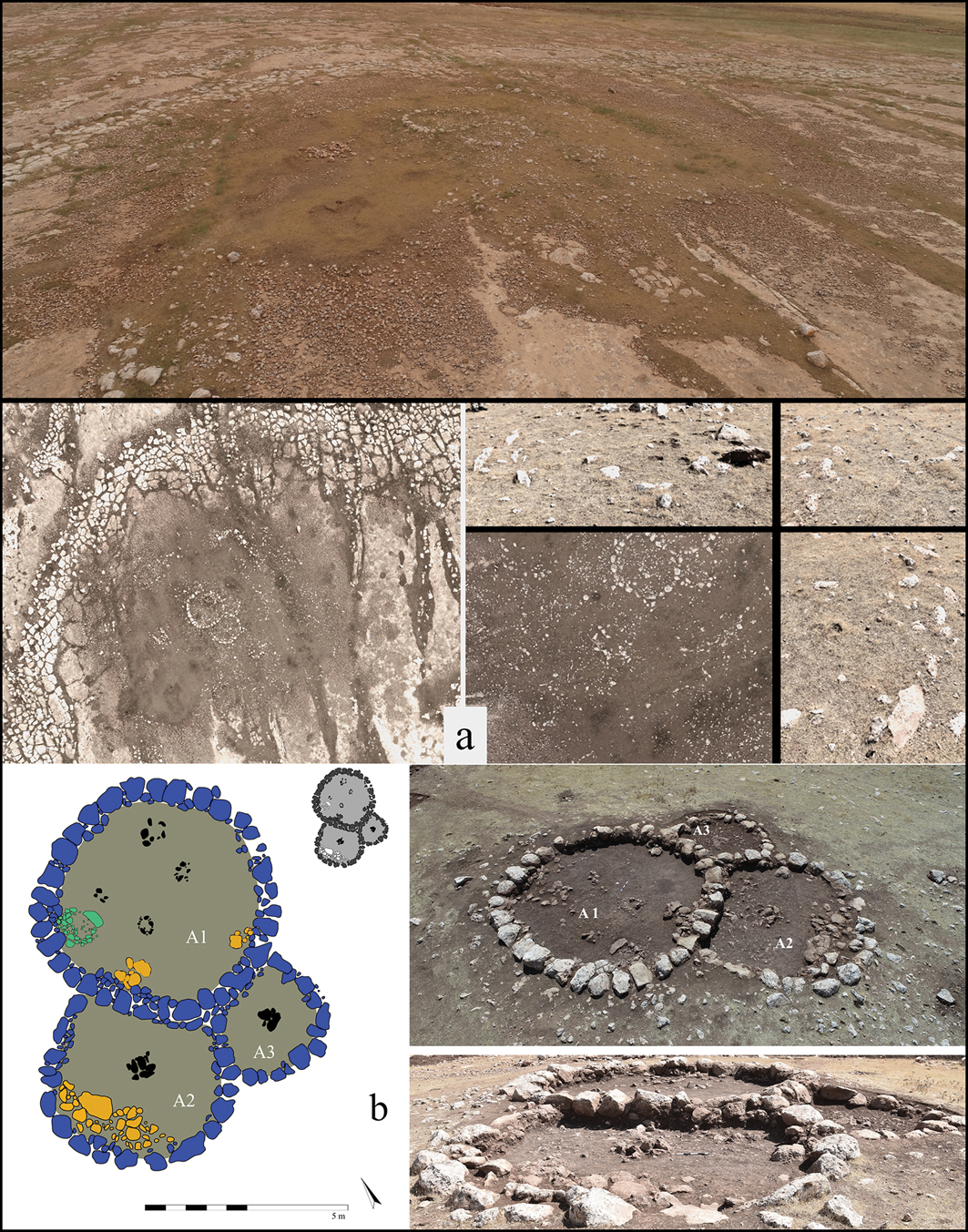
Figure 2 Long description
The image consists of two elements: a drone photograph and a drawing. The drone photograph shows an aerial view of the ika Rika 5 site, highlighting surface architectural features that extend over more than 1200 square meters. The drawing illustrates the site after excavation, focusing on three adjoining circular structures labeled A1, A2, and A3. The photograph captures the overall layout and extent of the site, while the drawing provides detailed architectural insights into the circular structures.
Lithic assemblage
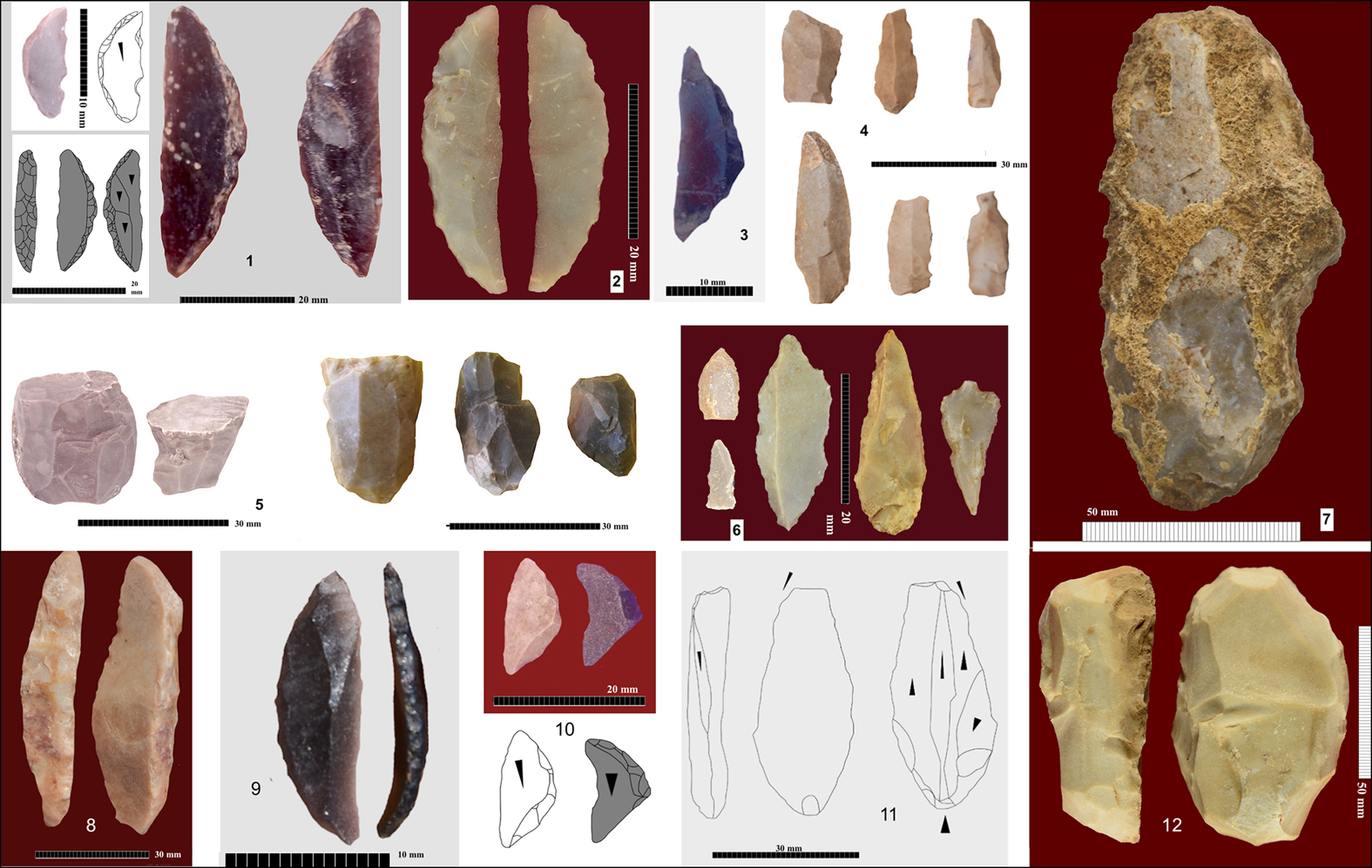
The lithic assemblage from Şika Rika 5 predominantly consists of flint tools, with a smaller number of obsidian tools (Figure 3, nos. 1, 3, 9). Flint may have been locally sourced from nodules embedded in limestone blocks in the surrounding area. The discovery of unmodified bladelets, small flakes and numerous bladelet cores supports use of flaking as the primary production technique (Figure 3, nos. 4, 8). Cores are primarily unidirectional, though some multidirectional and irregular cores are also identified (Figure 3, no. 5). The presence of obsidian and flint waste products, often recovered in concentrations, and percussion tools further indicate that stone-tool production occurred on-site (Khalaily & Valla Reference Khalaily, Valla, Bar-Yosef and Valla2022). Typologically, the assemblage is dominated by microlithic tools, especially lunates, retouched bladelets and triangles (Figure 3, nos. 1–3, 8–10), which feature geometric forms and are primarily made of flint, with some obsidian examples. The identification of rare helwan-type lunates provides chronological and cultural associations (Figure 3, no. 1). Other tools include burins, scrapers and drills (Figure 3, nos. 6–7, 11, 12). Altogether, the lithic industry from Şika Rika 5 displays the characteristic features of a Late Epipalaeolithic technotypology.
Examples of lithics found at Şika Rika 5: 1–3 & 8–10) microliths; 4) bladelet; 5) cores; 6) rill and microdrill; 7 & 12) scraper; 11) burin (figure by authors).

Figure 3 Long description
The image displays a collection of lithic tools discovered at the archaeological site Ika Rika 5. The tools are arranged in a grid format and include various types such as microliths, a bladelet, cores, a drill, and scrapers. Each tool is labeled with a number from 1 to 12, indicating different types and functions. The tools are made from different types of stone and exhibit various shapes and sizes. The image provides a detailed view of the tools, highlighting their unique characteristics and craftsmanship.
Other materials
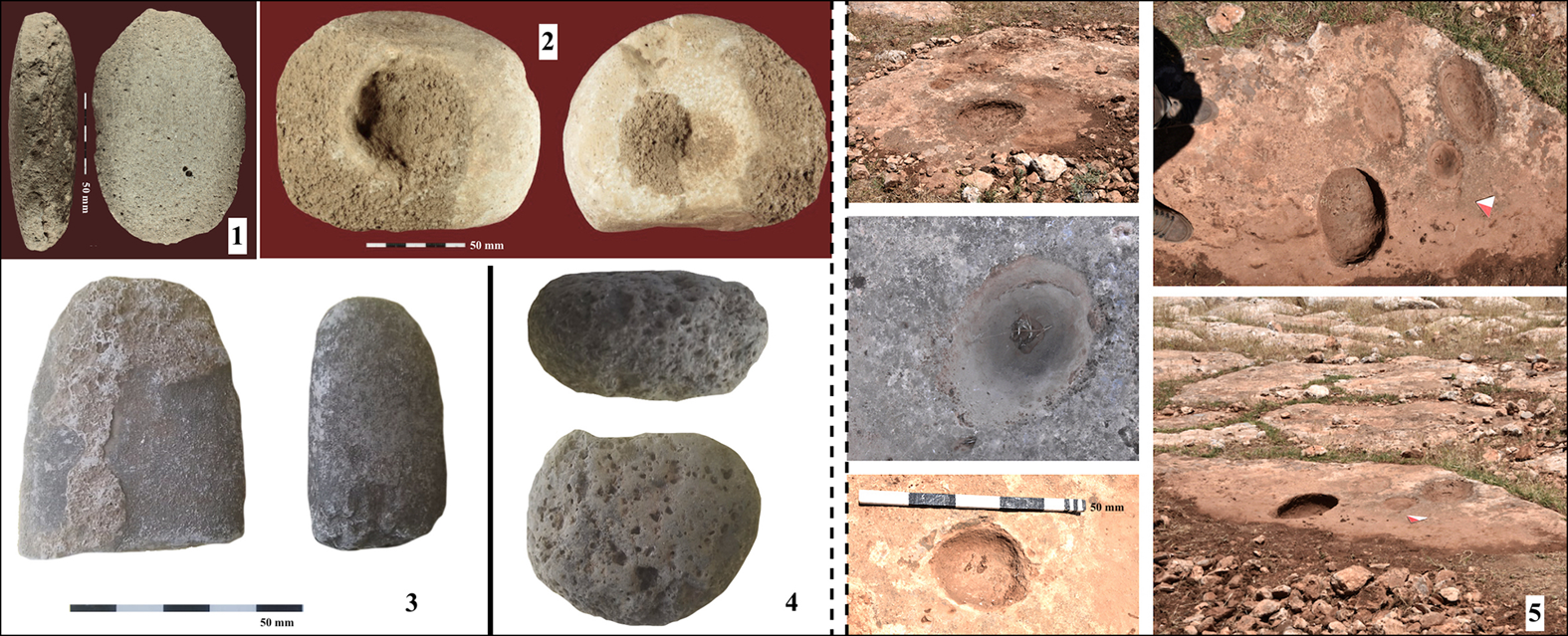
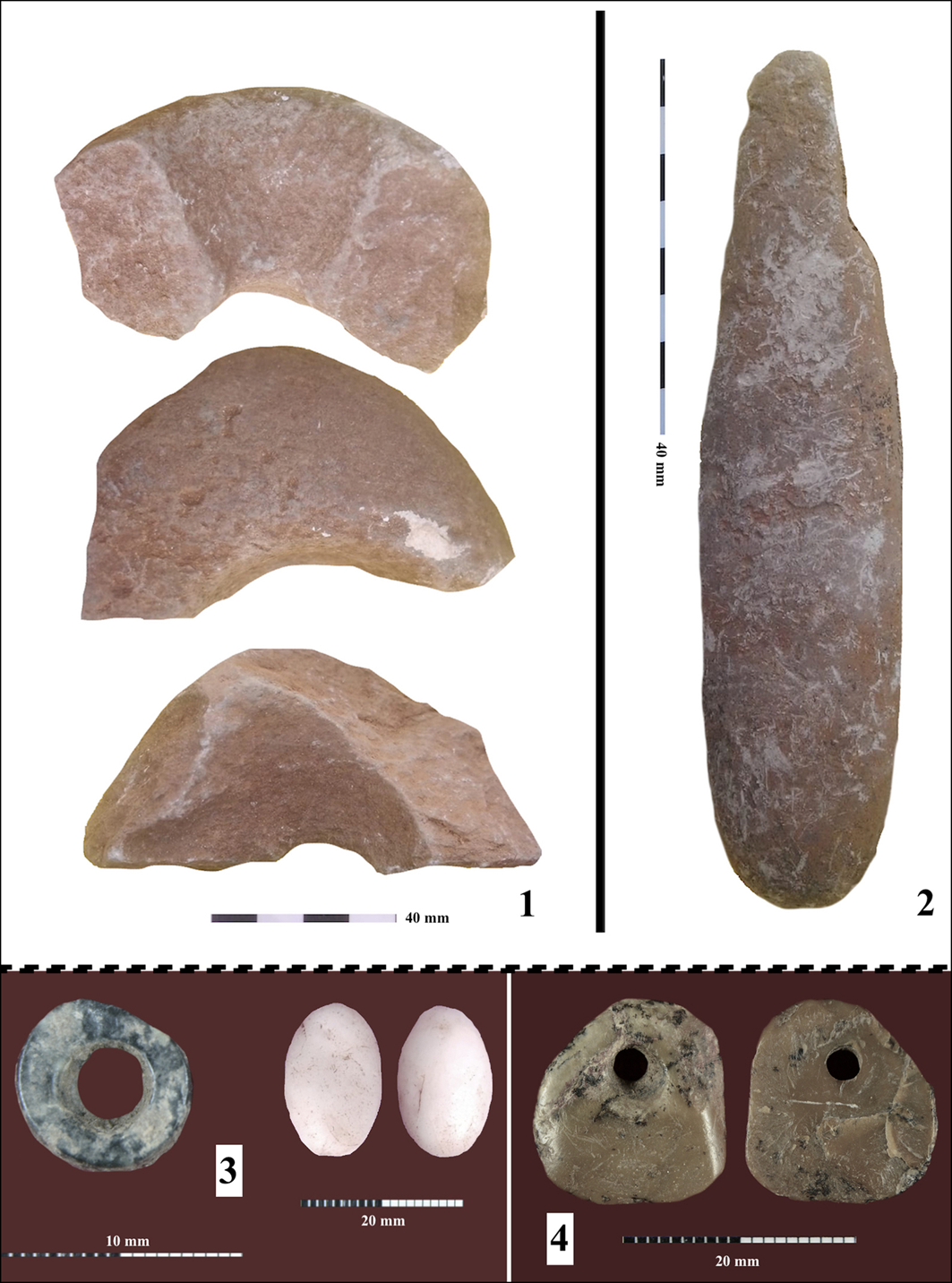
The presence of numerous grinding stones and pestles provides information about subsistence and the process of transition to a settled lifestyle (Figure 4, nos. 1–4). Bedrock mortars are encountered within the primary rock layer (Figure 4, no. 5); these types of mortars are generally associated with the Late Epipalaeolithic period. A small number of ornamental artefacts were also recovered during excavation (Figure 5, nos. 3 & 4), including a few fragments of processed bone pendants. Broken pieces of staffs, staff heads and of a polished baton were also recovered (Figure 5, nos. 1 & 2). In addition, excavations yielded a wide range of faunal remains, including microfauna and larger mammals. These remains suggest access to diverse environments, including wetlands, forests, mountainous regions and steppes. Isolated human bones, including teeth, were uncovered in structures A1 and A3.
Examples of grinding stones, pestles and bedrock mortars: 1, 3 & 4) pestle; 2) mortar; 5) bedrock mortar (figure by authors).

Figure 4 Long description
The image contains five separate photos of grinding stones, pestles, and bedrock mortars. The first photo shows two pestles, one of which is elongated and the other is more rounded, both with a scale for measurement. The second photo displays a mortar with a central depression, likely used for grinding. The third photo features two pestles, one elongated and the other more rounded, both with a scale for measurement. The fourth photo shows two pestles, one elongated and the other more rounded, both with a scale for measurement. The fifth photo depicts a bedrock mortar with a central depression, surrounded by rocks and a scale for measurement.
Selected examples of ornaments: 1) ‘mace head’; 2) polished baton; 3 & 4) ornament (figure by authors).

Figure 5 Long description
The image contains four Neolithic ornaments. The first ornament is a mace head, which is a curved stone tool with a smooth surface. The second ornament is a polished baton, an elongated stone tool with a smooth, polished surface. The third and fourth ornaments are two different stone objects, each with a unique shape and texture. These ornaments are displayed against a white background with measurement scales for size reference.
Discussion and broader implications
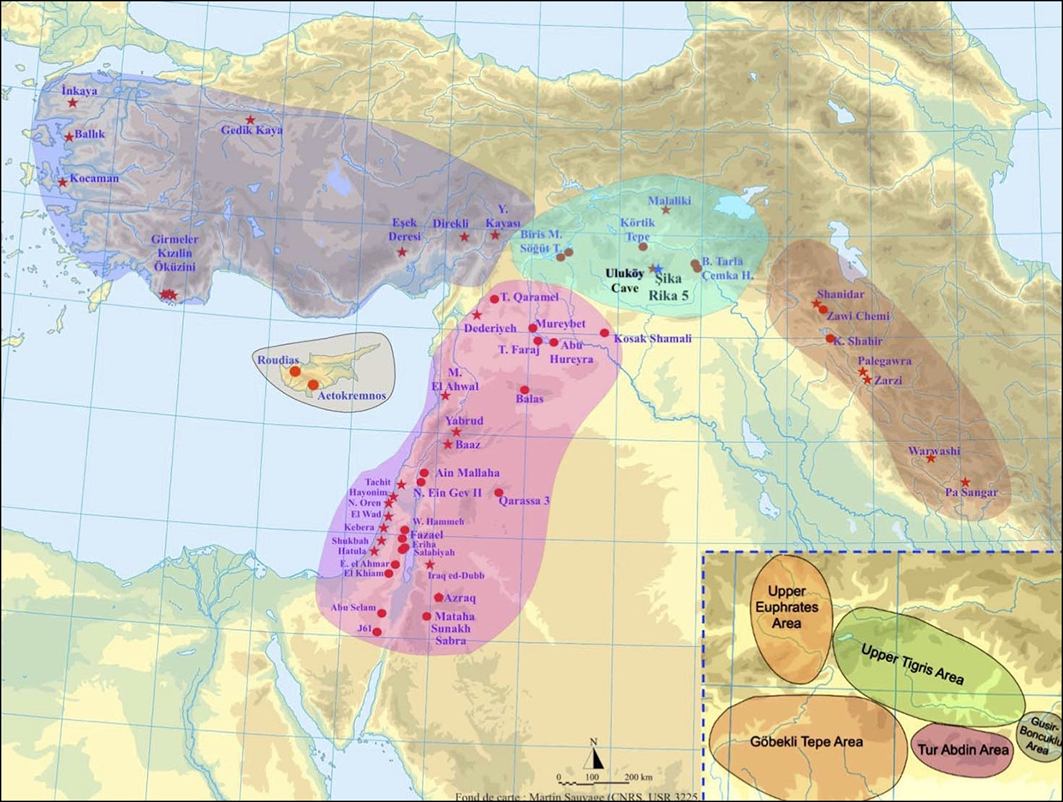
The microlithic technology, ground stone tools and microfaunal remains uncovered at Şika Rika 5 collectively demonstrate the Epipalaeolithic character of the site. The absence of macrolithic tools may be considered an additional criterion supporting this interpretation (Kartal et al. Reference Kartal2018). The Epipalaeolithic period is poorly represented in south-eastern Anatolia; aside from a small, partially excavated building at Körtik Tepe (Kartal et al. Reference Kartal2018), a large building unearthed at Boncuklu Tarla, a few dwellings at Çemka Höyük (Kodaş Reference Kodaş2023) and potentially Epipalaeolithic lithic tools from Biris Mezarlığı and Söğüt Tarlası in the Euphrates Basin, there are no data on proto-Neolithic settlements in this region. Moreover, Körtik Tepe, Boncuklu Tarla and Çemka Höyük are all located in the Upper Tigris Valley, negating the possibility of a regional perspective in examining the Epipalaeolithic of south-eastern Anatolia (Figure 6).
Key Late Epipalaeolithic settlements in the Near East and the geographic areas of south-eastern Anatolia (figure by E. Kodaş).

Figure 6 Long description
The map illustrates key Late Epipalaeolithic settlements in the Near East and southeastern Anatolia. It highlights various regions including the Upper Euphrates Area, Upper Tigris Area, Gobekli Tepe Area, and Tur Abdin Area. Specific sites such as Shanidar, Zawi Chemi, K. Shahir, Palegawra, Zarzi, Warwashi, Pa Sangar, and others are marked with red stars. The map also shows the Tigris and Euphrates rivers, which frame ancient Mesopotamia. Different shaded areas represent various geographic regions, and the map includes labels for significant archaeological sites and areas of interest.
The new data obtained from the Şika Rika 5 settlement provides information on an Epipalaeolithic site outside the Upper Tigris Valley, while the wider survey identifies 30 new Epipalaeolithic sites in the Mardin region, many of which also exhibit architectural features and lithic artefacts characteristic of the Pre-Pottery Neolithic A. The emergence of sedentary life in this region therefore seems more closely associated with local dynamics than could previously be hypothesised due to a lack of archaeological data, indicating a stronger underlying cultural framework. Detailed study of these Epipalaeolithic settlements could also help to better define the geographic extent of the Late Natufian culture, determining whether sites in south-eastern Anatolia may fall under this appellation or if the Late Epipalaeolithic sites identified in the Mardin region might be associated with a new cultural label. The ongoing Şika Rika 5 project aims to provide more definitive insights into these issues.
Acknowledgements
I would like to thank the Mardin Museum Directorate and the General Directorate of Cultural Heritage and Museums of Türkiye.
Funding statement
This research received no specific grant from any funding agency or from commercial and not-for-profit sectors.
Author contributions: using CRediT categories
Ergül Kodaş: Conceptualization-Equal, Data curation-Equal, Formal analysis-Equal, Investigation-Equal, Methodology-Equal, Project administration-Equal, Visualization-Equal, Writing - original draft-Equal, Writing - review & editing-Equal. Charlotte Labedan Kodas: CRediT contribution not specified. Bahattin İpek: CRediT contribution not specified.