


Introduction
Demographic changes in many developed countries have resulted in ageing societies, leading to higher demands for long-term care because the need for care increases with age. The proportion of people over 80 years of age is expected to increase from 4 per cent in 2010 to 10 per cent in 2050 in Organisation for Economic Co-operation and Development (OECD) countries (OECD, 2011). Correspondingly, the share of Gross Domestic Product spent on long-term care is also expected to increase (OECD, 2011). Germany is among the oldest countries in the OECD in terms of the proportion of the population over 65 and 80 years of age, and estimates suggest that this will also be the case in 2050 (OECD, 2011). In 2015, 2.8 million individuals in Germany were in need of long-term care (Federal Ministry of Health, 2017), and this number is expected to increase (Comas-Herrera et al., Reference Comas-Herrera, Wittenberg, Costa-Font, Gori, Di Maio, Patxot, Pickard, Pozzi and Rothgang2006). Additionally, professional nursing staff are already in short supply or will be in short supply in the future in many countries (OECD, 2011; Federal Employment Agency, 2013). Thus, a sustainable solution for the provision of long-term care for older and severely ill people is urgently needed.
Care for severely ill or older people who live either at home or in a nursing home can be provided by professional nursing staff or informally by family members and friends. In Germany, as in many other countries, family members and friends provide a large share of long-term care for care recipients living in their homes and can be seen as the backbone of the long-term care system (Bettio and Verashchagina, Reference Bettio and Verashchagina2010; OECD, 2011). Informal care is commonly regarded as preferable over professional nursing care because it more often enables the recipients to remain in their own homes (OECD, 2011). Furthermore, it is often viewed as less costly than professional care. However, this view neglects possible costs of care provision for care-givers: first of all, and most directly, employment prospects are commonly found to be worse for care-givers than for non-care-givers, implying also a poorer economic situation for carers (Lilly et al., Reference Lilly, Laporte and Coyte2007; Bauer and Sousa-Poza, Reference Bauer and Sousa-Poza2015). These lower employment prospects can also lead to longer-term economic disadvantages, such as lower pension claims. Previous evidence has shown that socially disadvantaged individuals are more engaged in care-giving. Informal care-giving can therefore reinforce the cumulative disadvantages over the lifecourse. Furthermore, care-giving also affects other spheres of care-giver's lives apart from work, such as physical and mental health, social integration and family relationships, which can also mutually affect each other. With respect to mental health, negative effects of care-giving seem to dominate whereas concerning physical health, the pattern is less clear (Schulz et al., Reference Schulz, Visintainer and Williamson1990, Reference Schulz, O'Brien, Bookwala and Fleissner1995; Pinquart and Sörensen, Reference Pinquart and Sörensen2003, Reference Pinquart and Sörensen2007; Amirkhanyan and Wolf, Reference Amirkhanyan and Wolf2006). Of course, these consequences of caring do not necessarily have to be negative. Cohen et al. (Reference Cohen, Colantonio and Vernich2002) find for Canada that three-quarters of care-givers experience at least one positive aspect of care-giving.
In Germany, all recipients of basic income support for job seekers are expected to be available for work and to endeavour to decrease or end the neediness of their household. However, 7 per cent of the members of households on these welfare benefits (corresponding to 280,000 individuals) are engaged in providing long-term care for relatives or friends in need of assistance (Hohmeyer and Kopf, Reference Hohmeyer and Kopf2015). From a theoretical point of view, the employment–care relationship is ambiguous for welfare recipients: on the one hand, their care tasks may interfere with their job search efforts and their availability for the labour market and may thus be associated with lower (re)employment prospects. On the other hand, care-giving might improve the employability of welfare recipients without recent work experience by providing them with a daily routine, helping them to achieve stability and qualifying them for a job in the care sector, which has a labour supply shortage (Federal Employment Agency, 2013). This increase in employment prospects could take effect after care responsibilities and the corresponding limitations in labour market availability end. To the best of our knowledge, there is no evidence on the employment–care relationship for the group of welfare recipients so far. Our study aims to fill this gap by providing empirical evidence on the relationship between informal care-giving and employment of male and female welfare recipients in Germany. Our analyses are based on survey data from the panel study ‘Labour Market and Social Security’ (PASS) and on panel methods. Our results indicate that providing care is negatively associated with the employment prospects of welfare recipients. However, when care duties end, employment prospects for these individuals are no longer lower than those for non-carers.
The German context: institutional background
Long-term care in Germany
Mandatory social insurance for long-term care was introduced in Germany in 1994 as a pay-as-you-go system (for a detailed description, see Rothgang, Reference Rothgang2010). Approximately 90 per cent of the population are covered by this scheme, while the remainder of the population are covered by a mandatory private insurance system (Comas-Herrera et al., Reference Comas-Herrera, Wittenberg, Costa-Font, Gori, Di Maio, Patxot, Pickard, Pozzi and Rothgang2006). Since its introduction, long-term care insurance has undergone nearly continuous changes, and the most recent reform was implemented in January 2017. In the following, we present a description of the system that was in place during our observation period (2006–2015).
To qualify for long-term care benefits, individuals must be in need of assistance for an expected period of six months for at least two basic (e.g. washing or dressing) and one instrumental (e.g. housework) daily living activity. Individuals with lower levels of dependency are not covered by long-term care insurance. Until 2016, three dependency levels, which were based on how often and how long assistance was needed, determined the level of benefits an individual received.Footnote 1
Long-term care insurance aims to support care recipients’ choice to remain at home. Individuals who qualify for long-term care benefits can choose between benefits in cash and benefits in kind, which can also be combined. Cash benefits are paid to the person in need of assistance.
In 2015, the long-term care insurance programme spent €12.1 billion for approximately 800,000 individuals in residential care (i.e. care recipients living in a residential care home) and €14.6 billion for approximately two million individuals requiring ambulant care (i.e. care recipients in their private home) (Federal Ministry of Health, 2017). Of the individuals who required assistance in 2015, 46 per cent received cash benefits, 6 per cent received in-kind benefits for ambulant care and 14 per cent received a combination of the two, while 24 per cent were in residential care (Federal Ministry of Health, 2016).
Welfare receipt and informal care giving in Germany
Increased job insecurity, changing family structures and an ageing population have increased the need for social protection in many developed countries. In the 1990s, the OECD (1994) and the European Commission (1997, 1999) advised national governments to adapt their social protection systems in response to these changes. Germany introduced a series of labour market and social policy reforms between 2002 and 2005 to increase employment participation. The most far-reaching of these, the ‘Hartz IV’ reform implemented in January 2005, introduced Basic Income Support for Job-Seekers (Social Code II), merging the former unemployment assistance and social assistance benefits to form a new welfare benefit, ‘Unemployment Benefit II’, for poor individuals capable of working (Eichhorst et al., Reference Eichhorst, Grienberger-Zingerle and Konle-Seidl2010).Footnote 2 Eligibility is determined at the household level, and all members of a household on welfare benefits who are capable of working are in principle expected to help to reduce the neediness of the household. Overall, welfare receipt covers a range of circumstances: e.g. (long-term) unemployed individuals who are not or are no longer eligible for unemployment insurance benefits; working individuals who do not earn enough to live on because they receive a low wage, work part-time or live in a large household (e.g. with many children); individuals participating in education or active labour market programmes; and individuals who are temporarily not available for the labour market (e.g. due to caring for children aged younger than three years of age, providing long-term care or due to their own illness).
However, as welfare benefits are restricted to households with at least one working-age individual who is capable of working for at least three hours per day under regular labour market conditions, the policy goal is welfare benefit recipients’ labour market integration and self-sufficiency. Although all welfare recipients are expected to be ready to work, case managers in job centres must consider the family-specific living conditions of welfare recipients. For example, welfare recipients providing informal care for relatives or caring for their small children under three can be temporarily exempted from the requirement to work, if working is regarded as unreasonable for them (according to Article 10 of Social Code II). However, welfare recipients providing informal care are exempted from the requirement to work only if the care they provide cannot be arranged in some other manner and the extent of their care-giving either exceeds the threshold of five hours a day or the day care recipient has been assigned to care level three (Federal Employment Agency, 2011). In the case of care level two, working up to six hours per day is regarded as reasonable for carers. For care levels zero or one, full-time employment for the carer is regarded as reasonable.
Job centres can help welfare recipients arrange care for their relatives to enable the welfare recipient to work. However, job centres rarely take advantage of this opportunity in practice (Hohmeyer and Kopf, Reference Hohmeyer and Kopf2015).
Previous evidence on the relationship between care-giving and employment
The theory of opportunity costs and time allocation within households supports a negative relationship between the provision of informal care and employment (Becker, Reference Becker1965; Pezzin, Kemper and Reschovsky, Reference Pezzin, Kemper and Reschovsky1996). Care-giving and employment compete for the individual's time. However, the empirical literature on the relationship between care and employment reveals mixed results.Footnote 3 While numerous studies have confirmed the negative relationship between care-giving and employment (e.g. Arber and Ginn, Reference Arber and Ginn1995; Ettner, Reference Ettner1995; Carmichael and Charles, Reference Carmichael and Charles1998; Heitmueller, Reference Heitmueller2007; Bolin et al., Reference Bolin, Lindgren and Lundborg2008; Do, Reference Do2008; Moscarola, Reference Moscarola2010; Casado-Marín et al., Reference Casado-Marín, García-Gómez and López-Nicolás2011; Nguyen and Connelly, Reference Nguyen and Connelly2014), other scholars have established only small or no effects of care-giving on employment (e.g. Lilly et al., Reference Lilly, Laporte and Coyte2007; Leigh, Reference Leigh2010; Ciani, Reference Ciani2012; Meng, Reference Meng2013). Many of these studies were carried out in the United States of America (USA) and the United Kingdom (UK). However, the body of literature on this issue is also growing in other industrialised countries, e.g. Australia (Berecki-Gisolf et al., Reference Berecki-Gisolf, Lucke, Hockey and Dobson2008; Nguyen and Connelly, Reference Nguyen and Connelly2014), South Korea (Do, Reference Do2008), and in different European countries, such as Germany (Schneider et al., Reference Schneider, Drobnic and Blossfeld2001; Meng, Reference Meng2013), the Netherlands (Moscarola, Reference Moscarola2010), Italy (Degiuli, Reference Degiuli2010) and Spain (Casado-Marín et al., Reference Casado-Marín, García-Gómez and López-Nicolás2011).
One reason for the varying results might be the existence of heterogeneous effects. First of all, the relationship might be shaped by the institutional framework of a country. Studies using data from the European Community Household Panel on different European countries show that the influence of care responsibilities on female employment differs by country. Viitanen (Reference Viitanen2010), for example, only establishes a significant negative effect of informal care-giving on labour force participation for Germany. By contrast, Crespo and Mira (Reference Crespo and Mira2010) and Kotsadam (Reference Kotsadam2011) demonstrate that the negative relationship between care and employment is more pronounced in the southern European countries. Likewise, Spiess and Schneider (Reference Spiess and Schneider2003) find a negative association between starting to provide care and changes in work hours only for women living in northern Europe (except Ireland), whereas the increase in care hours has a significant influence on adjustments in work hours only for women living in southern Europe and Ireland. This pattern is explained with the greater substitution possibilities by institutional and formal home care in the Benelux countries, Denmark, France, Germany and the UK than in southern Europe.
Moreover, results might differ because the relationship between care and employment can run in both directions: on the one hand, providing care for relatives can diminish labour market opportunities because care is time-consuming. On the other hand, the decision to provide care for relatives (e.g. rather than buying care on the market) can also be the result of poor labour market opportunities. There is evidence not only for the first mechanism as mentioned above but also for the second: current employment is associated with a lower probability of becoming a care-giver, whereas individuals who receive a low wage or are not employed, are less educated or are in bad health have a higher propensity of taking over care responsibilities (Carmichael et al., Reference Carmichael, Charles and Hulme2010; Michaud et al., Reference Michaud, Heitmueller and Nazarov2010; Moscarola, Reference Moscarola2010). Furthermore, working-age care-givers tend to be older and less likely to have small children, which reflects differences in becoming at risk of becoming a care-giver. Only a few empirical studies are able to control successfully for selection mechanisms with the help of instrumental variables. The results are mixed and do not provide clear evidence for the existence or direction of a selection bias (for a recent review, see Bauer and Sousa-Poza Reference Bauer and Sousa-Poza2015): some of these studies confirmed the negative effect of care on employment outcomes and even report more pronounced negative effects of care-giving on employment (e.g. Ettner, Reference Ettner1996; Crespo, Reference Crespo2006; Heitmueller, Reference Heitmueller2007), whereas others did not or only under specific circumstances (e.g. Bolin et al., Reference Bolin, Lindgren and Lundborg2008; Ciani, Reference Ciani2012; Nguyen and Connelly, Reference Nguyen and Connelly2014).
Controlling for selection mechanisms and solving the potential endogeneity problem is often not possible due to data limitations (Carmichael and Charles, Reference Carmichael and Charles1998): determinants of the caring decision are economic and non-economic factors, such as the availability of alternatives and financial means, the closeness of the kinship bond or the ability of the carer to cope with psychological demands of caring. Characteristics of the potential care recipients (e.g. health status of parents) are used as instrument variables. However, information on these major determinants of the caring decision is often not available in the data (Carmichael and Charles, Reference Carmichael and Charles1998).
The relationship between care-giving and employment might also differ by the type of care. However, while a large body of literature considers the relationship between informal care-giving and employment, only some of these studies consider such heterogeneous effects. Studies controlling for the intensity of care tend to find evidence that only intensive care is negatively related to employment (Carmichael and Charles, Reference Carmichael and Charles1998; Heitmueller, Reference Heitmueller2007; Do, Reference Do2008; King and Pickard, Reference King and Pickard2013). Likewise, Crespo (Reference Crespo2006) only studies intensive care-giving and demonstrates a negative relationship with employment. By contrast, Ciani (Reference Ciani2012) controlled for a threshold of 14 care hours per week and found no difference in the employment effect.
Besides care-giving intensity, the relationship between care and work likely differs by characteristics of the care-giver. Gender of the care-giver should make a difference due to different labour supply and care decisions. The effects could be smaller for men because working-age male carers provide fewer hours of care (Geyer and Schulz, Reference Geyer and Schulz2014; Bauer and Sousa-Poza, Reference Bauer and Sousa-Poza2015) or because they may be less inclined to give up their jobs to provide care. Given the higher share of women providing care, several studies on care-giving and employment only analyse the case of women (Johnson and Sasso, Reference Johnson and Sasso2006; Berecki-Gisolf et al., Reference Berecki-Gisolf, Lucke, Hockey and Dobson2008; Moscarola, Reference Moscarola2010; Casado-Marín et al., Reference Casado-Marín, García-Gómez and López-Nicolás2011). They establish negative effects of informal care-giving for women. The empirical evidence from studies looking at men and women separately thus far is mixed: some studies have reported that women are more likely to substitute their paid work with care-giving (Arber and Ginn, Reference Arber and Ginn1995; Carmichael and Charles, Reference Carmichael and Charles2003; King and Pickard, Reference King and Pickard2013), whereas Van Houtven et al. (Reference Van Houtven, Coe and Skira2013) found that only men providing informal care are less likely to work, while women work fewer hours and face reduced wages. Meng (Reference Meng2013) observed a slightly lower reduction in working hours for women than for men. In general, more research on the issue of gender differences for the effects of care-giving on employment is needed.
Other aspects of heterogeneity in the effects of informal care on employment, such as socio-economic status, health or education, could be of interest. For example, Viitanen (Reference Viitanen2010) finds the effect of care-giving on female labour force participation to not only differ by country studied but also by age and marital status of the care-giver. In several countries, particularly middle-aged women (45–49 years) and single women tend to be constrained in their labour force participation due to elderly care responsibilities. However, while there is a large body of literature on the relationship between care and employment in general, evidence on heterogeneous effects is very limited so far and more information on particular groups of carers is needed.
A further question is how employment prospects develop after care-giving ends: if employment prospects are harmed during care provision, do they recover afterwards or are they harmed in the long term? Most of the literature on care-giving and employment does not explicitly look at the period after care ended. The existing evidence suggests that the relationship is not symmetric and that employment prospects do not fully recover. Skira (Reference Skira2015) found that US women providing care for their parents face low probabilities of returning to work or increasing their working hours after care-giving ends. Also Spiess and Schneider (Reference Spiess and Schneider2003) reported for northern European countries, while beginning or increasing care provision induces a decrease in working hours of mid-life women, reducing care efforts or terminating care is not significantly associated with working hours. Keck (Reference Keck2016) observed that carers in Germany are less likely to be employed after care ends than non-carers. Also for Germany, Schmitz and Westphal (Reference Schmitz and Westphal2017) offered evidence that providing care negatively affects women's probability of working full-time as long as eight years after beginning to provide care.
Overall, the body of literature on the relationship between informal care-giving and employment is large, especially for the USA and the UK, and growing for other industrialised countries. The results vary between the studies. One likely reason for this might be the existence of heterogeneous effects, e.g. by institutional framework or care-giver characteristics. Such sources of heterogeneity concerning different sub-groups of care-givers in the care-giving–employment relationship are understudied, as are the effects after care ends. Our study aims to fill this gap by providing evidence on the care-giving–employment relationship for non-employed welfare recipients.
The relationship between care and employment for welfare recipients
Our article studies the relationship between providing care and employment prospects for the specific population of non-employed welfare recipients. Although members of this population spend a considerable amount of time on care, this population has not been studied thus far in this respect. Due to missing data on the potential care recipients, we are not able to tackle the issue of endogeneity. However, given the fact that we analyse the specific population of non-employed German welfare recipients, we are convinced that the problem of endogeneity will be less important.
For welfare recipients, care provision may have different consequences for future employment than for a more general population, and the relationship between care and future employment may even be positive for the following reasons. First, 40 per cent of care-giving welfare recipients provide care for fewer than ten hours per week (Hohmeyer and Kopf, Reference Hohmeyer and Kopf2015). Depending on the allocation of these care hours, they may not necessarily interfere with job search efforts or labour market participation. Second, welfare recipients often have not worked for several years. Thus, they may no longer be accustomed to a structured daily routine, they may have become discouraged and less motivated to search for jobs, and they may feel less socially integrated. Care provision as a meaningful task could help these individuals achieve stability in their lives and re-establish a daily routine (for evidence on Germany, see Grüttner, Reference Grüttner2016), which could increase their employability. Third, providing care may qualify these individuals for a job in the care sector, which is a sector with a shortage of labour supply where government-sponsored training for the unemployed achieves positive employment effects (Federal Employment Agency, 2013; Dauth and Lang, Reference Dauth and Lang2017). Positive effects of care on employment among welfare recipients are particularly likely to emerge after care provision ends.
Overall, the role of providing care for the future employment prospects of welfare recipients is not straightforward and must be studied empirically. Our study analyses the relationship between informal giving and employment prospects for male and female jobless welfare benefits in Germany. As past evidence has shown that negative employment effects of care more likely occur for intensive care, we differentiate our analyses by care intensity. Furthermore, we explicitly control for the termination of the care period, because potential positive effects of care on employment among welfare recipients are particularly likely to emerge after care provision ends.
Data and method
Our analyses are based on survey data from the first nine waves of the panel study PASS, covering interviews between late 2006 and 2015 (for a description, see Trappmann et al., Reference Trappmann, Beste, Bethmann and Müller2013). The PASS provides data on topics such as unemployment, poverty and the social situation of households receiving welfare benefits. It combines a sample of welfare recipients with a random population sample that over-samples households with low socio-economic status.
As we are interested in the relationship between providing informal care and employment prospects, we relate the care status as well as further covariates in Wave t to the employment status in Wave t + 1. Therefore, information on the care status as well as further covariates stem from Waves 1 to 8, while the information on the employment status stem from Waves 2 to 9. The information on the care status of the respondents is based on their own statements in the surveyFootnote 4 and does not necessarily conform to the definition of care-giving in the long-term care insurance programme. Furthermore, the PASS does not report the characteristics of the care recipients and the recipients cannot be identified in the data. We define employment as being employed subject to social security contribution (i.e. employment with monthly earnings above €400 through 2012 and above €450 since 2013) at the time of the interview in the subsequent Wave t + 1.
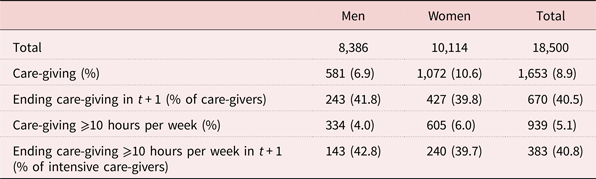
We restrict our sample to observations of individuals who are of working age (between 25 and 64 years), not employed and who live in a household receiving welfare benefits (Unemployment Benefit II). We exclude observations before age 25 for several reasons. First, those younger than 25 often have not yet finished their education (i.e. more than half of our sample aged under 25 are currently engaged in education). Therefore, regular employment might not be an immediate goal for them. Moreover, young people are less often involved in providing care: 4.7 per cent (1.6 per cent) of the people under 25 years of age in our sample who are not involved in education are providing (intensive) care compared to 9.0 per cent (5.3 per cent) among those aged 25 years and over. Furthermore, welfare recipients under 25 years of age have a special status within Social Code II with stricter job search requirements (see e.g. Schels Reference Schels2011; Nivorozhkin and Wolff Reference Nivorozhkin and Wolff2012). We drop observations for people who are still enrolled in school and those who have already retired from the labour market because they are not available for the labour market. We also exclude observations with missing information in our main variables. This leaves us with 18,500 observations (from 7,658 individuals), of whom 8.9 per cent provide care (Table 1). The share of care providers is higher among women (10.6%) than among men (6.9%).
Number of observations
Source: ‘Labour Market and Social Security’ (PASS_0615_v1).
To study the relationship between providing care in t and the employment status in t + 1, we employ multivariate panel data analysis. Standard panel models are the random effects and the fixed effects model (Wooldridge, Reference Wooldridge2002). Whereas the estimation of coefficients in the random effects model is based on between-person and within-person variation over time, fixed effects models are solely based on within-person variation. Thus, the estimation in fixed effects models is not biased by time-constant unobserved heterogeneity. However, focusing exclusively on within-person changes, the fixed effects model disregards between-person variation. If most of the variation in a covariate is between individuals rather than within individuals over time, estimates become imprecise. Moreover, the estimation of time-invariant regressors is impossible in the fixed effects model. Because in the case of care-giving, much of the variation takes place between individuals and as we are also interested in the role of further control variables with little or no variation over time, we employ random effects logit models. As labour supply and care decisions may be different for men and women, we calculate models for men and women separately. The main independent variables are (a) care provision in general, irrespective of weekly hours, and (b) intensive care involving ten or more hours per week.Footnote 5 We include several control variables, such as age, region, migration background, partner, children, education, health, income and the existence of a senior household member (aged 65 years or above).
In a second step, we analyse how employment prospects change when care duties end. Two out of five care-givers in our sample terminate care-giving in the following wave (Table 1). Therefore, we include an additional dummy variable, ‘care end’, that equals 1 if the individual provided care in the first year but not in the second year, and 0 otherwise. The definition of the variable ‘care’ remains unchanged.
Results
Descriptive findings
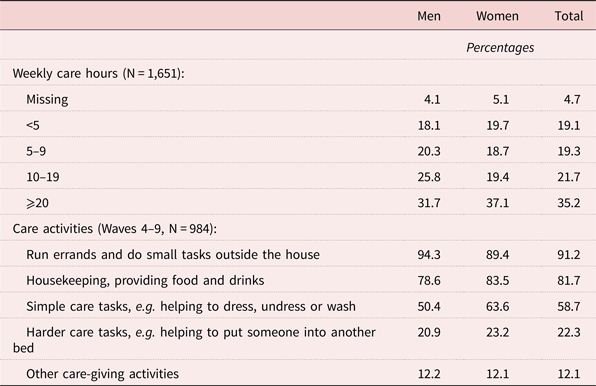
To provide an overview of the care provided by men and women, Table 2 displays descriptive information on care hours and tasks performed. The amount of care provision varies: whereas one-fifth of the carers provide fewer than five hours of care per week, more than 35 per cent spend 20 hours or more per week providing informal care.
Care hours and activities
Source: ‘Labour Market and Social Security’ (PASS_0615_v1).
A broad range of possible care activities are included. In more than 90 per cent of the observations in the sample (Waves 4–9), individuals run errands and perform small tasks outside the home; 82 per cent do housekeeping and provide care recipients with food and drinks; 59 per cent perform simple care tasks; whereas only approximately one-fifth also perform more strenuous care tasks.
The gender differences in care provision are moderate and as expected: women provide very intensive care (⩾20 hours per week) more often than men (37% compared to 32%). Women also engage more in simple (e.g. helping to dress, undress or wash) and more physically demanding (e.g. helping to put someone into another bed) care tasks than men (64% versus 50% and 23% versus 21%, respectively).
Table 3 provides descriptive information about the carers and non-carers in the sample. The carers are less likely than non-carers to have been employed within the past five years (33% versus 39%) and to be employed in the next year (11% versus 14%). The carers in the sample are older than the non-carers, as the risk of having relatives in need of care increases with age: 31 per cent of the carers are between 55 and 64 years of age compared to 24 per cent of the non-carers. Correspondingly, the carers are more likely than the non-carers to have children aged 15 or above (23% versus 18%) and less likely to have younger children. They are also more likely to live in the same household with a person aged 65 years or above. Carers are more often restricted in their health than non-carers (51% versus 46%). Furthermore, carers in our specific sample have on average a higher educational degree and a higher equivalent household income.
Sample characteristics
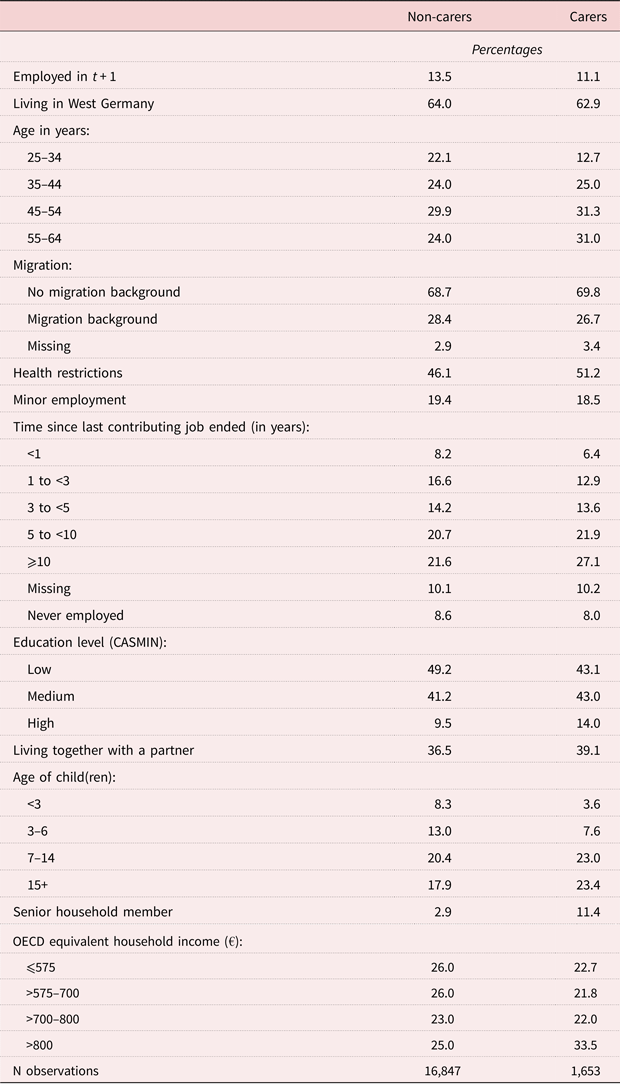
Notes: CASMIN: Comparative Analysis of Social Mobility in Industrial Nations (König et al.,1988). OECD: Organisation for Economic Co-operation and Development.
Source: ‘Labour Market and Social Security’ (PASS_0615_v1).
With respect to the transition probabilities between care and no care between t and t + 1, Table 4 shows that 96 per cent of those not providing care in t also do not provide care in t + 1, while 59 per cent of those providing care in t also do so in t + 1. The share employed among those ending care provision in t + 1 is 13.3 per cent and thus comparable to the value for those not providing care in either period, at 13.6 per cent.
Dynamics in the care-giving status
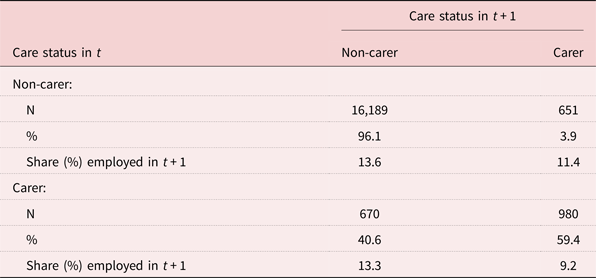
Note: N = 18,490; ten observations with missing information on care status in t + 1.
Source: ‘Labour Market and Social Security’ (PASS_0615_v1).
Estimation results
Care and employment
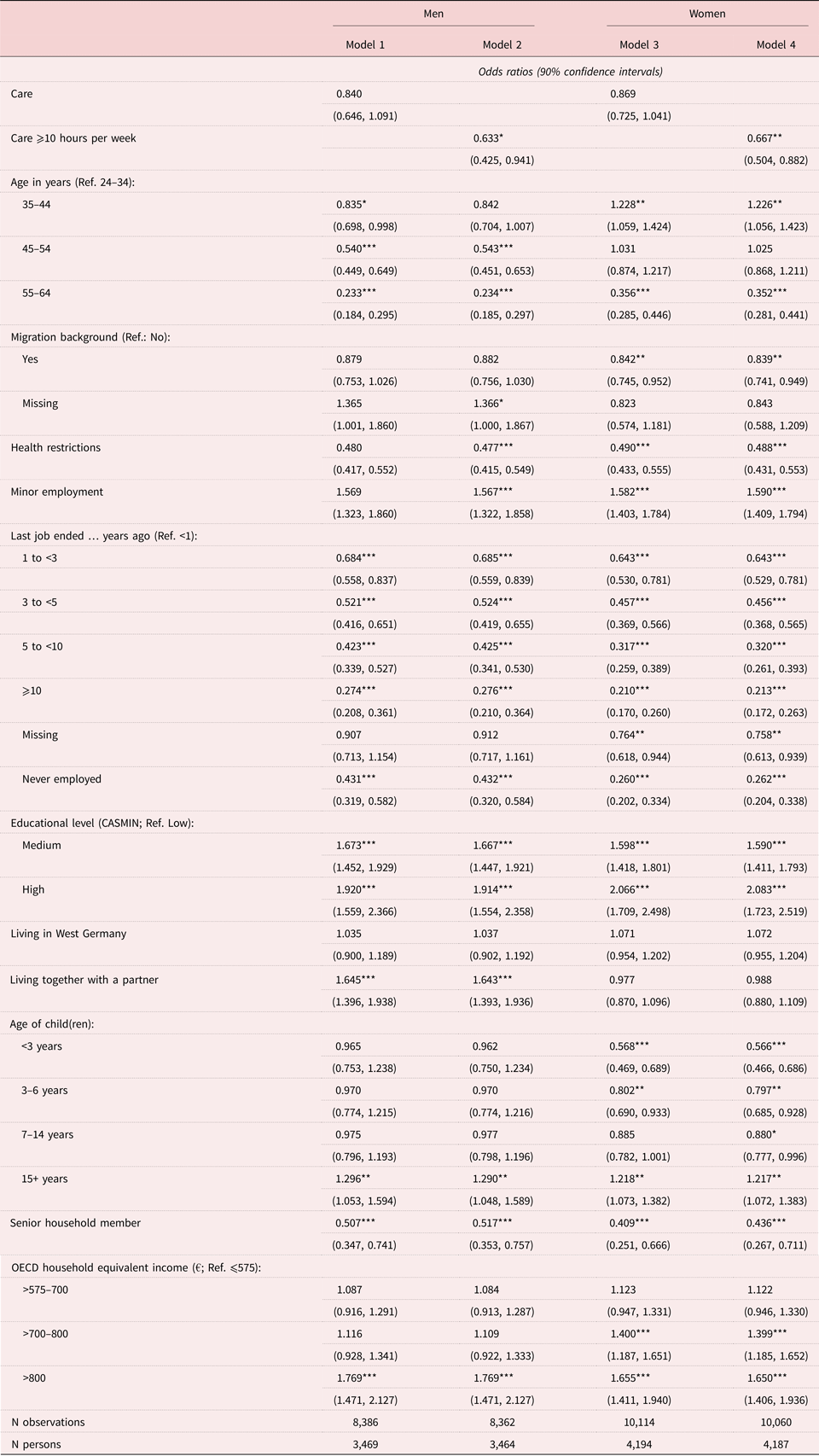
Table 5 displays the odds ratios and confidence intervals (CI) from our random effects logit models for the likelihood of holding a regular job in the next year. Our main independent variables are two measures of care: care irrespective of its intensity and intensive care involving at least ten hours per week. Furthermore, we control for socio-demographic characteristics, household/family background and labour market experience of the sample members.
Odds ratios from random effects logit estimation on employment
Notes: Dependent variable: employment subject to social security contribution in t + 1; standard error clustered by person. CASMIN: Comparative Analysis of Social Mobility in Industrial Nations (König et al., Reference König, Paul and Müller1988). OECD: Organisation for Economic Co-operation and Development. Ref.: reference category.
Source: ‘Labour Market and Social Security’ (PASS_0615_v1).
Significance levels: * 10%, ** 5%, *** 1%.
For both sexes, we find that providing care tends to result in a reduced likelihood of holding a regular job in the next year. This effect is only statistically significant for care of at least ten hours per week. For men providing intensive care, the odds of being employed the following year are only 0.633 times as high as the odds for men not providing care (with a 90% CI ranging from 0.425 to 0.941). The corresponding odds ratio for women is 0.667 with a 90% CI of 0.504–0.882. The estimated odds ratios are very similar for men and women in the present study, while, as previously mentioned, past research has found different effects for men and women. Two factors may explain this result. First, we specified care intensity (ten or more hours per week) in our analyses. Therefore, differences in care intensity between men and women can no longer lead to different results. Second, we focus on a group of labour market outsiders: neither the men nor the women in our sample are employed. Therefore, differences in initial employment status can no longer lead to differences in the employment response to care activities.
The sign of the effect of the other covariates is as expected: the likelihood of being employed decreases with age and increases with educational level. Recent employment experience or being employed in minor employment is associated with higher employment chances, whereas the presence of health restrictions is associated with a lower probability of holding a job.
Migration background is associated with a lower probability of finding a job for women only. Household context is also relevant: men living together with a partner or who have a child 15 years of age or older in their household are more likely to be employed in the next year. For women, having children six years of age or younger is associated with a lower probability of being employed in the next year. Individuals with senior household members are less likely to be employed in the next year. Those in a household with an equivalent household income of more than €800 (including benefits) are more likely to be employed in the next wave.
Care end and employment
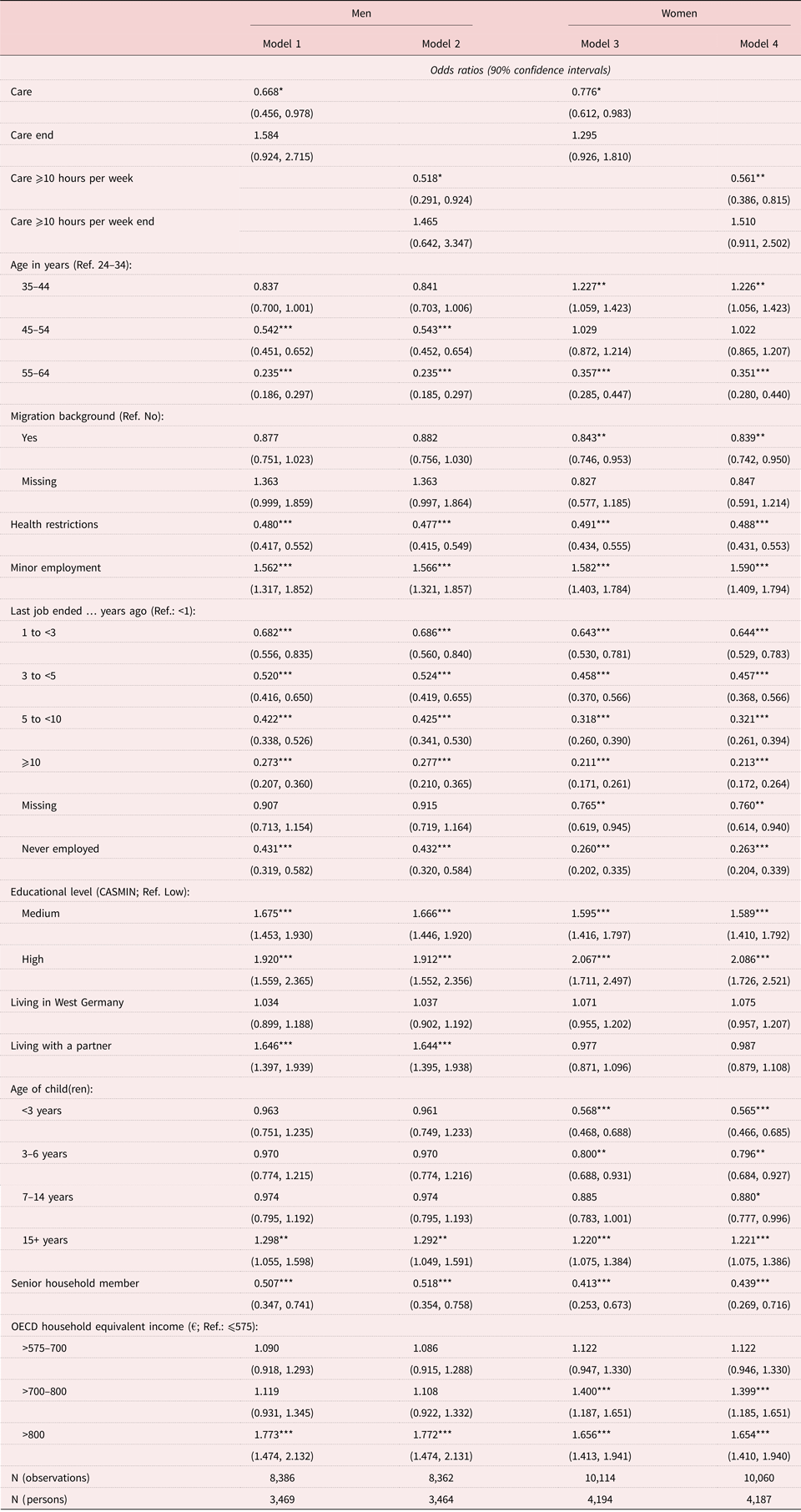
In a second step, we examine whether employment prospects increase when care duties end. Therefore, we complement the models with the dummy variable ‘care end’, which equals 1 if the respondent provides care in the current wave but not in the subsequent wave. The results are displayed in Table 6. We find that providing care results in a lower probability of being employed in the next year. This holds for care in general (with a value of 0.668 and a 90% CI from 0.456 to 0.978 for men and of 0.776 and a 90% CI from 0.612 to 0.983 for women) and for intensive care, with values of 0.518 (for men with a 90% CI ranging from 0.291 to 0.924) and 0.561 (for women with a 90% CI of 0.386 to 0.815). The odds ratios for care are somewhat smaller (thus indicating a stronger reduction in the employment probability) than in the models in Table 5 without ‘care end’, as ‘care (⩾10 hours per week)’ now represents providing care in two consecutive periods. The estimated odds ratios for ending intensive care indicate an increase in the odds of employment when care duties end compared to continuing care provision. For intensive care, they represent an increase in the odds of employment by 47 per cent for men and by 51 per cent for women. However, these effects are not statistically significant and CI are quite large, ranging from 0.642 to 3.347 for men and from 0.911 to 2.502 for women. The odds ratios of ending (intensive) care provision compared to not providing care at all are 1.058 (0.759) for men and 1.004 (0.847) for women.Footnote 6 Compared to not providing care, employment prospects are no longer significantly lower after care duties end.Footnote 7
Odds ratios from random effects logit estimation including care end on employment
Notes: Dependent variable: employment subject to social security contribution in t + 1; standard error clustered by person. CASMIN: Comparative Analysis of Social Mobility in Industrial Nations (König et al., Reference König, Paul and Müller1988). OECD: Organisation for Economic Co-operation and Development. Ref.: reference category.
Source: ‘Labour Market and Social Security’ (PASS_0615_v1).
Significance levels: * 10%, ** 5%, *** 1%.
Conclusion
This paper studies the relationship between welfare recipients’ informal care-giving and their employment chances in Germany using survey data from the PASS and panel methods. Our results reveal that providing care for ten or more hours per week is associated with lower employment prospects for male and female welfare recipients. This negative relationship between intensive care-giving and employment is in line with previous evidence for other groups of carers (e.g. Heitmueller, Reference Heitmueller2007). However, we also find that when care duties end, employment prospects are no longer worse for carers than for non-carers. In this sense, these results are more optimistic than previous evidence on other groups of carers, which find negative effects to persist after care ends. One reason for this difference might be that many welfare recipients have not worked for several years and might thus be more likely to benefit from care-giving in terms of employability and social integration. The results of our study have to be viewed against its limitations. First, our analyses do not study the process of becoming a carer or a welfare recipient and thus cannot deal with the issue of causality. Part of the revealed negative relationship between care and employment is likely to be driven by welfare recipients with poorer labour market prospects selecting themselves into care-giving. Second, as we do not have any information on the care recipient, the concept of care remains to some degree imprecise. Third, we consider only the employment status but not its quality. Employment quality is also relevant for the reconciliation of work and care, and is particularly problematic for workers at the bottom of the labour market (see e.g. Standing, Reference Standing2011). More research is needed on this issue in future studies.
Despite our slightly more optimistic results compared to some previous studies, we nonetheless see need for governmental action, because providing care is associated with longer non-employment durations for welfare recipients. These additional times of non-employment contribute to cumulative disadvantages over their lifecourse by worsening their economic situation after retirement. Care-giving often concerns individuals who are aged 50 years or above. Employment at higher ages has become more important since the early 2000s, with particularly poor individuals such as welfare recipients having to work for financial reasons at higher ages (Lain, Reference Lain2018).
Our study contributes to the literature by providing evidence on the relationship between care and employment for an under-studied group of carers. Given the increasing demand for long-term care and the need to increase labour force participation in many countries, enabling individuals to reconcile work and care-giving is necessary. Our study indicates that there is still room for improvement for welfare recipients. This is relevant to all countries where part of the group of unemployed welfare recipients face the double burden of job search and family care responsibilities. Very often, welfare recipients providing care do not have a job to return to and thus cannot benefit from the often advocated leave policies (OECD, 2011). Therefore, further action is needed. First, public consulting services can help welfare recipients to find a solution for care-giving that enables them to find and hold a job. In the case of Germany, job centres could increase their use of the option to assist care-giving welfare recipients in arranging care provision for their relatives. Job centres could also refer welfare recipients to the consulting services provided by the social long-term care insurance programme, and provide information on day-care facilities for older or severely ill people, as they do for day-care facilities for children. In terms of child care, the system is far ahead.
Second, there should be special support for finding a job that is not only sufficiently flexible but also of such a quality to allow welfare recipients to reconcile work and care-giving (Standing, Reference Standing2011). Furthermore, welfare recipients often have not worked for several years and may consequently need further assistance before they can find a (good) job. Therefore, it may be helpful to offer active labour market programmes such as training programmes on a part-time basis or with more flexible schedules.
Acknowledgements
We would like to thank Arne Bethmann for his advice regarding the data, the two anonymous reviewers, Magdalena Stroka, Jürgen Wiemers and Cordula Zabel for their very helpful comments, and Babette Bühler, Benjamin Maschke and Stephanie Prümer for their assistance. Any errors are ours.


 Open access

